Showing posts with label Medtronic. Show all posts

Wednesday, October 09, 2013

Case Study: A Case of Recurrent Ventricular Tachycardia

The following is a case study intended for folks who look at defibrillator recordings.  If you find it interesting, great.  If you have no clue what is shown here, don't feel bad, just move on to another blog post.  I just thought I'd put this up as an unknown for those interested in phenomena encountered in a busy device clinic.
It was a case seen in our clinic: a nice man in his 50's had received a single chamber ICD for recurrent ventricular tachycardia and ventricular fibrillation and called because he had received several shocks from this device.  Interrogation of the device showed normal sensing, lead impedance and capture threshold.  Interrogation of his device demonstrated multiple VT therapies and untreated events recorded by his device. 

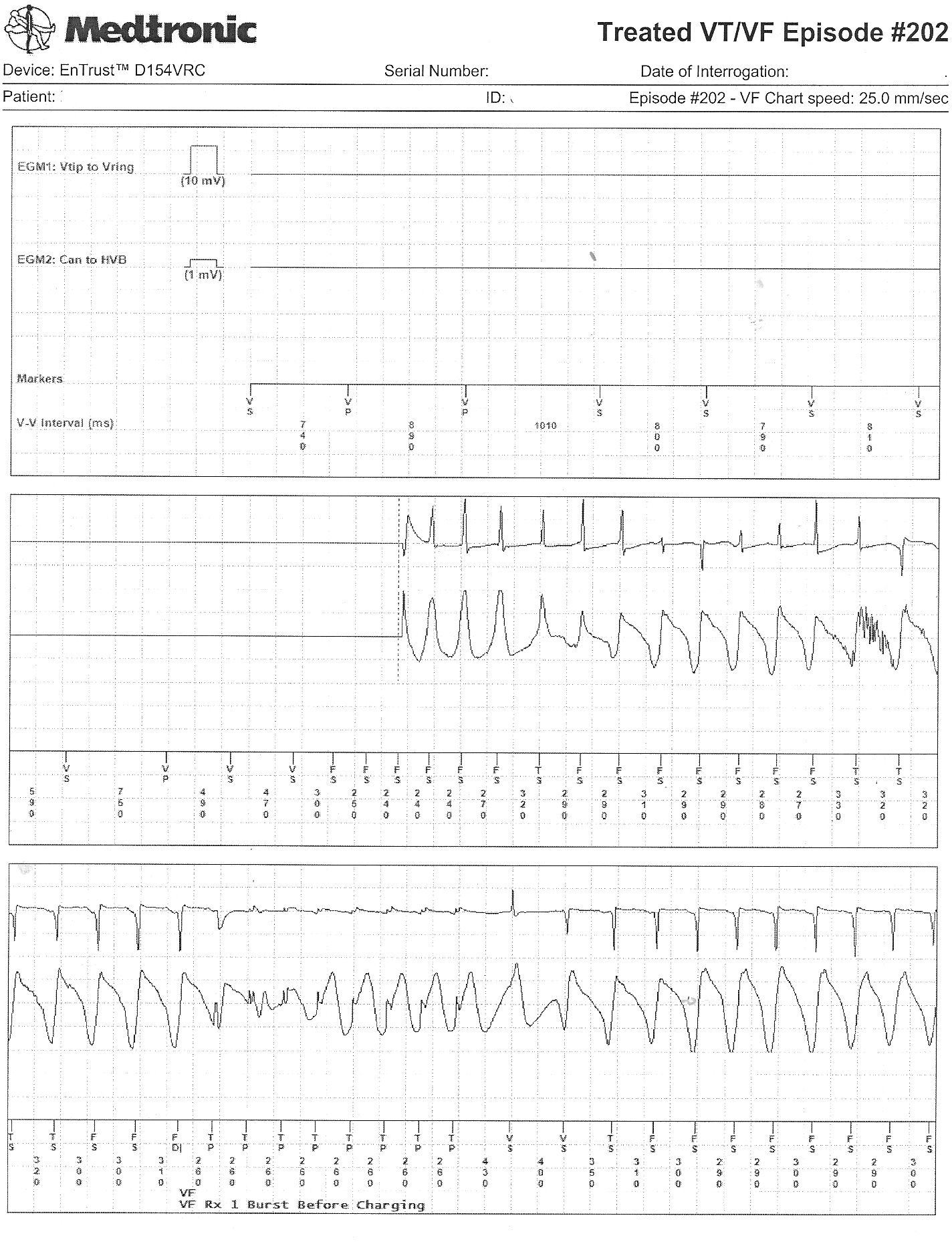
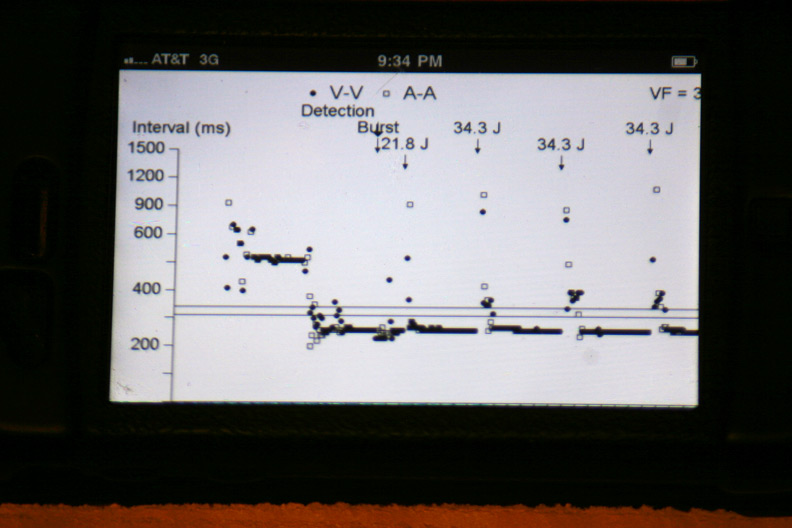
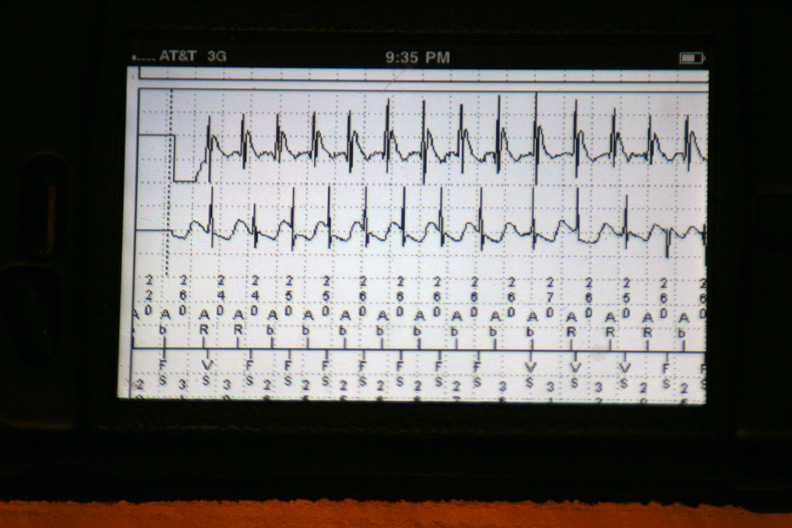
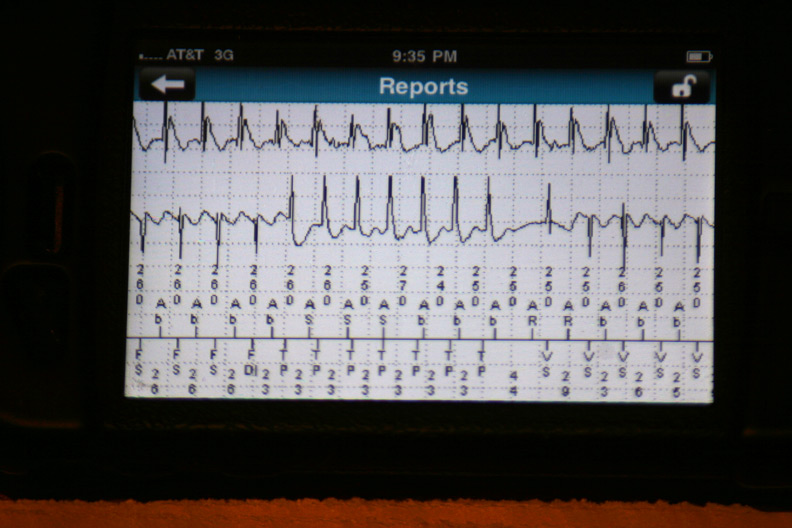
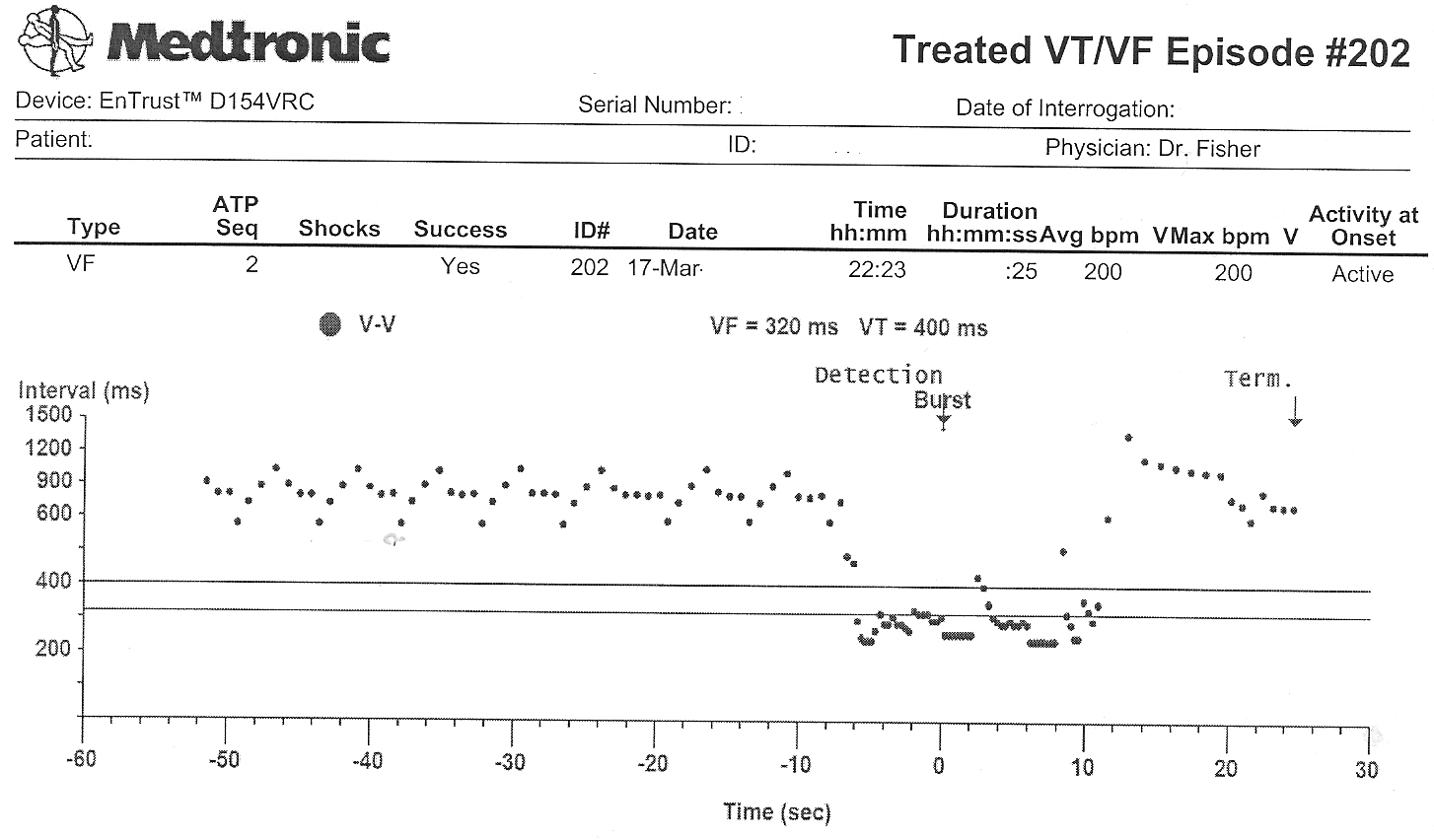
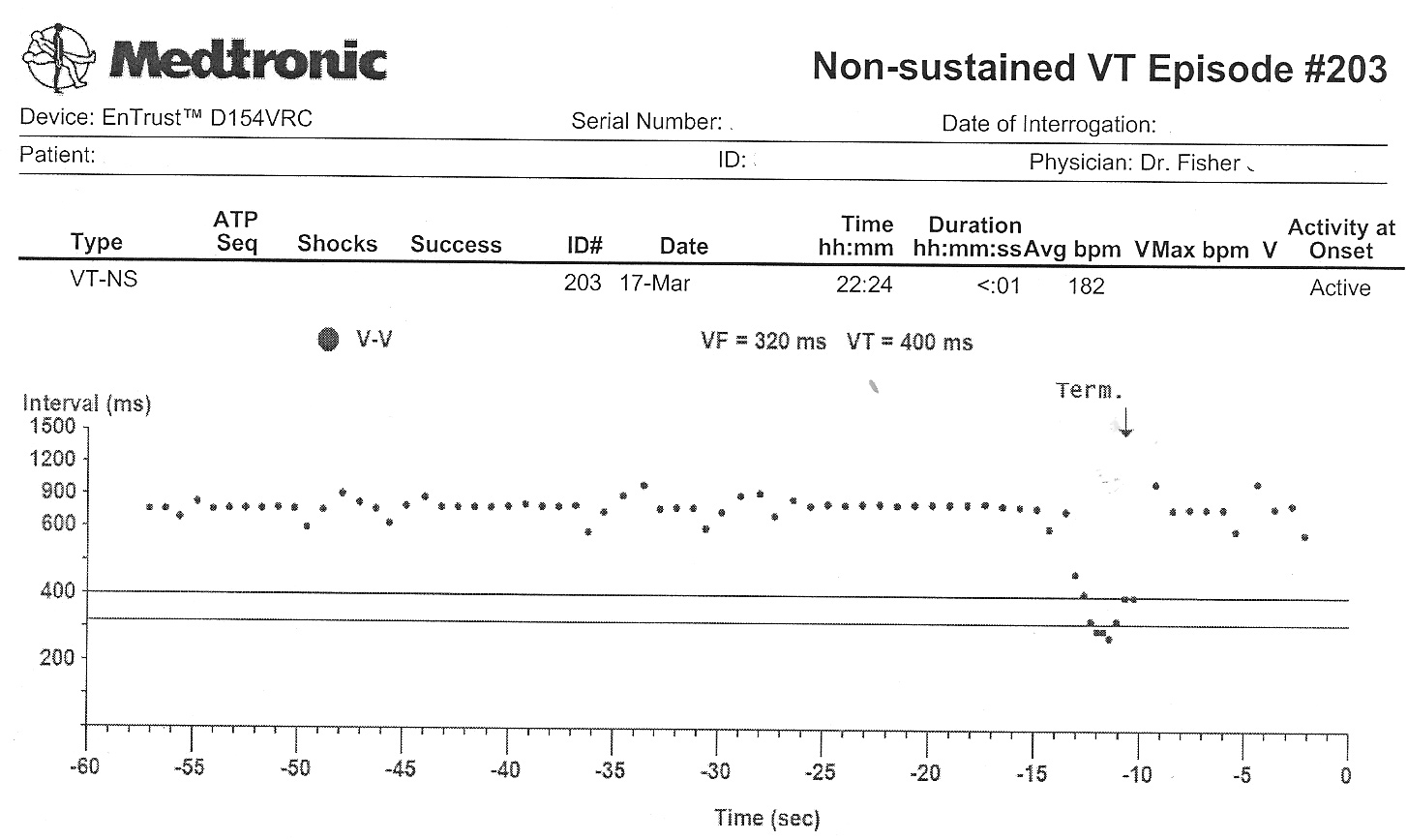
An example of several of the recorded interval plots (Event 202 and 203) as well has one example of the electrograms (and therapies delivered) recorded during episode 202 are shown below.  56 similar events were recorded since his last device interrogation, all with a similar pattern:


Episode 202 RR Interval Plot (Click to enlarge) 
Event 203 RR Interval Plot

Event 202's Recorded Electrograms and Intervals (Click image to enlarge)
 
Any thoughts about why this man might be having VT?

-Wes

Monday, April 22, 2013

To Burn or Freeze During Catheter Ablation of Atrial Fibrillation, That Is the Question

With the deaths that have recently surfaced caused by esophageal perforation following cryoablation procedures for the treatment of atrial fibrillation, Dr. John Mandrola (a fellow colleague and EP-blogger) delves deeper into the incidence, issues, and current recommendations that might improve the safety of the procedure over at theHeart.org today.  It's an excellent review of the current state of the art as he's been able to review it.  Go now and read his piece.

Of course, as Dr. Mandrola points out, although the incidence of this deadly complication is rare, there is still much we don't know about this procedure's long-term safety, especially as newly-engineered cryoballoons  enter the EP community's ablation toolkits.  Careful long-term assessment of this technology's safety and efficacy, as well as its safety compared to more conventional radiofrequency ablation techniques for pulmonary vein isolation, remain unknown.

-Wes

Thursday, November 29, 2012

The Currency of the Future

From this morning's Wall Street Journal:

Medtronic says federal rules prohibit giving Ms. Hubbard's data to anyone but her doctor and hospital. "Our customers are physicians and hospitals," said Elizabeth Hoff, general manager of Medtronic's data business. Medtronic would need regulatory approval to give patients the data, she said. It hasn't sought approval because "we don't have this massive demand."

. . .

Some legal experts say the 1996 U.S. law governing patient access to their health files—HIPAA, or the Health Insurance Portability and Accountability Act—hasn't kept up with technology. The law gives patients the right to access information held by doctors and hospitals. However, the raw data gathered by an implant isn't held by a doctor or a hospital: Typically it goes directly to the device maker, which provides a summary report to the doctor. Because of this, the raw data falls outside the scope of HIPAA's patient-access requirements. In addition, Medtronic said, business agreements with doctors and hospitals restrict it to relaying information only to them.
"Is the device itself a depository for medical records?" said Paul C. Zei, a cardiologist at Stanford University Medical Center with a patient, Hugo Campos, who wants the same access to his cardiac-device data as the doctor gets. "Or is it part of the patient, and an extension of vital signs that we download into a medical chart?"
Gee.  Someone saw this coming years ago. 

But as patients pay for more and more of their health care, companies better remember who's really their customer.  Furthermore. patients should have access rights to all of their medical information, irrespective of where it resides.

-Wes

Friday, August 05, 2011

How My iPhone Prevented an ER Visit (with screenshots)

It's one of those calls you never want to get as an electrophysiologist:
"Doc, I got four shocks from my device yesterday."

"What were you doing at the time?"

"Working outside."

"Wasn't it about a 100 degrees and humid then?"

"Yes."

"Were you lightheaded before the event?"

"Not too bad... I stopped what I was doing and got better. Should I come in to the ER?"

"This happened yesterday?"

"Yes."

"Why didn't you come in then?"

"Well I started to feel better..."

"Do you know how to upload the information from your device at home?"

"You mean using that thing next to my bed?"

"Yes."

"I think so."

"Okay, why don't you go do this and we'll call you right back after we have a chance to view the information you send us."

"Okay. Thanks, doctor."
So I waited about 15-20 minutes, then checked the Medtronic Carelink app on my iPhone. This application lets doctors and device management personnel view all of the information uploaded from pacemakers and defibrillators that we normally review in our device clinics on our iPhones instead. I hadn't had much need for this, or so I thought, until now. I thought it would be cool for patients to see what their authorized doctors can view on their iPhones when things like this occur, so I took some screenshots.

Booting the app:

Click on any image to enlarge


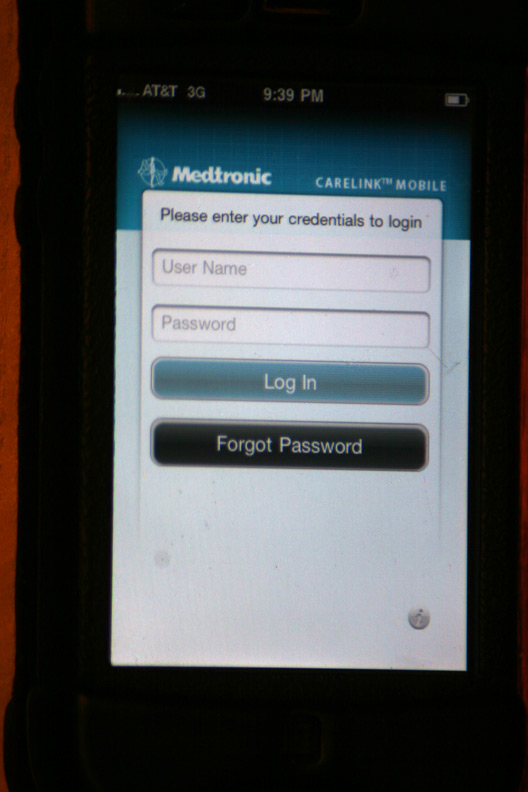
The login screen:


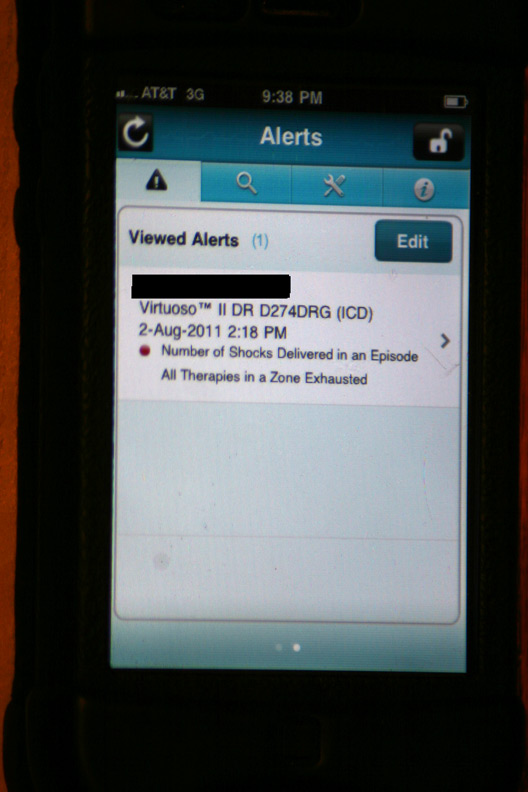
The initial alert that appeared after logging in:


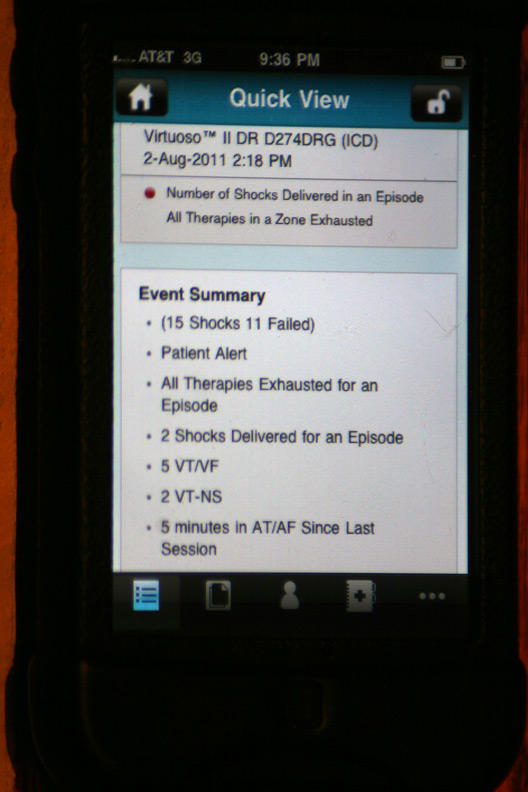
The gory details of that event displayed after touching the above alert (Holy cow! He had a lot more than four shocks!):


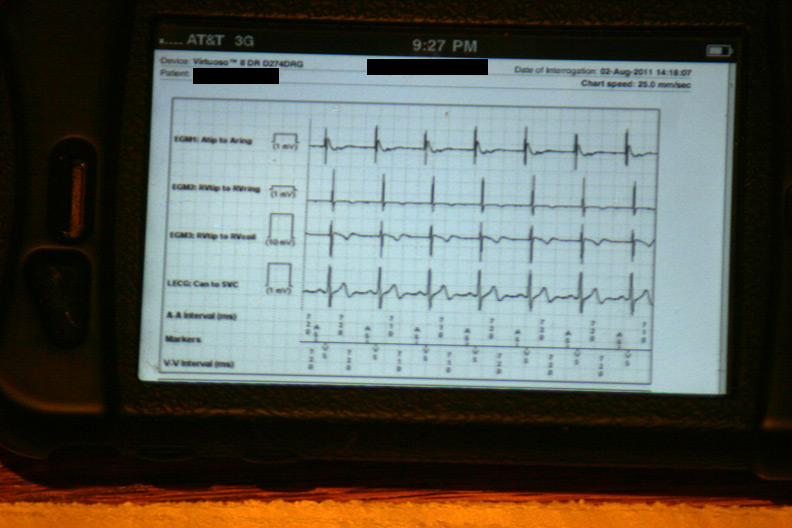
The data were then loaded from the event in a 42-page unprintable pdf file (HIPAA prevents printing, I guess). Page one contained the various atrial and ventricular electrograms (signals from the wires in his heart) at the time the data were transmitted:


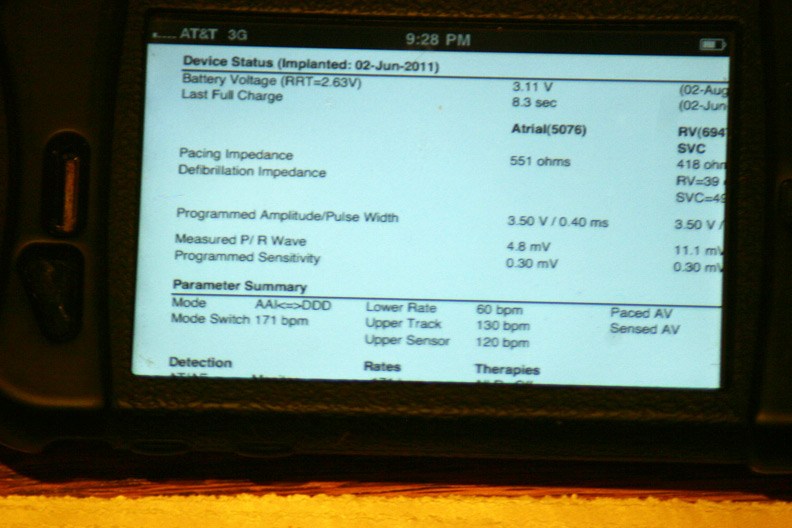
A few of the basic programmed parameters and remaining battery life (Whew, plenty left!):


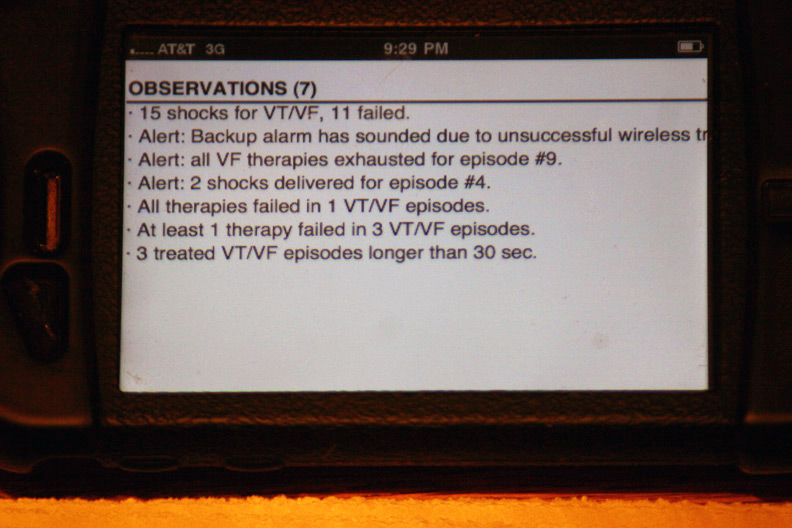
The device's seven "observations" classifying the types and numbers of therapies:


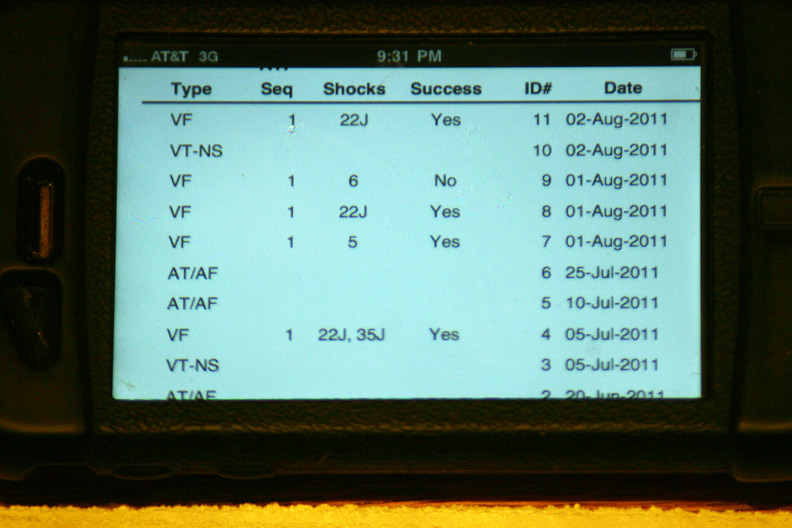
More specifics regarding the time and number of shocks at each event:


The atrial and ventricular inter-electrogram interval plot for the most recent event with repetitive shocking:


Zooming in on the plot of atrial (squares) and ventricular (circles) intervals at the intitiation of the event (Who started things?):


The atrial and ventricular electrograms obtained during one of the events (Is that Wenckebach block?):


The effect of antitachycardia pacing during the event: the ventricle is paced but had no effect on the atrium driving the ongoing event:


The other events disclosed similar findings. It appeared each of these shock therapies were delivered as a result of a very fast atrial tachycardia that was able to conduct to the ventricle, rather than a ventricular rhythm problem.

Of course, there is a slight problem that presents itself to doctors and their business administrators when we use this very cool technology: it's all done for free. Still, the ability to review this important clinical information untied to a hard-wired computer terminal offers important advantages to our increasingly mobile physician workforce and, in this case, prevented an unnecessary emergency room visit.

-Wes

Epilogue: The patient was contacted by phone after reviewing this information. He as told he did not have to go to the Emergency Room. Instead, significant adjustments were made to his medication regimen over the phone. He was seen the next morning in our device clinic to reset the alarm that was triggered when his device exhausted all its therapies in one event. No further arrhythmias had transpired and discussions regarding alternate medical or ablative therapies are pending.

P.S.: Sorry patients, the while the app can be downloaded from the Apple iTunes App store for free, its use is restricted to authorized care providers only. Maybe when implantable devices carry memory bins for uploaded digital music...
Tuesday, March 01, 2011

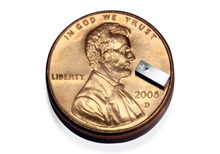
A Pacemaker on a Chip?


Almost:
So far, Medtronic has developed most of the components—a circuit board, an oscillator to generate current, a capacitor to store and rapidly dispense charge, memory to store data, and a telemetry system to wirelessly transfer that data. The company has used chip manufacturing technology to assemble these components onto a wafer. Oesterle estimates that 60 to 70 pacemakers can be made from a single six-inch wafer, which the company creates at its own wafer fabrication plant in Arizona.

"What we don't have that is fundamental to a pacemaker is a way to power the chip," says Oesterle. The company is working with startups that make thin-film batteries and other innovative power sources, though Oesterle declined to give further details.
Oh, and don't forget the need for a fixation mechanism. Otherwise, these things might embolize and serve as the next Viagra.

On second thought...

-Wes

Friday, February 18, 2011

What's the Difference Between MRI-Safe and Conventional Pacemaker Leads?

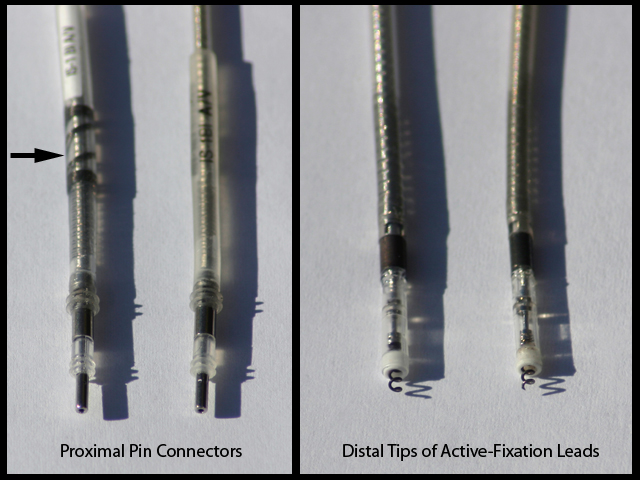
... a little thicker, certainly, but otherwise (at least on the surface), not too much:


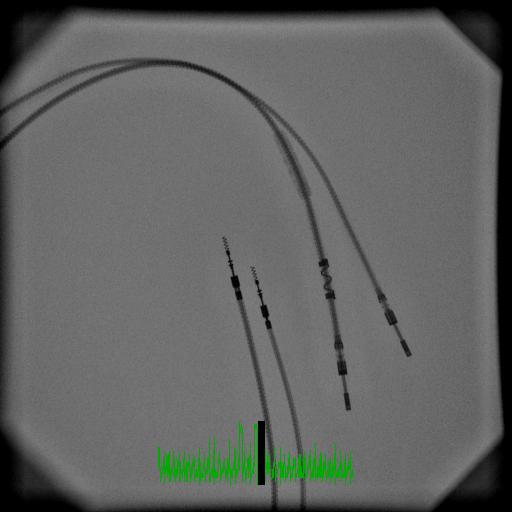
The recently-approved MRI-safe active-fixation lead from Medtronic (left lead in each frame) is compared to their conventional active-fixation lead. The arrow denotes the radio-opaque marker that can been seen on x-ray to identify the type of lead in the patient's body. A fluoro image of the two leads is shown below, again with Medtronic's MRI-safe lead on the left:


While the engineering hurdles were no-doubt considerable to make an MRI-safe pacemaker lead, given the growing body of evidence that newer pacemakers (when carefully monitored) can be scanned in MRI machines, I suspect the biggest difference in these leads is not their design per se, but rather the regulatory paperwork (and research) that had to be completed to document their safety.

Of course, the fact that CMS would not pay for MRI scans performed on patients with pacemakers before the advent of these newer devices probably also limited the number of scans performed.

-Wes

Wednesday, February 16, 2011

MRI-Safe Pacemakers - Version 1.0

Mary Knudson, a health journalist and author of the Heart Sense blog, does a great job covering the story behind the story on the newly approved MRI-safe pacemakers in a guest blog post at the Scientific American. She discusses the challenges ahead in regard to the widespread clinical adoption of MRI-safe pacemakers, the issues with Medicare coverage of MRI's of patients with these devices, the logistics involved in their use, and includes commentary from a number of physicians, including a tidbit from yours truly.

-Wes

Wednesday, May 05, 2010

Software Glitch Found in Medtronic's Latest Defibrillator Line

From 7thSpace:
(Hong Kong) The Department of Health (DH) today (May 5) received notification from Medtronic International Limited (MIL), the local branch of a multi-national medical device manufacturer, that software problems in six of its implantable cardiac devices may risk life-threatening though rare malfunctioning. A DH spokesman said, the affected models are Consulta CRT-D (D234TRK), Secura DR/VR (D234DRG, D234VRC), Maximo II CRT-D (D284TRK) and Maximo II DR/VR (D284DRC, D284VRC).All except Maximo II VR (D284VRC) are distributed in Hong Kong. As of April 19 this year, the manufacturer has received five confirmed reports of defect out of approximately 144 000 devices sold worldwide.However, it is reassuring that no patient injury or death arising from the affected devices has been reported thus far.
I called Medtronic technical support and they confirmed the issue. It appears they are not recommending any additional action on the part of patients be undertaken at this time since the problem is only caused if a rare sequence of events takes place. They are awaiting for FDA approval of a software fix for the problem can be upload during patients' next routine device follow-up to avoid the issue.

More details as they become available...

-Wes

Addendum 7 May 2010 17:27PM: The Dear Doctor letter from Medtronic, posted today.

Sunday, February 07, 2010

How Technology Is Straining the Doctor-Patient Relationship

Technology is an incredible thing.
Technology is expensive.

Technology saves lives.
Technology can bankrupt.

When there's no technology, are you a "bad" doctor for not following guidelines?
When technology's used, are you a "bad" doctor because the patient has multiple comorbidities and the benefit for the implanted technology is questionable?

It's become the yin and yang of medicine. An inconvenient truth.

Medicine's technology is incredibly expensive, but incredibly valuable.

But if the struggle isn't enough, along comes the press to skew the debate by "raising awareness" with our patients.

Doctor, you need to "Get with the Guidelines." The subtitle with such an industry-sponsored trial and press report should be, "Oh, and business is off."

The journal article at the heart of the Chicago Tribune piece (referenced below) suggests the underpenetrated market of defibrillators (ICDs) was partially caused by three factors:
Adjusted analyses revealed lack of adherence for ICD use most notably with advancing age (odds ratio: 0.87; 95% confidence interval: 0.82 to 0.93 per 10 years), black race (odds ratio: 0.75; 95% confidence interval: 0.60 to 0.94), and lack of insurance (odds ratio: 0.45; 95% confidence interval: 0.26 to 0.78).
But other factors exist, they claim, like geography and available expertise:
Practices in the Northeast U.S. were more likely to adhere to guidelines (P <.001), as were those with a dedicated HF clinic (P = .004) and electrophysiologists on staff (P <.001).
These data are indeed valuable, even for an industry-sponsored trial. But patients should be aware that six of these devices must be implanted to save one life in properly selected populations of patients. Not to say that the cost-effectiveness of this approach hasn't been extensively reviewed, it has. But referring doctors and patients have also been barraged with the problems with these technologies. No doubt the chart reviews in the study cited probably didn't account for the rash of recalls whose influence continues today.

We must also place a jaded eye at the manufacturer's earlier press release about this trial that 35,000 charts had been reviewed, rather than less than half of that (15,381). Small error? Not so much.

Medicine is a complicated, non-linear profession. But as patients continue to shoulder more of their health care bills, doctors are finding themselves in the increasingly difficult position of recommending very expensive life-saving technology that might bankrupt their patients. Unless industry acknowledges that very real price pressures are straining this doctor-patient relationship, there will remain a reluctance to completely "Get With the Guidelines" and implant the technology, even when doing so stands to benefit the doctor.

-Wes

Ref: Evidence of clinical practice heterogeneity in the use of implantable cardioverter-defibrillators in heart failure and post–myocardial infarction left ventricular dysfunction: Findings from IMPROVE HF. HeartRhythm Dec 2009, 6(12), Pp 1727-1734.

Friday, December 18, 2009

Can a Website Teach CPR?

The American Heart Association, in conjunction with a $1 million dollar grant from the Medtronic Foundation, thinks it can, especially if schools can win a thousand bucks for their effort promoting the idea:
Through the Be the Beat campaign, the Medtronic Foundation is providing $1,000 grants for school staff to help fund CPR and AED training outreach programs within their school or community. The deadline for application is January 15, 2010. More information is available in the “Teachers and Administration” section of the Be the Beat Web site, BetheBeat.heart.org/schools.

BetheBeat.heart.org engages 12- to 15-year-olds to learn the basics of cardiopulmonary resuscitation (CPR) and how to use an automated external defibrillator (AED) through interactive games, videos and songs on the Web.
Sadly, the music selections that play at 100 beats/minute, (like "Stayin' Alive" and "Another One Bites the Dust") aren't available for download, but a expanded list of songs that play at that rate is included. Songs like U2's "I Still Haven’t Found What I’m Looking For" or Simon and Garfunkle's "Cecilia" (yep, "Celilia, you're breakin' my heart, I'm down on my knees, beggin' you please, to come home, to come home!" made the list. This alone is sure to be a source of endless entertainment, though I'm not sure about the appropriateness of singing ABBA's "Dancin' Queen" during CPR...)

And while the games kids are expected to play on the website are right up there in challenge level with the first iteration of "Pong," the concept of getting a broader, younger demographic to even think thirty seconds about CPR and how to use an AED is a novel one.

-Wes

Thursday, September 10, 2009

A New Medtronic Defibrillator Advisory Issued Today

Today, an announcement was issued to doctors implanting Medtronic's Concerto and Virtuoso wireless implantable cardiac defibrillator's (ICDs) that a certain lot of 5,200 devices in the US of the total 158,000 implanted worldwide have demonstrated premature battery depletion due to a faulty battery capacitor containing porous copper. A total of 230 devices returned so far have demonstrated this problem. The capacitor was manufactured by an outside vendor, and more recent models of these devices manufactured reportedly no longer have this capacitor.

The notification is not a recall and does suggest any of the devices have failed and no deaths have been reported as a result of this notification. It is recommended that physicians continue the routine follow-up of these devices every three months and the patient alert feature be programmed "ON-High" for the Low Voltage Battery alert.

You can look up specific serial numbers of Concerto biventricular defibrillators(Model C154DWK) or Virtuoso DDDR defibrillators (Model D154AWG) models that might be affected at http://CVSNList.medtronic.com.

-Wes

Monday, May 18, 2009

Medtronic Issues New Pacemaker Advisory

Today, Medtronic began notifying physicians and patients about a new advisory (pdf) on some of their Kappa and Sigma series of pacemakers manufactured between 2000 and 2002. The defect stems from certain "voids" created in the solder joint where the attachments are made with the circuit board, causing them to fail over time. This loss of connection could lead to premature battery depletion, loss of rate response, loss of telemetry, or even no output.

Although these pacemakers were one of Medtronic's most popular pacemaker lines in early 2000-2004 with over 1.7 million devices implanted worldwide, it is estimated that only 36,900 remain actively implanted in patients. There have been two reported deaths that, while it is uncertain, may have stemmed from this problem.

According to the advisory letter, Medtronic has observed 285 Kappa devices and 131 Sigma devices affected by this issue, representing 0.49% of all Kappa devices and 0.88% of all Sigma devices implanted. It is estimated that the failure rates of Kappa pacemakers is 1.1% and Sigma pacemakers is 4.8% over the remaining lifetime of these pacemakers (the higher failure rate in the Sigma device because of its longer estimated longevity).

Physicians and patients can find if their particular device is affected by logging on to http://www.KappaSigmaSNList.medtronic.com to look up their specific serial number to see if it's affected by this advisory.

Also according to the letter, another subset of Kappa pacemakers involving an additional 96,000 devices might be affected by this defect, but at a much lower failure rate of 0.04% of the devices.

Physicians should consider replacing devices in pacemaker-dependent patients (those dependent on the device for their heart to beat). Further recommendations and information about the advisory can be found on the advisory letter issued today.

-Wes

Thursday, May 07, 2009

Man vs. Machine During CPR

Sometimes, even our best efforts to save lives fails us.

In an effort to minimize the time to deliver shocks in patients in cardiac arrest, hospitals across the country have turned to automatic external defibrillators to reduce the time to first shock, thereby improving cardiac arrest outcomes. More often than not, this policy has been effective at assuring that nursing staff and even locally-available non-medical personnel can at least treat a patient as soon as possible after a cardiac arrest.

But might there be an instance where the AED gets it wrong?

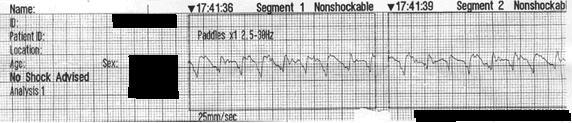
Well, of course. No shock algorithm is perfect. Take a look at this strip obtained from a Medtronic's Life Pak 20 defibrillator set to default to AED mode after a telemetry alarm prompted nursing personnel to rush to be patient's room, only to see the patient lose consciousness:

Click image to enlarge


CPR is started, but no shock was delivered. Why? Because the AED considered the rhythm "NONSHOCKABLE."

A quick call to the company suggests the algorithm (which is not published anywhere to my knowledge) involves five factors to attempt to be highly sensitive and fairly specific for ventricular arrhythmias: heart rate over 120, amplitude of the signal, slope of the received EKG morphology, QRS width, and something called "flat line content." Careful review of this rhythm demonstrates that it represents a heart rate over 120, is irregular, has varying QRS widths, and probably has different "slopes" and has an unknown "flat line content," whatever that represents.

While these findings are interesting for engineers, man (and women) must be allowed to intervene when it is perceived a machine is in error and anyone in a new, wide complex rhythm that causes a team of people to initiate CPR should consider the obvious:

Shock 'em anyway (synchronized to the QRS, of course).

Oh, and how do you deactivate the automatic nature of the AED on a Lifepak 20? Push any button besides the "Shock" button on the device and you'll be placed in manual mode.

-Wes

Wednesday, April 08, 2009

On Sprint Fidelis Lead Extraction

The New York Times published an article in their business section (interesting location to put such an article, but I digress) about extracting the Medtronic's advisory Sprint Fidelis defibrillator "cable" recently. (Note to their editors, it's actually a "defibrillator lead" containing multiple wires, not a "cable.") The article quotes some of the best and brightest in the lead extraction field - all of whom are truly experts at the task. It is interesting to note the differences in management style that these guys display: some (Wilkoff) would re-use the lead when it comes times for generator change, while others advise removing the lead at the time of a defibrillator generator (battery) change. There is little mention about placing a new lead next to the old one. Instead, the article suggests that "leaving it in place can make it more difficult to remove later, because of in-grown tissue."

No, that is not the reason to have the lead extracted. On the contrary, that's a reason to leave the lead in place so you can avoid the potential risk of tearing one of the great vessels and bleeding to death during the extraction procedure. After 6 months most of these leads have their "ingrowth" of tissue well-established. The "ingrowth" is not like a cancer that continues to grow. It can become more dense and even calcified over time, however, and the amount of ingrowth varies patient to patient.

Most experienced explanters look for certain characteristics on any lead that needs to be extracted to determine the potential difficulties they might encounter. Leads with more shocking coils are usually more difficult to extract because the coils often become adherent to tissue. Also, leads that passivly fix to the heart by scar formation tend to be harder to extract compared to those that actively screw into the heart muscle (and can have the screw retracted before removal). These are some of the bigger factors to explain why some of these leads come out more easily than others.

Admittedly, sometimes the lead must be extracted because the blood vessel into which the original lead was inserted became completely occluded and a new lead simply cannot be placed next to the old one without removing the old one first. Sometimes there's a desire not to implant a new device from the opposite chest area because of anatomic issues, like a prior mastectomy. Or maybe the lead has become infected, then it MUST be removed because, like a splinter festering in your foot, the infection will never resolve unless the lead is removed in its entirety. These reasons I'd buy as reasons to consider lead extraction. Also, patient preference of anxiety influences the decision to remove the lead, sometimes despite the doctor's best attempts at suggesting alternatives. There will always be a few of these.

But if it is at all possible to place a new lead at the time of battery change, that's seems like a reasonable compromise to me that avoids most future issues with the advisory lead. Certainly, Dr. Wilcoff thinks that the fracture rate is low enough that he'd just re-use it. While this conservative approach might make sense in most instances, is more difficult to justify when a patient is pacemaker-dependent and must have a normally functioning lead at all times for their heart to beat. In these cases, placement of a new lead, especially at the time of device battery change when the risk of infection is unavoidable, might warrant a more aggressive approach to avoid a potentially fatal complication should the lead later fracture. But what to do if the implant vessel is completely occluded and no room exists to place a new lead in such a pacemaker-dependent patient? This is where the toughest clinical issue lies: do you implant a whole new system from the contra-lateral side or just a pace-sense lead and then tunnel the lead to the same side as the others? Or do you extract the lead to make room for a new one? Given the risks involved with extraction, it's hard to know if the "cure" is worse than the disease.

What is certain is that patients with this lead should discuss all of these potential eventualities with their cardiologist or electrophysiololgist before any surgery takes place to develop a game plan should any of these challenges be encountered during routine device battery-change surgeries.

-Wes

Tuesday, February 24, 2009

More Concerning News About Medtronic's Sprint Fidelis Lead

... was published online before print in the journal Heart Rhythm yesterday:
"... the hazard of Sprint Fidelis failure accelerated after the first year and continued to increase during the study. In contrast to other defibrillator leads, the Sprint Fidelis failure rate was significantly higher (3.75%/year vs 0.58%/year) and the 3-year estimated survival significantly lower (87.9%, 95% CI 84.8,90.9 vs 98.5%, 95% CI 97.8, 99.3) (p<0.0001). The chance that a Sprint Fidelis lead would survive another year decreased progressively during the study. Most Sprint Fidelis failures were caused by pace-sense conductor fracture (n=63; 87.5%), which caused inappropriate shocks in 36 of 72 patients."
As far as I am aware, no new recommendations from Medtronic regarding the management of these leads has been forthcoming (e.g., the cautious "wait and watch approach" seems best for now), but we certainly have seen our share of patients with this problem.

-Wes

Addendum: The story in the New York Times.

Monday, November 03, 2008

Software Said To Reduce Inappropriate ICD Shocks

In October, 2007, Medtronic issued one of the largest defibrillator lead advisory alerts for their popular and thin Model 6949 Sprint Fidelis lead due to the lead's higher-than-expected fracture rate. More recently, a software patch called a Lead Integrity Alert has been developed that can be uploaded into affected patients' defibrillators in hopes of improving the detection of lead fracture conditions. The software also automatically readjusts the settings of the defibrillator to make it less prone to deliver inappropriate shocks caused by lead failure.

Today in Circulation, the efficacy of this algorithm to avoid shocks was published from in vitro testing on leads returned to the manufacturer.* Real life effectivness of the algorithm has not been tested to date. So far, the algorithm theoretically shows improvement in avoiding unnecessary shocks:
To reduce inappropriate shocks, the lead-integrity algorithm increases the number of intervals to detect (NID) ventricular fibrillation when triggered. The lead-integrity algorithm was tested on data from 15,970 patients with Fidelis leads (including 121 with clinically diagnosed fractures) and 95 other fractured leads confirmed by analysis of returned product. The effect of the NID on inappropriate shocks was tested in 92 patients with 927 shocks caused by lead fracture. Increasing the NID reduced inappropriate shocks (P<0.0001). The lead-integrity algorithm provided at least a 3-day warning of inappropriate shocks in 76% (95% CI, 66 to 84) of patients versus 55% (95% CI, 43 to 64) for optimal impedance monitoring (P=0.007). Its positive predictive value was 72% for lead fractures and 81% for lead fractures or header-connector problems requiring surgical intervention. The false-positive rate was 1 per 372 patient-years of monitoring.
The distribution of the fractures reported was also interesting:
Of the 95 patients in the RPA (returned product analysis) group, 41 (43%) had fractures of the coil conductor to the tip electrode and 54 (57%) had fractures of the cable conductor to the ring electrode. Figure 5 shows that all coil fractures occurred at the anchor sleeve, whereas 52 of the cable fractures (96%) occurred distally or at the bifurcation/trifurcation.
We are about to see a rising number of patients with these leads enter the clinical arena as their ICD batteries reach their elective replacement indicators warning us of battery depletion. Recommendations from the company have so far been few, but most suggest a relatively conservative watch and wait approach. But when the patient's ICD pocket is opened for a battery change, the opportunity to place a new, non-recalled lead presents itself and should be considered (provided of course venous access still exists in which to place the new lead).

The difficult decision will come when there is no venous access in which to place a new lead from the same side as the existing defibrillator. Should we abandon the existing side and place an entirely new system on the opposite side with new, non-recalled leads? Should we send the patient for lead extraction and replacement? Or should we re-connect the old lead and hope for the best if no other option presents itself?

These are not easy decisions.

Patients with Sprint Fidelis leads should discuss what's involved with each of these scenarios with their doctors when the time comes to replace their defibrillator battery. Hopefully, we'll have additional trend data regarding lead survival on which to base future management recommendations. But until we do, battery changes in these patient's with Sprint Fidelis leads will be anything but routine.

-Wes

*The study was funded by Medtronic.

Other information:
Medtronic's Official Sprint Fidelis Information WebSite
TheHeart.org: Updated Lead Failure Rate Information
Medtronic to Pull Its Most Popular Defibrillator Lead
More on the Medtronic's Sprint Fidelis Advisory
Medtronic's Sprint Fidelis Perfomance Lead Update

Wednesday, October 29, 2008

Devices Finished? I Don't Think So

If only biotechnology could deliver on its promises:
“You can’t keep stuffing gizmos into people to treat end-stage disease,” the keynote speaker said. “When biotechnology gets right, we’re finished. Because it’s restorative, not palliative as devices are.”
Biotechnology for pacemakers? Not yet. Biotechnology for treating tachyarrhythmias with stem cell injections? Not yet.

Maybe Mr. Osterle knows something that I don't know, but for now, I'm gonna keep "stuffing in" his company's devices. I just haven't seen the Fountain of Youth from biotech spring forward for my patients.

But heck, why not dream?

-Wes

Tuesday, September 16, 2008

ICD Class Action: Patients 40%, Lawyers 60%

As reported in the Star Tribune regarding the faulty implantable cardiac defibrillator (ICD) battery suit settled by Medtronic from the recall of 2005:
Less than half of the Medtronic settlement has been mailed to people who received defibrillators that were recalled in 2005 because of concerns about battery failures. The rest of the disbursements remain stalled, as lawyers deal with Medicare and Medicaid issues and third-party liens.

"We wanted to get some money into the hands of the claimants while we get other issues resolved," said Dan Gustafson, a Minneapolis lawyer and co-lead counsel in the Medtronic lawsuit.

But getting 40 percent of your total damages in September 2008 from a settlement that was announced in December 2007 still rankles some of those people who wore the recalled devices.
One would think this legal wrangling would be negotiated ahead of time, but I've got to say that there's some justice being served here as lawyers get to deal with Medicare and Medicaid issues, too.

-Wes

Friday, September 12, 2008

Keeping Things in Perspective

The New York Times has an interesting piece in their Business section today on implantable cardiac defibrillators (ICDs), but paints a remarkably pessimistic view of the future market for the devices. While I do not argue with the fact that ICD implants nationally have declined, I think it's relatively important to compare the cost of ICDs relative to other therapies we dispense in medicine relative to their life-saving value to our healthcare system.

Although admittedly assembled by Medtronic (who has a vested interest in promoting ICD therapy and yes, I suppose I do, too), there are data of the costs of ICDs relative to other preventative therapies doctors provide as "prevention." Here's a slide from them that adds perspective:

Click image to enlarge
Additionally, although the SCD-HeFT trial demonstrated that 15 patients were needed to be treated before a life was saved, other trials demonstrated a significantly better odds at saving a life:

Click image to enlarge

MUSTT @ 5 years from Kaplan Meier (KM) curve: 55%-24%, NNT=3 N Engl J Med 1999;341:1882-1890
MADIT @ average follow-up of 2.4 yrs, crude mortality rate: 39%-16%, NNT=4 N Engl J Med. 1996;335:1933-1940
MADIT-II @ 3 years from KM curve: 31%-22%, NNT=11 N Engl J Med. 2002;346:877-883
AVID @ 3 years from the KM curve: 36%-25%, NNT=9 N Engl J Med. 1997;337:1576-1583
SAVE (captopril, an ACE inhibitor) crude rate with average follow-up of 42 months: 25%-20%, NNT=20 N Engl J Med, 1992; 327:669-677.
Merit-HF (metoprolol, a BB in HF patients) @ 1 year from KM curve: 11%-7.2%, NNT 26 LANCET 1999; 353:2001-07.
4S (simvastatin) @ 6 years from KM curve: 12.3%-8.7%, NNT=28 LANCET 1994; 344: 1383-1389.
Amiodarone Meta-analysis of 15 trial @ average follow-up of 2 years: 19.2%-16.5%, NNT=37 Circulation, 1997; 96: 2823-2829.


Finally, in terms of cost of other preventative therapies that our society has deemed useful to save a life, I always appreciated this view:

Click image to enlarge
Just trying to keep it in perspective.

-Wes

Thursday, September 04, 2008

Software Coming to Help Detect Medtronic Sprint Fidelis Lead Fractures

Sometime next week, we should be receiving software, called the "Lead Integrity Alert" that can be uploaded into existing Medtronic implantable cardiac defibrillators (ICDs) to help detect lead fractures from the recalled Sprint Fidelis (Model 6949) defibrillator leads. This software was approved by the FDA today and can be uploaded into the Medtronic's Marquis, Maximo, Virtuoso and Concerto ICD models non-invasively during a routine office visit. It is thought that such programming changes can reduce the number of patients who receive an inappropriate shock from a lead fracture before it is explanted by 38 to 40%. While not perfect, it might alert both the patient and physician earlier to a avoid unnecessary shocks should a lead fracture.

How the Software Works

There is a so-called Sensing Integrity Counter that usually trips an alert if there are greater than 300 counts of non-physiologic sensed intervals by the device. This software will lower this number to 30 or more to trigger an alert. Further, if there are an excessive number of very short "non-sustained ventricular tachycardia" sensed intervals, this also could trigger an alert. The software also allows an automatic adjustment of the "number of intervals to detect" to be automatically incremented to the next-higher detection ratio in hopes of averting a shock, while beeping six times a day (rather than once) to improve the chances a patient will notice the new alert state if tripped.

What to Do

Patients with the advisory leads will have the software automatically installed during their next routine office device check, but those who want it installed earlier should contact their doctor and inquire if the software could be installed earlier.

Realize this software only affects Medtronic ICDs. St. Jude and Boston Scientific devices are NOT affected.

-Wes

11 Sep 2008 Update: Medtronic's Info on the Lead Integrity Alert.