On 29 January 2014, St. Jude Medical issued a "Dear Colleague" letter regarding their review of incident reports on older-model pacemakers (Affinity, Entity, Integrity, Identity, Sustain, Frontier, Victory and Zephyr models) that occasionally dropped their output voltage during surgical electrocautery. (Here's a publication describing two such cases.)
Several issues regarding this advisory letter are troubling.
First of all, according to the St. Jude letter: "Placing a magnet over the device or programming to an asynchronous pacing mode will not prevent this temporary reduction in pacing output." Consequently, St. Jude advises that pacemaker-dependent patients with these older pacemakers consider undergoing surgery without the use of electrocautery or to "employ appropriate precautions to ensure that the heart rate will be supported in the presence of electrocautery. Consideration of placing a temporary transvenous pacemaker is appropriate. (Emphasis mine)"
Typically, placing a magnet over pacemakers causes them to pace at a default "magnet rate" and pace at the programmed output voltage. This is such a common feature among pacemakers that it formed one of the cornerstones of the 2011 guidelines for peri-operative pacemaker management. While electromagenetic interference on older pacemaker models has been seen due to the device being reset, it is unusual for pacemaker output voltage to drop briefly. Furthermore, the recommendation to place a temporary pacing wire before surgery where electrocautery use is anticipated in pacemaker-dependent patients suggests there is no programmable "work-around" for this problem.
Secondly, while it seems an effort has been made to notify physicians about this problem with certain older St. Jude pacemaker models, it is concerning that I could not find the notice on St. Jude's Healthcare Professional website at the time of this writing, nearly three weeks after date of the original notification letter. Furthermore, it is concerning that such an unusual (and potentially fatal) failure mode of these older models of pacemakers has not been made more public to patients with these older St. Jude pacemakers so they can serve as their own advocates when surgery is in its planning stages.
-Wes
Showing posts with label St. Jude Medical. Show all posts
Showing posts with label St. Jude Medical. Show all posts
Thursday, February 20, 2014


Thursday, November 29, 2012
The Currency of the Future
From this morning's Wall Street Journal:
But as patients pay for more and more of their health care, companies better remember who's really their customer. Furthermore. patients should have access rights to all of their medical information, irrespective of where it resides.
-Wes
Medtronic says federal rules prohibit giving Ms. Hubbard's data to anyone but her doctor and hospital. "Our customers are physicians and hospitals," said Elizabeth Hoff, general manager of Medtronic's data business. Medtronic would need regulatory approval to give patients the data, she said. It hasn't sought approval because "we don't have this massive demand."
. . .
Some legal experts say the 1996 U.S. law governing patient access to their health files—HIPAA, or the Health Insurance Portability and Accountability Act—hasn't kept up with technology. The law gives patients the right to access information held by doctors and hospitals. However, the raw data gathered by an implant isn't held by a doctor or a hospital: Typically it goes directly to the device maker, which provides a summary report to the doctor. Because of this, the raw data falls outside the scope of HIPAA's patient-access requirements. In addition, Medtronic said, business agreements with doctors and hospitals restrict it to relaying information only to them.
"Is the device itself a depository for medical records?" said Paul C. Zei, a cardiologist at Stanford University Medical Center with a patient, Hugo Campos, who wants the same access to his cardiac-device data as the doctor gets. "Or is it part of the patient, and an extension of vital signs that we download into a medical chart?"Gee. Someone saw this coming years ago.
But as patients pay for more and more of their health care, companies better remember who's really their customer. Furthermore. patients should have access rights to all of their medical information, irrespective of where it resides.
-Wes
Monday, August 13, 2012
High Voltage Riata ST Defibrillator Lead Failure and Its Implications for Durata
It came from a case report published online before print in PACE from Dr. John Marenco of Tufts University in Springfield, Massachusetts:
This case report discloses several important issues. (1) High voltage coil damage in a 7Fr Riata ST lead can lead to either ineffective high voltage therapy delivery, withholding of further therapies, or both despite appropriate arrhythmia detection. St. Jude defibrillators are engineered to automatically withhold energy delivery in low high-voltage lead impedance situations to avoid excessive current delivery and device overheating in such circumstances (personal communication). (2) This failure mechanism, while curently very rare, may affect implanters decisions regarding whether or not to replace existing Riata leads irrespective of their performance characteristics and flouroscopic appearance at the time of battery change. Already there have been other reported high voltage failures in Riata leads with externalized wires. Some have advocated testing the high voltage leads as part of Riata lead follow-up to screen for this failure mechanism, especially since the therapeutic implications of high voltage lead failure is much more significant and difficult to detect than low-voltage (sensing lead) failures.
Perhaps most important for St. Jude going forward is how this case will influence implanters' choice of later-generation 7 Fr St. Jude defibrillator leads with their Optim coating but similarly-downsized inner lumen dimensions. I look forward to St. Jude's update of their Riata Communications website regarding these recently published case reports.
-Wes
References:
Marenco JP. "Failure to Deliver ICD Shocks after a Failed Discharge Despite Redetection of Rapid Ventricular Tachycardia? What Is the Cause?" PACE DOI: 10.1111/j.1540-8159.2012.03484.x Published online 21 July 2012.
For an excellent overview of the Riata ICD lead recall by Dr. Jay Schloss: http://cardiobrief.org/2012/02/22/guest-post-more-lessons-from-the-riata-icd-lead-recall/
Further review of the case's figure disclosed appropriate VT detection, a high voltage impedance of 0 ohms, and an "aborted charge because of possible output circuit damage" on device interrogation after the event. Importantly, at the time of lead revision, "there was no fluoroscopic insulation breach and no obvious insulation breach in the pocket." Fluoroscopic screening of these leads, therefore, would not have detected pending lead failure. Further, as far as we can tell from the report, no antecedent device alerts were triggered before this event.A 60-year-old man had a single-chamber St.Jude Atlas VR defibrillator (St. Jude Medical, St. Paul, MN, USA) with a dual coil St. Jude Riata 7001 defibrillator lead (My note: this is actually a downsized, second-generation 7 Fr Riata ST model whose internal construct shares many similarities to St. Jude's currently-marketed third-generation 7 Fr Durata lead) placed in 2006 for primary prevention secondary to an ischemic cardiomyopathy and prior myocardial infarction. All routine device interrogations, both remote and in-office, had been normal with stable sensing amplitude, lead impedances, and capture thresholds. The device was programmed with two zones: a ventricular tachycardia (VT) zone from 340 ms (176 beats/min) and a ventricular fibrillation (VF) zone from 260 ms (231 beats/min). The VT zone had a morphology discriminator “on” with interval stability and sudden onset “passive.” Five years from implant, he presents with palpitations, light-headedness, and a single implantable cardioverter defibrillator (ICD) discharge. He has a friend drive him to the emergency room and is found to be in ventricular tachycardia over 200 beats/min. The ventricular tachycardia terminated with intravenous amiodarone bolus before need for external defibrillation. Device interrogation demonstrated an initial rhythm of atrial fibrillation with the appropriate detection of the onset of ventricular tachycardia with a cycle length of 245 ms, within the device’s VF zone (Fig. 1). Discriminators were not activated in the VF zone, but the morphology discriminator clearly demonstrates a failure of the electrogram signal to match the template (indicated by the “x” in the marker channel). After detection of 12 intervals (interval average) within the VF zone an episode is declared and a 25-Joule (693 V) shock is delivered, failing to restore sinus rhythm. No additional shocks are delivered despite appropriate redetection within the VF zone (Fig. 2). After a fifth detection, the device declares “no more therapies” with VT continuing indefinitely. Device interrogation in the emergency department reveals a pacing lead impedance was 465 ohms, signal amplitude 1.8 mV, and capture threshold 0.75 V at the rate of 0.5 ms. What is the differential diagnosis of failure to deliver appropriate therapy and why did this device fail to deliver more than a single shock?
This case report discloses several important issues. (1) High voltage coil damage in a 7Fr Riata ST lead can lead to either ineffective high voltage therapy delivery, withholding of further therapies, or both despite appropriate arrhythmia detection. St. Jude defibrillators are engineered to automatically withhold energy delivery in low high-voltage lead impedance situations to avoid excessive current delivery and device overheating in such circumstances (personal communication). (2) This failure mechanism, while curently very rare, may affect implanters decisions regarding whether or not to replace existing Riata leads irrespective of their performance characteristics and flouroscopic appearance at the time of battery change. Already there have been other reported high voltage failures in Riata leads with externalized wires. Some have advocated testing the high voltage leads as part of Riata lead follow-up to screen for this failure mechanism, especially since the therapeutic implications of high voltage lead failure is much more significant and difficult to detect than low-voltage (sensing lead) failures.
Perhaps most important for St. Jude going forward is how this case will influence implanters' choice of later-generation 7 Fr St. Jude defibrillator leads with their Optim coating but similarly-downsized inner lumen dimensions. I look forward to St. Jude's update of their Riata Communications website regarding these recently published case reports.
-Wes
References:
Marenco JP. "Failure to Deliver ICD Shocks after a Failed Discharge Despite Redetection of Rapid Ventricular Tachycardia? What Is the Cause?" PACE DOI: 10.1111/j.1540-8159.2012.03484.x Published online 21 July 2012.
For an excellent overview of the Riata ICD lead recall by Dr. Jay Schloss: http://cardiobrief.org/2012/02/22/guest-post-more-lessons-from-the-riata-icd-lead-recall/
Wednesday, May 16, 2012
Durata: Questioning the 99%
 |
| One of Many St. Jude Ad Trucks Seen at HRS 2012 Scientific Sessions |
Cardiobrief: "Unfortunately, Dr. Greenberg was unable to attend today, but St. Jude’s Dr. Carlson stood bravely in the breach (no pun intended) to describe the performance of St. Jude’s 3500+ Durata leads in its OPTIMUM registry. Follow up was 2.4 years, and my only comment is that 2.4 years in my view is an early experience, not a mid-term experience. The event free survival was >99%. Excluding dislodgments and perforations, which may be operator dependent, there were only 5 lead mechanical problems, namely conductor fractures, in over 8400 implant years. Now this is truly spectacular. There were no inside-out insulation abrasions and no all-cause abrasions. But I have to say, that the Durata leads that I have been looking at in the FDA’s MAUDE database must not have been included in this study."I'm starting to see the makings of a Tyson/Holyfield match.
-Wes
Wednesday, February 22, 2012
Truth and Consequences: The St. Jude Riata ICD Lead Recall and It's Possible Implications for Durata
Today, a remarkable tour de force essay on the St. Jude Medical Riata defibrillator lead recall controvery written by Edward J Schloss, MD, director of cardiac electrophysiology at Christ Hosptial in Cincinnati, OH, appears at Cardiobrief. It is a must-read for all of us interested in the management of patients with the current class of St. Jude defibrillator leads.
In the essay, he reviews two opposing views on the industry handling of this recall, one published as a perspective piece in the New England Journal of Medicine by Robert Hauser, MD, and the other, a rebuttal piece published by St. Jude Medical's Chief Medical Officer and Senior Vice President of Clinical Affairs, Mark D. Carlson, MD. The article reviews the engineering changes made to the Riata line of leads in its evolution to the Durata defibrillator leads and expresses clear concerns about disclosure of all available information regarding lead characteristics to implanting physicians.
This piece is a must-read for electrophysiologists and industry personnel involved in the care of these complicated patients. Schloss concludes:
-Wes
PS: John Mandrola, MD, a co-editor of Dr. Schloss's piece, also offers an excellent overview of concerns that confront electrophysiologists regarding the Riata/Riata ST lead recall over at theHeart.org.
In the essay, he reviews two opposing views on the industry handling of this recall, one published as a perspective piece in the New England Journal of Medicine by Robert Hauser, MD, and the other, a rebuttal piece published by St. Jude Medical's Chief Medical Officer and Senior Vice President of Clinical Affairs, Mark D. Carlson, MD. The article reviews the engineering changes made to the Riata line of leads in its evolution to the Durata defibrillator leads and expresses clear concerns about disclosure of all available information regarding lead characteristics to implanting physicians.
This piece is a must-read for electrophysiologists and industry personnel involved in the care of these complicated patients. Schloss concludes:
Anyone who has been in the business of cardiac rhythm management has struggled with the problems of device failures. Because most of these only occur years after FDA approval, having a system for early detection of excess or unique failures is critical.Go now. Read it all. You will learn something.
Industry response to these failures is also critical. Clear, honest acknowledgement of the problem is essential. We also need quick action to define the scope of the problem and create an action plan. These measures go a long way to maintaining the confidence of everyone involved, including, but not limited to, physicians, hospitals, patients, and the investment community.
Every time we, the implanting physicians, implant a medical device, we are taking a measured risk that must be outweighed by its benefits. Understanding this true risk, especially in newer devices, is extremely difficult. By becoming a student of the engineering process of these devices, we can become better equipped to make good decisions for our patients.
We are only now learning the scope of the problem with Riata and Riata ST. The lead mechanical failures and externalizations of this lead may only first occur four to five years after implant. Since Durata leads are only now approaching that interval, it is not surprising that we have not seen many troubling signals with this lead. It remains to be seen what the future holds. Until we have longer experience and collect more data, it us up to individual doctors to educate themselves with available clinical and engineering data so they are equipped to make good decisions.
-Wes
PS: John Mandrola, MD, a co-editor of Dr. Schloss's piece, also offers an excellent overview of concerns that confront electrophysiologists regarding the Riata/Riata ST lead recall over at theHeart.org.
Sunday, October 02, 2011
The Vagaries of Atrial Fibrillation
I am always amazed at the different ways atrial fibrillation can present: sometimes with rapid heart rates, other times slow; sometimes it's continuous, other times intermittent; sometimes it occurs without symptoms, other times it occurs with major symptoms like palpitations, stroke, or a peripheral embolus.
Atrial fibrillation is a strange, troubling, and often difficult disease to manage.
And so, when a patient with known persistent atrial fibrillation with rapid ventricular rates presents with a funny sense of lightheadedness with exercise once a week or so, you tend to think you know what you're going to find: periods of super-fast heart rate associated with lightheadedness.
At least until you check the patient's heart rhythm with a recording device. Now I'm beginning to think anything's possible.
Here's why.
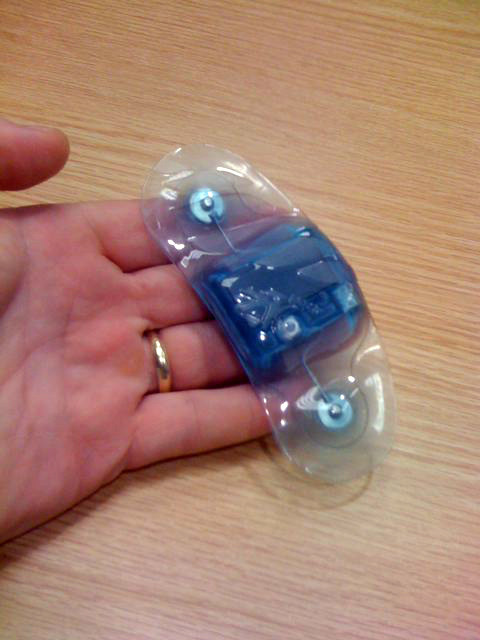
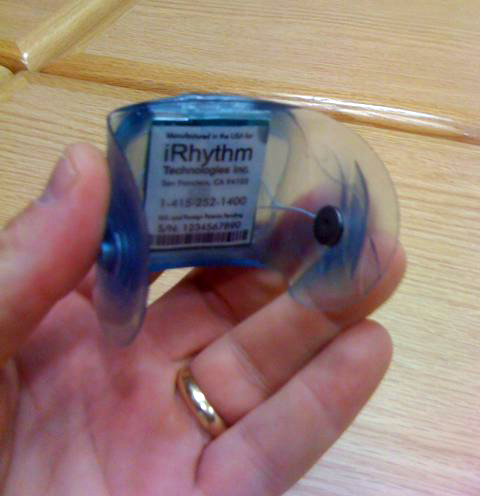
Increasingly, I have been reaching for a newer form of heart monitor that combines continuous monitoring with patient feedback but lasts much longer than our older 24-hour Holter monitors. It is compact, has no dangling wires, and gives a continous single-lead EKG tracing for up to 14 days. It has a button that the patient can press to identify periods when symptoms are occuring. Best of all, it's just a little flexible plastic patch that is applied to the surface of the skin. In that patch is a processor that records the surface EKG (even while in the shower) for the full 14 days. (Exercise has to be avoided to avoid sweat from dislodging the adhesive). After that time, the patient drops the device in the mail (provided the post office stays open!) and sends the device to a processing center where the stored 14-day EKG is processed and pre-categorized by heart rate range, rhythm, tachycardias, pauses, PAC's, PVC's and for the reviewing physician to overread. The data are then plotted and made available for clinical review on the company's website. Here's a few pictures of one of the earlier prototypes of this device (iRhythm - now a St. Jude Medical company) that I took:
So why is this important?
In my view, it's because of what I'm finding the patient doesn't perceive while wearing an event recorder. A more conventional event recorder is different than this patch-monitor because it relies on the patient to push the button when they experience symptoms and then stores the heart rhythm from a a minute or two before and after the button was pressed so it can be uploaded to a monitoring station for interpretation. As a result, asymptomatic arrhythmias can be missed. Historically, since patient symptoms were what we cared about we naively assumed this should be the best way to identify the patient's problem.
That was the "old days."
Here's a few representative tracings from the earlier patient when this person pressed the patch's button (denoted by the red circle) at the time of the patient's "symptoms:"
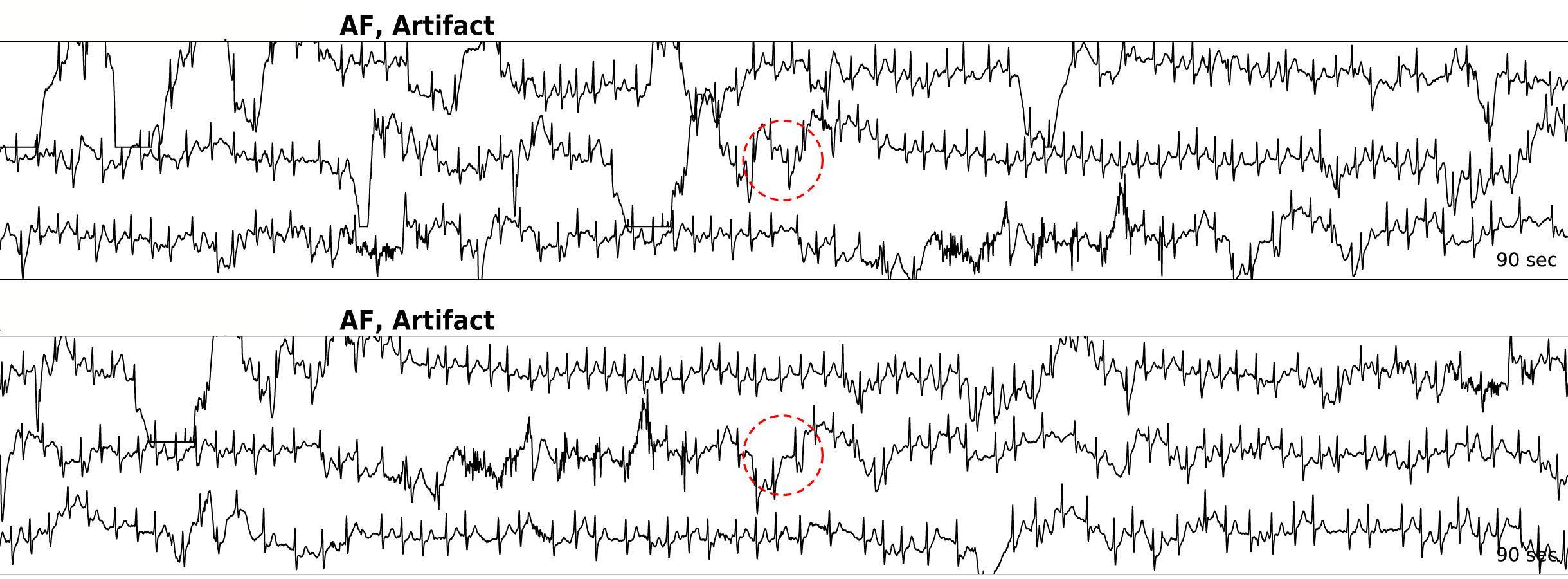
As expected: nothing but atrial fibrillation with fairly rapid ventricular response. Certainly there's no real emergent concern with these findings.
But then came the spouses' addition to the patient's history as I called them with the patient's patch-monitor results:
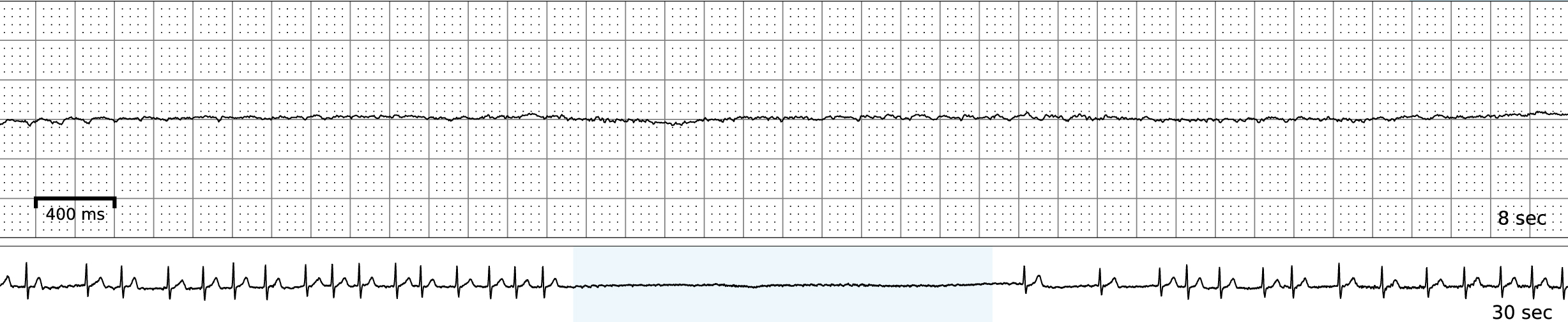
Needless to say, over nine seconds of asystole is probably the reason the patient failed to respond to their spouse and is the most likely cause of the patient's rarely perceived periods of lightheadedness. Ten other pauses over three seconds had transpired at many times of the day amongst the 14-day recording, yet none were perceived by the patient.
Unusual?
Certainly.
But now I know it's not too unsual for the vagaries of atrial fibrillation.
-Wes
(Disclaimer: I have no commercial interest in the ZioPatch, iRhythm, or St. Jude Medical)
Atrial fibrillation is a strange, troubling, and often difficult disease to manage.
And so, when a patient with known persistent atrial fibrillation with rapid ventricular rates presents with a funny sense of lightheadedness with exercise once a week or so, you tend to think you know what you're going to find: periods of super-fast heart rate associated with lightheadedness.
At least until you check the patient's heart rhythm with a recording device. Now I'm beginning to think anything's possible.
Here's why.
Increasingly, I have been reaching for a newer form of heart monitor that combines continuous monitoring with patient feedback but lasts much longer than our older 24-hour Holter monitors. It is compact, has no dangling wires, and gives a continous single-lead EKG tracing for up to 14 days. It has a button that the patient can press to identify periods when symptoms are occuring. Best of all, it's just a little flexible plastic patch that is applied to the surface of the skin. In that patch is a processor that records the surface EKG (even while in the shower) for the full 14 days. (Exercise has to be avoided to avoid sweat from dislodging the adhesive). After that time, the patient drops the device in the mail (provided the post office stays open!) and sends the device to a processing center where the stored 14-day EKG is processed and pre-categorized by heart rate range, rhythm, tachycardias, pauses, PAC's, PVC's and for the reviewing physician to overread. The data are then plotted and made available for clinical review on the company's website. Here's a few pictures of one of the earlier prototypes of this device (iRhythm - now a St. Jude Medical company) that I took:
So why is this important?
In my view, it's because of what I'm finding the patient doesn't perceive while wearing an event recorder. A more conventional event recorder is different than this patch-monitor because it relies on the patient to push the button when they experience symptoms and then stores the heart rhythm from a a minute or two before and after the button was pressed so it can be uploaded to a monitoring station for interpretation. As a result, asymptomatic arrhythmias can be missed. Historically, since patient symptoms were what we cared about we naively assumed this should be the best way to identify the patient's problem.
That was the "old days."
Here's a few representative tracings from the earlier patient when this person pressed the patch's button (denoted by the red circle) at the time of the patient's "symptoms:"
(Click image to enlarge)
As expected: nothing but atrial fibrillation with fairly rapid ventricular response. Certainly there's no real emergent concern with these findings.
But then came the spouses' addition to the patient's history as I called them with the patient's patch-monitor results:
"You know what's been strange? Sometimes at dinner he/she just looks down at the plate for a second and doesn't respond, then asks 'What are you yelling at me for?'"Here's what the full-disclosure patch-monitor recording from Day 8 from meal time:
(Click image to enlarge)
Needless to say, over nine seconds of asystole is probably the reason the patient failed to respond to their spouse and is the most likely cause of the patient's rarely perceived periods of lightheadedness. Ten other pauses over three seconds had transpired at many times of the day amongst the 14-day recording, yet none were perceived by the patient.
Unusual?
Certainly.
But now I know it's not too unsual for the vagaries of atrial fibrillation.
-Wes
(Disclaimer: I have no commercial interest in the ZioPatch, iRhythm, or St. Jude Medical)
Monday, September 12, 2011
More Troubles for St. Jude's Riata Defibrillator Leads?
From the Minneapolis Star Tribune:
-Wes
Researchers in Ireland have discovered a possible problem with a heart defibrillator component made by St. Jude Medical Inc. in which wires that run from the device to the heart may poke through the outer coating of their cable.It should be noted that the "study" referenced in this artice was actually an abstract published in the European Heart Journal's September supplement edition. I could not find it online yet, but a copy of the source abstract can be found on CafePharma, the medical device / pharmaceutical industry representative's anonymous messaging board.
The study looked at 212 patients in Ireland who received St. Jude's Riata defibrillator lead and found that 15 percent had suffered such an "insulation breach," which could interfere with the device's life-saving therapy. Normal screening of the device or even X-rays may not pick up the breach, and patients would have no outward clue that their lead wire may be compromised.
-Wes
Friday, December 17, 2010
St. Jude Withdraws Riata Defibrillator Leads
St. Jude Medical announced they are withdrawing a portion of their thinner 7Fr Riata defibrillator lead line despite earlier glowing company reports because of a higher degree of insulation failures in the earlier design of the leads made with silicone insulation material:
Just as with the Medtronic Sprint Fidelis defibrillator lead withdrawl, St. Jude does not recommend the affected leads be extracted. I would suspect that doctors will weigh the risks vs. benefits of placing a new defibrillator lead at the time of device battery changes.
In November 2007, the Riata line of defibrillator leads were plagued by concerns of a higher-than-average rate cardiac perforation, but these were quickly disputed by the company.
-Wes
The Riata and Riata ST family of silicone defibrillation leads have exhibited an insulation abrasion rate of 0.47% over 9 years of use. Silicone rubber, while representing the industry’s most commonly used defibrillation lead insulation material over the past 20 years, has been observed to be vulnerable to abrasion. Abrasion of silicone defibrillation leads is acknowledged within the clinical community as a well known clinical risk and is well documented in the literature as the number one cause of lead failure across the industry with reported failure rates ranging from 3 to 10 %. Lead insulation damage and its possible effects are also described as a potential adverse event in all silicone defibrillation lead user’s manuals, including Riata User’s manuals.Later St. Jude lead designs with their newer "Optim" polymer insulation appear to not be affected by this action. St. Jude had hoped their Riata line of defibrillator leads could replace the niche left by Medtronic's earlier withdrawl of their downsized Sprint Fidelis defibrillator leads after Medtronic's line of 7Fr defibrillator leads experienced higher-than-expected fracture rates.
Just as with the Medtronic Sprint Fidelis defibrillator lead withdrawl, St. Jude does not recommend the affected leads be extracted. I would suspect that doctors will weigh the risks vs. benefits of placing a new defibrillator lead at the time of device battery changes.
In November 2007, the Riata line of defibrillator leads were plagued by concerns of a higher-than-average rate cardiac perforation, but these were quickly disputed by the company.
-Wes
Monday, January 21, 2008
St Jude Announces Defibrillator Update Needed
61 microseconds.
That's a tiny, tiny fraction of a second. 0.000061 second to be exact.
Heck, to put it in perspective, light travels a mile in a vacuum in a little over 5 microseconds.
But if an arrythmia occurs in that tiny window, patient's with St. Jude Epic or Atlas implantable cardiac defibrillators (ICDs) might undersense (not see) a life-threatening arrhythmia. So St. Jude began notifying doctors that a software fix is available to assure their devices work properly, even in this tiny vulnerable timing window.
There are estimated to be 143,000 of these defibrillators implanted worldwide and only 8 patients have been affected with this problem so far. Gratefully, no one has died. The risk of a specific patient being harmed by this defect is estimated to be on the order of one in a million (0.000001).
So what does it mean for defibrillator patients and doctors caring for them?
It is not thought at this time that an extra office visit is required due to the rarity of the problem, but during a patient's next regularly-scheduled device clinic visit, they'll receive a "software upgrade" to their Epic or Atlas ICD to correct the problem.
What I found amazing was the engineers' ability to figure out the root cause of this problem in the first place.
-Wes
Reference: St. Jude's "Dear Doctor" letter dated 16 Jan 2008 (pdf) with the models affected.
Tuesday, November 13, 2007
St. Jude Responds to WSJ Article
Monday, November 12, 2007
Thin Defibrillator Leads from St. Jude Questioned
Area of a circle equals pi (3.14159...) times the radius squared. I remember that equation from geometry class.
Now, all kinds of engineers are rethinking this equation, too. As are doctors.
Since Medtronic had their recent thin Sprint Fidelis lead (6.6Fr) recalled due to an elevated rate of fractures, new scrutiny is being placed on St. Jude's even thinner (6.3Fr) Riata® ST defibrillator lead. But the concern in this case is less about fractures, but rather heart perforations.
This morning the Wall Street Journal reports that St. Jude's Riata ST lead is being evaluated for an increased cardiac perforation rate compared to conventional thicker defibrillator leads. Cardiac perforations are not new to defibrillator or pacemaker implantations. An example of this can be found on a dramatic case recently published in Circulation (reference below) where a pacemaker lead had punctured a patient's heart and had eroded through his 7th rib. But with the recent FDA hypersensitivity and the concerns about thin defibrillator leads, it is not surprising that such concerns have been raised.
You see in cross section, the thinner a lead becomes, the more force from the lead pressing against heart muscle is concentrated over a smaller area. And unfortunately, as the radius of leads are downsized, the force applied over that area increases geometrically (radius squared, remember?). An example of the difference that surface area makes on pressure to tissues can be felt when you apply the same amount of pressure from a pencil's erasure over your hand versus its sharpened tip.
So when a thin lead has a narrowed diameter, it might be more likely to perforate. And given the concerns aired in the Wall Street Journal article, I bet implanting electrophysiologists will be slow to rush these leads until the dust settles a bit more. After all, we've become a bit sensitized to these issues.
-Wes
References:
Update 21:49 CST - The PACE articles with the studies regarding the Riata lead issues are now up. Dr Steven V. Vlay of Stony Brook University, New York in his accompanying editorial states:
Here's the references from this issue of PACE:
1. Krivan L, oz M, Viasinova J, Sepšsi M. Right ventricular perforation with an ICD defibrillation lead managed by surgical revision and epicardial leads.
2. Fisher JD, Fox M, Kim SG, Goldstein D, Haramati LB. Asymptomatic anterior perforation of an ICD lead into subcutaneous tissues.
3. Satpathy R, Hee T, Esterbroooks D, Mohiuddin S. Delayed defibrillator lead perforation: An increasing phenomenon.
Now, all kinds of engineers are rethinking this equation, too. As are doctors.
Since Medtronic had their recent thin Sprint Fidelis lead (6.6Fr) recalled due to an elevated rate of fractures, new scrutiny is being placed on St. Jude's even thinner (6.3Fr) Riata® ST defibrillator lead. But the concern in this case is less about fractures, but rather heart perforations.
This morning the Wall Street Journal reports that St. Jude's Riata ST lead is being evaluated for an increased cardiac perforation rate compared to conventional thicker defibrillator leads. Cardiac perforations are not new to defibrillator or pacemaker implantations. An example of this can be found on a dramatic case recently published in Circulation (reference below) where a pacemaker lead had punctured a patient's heart and had eroded through his 7th rib. But with the recent FDA hypersensitivity and the concerns about thin defibrillator leads, it is not surprising that such concerns have been raised.
You see in cross section, the thinner a lead becomes, the more force from the lead pressing against heart muscle is concentrated over a smaller area. And unfortunately, as the radius of leads are downsized, the force applied over that area increases geometrically (radius squared, remember?). An example of the difference that surface area makes on pressure to tissues can be felt when you apply the same amount of pressure from a pencil's erasure over your hand versus its sharpened tip.
So when a thin lead has a narrowed diameter, it might be more likely to perforate. And given the concerns aired in the Wall Street Journal article, I bet implanting electrophysiologists will be slow to rush these leads until the dust settles a bit more. After all, we've become a bit sensitized to these issues.
-Wes
References:
Wall Street Journal.
Singhal S, Cooper JM, Cheung AT, Acker MA. "Rib Perforation From a Right Ventricular Pacemaker Lead." Circulation; 115: e391-392.
Update 21:49 CST - The PACE articles with the studies regarding the Riata lead issues are now up. Dr Steven V. Vlay of Stony Brook University, New York in his accompanying editorial states:
"What is particularly troublesome about this lead is not only the perforation but its late presentation. Sometimes the lead perforation does not come to clinical attention until it is well beyond the right ventricular free wall. Furthermore with the Riata, the movement continues until it protrudes out several cm into adjacent tissue. This factor seems to distinguish it from a small perforation in which only the tip of the lead penetrates the right ventricular wall. It could result in ventricular asystole if a patient is pacemaker dependent or in failure to successfully defibrillate, both resulting in sudden death. If perforation does not occur in the first three months, can we stop worrying? We do not yet know the answer to this question.
Here's the references from this issue of PACE:
1. Krivan L, oz M, Viasinova J, Sepšsi M. Right ventricular perforation with an ICD defibrillation lead managed by surgical revision and epicardial leads.
2. Fisher JD, Fox M, Kim SG, Goldstein D, Haramati LB. Asymptomatic anterior perforation of an ICD lead into subcutaneous tissues.
3. Satpathy R, Hee T, Esterbroooks D, Mohiuddin S. Delayed defibrillator lead perforation: An increasing phenomenon.
Wednesday, September 12, 2007
Friday, August 24, 2007
St. Jude Pacemakers Enter Trade War
SeekingAlpha reports an interesting tidbit regarding presumed "voltage variation" problem with some of St. Jude's pacemakers sent to China and how the return might have represented a trade relatiation move.
-Wes
Although five devices were found defective, the entire shipment of 272 devices was returned. The shipment had a value of $236,294, a small amount for a company like St. Jude. But safety issues have significant commercial ramifications, which the heart device companies like Medtronic (NYSE: MDT), Boston Scientific (NYSE: BSX), and Johnson & Johnson (NYSE: JNJ) have discovered over the past two years. As have the Chinese, though for other products.Although St. Jude scoffed at the accusations, I wonder what voltage variations we should tolerate, since lower voltages imply shorter device longevity?
The most important takeaway from this story is the implication of retaliation. So far this year, the Chinese have been battered by charges of a variety of safety issues – toothpaste, dog food, cold medication, and most recently lead paint on toys. At first, they denied that a real problem existed. Then they issued a number of press releases that detailed how the government would increase surveillance to ensure that Chinese exports would be safe.
-Wes
Wednesday, June 13, 2007
Boston Scientific to Face the Music
Unfortunately, the tune is likely to be a dirge.
Here's what Guidant's "Dear Doctor" letter said:
This ruling makes things more difficult for Boston Scientific, since there is less likelihood that the cases can be dismissed before going to trial on the basis that the claims could be preempted by a federal regulatory scheme (e.g., the FDA cleared our device, so it's not our fault). Further, and perhaps just as importantly, it permits the punitive damages portion of the trials (where big cash judgements to be levied against the device manufacturer) to also be brought forward. Boston Scientific's lawyers might be looking more seriously at settling given this turn of events.
This ruling may also have implications for the other device manufacturers (Medtronic and St. Jude) since now they may also have a hard time keeping their cases from going to trial for similar reasons.
-Wes
Hundreds of patients who then had their Model 1861s (defibrillators) removed are now suing the company for emotional distress and punitive damages and for failing to warn them of the flaw. Three patients died because of the flaw, but the plaintiffs at issue in the ruling didn't experience a malfunction themselves.Was the rate of failure one in 500 (as Guidant told us doctors), or one in 20 (as the plantiff's lawyers contend Guidant reported to the FDA)?
The ruling, by Judge Donovan Frank of the U.S. District Court in Minneapolis, means the cases will proceed to trial. The first case is scheduled to start in July.
Last month, Boston Scientific argued in court that Guidant didn't need to inform doctors because the rate of failure was extremely small -- about one in 500 over a three-year period. Lawyers for the company said it had already informed doctors that the devices were imperfect, and had told the Food and Drug Administration that the rate of failure could be as much as one in 20.
The company argued that patients whose devices weren't faulty shouldn't be able to sue the company for punitive damages. In yesterday's ruling, the court rejected those arguments, stating "the law is not furthered by allowing a manufacturer to escape liability for a defective product simply because a plaintiff elected to remove a medical device."
Here's what Guidant's "Dear Doctor" letter said:
There have been 28 reports of this failure worldwide, in 26,000 devices built prior to the April 2002 change. This includes an event reported in March of 2005 in which a device was returned after a patient death. The device was found to have experienced this failure in conjunction with attempted delivery of at least one high-voltage therapy. To date, no such failures have been observed in theThis would put the failure rate at 28/26000 = 0.1% (or 1 in a 1000 devices). If we double that (to pick up some that might not have failed), then 1 in 500 seems reasonable. But the "one-in-20" incidence, as the plantiff's lawyers contend, seems a bit grandiose given the data...
devices built after the April 2002 change (including the approximately 11,000 devices built after the April 2002 change and before the November 2002 change). Approximately 13,900 devices built before the April 2002 change remain in service in the United States.
This ruling makes things more difficult for Boston Scientific, since there is less likelihood that the cases can be dismissed before going to trial on the basis that the claims could be preempted by a federal regulatory scheme (e.g., the FDA cleared our device, so it's not our fault). Further, and perhaps just as importantly, it permits the punitive damages portion of the trials (where big cash judgements to be levied against the device manufacturer) to also be brought forward. Boston Scientific's lawyers might be looking more seriously at settling given this turn of events.
This ruling may also have implications for the other device manufacturers (Medtronic and St. Jude) since now they may also have a hard time keeping their cases from going to trial for similar reasons.
-Wes
Monday, June 11, 2007
Current Data on Risk Stratification for Sudden Cardiac Death
Some interesting results of an industry-sponsored expert conference on risk stratification of sudden death appeared in this month's American Heart Journal. The experts reviewed left ventricular ejection fraction (LVEF), New York Heart Association Class, the presence of nonsustained ventricular tachycardia, microwave T wave alternans, measures of cardiac autonomic modilation (like heart rate variability), QT interval variability, signal averaged EKG, electrophysiology study, genetic testing, imaging studies and serum markers (like brain naturetic peptide or c-reactive protein).
Their take? Only ejection fraction seems worthy for risk stratification so far.
Here's what they said about ejection fraction:
-Wes
Their take? Only ejection fraction seems worthy for risk stratification so far.
Here's what they said about ejection fraction:
The LVEF has been recognized as a predictor of all-cause mortality in patients with coronary artery disease (CAD) for >30 years. One early study by the Multicenter Postinfarction Research Group showed in 866 post–myocardial infarction (MI) patients that the strongest predictor of 1-year cardiac mortality was the LVEF. This finding has withstood the test of time. In the VALIANT (trial), a randomized comparison of captopril, valsartan, and their combination in post-MI patients (n = 14 609) with left ventricular dysfunction, CHF, or both, LVEF was a strong predictor of SCD or cardiac arrest. The risk of SCD or cardiac arrest increased by 21% for every 5% decrease in LVEF.Participants at the meeting were as follows:
Left ventricular ejection fraction is also a strong predictor of all-cause mortality in patients with nonischemic cardiomyopathy. The MACAS (trial) was a prospective cohort study of 343 patients with nonischemic cardiomyopathy and an LVEF ≤45% who were followed for a mean of 52 months. Left ventricular ejection fraction was the only significant predictor of major arrhythmic events with a relative risk (RR) of 2.3 per 10% decrease in LVEF (95% CI 1.5-3.3, P < .0001) in patients with sinus rhythm and 4.5 per 10% decrease in LVEF (95% CI 1.5-13.2, P = .0008) in patients with atrial fibrillation.
Participants from the Academia: Sana M Al-Khatib, MD, MHS (co-Director), J Thomas Bigger, MD, Alfred Buxton, MD, Robert M Califf, MD, Anne Curtis, MD, Jeptha Curtis, MD, Bernard J. Gersh, MB, ChB, DPhil, Michael R. Gold, MD, PhD, Jeff Goldberger, MD, Stephen C. Hammill, MD, Jeff Healey, MD, MS, Mark Hlatky, MD, Stefan Hohnloser, MD, Raymond J Kim, MD, Kerry Lee, PhD, Daniel Mark, MD, MPH, L. Brent Mitchell, MD, Eric Prystowsky, MD, Gillian Sanders, PhD (co-Director), and Wojciech Zareba, MD, PhDThe conference was funded by AstraZeneca, Bayer, Boston Scientific, Cambridge Heart Inc, Medtronic, Reliant Pharmaceuticals, St Jude Medical.
Participants from the Centers for Medicare and Medicaid Services: Steve Phurrough, MD, MPA
Participants from the US Food and Drug Administration: Norman Stockbridge, MD, PhD, Robert Temple, MD, Bram Zuckerman, MD
Participant from the National Institutes of Health: Robin Boineau, MD, Michael Domanski, MD
Participant from Agency for Healthcare Research and Quality: Elise Berliner, PhD
Participant from the Heart Rhythm Society staff: Joel Harder
Participants from Industry: Mark Carlson, MD, Eric Fain, MD, Ali Haghighi-Mood, PhD, Steve Ketchum, PhD, Steve McQuillan MS, Marcus Mianulli MA, Philip Sager, MD, Dan Schaber, PharmD, Robert Shalwitz, MD, Joseph Smith, MD, PhD, Michael A Stein, MD, David Steinhaus, MD
Coordinating Staff: Marelle Molbert and Cass Finley from the Duke Clinical Research Institute.
-Wes
Saturday, May 05, 2007
St. Jude's New Line of Zephr Pacemakers
MedGadget does a nice review. Personally, I like all of the new features except the AF suppression algorithm - I've had to turn that off too many times because patients with frequent PAC's often track near their upper rate limit.
-Wes
-Wes
Monday, April 30, 2007
Defibrillator Lead Report Misleads
It didn't take long for the media to chew up this week's report on the high failure rate of old defibrillator leads published in Circulation from a single center registry from Germany today. What's better than to scare the heck out of patients? I mean, fear sells, doesn't it?
For those of you who haven't seen it yet, doctors from Germany decided to look back at their last 990 consecutive defibrillator lead implants between 1992 and 2005. They found 148 (15%) of defibrillator leads failed during follow-up and required replacement. They found that annual failure rates increased over time, peaking at 20% in 10-year-old leads.
But before you go out an insist that your defibrillator be removed, let's look at a few facts from the very same article:
It is important to note that the Heart Rhythm Society has been aware that these devices can be subject to malfunction on occasion. As such they have recommended that implantable cardiac defibrillators (ICDs) be evaluated every three months by a qualified physician. Further, most of the ICD manufacturers are developing wireless telemetry systems that can check these devices even as often as daily to assure their reliability. Furthermore, companies have migrated away from the form of polyurethane that can degrade when exposed to metal oxides (as occurred in leads manufactured before 1997). The fact that these older leads were included in the analysis serves to make the data more sensational and press-ready.
I would suggest that people evaluate the performance data maintained by each of the companies and published on-line. Boston Scientific's (formerly Guidant) performance data on their devices can be found here, Medtronic's here, St. Jude's here and Biotronik's can be found here. These data suggest current failure rates for most ICD's is approximately 10% after 10 years, fully one-half of that described by the authors in the above article. Certainly, this number is not perfect, but helps keep a reasonable perspective on defibrillator lead reliability, and reflects the world-wide experience of patient's with a particular lead or device system, and may be a more accurate reflection of lead trends across multiple centers and operators.
-Wes
For those of you who haven't seen it yet, doctors from Germany decided to look back at their last 990 consecutive defibrillator lead implants between 1992 and 2005. They found 148 (15%) of defibrillator leads failed during follow-up and required replacement. They found that annual failure rates increased over time, peaking at 20% in 10-year-old leads.
But before you go out an insist that your defibrillator be removed, let's look at a few facts from the very same article:
- 15% of the leads had problems, 85% of them did just fine.
- No patent died as a result of ICD lead failure
- Older lead materials that have since been show to have high failure rates are no longer used, but included in this report
- The authors performed 95% of their implants using a subclavian approach, an approach they freely admit is prone to an unusually high level of lead "crush" as the lead passes between the first rib and clavicle. Like a coat-hanger repetitively bent, leads implanted by this approach are subject to a higher failure rate.
It is important to note that the Heart Rhythm Society has been aware that these devices can be subject to malfunction on occasion. As such they have recommended that implantable cardiac defibrillators (ICDs) be evaluated every three months by a qualified physician. Further, most of the ICD manufacturers are developing wireless telemetry systems that can check these devices even as often as daily to assure their reliability. Furthermore, companies have migrated away from the form of polyurethane that can degrade when exposed to metal oxides (as occurred in leads manufactured before 1997). The fact that these older leads were included in the analysis serves to make the data more sensational and press-ready.
I would suggest that people evaluate the performance data maintained by each of the companies and published on-line. Boston Scientific's (formerly Guidant) performance data on their devices can be found here, Medtronic's here, St. Jude's here and Biotronik's can be found here. These data suggest current failure rates for most ICD's is approximately 10% after 10 years, fully one-half of that described by the authors in the above article. Certainly, this number is not perfect, but helps keep a reasonable perspective on defibrillator lead reliability, and reflects the world-wide experience of patient's with a particular lead or device system, and may be a more accurate reflection of lead trends across multiple centers and operators.
-Wes
Monday, April 09, 2007
Medtronic's Carelink Remote Device Follow-up "Free"
Today I received a letter from Stephen H. Mahle, Executive Vice President and President of Medtronic's Cardiac Rhythm Disease Management division, notifying me that their Carelink remote device check technology no longer has quarterly service charges.
This is not good news for St. Jude, since there will be additional pressure on their ICD and pacemaker technology platforms to provide similar services at no charge to their customers.
-Wes
"You will not be charged for patient transmissions that occurred on or after January 1, 2007. You will receive a final, zero-dollar invoice for transmissions occurring through March 31, 2007. In the next few days, your contract administrator will receive more information about this pricing change."It seems Boston Scientific's Latitude system, which rolls up the cost of continuous remote device checks in to the cost of their device, is a better business model. People already perceive the cost of these devices as high, and to pay additional costs for ongoing monitoring consumed too many hospital (and Medtronic) resources and resulted in a competitive disadvantage to Medtronic. Furthermore, this is in line with the Heart Rhythm Society's mandate to provide this service as part of continuing quality assurance monitoring.
This is not good news for St. Jude, since there will be additional pressure on their ICD and pacemaker technology platforms to provide similar services at no charge to their customers.
-Wes
Friday, March 23, 2007
Procedural Darwinism
New procedures in medicine do not always stay – they must survive.
I have been interested to see Procedural Darwinism at work in my daily practice. Charles Darwin introduced his theory of natural selection of species to the scientific community at the turn of the 20th century. But his work, I have found, is not limited to all creatures great and small – it is related to medical procedures as well. You see, some procedures that heath care professionals perform provide good value to the medical community and the doctors themselves, while other procedures are too time-consuming and too economically under-reimbursed to survive in the ever-frenetic pace of medicine today.
Take the stethoscope, for instance. It is rapidly succumbing to Procedural Darwinism. If it weren’t for the stethoscopes ability to hear breath sounds, it would have been extinct long ago. The echocardiogram is far superior to “hear” heart sounds, and adds procedural survival protection by providing additional size, structure, and functional information regarding the heart with little pain or toxicity to the patient. The echo also reimburses well. The echo will clearly and directly survive Procedural Darwinism.
Although it may be on the “Endangered Procedures” list because it reimburses nothing to the physician, the stethoscope still clings to Procedural Life by providing important value to the physician in a different venue: there is no faster way to detect the early onset of congestive heart failure or pneumonia. Stethoscopes survive, then, by providing indirect economic value to the physician (by making him improve outcomes and therefore referrals). Therefore, by indirect economics, the stethoscope is likely to survive Procedural Darwinism.
But some new procedures may not survive Procedural Darwinism. One such procedure is T-wave alternans testing for the evaluation of patient considered to be at risk for sudden death. For those not familiar with this test – it is like a treadmill test, but much more time-consuming to perform. It uses special (and relatively expensive) electrodes configured in a non-familiar way (to people who do these test for a living), and detects information that cannot be seen by the naked eye (therefore it’s hard to believe/understand/verify by those who do treadmills for a living). It also requires remarkable fortitude to assure reliable data are collected (have to hold the heart rate in a narrow range for a pre-specified amount of time). Worse still, the economics of reimbursement are poor: the “special” electrodes cost $74 a set while the entire inpatient reimbursement is under $150 for a test that takes at least 45-60 minutes per patient to perform in the inpatient setting. While the costs in the outpatient setting are a bit more favorable ($300 reimbursement), there are Medicare coding rules that are complicated to perfect, and therefore – at least in Illinois - difficult to assure collection of any reimbursement in the first place. This procedure, as it stands now, is destined for Procedural Extinction unless something changes.
St. Jude’s recent resuscitation of Cambridge Heart (the maker of the only approved T-wave alternans machine to date) flies against the forces of Procedural Darwinism. St Jude feels they have an answer to counteract their declining defibrillator sales: that the indirect value of T-wave alternans testing in terms of increased referrals for defibrillator implants will justify the hours spent performing the test (and revenues/time lost). If internists are to perform the test, unless they receive a kickback for such a referral to cardiac electrophysiologists, there will be little economic reason to perform this test due to its difficult procedural requirements in terms of time and reimbursement.
T-wave alternans testing will only survive if environmental conditions change: that is, a mandate by Medicare to require the testing for people with weak heart muscles and no prior arrhythmia or heart failure. Even then, the application of this test, when other better reimbursing tests exist (like EP testing), keeps this test likely for extinction.
-Wes
Monday, February 05, 2007
The Jet Stream
When I was a young boy, I would lay in our pasture and stare up at the clouds, fascinated that they took different shapes as they moved across the sky and could grow to become a serious storm, or wither to just obscure the sun. I later learned that the growth of clouds was caused in part by ambient heating of the earth, moisture flows from the North or South, or surface wind currents. Still later I learned that above it all was the jet stream – the high-altitude fast moving winds created by warming of the earth from the sun coupled with the Earth’s rotation – that really created the change in weather patterns. Predicting the weather involves knowing these jet stream patterns and interpreting them – getting these predictions wrong could put lives at stake.
The practice of medicine is like studying ever-transforming clouds – you never really know what shape a patient’s illness will bring, nor their response to their illness. But by using deductive reasoning or listening to trusted colleagues or opinion experts, we usually can hazard a guess at where a case will go and react accordingly.
But sometimes we have to look beyond the clouds, beyond what the experts and textbooks tell us. Sometimes we have to collect our own observations, gather data, and delve deeper to get the real gist of a case to save a life.
Beginning in February 2005, a series of defibrillator recalls rocked our cardiac electrophysiology community. First, was an extensive defibrillator battery recall from Medtronic. Soon after in May 2005, Guidant Corporation issued a recall of its Ventak Prism II defibrillator line. What was concerning about this recall was that it occurred, we learned, only after two physicians notified Guidant that the New York Times was to publish an article about a young 21-year-old patient that died when their defibrillator failed to perform properly nearly three years after the company knew of the root problem. The episode highlighted an important issue:
But most important with the former fiasco, implanting physicians like me were sensitized, ever-cautious to take what industry and the FDA tells us with a grain of salt.
So on January 29, 2007, when I learned that Medtronic was being investigated by the FDA for concerns raised by a former engineer, Christopher Fuller, regarding how their new wireless Concerto defibrillator was tested, I listened. Carefully. According to the Wall Street Journal, he resigned over concerns the the device "exhibited instabilities in testing" and that Medtronic "has chosen to ignore the problem." Press releases like this one and this one were released on 30 January with FDA spokesperson Heidi Rebello reassuring us that “We are investigating.” Funny, because Medtronic didn’t seem to know anything about an investigation:
Everything now is in question. The bloom is off the rose.
To be fair, I still believe that all of the device manufacturers in this business are reputable companies. Medtronic, Guidant (now Boston Scientific), and St. Jude have been in the business for years and have remarkably reliable devices that have saved many, many lives that otherwise would have been lost. They constantly strive to improve their products, tirelessly check devices for me in the field, and help develop policies to promote the well-being of patients. Many individuals from these companies have devoted their lives to improving the well being of their fellow man. The FDA, too, has a very arduous approval process in the interest of public safety. Every side effect of every device tested is scrutinized by Data Safety Monitoring Boards made up of many physician-reviewers.
But in regards to the handling of this piece from the Wall Street Journal – I feel it would have been far better to have stated the data when responding to physicians or the press. An example might have been something like this (this is my example only):
Which returns to my real question: how can a physician verify if the press releases from industry and the media are valid?
Has the FDA’s responded to the engineer’s concerns? Wouldn’t it be nice to see their response to him on the MAUDE database? Instead, to investigate the current situation, I called the Office of the Inspector General (OIG) over at the Department of Health and Human Services (to whom the FDA Director reports) and was politely told by HHS OIG spokesperson Donald White that they can’t and won’t release if or when there was an investigation. “I’m sorry, we cannot help you. We do not release information regarding investigations. This information is not covered under the Freedom of Information Act.” I was told.
The lines are blurred. By not giving physicians and the public the truth, the whole truth, and nothing but the truth in press releases or through company spokespersons, public trust is eroded. Worse still, could I be liable to my patient for not telling knowing the facts that exist on the publicly searchable FDA database because I listened to others rather than checked myself? My patients trust that I know the data.
But there is nothing verifiable in this PR world, it seems. It’s as though my clouds of concern are being manipulated by a bigger jet stream high above our work-a-day world. Doctors are often blown about by economic and political forces about which they know little. But what was clear about the handling of the current allegations, especially in light of our prior experience in 2005 with the earlier defibrillator device recalls, is that device manufacturers and the FDA have learned little about earning public trust.
When it comes to public safety, there is no room for PR spin.
So where, my friends, is the weather satellite above the jet stream?
-Wes
The practice of medicine is like studying ever-transforming clouds – you never really know what shape a patient’s illness will bring, nor their response to their illness. But by using deductive reasoning or listening to trusted colleagues or opinion experts, we usually can hazard a guess at where a case will go and react accordingly.
But sometimes we have to look beyond the clouds, beyond what the experts and textbooks tell us. Sometimes we have to collect our own observations, gather data, and delve deeper to get the real gist of a case to save a life.
Beginning in February 2005, a series of defibrillator recalls rocked our cardiac electrophysiology community. First, was an extensive defibrillator battery recall from Medtronic. Soon after in May 2005, Guidant Corporation issued a recall of its Ventak Prism II defibrillator line. What was concerning about this recall was that it occurred, we learned, only after two physicians notified Guidant that the New York Times was to publish an article about a young 21-year-old patient that died when their defibrillator failed to perform properly nearly three years after the company knew of the root problem. The episode highlighted an important issue:
New York Times, 5/24/05: “Doctors and patients are not always told when a medical device maker has data indicating that its product has a flaw that, while rare, poses potential dangers. Also, companies are not required to report immediately all safety modifications to the Food and Drug Administration.”The cases regarding this recall and others are still winding through the courts, and will be for some time to come. St. Jude, too, had their own recall that year as well. In all, over 100,000 patients were affected by a recall or advisory condition about their device that year. Companies realized that there could be significant risks with keeping the public uninformed about known flaws in the design of their devices. They hurried to inform physicians and patients about their concerns, leaving doctors to notify their patients and try to determine the best course of action with very little real information. These concerns lead the Heart Rhythm Society, in conjunction with physician, patient, government and industry input, to issue new device performance policies and guidelines regarding notification of physicians and patients. A new defibrillator registry was also implemented to track currently implanted devices to determine the incidence data of defects with defibrillators.
But most important with the former fiasco, implanting physicians like me were sensitized, ever-cautious to take what industry and the FDA tells us with a grain of salt.
So on January 29, 2007, when I learned that Medtronic was being investigated by the FDA for concerns raised by a former engineer, Christopher Fuller, regarding how their new wireless Concerto defibrillator was tested, I listened. Carefully. According to the Wall Street Journal, he resigned over concerns the the device "exhibited instabilities in testing" and that Medtronic "has chosen to ignore the problem." Press releases like this one and this one were released on 30 January with FDA spokesperson Heidi Rebello reassuring us that “We are investigating.” Funny, because Medtronic didn’t seem to know anything about an investigation:
CNNMoney.com 30 Jan 07 3:22PM: The Minneapolis-based device maker put 11,000 Concerto devices on the U.S. market after the FDA approved it in May of 2006, said Medtronic spokesman Robert Clark. But Clark said the FDA has not discussed the investigation with Medtronic.I called David Steinhaus, MD, Director of Cardiac Rhythm Management at Medtronic in an attempt to better understand the situation and see if they felt there issues I should know about with their device. He returned my call the next day and reassured me that there were no issues with any of the 11,000 devices implanted to date. He referred me to this news release from Ms. Rebello, issued later the same day as the earlier press releases, that “all is well.” Everything’s been checked. We’ve looked into it, really. Medtronic tells us that over 11,000 devices have been implanted and no patient safety issues have occurred. Really. It’s fine. Nothing to worry about. They’ve checked the manufacturing plant – its fine. They’ve reviewed their FDA submission and their data – it all looks good:
"Medtronic has not been contacted by the FDA in regards to an investigation in this matter," said Clark.
"The agency has completed a thorough investigation of the charges. To date, FDA has found nothing that would have influenced its decision to approve this device." Rebello added the investigation included a scientific review of the employee's allegations, an inspection of the company's manufacturing facility and a review of various available data. "All of this information was analyzed with respect to whether or not the allegations identified a safety concern for patients that substantively altered the risk/benefit profile for this device," she added.We can only hope for such governmental efficiency in all of our agencies: the ability to achieve complete clarity in a matter of hours. What, exactly, can you clarify in a few hours – the data or the spin? If everything was wrapped up, why didn’t they tell us this with the first press releases? And what does the term “substantively altered the risk/benefit profile for this device” mean, really? Did they find something that looked “risky?” If so, what was it?
Reuters Jan 30,2007 @ 6:49PM: Medtronic said it has had no reports of patient safety issues related to the wireless features of the device.Then I checked the FDA database for Concerto-related injuries myself and found this. Since I cannot determine the nature of this device’s defect, I am left to wonder: could this have been caused by one of the ex-Medtronic engineer’s concerns? And regarding Medtronic’s knowledge of an FDA inspection: did they know about the FDA inspection of their manufacturing facility or didn’t they? Why not level with me, one of their biggest advocates?
Everything now is in question. The bloom is off the rose.
To be fair, I still believe that all of the device manufacturers in this business are reputable companies. Medtronic, Guidant (now Boston Scientific), and St. Jude have been in the business for years and have remarkably reliable devices that have saved many, many lives that otherwise would have been lost. They constantly strive to improve their products, tirelessly check devices for me in the field, and help develop policies to promote the well-being of patients. Many individuals from these companies have devoted their lives to improving the well being of their fellow man. The FDA, too, has a very arduous approval process in the interest of public safety. Every side effect of every device tested is scrutinized by Data Safety Monitoring Boards made up of many physician-reviewers.
But in regards to the handling of this piece from the Wall Street Journal – I feel it would have been far better to have stated the data when responding to physicians or the press. An example might have been something like this (this is my example only):
Review of our worldwide experience to date has identified only one (actual number) of 11,012 implanted devices (give the actual number here) that has demonstrated device malfunction with compromised therapy. This failure rate falls well below the anticipated incident rate of annual failures of 20.7 per 1000 devices implanted annually for such devices outlined by the Heart Rhythm Society Task Force on Device Performance Policies and Guidelines. We are investigating/have investigated the root cause of this malfunction. (Explain what was/was not found here). We do/do not feel this device malfunction is related to the concerns raised by our former employee.But this is not what was said. Instead we were obfuscated with PR-speak. “We are investigating” became “we found nothing” in less than 24-hours. Well if I could find one injury on the FDA’s own database, how hard did the FDA look?
Which returns to my real question: how can a physician verify if the press releases from industry and the media are valid?
Has the FDA’s responded to the engineer’s concerns? Wouldn’t it be nice to see their response to him on the MAUDE database? Instead, to investigate the current situation, I called the Office of the Inspector General (OIG) over at the Department of Health and Human Services (to whom the FDA Director reports) and was politely told by HHS OIG spokesperson Donald White that they can’t and won’t release if or when there was an investigation. “I’m sorry, we cannot help you. We do not release information regarding investigations. This information is not covered under the Freedom of Information Act.” I was told.
The lines are blurred. By not giving physicians and the public the truth, the whole truth, and nothing but the truth in press releases or through company spokespersons, public trust is eroded. Worse still, could I be liable to my patient for not telling knowing the facts that exist on the publicly searchable FDA database because I listened to others rather than checked myself? My patients trust that I know the data.
But there is nothing verifiable in this PR world, it seems. It’s as though my clouds of concern are being manipulated by a bigger jet stream high above our work-a-day world. Doctors are often blown about by economic and political forces about which they know little. But what was clear about the handling of the current allegations, especially in light of our prior experience in 2005 with the earlier defibrillator device recalls, is that device manufacturers and the FDA have learned little about earning public trust.
When it comes to public safety, there is no room for PR spin.
So where, my friends, is the weather satellite above the jet stream?
-Wes
Subscribe to:
Posts (Atom)