Finally, a warm, sunny day in the city of Chicago after an unusually cool, rainy Spring. The fireworks the night before were watched through a low layer of clouds on a dreadfully still summer night, but the threatening rains never came. Today, though, had been sunnier, brigher, and a wonderful day to enjoy the beach. The July 4th crowd was large but manageable, and most were returning home to get ready for the evening's activities.
Philip noticed the other gentleman not much older than himself as he was returning his Catamaran to it's rightful spot on the beach. The other man had just returned his kayak to its slip and was loading his car with beach supplies. As he finished loading the car, he slammed the back hatch door of the car, turned to walk away, but suddenly collapsed to the ground in a heap.
He didn't move.
Seeing the strange sight, Philip ran to his aid. The fallen man was lying there with eyes staring skyward, not blinking. His lips and ears were turning bluish as the tall man shouted at him. He didn't respond. Philip checked for a pulse: nothing. Others were circling, curious as he positioned the man face up on the nearby asphalt. The onlookers looked confused, amazed at what they were witnessing. He began pressing on the lower part of the man's chest. Again, again, and again.
He looked up and shouted as calmly as he could, "Call 911." The bystanders, still dazed, reached for their cell phones as fast as they could and dialed. By now the attendants at the sailing shack had noticed what had happened and had radioed for help, too. The AED and oxygen were at the swim beach, about a quarter of a mile away. A young 16-year old lifeguard, his first day on the job, ran to the scene and reached in to his fanny pack to remove the facemask and worked with the tall, fit man doing CPR.
"Hang in there, Bill! (not his real name)," the onlookers shouted. "Don't leave us!" he remembered them saying as they stood by in tears hugging each other. He kept doing CPR. "They're coming with the AED!" someone shouted.
He could hear the sirens approaching ...
* * *
Twenty five years earlier, he was home with his mother in the kitchen when the girl arrived in their kitchen, bloodied, and wearing a large blue garbage bag as shorts. "Help me," she pleaded, "I was raped, but I managed to shoot him," she claimed. The bloodied shorts and two guns she held in her hands seemed to substantiate her claim. She was trembling, aggitated and seemed terrified. "The police are going to find me and think that I'm a murderer!"
"It's okay," the mother said, trying to calm her. "Sit down. What's your name?"
"Laurie," she said. "Laurie Dann."
"It's okay, Laurie. You're going to be okay," she said as she tried to console her. "I can get you some shorts. The police will understand that you were just trying to protect yourself." The girl still looked too upset, untrusting. The son stood watching carefully as the mother left only briefly and returned with a pair of girl's shorts. "Here, put these on."
The girl put down the two handguns and went behind the counter briefly to to put on the shorts. Phil, not turning his back to the girl, quietly managed to pick up and pocket one of the guns. "Maybe you should call your family?" he asked. She shook her head in agreement and he handed her the phone.
She took the phone and dialed, still holding the remaining gun. "Mom, oh my God, I've... I've done something horrible! He tried to ... The police are going to get me, Mom! Oh, God!..." She broke into tears unable to maintain her composure. She handed Phil the phone.
"Ma'am, my name is Philip Andrew and your daughter is here with us. She is fine, but looks very upset. She tells us she's been raped and might have shot the man who raped her. I think you should come over..." The mother said she'd try to get there as soon as she could, but she didn't have a car. Phil felt uneasy with the situation, but the girl looked confused. They tried to console her.
A short time later, the father arrived home. He saw the girl with his wife and son sitting there, trying to coax Laurie into giving up her gun. She wouldn't budge. She rocked too and fro describing the scene, her terror, her anxiety. The family kept trying to console her, explain the rationale for giving up the gun. Deflecting, they asked, "Maybe you should call your mother again." They handed her the phone. She called.
This time, the mother managed to leave the house as Laurie spoke with her own mother. Her words were disjointed in some respects, calculating in others. After pleading with her mother to come, Laurie handed the husband the phone so he could speak with Laurie's mother. He told her about the gun Laurie still had and asked the mother if she might plead with her daughter to give up the gun. He handed the phone back to Laurie and told her he would not remain in the house to protect her from the police unless she put down the gun. She still refused, so the man left the house. As Phil tried to leave, she ordered him to stay. She pointed the gun at him. He stood motionless, terrifed.
The standoff continued until just before noon and she became increasingly aggitated. As Laurie saw the police approach, she shot Phil in the chest and gave chase, furious at the situation, but he managed to escape out the back door before collapsing. She ran upstairs.
As he laid there, he could hear the sirens approaching...
* * *
They slapped the AED pads on his chest and stopped compressions. "Analyzing..." the screen said. The device detected ventricular fibrillation and shortly after the device said "Stand clear!" the man jerked. They resumed CPR for a short time, but in 30 seconds the man started moving. The sirens were almost upon them now.
As the ambulance crew arrived, they couldn't believe their eyes. The man who moments ago had had chest compressions administered and an AED shock delivered, was getting to his feet. They helped him to the ambulance.
"This impressed my crew, my guys, so much …" Wilmette Deputy Fire Chief Mike McGreal said a the recent Wilmette park board meeting honoring the beach staff.
But to Philip Andrew, now a crisis negotiator for the FBI who was on the beach with his wife that day, he'll never forget the sound of the sirens...
... and the emergency responders that saved his life twenty five years before.
"There's something really beautiful about being able to pay it forward," he said.
-Wes
References:
"Wilmette lifeguards honored after July 4 rescue"
Laurie Dann Wikipedia page
Showing posts with label sudden death. Show all posts
Showing posts with label sudden death. Show all posts
Friday, July 19, 2013


Monday, June 25, 2012
How A Sudden Cardiac Arrest Survivor Handles the World Cup
It's a story as incredible as it is incomprehensible: On 17 March, 2012, a world-class soccer player from England, Fabrice Muamba, has sudden cardiac arrest (SCA) on a European soccer field. The audience and remaining players stand stunned as CPR is initiated (video here). An automatic external defibrillator (AED) is applied to his chest. Two shocks from the AED are delivered on the field, another as he was carried to the ambulance nearly five minutes later, and 12 more shocks were delivered on the way to the hospital. None of them worked. Ultimately, 78 minutes of CPR were performed before the sixteenth shock miraculously restored sinus rhythm. He then underwent therapeutic hypothermia, and, just as incredibly, awakened neurologically intact some time later. He later undergoes implantation of an implantable cardiac defibrillator (ICD) as secondary prevention against future sudden cardiac arrest.
Fast forward just three months later.
Yesterday, England's soccer team reached the quarter finals of soccer's World Cup tournament against Italy. In a hard-fought match, time ran out after 90 minutes of play with the score tied 0-0. To advance to the semi-final match, a shoot-out must decide the victor.
The air is tense. The world watches in anticipation. Mr. Muamba, also watching it all, can only sit and watch as his country's players take the field. So what does he do?
He sends a Tweet containing a joke and a picture of his remote monitoring device for his ICD:
https://twitter.com/fmuamba/status/217002769578590208/photo/1
(No, the device pictured does not "charge" his ICD)
It was the humorous mark of a champion who is indeed happy to be alive. Sadly, England lost to Italy in the shootout and although we have yet to learn if Mr. Muamba required the use of his device yesterday as a result, we certainly learned a lot about the character of the man and the remarkable efforts of the medical team who made this remarkable story possible.
-Wes
h/t: C.G., a faithful reader.
Tuesday, January 03, 2012
Tough Guy Does CPR Hard and Fast
While it might not be quite as funny as the Portugese Cardiology Foundation's Big Belly People video which takes a stab at the obesity epidemic, the British Heart Foundation does a pretty good job getting the "hard and fast" message out for "hands-only CPR" using British tough-guy Vinnie Jones in its new TV ad:
Heh.
-Wes
Heh.
-Wes
Thursday, December 01, 2011
Preventing Sudden Cardiac Arrest Immediately Post-PCI
I participated in a recent case-based discussion via a Medscape audiocast with Ted Feldman, MD and Rina Silver, APN from our institution on the challenges of managing patients post-coronary intervention who also have weak heart muscle function.
-Wes
-Wes
Sunday, November 13, 2011
When Screening Teenage Athletes for Sudden Cardiac Arrest Risk, History Matters
Before reaching for tests like EKGs to screen teen athletes, we should first ask ourselves if we've taken a careful history:
The new study consisted of Madsen and his fellow researchers sending out surveys to every pediatrician and family practice doctor in Washington State. They received a good response–surveys were returned by 72 percent of pediatricians and 56 percent of family practitioners.-Wes
The results were disheartening:
Dr. Gaurav Arora, associate director of electrophysiology at the Children’s Hospital of Pittsburgh and an assistant professor of pediatrics at the University of Pittsburgh, was surprised to see the number of physicians in the new study who said they didn’t ask every teen athlete about fainting or chest pain. He said, “Those are red flags in young athletes.”
- 28 percent of doctors surveyed failed to always ask if a teen experienced chest pain during exercise.
- 22 percent of doctors surveyed failed to always ask if the teen ever fainted without a known cause or explanation.
- 26 percent of doctors surveyed failed to always ask about early deaths in their family history.
- 67 percent failed to always ask about heart disease in their family history.
Tuesday, October 11, 2011
Student's Sudden Cardiac Arrest Captured on School's Security Camera
She was only 12 years old when her sudden cardiac arrest was captured on a school security camera. Thankfully, she was saved by the quick actions of a few teachers and the school's automatic external defibrillator:
It's good to remember that sudden cardiac arrest is not just limited to the elderly.
-Wes
Addendum: Oh, and I'm sure she had an implantable cardiac defibrillator installed after her event rather than just a more conventional pacemaker as mentioned in the article.
It's good to remember that sudden cardiac arrest is not just limited to the elderly.
-Wes
Addendum: Oh, and I'm sure she had an implantable cardiac defibrillator installed after her event rather than just a more conventional pacemaker as mentioned in the article.
Sunday, November 14, 2010
Salamanca Soccer Player Miguel Garcia's Sudden Cardiac Arrest
How fast does sudden cardiac arrest cause unconsciousness?
Just seconds.
Here's video of Salamanca soccer player Miguel Garcia's episode. At the start of the video, Mr. Garcia can be seen in the background of the image kneeling behind the players in the foreground. Watch carefully as he stands after tying his shoes.
Although it is difficult to see, it appears an automatic external defibrillator arrives in about 2 minutes, though given the fact his shirt is still on as he's taken from the field, we note the device is on his gurney as he's hurried to a nearby ambulance. Reportedly, he survived this sudden cardiac arrest event.
This was NOT a heart attack, but rather an loss of cardiac function caused by a rapid, often disorganized heart rhythm disorder. Compare the relatively long time to resuscitation using an external automatic defibrillator verses the very rapid response afforded to Belgian soccer player Anthony Van Loo whose internal defibrillator was already installed before he played as primary prevention of sudden death from right ventricular dysplasia.
-Wes
h/t: Electrophysiology Fellow blog
Down. Set. Hut. Clear!
Sudden cardiac death survivor stories are never boring. From the NY Post:
Hearing the commotion, I wonder if the crowd started singing' "Ah, Ah, Ah, Ah, Stayin' Alive, Stayin' Alive..."
-Wes
A veteran Brooklyn high school athletic director suffered a near-deadly heart attack while announcing a football game yesterday but was brought back to life by the team doctor as stunned spectators listened to the dramatic rescue over the PA system. "Clear!" Dr. Ed Golembe shouted as he applied the pads of a defibrillator on Marshall Tames, the athletic director at Erasmus Hall HS, around 1 p.m. at Midwood High's field. The rescue was inadvertently broadcast over the PA system at the 2,000-seat stadium where Erasmus was in a playoff game with the Bronx's Dewitt Clinton HS.It seems a defibrillator might have been responsible for the coach losing the game, but it sure helped one man live to see another one.
"As I was calling a play, I turned around and heard all this happen," said Erasmus coach Danny Landberg. "I got flustered."
Hearing the commotion, I wonder if the crowd started singing' "Ah, Ah, Ah, Ah, Stayin' Alive, Stayin' Alive..."
-Wes
Friday, December 18, 2009
Can a Website Teach CPR?
 The American Heart Association, in conjunction with a $1 million dollar grant from the Medtronic Foundation, thinks it can, especially if schools can win a thousand bucks for their effort promoting the idea:
Through the Be the Beat campaign, the Medtronic Foundation is providing $1,000 grants for school staff to help fund CPR and AED training outreach programs within their school or community. The deadline for application is January 15, 2010. More information is available in the “Teachers and Administration” section of the Be the Beat Web site, BetheBeat.heart.org/schools.Sadly, the music selections that play at 100 beats/minute, (like "Stayin' Alive" and "Another One Bites the Dust") aren't available for download, but a expanded list of songs that play at that rate is included. Songs like U2's "I Still Haven’t Found What I’m Looking For" or Simon and Garfunkle's "Cecilia" (yep, "Celilia, you're breakin' my heart, I'm down on my knees, beggin' you please, to come home, to come home!" made the list. This alone is sure to be a source of endless entertainment, though I'm not sure about the appropriateness of singing ABBA's "Dancin' Queen" during CPR...)
BetheBeat.heart.org engages 12- to 15-year-olds to learn the basics of cardiopulmonary resuscitation (CPR) and how to use an automated external defibrillator (AED) through interactive games, videos and songs on the Web.
And while the games kids are expected to play on the website are right up there in challenge level with the first iteration of "Pong," the concept of getting a broader, younger demographic to even think thirty seconds about CPR and how to use an AED is a novel one.
-Wes
Monday, October 05, 2009
Another Way Defibrillators Prevent Sudden Death
It seems they can stop bullets:
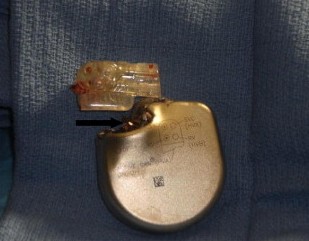
Reference: Sheppard RC, Levine JC, Rovin J and van Gelder HM. "A novel way an implantable cardioverter-defibrillator prevents death: Protection from a gunshot" Heart Rhythm Volume 6, Issue 9, September 2009, Page 1390.
A 61-year-old male presented to the emergency room with a gunshot wound to the upper left chest. He had a history of myocardial infarction, two coronary bypass graft surgeries, and intracoronary stents. The patient had chronic ischemic cardiomyopathy with a left ventricular ejection fraction of 24%. He received a Medtronic Virtuoso-DR D154AWG (Minneapolis, MN) transvenous implantable cardioverter-defibrillator (ICD) in 2007 for primary prophylaxis. Since implantation, he had never received ICD therapy but did atrial pace frequently. The ICD had been interrogated 2 weeks prior and was found to function normally. Despite the gunshot wound with an entry to the chest located just medial to the ICD generator, the patient remained alert with stable vital signs and virtually no symptoms.-Wes
Reference: Sheppard RC, Levine JC, Rovin J and van Gelder HM. "A novel way an implantable cardioverter-defibrillator prevents death: Protection from a gunshot" Heart Rhythm Volume 6, Issue 9, September 2009, Page 1390.
Sunday, June 28, 2009
Our Pill Culture
She sat at the dining room table, counting.
"Let's see, a pink one, the tiny one, a big blue one, another one of those other white ones, the yellow one... oh, I don't take THAT white one until noon ... then one of those and one of those. There. I think I've got it."
She scraped then all in a little pile on the table, then swept them in her hand and tossed to pill pile into her mouth as she chased them all down with a slosh of water, looking a bit like a pelican downing an oversized fish.
"Ahhhh," she said. "Now, how about breakfast?"
I sat in amazement as I looked at my mother-in-law's pill pile. It really wasn't anything over the top: the usual medications for coronary disease, hypertension, adult-onset diabetes - all things I've prescribed a thousand times. But I could not help but wonder how our patients keep all this stuff straight.
Most doctors don't think twice about adding another drug here and there. After all, we always seem to have such a good grasp of pharmacology that we're absolutely convinced, I mean CONVINCED, that our new drug is important for our patient's management. But recently in the hospital I've noticed a problem that seems to be becoming more common: drug-drug interactions, or more accurately: drug-drug-drug-drug-drug interactions that can lead to unintended or unsuspected side effects, especially (in my case) cardiac arrhythmias.
These interactions are becoming tougher to identify as polypharmacy increases in America. Which drug causes what effect can be particularly challenging when people take plenty of different medicines. Nowhere is this more common than with psychotropic medications, especially tricyclic and tetracyclic antidepresants which might be coupled with analgesics, antibiotics, antifungal agents or sleeping medications and the like. Often, these make the perfect cocktail for cardiac catastrophe. We see this on the ward (if we're lucky) as polymorphic ventricular tachycardia or "torsades de pointes" (so-called "twisting around the points") - a malignant heart rhythm disorder caused by excessive prolongation of a resetting current for cardiac contraction called "repolarization." With the right circumstances and when it occurs at the correct time, a single skipped heart beat can cause the heart rhythm to lose all coordination and just quiver, effectively stopping the flow of blood to the brain. Also, sedatives can exacerbate sleep apnea and its resultant hypoxia (low oxygen level). Hypoxia, if significant enough, can cause significant cardiac slowing or even complete heart block.
I wonder, in all the sadness and turmoil surrounding Michael Jackson's recent death, if this same problem might have led to this popular pop icons' demise as well. By now, we have "heard" that Mr. Jackson was given an injection of Demerol (propoxyphene meperidene) shortly before his death. If so, demerol is usually given intramuscularly. But it would not be too inconceivable that one shot might have accidentally been injected into the vascular system, causing rapid sedation and overwhelming his drive to breathe. Follow this respiratory suppression with a few other psychotropic, analgesic medications, antibiotics or sleep aides, and not only might additional sedation occur, but a lethal cardiac arrhythmia as well, even in someone with totally normal coronary arteries.
To me, this scenario seems a much more plausible cause for Mr. Jackson's death rather than a massive heart attack, but then, since I do not have the benefit of reviewing his autopsy results, my thoughts are really nothing more than an educated guess.
No doubt by now there are a multitude of other guesses out there, a million opinions, and even more possibilities regarding the cause of Mr. Jackson's death. Everyone wants and, probably, needs an answer. Unexpected death is like that. But whether a definitive answer is ever found or whether the world will be permitted to learn the true answer is unknown at this point. Family takes precedence, in my view. But maybe there's some other take-home messages we can gain from this sad circumstance.
For one, we have become a pill culture, reaching for pills to cure almost anything and everything. We gobble them down often with barely a thought about their side effects as we eagerly seek a simple fix for what is often very difficult problems. Certainly, there there are scores of miraculous agents out there that have improved the quality and quantity of life for millions of us. (I am not advocating anyone stop any meds as a result of this blog post!) But I have become jaded about psychotropic and sedative medications because of my vocation as a heart rhythm specialist, especially when they are used in combination with other medications that can potentiate their effects or alter cardiac activity. Although drug companies have excellent testing to assure new drugs' safety, they simply cannot test the multiple permutations and combinations of medications on the market with their drug. New interactions are found all the time. It is a little known fact that many of the drug combinations we use today have never been tested in man. Further, patients might not disclose the use of psychiatric medications because of social biases toward psychiatric illness, or physicians, in their hurry to complete their 7-minute office visit, might fail to ask about psychiatric problems and medications.
Secondly, doctors have become pill-obsessed, too. All too often we don't take the time to refer our patients to qualified psychiatric or psychologic specialists. Instead, we try to add these drugs ourselves in the genuine hope of helping our patients with a "quick fix," perhaps not realizing all the consequences of our choice.
So maybe, just maybe, each of us can take a lesson from Michael Jackson, his "cardiologist" doctor, and others in a similar circumstance (Anna Nicole Smith or Elvis Presley comes to mind). First, patients must disclose all of their medications to their doctors. Second, doctors need to exercise caution when any medication, especially psychotropic or sedative ones, are are added to our poly-pill-laden patients and consider the cardiovascular effects that could arise.
Doctors and patients who would like to know many of the medications suspected of causing cardiac arrhythmias, a relatively well-maintained list can be found from the University of Arizona at qtdrugs.org.
-Wes
"Let's see, a pink one, the tiny one, a big blue one, another one of those other white ones, the yellow one... oh, I don't take THAT white one until noon ... then one of those and one of those. There. I think I've got it."
She scraped then all in a little pile on the table, then swept them in her hand and tossed to pill pile into her mouth as she chased them all down with a slosh of water, looking a bit like a pelican downing an oversized fish.
"Ahhhh," she said. "Now, how about breakfast?"
I sat in amazement as I looked at my mother-in-law's pill pile. It really wasn't anything over the top: the usual medications for coronary disease, hypertension, adult-onset diabetes - all things I've prescribed a thousand times. But I could not help but wonder how our patients keep all this stuff straight.
Most doctors don't think twice about adding another drug here and there. After all, we always seem to have such a good grasp of pharmacology that we're absolutely convinced, I mean CONVINCED, that our new drug is important for our patient's management. But recently in the hospital I've noticed a problem that seems to be becoming more common: drug-drug interactions, or more accurately: drug-drug-drug-drug-drug interactions that can lead to unintended or unsuspected side effects, especially (in my case) cardiac arrhythmias.
These interactions are becoming tougher to identify as polypharmacy increases in America. Which drug causes what effect can be particularly challenging when people take plenty of different medicines. Nowhere is this more common than with psychotropic medications, especially tricyclic and tetracyclic antidepresants which might be coupled with analgesics, antibiotics, antifungal agents or sleeping medications and the like. Often, these make the perfect cocktail for cardiac catastrophe. We see this on the ward (if we're lucky) as polymorphic ventricular tachycardia or "torsades de pointes" (so-called "twisting around the points") - a malignant heart rhythm disorder caused by excessive prolongation of a resetting current for cardiac contraction called "repolarization." With the right circumstances and when it occurs at the correct time, a single skipped heart beat can cause the heart rhythm to lose all coordination and just quiver, effectively stopping the flow of blood to the brain. Also, sedatives can exacerbate sleep apnea and its resultant hypoxia (low oxygen level). Hypoxia, if significant enough, can cause significant cardiac slowing or even complete heart block.
I wonder, in all the sadness and turmoil surrounding Michael Jackson's recent death, if this same problem might have led to this popular pop icons' demise as well. By now, we have "heard" that Mr. Jackson was given an injection of Demerol (
To me, this scenario seems a much more plausible cause for Mr. Jackson's death rather than a massive heart attack, but then, since I do not have the benefit of reviewing his autopsy results, my thoughts are really nothing more than an educated guess.
No doubt by now there are a multitude of other guesses out there, a million opinions, and even more possibilities regarding the cause of Mr. Jackson's death. Everyone wants and, probably, needs an answer. Unexpected death is like that. But whether a definitive answer is ever found or whether the world will be permitted to learn the true answer is unknown at this point. Family takes precedence, in my view. But maybe there's some other take-home messages we can gain from this sad circumstance.
For one, we have become a pill culture, reaching for pills to cure almost anything and everything. We gobble them down often with barely a thought about their side effects as we eagerly seek a simple fix for what is often very difficult problems. Certainly, there there are scores of miraculous agents out there that have improved the quality and quantity of life for millions of us. (I am not advocating anyone stop any meds as a result of this blog post!) But I have become jaded about psychotropic and sedative medications because of my vocation as a heart rhythm specialist, especially when they are used in combination with other medications that can potentiate their effects or alter cardiac activity. Although drug companies have excellent testing to assure new drugs' safety, they simply cannot test the multiple permutations and combinations of medications on the market with their drug. New interactions are found all the time. It is a little known fact that many of the drug combinations we use today have never been tested in man. Further, patients might not disclose the use of psychiatric medications because of social biases toward psychiatric illness, or physicians, in their hurry to complete their 7-minute office visit, might fail to ask about psychiatric problems and medications.
Secondly, doctors have become pill-obsessed, too. All too often we don't take the time to refer our patients to qualified psychiatric or psychologic specialists. Instead, we try to add these drugs ourselves in the genuine hope of helping our patients with a "quick fix," perhaps not realizing all the consequences of our choice.
So maybe, just maybe, each of us can take a lesson from Michael Jackson, his "cardiologist" doctor, and others in a similar circumstance (Anna Nicole Smith or Elvis Presley comes to mind). First, patients must disclose all of their medications to their doctors. Second, doctors need to exercise caution when any medication, especially psychotropic or sedative ones, are are added to our poly-pill-laden patients and consider the cardiovascular effects that could arise.
Doctors and patients who would like to know many of the medications suspected of causing cardiac arrhythmias, a relatively well-maintained list can be found from the University of Arizona at qtdrugs.org.
-Wes
Friday, September 12, 2008
Keeping Things in Perspective
The New York Times has an interesting piece in their Business section today on implantable cardiac defibrillators (ICDs), but paints a remarkably pessimistic view of the future market for the devices. While I do not argue with the fact that ICD implants nationally have declined, I think it's relatively important to compare the cost of ICDs relative to other therapies we dispense in medicine relative to their life-saving value to our healthcare system.
Although admittedly assembled by Medtronic (who has a vested interest in promoting ICD therapy and yes, I suppose I do, too), there are data of the costs of ICDs relative to other preventative therapies doctors provide as "prevention." Here's a slide from them that adds perspective:


MUSTT @ 5 years from Kaplan Meier (KM) curve: 55%-24%, NNT=3 N Engl J Med 1999;341:1882-1890
MADIT @ average follow-up of 2.4 yrs, crude mortality rate: 39%-16%, NNT=4 N Engl J Med. 1996;335:1933-1940
MADIT-II @ 3 years from KM curve: 31%-22%, NNT=11 N Engl J Med. 2002;346:877-883
AVID @ 3 years from the KM curve: 36%-25%, NNT=9 N Engl J Med. 1997;337:1576-1583
SAVE (captopril, an ACE inhibitor) crude rate with average follow-up of 42 months: 25%-20%, NNT=20 N Engl J Med, 1992; 327:669-677.
Merit-HF (metoprolol, a BB in HF patients) @ 1 year from KM curve: 11%-7.2%, NNT 26 LANCET 1999; 353:2001-07.
4S (simvastatin) @ 6 years from KM curve: 12.3%-8.7%, NNT=28 LANCET 1994; 344: 1383-1389.
Amiodarone Meta-analysis of 15 trial @ average follow-up of 2 years: 19.2%-16.5%, NNT=37 Circulation, 1997; 96: 2823-2829.
Finally, in terms of cost of other preventative therapies that our society has deemed useful to save a life, I always appreciated this view:

-Wes
Although admittedly assembled by Medtronic (who has a vested interest in promoting ICD therapy and yes, I suppose I do, too), there are data of the costs of ICDs relative to other preventative therapies doctors provide as "prevention." Here's a slide from them that adds perspective:

Click image to enlarge

Click image to enlarge
MUSTT @ 5 years from Kaplan Meier (KM) curve: 55%-24%, NNT=3 N Engl J Med 1999;341:1882-1890
MADIT @ average follow-up of 2.4 yrs, crude mortality rate: 39%-16%, NNT=4 N Engl J Med. 1996;335:1933-1940
MADIT-II @ 3 years from KM curve: 31%-22%, NNT=11 N Engl J Med. 2002;346:877-883
AVID @ 3 years from the KM curve: 36%-25%, NNT=9 N Engl J Med. 1997;337:1576-1583
SAVE (captopril, an ACE inhibitor) crude rate with average follow-up of 42 months: 25%-20%, NNT=20 N Engl J Med, 1992; 327:669-677.
Merit-HF (metoprolol, a BB in HF patients) @ 1 year from KM curve: 11%-7.2%, NNT 26 LANCET 1999; 353:2001-07.
4S (simvastatin) @ 6 years from KM curve: 12.3%-8.7%, NNT=28 LANCET 1994; 344: 1383-1389.
Amiodarone Meta-analysis of 15 trial @ average follow-up of 2 years: 19.2%-16.5%, NNT=37 Circulation, 1997; 96: 2823-2829.
Finally, in terms of cost of other preventative therapies that our society has deemed useful to save a life, I always appreciated this view:

Click image to enlarge
-Wes
Wednesday, September 03, 2008
ICD Shocks - A Blessing or a Curse?
It's all across the media: ICD shocks predict impending death!
Thanks. My patients appreciated these headlines, I'm sure.
But if we're going to tell the 234,000 people who have implantable cardiac defirillators (ICDs) that they're going to die in less than a year after their first shock, shouldn't the media attempt to exercise even a modicum of discernment before going public with these headlines?
First, these findings come from analysis of the Sudden Death in Heart Failure trial (SCD-HeFT) - a well-designed prospective multicenter randomized trial in adults over age 18 which randomized over two thousand patients between three therapeutic treatments for heart failure: (1) conventional medical therapy, (2) converntional medical therapy plus Amiodarone, and (3) conventional medical therapy plus a single chamber, shock-only ICD therapy. The main finding of the SCD-HeFT Trial, in its original form, was that medical therapy (be it with o without Amiodarone), mortality in this group of patients was 7.2% annually. In other words, our best antiarrhythmic at the time, Amiodarone, failed to effect patient mortality. The addition of an ICD for primary prevention of sudden death is this sick population, actually reduced mortality (to 5.5% per year in patients followed for 5 years - a 23% reduction in mortality compared to medical therapies).
So now, is it any wonder that patients who have received an ICD to prevent death on a preventative bases, might just get a shock as their condition deteriorates?
When you can take fairly sick individuals and implant an ICD in them as primary prevention (i.e., they never had an arrhythmia before) and then look at those who develop arrhythmias suddenly, it seems intuitive to me that those patients would be sicker or have had a change in their clinical situation.
The data from the study support this theory. Therefore, evaluating for the development of worsened heart failure or additional ischemic burden might be prudent in these patients, since these causes seemed to be the largest culprits resulting in ICD shocks. Additionally, the study found that patients with either appropriate (shocks for ventricular arrhythmias) or "inappropriate" (shocks for rapid heart rates from non-ventricular causes, like atrial fibrillation onset) have a poorer prognosis compared to those who did not receive shocks, but this also might be a way to risk-stratify the sicker patients of the overall implant population. Does this mean the patients should not receive devices to live longer? Of course not. But there has to be balance to recommending ICDs in the sickest patients, since recurrent shocks can impact the patient's quality of life if they occur frequently. Infrequent shocks, interestingly, did not seem to convey a worse quality of life in this same group as reported (ironically) in the same issue of the New England Journal of Medicine.
Remember that all mortality curves of different therapies that divert favorably from one therapy, will again meet with the alternate therapy some time in the future, since none of us are immortal. ICD's reduce mortality in sick patients with heart failure, but an ICD shock might suggest that, of the group implanted, those patients with shocks have a better indication for the device, since their mortality is higher. It is important, however, to keep in mind who was NOT studied in this paper:
The patient population studied did not include children.
The patients studied did not have cardiac resynchronization devices.
The devices were not programmed for antitachycardia pacing and did not have dual chamber devices which are better capable of detecting atrial arrhythmias.
So before our patients go out to buy funeral plots, let's keep the issues of the risks and benefits of ICD therapy, and the benefit or curse of their shocks, in perspective.
-Wes
Reference: Poole, JE et al, "Prognostic Importance of Defibrillator Shocks in Patients with Heart Failure," New England Journal of Medicine Sep 4, 2008 Vol 359(10):1009-1017.
Friday, August 29, 2008
ICD's for the Over-80 Crowd
I call it "device creep:" a form of extrapolation of clinical trial data to justify the addition of more advanced (and expensive) technologies.
It happens all the time in my field.
Start with an 82-year old with sick sinus syndrome and the need for a permanent pacemaker. Before their procedure, the heart's pumping function, or ejection fraction, is evaluated and found to be, say, 31%. Now, based on data from the NIH-sponsored SCD-HeFT trial, an implantable cardiac defibrillator (ICD) is considered to not only support the heart rate, but also to play potential role in the primary prevention of sudden cardiac death in this higher-than-average-risk patient. But why stop there? After all, the EKG was evaluated and demonstrates an underlying left bundle branch block. A quick review of the chart confirms an admission for heart failure in the last year, and voila', a biventricular ICD is justified on the basis of CARE-HF and the MIRACLE trial to provide cardiac resynchronization in hopes of improving heart failure symptoms, too!
A talk then ensues with the patient and their family. The pros and cons of each technology and the limitations of the data are reviewed. Jointly, the group comes to a clinical consensus about which device to receive. Usually (but not always), a "cover all the bases" approach is taken, since cost is usually not considered in these discussions.
And the difference in price between a pacemaker and biventricular pacemaker-defibrillator?
About three-fold.
So what's the best option?
The Heart.org does a nice job reviewing the controversies surrounding "device creep" in those over the age of 80 with sinus node disease as they review a timely article by Dr Michael O Sweeney of the Brigham and Women's Hospital, Boston, MA published before print in the Journal of Cardiac Electrophysiology. Cardiologists, electrophysiologists and heart failure experts weigh in from both sides of the debate: (1) co-morbidities matter, (2)this is a uniquely American debate since other countries already ration these expensive technologies, and (3) the convergence of an aging population and tightening resources will make discussions like these more and more common the field of cardiac electrophysiology. Perhaps Dr. Lynne Warner Stevenson from the Brigham and Women's Hospital said it best:
Read the whole thing. It's worth it. Then ask yourself: what if you were 80 and facing this decision: what would you do?
-Wes
It happens all the time in my field.
Start with an 82-year old with sick sinus syndrome and the need for a permanent pacemaker. Before their procedure, the heart's pumping function, or ejection fraction, is evaluated and found to be, say, 31%. Now, based on data from the NIH-sponsored SCD-HeFT trial, an implantable cardiac defibrillator (ICD) is considered to not only support the heart rate, but also to play potential role in the primary prevention of sudden cardiac death in this higher-than-average-risk patient. But why stop there? After all, the EKG was evaluated and demonstrates an underlying left bundle branch block. A quick review of the chart confirms an admission for heart failure in the last year, and voila', a biventricular ICD is justified on the basis of CARE-HF and the MIRACLE trial to provide cardiac resynchronization in hopes of improving heart failure symptoms, too!
A talk then ensues with the patient and their family. The pros and cons of each technology and the limitations of the data are reviewed. Jointly, the group comes to a clinical consensus about which device to receive. Usually (but not always), a "cover all the bases" approach is taken, since cost is usually not considered in these discussions.
And the difference in price between a pacemaker and biventricular pacemaker-defibrillator?
About three-fold.
So what's the best option?
The Heart.org does a nice job reviewing the controversies surrounding "device creep" in those over the age of 80 with sinus node disease as they review a timely article by Dr Michael O Sweeney of the Brigham and Women's Hospital, Boston, MA published before print in the Journal of Cardiac Electrophysiology. Cardiologists, electrophysiologists and heart failure experts weigh in from both sides of the debate: (1) co-morbidities matter, (2)this is a uniquely American debate since other countries already ration these expensive technologies, and (3) the convergence of an aging population and tightening resources will make discussions like these more and more common the field of cardiac electrophysiology. Perhaps Dr. Lynne Warner Stevenson from the Brigham and Women's Hospital said it best:
"As we look at the healthcare problem in the US, we're going to have to make some exceedingly difficult decisions. We're going to have to be either rational or be severely rationed. And a relatively easy target is to reduce the number of expensive procedures that do not provide anticipated benefit."But in when does a person reach the age where technology provides no "anticipated benefit?" What benefits should we measure?
Read the whole thing. It's worth it. Then ask yourself: what if you were 80 and facing this decision: what would you do?
-Wes
Wednesday, June 25, 2008
More Fear-Based Medical Marketing
I'm not sure it gets better than this:
Scanning the heart's arteries for calcium deposits accurately predicts the overall death risk for American adults, a new study suggests.I can hear it now:
"So far, this is the best predictor we have of who will have a problem and who will not," said study co-researcher Dr. Matthew Budoff, associate professor of medicine at the Harbor-UCLA Medical Center.
He and his colleagues reported the finding in the July 1 issue of the Journal of the American College of Cardiology.
A calcium scan looks for calcification, a hardening of the arteries caused by high blood fats and calcium deposits that can eventually block blood vessels, causing heart attacks, strokes and other major problems.
"Hey Marge, hey lookie here in the Washington Post! I wanna get one of dem der fancy schmancy CT scanner gizmos to find out if I'm gonna DIE sooner than you are! Let's take $600 bucks for that fancy schmancy thing-a-ma-bob out of our retirement fund. It'd be WORTH IT!"-Wes
Sometime later, in the doctor's office...
Doctor: "Well, Mr. Jones, I see my this fancy schmancy CT scan that you'd got some calcium in your coronaries. Hmmmm. And you calcium score is 210, just like Tim Russert! So, guess what?"
Mr. Jones: "What?"
Doctor: "Well Mr. Jones, you're at increased risk of DYING!"
Mr. Jones: "Uh, what do you mean, Doctor?"
Doctor: "You heard me: you're at increased risk of DYING with all that calcium in those coronaries - you know - BAM! Just like Tim Russert."
Mr. Jones: "Any idea when, Doctor?"(Silence)
Mr Jones: "Doctor, did you hear me? When will I die? I mean, won't we all die sometime?"
Doctor: "Heck, Mr. Jones, I don't know! But I can assure you that based on this fine article here in the prestigious Journal of the American College of Cardiology (you know, the same one that's also promoting their new Cardiovascular Imaging journal) that you're gonna die of SOMETHING sooner than some of the other people who don't have that evil calcium in their arteries."
Mr. Jones: "Gosh. So what should I DO about it, Doctor?"
Doctor: "Well, you know, since we're proposing that it's a RISK FACTOR for DYING, you should do the usual stuff: eat right, take tons of statin drugs, don't smoke, take your aspirin, lose weight, eat a low trans fat, high antioxidant, super-radical-consuming diet, do yoga, take mega vitamins, face East, say a few 'Hail Mary's..."
Mr. Jones: "Uh, but I was already doing that stuff..."
Doctor: "Have you had your CRP level and genes tested yet?"
Mr. Jones: "How would that help?"
Doctor: "Well, Mr. Jones, it might mean your risk of DEATH is EVEN GREATER!"
Mr. Jones: "But what can I do about it if it's positive also?"
Doctor: "Well, you know, the usual stuff... like I said... eat right, take tons of..."
Mr. Jones: "That's okay, Doctor. I've had enough. Thanks for all of your help. Hope that $300 bucks comes in handy. Don't mind me: I'll keep doing what I've been doing and get started preparing my Bucket List. Oh, but one more thing..."
Doctor: "What's that Mr. Jones?"
Mr. Jones: "You wouldn't happen to work with General Electric like those two guys who wrote that article you quoted, would you?"
Tuesday, May 13, 2008
Underpenetration of Implantable Defibrillators
One wonders if this whole mess could have been avoided if this man had had an implantable defibrillator installed before this occurred. I mean, there's such a false sense of security thinking that it's been 10 years since your heart attack, so you must not need a defibrillator.
Well, think again.
-Wes
Well, think again.
-Wes
Tuesday, October 02, 2007
ICD's: Playing the Sexism Card
Two important trials (one free to see, one not) from Duke University School of Medicine, Durham, North Carolina appear in JAMA this week that review lots of diagnosis codes from Medicare databases to reveal some pretty eye-opening data: men get implantable cardiac defibrillators about three times as often as women.
The first "free" report was conducted by examining US Centers for Medicare & Medicaid Services (CMS) coding files from 1999 to 2005 (before the big ICD recalls). Patients records included were 65 years or older with Medicare fee-for-service coverage and diagnosed with acute myocardial infarction and either heart failure or cardiomyopathy (based on Medicare diagnosis codes) but no prior cardiac arrest or ventricular tachycardia (ie, the primary prevention cohort [n = 65,917 men and 70,504 women]), or with cardiac arrest or ventricular tachycardia (ie, the secondary prevention cohort [n = 52,252 men and 47,411 women]). This trial was limited by the lack of clinical data (no measures like ejection fraction or confirmation of arrhythmias occured - only diagnosis codes were used) and so was limited at the outset. But despite its limitations, no mater how it wsa cut in multivariate analyses, men were more likely than women to receive ICD therapy (hazard ratio [HR], 3.15; 95% confidence interval [CI], 2.86-3.47).
The second trial, conducted by the same Duke researchers, examined actual clinical data from a voluntary "Get with the Guidelines" heart failure quality improvement initiative called OPTIMIZE-HF and supported by GlaxoSmithKline (makers of a major heart failure drug, cardevilol, marketed as Coreg® and Coreg CR®) and the American Heart Association. It occurred more recently (2005-2007: after the defibrillator recall period). In this study, left ventricular ejection fraction data, paired with diagnosis codes, were studied. It too, demonstrated that women were 40% less likely than men to receive an ICD.
So why the difference?
Well, it's tough to say for sure. One item discussed in the papers was the increased likelihood for women to have a form of "impaired relaxation" heart failure (rather than from systolic dysfunction), but the second trial used only people with ejection fractions (the amount of blood squeezed from the heart with each heartbeat which is normally greater than 50%) that were less than 30%. It seems ICDs were still more common in men than women.
Another reason might be because of confounding factors, like women may have more co-morbidities, especially since they usually get older than men. After all, controlling for everything in these observational studies is difficult. But the first trial still revealed a propensity for men to receive an ICD in both the under-75 crowd or the over-75 crowd.
Perhaps (and I say this reluctantly) it is because doctors are sexist. Especially male doctors. Could it as simple as that? Probably not. But men still outnumber women in cardiovascular subspecialties and we might just not be thinking that women get heart disease. Also, most of the major ICD trials had more men than women, so doctors might have a bias against referring a female rather than a male.
These findings raise all kinds of questions. It would be interesting to see if others out there in the blog-o-sphere have some other ideas.
But one thing is for sure, you can bet Medtronic (also tacitly a research contributor to these studies) and the other ICD manufacturers will have an e-mail in my inbox tomorrow with these findings.
-Wes
References:
Lesley H. Curtis, PhD; Sana M. Al-Khatib, MD, MHS; Alisa M. Shea, MPH; Bradley G. Hammill, MS; Adrian F. Hernandez, MD, MHS; Kevin A. Schulman, MD. "Sex Differences in the Use of Implantable Cardioverter-Defibrillators for Primary and Secondary Prevention of Sudden Cardiac Death." J Am Med Assoc 2007;298:1517-1524.
Adrian F. Hernandez, MD, MHS; Gregg C. Fonarow, MD; Li Liang, PhD; Sana M. Al-Khatib, MD, MHS; Lesley H. Curtis, PhD; Kenneth A. LaBresh, MD; Clyde W. Yancy, MD; Nancy M. Albert, PhD; Eric D. Peterson, MD, MPH. "Sex and Racial Differences in the Use of Implantable Cardioverter-Defibrillators Among Patients Hospitalized With Heart Failure" J Am Med Assoc 2007;298:1525-1532.
2 Oct 2007 1930PM CST Addendum: An accompanying editorial in JAMA looks at the gender issue as a glass half full rather than half empty:
-Wes
The first "free" report was conducted by examining US Centers for Medicare & Medicaid Services (CMS) coding files from 1999 to 2005 (before the big ICD recalls). Patients records included were 65 years or older with Medicare fee-for-service coverage and diagnosed with acute myocardial infarction and either heart failure or cardiomyopathy (based on Medicare diagnosis codes) but no prior cardiac arrest or ventricular tachycardia (ie, the primary prevention cohort [n = 65,917 men and 70,504 women]), or with cardiac arrest or ventricular tachycardia (ie, the secondary prevention cohort [n = 52,252 men and 47,411 women]). This trial was limited by the lack of clinical data (no measures like ejection fraction or confirmation of arrhythmias occured - only diagnosis codes were used) and so was limited at the outset. But despite its limitations, no mater how it wsa cut in multivariate analyses, men were more likely than women to receive ICD therapy (hazard ratio [HR], 3.15; 95% confidence interval [CI], 2.86-3.47).
The second trial, conducted by the same Duke researchers, examined actual clinical data from a voluntary "Get with the Guidelines" heart failure quality improvement initiative called OPTIMIZE-HF and supported by GlaxoSmithKline (makers of a major heart failure drug, cardevilol, marketed as Coreg® and Coreg CR®) and the American Heart Association. It occurred more recently (2005-2007: after the defibrillator recall period). In this study, left ventricular ejection fraction data, paired with diagnosis codes, were studied. It too, demonstrated that women were 40% less likely than men to receive an ICD.
So why the difference?
Well, it's tough to say for sure. One item discussed in the papers was the increased likelihood for women to have a form of "impaired relaxation" heart failure (rather than from systolic dysfunction), but the second trial used only people with ejection fractions (the amount of blood squeezed from the heart with each heartbeat which is normally greater than 50%) that were less than 30%. It seems ICDs were still more common in men than women.
Another reason might be because of confounding factors, like women may have more co-morbidities, especially since they usually get older than men. After all, controlling for everything in these observational studies is difficult. But the first trial still revealed a propensity for men to receive an ICD in both the under-75 crowd or the over-75 crowd.
Perhaps (and I say this reluctantly) it is because doctors are sexist. Especially male doctors. Could it as simple as that? Probably not. But men still outnumber women in cardiovascular subspecialties and we might just not be thinking that women get heart disease. Also, most of the major ICD trials had more men than women, so doctors might have a bias against referring a female rather than a male.
These findings raise all kinds of questions. It would be interesting to see if others out there in the blog-o-sphere have some other ideas.
But one thing is for sure, you can bet Medtronic (also tacitly a research contributor to these studies) and the other ICD manufacturers will have an e-mail in my inbox tomorrow with these findings.
-Wes
References:
Lesley H. Curtis, PhD; Sana M. Al-Khatib, MD, MHS; Alisa M. Shea, MPH; Bradley G. Hammill, MS; Adrian F. Hernandez, MD, MHS; Kevin A. Schulman, MD. "Sex Differences in the Use of Implantable Cardioverter-Defibrillators for Primary and Secondary Prevention of Sudden Cardiac Death." J Am Med Assoc 2007;298:1517-1524.
Adrian F. Hernandez, MD, MHS; Gregg C. Fonarow, MD; Li Liang, PhD; Sana M. Al-Khatib, MD, MHS; Lesley H. Curtis, PhD; Kenneth A. LaBresh, MD; Clyde W. Yancy, MD; Nancy M. Albert, PhD; Eric D. Peterson, MD, MPH. "Sex and Racial Differences in the Use of Implantable Cardioverter-Defibrillators Among Patients Hospitalized With Heart Failure" J Am Med Assoc 2007;298:1525-1532.
2 Oct 2007 1930PM CST Addendum: An accompanying editorial in JAMA looks at the gender issue as a glass half full rather than half empty:
(HeartWire) Dr Rita Redberg (University of California, San Francisco), who wrote an accompanying editorial, told heartwire: "They've definitely established that white men are more likely to get ICDs, but we all know that defibrillators are not the only thing that white men are more likely to get." In her editorial, she says, "The results are troubling, but not for the expected reasons. In other words, the bad news may not be for women and minorities, but for white men who are undergoing a procedure that, for primary prevention, has not been shown to extend their lives. By reporting the first outcomes data for ICDs in the Medicare population, the study by Curtis et al should stimulate national dialogue on this crucial question."Her issue was with the primary prevention cohort, she had no issue with the secondary prevention cohort.
-Wes
Tuesday, August 28, 2007
Should Defibrillators Be In Schools?
 Just in time for the back-to-school season comes this report on the epidemiology of cardiac arrest in our schools.
The report adds much to our knowledge of the epidemiology of sudden death in schools from two large counties near Seattle, WA, USA. Of 3773 episodes of cardiac arrest in a public domain over 16 years, 97 arrests occurred in 671 schools but only 12 of these occurred in children.
The incidence of sudden death among (adult) school staff was 25-fold greater than that among students. Given the additional contribution of other adults not employed by the school, greater than 90% of cardiac arrests in schools occurred among adults. The finding supports the assertion that school-based CPR and AED programs would benefit faculty and staff members, as well as visitors to the school who, because of their age, are at greater risk of cardiac arrest than the students.
And while some doctors are in favor of expanding CPR and AED distribution, others are not:
"It is estimated that over 350,000 individuals die of sudden cardiac arrest in the U.S. each year," said Dr. Gregg C. Fonarow, a professor of cardiology at the University of California, Los Angeles. "Improved cardiac arrest recognition and emergency activation, early CPR, and early defibrillation, including the use of AEDs, can significantly increase the chances of surviving sudden cardiac arrest."But what was remarkable in this study was the unusually high success rates of public access defibrillation by lay rescuers. From the study:
This study provides important community-based data on the incidence, circumstances and outcome of cardiac arrest in the school setting, Fonarow said. "This study found that half of the student cardiac arrests were not associated with physical exertion or sports participation, and student risk was similar for elementary school, middle school, high school and college," he said.
The majority of cardiac arrests in schools occurred among adults, Fonarow noted. "The finding supports the assertion that school-based CPR and AED programs would benefit not only students, but faculty, staff members, as well as school visitors, and provides important data for considering increasing CPR training and the availability of AEDs in the school setting," he said.
Another expert disagrees. The very rarity of cardiac arrests at schools makes having AEDs available unnecessary, he said.
"Any cardiac arrest in a student, especially if it occurs on school grounds, gets a lot of media attention," said Dr. Byron Lee, an associate professor of cardiology at the University of California, San Francisco. "This has led some to call for AED in every school."
However, because cardiac arrest at schools is extremely rare, and only a minority of cardiac arrests occurs in the students, "it seems unlikely that putting an AED in every school would be cost-effective," Lee said.
Seven of the school-based cardiac arrests received lay-rescuer defibrillation. Survival to hospital discharge among cardiac arrests was 39% in school settings (46% for initial rhythm of ventricular fibrillation) compared with 27% in other public locations.These data, in my view, make a compelling case for the wide availability of public access defibrillation. It is survival to discharge from a hospital that matters, and there is nothing that will improve survival in that setting better than a beating heart. The chest thumping of CPR, while helpful temporarily, only mildly improves the chance of survival following cardiac arrest until the coordinated contraction of the heart can be restored with defibrillation.
-Wes
Reference: Katayoun Lotfi BS, Lindsay White MPH*, Tom Rea MD, MPH, Leonard Cobb MD, Michael Copass MD, Lihua Yin MBA, Linda Becker MA, and Mickey Eisenberg MD, PhD. "Cardiac Arrest in Schools," Circulation 2007 doi:10.1161/CIRCULATIONAHA.107.698282
Image credit.
Thursday, August 23, 2007
Blaming It All on Red Bull
In case you haven't seen it, there's been a report of aborted sudden death circulating about in the press and blog-o-sphere about a guy who drank too many Red Bulls, and had a cardiac arrest.
Everyone wants to blame Red Bull.
But was Red Bull to blame?
Here's how the press painted the episode:
So was caffeine really the CAUSE? Of was it a mere bystander? We will probably never know.
But I was also intrigued by the part of the article that mentioned what his cardiologist had said:
I wonder: did anyone suggest this man stop smoking?
-Wes
Everyone wants to blame Red Bull.
But was Red Bull to blame?
Here's how the press painted the episode:
Mr Penbross, a concreter, regularly had four Red Bull drinks a day.For the record, Redbull contains the about same amount of caffeine as a cup of coffee:
"With the work I do I don't have a lot of time to eat," he said. "I have a couple of Red Bulls in the morning and it carries me through."
Last Sunday he was competing in a motocross event near Port Macquarie when he consumed eight Red Bulls over five hours.
"It was to get a bit of a buzz and keep down my reaction time," he said. "You have got to get off [the mark] and around the first corner first."
After his event, Mr Penbross, from Bonny Hills, noticed his heart racing. He collapsed soon after.
He was taken to Port Macquarie Hospital before being flown to Newcastle.
A 7 oz cup of coffee has the following caffeine (mg) amounts, according to Bunker and McWilliams in J. Am. Diet. 74:28-32, 1979:Sure, too much caffeine can cause the heart to race. And some studies have suggested it raises blood pressure, but at least one long term study did not substantiate this effect. And over five hours, about half of his caffeine had metabolized, provided he had a normal liver. Most reported deaths from caffeine overdose (usually from pills) have occurred with 50-100 times the amount of caffeine as this man ingested.
Drip 115-175
Espresso 100mg of caffeine
1 serving (1.5-2oz)
Brewed 80-135
Instant 65-100
So was caffeine really the CAUSE? Of was it a mere bystander? We will probably never know.
But I was also intrigued by the part of the article that mentioned what his cardiologist had said:
He said Mr Penbross had no other risk factors apart from smoking and had told him he previously experienced chest pain at times when his intake of the drinks was high.Now I never saw this dude, but given this story, one wonders about previously undiagnosed coronary disease as the cause of his cardiac arrest. Oh, sure, the Red Bull might have increased the heart's requirement for oxygen if his rate or blood pressure increased, but the lack of delivery of oxygen around an area of fixed obstruction from a plaque is more likely what made a young man's heart fibrillate and develop full cardiac arrest.
I wonder: did anyone suggest this man stop smoking?
-Wes
Monday, June 11, 2007
Current Data on Risk Stratification for Sudden Cardiac Death
Some interesting results of an industry-sponsored expert conference on risk stratification of sudden death appeared in this month's American Heart Journal. The experts reviewed left ventricular ejection fraction (LVEF), New York Heart Association Class, the presence of nonsustained ventricular tachycardia, microwave T wave alternans, measures of cardiac autonomic modilation (like heart rate variability), QT interval variability, signal averaged EKG, electrophysiology study, genetic testing, imaging studies and serum markers (like brain naturetic peptide or c-reactive protein).
Their take? Only ejection fraction seems worthy for risk stratification so far.
Here's what they said about ejection fraction:
-Wes
Their take? Only ejection fraction seems worthy for risk stratification so far.
Here's what they said about ejection fraction:
The LVEF has been recognized as a predictor of all-cause mortality in patients with coronary artery disease (CAD) for >30 years. One early study by the Multicenter Postinfarction Research Group showed in 866 post–myocardial infarction (MI) patients that the strongest predictor of 1-year cardiac mortality was the LVEF. This finding has withstood the test of time. In the VALIANT (trial), a randomized comparison of captopril, valsartan, and their combination in post-MI patients (n = 14 609) with left ventricular dysfunction, CHF, or both, LVEF was a strong predictor of SCD or cardiac arrest. The risk of SCD or cardiac arrest increased by 21% for every 5% decrease in LVEF.Participants at the meeting were as follows:
Left ventricular ejection fraction is also a strong predictor of all-cause mortality in patients with nonischemic cardiomyopathy. The MACAS (trial) was a prospective cohort study of 343 patients with nonischemic cardiomyopathy and an LVEF ≤45% who were followed for a mean of 52 months. Left ventricular ejection fraction was the only significant predictor of major arrhythmic events with a relative risk (RR) of 2.3 per 10% decrease in LVEF (95% CI 1.5-3.3, P < .0001) in patients with sinus rhythm and 4.5 per 10% decrease in LVEF (95% CI 1.5-13.2, P = .0008) in patients with atrial fibrillation.
Participants from the Academia: Sana M Al-Khatib, MD, MHS (co-Director), J Thomas Bigger, MD, Alfred Buxton, MD, Robert M Califf, MD, Anne Curtis, MD, Jeptha Curtis, MD, Bernard J. Gersh, MB, ChB, DPhil, Michael R. Gold, MD, PhD, Jeff Goldberger, MD, Stephen C. Hammill, MD, Jeff Healey, MD, MS, Mark Hlatky, MD, Stefan Hohnloser, MD, Raymond J Kim, MD, Kerry Lee, PhD, Daniel Mark, MD, MPH, L. Brent Mitchell, MD, Eric Prystowsky, MD, Gillian Sanders, PhD (co-Director), and Wojciech Zareba, MD, PhDThe conference was funded by AstraZeneca, Bayer, Boston Scientific, Cambridge Heart Inc, Medtronic, Reliant Pharmaceuticals, St Jude Medical.
Participants from the Centers for Medicare and Medicaid Services: Steve Phurrough, MD, MPA
Participants from the US Food and Drug Administration: Norman Stockbridge, MD, PhD, Robert Temple, MD, Bram Zuckerman, MD
Participant from the National Institutes of Health: Robin Boineau, MD, Michael Domanski, MD
Participant from Agency for Healthcare Research and Quality: Elise Berliner, PhD
Participant from the Heart Rhythm Society staff: Joel Harder
Participants from Industry: Mark Carlson, MD, Eric Fain, MD, Ali Haghighi-Mood, PhD, Steve Ketchum, PhD, Steve McQuillan MS, Marcus Mianulli MA, Philip Sager, MD, Dan Schaber, PharmD, Robert Shalwitz, MD, Joseph Smith, MD, PhD, Michael A Stein, MD, David Steinhaus, MD
Coordinating Staff: Marelle Molbert and Cass Finley from the Duke Clinical Research Institute.
-Wes
Subscribe to:
Posts (Atom)