Showing posts with label quality assurance. Show all posts

Tuesday, July 22, 2014

An Insider's Guide to a Health Care Policy White Paper

Do you want to "raise awareness" of how physician quality and value information impacts health care decision making?   Do you want to spin your data via the Associated Press internationally?

Just have the Robert Wood Johnson Foundation pay for a survey!

We all know how great surveys are, especially when you design it to "raise awareness" for the low, low price of $604,454!

For that price, you get:

(1) A nice glossy white paper that contains a concerned patient looking away while she's being examined by a doctor on the cover
(2) Lots and lots of numbers and scientific-looking charts.
(3) An NORC Press release (After all, it was laundered through the Associated Press-NORC Center for Public Policy Research!)
(4) A republishing of your "key points" by a few business-minded online health care journals eager to demonstrate relevance of using "quality measures" to determine health care "value."
(5) An opportunity to collaborate "on all aspects of the study!"

See how easy it is to make sure you get your major points out there to the decision makers!  (Never mind that a quality physician means many different things to many different people - stop being a perfectionist, okay?)

Look, these guys did a survey with 25% response rate that totaled a whopping 1002 people - or about 0.000000317 of the current US population!  Heck, no bias there, right?  Then they add a few "sampling weights" and calculate the survey response rate using the important sounding American Association of Public Opinion Research's Method 3!

What's that?  You're not familiar with Method 3?  What kind of scientist ARE YOU???? 

Here. Let me help:  If Method 1,2, or 4 doesn't get you the desired number, you use Method 3!  The survey response rate for Method 3 is calculated from the handy, dandy Response Rate Method Calculator where:

I = Complete Interviews
R = Refusal and Break Offs
NC = Non-contacts
O = Other
e = the estimated cases of unknown eligibility that are eliglible! (In other words, a guess)
UH = Unknown Household
UO = Unknown Other

Using these definitions , the "Method 3" calculation for the survey response rate becomes:

I / (( I+P) + (R + NC + O) + e(UH + UO))

See? And that response rate, according to the white paper, after applying "sampling weights" had "an overall margin of error" of  "+/- 4.0 percentage points, including the design effect resulting from the complex sample design."

 Heck ya, I'm seeing accuracy there, aren't you?

These days, it's really important that lots of people see these data so policy makers (who have about as much scientific wattage as an LED), can turn to them to create controlling policy and regulations that benefit those who make - you got it - the policy and regulations!  Especially in US health care.  That's because doctors are getting a bit unruly and need to understand why they must fall in line on all this physician quality measurement stuff.  Perhaps one of the introductory paragraphs of the published white paper says it best:
"Major investments are being made in health care systems like Accountable Care Organizations and in tools like Physician Compare. Similarly, health insurers and employers are exploring new benefits designs that incentivize consumers to select providers and hospitals that provide the highest-quality care while reducing costs through value-based provider networks and tiered health plans."
So there you have it!

It's important that we all understand just how critical these surveys paid for by political organizations will be to health care in the years ahead.  Spin, you see, is everything.  Thank goodness the Robert Wood Johnson Foundation (who's CEO, by the way, has also partnered on other publications about patient safety and medical professionalism with members of the American Board of Internal Medicine and National Quality Forum) can show us the way!

I feel so reassured that this is the caliber of science being used to shape US health care now.

Seriously.

What could go wrong?

-Wes

Sunday, February 02, 2014

Talking Heads

February, in case you haven't noticed, is "Heart Month" full of associations with Valentine's Day, love, peace and tranquility.  It's also a month to sell cardiovascular health care.

Everywhere you look these days are advertisements for the latest and greatest heart care, finest heart care facilities, touching stories of the latest cardiovascular intervention saving a life at this medical center or that.  Go ahead.  Type in "heart" as your Google alert phrase to see what I mean. 

Heart month, you see, is business month for most medical centers since the cardiovascular disease product line is sold more often than any other in medicine.  But what is good for the business of medicine is not always good for the reputation of physicians.  As one surgeon has wisely pointed out, physicians are devalued when breathless claims of magical health care delivery promised on TV can't be delivered. 

Most doctors say little about the problems inherent to this advertising trend.  We see no problem with advertisements for the latest drug or procedure on TV or the radio.  That's because doctors are becoming comfortable with their new subliminal marketing role for their new employers and as figureheads to quality.  

I worry that we doctors, overburdened with our new reality of declining pay, seemingly bottomless administrative meetings, data entry, coding requirements, and the million other regulatory changes that are detracting from direct patient care, are becoming comfortable (and worse, complacent) in our new role as talking heads.   We pretend that really there's no problem with "innovations" to care, when deep in our souls we know otherwise.    I get that we're all in survival mode right now, and perhaps this is why I'm concerned.

Recently the Wall Street Journal discussed the business case for using lower level providers in lieu of physicians.  The article discussed the "clash on proposed oversight" that exists when a less costly nurse anesthetist is substituted for a fully-trained anesthesiologist.  These capable nurse anesthetists don't want oversight.  They feel they can do their job just fine, thank you.  After all, they're the one's at the patient's side most of the time as the anesthesiologist flits in an out of several operating rooms instead of sitting in just one.  Is this the best quality for the individual patient to have a person with only two years' experience working independently?  Probably not.  Is it fiscally innovative for both doctors and hospitals to do anesthesia this way?  Absolutely.   Consequently, I wonder if tomorrow's "Top Doctor" will be a much-heralded clipboard-carrying oversight manager of an army of lesser-trained health care providers.

Perhaps these changes are inevitable given the realities of American health care delivery today.  In our rush to get more work done faster than ever, we use physician extenders to see patients first, then make cameo appearances at the patients bedside, more for PR (and billing purposes) than real clinical discovery.  Is this quality?  It seems that in our new world of upcoming Press Ganey patient satisfaction surveys linked to hospital payments, inpatient medicine is evolving to PR.  During the brief patient interactions, doctors had better smile, look good, and wash their face and hands lest the facade of quality fade.  After all, good doctor, big screen TVs, marble foyers, and extensive menu selections at the bedside can only get your hospital so far.  Yet if this trend is allowed to go to its next iteration, will image consultants be the next recertification requirement for physicians?

I wonder….

Sadly, conflicts such as these are only the tip of the iceberg.   For instance, instead of insisting that information technology giants and bureaucrats correct he horrible data entry requirements imposed by today's electronic medical records, many of us have succumbed to hiring costly scribes.  We justify the benefits of these scribes because they allow us to see and touch more patients, while not admitting that we have thrown up our hands to the root problem that created this mess in the first place.  Likewise, when physicians allow their administrators to purchase cheaper, inferior equipment or allow maintenance contracts to lapse in the name of "alignment" of doctors' and hospitals' financial interests, who are we serving?  Or as personnel ranks are slashed from hospital payrolls and patient wards consolidated, are our patients being served best? Can a nurse used to caring for post-surgical patients really manage a cardiac patient as well?

The list goes on and on.  While employee-physicians are losing our autonomy and ability to provide direct one-on-one patient care in all cases, there's a growing need to educate those who don't have a clue about patient care in hopes of improving that care without compromising its quality (if that is possible).  Perhaps more than ever, doctors are needed to fulfill a leadership role in the education of all factions involved in patient care - from administrators to ancillary care providers - about what is needed for their patients and when.  Doctors need to push to dismantle what is broken and organize those systems that work.  Being railroaded by a system that has changed way too soon and way too fast thanks to forces outside our control won't help anyone.

But before we embark on this seemingly impossible task, physicians will first need to ask themselves a very important question, one that strikes to the very core of being a doctor: will we dare to speak up as advocates for our patients and as advocates for each other as doctors, or will we just become a talking head?

Given what's transpired to our health care system so far, I'm not sure I really know the answer.

-Wes


Thursday, December 26, 2013

Mission Impossible V: The MOC Exam

"Place the palm of your hand on the palm scanner," she said.

 He complied and watched the computer screen in front of her read "Verified" in bold green letters.

With that, she looked up at him, shrugging her shoulders.  "In my time here at the testing center, I'm still waiting for someone's identity to change between where you scanned your hand around the corner to here, just 10 yards away!" He smiled and she chuckled to herself.  "Now pull out those pockets and let's seem 'em."

He complied.

"And the back pockets."

He turned. "Nothing.  See?" he said.

"Now roll up your sleeves..."

Secretly at this moment, he was hoping a rabbit would appear, but complied again.

She handed him back his driver's license, rose from her computer, and said, "Follow me."

She led the way through a high security door toward a testing cubicle and quietly sat him at a screen that contained an image of his face shot earlier during his check-in process.  She logged him in and there before him was a computer screen with a large American Board of Internal Medicine logo on it.  She pointed out the silver headphones for to the left of the screen.

"Those are for audio, in case there's any of that on your test.  And these to the right are noise-cancelling headphones if you prefer to wear them.  Here's a white board for your use.  Remember we are audio and videotaping everything.  Whatever you do, don't raise your hand at any time unless you need us.  Got that?  We will come get you.  Don't raise your hand otherwise.   Any questions?  Good luck..."

With that the escort left the room.  He sat before the screen and placed the noise headphones on his head.  The screen asked if he wanted to take a tour to familiarize himself with the features available on the software before starting his test.  He clicked the "Yes, tour" button.

With that, the screen flickered and went black. He could hear the noise cancelling headphone suddenly begin to make sounds.

"Good morning, Dr. Phleps."

A picture appeared on the screen as the mysterious voice continued: "This is Dr. Richard J. Baron, the mastermind and ring-leader of the American Board of Internal Medicine that supports the security and secrecy procedures that you have just endured.  He and his many well-paid collaborators have conspired to create a series of time-consuming and anxiety-producing tests and questionnaires designed to frustrate and instill fear in their professional membership. It has become clear that their processes are being promoted as a measure of physician excellence, when in fact, it sets a floor of performance standards for physicians while assuring the continuation of their administrative positions. Your mission, should you decide to accept it, is to pass your test so you can continue to demand accountability for the high salaries of these physician admistrators and the expense of this process that are soon to be imposed on physicians every two years. ... But remember, if you fail to pass, the Secretary will disavow and knowledge of your actions and perhaps your ability to practice medicine...  Good luck.  (This program will self-destruct in five seconds)..... * bbbbzzzzaaaaaaaappppppp *"

And with that, a small puff of smoke arose from computer and the screen went black briefly before it returned to the ABIM logo screen. The menu there again asked if he wanted to start the test.  He clicked the "Yes, start the test" button on the screen. A contract screen appeared reminding him that he'd only be able to take the test if he agreed to be disavowed and reported to credentialling agencies if he divulged any test content or materials to anyone at anytime.

Realizing his wife would kill him for wasting thousands of dollars if he refused, he clicked "I Agree."

The first question appaered while the clock in the upper right corner of the screen began counting down. (A familiar theme song began playing in the background)

-Wes

(Epilogue: Yes, dear reader, Dr. Phelps recently learned that he accomplished the impossible.)

Sunday, June 30, 2013

The Infinite Loop

Doctor's can't help fix the health care cost problem because they are kept uninformed about prices or (worse) not allowed to disclose prices to patients or journalists (or health care researchers) once those prices become known to them lest they lose their job.

So, for example, there might be a technology a doctor wants to use to make a diagnosis on one of his patients.

Later he learns that his patient was charged many thousands of dollars for that simple diagnostic test because his patient informs him that the insurance company considered the test "unproven or experimental" and refused to pay for it.

Not only is the charge for the test exorbitant relative to the work required to perform it, but the doctor also learns that every local insurer will not pay for the simpler test he ordered but will pay for an invasive surgical procedure to gather the same exact same data at ten times the cost.

What should the doctor do now?

Should they refer future patients for the diagnostic surgical procedure that pays him and his employer well yet costs the patient very little, or should they do the least invasive and safest test to gather the data knowing their patients will be left with a hefty overpriced bill that will not be covered by their insurer?

For the solution to this problem, I'd refer the reader to the first sentence of this piece.

* * *

In the past when the majority of doctors were independent from large health care systems, doctors could advocate for their patients and move them to other centers that offered cheaper prices or had superior services.  Now it is estimated that nearly 75% of physicians will be employed by hospitals or large health care systems by 2014.  This may sound reasonably benign and irrelevant until patients contemplate what they are trusting their doctors to do.  

If the issue of quality and price transparency are important parts of our health care reform discussion, then another solution for reform than our present construct will have to be developed.

After all, with the passage of our new health care law (and its "accountable care organization" construct), it is becoming crystal clear that we have approved a system that perpetuates the impossibility of doctors serving as true advocates for their patients.

 -Wes


Saturday, April 28, 2012

Why the Electronic Medical Record Needs to Be Viewed as a Medical Device

In our rush to establish a national electronic medical record (EMR) system as part of the American Recovery and Reinvestment Act of 2009, powerful silos of independent EMR systems have sprung up nationwide.  While most systems are being developed responsibly, like the Wild, Wild West, many have been developed without an objective eye toward quality and the potential  harm they may be causing our patients.

As most readers of this blog are aware, since 2005 the medical device industry in which I work has had widely publicized instances of patient deaths splashed all over the New York Times and other mainstream media outlets from defibrillator malfunctions that resulted in a just a few patient deaths.  The backlash in response to these deaths was significant: device registries were developed, software improvements to devices created, and billions of dollars in legal fees and damages paid to patients and their families on the path to improvement.  In addition, we also learned about the limits of corporate responsibility for these deaths thanks to legal precedent established by the Reigel vs. Medtronic case.

Should Electronic Medical Records Be Considered Medical Devices?

This week I received a medical record from a large academic medical center somewhere in the United States (the details are unimportant) that has one of these new pioneering EMR systems manufactured by $13 billion-dollar company, Cerner Corporation.  Now before I go on a rant about Cerner's EMR system, I should preface my remarks to say that I have never personally used Cerner's system.  But I am a doctor who received a note composed on Cerner's system and what I saw was one of the better examples of how EMR's are contributing to misinformation and confusion when health care is delivered.   

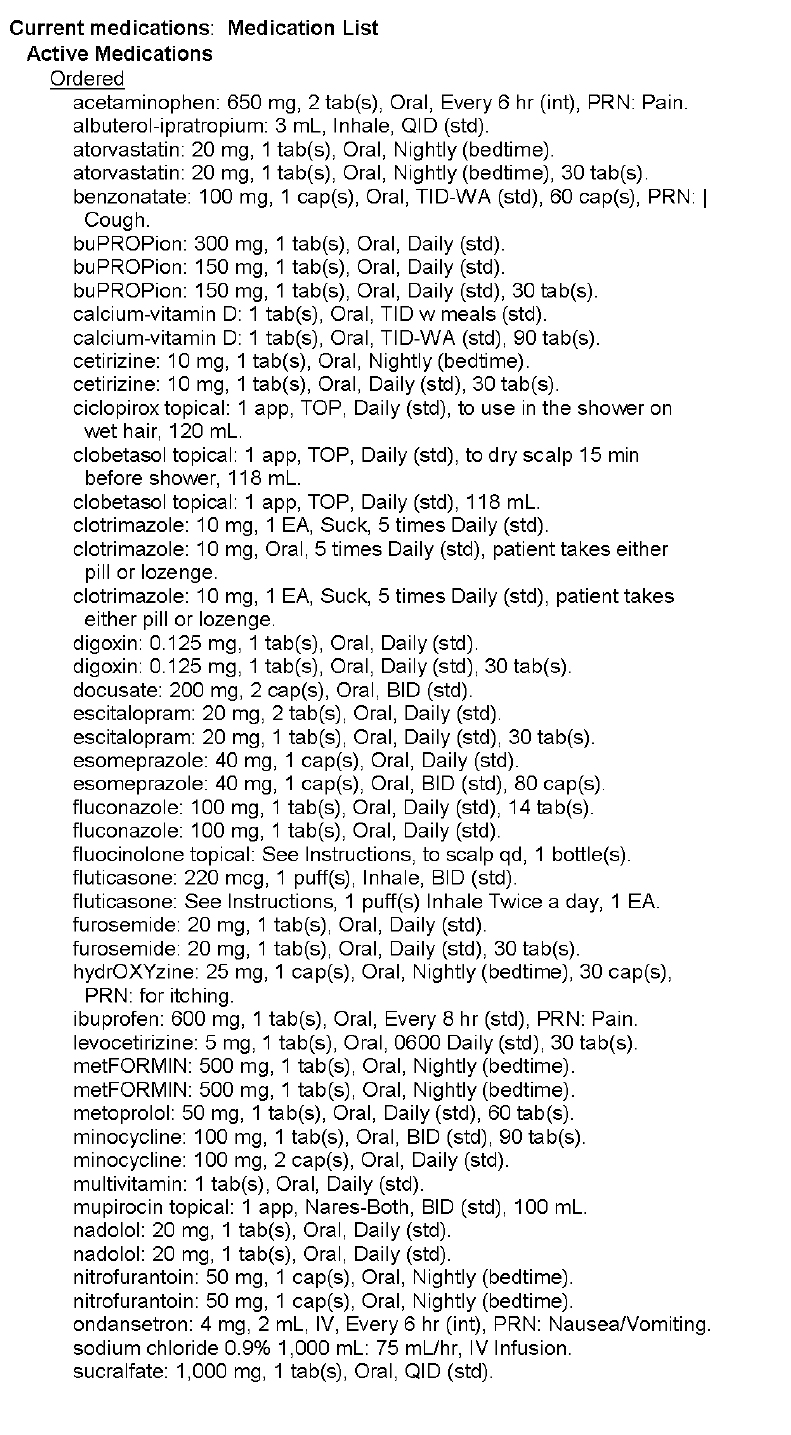
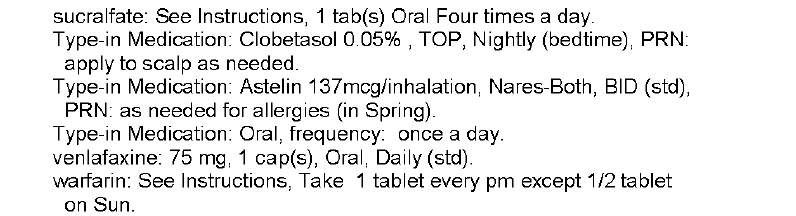
I received a copy of an internal medicine consult that was performed on a patient at this outside hospital.  I have extracted the "medications" portion of the internist's note exactly as it was displayed in the note below (although the list extended over more than one page, so I joined the list together as one figure). Needless to say, I was terrified at what the system had listed as the patient's medications:


Med List (Page 1) - Click to enlarge
 
Med List (Page 2) - Click to enlarge

In this example, we see multitudes of medications listed more than once.  We see drugs of similar classes (antihistamines, beta blockers) on the same list.  We see warfarin, one of our most dangerous drugs dispensed, without a dose included.  We see what seems to be outpatient meds listed with inpatient meds, I'm not sure.  Honestly, we really have no idea what medications are actually being taken from this list.  And yet this list of medications is listed by the EMR as the patient's "Active Medications."

What the heck have we created?

Certainly, any capable physician who cares for patients would describe this medication list as worthless.  So why is it in there?  (Don't get me wrong, the fact that any doctor would allow such crap to be displayed in his or her medical note by using an EMR shortcut to enter them uncorrected is beyond me.  Certainly, we as doctors must accept a big portion of the responsibility for this). 

But when EMR developers and their hospital administration customers purchase software capable of spewing forth completely useless AND potentially lethal information about our patients that is then transmitted far and wide, (not to mention to local direct caregivers) doctors have an obligation to speak up.

These kinds of documentation problems are the EMR's Achilles' heel.  But beyond this, EMR software updates are routinely deployed without real-world real-life testing.  Ever.  And yet, like patients with a defibrillator who die outside the hospital before a root cause of a defibrillator defect can be discovered, I acknowledge that it is  incredibly difficult to prove that the death of an individual was caused by an EMR software problem.

And yet, we must.

So how will we measure problems with EMRs?  It seems industry representatives would rather not address these concerns.  We should ask ourselves, is anyone thinking about this?

Right now, the prevailing belief is that the electronic medical record might be one of the most important medical devices doctors have at our disposal to care for patients.  I tend to agree.  But it's potential to do harm is also enormous if it is not used responsibly and accurately.  After all, as the above example shows, the potential to introduce unintended yet potentially lethal errors into patient care is huge.  More importantly, since nearly every person in the United States will soon have their medical data housed within these systems, the number of people that could be adversely affected by these systems is much larger than what we've seen with our recent defibrillator malfunctions. 

Perhaps, like the ICD registry, we should try to to develop an EMR registry of adverse patient outcomes caused by these software systems.  That way, every independent EMR company can learn from the other's mistakes.  Because, guess what ...

... like other man-made medical devices, EMR's are not perfect either.

-Wes


Sunday, June 26, 2011

Appointment Phishing

Imagine you're a doctor and receive this phone call:
“Hi, my name is Alexis Jackson, and I’m calling to schedule the next available appointment with Dr. Michael Krane. I am a new patient with a P.P.O. from Aetna. I just moved to the area and don’t yet have a primary doctor, but I need to be seen as soon as possible.”

Doctor’s office: “What type of problem are you experiencing?”

Patient: “I’ve had a cough for the last two weeks, and now I’m running a fever. I’ve been coughing up thick greenish mucus that has some blood in it, and I’m a little short of breath.”
Upon hearing his, you cancel two other follow-up patient appointments to make room for this longer new-patient appointment. Sadly, you later find that "Alexis Jackson" isn't a real patient but rather a decoy - a so-called "mystery shopper" paid by our government - just so that wait times for your appointment could be determined.

Most patients I know would understand a doctors' need to make room for a new patient with an urgent problem. But I am also quite certain that most of my patients would not tolerate finding out that a government-paid stand-in lied to me and intruded on their care just so the government could gather information on my appointment availability.

When information gathering trumps patient care - particularly fictitious care - we've got a problem. Is this a new quality standard we can expect from our new government health care initiative?

Just like scam-artists that phish for unsuspecting people's financial information online, governmental appointment phishing should not be tolerated in any way, shape, or form. It is fraud - plain and simple.

Otherwise, many people's health care will be adversely affected as a result.

-Wes

Reference: Pear, R. "U.S. Plans Stealth Survey on Access to Doctors." New York Times. June 26, 2011.

28 Jun 2011 10:30PM CST Addendum: Wow. Maybe this blog matters after all: New Tork Times: "Administration Halts Survey of Making Doctor Visits"

Saturday, April 30, 2011

In Comparing Hospitals, What If They're All the Same?

Quality measures. Patient satisfaction surveys. With our new health care reform law, these "performance measures" are the new black in health care.

Hospitals are currently spending, conservatively, tens of millions of dollars to bolster these "performance measures" in hopes of securing a refund of a mere 1% of payments that CMS will soon withhold from them in the name of "assuring" quality improvement.

But what if, nationwide, there wasn't a big difference in these measures between hospitals? What happens then? Might payments then be made on political grounds?

Performance measures have been collected for some time now in anticipation of this new payment initiative by the government, so data exist to evaluate. In fact, Kaiser Health News was nice enough to aggregate the findings from our government's Hospital Compare website for my review.

So I calculated the mean, median and standard deviation of the results of all of this data collected across 50 states and 2 territories and found very little difference in measures collected between states:

MEASURENurses Always Communicated WellDocs Always Communicated WellAlways Got Help When NeededPain Always Well-controlledStaff Always Explained Medications
Median76%80%65%70%61%
Mean76.06%80.31%64.42%69.29%60.71%
Std Dev2.99%2.84%4.85%2.19%2.89%

MEASURERoom & Bathroom Always CleanAlways Quiet at NightGiven Info for RecoveryHospital Rated 9 or 10Definitely Recommend Hospital
Median72%58%82%67%69%
Mean71.44%57.67%82.00%66.85%69.25%
Std Dev3.86%6.14%2.95%4.38%3.78%

Perhaps most remarkable is the fact that none of these data are skewed (means are virtually identical to the medians) and that there is very little variability (2-6%) between the data sets.

The fact that these data are so similar across states is a testament to the nationwide health care quality that US citizens can currently expect in America.

But these data also lead to a disturbing question: if the data are so similar across every state or territory, will similar findings hold true between hospitals? How is the average Joe or Sally (or Joe or Sally government worker) going to see a meaningful difference in performance measures between states OR hospitals when they show performance differences of as little as ±3%?

The realistic answer?

They can't.

-Wes

Tuesday, November 16, 2010

How It's Spun

I read this morning's New York Times article entitled "Mistakes Chronicled on Medicare Patients" and wondered what would this article be like if it was spun toward the positive, rather than the negative?

So I decided to write a different story based on the positive aspects of the government's data, rather than the former article's negative spin, just so we might consider our quality overlords' agenda:
US Hospitals Remarkable Achievements

Six out of every seven hospitalized patients over the age of sixty five receive remarkable care, according to a new study from the Office of Inspector General for the Department of Health and Human Services. The study said that despite the aging of the general population, their multiple medical problems, the increased oversight and regulatory burdens on today’s physicians, the overwhelming majority of patients who enter today’s hospitals receive exceptional care and can be expected to recover fully.

While there remains areas that we can improve clinically, we should not underestimate the remarkable achievements in outcomes of our patients with cancer, heart failure, pneumonia, and acute myocardial infarctions. “These common conditions occur is patients who are the sickest of the sick,” said Dr. Mortimer T Schnerd, study coordinator. “To achieve such progress in the fight against these diseases is remarkable despite the limitations of the imposed governmental quality measures. Patients today are living longer than ever before and typically present with co-morbidities during their hospital stay. All too often it seems the government quality oversight bodies are not happy with our successes. The seem to feel it's better to continue to expend innumerable resources to assure the unrealistic goal of immortality,” said Dr. Schnerd. “But then again, how else will they rationalize reduced payments for our excellent care to more and more people?”
Funny how we never hear how much money we expend on new hires and the total cost to hospitals for implementing quality measures as a counterpoint to the cost of errors that occur in today's hospitals (ie, the "value" to our health system that these measures represent). Recall that Mr. Berwick, our current head of the Center for Medicare and Medicaid Services, managed to skim $1,404,776 in retirement benefits in just seven short years above and beyond his annual salary from his Institute for Healthcare Improvement in 2008 - a quality managment organization. I dare say that's a sizeable amount for most mortal humans.

No, dear doctor, please don't mention this. That's too unseemly and isn't said in the name of quality care!

But to not mention the cost of implementing and maintaining quality measures dodges an important issue. Where should we draw the line in paying for quality measurement rather than spending that money on the frontline caregivers themselves?

-Wes

Thursday, October 14, 2010

Quantity Versus Quality

Lately, I’ve been wrestling with an issue that I’m sure many bloggers face: should I try to increase the quantity of blog posts or accept a reduce number of posts in the interest of maintaining the quality (or, more specifically, the originality) of posts. Said another way: is it better to get a post up one or more times a day to drive traffic or is it better to get one really good post up less frequently?

Gosh, come to think of it, this same conundrum will soon pertain to health care delivery, too. Blogging and patient care are not too dissimilar.

When starting a blog, lots of posts placed very often helps drive blog traffic provided, of course, that the content is not just spam. Adding unique ideas or adding appropriate commentary to stories that appear on the web adds value for a reader and grows readership.

Likewise, when starting out as a new doctor you need lots of cases with good outcomes to develop a following. People have to get to know you. Volume of cases that go well builds trust amongst your peers. Early on you’ve got to get out there and develop a track record – how else will people know your talents?

And like the blog-o-sphere, as time goes on as trust is gained, friends refer friends. Things ramp up and you hit a stride and become more efficient - a well-oiled machine. It’s great.

But with this added volume come new issues. The pressures to produce more and more grows whether written or surgical. The potential to grow revenues with more volume in both fields exists.

That’s the reality in business-related ventures.

But in each of these endeavors, time remains the one constant. Eventually more of anything reaches its capacity, and whether blogger or physician, we all must make a choice: do I continue building quantity at the expense of the quality of my work? Clearly for me, the choice is no. Limits must be set lest my quality on either front suffer.

Lately, I am finding new patients are having a harder and harder time getting appointments with me. My established patients remain. Like a blog, I must make a choice - see more patients in less time, refer my established patients to others, or cut my volumes. Or maybe I should use physician "extenders" to help with me the load? Might they be like using ghostwriters?

In the years to come doctors will continue to be tasked with seeing more patients in less time with a constant pressure to reduce costs to the system (and hence, their salaries). You simply can’t add millions of more people to our health care system in our new era of “health insurance reform” and not expect that the demand for clinical care will diminish and the associated costs decline. As price pressures mount, the pressure to cut "overhead" expenses will grow and adding more expensive doctors to the system to offload the pressure-head will not be as simple as it sounds. So for now, our greatest challenge will be to see more patients in less time with less salary without affecting health care quality.

And the truth be told: like blogging, something has to give.

-Wes

Monday, September 27, 2010

Great Quality - Now What?

It's the fear of every quality assurance organization - when everyone achieves perfect quality targets:
For evidence-based treatments, hospitals achieved around 95 percent composite performance on 12.5 million opportunities to perform care related to the measures, the Joint Commission said. In 2002, the hospitals got 82 percent composite performance on 957,000 opportunities.

For instance, in 2009, almost 98 percent of hospitals provided proper heart attack care, such as giving aspirin at arrival or beta-blockers at discharge, compared with only 89 percent seven years earlier. For surgical care, such as giving antibiotics an hour before surgery, overall performance improved to 96 percent, up from 77 percent in 2004. For pneumonia care, results jumped more than 20 percentage points - in 2002, this measure was only at 72 percent. By 2009, it reached 93 percent.
While I understand the theory (and no doubt patients with heart disease in particular have benefited), if everyone consistently achieves near-perfect benchmarks because that's how they're paid and resources are expended to make sure that's the case, how do these quality managers justify their continued existence?

The answer is simple: make more quality measures. This is, in fact, what has happened every year since this program's adoption in 2005.

The concern, of course, is that at some point more money will be spent on hoop-jumping in the name of quality scores and patient satisfaction surveys than on the actual care delivered, especially to areas not measured.

Then what will we have achieved?

-Wes

Tuesday, September 21, 2010

Combating Alarm Fatigue

It happens in every hospital telemetry ward: alarm fatigue. Thanks to the need to draw attention to nurses who manage four or more patients at a time using bed alarms, infusion pump alarms, call buttons and telemetry monitors, nurses and nurse's aides are increasingly barraged by noises. With time, these noises fall into the daily hum drum of hospital care and are often missed. Most of these sounds are bell-like noises - often of varying intensity.

But there might be a better way.

I would suggest systems be developed with unique "ring-tones" not too dissimilar from various ring-tones we find on cell phones that would be more apt to draw people's attention - the European ambulance sound for a bed alarm, or fog horn blast for sustained ventricular tachycardia might be heeded to a greater degree than gentle "pings" from our current generation of monitors. For course, a few bars of "Stairway to Heaven" might be a bit inappropriate, but certainly to generate a smile as the nurse rushed to the patient's aide.

Then again, dedicated monitor nurses or techs would work, too.

-Wes

Tuesday, July 20, 2010

The Error In Our Ways

It seems doctors can never do enough. Not only must we diagnose and treat medical illness, this morning in the Chicago Tribune we learn from a study in the Annals of Internal Medicine that used actors posing as patients that seventy-eight percent of doctors make medical errors because we obtain no "contextual history" (another word for "social history?") and adjust our treatment strategies accordingly:
"A lot of doctors are going to say, 'God almighty, it's not enough to be a brilliant clinician? You're telling me I've got to be a financial counselor or social worker on top of that or I'm doing something wrong? Give me a break!'" said John Banja, a medical errors expert at Emory University.
Of course, the lack of social history (or many other aspects of the patient's history) is the predictable consequence of shortened office visits, increased administrative burdens, shift-style medical care, and the push to see more patients in less time. It's hard to cover all the bases in seven minutes.

One thing I'm sure of, however, is a doctor's time with a patient is finite. For every click on a computerized quality check-box, we're stealing from the face-to-face time with the patient. Instead of appreciating this fact, our governmental overlords have consistently swollen the number of "quality measures" from 74 in 2007, 119 in 2008, 153 in 2009, to a whopping 179 in 2010. I figure at this rate, using linear regression, we will have about 319 measures by 2014, the same year another 30 million uninsured will be joining our new health care system.

And the government will be proud we're providing such "quality care."

Click. Click. Click.

Never mind these "quality" clicks might just be doing more harm than good.

-Wes

Thursday, June 17, 2010

Normal Echocardiogram Reading Error Rate 0.2% - By Technicians

In a "study" that is unlikely to ever be repeated again, we find that echocardiogram technicians are pretty good at screening normal echos, and have, according to credentialed cardiologists, a 0.2% reading error rate:
Harlem Hospital Center has completed an investigation of 7,000 heart tests going back five years, most of which had never been reviewed by doctors, a spokeswoman for the hospital said on Wednesday.

The investigation found that 14 patients might have been misdiagnosed because their tests had not been handled properly, said the spokeswoman, Ana Marengo. Twelve of the patients had been contacted, and none of them were found to have suffered adverse effects from the failure to properly read their tests, Ms. Marengo said."
Recall that the echocardiogram technicians were only sending abnormal tests for cardiologists to review, and only presumed normal tests were never read (or signed) by a certified cardiologist.

I wonder what the "normal" echocardiogram reading error rate is for board-certified cardiologists?

-Wes

Saturday, January 30, 2010

How Hospitals Can Help Invalidate Non-compete Clauses

Non-compete clauses are familiar to the business community as a means to prevent a former employee from using corporate trade secrets to compete against the former employer. But when a doctor is forced to leave a practice and three other doctors in that practice join him, that non-compete clause may also impact a hospital in the same geographic area as the non-compete. Hospitals, not wanting to lose admissions, are more than happy come to the aide of the exonerated:
A noncompetition clause in the four doctors' employment contracts prohibited them from practicing medicine within 25 miles of the clinic if they left it.

All four doctors have continued seeing patients at the clinic because their contracts allow them to work for 90 days after termination or resignation. The clause would have gone into effect in mid-February.

Meanwhile, the four cardiologists filed a preliminary injunction in Marion County Circuit Court against Salem CardioVascular Associates (ed note: their former employers), asking that they be allowed to continue practicing locally.

The possibility of having four well-regarded cardiologists suddenly leave the area prompted grave concerns at Salem Hospital, where the four doctors have admitting privileges. All four said they wished to remain in good standing at Salem Hospital.

Judge Graves granted the plaintiffs' preliminary injunction and prevented Salem CardioVascular Associates from enforcing the noncompetition clause.

Graves said enforcing such a clause could reduce the public's access to care and Salem Hospital's quality of service.

"I do find the public interest in this case is greater than the private interest of the three board of directors of this (cardiovascular) organization," Graves said.
So the moral of the story is, hospitals can be handy at invalidating non-compete clauses if you're a busy specialist who admits often to a local hospital who is also affected by your practice's non-complete clause.

Somehow I think that if these cardiologists had been employees of the hospital these same arguments for invalidating their non-compete ("quality"/patient access) would have never have seen the light of day before the judge.

-Wes

Friday, January 15, 2010

Where Were the Techs and Nurses?

Medicine is a team sport. No single doctor can do what they do without tons of help from nurses, technicians, clerical staff, and yes, even adminstrators.

So it was with considerable surprise that I saw this piece from the Baltimore Sun:
"An internal review, begun last May at the behest of federal investigators and in response to a patient complaint, has turned up 369 patients with stents that appear to have been implanted in their arteries unnecessarily, CEO Jeffrey K. Norman said in an interview yesterday. Patients began receiving letters alerting them to the finding early last month, and more notifications are expected as the review continues.

"We take our interaction and the care of our patients with the utmost seriousness, and so we wanted to alert patients and their physicians to what we found," said Norman.

In several cases reviewed by The Baltimore Sun, patients who received coronary stents at St. Joseph - purportedly to open a clogged artery to correct a severe blockage - have since learned they had only minor blockage, if any. One 69-year-old man was told his artery had a 95 percent blockage, yet the new review suggests something closer to 10 percent, which is considered insignificant. A 55-year-old woman who agreed to receive a stent after being told she had a 90 percent blockage has since learned she had virtually no problem and that she never suffered from the heart diagnosis that has consumed her life for the past 18 months."
As bad as this might seem, realize that during angiogram procedures there are technicians and nurses that are responsible for prepping the room, administering meds and monitoring the patient. No physician works in isolation and everyone can see the monitors. Face it, the difference between a 95% blockage and a 10% blockage in a coronary artery is not subtle.

So, yes, the doctor's actions in this case are unconscionable and should be met with swift action, but when something like this is allowed to occur it's much more than the fault of a single doctor.

This was a system problem.

-Wes

Thursday, March 12, 2009

A Look Ahead

"Pay for Performance"

"Comparative Effectiveness Research"

"Quality Assurance"

These terms to health care policy wonks are like Viagra, Cialis and Levitra are to a middle-aged divorced man.

With the emphasis on "cutting costs" and "efficient us of health care resources," we're heading toward these presumed cornerstones for health care delivery lock, stock and barrel, never stopping to ponder the consequences of these policy initiatives to those most likely to use the system: the elderly.

Michael Oliver, professor emeritus of cardiology, University of Edinburgh in this week's British Medical Journal gives us a sneak preview in his editorial entitled, "Let's not turn our elderly into patients:" (subscription required)
"Many older people, often retired, are summoned by their general practitioner for an annual health check. They may feel reasonably well, but the NHS does not always permit such euphoria. They may be told that they have hypertension or diabetes or high cholesterol concentrations; that they are obese; that they take too little exercise, eat unhealthily, and drink too much. The quality and outcomes framework (QoF), the scheme that rewards NHS general practitioners for good performance, awards points, with related payments, for each documentation. Many of these patients are told to have more investigations. Eventually, most are started on pills. Few seem to be considered not at risk for something. Thus, of those who thought themselves healthy, a number will return home as patients. And they may be scared and no longer comfortably aging.

What kind of medicine is this? It is politics taking preference over professionalism, obsession with government targets superseding common sense, paternalism replacing personal advice. It seems that many Western governments regard all people aged over 75 as patients.

This trend has many causes. These include overenthusiastic and uncritical interpretation of various guidelines, the payment of GPs by NHS trusts for ticking boxes, the demands of government health economics and of insurance companies, and the relentless pressure from the drug industry."
He argues that many doctors do not know the difference between relative and absolute risk, that most studies to evaluate therapies are not performed on the elderly, and that the numbers needed to treat to help one patient might subject as many as 74 others to therapy.

Additionally, he argues that guidelines should be guidelines for therapy, not mandates and concludes:
"Primary prevention among young and middle aged adults should be encouraged and supported. But should this apply equally to fit elderly people? Nowadays few elderly people are allowed to enjoy being healthy. A bureaucratic demand for documentation can lead to overdiagnosis, overtreatment, and unnecessary anxiety. Preventive action may be irrelevant and even harmful in elderly people."
And, in turn, I might add, drive unnecessary costs.

If you can, read the whole thing.

-Wes

Addendum: Scottish Review: One patient's take from the article - I particularly liked the last paragraph.

Thursday, August 21, 2008

CMS-Mandated Mortality Data: Whoop Dee Do

I wonder how much money was spent to collect, collate, process and puree the hosptial mortality rates of heart attacks, pneumonia and heart failure in our nation's hospitals, and plotting these data nice little graphs on a website?

I looked at data from most of the hospitals near our facility and was not surprised to find that there was really no big difference in mortality between centers.

So I guess what this data tells us is this: all hospitals are pretty good at collecting data. Whoop dee do.

Now, can we get back to treating patients?

-Wes

Friday, July 11, 2008

Fragmentation

If you haven’t seen the remarkable management of a medical “never” error that was displayed by Paul Levy, President and CEO of Beth Israel Deaconess Hospital over at Running A Hospital, I’d encourage you to read it. This post should be a “must read” for any hospital risk management personnel or hospital administrator.

In short, this is what happened:
It was a hectic day, as many are. Just beforehand, the physician was distracted by thoughts of how best to approach the case, and the team was busily addressing last-minute details. In the midst of all this, two things happened: First, no one noticed that the wrong side was being prepared for the procedure. Second, the procedure began without performing a "time out," that last-minute check when the whole team confirms "right patient, right procedure, right side." The procedure went ahead. The error was not detected until after the procedure was completed.
Mr. Levy described the doctor’s, hospital’s and hospital board’s response to the error, which, considering the proverbial cat-was-out-of-the-bag, was commendable. Readers were awestruck by the “openness” and “humanness” of the moment. I confess, I too, was impressed at the handling of a disaster that no one should have to endure. Of course the natural question that arises in such a circumstance is “How could that happen?”

So off went the “physician safety division” to interview all involved while the details regarding the incident were fresh in everyone’s mind. The doctor (appropriately) notified the patient’s family and made a full apology. And the board member chimed in:
"Protocols are meant to make procedures insensitive to distraction and busy days. These are inadequate and embarrassing excuses. The 'culture of safety' has not permeated the front lines. Culture of safety training, and application of advances in safety science, I believe, are critical to preventing the type of complex harm that occurs in hospitals. Not just for new staff. For everyone who wears a BIDMC badge, or is affiliated as a physician to the hospital. I know that this is a new science, and a new way of doing business, but this event might just give that leverage needed for change."
There it was. Corporate speak: “culture of safety,” “culture of safety training,” that “hasn’t permeated the front lines”, the era of “new science, and a way of doing business.”

I read through the more than 45 responses to Mr. Levy’s remarkable post, and there, at the very bottom, was the one response that stopped the entire thread in it’s tracks, as one brave Noah Zark stepped forward and said:
”I have an idea. Perhaps the surgeon (as opposed to a PA, NP, intern, or Family Doc) should perform and record the complete pre-op history and physical exam requisite for surgery. This ancient protocol ensures that the surgeon knows the patient for the sake of both...; but it is not followed any more.

Don't waste your time with high tech digital video that can be played from your state of the art computers...just be sure the surgeon examines the patient before he/she is in the OR...the old fashioned way.”
We all know Mr. Zark is right. We also know that it is unlikely, in today’s day and age of the “business” of medicine, that real change in how care is delivered by physician’s stretched to do more in less time than ever before, will occur. We have become fragmented as a profession – too specialized – too procedurally based - too frenetic to stop and really speak and examine patients like we all learned in medical school. Those values lose their cache in the business world of medicine and is exactly the reason that wrong site surgery exists today. That’s why this error was so sad...

... we realize what we’ve lost.

-Wes

Saturday, July 05, 2008

The Patients Who Cry Wolf

If you want to find out how a hospital of emergency room works, do you send in "secret shoppers?"
"As a matter of ethics, you always have to justify why you would need to deceive someone," said Nancy Berlinger, deputy director and a research associate at The Hastings Center, a bioethics research institute in Garrison, N.Y.

Questions have also been raised about how far these undercover patients should go, because they could be exposed to procedures and medications that carry real risks.

Earlier this year, an Essex County, N.J., hospital had some of its own employees pose as secret shoppers to see whether nurses were reading back physician medication orders over the phone to ensure accuracy. Protocol also called for the nurses to record the encounter in the patient's chart

A spokesman for the hospital said employees from doctors to technicians were tapped to secretly observe the nurses, then record whether they complied with the rule.

"We discovered there was very high compliance, although it wasn't 100 percent. In those instances where the person was not complying, we just contacted them and informed them we really needed them to do this," spokesman Richard Wells said, adding that no punitive action was taken.
In a time where ER's are overcrowded, resources are in short supply, doctors and nurses are pushed to their limits, and patients' care is compromised by this fraudulent activity, this monitoring practice should be outlawed.

-Wes