Showing posts with label pacemaker. Show all posts

Monday, July 06, 2015

Case Study: Palpitations Following Pacemaker Implantation and AVJ Ablation

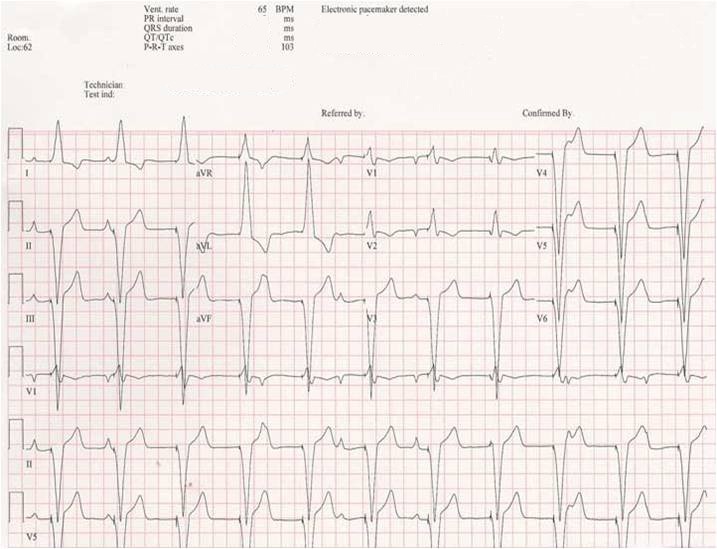
A 70 year old woman underwent a DDDR pacemaker implantation (Medtronic Versa DR) and AV junction ablation for chronic atrial fibrillation refractory to medical therapy six months after she presented to the pacemaker clinic.  She returned complaining of intermittent palpitations, usually worse at night.  An interrogation of her permanent pacemaker demonstrated the following:

(Click image to enlarge)
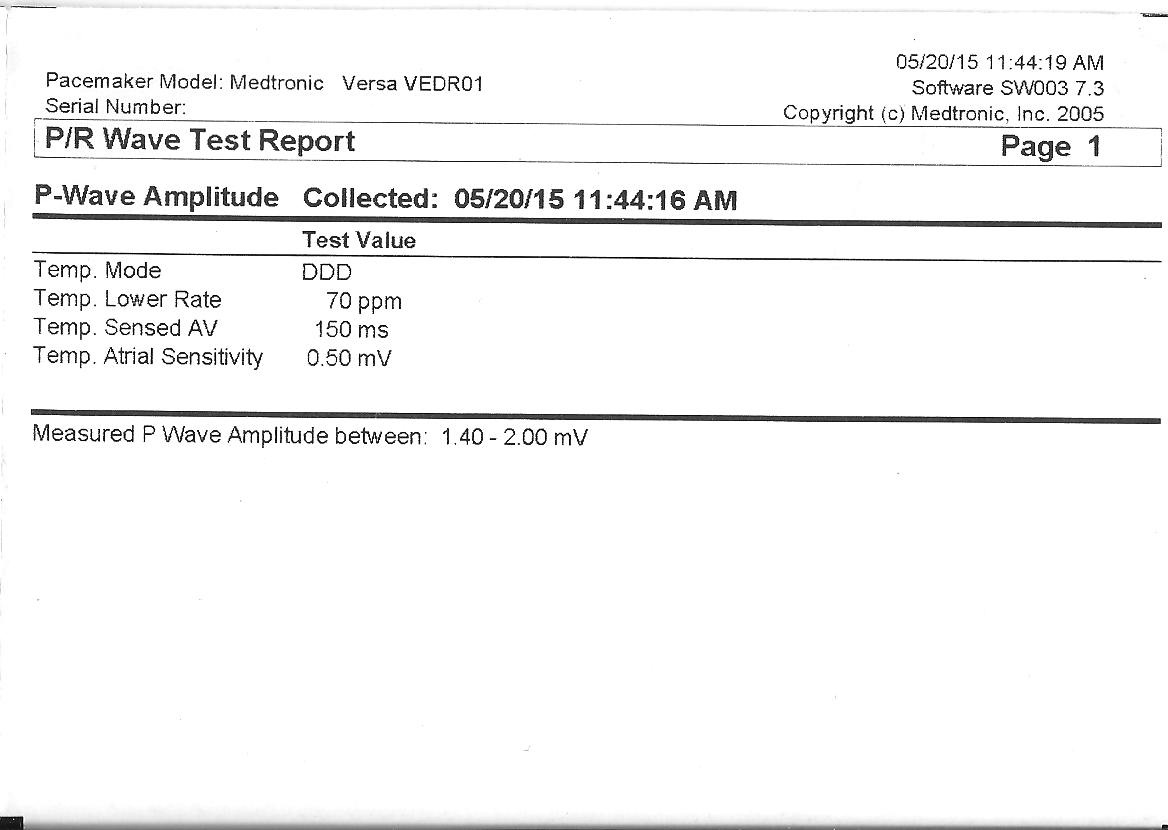
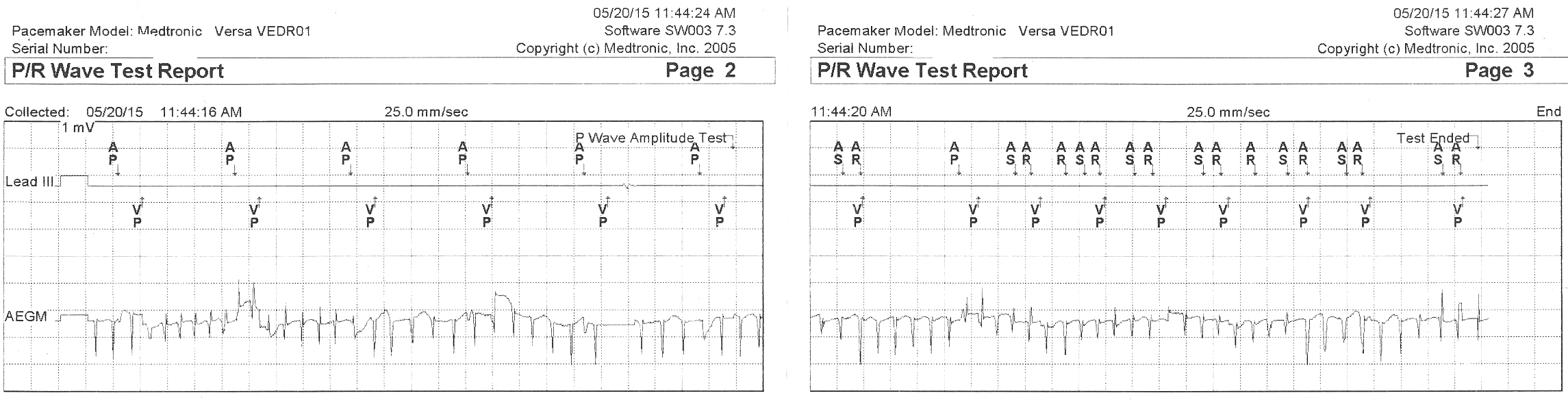
Her P waves are interrogated and appeared to be of a sufficient amplitude of 1.4-2.0 mV:

(Click image to enlarge)


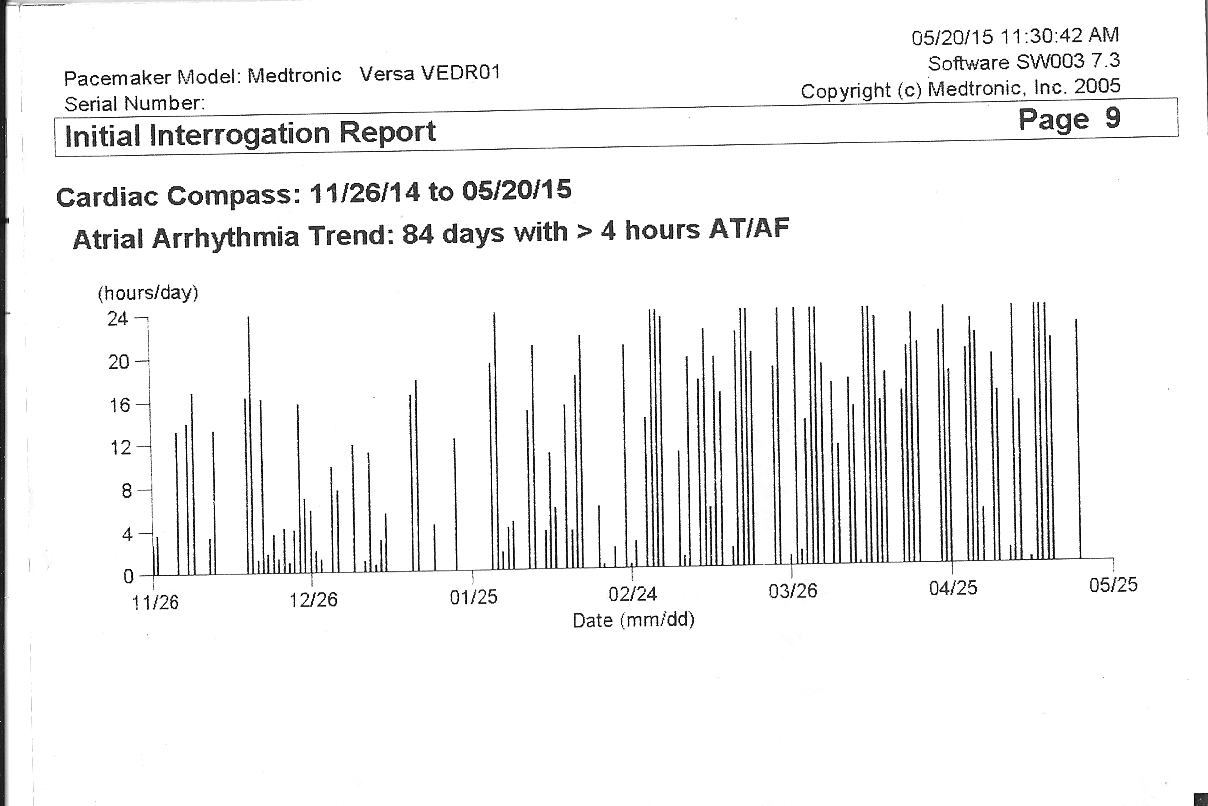
Likewise, her Cardiac Compass plot of the duration of atrial fibrillation each day showed the following:

(Click image to enlarge)

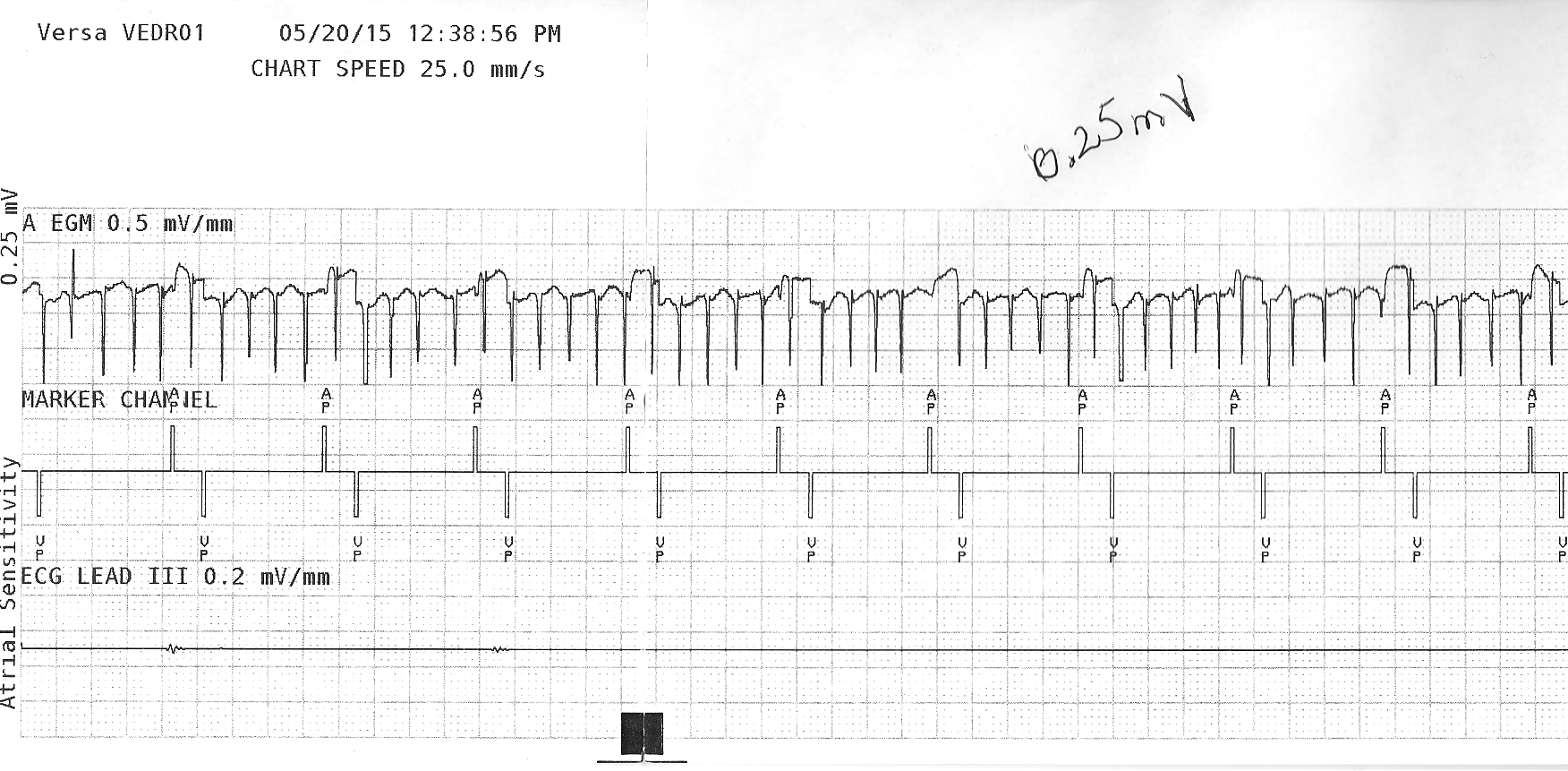
Upon seeing these data, it was felt the patient may be undersensing her fibrillatory P waves (formally known as F waves). To improve her pacemaker's atrial sensitivity, the sensitivity threshold was changed from 0.5 mV (her initial setting) to a more sensitive setting of 0.25 mV.  Here is how the device responded to this change in sensitivity:

(Click image to enlarge)


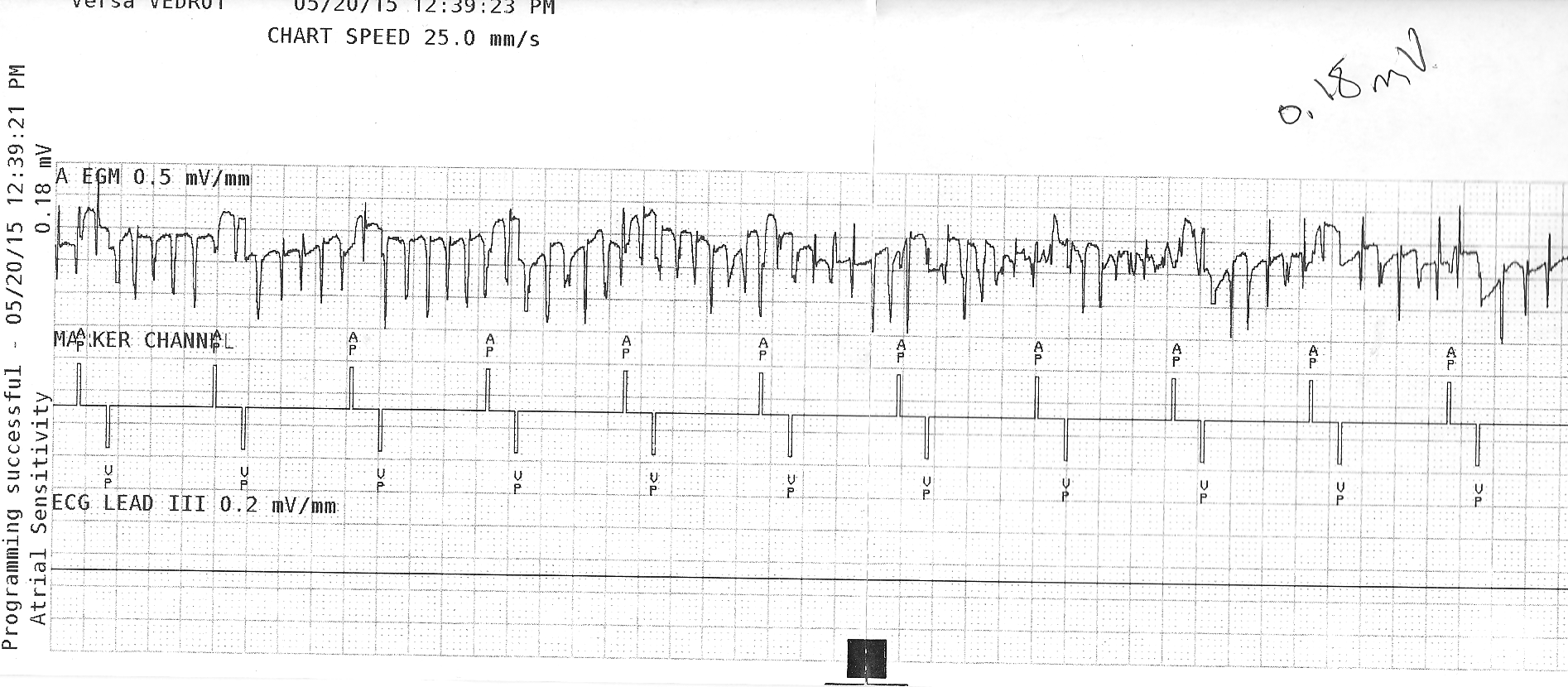
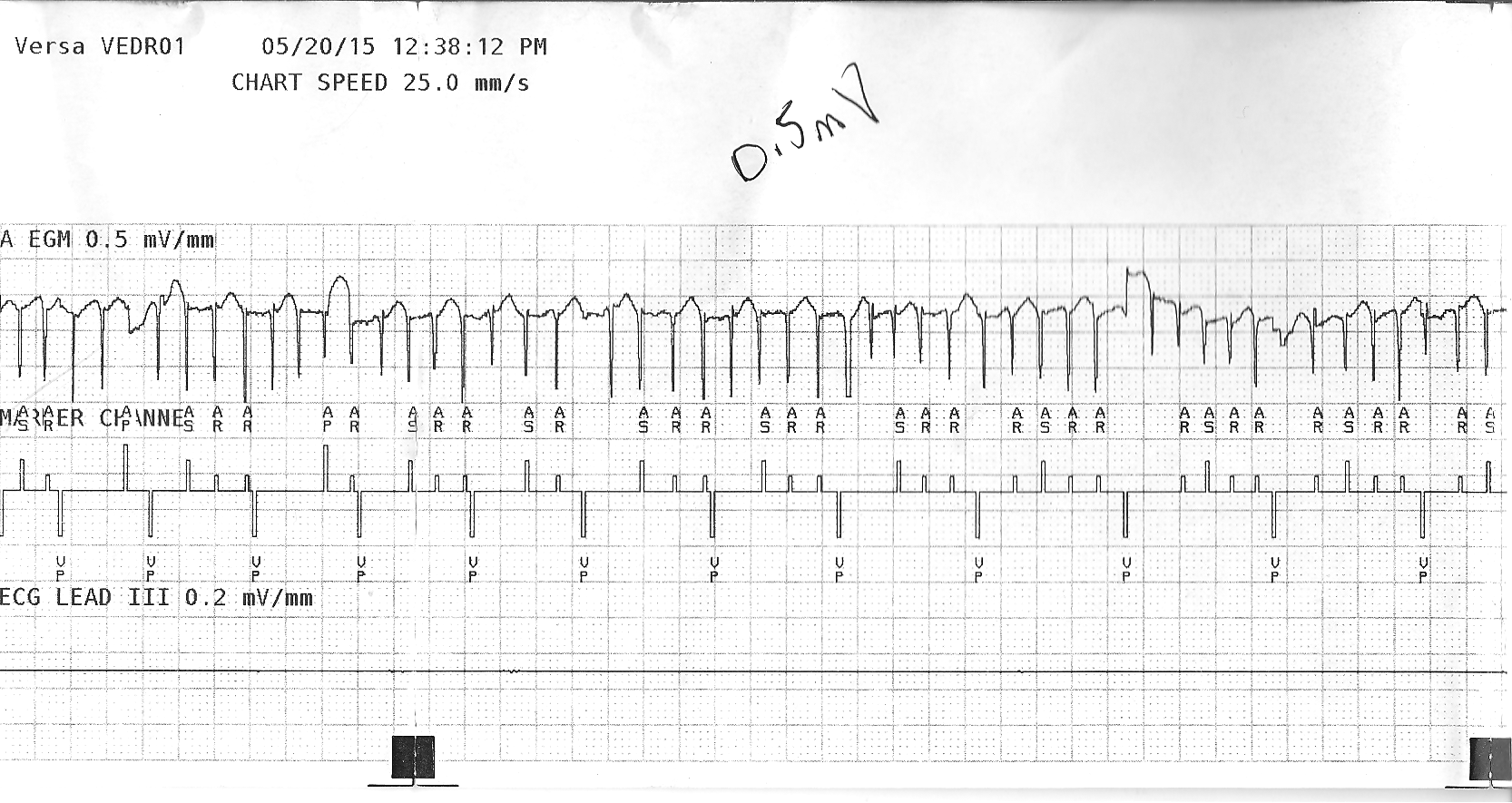
Even a more sensitive setting of 0.18 mV showed similar results:

(Click image to enlarge)

Here's her sensing at the original (less sensitive) setting of 0.5 mV. Unfortunately, occassional atrial pacing was still seen:

(Click image to enlarge)


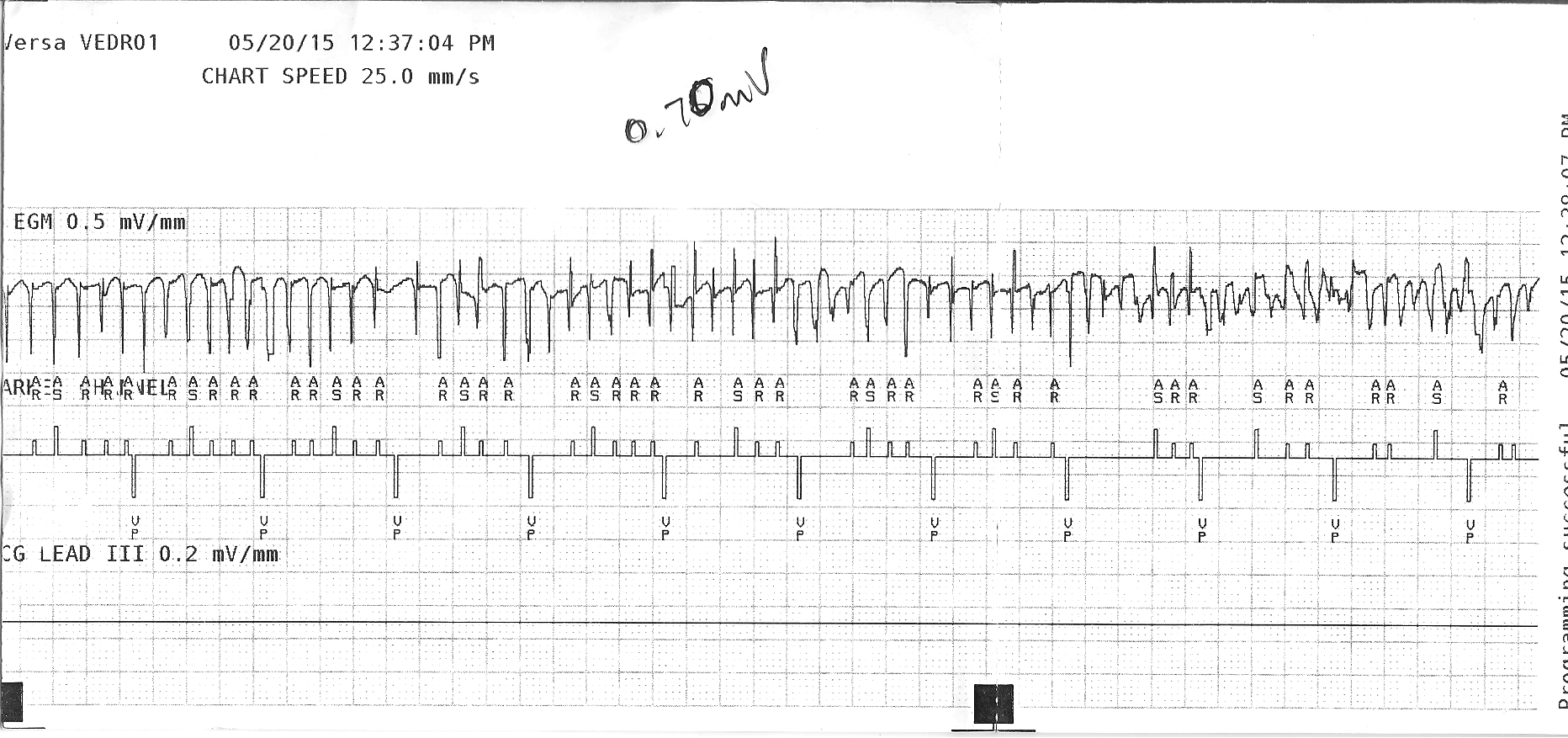
Programming to an even less sensitive setting of 0.7 mV appeared to paradoxically have improved sensing of her atrial fibrillation:

(Click image to enlarge)

How do we explain what is happening here?   Would you revise her right atrial lead?  If not, what atrial sensitivity setting would you use for this patient and why?

-Wes

PS:  Give it your best shot to see if you can explain what is going on with this patient's atrial pacing sensitivity setting.  When you finally give up and want the answer to what's going on: consider clicking here.

Monday, June 15, 2015

CMS Issues National Coverage Decision for Pacemakers Dangerous To Patients

Who needs the Independent Payment Advisory Board to limit indicated care for patients when you have the Center for Medicare and Medicaid Services (CMS)?

Today I learned that CMS has issued a National Coverage Decision (NCD) for pacemakers effective 6 July 2015 that would restrict pacemaker implants to patients with "non-reversible symptomatic bradycardia" and require a so-called "KX" modifier to be added to codes for patients needing pacemakers.

That's right, even patients with asymptomatic complete heart block would not be covered.  Patients with asymptomatic Mobitz Type II heart block wouldn't be covered either.  Even though every piece of medical literature has supported the benefits of pacemakers in these indications, it seems doctors will be left with no choice but to lie in their documentation about patient symptoms to assure Medicare payment, or risk the government refusing to pay for their patients' medically indicated care.

Of interest is the fact that the change request for the new policy references a section of CMS’ claims processing manual. (The red italicized print in CR 9078) However, that section is now suddenly absent from the actual manual.

The Heart Rhythm Society and the American Medical Association (who forwarded this rule change) has been suprising silent on this new decision that was recently forwarded to our nation's hospitals and failed to included "exceptions" to their rules as part of their transmission. As of this morning, no mention of this transmittal has occurred on their website that I could find.

Practicing cardiologists and cardiac electrophysiologists everywhere should be outraged that such a document was circulated to Medicare billing coders everywhere, but not forwarded to US physicians given its implications to patient care. 

I have no doubt Medicare monies will be saved when people die as a result of this transmitted coverage decision as it currently exists. But we should ask ourselves who is responsible for such negligence on behalf of our patients?

-Wes

1930 PM CST - Link fixed (h/t to @drjohnm)

Friday, May 01, 2015

Friday Read: The Not-So-Simple Pacemaker Check

Her breathing had never taken a second thought, except for the past several months.  Slowly, gradually, her breathing became work so she came to our emergency room.

Her life had been an full one: married, kids, grandkids - all of whom brought her incredible joy. But since the loss of her husband and all of the changes that occurred in her life as a result, she felt more alone than ever. Perhaps this was the reason the pacemaker she had received some 14 years before just didn't seem so important any more. Her kids and grandkids were what remained now, and for them she was grateful for they had noted she'd become too short of breath with even the slightest effort, so they brought her in.

The chest-xray taken when she came to the Emergency Room showed her pacemaker and prompted the ER staff to ask about it. "She hasn't had a pacer check in a while, " the family mentioned. So we were consulted to check the pacemaker's function.

Before we'd done so, we looked at her EKG and weren't surprised at what it showed. After all, we'd seen this scenario before.

So with some confidence I entered her room. There sitting beside her was one of her sons and a granddaughter. She was propped up in bed wearing a green oxygen face mask that covered her mouth and nose but couldn't suppress her kind smile as I entered. After a brief introduction, I explained what her EKG showed and how I thought a good portion of her shortness of breath might be stemming from her pacemaker's low battery.

In our conversation she mentioned that she had been told her pacemaker battery would need to be changed soon. That was before her husband died. After his funeral, the need for a recheck of her pacemaker was quickly forgotten. So she had not anticipated that the pacemaker might be a cause of her symptoms.

We discussed her options. She could leave things well enough alone if she preferred while we arranged to keep her comfortable for her remaining days, or we could change her pacemaker battery. At the time, she didn't want excessive resuscitation measures and had declared herself a "DNR - Do Not Resuscitate" in the event of cardiac arrest.  She thought hard about the choices but wasn't sure...

"Mom, it seems like such a small thing and it might be able to help you feel better! Don't you want to see your grandkids a little longer?" the son pleaded. She listened to him, then looked at me. It was clear she understood the choices and their implications. I suggested she think about it and left the room to give them time to discuss things. Some time later, she asked me to return.

She asked again, "So you think it might help me feel a bit better to have the battery changed?"

I replied, "Honestly, I do, but it's always hard to gauge how much."

So after a few more questions were answered and worried looks shared with her son, she agreed to have her battery replaced. I left the room to document my visit. (After all, nothing happens in medicine any longer unless typing occurs.) Seated next to me was my nurse practitioner, herself transfixed to the computer screen as she returned patient phone calls and made arrangements for procedures to be performed the next day. Next to her was the pacemaker programmer which she wisely brought with her to help check the patient's device. She finished her call and then offered to check the device while I finished my note. I thanked her and continued typing.

It was still relatively early in the afternoon and the eight computer terminals around me were completely occupied by nurses, physical therapists, and residents hammering away and looking stone-faced, somewhat akin to what the New York Times newsroom must look and sound like just before deadline.

Until that sound was shattered by "Call a Code! Code Blue! Get Dr. Fisher!"

Somewhat startled, I looked up to see a sudden shift of the masses. Was that the voice of my nurse practitioner? It couldn't be, could it?

It was.

Poor thing. It seems she placed the wand of the pacemaker programmer over the patient's device, only to see a strange screen on the programmer appear that read something like: "Pacemaker reached ERI 8/13/2013…" followed by a bunch of other text that said something about "Power-on Reset mode" among other things. As she struggled to read the long message and donned a pair of glasses, she noted some twitching in the corner of her eye coming from the patient's direction. She looked up to see a peaceful blank stare on the patient who now laid motionless and unresponsive - a quick glance at the monitor showed it had flat-lined with only a rare agonal ventricular escape rhythm. Realizing what had happened, she was briefly at a loss how to react. This was not supposed to happen. Fleeting thoughts raced through her head like "Seriously?" and "Oh, God, I'm too old for this!" That's when she called out for help.

The poor son and granddaughter sitting in the corner were stunned, not knowing what had just happened. A horde of medical personnel swept in to the room and ushered them out, terrified. I entered the fray and saw my pleasant patient lying there motionless, small puffs of condensation appearing on her face mask and her pupils somewhat dilated. The monitor, too, was devoid of motion, except for an occasional blip seen one the screen. I reached for a pulse. It correlated to the monitor. Not much at all.

"Can we get some atropine and epi?" A asked the code team nervously assembled, not knowing what to do in this "no code" situation. Fortunately, I removed the programmer head from her chest and watched her breathing carefully. Seconds seemed like hours as my poor nurse practitioner stood beside me with her mind scrambling. "Come on guys, we need those meds… What's taking so long?… " she snipped. "Get the pacing patches!" They still were rifling through the drawers of the crash cart when she offered like a pro: "Guys, the purple box!" And within a second, the purple box appeared. The first medication was administered as time seemed to stand still. An occasional blip, then more people in the room. "What can we do?" the anesthesiologist asked.

I looked at the monitor dreading the thought of starting CPR given her wishes, or the what I might say to the stunned family at her bedside if we didn't.

But then, just as unexpectedly as it had begun, a paced rhythm resumed on the monitor! "Hold it!" I said, "I think we have a pulse!" And like a wilted daisy that just received its water, she immediately regained consciousness and wondered what all the fuss was about.

"What happened? Where did all these people come from? Why are they here?"

"It seems your pacemaker battery is a lot lower than anyone expected, Ms. Jones (not her real name). When we checked it, we must have used some of the last energy that pacemaker had. It looks like we need to take you our laboratory and replace that battery right away!"

She smiled and looked up at me with her precious eyes gleaming. Here we were, total strangers just minutes before, now bound together by some unimagineable force. She looked so comfortable lying there, then out of nowhere she reached up to me and grabbed my head, pulling it toward her oxygen mask in an attempt to give me a kiss right through it.

"Thank you," she whispered and smiled, "Thank you."

After reassuring her family and explaining what had happened, we hurried off to the EP lab, our eyes transfixed on her monitor and me still reeling from that beautiful and totally unexpected kiss...

... plastic face mask and all.

-Wes
Monday, November 17, 2014

J. Rod Gimbel: Crowdsourcing a Consumer Safety Issue

The following is a guest post by J. Rod Gimbel, MD, a cardiac electrophysiologist from Knoxville, TN who has written extensively on the issue of electronic surveillance systems and electromagnetic interference with cardiac implantable electronic devices:
I’d like to express my appreciation for allowing me to guest post in this space.

This is about crowdsourcing a consumer safety issue; specifically the public safety of consumers who happen to have CIEDs (cardiac implantable electronic devices) such as pacemakers or implantable defibrillators (ICD). Nearly 2 million such consumers (patients) have CIEDs in the U.S. alone. As you know, these devices are susceptible to EMI (electromagnetic interference). Simply put, the lead(s) act like antennas and can pick up stray EMI from any number of sources and cause the device to malfunction by either withholding therapy (no pacing or ICD rescue therapy) or through delivery of inappropriate therapy (delivering pacing output or shocks where none is needed). Either situation can be life threatening.

One source of EMI that can affect a CIED patient is electronic article surveillance system (EAS). Such systems are widely used by retailers (ref) to deter and prevent store theft, a problem commonly referred to as “shrinkage”.

About 8 years ago, an ICD patient that I was caring for received inappropriate shocks from his ICD after being near an EAS system located in a big box retailer. A colleague of mine related a similar situation where a pacemaker dependent patient reported syncope in the proximity of an EAS system after her pacemaker inhibited in response to the EMI from the EAS system. These were two disturbing, potentially life threatening events. In hopes of raising awareness of this serious problem (EAS-CIED interaction), we generated a manuscript detailing the events that was published in 2007 in the Mayo Clinic Proceedings. Notably, the New York Times picked up the story. Others have published similar unfortunate misadventures between patients and EAS systems.

Several common sense recommendations have been made in this area; recommendations that preserve a retailer’s right to deter and reduce theft (a legitimate concern), but still protect CIED patients from adverse interactions with EAS systems. For instance, after receiving reports of several adverse events caused by EAS systems the Food and Drug Administration (FDA) issued a “Safety Communication” and noted:

  • Be aware that EAS systems may be hidden/camouflaged in entrances and exits where they are not readily visible in many commercial establishments.

  • Do not stay near the EAS system or metal detector longer than is necessary and do not lean against the system.
Beyond this, we and others also suggested:
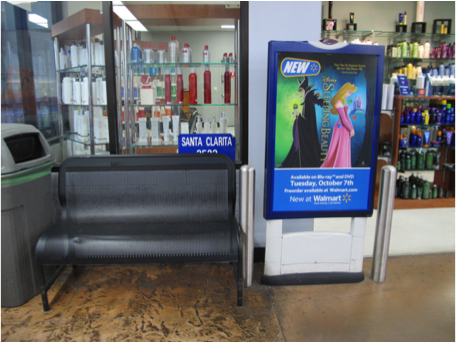
  • Retailers should not "camouflage" the EAS pedestals with advertising as this may prevent customers with devices from recognizing the threat and may actually draw device patients toward the EAS pedestal.

  • Retailers should not place goods and services near the EAS systems that effectively encourage the patients to violate the "don't linger, don't lean" dictum that physicians tell patients who have devices.

It seems entirely reasonable to suggest a shared responsibility between medical device professionals, device patients, retailers, and EAS system manufacturers. It was hoped EAS manufactures and retailers would do their part and embrace these simple recommendations and help make retail spaces safe for those with implantable devices. Unfortunately, this does not seem to always be the case.

Figure 1: Bench to "relax" placed adjacent to a camouflaged EAS pedestal at big box retailer.
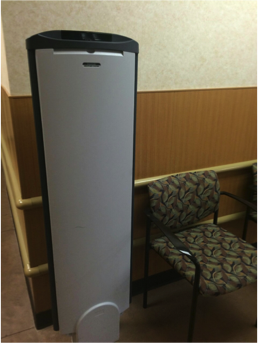
Figure 2: Chair to "relax" placed adjacent to EAS pedestal while patient waits for prescription to be filled at retail pharmacy store.
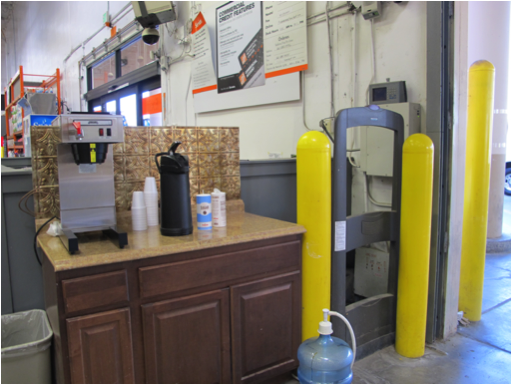
Figure 3: Complimentary coffee station where device patients might linger placed adjacent to EAS pedestal at big box retailer
These pictures were taken in the last several months around the country. Clearly, the juxtaposition of EAS systems and consumer areas may undermine the dictum “don’t linger, don’t lean” and leave device patients in harm’s way. Who then, is responsible for the safety of device patients in this situation?

Finally, perhaps in an attempt to thwart a determined and “informed shoplifter” who may employ several methods that might undermine the effectiveness of EAS systems, “there are also concerns that some installations are purposefully configured to exceed the rated specifications of the manufacturer, thereby exceeding tested and certified magnetic field levels.” This may increase further the risk of adverse reactions experienced by device patients when near EAS systems.

Now for the crowdsourcing part:

A presentation on this topic (CIED-EAS interactions) to an extra governmental regulatory group helping set standards for the device industry is to be given soon. This presentation will be to a number of interested parties including representatives of the EAS manufactures, device manufactures, and the FDA. As noted above, the “event rate” of these interactions is rather low, but as has been suggested significant under-reporting may obscure the true significance of the problem. It is surely recognize that not everyone has the time or inclination to write up adverse events for publication or inclusion in a database. Perhaps, some events go entirely unrecognized for what they really are, being passed off as “Oh, Mom passed out at the store today, but she’s OK now”.

With your help a strong presentation and case can be made emphasizing CIED-EAS interactions are an important public safety issue. Your voice and concerns can be heard. First off, send pictures where you see EAS systems placed in a manner that might endanger a device patient (like the ones shown above). Cell phone pictures are just fine. Second, if you are a health care provider or patient, please send any “events” that you may have experienced describing an adverse interaction between an EAS system and pacemakers and or ICDs. Please post the items here or send items of interest to J. Rod Gimbel, MD (gimbeljr@gmail.com). Your response is of course appreciated and in confidence and any presentation of the material provided will be anonymized. Upon completion of the presentation, a link will be posted here.
This is an important effort that Rod is undertaking on behalf of patients with CIEDs. I hope patients and health care providers will come forward with examples of EAS systems or EAS interference in their locales to assist him in this important consumer safety effort.

-Wes

Tuesday, September 23, 2014

Time Lapse: Pacemaker Implantation Table Setup

Oh, the wonders of Apple's iOS8!  Now there's no excuse for slow room turnovers:


Yeah, I can see all kinds of applications for time lapse photography, especially when it comes to improving my productivity...

-Wes

Monday, September 08, 2014

Another MacGyver Moment in Pacemaker Implantation

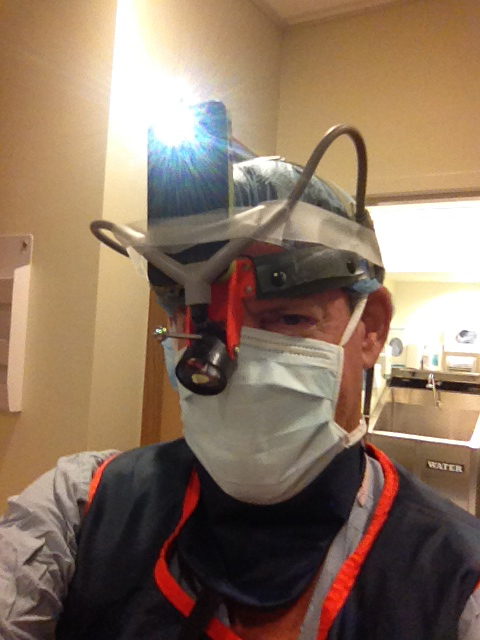
Installing a permanent pacemaker or defibrillator has become commonplace event in cardiology these days.  These devices implanted in a patient are comprised of two main parts: the lead(s) and the pulse generator.  After installing the leads in the heart and connecting them to the pulse generator, the lead and pulse generator assembly are then placed beneath the skin in a small subcutaneous (or in rarer cases, submuscular) "pocket" that is created surgically.  Considerable care is taken to cauterize bleeding vessels when the pocket is created.  To facilitate visualization of these occasional bleeding vessels deep within the created pocket, I prefer to use a surgical headlamp to direct the light deep within the pocket cavity rather than relying on a conventional overhead surgical light.  I have found that headlamps have helped me limit my incidence of post-operative pocket hematoma development.

So as things have had it, I seem to have a knack for attracting every eighty- or ninety-plus year old who needs an emergency pacemaker on the weekend when I'm on call, and this past weekend was no exception.

So the team was assembled and the pacemaker implantation equipment readied.  They knew I liked a headlamp, so they dug deep into the recesses of their inventory to pull out their only headlamp that appeared to be from a bygone surgical era.  Being pressed for time, I couldn't argue and had to make due, but knew that this headlamp might not be very reliable, especially as I saw how the headlamp's fiberoptic cord was secured to the light source that generated about as much light as a few well-lit candles by a cumbersome spring-loaded Rube Goldberg contraption.  As I placed the headlamp on my head, and tightened the plastic strap that housed the headlamp to my head, I needed a backup plan in case the light failed.

Would I have to use the overhead light and make do, or might there be another way? 

I needed another MacGyver Moment.

That's when my on-call staff team came up with a brilliant, simplified idea:


iPhone to the rescue!


-Wes

(PS:  This device is experimental and has not been approved by the FDA.  Use this device at your own risk.    If you experience headaches, nausea, difficulty with concentration, or an erection lasting for longer than four hours, discontinue use of this device and contact your doctor immediately.  I have no commercial interest in this device.  Also, since the headlamp still worked this weekend, no workaround was needed for the patient, but something tells me we might be getting a new headlamp soon.)


Monday, July 07, 2014

New CMS National Coverage Decision for Pacemakers Begins Today

A new CMS National Coverage Decision for pacemakers begins today.  Here are the specifics.

If your patient is getting a pacemaker for atrial fibrillation or other "ineffective atrial contractions" with symptomatic bradycardia, be very sure to document the "non-reversible" nature of the symptomatic bradycardia in your note and have your billing staff consider adding a "KX" modifier to the claim line(s).

Remember, most regulators look at codes, not notes.

Just sayin' -

-Wes

Friday, March 14, 2014

Case Study: An Unusual Catheter Course to the Right Atrium

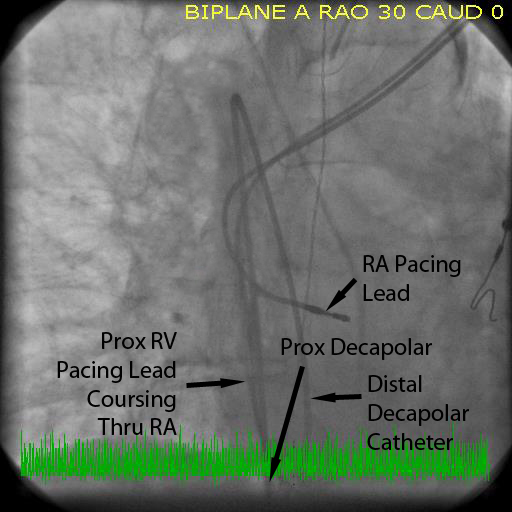
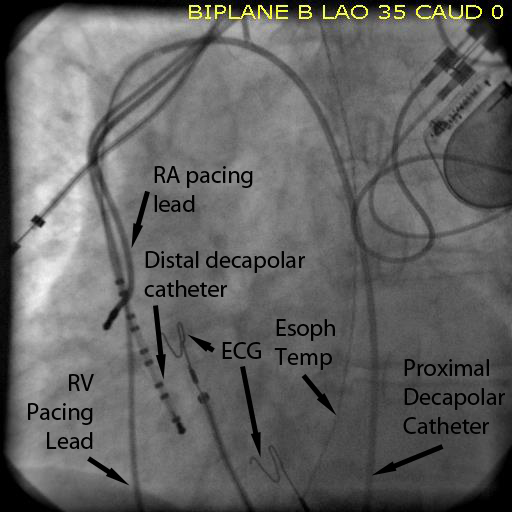
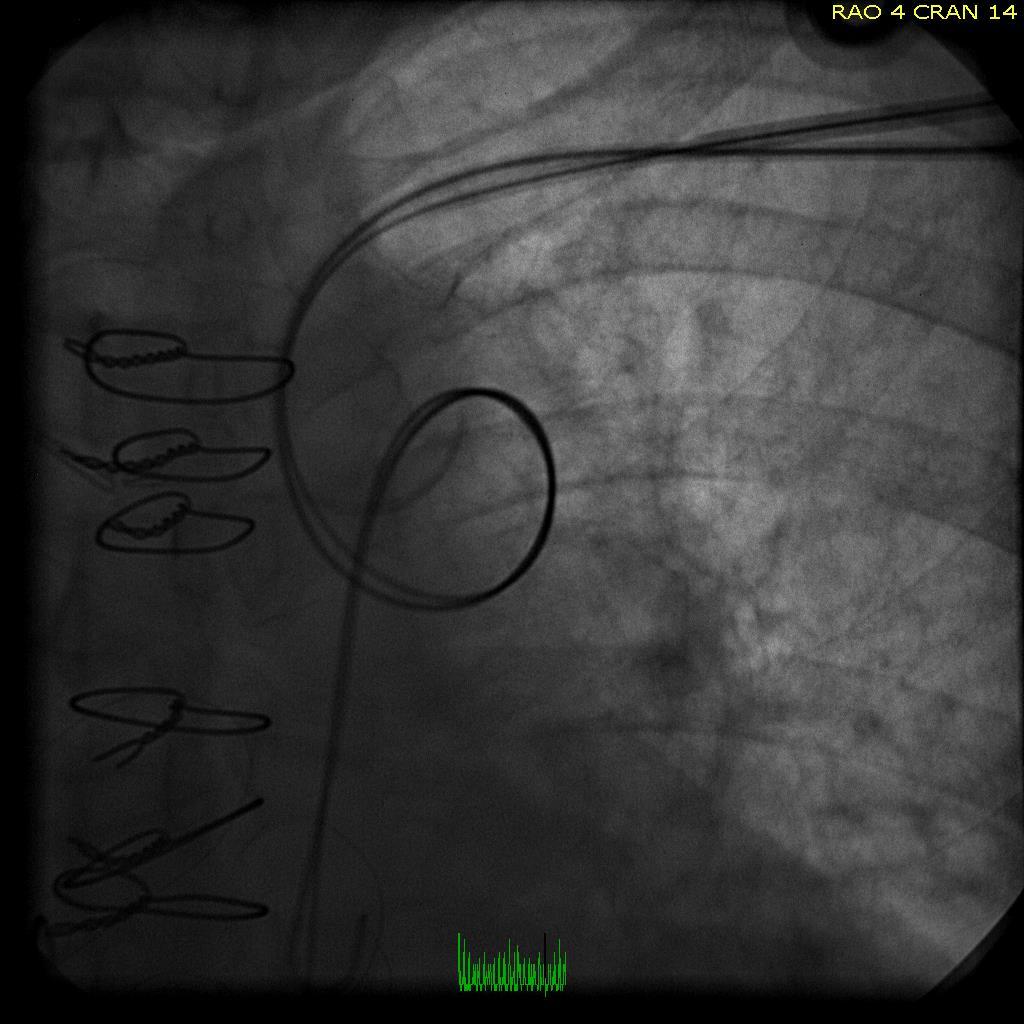
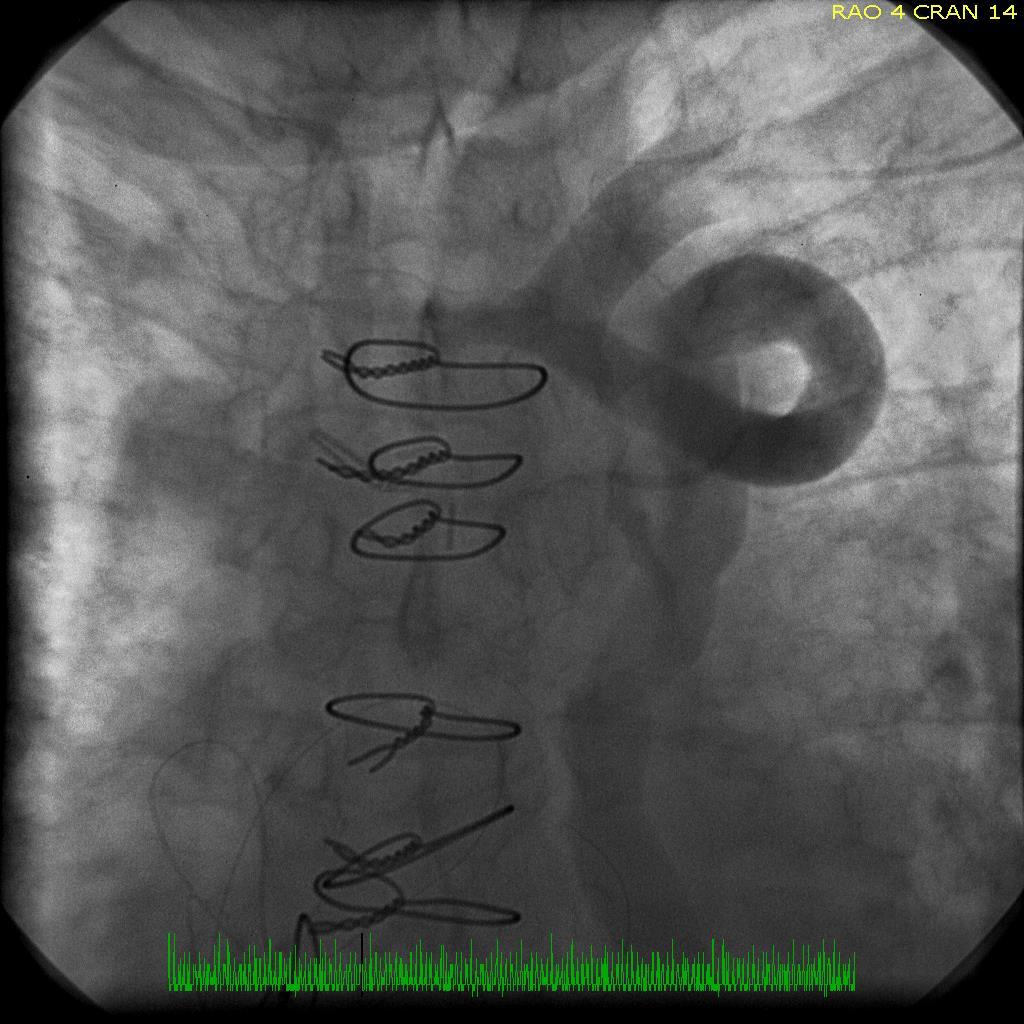
Recently, our laboratory was performing a catheter ablation of paroxysmal atrial fibrillation in a patient with a permanent pacemaker previously implanted from the left axillary venous approach.  The fellow placed a decapolar catheter from the left femoral vein, but it took an unusual course to the right atrium.    Attempts to place the catheter via a more typical course could not be achieved.

Here are the RAO and LAO fluoroscopic images he saw (labeled for your convenience):

RAO Fluoroscopic Image (click to enlarge)

LAO Fluoroscopic Image (click to enlarge)
At first, the fellow thought the catheter was extravascular was the catheter passed behind the heart, but continued advancement resulted in the catheter entering the right atrium.

Here's the LAO Cineangiogram of the finding that helped us identify the cause:


Here's the RAO image of the same shot:


What is this?  What happened next?

-Wes

PS:  If you can't wait, here's a link to a pretty illustration of the anatomy.  Note the hepatic drainage to the right atrium is separate from the drainage of the IVC in this anomaly.  Here's another link to factoids from the radiology literature regarding this interesting finding.

Thursday, February 20, 2014

St. Jude Issues "Dear Colleague" Letter Regarding Older Pacemakers During Surgery

On 29 January 2014, St. Jude Medical issued a "Dear Colleague" letter regarding their review of incident reports on older-model pacemakers (Affinity, Entity, Integrity, Identity, Sustain, Frontier, Victory and Zephyr models) that occasionally dropped their output voltage during surgical electrocautery. (Here's a publication describing two such cases.)

Several issues regarding this advisory letter are troubling.

First of all, according to the St. Jude letter: "Placing a magnet over the device or programming to an asynchronous pacing mode will not prevent this temporary reduction in pacing output." Consequently, St. Jude advises that pacemaker-dependent patients with these older pacemakers consider undergoing surgery without the use of electrocautery or to "employ appropriate precautions to ensure that the heart rate will be supported in the presence of electrocautery. Consideration of placing a temporary transvenous pacemaker is appropriate. (Emphasis mine)"

Typically, placing a magnet over pacemakers causes them to pace at a default "magnet rate" and pace at the programmed output voltage. This is such a common feature among pacemakers that it formed one of the cornerstones of the 2011 guidelines for peri-operative pacemaker management. While electromagenetic interference on older pacemaker models has been seen due to the device being reset, it is unusual for pacemaker output voltage to drop briefly. Furthermore, the recommendation to place a temporary pacing wire before surgery where electrocautery use is anticipated in pacemaker-dependent patients suggests there is no programmable "work-around" for this problem.

Secondly, while it seems an effort has been made to notify physicians about this problem with certain older St. Jude pacemaker models, it is concerning that I could not find the notice on St. Jude's Healthcare Professional website at the time of this writing, nearly three weeks after date of the original notification letter. Furthermore, it is concerning that such an unusual (and potentially fatal) failure mode of these older models of pacemakers has not been made more public to patients with these older St. Jude pacemakers so they can serve as their own advocates when surgery is in its planning stages.

-Wes

Friday, August 16, 2013

When Placing a Pacemaker, You Know You're on the Wrong Side When

... your wires look like this: 

AP fluoroscopic view

... and the venogram looks like this: 

Results of a left subclavian venogram

-Wes

Tuesday, August 13, 2013

EKG Du Jour 32: The Misfiring Pacemaker

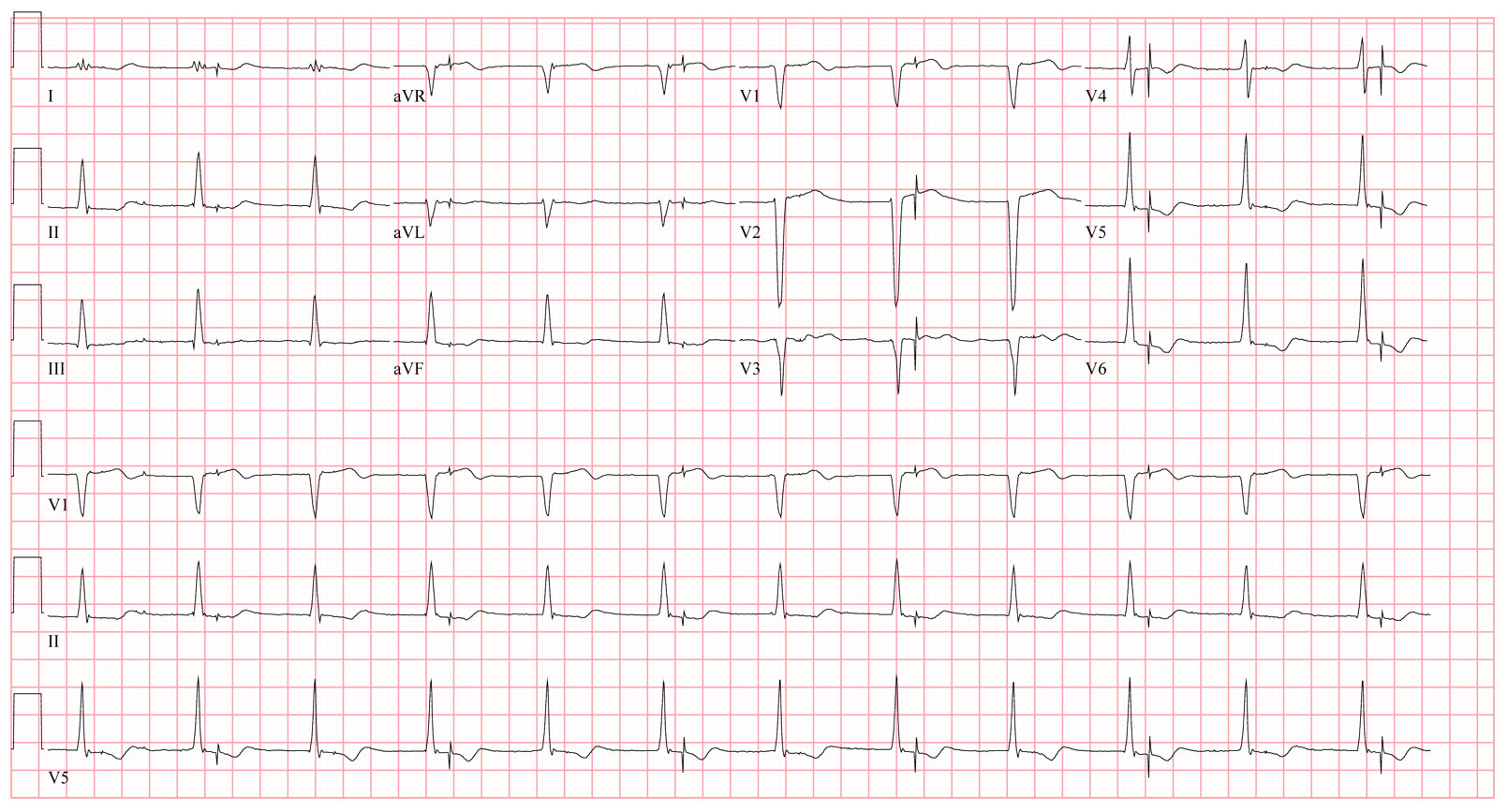
A dual chamber pacemaker was implanted the prior day by a local surgeon in the operating room.  The next morning, an EKG is obtained that showed the following:

Click to enlarge
You checked the CXR and all leads appeared to be in the proper location. 

Does the patient have to go back to the operating room?  Why or why not?

-Wes

Thursday, March 28, 2013

Doctors as Purchasing Agents

Thanks to NPR, I was directed to an op-ed that appeared in the New York Times in October 2012 entitled "In Cancer Care, Cost Matters."  The article describes what may be one of the earliest accounts where doctors at Sloan-Kettering decided not to use a new cancer drug because of its extra cost when they were already using equally-effective drugs for their cancer treatments.  The article piqued my interest.  These days for any doctor who uses expensive technologies, it is easy to see where this evaluation will lead us in our new era of cost concerns in medicine.  Medical device companies should take notice.

Few use more expensive technology in medicine than cardiologists and cardiac electrophysiologists.  Not only is our technology expensive, it is also used frequently.  Cardiovascular disease remains one of the largest cost drivers in medicine.

In the past, doctors (myself included) were complicit with device companies in our use of new technologies, implanting the latest model of defibrillator, for instance, not because it saved lives any better, but more so we could boast that our patients were receiving a "Cadillac" defibrillator rather than a "Ford" device (no disrespect intended to car companies, but you get my drift).  After all, our patients deserved the best and most innovative technology available at the time.  We did not want to be caught in the embarrassing position of being behind innovation power curve either.

I should acknowledge that there have been some very important recent developments with defibrillators since the 2005-2006 device recalls that plagued our specialty.  The ability to monitor device reliability wirelessly facilitated the ability to detect device battery depletions or lead failures and has improved our understanding of tolerable device and lead failure rates, for instance.  But it is not uncommon for a newly-named pacemaker or defibrillator to add several thousand dollars to the health care system over last year's device yet they may add only minor advances over the prior year's model.

Pacemakers, too, are being manufactured that are FDA-labelled "MRI-tolerant."  But examples of safe application of MRI's to conventional pacemakers are prevalent in the medical literature, so is the extra cost of an MRI-safe pacemaker worth it?  (In actuality, if you ask the informed pacemaker implanters out there, the main reason MRI pacemakers are routinely implanted is not because of safety concerns, but because of the CMS coverage decision for MRI payment in patients with pacemakers.(pdf))  How do we weigh the cost of these extra advances in technology versus their ability to improve our patients' actual morbidity and mortality?

Increasingly, doctors will soon be involved with purchasing decisions for advanced technologies.  Pacemakers, defibrillators, implantable monitors, stents, catheters, and even small sheaths will be scrutinized for their utility, ease of use, and cost.  (The liability of NOT using a technology will also be considered, but this issue is hard to measure and  less familiar to frontline doctors.)

The real question, of course, is will the patient see these cost savings if older technologies are used?  This is hard to say since there are so many layers to our health care system between the patient and the dollar.    Also, how will patients react when they find out online that their model of medical device is last year's model rather than this year's?  Will they seek another hospital system with shinier walls and bigger names?  It's impossible to tell.

But if hospitals are smart, they'll make it clear to the patient on their bill what they saved themselves by using an earlier-year device.  Medical device companies, too, might shift their marketing tactics to costs and benefits from things like size or shape of their device.  

But one thing's for certain in the days ahead: device companies will have to carry not just this year's model of device, but last year's, too.  Innovations in technologies will be harder to sell unless they show real patient morbidity or mortality benefit.  Companies will have to adapt their marketing campaigns since cost savings, done correctly, will benefit everyone.

After all, it's now about real costs and benefits in health care, rather than just sexy bells and whistles.

-Wes

Addendum: The CMS National Coverage Decision for MRIs in patients with pacemakers is now functional.

Friday, February 08, 2013

Lessons Learned In 18 Years of Device Implantation and Follow-up

If you haven't seen these clinical gems provided by Edward J. Schloss, MD, a cardiac electrophysiologist based in Cincinnati, Ohio, you should.  While they're just a starting point, cardiologists, cardiac electrophysiologists, EP fellows, device reps and other idustry personnel would be well-served by heeding Dr. Schloss's cogent suggestions for implantation and follow-up of pacemakers and implantable cardiac defibrillators (ICDs).

Dr. Schloss can be found on Twitter at @EJSMD.

-Wes

PS:  Thanks to @EPLabDigest for adjusting their firewall to make these recommendations available to all.

Wednesday, February 06, 2013

On the Joy of Medicine

Medicine is unique because it involves people.  While people make this job challenging, they also make this job the best job in the world.  Today was no exception.

Today I met a new patient who has allowed me to share a brief story and a snippet of his medical history here on this blog.  His name is Mr. Carl Bogaard.

On January 9, 2012, Mr. Bogaard wrote a brief note to the Chicago Tribune that said simply:
"My family is treating me like a hero just because I am going to be 95 years old. How lucky can I be to have a family like that?"
The letter was noticed by a local radio personality, Jonathan Brandmeier from WGN, who contacted Mr. Bogaard and learned that he performed 50 push-ups a day, every day.  So he decided to invite him to a push-up competition.  Take a moment to view Mr. Bogaard's YouTube video of his competition:


While this video is remarkable in its own right, there is a little something else you should know.

Mr. Bogaard has a permanent pacemaker that was implanted in 2009 for complete heart block and is completely dependent on his pacemaker for his heart to beat.  Oh, and he really did 59 push-ups.

Now you know why I love my job.

-Wes

Tuesday, January 08, 2013

You Know You Need a Pacemaker When...

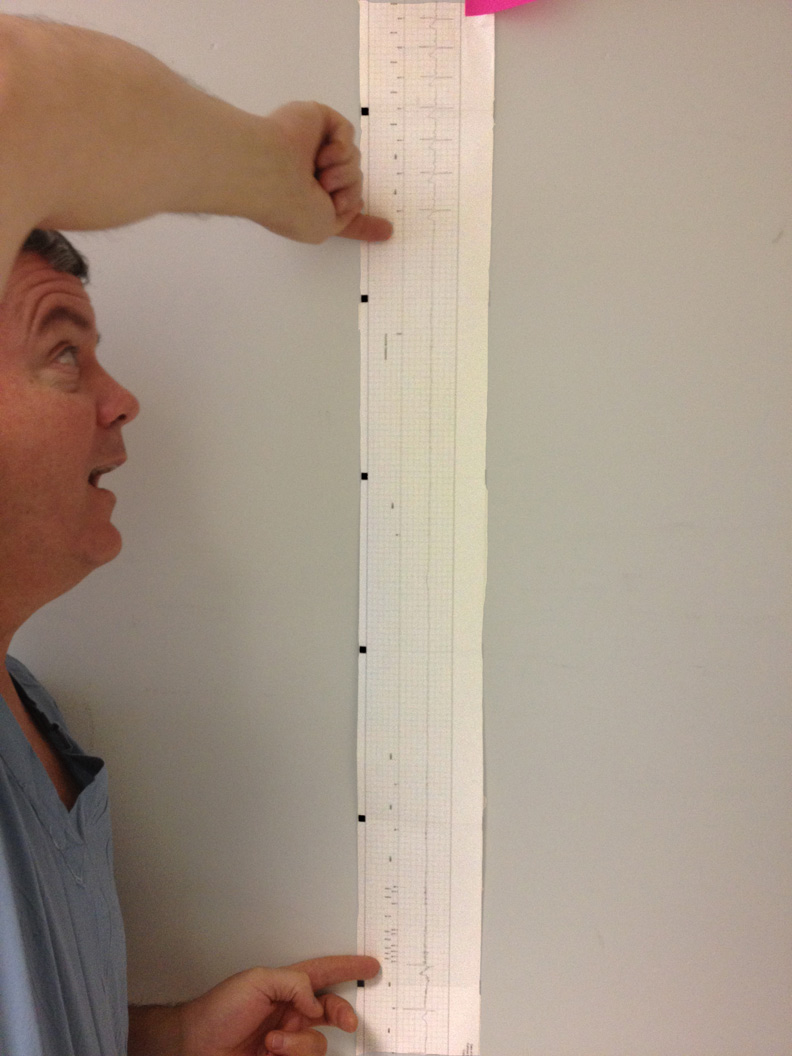
... your pause, when held vertical, exceeds one third of your height:

Strip recorded 1.5 years after implant of an implantable loop recorder showing new 27-second pause (Period between large black boxes on the strip represent six seconds each - click to enlarge).
-Wes

Sunday, December 16, 2012

Trying to Make Sense of the Senseless

I believe that every human soul is teaching something to someone nearly every minute here in mortality.

- M. Russell Ballard
 Aside from being a bit warmer than usual, it was a typical Friday afternoon. A patient with syncope, a paucity of heart beats, the need for pacemaker. The lab techs rolled their eyes as the room was prepped. An early as exit was not going to happen after all.

But the later hour promised efficiency for the only way out was through. We each did our thing and like so many times before, sighed in relief that things went smoothly. Home at a reasonable hour was to happen after all.

Until the ER called while I was closing.

"Another patient, 97, heart rate 21, needs a pacer, too," they said.

“What does the family want? He is 97 after all…” I asked as I placed the final layer of sutures.

“The patient wants it. Takes care of his wife…,” they said.

“I’ll finish here and you guys get the room ready. I’ll see the ER patient. Has the family of this patient been called?”

Once again, the staff excelled. Patient transported from the table, family contacted, then the room cleaned and readied for the next potential patient.. For me, the note would wait. A brief discussion, orders entered, then ER visit, wondering all the while if the next pacemaker needed to be done.

It was easy to find the ER bay as every nurse and technician pointed the way to a small-framed man who was alert and conversant, but clearly not feeling himself. His symptoms started earlier in the morning and just didn’t get better- his medications hadn't changed.

“Do we have a potassium?” I asked.

“’lytes are fine,” someone said, “K’s 4.5.”

History, physical, review of the data – all pointed to one thing: a pacemaker. We talked risks, alternatives, pros and cons. He looked at his wife, quietly seated in the corner. “Of course you need it!” she bellowed.

And that was that.

And so it was. A temp wire, then permanent pacer with tripling of his heart rate. He became more talkative, his blood pressure easier to obtain.

But as the tension lifted, the chatter grew.

“Did you hear?”

“Hear what?”

“About the kids…”

Detail after horrible detail came to those of us shielded from the day’s events. The shock. The evil. The senselessness of it all.

I looked down at the tissue beneath my hands: thinned, frail, bleeding still as the closure was being completed.  As time passed, the lab grew strangely silent, the irony clearly palpable...

... one old heart mended, while the others...

God, there are no words...

God bless them.  God bless their families.

God bless us all.

-Wes

Thursday, November 29, 2012

The Currency of the Future

From this morning's Wall Street Journal:

Medtronic says federal rules prohibit giving Ms. Hubbard's data to anyone but her doctor and hospital. "Our customers are physicians and hospitals," said Elizabeth Hoff, general manager of Medtronic's data business. Medtronic would need regulatory approval to give patients the data, she said. It hasn't sought approval because "we don't have this massive demand."

. . .

Some legal experts say the 1996 U.S. law governing patient access to their health files—HIPAA, or the Health Insurance Portability and Accountability Act—hasn't kept up with technology. The law gives patients the right to access information held by doctors and hospitals. However, the raw data gathered by an implant isn't held by a doctor or a hospital: Typically it goes directly to the device maker, which provides a summary report to the doctor. Because of this, the raw data falls outside the scope of HIPAA's patient-access requirements. In addition, Medtronic said, business agreements with doctors and hospitals restrict it to relaying information only to them.
"Is the device itself a depository for medical records?" said Paul C. Zei, a cardiologist at Stanford University Medical Center with a patient, Hugo Campos, who wants the same access to his cardiac-device data as the doctor gets. "Or is it part of the patient, and an extension of vital signs that we download into a medical chart?"
Gee.  Someone saw this coming years ago. 

But as patients pay for more and more of their health care, companies better remember who's really their customer.  Furthermore. patients should have access rights to all of their medical information, irrespective of where it resides.

-Wes

Tuesday, March 06, 2012

Developing a Hybrid Pacemaker

Much like a hybrid car recaptures energy lost with braking, so too are technologies being developed to recapture the heart's motion to power a pacemaker using piezoelectric crystals and magnets:

The researchers haven’t built a prototype yet, but they’ve made detailed blueprints and run simulations demonstrating that the concept would work. As reported in the journal Applied Physics Letters, a hundredth-of-an-inch thin slice of a special “piezoelectric” ceramic material would essentially catch heartbeat vibrations and briefly expand in response. Piezoelectric materials’ claim to fame is that they can convert mechanical stress (which causes them to expand) into an electric voltage.


Karami and his colleague Daniel Inman, chair of aerospace engineering at U-M, have precisely engineered the ceramic layer to a shape that can harvest vibrations across a broad range of frequencies. They also incorporated magnets, whose additional force field can drastically boost the electric signal that results from the vibrations.

The new device could generate 10 microwatts of power, which is about eight times the amount a pacemaker needs to operate, Karami says. It always generates more energy than the pacemaker requires, and it performs at heart rates from 7 to 700 beats per minute. That’s well below and above the normal range.
-Wes

Friday, December 16, 2011

Al Fine

It's busy this time of year for me, so I offer this prior piece, previously published 3 Aug 2010:
“The family wants the pacemaker turned off.”

“We don’t typically turn them off.”

“They want it off.”

“It’s 2 am, can it wait?”

“I don’t think so.”

“I’ll head in.”

Bleary-eyed, I rose from bed, dressed, and was out the door. The cool air from the car window served as nature's wake-up call. The sky was clear, the moon hung brightly on the horizon and the cicadas’ shrill songs undulating high above. Driving in, the tires clapped rhythmically from one pavement segment to the next.

* Kla-lup, kal-lup, kal-lup *

For some reason the Emergency Room seemed farther away this night – perhaps because of my reluctance to go there. If the patient was pacemaker dependent, yet alive with a pulse and neurologic signs, the ethical dilemma was a real one: should I be responsible for stopping the patient's heart? Did the family really understand the implications of these actions?

* Kla-lup, kal-lup, kal-lup *

I turned the final time. The ER sign disrupted the dark sky. I parked and fumbled for my ID. The security guard looked remarkably cheery for that time of night.

Reviewing the case, it was a horrible fall, cerebral hemorrhage, neurosurgeon empathically discussed the prognosis with the family and me – little could be done.

On entering the room, what seemed like twenty pairs of eyes were upon me. Some older, some younger, older kids too. Questioning at first. Tearful. Some closed. It had been a long day. So glad I came. Others pointing the way to her, quietly huddled by his side, clutching his hand. She turn her gaze from him for a moment, offered a brief smile, then back to him again. "He was a great man," she said.

Except for the c-collar in place, he looked regal - staring up without movement. He looked younger than his age, an active lifestyle I guessed. His endotrachial tube had already been removed. "We don't want him to suffer."

I glanced at the monitor. 100% ventricular pacing.

Damn.

"We'd like the pacemaker turned off," they reinforced.

"You understand that he might die as a result."

"Yes."

"There's a chance his heart could slow significantly, and not stop."

"We understand. If that's God's will."

I turned to his wife. She seemed at peace. I asked her:

"Are you sure this is how he'd want it?"

"Yes."

"And you understand what we're doing?"

"Yes."

"Would you like to be the one to turn off his pacemaker?"

"Honestly, no. But I'm his wife. This is how he'd want it."

"I'll grab the programmer and be right back. I'm so sorry."

I left the room, wrote a thorough note and pondered the situation as I walked to get the programmer. Usually some other metabolic derangement assists us in stopping the heart of patients with pacemakers - we don't usually turn them "off." The natural consequence of other confounding diseases work to cause a lack of oxygen, too much potassium, or another metabolic problem that disconnects the electrical activity from the mechanical. When the mechanical stops, it really doesn't matter what the electrical system does, since the pumping stops irrespective of the electrical impulses applied to the heart.

* sigh *

I returned and checked the device. Naturally, there was still plenty of battery life left. The rhythmic sound of the monitor was heard in the background as I noted his underlying atrial fibrillation with ventricular pacing.

Da Capo

The family huddled together. They gave Grampa a kiss. More tears. What was I doing? She held his hand, leaned forward, and whispered something in his ear. She did not cry. She was turned and shuffled to the programmer, assisted by her daughter. They stood together, arms entwined. The monitor was hushed, the waveform still visible.

Pianissimo

I handed her the pen and pointed to the spot to touch to program his pacemaker to "off." She looked at the others. They stood together, resolute, tears flowing. She touched the screen. The programmer responded to make sure that this is what she wanted. She confirmed, "Yes."

The pacemaker responded in kind. A long pause, then a slow escape rhythm.

Larghissimo

We were all granted a reprieve. It was not time. A few more notes of the concert called life were still to be played. They thanked me. "Would you mind if we were alone with him?"

"No. Not at all."

I packed up the programmer and pulled the curtain to provide privacy. The monitor out side the room showed an escape rhythm just faster than before. I appended my note with the recent events, spoke with the ER staff, returned the programmer, and headed home.

D.C. al fine.

I was grateful that I could not predict the tempo of death. It was His concerto, not mine after all. As I drove home I noticed the moon was no longer visible on the horizon and in its place were millions of radiant stars.

His metaphor, too.

-Wes

Wednesday, November 16, 2011

Pacing Without Wires

From Medgadget via The Medical Quack:


EBR Systems, a start-up out of Sunnyvale California, and Cambridge Consultants, the technology design and development firm, have developed a leadless pacemaker system for patients with advanced heart failure. The Wireless Cardiac Stimulation System (WiCS) comprises two units, an implantable electrode and an external control unit. The electrode incorporates an ultrasonic, wireless receiver and delivers an electrical stimulus to the heart based on triggering signals from the external control unit.

In its current iteration the WiCS system is designed to work with conventional pacemakers/defibrillators pacing the right ventricle of patients requiring biventricular pacing. The WiCS external control unit senses the pacing stimulus delivered to the right ventricle and initiates a burst of stimulus from the electrode implanted in the left ventricle. According to the company, the wireless left ventricular pacing approach removes the need for complex surgery and the complications often associated with the coronary sinus leads used to pace the left ventricle.
Nice.

But to suggest that a left heart catheterization to place their little device in the endocardium of the left ventricle "removes the need for complex surgery" is a stretch. Embolic complications, valvular complications and the potential for stroke complications (with the need for at least some anticoagulation) will quickly temper their enthusiastic press release. And what happens when a patient needs an ultrasound of their heart or has a capsule endoscopy? Could there be significant electromagnetic interference?

But we should not rain on these companies' parade too quickly, even if they are a bit late to the party. The implications of this technology as we move forward with more sophisticated pacing therapies are profound. One only needs to consider complex congenital heart cases with anomalous venous return, epicardial delivery of this technology, or its capability to paired with drug delivery systems in the future to see where things might go with such a novel means of pacing.

-Wes