Showing posts with label ICD. Show all posts

Friday, October 30, 2015

Justice Department Fines 457 Hospitals for Inappropriate ICD Implantations

From the Heart Rhythm Society via email today:
Today, the Department of Justice announced that it has reached settlements in its investigation of hospitals for billing Medicare for ICDs implanted in Medicare patients that did not meet Medicare coverage requirements. The announcement includes 70 settlements involving 457 hospitals in 43 states for more than $250 million.

The Heart Rhythm Society (HRS) has recognized that the misalignment between the Medicare National Coverage Determination and the clinical practice guidelines created gaps between the payment policy and clinical decision-making and places physicians and their patients in an untenable position. To help mitigate the problem, HRS published "2013 HRS/ACCF/AHA Expert Consensus Statement on the Use of Implantable Cardioverter Defibrillator Therapy in Patients Who Are Not Included or Not Well Represented in Clinical Trials”.

Moving forward, the Society’s priority is to do everything possible to assist the heart rhythm care community in managing the patient care pathway. HRS and other medical specialty societies are currently working with the Centers for Medicare and Medicaid Services (CMS) to identify the appropriate time to reopen the existing national coverage policy. The Society will provide CMS with recommendations to update the clinical indications for reimbursement. With this preparation, we stand ready to work with our partners to revise the Medicare coverage policy to reflect current clinical practice.
Outdated CMS National Coverage Decisions from 2005 just whacked hospitals. "Misalignment's" Catch-22. So much for evidence-based medicine. So much for practice guidelines. So much for innovation in health care.

CMS NCDs rule now, no matter how outdated, from now on.

The Justice Department has spoken.

-Wes

References: Justice Department press release with list of hospitals affected.
More on the history of this action here.

Wednesday, May 01, 2013

Dr. John M: Autonomy vs beneficence? Shared decision-making in the patient considered for an ICD

Dr. Lin and Matlock were quoted in Dr. John Mandrola's post today:
"Convincing physicians to engage in shared decision-making is a complex undertaking, as physicians may believe that they are following clinical practice guidelines in strongly recommending an ICD to eligible patients. Because quality-improvement efforts often focus on increasing physician adherence to guidelines and reward physicians for clinical processes or outcomes rather than high-quality decision-making, the message to physicians is that guideline adherence, rather than individualized care, is best."
For implantable cardiac defibrillator (ICD) implanting physicians everywhere, if you read nothing else today, read this excellent post by Dr. John M.

-Wes


Wednesday, April 03, 2013

Judgment versus Big Data

Knowledge in Numbers?
Decisions in medicine are supposed to rest on concrete obervations and hard evidence. 

Often, hard evidence does not exist or when it does, it isn't used.  Why is this? 

Concrete observations, too, are increasingly missed as we stare at computer screens longer and patients less.  Yet we persist. Why?

This is our reality now; our evolving medical world.

But if we stop and think about it, medicine, by definition, is a world of technological faults, systemic frailties, and human inadequacies.  We are convinced we know how a patient dies, for instance, thanks to the wonders of unprecedented imaging capabilities but stand slack jawed when an all-too-underperformed autopsy discloses a surprise cause of death that was completely missed by all.

And our answer to these inadequacies?  Stop doing autopsies.  Even though autopsies have consistently shown that one in four deaths occurs from an unexpected outcome or complication of care.

Why did we stop doing them?  Let me count the reasons: we are human, you see.

History repeats. 

Increasingly we are foregoing clinical judgment and intuition in favor of "Big Data" to make decisions.  We construct 70-page Appropriate Use Criteria for ICD documents that cover (really) just a few special clinical circumstances for patients, as if the authors ever really know a patient's clinical circumstance.  Ask yourself how good we are at predicting the day a person will take their last breath?  Like the weather, life is impossible to predict even when you have a billion data points or more.

Big Data and its certainty are our hottest trend in medicine and academics right now.  We know why this is: we love technology.  It is rational.  It is understandable.  It is linear.  We want, desperately, to understand and compartmentalize our human condition, to minimize its variability, so we can ration our resources logically.  But rather than acknowledging the limitation of such an approach, we forge ahead and create logic from dissociated databases with incomplete or empty data fields based on highly-selected patient populations to make our points.  Outliers are considered nothing more than acceptable loss rations.  We manipulate and massage the incomplete or erroneous data using statistics to make our points seem more valid.  Then, like the azithromycin folly, we extrapolate that data and transmit our firmly held beliefs through government agencies to the masses.  We feel good about our myopic analyses and are happy our academic salary was secured for another day.  In return, the importance of medical judgment, experience, and intuition to medicine are cast aside by our fervent belief that trials, databases, and data manipulation are always free from bias and the influence of greed.

More inadequacies.

But in the face of medical uncertainty, what other than judgment and intuition does a physician have - or a patient have, for that matter?  The real patient that sits before us demands an answer where, more likely than not, no real answer exists. Real concrete clinical challenges are rarely represented in a clinical trial or computer database. So we listen. We observe. We review data. Perhaps we get a second opinion. Patient judgment, life experiences, and intuitions are factored, too. Then we decide, together. Medical judgment and intuition are like that: not all luck, not all logic.


But now with Big Data, the new requirement for wellness and fitness is going to be for patients to keep proper symptoms that stay within the lines.  Symptoms and findings must fit new rubrics.  If they don't, your "caregiver" won't know how to treat you, the computer won't know how to treat you, and the rubric won't know how to treat you.  Who are you to say your symptoms are unique? Who are you to deserve a special look?  In the great cattle call of commoditized medicine created by Big Data, who do you think you are?   A liability risk?  Please, stay normative; align your symptoms with Big Data.  And be happy about it, dear patient, because the ends justifies the means.

Ironically, the folly of man has always been that we think we can have all the answers.  Perhaps we should stop for a moment and really think about what we're creating, courtesy of Big Data.

-Wes


Friday, March 08, 2013

Boston Scientific Issues Alert Regarding Their New Subcutaneous ICD

From Massdevice.com:
The company has received reports of 4 instances in which a fuse inside the subcutaneous ICD was activated inappropriately, which could cause the devices to fail. No adverse events have yet been reported, according to Boston Scientific.


"The company is issuing a software update that takes less than a minute to complete using a programmer in the physician's office," Boston Scientific senior VP of global corporate communications Denise Kaigler told us today. "We recommend patients with recently implanted S-ICDs meet with their doctors for a follow-up visit to receive the software update."
-Wes


Friday, February 08, 2013

Lessons Learned In 18 Years of Device Implantation and Follow-up

If you haven't seen these clinical gems provided by Edward J. Schloss, MD, a cardiac electrophysiologist based in Cincinnati, Ohio, you should.  While they're just a starting point, cardiologists, cardiac electrophysiologists, EP fellows, device reps and other idustry personnel would be well-served by heeding Dr. Schloss's cogent suggestions for implantation and follow-up of pacemakers and implantable cardiac defibrillators (ICDs).

Dr. Schloss can be found on Twitter at @EJSMD.

-Wes

PS:  Thanks to @EPLabDigest for adjusting their firewall to make these recommendations available to all.

Tuesday, November 27, 2012

Subcutaneous ICD: A Lesson in FDA Approval

This morning, a nice article in the Boston Globe appeared on Boston Scientific's subcutaneous implantable cardiac defibrillator (S-ICD)  that recently received FDA approval.  It was a fairly balanced article, one that touched ever-so-briefly on the pros and cons of a subcutaneous device to treat life-threatening cardiac arrhythmias using a medical device that does not require an internal wire inside the heart, but rather a sensing and shocking lead that is tunneled accross the chest under the skin (see my prior post on the details here). 

But what I found most interesting in the article was the patient who was recommended for the device: a dialysis patient, was a patient who was specifically excluded from the FDA trials to approve the device (specifically, patients with GFR < 29 were excluded). 

If you are a company that wants to get a device approved by the FDA, you want the best chances of having the fewest complications possible with new gadgets in medicine.  Because sick dialysis patients have a way of having more complications with device implants, and the device companies know this, they are not included in trials to get a device approved.  

Those of us who deal with ICDs in dialysis patients recognize the problems when ICD leads and dialysis catheters co-exist in the same vascular tree: the odds of infecting the ICD lead system is extraordinarily high.  In fact, the overall mortality advantage of ICDs in dialysis patients is much less than patients not on dialysis.  For this clinical circumstance, subcutaneous ICDs would seem to clearly be the better choice.

But dialysis patients are beset by another problem: challenges with potassium level regulation.  Periods of hyperkalemia are quite common in dialysis patients and hyperkalemia commonly causes severe bradycardia.  In these patients, pacing could maintain a patient's heart rate until their dialysis could be adjusted to lower their potassium and thereby improve their cardiac function.  Subcutaneous ICDs do not have pacing capabilities, however.

So the reality of the effectiveness of  the subcutaneous ICD to prolong life is uncertain in dialysis patients.  This theory has never been tested - we just tend to think it makes intuitive sense to apply a new technology when other medical device choices are not perfect either.

The subcutaneous ICD FDA approval process is a good example of how clinical dogma spreads amongst doctors and patients without any proof of a device's effectiveness in some subselected patient populations.  A new technology is approved by the FDA and receives a governmental stamp of approval.  Doctors, then, serve as well-meaning spokespersons.  The media gushes over the latest and greatest technology.  And sales explode...

... all while some patients in whom the device is deployed doesn't realize the safety and efficancy of that device was never tested in their particular clinical circumstance.

We should remember that exclusion criteria in FDA clinical trials are important.  They tell us who might  and who might not benefit from a new technology.  Too often we forget this. 

And so does the FDA.

-Wes


Monday, August 13, 2012

High Voltage Riata ST Defibrillator Lead Failure and Its Implications for Durata

It came from a case report published online before print in PACE from Dr. John Marenco of Tufts University in Springfield, Massachusetts:

A 60-year-old man had a single-chamber St.Jude Atlas VR defibrillator (St. Jude Medical, St. Paul, MN, USA) with a dual coil St. Jude Riata 7001 defibrillator lead (My note: this is actually a downsized, second-generation 7 Fr Riata ST model whose internal construct shares many similarities to St. Jude's currently-marketed third-generation 7 Fr Durata lead) placed in 2006 for primary prevention secondary to an ischemic cardiomyopathy and prior myocardial infarction.  All routine device interrogations, both remote and in-office, had been normal with stable sensing amplitude, lead impedances, and capture thresholds. The device was programmed with two zones: a ventricular tachycardia (VT) zone from 340 ms (176 beats/min) and a ventricular fibrillation (VF) zone from 260 ms (231 beats/min).  The VT zone had a morphology discriminator “on” with interval stability and sudden onset “passive.” Five years from implant, he presents with palpitations, light-headedness, and a single implantable cardioverter defibrillator (ICD) discharge.  He has a friend drive him to the emergency room and is found to be in ventricular tachycardia over 200 beats/min. The ventricular tachycardia terminated with intravenous amiodarone bolus before need for external defibrillation. Device interrogation demonstrated an initial rhythm of atrial fibrillation with the appropriate detection of the onset of ventricular tachycardia with a cycle length of 245 ms, within the device’s VF zone (Fig. 1). Discriminators were not activated in the VF zone, but the morphology discriminator clearly demonstrates a failure of the electrogram signal to match the template (indicated by the “x” in the marker channel). After detection of 12 intervals (interval average) within the VF zone an episode is declared and a 25-Joule (693 V) shock is delivered, failing to restore sinus rhythm.  No additional shocks are delivered despite appropriate redetection within the VF zone (Fig. 2).  After a fifth detection, the device declares “no more therapies” with VT continuing indefinitely. Device interrogation in the emergency department reveals a pacing lead impedance was 465 ohms, signal amplitude 1.8 mV, and capture threshold 0.75 V at the rate of 0.5 ms. What is the differential diagnosis of failure to deliver appropriate therapy and why did this device fail to deliver more than a single shock?
Further review of the case's figure disclosed appropriate VT detection, a high voltage impedance of 0 ohms, and an "aborted charge because of possible output circuit damage" on device interrogation after the event.  Importantly, at the time of lead revision, "there was no fluoroscopic insulation breach and no obvious insulation breach in the pocket."  Fluoroscopic screening of these leads, therefore, would not have detected pending lead failure.  Further, as far as we can tell from the report, no antecedent device alerts were triggered before this event.

This case report discloses several important issues. (1) High voltage coil damage in a 7Fr  Riata ST lead can lead to either ineffective high voltage therapy delivery, withholding of further therapies, or both despite appropriate arrhythmia detection.  St. Jude defibrillators are engineered to automatically withhold energy delivery in low high-voltage lead impedance situations to avoid excessive current delivery and device overheating in such circumstances (personal communication).  (2) This failure mechanism, while curently very rare, may affect implanters decisions regarding whether or not to replace existing Riata leads irrespective of their performance characteristics and flouroscopic appearance at the time of battery change.  Already there have been other reported high voltage failures in Riata leads with externalized wires.  Some have advocated testing the high voltage leads as part of Riata lead follow-up to screen for this failure mechanism, especially since the therapeutic implications of high voltage lead failure is much more significant and difficult to detect than low-voltage (sensing lead) failures. 

Perhaps most important for St. Jude going forward is how this case will influence implanters' choice of later-generation 7 Fr St. Jude defibrillator leads with their Optim coating but similarly-downsized inner lumen dimensions.  I look forward to St. Jude's update of their Riata Communications website regarding these recently published case reports.

-Wes

References:

Marenco JP. "Failure to Deliver ICD Shocks after a Failed Discharge Despite Redetection of Rapid Ventricular Tachycardia? What Is the Cause?" PACE DOI: 10.1111/j.1540-8159.2012.03484.x Published online 21 July 2012.

For an excellent overview of the Riata ICD lead recall by Dr. Jay Schloss: http://cardiobrief.org/2012/02/22/guest-post-more-lessons-from-the-riata-icd-lead-recall/

Wednesday, May 16, 2012

Durata: Questioning the 99%

One of Many St. Jude Ad Trucks Seen at HRS 2012 Scientific Sessions
The boxing match about the safety of St. Jude Medical's newer Durata defibrillator lead reliability continues to spark interest in the EP community.  In one corner is the supporter of the reliability claims made by St. Jude, respected EP and lead explanter Charles Love, MD from Ohio State University Medical Center.  In the opposite corner this morning on Cardiobrief, comes respected ICD-watchdog Robert Hauser, MD:
Cardiobrief:  "Unfortunately, Dr. Greenberg was unable to attend today, but St. Jude’s Dr. Carlson stood bravely in the breach (no pun intended) to describe the performance of St. Jude’s 3500+ Durata leads in its OPTIMUM registry. Follow up was 2.4 years, and my only comment is that 2.4 years in my view is an early experience, not a mid-term experience. The event free survival was >99%. Excluding dislodgments and perforations, which may be operator dependent, there were only 5 lead mechanical problems, namely conductor fractures, in over 8400 implant years. Now this is truly spectacular. There were no inside-out insulation abrasions and no all-cause abrasions. But I have to say, that the Durata leads that I have been looking at in the FDA’s MAUDE database must not have been included in this study."
I'm starting to see the makings of a Tyson/Holyfield match.

-Wes

Monday, March 26, 2012

When the Feds Come Knocking

Slightly over a year ago, the Department of Justice (DOJ) launched an investigation of a large number of institutions regarding concerns that implantable cardiac defibrillator (ICD) procedures were performed for reasons outside of the criteria set forth in Medicare’s National Coverage Decision (NCD).  This investigation occurred just after Al-Khatib and others published a report January 4, 2011 in JAMA that suggested as many as 22.5% of implantable defibrillators implanted for primary prevention of sudden death were not evidence-based.  While the physician community took issue with the Al-Khatib paper, the media firestorm it generated paired with the announcement to the Heart Rhythm Society physician community that a federal investigation was underway, had a chilling effect on ICD implantation nationwide.  Drs. Jonathan S.Steinberg and Suneet Mittal report on their experience with DOJ investigators under this heavy regulatory oversight in today’s Journal of the American College of Cardiology.

Steinberg and Mittal's diplomatic account carefully describes the challenges of retrospective audits performed by lawyers from the Department of Justice and those of their targeted health care facilities. The DOJ identified 229 cases as potentially inappropriate cases based on Medicare code criteria.  (This represented 8.7% of the de novo non-resynchronization ICD implants done for primary prevention at their institutions). After determining that some of these targeted cases were actually for secondary prevention or other coding transgressions, the authors could medically justify all but thirty-four (15%)  (or a very low 1.5% of all ICD’s implanted for primary prevention of sudden death) at their institution.  As has been the case in most reports, the majority of outside NCD-directed ICD implants occurred because of timing violations—too close to the diagnosis of heart failure, heart attack and coronary intervention. These timing constraints constitute the primary issue before implanting doctors: their professional society guidelines do not -- in all cases -- recognize similar timing restrictions.

It is surprising that we are not told what sanctions, if any, were levied against their respective institutions.   Perhaps the authors felt this important detail was unimportant to disclose or perhaps they were prohibited from doing so.  Perhaps their penalty is still being determined: after all, nothing drives behavior like fear.  To this end, we found the authors' compliments of the government's legal team unusual to report in a scientific manuscript, as if the they were suffering from Stockholm Syndrome.

We should acknowledge that the authors have added much needed clarity to the gray area of decision-making surrounding ICD implantation. Their explanations of timing violations highlight problems with coding, confusion around incidental PCI intervention in patients with dilated cardiomyopathy, and demonstrate the overlap decisions that must be made when bradycardia and tachycardia functions might be required for our patients.  This kind of clinically-relevant nuance was lacking in the impugnable Al-Khatib JAMA piece.

We can only speculate the large cost of the legal fees and man-hours devoted to this review process.  We will never know how many patients died during, or now after, the course of this investigation because they were not offered ICDs because ICDs can only be offered to patients who meet Medicare’s rigid, outdated, and still-to-be-updated National Coverage Decision for implantable defibrillators.   But perhaps this is the price of regulation that America is willing to pay in return for cost savings.  Perhaps we should not be concerned that professional guidelines for care delivery should be second fiddle to government mandates for ICD implantation.

With this latest report, a new era for medical practice is now upon us – one where priorities of low cost care and high quantity of care determined by non-medical personnel supersede the highest quality of medical care to our patients.   For regulators, it is easy to be a Monday-morning armchair quarterback evaluating health care delivery.  It is far harder, however, to decide prospectively who is likely to die (or not) when they sit before you with a newly-diagnosed cardiomyopathy and ejection fraction of 12%. 

When government and legal officials who carry no responsibility for the long-term well-being of our patients have the authority to retrospectively impugn and penalize doctors (and their health care facilities) based merely on retrospective reviews of billing codes and outdated payment mandates, they risk irrevocable harm to patients who might qualify for devices according to updated professional guidelines.  Doctors everywhere should stand up collectively to disown the practice of using NCD mandates, rather than updated professional guidelines, to determine appropriate care for patients.

After all, our patients are depending on us.

Westby G. Fisher, MD
Director, Cardiac Electrophysiology
NorthShore University Health System and
Clinical Associate Professor of Medicine
Pritzker School of Medicine, University of Chicago
Evanston, IL

John Mandrola, MD
Cardiac Electrophysiologist
Baptist Medical Associates
Louisville, KY

Addendum 27 Mar 2012: Link to Steinberg/Mittal article finally added.

Addendum 14 Sep 2012: Update on the DOJ Decision

References:

Jonathan S. Steinberg and Suneet Mittal. "The Federal Audit of Implantable Cardioverter-Defibrillator Implants: Lessons Learned." J Am Coll Cardiol. April 3, 2012, 59 (14) 1270-4. doi: 10.1016/j.jacc.2011.12.026

Epstein AE, DiMarco JP, Ellenbogen KA, et al. ACC/AHA/HRS 2008 guidelines for device-based therapy of cardiac rhythm abnormalities. J Am Coll Cardiol. May 27, 2008;51(21):e1-62.

Al-Khatib S, Hellkamp A, Curtis J, et al. Non–Evidence-Based ICD Implantations in the United States JAMA. 2011;305(1):43-49. doi: 10.1001/jama.2010.1915

Note: This post also appears on Dr. John Mandrola's blog: http://www.drjohnm.org/

Tuesday, September 20, 2011

Thoracic Impedance Monitoring Fails to Limit Heart Failure Admissions

Imagine being able to detect heart failure before it happens. The potential to offer significant cost reductions in health care might be significant.

So device makers created a way that implantable defibrillators could measure a drop in impedance between the pulse generator can and the lead in the patient's heart. Lower impedance should mean more water in the chest, suggesting fluid overload.

It seemed, well, so logical.

But with today's release of the DOT-HF trial, it seems that all that thoracic impedance information contained in an ICD, when used to alert the patient to a fluid accumulation in their chest, has the potential to create more rather than fewer hospitalizations:
METHODS AND RESULTS: We studied 335 patients with chronic heart failure who had undergone implantation of an implantable cardioverter-defibrillator alone (18%) or with cardiac resynchronization therapy (82%). All devices featured a monitoring tool to track changes in intrathoracic impedance (OptiVol) and other diagnostic parameters. Patients were randomized to have information available to physicians and patients as an audible alert in case of preset threshold crossings (access arm) or not (control arm). The primary end point was a composite of all-cause mortality and heart failure hospitalizations. During 14.9+/-5.4 months, this occurred in 48 patients (29%) in the access arm and in 33 patients (20%) in the control arm (P=0.063; hazard ratio, 1.52; 95% confidence interval, 0.97–2.37). This was due mainly to more heart failure hospitalizations (hazard ratio, 1.79; 95% confidence interval, 1.08–2.95; P < 0.022), whereas the number of deaths was comparable (19 versus 15; P = 0.54). The number of outpatient visits was higher in the access arm (250 versus 84; P < 0.0001), with relatively more signs of heart failure among control patients during outpatient visits. Although the trial was terminated as a result of slow enrollment, a post hoc futility analysis indicated that a positive result would have been unlikely. CONCLUSION: Use of an implantable diagnostic tool to measure intrathoracic impedance with an audible patient alert did not improve outcome and increased heart failure hospitalizations and outpatient visits in heart failure patients.
Postulating why this unexpected result was seen, Dr. James E. Udelson in an accompanying editorial suggested several reasons:
In the DOT-HF trial, among the episodes of HF hospitalization, only 60% were preceded by an alert condition, where impedance readings fell below the prespecified threshold indicting risk. In other words, the sensitivity of the impedance alert to predict a HF episode was only modest. This is actually consistent with previous studies, and false-positives seem common, as well.
Almost half of the outpatient visits in the treatment group were a result solely of an alert, which may have resulted in a drive to more intervention and possibly hospitalization.

Moral of the story: more data from ICDs is not necessarily better when it comes to predicting heart failure exacerbations.

-Wes

References:

van Veldhuisen DJ, et al. "Intrathoracic Impedance Monitoring, Audible Patient Alerts, and Outcome in Patients With Heart Failure." Circulation 2011 http://circ.ahajournals.org/content/suppl/2011/09/18/CIRCULATIONAHA.111.043042.DC1.html

Udelson JE. "T.M.I. (Too Much Information)?" Circulation http://circ.ahajournals.org/content/early/2011/09/19/CIRCULATIONAHA.111.067819.citation

Thursday, April 14, 2011

Should Authors Write Editorials About Their Own Paper?

In January, 2011, an article authored by Sana M Al-Khatib, MD and others appeared in the Journal of the American Medical Association (JAMA) entitled "Non-Evidence-Based ICD Implantations in the United States." The resultant headlines were widespread, appearing in theheart.org, the Wall Street Journal, ABC News and many, many more news outlets and blogs. So widespread was the story that even the Heart Rhythm Society had to make a statement about this study.

Now, to be fair, the study brought to light the fact that many ICD's were not implanted according to "guidelines." Most of us in the business acknowledge that fact. But there are many many shortcomings to the original article, the least of which were that new guidelines were published in 2008 in response to new data about ICD's, but because CMS still uses outdated 2005 "guidelines," the authors stuck to their original story line.

* sigh *

No matter: the specter that perhaps only 77.5% of America's doctors were implanting ICD's appropriately was just too juicy for mainstream media to ignore.

Fast forward to March, 2011.

A follow-up article by the same group was published more quietly in Circulation: Cardiovascular Quality and Outcomes entitled "Extent of and Reasons for Nonuse of Implantable Cardioverter Defibrillator Devices in Clinical Practice Among Eligible Patients With Left Ventricular Systolic Dysfunction" with Sana M Al-Khatib as second author. In that paper, they looked at just one institution's data for only seven months to find:
Of the 542 potentially eligible patients identified, 224 (41%) did not have an ICD. In the initial adjusted analysis, female sex (odds ratio 1.90; 95% CI, 1.28 to 2.81) and increasing age (odds ratio 1.07; 95% CI, 1.04 to 1.11) were associated with a higher likelihood of not having an ICD. After detailed chart review, of the 224 patients without an ICD, 117 (52%) were ineligible for the device and 38 (17%) patients refused the device, resulting in only 69 (13%) patients eligible for an ICD who failed to receive one.
Realize that this was a retrospective chart review study: not a single patient or doctor was contacted. Further, a tiny sliver of data was evaluated: 7 months of data from one center (we must assume it was the authors' institution since the study was approved by their institutional review board). But even with such a small sampling of data, the authors acknowledge a myriad of reasons patients did NOT get ICD's and only "13 percent" of patients didn't get ICDs who should have.

Interesting... if you can believe the results from such a poor data sample.

But this was not the best part of this story, not by a long shot.

In the same journal, Al-Khatib writes an editorial about their group's work and extols the virtues of their study by stating:
"The authors (ed's note: me included) should be commended for taking on this onerous task. Detailed review of hundreds of charts requires substantial resources. Their research is important because administrative and other national registries have limited clinical information and may not capture vital information, such as contraindications to a particular therapy, patient refusals of recommended interventions, and long-term follow-up."

And if that is not enough, continues, "this study was conducted at one of the premier institutions in this country."

And finally... "this study by Allen LaPointe (ed note: and me, Al-Khatib) is a good addition to the literature because it highlights the importance of verifying findings derived from registries through chart reviews."
Oh, goodness gracious. Can't we at least be the tiniest bit critical of our own work and demonstrate a modicum of humility?

And how much "quality" can we attribute to the editorial efforts of Circulation: Cardiovascular Quality and Outcomes when authors write their own editorials?

Then again, maybe the media spotlight has gone to all of their heads.

-Wes

REFERENCES:

Al-Khatib SM, Hellkamp A, Curtis J, et al., Non-Evidence-Based ICD Implantations in the United States. JAMA 2011 305(1): 43-49.

Allen LaPointe NM, Al-Khatib SM, Piccini JM, et al. 'Extent of and Reasons for Nonuse of Implantable Cardioverter Defibrillator Devices in Clinical Practice Among Eligible Patients With Left Ventricular Systolic Dysfunction' Circulation: Cardiovascular Quality and Outcomes
2011, 4: 146-151.

Al-Khatib SM. 'Toward More Optimal Use of Primary Prevention Implantable Cardioverter-Defibrillators How Do We Get There?' Circulation: Cardiovascular Quality and Outcomes 2011, 4: 140-142.

Sunday, November 14, 2010

Salamanca Soccer Player Miguel Garcia's Sudden Cardiac Arrest

How fast does sudden cardiac arrest cause unconsciousness?

Just seconds.

Here's video of Salamanca soccer player Miguel Garcia's episode. At the start of the video, Mr. Garcia can be seen in the background of the image kneeling behind the players in the foreground. Watch carefully as he stands after tying his shoes.


Although it is difficult to see, it appears an automatic external defibrillator arrives in about 2 minutes, though given the fact his shirt is still on as he's taken from the field, we note the device is on his gurney as he's hurried to a nearby ambulance. Reportedly, he survived this sudden cardiac arrest event.

This was NOT a heart attack, but rather an loss of cardiac function caused by a rapid, often disorganized heart rhythm disorder. Compare the relatively long time to resuscitation using an external automatic defibrillator verses the very rapid response afforded to Belgian soccer player Anthony Van Loo whose internal defibrillator was already installed before he played as primary prevention of sudden death from right ventricular dysplasia.

-Wes

h/t: Electrophysiology Fellow blog

Tuesday, September 14, 2010

ICD Implantation: How Good Are We?

Some interesting data were published in the journal HeartRhythm recently:
Based on the registry, which has collected data on 486,025 ICD implants from 2006 to 2009, the demographics of ICD recipients are mainly male (73.8 percent), approximately 68 years of age, Caucasian (82.8 percent), high rates of hypertension (75.3 percent) and relatively low rates of diabetes (36.7 percent).

Some key findings from the 2009 registry include:
  • Total complications for new implants (including death in the laboratory) have decreased over time from 3.77 percent in 2006 to 2.87 percent in 2009.

  • Medicare beneficiaries accounted for 67.7 percent of patients.

  • The device was placed for primary prevention in 78 percent of patients, two-thirds with coronary artery disease, the average left ventricular ejection fraction was 29 percent, and 82 percent were NYHA Class II-III.

  • Among 5,246 physicians who implanted ICDs between 2006 and 2009, only 438 physicians provided information about their training. Among those 438 physicians, 56 percent completed an electrophysiology fellowship, accounting for 83 percent of ICD implants.

  • Of patients receiving cardiac resynchronization therapy with defibrillation, 68 percent were shown to meet published national guidelines.

  • Of patients receiving an ICD for primary prevention of sudden death, 78 percent met published national guidelines.
-Wes

Tuesday, July 13, 2010

Remote ICD Interrogation and the Challenges of Telemedicine

This week in Circulation an article was published (before print) about the safety and efficacy of remote monitoring for implantable cardioverter-defibrillator (ICD) follow-up in the industry-sponsored TRUST (Lumos-T Safely RedUuceS RouTine Office Device Follow-up) Trial. This trial randomized 1339 patients in a 2:1 fashion between internet-based “home-monitoring" of patient’s ICD’s and conventional office-based follow-up of ICD’s. While the results of the trial were interesting in regards to ICD follow-up management using the two venues, the trial is even more interesting if one considers the implications of this trial to telemedicine in general.

By way of background, patients with ICD’s are burdened with frequent follow-up to their doctors with guidelines requiring visits very three to six months. With more patients receiving implanted devices that contain more capabilities beyond just pacing and defibrillation (like arrhythmia and fluid-status monitoring), the volume of patients risks outstripping the number of available appointments. Further, it is no secret that device companies would love to reduce their manpower burden for follow-up to reduce their costs since many small doctors offices turn to the device companies for the technical aspects of follow-up support.

Enter home monitoring via the Internet. Using this technology, patients can upload their device data from home, have it reviewed online, and since 90% of device checks require no “actionable” follow-up, forgo a trip to the device clinic if no problems are identified. In fact, the TRUST trial concluded that “Home monitoring is safe and allows more rapid detection of actionable events compared with conventional monitoring in patients with implantable electronic devices.” The authors clearly achieved their stated goals, demonstrating a significant reduction in hospital encounters from 3.8 visits per patient/yr in the control group to 2.1 visits per patient/yr in the intervention group, with no increase in death, stroke, or surgical interventions in patients treated with home monitoring.

What’s not to like, right?

But there are some potential challenges ahead.

For one, in the TRUST trial the decrease in scheduled hospital encounters was partially offset by a significant increase in unscheduled encounters from 0.5 per patient/yr to 0.78 per patient/yr, mostly due to visits following event notifications from the home monitoring device.

Secondly, in his editorial on the study, Dan Matlock, MD from the University of Colorado cautioned that the quality of the TRUST trial fell short in it’s “patient-centeredness” and suggests that “the trial was designed with the belief that multiple follow-up visits are a burden that primarily falls on the providers.” He offers the following cautionary analogy:
A good basis for interpreting the TRUST trial is to draw comparisons with the prostate-specific antigen (PSA) controversy. There was never a debate that the PSA test detects prostate cancer earlier, and the test was widely adopted by the medical community without any evidence of improved outcomes. Finally, after two decades of use, two large, randomized trials studying the effects of PSA screening were published. Only one of the two trials actually demonstrated a benefit, showing a reduction in death from prostate cancer of seven per 10 000 men screened over nine years. This benefit was coupled with an additional 340 diagnoses of prostate cancer, 177 prostatectomies, and 97 radiation therapies. The second trial did not demonstrate any benefit of PSA testing at all. Rather than being a story of saving lives, the story of PSA testing has been one of false positives, frequent biopsies, indolent cancer, patient anxiety, impotence, and incontinence.

Considering the lessons learned from PSA, the TRUST trial leaves some important questions unanswered. Namely, what are the benefits and harms of detecting “actionable events,” and what do patients think of home monitoring?”
It is easy for those of use who are computer-savvy to assume that patients will all leap to home monitoring or telemedicine as their preferred means to address many of their medical concerns. But as the sensitivity for “actionable” items increases thanks to the capabilities of this technology, there is the potential that treatments that ensue adds other unforeseen risks for our patients. For instance, take the example of asymptomatic atrial fibrillation detected by a heart failure patient’s ICD who is already on warfarin: do they really need an immediate cardioversion (and the costs, risks of sedation, and anxiety surrounding the finding) or might the patient have be just as well served by less aggressive conventional follow-up?

Certainly, there appears to be great potential for improved access for care with remote monitoring and telemedicine in our increasingly cost-constrained health care system. Still, doctors and telemedicine developers must assure our recommended treatment strategies that result from improved detection do not conflict with our patients' perspectives, needs and values for their care.

-Wes

References:

Varma N, Epstein AE, Irimpen A, Schweikert R, Love C, for the TRUST Investigators. "Efficacy and Safety of Automatic Remote Monitoring for Implantable Cardioverter-Defibrillator Follow-Up: the Lumos-T Safely Reduces Routine Office Device Follow-Up (TRUST) Trial." Circulation. 2010;122:325–332.

Matlock DD. "Big Brother Is Watching You - What Do Patients Think About ICD Home Monitoring? Circulation 2010;122:319-321.

Sunday, May 16, 2010

The Case for Remote Medical Device Programming

With the recent reports of hacking ICD's, especially when a skilled set of engineers stand within six inches of the device, we can see the next Tom Clancy story line:
"A famous head of state, lounging in the comfort of his home, suddenly is afflicted with a series of shocks from his defibrillator, then collapses to the floor. His aides, uncertain what just happen, attempt to revive him, to no avail. Meanwhile, in a country far, far away, the terrorists are exchanging high fives..."
These threats, as we can clearly see, are a Clear and Present Danger. (I know, not very original, but you get the drift.)

Not that security isn't important, it is. But should it be a show-stopper to innovation as we attempt to deliver care to our burgeoning patient population in the years ahead?

The reality on the ground is that doctors should have the ability to make adjustments to certain ICD programmed features remotely. The reality on the ground is that already we have non-medical personnel programming devices - even turning them off.

These devices need continuous follow-up, and a lot of it. For every device implanted, I would estimate that there are four times the number of patient visits made for these devices to a doctor's office that for patients without devices. Is this on-site follow-up burden sustainable? Currently, entire clinics are manned full-time by device nurses to manage the volume. Even with these clinics, devices must to reprogrammed at other times, like just before and after surgery, or de-activated when people reach the end of their life. With cost constraints limiting the number of personnel available for device management, we simply not have the number of individuals at all the geographic sites necessary to reprogram devices in person. So we've turned to industry representatives who hold no medical degree to make changes to programmed parameters on our behalf, many of which go undocumented. Physicians "oversee" these adjustments, of course (someone has to be legally responsible, right?), but the reality is is that people with medical degrees are not always the ones out there pushing the buttons.

This issue will only grow more dire as the baby boomers age and the number of devices continues to grow as we push to keep patients out of the hospital. For these reasons, and reasons of legal accountability, I foresee that the need for remote programming of devices will be all but inevitable.

And this isn't just for cardiac devices. Insulin pumps, neural stimulators, and a whole host of new innovative implantable devices will also need follow-up after their implantations.

Certainly, secure interlocks can be developed to assure safe remote reprogrammings - maybe even patient-and-physician hand-shake protocols, for instance. But in this era of increasingly wired health care delivery there should be no reason the FDA, in a brief moment of clarity, should discourage the development of carefully-developed protocols to modify device settings remotely.

What the heck are we waiting for?

-Wes

Monday, May 03, 2010

When Drugs Become Extinct

Doctors are all familiar with marketing efforts to promote new drugs, but once the new drugs displace older drugs in the medical marketplace, who serves as advocates for the continued manufacture of older FDA-approved drugs?

In a short answer: no one.

For those of us dealing in cardiac arrhythmia management, this presents difficult challenges to patient care if people are unable to take the newer drugs due to side effects. These patients no longer have a fall-back option to turn to for medical therapy when the older drugs have become extinct on the marketplace.

Examples of antiarrhythmics that have reached extinction status in the US include many of our older antiarrhythmic drugs such as procainamide, mexilentine or quinaglute.

Take for instance a recent case: A older person with recurrent ventricular tachycardia and congestive heart failure and ICD implantation who has experienced several appropriate shocks for hemodynamically-significant ventricular tachycardia from their ICD. They were not in heart failure and had a consistent ideal body weight. Beta blocker medications have been maximized. This same person is pacemaker dependent and allergic to Amiodarone and iodine. Sotalol was not tolerated and dronedarone is contraindicated because of heart failure. Their creatinine clearance is 40. The patient was placed on mexilentine in the hospital and did well, only to find after discharge that no pharmacies could obtain the drug any longer. Oral procainamide, I have found, has suffered the same fate long ago. Few options remain: dofetilide as an inpatient?

Perhaps.

Still, the issue of drug extinction is a challenging one: not enough market to justify the drug's manufacture, yet still a rare patient out there who might need an older medication. Even generic drug manufacturers won't manufacture these niche drugs - there's just not enough of a market to justify their manufacture and the regulatory environment precludes a small start-up company from even trying to meet the very small demand.

I wish I had an answer to this conundrum. How do others handle this situation?

-Wes

Monday, April 26, 2010

Numbers

Thirteen.

Unlucky?

Ejection fraction.

Three.

Coronaries.

Clean.

One hundred sixty-five.

Milliseconds.

QRS.

Thirty two.

Years.

Defibrillator.

Four hundred ninety.

Pounds.

* Sigh *

One hundred one.

Degrees.

Reprieve.

Thirty.

Days.

Afebrile.

Thirteen.

Thousand platelets.

Later.

Twenty-four.

Respiration.

Recumbent.

One hundred.

Thousand platelets.

Now?


-Wes

Thursday, March 11, 2010

Turning Off Implanted Defibrillators

End-of-life issues with implantable cardiac defibrillators (ICDs) and the need (or not) for deactivation policies is being discussed at the palliative medicine blog, Pallimed.

Shoot on over and lend your $0.02 to the discussion.

-Wes

Friday, December 04, 2009

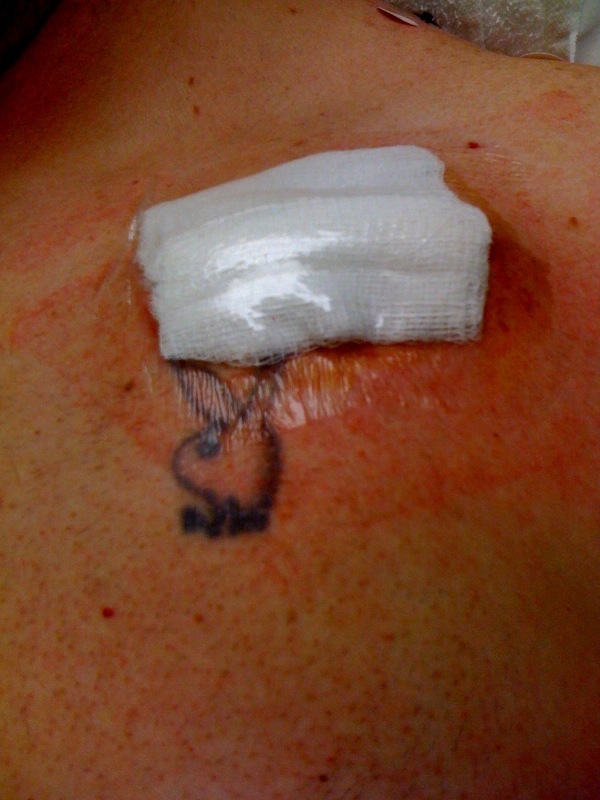
ICD Implantation, Hugh Hefner-Style

Well, at least it's one way to make a former tattoo three-dimensional:


Just putting the sexy back... :)

-Wes

Photo used with patient permission.

Wednesday, June 10, 2009

Rock On!

Thanks to Scott Hensley for pointing me to this article in New York Magazine about the rock band Giraffes’ Aaron Lazar who received an implantable cardiac defibrillator (ICD) in 2005 after an episode of aborted sudden death.

The best part? When he haggles about the device's settings:
Lazar returned to New York and met with his doctors and a rep from the ICD manufacturer. One doctor confronted him directly. “She said, ‘You really should not be doing what you’re doing,’” Lazar says. “And I said, ‘This is what I do.’” He then literally haggled with them over a new ICD trigger. “The doctor’s like, ‘Okay, let’s make it 195 for two and a half minutes,’” remembers Lazar. “And I was like, ‘Couldn’t you make it 200 for five minutes?’ It was like buying a mattress from Russians.”
Heh. Rock on!

-Wes