Showing posts with label defibrillator. Show all posts

Friday, October 30, 2015

Justice Department Fines 457 Hospitals for Inappropriate ICD Implantations

From the Heart Rhythm Society via email today:
Today, the Department of Justice announced that it has reached settlements in its investigation of hospitals for billing Medicare for ICDs implanted in Medicare patients that did not meet Medicare coverage requirements. The announcement includes 70 settlements involving 457 hospitals in 43 states for more than $250 million.

The Heart Rhythm Society (HRS) has recognized that the misalignment between the Medicare National Coverage Determination and the clinical practice guidelines created gaps between the payment policy and clinical decision-making and places physicians and their patients in an untenable position. To help mitigate the problem, HRS published "2013 HRS/ACCF/AHA Expert Consensus Statement on the Use of Implantable Cardioverter Defibrillator Therapy in Patients Who Are Not Included or Not Well Represented in Clinical Trials”.

Moving forward, the Society’s priority is to do everything possible to assist the heart rhythm care community in managing the patient care pathway. HRS and other medical specialty societies are currently working with the Centers for Medicare and Medicaid Services (CMS) to identify the appropriate time to reopen the existing national coverage policy. The Society will provide CMS with recommendations to update the clinical indications for reimbursement. With this preparation, we stand ready to work with our partners to revise the Medicare coverage policy to reflect current clinical practice.
Outdated CMS National Coverage Decisions from 2005 just whacked hospitals. "Misalignment's" Catch-22. So much for evidence-based medicine. So much for practice guidelines. So much for innovation in health care.

CMS NCDs rule now, no matter how outdated, from now on.

The Justice Department has spoken.

-Wes

References: Justice Department press release with list of hospitals affected.
More on the history of this action here.

Monday, November 17, 2014

J. Rod Gimbel: Crowdsourcing a Consumer Safety Issue

The following is a guest post by J. Rod Gimbel, MD, a cardiac electrophysiologist from Knoxville, TN who has written extensively on the issue of electronic surveillance systems and electromagnetic interference with cardiac implantable electronic devices:
I’d like to express my appreciation for allowing me to guest post in this space.

This is about crowdsourcing a consumer safety issue; specifically the public safety of consumers who happen to have CIEDs (cardiac implantable electronic devices) such as pacemakers or implantable defibrillators (ICD). Nearly 2 million such consumers (patients) have CIEDs in the U.S. alone. As you know, these devices are susceptible to EMI (electromagnetic interference). Simply put, the lead(s) act like antennas and can pick up stray EMI from any number of sources and cause the device to malfunction by either withholding therapy (no pacing or ICD rescue therapy) or through delivery of inappropriate therapy (delivering pacing output or shocks where none is needed). Either situation can be life threatening.

One source of EMI that can affect a CIED patient is electronic article surveillance system (EAS). Such systems are widely used by retailers (ref) to deter and prevent store theft, a problem commonly referred to as “shrinkage”.

About 8 years ago, an ICD patient that I was caring for received inappropriate shocks from his ICD after being near an EAS system located in a big box retailer. A colleague of mine related a similar situation where a pacemaker dependent patient reported syncope in the proximity of an EAS system after her pacemaker inhibited in response to the EMI from the EAS system. These were two disturbing, potentially life threatening events. In hopes of raising awareness of this serious problem (EAS-CIED interaction), we generated a manuscript detailing the events that was published in 2007 in the Mayo Clinic Proceedings. Notably, the New York Times picked up the story. Others have published similar unfortunate misadventures between patients and EAS systems.

Several common sense recommendations have been made in this area; recommendations that preserve a retailer’s right to deter and reduce theft (a legitimate concern), but still protect CIED patients from adverse interactions with EAS systems. For instance, after receiving reports of several adverse events caused by EAS systems the Food and Drug Administration (FDA) issued a “Safety Communication” and noted:

  • Be aware that EAS systems may be hidden/camouflaged in entrances and exits where they are not readily visible in many commercial establishments.

  • Do not stay near the EAS system or metal detector longer than is necessary and do not lean against the system.
Beyond this, we and others also suggested:
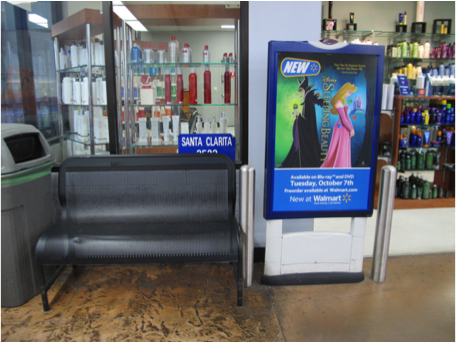
  • Retailers should not "camouflage" the EAS pedestals with advertising as this may prevent customers with devices from recognizing the threat and may actually draw device patients toward the EAS pedestal.

  • Retailers should not place goods and services near the EAS systems that effectively encourage the patients to violate the "don't linger, don't lean" dictum that physicians tell patients who have devices.

It seems entirely reasonable to suggest a shared responsibility between medical device professionals, device patients, retailers, and EAS system manufacturers. It was hoped EAS manufactures and retailers would do their part and embrace these simple recommendations and help make retail spaces safe for those with implantable devices. Unfortunately, this does not seem to always be the case.

Figure 1: Bench to "relax" placed adjacent to a camouflaged EAS pedestal at big box retailer.
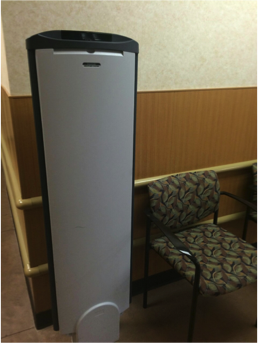
Figure 2: Chair to "relax" placed adjacent to EAS pedestal while patient waits for prescription to be filled at retail pharmacy store.
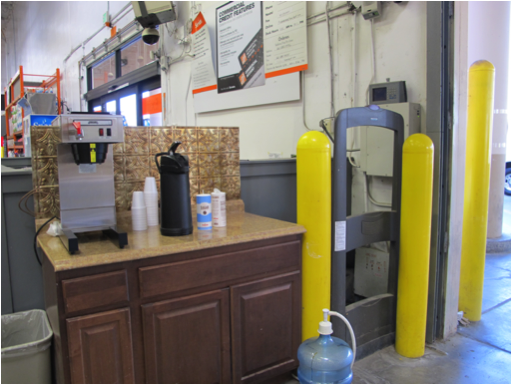
Figure 3: Complimentary coffee station where device patients might linger placed adjacent to EAS pedestal at big box retailer
These pictures were taken in the last several months around the country. Clearly, the juxtaposition of EAS systems and consumer areas may undermine the dictum “don’t linger, don’t lean” and leave device patients in harm’s way. Who then, is responsible for the safety of device patients in this situation?

Finally, perhaps in an attempt to thwart a determined and “informed shoplifter” who may employ several methods that might undermine the effectiveness of EAS systems, “there are also concerns that some installations are purposefully configured to exceed the rated specifications of the manufacturer, thereby exceeding tested and certified magnetic field levels.” This may increase further the risk of adverse reactions experienced by device patients when near EAS systems.

Now for the crowdsourcing part:

A presentation on this topic (CIED-EAS interactions) to an extra governmental regulatory group helping set standards for the device industry is to be given soon. This presentation will be to a number of interested parties including representatives of the EAS manufactures, device manufactures, and the FDA. As noted above, the “event rate” of these interactions is rather low, but as has been suggested significant under-reporting may obscure the true significance of the problem. It is surely recognize that not everyone has the time or inclination to write up adverse events for publication or inclusion in a database. Perhaps, some events go entirely unrecognized for what they really are, being passed off as “Oh, Mom passed out at the store today, but she’s OK now”.

With your help a strong presentation and case can be made emphasizing CIED-EAS interactions are an important public safety issue. Your voice and concerns can be heard. First off, send pictures where you see EAS systems placed in a manner that might endanger a device patient (like the ones shown above). Cell phone pictures are just fine. Second, if you are a health care provider or patient, please send any “events” that you may have experienced describing an adverse interaction between an EAS system and pacemakers and or ICDs. Please post the items here or send items of interest to J. Rod Gimbel, MD (gimbeljr@gmail.com). Your response is of course appreciated and in confidence and any presentation of the material provided will be anonymized. Upon completion of the presentation, a link will be posted here.
This is an important effort that Rod is undertaking on behalf of patients with CIEDs. I hope patients and health care providers will come forward with examples of EAS systems or EAS interference in their locales to assist him in this important consumer safety effort.

-Wes

Thursday, September 25, 2014

The Last Reprogramming

He had called the other day to update me up on his condition.  He did not sound upset, but resolute.  "They offered me peritoneal dialysis," he said, "but I decided against it and figured I'd just let nature take its course.  The hospice people are so wonderful - I've got things all set here at home, but I have two questions.  What should I do about my warfarin?  You know, I just don't want to have a stroke.   And what I do about my defibrillator?"

We were colleagues once and grew to be friends later when life's circumstances brought us together. He, a revered senior neurologist and me, a relatively new doctor in town. I could remember overhearing his heated discussions about administrative snafus with colleagues in the hall, or watching a horde of residents and medical students following him into a patient's room to teach at the bedside.

"Of course he didn't want a stroke," I thought.

So we decided to keep the coumadin and let him continue his daily INR checks at home and to turn off just the tachyarrhythmia detections on his biventricular defibrillator.

"I'll come over tomorrow and we'll turn it off," I said.

There was a brief silence, perhaps because of momentary disbelief that I'd do such a thing.  Then he proceeded to give me detailed directions and landmarks to watch for on my way over.  "I'm sure I can find it," I said thanking him.

So the next afternoon after most of the day's events had finished, I grabbed the programmer and drove to his home.  It was an unusually beautiful day - mid 70's, sunny - as if Someone had wanted it that way. There in the yard, was his wife, wearing a large-brimmed hat and holding a hose while pretending to water the shrubs.  She came over to greet me: "Thanks so much for coming over," she said, "I know this means so much to him." Then she realized she was still holding the hose. "Oh, I'm so sorry, it's just that someone has to try to keep the place up," she said, voice cracking.

The "place," of course, was beautiful.  A majestic grande dame of a house - one I would later learn they had occupied for the past 44 years and bought when they were "just kids on the block."  It was meticulousy kept, stately.  I entered with his wife and noticed a shadowy figure two rooms away sitting at the edge of a mechanized hospital bed.  The bed was placed in what must have been his study with a large bay window with a couch next to it.  A reading lamp was over the head of the bed and the walls held books from the floor to ceiling with icons and statues, likely from other, more active time.

"Thanks for coming, Wes," he said, looking up.

"How are you feeling?" I asked, somewhat stupidly.

"Pretty good, considering everything.  See?  My legs aren't quite so swollen and my abrasions all have eschars on them," he noted as only a doctor could.

"Is there a plug nearby?" and he proceeded to point me the way so I could plug in the programmer to do my job while he explained the device to his wife.  The process was quick and I interrogated his defibrillator, then turned off the tachyarrhythmia detections, therapies and now needless alarms. "There, that didn't take long.  All done," I said.

There was a moment of silence as I sat with this man whom I known for so long.  Like a wise sage and hospitable host, it was clear he wanted to talk for a bit, so I slowed my exit.

"You know, I've always appreciated your frankness about my condition," he said. "You're a lot like me in many ways, I think.  You never overstepped, let me have control, to manage things like I wanted to, and I've always appreciated that," he said.

Embarassed by his frankness, I wondered what to say.  At a loss for words, I told him how much I enjoyed meeting his family, wife, daughters, and grand-daughters recently in the hospital.  He looked puzzled, forgetting. "You know, that day I brought my daughter in your room with them?"  His eyes brightened and his smile widened as he remembered. 

"Oh, yes! That was wonderful!  How fast times flies, doesn't it?" he said.

"You know, I wrote about that day in my blog," I mentioned, ".. and included some pictures of my daughter from 10 years ago - about what she thought about medicine - can I show you?"

"Of course!"

So I showed him the picture and we shared our thoughts about family.  Then, to make reading from my iPhone easier, I read him the post I'd written about that day.  We talked about family and what they meant to each of us.  And then he shared with me another nugget, that he grew to become a writer, too.

"You know, I spent some time and wrote an autobiography for my kids not too long ago - over a hundred pages - about everything I could remember - from my earliest years as a child, about my immigrant father and  American mother.  My father made it as a successful lawyer - came over from eastern Europe - I even know the ship - I remember the picture of him standing there with his hat..., and I wrote about my family, influential teachers in grade school, fellow professors, and people that I knew throughout the years - everything.  You should do that, too, you know.  I'm so glad I did.  I gave them to my kids and even made some some extra copies - maybe for the grandkids, in case they want it someday..."  He looked away to see his wife leave the room, trying not to be noticed as tears filled her eyes once more.   She didn't want to him to see her this way.

He stared down at the floor beneath his swollen feet, then continued.

"You know, it was therapeutic for me to write that autobiography.  After all, what we do is terribly isolating for the most part.  No one understands that.  Like you do your procedural stuff and I do my diagnosing.  We do most of it all alone, with no one else there.  Just the patient and the doctor.  Wonderful, to be sure, but isolating.  So many memories.  I guess it helped me to put some of those feelings and the thoughts I had about those I loved into words.  It's hard to capture it all..."

He looked up from the floor and stared in my eyes.  "Thank you," he said extending his hand.

I sat motionless for a bit digesting the gravity of his words, lost in them before I saw his hand.  Once I noticed, I lept up to shake it and gave him a long hug to his increasingly skeletal frame.  It was a brief moment to share together once more and one I now realized I had done too infrequently with other patients in a similar circumstance.  Here he was, an incredible man who'd given so much to his family, fellow colleagues and patients, now teaching me once more so much about life as a doctor, about grace, and about real love.  Just the two of us, isolated again, but as friends. 

With great reluctance I packed things up and found his wife on my way out.  "Thank you," she whispered with swollen eyes, "I just don't want him to be in pain." 

"He's going to be fine," I told her, "... perfectly fine, especially now. He's such a wonderful guy." She smiled and opened the door.

As I drove away I realized we probably won't see each other again - his remaining time here will be saved for others now. There were so many thoughts, so much to remember, so much still to learn. Perhaps because I'd been through something like this before I was more prepared - it's never easy - but I still felt okay about it all - not sad - confident that we did the right thing... 

... together.

-Wes


Friday, September 19, 2014

Case Study: What They Don't Teach You in EP Fellowship


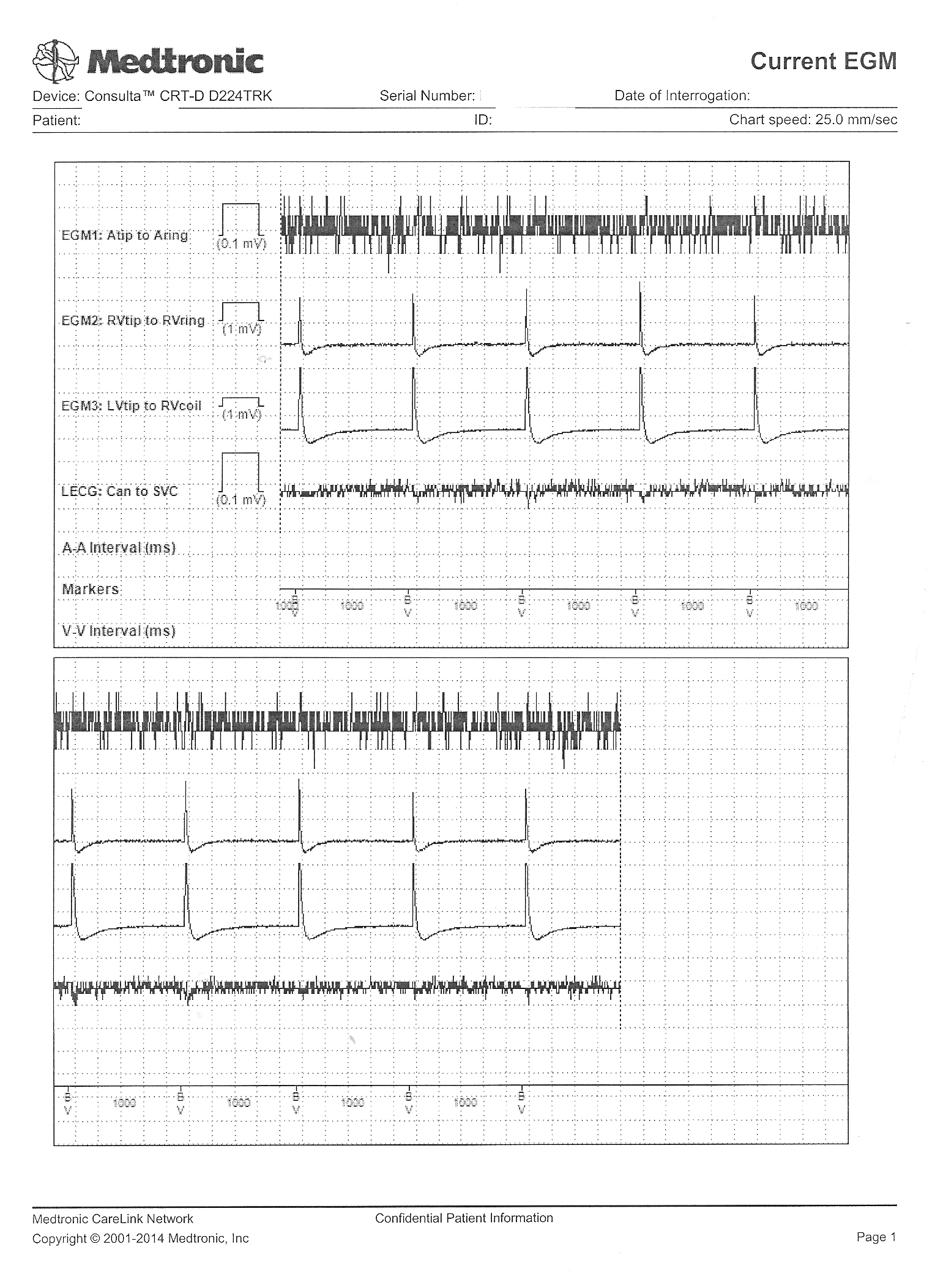
These days, pacemakers and defibrillators are often interrogated via a home-monitoring system that uploads information contained in the implanted cardiac devices automatically to a central server so it can be accessed by physicians remotely.  This feature was added to most defibrillators after the rash of recalls struck the industry in 2005-6.  Not only can the information be uploaded electively by the patient, it can also be automatically uploaded if a nightly self-check detects a parameter out of range.  In this case, the patient was being monitored by Medtronic's Carelink remote monitoring system.

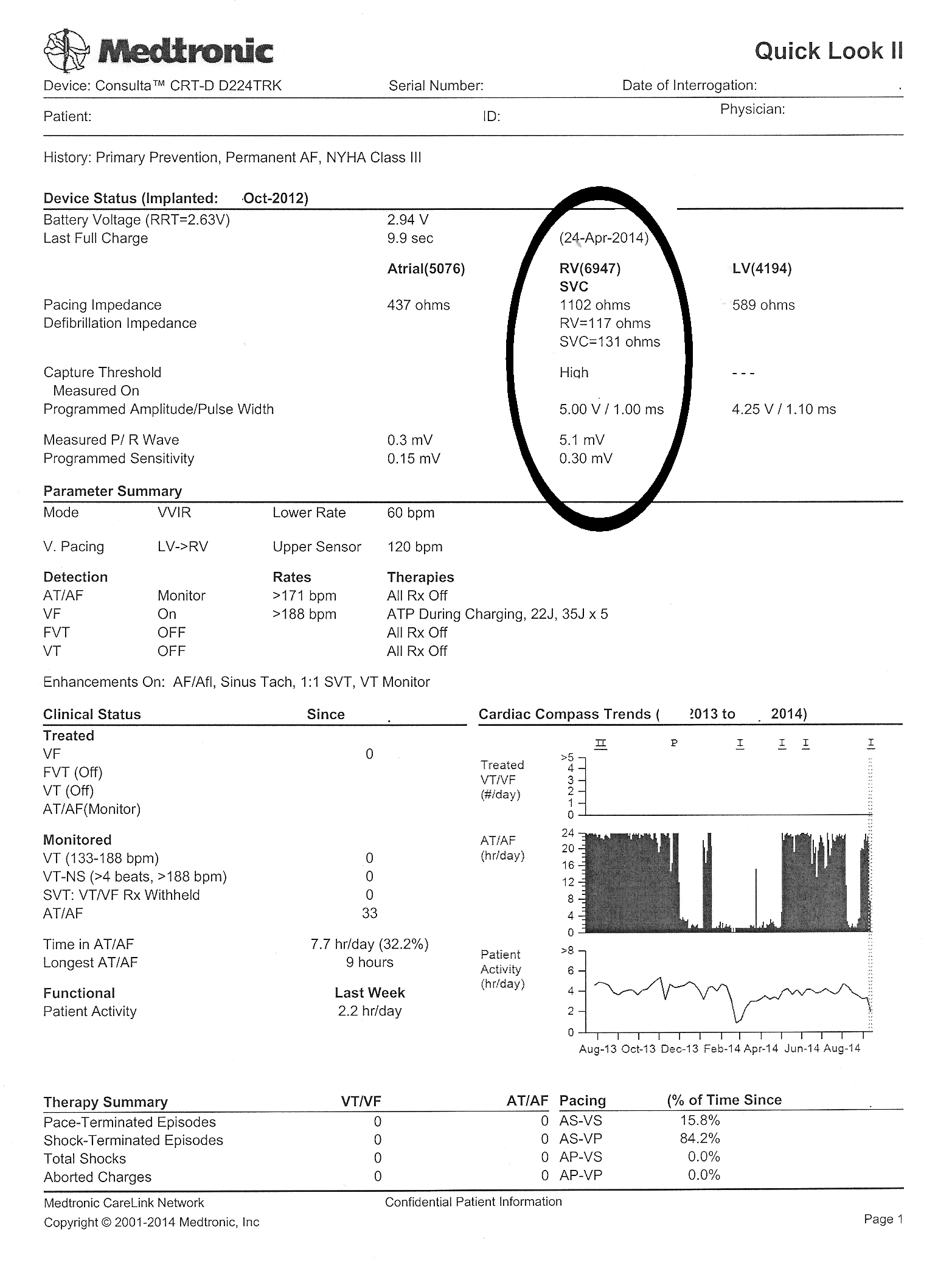
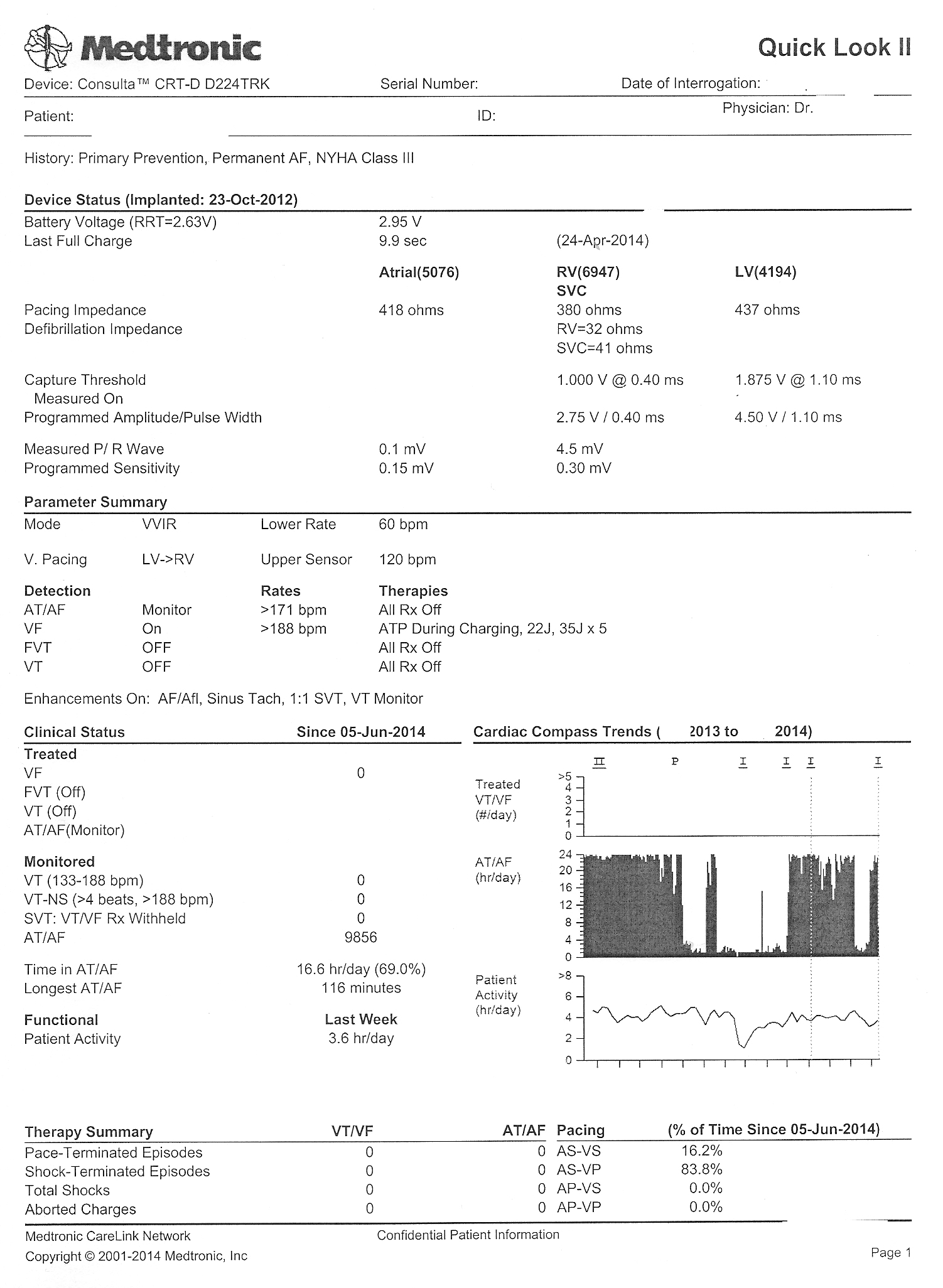
"Dr. Fisher, I think we have a problem with Mr. Smith's RV lead (not his real name)," my device nurse said as she handed me the Carelink transmission that triggered an superior vena cava (SVC) high voltage coil impedance warning:

Click to enlarge

"What did the last interrogation look like?" I asked.

"Here's the old one was sent just three days before and looked fine," she said. "It's so weird.  We've not had a problem with this patient's device since it was implanted in 2012."

Click to enlarge


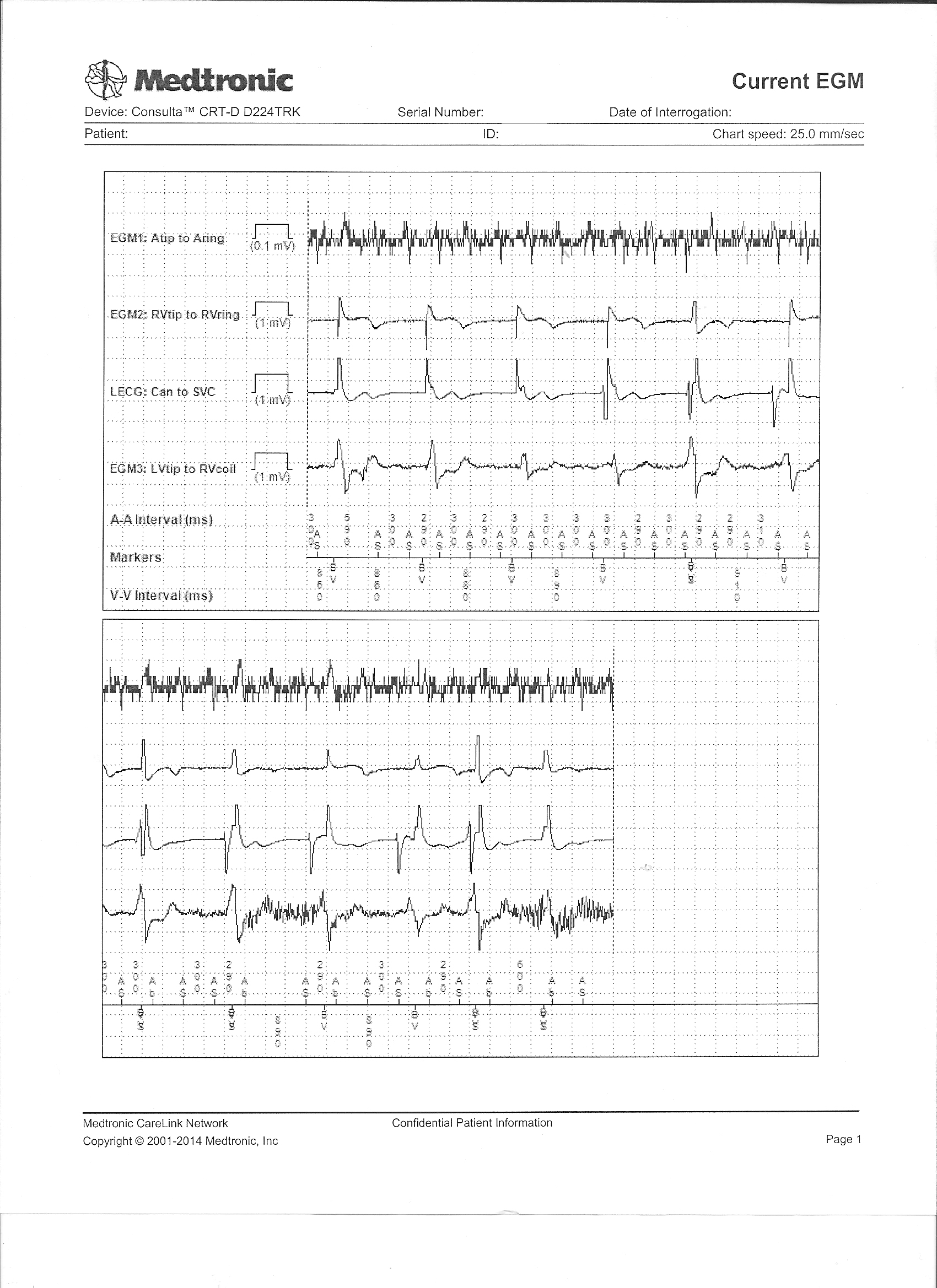
Real-time intracardiac electrograms seen on the earlier transmission - Click to enlarge


"Strange.  I'm not sure what to make of this.  Give him a call - we might have to change that RV lead," I said.

"Okay," she said, then returned to the device clinic and I went back to seeing patients.

Some time later, my nurse returned.

"Um, Dr. Fisher, could I speak with you a moment?" she asked.  "I got some more information.  I think you better look at this" and she handed me his most recently transmitted real-time intracardiac electrogram recording that was sent with the latest transmission.

What did it show and why were the RV lead parameters abnormal?

-Wes

Monday, September 08, 2014

Another MacGyver Moment in Pacemaker Implantation

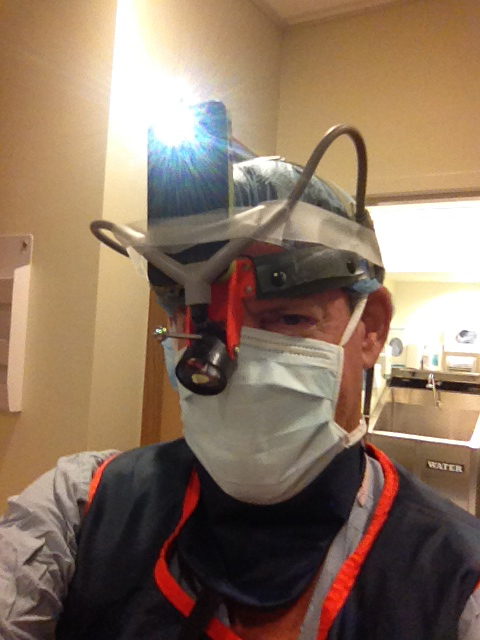
Installing a permanent pacemaker or defibrillator has become commonplace event in cardiology these days.  These devices implanted in a patient are comprised of two main parts: the lead(s) and the pulse generator.  After installing the leads in the heart and connecting them to the pulse generator, the lead and pulse generator assembly are then placed beneath the skin in a small subcutaneous (or in rarer cases, submuscular) "pocket" that is created surgically.  Considerable care is taken to cauterize bleeding vessels when the pocket is created.  To facilitate visualization of these occasional bleeding vessels deep within the created pocket, I prefer to use a surgical headlamp to direct the light deep within the pocket cavity rather than relying on a conventional overhead surgical light.  I have found that headlamps have helped me limit my incidence of post-operative pocket hematoma development.

So as things have had it, I seem to have a knack for attracting every eighty- or ninety-plus year old who needs an emergency pacemaker on the weekend when I'm on call, and this past weekend was no exception.

So the team was assembled and the pacemaker implantation equipment readied.  They knew I liked a headlamp, so they dug deep into the recesses of their inventory to pull out their only headlamp that appeared to be from a bygone surgical era.  Being pressed for time, I couldn't argue and had to make due, but knew that this headlamp might not be very reliable, especially as I saw how the headlamp's fiberoptic cord was secured to the light source that generated about as much light as a few well-lit candles by a cumbersome spring-loaded Rube Goldberg contraption.  As I placed the headlamp on my head, and tightened the plastic strap that housed the headlamp to my head, I needed a backup plan in case the light failed.

Would I have to use the overhead light and make do, or might there be another way? 

I needed another MacGyver Moment.

That's when my on-call staff team came up with a brilliant, simplified idea:


iPhone to the rescue!


-Wes

(PS:  This device is experimental and has not been approved by the FDA.  Use this device at your own risk.    If you experience headaches, nausea, difficulty with concentration, or an erection lasting for longer than four hours, discontinue use of this device and contact your doctor immediately.  I have no commercial interest in this device.  Also, since the headlamp still worked this weekend, no workaround was needed for the patient, but something tells me we might be getting a new headlamp soon.)


Wednesday, October 09, 2013

Case Study: A Case of Recurrent Ventricular Tachycardia

The following is a case study intended for folks who look at defibrillator recordings.  If you find it interesting, great.  If you have no clue what is shown here, don't feel bad, just move on to another blog post.  I just thought I'd put this up as an unknown for those interested in phenomena encountered in a busy device clinic.
It was a case seen in our clinic: a nice man in his 50's had received a single chamber ICD for recurrent ventricular tachycardia and ventricular fibrillation and called because he had received several shocks from this device.  Interrogation of the device showed normal sensing, lead impedance and capture threshold.  Interrogation of his device demonstrated multiple VT therapies and untreated events recorded by his device. 

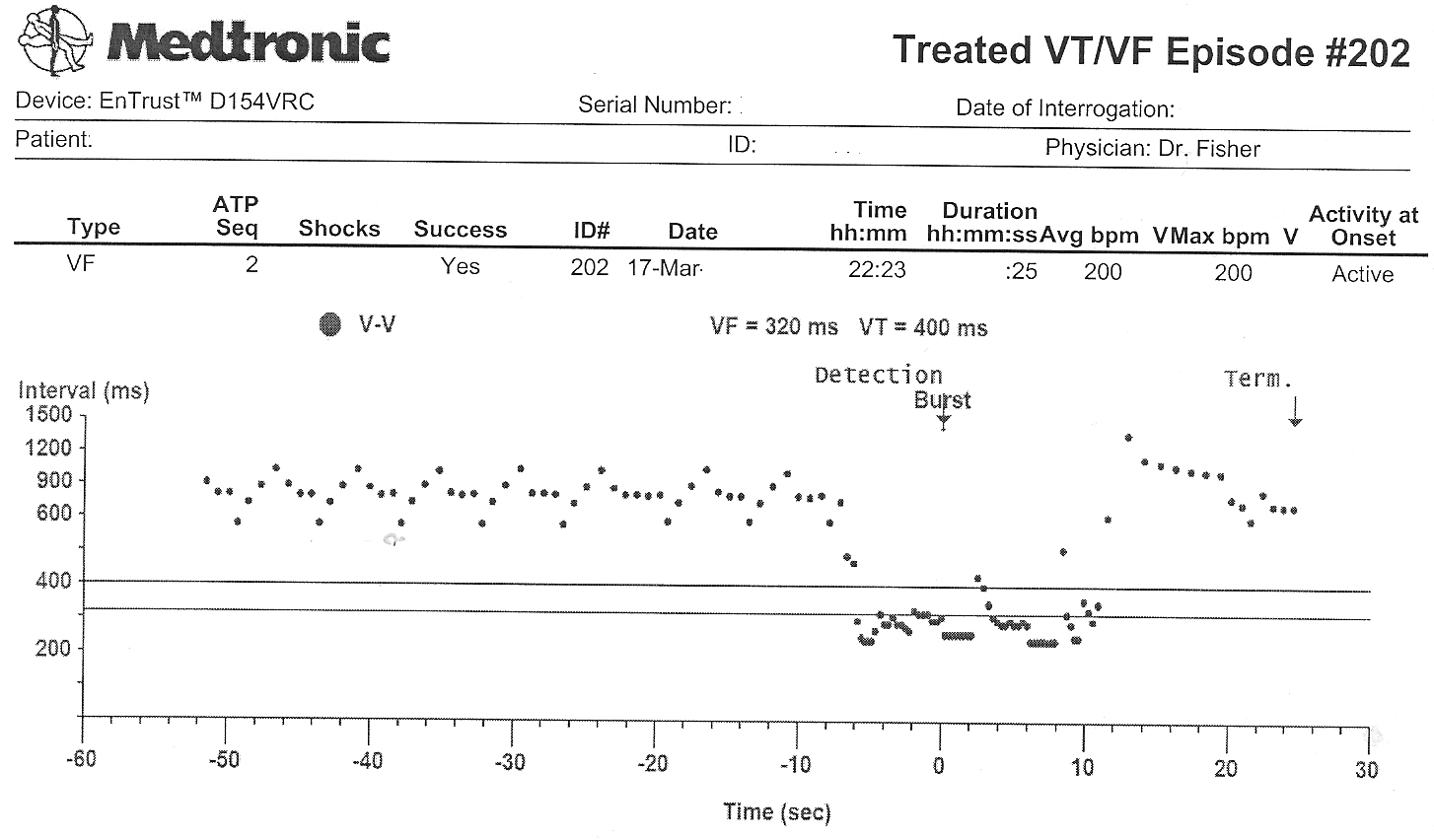
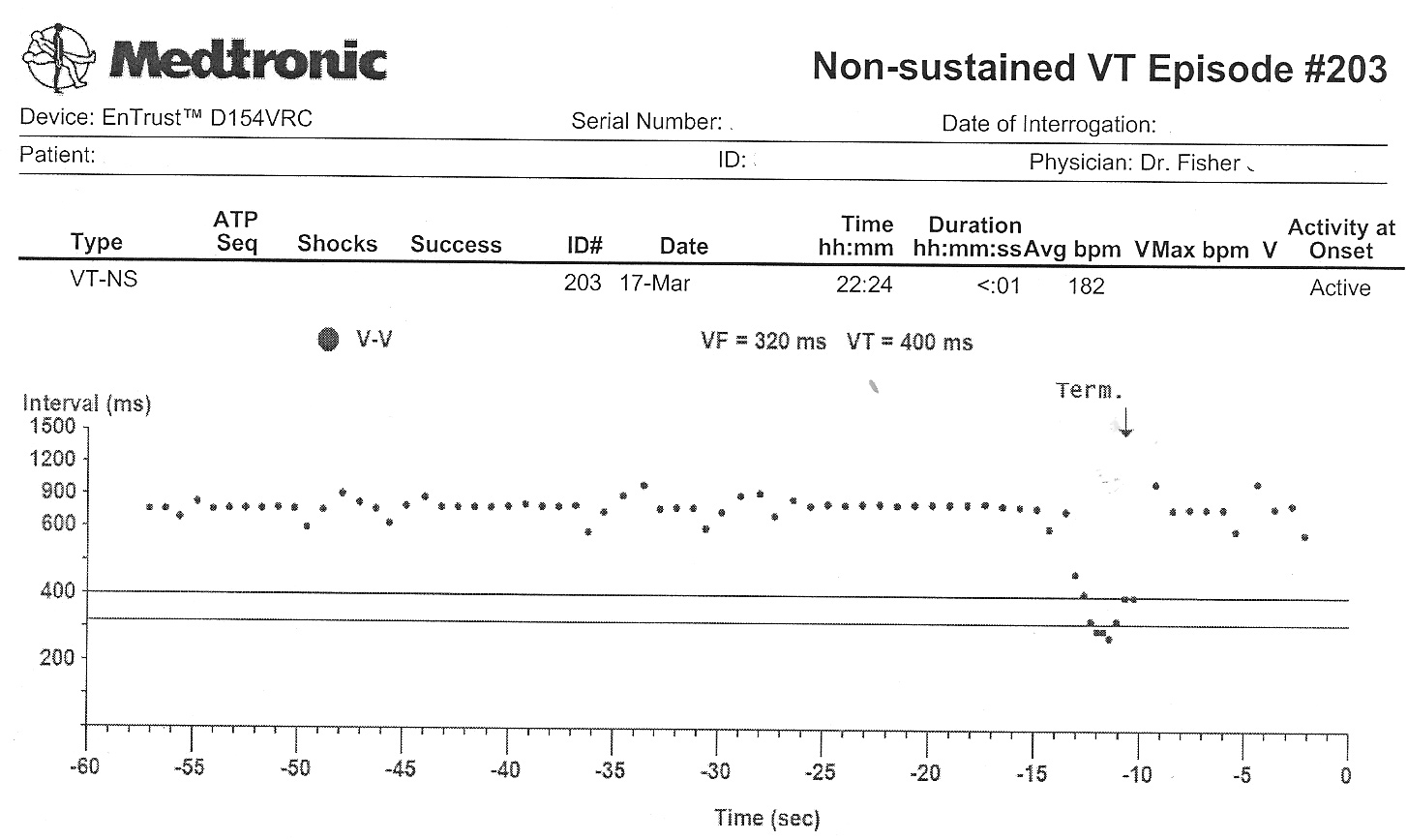
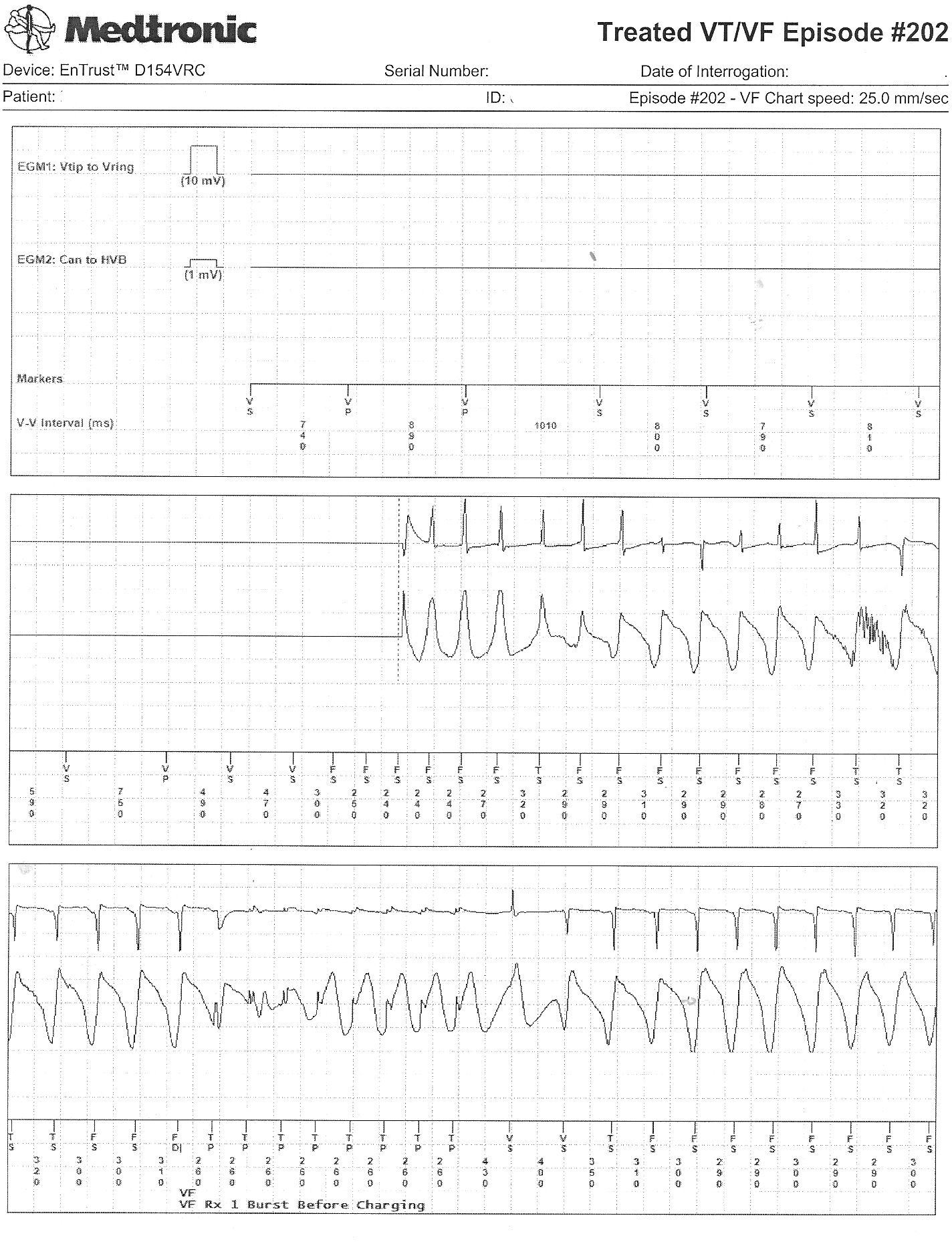
An example of several of the recorded interval plots (Event 202 and 203) as well has one example of the electrograms (and therapies delivered) recorded during episode 202 are shown below.  56 similar events were recorded since his last device interrogation, all with a similar pattern:


Episode 202 RR Interval Plot (Click to enlarge) 
Event 203 RR Interval Plot

Event 202's Recorded Electrograms and Intervals (Click image to enlarge)
 
Any thoughts about why this man might be having VT?

-Wes

Wednesday, July 10, 2013

Case Study: The "Simple" ICD Revision

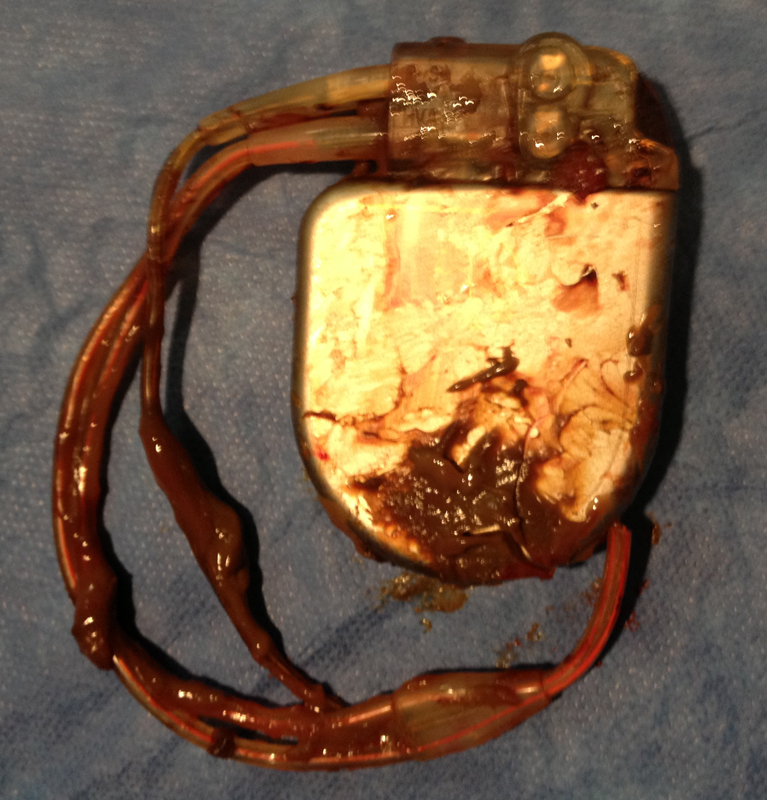
The following is an actual cardiac electrophysiology case study offered with the patient's permission. It's technical and contains an image that might turn some folks' stomachs, so for those who are a bit squeemish or just ate a meal: consider yourself warned and feel free to pass on this post. For the rest of you who remain interested and don't mind medical images, good luck.

It was supposed to be a simple ICD revision.

A prior abdominal ICD has been implanted in 1995. As was the norm of the day, the large ICD pulse generator was implanted in the left upper quadrant of the abdomen and an connected to an old Guidant Endotak Model 0074 lead that was implanted via the left subclavian vein and then tunneled down to the abdominal pocket. The device served the patient well for many years until its battery depleted in 2003. At that time, a new, smaller ICD with an appropriate header  replaced the old abdominal device and because the defibrillator lead worked well, the smaller ICD pulse generator was left in the abdominal pocket.

Years passed and the patient followed reliably in the Device Clinic for his routine defibrillator checks. While the lead impedance and capture thresholds remained normal, about a year ago intermittent periods of noise with non-physiologic short RR intervals suggestive of possible impending lead fracture began to appear on the patient's device checks. Because the patient was not pacemaker dependent nor near the time when his existing ICD battery would have to be replaced again, it was elected to wait until his battery reached it's elective replacement indicator before revising his system. When that time came, a new defibrillator lead could be implanted and connected to a more conventional VVIR ICD pulse generator implanted in the upper chest area (the patient has chronic atrial fibrillation). The old pulse generator could then be removed from his abdomen and the old lead capped and left in place.

So the day came for surgery. The patient felt fine: no fever, chills or other unusual symptoms pre-operatively. A venogram performed immediately before the procedure disclosed a patent left axillary and subclavian veins, so it was decided to first proceed with the new ICD implant on the same side as the site where his first defibrillator was implanted followed by removal of the old ICD pulse generator from the abdomen.  Pre-operative antibiotics were administered. To make a long story quite a bit shorter, the new single-chamber ICD implanted via the left axillary approach was performed without a hitch. A dressing was applied to the wound and preparations made to explant the abdominal pulse generator.

The lower abdominal area was similarly prepped and draped. Local anesthetic was infiltrated over the prior abdominal scan and an incision made at this location. Using electrocautery dissection, the incision was carried to the pulse generator capsule which appeared to be quite thick, but uninflammed. The fibrous capsule surrounding the pulse generator was then opened. What was found was startling to all.

Inside the pulse generator pocket was the device and lead system surrounded in a thick fluid that looked, for lack of a better way to describe it, like wet, brown mud. There was no odor. The device was extracted from the pocket after the suture holding the header of the device to the pocket wall was cut. A portion of the lead was also cut removed with the device. A picture of the removed device is shown here:


Soooo. What now?

Imagine you are the surgeon with this device in your hands. You have another case after this one. You struggle to find where this situation falls within our clinical "guidelines" for care and find very little. You aren't sure what you're seeing, but only know that this "chocolate-coated" ICD pulse generator is not the norm. (Usually they are nice and clean without debris.)

Ideas?

-Wes

Wednesday, April 03, 2013

Judgment versus Big Data

Knowledge in Numbers?
Decisions in medicine are supposed to rest on concrete obervations and hard evidence. 

Often, hard evidence does not exist or when it does, it isn't used.  Why is this? 

Concrete observations, too, are increasingly missed as we stare at computer screens longer and patients less.  Yet we persist. Why?

This is our reality now; our evolving medical world.

But if we stop and think about it, medicine, by definition, is a world of technological faults, systemic frailties, and human inadequacies.  We are convinced we know how a patient dies, for instance, thanks to the wonders of unprecedented imaging capabilities but stand slack jawed when an all-too-underperformed autopsy discloses a surprise cause of death that was completely missed by all.

And our answer to these inadequacies?  Stop doing autopsies.  Even though autopsies have consistently shown that one in four deaths occurs from an unexpected outcome or complication of care.

Why did we stop doing them?  Let me count the reasons: we are human, you see.

History repeats. 

Increasingly we are foregoing clinical judgment and intuition in favor of "Big Data" to make decisions.  We construct 70-page Appropriate Use Criteria for ICD documents that cover (really) just a few special clinical circumstances for patients, as if the authors ever really know a patient's clinical circumstance.  Ask yourself how good we are at predicting the day a person will take their last breath?  Like the weather, life is impossible to predict even when you have a billion data points or more.

Big Data and its certainty are our hottest trend in medicine and academics right now.  We know why this is: we love technology.  It is rational.  It is understandable.  It is linear.  We want, desperately, to understand and compartmentalize our human condition, to minimize its variability, so we can ration our resources logically.  But rather than acknowledging the limitation of such an approach, we forge ahead and create logic from dissociated databases with incomplete or empty data fields based on highly-selected patient populations to make our points.  Outliers are considered nothing more than acceptable loss rations.  We manipulate and massage the incomplete or erroneous data using statistics to make our points seem more valid.  Then, like the azithromycin folly, we extrapolate that data and transmit our firmly held beliefs through government agencies to the masses.  We feel good about our myopic analyses and are happy our academic salary was secured for another day.  In return, the importance of medical judgment, experience, and intuition to medicine are cast aside by our fervent belief that trials, databases, and data manipulation are always free from bias and the influence of greed.

More inadequacies.

But in the face of medical uncertainty, what other than judgment and intuition does a physician have - or a patient have, for that matter?  The real patient that sits before us demands an answer where, more likely than not, no real answer exists. Real concrete clinical challenges are rarely represented in a clinical trial or computer database. So we listen. We observe. We review data. Perhaps we get a second opinion. Patient judgment, life experiences, and intuitions are factored, too. Then we decide, together. Medical judgment and intuition are like that: not all luck, not all logic.


But now with Big Data, the new requirement for wellness and fitness is going to be for patients to keep proper symptoms that stay within the lines.  Symptoms and findings must fit new rubrics.  If they don't, your "caregiver" won't know how to treat you, the computer won't know how to treat you, and the rubric won't know how to treat you.  Who are you to say your symptoms are unique? Who are you to deserve a special look?  In the great cattle call of commoditized medicine created by Big Data, who do you think you are?   A liability risk?  Please, stay normative; align your symptoms with Big Data.  And be happy about it, dear patient, because the ends justifies the means.

Ironically, the folly of man has always been that we think we can have all the answers.  Perhaps we should stop for a moment and really think about what we're creating, courtesy of Big Data.

-Wes


Thursday, March 28, 2013

Doctors as Purchasing Agents

Thanks to NPR, I was directed to an op-ed that appeared in the New York Times in October 2012 entitled "In Cancer Care, Cost Matters."  The article describes what may be one of the earliest accounts where doctors at Sloan-Kettering decided not to use a new cancer drug because of its extra cost when they were already using equally-effective drugs for their cancer treatments.  The article piqued my interest.  These days for any doctor who uses expensive technologies, it is easy to see where this evaluation will lead us in our new era of cost concerns in medicine.  Medical device companies should take notice.

Few use more expensive technology in medicine than cardiologists and cardiac electrophysiologists.  Not only is our technology expensive, it is also used frequently.  Cardiovascular disease remains one of the largest cost drivers in medicine.

In the past, doctors (myself included) were complicit with device companies in our use of new technologies, implanting the latest model of defibrillator, for instance, not because it saved lives any better, but more so we could boast that our patients were receiving a "Cadillac" defibrillator rather than a "Ford" device (no disrespect intended to car companies, but you get my drift).  After all, our patients deserved the best and most innovative technology available at the time.  We did not want to be caught in the embarrassing position of being behind innovation power curve either.

I should acknowledge that there have been some very important recent developments with defibrillators since the 2005-2006 device recalls that plagued our specialty.  The ability to monitor device reliability wirelessly facilitated the ability to detect device battery depletions or lead failures and has improved our understanding of tolerable device and lead failure rates, for instance.  But it is not uncommon for a newly-named pacemaker or defibrillator to add several thousand dollars to the health care system over last year's device yet they may add only minor advances over the prior year's model.

Pacemakers, too, are being manufactured that are FDA-labelled "MRI-tolerant."  But examples of safe application of MRI's to conventional pacemakers are prevalent in the medical literature, so is the extra cost of an MRI-safe pacemaker worth it?  (In actuality, if you ask the informed pacemaker implanters out there, the main reason MRI pacemakers are routinely implanted is not because of safety concerns, but because of the CMS coverage decision for MRI payment in patients with pacemakers.(pdf))  How do we weigh the cost of these extra advances in technology versus their ability to improve our patients' actual morbidity and mortality?

Increasingly, doctors will soon be involved with purchasing decisions for advanced technologies.  Pacemakers, defibrillators, implantable monitors, stents, catheters, and even small sheaths will be scrutinized for their utility, ease of use, and cost.  (The liability of NOT using a technology will also be considered, but this issue is hard to measure and  less familiar to frontline doctors.)

The real question, of course, is will the patient see these cost savings if older technologies are used?  This is hard to say since there are so many layers to our health care system between the patient and the dollar.    Also, how will patients react when they find out online that their model of medical device is last year's model rather than this year's?  Will they seek another hospital system with shinier walls and bigger names?  It's impossible to tell.

But if hospitals are smart, they'll make it clear to the patient on their bill what they saved themselves by using an earlier-year device.  Medical device companies, too, might shift their marketing tactics to costs and benefits from things like size or shape of their device.  

But one thing's for certain in the days ahead: device companies will have to carry not just this year's model of device, but last year's, too.  Innovations in technologies will be harder to sell unless they show real patient morbidity or mortality benefit.  Companies will have to adapt their marketing campaigns since cost savings, done correctly, will benefit everyone.

After all, it's now about real costs and benefits in health care, rather than just sexy bells and whistles.

-Wes

Addendum: The CMS National Coverage Decision for MRIs in patients with pacemakers is now functional.

Friday, March 08, 2013

Boston Scientific Issues Alert Regarding Their New Subcutaneous ICD

From Massdevice.com:
The company has received reports of 4 instances in which a fuse inside the subcutaneous ICD was activated inappropriately, which could cause the devices to fail. No adverse events have yet been reported, according to Boston Scientific.


"The company is issuing a software update that takes less than a minute to complete using a programmer in the physician's office," Boston Scientific senior VP of global corporate communications Denise Kaigler told us today. "We recommend patients with recently implanted S-ICDs meet with their doctors for a follow-up visit to receive the software update."
-Wes


Friday, February 08, 2013

Lessons Learned In 18 Years of Device Implantation and Follow-up

If you haven't seen these clinical gems provided by Edward J. Schloss, MD, a cardiac electrophysiologist based in Cincinnati, Ohio, you should.  While they're just a starting point, cardiologists, cardiac electrophysiologists, EP fellows, device reps and other idustry personnel would be well-served by heeding Dr. Schloss's cogent suggestions for implantation and follow-up of pacemakers and implantable cardiac defibrillators (ICDs).

Dr. Schloss can be found on Twitter at @EJSMD.

-Wes

PS:  Thanks to @EPLabDigest for adjusting their firewall to make these recommendations available to all.

Thursday, November 29, 2012

The Currency of the Future

From this morning's Wall Street Journal:

Medtronic says federal rules prohibit giving Ms. Hubbard's data to anyone but her doctor and hospital. "Our customers are physicians and hospitals," said Elizabeth Hoff, general manager of Medtronic's data business. Medtronic would need regulatory approval to give patients the data, she said. It hasn't sought approval because "we don't have this massive demand."

. . .

Some legal experts say the 1996 U.S. law governing patient access to their health files—HIPAA, or the Health Insurance Portability and Accountability Act—hasn't kept up with technology. The law gives patients the right to access information held by doctors and hospitals. However, the raw data gathered by an implant isn't held by a doctor or a hospital: Typically it goes directly to the device maker, which provides a summary report to the doctor. Because of this, the raw data falls outside the scope of HIPAA's patient-access requirements. In addition, Medtronic said, business agreements with doctors and hospitals restrict it to relaying information only to them.
"Is the device itself a depository for medical records?" said Paul C. Zei, a cardiologist at Stanford University Medical Center with a patient, Hugo Campos, who wants the same access to his cardiac-device data as the doctor gets. "Or is it part of the patient, and an extension of vital signs that we download into a medical chart?"
Gee.  Someone saw this coming years ago. 

But as patients pay for more and more of their health care, companies better remember who's really their customer.  Furthermore. patients should have access rights to all of their medical information, irrespective of where it resides.

-Wes

Tuesday, November 27, 2012

Subcutaneous ICD: A Lesson in FDA Approval

This morning, a nice article in the Boston Globe appeared on Boston Scientific's subcutaneous implantable cardiac defibrillator (S-ICD)  that recently received FDA approval.  It was a fairly balanced article, one that touched ever-so-briefly on the pros and cons of a subcutaneous device to treat life-threatening cardiac arrhythmias using a medical device that does not require an internal wire inside the heart, but rather a sensing and shocking lead that is tunneled accross the chest under the skin (see my prior post on the details here). 

But what I found most interesting in the article was the patient who was recommended for the device: a dialysis patient, was a patient who was specifically excluded from the FDA trials to approve the device (specifically, patients with GFR < 29 were excluded). 

If you are a company that wants to get a device approved by the FDA, you want the best chances of having the fewest complications possible with new gadgets in medicine.  Because sick dialysis patients have a way of having more complications with device implants, and the device companies know this, they are not included in trials to get a device approved.  

Those of us who deal with ICDs in dialysis patients recognize the problems when ICD leads and dialysis catheters co-exist in the same vascular tree: the odds of infecting the ICD lead system is extraordinarily high.  In fact, the overall mortality advantage of ICDs in dialysis patients is much less than patients not on dialysis.  For this clinical circumstance, subcutaneous ICDs would seem to clearly be the better choice.

But dialysis patients are beset by another problem: challenges with potassium level regulation.  Periods of hyperkalemia are quite common in dialysis patients and hyperkalemia commonly causes severe bradycardia.  In these patients, pacing could maintain a patient's heart rate until their dialysis could be adjusted to lower their potassium and thereby improve their cardiac function.  Subcutaneous ICDs do not have pacing capabilities, however.

So the reality of the effectiveness of  the subcutaneous ICD to prolong life is uncertain in dialysis patients.  This theory has never been tested - we just tend to think it makes intuitive sense to apply a new technology when other medical device choices are not perfect either.

The subcutaneous ICD FDA approval process is a good example of how clinical dogma spreads amongst doctors and patients without any proof of a device's effectiveness in some subselected patient populations.  A new technology is approved by the FDA and receives a governmental stamp of approval.  Doctors, then, serve as well-meaning spokespersons.  The media gushes over the latest and greatest technology.  And sales explode...

... all while some patients in whom the device is deployed doesn't realize the safety and efficancy of that device was never tested in their particular clinical circumstance.

We should remember that exclusion criteria in FDA clinical trials are important.  They tell us who might  and who might not benefit from a new technology.  Too often we forget this. 

And so does the FDA.

-Wes


Monday, August 13, 2012

High Voltage Riata ST Defibrillator Lead Failure and Its Implications for Durata

It came from a case report published online before print in PACE from Dr. John Marenco of Tufts University in Springfield, Massachusetts:

A 60-year-old man had a single-chamber St.Jude Atlas VR defibrillator (St. Jude Medical, St. Paul, MN, USA) with a dual coil St. Jude Riata 7001 defibrillator lead (My note: this is actually a downsized, second-generation 7 Fr Riata ST model whose internal construct shares many similarities to St. Jude's currently-marketed third-generation 7 Fr Durata lead) placed in 2006 for primary prevention secondary to an ischemic cardiomyopathy and prior myocardial infarction.  All routine device interrogations, both remote and in-office, had been normal with stable sensing amplitude, lead impedances, and capture thresholds. The device was programmed with two zones: a ventricular tachycardia (VT) zone from 340 ms (176 beats/min) and a ventricular fibrillation (VF) zone from 260 ms (231 beats/min).  The VT zone had a morphology discriminator “on” with interval stability and sudden onset “passive.” Five years from implant, he presents with palpitations, light-headedness, and a single implantable cardioverter defibrillator (ICD) discharge.  He has a friend drive him to the emergency room and is found to be in ventricular tachycardia over 200 beats/min. The ventricular tachycardia terminated with intravenous amiodarone bolus before need for external defibrillation. Device interrogation demonstrated an initial rhythm of atrial fibrillation with the appropriate detection of the onset of ventricular tachycardia with a cycle length of 245 ms, within the device’s VF zone (Fig. 1). Discriminators were not activated in the VF zone, but the morphology discriminator clearly demonstrates a failure of the electrogram signal to match the template (indicated by the “x” in the marker channel). After detection of 12 intervals (interval average) within the VF zone an episode is declared and a 25-Joule (693 V) shock is delivered, failing to restore sinus rhythm.  No additional shocks are delivered despite appropriate redetection within the VF zone (Fig. 2).  After a fifth detection, the device declares “no more therapies” with VT continuing indefinitely. Device interrogation in the emergency department reveals a pacing lead impedance was 465 ohms, signal amplitude 1.8 mV, and capture threshold 0.75 V at the rate of 0.5 ms. What is the differential diagnosis of failure to deliver appropriate therapy and why did this device fail to deliver more than a single shock?
Further review of the case's figure disclosed appropriate VT detection, a high voltage impedance of 0 ohms, and an "aborted charge because of possible output circuit damage" on device interrogation after the event.  Importantly, at the time of lead revision, "there was no fluoroscopic insulation breach and no obvious insulation breach in the pocket."  Fluoroscopic screening of these leads, therefore, would not have detected pending lead failure.  Further, as far as we can tell from the report, no antecedent device alerts were triggered before this event.

This case report discloses several important issues. (1) High voltage coil damage in a 7Fr  Riata ST lead can lead to either ineffective high voltage therapy delivery, withholding of further therapies, or both despite appropriate arrhythmia detection.  St. Jude defibrillators are engineered to automatically withhold energy delivery in low high-voltage lead impedance situations to avoid excessive current delivery and device overheating in such circumstances (personal communication).  (2) This failure mechanism, while curently very rare, may affect implanters decisions regarding whether or not to replace existing Riata leads irrespective of their performance characteristics and flouroscopic appearance at the time of battery change.  Already there have been other reported high voltage failures in Riata leads with externalized wires.  Some have advocated testing the high voltage leads as part of Riata lead follow-up to screen for this failure mechanism, especially since the therapeutic implications of high voltage lead failure is much more significant and difficult to detect than low-voltage (sensing lead) failures. 

Perhaps most important for St. Jude going forward is how this case will influence implanters' choice of later-generation 7 Fr St. Jude defibrillator leads with their Optim coating but similarly-downsized inner lumen dimensions.  I look forward to St. Jude's update of their Riata Communications website regarding these recently published case reports.

-Wes

References:

Marenco JP. "Failure to Deliver ICD Shocks after a Failed Discharge Despite Redetection of Rapid Ventricular Tachycardia? What Is the Cause?" PACE DOI: 10.1111/j.1540-8159.2012.03484.x Published online 21 July 2012.

For an excellent overview of the Riata ICD lead recall by Dr. Jay Schloss: http://cardiobrief.org/2012/02/22/guest-post-more-lessons-from-the-riata-icd-lead-recall/

Wednesday, May 16, 2012

Durata: Questioning the 99%

One of Many St. Jude Ad Trucks Seen at HRS 2012 Scientific Sessions
The boxing match about the safety of St. Jude Medical's newer Durata defibrillator lead reliability continues to spark interest in the EP community.  In one corner is the supporter of the reliability claims made by St. Jude, respected EP and lead explanter Charles Love, MD from Ohio State University Medical Center.  In the opposite corner this morning on Cardiobrief, comes respected ICD-watchdog Robert Hauser, MD:
Cardiobrief:  "Unfortunately, Dr. Greenberg was unable to attend today, but St. Jude’s Dr. Carlson stood bravely in the breach (no pun intended) to describe the performance of St. Jude’s 3500+ Durata leads in its OPTIMUM registry. Follow up was 2.4 years, and my only comment is that 2.4 years in my view is an early experience, not a mid-term experience. The event free survival was >99%. Excluding dislodgments and perforations, which may be operator dependent, there were only 5 lead mechanical problems, namely conductor fractures, in over 8400 implant years. Now this is truly spectacular. There were no inside-out insulation abrasions and no all-cause abrasions. But I have to say, that the Durata leads that I have been looking at in the FDA’s MAUDE database must not have been included in this study."
I'm starting to see the makings of a Tyson/Holyfield match.

-Wes

Monday, March 26, 2012

When the Feds Come Knocking

Slightly over a year ago, the Department of Justice (DOJ) launched an investigation of a large number of institutions regarding concerns that implantable cardiac defibrillator (ICD) procedures were performed for reasons outside of the criteria set forth in Medicare’s National Coverage Decision (NCD).  This investigation occurred just after Al-Khatib and others published a report January 4, 2011 in JAMA that suggested as many as 22.5% of implantable defibrillators implanted for primary prevention of sudden death were not evidence-based.  While the physician community took issue with the Al-Khatib paper, the media firestorm it generated paired with the announcement to the Heart Rhythm Society physician community that a federal investigation was underway, had a chilling effect on ICD implantation nationwide.  Drs. Jonathan S.Steinberg and Suneet Mittal report on their experience with DOJ investigators under this heavy regulatory oversight in today’s Journal of the American College of Cardiology.

Steinberg and Mittal's diplomatic account carefully describes the challenges of retrospective audits performed by lawyers from the Department of Justice and those of their targeted health care facilities. The DOJ identified 229 cases as potentially inappropriate cases based on Medicare code criteria.  (This represented 8.7% of the de novo non-resynchronization ICD implants done for primary prevention at their institutions). After determining that some of these targeted cases were actually for secondary prevention or other coding transgressions, the authors could medically justify all but thirty-four (15%)  (or a very low 1.5% of all ICD’s implanted for primary prevention of sudden death) at their institution.  As has been the case in most reports, the majority of outside NCD-directed ICD implants occurred because of timing violations—too close to the diagnosis of heart failure, heart attack and coronary intervention. These timing constraints constitute the primary issue before implanting doctors: their professional society guidelines do not -- in all cases -- recognize similar timing restrictions.

It is surprising that we are not told what sanctions, if any, were levied against their respective institutions.   Perhaps the authors felt this important detail was unimportant to disclose or perhaps they were prohibited from doing so.  Perhaps their penalty is still being determined: after all, nothing drives behavior like fear.  To this end, we found the authors' compliments of the government's legal team unusual to report in a scientific manuscript, as if the they were suffering from Stockholm Syndrome.

We should acknowledge that the authors have added much needed clarity to the gray area of decision-making surrounding ICD implantation. Their explanations of timing violations highlight problems with coding, confusion around incidental PCI intervention in patients with dilated cardiomyopathy, and demonstrate the overlap decisions that must be made when bradycardia and tachycardia functions might be required for our patients.  This kind of clinically-relevant nuance was lacking in the impugnable Al-Khatib JAMA piece.

We can only speculate the large cost of the legal fees and man-hours devoted to this review process.  We will never know how many patients died during, or now after, the course of this investigation because they were not offered ICDs because ICDs can only be offered to patients who meet Medicare’s rigid, outdated, and still-to-be-updated National Coverage Decision for implantable defibrillators.   But perhaps this is the price of regulation that America is willing to pay in return for cost savings.  Perhaps we should not be concerned that professional guidelines for care delivery should be second fiddle to government mandates for ICD implantation.

With this latest report, a new era for medical practice is now upon us – one where priorities of low cost care and high quantity of care determined by non-medical personnel supersede the highest quality of medical care to our patients.   For regulators, it is easy to be a Monday-morning armchair quarterback evaluating health care delivery.  It is far harder, however, to decide prospectively who is likely to die (or not) when they sit before you with a newly-diagnosed cardiomyopathy and ejection fraction of 12%. 

When government and legal officials who carry no responsibility for the long-term well-being of our patients have the authority to retrospectively impugn and penalize doctors (and their health care facilities) based merely on retrospective reviews of billing codes and outdated payment mandates, they risk irrevocable harm to patients who might qualify for devices according to updated professional guidelines.  Doctors everywhere should stand up collectively to disown the practice of using NCD mandates, rather than updated professional guidelines, to determine appropriate care for patients.

After all, our patients are depending on us.

Westby G. Fisher, MD
Director, Cardiac Electrophysiology
NorthShore University Health System and
Clinical Associate Professor of Medicine
Pritzker School of Medicine, University of Chicago
Evanston, IL

John Mandrola, MD
Cardiac Electrophysiologist
Baptist Medical Associates
Louisville, KY

Addendum 27 Mar 2012: Link to Steinberg/Mittal article finally added.

Addendum 14 Sep 2012: Update on the DOJ Decision

References:

Jonathan S. Steinberg and Suneet Mittal. "The Federal Audit of Implantable Cardioverter-Defibrillator Implants: Lessons Learned." J Am Coll Cardiol. April 3, 2012, 59 (14) 1270-4. doi: 10.1016/j.jacc.2011.12.026

Epstein AE, DiMarco JP, Ellenbogen KA, et al. ACC/AHA/HRS 2008 guidelines for device-based therapy of cardiac rhythm abnormalities. J Am Coll Cardiol. May 27, 2008;51(21):e1-62.

Al-Khatib S, Hellkamp A, Curtis J, et al. Non–Evidence-Based ICD Implantations in the United States JAMA. 2011;305(1):43-49. doi: 10.1001/jama.2010.1915

Note: This post also appears on Dr. John Mandrola's blog: http://www.drjohnm.org/

Wednesday, February 22, 2012

Truth and Consequences: The St. Jude Riata ICD Lead Recall and It's Possible Implications for Durata

Today, a remarkable tour de force essay on the St. Jude Medical Riata defibrillator lead recall controvery written by Edward J Schloss, MD, director of cardiac electrophysiology at Christ Hosptial in Cincinnati, OH, appears at Cardiobrief.   It is a must-read for all of us interested in the management of patients with the current class of St. Jude defibrillator leads.
In the essay, he reviews two opposing views on the industry handling of this recall, one published as a perspective piece in the New England Journal of Medicine by Robert Hauser, MD, and the other, a rebuttal piece published by St. Jude Medical's Chief Medical Officer and Senior Vice President of Clinical Affairs, Mark D. Carlson, MD. The article reviews the engineering changes made to the Riata line of leads in its evolution to the Durata defibrillator leads and expresses clear concerns about disclosure of all available information regarding lead characteristics to implanting physicians.

This piece is a must-read for electrophysiologists and industry personnel involved in the care of these complicated patients. Schloss concludes:
Anyone who has been in the business of cardiac rhythm management has struggled with the problems of device failures. Because most of these only occur years after FDA approval, having a system for early detection of excess or unique failures is critical.

Industry response to these failures is also critical. Clear, honest acknowledgement of the problem is essential. We also need quick action to define the scope of the problem and create an action plan. These measures go a long way to maintaining the confidence of everyone involved, including, but not limited to, physicians, hospitals, patients, and the investment community.

Every time we, the implanting physicians, implant a medical device, we are taking a measured risk that must be outweighed by its benefits. Understanding this true risk, especially in newer devices, is extremely difficult. By becoming a student of the engineering process of these devices, we can become better equipped to make good decisions for our patients.

We are only now learning the scope of the problem with Riata and Riata ST. The lead mechanical failures and externalizations of this lead may only first occur four to five years after implant. Since Durata leads are only now approaching that interval, it is not surprising that we have not seen many troubling signals with this lead. It remains to be seen what the future holds. Until we have longer experience and collect more data, it us up to individual doctors to educate themselves with available clinical and engineering data so they are equipped to make good decisions.
Go now. Read it all. You will learn something.

-Wes

PS: John Mandrola, MD, a co-editor of Dr. Schloss's piece, also offers an excellent overview of concerns that confront electrophysiologists regarding the Riata/Riata ST lead recall over at theHeart.org.

Wednesday, December 07, 2011

As Goes the Post Office, So Too Medicare?

With the announcement that the Center for Medicare and Medicaid Services (CMS) will begin auditing 100% of expensive cardiovascular and orthopedic procedures in certain states earlier this week, we see their final transformation from the beneficient health care funding bosom for seniors to health care rationer:

The Center for Medicare and Medicaid Services will require pre-payment audits on hospital stays for cardiac care, joint replacements and spinal fusion procedures, according to the American College of Cardiology in a letter to members. Shares in both industries fell with Tenet Healthcare Corp., the Dallas- based hospital operator, plunging 11 percent to $4.18, the most among Standard & Poor's 500 stocks. Medtronic Inc., the largest U.S. maker of heart devices, dropped 6 percent to $34.61.

The program means hospitals won't receive payment for stays that involve cardiac care or orthopedic treatment until auditors have examined the patient records and confirmed that the care was appropriate, Jerold Saef, the reimbursement chair for the Florida chapter of the American College of Cardiology, wrote in a Nov. 21 letter to members. The review process is expected to take 30 days to 60 days, beginning January 1, Saef said.
This is not at all unexpected. In fact, in our field of cardiac electrophysiology, we have known this day would be coming; our expensive, life-saving gadgets and gizmos are easy targets upon which the government can cut its rationing teeth. And so as it will go for us at first, and then for many other areas of health care.

But the government has no idea how to do this, really. They don't have the data, the cerebral wattage, acceptable information systems, nor manpower. So, the government will grow further to offset it's shortcomings in order to assure they can "save money" for our health care system.

But CMS, like the U.S. Post Office, has a dirty little secret: they don't pay very well. To offset their low pay, they have to offer some pretty nice benefits to attract their best and brightest. And because the government is now going to bite off trying to manage an entire country's medical procedure rationing during a limited eight-hour government workday, they are going to be flooded with calls, many of which will be frustrated, angry calls that have been on hold a very, very long time.

And so they'll hire more people to improve services.

And pretty soon it will dawn on them: this is expensive to do. It will just be a matter of time when, like the Post Office that was seiged by their inability to keep up with pension and health care costs, they'll surrender and turn over their efforts to private enterprise.

That's because health care is local. Health care is complicated and needs lots of data, systems, and capable facile people to make decisions on data the government wants but knows it doesn't have. (Remember when the Department of Justice had to "consult" with the Heart Rhythm Society to "understand" defibrillator implant practices by tapping into their NCDR database?) Further, because the government moves slowly, can print money when it runs short, and must work through politics, government rarely works under budget. (In fact, when money runs out in government, they just shut down - not a great idea when working in health care.)

Of course the insurers don't want this. They already know it's too damn expensive to take on the risk of our paying for the health care of our aging seniors. (They were one of the main proponents of health care reform, remember?) So the government will have to have their back somehow. (Those details still have to be worked out, but it'll happen because politically, it must).

And the final transformation of our health care system of the future will be complete.

Amen.

-Wes

More info available at Larry Husten's Cardiobrief blog.

Thursday, December 01, 2011

Preventing Sudden Cardiac Arrest Immediately Post-PCI

I participated in a recent case-based discussion via a Medscape audiocast with Ted Feldman, MD and Rina Silver, APN from our institution on the challenges of managing patients post-coronary intervention who also have weak heart muscle function.

-Wes

Tuesday, November 29, 2011

What's the Most Important Question to Ask Before Getting Your Defibrillator?

Answer: How many have you done in the past year?

If the doctor says 37 or more, you should be in very good hands.

-Wes

Reference: Freeman JV, Wang Y, Curtis JP, Heidenreich PA, Hlatky, MA. "Physician Procedure Volume and Complications of Cardioverter-Defibrillator Implantation." Circulation 2011.