Thirteen.
Unlucky?
Ejection fraction.
Three.
Coronaries.
Clean.
One hundred sixty-five.
Milliseconds.
QRS.
Thirty two.
Years.
Defibrillator.
Four hundred ninety.
Pounds.
* Sigh *
One hundred one.
Degrees.
Reprieve.
Thirty.
Days.
Afebrile.
Thirteen.
Thousand platelets.
Later.
Twenty-four.
Respiration.
Recumbent.
One hundred.
Thousand platelets.
Now?
-Wes
Showing posts with label obesity. Show all posts
Showing posts with label obesity. Show all posts
Monday, April 26, 2010


Sunday, March 01, 2009
Monday, February 02, 2009
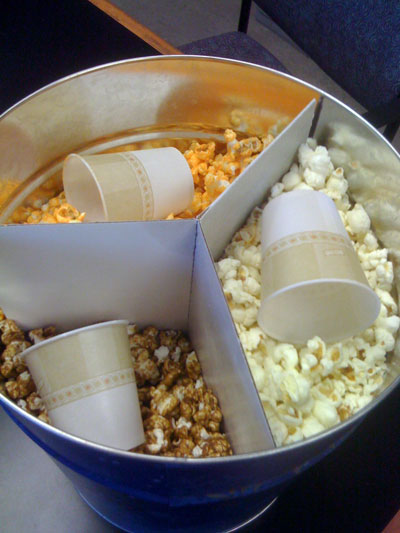
Saturday, December 27, 2008
The Fat Tax
Beware, it's coming to economically strapped city councils near you: the fat tax.
-Wes
h/t: Instapundit
-Wes
h/t: Instapundit
Sunday, July 27, 2008
The Power of Marketing Drugs for Kids

...it's especially evident in our new, burgeoning pharmaceutical market, our children:
Madeira Therapeutics, based in Leawood, Kan., is formulating a liquid statin for children that will be sold in either grape, cherry or bubblegum flavor, according to the company’s chief executive, Peter R. Joiner.This need is further supported, of course, by powerful marketing data supplied by the monstrously profitable prescription services themselves: Medco Health Solutions, Express Scripts, and Verispan:
Madeira became interested in the drug to treat children with a genetic cholesterol condition, familial hypercholesterolemia, which strikes 1 in 500 children regardless of their diet. The recent American Academy of Pediatrics statement adds to the potential market, according to Mr. Joiner.
Express Scripts and Medco developed estimates of how many children might be taking such drugs by extrapolating their data — involving a total of more than four million children — across the broader population.And therefore, because the rates have climbed, it must be okay, right?
The companies use different assumptions to reach their estimates, but the data suggests that at least several hundred thousand children are on various obesity-related medications.
The greatest increase occurred in drugs for Type 2 diabetes, with Medco’s data showing a 151 percent jump from 2001 to 2007.
Medco’s data, released in May, showed that use of drugs to treat acid reflux problems in children, often aggravated by obesity, increased 137 percent over seven years. Its analysis also showed an 18 percent increase in drugs to treat high blood pressure and a 12 percent increase in cholesterol-lowering medications during the seven-year period.
Express Scripts found a 15 percent increase over three years in drugs to treat cholesterol and other fats in the blood, a category that is primarily statins.
“We were amazed at how quickly the rates of drugs used have climbed,” said Dr. Donna R. Halloran, an assistant professor at St. Louis University who worked on the Express Scripts analysis, presented at a meeting of the American Public Health Association in November.
Verispan data recorded a 13 percent increase in high blood pressure prescriptions in the under 19 age group from 2005 to 2007. Its numbers show, however, a less than 1 percent increase during the period in cholesterol-lowering drugs in children.
The suspect nature of these culled data draw into question the message we want to feed (pun intended) our children and families, and pushes public health experts (and even our professional societies) to waddle toward the path of least resistance when it comes to caring for our children.
The issue of childhood obesity is a complicated one, fraught with many challenges. The influence of the fast-food industry, internet gaming industry, drops in funding to support school-based physical education programs, and the complicated socioeconomic challenges of fragmented families, have all coalesced to create the perfect storm of influences to promote weight gain in our children. These problems, it seems, have become insurmountable.
Better to just give 'em a pill.
-Wes
Image reference.
Friday, July 25, 2008
Fat Chance That Trans Fat Ban Will Help
Let me see if I have this right:
No wonder patients are confused.
-Wes
"A Low-Carbohydrate, Ketogenic Diet versus a Low-Fat Diet To Treat Obesity and Hyperlipidemia" showed low-carbohydrate, ketogenic (high fat) diets were superior to a low-fat diets for weight loss and lipid management.So given all of this prospective, randomized data, why the heck is California so proud to be banning trans fats? Trans fats exist in many, many foods besides baking oils. Meats, butter, and milk all have trans fats. Given the available data above and the efficancy of LOW CARDBOHYDRATE diets to improve weight and lipid panels, might they be targeting the wrong thing?
"A randomized controlled trial of a moderate-fat, low-energy diet compared with a low fat, low-energy diet for weight loss in overweight adults" demonstrated the moderate fat diet helped dieters lose weight faster than low-fat diets.
In a "Comparison of the Atkins, Zone, Ornish, and LEARN Diets for Change in Weight and Related Risk Factors Among Overweight Premenopausal Women," the Atkins diet, with its high fat, won hands down at weight loss and lipid improvement in women.
And now, in the DIRECT Trial testing "Weight Loss with a Low-Carbohydrate, Mediterranean, or Low-Fat Diet," we find that low carbohydrate (moderate fat) or Mediterranean diets are superior to low-fat diets at weight loss and lipid management.
No wonder patients are confused.
-Wes
Wednesday, January 30, 2008
A Pacemaker for Weight Loss?
It's always cool to hear about new ways pacemaker-like therapies can be used to improve patients' lives.
And now there might be some hope of using pacing therapy to help with weight loss by stimulating the vagus nerve. The company generating the most excitement right now is EnteroMedics. Using vagal nerve stimulation, they hope to decrease people's weight by 25%. Seems plausible, especially since stimulating the vagus nerve might cause early satiety. But the vagus nerve is also responsible for the SLUD syndrome: Salivation, Lacrimation, Urination and Defacation as well as heart rate slowing and the development of atrial fibrillation.
Their trial of this device could get interesting, eh?
Unfortunately, the device still has to be surgically implanted - often under general anesthesia - and the risks of depressing respirations in morbidly obese individuals can be considerable. But, like bariatric surgery, if found to be effective and with few side effects, they might be on to something here.
-Wes
And now there might be some hope of using pacing therapy to help with weight loss by stimulating the vagus nerve. The company generating the most excitement right now is EnteroMedics. Using vagal nerve stimulation, they hope to decrease people's weight by 25%. Seems plausible, especially since stimulating the vagus nerve might cause early satiety. But the vagus nerve is also responsible for the SLUD syndrome: Salivation, Lacrimation, Urination and Defacation as well as heart rate slowing and the development of atrial fibrillation.
Their trial of this device could get interesting, eh?
Unfortunately, the device still has to be surgically implanted - often under general anesthesia - and the risks of depressing respirations in morbidly obese individuals can be considerable. But, like bariatric surgery, if found to be effective and with few side effects, they might be on to something here.
-Wes
Thursday, November 22, 2007
NFL Rushes to Lose Image
Here I was, enjoying my Thanksgiving football, and on comes the NFL's compelling commercial promoting kids to "Play 60." Minutes, that is. It's a new campaign by the NFL to promote exercise in kids and reminds us that, according to their ad, 1 in 3 children are obese. 60 minutes of exercise per day will help, the ad claims. I suppose anything to get kids away from the TV makes sense. And they must be serious after spending $1.5 million for their "What Moves U" ad campaign, right?
But where does the ad direct the kids? To NFLRush.com, a cute kid-friendly website full of games and sound bites where our heavy-tushed youth can sit their butts down and be entertained and mesmerized by all kinds of cute games and football statistics that sound more like an NFL "get-'em while their young" ad campaign, rather than a bonafide health initiative:
Now while the message of getting off your butts is a good one, maybe they should rethink the credibility of their message by having their players lose weight and decreasing (rather than increasing) screen time in front of a computer as their way of "playing 60."
-Wes
But where does the ad direct the kids? To NFLRush.com, a cute kid-friendly website full of games and sound bites where our heavy-tushed youth can sit their butts down and be entertained and mesmerized by all kinds of cute games and football statistics that sound more like an NFL "get-'em while their young" ad campaign, rather than a bonafide health initiative:
"...the NFL has created NFLRUSH to provide young football fans with a refuge where they can celebrate their expanding interest in the game of football.But to partake, your child must register their name and e-mail, Mom and Dad. No doubt lots of NFL paraphernalia will be hawked in the future through direct-to-consumer advertising and reminders to come back and shop, er, play often.
This site is filled with a great volume of up-to-the-minute statistics, data and information that will increase your child's understanding of the game of football, with connections to teams, player profiles that provide positive role models and inside information that will give your child a sense of mastery of the sport.
The site also delivers high-quality, football-themed, casual computer games and activities that are fun and often specifically educational, as well as contests that make the site even more exciting and vibrant for young football enthusiasts. We have tried to strike a balance between information and game play because we believe that an important part of growing up is just having fun."
Now while the message of getting off your butts is a good one, maybe they should rethink the credibility of their message by having their players lose weight and decreasing (rather than increasing) screen time in front of a computer as their way of "playing 60."
-Wes
Monday, May 28, 2007
Food Labeling Innuendos
Your Doritos might reduce heart disease soon. At least that's what Frito-Lay wants you to think.
In January, 2007, Frito-Lay petitioned the FDA for permission to label its foods processed with reduced saturated fats that says their chips may reduce heart disease. While on the surface, one might think that sounds reasonable, the data to support this claim does not exist. Instead, the FDA said that such labeling claims can be inferred:
Or worse still, could these food labels be detrimental to our public's health, as questioned in New Zealand, by providing an excuse for people eating more of these products because they are labeled "heart healthy?" One only needs to look at New Zealand's "heart healthy" promotion for lamb and beef that carry a "National Heart Foundation" seal to see the potential conflicts of interest inherent in such food labeling.
I guess this is what we get when the guys asking for permission are paying the FDA's bills: industry-sponsored health claims that coerce and misinform.
-Wes
Addendum 29 May 2007 08:30: More from Weighty Matters
In January, 2007, Frito-Lay petitioned the FDA for permission to label its foods processed with reduced saturated fats that says their chips may reduce heart disease. While on the surface, one might think that sounds reasonable, the data to support this claim does not exist. Instead, the FDA said that such labeling claims can be inferred:
Under section 403(r)(3)(C) (21 U.S.C. § 343(r)(3)(C)) of the Federal Food, Drug, and Cosmetic Act (the FD&C Act), a manufacturer may submit to FDA a notification of a health claim based on an authoritative statement from an appropriate scientific body of the United States Government or the National Academy of Sciences (NAS) or any of its subdivisions.It seems the basis for Frito Lay's request lies in data from 1989:
The following statements from the 1989 NAS report titled Diet and Health: Implications for Reducing Chronic Disease Risk listed in the January 24 notification are considered authoritative statements.Now, while I respect the fact that lowering LDL and raising HDL can reduce the risk of heart disease, can we extrapolate these findings from older lipid studies to a direct heart disease risk-reduction by the consumption of chips and products manufactured by low saturated fat oils? Or might carbohydrate bolus consumed by eating these "heart-healthy" chips add to the metabolic syndrome epidemic and near runaway incidence of childhood diabetes in America?
"Clinical and animal studies provide firm evidence that omega-6 polyunsaturated fatty acids when substituted for saturated fatty acids result in a lowering of serum total cholesterol and LDL cholesterol and usually also some lowering of HDL cholesterol levels."
"Clinical studies indicate that substitution of monounsaturated for saturated fatty acids results in a reduction of serum total cholesterol and LDL cholesterol without a reduction in HDL cholesterol."
Or worse still, could these food labels be detrimental to our public's health, as questioned in New Zealand, by providing an excuse for people eating more of these products because they are labeled "heart healthy?" One only needs to look at New Zealand's "heart healthy" promotion for lamb and beef that carry a "National Heart Foundation" seal to see the potential conflicts of interest inherent in such food labeling.
I guess this is what we get when the guys asking for permission are paying the FDA's bills: industry-sponsored health claims that coerce and misinform.
-Wes
Addendum 29 May 2007 08:30: More from Weighty Matters
Wednesday, May 16, 2007
Exercise at Your Desk
 Imagine being stuck behind a desk and losing weight. Impossible?
Well, not according to Dr. James Levine. It seems he's helped develop a desk that has a treadmill built in, and permits users to walk, instead of sit, while working. It is based on a "NEAT" principle: non-exercise activity thermogenesis. It appears that NEAT is far more important for calorie-burning than exercise in nearly everyone. From his paper in the British Medical Journal, the mean energy expenditure while being seated at work in an office chair was 72 + 10 kcal/hour whereas the energy expenditure while walking-and-working at a self-selected velocity of 1.1 + 0.4 mph, was 191 + 29 kcal/hour. The mean increase in energy expenditure for walking-and-working over sitting was 119 + 25 kcal/hour.
The desk is made by Steelcase and costs approximately $2000 US.
Only problem is: they can't make these desks fast enough!
-Wes
hat tip: The Health Blog.
Sunday, March 18, 2007
The Biggest Loser

Winner of last seasons' The Biggest Loser competition
Spring is in the air, and soon many of us will be heading for the great outdoors – especially the beach. But the winter months have taken their toll. Some might say “some settling of contents has occurred during shipment and handling…”
So to counteract the scourge of winter on our bodies, one of our doctors proposed we start our own Biggest Loser competition.
For those of you not familiar with The Biggest Loser, it has aired on NBC and showcases a number of individuals, all trying to lose the most weight. Like all reality TV shows, it’s definitely “made for TV” with plenty of anecdotes about dieting and exercise, but it’s become a phenomenon nonetheless.
So the members of our Electrophysiology section decided to have our own rendition of the same contest.
Last Monday, we all stepped on a scale and recorded our weight in scrubs only (no shoes). Each contestant will contribute $20 to the prize money. We have 15 people giving it their best shot over 12 weeks. At the end of that time, we'll record who’s the biggest loser in body weight based on a percentage of their starting weight. The winner will receive the money in the pot. We’ll also total up the total number of pounds lost as a group.
We’ll see what happens… one of our techs looks like he’s got a good start…
Think about this for your workplace. It might be the best thing you ever did as a team and for your health…
-Wes
Thursday, March 08, 2007
McDonald's New Sandwich a Whopper
With the introduction of the “Angus Third” sandwich from McDonald's in California, beef-lovers will rejoice but the trans fat food Nazi’s will swoon. My children, on the other hand, will appreciate McDonald's donating to their college fund. After all, we’ll give America more calories (720-860 per sandwich) to support the obesity epidemic and provide America with another delicious source of saturated and trans fats.
It give's a new meaning to Where's the Beef?
Oh, well. Just have it your way.
Thanks, McDonald's.
-Wes
PS: Oh, who’s going to tell New York City that beef contains trans fats??? Think they'll be able to sell the Angus Third there?
16:45 8 Mar 2007 Addendum: Why not go all out, like these guys do.
It give's a new meaning to Where's the Beef?
Oh, well. Just have it your way.
Thanks, McDonald's.
-Wes
PS: Oh, who’s going to tell New York City that beef contains trans fats??? Think they'll be able to sell the Angus Third there?
16:45 8 Mar 2007 Addendum: Why not go all out, like these guys do.
Monday, February 26, 2007
Obesity and Government Intervention
In England, it seems the government can take your child if he's gaining too much weight:
-Wes
Dr Colin Waine, chairman of the National Obesity Forum, said that removing a child from their family could be justified.It seems his mother feels otherwise:
"The long-term impacts of this child's gross obesity are frightening.
"He has great risk of diabetes and coronary illness.
"His life expectancy is severely prejudiced. So action is required if his health is to be safeguarded."
A spokeswoman for North Tyneside Council and North Tyneside Primary Care Trust, a spokeswoman said on Sunday: "We share the concerns over the child's health and well-being.
"We have been working with the family over a prolonged period of time and will continue to do so.
"The child's interests are paramount."
She said she had seen doctors, but no-one had actually stepped in to offer her help.Can anyone say "civil liberties?"
She said that taking Connor into care would be "disastrous".
-Wes
Saturday, February 24, 2007
Friday, February 02, 2007
Video Games Peel the Pounds
Finally, a realistic approach to dealing with the obesity epidemic in America: video games.
And then there is the Wii from Nintendo, with its amazing controller that moves objects on the video screen in relation to the controller's movements. My daughter played their boxing game and had to give up in exhausion after ducking jabs from the animated opponent. Aside from the occassional flying controller that has lead to this funny video parody, these games are incredibly addictive (and fun) to play.
But West Virginia's program was not just about video games - dietary education supplemented their program as well. But the dietary education likely would have fallen on deaf ears had the video games not been used. Meeting kids on their turf and facilitating the improved sense of self by letting kids rediscover their "exercise self" in a fun, age-appropriate way certainly contributed to the success of this program.
Now the message needn't stop with kids. Imagine if employers had these installed in their workplace dining rooms across corporate America - it would be better than attending a Karaoke bar, wouldn't it? All those big folks bopping about, and all.
Now, if I could just get one installed in our lab between cases...
-Wes
(West Virginia), which plans to put the popular dancing video game in every one of its public schools, said on Wednesday research suggested that it helped put a halt to weight gain.Konami's "Dance Dance Revolution" is one such game where kids hop on an electronic mat and try to mimick moves displayed faster and faster on the video screen. It can be alone or socially with friends. It's a lot like electronic jump rope, but requires an amazing amount of stamina and coordination.
Preliminary results from a 24-week study of 50 overweight or obese children, aged 7 to 12, showed that those who played the game at home for at least 30 minutes five days per week maintained their weight and saw a reduction in some risk factors for heart disease and diabetes.
And then there is the Wii from Nintendo, with its amazing controller that moves objects on the video screen in relation to the controller's movements. My daughter played their boxing game and had to give up in exhausion after ducking jabs from the animated opponent. Aside from the occassional flying controller that has lead to this funny video parody, these games are incredibly addictive (and fun) to play.
But West Virginia's program was not just about video games - dietary education supplemented their program as well. But the dietary education likely would have fallen on deaf ears had the video games not been used. Meeting kids on their turf and facilitating the improved sense of self by letting kids rediscover their "exercise self" in a fun, age-appropriate way certainly contributed to the success of this program.
Now the message needn't stop with kids. Imagine if employers had these installed in their workplace dining rooms across corporate America - it would be better than attending a Karaoke bar, wouldn't it? All those big folks bopping about, and all.
Now, if I could just get one installed in our lab between cases...
-Wes
Monday, January 08, 2007
Obesity Report Cards
In an attempt to bring the childhood obesity epidemic home, state legislatures and school boards have adopted a policy recently of sending body mass index scores home with children's grades from school. As reported in the New York Times today, it seems schools have time to insist children step on a scale and measure their height, but are unable to offer counseling, food choices, guidance, or programs to counteract the epidemic.
Is this constructive?
It reminds me of people who sit in meetings and gripe about problems at work, but offer no tenable solutions to the problems at hand. While there is value at bringing up these issues to bring them to the conciousness of the workforce, the REAL help is when someone can propose a solution.
As mentioned by Marlene Schwartz, director of research and school programs at the Rudd Center for Food Policy and Obesity at Yale:
The childhood obesity epidemic begins at home, not at school. While notifying those who are overweight might be a seemingly noble goal, until the deleterious effects of such notification to those who are of normal weight or underweight are evaluated, such untested mass notifications that carry no real solution to the problem are merely window dressing to the real problems that have yet to be addressed by state legislatures and school boards.
-Wes
Is this constructive?
It reminds me of people who sit in meetings and gripe about problems at work, but offer no tenable solutions to the problems at hand. While there is value at bringing up these issues to bring them to the conciousness of the workforce, the REAL help is when someone can propose a solution.
As mentioned by Marlene Schwartz, director of research and school programs at the Rudd Center for Food Policy and Obesity at Yale:
The practice of reporting body mass index scores in schools has gone from pilot program to mass weigh-in despite “no solid research” on either its physical or psychological impact, and “no controlled randomized trial,” said Ms. Schwartz of Yale. “Entire states are adopting a policy that has not been tested.And to suggest that the problem is only with the children is just as flawed. Many, many of the obese children I see in my practice have parents who would set new records on the BMI score.
The childhood obesity epidemic begins at home, not at school. While notifying those who are overweight might be a seemingly noble goal, until the deleterious effects of such notification to those who are of normal weight or underweight are evaluated, such untested mass notifications that carry no real solution to the problem are merely window dressing to the real problems that have yet to be addressed by state legislatures and school boards.
-Wes
Saturday, December 16, 2006
Waistlines with Helplines
A recommendation by European metabolic researchers to place obesity helpline numbers on clothes for fat people appeared yesterday and caught my attention in part due to the concerns of obesity in England, but mainly due the discriminatory nature of the labels. To me, it is yet another example of government and academics overreaching into the private lives of our patients. Unfortunately, with the world-wide distribution of these stories, it is frightening to think that other government officials might think this is a good idea. With this logic, why stop with labels for the obese? Why not place labels appear on the flies of trousers or the thongs sold at Victoria's Secret that say, "Promiscuity is a high risk behavior and could kill you." Or why not put a warning label inside baseball jerseys that says "Excessive beer consumption can be hazardous to your health?" And staying completely mundane, when was the last time you read your pant or shirt label anyway?
Will such labels change eating behaviors? Doubtful.
I have never met an obese individual who didn't know they were obese. Many of them have very real reasons they are obese, including psychosocial issues that are far more resistant to intervention that any warning label will correct. Some of these people are unhappy, others are indifferent, others eat for nurturance, for others it is a compulsion. Others are just exasperated at their inability to gain control over their situation. Whatever the root cause, the psychodynamics of obesity are too complicated to be solved with garment labels. Do we really think government intervention with "labels" will solve these deep seated and very personal issues? On the contrary, these labels might reinforce the very negative perceptions they intend to help, catalyzing the compulsion still further.
Personal responsibility and real medical and social interventions are needed to battle the obesity epidemic. Socioeconomic stressors also play a significant role. Only improved awareness, education, increased physical education and support programs paired with regular physician follow-up will help guide people to lifestyle modifications that will insure a safe, long-term solution to this problem. There is no quick fix.
Significant challenges lie ahead for governments and healthcare providers dealing with the obese. For starters, few individuals see mild or even moderate obesity as a health issue - after all, most of us chubby soles feel fine. We (doctors and educators) have done a poor job educating the population regarding what's good and what's bad: mixed messages abound. We make deamons of trans fats, saturated fats, high-sugar content foods, creams, Oreo cookies, and on, and on, and on, while placing soda machines in our schools and feeding high carbohydrate junk at lunchtime in schools. Exercise, although touted, is seldom granted time to perform in workplaces fixated on productivity. The relentless buzz regarding low-carbohydrate diets, sugar-free diets, and others becomes background noise: blah, blah, blah. They've heard it all, and nothing works for them.
But there are success stories. Some people really do lose weight. Some really do lose their diabetes, hypertension, and chronically painful joints. But most of these successes are due to active intervention by family members, caregivers, and a healthy dose of self-realization of one's situation. Pants labels just aren't in the mix here. Only when each of us takes responsibility, doctors and patients alike, will there be success in this war on fat.
-Wes
Will such labels change eating behaviors? Doubtful.
I have never met an obese individual who didn't know they were obese. Many of them have very real reasons they are obese, including psychosocial issues that are far more resistant to intervention that any warning label will correct. Some of these people are unhappy, others are indifferent, others eat for nurturance, for others it is a compulsion. Others are just exasperated at their inability to gain control over their situation. Whatever the root cause, the psychodynamics of obesity are too complicated to be solved with garment labels. Do we really think government intervention with "labels" will solve these deep seated and very personal issues? On the contrary, these labels might reinforce the very negative perceptions they intend to help, catalyzing the compulsion still further.
Personal responsibility and real medical and social interventions are needed to battle the obesity epidemic. Socioeconomic stressors also play a significant role. Only improved awareness, education, increased physical education and support programs paired with regular physician follow-up will help guide people to lifestyle modifications that will insure a safe, long-term solution to this problem. There is no quick fix.
Significant challenges lie ahead for governments and healthcare providers dealing with the obese. For starters, few individuals see mild or even moderate obesity as a health issue - after all, most of us chubby soles feel fine. We (doctors and educators) have done a poor job educating the population regarding what's good and what's bad: mixed messages abound. We make deamons of trans fats, saturated fats, high-sugar content foods, creams, Oreo cookies, and on, and on, and on, while placing soda machines in our schools and feeding high carbohydrate junk at lunchtime in schools. Exercise, although touted, is seldom granted time to perform in workplaces fixated on productivity. The relentless buzz regarding low-carbohydrate diets, sugar-free diets, and others becomes background noise: blah, blah, blah. They've heard it all, and nothing works for them.
But there are success stories. Some people really do lose weight. Some really do lose their diabetes, hypertension, and chronically painful joints. But most of these successes are due to active intervention by family members, caregivers, and a healthy dose of self-realization of one's situation. Pants labels just aren't in the mix here. Only when each of us takes responsibility, doctors and patients alike, will there be success in this war on fat.
-Wes
Subscribe to:
Comments (Atom)