Tuesday, March 24, 2015

Money for Nothing

Imagine paying $4,675 for a piece of paper. It would make the days of $436 military hammers look pretty cheap, wouldn't it?

Now imagine that piece of paper comes with a promise of having to pay more for your own good and where time spent acquiring that paper meant nothing.  Most rational people would have visions of Bernie Madoff or some other Ponzi scheme.

Yet this is the reality of the American Board of Medical Specialties' Maintenance of Certification (MOC) program for practicing US physicians.

I recently went throughout the Maintenance of Certification process in 2013.  I sat for both by Cardiovascular Diseases Certification (that expired in 2013) and Clinical Cardiac Electrophysiology recertification (that expired in 2014) secure examinations in October of 2013.  Here's what I got for my cardiovascular recertification fees:
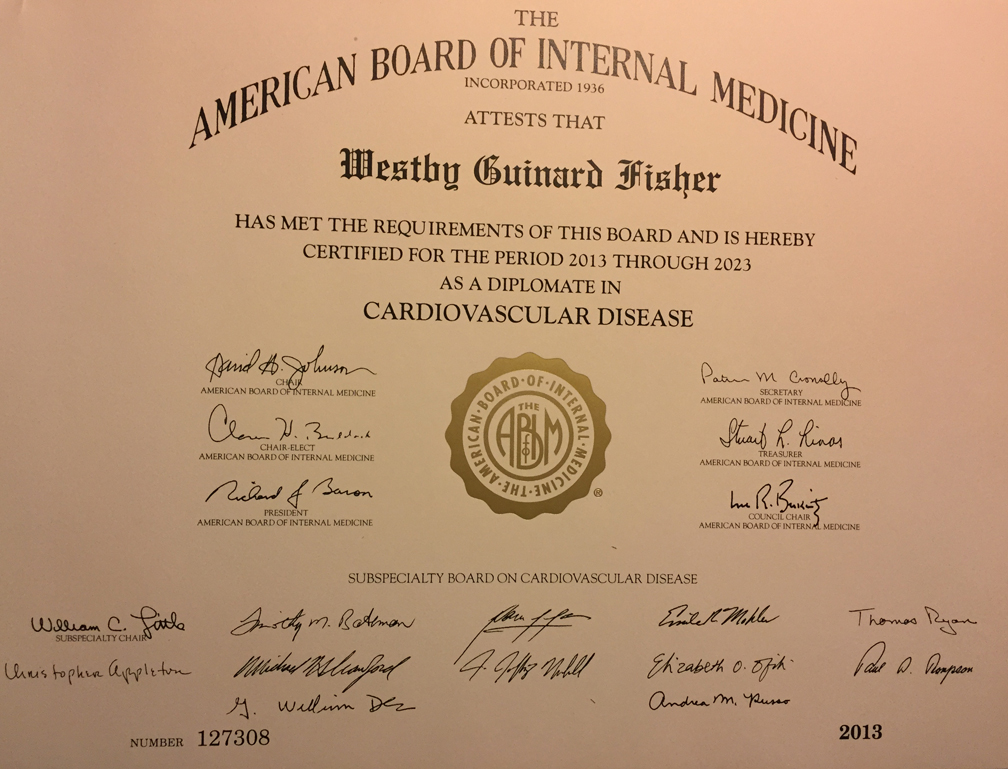
ABIM Cardiovascular Disease Certificate 2013 - Click to enlarge

Note that because the cardiovascular certificate was renewed in 2013, it now was extended from 2013 through 2023.  The cover letter that came with the new Cardiovascular Disease certificate was also notable for the three references its cited as "proof" of the value of these certificates. The three references were (1) Arch Intern Med 2010; 170(16): 1442-9, (2) Arch Intern Med 2009 (sic - Editor's note: actually 2008) 168: 1396-1403 and (3) JAMA 2005 294(4): 473-81.

Reference (1) concludes that "Publically available characteristics of individual physicians are poor proxies for performance on clinical quality measures." Reference (3) is a cross-sectional retrospective analysis of data on US physician respondents to the 2000-2001 Community Tracking Study linked to Medicare beneficiaries they treated in 2001 that only generated the hypothesis that "profiling practices may help develop tailored interventions that can be directed to sites where the opportunities for quality improvement are greatest."

But the worst reference was Reference (2).  This reference is notable in part because of the glaring and inexcusable conflict of interests of every author on the manuscript. Each author was either a paid member of ABIM or an employee of Qualidigm of Middletown, CT, a data analytics firm that does the following according to its website:
Collecting relevant data, turning that data into information, and that information into action, drives almost every Qualidigm initiative and contract.

Qualidigm analysts have the qualitative and quantitative knowledge, skills and experience to provide a wide range of services including but not limited to:

  • the analysis of claims data from a single source or aggregating claims data from multiple sources;
  • the collection, integration and analysis of claims data, administrative data and medical records data;
  • the geographic analysis of various types of databases, e.g., claims, medical records;
So it appears that Qualidigm's authors (and the purpose of these certificates and entire MOC program) was manufactured not only for the money it creates for these boards, but for insurance company claim denials.

Because my Cardiac Electrophysiology certificate expired in 2014, doctors should be aware of the changes that have occurred to board certificates.  I recieved this new certificate after passing by secure examination and countless hours collecting survey data, attending board review courses, and reading enough material to put the Encyclopedia Britannica to shame:
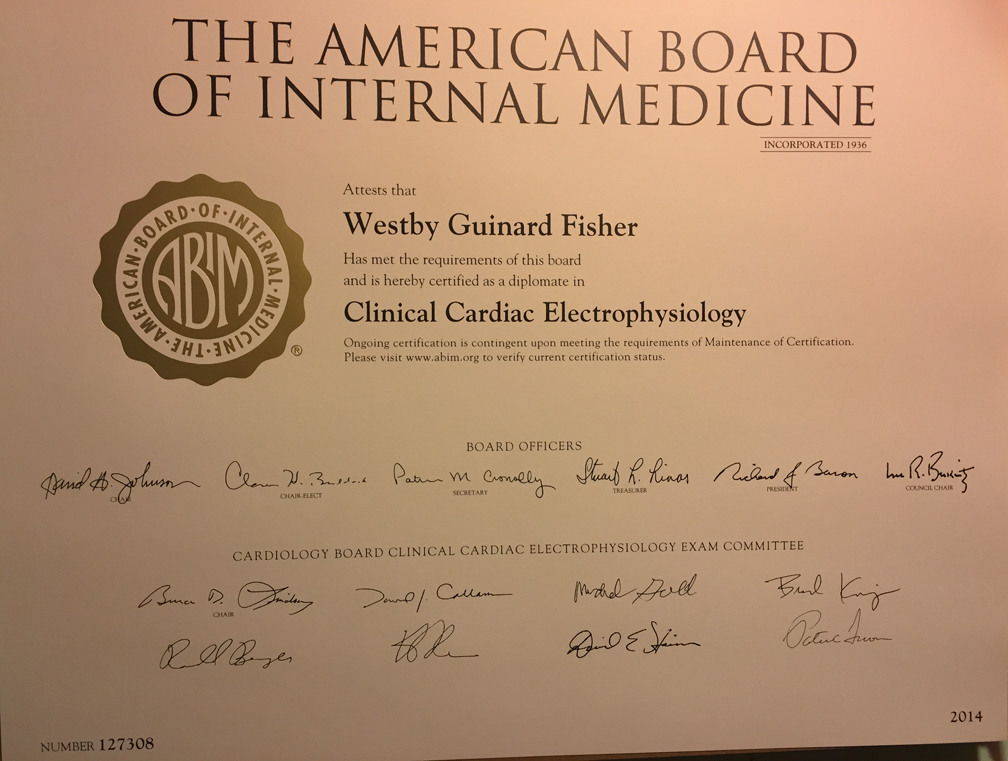
ABIM Clinical Cardiac Electrophysiology Certificate 2014 - Click to enlarge

Note the fine print below the words "Clinical Cardiac Electrophysiology:"
"Ongoing certification is contingent upon meeting the requirements of Maintenance of Certification. Please visit www.abim.org to verify certification status."
In essense the new 2014 (and later) "Maintenance of Certification" certificates are nothing more than very expensive hyperlinks to the ABIM.org website.

Sorry, but I will never recertify and participate in this Ponzi scheme again.

Ever.

-Wes

Friday, March 20, 2015

Heart Rhythm Society and MOC: It's Not About the Doctors

Dr. Fogel
Richard Fogel, MD, President of the Heart Rhythm Society (HRS), finally released HRS's current stance in the debate on the American Board of Medical Specialties' (ABMS) Maintenance of Certification (MOC) program that has pitted one quarter of US practicing physicians against the American Board of Internal Medicine (ABIM) and its Foundation.  As a member of the Heart Rhythm Society, I sent Dr. Fogel links to my work on the ABIM in a relatively lengthy email some time ago.  As a result, I am sure Dr. Fogel is fully aware of the financial dealings that have transpired with the ABIM and its Foundation prior to writing his press release.

From Dr. Fogel's announcement, it appears the Heart Rhythm Society is carefully choosing its words so as not to seem too adversarial to the ABIM by recommending (1) the removal of the requirement of being dual-MOC certified in BOTH cardiology and cardiac electrophysiology, (2) permanently ridding electrophysiologists of having to perform the busy-work of "practice improvement modules" and (3) "continuing the discussion" at a later time.

While Dr. Fogel's statement is pleasant and forthright, those are not exactly fighting words.

Dr. Fogel also announced a "debate" on MOC that will take place at the Heart Rhythm Society Scientific Sessions being held in Boston in May of this year.  It will be moderated by Mike Gold, MD with Doug Zipes, MD as the pro-MOC advocate and Fred Kusumoto, MD taking the contrary argument. I'm sure the session will be well-attended and, who knows, maybe a few carefully-selected questions will be hand-picked from the audience!  But will the "debate" do anything?  No.

MOC Debaters?
Step back and consider this upcoming HRS "debate" for a moment.  Note how one doctor is being pitted against another doctor as though there is a debate between doctors on the value of MOC to our patients. The whole scenario is like physician puppets on a string having their message crafted by some ABMS/ABIM puppeteer! Is there really a debate that our physician testing fees should be used to purchase $2.3 million condominiums with a chauffeur-driven BMW 7-series town car? Is there really a debate that it's okay for an organization to fail physicians based on an unproven metric after 30 years of clinical practice? Is there really a debate that the evidence base substantiating MOC was written in large part by ABIM members themselves?  Given the overall negative sentiment of the majority of electrophysiologists, to pretend there is a 50-50 split in opinion on the subject of MOC is silly.  Nothing could be further from the truth. In fact, I'm not sure I've ever seen such consensus by the entire practicing U.S. physician community about the detrimental effects of MOC to our profession no matter what subspecialty or what side of the political divide they hail.  There simply is no debate: MOC is a mess.

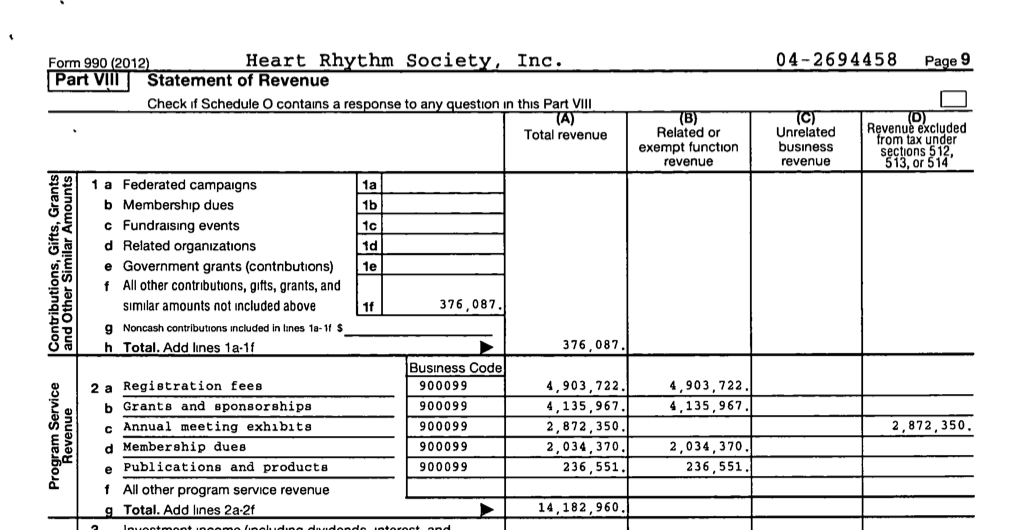
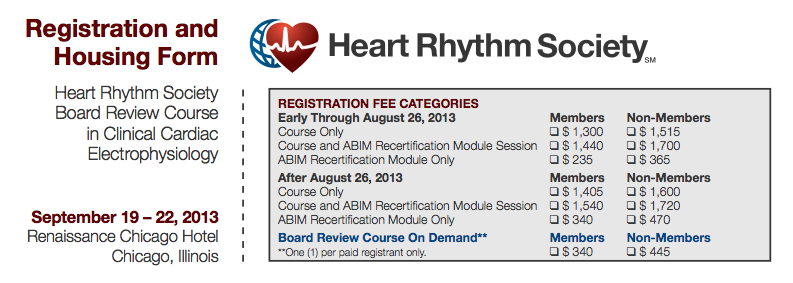
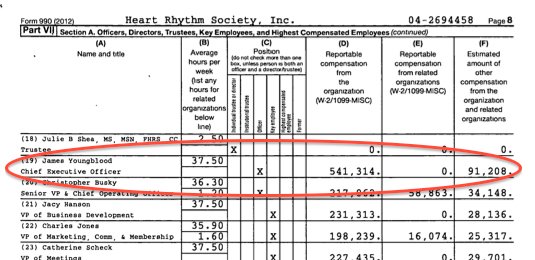
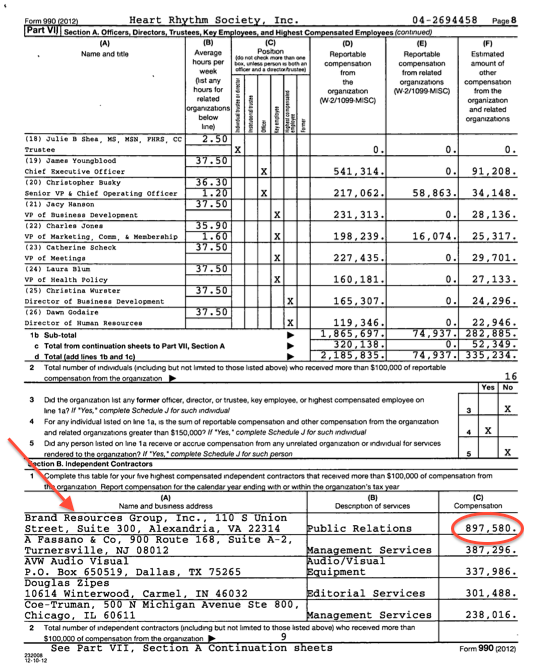
Maybe the real debate at this year's Heart Rhythm Society meeting should be about the $4.9 million in registration fees the organization collects from its members each year for MOC review courses so they can pay their non-physician CEO's salary of $632,522 and Bill Clinton's public relations firm $897,580 to show up at the 2013 Heart Rhythm Society Scientific Sessions in Denver, Colorado.

Please note that the ABIM still has not publicly posted their 2014 Form 990 (due Feb 17, 2015). It is clear they want to wait as long as possible to do so.  But even with an extension, the form must be filed by May 15, 2015, the day before the 2015 HRS Scientific Sessions end. It's very hard to have a "debate" on MOC when all the facts on the finances of the ABIM remain cloaked in secrecy, too.

Physicians should remember that just because the 0.5% incentive payment from Medicare to physicians who participated in the MOC ended 1 Jan 2014, it doesn't mean the coercive practice has gone away. Through their many political supporters, the ABMS made sure that MOC remained a component of the Medicare Physician Quality Reporting System (PQRS) as a part of the Center for Medicare and Medicaid Services (CMS) "Physician Compare" initiative.  The majority of US physicians are now employed by hospitals eager to compete for a growing number of newly-insured patients. As such, hospitals are increasingly requiring physicians to participate in MOC as a condition for gaining credentials in their hospital.  By even pretending to side with any form of MOC, the Heart Rhythm Society tactically agrees that MOC may continue to coerce money from their own physician consumers for the their benefit and that of ABMS's constituents.

Let's be clear: MOC is not a doctor issue, it's a political issue.

It is remarkable that the US government is now the only government in the world that officially requires repeated "re-certification" of physicians for them to practice medicine. Thanks to MOC, it is also the only government in the world that acts as imprimatur to an unproven pay-to-play scheme.

Doctors are done playing this game.  It's time for HRS to stop the faux debating and start aggressively acting on behalf of their membership.

The time to end MOC as a faux physician quality measure - all of it - is now.

-Wes


Sunday, March 15, 2015

Live Video Feeds at Medical Conferences

I woke this morning in a cold sweat as I found myself wrestling with a thought.

Am I Big Brother?

The explosion of social media in our society, and at medical meetings in particular, is changing how our society, and medical professionals in particular, work and interact.  There is potential for tremendous good: social media to market, to promote, to communicate rapidly, to effect change.

But the social media story is not always one of roses.

My talk at the 2015 American College of Cardiology Scientific Sessions referenced a factoid that I am not smart enough to completely verify, but I suspect isn't too far off the mark: that in January of 2014 there were 7,095,476,818 people in the world and 6,572,950,124 (93%) of them had mobile phones.

Think about that.

Everyone has a camera with them.  Everyone at meetings (especially scientific sessions far away from the office) is shooting pictures of abstracts, friends, selfies, drug company displays … whatever - despite a policy to the contrary.

And now, there's even live streaming video on Twitter.  I experimented with one of these yesterday called Meerkat.  (Twitter recently announced a partnership with competing live video feed service called Periscope, so this feature is here to stay).  For $1.99 I downloaded the Meerkat app to my cell phone, linked my Twitter account, and my ability to transform any experience into a live video feed transmitted instantly to the world was complete.  There are some "rules" associated with Meerkat.  Yet even with these rules, I found it disquieting that I held Big Brother's camera in my hand, if only for a few minutes.  Those videos might not be on the "cloud" by policy, but how do I know where else they're stored, or used.

There is a remarkable power, subversiveness, and wonder in the simplicity of this new technology to send live video feeds from a mobile phone.  It is both novel and "cool."  But I still deleted the video that I sent from the ACC meeting yesterday from my iPhone this morning after I thought about things. Perhaps I'm being overly cautious because videos can still be taken at meetings and uploaded to YouTube for the world to share.  But somehow this live feed was different - so instantaneous, so uncontrollable.

And as a doctor, I don't want to become an agent for Big Brother.

-Wes


Friday, March 13, 2015

Scientific Meetings Are Becoming MOC Training Sessions

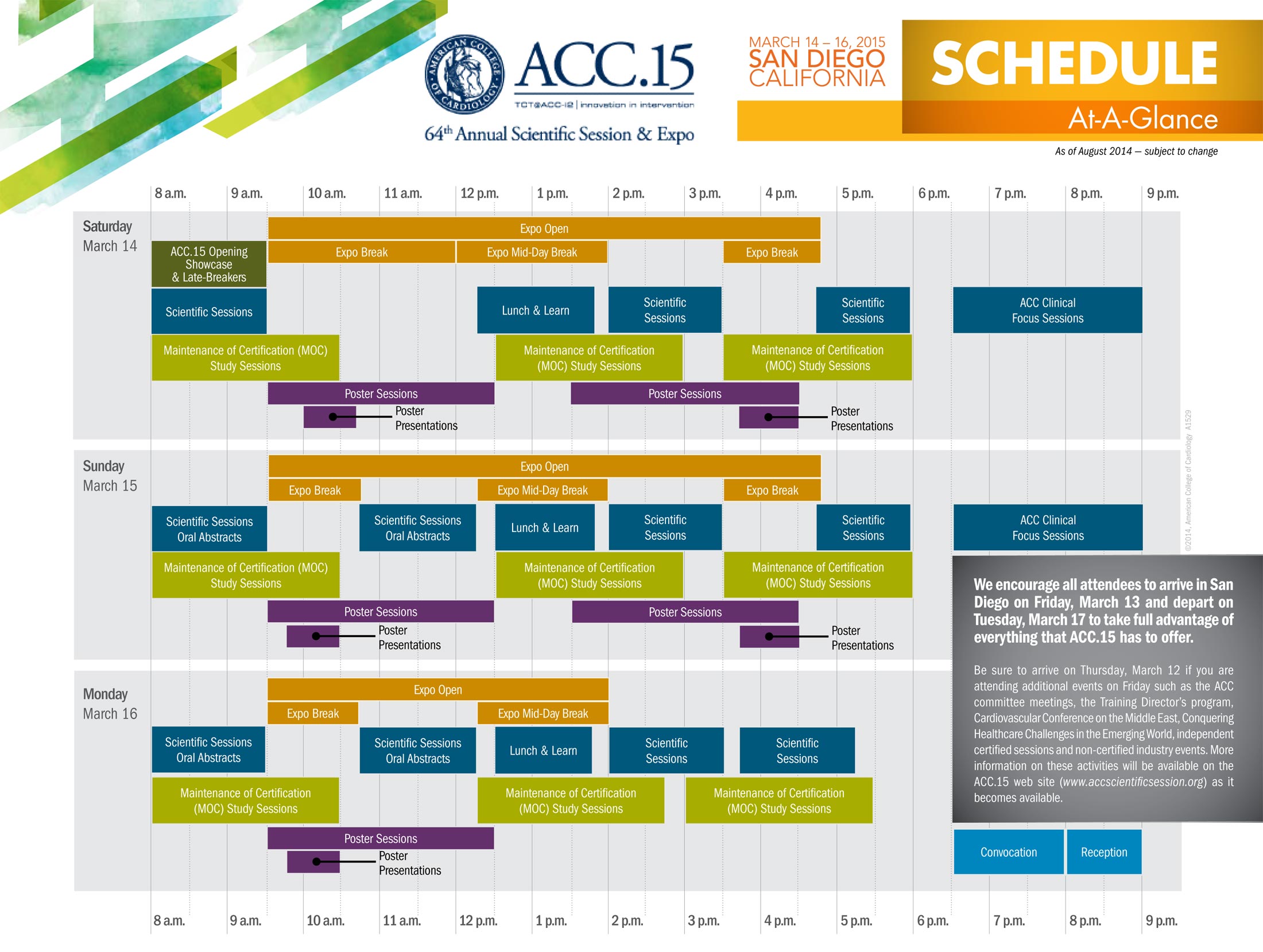
Tomorrow marks the beginning of the 2015 American College of Cardiology (ACC) Scientific Sessions in San Diego, CA.  This morning I was struck by the "Schedule At-a-Glance" sent to registrants participating in these sessions:

ACC.15 Schedule at a Glance - Click to enlarge
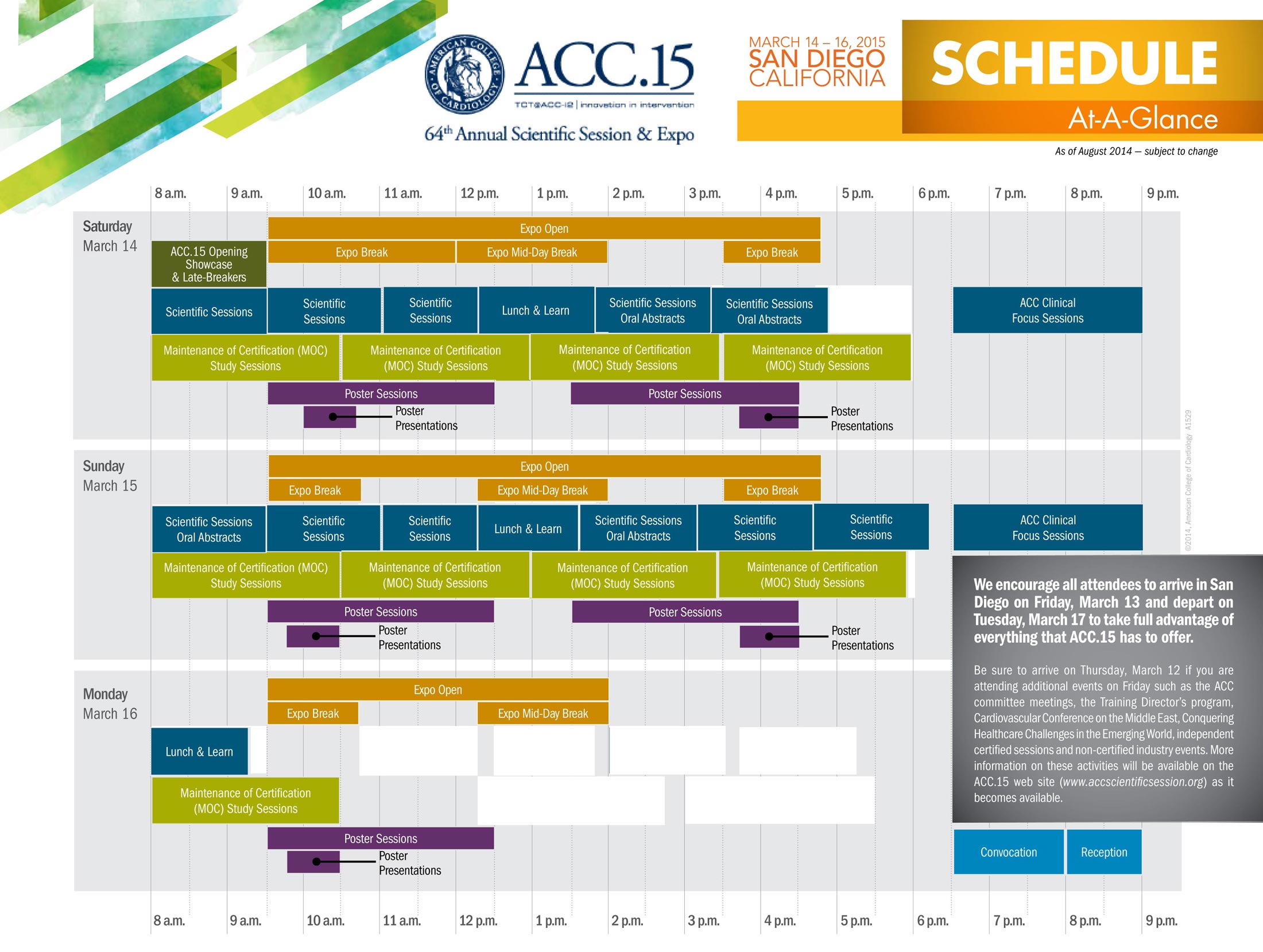
Using Photoshop, I decided to rearrange the schedule in a linear graph format day-by-day instead:

ACC.15 Schedule Rearranged in Graphical Format - Click to enlarge

As we can clearly see, the time devoted to Maintenance of Certification Study Sessions exceeds that of other collegial scientific and learning opportunities.

Does the American College of Cardiology really value the development of physician test-taking skills for the American Board of Medical Specialties Maintenance of Certification® program over the sharing of innovative ideas and scientific content at our largest world-wide cardiology meeting? 

It would appear the largest purpose of our national meetings has changed to quelling the fear and implications of failing the ABMS MOC secure examination.  I wonder what cardiovascular physicians and patients are losing as a result of this coercive and corrupt program being foisted upon us.

-Wes

Tuesday, March 10, 2015

Physician Civil War or Revolution?

Today, Kurt Eichenwald published a report in Newsweek on the American Board of Internal Medicine (ABIM) scandal entitled "The Ugly Civil War in American Medicine." Here's a small exerpt:
Slass says the suggestion that the ABIM is “purposefully failing candidates on their exams to generate more revenue is flat-out wrong.” Maybe so, but according to the Form 990s filed with the Internal Revenue Service, in 2001—just as the earliest round of new-test standard was kicking in, the ABIM brought in $16 million in revenue. Its total compensation for all of its top officers and directors was $1.3 million. The highest paid officer received about $230,000 a year. Two others made about $200,000, and the starting salary below that was less than $150,000. Printing was its largest contractor expense. That was followed by legal fees of $106,000.

Twelve years later? ABIM is showering cash on its top executives—including some officers earning more than $400,000 a year. In the tax period ending June 2013—the latest data available—ABIM brought in $55 million in revenue. Its highest paid officer made more than $800,000 a year from ABIM and related ventures. The total pay for ABIM’s top officers quadrupled. Its largest contractor expense went to the same law firm it was using a decade earlier, but the amounts charged were 20 times more.

And there is another organization called the ABIM Foundation that does...well, it’s not quite clear what it does. Its website reads like a lot of mumbo-jumbo. The Foundation conducts surveys on how “organizational leaders have advanced professionalism among practicing physicians.” And it is very proud of its “Choosing Wisely” program, an initiative “to help providers and patients engage in conversations to reduce overuse of tests and procedures,” with pamphlets, videos and other means.

Doesn’t sound like much, until you crack open the 990s. This organization is loaded. In the tax year ended 2013, it brought in $20 million—not from contributions, not from selling a product, not for providing a service. No, the foundation earned $20 million on the $74 million in assets it holds.

The foundation racked up $5.2 million in expenses, which—other than $245,000 it gave to the ABIM—was divided into two categories: compensation and “other.” Who is getting all this compensation? The very same people who are top earners at the ABIM. Deep in the filings, it says the foundation spends $1.9 million in “program and project expenses,” with no explanation what the programs and projects are.

There are some expenditures, though, that are easy to understand: The foundation spends $153,439 a year on at least one condominium. And it picks up the tab so the spouse of the top-officer can fly along on business trips for free.
Be sure to read the whole thing.

What the American Board of Medical Specialties and their member boards (like the ABIM) don't realize is that America's practicing physicians are sick and tired of funding organizations that serve as little more than job boards for non-practicing physicians looking for their next career.

-Wes

Where Will Social Media Be in Five Years?

Where will social media be in five years? Will it be dead? Will it be thriving? What will it look like?

This was just one question posed to me as a speaker in this topic for the 2015 American College of Cardiology Scientific Sessions in San Diego this upcoming weekend.  Here are some of my thoughts and I'd love to hear what others think (I need CONTENT people!) since I'm really not an expert:
  • The word "social" in "social media" will disappear.
  • The term "rectangle deficiency" (aka, misplaced cellphone) will achieve DSM-V status.
  • True privacy will be the "new black" for medicine (as will actually looking at the patient).
  • Text messaging will overwhelmingly replace paging for day-to-day patient care.
  • Research will increasingly recruit patients via this channel.
  • Credible content on social media will be recognized and even encouraged by academic institutions.
  • US physician attendance at Scientific sessions will further dwindle due to costs while subsidized overseas physician attendance will grow.

  • The Apple iWatch will be so, well, yesterday...

Am I smoking something or making sense?

Your thoughts?

-Wes

Sunday, March 08, 2015

Medscape Issues a Non-Private Privacy Update

With physicians increasingly turning to news aggregators to keep up with medical news and developments, physicians' eyes have become Big Business.

So has sharing their information.

Medscape (a division of WebMD) recently sent all of its registered users an update of their "privacy" policy (By the way, check to see if a "cookie" considers you already "logged on" when you view this policy webpage).

Here's my summary take:

Nothing physicians do with Medscape/theHeart.org/WebMD websites is private and, in fact, our data (including license information) is being shared with just about anyone willing to pay for the data.

Medscape, ironically the same institution charged with managing continuing medical education for the Health and Human Services HIPAA policy, wants to collect physician license information from "third parties," track what doctors are viewing and interacting with on their website, then share this data to anyone willing to pay them a pretty penny.  In fact, we should take special notice of the section entitled "Disclosure of Your Information to Third Parties."

I was particularly interested in the the Companies and People Who Work For Us subsection:
In addition, if you are a healthcare professional, we may request that a third party validate your licensure status and other information against available databases of healthcare professionals. In order to provide these services, we may provide these other companies with Personal Information we maintain about users of our Services. We require that all such companies agree that they will limit their use of your Personal Information to fulfilling their responsibilities to us. (Emphasis mine)
Such a friendly two-way give and take of our information! (Remember that practice information you were recently asked to supply to the American Board of Internal Medicine?)

Privacy?  What privacy? 

-Wes

h/t Mr. Larry Husten

Tuesday, March 03, 2015

Why the IRS Should Investigate the ABIM and Its Foundation

This morning, I woke to this remarkable comment to Dr. Robert Centor from Charles Koo, MD on Dr. Centor's blog, Medical Rants.  I republish it here for all to read for it precisely and professionally articulates what many of us have been trying to say to the public about the corrosive nature of the ABIM scandal that has erupted over the ABMS Maintenance of Certification program:
Dr. Centor,

In an email to me regarding the ABIM and the ABIM Foundation financial behavior, Dr. Baron stated in the email that the ABIM has never had any inappropriate financial behavior.  (I can send you the email from Rich Baron if you would like to read it yourself) 

Is that so?  

Myself and folks like Dr. Fisher, Dr. Cutler and legions of other hard working clinicians take great issue with a group of aloof administrator physicians spending vast amounts of money on themselves via Mercedes Limo Service, Condos, and "retreats" to the Four Seasons.  Is it appropriate to pool the fees from graduating housestaff and hard working clinicians so they can reward themselves with nauseatingly gaudy creature comforts?  

How can an organization designed and run by non-clinicians tell the rest of us to "Choose Wisely" and to embrace cost efficiency/austerity while making themselves multi-millionaires off the sweat equity of the everyday clinician and graduating house staff?  Would you trust such an organization?  

Dr. Fisher's point is very, very well taken.  More so since the ABIM and the ABIM Foundation are both registered "non-profit" organizations.  In essence, the American Taxpayer is subsidizing their operational status and their capital budget when in fact the ABIM is totally, hugely, and utterly profitable.  That hypocrisy has never been fully addressed by Dr. Baron or any other ABIM representative.
 
Can you trust an clinical regulatory organization that is utterly devoid of any contemporary clinicians?  Dr. Cutler pointed out that Dr. Zeke Emanuel is "not certified" by the ABIM continues to be "not certified" and yet remains as a leader for ABIM Assessment 2020.  According to the 2012 Medicare database, Dr. Krumholz has no patient E/M contacts and read a handful of echos.  Yet he is another leader of ABIM Assessment 2020.  

Isn't the lack of inclusion of active, high volume clinicians into the structure of the ABIM and the ABIM Foundation patently wrong?  And yet you trust and "hope" this clubby cadre of "ethical" non-clinical physicians will magically do the right thing when it is clear they been doing it wrong for almost a decade.  The irony of this oxymoronic situation is troubling and sickening.

Even more ironic and more sickening is the ABIM's driving point- that their mission is somehow a product of pure altruism and promoting honesty and integrity to its Diplomates.  If that were to be true, the ABIM leaders should immediately vow to take an oath of fiscal modesty and financial mediocrity.  

Do you think the ABIM leaders would ever take a significant pay cut and promise never to abuse the money from an impoverished senior resident on Mercedes limo service?  When you look at your residents at Morning Report, can you honestly and whole heartedly tell all these young folks that your friends at the ABIM are doing them right?

Do you think the ABIM has the courage to set aside their own financial interests and to show leadership when they are apt to state their financial misbehavior were inherited?  How cowardly is the ABIM to place all the blame on Christine Cassel?

Would you have to courage to ask the ABIM and the ABIM Foundation to take such an oath of modesty and fiscal/financial mediocrity? Or is your sense of cronyism clouding your judgment?

In the end, we have a growing schism between those who are placing their bets on a sclerotic ABIM whose leadership has failed its Diplomates and those who welcome change, competition and Darwinian evolutionary forces in Medicine.  The loss of trust and faith in the ABIM cannot be ignored by their leaders and the proof in the pudding will be when the Diplomates who are sick and tired of the ABIM selling them out will defund this organization and turn to more responsible organizations willing to document their lifelong learning without pricing in a condo, a limo, a retreat to the Four Season, and massive salaries for themselves.

At low tide, everyone will find out who is swimming naked.
It's time the IRS takes notice.

-Wes
Sunday, March 01, 2015

New York Times Shamefully Panders to Aetna's Management Style

In this morning's New York Times, David Gelles, writes a gushing piece on how Aetna is using meditation and mindfulness to "reshape his company's future."

Much of the article idealizes the management approach of Aetna's 58 year-old CEO, Mark T. Bertolini, and tugs at the heart strings of America by focusing on his near-death experience after an unfortunate ski accident he suffered in 2004.  The crux of the article focused on how Mr. Bertolini became "enamored with yoga's intellectual and cultural history," and how "Mr. Bertolini found that difficult thoughts and emotions became easier to manage" with mindfulness techniques.  He later expanded these practices to the rest of his employees on a voluntary basis, using metrics of heart rate variability and cortisol level measurement ("common measures of anxiety") to assess the efficacy of his programs to his company's bottom line.  Most remarkable, Mr. Gelles implies that "productivity gains" and cost savings were attributed, in part, to his practices.  In fact, if it weren't for these practices, we are told, he might "not have been inspired to act on his impulse" to raise their lowest paid employees salaries from $12 an hour to $16 dollars an hour as the "latest phase of Mr. Bertolini's grand experiment."

It is remarkable that any reporter, much less one from the New York Times, would attribute Aetna's windfall to mindfulness and meditation practices without even mentioning the impact that our new health care law and its higher premiums and co-pays has had to Aetna's bottom line. It doesn't take much digging to find in Aetna's own 2014 Investor Conference data that health care premiums have increased four times faster than inflation, employee costs are rising 50% faster than employer costs, and average deductibles to patients have increased over 50% in the past five years.  Nor did Mr. Gelles even deem it important to mention that Mr. Bertolini made over $30 million dollars in compensation and benefits in just one year (2013) on the backs of Aetna's own customers as well.

There his a mindfulness practice called "Mettā" where practitioners chant "May I be healthy. May I be happy. May I be well. May I be free from harm." Maybe Aetna and Mr. Gelles should practice a little "Mettā" on behalf of Aetna's customers rather than just for Aetna's bottom line.

-Wes


Friday, February 27, 2015

On the Important Issue of Physician Trust

After a brief foray into the uncomfortable position of being publicly humiliated, the American Board of Internal Medicine is now telling is they have begun a "transformation" of their Maintenance of Certification program.  They said they got "it" wrong. But instead of understanding "it," they want practicing physician to forget "it" and, instead, refocus our efforts to redefine "it."

To begin that process, they are publishing seemingly heartfelt missives claiming they've been "thinking a lot ... about the values that we physicians share." Even after squandering any semblance of trust by their inexcusable financial behaviors, they pretend to understand how practicing physicians feel and claim "we are united in our passion to do right by our patients and our commitment to lifelong learning." This is a straw dog.  They have taken accountability for the most trivial component of what they did to the practicing physician community - as if they hired damage-control consultants.  Instead of coming clean, we now see they have begun a campaign to groom vulnerable physicians into believing their storyline so their largess can continue unabated.

For who is more vulnerable than a junior practicing US physicians saddled with huge educational debt?  Who is more vulnerable than the junior physician trying to find a job as an employee in a large health care system hell bent on cutting costs?  Who is more vulnerable than the majority of physicians who have lost their independent practices and now are placed in the ethically impossible position of serving two masters: their patients or their employers that insist they do more with less? Like a perpetrator trying to identify areas of psychological weakness in the vulnerable practicing physicians, they continue to attempt to position themselves as our savior, rescuer, and someone who holds us in the highest regard.

Trust between physicians is critically important.  We rely on our colleagues in matters of life and death every day.  Actively practicing physicians cannot tolerate faux trust or press-release trust. But the members of the ABIM wouldn't know about that.  They sit on their insulated perches forcing their colleagues to pay into their flawed system first every ten years and now every two.  They have assembled a rich war chest of cash assembled on the backs of their practicing colleagues and then proceed to self-select their finest sycophants to join their merry band of highly-paid regulators.  And remarkably, we now find that their unproven pay-to-play scheme uses the federal government as imprimatur.

But we should understand that this loss of trust goes much further.  Every professional organization that sides with the ABIM in support of the MOC program is also violating their own membership's trust of collegiality, professionalism, and support.  Nowhere was there a better example of the pathologic nature of the siding with the ABIM than that demonstrated by a recent letter from the American College of Physician's Executive Vice President and CEO, Steven Weinberger, MD, to their membership in response to the ABIM's "We Got It Wrong" admission.  Almost unbelievably, rather than acknowledging the realities of the ABIM's actions, Weinberger's letter openly threatens their membership with veiled threats of potential consequences of non-complicance with the ABIM MOC program if they choose an alternate certification pathway:
As many of you know, there has been a movement by some physicians to establish a pathway for “certification” that is independent of either ABIM or the American Board of Medical Specialties (ABMS, the umbrella organization over all specialty boards, including ABIM). We have been asked by a number of our members about “alternative pathways,” and I wanted to outline a series of questions that anyone must consider when assessing alternative options: Will an alternative pathway be credible to substitute as a credentialing requirement for hospitals and health plans? (For example, a requirement of 50 hours of CME credit over 2 years is a very low bar, in fact representing only half of the CME requirement for medical licensure in most states.)


  • If you are named in a medical liability lawsuit, how will it appear when it is noted that you have not recertified through ABIM but have instead tried to show that you are “certified” through a process that has not been widely accepted and whose requirements are minimal?

  • If you have a time-limited certificate from ABIM, are you willing to forfeit that primary certification in internal medicine and/or a subspecialty of internal medicine when that certificate expires? Recognize that, after your current certificate expires, not participating in ABIM’s MOC program means more than just being listed as “not participating in MOC.” It means that you are no longer certified, i.e. your initial certification is no longer valid.

  • Is the fee for an alternative pathway reasonable considering both what you are getting as well as the expenses of the group that has developed the alternative pathway? For example, a fee of $169 every 2 years is almost half of the ABIM’s internal medicine MOC fee, but the alternative organization has no program or product development costs, as all it is doing is sending an electronic certificate (there is an additional charge for a paper certificate).
(Update 2/27/2015 @ 12:07 PM CST: See the NBPAS.org's response to the ACP)

And as if this were not bad enough, the ABIM Foundation continues to use Christine Cassel, MD, former President and CEO of the ABIM, as their spokesperson on matters of waste in our health care system in their highly-produced videos to the public when they themselves have squandered millions.

The ABIM Foundation never mentions they used coerced physician testing fees to fund their Choosing Wisely Campaign and to purchase lavish condominiums for themselves.  They never disclose (and have no future plans to disclose) their many years of conflicts of interests with consulting groups, think tanks, hospital groups and little sweetheart government agency grants (kickbacks?) with practicing physicians or the public. They see no problem squandering $3.3 million dollars of physician testing fees on a contrived promise of psychometric testing techniques to add value their system. They see no problem collecting and circulating practice and meaningless survey data to their many corporate affiliates. And worst of all, they have no plans to examine their sister organization's practice of failing as many as 22% of their test takers without ever evaluating the impact of their actions on a physician's ability to practice or the impact such an action has on the doctors' patients.

The ABIM and their professional society supporters have irrevocably lost the trust of America's practicing physician community.  They can't just "groom" this away hoping for its preservation or offer threats in the MOC program's defense.  What's done is done.

The question now becomes, can they and their many supporters ever earn it back?

-Wes
Related: (registration required) "Physicians are Outraged Despite ABIM Apology for MOC Mess" Medscape - Note: 237 528 comments and growing.

Tuesday, February 24, 2015

Why the ABIM Foundation Wants Us to Ignore 1997

Why would the American Board of Internal Medicine (ABIM) leadership want the world to believe that their own ABIM Foundation was created in 1999?  Might it have been because they didn't want to reveal their past?

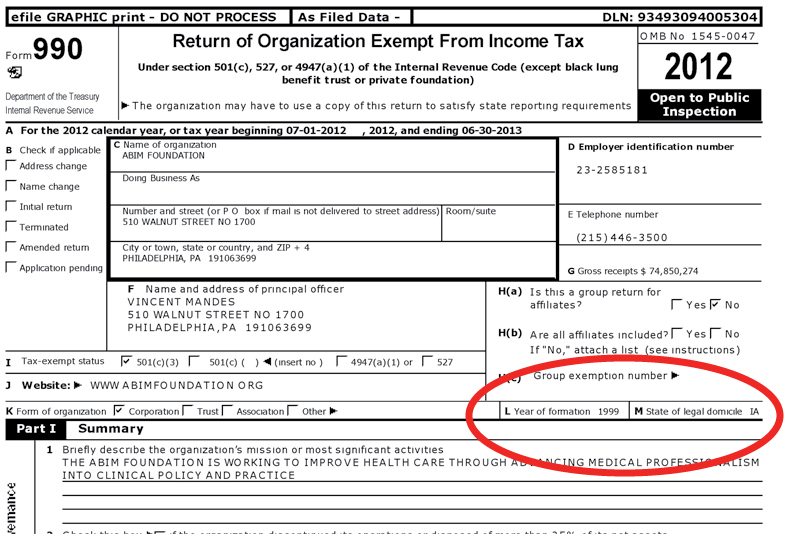
Based on public record, it appears they have repeatedly misrepresented the date and location of origin of the ABIM Foundation on Internal Revenue Service Form 990 tax forms since at least fiscal year 2009 and did so to shelter multimillion-dollar write-offs for their investment portfolio on the backs of physician testing fees.

Recall that both recent ABIM Foundation's Form 990's and their website have claimed that the ABIM Foundation was domiciled in Iowa and established in 1999.  Recall also, that in my prior research on the ABIM and their Foundation that I asked the current President and CEO, Richard Baron, MD, to explain the discrepancy between the tax form filing information and public record that claims the Foundation was created on 10/17/1989 in Pennsylvania, yet I received no clear explanation for the discrepancy.

This date of origination of the ABIM Foundation is important, because if it was created in 1989, the origin of the Foundation would precede 1990, the first year that medical board certification was changed from a life-long designation to a 10-year time-limited status by the American Board of Internal Medicine.

The ABIM Foundation and the Institute for Clinical Evaluation

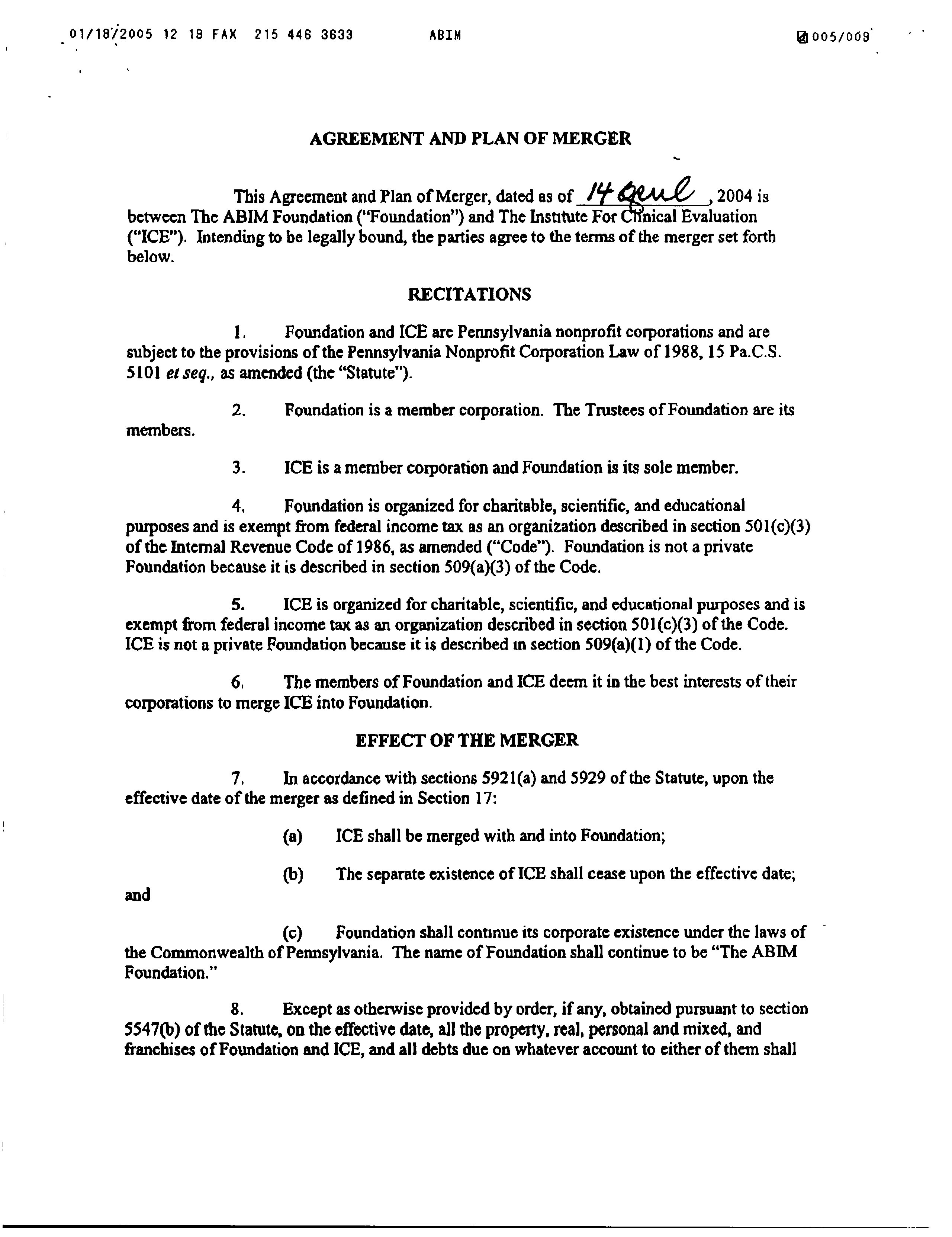
Careful review of the ABIM Foundation's fiscal year 2004 tax forms shows the ABIM Foundation and a separate little-known 501(c)(3) organization, the Institute for Clinical Evaluation (ICE), merged.  It appears ICE was created in Pennsylvania in 8/25/1997 by the ABIM Foundation "to assess the usefulness of proficiency testing to the profession."

Harry R. Kimball, MACP, the former President of ABIM, was interviewed by Jennifer Wilson of the ACP Internist in 1997, and was quoted as saying:
"Several months ago, the ABIM decided to create, through its Foundation, an independent non-profit organization called the Institute for Clinical Evaluation (ICE), which will assess the usefulness of proficiency testing to the profession.

In this context, ICE has the potential to positively influence the development of these standards. At the same time, we can be sure they are compatible with broad-based certification and recertification programs. The Board thinks that ICE can develop collaborative arrangements with professional societies to bundle education and evaluation into a single process. This process would be educationally efficient, credible to patients and acceptable to agencies and institutions responsible for the health and safety of the public.

For the recertification program, the Board is developing a series of practice-assessment modules that allow diplomates to assess their preventive practices, receive feedback from patients and their colleagues about the quality of their professional services and assess the effectiveness efficiency of their clinical practice. The first of these modules is on clinical prevention and will become available this month."
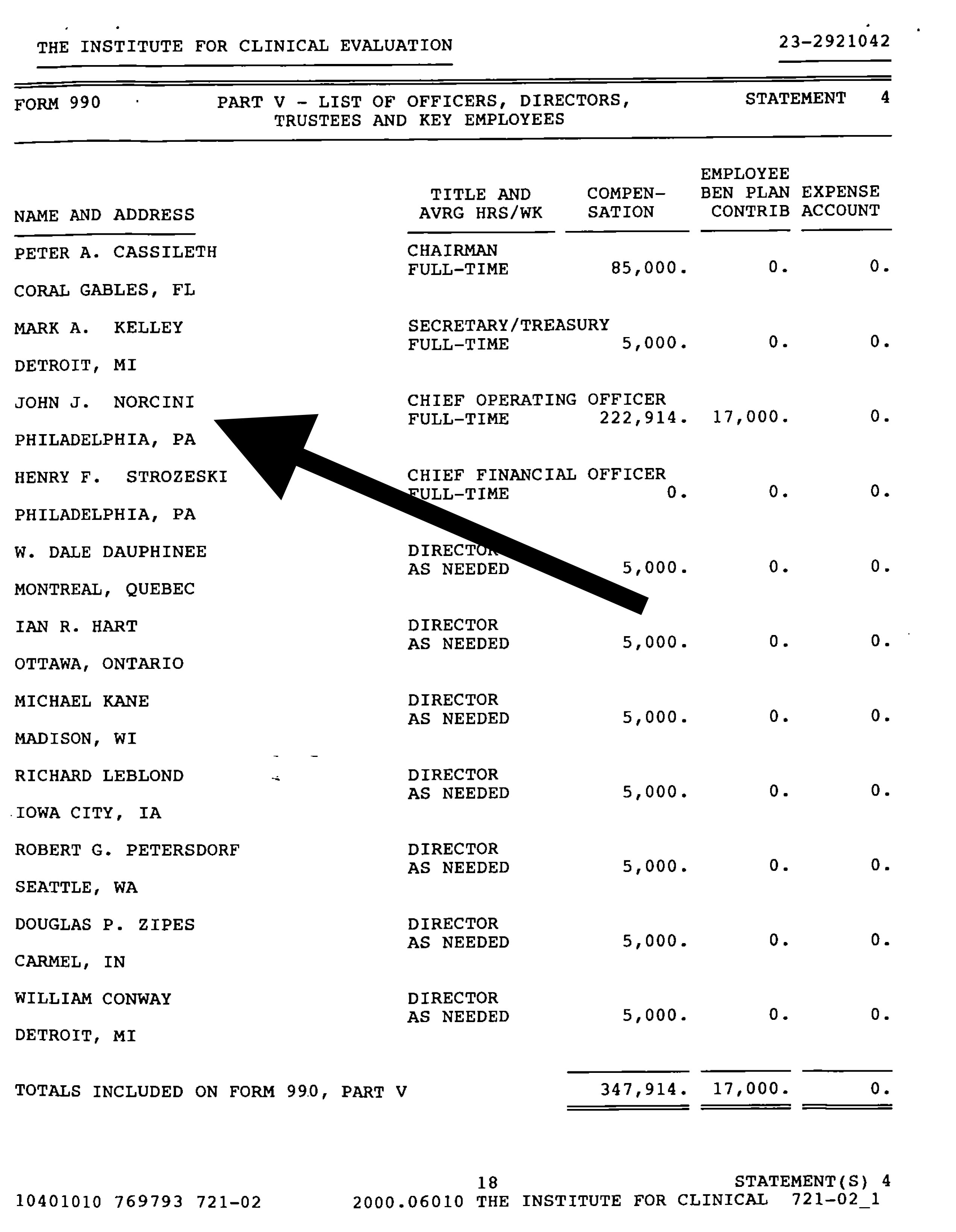
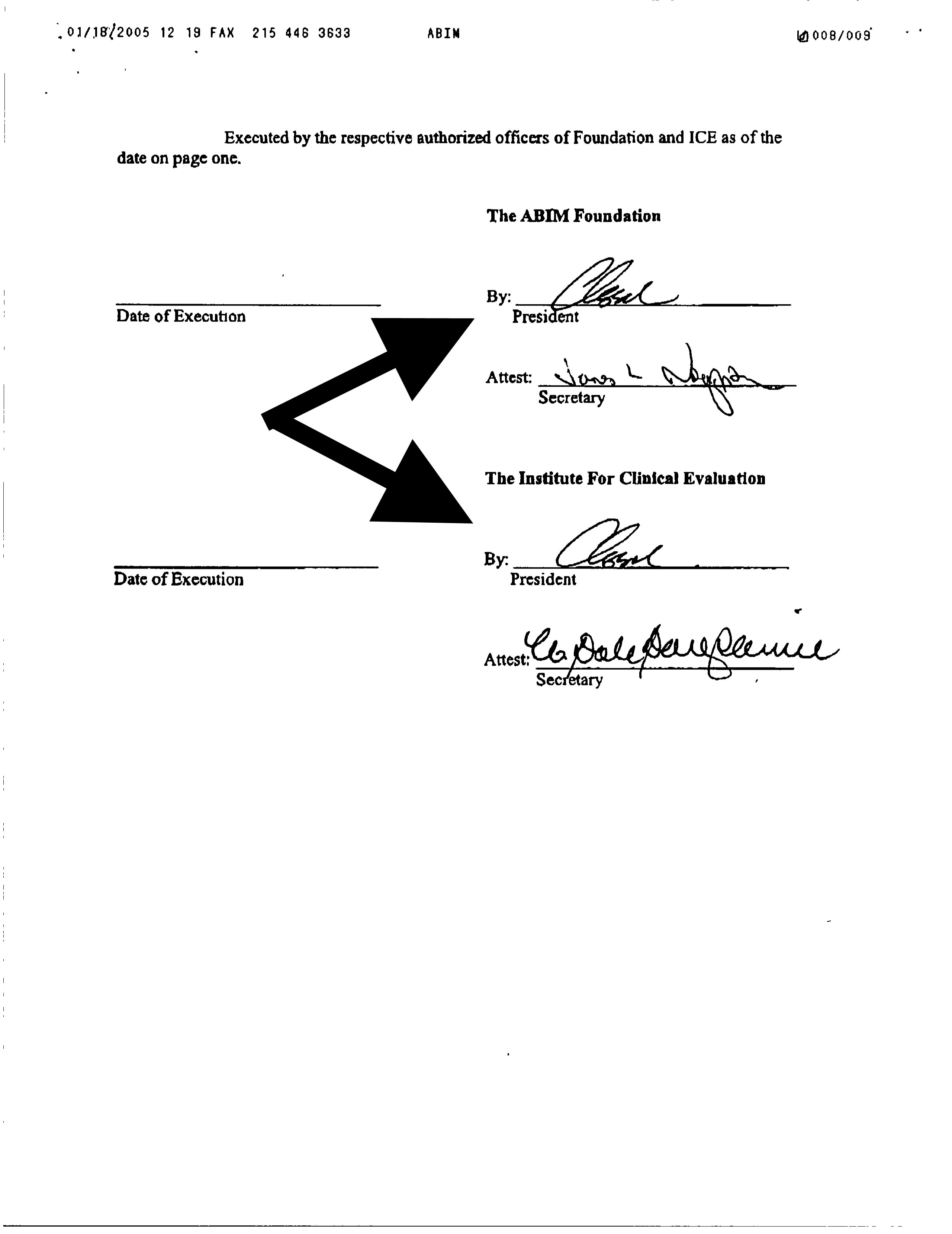
But when that organization could not prove such usefulness and spent funds like a drunken sailor to support its non-physician Chief Operating Officer, John J. Norcini, PhD, it appeared the leadership of both organizations later deemed it "in the best interests of their corporations to merge ICE into Foundation."  Christine Cassel, MD signed the "Agreement and Plan of Merger" as President of both organizations.

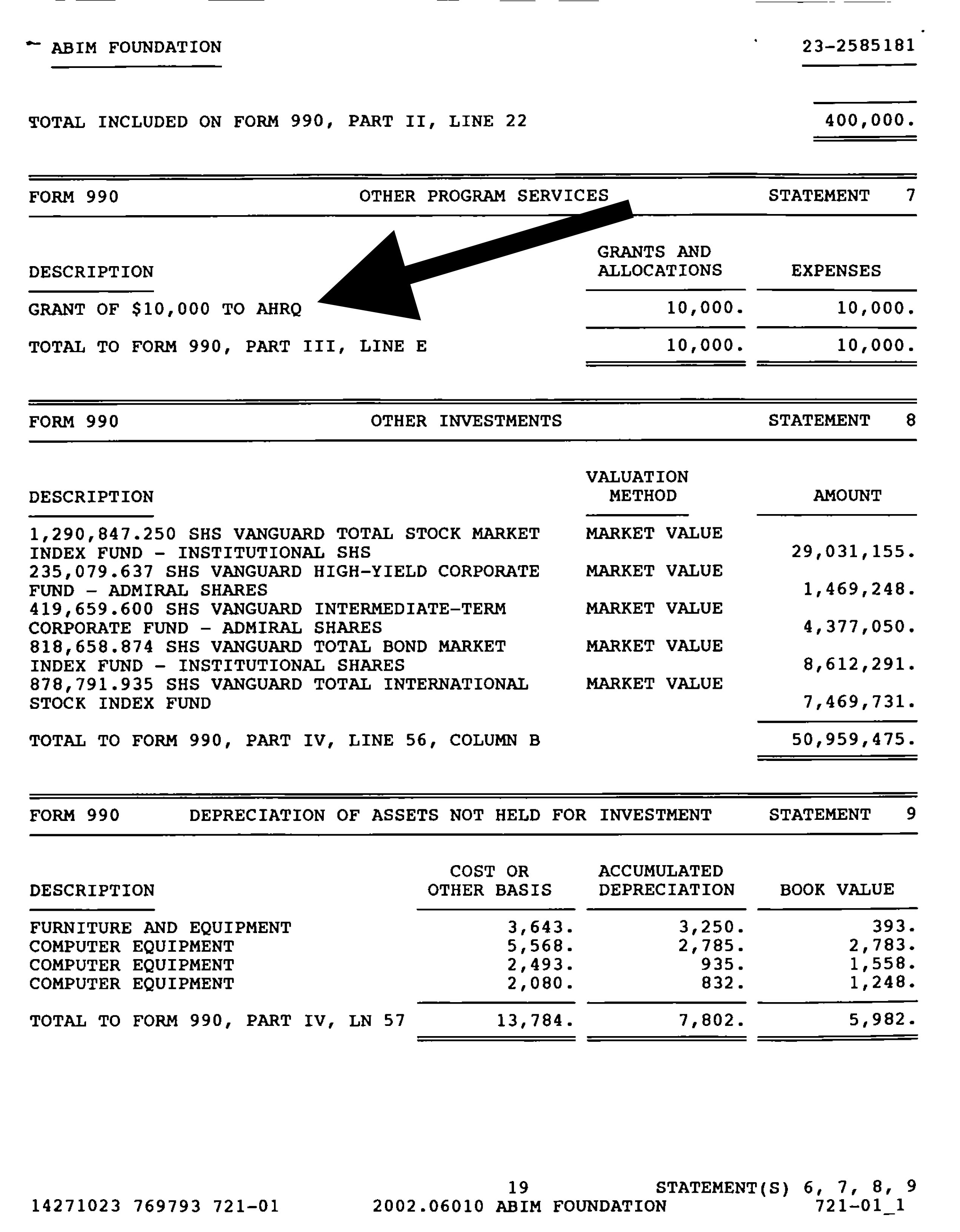
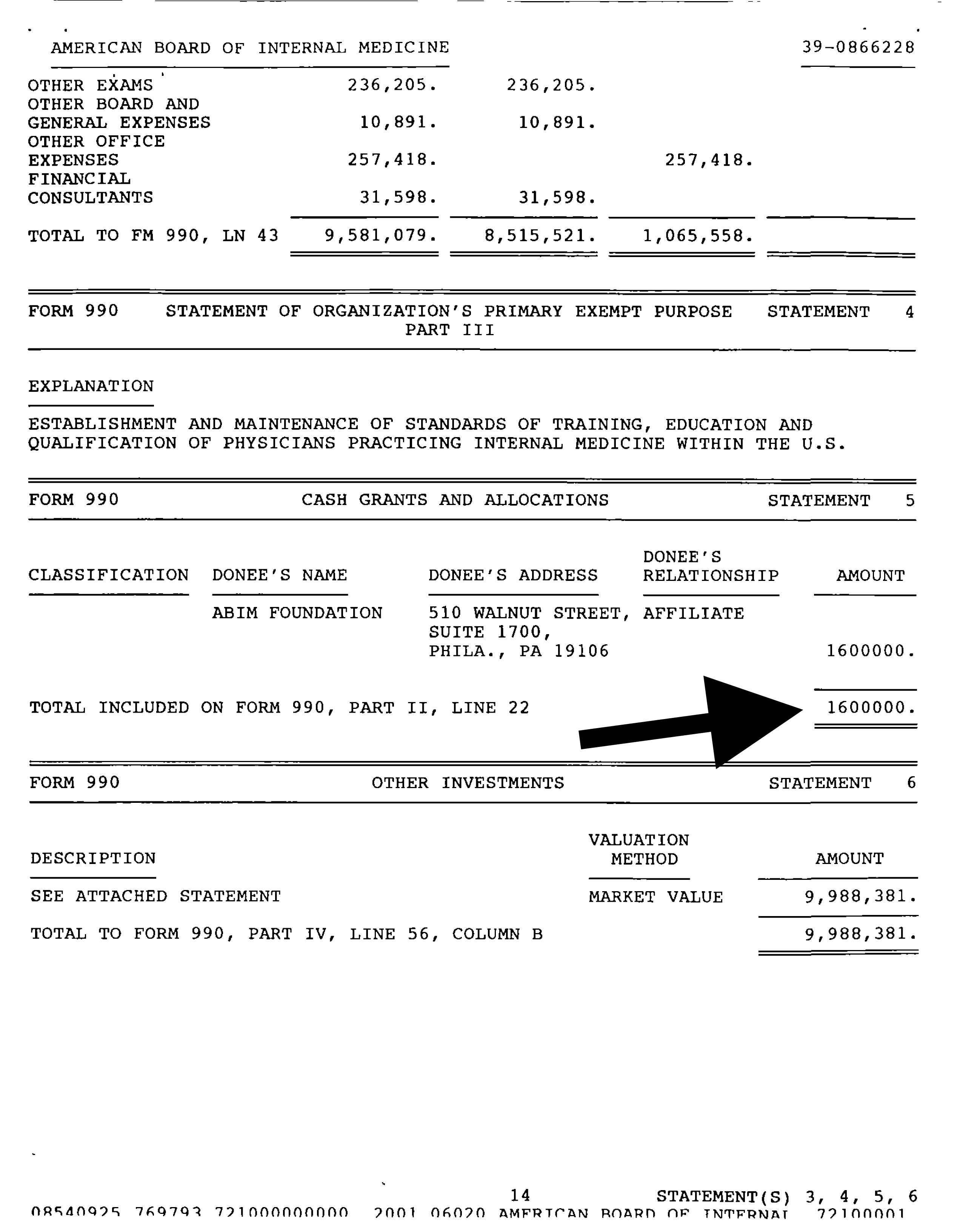
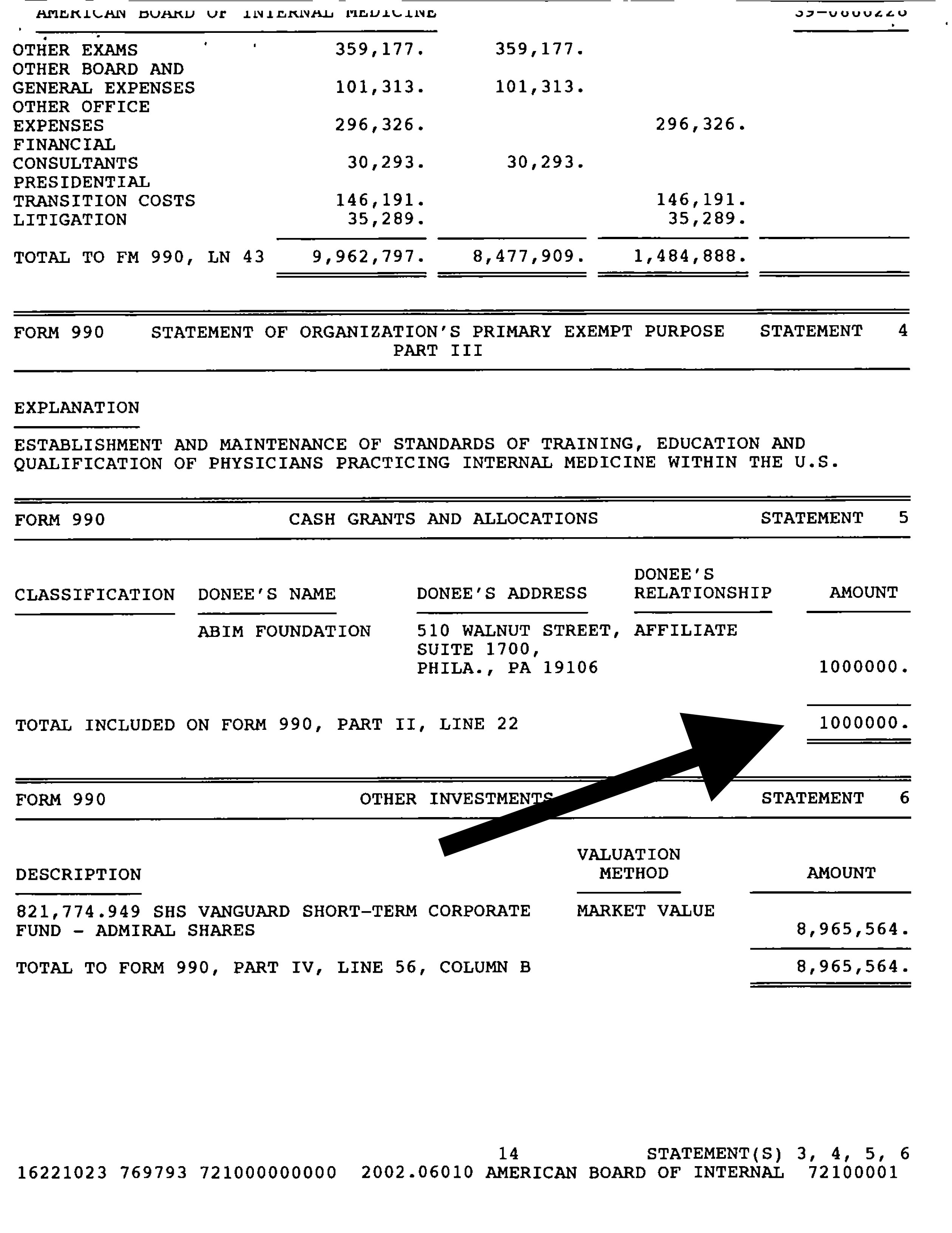
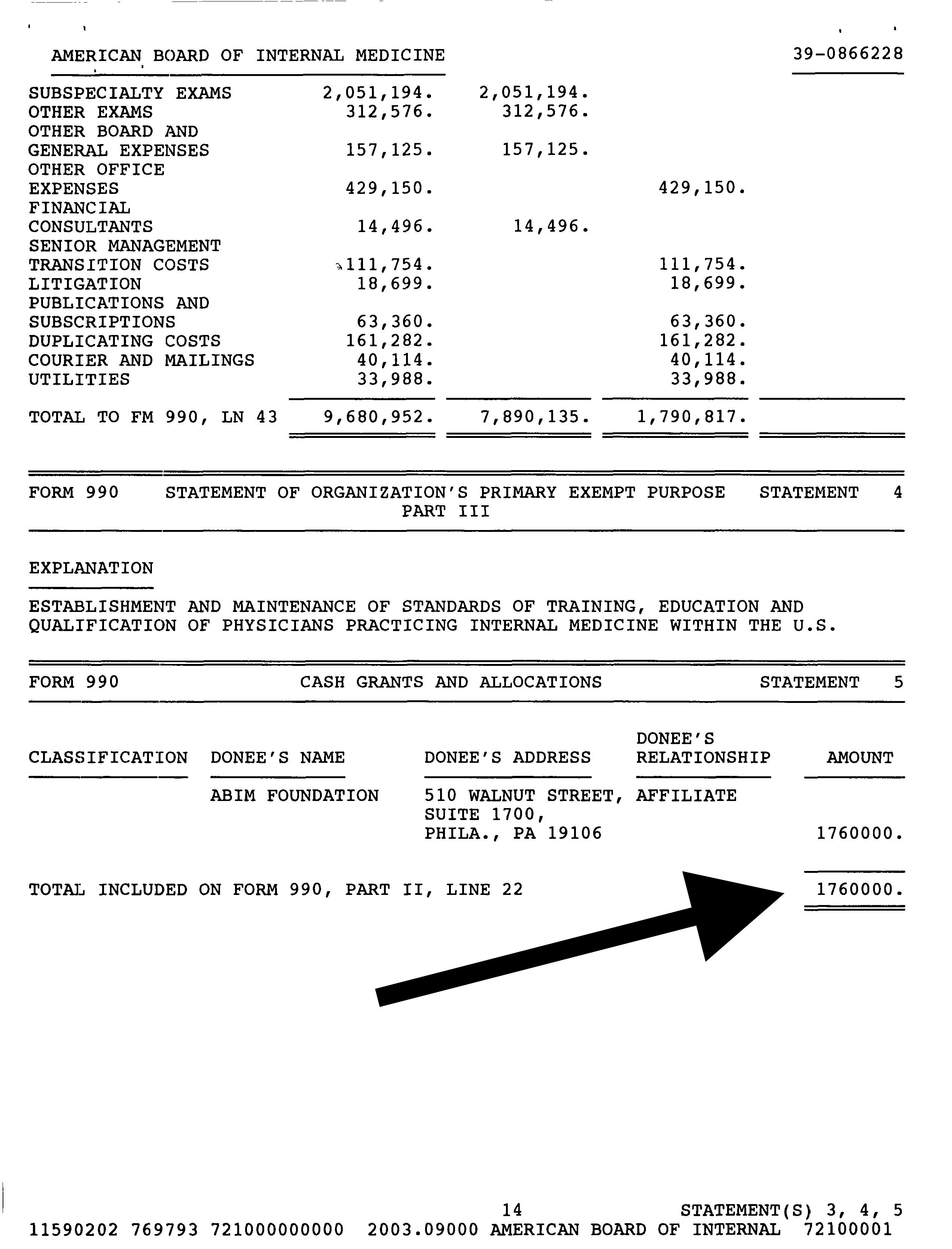
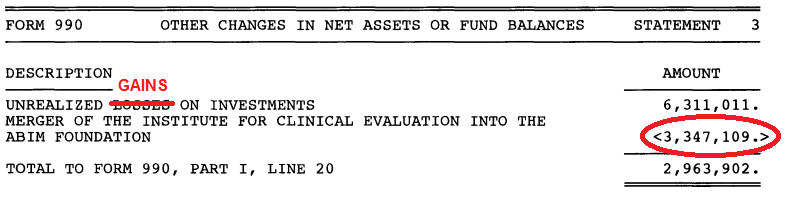
With the merger the ABIM Foundation wrote off a $3,347,109 loss from ICE. It appears that grants were made from the ABIM (who receives 97% of its funds from physician testing fees) to the ABIM Foundation in the three years preceding the merger to handily offset this loss: $1,600,000 in FY 2002, $1,000,000 in FY 2003, and $1,760,000 in FY 2004.

So what we now know, is that the ABIM Foundation clearly existed before 1999 counter to what its many tax forms and webpage suggest. In my opinion, this misrepresentation on their tax forms and webpage was not just a simple mistake, but was used as a cover-up to the physician community and the public (and perhaps the IRS?) of a $3.3 million dollar loss so they could avoid ridicule over their lack of proof of the value of their testing program while continuing to justify their high salaries and ever-higher testing fees while simultaneously leaving the multimillion dollar investment portfolio held by the ABIM Foundation untouched.

-Wes
Related: 
The ABIM Foundation, Choosing Wisely, and the $2.3 Million Condominium
The ABIM Pleads for Mercy

Monday, February 16, 2015

Under Pressure, ABIM Posts Missing Financials

When the American Board of Internal Medicine initially posted their 2014 audited financial report, they neglected to publish the itemization of how finances were split between the ABIM and its Foundation with the most recent financial disclosure.
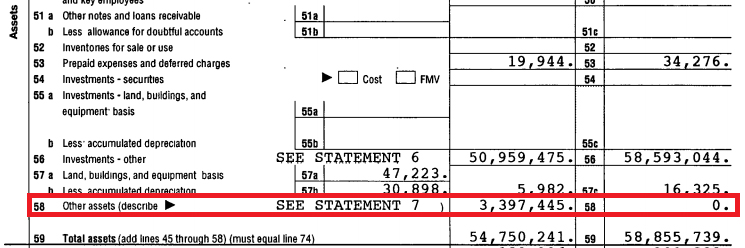
Now it seems the most recent ABIM consolidated financial statement was revised and posted online. The breakdowns that were neglected offer additional insights into the lavish spending of the ABIM, including over $20 million of their $54.5 million physician-paid revenues on salaries (37% of annual revenues and far different than disclosed on their webpage), a $591,389 fee for "recruiting and employment agency fees," a $348,060 "special severance payment" (page 25, perhaps for Dr. Cassel's departure from the organization in 2013?), $2,677,600 in payments to consultants (page 24), and $234,884 paid to "publications and subscriptions" - page 24).

I would like to commend the ABIM for taking this action.  However, this action does little to quell the concerns of the practicing physician community of the legitimacy of the ABIM's MOC program in improving patient outcomes and opens additional concerns regarding tactics used to promote their MOC product for which they, themselves, provide little to no educational content.

-Wes

h/t: MedCity News

Wednesday, February 11, 2015

How Do I Say Goodbye?

So what does a son say to his mother for the very last time?  What does he whisper in her ear?

I will say "I love you."  I will say "thank you."  I will say "God bless you." I will say "I'll miss you."  I will say "You've been the best mother a son could ever hope for." I will say nothing, probably, and cry.

Go in peace knowing you gave your family more than they can ever repay. Know we'll always be reminded of your kindness, your tenderness, your gentleness and care. Be proud of what you've accomplished in your 89 years, especially with your family. You were our glue and always made your home so welcoming.  You taught us the art of the written word and the special place for whimsy. Hundreds of kindergartners and first-graders that you taught all those years will miss you too.

Thanks for being so wonderful to my kids - they will always remember your kindness, thoughtfulness, compassion, warm home and tender words.  Give Dad a high-five when you see him for me. We'll think of you every time we water the flowers, tend the garden, make a fire, cook a meal, attend the theatre, play guitar or gather as a family.

Our "Blessed."

Until we meet again, God bless. Thank you for everything you've taught me, showed me, and gave to me all these years. You'll always be my compass.

I love you, Mom.

BARTER

by Sara Teasdale

Life has loveliness to sell,
  All beautiful and splendid things
Blue waves whitening on a cliff,
  Soaring fire that sways and sings,
And children's faces looking up
Holding wonder like a cup.

Life has loveliness to sell,
  Music like a curve of gold,
Scent of pine trees in the rain,
  Eyes that love you, arms that hold,
And for your spirit's still delight,
Holy thoughts that star the night.

Spend all you have for loveliness,
  Buy it and never count the cost;
For one white singing hour of peace
  Count many a year of strife well lost,
And for a breath of ecstasy
Give all you have been, or could be.

-Wes

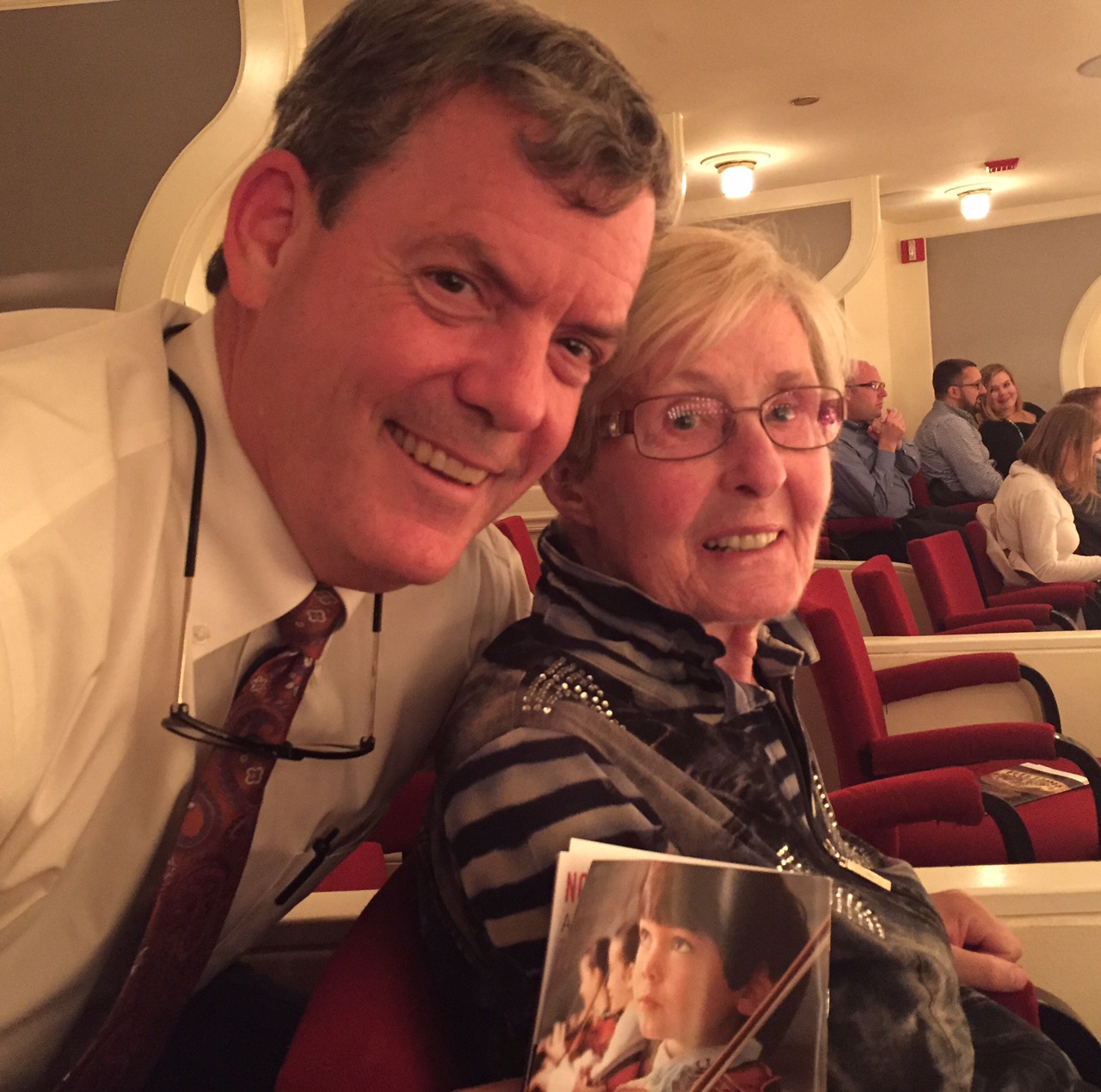
At our last concert together

Saturday, February 07, 2015

American Board of Medical Specialties Circles the Wagons

Actions speak louder than words.

Imagine, a piece about unsavory financial practices and possible corruption is published about one of the members of your flotilla. That member of the flotilla responds, but the response it met with pushback by the practicing physician community.

The Mothership, already nervous, gets more nervous.

The Mothership calls her public relations firm to ask what to do.  Things must be neat and tidy, just like their "new and improved" webpage.  "We can't be lost on our messaging to the public," they say to the PR firm.  "We need to have 'alignment' with our core values and motives."

So, the public relations firm proposes a strategy.  It is reviewed by the leadership of the Mothership.  They like how it sounds.  So they send a boilerplate press release to each member of the Mothership's flotilla.

And this is what happens.

Hilarious.

No, there's no collusion going on among professional societies.  None at all.  Nothing to see here folks.

Now, can we move along and just ask doctors to keep paying those high re-certification fees?

-Wes

Tuesday, February 03, 2015

ABIM Pleads for Mercy

"Now this is not the end.
It is not even the beginning of the end.
But it is, perhaps, the end of the beginning." 


In a widely circulated mea culpa announcement today, the American Board of Internal Medicine (ABIM) deployed some chaff in an attempt to ward off a flurry of incoming Exocet missiles aimed squarely at its years-long history of corrupt and coercive financial dealings, gross mismanagement, and entirely unproven Maintenance of Certification (MOC) program by saying simply, "We got it wrong and sincerely apologize. We are sorry."

In an effort to project an image of sincerity, the ABIM agreed to "immediately suspend the Practice Assessment, Patient Voice and Patient Safety requirements for at least two years" and "hold their pricing at or below 2014 levels until 2017."  It was clear that they sense themselves becoming increasingly irrelevant thanks to the efforts of Paul Tierstein, MD and his much cheaper NBPAS.org.  To align themselves with the NBPAS, they also promised in their FAQ page "to work toward recognizing most forms of CME as fulfilling ABIM's MOC expectations for knowledge self-assessment." Better yet, they even agreed to set up a Google + community that doctors can join to discuss things!

There now, good working doctor, feeling better?  Now can we move along?

But perhaps we should ask first: Why MOC at all?

Contrary to years of propaganda promoted through pseudo-science and journal article citations on the ABIM's website, might MOC have really been created because the ABIM's consolidated fund balance dropped 43.2% from $54,009,086 on June 30. 2001 to $30,691,329 by June 30, 2013 while the Standard and Poors 500 index increased 37.7% over the same period? Said another way, maybe MOC was created because the net assets of the ABIM diminished from negative $10,930,327 to negative $43,150,390 from 30 June 2003 to 30 June 2013 while their leadership and board members did little more than pad their resumes so they could apply to the next insurance company or National Quality Forum job opening.

Or maybe MOC was created because the ABIM ran a bit short on cash because they decided to transfer $17,360,000 of physician testing fees over the seven years ending June 30, 2008 to their own shadow ABIM Foundation (that shares the same leadership) and purchase a $2.3 million condominium for themselves. (Oh, and where and when was that ABIM Foundation created, anyway? Iowa in 1999 (as the tax form says) or Pennsylvania in 1989 (as public record says)? Or should we ask?  And how did the Foundation suddenly have $52,811,298 of net assets by June 30, 2002 - less than three years after its creation?  Where did those funds come from? Finally, given the hefty balance sheet of the Foundation, why was the Foundation granted those additional  $17,360,000 from physician certification fees via the ABIM?)

Or maybe MOC was created to help fund the high salaries and lavish lifestyles of its many officers and administrative staff.  Does the President and CEO of ABIM and the ABIM Foundation really need to earn at least $7.2 million over the ten years ending June 30, 2013 while also earning additional cash on the side from multiple consultant positions?  Sorry, but for the ABIM to hold fees stable given their self-serving largess is inexcusable.  It's time for ABIM to drop its fees and cut their expenses.

And then there's the whole collusion with our professional societies whose non-physician leaders profit handsomely from educational programs that support MOC.  Too many ABMS and ABIM sycophants are earning far too much income on the backs of instilling fear amongst young physicians already struggling to pass their tests so they can maintain their job while increasingly drowning in educational debt.  To already see ABIM sycophants congratulating "the ABIM staff and board for working to make MOC what it can become" with today's announcement given these realities is unconscionable, even if they are trying to be politically correct.

MOC doesn't need to "become" anything.  It is not a legitimate physician quality registry. MOC needs to go away.

To that end, we should recognize that the American Board of Medical Specialties (ABMS) and their 24 member boards (of which ABIM is just one), lobbied Congress hard to etch themselves permanently in to the Affordable Care Act as a physician "quality" registry to affect CMS physician payments as part of our new health care law.  But if the MOC program is indeed corrupt, what does that say about this means of paying physicians for the care they provide patients?  How corrosive to the doctor-patient relationship might this program become?  Recall that the ABIM has never studied the effects that failing a physician during recertification has on the physician or the patients that physician treats.  The spin is that MOC assures physician quality. But if a physician can no longer practice because he loses his privileges to practice his art because he failed a computerized test insensitive to the physician's scope of practice, where does that leave his patients?  Why has no one ever evaluated this?  Might it never have been evaluated because the MOC program was always more about the money than a means of assuring quality patient care?

I'm sorry, but an apology is not enough when there are so many unanswered questions and unethical practices underway by so many for so long - especially by those of our own profession who have turned against practicing physicians for their own benefit.

It is time for a full Congressional investigation into the financial, legal, and ethical dealings of the ABIM, the ABIM Foundation, the legitimacy of the ABMS's entire MOC program, and to question the inclusion of such an irresponsible and corrupt physician quality measure into the Affordable Care Act. 

You see the real story today is not about the ABIM's changes to their illegitimate MOC program.  Rather it's about how the MOC debacle has finally mobilized practicing physicians to advocate for themselves and their patients for what is right, whether the ABIM and their sycophants like it or not.

-Wes

Reference (with links to tax form financial data): In the Grasp of the Gang (pdf) via Mr. Charles Kroll


Monday, February 02, 2015

Board Review: Sixteen Little Questions

In the interest of life-long learning and continuous medical education, here's an entertaining video that asks sixteen little questions to test your knowledge of the financial adventures of the American Board of Internal Medicine (ABIM) and its Foundation. See how many you get correct! (Note: The video plays very fast. Consider hitting the "pause" button after each question is displayed.)


I hope this helps you prepare for your upcoming Maintenance of Certification® examination(s).

Please feel free to share with your friends! Doing so will show the world your commitment to the highest standards of "medical professionalism."

-Wes

h/t: Charles Kroll

Saturday, January 31, 2015

Take a Virtual Tour of the ABIM Foundation's Luxury Condominium

Physicians traveling to Philadelphia might want to inquire with the ABIM Foundation to see if they can stay at the Foundation's luxury condominium that they paid for before it's sold at a large loss.

Imagine, arriving to your condominium in your own BMW 7-Series chauffeur-driven town car that's available at your disposal...


... and being greeted at the door by your own personal doorman:


... and having a helpful Congierge lady that can help service your every need while in Philadelphia:


Then, after a hard day at work directing meetings or traveling to Washington, you can return home and cook dinner in a nice kitchen with somewhat dated amenities:


After that, you can take a nice shower in the Master Bath:


...while your guests use the second. slightly less glamorous second bathroom:


No doubt you'll have a relaxing stay in Philadelphia - all on the backs of your own colleagues board certification and Maintenance of Certification testing fees!

See what you can have when you Choose Wisely®?

-Wes

Friday, January 30, 2015

Is the ABIM Hiding Something?

Mr. Charles Kroll, a health care non-for-profit accountant, notes a troubling discrepancy this morning in the 2014 consolidated financial statement recently released by the American Board of Internal Medicine (ABIM) and it's Foundation:

The American Board of Internal Medicine (ABIM) recently posted the Consolidated (i.e. including ABIM Foundation) Financial Report for the Year Ending June 30, 2014 (and June 30, 2013) to it’s Revenue and Expenses: Where Does the Money Go? page.

The Financial Report’s Contents page lists 3 Financial Statements and 12 pages of Notes to Consolidated Financial Statements.

The Consolidated Financial Report for the Year Ending June 30, 2013 (and June 30, 2012) filed with the State of Pennsylvania on April 7, 2014 Contents page lists 3 Financial Statements, 12 pages of Notes to Consolidated Financial Statements, and 6 Supplementary Information reports spanning 8 pages.

The Financial Report for the Year Ending June 30, 2013 was never posted on ABIM’s Revenue and Expenses page.

The 6 Supplementary Information reports listed included at June 30, 2013, but not June 30, 2014, are as follows: Consolidating Statements of Financial Position (2 pages), Consolidating Statement of Activities (2 pages), Schedule of ABIM Changes in Unrestricted Net Assets (Deficit) from Operations, Consolidating Schedule of Administrative, Program and Project Expenses, Consolidating Schedule of Staff Expenses and Consolidating Schedule of Office Expenses.
So questions must be posed about the ABIM's disclosure policy on their "Where Does the Money Go?" webpage:

Ahem, where, exactly, did the money do? Why aren't supplemental information reports included in the 2014 financial statement? Might the ABIM "not be meeting MOC requirements" for public disclosures themselves?

-Wes

Addendum 09:25 am CST: Post edited (underlined text) to reflect changes made to the MedCityNews piece after it was originally republished here.

Monday, January 26, 2015

Questioning the ABIM Leadership Compensation

Compensation amounts for the past President and CEO of the American Board of Internal Medicine (ABIM) were reviewed over the last 10 years of available tax documents.  I have outlined them below.  We should recall that US physicians fund 97% of the ABIM's revenue.


Fiscal Year Compensation Comments
2004 $580,377 Includes $50,000 performance bonus awarded to Dr. Cassel by Compensation Committee of the Board of Directors of ABIM
2005 $593,014
2006 $653,922
2007 $646,510 35 hrs/wk. $2.3 million condo purchased by ABIM Foundation.
2008 $627,472 35 hrs/wk. Spousal travel fees also paid (not itemized).
2009 $865,451 35 hrs/wk. Spousal travel fees also paid (not itemized).
2010 $862,191 35 hrs/wk. Spousal travel fees also paid (not itemized).
2011 $794,852 35 hrs/wk. Spousal travel fees also paid (not itemized).
2012 $786,751 35 hrs/wk. Spousal travel fees also paid (not itemized). Also received $203,500 from Kaiser Health Plans and Hospitals
2013 $838,603 35 hrs/wk. Spousal travel fees also paid (not itemized). Additional compensation earned: $235,000 from Premier, Inc.

Total haul by one physician officer: $7,249,143 over 10 years (or $724,914/yr). This amount does not include the additional consulting fees outlined above.  (Not too bad for a desk job that doesn't involve patient care.)

Which leads practicing US physicians to wonder how much compensation did the current ABIM President and CEO earned in fiscal year 2014. Might it have exceeded $1 million? (We should note the most recent audited financial statement available to date disclosed a $568,000 salary with $131,000 in deferred compensation for a "new key employee" hired effective 7 June 2013, but does not specify the additional compensation this "new employee" will recieve from the ABIM's own Foundation.)

The fiscal year 2014 ABIM Form 990 will be available soon enough.  If the ABIM leadership salaries are indeed this high going forward, there should be little doubt why physicians must now pay the ABIM every two years to "maintain" their board certification status. 

It seems that the salaries of the ABIM leadership demand it.

-Wes

Addendum: To all concerned physicians: consider signing my petition to stop the marketing of the ABMS/ABIM Maintenenace of Certification program, one professional society at a time.

Wednesday, January 21, 2015

Katz: In Defense of the Annual Physical

David L, Katz, MD, Director of the Yale University Prevention Research Center and President, American College of Lifestyle Medicine, makes aa case in defense of the annual physical examination, once a cornerstone of American medicine.
I would argue, then, that glib dismissal is misguided. Rather, the safest and most promising option in the absence of answers to all relevant questions, is to optimize the annual exam, not discard it. There is no need for a battery of perfunctory procedures or ridiculously low-yield lab tests. But these could be replaced with a review of lifestyle practices and use of relevant preventive services; with time for pertinent, customized lifestyle counseling; and with attention to whatever happens to be on a patient’s mind, building that very thing to which modern, evidence-based medicine may pay all too little attention: a relationship. A fundamental human connection.
Read the whole thing.

-Wes

Tuesday, January 20, 2015

"Science" Takes ACLS Backwards

Food and Drug Administration (FDA) regulations have become the new pathway to riches for the pharmaceutical industry.

First, there was generic colchicine, used for years and years to treat gout for  pennies a pill.  The only problem was, there wasn't an FDA trial proving colchicine's efficacy in the treatment of gout.  Takeda Pharmaceutical, seeing the opening, performed a trial and rebranded the formerly generic colchicine to Colcrys®, "the only authorized generic indicated to prevent and treat gout attacks."  And how much does Colcrys® cost?  Just $203 for thirty tablets at Costco.

But that's not all.

Today I learned that generic vasopressin (which can be stored at room temperature in stable form on crash carts), must be switched to the FDA-approved brand called Vasostrict® that requires dilution and refrigeration.  It seems the generic form of vasopressin will no longer be available to be kept on crash carts since it's not "FDA-approved" for the indication of "increasing blood pressure in adults with vasodilatory shock (post-cardiotomy or sepsis) who remain hypotensive despite fluids and catecholamines." Vasostrict®, on the other hand, is "now the first and only vasopressin injection, USP, product with an NDA approved by the FDA." The catch is, it must diluted before use and discarded after 18 hrs (or after 24 hrs if refrigerated). This little regulatory quirk is a big deal for America's hospitals looking to save costs.

But hey, why should we worry about costs in health care?  After all, you can never be too safe.

-Wes

Monday, January 19, 2015

The Cancer of Our Profession

  229. Unity and friendship in the medical society is important.

The first, and in some respects the most important, function is that mentioned by the wise founders of your parent society - to lay a foundation for that unity and friendship which is essential to the dignity and usefulness of the profession. Unity and friendship! How we all long for them, but how difficult to attain! Strife seems to be the very life of the practitioner, whose warfare is incessant against disease and against ignorance and prejudice, and, sad to have to admit, he too often lets his angry passions rise against his professional brother. The quarrels of doctors make a pretty chapter in the history of medicine.

Sir William Osler
On the Educational Value of the Medical Society, In Aequanimitas, 335-6.
Never has the divide between the practicing work-a-day physician and the non-practicing ivory tower elite physician been greater. It is the cancer of our profession: quick to spread, difficult to contain.

But this should not surprise us. It is a recurrent theme in history, just as Osler was quick to remind us. But the ideal that Osler advocated for has disintegrated under political, financial and partisan agendas that covertly operate without transparency.

If nothing else, social media is helping expose this divide and its corrosive effects on our profession.

-Wes

Friday, January 16, 2015

Grass Roots: It's Time To Take Action on MOC

As many long-term readers of this blog are aware, because of concerns over its coercive nature, I have been investigating the American Board of Medical Specialties (ABMS) Maintenance of Certification (MOC) program implemented in large part by the American Board of Internal Medicine (ABIM) since studying for my third round of re-certification.  As part of that investigation, I have uncovered what appears to be a carefully crafted propaganda campaign using poor scientific methods, non-practicing authors from think-tanks, the veterinary profession, and the ABMS/ABIM hierarchy to serve as "evidence" of the program's legitimacy, as well as much more troubling financial dealings of the ABIM and the ABIM Foundation.

I brought these concerns to the leadership at the Heart Rhythm Society via an email left on their website on 2 January 2015 that included a link to my investigation of the ABIM's tax records.  The Heart Rhythm Society's office as closed at that time (they returned 5 January 2015), but I never received a response to that email initially.  So I called the Heart Rhythm Society on the 14th of January and asked to speak with Mr. James Youngblood, their President and CEO, about my concerns regarding the ABIM. I seems he was unavailable at the time but I was assured they had found the email and that I would receive a response  "in 24-48 hours." Yesterday I received the email and this is what he said:

"Sorry for the delay in responding to your email request. We appreciate the information you shared and your opinion in this matter.  Regarding your follow-up voice message inquiring about what the HRS offers in support of ABIM-MOC, HRS provides the opportunity for members to earn up to 42 MOC medical knowledge points on a complementary basis. (Opportunity for MOC points expires 10/15/15)

We have extensive additional information provided at http://www.hrsonline.org/Education-Meetings/Maintenance-of-Certification#16575

We have provided ongoing feedback to the ABIM around our concerns with their approach to the MOC program. We will continue that dialogue.

With regard to an financial concerns with ABIM, we will continue to monitor the situation closely and inform our members should any action be required.

Thanks, J

James H. Youngblood
Chief Executive Officer
Heart Rhythm Society
NEW ADDRESS:
1325 G St. NW, Suite 400
Washington, DC 20005
(Phone numbers redacted)
www.HRSonline.org
It seems the very public outcry by practicing physicians over the entire ABMS/ABIM-MOC program is being met with little action despite the evidence of its corrosive effects on our profession of medicine. Therefore, I have decided to begin a grass roots effort to ask my own professional medical society, the Heart Rhythm Society, to immediately cease their promotion and marketing of the ABMS/ABIM MOC program and instead to turn their considerable resources to removing the corrupt ABMS MOC program from the Affordable Care Act. To that end, I am now circulating a petition for Heart Rhythm Society members (and other interested practicing physicians) to sign to send a clear message to our society's leadership that we need more than words, we need action, to stop the use of this unproven and unethical MOC program that has been foisted without evidence of its effectiveness for improving patient care upon practicing US physicians. Anything less is unacceptable, given what we now know about the program.

I would ask that Heart Rhythm Society members who agree with this petition to sign it and designate their membership status with the Heart Rhythm Society in the "Notes" section and then send it on to your colleagues. 

It is time we send a strong message to our professional organizations that we demand more than words in response to our deep concerns with the ABMS/ABIM MOC program.

Thank you -

-Wes

Tuesday, January 13, 2015

Some Thoughts on the National Board of Physicians and Surgeons

I admire Paul Tierstein, MD's honest attempt to create a greatly simplified alternative to the  ABMS's Maintenance of Certification® (MOC) program called the National Board of Physicians and Surgeons (NBPAS).  I hope he's successful, but I sense there will be large headwinds for the effort ahead.

Here's why.

The Affordable Care Act (ACA) modified Sections 1848(k) and 1848(m) of the Social Security Act which defines how CMS pays physicians for their services.  Section (k) is the section that defines how a "Quality Reporting System" is to be set up (with subsection (4) requiring the "Use of Registry-based Reporting") and Section (m) defining physician incentive payments physicians might receive if quality reporting occurs properly. (Sadly, those CMS incentive payments do not cover the cost of participating in MOC for most of us.)*

Section (k) was modified by the ACA to include the ABMS MOC program as a "physician registry."  The registry was "defined" as requiring all four parts of the MOC program created by the ABMS, including the much-maligned "practice improvement modules" that have been described by the physician community as overly time-consuming, irrelevant and may even violate federal research statutes regarding the study of physicians, their practices, and patients.

Unfortunately the new NBPAS does not address these requirements of the our new health care law, leaving the creation of the NBPAS to look like a Rand Paul moment all over again with physicians signing up for something that, legislatively, means nothing.

Welcome to the concept of "regulatory capture."

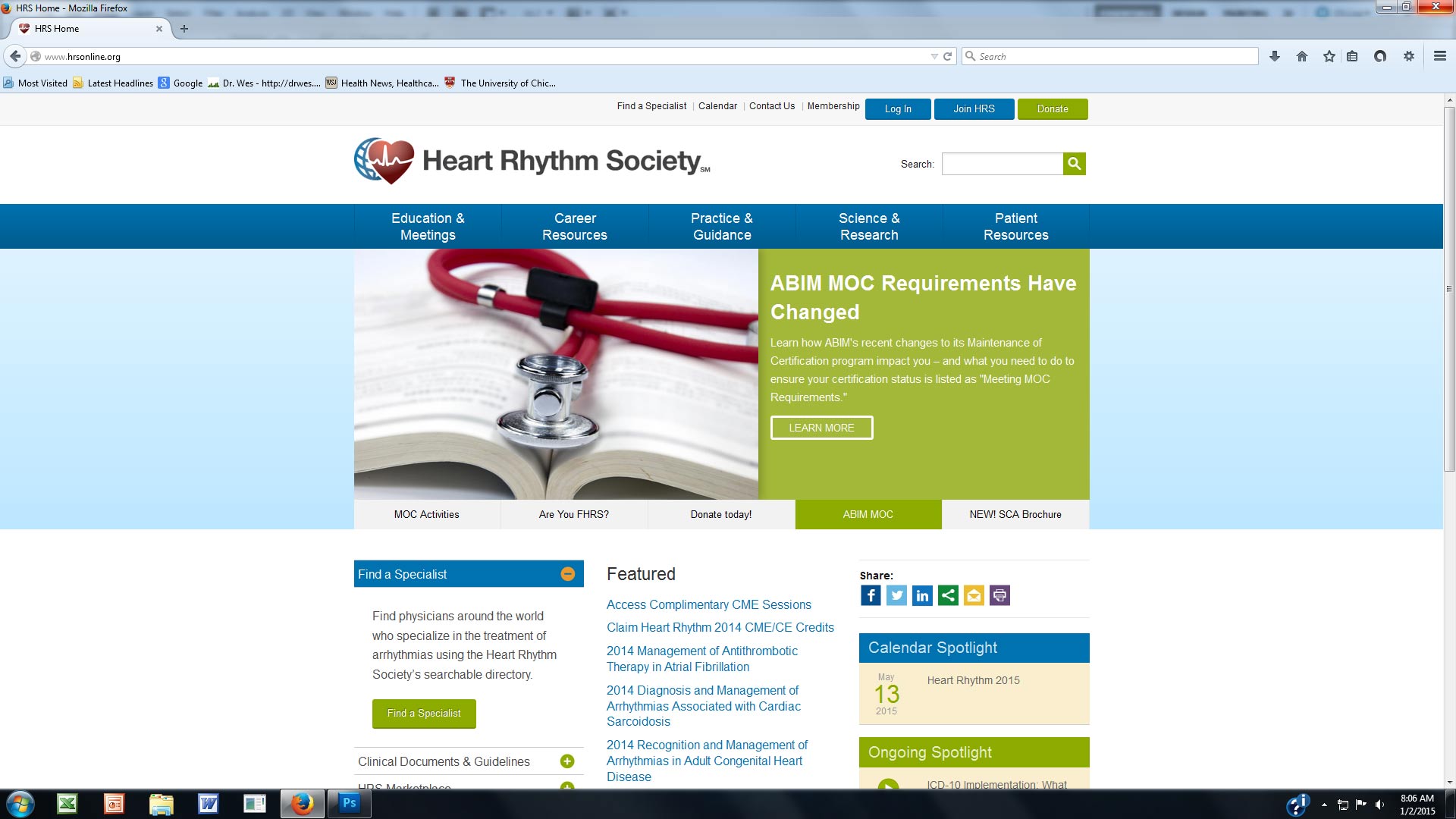
Screenshot of Heart Rhythm Society webpage
Physicians should realize that special interests and their lobbyists (including the US hospital, pharmaceutical, survey companies, and insurance lobbying groups) were highly influential in the creation of our new health care law.  They are also very good at politics.  It is unlikely that these entities want to see MOC go away, irrespective of how corrupt the system has become.  There's just too much money involved.  Even our own specialty societies use the MOC program's educational requirements to coerce physicians to take their educational courses to "earn MOC points" to help pad their bottom lines as physician attendance (and corporate sponsorship) at scientific sessions has dwindled over the past years.

But what's more important to our patients in the long run? Time for their needs or time for test-taking and survey collection?  Is it more important to satisfy government requirements or address the real needs of our patients?  Certainly continuing education of physicians is needed, but irrelevant work for an unaccountable  third-party organization so they can measure us rather than help us is not.

A second Heart Rhythm Society webpage devoted to MOC
Physicians need to take the stick, but we can't do this alone since we care for patients.  So we need to ask this question: will our specialty societies commit to supporting practicing physicians or the  new bureaucratic divide? (They can't do both.)  Will they truly step up to the plate and commit their considerable staff, dollars, pager-less hours, lobbying and legislative efforts to help remove the corrupt MOC program from the Affordable Care Act or allow practicing physicians - their members - to wallow in the corrupt status quo as they are coerced to participate in MOC?

I remain pessimistic that creating another "board" will fix the current deep-seated problems with the ABMS MOC construct with ABMS as the mothership directing a flotilla of 24 member boards.  In my view the only way to truly "change" MOC is to have a coordinated effort from all specialty societies to insist our legislators remove the portion of our new health care law that requires we participate in a "physician registry" that robs not only practicing physicians, but patient care itself.

HRS and ACC, are you on board?

-Wes

*Addendum 2/12/2015: 
It should be noted that the payment incentives offered 2012-2104 from CMS for participation in MOC ended January 1, 2015, but that MOC participation will still be used as a physician quality reporting metric. 

Saturday, January 10, 2015

Behind the Scenes of the Choosing Wisely® Marketing Campaign

How it's marketed:


How it's paid for:
Email received yesterday by some US doctors (click to enlarge)


Any questions?

-Wes

P.S.: For details, click here.

Friday, January 09, 2015

Slow Down on Creating Alternate MOC Pathways

Yesterday was a remarkable day for practicing US physicians.  It was the day two articles appeared side by side in the New England Journal of Medicine: one promoting the American Board of Medical Specialties' Maintenance of Certification® (MOC) program, and another that thoroughly debunked it.  The comments placed to the stories told a story of solidarity, pent up rage, of corruption within our profession, and a commitment to change the status quo.  Doctors were relieved to learn that an alternate pathway to MOC, the National Board of Physicians and Surgeons, might offer a slightly less expensive pathway to acquire MOC points.

But I worry physicians might be reacting, rather than carefully considering, the implications of the alternate proposal.

I should say that I applaud Dr. Paul Tierstein's phenomenal piece published yesterday in the New England Journal of Medicine.  He cogently articulated the many problems with the ABMS MOC program but stopped short of dismantling the ABMS (and ABIM's) board re-certification process entirely as he promoted his new "National Board of Physicians and Surgeons instead:"
There will be three or four requirements, and you have to be certified by an ABMS board initially. We're not taking that on. I think the fellowship process is great, it's like a final exam for residency and fellowship. I think most people agree that it's okay (not perfect, but okay). You'll also have to have a valid medical license and not to have been denied privileges recently in your specialty. Then the key requirement is 50 hours of continuing medical education, provided by an ACCME-accredited provider over 2 years. And the cost will be far lower. The cost will be as little as possible.
While this may be an acceptable solution to the current MOC conundrum created by the inclusion of ABMS and the MOC program in our new health care law, I believe we should first investigate how the ABMS and MOC program became part of the Affordable Care Act in the first place.

Troubling concerns of collusion of ABIM board members with the Center for Medicare and Medicaid Services (CMS) and the National Quality Forum (which receives the bulk of its revenues from grants supplied by CMS) exist. Christine Cassels, MD, who is the current President and CEO of the National Quality Forum, was President and CEO of the ABIM from 2003 to 2013 and ultimately responsible for the $2.3 million dollar luxury condominium purchase by the ABIM Foundation in December, 2007. Richard Baron, MD served as treasurer of the ABIM and later an unpaid Director of ABIM in 2007-2008. Dr. Baron also served as Group Director of Seamless Care Models at the CMS Innovation Center which claims it "Identifies, validates and disseminates information about new care models and payment approaches to serve Medicare and Medicaid beneficiaries seeking to enhance the quality of health and health care and reducing cost through improvement." Dr. Baron then became a full-time employee of CMS in 2011-2012 before returning to ABIM in 2013.

Which leads to the question: how much influence did the ABIM leadership have in establishing a continuous money stream for itself and its Foundation during the writing and mark-up of the Affordable Care Act? (see pages 247 and 844-845 of this large pdf). Clearly, there should be public record available to this effect and physicians should inspect this record before creating an alternate MOC pathway.

Because if the ABIM influenced the writing of the Affordable Care Act for its own enrichment, rather than for "public good," this represents further corruption of an already broken MOC model, in my view.  There have been many experienced physicians adversely affected by the current MOC program.

So these are the questions practicing physicians should ask before enrolling in the current, or any other, MOC pathway:

(1) Do we need MOC at all? and
(2) Don't we need a full public disclosure of the audited financials of the ABIM and the ABIM Foundation and their financial dealings first? and  
(3) Shouldn't we insist on removal of the corrupt MOC program entirely from the changes made to Social Security Law by the Affordable Care Act before creating another unaccountable organization to practicing physicians?

-Wes

Monday, January 05, 2015

Why I Won't Give ABIM My Practice Data

I recently received an email from the American Board of Internal Medicine (ABIM) requesting that I complete my "Practice Characteristics profile" on their website "which is required for ABIM board certified physicians participating in Maintenance of Certification (MOC)."  Specifically, the survey stated that the information was "to identify similar types of practices for research purposes." The survey included a requirement to enter data on:
  • the percentage of time I spent in various clinical and non-clincal activities,
  • the numbers of various types of procedures I performed
  • the amount of professional time I spend reading EKGs, echos, diagnostic catheterizations, nuclear scans, CT's, MRIs and vascular imaging
  • the number of adult congenital, cardiac transplant and peripheral vascular patients I see
  • and whether my institution requires MOC in Internal Medicine, Cardiovascular Diseases or Cardiac Electrophysiology for maintaining my credentials
But when the ABIM's own privacy statement declares these data are for research, maintains this data indefinitely, and can send this data "to companies who work on our behalf to provide a product or service to you" and then can transfer this personal data to control of a third party in the event of a merger, this is no small issue.

You see, when a non-profit physician testing organization is affiliated in some bizarre way with a second shadow organization with the same officers and address  to promote their own version of medical professionalism that purchases $2.3 million dollar condominiums with chauffer-driven town cars with my fees without my knowledge, what other things might they purchase with the income they derive from selling my data or the data supplied by patients about us? 

If the ABIM can legally grant funds to any other non-profit organziation (like their "Foundation") without my knowledge for their own benefit in the name of "professionalism," will they also transfer my data to that organization? Because if they transfer my data (which, by the way, is a lot harder to track), to another organization without recourse, then I believe all the data they collect and that we must pay to have them collect, no longer qualifies as just a quality assurance project in the name of the "public good" but rather qualifies as research - research they are conducting on behalf of their own version of "public good" that might include the occasional purchase of a luxury condominium.

So sorry ABIM -

My patients and I deserve a better example of "professionalism" that doesn't potentially violate federal statutes on research practices on me or my patients for your personal gain. 

I would encourage others to do the same.

-Wes