Showing posts with label National Quality Forum. Show all posts

Wednesday, November 11, 2015

Concerning Conflicts of Interest at the ABIM, ABMS and NQF

By now various medical societies are telling the American Board of Internal Medicine (ABIM) their ship has sailed. The ABIM's worn mantra that the "public" demands their program is simply not supported by evidence. The tales of misguided incentives and corruption within the organization grow daily. The blatant avoidance of the egregious financial dealings and conflicts of interest outlined in this blog's pages and elsewhere simply cannot be ignored by the ABIM - yet they continue to do so.

Why?

Because there are millions upon millions of dollars at stake in areas of physician assessment and measurement.

When Christine Cassel, MD left the ABIM and began her work at the National Quality Forum (NQF), physicians learned of some of her conflicts of interest with other organizations, namely Premier, Inc and the Kaiser Foundation Health Plans and Hospitals. Dr. Cassel labeled these conflicts as "distractions" as she resigned her board seats with those organizations. What we do not know (and this is important) is did Dr. Cassel receive any stock or stock options from the organizations she was so cozy with as part of her compensation package? Given the usual and customary way of compensating corporate board members, I would not be surprised if she did. (Update 19:15 PM: h/t to Mr. Charles P Kroll for confirming that Dr. Cassel owns 3,704 shares of  Premier, Inc stock)

Recently, a Premier, Inc press release announced its plans to purchase a company called CECity, Inc. I suspect most practicing physicians did not notice this announcement. After all, why would practicing physicians be interested in a press release touting a new business opportunity for Premier as it expands its "performance improvement capabilities across the healthcare continuum?"

But practicing physicians need to be VERY wary if our fellow physician-bureaucrats (especially those from the ABIM) when they consider their prior conflicts of interest as "distractions." That word is a flag that everyone should look deeper at these conflicts first reported by ProPublica.

When we do, we find more concerning revelations about the ABIM and the American Board of Medical Specialties (ABMS)'s motives.

According to the press release, CECity, Inc is worth about $400 million (or more) to Premier, Inc. and who do we find has been using CECity as its consultant?

Yep. You got it: the ABIM.

In fact, the relationship with the ABIM has been nearly continuous since 2010. According to CECity, they are a CMS qualified registry that provides physician "quality reporting data" to CMS:
As a CMS qualified registry for the Physician Quality Reporting System (PQRS, ePrescribing, MOC-PQRS) and as the service provider for many physician certifying boards (e.g. ABIM, ABO, AOA) CECity is uniquely positioned to align professional and financial incentives with CQI to deliver ‘game-changing’ quality initiatives that have proven and measureable results.
According to the ABIM's Form 990's, they have already paid CECity the following: $600,000 in fiscal year (FY) 2010, $1,217,800 in FY 2011, $1,112,600 in FY 2012, $1,378,138 in FY 2013, and $1,260,000 in FY 2014 (an example of these payments can be found on page 8 of the ABIM's most recent published Form 990 - provided they do not change their Form 990 after this report).

That's right: $5,568,538 of physician testing fees to CECity from practicing US physicians over five years - all of it (so far) on Dr. Cassel's watch.

If Dr. Cassel holds stock in Premier, Inc. from her prior board position there, I wonder how much money she stands to make when this cozy deal with Premier, Inc. closes? Should the U.S. Securities and Exchange Commission investigate this transaction? We don't know, but even the apparent conflict of interest with Dr. Cassel, the president and CEO of an organization responsible for "quality" programs in our nation's hospitals, is very disturbing, indeed.

This is not a minor revelation as physicians continue their difficult task of managing patients in such an overbearing regulatory environment while our specialty societies continue to support the financially conflicted ABMS MOC program. I believe allowing independent and unaccountable third-party organizations (like the ABMS and ABIM) to collect and distribute physician and de-identified patient-related data without written consent of those who could have their ability to practice medicine or collect payment from insurance companies revoked if they don't participate in MOC is a clear violation of Department of Health and Human Services Protection of Human Subject statutes. It also remains to be determined if this violates the Sherman (antitrust) Act.

After all, it is now clear the MOC program is not a "quality assurance" exercise performed for "public's" benefit.

This is profiteering and financially conflicted research on physician subjects in its most fundamental form.

-Wes

Saturday, May 02, 2015

Why Electrophysiologists Need to Flood the MOC "Debate" at HRS2015

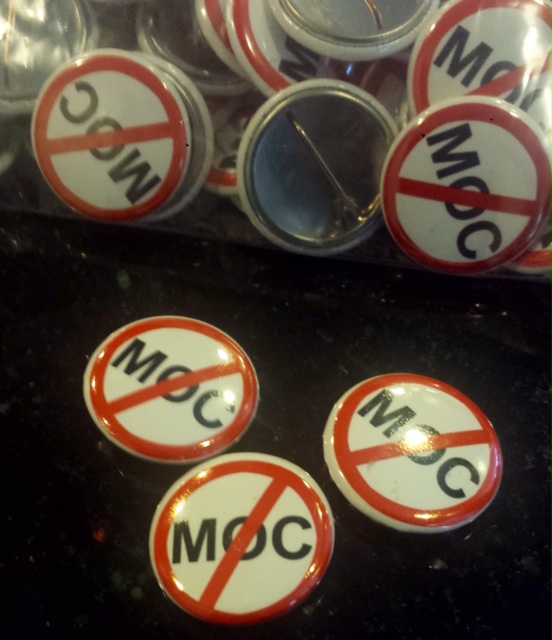
Anti-MOC Bling
Anti-MOC Buttons
Click image to order yours
On 13 May 2015 at 8 am in Room 162A of the Boston Convention Center, a session called "Controversies in Public Policy"will occur at the 2015 Heart Rhythm Society Scientific Sessions. As part of that session, a "debate" on Maintenance of Certification (MOC) entitled "Maintenance of Certification is Important for the Practice of Quality EP and Should be Endorsed by HRS" will occur at approximately 10 AM.  Every cardiac electrophysiologist should attend. (Yes, the Atrial Fibrillation Summit can wait a bit).

Doug Zipes, MD will serve as the protagonist of the "debate" and Fred Kusumoto, MD will serve as the antagonist.  I am sure the so-called "debate" will be cordial.  Both speakers are class acts and I'm sure each will do their best to up-end the other.

But I have many concerns about this "debate," some of which I articulated earlier. Now after reviewing the program format and disclosures for the "debate," I have more concerns.

First of all, the limited time for the debate does not allow time for input from the audience.  This is a shame.  HRS needs to hear concerns from ALL of their membership. Granted no one wants a shouting fest, but polite and pointed discourse should be encouraged at meetings, not squelched.

Secondly, let's look at the disclosures for this debate, because I think this is important.

Dr. Zipes lists his disclosures for the  MOC "debate" as follows:
Douglas P. Zipes, MD, FHRS. Krannert Institute of Cardiology, Indianapolis, IN

Disclosures
  D.P. Zipes: E - Royalty Income; 3; Elsevier. I - Research Grants; 1; Medtronic, Inc.
Abstract
  There is no abstract associated with this presentation.
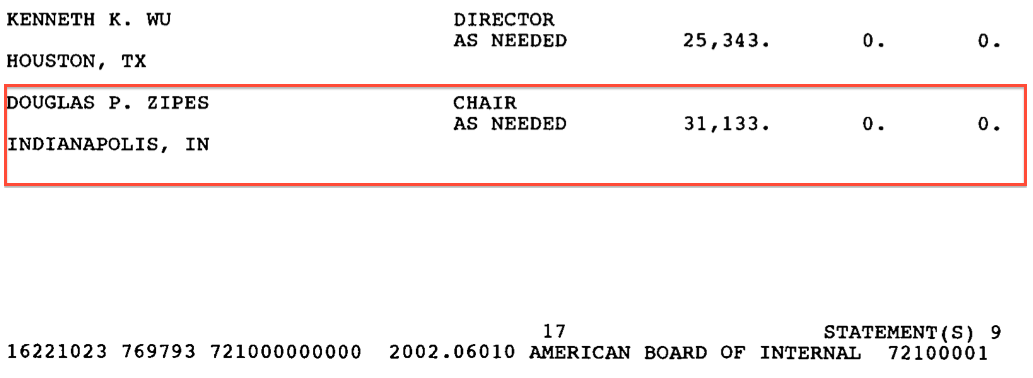
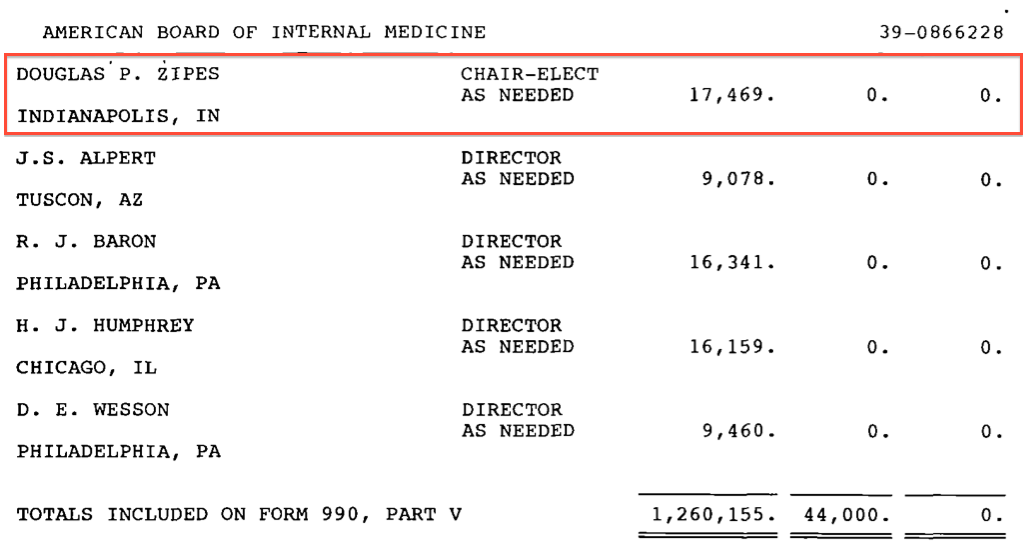
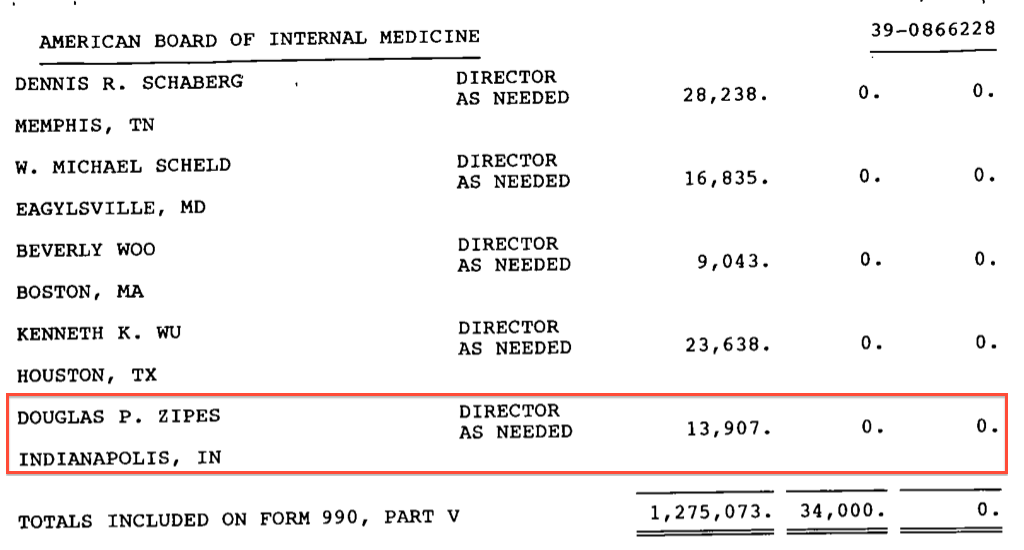
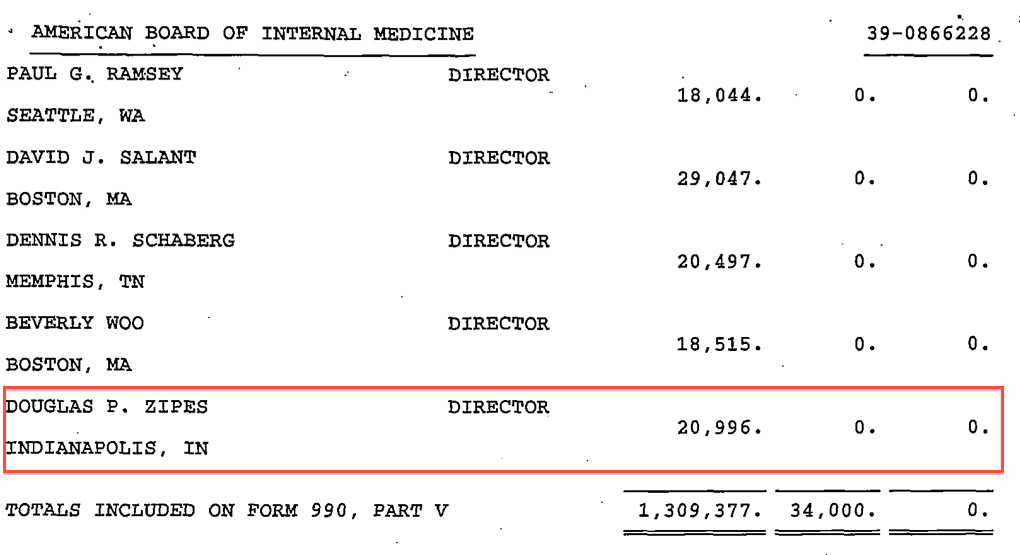
No where in his current disclosures does Dr. Zipes mention his long relationship with ABIM as a paid "Director," "Chair-Elect," and "Chair" of the organization. Here is what Dr. Zipes earned from the ABIM between July 1, 1998-Jun 30, 2003:

FY 2003 $31,133 as "Chair"
FY 2002 $17,469 as "Chair-Elect"
FY 2001 $13,907 as "Director"
FY 2000 $20,996 as "Director"
FY 1999 $30,484 as "Director"

No doubt Dr. Zipes has good friends at the ABIM and will find it easy to take the "protagonist" role in the "debate," but is he the right person for a non-biased recommendation for endorsement of the  ABIM's MOC program by the Heart Rhythm Society?

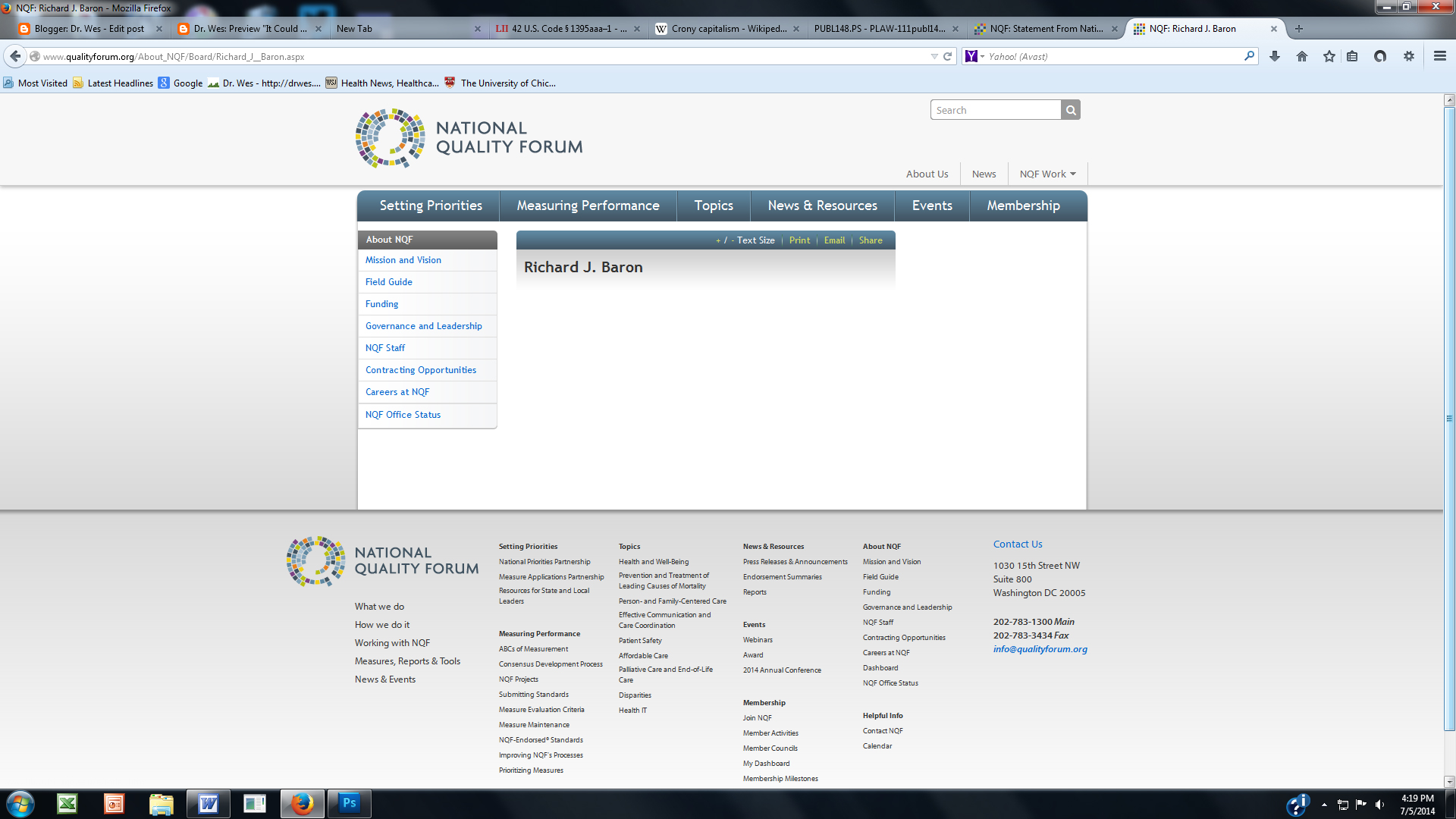
We should recall that Christine Cassel, MD was the acting President and CEO of the ABIM and the ABIM Foundation during the time Dr. Zipes' had his appointments there.  Dr. Cassel now is President and CEO of the National Quality Forum (NQF), a non-profit organization called a "consensus-based entity" that sets quality metrics that soon will influence how physicians are paid.  The NQF has close ties to the ABIM and derives most of its revenue from the Center for Medicare and Medicaid Services (CMS) by way of government grants. Recall that the current President and CEO of the ABIM, Richard Baron, MD worked for the National Quality Forum before coming to the ABIM and may have been slated for a leadership role there as evidenced by a screen shot I captured from the National Quality Forum's website in July 5, 2014 (the web page is no longer present).  Also realize that the National Quality Forum continues to employ Ms. Cassel who was responsible for (1) the repeated piecemeal funneling of $30.6 million of our physician testing fees to the ABIM Foundation (and that purchase of the now infamous $2.3 million luxury condominium), (2) the creation and write-off of $3 million dollars for the now defunct "Institute of Clinical Evaluation" created by the Foundation, and (3) the non-disclosure of grants the ABIM Foundation received from the Josiah Macy Jr. Foundation and the "Institute of Medicine as a Profession," a non-profit created by George Soros and his Open Society Institute.  Needless to say, Dr. Zipes' conflicts are very significant in light of this interplay of money and politically-connected individuals and organizations.

Let's now look at Dr. Kusumoto's published conflicts of interest for this "debate:"
Fred M. Kusumoto, MD, FHRS. Mayo Clinic, Jacksonville, FL

Disclosures
F.M. Kusumoto: None.
Abstract
There is no abstract associated with this presentation.
(I did not see Dr. Kusumoto's name on any of the ABIM's Form 990 tax disclosure forms either. )

The Heart Rhythm Society must make a clear choice after the upcoming scientific sessions. They can side with the working community of cardiac electrophysiologists or they can side with continuing their support of government grants, cronyism, and an increasingly political agenda that promises cash flow from the government.  Which will they choose?

So let's show up with a sea of buttons and other bling and make it clear that the HRS's endorsement of MOC must go.  All of it.

To promote the anti-MOC movement, I have created a section of my MedTees.com website specifically to purchase anti-MOC bling. All proceeds I receive (about 1-5% of the prices) will go to the ABIM's competitor, NBPAS.org instead. The rest of the costs go to the manufacturer of the bling, Cafepress.com, including the high shipping prices (sorry, out of my control).

If you'd like to get a FREE 2.25" Anti-MOC button from me before the "debate" session at HRS2015, I will have a hundred of them to distribute(limit one per doctor - I paid for them myself), so get there early.

I look forward to seeing everyone at the meeting.

-Wes


Tuesday, January 13, 2015

Some Thoughts on the National Board of Physicians and Surgeons

I admire Paul Tierstein, MD's honest attempt to create a greatly simplified alternative to the  ABMS's Maintenance of Certification® (MOC) program called the National Board of Physicians and Surgeons (NBPAS).  I hope he's successful, but I sense there will be large headwinds for the effort ahead.

Here's why.

The Affordable Care Act (ACA) modified Sections 1848(k) and 1848(m) of the Social Security Act which defines how CMS pays physicians for their services.  Section (k) is the section that defines how a "Quality Reporting System" is to be set up (with subsection (4) requiring the "Use of Registry-based Reporting") and Section (m) defining physician incentive payments physicians might receive if quality reporting occurs properly. (Sadly, those CMS incentive payments do not cover the cost of participating in MOC for most of us.)*

Section (k) was modified by the ACA to include the ABMS MOC program as a "physician registry."  The registry was "defined" as requiring all four parts of the MOC program created by the ABMS, including the much-maligned "practice improvement modules" that have been described by the physician community as overly time-consuming, irrelevant and may even violate federal research statutes regarding the study of physicians, their practices, and patients.

Unfortunately the new NBPAS does not address these requirements of the our new health care law, leaving the creation of the NBPAS to look like a Rand Paul moment all over again with physicians signing up for something that, legislatively, means nothing.

Welcome to the concept of "regulatory capture."

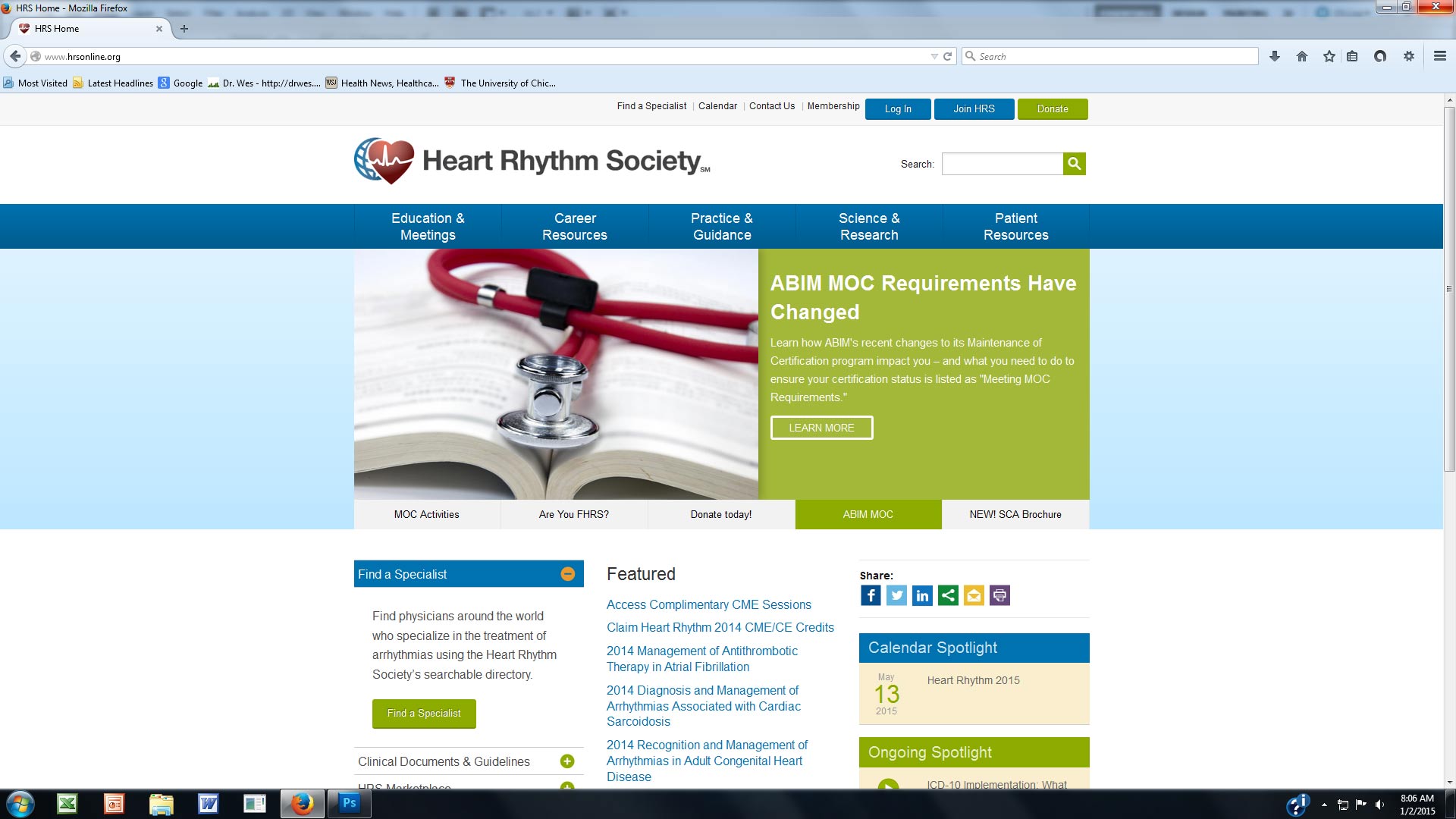
Screenshot of Heart Rhythm Society webpage
Physicians should realize that special interests and their lobbyists (including the US hospital, pharmaceutical, survey companies, and insurance lobbying groups) were highly influential in the creation of our new health care law.  They are also very good at politics.  It is unlikely that these entities want to see MOC go away, irrespective of how corrupt the system has become.  There's just too much money involved.  Even our own specialty societies use the MOC program's educational requirements to coerce physicians to take their educational courses to "earn MOC points" to help pad their bottom lines as physician attendance (and corporate sponsorship) at scientific sessions has dwindled over the past years.

But what's more important to our patients in the long run? Time for their needs or time for test-taking and survey collection?  Is it more important to satisfy government requirements or address the real needs of our patients?  Certainly continuing education of physicians is needed, but irrelevant work for an unaccountable  third-party organization so they can measure us rather than help us is not.

A second Heart Rhythm Society webpage devoted to MOC
Physicians need to take the stick, but we can't do this alone since we care for patients.  So we need to ask this question: will our specialty societies commit to supporting practicing physicians or the  new bureaucratic divide? (They can't do both.)  Will they truly step up to the plate and commit their considerable staff, dollars, pager-less hours, lobbying and legislative efforts to help remove the corrupt MOC program from the Affordable Care Act or allow practicing physicians - their members - to wallow in the corrupt status quo as they are coerced to participate in MOC?

I remain pessimistic that creating another "board" will fix the current deep-seated problems with the ABMS MOC construct with ABMS as the mothership directing a flotilla of 24 member boards.  In my view the only way to truly "change" MOC is to have a coordinated effort from all specialty societies to insist our legislators remove the portion of our new health care law that requires we participate in a "physician registry" that robs not only practicing physicians, but patient care itself.

HRS and ACC, are you on board?

-Wes

*Addendum 2/12/2015: 
It should be noted that the payment incentives offered 2012-2104 from CMS for participation in MOC ended January 1, 2015, but that MOC participation will still be used as a physician quality reporting metric.