Showing posts with label CMS. Show all posts

Friday, October 30, 2015

Justice Department Fines 457 Hospitals for Inappropriate ICD Implantations

From the Heart Rhythm Society via email today:
Today, the Department of Justice announced that it has reached settlements in its investigation of hospitals for billing Medicare for ICDs implanted in Medicare patients that did not meet Medicare coverage requirements. The announcement includes 70 settlements involving 457 hospitals in 43 states for more than $250 million.

The Heart Rhythm Society (HRS) has recognized that the misalignment between the Medicare National Coverage Determination and the clinical practice guidelines created gaps between the payment policy and clinical decision-making and places physicians and their patients in an untenable position. To help mitigate the problem, HRS published "2013 HRS/ACCF/AHA Expert Consensus Statement on the Use of Implantable Cardioverter Defibrillator Therapy in Patients Who Are Not Included or Not Well Represented in Clinical Trials”.

Moving forward, the Society’s priority is to do everything possible to assist the heart rhythm care community in managing the patient care pathway. HRS and other medical specialty societies are currently working with the Centers for Medicare and Medicaid Services (CMS) to identify the appropriate time to reopen the existing national coverage policy. The Society will provide CMS with recommendations to update the clinical indications for reimbursement. With this preparation, we stand ready to work with our partners to revise the Medicare coverage policy to reflect current clinical practice.
Outdated CMS National Coverage Decisions from 2005 just whacked hospitals. "Misalignment's" Catch-22. So much for evidence-based medicine. So much for practice guidelines. So much for innovation in health care.

CMS NCDs rule now, no matter how outdated, from now on.

The Justice Department has spoken.

-Wes

References: Justice Department press release with list of hospitals affected.
More on the history of this action here.

Monday, June 15, 2015

CMS Issues National Coverage Decision for Pacemakers Dangerous To Patients

Who needs the Independent Payment Advisory Board to limit indicated care for patients when you have the Center for Medicare and Medicaid Services (CMS)?

Today I learned that CMS has issued a National Coverage Decision (NCD) for pacemakers effective 6 July 2015 that would restrict pacemaker implants to patients with "non-reversible symptomatic bradycardia" and require a so-called "KX" modifier to be added to codes for patients needing pacemakers.

That's right, even patients with asymptomatic complete heart block would not be covered.  Patients with asymptomatic Mobitz Type II heart block wouldn't be covered either.  Even though every piece of medical literature has supported the benefits of pacemakers in these indications, it seems doctors will be left with no choice but to lie in their documentation about patient symptoms to assure Medicare payment, or risk the government refusing to pay for their patients' medically indicated care.

Of interest is the fact that the change request for the new policy references a section of CMS’ claims processing manual. (The red italicized print in CR 9078) However, that section is now suddenly absent from the actual manual.

The Heart Rhythm Society and the American Medical Association (who forwarded this rule change) has been suprising silent on this new decision that was recently forwarded to our nation's hospitals and failed to included "exceptions" to their rules as part of their transmission. As of this morning, no mention of this transmittal has occurred on their website that I could find.

Practicing cardiologists and cardiac electrophysiologists everywhere should be outraged that such a document was circulated to Medicare billing coders everywhere, but not forwarded to US physicians given its implications to patient care. 

I have no doubt Medicare monies will be saved when people die as a result of this transmitted coverage decision as it currently exists. But we should ask ourselves who is responsible for such negligence on behalf of our patients?

-Wes

1930 PM CST - Link fixed (h/t to @drjohnm)

Saturday, May 02, 2015

Why Electrophysiologists Need to Flood the MOC "Debate" at HRS2015

Anti-MOC Bling
Anti-MOC Buttons
Click image to order yours
On 13 May 2015 at 8 am in Room 162A of the Boston Convention Center, a session called "Controversies in Public Policy"will occur at the 2015 Heart Rhythm Society Scientific Sessions. As part of that session, a "debate" on Maintenance of Certification (MOC) entitled "Maintenance of Certification is Important for the Practice of Quality EP and Should be Endorsed by HRS" will occur at approximately 10 AM.  Every cardiac electrophysiologist should attend. (Yes, the Atrial Fibrillation Summit can wait a bit).

Doug Zipes, MD will serve as the protagonist of the "debate" and Fred Kusumoto, MD will serve as the antagonist.  I am sure the so-called "debate" will be cordial.  Both speakers are class acts and I'm sure each will do their best to up-end the other.

But I have many concerns about this "debate," some of which I articulated earlier. Now after reviewing the program format and disclosures for the "debate," I have more concerns.

First of all, the limited time for the debate does not allow time for input from the audience.  This is a shame.  HRS needs to hear concerns from ALL of their membership. Granted no one wants a shouting fest, but polite and pointed discourse should be encouraged at meetings, not squelched.

Secondly, let's look at the disclosures for this debate, because I think this is important.

Dr. Zipes lists his disclosures for the  MOC "debate" as follows:
Douglas P. Zipes, MD, FHRS. Krannert Institute of Cardiology, Indianapolis, IN

Disclosures
  D.P. Zipes: E - Royalty Income; 3; Elsevier. I - Research Grants; 1; Medtronic, Inc.
Abstract
  There is no abstract associated with this presentation.
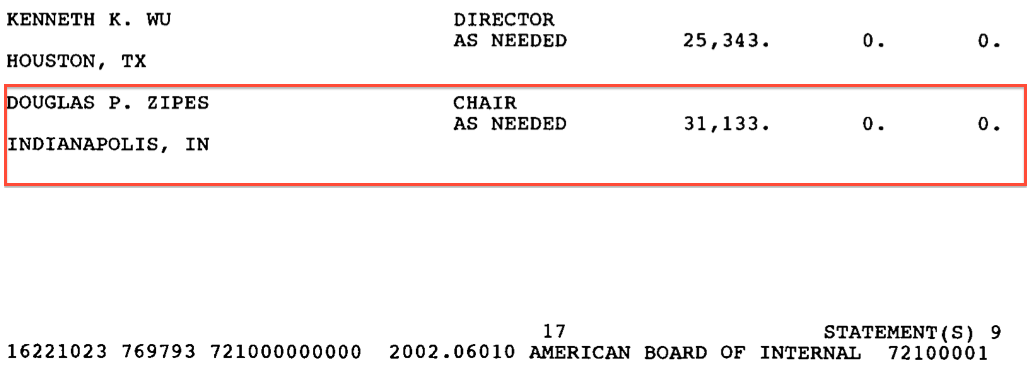
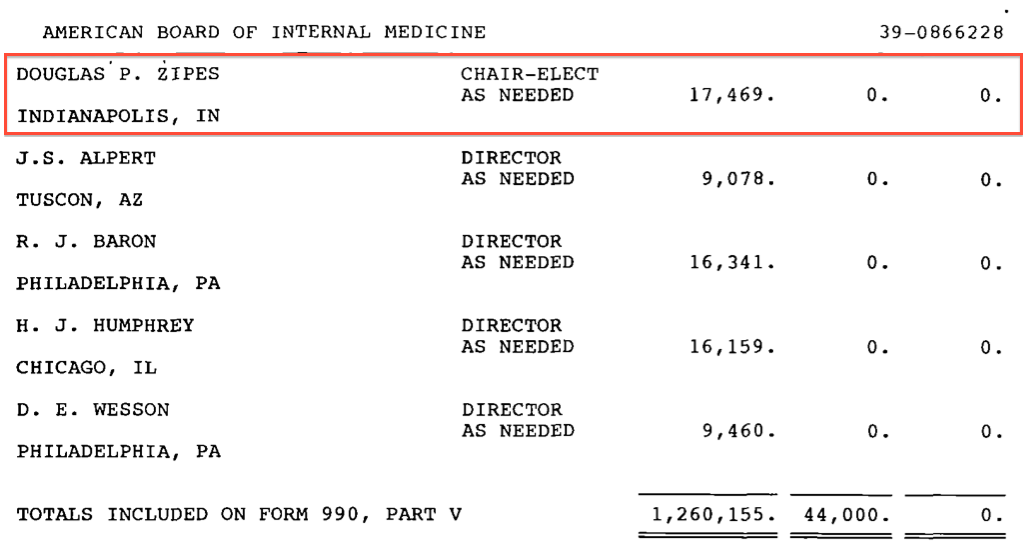
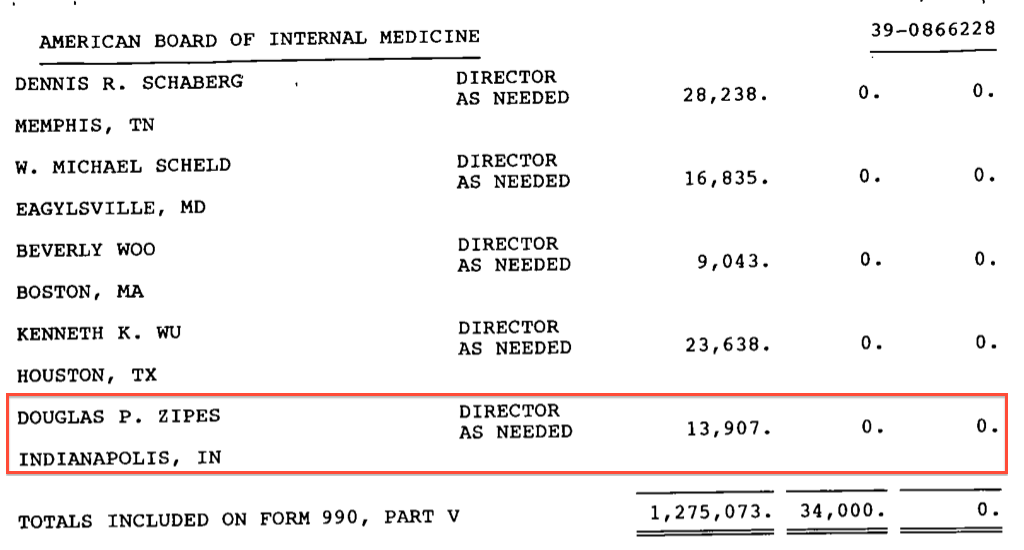
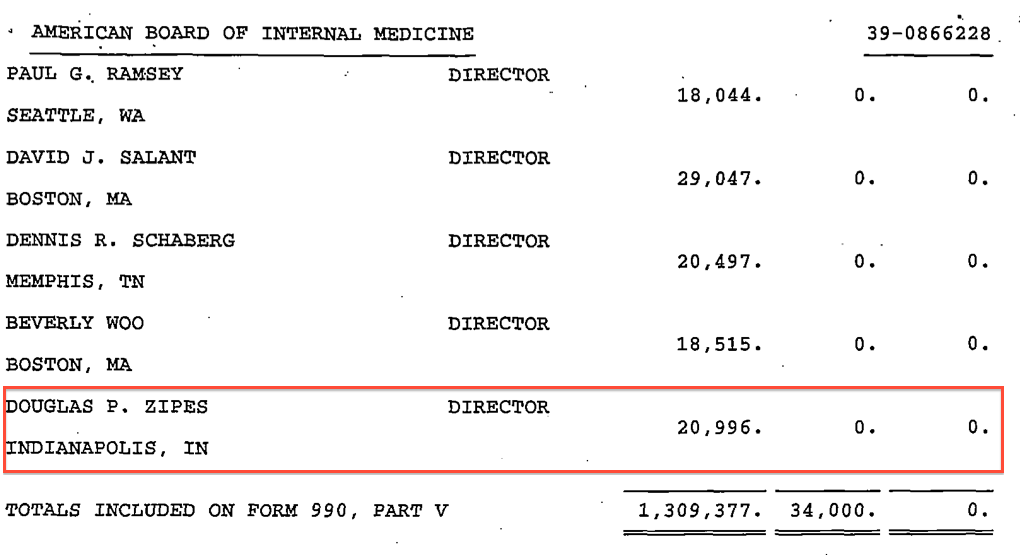
No where in his current disclosures does Dr. Zipes mention his long relationship with ABIM as a paid "Director," "Chair-Elect," and "Chair" of the organization. Here is what Dr. Zipes earned from the ABIM between July 1, 1998-Jun 30, 2003:

FY 2003 $31,133 as "Chair"
FY 2002 $17,469 as "Chair-Elect"
FY 2001 $13,907 as "Director"
FY 2000 $20,996 as "Director"
FY 1999 $30,484 as "Director"

No doubt Dr. Zipes has good friends at the ABIM and will find it easy to take the "protagonist" role in the "debate," but is he the right person for a non-biased recommendation for endorsement of the  ABIM's MOC program by the Heart Rhythm Society?

We should recall that Christine Cassel, MD was the acting President and CEO of the ABIM and the ABIM Foundation during the time Dr. Zipes' had his appointments there.  Dr. Cassel now is President and CEO of the National Quality Forum (NQF), a non-profit organization called a "consensus-based entity" that sets quality metrics that soon will influence how physicians are paid.  The NQF has close ties to the ABIM and derives most of its revenue from the Center for Medicare and Medicaid Services (CMS) by way of government grants. Recall that the current President and CEO of the ABIM, Richard Baron, MD worked for the National Quality Forum before coming to the ABIM and may have been slated for a leadership role there as evidenced by a screen shot I captured from the National Quality Forum's website in July 5, 2014 (the web page is no longer present).  Also realize that the National Quality Forum continues to employ Ms. Cassel who was responsible for (1) the repeated piecemeal funneling of $30.6 million of our physician testing fees to the ABIM Foundation (and that purchase of the now infamous $2.3 million luxury condominium), (2) the creation and write-off of $3 million dollars for the now defunct "Institute of Clinical Evaluation" created by the Foundation, and (3) the non-disclosure of grants the ABIM Foundation received from the Josiah Macy Jr. Foundation and the "Institute of Medicine as a Profession," a non-profit created by George Soros and his Open Society Institute.  Needless to say, Dr. Zipes' conflicts are very significant in light of this interplay of money and politically-connected individuals and organizations.

Let's now look at Dr. Kusumoto's published conflicts of interest for this "debate:"
Fred M. Kusumoto, MD, FHRS. Mayo Clinic, Jacksonville, FL

Disclosures
F.M. Kusumoto: None.
Abstract
There is no abstract associated with this presentation.
(I did not see Dr. Kusumoto's name on any of the ABIM's Form 990 tax disclosure forms either. )

The Heart Rhythm Society must make a clear choice after the upcoming scientific sessions. They can side with the working community of cardiac electrophysiologists or they can side with continuing their support of government grants, cronyism, and an increasingly political agenda that promises cash flow from the government.  Which will they choose?

So let's show up with a sea of buttons and other bling and make it clear that the HRS's endorsement of MOC must go.  All of it.

To promote the anti-MOC movement, I have created a section of my MedTees.com website specifically to purchase anti-MOC bling. All proceeds I receive (about 1-5% of the prices) will go to the ABIM's competitor, NBPAS.org instead. The rest of the costs go to the manufacturer of the bling, Cafepress.com, including the high shipping prices (sorry, out of my control).

If you'd like to get a FREE 2.25" Anti-MOC button from me before the "debate" session at HRS2015, I will have a hundred of them to distribute(limit one per doctor - I paid for them myself), so get there early.

I look forward to seeing everyone at the meeting.

-Wes


Sunday, April 12, 2015

Medicare SGR Replacement Bill: "An Unwarranted Role of Medical Specialty Boards"

From Merrill Goozner at Modern Healthcare Magazine:
"The law not only scraps the sustainable growth-rate formula for physician payment, it consolidates the diverse programs for rewarding or penalizing physicians. The CMS no longer will calculate separate payments for reporting quality measures, improving performance or meeting meaningful-use standards.

Instead, the CMS will substitute a composite MIPS score for each physician participating in the Medicare program. When measured against clinical peers, a physician's score could result in the agency rewarding or penalizing him or her up to 5% of annual revenue starting in 2020. That rises to 9% of revenue for 2022 and beyond.

While the program is designed to be revenue-neutral, it allocates $500 million for rewards, just in case a majority of physicians turn out to be like the kids at Lake Wobegon and achieve universally high composite scores.

The overall score will be based on how well participating physicians perform in four separate categories: quality measures (30% of the total); resource use (30%); achieving meaningful use (25%); and clinical practice-improvement initiatives (15%). Each component will be determined by agency rulemaking and stakeholder input.

But some stakeholders are being given a greater say in the process (others are invited to participate, of course). The law, for instance, asks “eligible professional organizations” to recommend quality measures for use in the program. It defines eligible professional organizations as “nationally recognized specialty boards of certification.”

It also says physicians can achieve the maximum score on the clinical practice-improvement component by being part of a certified medical home or “comparable specialty practice.” The law gives “eligible professional organizations” the ability to make that determination. The bill also mentions “practice assessments related to maintaining certification” as one way to achieve a maximum clinical practice-improvement score.

The special role given physician specialty boards in the SGR replacement bill heightens the stakes in the recent controversy swirling around the costly and complicated recertification process at the American Board of Internal Medicine, one of the largest boards in the nation. A rival group is seeking to substitute continuing medical education credits for recertification test-taking, which the ABIM and patient and consumer advocacy groups oppose.

The flare-up has brought some of the more unsavory and unscientific aspects of the self-regulating physician recertification process to light. A recent New England Journal of Medicine perspective by ABIM critic Dr. Paul Teirstein of the Scripps Clinic noted that the latest studies have shown no relationship between physician recertification and performance on quality measures—the very task given to certification boards in the SGR replacement bill.

Teirstein also accused the ABIM of being “a private, self-appointed certifying organization” that charges exorbitant fees “unfettered by competition” for its products and tests.

The certification boards aren't major powerhouses on the Washington lobbying scene. Last year, for instance, the ABIM spent only $160,000 on the lobbying firm of Mehlman Castagnetti Rosen Bingel & Thomas, according to Senate lobbying records. But that firm's chief healthcare lobbyist, Dean Rosen, once served as an adviser to then-Senate Majority Leader Bill Frist (R-Tenn.), and apparently still has good connections with the staffers who drafted the language of the SGR replacement bill.


As we editorialized here two weeks ago, a permanent end to SGR is the right thing to do. And creating MIPS to replace multiple rewards programs will lessen the administrative burden on physicians and physician practices, and incentivize them to move toward value-based care payment models.

But other stakeholders will need to remain vigilant to ensure that self-interested physician specialty boards don't play an outsized role in setting the parameters of the program—especially when it comes to determining what constitutes quality and clinical-practice improvement."
This is horrible. Our government is about to authorize the use corrupt and completely unaccountable certifying organizations to serve as a metric with which to determine the "value" of health care for our patients and remuneration for working physicians nationwide. In fact, the certifying organizations the bill authorizes are being sued in federal court for possible anti-trust violations. How embarrassing would our U.S. Senators look in the eyes of seniors everywhere if that suit is found in favor of the plaintiffs?  The whole Medicare SGR Replacement Bill, H.R. 2, would fall apart.  Are our U.S. Senators really ready to put their political careers on the line for one flawed bill? (Note the senators who were lobbied were never privy to this pending lawsuit.)

(To think that the policy divisions of our sub-specialty medical societies are also complicit in this scheme is even more appalling.)

Is this what our patients need? Are we, the front line working physicians, going to allow the self-serving money trail of government grants to determine what constitutes quality care for our patients and "value" for  our health care system?

All physicians AND their patients need to stop and pick up the phone Monday morning. Call BOTH your Senators and flood the switch boards. Tell them to vote "NO" on the Medicare SGR Replacement Bill (H.R. 2).

Unless, of course, you think $2.3 million dollar condominiums with chauffeur-driven BMW 7-series town cars is how our nation should define health care "value" in the years ahead for our Medicare patients.

-Wes

Addendum: Here's even more lobbying to CMS that pushed for ABMS "board certification" to be the only board used for CMS's Physician Compare website in Sept 2014.

Friday, March 20, 2015

Heart Rhythm Society and MOC: It's Not About the Doctors

Dr. Fogel
Richard Fogel, MD, President of the Heart Rhythm Society (HRS), finally released HRS's current stance in the debate on the American Board of Medical Specialties' (ABMS) Maintenance of Certification (MOC) program that has pitted one quarter of US practicing physicians against the American Board of Internal Medicine (ABIM) and its Foundation.  As a member of the Heart Rhythm Society, I sent Dr. Fogel links to my work on the ABIM in a relatively lengthy email some time ago.  As a result, I am sure Dr. Fogel is fully aware of the financial dealings that have transpired with the ABIM and its Foundation prior to writing his press release.

From Dr. Fogel's announcement, it appears the Heart Rhythm Society is carefully choosing its words so as not to seem too adversarial to the ABIM by recommending (1) the removal of the requirement of being dual-MOC certified in BOTH cardiology and cardiac electrophysiology, (2) permanently ridding electrophysiologists of having to perform the busy-work of "practice improvement modules" and (3) "continuing the discussion" at a later time.

While Dr. Fogel's statement is pleasant and forthright, those are not exactly fighting words.

Dr. Fogel also announced a "debate" on MOC that will take place at the Heart Rhythm Society Scientific Sessions being held in Boston in May of this year.  It will be moderated by Mike Gold, MD with Doug Zipes, MD as the pro-MOC advocate and Fred Kusumoto, MD taking the contrary argument. I'm sure the session will be well-attended and, who knows, maybe a few carefully-selected questions will be hand-picked from the audience!  But will the "debate" do anything?  No.

MOC Debaters?
Step back and consider this upcoming HRS "debate" for a moment.  Note how one doctor is being pitted against another doctor as though there is a debate between doctors on the value of MOC to our patients. The whole scenario is like physician puppets on a string having their message crafted by some ABMS/ABIM puppeteer! Is there really a debate that our physician testing fees should be used to purchase $2.3 million condominiums with a chauffeur-driven BMW 7-series town car? Is there really a debate that it's okay for an organization to fail physicians based on an unproven metric after 30 years of clinical practice? Is there really a debate that the evidence base substantiating MOC was written in large part by ABIM members themselves?  Given the overall negative sentiment of the majority of electrophysiologists, to pretend there is a 50-50 split in opinion on the subject of MOC is silly.  Nothing could be further from the truth. In fact, I'm not sure I've ever seen such consensus by the entire practicing U.S. physician community about the detrimental effects of MOC to our profession no matter what subspecialty or what side of the political divide they hail.  There simply is no debate: MOC is a mess.

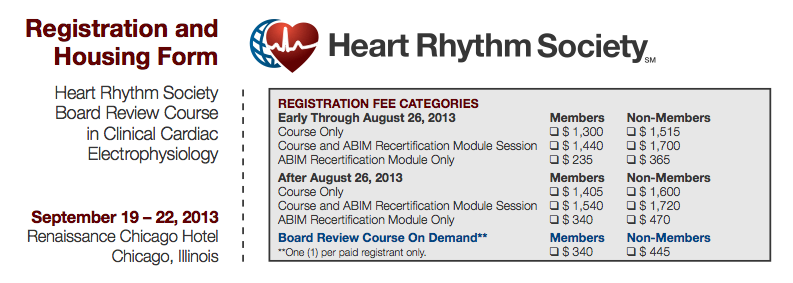
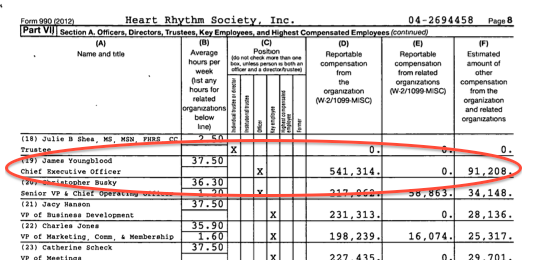
Maybe the real debate at this year's Heart Rhythm Society meeting should be about the $4.9 million in registration fees the organization collects from its members each year for MOC review courses so they can pay their non-physician CEO's salary of $632,522 and Bill Clinton's public relations firm $897,580 to show up at the 2013 Heart Rhythm Society Scientific Sessions in Denver, Colorado.

Please note that the ABIM still has not publicly posted their 2014 Form 990 (due Feb 17, 2015). It is clear they want to wait as long as possible to do so.  But even with an extension, the form must be filed by May 15, 2015, the day before the 2015 HRS Scientific Sessions end. It's very hard to have a "debate" on MOC when all the facts on the finances of the ABIM remain cloaked in secrecy, too.

Physicians should remember that just because the 0.5% incentive payment from Medicare to physicians who participated in the MOC ended 1 Jan 2014, it doesn't mean the coercive practice has gone away. Through their many political supporters, the ABMS made sure that MOC remained a component of the Medicare Physician Quality Reporting System (PQRS) as a part of the Center for Medicare and Medicaid Services (CMS) "Physician Compare" initiative.  The majority of US physicians are now employed by hospitals eager to compete for a growing number of newly-insured patients. As such, hospitals are increasingly requiring physicians to participate in MOC as a condition for gaining credentials in their hospital.  By even pretending to side with any form of MOC, the Heart Rhythm Society tactically agrees that MOC may continue to coerce money from their own physician consumers for the their benefit and that of ABMS's constituents.

Let's be clear: MOC is not a doctor issue, it's a political issue.

It is remarkable that the US government is now the only government in the world that officially requires repeated "re-certification" of physicians for them to practice medicine. Thanks to MOC, it is also the only government in the world that acts as imprimatur to an unproven pay-to-play scheme.

Doctors are done playing this game.  It's time for HRS to stop the faux debating and start aggressively acting on behalf of their membership.

The time to end MOC as a faux physician quality measure - all of it - is now.

-Wes


Tuesday, January 13, 2015

Some Thoughts on the National Board of Physicians and Surgeons

I admire Paul Tierstein, MD's honest attempt to create a greatly simplified alternative to the  ABMS's Maintenance of Certification® (MOC) program called the National Board of Physicians and Surgeons (NBPAS).  I hope he's successful, but I sense there will be large headwinds for the effort ahead.

Here's why.

The Affordable Care Act (ACA) modified Sections 1848(k) and 1848(m) of the Social Security Act which defines how CMS pays physicians for their services.  Section (k) is the section that defines how a "Quality Reporting System" is to be set up (with subsection (4) requiring the "Use of Registry-based Reporting") and Section (m) defining physician incentive payments physicians might receive if quality reporting occurs properly. (Sadly, those CMS incentive payments do not cover the cost of participating in MOC for most of us.)*

Section (k) was modified by the ACA to include the ABMS MOC program as a "physician registry."  The registry was "defined" as requiring all four parts of the MOC program created by the ABMS, including the much-maligned "practice improvement modules" that have been described by the physician community as overly time-consuming, irrelevant and may even violate federal research statutes regarding the study of physicians, their practices, and patients.

Unfortunately the new NBPAS does not address these requirements of the our new health care law, leaving the creation of the NBPAS to look like a Rand Paul moment all over again with physicians signing up for something that, legislatively, means nothing.

Welcome to the concept of "regulatory capture."

Screenshot of Heart Rhythm Society webpage
Physicians should realize that special interests and their lobbyists (including the US hospital, pharmaceutical, survey companies, and insurance lobbying groups) were highly influential in the creation of our new health care law.  They are also very good at politics.  It is unlikely that these entities want to see MOC go away, irrespective of how corrupt the system has become.  There's just too much money involved.  Even our own specialty societies use the MOC program's educational requirements to coerce physicians to take their educational courses to "earn MOC points" to help pad their bottom lines as physician attendance (and corporate sponsorship) at scientific sessions has dwindled over the past years.

But what's more important to our patients in the long run? Time for their needs or time for test-taking and survey collection?  Is it more important to satisfy government requirements or address the real needs of our patients?  Certainly continuing education of physicians is needed, but irrelevant work for an unaccountable  third-party organization so they can measure us rather than help us is not.

A second Heart Rhythm Society webpage devoted to MOC
Physicians need to take the stick, but we can't do this alone since we care for patients.  So we need to ask this question: will our specialty societies commit to supporting practicing physicians or the  new bureaucratic divide? (They can't do both.)  Will they truly step up to the plate and commit their considerable staff, dollars, pager-less hours, lobbying and legislative efforts to help remove the corrupt MOC program from the Affordable Care Act or allow practicing physicians - their members - to wallow in the corrupt status quo as they are coerced to participate in MOC?

I remain pessimistic that creating another "board" will fix the current deep-seated problems with the ABMS MOC construct with ABMS as the mothership directing a flotilla of 24 member boards.  In my view the only way to truly "change" MOC is to have a coordinated effort from all specialty societies to insist our legislators remove the portion of our new health care law that requires we participate in a "physician registry" that robs not only practicing physicians, but patient care itself.

HRS and ACC, are you on board?

-Wes

*Addendum 2/12/2015: 
It should be noted that the payment incentives offered 2012-2104 from CMS for participation in MOC ended January 1, 2015, but that MOC participation will still be used as a physician quality reporting metric. 

Friday, January 09, 2015

Slow Down on Creating Alternate MOC Pathways

Yesterday was a remarkable day for practicing US physicians.  It was the day two articles appeared side by side in the New England Journal of Medicine: one promoting the American Board of Medical Specialties' Maintenance of Certification® (MOC) program, and another that thoroughly debunked it.  The comments placed to the stories told a story of solidarity, pent up rage, of corruption within our profession, and a commitment to change the status quo.  Doctors were relieved to learn that an alternate pathway to MOC, the National Board of Physicians and Surgeons, might offer a slightly less expensive pathway to acquire MOC points.

But I worry physicians might be reacting, rather than carefully considering, the implications of the alternate proposal.

I should say that I applaud Dr. Paul Tierstein's phenomenal piece published yesterday in the New England Journal of Medicine.  He cogently articulated the many problems with the ABMS MOC program but stopped short of dismantling the ABMS (and ABIM's) board re-certification process entirely as he promoted his new "National Board of Physicians and Surgeons instead:"
There will be three or four requirements, and you have to be certified by an ABMS board initially. We're not taking that on. I think the fellowship process is great, it's like a final exam for residency and fellowship. I think most people agree that it's okay (not perfect, but okay). You'll also have to have a valid medical license and not to have been denied privileges recently in your specialty. Then the key requirement is 50 hours of continuing medical education, provided by an ACCME-accredited provider over 2 years. And the cost will be far lower. The cost will be as little as possible.
While this may be an acceptable solution to the current MOC conundrum created by the inclusion of ABMS and the MOC program in our new health care law, I believe we should first investigate how the ABMS and MOC program became part of the Affordable Care Act in the first place.

Troubling concerns of collusion of ABIM board members with the Center for Medicare and Medicaid Services (CMS) and the National Quality Forum (which receives the bulk of its revenues from grants supplied by CMS) exist. Christine Cassels, MD, who is the current President and CEO of the National Quality Forum, was President and CEO of the ABIM from 2003 to 2013 and ultimately responsible for the $2.3 million dollar luxury condominium purchase by the ABIM Foundation in December, 2007. Richard Baron, MD served as treasurer of the ABIM and later an unpaid Director of ABIM in 2007-2008. Dr. Baron also served as Group Director of Seamless Care Models at the CMS Innovation Center which claims it "Identifies, validates and disseminates information about new care models and payment approaches to serve Medicare and Medicaid beneficiaries seeking to enhance the quality of health and health care and reducing cost through improvement." Dr. Baron then became a full-time employee of CMS in 2011-2012 before returning to ABIM in 2013.

Which leads to the question: how much influence did the ABIM leadership have in establishing a continuous money stream for itself and its Foundation during the writing and mark-up of the Affordable Care Act? (see pages 247 and 844-845 of this large pdf). Clearly, there should be public record available to this effect and physicians should inspect this record before creating an alternate MOC pathway.

Because if the ABIM influenced the writing of the Affordable Care Act for its own enrichment, rather than for "public good," this represents further corruption of an already broken MOC model, in my view.  There have been many experienced physicians adversely affected by the current MOC program.

So these are the questions practicing physicians should ask before enrolling in the current, or any other, MOC pathway:

(1) Do we need MOC at all? and
(2) Don't we need a full public disclosure of the audited financials of the ABIM and the ABIM Foundation and their financial dealings first? and  
(3) Shouldn't we insist on removal of the corrupt MOC program entirely from the changes made to Social Security Law by the Affordable Care Act before creating another unaccountable organization to practicing physicians?

-Wes

Monday, July 07, 2014

New CMS National Coverage Decision for Pacemakers Begins Today

A new CMS National Coverage Decision for pacemakers begins today.  Here are the specifics.

If your patient is getting a pacemaker for atrial fibrillation or other "ineffective atrial contractions" with symptomatic bradycardia, be very sure to document the "non-reversible" nature of the symptomatic bradycardia in your note and have your billing staff consider adding a "KX" modifier to the claim line(s).

Remember, most regulators look at codes, not notes.

Just sayin' -

-Wes

Thursday, March 13, 2014

A Quiz: Is Maintenance of Certification Worth It?

Recently, I noted that the Center for Medicare and Medicaid Services (CMS) Physician Quality Reporting System (PQRS) was going to offer an incentive payment of 0.5% beginning 1 January 2014 to doctors who participate in the American Board of Medical Specialties' proprietary Maintenance of Certification® (MOC) process and are in good standing.

I wondered: how much more money does that extra payment from CMS represent for the average physician?

So I decided to do some back-of-the-envelope calculations to see what the investment of hours of studying the ABMS's proprietary materials, test-taking, board review courses, patient survey-taking, and practice improvement studies could garner for the average physician. Is there some real dollar-and-cents value to participating in this process?

To estimate this value, I made some assumptions to simplify the math:
  • First, I assumed the Mediscape 2013 average male physician salary in America was reasonably accurate ($259,000/yr) and will not change this year.
  • Doctor salary is taxed at a 24% rate after withholdings are considered.
  • No time during regular work hours is devoted to performing any MOC requirement.
  • The average US male physician works and average of 45 weeks per year, 5 days per week for their total salary.
  • The doctors only see Medicare patients.
  • Every patient office visit is billed as a 99213 (established patient visit - 15 min). (I know, not realistic, but simple to estimate)
  • Doctors work 8AM-12 noon and 1pm-5pm daily, seeing 32 patients per day, every day they work.
  • Income medicare pays the physician for each 99213 established patient visit is $69.66 and there is a 100% collection rate
There are three questions you must answer for this quiz:

(1) Given the above assumptions, how much more income will the average US male physician earn as a result of their total PQRS payment from CMS each year?
(2) How much does this additional PQRS income represent per patient visit?
(3) In your estimate, is this additional income worth the time spent away from your patients or your family events because of study requirements?

Please show your work (and/or your thoughts) in the comments.

Rest assured you will not be timed on this test nor will you receive any renumeration, CME credit, or MOC credit for your participation in this fun. Rather, it is hoped it helps educate physicians on what they'll be getting for their "required" $194 to $256 fee paid annually to the ABIM.

The first one to answer this quiz correctly will be officially crowned with the invaluable and highly-esteemed Dr. Wes Adminstrative Oversight Award®. (I added the trademark symbol to this fictitious award because I'm sure this exercise will be of great value one day.)

Good luck!

-Wes

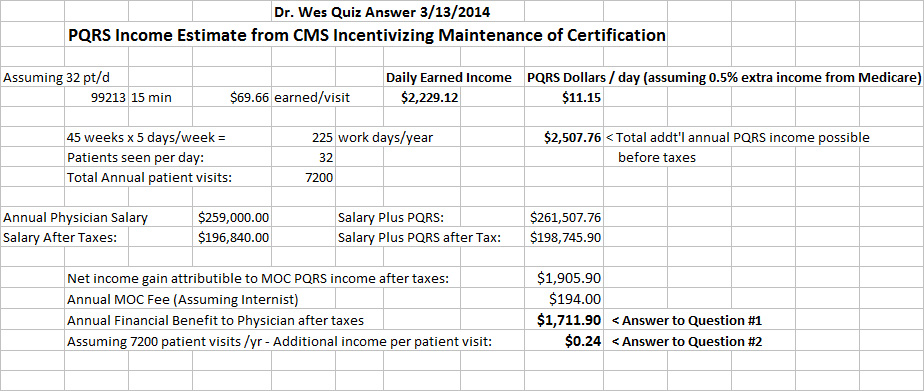
PS: In the interest of saving time for my busy colleagues who'd rather cut to the chase, here's a link to my back-of-the-envelope calculations. (Feel free to point out errors in the comments)

Monday, February 24, 2014

Maintenance of Certification: The Noose Tightens

Center for Medicare and Medicaid Services (CMS) displayed it's enmeshed ties with the American Board of Medical Specialties (ABMS), a private non-profit with its 24 Subspecialty Member Boards, by agreeing to provide "incentive payments" of 0.5% for 2014 as part of its 2014 PQRS quality reporting initiative.
In accordance with section 1848(m) (7) of the Act (“Additional Incentive Payment”), Centers for Medicare and Medicaid Services (CMS) is continuing the Maintenance of Certification (MOC) Program Incentive that began in January 2011. Eligible professionals (EP) who were incentive eligible for the Physician Quality Reporting System (PQRS) could receive an additional 0.5% incentive payment when Maintenance of Certification Program incentive requirements were also met.

Requirements

In order to qualify for the additional 0.5% incentive payment for the 2014 PQRS based on the 12-month reporting period (January 1, 2014 through December 31, 2014), the physician will need to complete the following:

• Satisfactorily submit data, without regard to method, on quality measures under PQRS, for a 12-month reporting period either as an individual physician or as a member of a group practice.

AND


The Maintenance of Certification Program will need to submit to CMS, on behalf of the physician the following information:

• That the physician more frequently than is required to qualify for or maintain board certification status, participates in the Maintenance of Certification Program for a year and successfully completes a qualified Maintenance of Certification Program practice assessment for such year;
• Information on the survey of patient experience with care; and
• The methods, measures, and data used under the Maintenance of Certification Program and the qualified Maintenance of Certification Program practice assessment.

As defined in section 1848(m) (7) (C) (i) of the Act, a “Maintenance of Certification Program” is a continuous assessment program that advances quality and the lifelong learning and self-assessment of board certified specialty physicians by focusing on the competencies of patient care, medical knowledge, practice-based learning, interpersonal and communication skills and professionalism. In order to qualify for the additional 0.5% incentive payment in 2014, physicians will be required to participate more frequently than is required in at least one of the following two parts of the Maintenance of Certification Program, as well as “more frequent” successful completion of a qualified maintenance of certification program practice assessment as follows:

• Participate in educational and self-assessment programs that require an assessment of what was learned; and
• Demonstrate through a formalized, secure examination, that the physician has the fundamental diagnostic skills, medical knowledge and clinical judgment to provide quality care in their respective specialty.

A “qualified Maintenance of Certification program practice assessment,” as defined in section 1848(m)(7) (C) (ii) of the Act is one that includes an initial assessment of a physician’s practice that is designed to demonstrate the physician’s use of evidence-based medicine; includes a survey of patient experience with care; and requires the physician to implement a quality improvement intervention to address a practice weakness identified in the initial assessment. The practice assessment must also require the practice to reassess performance improvement after the intervention.

The phrase “more frequently” may be interpreted differently by different Maintenance of Certification Programs. CMS is looking to see an attestation from a Maintenance of Certification Program entity that both the Maintenance of Certification Program itself and the practice assessment are completed once more by a physician than is required by a specific Maintenance of Certification Program.
This is, of course, the start of the end-run to tie Maintenance of Certification requirements (as defined solely by the ABMS) to Maintenance of Licensure for physicians to be able to practice medicine. Employer-based physicians will have no choice but to agree to pay into this certification cartel as money-squeezed hospital systems look for ways to improve their bottom line. For doctors, this process is nothing more than a "pay to play" scheme that backs a union-like serfdom with leaders that idealize their self importance and exorbitant salaries more than patient care.

This CMS PQRS incentive payment scheme incentivizes those who make the tests, track the results, and then post them online, rather than improving the quality of patient care. The onerous MOC process as devised by the ABMS has never been independently shown to improve patient care or quality outcomes but rather detracts from patient care in favor of payments required by the regulators.

Where's the quality in that?

-Wes


References:
Christman KD. Maintenance of certification (MOC), maintenance of licensure (MOL) and continuing medical education (CME): how the regulators prosper. Journal of American Physicians and Surgeons. 2012.17(3):76-79.

Benjamin Rush Society's MOC Bibliography.

Wednesday, May 08, 2013

HRS2013 Pre-meeting Reflections

This morning I sit quietly in my hotel room, contemplating the day ahead at the 2013 Heart Rhythm Society Scientific Sessions in Denver.  Emotions clash.

On one hand, it will be great to see old friends an colleagues, to be spoon-fed information, and to relax.  On the other hand, I find myself in an electrophysiologic angst:  how I can spend the time upbeat knowing that the relative value of the work that heart rhythm specialists do was cut at least 30% on 1 January 2013, thanks to new billing codes that bundled multiple codes into one?

Can I afford to be here?

I do not say this lightly.  Our first quarter's pay this year compared to last year was recently disclosed and the results were striking. Guys like me who have devoted years to our training, stood at bedsides for countless hours, and endured training that finally ended at age 36 (counting a brief two-year hiatus for a general medical officer stint as an ER physician for the US Navy), got a whopping 30% cut from CMS for the much of the procedure work we do, stealthy cloaked in codes.

It is real.  It has happened.  And its effects are being felt by many, real time, even now, at #HRS2013.

I realize in these economic times that many professions are feeling similar pressures.  I am not here to lament nor ask for pity, but rather to describe.  In many ways, I am lucky: lucky to have good friends, a fascinating skill, and wonderful colleagues and support staff to work with.  But I wonder, how all of this will change things. 

Certainly, we tabled our plans to hire another EP.  No wonder EP fellows are finding it tough to get a job.   Hospitals are not hiring.  Wards are being consolidated.  Pennies are being pinched, and so are staff.  Patients are waiting more to see guys like me.  Attendance at continuing education conferences is falling.  While the effect on physician care "quality" are probably uncertain at best, but it is becoming quite obvious that "innovation" in my field of medicine as we've known it is stagnating or moving overseas.

It is all change - I get that - part of the Great Experiment of our nation's health care reformation project that is moving fast and furious to places unknown.  But change is difficult.  It shakes things up.  Anxiety and restlessness at times like these can consume a psyche or, in ideal circumstances, lead to something new, something liberating, something better.

So off I go to the 2013 Heart Rhythm Scientific Sessions, hoping to keep my chin up, my ear to the ground, and my eyes open.

You never know what you might learn.

-Wes


Saturday, January 05, 2013

The Costs of Not-so-Shared Decision Making

This week's New England Journal of Medicine contains a perspective piece by Emily Oshima Lee, M.A., and Ezekiel J. Emanuel, M.D., Ph.D. entitled "Shared Decision Making to Improve Care and Reduce Costs." The original paragraph of the piece sets the tone:
"A sleeper provision of the Affordable Care Act (ACA) encourages greater use of shared decision making in health care. For many health situations in which there's not one clearly superior course of treatment, shared decision making can ensure that medical care better aligns with patients' preferences and values. One way to implement this approach is by using patient decision aids — written materials, videos, or interactive electronic presentations designed to inform patients and their families about care options; each option's outcomes, including benefits and possible side effects; the health care team's skills; and costs. Shared decision making has the potential to provide numerous benefits for patients, clinicians, and the health care system, including increased patient knowledge, less anxiety over the care process, improved health outcomes, reductions in unwarranted variation in care and costs, and greater alignment of care with patients' values.

However, more than 2 years after enactment of the ACA, little has been done to promote shared decision making. We believe that the Centers for Medicare and Medicaid Services (CMS) should begin certifying and implementing patient decision aids, aiming to achieve three important goals: promote an ideal approach to clinician–patient decision making, improve the quality of medical decisions, and reduce costs."
What a nice, lovely, fuzzy bunny.  Who couldn't want such "shared" decisions in complex medical care?  Especially nice simple teaching aids for Medicare's top 20 procedures printed at the "8th grade level" that are "brief?"

Doctors, don't you know that this will become simply another box to check on your EMR for Medicare reimbursement? 

And yet the benefits of cost savings that these "shared" decision making tools' will have on health care are assumed, especially when deployed nationwide, despite what the authors claim.  Note that the 2011 Cochrane Collaborative review of the 86 studies they reference said nothing about cost savings.

Doctors know this and so do the authors.

Why else would the authors require a cudgel to impose their "shared" decision making benefit if other real life clinical doctors fail to follow along?
"Providers who did not document the shared-decision-making process could face a 10% reduction in Medicare payment for claims related to the procedure in year 1, with reductions gradually increasing to 20% over 10 years. This payment scheme is similar to that currently tied to hospital-readmissions metrics."
Ms. Lee and Dr. Emanuel, in their zeal to impose their Progressive mindset upon America's physicians have forgotten several important tenets of health care delivery:
  • First, decisions made in medicine are each unique to a patient's constellation of medical problems, socioeconomic and cultural background, age, gender, religious beliefs, etc.  In other words: decisions are made in concert with an individual's situation, and not based on the government's desire (necessarily) for cost savings (even if it is couched in euphemisms such as "shared decision making").

  • Second, actual cost information (both out-of-pocket and real health care system costs) for patients and doctors will remain shrouded  in secrecy since payers rely on obfuscation of actual cost information to extract their portion of fees before patients receive any value for their dollar.  Also, other similar pay-for-performance measures have already uniformly flopped at demonstrating cost savings.  Then imagine for a moment if the cudgel for shared decision making is imposed.  The potential for a 10-20% Medicare physician fee cut on top of a 30% Sustainable Growth Rate cut that is likely to reappear in 2014 will be untenable for US physicians. 

  • Third and very importantly, the ACA legislation has created a whole new "institute" of salaried individuals within government called the Patient-Centered Outcomes Research Institute (PCORI) to develop the authors' soon-to-be-mandated decision aid materials while another branch of government already exists to produce such education aids called the Agency for Healthcare Research and Quality (AHRQ).  Wouldn't our health care system benefit far greater from cost savings by not duplicating services already performed by another government agency? How much, exactly, will the PCORI cost us?

  • Fourth, the push to re-invigorate the mass-production of physicians via three-year medical school curricula while simultaneously failing to increase residency slots assures poorer trained, inexperienced doctor-patient discussions about complicated medical issues, not better ones. Shared does not mean better.

  • Finally, liability risks remain for doctors caught in these unenviable mandates that fail to recognize the individual complexities of an individual patient's care.  Until doctors sense a modicum of effort for liability reform, they will continue to offer care that exposes both themselves and their patient's to the path of lowest legal risk, irrespective of what teaching aids they give to patients.
Doctors and the AMA should demand transparency in the cost of creating and funding the PCORI and its shared decision making materials, yet another layer in the runaway middleman health care behemoth emerging as the front lines of health care delivery are systematically decimated. 

If that doesn' t matter to all of us, then share away.

-Wes

Monday, April 23, 2012

When Health Care is Promoted As "Free"

Health expenditures in the United States neared $2.6 trillion in 2010, over ten times the $256 billion spent in 1980. The rate of growth in recent years has slowed relative to the late 1990s and early 2000s, but is still expected to grow faster than national income over the foreseeable future.

So imagine my surprise when I saw this Medicare commercial last night that stated preventative health care services provided by Medicare were "free:"


CMS also uses the word "free" in the description of the new health care law's provisions on their Youtube channel:

"For those with Medicare, the health care law offers most preventive health care services for free."
Describing health care services as "free" dissociates people the cost reality of providing these services. It perpetuates the myth that we can have health care services without having to pay for them. Further, calling services "free" devalues the expertise and cost of facilities and regulatory oversight required to support such services.

Of course, public policy experts who promote these deceptive advertising techniques argue that these ads are justified because they encourage people to participate in preventative health services, thereby saving costs.  But where are the data that these ads really work?    Scientists know the realities of indeterminate, false positive and false negative testing of any screening test.  We know the huge costs of additional testing that occurs in such in instance.   Given our overriding health care cost concerns, should we not insist on proof of the cost-effectiveness of such a large-scale, national approach to preventive medicine services rather blithely assuming it works?

After all, the reality of health care today is that it is anything but "free."

-Wes

Monday, March 26, 2012

When the Feds Come Knocking

Slightly over a year ago, the Department of Justice (DOJ) launched an investigation of a large number of institutions regarding concerns that implantable cardiac defibrillator (ICD) procedures were performed for reasons outside of the criteria set forth in Medicare’s National Coverage Decision (NCD).  This investigation occurred just after Al-Khatib and others published a report January 4, 2011 in JAMA that suggested as many as 22.5% of implantable defibrillators implanted for primary prevention of sudden death were not evidence-based.  While the physician community took issue with the Al-Khatib paper, the media firestorm it generated paired with the announcement to the Heart Rhythm Society physician community that a federal investigation was underway, had a chilling effect on ICD implantation nationwide.  Drs. Jonathan S.Steinberg and Suneet Mittal report on their experience with DOJ investigators under this heavy regulatory oversight in today’s Journal of the American College of Cardiology.

Steinberg and Mittal's diplomatic account carefully describes the challenges of retrospective audits performed by lawyers from the Department of Justice and those of their targeted health care facilities. The DOJ identified 229 cases as potentially inappropriate cases based on Medicare code criteria.  (This represented 8.7% of the de novo non-resynchronization ICD implants done for primary prevention at their institutions). After determining that some of these targeted cases were actually for secondary prevention or other coding transgressions, the authors could medically justify all but thirty-four (15%)  (or a very low 1.5% of all ICD’s implanted for primary prevention of sudden death) at their institution.  As has been the case in most reports, the majority of outside NCD-directed ICD implants occurred because of timing violations—too close to the diagnosis of heart failure, heart attack and coronary intervention. These timing constraints constitute the primary issue before implanting doctors: their professional society guidelines do not -- in all cases -- recognize similar timing restrictions.

It is surprising that we are not told what sanctions, if any, were levied against their respective institutions.   Perhaps the authors felt this important detail was unimportant to disclose or perhaps they were prohibited from doing so.  Perhaps their penalty is still being determined: after all, nothing drives behavior like fear.  To this end, we found the authors' compliments of the government's legal team unusual to report in a scientific manuscript, as if the they were suffering from Stockholm Syndrome.

We should acknowledge that the authors have added much needed clarity to the gray area of decision-making surrounding ICD implantation. Their explanations of timing violations highlight problems with coding, confusion around incidental PCI intervention in patients with dilated cardiomyopathy, and demonstrate the overlap decisions that must be made when bradycardia and tachycardia functions might be required for our patients.  This kind of clinically-relevant nuance was lacking in the impugnable Al-Khatib JAMA piece.

We can only speculate the large cost of the legal fees and man-hours devoted to this review process.  We will never know how many patients died during, or now after, the course of this investigation because they were not offered ICDs because ICDs can only be offered to patients who meet Medicare’s rigid, outdated, and still-to-be-updated National Coverage Decision for implantable defibrillators.   But perhaps this is the price of regulation that America is willing to pay in return for cost savings.  Perhaps we should not be concerned that professional guidelines for care delivery should be second fiddle to government mandates for ICD implantation.

With this latest report, a new era for medical practice is now upon us – one where priorities of low cost care and high quantity of care determined by non-medical personnel supersede the highest quality of medical care to our patients.   For regulators, it is easy to be a Monday-morning armchair quarterback evaluating health care delivery.  It is far harder, however, to decide prospectively who is likely to die (or not) when they sit before you with a newly-diagnosed cardiomyopathy and ejection fraction of 12%. 

When government and legal officials who carry no responsibility for the long-term well-being of our patients have the authority to retrospectively impugn and penalize doctors (and their health care facilities) based merely on retrospective reviews of billing codes and outdated payment mandates, they risk irrevocable harm to patients who might qualify for devices according to updated professional guidelines.  Doctors everywhere should stand up collectively to disown the practice of using NCD mandates, rather than updated professional guidelines, to determine appropriate care for patients.

After all, our patients are depending on us.

Westby G. Fisher, MD
Director, Cardiac Electrophysiology
NorthShore University Health System and
Clinical Associate Professor of Medicine
Pritzker School of Medicine, University of Chicago
Evanston, IL

John Mandrola, MD
Cardiac Electrophysiologist
Baptist Medical Associates
Louisville, KY

Addendum 27 Mar 2012: Link to Steinberg/Mittal article finally added.

Addendum 14 Sep 2012: Update on the DOJ Decision

References:

Jonathan S. Steinberg and Suneet Mittal. "The Federal Audit of Implantable Cardioverter-Defibrillator Implants: Lessons Learned." J Am Coll Cardiol. April 3, 2012, 59 (14) 1270-4. doi: 10.1016/j.jacc.2011.12.026

Epstein AE, DiMarco JP, Ellenbogen KA, et al. ACC/AHA/HRS 2008 guidelines for device-based therapy of cardiac rhythm abnormalities. J Am Coll Cardiol. May 27, 2008;51(21):e1-62.

Al-Khatib S, Hellkamp A, Curtis J, et al. Non–Evidence-Based ICD Implantations in the United States JAMA. 2011;305(1):43-49. doi: 10.1001/jama.2010.1915

Note: This post also appears on Dr. John Mandrola's blog: http://www.drjohnm.org/

Wednesday, September 14, 2011

A Million Hearts or A Million Dreams?

Yesterday, Thomas R. Frieden, M.D., M.P.H., and Donald M. Berwick, M.D., M.P.P. used the bulliest of scientific pulpits, the New England Journal of Medicine, to announce their "Million Hearts" initiative aimed at "preventing" heart attacks and strokes.

Now I do not hold a Masters in public health or public policy, but I do know a thing or two about evidenced-based medicine and cardiology. So it seems only appropriate that a cardiologist should comment on the proclamations made by an infectious disease specialist and pediatrician who promise to "save a million hearts," especially when we consider the billions of taxpayer dollars that have been or will be allocated to their programs.

I suspect neither of these highly accomplished men from public policy circles knows if, or exactly how, they will save a million lives nor how they should appropriately measure the effect of their initiative. That is not the point. Sexy program names are the point and making sure those names appear in a scientific journal within reach of treating cardiologists is especially the point.

We should acknowledge that the authors have been very good at dangling statistics of death and destruction caused by heart attacks and stroke to drive their policies. After all, while cardiovascular disease has remained the number one killer of Americans year after year, it is also the biggest driver of health care costs in America. I have no doubt these two non-cardiovascular specialists are proposing their initiative as a straw dog in an effort to gain the public's favor while simultaneously working around the clock to reduce cardiovascular spending. This is, after all, about a money shift, not just about more good ideas for improving cardiovascular outcomes.

How do I know?

I know because you will not hear from these men about the changes underway to limit access to cardiologists by forcing their consolidation with larger health care systems. I know because doctors are scrambling to these systems in an effort per preserve their income in a system intent on cost cutting. I know because government regulators are also working to restrict access to technologies have proven efficacy at saving lives and prolonging life for our older seniors, like wearable defibrillators whose use is being "reconsidered" and percutaneous aortic valves that still wait to gain approval (likely with significant restrictions to their use) here in the US. I also know because even with all the waste, fraud, and abuse measures underway to the cost of health care delivery in America, there will still be a need to cut America's health care system payments by at least 10-20% over the next ten years to maintain the program's fiscal solvency.

So given these overriding needs to cut costs, Americans should expect there are rock-hard data upon which the authors have based their need to start such a "million heart" initiative. Sadly, there are not. In fact, when we dig deeper we find the health care dollars spent on many of the cornerstone programs that serve as the foundations to their theories have lacked sufficient data to even justify their continuation. Yet, they ignore these data.

Let's look closer at the six cornerstone "principles" upon which their "million hearts" initiatives rest:
  • Principle 1: Focus - The authors claim that "communication, clinical measurements, reporting by physicians and health care facilities, and health care systems will emphasize improving ABCS (Aspirin therapy administration, Blood pressure management, Cholesterol lowering, and Smoking cessation)." Few data support this claim. In fact, clinical measurement programs, like pay-for-performance measures, have failed to affect outcomes in smaller pilot programs here in the US and in a larger population studies overseas. Despite this, additional money for these programs continues to be promoted by these authors. We should really ask why.
  • Principle 2: Health Information Technology (HIT) - The authors claim that "HIT enables providers and facilities to provide cardiovascular care and target intervention to patients in need of intensified care through registries and EHR (electronic health records) functions used at the point of care." While this sounds great, the data so far do not support this assumption when outcomes are actually measured:
    In fact, EMRs (electronic medical records) were associated with significantly improved performance in only one measure — giving diet advice to high-risk adults. They didn’t improve performance in things including giving aspirin for coronary artery disease, depression treatment or blood-pressure measurement.
  • Principle #3 - Clinical innovations - The authors claim: Innovations such as team-based care, patient-centered medical homes and interventions to promote adherence will be supported, evaluated, and disseminated rapidly to increase the effective use of ABCS practices." In other words, they haven't figured out if any of these "innovations" actually work. Truth be known, patient-centered medical home pilot projects have been a bit of a disappointment so far. Still, our authors press on absolutely convinced, (convinced I tell you!) that these measures will work despite data to the contrary.
  • Principle #4: Policies and programs to reduce smoking and effects of second-hand smoke - This program is likely to be cost-effective. But we should temper our enthusiasm for these efforts now that the anti-smoking message is firmly established in our schools and public consciousness.
  • Principle #5: Policies for reducing sodium content of food - While it is one thing to project the number of lives saved from modest sodium restriction in the diet, its an entirely different thing to suggest public policy will change people's individual lifestyle decisions. Good luck getting Americans to restrict sodium to 3 grams per day, especially when people can buy a salt shaker. If Drs. Frieden and Berwick could also impact the farm subsidies for corn that have been criticised as a significant contributor to our current obesity epidemic, they might gain favor with cardiologists, but politics are not likely to permit such a move.
  • Principle #6: Policies at eliminating artificial trans fats in the diet - The authors expect to "further reduce the level of trans fats that increase LDL cholesterol levels, lower HDL cholesterol levels that increases the risk of heart attacks." This principle requires the authors to accept the cholesterol theory of reducing heart attacks, but recent studies are debunking that theory. Take the recent high-profile NIH-sponsored AIM-HIGH trial comparing statin to statin plus niacin therapy in patients with cardiovascular disease and low HDL levels. (This study was designed to show that increasing HDL levels with niacin would improve heart attack and stroke outcomes.) This study was stopped 18 months ahead of schedule not only because it was determined to be extremely unlikely that the increase in HDL produced by niacin would improve outcomes, but also because of an unexpected increase in strokes among the patients receiving niacin, a drug known to increase HDL. Support for the results of this study come from earlier trials on non-statin cholesterol lowering medications that lowered cholesterol but never reduced the outcomes of heart attack and stroke. Only statins as a class of drugs have shown such a benefit. So what gives? Doctors are not sure, but it's more about the statins than it is about the cholesterols. Still, such analyses are unimportant to our policy-makers intent on moving their agenda forward. You see it is far better to espouse non-factual takes in the New England Journal of Medicine unencumbered by critical discussion. Worse, given what we now know about elevating HDL levels from the AIM-HIGH trial, their programs could even have a deleterious effect to public health.
Most of the best ideas for improving the public's health will come from those on the front lines of specialized medical care and not those who dictate unproven policy initiatives from a place of theories, inexperience, and assumptions. Like the 90-minute door to balloon time, an idea stemming from the professionals in the field with hard data to suggest its benefit to our patients, these are the initiatives that save real lives.

But we should realize what these feel-good perspective pieces are really about: they're about the money. More specifically, this perspective piece serves as a distraction to the money cuts and a money shifts from real-life proven therapies to mostly unproven, costly initiatives based on dreamy projections of public good rather than actual patient outcomes. As a result, we are now seeing the modus operandi of our government health care leaders of the future: placing feel-good happy-face programs in place based upon mostly unproven, theoretical data in favor of funding more expensive, better-proven therapies that really do save lives.

-Wes

Addendum: John Mandrola, MD offers his more heart-healthy take.

Thursday, August 25, 2011

On Medicare's Wearable Cardiac Defibrillator "Reconsideration"

I know what you're thinking. "Did he fire six shots or only five?" Well, to tell you the truth, in all this excitement I kind of lost track myself. But being as this is a .44 Magnum, the most powerful handgun in the world, and would blow your head clean off, you've got to ask yourself one question: Do I feel lucky?

Well, do ya, punk?

Harry Callihan, from the movie Dirty Harry

It was a small article in the Wall Street Journal on 8 August 2011: "Zoll Medical Falls As LifeVest May Face Reimbursement Revisions." No doubt most doctors missed this, but the implications of this article for our patients discovered to have weak heart muscles and considered at high risk for sudden cardiac death could be profound.

That's because Medicare (CMS) is considering the requirement for the same waiting period after diagnosis of a cardiomyopathy or myocardial infarction as that for permanent implantable cardiac defibrillators (ICDs). To this end, they issued a draft document that contains the new proposal for their use.

By way of background, Zoll Medical makes the only wearable external cardiac defibrillator on the market, marketed as "LifeVest." The device is fairly simple: it consists of (1) a vest-like wearable garmet that contains EKG electrodes to sense a person's heart rhythm and and front and back electrode pads to deliver shock therapy and (2) a monitoring computer that can respond to the development of potentially left-threatening rhythm problems by automatically rupturing hidden gel-packs under the electrode pads before delivering a defibrillation shock to the patient to restore normal rhythm. Clinically, heart rhythm specialists have used these devices to assure our patients are protected from the development of life-threatening heart rhythm disorders as they begin medical therapy for their condition. After three months of medical therapy (according to our guidelines) if a person's heart muscle does not improve sufficiently, they are candidates for surgical implantation of a permanent (internal) cardiac defibrillator to protect against sudden cardiac arrest. For Medicare-eligible patients in need of these devices, they must pay a $200/month co-pay for their rental and the company receives approximately $2641 per month from Medicare. Certainly the use of these devices is not cheap, but they are much less expensive than the cost of an implantable defibrillator.

CMS justifies their need to "reconsider" their prior approval of wearable defibrillators on the basis of five documents that do not pertain to wearable cardiac defibrillators at all:
1.Epstein AE, et.al. ACC/AHA/HRS 2008 Guidelines for Device-based Therapy of Cardiac Rhythm Abnormalities: A Report of the American College of Cardiology/American Heart Association Task Force on Practice Guidelines. J. Am. Coll. Cardiol. 2008;51(21);e-1-62

2.Hohnloser, SH, et.al. Prophylactic Use of an Implantable Cardioverter-Defibrillator after Acute Myocardial Infarction (DINAMIT-Defibrillator in Acute Myocardial Infarction Trial). N. Engl. J. Med. 2004;351:2481-88

3.Bigger JT, et.al. Prophylactic Use of Implanted Cardiac Defibrillators in Patients at High Risk for Ventricular Arrythmias after Coronary-Artery Bypass Graft Surgery. N. Engl. J. Med. 1997;337:1569-75

4.Bardy GH, et.al. Home Use of Automated External Defibrillators for Sudden Cardiac Arrest. N. Engl. J. Med. 2008;358 (online publication only at www.nejm.org)

5.Steinbeck G, et.al. Defibrillator Implantation Early after Myocardial Infarction. N. Engl. J. Med. 2009;361:1427-36
The use of the wearable cardiac defibrillator has dramatically increased after Department of Justice investigations surfaced regarding the appropriateness of defibrillator implantations being performed. Doctors looked to these devices as an acceptable compromise to the governmental and evidenced-based studies that suggested no signficant early mortality benefit with devices early after MI.

But clinically, doctors remained concerned about their patients after a severe heart attack or when a very weak heart muscle is discovered. When making prospective decisions about their patient's care, theydoctors do not have the benefit of retrospectively reviewing a patient's outcome in such a precarious situation. They only see the pleading eyes, the young physique, the patient's children and the desire to live to see another day.

And not unexpectedly, wearable cardiac defibrillators have been effective at saving lives in these high risk patient populations. If these wearable cardiac defibrillators aren't approved for early protection, what will doctors be forced to do? There are three possibilities: (1) treat them medically and wish them the best of luck for the next several months, (2) require they remain admitted for as long as three months to assure their safety, or (3) tell the patient they'll have to pay if they want the protection.

So how are these payement decisions made by our government officials? Who makes them? I realized while writing this post that I was not familiar how Medicare decides how and if they should pay for such a life-saving therapy.

The answer lies with the insurers contracted by Medicare called "Durable Medical Equipment (DME) Medicare Administrative Contractor (MAC)" or "DME MAC" for short. These are the same folks who decide if wheelchairs or home oxygen therapy is paid for. In the interest of transparency, I thought it would be interesting to expose exactly how, and by whom, the decision for wearable defibrillators will be made by currently. (It never hurts to keep the public informed who is deciding their fate clinically.)

First, it seems Medicare has contracted with four really important insurers which each manages a separate "region" of states called "jurisdictions:"
Next, each of these jurisdictions has its own medical administrator with the insurance Medicare Administration Contractor. They are:
  • Jurisdiction A: Paul Hughes, MD – FAMILY PRACTICE, with the National Heritage Insurance Co., Hingham, MA
  • Jusrisdiction B: Stacey Brennan, MD – FAMILY PRACTICE with National Government Services, Indianapolis, IN
  • Jurisdiction C: Robert Hoover, Jr, MD, MPH, FACP – INTERNAL MEDICINE with CIGNA Government Services, Nashville TN
  • Jusdiction D: Richard Whitten, MD, MBA, FACP – INTERNAL MEDICINE, CRITICAL CARE with Noridian Administrative Services, LLC, Fargo, ND

Now even though this "reconsideration" request has submitted to all four jurisdictions, only one jurisdiction typically reviews a particular issue and the others usually follow the first reviewer's lead.

As part of this "reconsideration," a public hearing occurs. In the case of wearable defibrillators (which will be reviewed with suction pumps and pneumatic compression devices), the meeting will occur at the Sheraton Baltimore North Hotel in Baltimore, MD. Then, after the public hearing, a three week "open comment period occurs" where the public can offer their agreement or disagreement (and why) to the proposed draft recommendation by submitting comments to a specific e-mail: nhicdmedraftLCDfeedback@hp.com . Comments must be recieved by 23 Sep 2011. After that time, a decision is rendered regarding the appropriate circumstances (if any) these "durable medical goods" will be paid for.

Doctors interested in contributing their thoughts are welcome to. Just be respectful and link to data or studies, if possible. Realize that the lucky individuals are not cardiologists nor cardiac electrophysiologists. They are physicians working for insurers. The draft proposal for wearable defibrillators is not a final document and is subject to change.

It is interesting to ponder why non-cardiologists from the insurance industry have proposed this restriction with little data to prove their harm to patients while significant data suggesting benefit exists to this therapy. I suspect that doctors who use sophisticated medical devices are more likely to see these "reconsiderations" for payment by CMS in the years ahead even though, by policy, cost is not supposed to be a consideration for approvals.

Staying aware of the payment system in place and who makes these decisions going forward might become our best way to effectively advocate for our patients in the coming years.

-Wes

PS: Reponsible corrections to my understanding of this process are welcomed. After all, I'm just a doctor.

Monday, April 04, 2011

Pradaxa, Your Days are Numbered

It was supposed to be the greatest thing since sliced bread: the first new oral anticoagulant in 50 years that did not require INR testing in the majority of patients. It's time to effective anticoagulation was measured in hours instead of days. There were even some data that suggested a possible propensity to lower intracranial bleeding rates compared its older counterpart, warfarin.

But the world changed for dabigatran (marketed by Boehringer-Ingelheim Pharmaceuticals as Pradaxa®) yesterday. That was the day the new proposed rule for structuring Accountable Care Organizations (ACOs) was proposed by CMS and published online with its addendum of 65 quality measures.

Sadly, dabigatran (and probably most of the other direct thrombin inhibitors being developed) will no longer represent "quality care" for patients with heart failure and atrial fibrillation. Quality measure #51 requires the use of warfarin, not dabigatran, for atrial fibrillation in patients with heart failure.

I am not a dabigatran drug representative, nor economist, but it is clear that innovative medications that have the potential to improve our patients' quality of living by unshackling them from the constant blood testing and phone tag with doctors required by warfarin have been officially deemed expensive and bad medicine.

Sadly, this new ACO rule is already outdated and permits the perpetuation of the status quo. The rule steps backward to tie our patients to warfarin instead of newer anticoagulant agents in the name of an "important quality measure." Once in place, this rule will tie our heart failure patients to our overburdened health care system by requiring all of those with atrial fibrillation to get their at-least-monthly prothrombin times (blood thinning levels) and then contacting their ACO for instructions for warfarin dosage adjustments.

Even more concerning, it will take legislative action (and probably expensive additional "Comparative Effectiveness Research" trials) to change these rules once they become law, and then only after a non-elected body decides it should do so. Never mind that such a study has been done.

This, my friends, is life with an ACO in the years ahead. It is for your own good and the good of our country. I'm sorry I will no longer be able to use my clinical judgment on your behalf soon to select the anticoagulant that's best for you. (Pradaxa, it's been fun.) But rest reassured: my quality scorecard, tied to my salary, will look impeccable. After all, I'll soon be practicing nothing but "quality" and "cost effective" medicine in our new Accoutable Care Organizational structure.

-Wes

Saturday, July 24, 2010

More Questions About Donald Berwick Surface

With the unvetted recess appointment of Donald Berwick to the Centers for Medicare and Medicaid Services (CMS), some interesting questions that would have been asked at his Senate confirmation hearing were skuttled, like this one:

Beyond that, the GOP is especially curious about a nonprofit organization Berwick founded, the Institute for Healthcare Improvement. A 501(c)(3) tax-exempt organization, the institute reported receiving $12.2 million in contributions and grants, among other revenues, in 2008 (the most recent year for which figures are publicly available). Given all the money that has flown around in the health care debate, Republicans wanted to know where the $12.2 million came from. The recess appointment meant that Berwick didn't have to answer.

The institute has also been very good to Berwick personally. He received $2.3 million in compensation in 2008 (a figure that included retirement funds), and was paid $637,006 in 2007 and $585,008 in 2006. On top of that, investigators discovered a little-noticed paragraph in an audit report revealing that in 2003 the institute's board of directors gave Berwick and his wife health coverage "from retirement until death."
This is no small issue since this man now controls nearly half of the half the US health care budget. I can assure you, doctors did not contribute that kind of money to Mr. Berwick's coffers.

So it begs the question: who did?

-Wes

Sunday, July 11, 2010

The End of "Rescue Medicine"


Like many others, I am still reeling from the "recess appointment" of Dr. Donald Berwick as the new Director of the Center for Medicare and Medicaid Services (CMS). But unlike others who feel his appointment was a "sneeky move," I would have to admit that it was brilliant political display of "The Chicago Way."

You see in Chicago, if you hold a position of great stature politically, you don't have to ask permission from anyone to do things. You just do them.

Don't like an airport and want it closed? Just call The Boys and have them go out and rip up its runway under the cover of darkness. You just have to have some forward-looking perspective: like a cool $1.4 million a year in revenues that can be gained from the amphitheatre The Boys build there.

Problem handled.

When things like this happen here, people kick and scream and fuss and fume, but they're ultimately left powerless to do anything about it, so they just take some money and move on.

And so it is likely to be with medicine.

For quite a while.

Oh sure, we can all kick and scream and fuss and fume, but it would be far better for us understand what we've really just gained.

It is not just the shift from "rescue care" to the philosophy of a "redistribution of wealth" as Mr. Berwick has espoused earlier:
"You could have protected the wealthy and the well, instead of recognizing that sick people tend to be poorer and that poor people tend to be sicker, and that any healthcare funding plan that is just, equitable, civilized and humane must -- must -- redistribute wealth from the richer among us to the poorer and less fortunate," Berwick said in a 2008 speech in London on the virtues of the British healthcare system. "Excellent healthcare is by definition redistribution. Britain, you chose well."
No, it is far more sinister.

My concern is that rather than achieving a overt means of health care rationing vetted by the populous, the covert nature of health care rationing will continue via administrative fiat. As such, people and large health care institutions will continue to be given their government payments to "play nice" by the many, many new "rules," or else. In effect, our health care system has the potential to evolve into a macabre reenactment of bloated, bureaucratic system that defines "The Chicago Way."

After all, since Mr. Berwick won't insist on his own appointment be publicly vetted before our elected representatives, what will that mean for the health care decisions that come from his office and costs of the bureaucracy behind it all?

-Wes

Monday, April 26, 2010

"The RATS Are In the House"

I'm not sure I've heard a term that describes the OIG's audit teams that performs inpatient chart reviews better. The name stems from the Office of Audit Service's software used to determine how many charts to review at each facility:
RAT-STATS is the primary statistical audit tool used by the Office of Audit Services. Developed by the Regional Advanced Techniques Staff (RATS) in San Francisco, it has been used by the Office of Inspector General since the early 1970s. With the arrival of microcomputers, there was opportunity to move the statistical software from the mainframe timeshare systems.

In September 1987, the first microcomputer version of RAT-STATS was developed to run on IBM compatible computers using Microsoft's Disk Operating System (MS-DOS).
And like rats, these chart review teams are replicating like crazy.

After all, the cat and "mouse" game of finding evil doctors fraudulently billing by forgetting to note if heart failure is acute or chronic and systolic or diastolic must continue.

-Wes