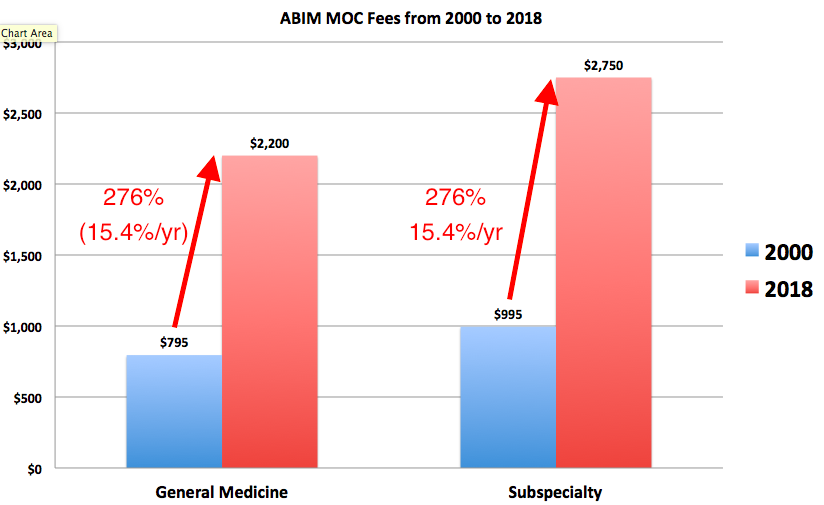
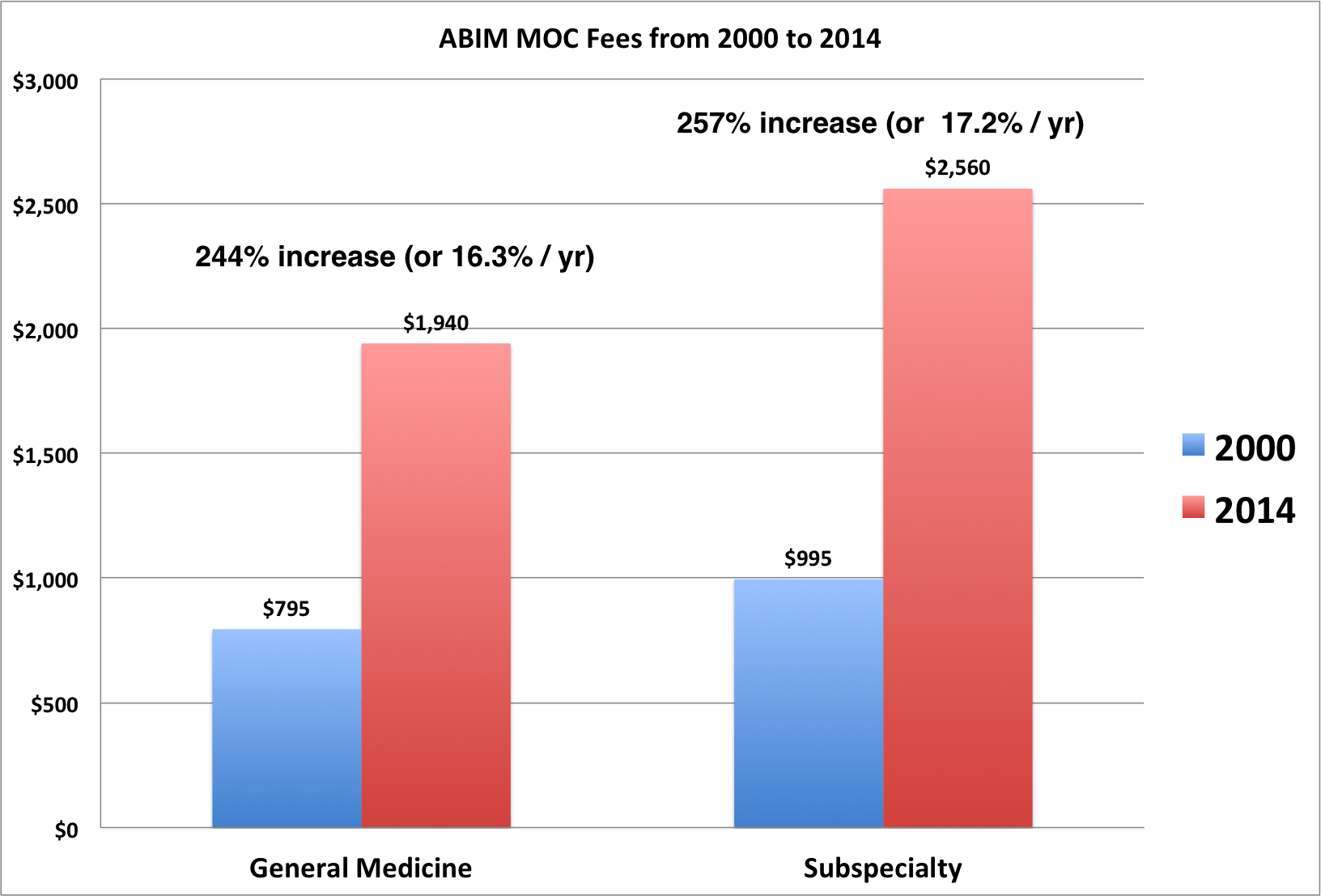
Look for those Maintenance of Certification® (MOC®) fees to continue to skyrocket as the certification cartel extracts more fees from working
-Wes
PS: Want to help with this David vs Goliath battle to help end MOC®? Click here.
 |
| Mary Howitt |
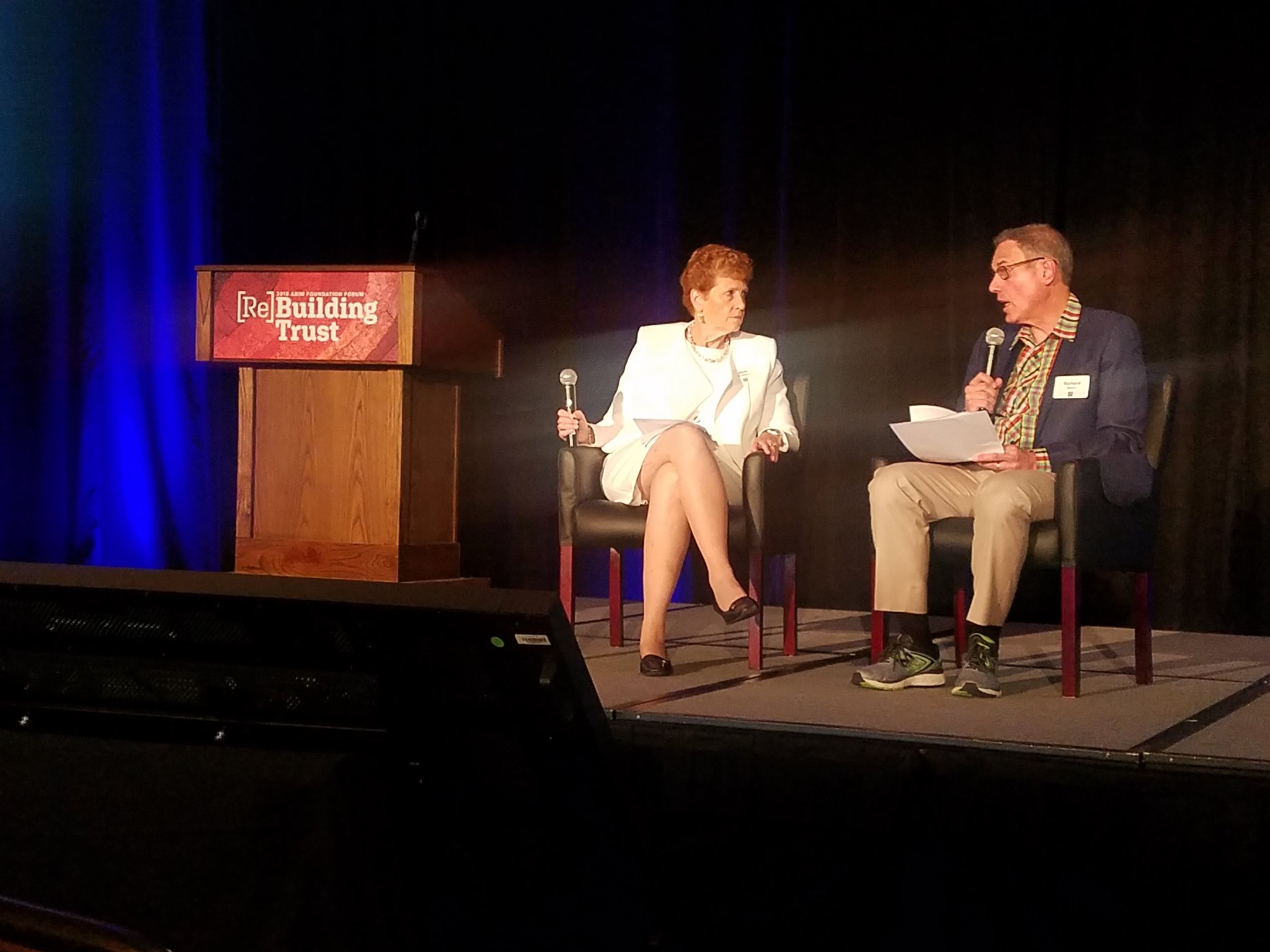 |
| Elizabeth A. McGlynn, PhD, immediate past chair of the ABIM Foundation and Vice President for Kaiser Permanente Research and Executive Director of the Kaiser Permanente Center for Effectiveness and Safety Research (CESR) with Richard Baron, MD, President and CEO of the American Board of Internal Medicine, at the 2018 ABIM Foundation Forum on "(Re-)Building Trust" |
Testifying on behalf of the FTC before the Subcommittee on Antitrust, Competition Policy and Consumer Rights, Commissioner Maureen K. Ohlhausen noted that while occupational licensing can help protect consumers from health and safety risks and support other valuable public policy goals, unwarranted restrictions can harm competition, leaving consumers with higher-priced, lower-quality, and less convenient services.-Wes
“From, a competition standpoint, occupational regulation can be especially worrisome when regulatory authority is delegated to a board composed of members of the occupation it regulates,” Commissioner Ohlhausen said.
According to the testimony, this type of board may make regulatory decisions that serve the private economic interests of its members and not the policies of the state (emphasis mine). Such decisions could result in occupational restrictions that discourage new entrants; deter competition among licensees and from providers in related fields; and suppress truthful, nondeceptive advertising, and innovative products or services that could challenge the status quo.
The testimony notes that while the principles of federalism embodied in the state action doctrine limit the reach of federal antitrust laws when a restraint on competition is imposed by a state, this does not mean that all state regulators are exempt from antitrust scrutiny. Through its enforcement and advocacy work, the Commission has helped to define the contours of the state action doctrine for actions taken by state boards composed of private actors – culminating in last year’s decision by the Supreme Court in North Carolina State Board of Dental Examiners v. FTC.
WHAT DO PRIVATE PAYERS GAIN FROM REQUIRING MOC?
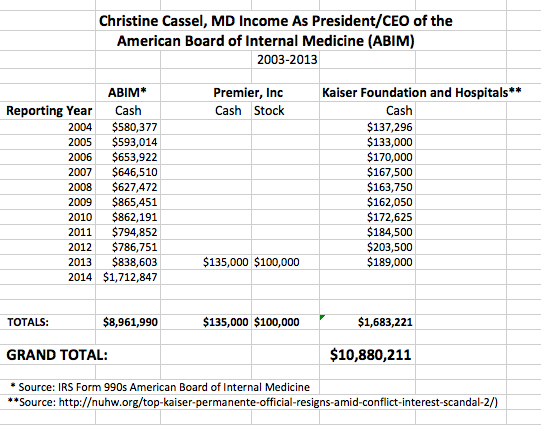
As a volunteer board member of NBPAS (no compensation or honorarium as opposed to the salaries of ABMS board members, which can range from $300,000 to greater than $800,000), I have often wondered why private payers require MOC when Medicare does not require board certification or MOC. The answer is quite disturbing. Private payers actually participate in certification, which is issued by the National Committee of Quality Assurance (NCQA). Margaret E. O’Kane is the founder and president of the NCQA, and she is also a member of the ABMS Board of Directors. The NCQA requires private payers to require physicians to participate in MOC in order to be NCQA certified. Thus, anyone contracting with a private payer will require MOC. In the conflicted case of Ms. O’Kane, she profits from the NCQA requiring private payers to require physicians to participate in MOC, and then she profits again from her ABMS position when said physicians must pay to comply with MOC requirements.
 |
| (Click to enlarge) |
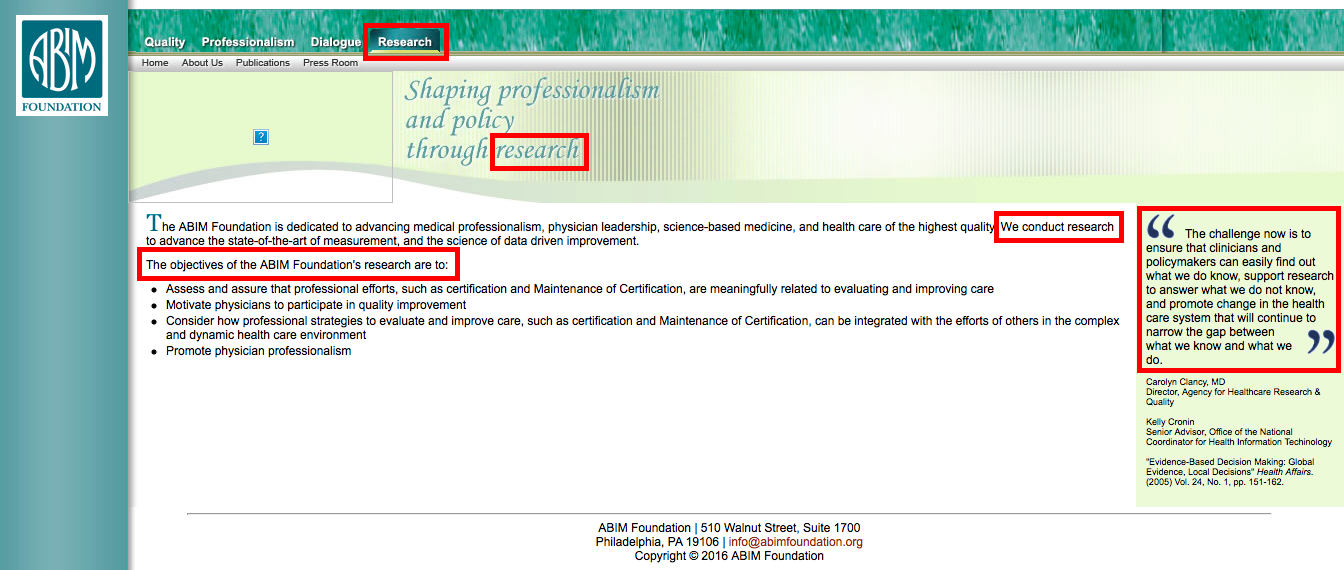 |
| Archived Screen May 2007 - ABIM Foundation (Click image to enlarge) |
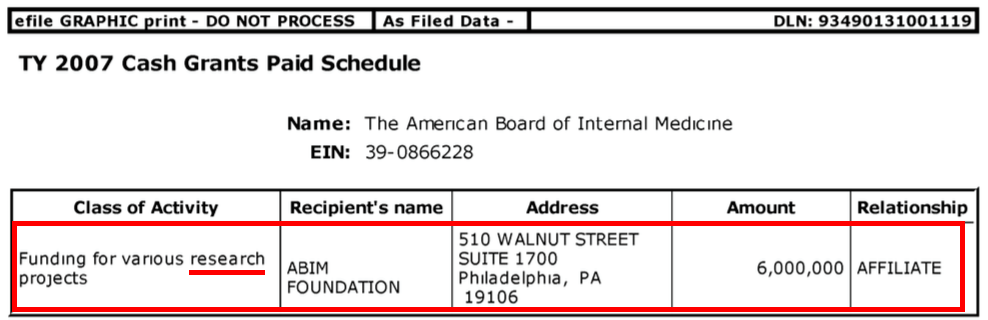 |
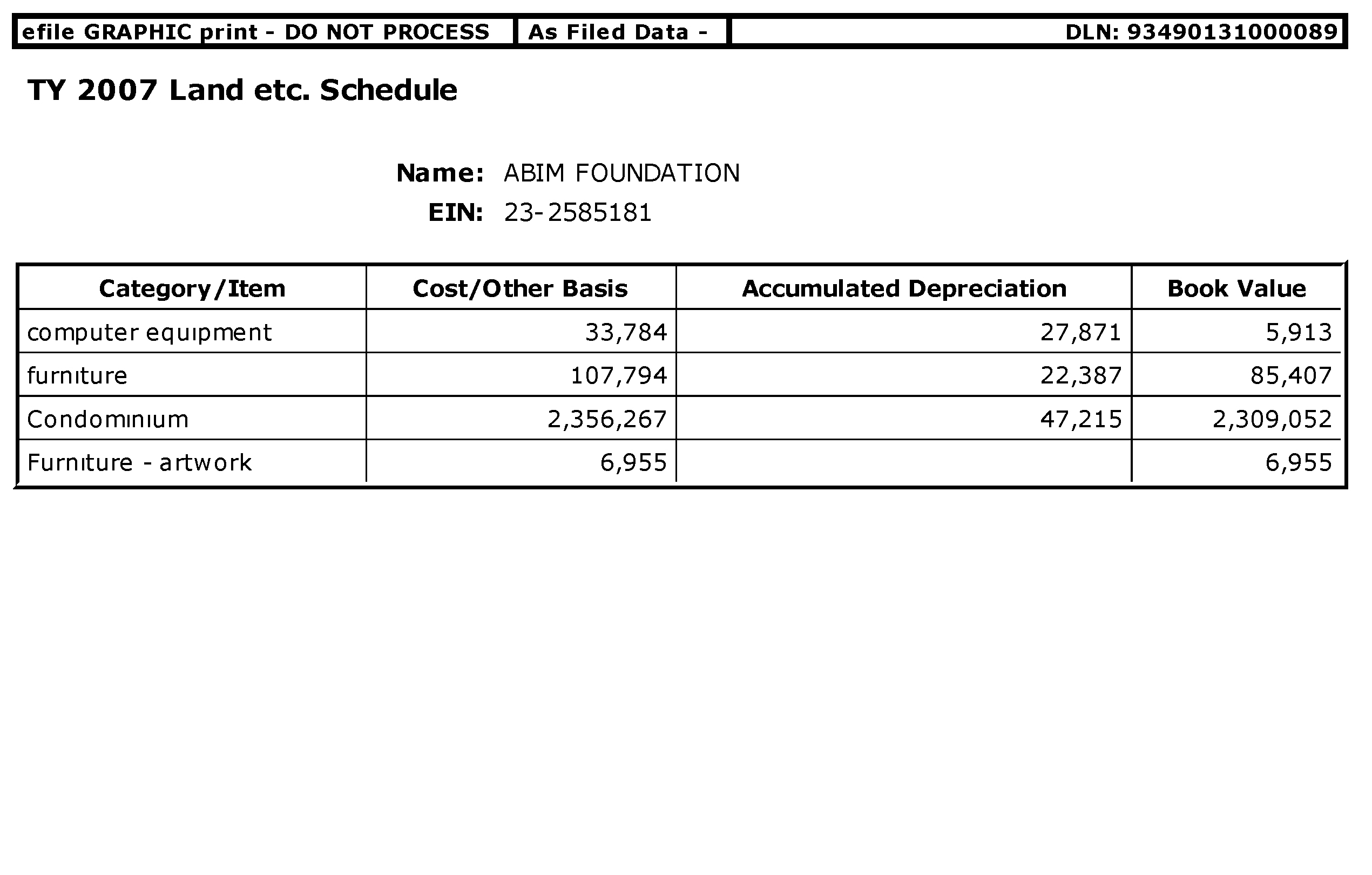
| Evidence of ABIM Funding "research projects" at the ABIM Foundation for $6 million in Fiscal Year 2008 (Click image to enlarge) |
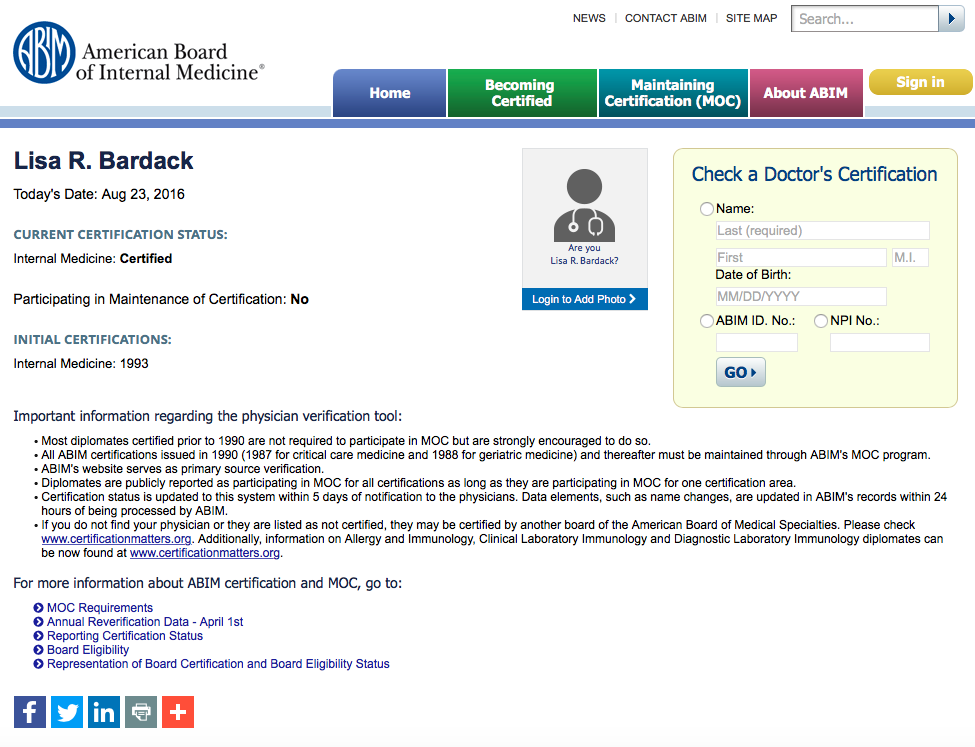
"The voluntary consent of the human subject is absolutely essential.It goes without saying that human subject research that involves real estate investment strategies to fund research on practicing physicians is unethical (at least) and likely highly illegal. As we have seen, the MOC recertification program can cause significant harm to physicians, their patients, and their families, especially when this credential is tied to physician employment and remuneration. Worse still, the average failure rate of the unproven "Maintenance of Certification" re-certification metric has averaged 13.2% over the past 10 years with wide year-to-year volatility in pass rates using an inconsistent metric. Was the impact of funneling money from the ABIM to the ABIM Foundation for the ABIM Foundation's "research" really that harmful?
This means that the person involved should have the legal capacity to give consent; should be so situated as to be able to exercise free power of choice, without the intervention of any element of force, fraud, deceit, duress, over-reaching, or other ulterior form of constraint or coercion; and should have sufficient knowledge and comprehension of the elements the subject matter involved, as to enable him to make an understanding and enlightened decision. This latter element requires that, before the acceptance of an affirmative decision by the experimental subject, there should be made known to him the nature, duration, and purpose of the experiment; the method and means it is to be conducted; all inconveniences and hazards reasonably to be expected; and the effects upon his health or person, which may possibly come from his participation in the experiment.
The duty and responsibility for ascertaining the quality of the consent rests upon each individual who initiates, directs, or engages in the experiment. It is a personal duty and responsibility which may not be delegated to another with impunity."

"... We believe that their current leadership is not capable of reforming the process in a timely, academically meaningful, and fiscally responsible way.For those interested in learning more or who's state is ready to sign on can email Dr. Scott Shapiro, President of the PA Medical Society at stat@pamedsoc.org for more information.
In keeping with the consensus of our members and physicians across the country, we call for the immediate replacement of the entire ABIM Board of Directors and leadership with new leadership, representative of physicians actively participating in the full-time practice of clinical medicine. The undersigned organizations would further offer to assist the ABIM and any of the ABIM subspecialties with the formation and transition to a new Board that is representative of and accountable to the physicians whom they will certify. ..."
 |
| (Click to enlarge) |