Tuesday, April 28, 2015

On the Value of Losing

“There is no teacher more discriminating or transforming than loss.”
        ― Pat Conroy, My Losing Season: A Memoir

On April Fools Day I received an email notifying me that I was one of 14 finalists for the National Institute for Health Care Management (NIHCM) Foundation's Digital Media Award for my work exposing the financial practices of the American Board of Internal Medicine (ABIM) and its Foundation on this blog.  Hard to believe, really.  Especially when I looked at the other individuals who were also selected as finalists, many of whom are veteran and highly decorated digital health care media journalists who do amazing work day in and day out.  If you have a few minutes, be sure to read (or watch) each of the works nominated for this award.

Several days ago I learned that I was not selected to receive the grand prize. While I can't deny that an infusion of cash into my bank account after tax day would have been nice, just being nominated and recognized as a finalist with such other distinguished writers in this space is reward enough.  (In fact, I still marvel that I was chosen as a finalist for this award in light of the fact that many of the largest insurance company executives sit on the board of the NIHCM.)

I can recall my reluctance to publish this work. The prospect of publicly labeling a national accreditation organization responsible for "certifying" one quarter of US physicians as potentially corrupt was risky. I ran the piece by other trusted colleagues before publishing who gave me phenomenal edits and suggestions. I had several lawyer friends review the piece as well. After all, I am not a person who enjoys criticizing others or exposing my family to legal risks. I also knew that there was a better-than-even chance that some senior leadership at my institution would not be pleased with the report.

Celebrated syndicated columnist David Brooks once noted that there are things we do as "resumé builders" and other things we do as "eulogy builders." Writing in medical journals builds resumés. Sadly, writing on a blog does not. While I have no doubt that winning the grand prize for this Digital Media Award would have been quite a "resumé builder" for a second chapter after medicine, that was never my motivation for this work. As a working physicians who has now endured the increasingly onerous ABMS Maintenance of Certification® (MOC®) process three times, I have seen it morph from a personal marketing tool to a mandatory and ridiculously onerous biannual money stream for a group of unknown non-clinical physicians hiding behind the thin veil of non-profit leadership hubris and avarice. Then, seeing my residents and fellows shell out large sums of money to pre-register for for MOC® before they were allowed to register for their initial certification added more concerns. Finally, the long history of money transfers between the ABIM and its Foundation, the highly conflicted evidence base with shoddy or colluding peer review that the ABIM promotes, and the subspecialty organization political funding machine that occurs as a result, led me to conclude that MOC® was always been about the money, nothing more.

So thanks to the NIHCM. Thanks to everyone who have supported me and given guidance in this endeavor. (You know who you are.) Thanks (especially) to Charles Cutler, MD whose independent yet highly professional 28-minute critique of the ABIM helped blaze the way for my essay's publication.

It will be interesting to see where this all goes.

-Wes

Saturday, April 25, 2015

ACC Issues "Urgent" Message, But To Whom?

The American College of Cardiology (ACC) leadership, troubled by the "complex situation" presented by the changes in re-certification by the American Board of Internal Medicine (ABIM), issued an "urgent message" yesterday on their blog.

This message hinted at the ACC's pathway forward: to create a "second task force" to "aggressively" explore "whether an alternative board should/could be developed by ACC for our members." They then add a cautionary note, stating "while working as rapidly as possible, we want to be cautious, realizing the great complexity of the situation."

So what are cardiologists and cardiac electrophysiologists to think of this latest "urgent message?"

It is clear that the ABIM's MOC program as it exists can no longer be considered legitimate. However, the ripple effects of the scandal of the ABIM and its Foundation are so far reaching that every single member board of the American Board of Medical Specialties' MOC constructs' twenty-four member boards will open themselves to scrutiny once the financial genie leaves the bottle.  It is not easy to unravel a monopoly when it's found to be (1) scientifically unfounded, (2) corrupt, and (3) profitable to the many leaders of these unaccountable non-profit organizations' leadership.

The era of the gilded age of non-profit organizations controlling medicine is coming to an end and every one of the scientific non-profit organizations that have hid behind their secretive walls for so long know it.

That's why this message was so "urgent."

-Wes

Thursday, April 16, 2015

A Promising Week of Firsts

It was quite a week for America's practicing physicians.  For months the frustration over the lack of accountability of the American Board of Internal Medicine (ABIM) and the American Board of Medical Specialties Maintenance of Certification (MOC) program had been building.  Even anger, an emotion few physicians have time for, was mounting.

Then something wonderful happened.

Physicians stopped working for a moment and picked up the phone. For many, it was the first time they had ever called a Senator's office.  For others, the first time they had written one.

Here's a few examples from Twitter:

For US Senators in Washington DC (or their staffers), it was also the first time they had heard from front line working physicians rather than physician-lobbyists knocking on their door.  Weren't working physicians supposed to just be "excellent sheep?"

But there they were: a pediatrician calling over her lunch hour, a family practice doctor taking a few moments between patients, or a cardiac electrophysiologist ("What's that?" they asked) reading EKGs and calling.

From all over the country.

It was almost as if you could hear them asking, "Why are these doctors calling?  What do you mean there's an anti-trust suit pending?  I thought they wanted this SGR Reform! What is this MOC thing anyway?"

(Click to enlarge)

Last night we had a group meeting of some forty cardiologists in our practice.  Everyone listened politely to the administration explaining their new initiatives, new plans for growth, things we could do better, how the SGR Reform Bill, HR2, had passed.  Doctors listen politely. But there was a buzz in the air.

Younger doctors were questioning if MOC was still part of the bill. They were questioning the regulatory establishment, wondering if they should join the American College of Cardiology if they supported the passage of HR2 that included MOC. Questioning.  Reenergized. Hopeful.

Practicing doctors might not have won the battle to stop the ABMS Maintenance of Certification program from being incorporated into our new health care law, or for parts of the program being used as a medical registry for physician reporting purposes in H.R. 2.  But the other night they won something much better: they learned that they weren't powerless.  They remembered that being  "accountable" for peoples' lives is very different than being "accountable" for dollars.

Thanks to all who raised a voice, wrote a letter, and took a stand against MOC.  I can't tell you how great it was to see so many physician nationwide come together so quickly to stake a stand on this remarkably divisive and corrupt program that extends, like a hydra, throughout our entire health care system.

We have have good reason to smile.

Congress and the public now know about it too.

-Wes


Tuesday, April 14, 2015

Why Journalists Need Maintenance of Certification

Well, well, well, this little blog got a mention in the New York Times Well health care blog last evening in a post entitled "Board Certification and Fees Anger Doctors" by Joshua Krisch.  Too bad what really upsets doctors is not certification, but the proprietary RE-certification monopoly known as the ABMS "Maintenance of Certification" (MOC) program. At least the post includes a dashing public relations photo of Richard Baron, MD, the president and CEO of the American Board of Internal Medicine (ABIM) sporting a neatly-pressed casual sport coat with a hipster purple shirt while he appears to be earnestly conversing with a "board service" representative. 

Nice.

While the article fairly disclosed some of the issues that bothers physicians, it was remarkably devoid of what really irks physicians, especially the egregious and corrupt financial transactions of the ABIM uncovered on this blog in December 2014.  Follow-up investigations have found that the ABIM repeatedly funneled $30.6 million to their separate non-profit, the ABIM Foundation that is lead by the same officers between 1998 and 2007.  It appeared this transfer of "grants" was used to supplement an investment portfolio that had already exceeding $55 million and included a $2.3 million condominium complete with a chauffeur-driven Mercedes S-class town car, and leadership conferences at 5-star hotels.  All while the ABIM was bleeding cash and growing a deficit from negative $10 million to negative $43 million.

More recently, even more concerning allegations regarding the ABIM's financial and tax disclosures were revealed by veteran journalist, Kurt Eichenwald of Newsweek. So it goes without saying that I was disappointed that Mr. Krisch failed to mention or investigate any of these financial dealings of the ABIM in his reporting.

Clearly, it appears journalists need Maintenance of Journalism Certification, too.

You see, the public demands such certification. After all, an Institute of Journalism Report published in 1999 showed that journalism errors contribute to 999,000 over-treatments and approximately 5000 deaths each year.  Beyond quality, subscribers need to be assured they're getting "value" from their costly annual New York Times subscription.

Fortunately, a new American Board of Journalism Specialties (ABJS) exists to assure quality journalism that not only meets, but exceeds, societal standards. The ABJS has assembled a whole host of subspecialty member boards with salaries commensurate with the medical subspecialty board executives to establish credentials for each category of US journalism.  These include the American Board of Health Care Journalism (ABHCJ), the American Board of Finance Journalism (ABFJ), The American Board of Business Journalism (ABBJ), the American Board of Entertainment Journalism (ABEJ) , the American Board of Sports Section Journalism (ABSSJ), and the American Board of Weather Reporting Journalism (ABWRJ) and the American Board of Style Journalism (ABSJ).   Each member board nominate speciality advisors who provide content for the once-every-ten-year high-stakes secure examination that assures quality reporting in each journalism category.  Literature supporting the benefits for Maintenance of Journalism Certification is second to none. While the costs are different for each category of journalism, they harmonize well with prices set by the American Board of Internal Medicine's MOC program. Furthermore, the examination occurs in industry-standard computerized Pearson Vue Testing Centers that promise comfort and security with the finest of palm reads and cavity searches prior to testing.

Our most recent Maintenance of Journalism Certification (MOJC) results shows that only 78% of journalists pass the ABJS's recertification test on their first try, demonstrating the rigorous nature of the testing.  Don't worry, though, 96% of journalists ultimately pass their examination. Journalists who fail just have to attend a Board Review course developed by their respective ABJS member board to assure they are fed the correct answers for a just a few thousand dollars more.  Once completed, repeat testing fees are kept at a reasonable $750. And for those who fail?  Well, we're really not sure what happens to them.

The secure exam tests mastery of mathematics through calculus, statistics, English Literature, and Written Composition.  Strunck and White's "Elements of Style" are extensively utilized to assure the highest of testing standards. Journalists undergoing this mandatory evaluation every ten years can rest assured that each of the secure examination questions have been carefully vetted using psychometric testing techniques.  Because of the time, energy, and golf games missed to create these questions, paired with the need to maintain the utmost secrecy in fairness to all, divulging test questions to other journalists is strictly forbidden. In the event of such a breach, the ANJS will have no choice but to use every legal means to punish the journalist, resulting in suspension or revocation of the journalist's writing credentials and ability to practice their trade. Freedom of the press in such a circumstance means nothing.

With the explosion of online content of varying quality, the public has demanded that continuous learning take place.  Beginning in January, 2014, a new, even more rigorous continuous certification process has been developed that incorporates Practice Improvement Modules (PIM) in addition to the secure examination.  With this program, journalist will have the option to "pay-as-you go" every two years or cough up the full re-certification fee up front to assure they will be listed on CertificationMatters.org as "Meeting Journalism Standards." PIM will require that journalists participate in survey collection of colleagues' assessment of their workplace and worth to society. Questions concerning quality of their fax machine, computer power, and diversity of reporting to avoid racial, gender, or age bias will be included. Survey results are transmitted non-securely to the ABJS website so the information can then be purchased by concerned stakeholders like ABC, CBS, NBC, CNN, HBO, Huffington Post, Style Magazine, Cosmopolitan, the New York Times, and the Leapfrog Journalism group to censor stories that might not meet journalistic professionalism standards. In addition, a portion of journalist's testing fees will help fund the Choosing Wisely Investment Club that has been looking for a really nice condominium in SoHo.

Finally, such a journalism certification process will harmonize nicely with the unproven ABMS Maintenance of Certification program that is slated to be incorporated as a medical registry in the Medicare SGR Repeal Bill, H.R. 2.

Same concept.  Same money. All for the "public good."

"Ridiculous," you say?  "Outrageous?"

Now you know why doctors are angry.

-Wes


Monday, April 13, 2015

Remember Working Doctors, Call Your Senator TODAY

If you believe it's not okay to have the corrupt, coercive, and anti-trust ABMS MOC® Medical Registry as part of the Medicare SGR Replacement ill H.R. 2, CALL YOUR SENATOR TODAY and ask that IT BE AMENDED BEFORE BEING SIGNED INTO LAW TO REMOVE THE ABMS MOC Medical Registry from Social Security Law, Section 1848:

First, look up your Senators' names, entering your zip code here.

Be SURE to call the Capitol switchboard at (202) 224-3121 and ask to be connected to each senator's office.
  • Remind them that you are an actual WORKING physician, not one who pretends to represent physicians on Capitol Hill.


  • Remind them that they are about to sign a piece of legislation that allows a group of 25 independent nonprofit organizations to monopolize the requirement that you pay nearly $1000 per year (between their fees, travel, time away from work, and lost revenue, per Dr. Charles Culter's video explanation 2 Dec 2015) to maintain your ability to practice your trade if they sign H.R.2 into law.  Remind them NO OTHER PROFESSION has such a requirement to maintain their credentials to practice their trade.


  • Remind them that there is NO INDEPENDENT PROOF that the American Board of Medical Specialties MOC® registry has EVER been proven to improve patient care.


  • Remind them that the American Board of Medical Specialties NEVER disclosed the fact that they are being sued in Federal Court for possible anti-trust violations while lobbying Congress and THE SUIT IS STILL PENDING.


  • Remind them that the American Board of Internal Medicine (ABIM), the largest non-profit of the group of non-profits, grew its  debt to $43 million in losses and offset those losses by auditing gimmickry called DEFERRED REVENUE to the tune of $76 million, which gives the appearance that the MOC medical registry contained in H.R. is being used for cover.


  • Tell them that the both the ABMS and ABIM appear in your view to have committed tax fraud because they have reported on their Form 990's to have not lobbied Congress, when, in fact, they have.


  • TELL THEM THEIR BILL MUST BE AMENDED BEFORE IT CAN BE PASSED to remove the MOC Medical registry as a "value" registry for inclusion in H.R. 2.

PLEASE CALL TODAY.

No one else will do this for you.

-Wes

Sunday, April 12, 2015

Medicare SGR Replacement Bill: "An Unwarranted Role of Medical Specialty Boards"

From Merrill Goozner at Modern Healthcare Magazine:
"The law not only scraps the sustainable growth-rate formula for physician payment, it consolidates the diverse programs for rewarding or penalizing physicians. The CMS no longer will calculate separate payments for reporting quality measures, improving performance or meeting meaningful-use standards.

Instead, the CMS will substitute a composite MIPS score for each physician participating in the Medicare program. When measured against clinical peers, a physician's score could result in the agency rewarding or penalizing him or her up to 5% of annual revenue starting in 2020. That rises to 9% of revenue for 2022 and beyond.

While the program is designed to be revenue-neutral, it allocates $500 million for rewards, just in case a majority of physicians turn out to be like the kids at Lake Wobegon and achieve universally high composite scores.

The overall score will be based on how well participating physicians perform in four separate categories: quality measures (30% of the total); resource use (30%); achieving meaningful use (25%); and clinical practice-improvement initiatives (15%). Each component will be determined by agency rulemaking and stakeholder input.

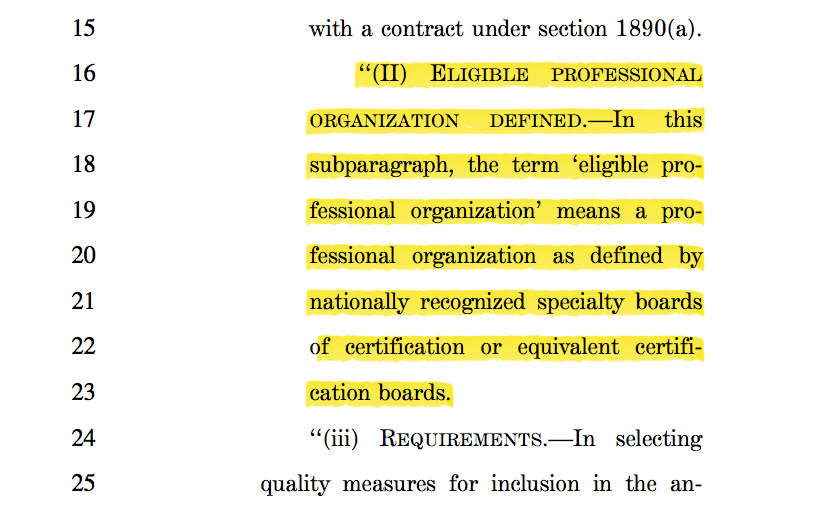
But some stakeholders are being given a greater say in the process (others are invited to participate, of course). The law, for instance, asks “eligible professional organizations” to recommend quality measures for use in the program. It defines eligible professional organizations as “nationally recognized specialty boards of certification.”

It also says physicians can achieve the maximum score on the clinical practice-improvement component by being part of a certified medical home or “comparable specialty practice.” The law gives “eligible professional organizations” the ability to make that determination. The bill also mentions “practice assessments related to maintaining certification” as one way to achieve a maximum clinical practice-improvement score.

The special role given physician specialty boards in the SGR replacement bill heightens the stakes in the recent controversy swirling around the costly and complicated recertification process at the American Board of Internal Medicine, one of the largest boards in the nation. A rival group is seeking to substitute continuing medical education credits for recertification test-taking, which the ABIM and patient and consumer advocacy groups oppose.

The flare-up has brought some of the more unsavory and unscientific aspects of the self-regulating physician recertification process to light. A recent New England Journal of Medicine perspective by ABIM critic Dr. Paul Teirstein of the Scripps Clinic noted that the latest studies have shown no relationship between physician recertification and performance on quality measures—the very task given to certification boards in the SGR replacement bill.

Teirstein also accused the ABIM of being “a private, self-appointed certifying organization” that charges exorbitant fees “unfettered by competition” for its products and tests.

The certification boards aren't major powerhouses on the Washington lobbying scene. Last year, for instance, the ABIM spent only $160,000 on the lobbying firm of Mehlman Castagnetti Rosen Bingel & Thomas, according to Senate lobbying records. But that firm's chief healthcare lobbyist, Dean Rosen, once served as an adviser to then-Senate Majority Leader Bill Frist (R-Tenn.), and apparently still has good connections with the staffers who drafted the language of the SGR replacement bill.


As we editorialized here two weeks ago, a permanent end to SGR is the right thing to do. And creating MIPS to replace multiple rewards programs will lessen the administrative burden on physicians and physician practices, and incentivize them to move toward value-based care payment models.

But other stakeholders will need to remain vigilant to ensure that self-interested physician specialty boards don't play an outsized role in setting the parameters of the program—especially when it comes to determining what constitutes quality and clinical-practice improvement."
This is horrible. Our government is about to authorize the use corrupt and completely unaccountable certifying organizations to serve as a metric with which to determine the "value" of health care for our patients and remuneration for working physicians nationwide. In fact, the certifying organizations the bill authorizes are being sued in federal court for possible anti-trust violations. How embarrassing would our U.S. Senators look in the eyes of seniors everywhere if that suit is found in favor of the plaintiffs?  The whole Medicare SGR Replacement Bill, H.R. 2, would fall apart.  Are our U.S. Senators really ready to put their political careers on the line for one flawed bill? (Note the senators who were lobbied were never privy to this pending lawsuit.)

(To think that the policy divisions of our sub-specialty medical societies are also complicit in this scheme is even more appalling.)

Is this what our patients need? Are we, the front line working physicians, going to allow the self-serving money trail of government grants to determine what constitutes quality care for our patients and "value" for  our health care system?

All physicians AND their patients need to stop and pick up the phone Monday morning. Call BOTH your Senators and flood the switch boards. Tell them to vote "NO" on the Medicare SGR Replacement Bill (H.R. 2).

Unless, of course, you think $2.3 million dollar condominiums with chauffeur-driven BMW 7-series town cars is how our nation should define health care "value" in the years ahead for our Medicare patients.

-Wes

Addendum: Here's even more lobbying to CMS that pushed for ABMS "board certification" to be the only board used for CMS's Physician Compare website in Sept 2014.

Saturday, April 11, 2015

Friday, April 10, 2015

Working Physicians Were Played; It's Time to Take Action

We've been played.

Played so badly it would make Goodfellas blush.

Remember these words?
"Dear Internal Medicine Community:

ABIM clearly got it wrong. We launched programs that weren't ready and we didn't deliver an MOC program that physicians found meaningful. We want to change that. …"
Doctors thought this was because of the malfeasance that was discovered in the ABIM's dealings with purchasing $2.3 million condominium's with chauffeur-driven Mercedes S call town cars and systematically funneling $30.6 million of our testing fees to an obscure Foundation that markets some version of social justice "professionalism."

Wrong-o boys and girls.

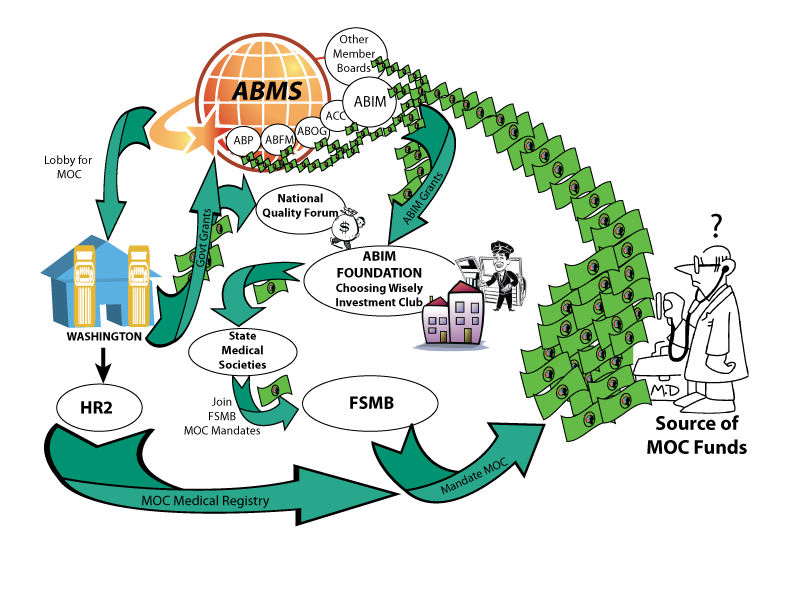
The plan all along was to shift gears and make MOC integral to how Congress would permit the Center for Medicare and Medicaid Services Congress to calculate your "value" as a worker to the health care system. Just do your practice improvement modules and walk backwards and type of a keyboard so they can get paid.

Yes, Virginia, MOC wasn't ready because MOC wasn't part of the "Doc Fix" legislation (H.R. 2) yet, but now it is.

How do I know this? Because ABMS lobbied members of the Energy and Commerce Committee in Congress to have MOC included as part of the "Doc Fix" bill in June, 2013:
We recommend that ABMS MOC® serve as a reporting pathway in the future for more detailed data on performance across the competencies. Making it possible to report through MOC will reduce administrative burden on physicians participating in voluntary professional development activities, will help to assure that there are practice-relevant options for all specialties and that quality measurement will be tied to a disciplined improvement process.
The ABIM wasn't sorry. The ABIM knew from the start that physician payment reform was on its way and a stand-alone MOC program wouldn't be needed because it would be part of the new law! Why else would they opt to "suspend" part IV for two years rather than remove it outright? (Maybe to preserve it just in case the SRG bill didn't pass?)

It's Time to Send the US Senate a Message from Front-line Working Physicians

On Monday before you start work, contact your state Senators by calling the US Capitol switchboard at 1-202-224-3121.  Don't hang up until you speak with your senator or their aide.  Tell them you have patients waiting.  Tell them you're being held up from a meeting. But get through and don't hang up until you do.  The switchboard is open 24-hours a day, but call in the morning, 8 AM EST if you can, to be sure your voice is heard. But get through.

Tell them you want all references to Section 1848 (k)(4) used as determinants of  of a "value-based modifier" struck from the bill (Addendum: this is the section that authorizes the ABMS to use their MOC program - see comments below).  Tell your Senator that if he or she can't do that, then they should vote "NO" because you'll have to pay hundreds of dollars representatives of the independent ABMS member boards every two years to practice medicine and take time away from patients to do meaningless and unproven busywork. The ABMS MOC® program should NOT be allowed to stand in the new SGR repeal legislation (H.R.2) in any form.  Tell them that such a scheme represents taxation without representation.

It is time to send the message LOUD and CLEAR that doctors will not participate in a pay-to-play scheme with the ABMS, ABIM or any other member board every two years to practice our trade.

We MUST take action NOW.

Just do it.

-Wes

Addendum: 
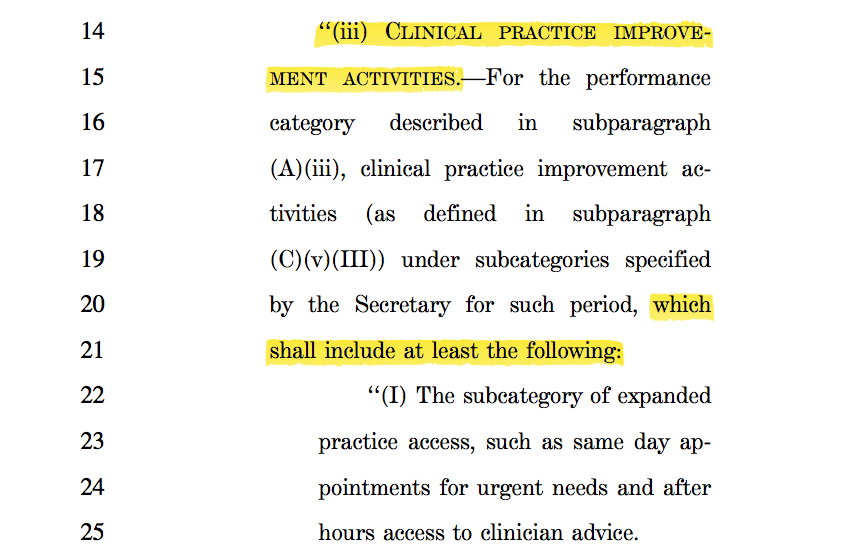
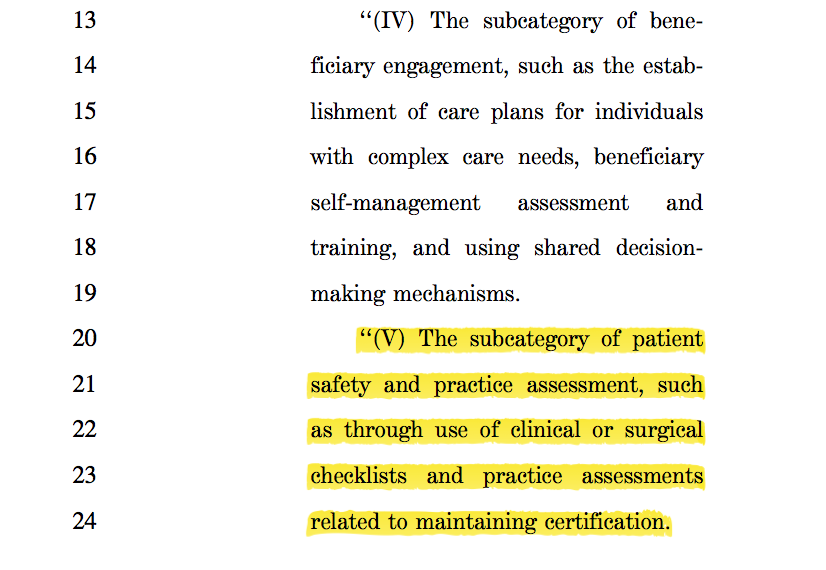
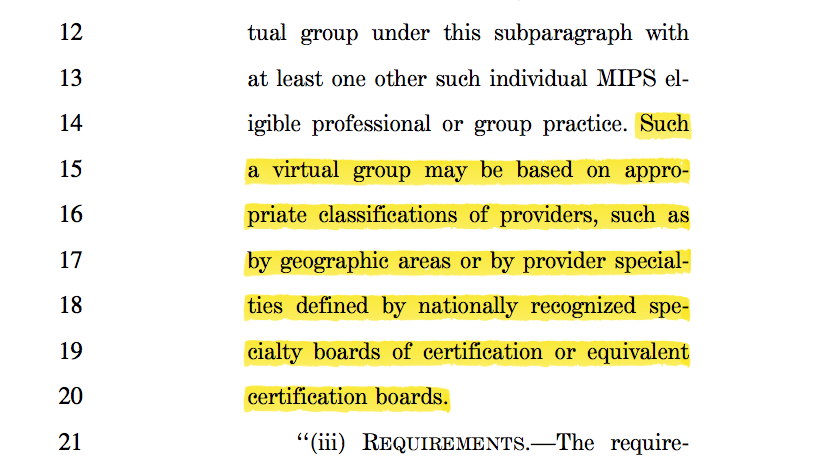
For those skeptical that the ABMS MOC Program is in H.R.2, I have included a few highlighted examples: Page 27 and 28, Page 35, and page 51 as a few examples. Note that HR 2 modifies portions of Social Security Law 1848 that specifies how physicians are paid. Section (k)(4) of 1848 authorizes the American Board of Medical Specialties MOC program to be a medical registry for reporting quality data.  No section of H.R.2 deletes this section and only solidifies MOC as a quality reporting registry.

Thursday, April 09, 2015

Doctors: If You Hate MOC, Write To Your Senator Today

There is nothing that has unified U.S. physicians more than their distain for the American Board of Medical Specialties' (ABMS) unproven Maintenance of Certification (MOC) program. Unfortunately, portions of this program will be used as a physician reporting measure for the new "Doc Fix" legislation coming up for a vote before the Senate on Monday.  Furthermore, the National Quality Forum, headed by the former director of the ABIM, Christine Cassel, MD, stands to receive $90 million to develop even more quality measures if this legislation is enacted (Section 207).

If there was ever a time to contact your Senator to voice your opinion on MOC, the time is now.

Unfortunately, most doctors have never contacted a senator, or they don't have time to research all of the nuances of an issue to sound like they know what they're talking about.  As a result, most doctors shrug their shoulders because they feel there's nothing that can be done since the powerful special interests control Congress anyway.

Perhaps this is true.

But just as likely, Senators realize the foot soldiers on the ground who actually deliver care might just be an important voice if legislation is to work as it is intended.  Senators are not deep in the weeds in health care and have physician lobbyists bending their ear, but not working physicians.  It is up to us to educate THEM about what bothers working physicians, but we must act quickly.

You can find the contact information of your senators here.

To save time, here is a letter that you can download to add your name, contact information, and state of practice that does the heavy lifting for you. (You can get a Microsoft Word copy of it by clicking here).  Read it.  Fill in the blanks, and if it articulates your concerns about using portions of the ABIM/ABMS MOC requirements as physician reporting measures in the new bill, then send it to both of your state senators TODAY.

Thank you. I have no idea if this will make a difference, but at least we can say we tried.

-Wes

PS: Be sure to forward this blog post to your colleagues!
PPS: If you want a more politically correct letter to send that addresses additional issues,  consider this one instead.

Tuesday, April 07, 2015

Newsweek Takes on MOC: A Certified Medical Controversy

Mr. Kurt Eichenwald, a veteran Newsweek reporter who was chastized by the American Board of Internal Medicine (ABIM) for not mentioning his wife was an internal medicince physician in his first exploration of the medical re-certification controvery in medicine, launched a full-scale investigation into the covert financial practices of the organization:
What I found suggests that the primary reason ABIM attempted to expand its recertification process—which set off the uprising—is that the organization has been crippled by accounting games and needs a lot more revenue, fast, to avoid a fiscal train wreck. I also found misleading or false statements in government filings, attempts to withhold public information, damage inflicted on federal science programs and more. ABIM now even appears to be trying to trick Congress into passing laws that would force doctors to cough up cash to cover the organization’s financial follies. It even benefited from something slipped into Obamacare that seems to have been written by ABIM or its lobbyists.
Read the whole thing.

Methinks that both the ABIM and the American Board of Medical Specialties (ABMS) have plenty of explaining to do.  Sure sounds like a lucrative kickback scheme to me.

-Wes

References:
My initial story behind the MOC controversy.
The latest update on the magnitude of the controversy.
A critical review of one year's MOC "science" base
Which non-profit medical society pays themselves the most from MOC?
The Business of Testing Physicians

Monday, April 06, 2015

The Clever Practice Improvement Module Roll-Over

On February 3, 2015, in response to overwhelming physician pushback regarding the Maintenance of Certification program sanctioned by the American Board of Medical Specialties (ABMS), the American Board of Internal Medicine suspended the Practice Improvement Modules contained in Part IV of their MOC program for two years.

What physicians failed to realize, however, is the minutes required to complete the busywork inherent to "Practice Improvement" exercises were being officially rolled over to the the new "Doc Fix legislation" before Congress (see page 28, line 24 and pages 32-39 of the bill) and robbed from direct patient care as a result.

It is difficult to ascertain if the ABIM leadership knew about the new 263-page doctor payment reform bill when they made their placating announcement, or if the inclusion of these wasteful and inherently meaningless practice improvement exercises is just more insurance industry hogwash permitted by the bill's clueless authors.  But the fact that the bill includes references to quality measures created by "consensus-based entities" like the troubled National Quality Forum and references to "maintenance of certification" should be very concerning to every working US physician. This "doc fix" bill will officially make MOC an expensive and mandatory pay-to-play scheme, formally sanctioned by our very own government.

Doctors need to voice opposition to the "Doc Fix" bill now by calling your Senators. 

Otherwise, the "fix" will be in for working doctors everywhere.

Congress, are you listening?

-Wes

Monday, March 30, 2015

As ABIM Struggles to Find Itself, Doctors are Moving On

After its initial public humiliation, the American Board of Internal Medicine (ABIM) had to re-group and admit they "got it wrong." But as far as the practicing physician community was concerned, the apology was lukewarm at best.  Instead of taking full responsibility for their financial transgressions, the organization continues to deflect and pretend the problem is their Maintenance of Certification (MOC) program. Friday they issued an update asking for more "feedback" as they recruit new "specialty advisers" to appear more clinically relevant. I've had a chance to discuss my concerns with Yul Ejnes, MD, one of their specialty advisors for internal medicine, by phone. After speaking for nearly an hour, it was clear to me that the ABIM is rightfully concerned. It was also clear to me that "specialty advisors" are far down the governance food chain of the ABIM.

The Deeper Problem

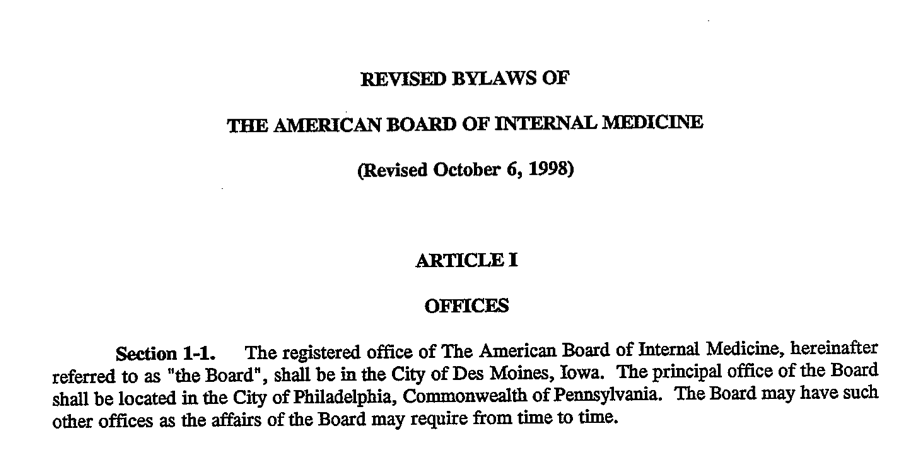
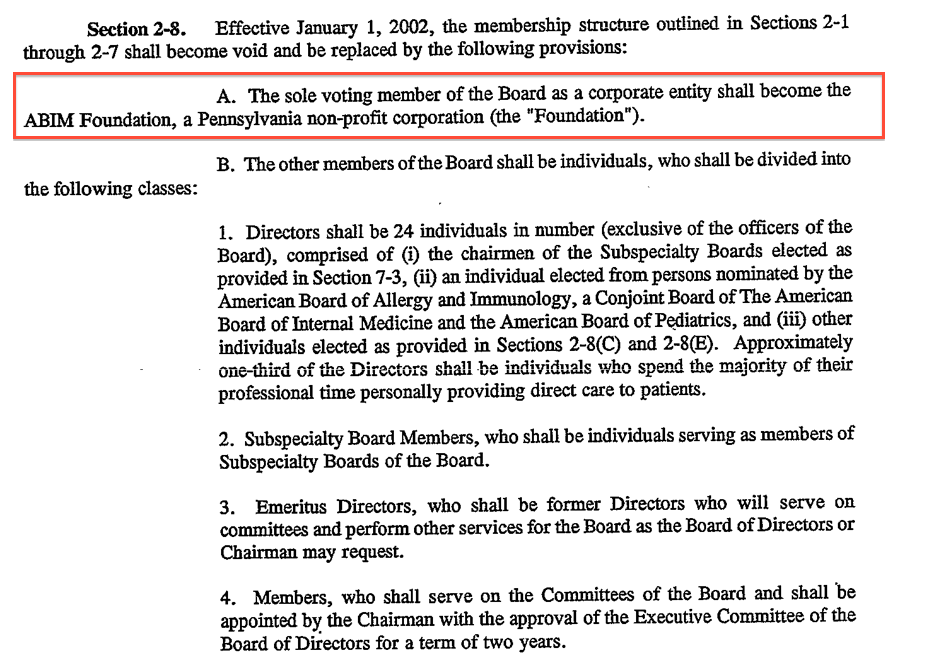
Unfortunately feedback and recruiting efforts won't fix what ails the ABIM and the MOC program in general. There is a much deeper problem. On October 6, 1998, the ABIM, the certification body that overseas approximately one quarter of practicing US physicians, revised their bylaws. Since then, the ABIM has allowed unlimited financial and business conflicts of interest to exist with their board members.  One only has to see the effects of those conflicts after Christine Cassel, MD, supposedly a full-time member of the ABIM for 10 years, was forced to divest herself from those long-standing cozy relationships when she transferred jobs to the National Quality Forum, an agency that receives the bulk of its revenues from government contracts.  That change also made their own ABIM Foundation the sole voting member of the board as a corporate entity after January 1, 2002, a troubling conflict itself. (Other board members are individuals, but the conduct and management of the affairs of the Board is vested solely in the Board of Directors and the Staff Members of the Board.)

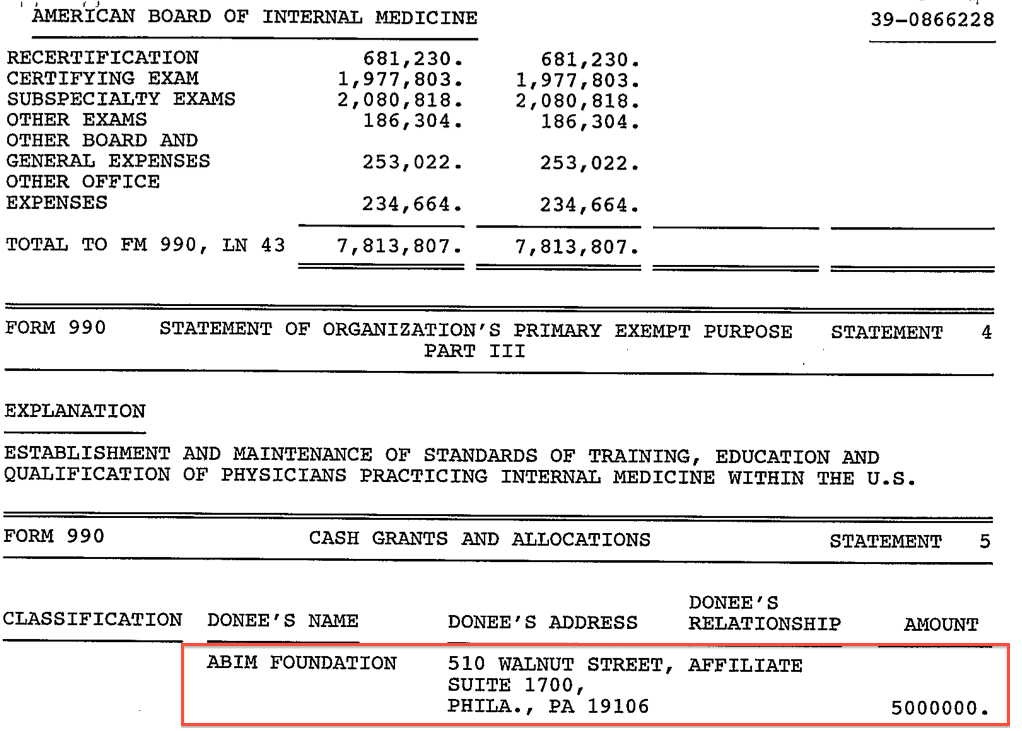
Then, from 1998 through 2007 for reasons that are unclear, the ABIM repeatedly funneled physician testing fees in the form of "grants" to their Foundation to the tune of $30,600,000 (1998 - $5,000,000; 1999 - $5,000,000; 2000 - $3,300,000; 2001 - $1,600,000; 2002 - $1,000,000; 2003 - $1,760,000; 2006 - $7,000,000; 2007 - $6,000,000).

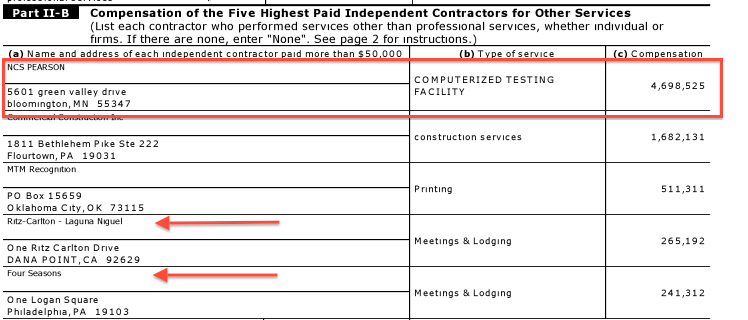
And the ABIM's spending didn't end there.  Because the ABIM has no obligation to disclose their relationships to the public or their diplomats they have spent without oversight. In 2007 alone they helped purchase a $2.3 million luxury condominium, and spent $5.2 million to outsource testing centers while they held posh "meetings" at fancy hotels like the Four Seasons, Philadelphia and the Ritz-Carlton, Laguna Niguel.  They also occasionally give themselves a bonus.  It is this problem of feeding their constituents over their practicing physician consumers that lies at the core of the problems at the ABIM, irrespective of their efforts to change the MOC program.

Ethical Double-Standards

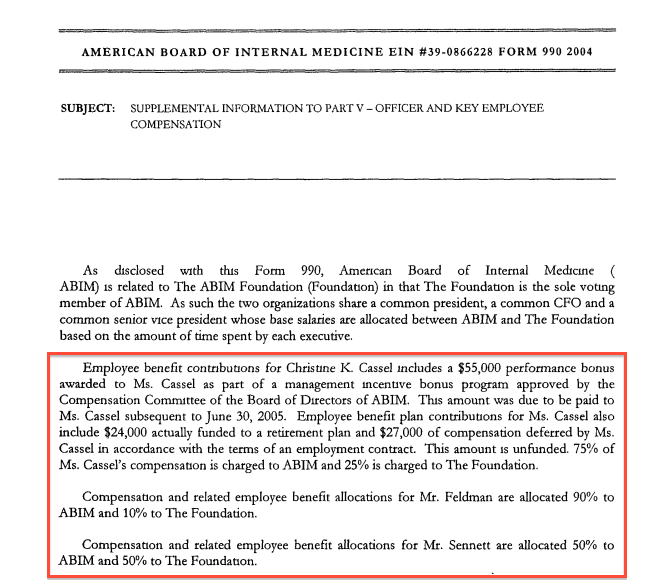
In 2010 while the annual multimillion dollar physician fee transfers were well underway, the ABIM decided to sue five physicians and sanctioned 134 others who allegedly participated in the Arora Board Review Course that allegedly copied paraphrased questions from the ABIM's high-stakes secure examination.  Many physician careers were ruined as a result. No doubt many of their patients were affected too. Christine Cassel, MD, the President and CEO of the ABIM at the time, published a press release that admonished the physicians' behavior saying: "Ethics are critical to the practice of medicine and are the foundation of a successful doctor-patient relationship. We will not tolerate unethical behavior from physicians seeking board certification" while conveniently failing to mention the physician testing fee fund transfers to their Foundation.  Likewise, they've amassed millions for themselves and their political agendas in their Foundation, while demanding that physicians to skimp on necessary tests for their patients in the name of "public good," lest they be labeled "unprofessional."

We can only ponder what the ABIM has to say about their own ethics now.

Next Steps

What the ABIM fails to grasp is that all of the MOC "modifications" in the world won't change these facts. As a result, the ABIM has officially been rendered irrelevant to the practicing physician community.  Doctors are moving on and hospitals and insurers will need to adapt. If physicians lose their credentials or ability to practice because of MOC, they will sue.  And given these many transgressions, I'm betting they'll win.

It's a new day now. Practicing doctors are watching. Practicing doctors are feeling the squeeze from all the forces that are being placed upon them. So practicing doctors are starting to act. While it is uncertain how far-reaching their actions will become, one thing that is clear is this:

… a sleeping bear has awakened.

-Wes

Friday, March 27, 2015

Is the Medicare "Doc Fix" Really So Appealing?

It was like magic, a vote was held in the House of Representatives on the Medicare "Doc Fix" and moments later, my inbox was filled with press releases from the American College of Cardiology and the AMA.  A few seconds later, a somewhat more tempered press release from AARP arrived, urging more revisions to the bill as it passed to the Senate for approval.

This isn't the first time in history Medicare has changed how it pays physicians. Nor will it be the last. But practicing physicians should be fully aware of what the new bill has in store for us.  After all, busy physicians aren't necessarily working on the latest legislative efforts on Capitol Hill.

So it should come as no surprise that working doctors (and the patients they treat) are on the doctor payment menu rather than truly sitting at the legislative negotiating table.  From the National Review:
Some Republicans are also enthusiastic about the “reforms” the bill would make to Medicare’s physician-payment system. They shouldn’t be. Today’s system is the result of three decades of technocratic good intentions gone terribly awry. In 1989, Congress adopted the “resource-based relative value scale” as the fundamental building block for determining physician fees. The new system was supposed to accurately assess how much time, effort, and training physicians put into taking care of a patient, and pay them accordingly. The result has been arbitrary and irrational payments that have heavily favored procedure-driven medicine over prevention and primary care.

Now we are told that the federal government is going to find a way to pay physicians based on quality and value, using all manner of new technocratic methods to do so. Data will be collected, expert panels convened, and regulations issued, and supposedly that will lead to a better system of physician payments. But there’s no reason to believe the Medicare bureaucracy will be any better in the future than it has been in the past in setting physician fees. The real danger here is that the federal government will use the new authorities provided in the law to become the official arbiter of what constitutes “quality” in physician care. That’s a recipe for getting the exact opposite of what the law’s authors intend.

As to the “reforms” in Medicare, there’s far less there than one might hope. The first provision would only modestly adjust upward the premium payments for a small number of upper-income households. Elderly couples with incomes between $267,000 and $320,000 per year would see their Medicare premiums rise from 50 to 65 percent of the value of their Part B insurance. Couples with incomes above $320,000 but below $428,000 would see their premiums rise from 65 to 75 percent of the implicit total premium for their coverage. What’s important to remember about these kinds of reforms is that the elderly are generally retired. They aren’t working, and many of them are living off their accumulated savings, which they draw on as needed. They don’t have substantial incomes, even if they have substantial assets. So income-tested premiums of the kind envisioned in the SGR deal affect very few people — only 2 percent of all Medicare beneficiaries. And the provision doesn’t become effective until 2018.
When the federal government is "going to find a way to pay doctors based on quality and value," ask yourself one question: "Value" to whom?

Patients will lose doctors and doctors will lose parts of their careers as this "fix" is enacted.

Consider calling your Senator at 1-877-996-4464 and ask them that question:  "'Value' to whom?"  

If they stumble, even momentarily, ask them to vote "no."

-Wes

Tuesday, March 24, 2015

Money for Nothing

Imagine paying $4,675 for a piece of paper. It would make the days of $436 military hammers look pretty cheap, wouldn't it?

Now imagine that piece of paper comes with a promise of having to pay more for your own good and where time spent acquiring that paper meant nothing.  Most rational people would have visions of Bernie Madoff or some other Ponzi scheme.

Yet this is the reality of the American Board of Medical Specialties' Maintenance of Certification (MOC) program for practicing US physicians.

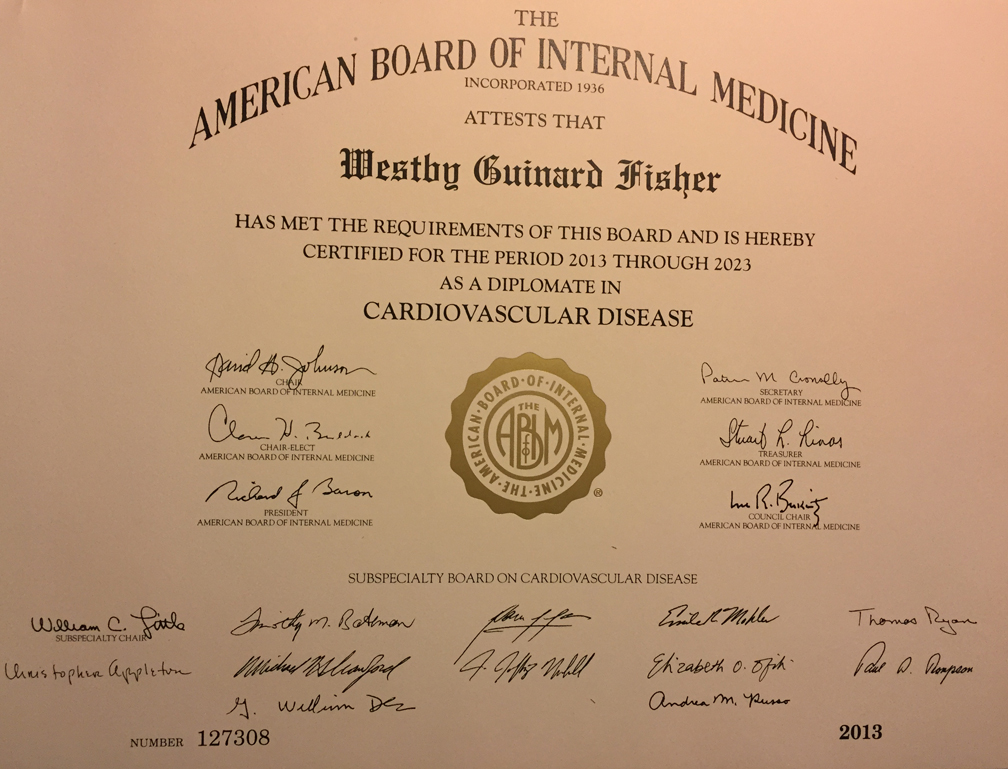
I recently went throughout the Maintenance of Certification process in 2013.  I sat for both by Cardiovascular Diseases Certification (that expired in 2013) and Clinical Cardiac Electrophysiology recertification (that expired in 2014) secure examinations in October of 2013.  Here's what I got for my cardiovascular recertification fees:

ABIM Cardiovascular Disease Certificate 2013 - Click to enlarge

Note that because the cardiovascular certificate was renewed in 2013, it now was extended from 2013 through 2023.  The cover letter that came with the new Cardiovascular Disease certificate was also notable for the three references its cited as "proof" of the value of these certificates. The three references were (1) Arch Intern Med 2010; 170(16): 1442-9, (2) Arch Intern Med 2009 (sic - Editor's note: actually 2008) 168: 1396-1403 and (3) JAMA 2005 294(4): 473-81.

Reference (1) concludes that "Publically available characteristics of individual physicians are poor proxies for performance on clinical quality measures." Reference (3) is a cross-sectional retrospective analysis of data on US physician respondents to the 2000-2001 Community Tracking Study linked to Medicare beneficiaries they treated in 2001 that only generated the hypothesis that "profiling practices may help develop tailored interventions that can be directed to sites where the opportunities for quality improvement are greatest."

But the worst reference was Reference (2).  This reference is notable in part because of the glaring and inexcusable conflict of interests of every author on the manuscript. Each author was either a paid member of ABIM or an employee of Qualidigm of Middletown, CT, a data analytics firm that does the following according to its website:
Collecting relevant data, turning that data into information, and that information into action, drives almost every Qualidigm initiative and contract.

Qualidigm analysts have the qualitative and quantitative knowledge, skills and experience to provide a wide range of services including but not limited to:

  • the analysis of claims data from a single source or aggregating claims data from multiple sources;
  • the collection, integration and analysis of claims data, administrative data and medical records data;
  • the geographic analysis of various types of databases, e.g., claims, medical records;
So it appears that Qualidigm's authors (and the purpose of these certificates and entire MOC program) was manufactured not only for the money it creates for these boards, but for insurance company claim denials.

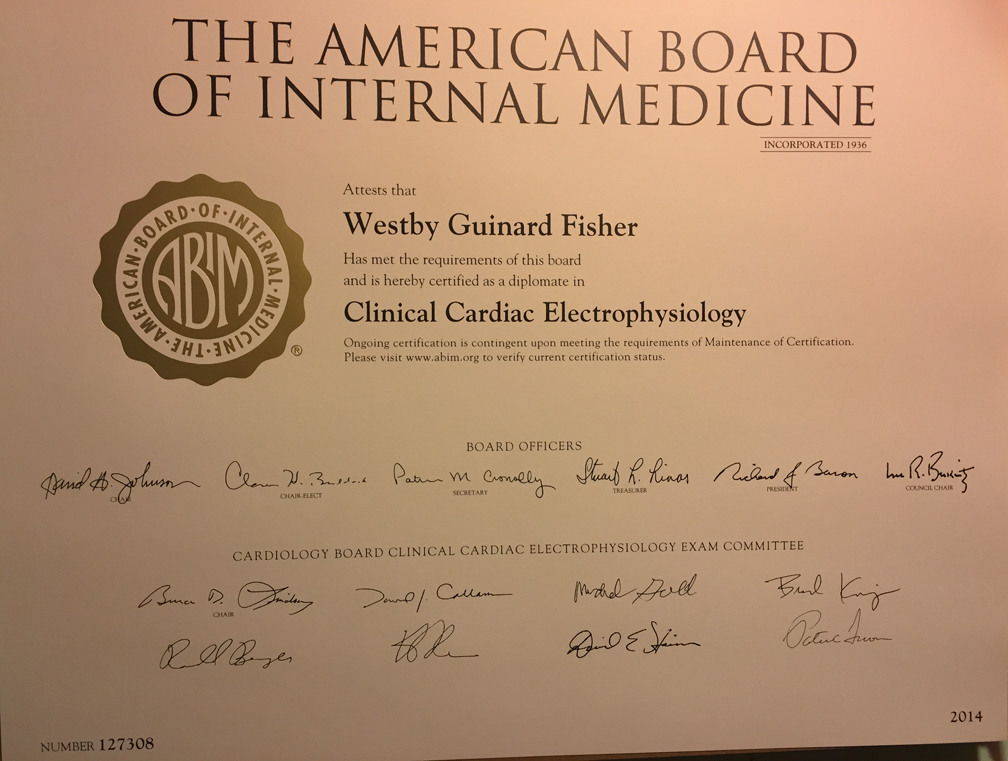
Because my Cardiac Electrophysiology certificate expired in 2014, doctors should be aware of the changes that have occurred to board certificates.  I recieved this new certificate after passing by secure examination and countless hours collecting survey data, attending board review courses, and reading enough material to put the Encyclopedia Britannica to shame:

ABIM Clinical Cardiac Electrophysiology Certificate 2014 - Click to enlarge

Note the fine print below the words "Clinical Cardiac Electrophysiology:"
"Ongoing certification is contingent upon meeting the requirements of Maintenance of Certification. Please visit www.abim.org to verify certification status."
In essense the new 2014 (and later) "Maintenance of Certification" certificates are nothing more than very expensive hyperlinks to the ABIM.org website.

Sorry, but I will never recertify and participate in this Ponzi scheme again.

Ever.

-Wes

Friday, March 20, 2015

Heart Rhythm Society and MOC: It's Not About the Doctors

Dr. Fogel
Richard Fogel, MD, President of the Heart Rhythm Society (HRS), finally released HRS's current stance in the debate on the American Board of Medical Specialties' (ABMS) Maintenance of Certification (MOC) program that has pitted one quarter of US practicing physicians against the American Board of Internal Medicine (ABIM) and its Foundation.  As a member of the Heart Rhythm Society, I sent Dr. Fogel links to my work on the ABIM in a relatively lengthy email some time ago.  As a result, I am sure Dr. Fogel is fully aware of the financial dealings that have transpired with the ABIM and its Foundation prior to writing his press release.

From Dr. Fogel's announcement, it appears the Heart Rhythm Society is carefully choosing its words so as not to seem too adversarial to the ABIM by recommending (1) the removal of the requirement of being dual-MOC certified in BOTH cardiology and cardiac electrophysiology, (2) permanently ridding electrophysiologists of having to perform the busy-work of "practice improvement modules" and (3) "continuing the discussion" at a later time.

While Dr. Fogel's statement is pleasant and forthright, those are not exactly fighting words.

Dr. Fogel also announced a "debate" on MOC that will take place at the Heart Rhythm Society Scientific Sessions being held in Boston in May of this year.  It will be moderated by Mike Gold, MD with Doug Zipes, MD as the pro-MOC advocate and Fred Kusumoto, MD taking the contrary argument. I'm sure the session will be well-attended and, who knows, maybe a few carefully-selected questions will be hand-picked from the audience!  But will the "debate" do anything?  No.

MOC Debaters?
Step back and consider this upcoming HRS "debate" for a moment.  Note how one doctor is being pitted against another doctor as though there is a debate between doctors on the value of MOC to our patients. The whole scenario is like physician puppets on a string having their message crafted by some ABMS/ABIM puppeteer! Is there really a debate that our physician testing fees should be used to purchase $2.3 million condominiums with a chauffeur-driven BMW 7-series town car? Is there really a debate that it's okay for an organization to fail physicians based on an unproven metric after 30 years of clinical practice? Is there really a debate that the evidence base substantiating MOC was written in large part by ABIM members themselves?  Given the overall negative sentiment of the majority of electrophysiologists, to pretend there is a 50-50 split in opinion on the subject of MOC is silly.  Nothing could be further from the truth. In fact, I'm not sure I've ever seen such consensus by the entire practicing U.S. physician community about the detrimental effects of MOC to our profession no matter what subspecialty or what side of the political divide they hail.  There simply is no debate: MOC is a mess.

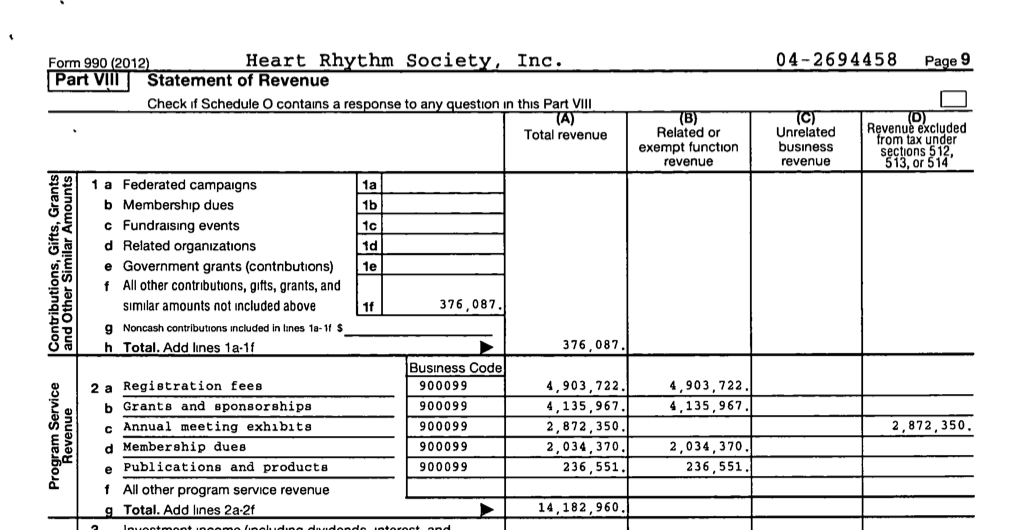
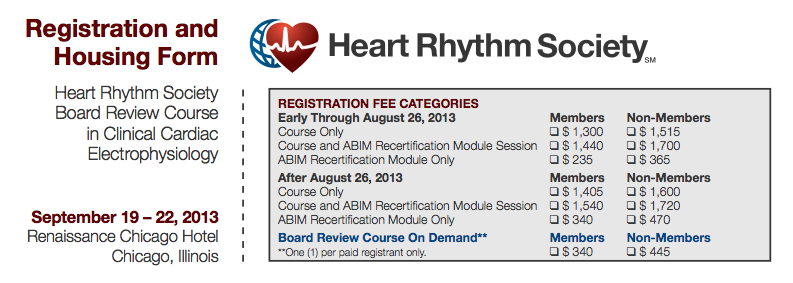
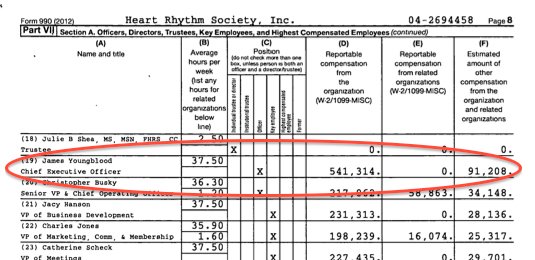
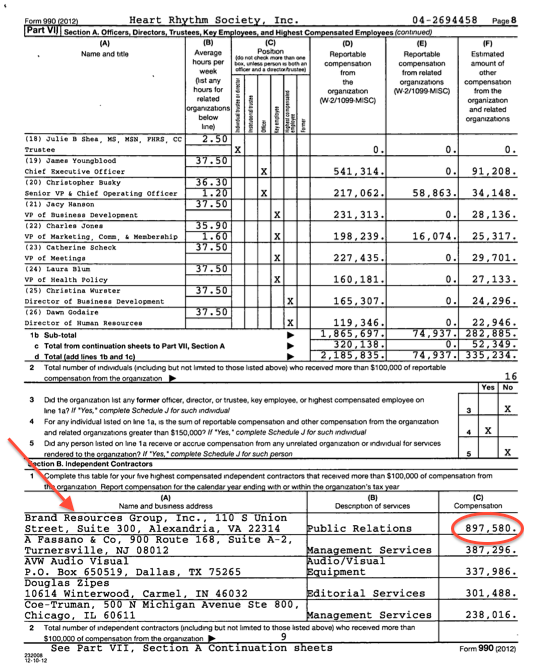
Maybe the real debate at this year's Heart Rhythm Society meeting should be about the $4.9 million in registration fees the organization collects from its members each year for MOC review courses so they can pay their non-physician CEO's salary of $632,522 and Bill Clinton's public relations firm $897,580 to show up at the 2013 Heart Rhythm Society Scientific Sessions in Denver, Colorado.

Please note that the ABIM still has not publicly posted their 2014 Form 990 (due Feb 17, 2015). It is clear they want to wait as long as possible to do so.  But even with an extension, the form must be filed by May 15, 2015, the day before the 2015 HRS Scientific Sessions end. It's very hard to have a "debate" on MOC when all the facts on the finances of the ABIM remain cloaked in secrecy, too.

Physicians should remember that just because the 0.5% incentive payment from Medicare to physicians who participated in the MOC ended 1 Jan 2014, it doesn't mean the coercive practice has gone away. Through their many political supporters, the ABMS made sure that MOC remained a component of the Medicare Physician Quality Reporting System (PQRS) as a part of the Center for Medicare and Medicaid Services (CMS) "Physician Compare" initiative.  The majority of US physicians are now employed by hospitals eager to compete for a growing number of newly-insured patients. As such, hospitals are increasingly requiring physicians to participate in MOC as a condition for gaining credentials in their hospital.  By even pretending to side with any form of MOC, the Heart Rhythm Society tactically agrees that MOC may continue to coerce money from their own physician consumers for the their benefit and that of ABMS's constituents.

Let's be clear: MOC is not a doctor issue, it's a political issue.

It is remarkable that the US government is now the only government in the world that officially requires repeated "re-certification" of physicians for them to practice medicine. Thanks to MOC, it is also the only government in the world that acts as imprimatur to an unproven pay-to-play scheme.

Doctors are done playing this game.  It's time for HRS to stop the faux debating and start aggressively acting on behalf of their membership.

The time to end MOC as a faux physician quality measure - all of it - is now.

-Wes


Sunday, March 15, 2015

Live Video Feeds at Medical Conferences

I woke this morning in a cold sweat as I found myself wrestling with a thought.

Am I Big Brother?

The explosion of social media in our society, and at medical meetings in particular, is changing how our society, and medical professionals in particular, work and interact.  There is potential for tremendous good: social media to market, to promote, to communicate rapidly, to effect change.

But the social media story is not always one of roses.

My talk at the 2015 American College of Cardiology Scientific Sessions referenced a factoid that I am not smart enough to completely verify, but I suspect isn't too far off the mark: that in January of 2014 there were 7,095,476,818 people in the world and 6,572,950,124 (93%) of them had mobile phones.

Think about that.

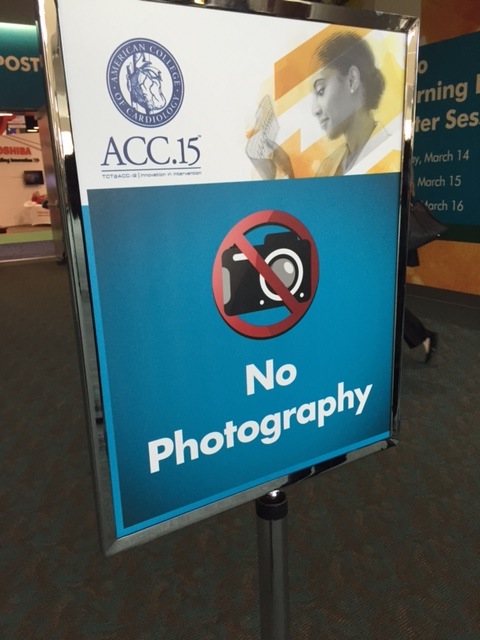
Everyone has a camera with them.  Everyone at meetings (especially scientific sessions far away from the office) is shooting pictures of abstracts, friends, selfies, drug company displays … whatever - despite a policy to the contrary.

And now, there's even live streaming video on Twitter.  I experimented with one of these yesterday called Meerkat.  (Twitter recently announced a partnership with competing live video feed service called Periscope, so this feature is here to stay).  For $1.99 I downloaded the Meerkat app to my cell phone, linked my Twitter account, and my ability to transform any experience into a live video feed transmitted instantly to the world was complete.  There are some "rules" associated with Meerkat.  Yet even with these rules, I found it disquieting that I held Big Brother's camera in my hand, if only for a few minutes.  Those videos might not be on the "cloud" by policy, but how do I know where else they're stored, or used.

There is a remarkable power, subversiveness, and wonder in the simplicity of this new technology to send live video feeds from a mobile phone.  It is both novel and "cool."  But I still deleted the video that I sent from the ACC meeting yesterday from my iPhone this morning after I thought about things. Perhaps I'm being overly cautious because videos can still be taken at meetings and uploaded to YouTube for the world to share.  But somehow this live feed was different - so instantaneous, so uncontrollable.

And as a doctor, I don't want to become an agent for Big Brother.

-Wes


Friday, March 13, 2015

Scientific Meetings Are Becoming MOC Training Sessions

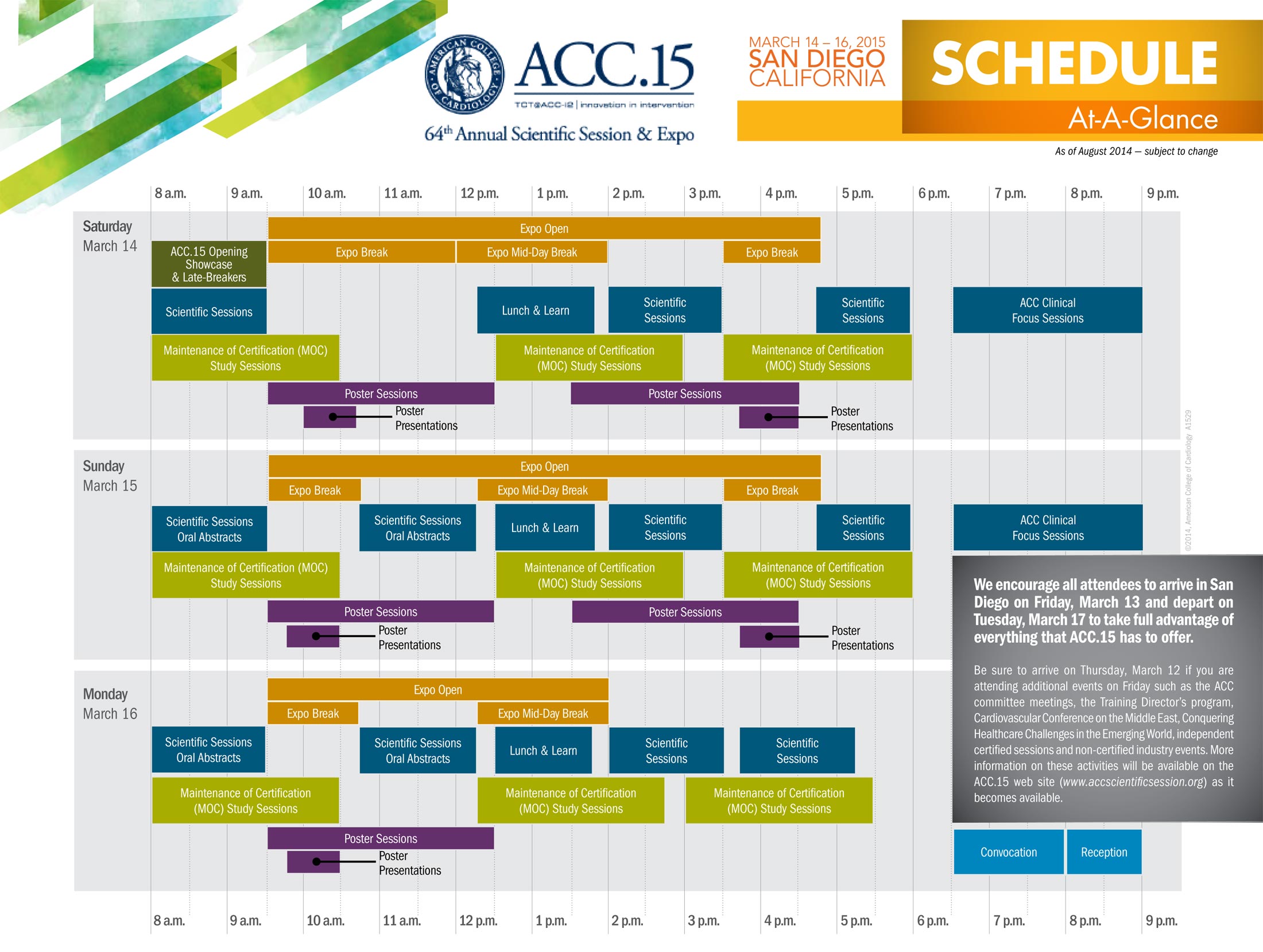
Tomorrow marks the beginning of the 2015 American College of Cardiology (ACC) Scientific Sessions in San Diego, CA.  This morning I was struck by the "Schedule At-a-Glance" sent to registrants participating in these sessions:

ACC.15 Schedule at a Glance - Click to enlarge
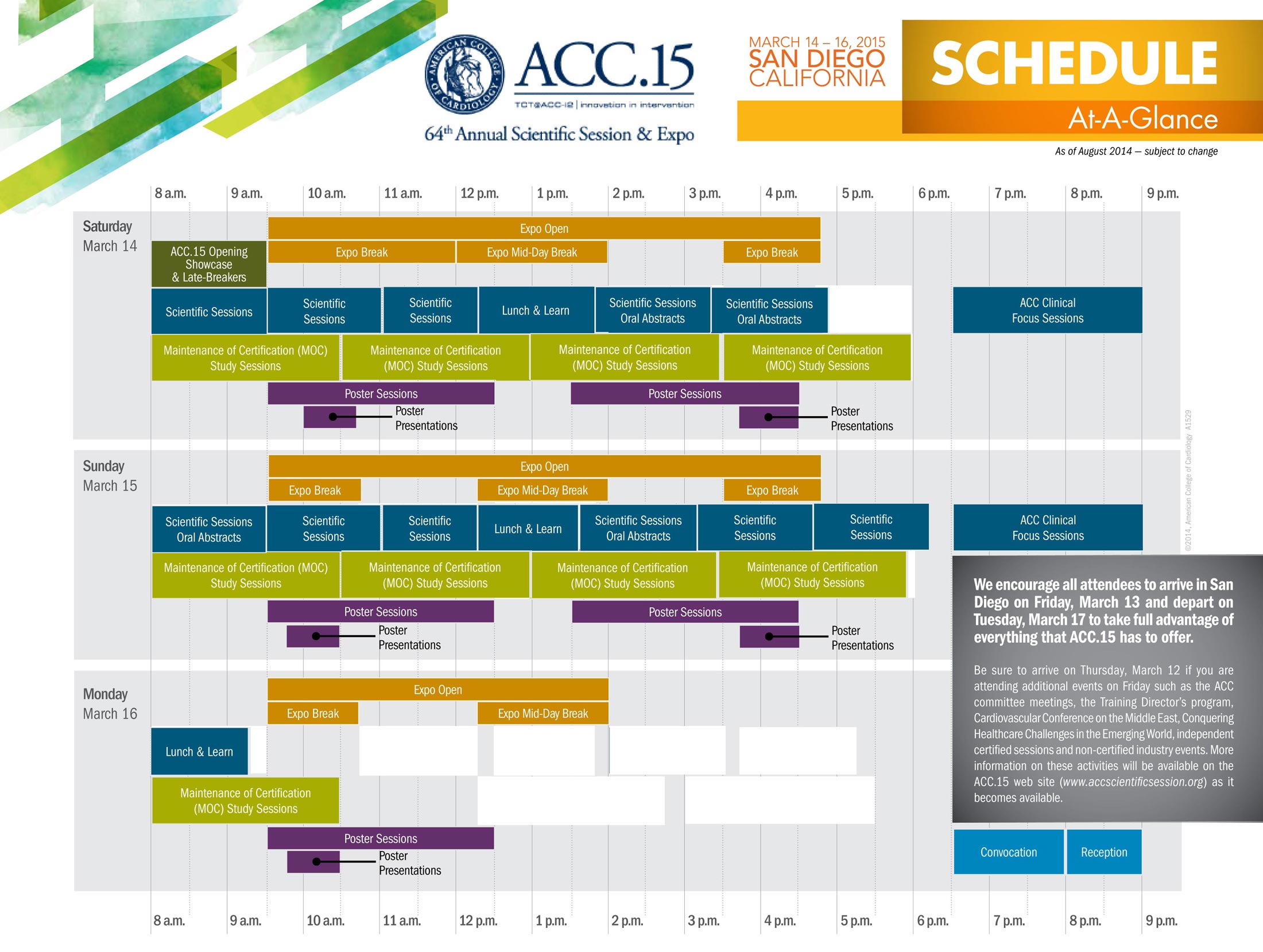
Using Photoshop, I decided to rearrange the schedule in a linear graph format day-by-day instead:

ACC.15 Schedule Rearranged in Graphical Format - Click to enlarge

As we can clearly see, the time devoted to Maintenance of Certification Study Sessions exceeds that of other collegial scientific and learning opportunities.

Does the American College of Cardiology really value the development of physician test-taking skills for the American Board of Medical Specialties Maintenance of Certification® program over the sharing of innovative ideas and scientific content at our largest world-wide cardiology meeting? 

It would appear the largest purpose of our national meetings has changed to quelling the fear and implications of failing the ABMS MOC secure examination.  I wonder what cardiovascular physicians and patients are losing as a result of this coercive and corrupt program being foisted upon us.

-Wes

Tuesday, March 10, 2015

Physician Civil War or Revolution?

Today, Kurt Eichenwald published a report in Newsweek on the American Board of Internal Medicine (ABIM) scandal entitled "The Ugly Civil War in American Medicine." Here's a small exerpt:
Slass says the suggestion that the ABIM is “purposefully failing candidates on their exams to generate more revenue is flat-out wrong.” Maybe so, but according to the Form 990s filed with the Internal Revenue Service, in 2001—just as the earliest round of new-test standard was kicking in, the ABIM brought in $16 million in revenue. Its total compensation for all of its top officers and directors was $1.3 million. The highest paid officer received about $230,000 a year. Two others made about $200,000, and the starting salary below that was less than $150,000. Printing was its largest contractor expense. That was followed by legal fees of $106,000.

Twelve years later? ABIM is showering cash on its top executives—including some officers earning more than $400,000 a year. In the tax period ending June 2013—the latest data available—ABIM brought in $55 million in revenue. Its highest paid officer made more than $800,000 a year from ABIM and related ventures. The total pay for ABIM’s top officers quadrupled. Its largest contractor expense went to the same law firm it was using a decade earlier, but the amounts charged were 20 times more.

And there is another organization called the ABIM Foundation that does...well, it’s not quite clear what it does. Its website reads like a lot of mumbo-jumbo. The Foundation conducts surveys on how “organizational leaders have advanced professionalism among practicing physicians.” And it is very proud of its “Choosing Wisely” program, an initiative “to help providers and patients engage in conversations to reduce overuse of tests and procedures,” with pamphlets, videos and other means.

Doesn’t sound like much, until you crack open the 990s. This organization is loaded. In the tax year ended 2013, it brought in $20 million—not from contributions, not from selling a product, not for providing a service. No, the foundation earned $20 million on the $74 million in assets it holds.

The foundation racked up $5.2 million in expenses, which—other than $245,000 it gave to the ABIM—was divided into two categories: compensation and “other.” Who is getting all this compensation? The very same people who are top earners at the ABIM. Deep in the filings, it says the foundation spends $1.9 million in “program and project expenses,” with no explanation what the programs and projects are.

There are some expenditures, though, that are easy to understand: The foundation spends $153,439 a year on at least one condominium. And it picks up the tab so the spouse of the top-officer can fly along on business trips for free.
Be sure to read the whole thing.

What the American Board of Medical Specialties and their member boards (like the ABIM) don't realize is that America's practicing physicians are sick and tired of funding organizations that serve as little more than job boards for non-practicing physicians looking for their next career.

-Wes

Where Will Social Media Be in Five Years?

Where will social media be in five years? Will it be dead? Will it be thriving? What will it look like?

This was just one question posed to me as a speaker in this topic for the 2015 American College of Cardiology Scientific Sessions in San Diego this upcoming weekend.  Here are some of my thoughts and I'd love to hear what others think (I need CONTENT people!) since I'm really not an expert:
  • The word "social" in "social media" will disappear.
  • The term "rectangle deficiency" (aka, misplaced cellphone) will achieve DSM-V status.
  • True privacy will be the "new black" for medicine (as will actually looking at the patient).
  • Text messaging will overwhelmingly replace paging for day-to-day patient care.
  • Research will increasingly recruit patients via this channel.
  • Credible content on social media will be recognized and even encouraged by academic institutions.
  • US physician attendance at Scientific sessions will further dwindle due to costs while subsidized overseas physician attendance will grow.

  • The Apple iWatch will be so, well, yesterday...

Am I smoking something or making sense?

Your thoughts?

-Wes

Sunday, March 08, 2015

Medscape Issues a Non-Private Privacy Update

With physicians increasingly turning to news aggregators to keep up with medical news and developments, physicians' eyes have become Big Business.

So has sharing their information.

Medscape (a division of WebMD) recently sent all of its registered users an update of their "privacy" policy (By the way, check to see if a "cookie" considers you already "logged on" when you view this policy webpage).

Here's my summary take:

Nothing physicians do with Medscape/theHeart.org/WebMD websites is private and, in fact, our data (including license information) is being shared with just about anyone willing to pay for the data.

Medscape, ironically the same institution charged with managing continuing medical education for the Health and Human Services HIPAA policy, wants to collect physician license information from "third parties," track what doctors are viewing and interacting with on their website, then share this data to anyone willing to pay them a pretty penny.  In fact, we should take special notice of the section entitled "Disclosure of Your Information to Third Parties."

I was particularly interested in the the Companies and People Who Work For Us subsection:
In addition, if you are a healthcare professional, we may request that a third party validate your licensure status and other information against available databases of healthcare professionals. In order to provide these services, we may provide these other companies with Personal Information we maintain about users of our Services. We require that all such companies agree that they will limit their use of your Personal Information to fulfilling their responsibilities to us. (Emphasis mine)
Such a friendly two-way give and take of our information! (Remember that practice information you were recently asked to supply to the American Board of Internal Medicine?)

Privacy?  What privacy? 

-Wes

h/t Mr. Larry Husten