Tuesday, March 26, 2013

Health Care Reform Three Years Later - An Insider's Assessment

It’s been three years since the Patient Protection and Accountable Care Act (PPACA) became law.  There have been widely divergent opinions published by journalists on the impact of the law for Americans: from a rose-colored account from the New York Times, to a not-so-peachy account published at Reason.com.  Few doctors have ventured into this discussion.

The Need for Health Care Cost Reform

I should start by saying that I am biased.  I grew up in the days of an idealized image of the physician –where doctors were still held in relatively high esteem by our society.  I had to think this way for I was joining the system.  Back then, like now for the younger doctors, medicine was a still considered a calling, not just a job.  The unspoken code was that it was the patient above all else: screw the establishment, screw hospital loyalty, screw the drug company – if they couldn’t help your patient, you’d take them elsewhere.  So hospitals courted doctors.  Drug companies courted doctors.  Insurance companies courted doctors.  But the truth be known, doctors weren’t the apple in everyone’s eye, patients were.  And doctors enjoyed the limelight – so much so, that a few in our ranks succumbed to the greed, too.  After all, like now, patients paid everyone’s bills.

But health care costs for patients became increasingly hard to cloak.  Insurance companies, in the business of making the expensive seem cheap, needed an exit strategy.  The new hospital buildings, multi-million dollar corporate earnings, drug innovations costing tens of thousands of dollars, and the aging population that was growing too quickly weighed heavily on the entire system’s sustainability.  Something had to be done.

The First Steps

So without belaboring the obvious: we created Health Care Reform as we know it.  Health Care Reform wasn’t just the PPACA, though, but rather a carefully orchestrated series of legislative achievements that laid the groundwork for payers to offload the costs of health care on to the only other entity that could pay these high costs: our government. 

The process (as we have seen) first involved an expensive, multibillion computer roll-out that was part of the American Recovery and Reinvestment Act.  These computer systems promised “cost savings” by “improving efficiencies” of care.  Information systems were sold as our salvation from cost excesses like $15 Tylenols.  Corporate America (and their political lobbyists) bought it and so did the government.  To keep doctors quiet, doctors were promised $44,000 a piece to install computers in their offices.  Little did they realize their payments from government to private offices were to be slashed forty percent in the same legislation and computers would be required to bill the government.  So, the $44,000 actually went to doctors’ new employers.  Doctors were thanked for their services with a new $700-dollar iPad and a treasure trove of Meaningful use regulatory benchmarks that slowed patient care rather than sped it.

Our New "Reform"

Next came the PPACA, our signature health care law.  The law was spun as a way to save health care costs while adding 34 million more uninsured patients to the system.  Pulling heart strings was much more palatable politically than the much needed reality of fiscal restraint.

But we should admit that our health care system has flaws when it comes to the uninsured.  To prove the health care reform’s benefits, the easy-to-sell low-risk coverage for young adults was given as a loss leader to the new health care law's Health Care Happy Meal.  This benefit was universally welcomed by all because it was needed.  Yeah, it cost a bit more to provide this insurance, but in the scheme of things, the cost of this health care was relatively cheap to provide.  It was (and remains) a win-win. But our attachment to this part of the law may be a clever way to buy us off.

Preventative services, provided for free, were also included in the PPACA.  But this is a problem because nothing is free in health care.  Proving preventative services for free perpetuates an expectation that everything will be free in health care and have no consequences.  After all, preventative services take time and time for care providers overloaded with more and more patients entering the system is our most precious commodity.   Others argue that catching problems early will save money but the proof that this makes a difference to health care costs is really just a delightful narrative.  In fact, even the annual physical’s benefit to our health care has been called into question – especially when we recognize its value to the system compared to the benefits derived for the patient.

And people have argued that the PPACA has already reduced costs.  While I am not an economist, I really can’t speak to this.  I am just a worker and observer.  These days I see four or five administrators where, just a few short years ago, we had one.  I see fewer nurses with less experience caring for more patients now.  I see bigger buildings but fewer patient beds as wards are consolidated.  I see hospital-system employers with hiring freezes that are laying off workers in anticipation of upcoming costs imposed by the new law. 

How's the Quality?

And then there’s the overall quality of care.  I can’t say I really see a difference from five years ago.  Sure, I see things being done faster by fewer.  I see computers moving information around like never before.  But is the care to our patients really better?  I see reams and reams of documentation made not for the patient’s benefit, but for bureaucrats and bean-counters more interested in our use of computers than our patients.  I see better communication between doctors improved with the EMR, but has this translated to better care delivery? Not always. And when it comes to quality, the New York Times editors cited the example that health care in America is cheaper because Medicare patients have fewer re-admissions since the PPACA was enacted.  But they also failed to note that hospitals receive financial incentives to reward this behavior.  They claim this is “better coordination of care” while ignoring the fact that patients are labeled with scarlet A’s and shunted to health care facilities that don’t "count" as re-admissions.  They also failed to mention the effects of the higher costs that patients see from their higher insurance premiums.  Cha-ching.

What's Ahead

In the end, health care reform is still about the money for the system rather than the real needs of most patients.  We are cutting costs to corporations by inflating our Health Care Hindenburg with cheaper hydrogen.  We have spun a narrative of providing more care for more people with less cost while ignoring the shear forces and telltale weather patterns of cost concerns that blow our way and threaten our ship's buoyancy.  

Some doctors have leapt from the ship.  More will certainly follow.  Others remain silent yet quietly discontented; they do their job as just job now, marking time with little incentive for doing more.  They have become the common workforce drone  increasingly asked to do more by those who go home at 5pm and have no liability for the care they provide.  More risk with less reward has been the mantra for care providers in health care reform.  The stress is growing for everyone.   Unfortunately, the doctors that leave will soon be back-filled by well-meaning young physicians with fewer hands-on hours of training that have been sculpted by an educational system dependent on tenured med-school professors complicit with our new progressive mindset. 

Health care reform is here, alright, doing what it's always done: spinning reform without real reform for three years (so far) and counting.

-Wes

Friday, March 22, 2013

Spent

Why do I keep doing this?  After all, I should know better.  It is not efficient, logical, cost-effective or even a healthy thing to do.

I finish, look up, and realize the day is gone.  I realize I have so much other work to do: notes to type, orders to type, instructions to give, phone messages to return, emails to check, meals to eat, wives to call, meals to eat, kids to help.  What was I thinking?

I stop, feel my sore knees and swollen legs, and realize: I'm spent.

An eight-hour case will do that to you.

For eight straight hours, I was focused, engaged, challenged, incrementally approaching a success, I was sure, only to be challenged again and again.  Okay, it's not this, could it be this?  If it's not here, then where?  Can't reach it with this, what else could I try?  Got to be careful here - this where I've had problems before - but it's where I have to go.  Easy on the power, could get ugly.  Where is this damn thing?  Could it be here?  Where haven't we looked?   Maybe there?  What's the ACT?  Give more heparin, please.

On.

And On.

And On.

Until finally, exhausted, you quit.  You have to quit.  It's safer to quit. 

Dammit.

Then you look up, and the fourteen-hour day is gone but the case isn't.   It circulates in you mind for hours while you try to pick up the day's pieces.  You come home starved for you've not eaten.  If your still married, your wife looks at you as if you've contracted a terminal illness.  Your kids roll their eyes since your not much help to them now.

"Go to bed, Dad, you're worthless."

-Wes
 

Wednesday, March 20, 2013

Stuck

By now, the majority of America has noticed the new Windows 8 advertisement with young hipsters clicking iPad-like computer screens to a keyboard computer base: touch screens, magnetic attachments to computer bases, pretty colors with cool graphic user interfaces.  It all looks so cool, so hip.

But doctors should forget these things for the Electronic Medical Record of tomorrow.  After all, our biggest EMR, EPIC,  has been developed and tested with Windows XP or Windows 7 and it uses the MUMPS programming language.

I wonder, how long will the our next Windows platforms remain backwardly compatible to support our expensive EMRs?  How long will a non-graphic and cumbersome user interface MUMPS survive in tomorrow's graphical computer world?  More to the point: how much would updating to a more current operating system cost in the future?

Yeah, we're stuck with what we've got for a very long time.

-Wes

Our New Inquisitors

A phone conference had been arranged.  They wanted to talk to me about a denial for payment on a portion of a patient's pre-authorized procedure after the fact.   It's participants: the regional medical director of a large insurance company, his female assistant administrator, and me.

He cordially introduced himself as a pediatrician by trade from a large well-known (and highly respected) academic institution with impeccable credentials responsible for our region of the United States.  It was clear we must remain professional.  I listened.  I was told there are proper ways to discuss claim denials - proper steps to follow - websites to consult.  We all must follow protocol.

Yet I had just learned by separate letter that my second request for the claim approval had already been denied.  I mentioned this.  It was unfortunate, but I was assured the the claim was re-reviewed by a specialist in my field.  Remaining professional, I wondered silently if that specialist still practiced. Then I pleaded my case once again on the phone to no avail.  I would have to submit my patient's claim a third time to an "independent" centralized reviewer, quietly please.

So I hung up and another letter was drafted.  This time a highlighted copy of our guidelines was included for  review.  "Standard of care," I thought, as if that would matter.  Guidelines for care mean little for payment when they are trumped by corporate policy directives.

We'll see.

* * *

For unclear reasons, a few members of our own traditionally underpaid or politically well-connected physician tribe are elevated  to work for insurance companies. Who can blame them?  Decisions must be made and who better than one of our own?  Whether a medical director of an insurance company or a member of an Independent Payment Advisory Board, these individuals must be carefully chosen. They must believe with all of their heart in the process.  They must believe the siren song that helping people achieve their "best possible personal health and wellness" rightfully sidelines the real-life costs of care that patients endure through no fault of their own.  Most of all, they must never, ever, speak of the money.

Then they are crowned the guild-masters, the rest of us, mere journeymen.  To them, it's about clipboards, corporate policy directives, and cost savings.  To the rest of us, clinical reality.  Increasingly, we we will be finding ourselves facing these modern-day Inquisitors - where principles for the "common good" supersede the needs of the commoner.

Medical decisions made by email, phone or fax.

No faces, please.

Quiet.

-Wes

Friday, March 15, 2013

Psychocardiology: An New Cardiovascular Subspecialty?

I kid you not (sorry, Medscape registration required):
At the recently held World Psychiatric Association Thematic Conference on Intersectional Collaboration and 4th European Congress of the International Neuropsychiatric Association in Athens, Greece, Angelos Halaris, MD, PhD, made the case for this new subspecialty, which he believes would forge closer working relationships between psychiatrists and cardiologists, provide the training and expertise needed to detect cardiovascular disease (CVD) risk in psychiatric patients (and vice versa), provide continuing education regarding the safe use of medications for patients with these comorbid disorders, and raise public awareness.

"The formation of a formal subspecialty is a bit of a pipe dream at this point," Dr. Halaris, professor in the Department of Psychiatry and Behavioral Neurosciences at Loyola University Stritch School of Medicine in Maywood, Illinois, told Medscape Medical News.

"But I wanted to put it out there because our colleagues in cardiology as well as in psychiatry need to realize there is a very clear association between emotional/psychiatric/psychological conditions and cardiovascular health."

He noted that 40% to 60% of patients with CVD also have clinical depression. And 30% to 50% who have a diagnosis of depression are at risk of developing CVD.

"Multidisciplinary teams need to forge an alliance because of these comorbidities. This will allow an earlier diagnosis of our patients, vigorous treatment, and the prevention of worse conditions that would happen otherwise," said Dr. Halaris.
Wow.  More subspecialty regulation and titles?  This is the best we can do?

Psycho, indeed.

-Wes


The Importance of Recess in our Era of Sequestration

You can see it in doctors' eyes now, especially after 5 pm.

The spring in the step that used to be there is fading; the excitement of discovery being replaced by routine.  Change and uncertainty bear down on the continual demands for perfection and quality. Independent entrepreneurial spirit is systematically quashed by clinical pathways, metrics and RVU productivity quotas that fail to represent the time it takes to smile, to do the extra something that makes the case a success, to hold a hand, to explain things.  Hiring freezes.  Three-month delays for appointments.  All occurring with the certainty that the best is yet to come: more cuts are coming.  Yes, we've been sequestered too.

Be we dare not speak of this things.  We must be positive, upbeat, a leader.  Change requires leaders.  If you're not the lead dog, the view never changes.

Yet even our doctor-leaders look tired.  They are leaders no longer.  Someone without a medical degree is "leading" now.  The business world is like that.  Oh, sure, there are the Chosen Ones, but in reality, they are the spokespersons for business and, unfortunately, business has become medicine's reality.  The proverbial bloom is off the rose.

So it is surprising that I say this, but doctors' need a break.  Nurses and technicians, too.   We need to stop and look around and take care of ourselves.  Trust me: no one else in the corporate cog of medicine has an interest in this right now.  After all, productivity will suffer.

Yet it needn't be much, but it must be something.  Something separate from medicine.  Something separate from the hospital or the clinic.  Something that breaks from the daily and opens the eyes again.  And it can come in the strangest places.

For me, it was jury duty.

Yesterday I had the luxury if turning off my pager for a day.  I rode a train.  I saw the sea of humanity that exited the train and hurried, eyes downward, to their work.  I got to hear the guy hawking newspapers and playing a saxophone on the street, to look up at the huge skyscrapers downtown, to stop for the traffic lights and to smell the acrid smell of diesel fuel as the trucks went by.  I had the uncertainty of direction and the pleasure of discovery.  I went through security, found the jury assembly room, rode a non-medical elevator, and took a number.  I read, I watched other people - lots of other people - and suddenly felt pretty good.  I sat and did nothing, then got called and sat again.  I was a doctor, so I got bounced early (another personal injury case) and received my $17.20 from the court bailiff.  I saw the fountains were already dyed green for St. Patricks Day this weekend, and I saw the homeless guy on the street hugging his dog wrapped in a blanket.

Perspective.

So tonight, after work, we're all taking a break on me.  It will be somewhere we like, somewhere non-medical, somewhere fun.  We need it.  The stress in my colleagues is palpable.

After all, I have to spend my $17.20 somewhere.

-Wes


Thursday, March 14, 2013

The Generality of the FDA's Recommendations on Zithromax

Tuesday's warning about Zithromax causing heart irregularities reportedly came after the FDA completed its own review of a New England Journal of Medicine article published in May 2012 and after reviewing additional data provided by Pfizer.  I have already voiced my concerns over the way this study was conducted in the first place since the data upon which the authors' risk estimates were made were shoddy at best.  Still, it is quite obvious to those of us in the business of cardiac arrhythmias that Zithromax, when combined with other medications likely to prolong QT interval or given to sick patients, could increase one's arrhythmic risk.

But  we should look closer at the FDA's new Drug Safety Communication on Zithromax which says: "Health care professionals should consider the risk of torsades de pointes and fatal heart rhythms with azithromycin when considering treatment options for patients who are already at risk for cardiovascular events." 

Gee, who knew?

If we probe deeper, we find the FDA recommends caution in prescribing antibiotics in patients likely to develop life-threatening cardiac arrhythmias like those with advanced age who are hospitalized, have low potassium or magnesium blood levels, or have slow heart rhythms.  The truth be known, each one of these conditions in and of themselves increases the risk of QT prolongation and makes them more susceptable to cardiac arrhythmias irrespective of the drug admininstered.

So how helpful was the FDA's warning on Zithromax to America's doctors?

Not very.

Perhaps we should add that warning to every drug out there, eh?

-Wes

Wednesday, March 13, 2013

Want Cheaper Life Insurance? Have an Ablation!

When I see patient's with supraventricular tachycardia, we discuss the the various options for therapy: (a) conservative treatment, (b) medical treatment, or (c) catheter ablation therapy for their arrhythmia.  More often than not, patients elect to have catheter ablation of their arrhythmia because of the procedure's proven track record for success, safety, and the need to avoid long-term medical therapy to suppress the arrhythmia.

But in adults, the mortality of supraventricular tachycardia is actually quite low.  Also, there are a group of patients who find they're not too bothered by the arrhythmia, or it's self-limited, or it's well-controlled with a minimal amount of medication.  For these patients, an invasive ablation procedure seems excessive, so they avoid it.

But now, it seems, there's another reason patient's might want to have a catheter ablation of their supraventricular tachycardia.  A patient recently brought us a letter they received after they inquired about a recent premium hike they noticed from their life insurance company:
"Dear Ms. Frigamafratz (not her read name):

Thank you for your inquiry regarding the change in premium.  The original premium estimate was given, as is customary, in the absence of all known medical history.  With the information now available from your verbal responses and physician records, an updated current premium quote is now provided. USAA strives to insure every member at competitive premiums which fairly reflect risk.

Careful review of your medical history reveals recurrent problems with supraventricular tachycardia.  In some cases, lesser premiums are permissible for members who have successfully undergone the ablation procedures to remedy the problem, and subsequently remain without manifestations for at least six months.  Alternatively, we can consider a more favorable premium for individuals with supraventricular tachycardia who have had a thorough cardiac evaluation and documented spontaneous remission of the problem for at least five years.  The latter is not an endorsement nor recommendation of any medical treatment, but gives insight to elements of risk approval used to determine your life insurance premium quote.  You are encouraged to provide any new medical information to support a better rate and we will be happy to review."
I should be quick to mention that the recommendations or information given on this blog are not an endorsement nor recommendation of any medical treatment either, but at least you now know one more advantage to catheter ablation for supraventricular tachycardias: the potential for cheaper life insurance premiums!

But I have to wonder, is a adult patient with symptomatic paroxysmal supraventricular tachycardia really going to have reduced mortality if they undergo a catheter ablation procedure?  While mortality of SVT ablation has been quoted as low as 0.1%, that low mortality comes with an adverse event rate of 2.9%.  I am unaware of a direct comparison of conservative or medical therapy mortality to catheter ablation, but I suspect with such a low incidence of mortality, such a mortality trial will never be performed because of the large number of patients required to show a statistical difference in mortality between the treatment arms.

So I wonder where the data are that support USAA's higher life insurance premium rate for adults?

-Wes

Sunday, March 10, 2013

Gruntdoc: Talk Like A Healthcare Management Robot

Via Gruntdoc, Richard Winters, MD nails healthcare management speak. 

Click the button there and you can become a healthcare management robot, too!

-Wes

Saturday, March 09, 2013

The PREVAIL Flail: A Contrarian View

"The good thing about bad news - it sells."

At first, it seemed like such an embarrassment.  A brand new therapy for treating atrial fibrillation is slated as the day's Late Breaking Clinical Trial at the 2103 Scientific Sessions of the American College of Cardiology meeting.  A "press release" containing the results of the trial is sent to investors at 6:30 AM PST, breaking a pre-specified embargo time of 9:10 AM PST.  In response, the American College of Cardiology pulls the presentation.

And with that, the Twitterverse erupts.  Scandal.  Intrigue.  An heir of deception.  News organizations, some of whom have been on the receiving end of such scandal, snicker and publish accountings of the event, detail by gory detail.  The principle investigator describes his disappointment as "an awful event"  and doctors  who attended the session feel "cheated," "penalized," and found the event "unhelpful."

And then the results (as they are known) appear anyway in the Wall Street Journal, on Forbes, and nearly a hundred other places on the Internet, instantly.

Can it get any better for marketing? 

You see the Watchman device needs some help, especially in the era where at least one novel oral anticoagulant has shown not just equivalency, but a mortality advantage over warfarin, Watchman's trial comparator.

And Watchman has had the difficult time getting FDA approval even though its competitor's device, the Lariat, was (incredibly) already "approved" for sale in the US using the FDA's own 510k exemption. 

So Boston Scientific should feel good about the negative buzz about their trial.  It'll help overcome their sales headwind provided, of course, their device gets approved by the FDA.

-Wes


Friday, March 08, 2013

Boston Scientific Issues Alert Regarding Their New Subcutaneous ICD

From Massdevice.com:
The company has received reports of 4 instances in which a fuse inside the subcutaneous ICD was activated inappropriately, which could cause the devices to fail. No adverse events have yet been reported, according to Boston Scientific.


"The company is issuing a software update that takes less than a minute to complete using a programmer in the physician's office," Boston Scientific senior VP of global corporate communications Denise Kaigler told us today. "We recommend patients with recently implanted S-ICDs meet with their doctors for a follow-up visit to receive the software update."
-Wes


Thursday, March 07, 2013

Health Care Reform's Inattentional Blindness

Dr. Lisa Rosenbaum politely hits the nail on the head in today's New England Journal of Medicine:

When it comes to health care, we have embraced a story that, by promising the delivery of high-value care, has become as easy to believe as it is to tell. The value framework for physicians means being held accountable for patient outcomes and resource consumption, whereas patients are reminded that value simply means getting what matters to them. By fostering divergent foci for our attention, this narrative allows us to continue ignoring the tough choices facing our health care system.

If we want to simultaneously improve quality and cut costs, we must first stop creating incentives that effectively split patients and physicians onto different teams. We must acknowledge that shared decision making is just that: shared. We must admit that turning health care into a customer-service industry may to some extent undermine the delivery of evidence-based care. And we must admit how little we actually know about patients' values and about how they should or might influence our decision making, the delivery of evidence-based care, rising costs, and patient outcomes.
Read the whole thing.

-Wes


Tuesday, March 05, 2013

What's Missing in Scientific Journal Articles on New Innovations in Medicine

My perspective on scientific publications has been greatly affected by my experience with this blog and social media in particular.  The ability to serve as author, reviewer, advertiser and marketer can be easily achieved in this space thanks to the power of self-publishing.  But with this new platform comes new responsibilities and for those of us who chose to work with people daily, perhaps none is as great as maintaining the trust of our patient readers.

This week's New England Journal of Medicine opened my eyes to another revelation in scientific reporting where doctors have not been completely honest with our patients.  While few are as enamored with scientific innovation as myself, I find there is an gaping hole in scientific discourse that doctors have not forced to the surface when new innovations arise.

What's that hole?

Cost.

In an era where scientific discovery has only been eclipsed by price inflation, doctors have not taken responsibility for insisting this cost of any new innovation's impact on our health care system be disclosed in scientific articles reviewing the medication's risks and benefits.   We have not insisted that major medical journals reveal which articles are provided free to the public through tacit collusion with their pharmaceutical sponsors.  (While the exact price might not be known at the time of publication of these articles, the estimated cost to our health care system can probably be guessed depending on the novelty of the medication or device and the expected return on investment a manufacturer would hope to achieve.)  To be fair, most reputable journals do require disclosure of manufacturer's sponsorship of the reported trial, but no where do the journals report the money they receive from those same manufacturers for making favorable articles about a drug or device open access to the public.

Take this week's New England Journal of Medicine.: Three articles appear on our new novel oral anticoagulants that lack cost information and disclosure information from the journal regarding if they paid for the article to be open access:
Apixiban for Extended Treatment of Venous Thromboembolism: The article is open access and not a word about the cost of the drug.  Did Bristol-Myers Squiibb or Pfizer (or both) pay to be sure this article was open to all?

Extended Use of Dabigatran, Warfarin or Placebo for Venous Thromboembolism: The article is open access and not a word about cost of the drugs.  Did  Boehinger Ingelheim pay to be sure this article was open to all?

Rivaraoxaban for Thromboprophylaxis in Acutely Ill Medical Patients: The article is open access and not a word about the cost of the drugs.  Did Bayer Healthcare Pharamceuticals and Janssen Research and Development pay to be sure this article was open to all?

Increasingly I find the cost of these novel oral anticoagulants relative to warfarin factors in to conversations I have with patients during their decision about which drug to start.  Granted, it is just one factor, but an important one.  I also find the deluge of pharmaceutical benefit manager denial letters to be a real thorn in my side as I have to constantly justify to payers why one drug has better benefits for an individual patient than another.  Not being armed with cost information puts me at a disadvantage when speaking with these deterrents to care.  The reality is this: we simply HAVE to have honest discussions with our patients about cost these days, especially since more and more costs for care are being shouldered by our patients than ever before and the financial impact of their care has huge psychological implications.  If I have to disclose everything about my relationship with industry thanks to the Sunshine Law, our scientific journals should do the same.

It is for this reason that we should insist on at least relative cost information of new technologies appear in scientific reporting, especially when the cost of new innovations exceed existing innovations by over a factor of 10.  In this era of health care reform and growing cost concerns, patients (and their doctors) deserve disclosure of at least a relative benchmark of price so we can make the best informed medical treatment decisions with our patients that benefits not only their physical well-being, but also their psychological and social well-being too.


-Wes


Monday, March 04, 2013

Need an Expert? There's an App for That!

"Sally, we need an EP consult on Mr. Smith here. He has some trouble walking now due to pain from his multiple myeloma, but he also has a history of a heart attack, left bundle branch block, some non-sustained VT on his telemetry monitor, and is still a pretty young guy..."


"No problem!" said Sally, reaching for her iPhone. "I think there's a app for that!"

She scoured the apps on her iPhone 5. She clicked on her Heart Rhythm Society Sudden Cardiac Death Primary Prevention Protocol app walked through the algorithms there.

"Hmmm. Looks like I need to order an echo," she thought. * Click click * “Echo ordered! Damn I’m good,” thought Sally.

She continued with her Heart Rhythm Society app. "Says something here NYHA Class? I wonder how I figure that out....Wait! I have a MedCalc app for that, too!" A few taps later, "Looks like NYHA Class II!"

"Let's see, back to the Heart Rhythm Society app..."

A few more clicks and...

"Yipee! Looks like he qualifies for one! But wait, will the government pay for it? Let's check the CMS ICD app!"

A few more clicks and then...

"If we wait ninety days... he might get it paid for... but will I be investigated by the DOJ because I ordered it inappropriately? Hmmm. Oh, wait! There's an app for that, too! I can just use the American College of Cardiology Foundation's Appropriateness Use Criteria (AUC) app© ..." she thought to herself, “After all, it covers 369 clinical scenarios… Wait, looks like there’s an update to the app. This is only Version 1.1… I think I'm going to need Version 1.2…”

She left the "AUC app©" and went to the App Store icon on here phone. She waited a few seconds while the screen refreshed and then:

“There it is: the latest update!. Seems those guys update these scenarios every week. Wouldn’t want to be out of date on this.” She clicked the “Update” button. “I sure like how those clever app developers have all he right data I need right here at my fingertips,” she thought.

After it updated, she went back to the American College of Cardiology Foundation’s "AUC app©" on her iPhone and began entering the patient's scenario...

"Wow," she thought. "This is making it so easy for me! There's nothing to this! Hmm, can't seem to find anything in here about multiple myeloma ... Oh, heck, I'll just click on the 'no' button ... There we go, I got a green box! Looks like we'll still be okay to implant his ICD and stay out of jail." She turned to the resident, beaming.

"Well, did you get that EP consult I asked you to get on Mr. Smith?" the resident asked.

"I didn't need to, it looks like he's good to go!" Sally announced.

"Great!" said the resident, impressed with Sally's performance. "So when does the device go in?"

"I'm not sure.  As soon as the next iOS version becomes available I'll check the new software updates." said Sally.

"Awesome.  You think his low grade fever will be a problem?"

"Let me check," said Sally, reaching for her iPhone again...

-Wes

Wednesday, February 27, 2013

Why Technology Threatens the Art of Medicine

"How broken is the US Health Care System?  Let Us Count the Ways" - NPR.org

"... perhaps as many as 98,000 people, die in hospitals each year as a result of medical errors that could have been prevented, according to estimates from two major studies." - Institute of Medicine media files

It seems we can't find enough problems with US health care: the uninsured, excessive costs, real preventable medical errors continue to occur, patient safety lapses, handwashing snafus - you name it.  But have no fear:  from cameras in the OR, patient check-in kiosks, smart phone apps, to fancy schmancy electronic medical records, technology will save us.

At least that's the rage these days.

But are we dumbing down our doctors and medical personnel with technology as a result?  Yesterday I was called to evaluate a patient for a possible emergent pacemaker implant.  Reviewing his chart, he had been given beta blockers intravenously in the early morning hours along with a hefty dose of enoxaparen (because of the presence of atrial fibrillation and an EMR-generated alert to consider DVT prophylaxis).  Unfortunately, because enoxapren has no antidote for bleeding and there was another cause for bradycardia, the pacemaker wasn't needed.  But this episode got me thinking.

Increasingly we're using technology for social engineering of our doctors and nurses in medicine.  I believe this is the part of technology's use that disturbs physicians so.  Doctors understand the "good" uses of technology: one that provides instant information that facilitates decision making and doesn't restrict behaviors.  But increasingly with the development of rigid "guidelines" and "acceptable use criteria" paired with electronic care pathways, doctors who were once considered guild-masters of their trade, are increasingly seen as nothing more than journeymen and task-masters for data entry as they feed decision support systems for payment from third parties.   

An important article for doctors appeared in the Wall Street Journal on Saturday, but I suspect most doctors missed it.  The article, written by Evgeny Morozov, was entitled "Is Smart Making Us Dumb?"  We should all read it with an eye toward what's happening in medicine.   In the article, Morozov sounds a cautionary note about this coming technology revolution in medicine: that "social engineering is being disguised as product engineering."
"But there is reason to worry about this approaching revolution.  As smart technologies become more intrusive, they risk undermining our autonomy by supressing behaviors that someone somewhere deems undesireable." 
Morozov differentiates technologies that are "good smart" from "bad smart."  "Good smart" technologies leave us completely in control of the situation and seek to enhance our decision making by providing more information.  Technology that is "bad smart" make certain choices and behaviors impossible.  Even the "suggestions" these devices give to doctors can be detrimental to care since they inherently fail to consider future events that might need to occur for a patient (as in my pacemaker case described earlier). 

In our rush to develop a Utopian vision for error-free health care using technology, we should consider the implications of such a world for medicine.  Morozov uses a valuable anology: Autopia.
"Will those autonomous spaces be preserved in a world replete with smart technologies? Or will that world, to borrow a metaphor from the legal philosopher Ian Kerr, resemble Autopia—a popular Disneyland attraction in which kids drive specially designed little cars that run through an enclosed track? Well, "drive" may not be the right word. Though the kids sit in the driver's seat and even steer the car sideways, a hidden rail underneath always guides them back to the middle. The Disney carts are impossible to crash. Their so-called "drivers" are not permitted to make any mistakes."
And we should ask what consequences of medical students, residents, and newly minted medical attendings being unable to "crash" might be:
"Creative experimentation propels our culture forward. That our stories of innovation tend to glorify the breakthroughs and edit out all the experimental mistakes doesn't mean that mistakes play a trivial role. (Editors note: someone else said something like this before) As any artist or scientist knows, without some protected, even sacred space for mistakes, innovation would cease. 

With "smart" technology in the ascendant, it will be hard to resist the allure of a frictionless, problem-free future. When Eric Schmidt, Google's executive chairman, says that "people will spend less time trying to get technology to work…because it will just be seamless," he is not wrong: This is the future we're headed toward. But not all of us will want to go there. 

A more humane smart-design paradigm would happily acknowledge that the task of technology is not to liberate us from problem-solving. Rather, we need to enroll smart technology in helping us with problem-solving. What we want is not a life where friction and frustrations have been carefully designed out, but a life where we can overcome the frictions and frustrations that stand in our way. Truly smart technologies will remind us that we are not mere automatons who assist big data in asking and answering questions."
Precisely.

-Wes

Sunday, February 24, 2013

How Big Data's Fueling Complacency

"What's the most important finding on this chest x-ray?"

There he was, standing before 5 ICU residents, each peering at a chest film on displayed on the over-sized computer screen.

"Um, the pleural effusion?" whimpered a third-year resident.

"No!" barked the attending.

The others, standing dumbfounded in front of the computer display, searching for another finding but finding none, stood silently.

"Come on, folks!  Look!"

And try as they may, no one saw it.

"The name, folks, the name!" the attending said impatiently.

And there it was, a tiny reminder of whose x-ray it was, quietly lurking in tiny print in the upper right corner of the computer screen, unmagnified. 

But wait, the name was correct.  What the heck was he talking about?

Closer inspection showed another critical piece of information, totally lost on almost everyone standing there: the date of birth of the patient.  It was not the same as the patient being discussed. They were looking at the wrong patient's chest x-ray.  Never mind that their patient had a chest tube placed on the opposite side that wasn't shown on the displayed chest x-ray.  Yet they were already trying to make decisions for care.

***

I recently taught an EKG reading class and had a similar experience to the one above.  Since July, I've been teaching the basics of EKG reading at least once a month: rate, rhythm, axis, intervals - you know the drill, right?

But I (once again) asked about the axis of an EKG tracing we were discussing some six months later.  A room full of at least twenty residents sat quietly.  No one answered.

I kept my composure.  I prodded them gently, hoping to hear an answer yet none came.  Were they on call?  Distracted by their cell phones or pending work?  Am I THAT boring?

Still nothing.

So I reviewed how we determine EKG axis, and quickly, a few remembered the concept and gratefully, responded correctly.

But these experiences got me thinking about the effects Big Data is having on our residents today and its tendency to build complacency.  Why learn something if you're always spoon-fed it right?

Admittedly, our medical data explosion has prevented us from knowing everything there is to know about anatomy, physiology, pathology, treatment options and the like.  There is a role for access to Big Data.

But increasingly the data we feed our residents and medical schools is nothing but printed characters: x-ray reports, EKG interpretations, study results like "ejection fraction:" all limited to the 256 ASCII character set.  Residents no longer feel the need to look at the raw image and formulate their own opinion - they'll just look at the printed report.  They expect the data to be fed to them in printed format.  They expect the reading to be correct.  In a way, they're growing up expecting to be spoon fed just the black-and-white answers rather than the brilliant data provided by pictures.  Just "google it."

Never mind the computer says "atrial fibrillation" because the original EKG contains noise.

Such an "Big Data-entitled" approach to health care is extremely dangerous, especially if the data upon which decisions are based, are wrong.  Residents should never forget two things my father always told me:

"Garbage in, garbage out" and "expect what you inspect."

-Wes

Cardiology for Dummies

"AUC," "RAND," "Reynold's Score," "modified Delphi methodology."

All "harmonized" with guidelines.

WTF?

-Wes

PS:  Link fixed.

Saturday, February 23, 2013

Study Maybe

Zdogg MD has some competition from the University of Maryland School of Medicine Class of 2015:


Heh.

Thanks to a cool $10 million dollar grant available from he AMA, perhaps (music) video production will become the next new prerequisite for medical school.

-Wes

Friday, February 22, 2013

EKG Du Jour #30: ECG O.M.G.

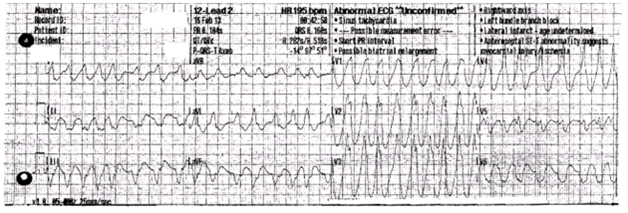
A sixty year old patient felt some palpitations and an uneasy sensation in his chest that woke him from sleep.  He noticed the rhythm persist, so he ambulated to the bathroom and sat on the toilet, wondering what was happening.  After he didn't return to bed, his wife became concerned and went to check on her husband.  She noted he looked a bit pale sitting there on the toilet, so she called 911.

Several minutes later, the paramedics arrived and found that his pants were a bit wet (he never understood why he urinated on himself), but he was awake and coversant to the ambulance attendants.  They connected him to a limited lead II tracing and weren't sure what they were seeing (the report said "SVT vs VT?"), so he was administered 6 mg adenosine in the field.  The patient noted the paramedics looked concerned after administering the medication.  An ECG strip was recorded, seen below:


Strip recorded after adenosine 6.0 mg administered - (click to enlarge).
Remarkably, he remained conscious - enough so that he could ambulate downstairs and lie on their gurney to have a more formal EKG performed in the field, seen here:


12-lead EKG of his presenting rhythm - note similarity of lead II to rhythm strip and the "excellence" of the computer interpretation - (click to enlarge).
O.M.G. 

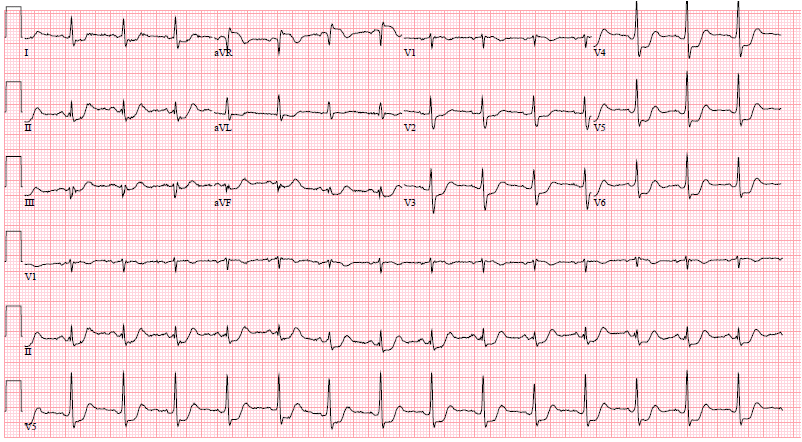
He was urgently transferred to the closest Emergency Room.  Interestingly, upon arriving there, he felt much better. Here's his initial EKG on presentation:

12-lead EKG of his presenting ER rhythm - (click to enlarge).
So what happened?  What would you do next?

-Wes

P.S.: Another EKG tracing from the following morning, in case you're wondering, can be found here.

Wednesday, February 20, 2013

When EMR Companies Muzzle Doctors

It started out as a satire about electronic medical records posted as a computer game review by an electrophysiologist in Kentucky.  The problem was, it contained real screenshots of a real EMR that highlighted certain (how do we say it nicely?) quirks of the software.  But this wasn't just any software, this is an electronic medical record that manages information on nearly 40% of all real live hospitalized patients in America, EPIC Systems.   Evidently, those screenshots were (and continue to be) off limits.  They're trade secrets that can't be shared publically, it seems.

So the doctor, fearing legal retribution, had to take the screenshots down.
I wonder what patients think of this behavior by a company that manages their medical records?   Should de-identified screenshots of an EMR software application be trade secrets or is such a move just cyber-bullying of a doctor's criticism by the company?  If this disclosure was against national policy in our era of interconnected EMRs, who was going to tell doctors nationwide that such disclosure was (and is) off limits? 

What should doctors and patients think when a multi-billion dollar company silences one of their end-users in such a fashion?  What might they be hiding?  What rights do patients have to see these screenshots?  After all, isn't it THEIR data that is held within these systems?  If doctors can't criticize the place where their patient's data is stored, who can?  What are the ethical implications of EPIC's move? 
It's now clear what at least one EMR company thinks about doctors criticising their computer user interface publically.  What do you think?

-Wes

PS: It will be interesting to see how long this post lasts...
 

Monday, February 18, 2013

Physician Burnout: Meet Patient Safety

The majority of doctors in America today care deeply about their patients.  After all, they're the ones that have personal relationships with them.  They're the ones who sit with them, speak with them eye to eye, feel their pain, and witness first-hand the scourge of disease on the human body and psyche.

But you'd never know this from the Patient Safety Movement.  From day one when the Institute of Medicine report entitled "To Err is Human" was published in 1999,  the nebulous "98,000 preventable deaths" number was circulated far and wide by media outlets.  Strangely, this important publication was never made available free to physicians for review.   But instantly, the media took notice of this sound bite.  Breathless outrage ensued.  Hospitals took notice.  Even doctors and doctors' associations noticed.  Worse yet, we were still told by the media and their self-appointed safety enthusiasts that "medical errors kill enough people to fill four jumbo jets a week."  But to everyone's credit, we all did some real soul-searching.

So change came to our industry.  Overnight, enough bureaucrats to bury the number of doctors in America three-fold were hired as patient safety do-gooders.  Entire new organizations hell-bent on imposing their vision for the future of patient safety sprang up to guide large hospital organizations to their vision of patient safety nirvana.  None were as influential as the organization called the Institute for Hospital Improvement (IHI) run by the soon-to-be knighted-as-acting-CMS-directorship, Donald Berwick, MD who made a cozy sum from the safety scare.  This is the same "institute" that still provides mandated safety training to hospital systems across the US even today.

But a strange thing has happened.  Despite their best intentions, after ten years of trying with more administrative hires and scores of new imperatives thrust on doctors and nurses with hours of carefully-constructed safety courses, and scores of white papers and media stories, not much has changed.   To be fair, not all efforts have been worthless, but self-reflection on the negative consequences of this movement have been limited.

And in its place, physician burnout has exploded.

But this morning, I saw a glimmer of hope.  People might be starting to do some introspection.

Take a minute and read Bob Wachter's post.  It is a prescient view of the problems created by well-intentioned (but misguided) initiatives that ultimately fall on America's physicians and nurses to implement:

The lack of evidence that all our hard work is paying off is also contributing to burnout. Several influential papers (such as here and here), using the IHI’s Global Trigger Tool methodology, have documented continued high rates of harm; one study of 10 hospitals in North Carolina showed no evidence of improvement between 2002 and 2007. On top of that, a steady drumbeat of studies (beautifully chronicled by Brad Flansbaum) demonstrates that nearly every policy intervention that we thought would work (readmission penalties, “no pay for errors,” pay for performance, promotion of IT, resident duty-hour reductions) has either failed to work, or has led to negative unanticipated consequences. For people who have given their hearts and souls to making the system work better for patients, the result is more demoralization. 
My second major concern about patient safety stems from the Affordable Care Act (ACA), one of whose main goals, paradoxically, is to place a premium on value over volume. You’d think that the patient safety field would benefit from such a law (which also includes significant new spending on safety), and perhaps it will… eventually. But in the short term, the ACA is yet another speed bump on the road to a safe system. 
Just as physicians are overwhelmed and distracted, so too are hospital CEOs and boards. As the healthcare system lurches from its dysfunctional model to a (God willing) better place, healthcare leaders are scrambling to be sure that their organizations have seats when the music stops. The C-suite and boardroom conversations that, a few years ago, were focused on how to make systems better and safer now center on whether to become Accountable Care Organizations, how to achieve alignment with the medical staff, what the insurance exchange will mean for our reimbursement, and the like. To the degree that people remain interested in improved value, here too the emphasis has shifted from the numerator of the value equation (quality, safety, patient experience) to the denominator: cutting costs.

Read the whole thing again and think about what he's saying and what's coming unless real change that improves the burden these safety initiatives have on doctors and nurses occurs.
"Don't it always seem to go, that you don't know what you've got 'til it's gone.  They paved paradise, and put up a parking lot." 
- from"Big Yellow Taxi" by Joni Mitchell
-Wes

Sunday, February 17, 2013

Liability Reform: It's Coming

A collision is coming.

Scratch that.

The collision is here.

I'm not quite sure how to describe this, but I'll try.

Every day, I look at a computer screen for health care delivery with an increasing number of menu options.  I tried counting these menu options once and after scrolling through them, I never reached all of them after counting up to 275 items.

Yes, there are more than that, but suffice it to say, for most of us, that's enough to make my point.

Next, are the data points that confront my eyes every day.  Data points from all over and from all sorts of people.  Some whose names I recognize (even a few from me), but more importantly, many of whom I don't.  Hundreds and hundreds and hundreds of data points, streaming to me every single day.

What are these interrupters?

Many are orders for procedures.

Others are for results.

And phone calls.

And messages.

And patients recently admitted to other services for other procedures just so I know about them.

And patients to be scheduled for a procedure at a later date.

And blood draws.

And EKGs that have been ordered and not "signed."

And EKGs that have been read and not "signed."

And EKG results that were "signed" but returned to my "results" box just to remind me I "signed" them.

And ... well, just about anything.

All as part of the Great Medical Health Care Team plan.

But wait, who ordered all of these procedures, tests, results to be sent my way?

Some I did, but far more often, other people did.

Those other people are people who have been ordained capable of ordering those tests by other people.  Other people in our big, burgeoning health care system that extends over a larger an larger geographic area with more and more doctors than ever before.

And herein lies the challenge and the best hope for doctors' liability reform going forward: diffusion of their responsibility.

A few central planners whose grandiose health care narcissism have allowed unfettered access to physician responsibility for health care actions outside our real control in our new health care model so they can be paid.  Perhaps this was inevitable given the priority of providing care of so many more people without increasing doctors' ranks.    But as a result, doctors have unwittingly permitted programmers to send us all of these "notifications" so we must click on them so we can assume responsibility for their presence.  It's all part of the game:  get the doctor to click on it so it can be billed to payers.   Get the doctor to click on it so he or she can take the heat if there's a problem.

Licensed medical doctors continue to allow click after click after click, not to show we are using a computer "meaningfully" (as the programmers and political wonks would like you to believe), but really so we can assume responsibility for the results that ultimately come our way and for others to bill.

Need a flu shot?  Don't worry, it's auto-programmed computerized care pathway programmed by others on behalf of patients everywhere will happily send us a notification that the test was ordered and the results sent to the doctor so he or she can assume responsibility before he or she is even aware the test was ordered and resulted.  There it is: silently lying there in their inbox.

Click, doctor, click.

Forget about the egg allergy?  Oops.

Sorry, doc.

But increasingly, there's a little something that's happening as patients assume more of their health care bill: doctors are finding that they are effectively "responsible," even though we have no idea what things cost.  We are "responsible" for the patient's tests ordered, even though we didn't order them.  We are responsible for the results, because they come our way.  We are responsible for our "team," even though we had no responsibility for its selection.

The fanciful dream that doctors can be responsible for problems that arise can be completely blamed on doctors is a joke.  A very, very bad joke.

This is why liability reform will happen, whether the lawyers like it or not....

... not because doctors want it (even though they do), but because Big Business does.

-Wes

Saturday, February 16, 2013

Why Greys Anatomy is a Bad Place to Promote Device Research

For medical students, residents, and attendings aspiring to develop a new medical device that is FDA approved for patient use, there are a few things you should remember:
First, don't star in Grey's Anatomy while your experimental device is demonstrated by faux doctors performing faux procedures on faux patients.   People might think you are a faux doctor helping the other faux doctors install a faux heart failure device.

Second, in your excitement after the shoot, avoid saying things to main stream media like: "This kind of attention is important to create awareness and to help people that are out there that have a heart problem and have been given no option of therapy to learn that there is an option."  Really don't say this after your FDA trial has begun in "Kansas, Kentucky and Ohio."  Statements like those might run afoul of the FDA guidance statement for the recruitment of study subjects.

Third, don't have the actors describe the device as "crazyballs."   Because the device is experimental and hasn't even completed clinical testing and evaluation in the US, such a claim might fly in the face of FTC deceptive advertising guidelines. 

Finally, don't have your local NBC news station promote (with video clip) your stardom, too.  (Seriously, promoting an ABC show?)  By doing so, your local newscasters really create the perception that your hospital system (that benefits financially from your study) really wants to get the notice out, too.
Remember: real doctors with real medical devices that they are hoping to get FDA approved would never think of doing such a thing.

Would they?

-Wes

Addendum: Seems Greys Anatomy has a habit of doing similar promotions (h/t @AlecGaffney via Twitter)


Wednesday, February 13, 2013

When Patients Can Obtain Their Own EKG

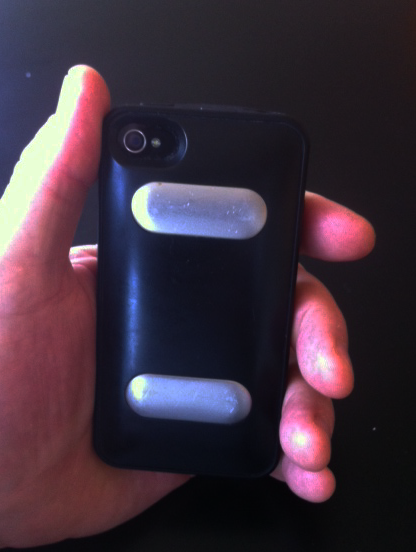
With the announcement that the FDA granted 510(k) approval for the AliveCor EKG case for the iPhone 4/4s, the device became available to "licensed U.S. medical professionals and prescribed patients to record, display, store, and transfer single-channel electrocardiogram (ECG) rhythms."

While this sounds nice, how, exactly, does one become a "prescribed patient?"  Once a doctor "prescribes" such a device, what are his responsibilities?  Does this obligate the physician to 24/7/365 availability for EKG interpretations?  How are HIPAA-compliant tracings sent between doctor and patient?  How are the tracings and medical care documented in the (electronic) medical record?  What are the legal risks to the doctor if the patient transmits OTHER patient's EKG's to OTHER people, non-securely?

At this point, no one knows.  We are entering into new, uncharted medicolegal territory.

But the legal risks for prescribing a device to a patient are, sadly, probably real, especially since the FDA has now officially sanctioned this little iPhone case as a real, "live" medical device.  But I must say, I am not a legal expert in this area and would defer to others with more legal expertise to comment on these thorny issues.

This issue came up because a patient saw the device demonstrated in my office and wanted me to prescribe it for them.  So I sent AliveCor's Dr. Dave Alpert a tweet and later received this "how to" e-mail response from their support team:
Dear Dr. Fisher,


Thank you for your interest in the AliveCor Heart Monitor. I'm writing in response to your tweet to Dr. Dave (Alpert) yesterday. Below are the instructions; in addition these instructions can be found at www.alivecor.com (click on the “Buy Now” link in the upper right corner).

To obtain a monitor for your patients, please follow these steps:

1. Write a prescription for the “AliveCor Heart Monitor for iPhone 4/4S”

2. Ask your patient to go to here and submit the following:

a. The prescriber’s information - your name, address, phone number, license number and license state or NPI (National Provider Identifier)

b. A copy of the prescription (attach a scanned copy or photo)

3. Go to www.alivecor.com and click on the “Buy Now” link in the upper right to purchase the monitor

a. In the “NPI/State Medical Lic #” enter “Prescription”

NOTE: The patient's credit card will be charged once they place their order, however we can’t process their order unless we have received their prescription.

Please know that at this time AliveCor does not provide any ECG interpretation, diagnosis or analysis of the data obtained with the monitor. Patients will be instructed to contact you, their physician, regarding any questions they may have regarding their recordings.

Please let me know if you have any questions.

Regards,
It is clear AliveCor wants to provide the device and its app, but will not be responsible for the interpretation of EKG's.  That is up to the doctor and their patient how to manage the clinical expectations of this technology.  While some patients could probably perform EKG interpretation basics, I would guess most don't really understand what that wavy line means.  Hence, this is where a discussion should be held with a patient BEFORE prescribing this device and the expectations defined before its use.

For me, I am happy to provide interpretations free of charge when needed as long as it is convenient and non-disruptive to my clinical responsibilities and personal life.  There are only so many hours of the day and since I must value that time, cannot bill for this EKG-reading service, and have no quality control over the caliber of the recordings submitted, I consider my interpretations of tracings sent to me to be provided to the patient as a "good Samaritan" in every legal sense of the term.  Patients who have clinically worrisome symptoms and need emergent analysis of their heart rhythm should seek help in an emergency department or call 911 and not expect a doctor to provide an immediate interpretation of their tracing, unless such an arrangement is defined clearly between doctor and patient before issuing the device.  Expecting a doctor to make urgent clinical decisions based on this single-lead EKG app is of limited utility, in many (and maybe most) instances in my view, so patients should look at this device as a convenient adjunct to more conventional medical care.  While it might come one day, the AliveCor iPhone EKG has simply has never been tested for emergency use as of the time of this writing.

So I may do a test run to see how it goes on a test basis but I can already see some legal concerns for doctors who prescribe this device.  Until a clear interpretation workflow is established that can provide comprehensive coverage of interpretations paired with a well-defined and easy-to-use interface with a medical record system, patients should understand doctors' possible hesitation to prescribing this device to a multitude of patients for personal use.

-Wes

Friday, February 08, 2013

The Exodus Begins

Big, important doctors are leaving medicine.

Like Steve Ondra,MD, a neurosurgeon and principle physician architect of our new health care law, the Affordable Care Act.

And where's he going?

Why to Chicago-based health insurance giant Health Care Service Corporation, parent corporation of Blue Cross / Blue Shield Illinois, of course.  It seems Dr. Ondra's stint as a real clinical neurosurgical doctor at Northwestern wasn't enough.  Instead, he'll be going to greener pastures as Health Care Service Corporation's top clinical executive, overseeing the medical coverage for 13 million members in Illinois.   By the way, this company also operates Blue Cross and Blue Shield plans in Illinois, Texas, Oklahoma and New Mexico and is acquiring the Montana plan.

It seems providing health care really is for the little people now.

But even more concerning for other patients, in my view, is the loss of an exceptional Chicago-based primary care doctor who is leaving clinical medicine, Dr. Jordon Grumet.  Dr. Grumet, who eloquent and insightful writing appears at his blog In My Humble Opinion, portrays the type of physician we'd all like to have as our own.  Sadly, it appears the days where the primary care doctor and patient actually have a personal relationship are quickly coming to an end.

Yes, Virginia, the times they are a changin.'

-Wes

h/t: Bryan Vartabedian, MD

Lessons Learned In 18 Years of Device Implantation and Follow-up

If you haven't seen these clinical gems provided by Edward J. Schloss, MD, a cardiac electrophysiologist based in Cincinnati, Ohio, you should.  While they're just a starting point, cardiologists, cardiac electrophysiologists, EP fellows, device reps and other idustry personnel would be well-served by heeding Dr. Schloss's cogent suggestions for implantation and follow-up of pacemakers and implantable cardiac defibrillators (ICDs).

Dr. Schloss can be found on Twitter at @EJSMD.

-Wes

PS:  Thanks to @EPLabDigest for adjusting their firewall to make these recommendations available to all.

Thursday, February 07, 2013

A Cardiologist Tests an Activity Tracker


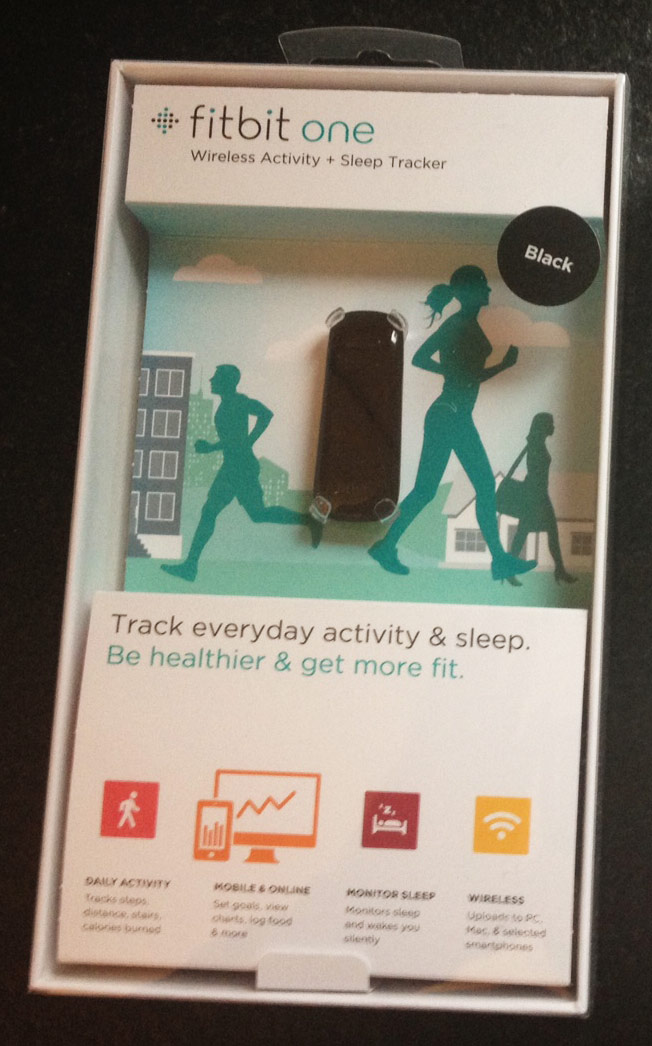
The Fitbit One Acitivity Tracker
(click to enlarge)
 I have been testing the Fitbit One activity tracker (Fitbit.com) over the past several weeks to see how it might help me lose a few pounds.  I'd heard a lot about these things and have friends who use this or other competing devices, so I felt it was time to test one myself.

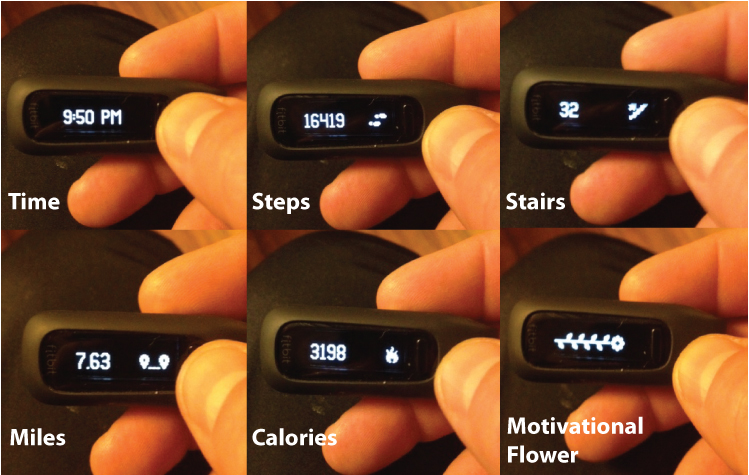
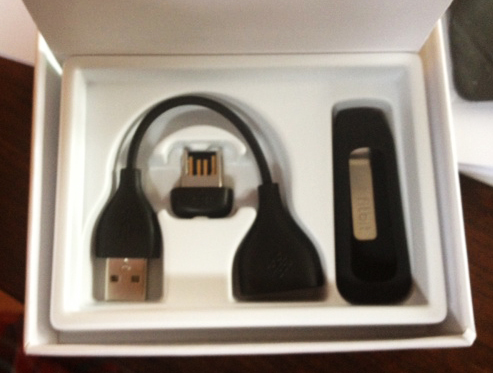
Simple in design, the Fitbit One looks similar to a small USB memory stick and has a single button on one side of the device and two small gold-colored electrodes on the back of the device that connect to a small USB-based charger that plugs into your computer.  It uses an accelerometer and altimeter to monitor movement counting "steps" and "stairs" climbed or descended.  Using your weight and age provided to the Fitbit website as your starting point, it calculates calories burned, estimated miles walked, and provides a motivational flower icon with a growing "stalk" for the level of activity achieved at different times of the day based on pre-set goals you select for yourself:


Toggling the button on the device shows the various information available
 The device is either placed in a small rubber clip that holds it on a wasteband or bra or it can be placed in a wriststrap that can be worn at night (more on this later).  It should be noted the device is NOT waterproof so it cannot be worn swimming.

The device comes with a number of tiny attachments that are critical to its function, so keeping these in a safe place is a good idea.  They include the charging cable (one charge worked for 4-5 days for me and it quickly charges in about 60-90 minutes), a USB Bluetooth communicator, the rubber clip-on cover and the wrist strap.

The device communicates effortlessly via Bluetooth to an iPhone 4s or iPhone 5 automatically once a 4-digit unique handshake code is shared by the device and your cellphone.  Information stored on the phone also syncs with a (non-HIPAA compliant) website online where your daily, weekly, and lifetime activity levels, food consumption, and weights are stored.  Viewing data over time is a simple process.

The Fitbit iPhone app is downloaded on to your iPhone and permits you to enter your weight as you progress, food consumed, or to log your activities.  You can also connect with others via the app (something HIPAA rules discourage, but most people using these don't care).  Still, if you want to see how your compare each day to other like-minded souls throughout the day, you can using their iPhone app.  Real gluttons for punishment can even share their achievements using the device on Facebook.  (Sorry, not me.)  While the website can send you "badges" for activity milestones via email or text message on your phone, I preferred to turn off this functionality because I really didn't need to look at my cell phone any more than I already do.  Also, I don't need any more spam.

Interestingly, the Fitbit One can also track your time sleeping.  This is accomplished by pressing and holding down its single button for over 2 seconds until a timer starts.  Pressing the timer for two seconds upon awakening will then record the time slept.  As you sleep, the device reportedly records periods of being "awakened" because it senses motion as you sleep.  (I'll let you use your imagination for other purposes at night as well because, yes, there are interesting stories about this elsewhere).  It also has the ability to set (via your iPhone) a silent alarm that vibrates the device to wake you without waking others near you.

Impressions

I found there was value in using this device for me.  Fitbit's charm was its way of making even simple exercise like walking and climbing stairs matter.  While I enjoy racquet sports and they provide plenty of steps to achieve my self-imposed daily goal, I found walking the halls of our large hospitals worked pretty well, too.  Also, I found that I didn't have to obsessively track my food intake for too long since it became very obvious that every little thing I consumed quickly added to my daily allotment of calories.  Just understanding what you are eating, paired with your calories burned, was eye opening.  I learned first-hand how much activity it takes to burn off those calories consumed.  Most important, a pacemaker battery change burned about 105 calories.

I tried showing this device to a few of my more stubborn overweight patients in clinic, and they appeared interested, but whether I can convince them to make the plunge will have to come after I test my own ability to stick with the use of the device for a bit longer.  (If I lose weight, will it help me keep it off?)  Also, I found patients hesitated when I disclosed the price for the Fitbit One ($99 US), though a cheaper version called the "Zip" is available for $60 US that tracks fewer items.   Still, given what we pay for monthly cell phone service, this price seemed fairly reasonable over the lifetime that the device is likely to be used.

I worried that I might lose the tiny device and quickly turned to clipping it to a belt loop rather than my belt since it held better there.  And although I haven't had my device go through a wash cycle yet, I'm sure that scenario commonly occurs with this device and would likely destroy it.

Overall, it seems to be helping make weight loss fairly fun so far, though weight loss still requires discipline.  Still, geeks like me have found it's helped so far, aving lost 7 lbs in two weeks using the device.  But I have also come to appreciate what others have noticed using these devices: there is a thin line between healthy and unhealthy obsession with gadgets when using them for weight loss.

-Wes

Disclaimer: I have no commercial interest in the Fitbit products.

Wednesday, February 06, 2013

On the Joy of Medicine

Medicine is unique because it involves people.  While people make this job challenging, they also make this job the best job in the world.  Today was no exception.

Today I met a new patient who has allowed me to share a brief story and a snippet of his medical history here on this blog.  His name is Mr. Carl Bogaard.

On January 9, 2012, Mr. Bogaard wrote a brief note to the Chicago Tribune that said simply:
"My family is treating me like a hero just because I am going to be 95 years old. How lucky can I be to have a family like that?"
The letter was noticed by a local radio personality, Jonathan Brandmeier from WGN, who contacted Mr. Bogaard and learned that he performed 50 push-ups a day, every day.  So he decided to invite him to a push-up competition.  Take a moment to view Mr. Bogaard's YouTube video of his competition:


While this video is remarkable in its own right, there is a little something else you should know.

Mr. Bogaard has a permanent pacemaker that was implanted in 2009 for complete heart block and is completely dependent on his pacemaker for his heart to beat.  Oh, and he really did 59 push-ups.

Now you know why I love my job.

-Wes

Monday, February 04, 2013

Apixaban's Rocky Sales Start

"Dr. Fisher, I'm so glad I caught you!"

I looked at the table.  It was a nice spread: a full complement of oriental chicken, broccoli and beef, and a few other assorted entrees.

And so began the marketing push for the latest novel oral anticoagulant, apixaban, to be marketed as Eliquis by both drug giants Bristol-Meyer Squibb Company and Pfizer, Inc. to those of us who think about these things.  So refined are these company's networks that access to physicians remains relatively simple.  Oh sure, there are Sunshine rules and Cloudy Day rules, but the reality is, if the drug company wants their drug sold, they know how to find us.  They know when we're in clinic or in the lab, and they work it.

And nothing works like food.

But apixaban, oh, er, Eliquis, is now not so novel.  It's trial data appeared in the New England Journal of Medicine 15 Sep 2011, but the drug quickly went stealth as the FDA decided whether it believed their data or not.  The review was glacial, it seemed, especially given the one-month FDA turn-around that apixaban's rival one-a-day Factor Xa inbibitor, rivaroxaban (Xarelto),  enjoyed after its publication in the same journal just the week before.   That's right: it took over a year for the FDA to decide that it would permit release of apixaban to the American marketplace.

Why?

We were not encouraged to ask this question.  Instead, the ill-prepared sales force was sent out to the field to tap the shoulders and fatten the bellies of their most likely prescribers, unarmed with these specifics while hoping we'd forget.  "It's a Factor Xa inbibitor," she said.

No kidding.

And they were unarmed about other data, too, like patient compliance rate taking the twice-a-day drug or clotting incidence if the drug doses were inadvertently missed.   I wanted to know if the drug would be prescribed by our EMR system now.  I wanted to know if I'd have to fill out a pre-authorization request for the drug, like their competitor.  I wanted to know how well the prothrombin complex concentrates (PCCs) and activated prothrombin complex concentrates (aPCCs) work at reversing the drug.  I wanted to know how much the drug would cost my patients.

You know, practical stuff.

Instead, the sales representative rifled through the package insert, flustered.  "Well, here's our handy-dandy discount card," she said, "For just $10 a month..."

"What happens after the first year?  How much will my patients see their co-pay balloon to?" I asked.

"I think they can re-apply..."

Suddenly, the food didn't look so great anymore.

-Wes


Sunday, February 03, 2013

Marketing Obamacare

"We Can Be Healthy and Rich" says one of the Affordable Care Act's principle architects and cheerleaders, Dr. Ezekiel J. Emanuel in today's New York Times opinion section.  While Dr. Emanuel is certainly entitled to his opinion, we should require that his assumptions be bolstered by facts, not assumptions spewed forth by Councils and fellows from the conservative think-tank Heritage Foundation.

But the Affordable Care Act is proving anything but affordable to Americans.  As more and more details of the Affordable Care Act come to light, we (the people) have to wonder who stands to get "healthy and rich" as a consequence of the law.

Exactly who's "we," Dr. Emanuel?

Is "we" the patient?
Is "we" the country as a whole?
Or is "we" the sculptors of the Affordable Care Act?

If "we" meant the patient, then the accompanying editorial entitled "A Cruel Blow to American Families - Millions of dependents may suffer because of the I.R.S.'s reading of the health care law" in the same section of today's New York Times wouldn't have had to be written, right? Don't you recall one prominent legislator suggesting the details of this convoluted legislation didn't have to be read?

Yet here we are.

If "we" meant the the country, then cost concerns would have been a major element of the Affordable Care Act.  But is wasn't.  It was another expansive entitlement program to insure an additional "30 million people" while still leaving many to fend for themselves.  It created over 118 new government agencies with more smoke an mirrors and middlemen in medicine than ever before: pharmacy benefit managers, coders, programmers, administrators, checklist monitors, and doctors as data entry personnel. It used the Internal Revenue Service as its collection agency, in part because a funding source was required and secondly, so their additional ranks would not be counted in the budget mark-up for the cost of the bill.   Lower costs for care delivery?

Please.

But then, that was never really the purpose of the Affordable Care Act.  The Affordable Care Act is to make sure that health care is "affordable" to insurance companies.  Insurance companies, after all, saw the aging of America as their big cost crisis.   They were threatened with having to pay for all those older Americans from their shrinking cash reserves.  So they came to the "table" of health care reform and helped, with plenty of cash in hand, to sculpt the Affordable Care Act.  Thousands of pages of legislation that wove through tax laws and Social Security laws and instantly (and magically) appeared before Congress.  And as things progressed, it became clear to those who care for patients that the new law of the land is a crafty vehicle that shifts the risk of insuring America's health from the companies designed to distribute that risk (insurance companies) to the very people charged with caring for patients: doctors and hospitals.  And hospitals, left with declining revenues from their empowered government payer will turn to the last source of revenue available to them: their patients to offset their loses.   And pay they will: like never before.

So when we read fluffy opinion pieces in the New York Times about how "we can be healthy and rich," remember who stands to get so.

It sure won't be the patients.

-Wes