I'll be gone from KORB on Vimeo.
h/t: Street Anatomy via Ramona (on Twitter) over at Suture for a Living
I'll be gone from KORB on Vimeo.
Although there is in vitro testing evidence for concern for implantable pacemaker and ICD EMI at LF and HF (high frequency - 13.56 MHz), the FDA has not received any incident reports of pacemaker or ICD EMI caused by any RFID system. This could reflect a low clinical risk due to a number of factors: class III (minor) reactions are probably not clinically significant, close patient proximity to RFID readers may not commonly occur, and most reactions observed are transient. This could also be the result of underreporting; EMI issues are difficult to recognize as they are typically transient. If a patient is experiencing symptoms (e.g., lightheadedness) that they believe are the result of EMI effects from an identifiable source, the best advice is to move away from that source.Hey, but it's still good to know.
To effectively mitigate implantable pacemaker and ICD EMI (electromagnetic interference) from RFID readers will require work on the part of both implant manufacturers and the RFID industry. During testing, some implantable pacemakers and ICDs were more susceptible to EMI than others. Active implantable medical device manufacturers are currently working to understand these issues, to develop industry requirements, and to design future devices appropriately.
The RFID industry should also take note with regard to medical device EMC. With so many promising health care applications for RFID, it is inevitable that RFID and medical devices will increasingly function in close proximity. Modulated LF RFID is a near-perfect source to cause EMI for implantable pacemakers and ICDs. The low carrier frequency allows the signal to enter the implant, bypassing commonly used feed-through filters. Once inside the implant, the RFID signal is interpreted as a physiologic signal due to the slow pulse repetition rates. The pulse repetition rate of each RFID reader varies greatly as it is not limited by the Federal Communications Commission or defined by most RFID standards. Limitations for implantable pacemaker and ICD EMC do exist as these devices must sense in the physiological band. If it can be predicted that an RFID system will be near pacemaker or ICD patients, appropriate RFID technology should be selected. The RFID technologies that were most compatible with implantable pacemakers and ICDs in our testing were UHF RFID and continuous-wave RFID readers. Maintaining a reasonable separation distance between RFID readers and implantable pacemakers and ICDs will also help mitigate EMI.
Although this article suggests a particular risk in the use of sample RFID systems, this is not the sole intended message. The potential advantages of RFID in health care seem promising, and the FDA is promoting RFID as a technology to reduce counterfeit drugs in the supply chain. An important message from the results of this study should be that RFID implementation should take implantable pacemaker and ICD EMC into consideration. Additionally, both patients and their cardiologists should be aware of the possibility of adverse reactions from RFID.
We do not believe the current situation reveals an urgent public health risk.
Until December 31, 2009 the cardiologist could charge a “physician consult” fee for getting out of bed, coming to the hospital, and evaluating a patient with a potentially life threatening problem. Medicare paid $195.76 for this middle-of-the-night work (the same rate as when done during the day).For patients, the changes are already being felt. As of 1 January 2010 the lead dog, Mayo Family Clinic in Glendale Arizona, no longer accepts Medicare patients.
By eliminating the “physician consult” billing code, Medicare now advises the specialist to charge for a “hospital admission.” For two more months, Medicare will pay $175.67 for this service. However, without a change in current law, the physician’s reimbursement for a “hospital admission” will drop to $141.63 on March 1. This is why the “Doc Fix” is so important for working physicians and their Medicare patients.
Other recent and obscure changes in Medicare guidelines are potentially even worse.
As of January 1, Medicare will not pay the consultant at all unless the admitting physician uses an “HI modifier” when billing Medicare for the initial admission. This means in order to get paid, the consulting physician must rely on another physician’s billing practice. Many physicians remain unaware of this obscure change (Medicare guidelines were altered as recently as December 17). The result? Many consultants will be denied payment altogether—yet another way to “save” Medicare dollars.
"Heart specialists on Monday filed suit against Secretary of Health and Human Services Kathleen Sebelius in an effort to stave off steep Medicare fee cuts for routine office-based procedures such as nuclear stress tests and echocardiograms.Perhaps other professional organizations will be forthcoming with similar suits as private doctors and their patients pay dearly for the reform efforts underway. Meanwhile hospitals continue to build. Pharmaceutical and medical device companies stocks rise. But did we really think the government's promise to find nearly $500 billion in "wasteful spending" from Medicare and Medicaid to resolve the fiscal realities of the ridiculously expensive legislative reform efforts could happen any other way?
The lawsuit, filed in U.S. District Court for the Southern District of Florida, charges that the government's planned cutbacks will deal a major blow to medical care in the USA, forcing thousands of cardiologists to shutter their offices, sell diagnostic equipment and work for hospitals, which charge more for the same procedures.
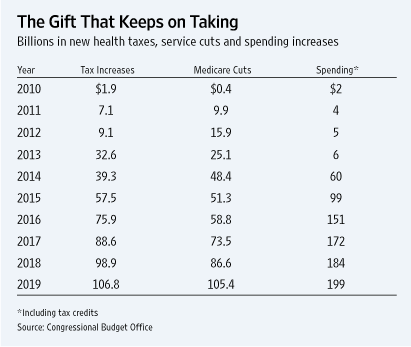
"When it comes to geriatrics, it's the rule of twenties:And the reason every primary care doctor's not doing this???...20 problemsWith the initial physical exam, three follow-up visits, and one EKG that Medicare pays for, I would receive only $360 in total. I pay $40,000 per year in malpractice, yet have never had a judgement against me. Think how may patients I'd have to see to cover just that expense. (editor's answer: 111)
20 medications
20-minute phone calls
20 minutes to take their clothes off
20 minutes to put their clothes back on.
You wonder why I am not a Medicare provider? I'd never survive at that their payment rate. And Blue Cross? They're no better and often pay less.
Funny thing is, Medicare was only too happy to have me opt out, because to them, I'm no longer part of their problem."
"Single view.Um, did I miss something in medical school?
There are no prior studies for comparison. The heart is mildly enlarged. The ovarian veins are engorged area.
"The increased density in the medial portion of the right base may be parenchymal or due to vascular structures. The remainder of the lungs is air. No effusion."
 The American Heart Association, in conjunction with a $1 million dollar grant from the Medtronic Foundation, thinks it can, especially if schools can win a thousand bucks for their effort promoting the idea:
Through the Be the Beat campaign, the Medtronic Foundation is providing $1,000 grants for school staff to help fund CPR and AED training outreach programs within their school or community. The deadline for application is January 15, 2010. More information is available in the “Teachers and Administration” section of the Be the Beat Web site, BetheBeat.heart.org/schools.Sadly, the music selections that play at 100 beats/minute, (like "Stayin' Alive" and "Another One Bites the Dust") aren't available for download, but a expanded list of songs that play at that rate is included. Songs like U2's "I Still Haven’t Found What I’m Looking For" or Simon and Garfunkle's "Cecilia" (yep, "Celilia, you're breakin' my heart, I'm down on my knees, beggin' you please, to come home, to come home!" made the list. This alone is sure to be a source of endless entertainment, though I'm not sure about the appropriateness of singing ABBA's "Dancin' Queen" during CPR...)
BetheBeat.heart.org engages 12- to 15-year-olds to learn the basics of cardiopulmonary resuscitation (CPR) and how to use an automated external defibrillator (AED) through interactive games, videos and songs on the Web.
It felt like a ghost town. I ran into Ira Schulman, my medicine resident at Bellevue when I was a third year medical student; we looked at one another and simultaneously blurted out “where is everybody?”I've always enjoyed the socialization and camaraderie that comes with medical conferences, but with the uncertainty of the current health care climate for doctors, the rising costs of these conferences for attendees, and the increased comfort doctors have for receiving medical information via the internet and social media, the need for traveling to medical conferences has quickly become obsolete. While medical device company or pharmaceutical reps might still find these venues moderately entertaining, without their ultimate customers in attendance, the medical scientific session conference
. . .
There are probably numerous reasons for plummeting attendance at AHA. The economy, the on-line publication of trial results prior to presentation, the ubiquity of conference calls, e-mail strings and yes blogs that keep one in regular contact with colleagues throughout the country and the world without the need for face-to-face encounters are just some of the obvious causes.
The scaling back of industry support may be another major factor at play here. Certainly there are fewer exhibitors and the exhibits are far less lavish. As Muhamed Saric pointed out when I met him on the floor of the exhibit hall there were no Siemens or Philips exhibits, and in fact I could not find any cath lab manufacturers presenting their products at the AHA. The need to diminish the influence of industry on the medical profession and the need to avoid conflicts of interest were brought up at many of the presentations at the session by leaders of the AHA and other thought leaders in academic medicine, but one unintended consequence of this well-intentioned effort seems to be less financial support for the meeting itself.
Welcome to this holiday edition of Grand Rounds! It's the time of year when friends and family gather, when stories are told and memories are made. But the winter weather and short days here in the northern hemisphere seem to prompt brevity in our everyday comings and goings. It seems like the right time to combine storytelling and brevity and channel Charlotte, one of the most masterful storytellers I met during a childhood spent with my nose in a book.Enjoy!
Competition for physicians pits rural communities against each other, and many of those “may, in fact, be losing out to urban hospitals,” said Creighton's Frey. “Unless some major changes occur in the physician work force, the future is very frightening.”Addding to the crisis is the fact that some primary care doctors quickly find the workload and lifestyle untenable and decide to specialize:
Marvin Neth, administrator of Callaway District Hospital in central Nebraska, said he believed he had a doctor signed up through a federal loan-forgiveness program a few years ago.
But a bigger hospital recruited the physician away, most likely by agreeing to pay the loans and the penalty for not fulfilling the physician's obligation to the rural health care program, Neth said.
Rural areas have battled the health care access problem for a long time. Many rural physicians have patient volumes that are too high and are on call too much to make that lifestyle appealing to young physicians."The grass is always greener...", I guess.
Dr. Matthew Johnson joined a North Platte, Neb., group of several internal medicine physicians about four years ago. As a young newcomer, he was to gradually take over the patients of a physician who was easing into retirement. But the physician retired immediately.
“The clinics were full,” Johnson, now 34, recalled recently.
He was swamped and frequently worked 80 hours a week. He saw patients in his office, in the hospital and sometimes in the aisles at Walmart, where they would complain that they couldn't get in to see him and went to the emergency room instead.
Johnson recalled thinking: “I can't do this for 30, 35 years.”
Johnson said he neglected his wife and two children and grew irritable. “I'd treat my patients better than I'd treat my family.”
Last year, Johnson left that practice to study at UNMC to become a heart specialist. He knows he'll work hard as a cardiologist, but not 80-hour weeks, and he'll make more money.
“Cardiology's been all that I expected,” he said.
 "Hello, Dr. Fisher?"
Negotiators Monday were considering a proposal that would open Medicare to people ages 55 to 64 if they couldn't find coverage elsewhere. The proposal would allow them to buy insurance coverage at subsidized rates under Medicare, though the subsidies wouldn't be as great as those for people 65 and over, said congressional aides and lawmakers.How much money have we spent to get to this point?
 There are potentially plenty of ways cardiologists will see their payments decline next year: from the loss of Medicare inpatient consultation code payments to the 2010 physician fee final rule issued last week by the Centers for Medicare & Medicaid Services (CMS) which threatens to cut to cardiology practice procedural payments an average of 27 percent.
 I am fortunate to work at an institution that has a fully deployed electronic medical record (EMR) system that incorporates outpatient physician notes and inpatient notes under one umbrella. By and large, patient care is facilitated since both outpatient and inpatient notes appear simultaneously in the patient's chart, along side telephone messages and clinical results. While there are plenty of kinks to work out, most of us have to admit that there are huge patient care advantages to such a system.
Boston Scientific has determined that the bond between the header and case could be weakened by significant forces associated with a subpectoral implant procedure or when a device in a subpectoral position is pushed against a rib during contraction of the pectoralis muscle. A weakened header bond may alter lead impedance and introduce noise that may inhibit pacing therapy or initiate inappropriate tachy therapy. Additional mechanical stress applied to a weakened bond may eventually cause header connection wires to fracture, resulting in loss of therapy.In summary, the devices need to be followed as usual (every three months), but are not recommended for removal unless they begin to develop erratic behavior. The warranty and unreimbursed medical expenses "may" be honored in "certain geographies."
. . .
Rate of Occurrence
The implant orientation of devices is not reported to Boston Scientific, making it difficult to provide rate of occurrence and prediction information. We have received two (2) reports worldwide of subpectoral implants with weakened header bonds. We estimate that 5% of approximately 77,000 COGNIS and TELIGEN devices worldwide have been implanted in a subpectoral location.
The following factors may also impact the risk of failure if implanted in a subpectoral location:
• Exact location of the patient’s ribs relative to the device
• Body size and/or muscle mass of the patient (risk may increase for larger/muscular patients)
• Activity level and/or occupation of the patient (risk may increase for more active patients)
Recommendations
For future implants:
• Boston Scientific recommends that subpectoral implantation of affected COGNIS CRT-Ds or TELIGEN ICDs (Table 1) be avoided until improvements to header bond strength are available for devices in your geography.
For affected devices (Table 1) implanted in a subpectoral location:
• Follow patient at least once every three months as recommended in device instructions for use.
• Consider advising patients to contact their physician or clinic if they receive shocks, in order to ensure timely review of associated electrograms and other device data via in-clinic or remote interrogation.
 Target has them.
Sign up today and you could:Hey, what's a few perks among friends?To enroll, simply call 1-800-547-4386
- Save up to $30 each month for six months on prescription antiplatelet (anticlotting) medication.
- Participate in a personalized reminder service for your antiplatelet (anticlotting) medication.
- Save up to $30 each month for six months on three cholesterol medications from Abbott Laboratories.
- Through the FreeStyle Promise Program*, receive one FREE Freestyle Lite or FreeStyle Freedom Lite blood glucose monitoring system, save up to $50 every month (or up to $600 per year) on test strip co-pays, and have access to personalized health expertise by certified educators and ongoing product support.
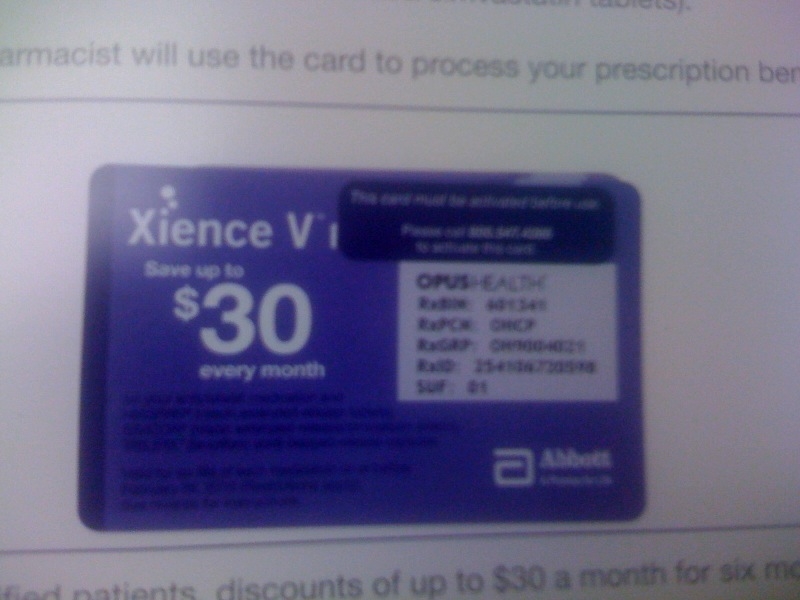
To sign up for this program, you'll need your XIENCE V Patient Care Program card. You received this card from the hospital following implantation of a XIENCE V stent. When you call you'll also need your stent's product lot number. The product lot number can be found on the stent implant card. You received this card in your patient materials following the implantation of a XIENCE V stent. The stent implant card is purple and white, and has a color photo of a heart on it. If you do not have or have lost your XIENCE V Patient Care Program card or your stent implant card, be sure to contact your physician or the hospital.
Early tests of the (stethoscope) system suggest that it could eliminate more than eight million unnecessary echocardiograms and cardiologist visits a year, saving some $9.4 billion and, even better, catch more of the dangerous murmurs. For doctors, and anyone with a heart, this stethoscope’s upgrades are well worth the two-century-long wait.One thing's for sure, the crappy plastic yellow stethoscopes in the rooms of isolation patients have to go.
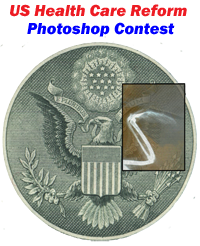 Okay, the entries for the 2009 US Health Care Reform Photoshop Contest are in and it's time to vote! The idea was to create a single picture using your snark, your wit, your creativity to encapsulate your feelings about the US Health Care Reform efforts underway in a single photograph.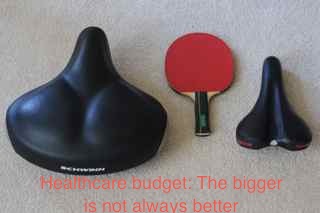
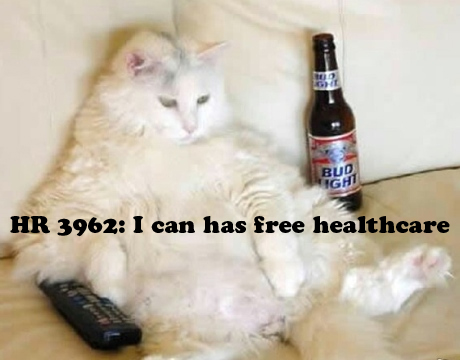


School officials say it's inconclusive whether the pump was "misplaced or taken." Police say they're still investigating.-Wes
But Raube and her parents believe someone stole it: Maybe they mistook the tiny shiny pink pump with cords wrapped around for an iPod. Maybe they knew what they were stealing.
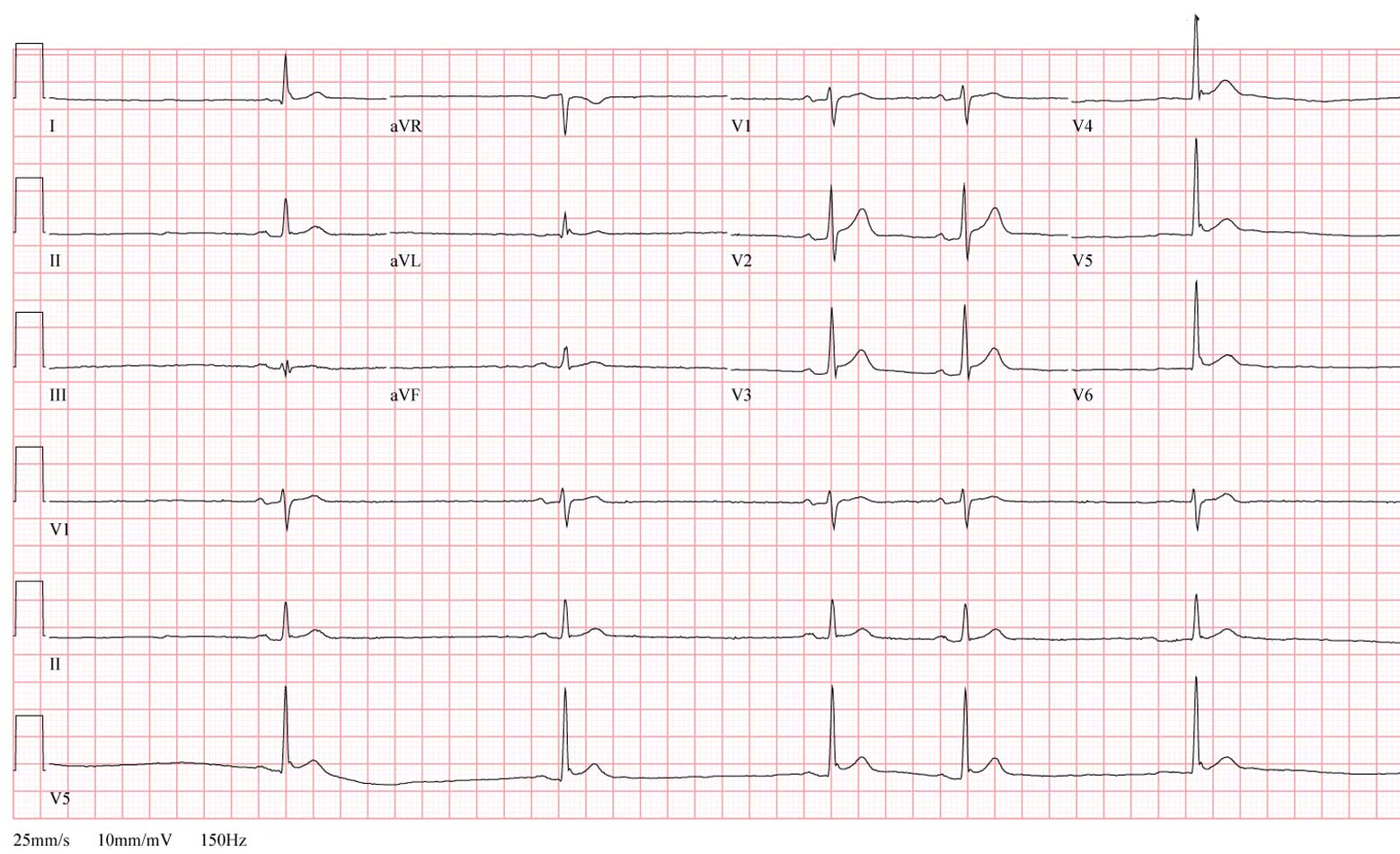
Urine noted to be bloody without clots.No doubt patient identification or their room number, was sent to identify the patient (I'm not sure which). I suppose a record of the physician covering the trauma service that night is discoverable.
Text message sent to 2290 (trauma pager) about hematuria.
Patient denies any pain at this time.
I am thankful for the teenagers who are complaining about doing chores -- that means they are home and safe.And one other thought: be sure to visit Paul F. Levy's blog, Running a Hospital, to learn about the Engage With Grace program to how you can engage in a conversation with your loved ones about their (and your) end of life wishes.
... for homework. It means we live in a country where education is valued and encouraged for all.
... for the taxes I pay; it means I have income.
... for the mess that I have to clean up after parties, because it means I am surrounded by friends.
... for the clothes that fit a little 'too snug' because it means I have enough to eat.
... for the lawn to mow, windows to wash and gutters to clean; it means I have a home.
... for the parking spot I found at the far end of the parking lot, because it means I am capable of walking and am blessed with transportation.
... for my huge heating bill, because it means I am warm.
... for the person behind me in church that sings off key, because it means I can hear.
... for the pile of laundry and ironing, because it means I have clothes to wear.
... for all the complaining I hear about the government; it means we have freedom of speech.
... for the alarm that goes off early in the morning because it means that I am alive!Author unknown
One factor that could be driving larger increases locally: Blue Cross & Blue Shield of Illinois, which historically has used its dominant 50%-plus marketshare to undercut competitors' prices, has been more aggressive with rates this enrollment season, brokers say.Funny that when hospital systems coalesce and raise prices to remain "competetive," the FTC cries foul, but when the insurance industry does the same thing, the FTC can't be bothered.
"Blue Cross is the one company that is consistently coming in with higher renewal increases," says Rob Wilson, an insurance broker and president of Westmont-based Employco Group.
A Blue Cross spokeswoman declines to comment.
11:30 pm - Cackling though the overhead intercom system:Now:
“Code Blue, Three East, Room 236”
A thunderous herd of medical students, residents, anesthesiologists, cardiologists, social workers, security personnel descend on the scene. Arriving, the chief resident is in charge at the foot of the bed. IV’s have been started, some young well-muscled individual is bobbing up and down on the unseen’s chest, brow glistening with sweat, but focused. An anesthesiologist, noting the agonal rhythm, works to secure the airway, then a central line. Nurses administer drugs, bring line kits. Airway secured. “EKG? Where’s the EKG?” Electrode replaced. “Story? Who’s got the story?” Ten. Twenty. Thirty. The minutes pass. Finally, silence, as the monitors removed and the group departs. Like sound and fury, signifying nothing.
11:30 pm – The pager sounds:-Wes
* bleep bleep bleep *
A digital image appears on the screen: CODE BLUE, Room 2001
I was not on call, but I wondered, “Was this a patient of mine?” “Did I forget someone?” I raised my head from the pillow and strolled in to the accompanying room where my outdated computer sat and waited while it booted. “What might have happened?” “Is it someone old or young?” Thoughts spun just as the disk drive. Waiting. I typed by keyfob’s codes, I entered by password twice, I waited some more then the electronic medical record appeared and I checked the name next to the room number. For the first time, the number meant something: a person, 88 yrs old, yet someone I did not know. The scene appeared from miles away.
I sat back and perused the chart. Heart attack, conservative management, hypotension, fluid bolus given, then nothing more.
A few more keystrokes and the computer went black.
Then sleep came poorly once again.
The discrepancy between what Medicare pays and our cost of providing care acutely impacts the sustainability of our primary care practice. Medicare reimbursements do not cover our actual costs of providing care, and therefore we have recently had to make some difficult decisions that will impact the Arrowhead Family Medicine practice. Effective January 1, 2010, the physicians at Mayo Clinic Family Medicine - Arrowhead will opt out of participating in Medicare, meaning that Medicare will no longer reimburse for the services they provide....With the $500 billion dollars of cuts to Medicare spending in the new health care bills proposed, will we see more of this in more affluent areas?
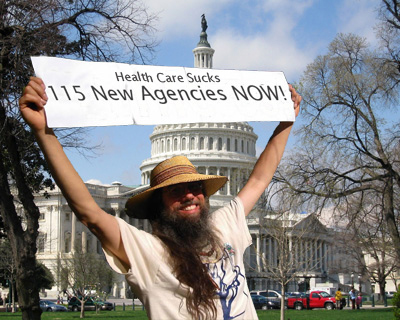
 Early US Health Care Reform Photoshop Contest entries are available to view here. (I did the one at left - sorry, it's ineligible). There's still plenty of time to submit your entry. Entries will be still be accepted until 30 Nov 2009 at 23:59 pm CST!
... There are lots of features of the House Bill and that are already in the Senate bill that change that (the way doctors are paid). We are beginning to move away, particularly in Medicare, from traditional fee-for-service pay that I would suggest not only causes redundancy but doesn’t encourage innovative, high quality, low cost practices to moving toward a system that exists in pockets, exists in Mayos, Geisinger, (Inter-)Mountain Health Care. We know what it looks like. It isn’t how medicine is practiced it isn’t the the hospitals and providers are paid, so "bundled payments," "medical care homes," "accountable care organizations" – all buzzwords for really providing financial incentives and eventually financial penalties for appropriate medical protocols and appropriate outcomes - stopping the system now where one out of every five who’s released from the hospital is back in 30 days having never seen a health care provider, reducing or eliminating hospital-based infections, which are now one of the top 10 leading causes of death in America. We know exactly the system that can be done to stop it. It doesn’t take any capital investment It doesn’t require any new technology.”I wonder what she means by "... eventually financial penalties for appropriate medical protocols and appropriate outcomes?"
Banos said the Diagnostic Clinic cardiologists recently approached Good Shepherd "demanding hundreds of thousands of dollars in compensation from Good Shepherd for providing call coverage to the patients of Good Shepherd."Before condoning the cardiology groups' actions strictly on the basis of greed, we should note that there is a precedent for higher pay for employees working after hours in industry. Hospitals, too, have resorted to paying "nocturnists" (night-shift hospitalists) higher salaries than their daytime hospitalist counterparts as they struggle to find staff willing to work the night shift managing inpatients. These salaries are not covered strictly by funds received from the paltry Evaluation and Management payments paid by Medicare, rather, they are subsidized by the hospital system.
"This is in addition to whatever money they are able to bill and collect from patients and their insurance companies for the services they actually provide when they are called in to perform a procedure," Banos said in his e-mail to Good Shepherd employees.
Banos said he believes the demands for compensation were "veiled threats to move their elective procedures to Longview Regional if we did not pay." He added Good Shepherd's stand is that meeting the compensation demands would "not be fair to the many other physicians on our medical staff who selflessly and without any expectation of pay [from the hospital] provide call coverage to our patients each day as part of their commitment to the community."
"We cannot meet the needs of our community and pay doctors for doing something that they are already obligated to do as a part of their community obligation" Banos said.
Banos said he believes Longview Regional agreed to pay the cardiologists more than $300,000 a year for on-call coverage.
"We do not believe that it was by chance that it was only after this agreement was reached that these physicians touted Regional's 'commitment to quality care' and announced their 'choice' of Longview Regional for their patients." Banos said. "We knew that taking a stand could result in these physicians moving their elective cases to Longview Regional, and it did."


 If you'd like to help promote this contest on your blog by placing this tacky button on your sidebar, just copy the HTML in the textbox below and add it to the your blog's sidebar code:
FDA is investigating energy levels in (automatic) external biphasic defibrillators (AEDs) with shocks ≤ 200 J. FDA has received reports of 14 events since 2006 in which a 200 J biphasic defibrillator was ineffective in providing defibrillation/cardioversion therapy to a patient, whereas a subsequent shock from a different 360 J biphasic defibrillator resulted in immediate defibrillation/cardioversion. The majority of events occurred during attempts at cardioversion of atrial fibrillation, but there was at least one instance with defibrillation of a ventricular arrhythmia as well. FDA is seeking additional information in order to interpret the significance of these events, and to determine whether FDA activities are advised.I haven't seen this, but others may have, so let 'em know.
Next week, I'll check into Mayo, one of the world's premier hospitals, to undergo additional treatment in preparation for receiving a new heart. Since my brain tumor turned out to be benign and my prostate cancer has responded to treatment, doctors there said those issues no longer should disqualify me as a candidate for a heart transplant.With the competetion for patients underway as the large health care system land-grab extends across state lines and overseas (See here and here), have the selection criteria for transplant patients remained a form of rationing or really become a form of marketing?
Now that I'm on the list, I am on an around-the-clock standby alert. I have to be ready to be on the operating table within four hours once a compatible heart becomes available. The fact that Chicago is 331 miles from Mayo, in Rochester, Minn., complicates things since I don't have my own charter jet. But the Mayo Med Air charter service could assist me if a commercial flight can't get me there quickly enough.
The challenge now is the wait. The heart I need will become available only when the donor is declared brain-dead and his heart can be taken from him and implanted in me within four hours. I am told the fact my blood type is B positive increases the chances of me getting a transplant quicker, though there are other patients ahead of me.
I had wanted it all to happen at the University of Chicago Medical Center, where world-renowned Dr. Valluvan Jeevanandam, who performed a triple-bypass on me in 2001, has done more than 1,000 transplants. But that hospital takes a more conservative approach to the fact my prostate cancer still is in remission. They wouldn't put me on the transplant list until I had been using an implanted heart pump ''for several years.''
Fortunately, the Mayo Clinic and Northwestern Memorial Hospital feel I have progressed enough in my recovery from the slow-growing prostate cancer to be eligible for a heart now.

In a statement, Costa said he succesfully negotiated funding for a UC Merced medical school.I love the last sentence: "... and he still has concerns about the cost of the bill."
"I am voting for HR 3962 because the choice of doing nothing was not an option. During my negotiations to help improve the bill for our Valley, I was able to achieve funding for a medical school in the Valley, with studies at UC Merced and residency in Fresno, as well as additional incentives to bring health professionals to our Valley. Increased funding in this bill for programs ranging from nurse training to health career opportunity programs to community health centers and increased reimbursement rates for low-paying Medicaid will go a long way in strengthening our health system in the Valley," Costa said.
The bill, HR 3962, passed the House of Representatives with a vote of 220-215.
Cardoza said the bill directs $167 million in health care funding to hospitals in his 18th district alone. The district includes parts of Fresno and Madera counties. But Cardoza said he still has concerns about the cost of the bill.

- Grant program for "community-based collaborative care"
(Seems this is really a grant to fund telemedicine programs and HL-7 hospital coding standards so computers can talk together. While ultimately this should be a good thing, the grant actually has little to do with collaboration of health care in the community right now.)- Grant program to develop infant mortality programs
(Why is more money needed when a department already exists for this?)- Grant program for reducing the student-to-school nurse ratio in primary and secondary schools
(Forget teachers, stick with nurses for schools I guess)- Grant program so "No Child is Left Unimmunized Against Influenza"
(And yet, I'm sure we'll soon have a Pay for Performance measure for that)- Grant program to implement medication therapy management services
(Once again, never mind this has already been done)- Grant program for community-based overweight and obesity prevention
(been there, done that, but it seems we can never get enough of this.)- Sec 2221 (pg 1246) Grant program for nurse-managed health centers
(APN's doing "primary care." Can't help wonder why the AMA loves this bill. Where's there support of what we do?)- Grant program to support demonstration programs that design and implement regionalized emergency care systems
(already being done in certain communities. The natural question is how much money is anticipated for the multitude of communities in need.)- Grant programs to prepare secondary school students for careers in health professions
(What ever happened to "Career Day?")- Grant programs for community prevention and wellness research (What is "wellness" anyway?)
- Grant program to promote positive health behaviors in underserved communities
(Sounds like attitude adjustment training: "Don't worry, be happy," I guess. Interesting that Senate Bill 319 already addresses this for women and children. Men, it seems, don't matter.)- Grant program for state access programs (These grants already exist, too!)
- Grant program for national independent monitor pilot program for skilled nursing facilities and nursing facilities
(What is this? An independent monitor to "oversee" large chains of skilled nursing facilities for some defined period of time. What about Medicare's Nursing Home Compare program?- Grant program for training in dentistry programs
Already exists- Grant programs for innovations in interdisciplinary care (Yep, got this in place already, too)
- Grant program for health insurance cooperatives
(Helpful cash for insurance interests- Grant program for wellness programs to small employers
(I can hear it now: "Don't drink, eat or smoke too much..." and place some nice posters on your wall...)- Grant program to disseminate best practices on implementing health workforce investment programs
(A bill already exists on the House floor: H.R. 2810)- Grant program for national health workforce online training
(looks like medical schools might be in trouble!)- Grant program for state alternative medical liability laws
(a grant to see if liability reform might work - fair enough - but will it change anything?)- Grant program for public health infrastructure
(um, don't we already have an Office of Public Health and Science?)