Showing posts with label arrhythmia. Show all posts

Sunday, October 02, 2011

The Vagaries of Atrial Fibrillation

I am always amazed at the different ways atrial fibrillation can present: sometimes with rapid heart rates, other times slow; sometimes it's continuous, other times intermittent; sometimes it occurs without symptoms, other times it occurs with major symptoms like palpitations, stroke, or a peripheral embolus.

Atrial fibrillation is a strange, troubling, and often difficult disease to manage.

And so, when a patient with known persistent atrial fibrillation with rapid ventricular rates presents with a funny sense of lightheadedness with exercise once a week or so, you tend to think you know what you're going to find: periods of super-fast heart rate associated with lightheadedness.

At least until you check the patient's heart rhythm with a recording device. Now I'm beginning to think anything's possible.

Here's why.

Increasingly, I have been reaching for a newer form of heart monitor that combines continuous monitoring with patient feedback but lasts much longer than our older 24-hour Holter monitors. It is compact, has no dangling wires, and gives a continous single-lead EKG tracing for up to 14 days. It has a button that the patient can press to identify periods when symptoms are occuring. Best of all, it's just a little flexible plastic patch that is applied to the surface of the skin. In that patch is a processor that records the surface EKG (even while in the shower) for the full 14 days. (Exercise has to be avoided to avoid sweat from dislodging the adhesive). After that time, the patient drops the device in the mail (provided the post office stays open!) and sends the device to a processing center where the stored 14-day EKG is processed and pre-categorized by heart rate range, rhythm, tachycardias, pauses, PAC's, PVC's and for the reviewing physician to overread. The data are then plotted and made available for clinical review on the company's website. Here's a few pictures of one of the earlier prototypes of this device (iRhythm - now a St. Jude Medical company) that I took:
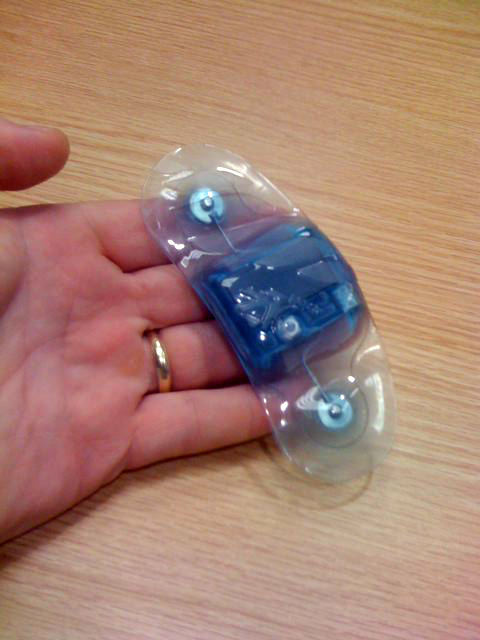
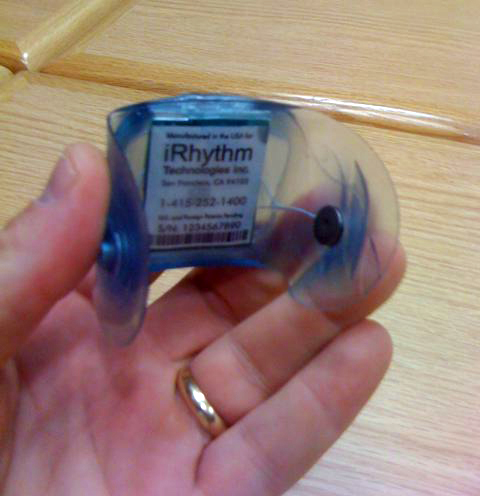

So why is this important?

In my view, it's because of what I'm finding the patient doesn't perceive while wearing an event recorder. A more conventional event recorder is different than this patch-monitor because it relies on the patient to push the button when they experience symptoms and then stores the heart rhythm from a a minute or two before and after the button was pressed so it can be uploaded to a monitoring station for interpretation. As a result, asymptomatic arrhythmias can be missed. Historically, since patient symptoms were what we cared about we naively assumed this should be the best way to identify the patient's problem.

That was the "old days."

Here's a few representative tracings from the earlier patient when this person pressed the patch's button (denoted by the red circle) at the time of the patient's "symptoms:"
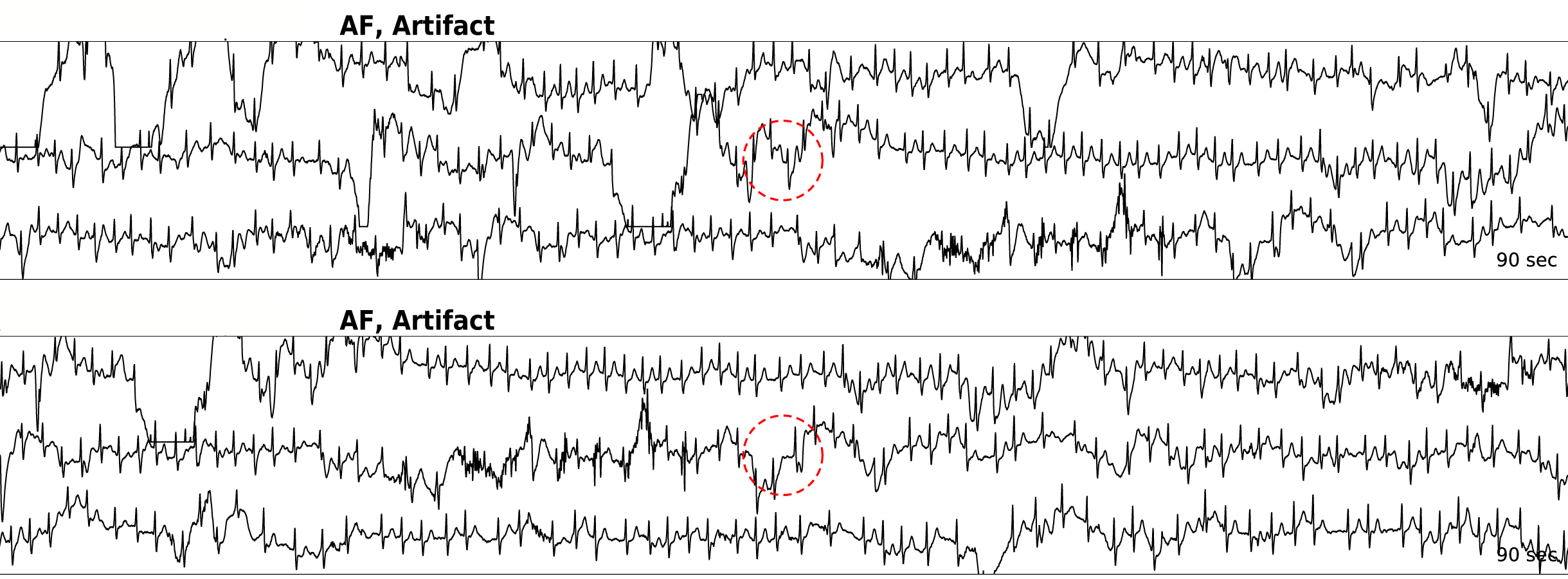
(Click image to enlarge)


As expected: nothing but atrial fibrillation with fairly rapid ventricular response. Certainly there's no real emergent concern with these findings.

But then came the spouses' addition to the patient's history as I called them with the patient's patch-monitor results:
"You know what's been strange? Sometimes at dinner he/she just looks down at the plate for a second and doesn't respond, then asks 'What are you yelling at me for?'"
Here's what the full-disclosure patch-monitor recording from Day 8 from meal time:
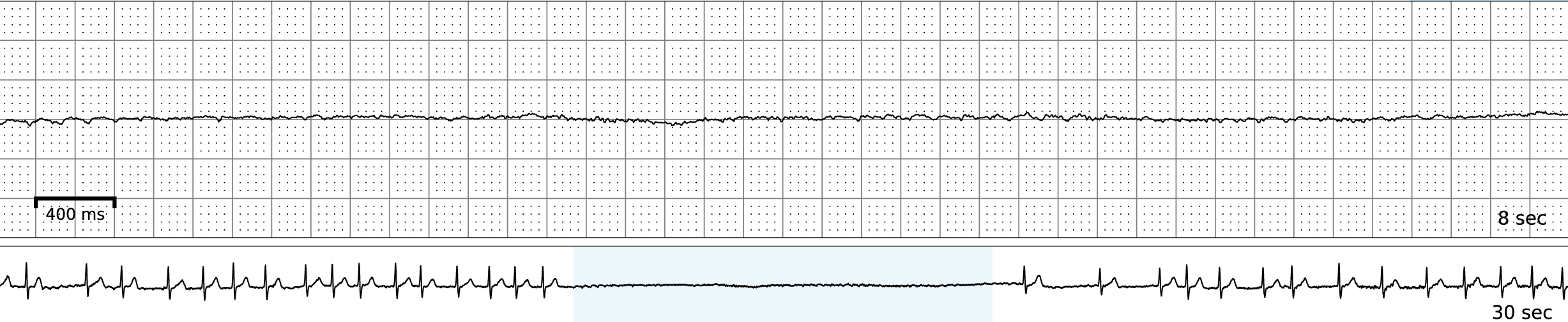
(Click image to enlarge)

Needless to say, over nine seconds of asystole is probably the reason the patient failed to respond to their spouse and is the most likely cause of the patient's rarely perceived periods of lightheadedness. Ten other pauses over three seconds had transpired at many times of the day amongst the 14-day recording, yet none were perceived by the patient.

Unusual?

Certainly.

But now I know it's not too unsual for the vagaries of atrial fibrillation.

-Wes

(Disclaimer: I have no commercial interest in the ZioPatch, iRhythm, or St. Jude Medical)

Monday, October 25, 2010

More EP Woo: The Hill Gets Duped

Politics and medicine shouldn't mix.

To prove the point, The Hill recently ran a story reviewing a study that suggested that cell phones may cause heart irregularities.

Little did they know that the "study" is nothing more than a re-hash of the author's concocted "electrohypersensitivity syndrome" that I de-bunked earlier in November, 2009. Seems these guys can't get enough of their fear-mongering tactics.

Note that the current 23 October 2010 press release claiming "new research" that was "just published" in the obscure print-only Italian journal European Journal of Oncology uses the exact same data graphs they used in their earlier 'work' in November, 2009.

Geez.

-Wes

Addendum: "Electrohypersensivity syndrome" link fixed.

Wednesday, August 25, 2010

Inherited Arrhythmogenic Disorders - A Review

(Click to enlarge)

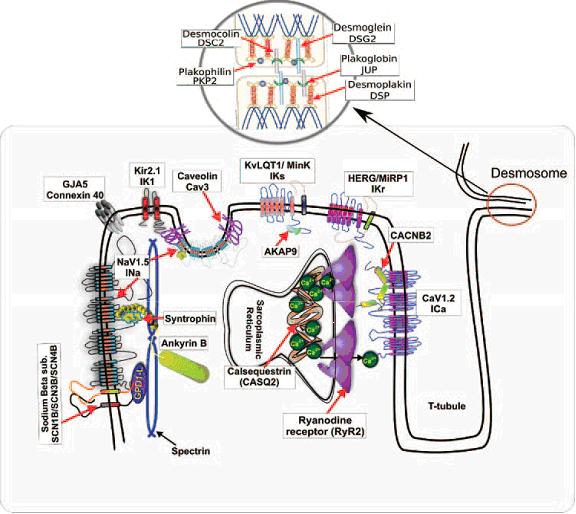
Proteins involved in inherited arrhythmogenic disorders.
Blog break: The cool figure above is from an open-access review just published in Circulation Research on the advances in molecular cardiac electrophysiology over the past 15 years. (Desmosomal proteins associated with arrhythmogenic right ventricular cardiomyopathy are shown in the inset).

We will now return to our more non-scientific commentary...

-Wes

Wednesday, June 23, 2010

Cool SVT Animations

For medical students and others who want to see some nice animations of various forms of supraventricular tachycardias (SVT) in living color, be sure to checkout the free SVT animations at Blaufuss.org (requires Adobe Shockwave player available from the site).

-Wes

h/t Vijay Sadasivam, MD via Facebook and Ves Dimov, MD via Twitter

Friday, January 15, 2010

Lady Gaga's Palpitation Differential

Okay, medical blog-o-sphere, pressing news has arrived that Lady Gaga had to cancel her concert at Purdue University due to an acute onset of pre-performance palpitations:
"Paramedics came to take care of me, and told me my heart-rate was irregular - a result of exhaustion and dehydration."
Your job, should you like to accept it, is to consider the differential diagnosis of what might have been the cause.

So go ahead... make me proud!

I'll start:

(1) Premature atrial contractions...

-Wes

Thursday, November 12, 2009

How to Find the Arrhythmia Patient's Room

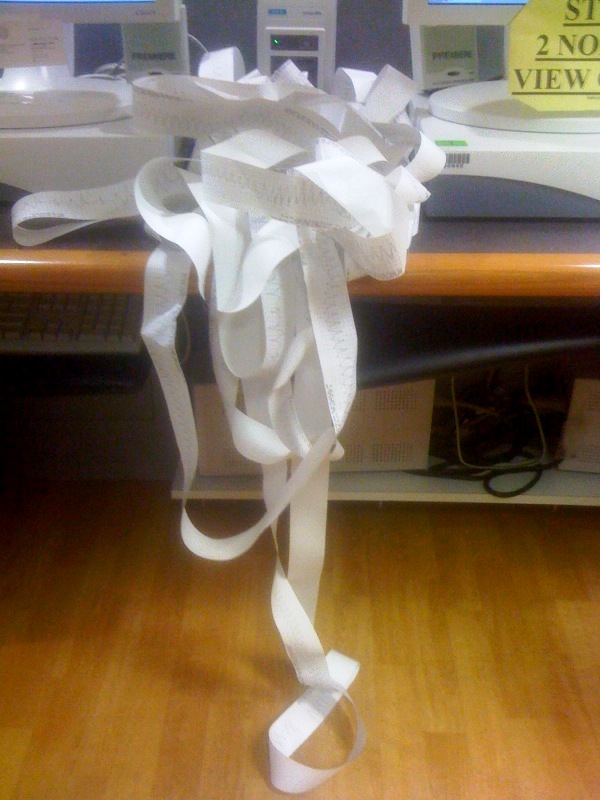
When it's 1:00 AM and you're not sure where the patient with incessant ventricular tachycardia is located in the ICU, just turn to the telemetry strips:

Click image to enlarge


-Wes

Sunday, June 28, 2009

Our Pill Culture

She sat at the dining room table, counting.

"Let's see, a pink one, the tiny one, a big blue one, another one of those other white ones, the yellow one... oh, I don't take THAT white one until noon ... then one of those and one of those. There. I think I've got it."

She scraped then all in a little pile on the table, then swept them in her hand and tossed to pill pile into her mouth as she chased them all down with a slosh of water, looking a bit like a pelican downing an oversized fish.

"Ahhhh," she said. "Now, how about breakfast?"

I sat in amazement as I looked at my mother-in-law's pill pile. It really wasn't anything over the top: the usual medications for coronary disease, hypertension, adult-onset diabetes - all things I've prescribed a thousand times. But I could not help but wonder how our patients keep all this stuff straight.

Most doctors don't think twice about adding another drug here and there. After all, we always seem to have such a good grasp of pharmacology that we're absolutely convinced, I mean CONVINCED, that our new drug is important for our patient's management. But recently in the hospital I've noticed a problem that seems to be becoming more common: drug-drug interactions, or more accurately: drug-drug-drug-drug-drug interactions that can lead to unintended or unsuspected side effects, especially (in my case) cardiac arrhythmias.

These interactions are becoming tougher to identify as polypharmacy increases in America. Which drug causes what effect can be particularly challenging when people take plenty of different medicines. Nowhere is this more common than with psychotropic medications, especially tricyclic and tetracyclic antidepresants which might be coupled with analgesics, antibiotics, antifungal agents or sleeping medications and the like. Often, these make the perfect cocktail for cardiac catastrophe. We see this on the ward (if we're lucky) as polymorphic ventricular tachycardia or "torsades de pointes" (so-called "twisting around the points") - a malignant heart rhythm disorder caused by excessive prolongation of a resetting current for cardiac contraction called "repolarization." With the right circumstances and when it occurs at the correct time, a single skipped heart beat can cause the heart rhythm to lose all coordination and just quiver, effectively stopping the flow of blood to the brain. Also, sedatives can exacerbate sleep apnea and its resultant hypoxia (low oxygen level). Hypoxia, if significant enough, can cause significant cardiac slowing or even complete heart block.

I wonder, in all the sadness and turmoil surrounding Michael Jackson's recent death, if this same problem might have led to this popular pop icons' demise as well. By now, we have "heard" that Mr. Jackson was given an injection of Demerol (propoxyphene meperidene) shortly before his death. If so, demerol is usually given intramuscularly. But it would not be too inconceivable that one shot might have accidentally been injected into the vascular system, causing rapid sedation and overwhelming his drive to breathe. Follow this respiratory suppression with a few other psychotropic, analgesic medications, antibiotics or sleep aides, and not only might additional sedation occur, but a lethal cardiac arrhythmia as well, even in someone with totally normal coronary arteries.

To me, this scenario seems a much more plausible cause for Mr. Jackson's death rather than a massive heart attack, but then, since I do not have the benefit of reviewing his autopsy results, my thoughts are really nothing more than an educated guess.

No doubt by now there are a multitude of other guesses out there, a million opinions, and even more possibilities regarding the cause of Mr. Jackson's death. Everyone wants and, probably, needs an answer. Unexpected death is like that. But whether a definitive answer is ever found or whether the world will be permitted to learn the true answer is unknown at this point. Family takes precedence, in my view. But maybe there's some other take-home messages we can gain from this sad circumstance.

For one, we have become a pill culture, reaching for pills to cure almost anything and everything. We gobble them down often with barely a thought about their side effects as we eagerly seek a simple fix for what is often very difficult problems. Certainly, there there are scores of miraculous agents out there that have improved the quality and quantity of life for millions of us. (I am not advocating anyone stop any meds as a result of this blog post!) But I have become jaded about psychotropic and sedative medications because of my vocation as a heart rhythm specialist, especially when they are used in combination with other medications that can potentiate their effects or alter cardiac activity. Although drug companies have excellent testing to assure new drugs' safety, they simply cannot test the multiple permutations and combinations of medications on the market with their drug. New interactions are found all the time. It is a little known fact that many of the drug combinations we use today have never been tested in man. Further, patients might not disclose the use of psychiatric medications because of social biases toward psychiatric illness, or physicians, in their hurry to complete their 7-minute office visit, might fail to ask about psychiatric problems and medications.

Secondly, doctors have become pill-obsessed, too. All too often we don't take the time to refer our patients to qualified psychiatric or psychologic specialists. Instead, we try to add these drugs ourselves in the genuine hope of helping our patients with a "quick fix," perhaps not realizing all the consequences of our choice.

So maybe, just maybe, each of us can take a lesson from Michael Jackson, his "cardiologist" doctor, and others in a similar circumstance (Anna Nicole Smith or Elvis Presley comes to mind). First, patients must disclose all of their medications to their doctors. Second, doctors need to exercise caution when any medication, especially psychotropic or sedative ones, are are added to our poly-pill-laden patients and consider the cardiovascular effects that could arise.

Doctors and patients who would like to know many of the medications suspected of causing cardiac arrhythmias, a relatively well-maintained list can be found from the University of Arizona at qtdrugs.org.

-Wes

Thursday, December 04, 2008

In Defense of Specialists

Bloom Stimulator
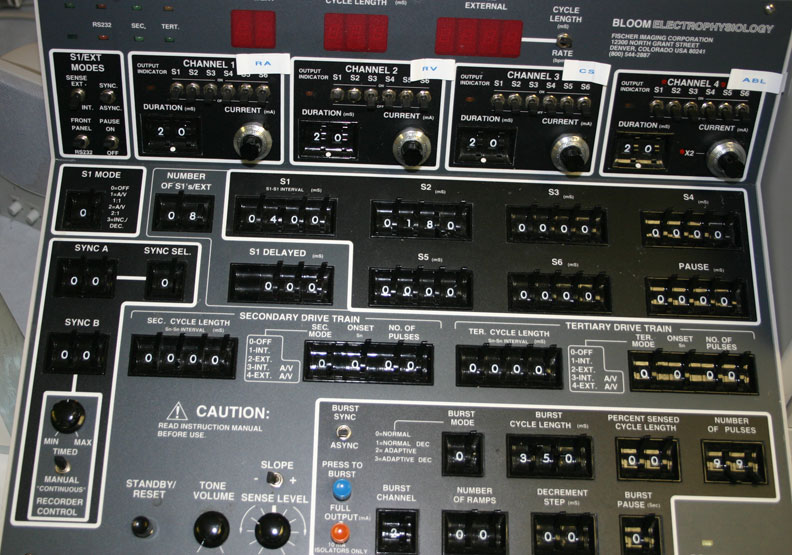
Click picture to enlarge

Not too many family practice docs and hospitalists can drive this baby now, can they?

For those unfamiliar, this is my favorite instrument in the EP lab: the Bloom Stimulator. With the flick of a few switches, we can start or stop most heart rhythms as fast as you can say "S1, S2, S3 or S4."

Just be sure to "READ INSTRUCTION MANUAL BEFORE USE."

-Wes

Thursday, July 24, 2008

Change of Shift is Up With Great Content

Kim over at Emergiblog once again hosts Change of Shift - the best of the nursing blog-o-sphere this week. In it, I found this hilarious depiction of a German doctor's clever way to dance his way in to teaching arrhythmias. Be sure to check out atrial fibrillation and the successful defibrillation:


Enjoy!

-Wes

Tuesday, April 17, 2007

When the Heart Skips, Flips, Flops or Flies

Oh, I've got rhythm, I've got music,
I got my girl, who could ask for anything more?
I've got rhythm, I've got rhythm ...

- George Gershwin

So your heart does not have perfect rhythm? You're not alone. It seems I’ve been seeing lots of folks recently with the unpleasant sensations of a racing, irregular or forceful beating of the heart in their chest, commonly called palpitations.

The diagnosis of palpitations can be perplexing if they occur very infrequently. It seems many doctors I work with almost always initially order a HOLTER MONITOR to evaluate an irregular or rapid heart rhythm. A Holter monitor records every heartbeat over (usually) a 24-hour period. The newer Holter monitors record the electrocardiogram signal digitally and are less prone to artifact caused by variations in tape speed seen with older monitors that recorded the electrocardiogram signals to recording tape. Patients are asked to record the time of any symptoms they experience on a diary to include with the recording. Unfortunately, if you do not have symptoms the day the Holter is connected, a diagnosis for your symptoms is unlikely to be identified.

More often, I have found that an EVENT RECORDER (this example: Del Mar Reynolds Medical) is more reliable at capturing the cause of intermittent palpitations. This device is about the size of a pager and continuously records your electrocardiogram from two small electrodes attached to your chest in a continuous loop-like fashion. Your heart rhythm activity is recorded in a memory buffer that continuously refreshes new heart rhythm information over old information, thereby always haveing the last minute of heart rhythm in its memory. When a symptom strikes, you can push a button on the top of the device to lock the preceding minute of the heart rhythm in the memory of the device while it records an additional minute of the electrocardiogram. Later, at a time that is convenient, the signal can be transmitted via any phone line to a reading site. The nice thing about event recorders is they ae usually issued for a month at a time, making them especially useful for intermittent rhythms. Some newer companies have event recorders that are even disposable, eliminating the administrative overhead of retrieving the devices and reducing the number of trips the patient needs to make to the office.

HEART CARDS (First Call Medical), a small credit-card sized device with four electrodes on the back of it, are not my favorite recording device. While its advantages are that it is small, it only records what the heart is doing at the time the device is held to the skin over the chest. Women are not likely to use this device for obvious reasons. While patients complain to be that this can be embarrassing to use in a public space since the device emits a tone as it records, their problems are offset, to some extent, by their simplicity.

If these devices are ineffective and the diagnosis remains elusive, a rarely used device can often succeed where other devices fail: an IMPLANTABLE LOOP RECORDER (Medtronic, Inc.). This device is surgically implanted beneath the skin in a minor same-day surgical procedure under local anesthesia. Like the event recorder, it continuously records the electrocardiogram from two small electrodes on the device. If the patient feels a rhythm, they can place a small “actuator” over the device and lock the rhythm occurring before and after the symptom within the device’s computer memory. Perhaps the best feature of this device is that it can be set to “auto-trigger” for heart rhythms above or below a set cut-off value, making the need for a patient to have to capture the rhythm unnecessary. This is particularly useful for older patients. One drawback to this device is that monthly visits to your doctor should be performed to check the memory of the device to see if there is was a rhythm stored within its memory that was not perceived. Since the device only holds the last 5 episodes in its memory, heart rhythm abnormalities not perceived by the patient might be missed otherwise. Battery life of the device typically lasts 14 months and most people opt to have the device surgically removed after that time.

So next time you feel your heart doesn't have rhythm, you can always "ask for anything more."

Like one of the devices above.

-Wes