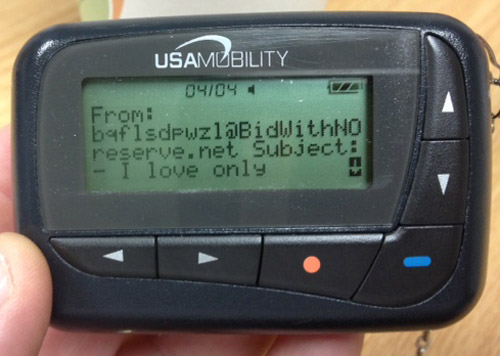
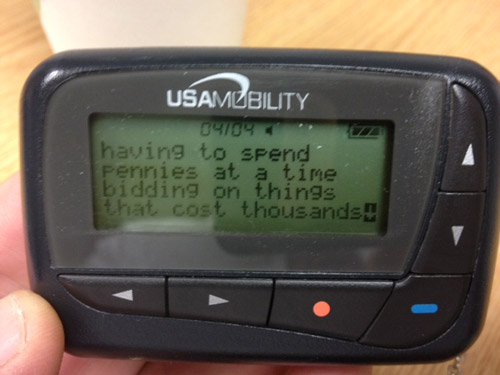
How a blog post is constructed here, illustrated nicely by notes discovered in my lab coat pocket this morning:
Delightfully Old School.
Still, I can't type and sometimes I think English is my second language, so thanks for tolerating all of my typos and grammatical errors through the years.
-Wes
Thursday, October 25, 2012
Wednesday, October 24, 2012
The Limits of Lifestyle Intervention
Diet and exercise: they were supposed to be the answer to all that ails America's obesity and health care cost problem.
Signs of this Utopian vision are everywhere. From entire government departments encouraging healthy lifestyles through fitness, sports and nutrition, government websites that encourage "healthy lifestyles," and entire community efforts to partner with health care organizations to fight obesity with the hope of cutting health care costs.
What if, believe it or not, when it comes to people with Type II diabetes, diet and exercise don't affect the incidence of heart attack, stroke, or hospital admission for angina or even the incidence of death?
Suddenly, all health care cost savings bets are off. Suddenly, we have to re-tool, re-think our approach, understand and appreciate the limitation of lifestyle interventions to alter peoples' medical destiny. Suddenly we have to come to grips with a the reality that weight loss and exercise won't affect outcomes in certain patients. Suddenly, there is a sad reality that patients might note be able to affect their insurance premiums by enrolling in diet and exercise classes after all.
These thoughts are so disruptive to our most basic "healthy lifestyle" mantra that few can fathom such a situation. Nor would any members of the ever-beauty-and-weight-conscious main stream media be likely to report such a finding if it came to pass.
And yet, that is exactly what has happened.
The Look AHEAD trial studied 5145 adults with type 2 diabetes who had a body mass index (BMI) > 25. The purpose of the study was to compare the incidence of nonfatal myocardial infarction (heart attack), nonfatal stroke, death, or hospitalization for angina between diabetics who received a rigourous weight loss and exercise program with education to just an educational approach alone. Interestingly, the study failed to show any effect of weight loss and exercise over simple education about the disease in the incidence of these "macrovascular" endpoints. In fact, the study was stopped early.
So disturbing were these findings to our basic understanding of disease prevention that the principle investigator recently appeared on Medscape in print and in video format to reassure the physician community: "I can tell you from the outset that we were successful."
And yet, they were not: they did not affect the indicence of stroke, heart attack, death, or admission to a hospital for angina in overweight Type II diabetic patients one bit, even after 11 years of trying.
You see, it is uncomfortable to sit with the reality that exercise and fitness might not be as helpful as we had hoped at altering certain health care outcomes. So we ignore these trials. We don't report them in main stream media because we don't like to feel uncomfortable with the realization that there's much we still don't know or understand about exercise and weight loss at affecting health outcomes in medicine.
Yet there is so much to learn from trials like this BECAUSE they fly in the face of conventional wisdom.
Maybe we should stop pouring money into fitness rooms and health clubs and promote other intellectual or spiritual pursuits instead. Maybe we should reconsider the benefits of exercise and weight loss as psychologic more than physical. Maybe we should de-fund all those government programs set up to promote exercise and fitness as our path to health care cost-savings.
Or at the very least, we should just eat some humble pie, stop fooling ourselves, and understand the limitations of lifestyle interventions like weight loss and exercise to improve medical outcomes or to reduce health care costs in America.
But be careful.
Saying the truth is sure to get you banned from main stream media.
-Wes
References:
1.Look AHEAD Research Group, Wing RR. Long-term effects of a lifestyle intervention on weight and cardiovascular risk factors in individuals with type 2 diabetes mellitus: four-year results of the Look AHEAD trial. Arch Intern Med. 2010;170:1566-1575. (Pubmed)
Signs of this Utopian vision are everywhere. From entire government departments encouraging healthy lifestyles through fitness, sports and nutrition, government websites that encourage "healthy lifestyles," and entire community efforts to partner with health care organizations to fight obesity with the hope of cutting health care costs.
What if, believe it or not, when it comes to people with Type II diabetes, diet and exercise don't affect the incidence of heart attack, stroke, or hospital admission for angina or even the incidence of death?
Suddenly, all health care cost savings bets are off. Suddenly, we have to re-tool, re-think our approach, understand and appreciate the limitation of lifestyle interventions to alter peoples' medical destiny. Suddenly we have to come to grips with a the reality that weight loss and exercise won't affect outcomes in certain patients. Suddenly, there is a sad reality that patients might note be able to affect their insurance premiums by enrolling in diet and exercise classes after all.
These thoughts are so disruptive to our most basic "healthy lifestyle" mantra that few can fathom such a situation. Nor would any members of the ever-beauty-and-weight-conscious main stream media be likely to report such a finding if it came to pass.
And yet, that is exactly what has happened.
The Look AHEAD trial studied 5145 adults with type 2 diabetes who had a body mass index (BMI) > 25. The purpose of the study was to compare the incidence of nonfatal myocardial infarction (heart attack), nonfatal stroke, death, or hospitalization for angina between diabetics who received a rigourous weight loss and exercise program with education to just an educational approach alone. Interestingly, the study failed to show any effect of weight loss and exercise over simple education about the disease in the incidence of these "macrovascular" endpoints. In fact, the study was stopped early.
So disturbing were these findings to our basic understanding of disease prevention that the principle investigator recently appeared on Medscape in print and in video format to reassure the physician community: "I can tell you from the outset that we were successful."
And yet, they were not: they did not affect the indicence of stroke, heart attack, death, or admission to a hospital for angina in overweight Type II diabetic patients one bit, even after 11 years of trying.
You see, it is uncomfortable to sit with the reality that exercise and fitness might not be as helpful as we had hoped at altering certain health care outcomes. So we ignore these trials. We don't report them in main stream media because we don't like to feel uncomfortable with the realization that there's much we still don't know or understand about exercise and weight loss at affecting health outcomes in medicine.
Yet there is so much to learn from trials like this BECAUSE they fly in the face of conventional wisdom.
Maybe we should stop pouring money into fitness rooms and health clubs and promote other intellectual or spiritual pursuits instead. Maybe we should reconsider the benefits of exercise and weight loss as psychologic more than physical. Maybe we should de-fund all those government programs set up to promote exercise and fitness as our path to health care cost-savings.
Or at the very least, we should just eat some humble pie, stop fooling ourselves, and understand the limitations of lifestyle interventions like weight loss and exercise to improve medical outcomes or to reduce health care costs in America.
But be careful.
Saying the truth is sure to get you banned from main stream media.
-Wes
References:
1.Look AHEAD Research Group, Wing RR. Long-term effects of a lifestyle intervention on weight and cardiovascular risk factors in individuals with type 2 diabetes mellitus: four-year results of the Look AHEAD trial. Arch Intern Med. 2010;170:1566-1575. (Pubmed)
Friday, October 19, 2012
The Growing Residency Squeeze
"Dr. Fisher, I'm applying to a cardiology fellowship - could I ask you to write me a letter?"It sounded innocent enough until thirty-five addresses were forwarded to us for delivery.
"Sure," I said, "To whom should I address the letter?"
"Oh, don't worry about that, I'll give your administrative assistant a list of the programs."
While I have written about the challenges that medical students are having obtaining residencies before, it only seems to be getting harder for some. This is, in part, because while medical schools have increased their medical school positions by about 30%, residency slots have only increased at a much slower rate of 8%. Worse, because of funding shortages anticipated from the new health care law, Medicare funding cuts could even mean residents might have to pay for their residency, too:
From Marketwatch:
Just as monumental as graduation day is “Match Day,” when medical school students get sealed envelopes that tell them what city and hospital they’ll be going to for training. But advocates say the number of grads could severely outnumber the amount of residency positions by 2015 — or sooner — if hospitals don’t substantially expand the number of residency positions they offer. While medical school enrollment is on track to grow by 30% by 2016 from 2002 levels, the number of residency training positions have only grown by 8% since 2002, according to the AAMC. Even as there’s an impending doctor shortage, “We’re worried we’re going to have a group of MDs that have studied but can’t practice because they can’t find a training spot,” says Grover of the AAMC. Part of the problem is that there’s a cap on the amount of Medicare dollars that can go to residency programs that has been in place since 1997, when some health experts predicted that there was going to be an oversupply of physicians in the U.S.
About 20% of the $13 billion spent annually on training 110,000 young doctors is provided by Medicare, down from roughly 30% a decade ago, estimates Grover. If Congress doesn’t act to allow Medicare to fund a larger number of positions, hospitals may need to find additional revenue to fill the gap, and some may need to reduce the number of positions they offer, he adds. At a time when the federal government is cutting Medicare spending and some hospitals are already seeing their budgets squeezed, finding additional revenue for new training positions will be tough, says Grover. It’s even possible that graduates might soon also be asked to pay for the training — an option that some insiders say would place an unreasonable burden on already debt-laden doctors — instead of the current model where they are paid while they work at the hospitals, says John Norcini, president of the Foundation for Advancement of International Medical Education and Research: "There's a whole series of possibilities."
-Wes
Thursday, October 18, 2012
One Heck of a Halloween Cake
An Anatomical Wax Model cake based on the La Specola (Florence) museum collection of anatomical wax models from the late 18th century.
Wow.
See all the photos at Conjurer's Kitchen on Facebook.
-Wes
Smuggling Defibrillators to Save Lives
| Street Scene - Mumbai, India |
We deleted all identifying patient information and lead information; programmed them to nonpacing mode, when possible, or lowered the outputs to the minimum possible values; turned off all sensing and therapies for ventricular tachycardia (VT) and ventricular fibrillation (VF); and deactivated all ICD alerts (auditory and vibratory). When a sufficient number of devices were collected, they were transported to India in batches. Transport was most often done by physicians (or friends and family members of physicians) who were traveling from the United States. The devices were placed in checked-in baggage in a clear plastic bag, and 2 letters were placed in prominent view. The first letter was signed by the donating physician, stating that the devices were of no commercial value and that they were being donated for reuse in patients who could not afford such devices. The second letter was signed by the Chief Executive Officer of Holy Family Hospital, stating that the hospital was expecting the devices for donation to such patients. Contact information for all physicians was provided in the letters.
Attempts at sending explanted devices by courier or mail proved difficult; without precedent, it was simply not possible to describe the purpose and nature of the shipment to shipping authorities or to insure the contents. We finally resorted to carrying the devices during travel to India in our personal baggage, as described. Some difficulties (requiring lengthy explanations) were encountered during baggage screening and, especially, at Customs in Mumbai.
Device Resterilization Protocol in IndiaThe devices ultimately functioned well, but social and societal limitations caused six of 81 patients to be lost to follow-up. No device infections occurred and three patients even received three such devices over their lifetime.
Once received, the ICDs were removed from their bags and rinsed under running water. We cleaned the headers (lead ports) with pipe cleaners and inspected the seams and body for residual biological debris. We immersed the ICDs in hydrogen peroxide for 10 minutes and then in povidone-iodine for 2 minutes. They were then rinsed with running water for 2 minutes and dried with an air blower. Finally, we double-packaged the devices and sealed them with special indicator-marked paper for ethylene oxide gas sterilization in an automatic ethylene oxide machine (certified by Pest Control of India, Mumbai) at 38 °C. The protocol included 4 hours of ethylene oxide gas exposure followed by 6 hours of aeration, after which inspection confirmed that the package indicator label had changed from brown to lime green. The resterilized ICDs were aerated for at least 12 hours in an open, dry space.
Appropriate shocks were delivered in 42% of patients. Antitachycardia pacing was delivered for ventricular tachycardia (VT) in 12.3% of patients. In total, 60.4% of the devices delivered appropriate therapy (shocks of antitachycardia pacing) in 54.3% of patients. In total, 22 patients received a second device and three patients received a third device after the initial ICD reached the elective replacement voltage. The average time before replacing a resterilized device was approximately 3.5 years.
As the authors noted, in the United States "pacemakers and ICDs are currently labeled as single use devices, and the U.S. Food and Drug Administration specifically prohibits reuse, referring to it as “an objectionable practice." The device manufacturers do not condone reuse and their warranty periods do not include it. Any complications associated with such off-label use could be grounds for legal action."
And yet, lives (and money) were saved, albeit not in the United States.
But this did not stop the critics. In the accompanying editorial, Drs Paul Farmer and Gene Bukhman of the Harvard Medical School, suggested that the authors' efforts failed the quality test, reminding us that "Historians of medicine have shown that the gratitude of patients and their families, although not to be dismissed, is not always a reliable marker of high-quality medical care."
What the....?
Certainly such a practice is controversial, but in a world with such overwhelming medical waste that literally tons of perfectly re-useable medical equipment are discarded each month in America's hospitals, I feel these authors should be congratulated for their efforts to humanely break the status quo and forcing us to consider the obvious ethical implications of discarding life-saving, exceedingly expensive medical devices (and similar medical equipment) that could be used to help others less fortunate.
In our current global health care cost crisis, we need more innovation in the area medical areas like this, not less.
-Wes
References:
Pavri BB, Lokhandwala Y, Julkarni GV, Shah M, Kantharia BK, Mascarenhas D. ReUse of Explanted, Resterilized Implantable Cardioverter-Defibrillators: A Cohort Study. Ann of Intern Med 16 October 2012;157(8):542-54.
Farmer P, Buckman G. Reuse of medical devices and global health equality. Ann Intern Med 2012; 157:591-593.
Computer Viruses and Bots "Rampant" on Medical Devices
From Technology Review:
h/t: Instapundit
In September, the Government Accountability Office issued a report warning that computerized medical devices could be vulnerable to hacking, posing a safety threat, and asked the FDA to address the issue. The GAO report focused mostly on the threat to two kinds of wireless implanted devices: implanted defibrillators and insulin pumps. The vulnerability of these devices has received widespread press attention (see "Personal Security" and "Keeping Pacemakers Safe from Hackers"), but no actual attacks on them have been reported.
Fu, who is a leader in researching the risks described in the GAO report, said those two classes of device are "a drop in the bucket": thousands of other network-connected devices used for patient care are also vulnerable to infection. "These are life-saving devices. Patients are overwhelmingly safer with them than without them. But cracks are showing," he said. (Fu was Technology Review's Innovator of the Year in 2009.)-Wes
h/t: Instapundit
Wednesday, October 17, 2012
Change
There are so many changes in medicine these days, but it takes a bit of time away from the keyboard to appreciate them.
Funny.
Now, excuse me while I get back to clicking.
-Wes
So glued have I become to looking at computer screens, it's been hard to pull my head from them any more. Doctors lives are spent staring at these damn screens now. I wonder how many of my youngest colleagues know how to start an IV, a foley, place a central line, or safely pass an nasogastric tube, let alone examine a patient. Now we just click an order and things magically happen by a team of technicians. Doctors are now the Masters of Click. Clicks are now how doctors are measured, quantified, and sadly, actually valued. If it wasn't clicked, it didn't happen.
The environment for doctors continues to change, too. But it's even more evident now if we stop and look for a moment. There used to be the Doctor's Lounge - a sacred inner sanctum in a hospital where doctors could congregate, get a small bit to eat - maybe an fresh apple - and find a few colleagues exhausted from the night before catching up on the news. Now, there might be a coffee pot that dispenses come hot-water-concocted chemistry experiment it labels as "coffee" but takes like Drano. Our space called the Doctors Lounge has become an antiquated mail room with long-forgotten names lying askew on a wall of drawers. No one checks these boxes any more; we're too busy emptying our electronic in-boxes on the screens that replaced the chairs there. And of course, the same thing's happening to the Doctors Dining room - if such a dining room exists at all any more. Doctors rarely have a meal together to re-group and share our medical concerns with each other there. Instead, most now eat in the employee dining room if they have time to eat at all between patients.
But there is an upside. The hospital has never looked better. We smile more and watch the Bears on Big Screen TV's with our patient-customers on weekend rounds to improve patient satisfaction scores. Hospitals are officially in the hospitality business. This is how those of us in the "business" are getting paid and measured now.
And finally, there's our new dress code. The once heralded white coat donned as a medical student that later gives way to the once-heralded grey lab coat of an attending physician has lost its respected value, too. Instead, the grey lab coat of the attending as been relegated to nothing more than a sign of the Responsible Physician. Far grander now is the Brooks Brothers suit. Or maybe a really nice sport coat and tie. Or maybe, for the real Movers and Shakers, just a designer shirt, polished shoes, and tie. These doctors are the new Leaders now.
Funny.
There used to be a time where doctors rose above the administrative fray for the good of our patients. Now, the new standard of "exceptional physician" is that of a keyboard operator and administrator.
Now, excuse me while I get back to clicking.
-Wes
Monday, October 15, 2012
Pager Spam
As if call wasn't bad enough, here's some screen shots of a 02:30 am page received yesterday evening:
Ugh
May the dung of a thousand elephants land on this advertised web page.
(*** WARNING *** Enter the web address displayed at your own risk. My antivirus software detected a possible computer threat.)
-Wes
Ugh
May the dung of a thousand elephants land on this advertised web page.
(*** WARNING *** Enter the web address displayed at your own risk. My antivirus software detected a possible computer threat.)
-Wes
Tuesday, October 09, 2012
When We Mix Politics With Science
Today I opened an e-mail dated 4 October 2012 from the Heart Rhythm Society that announced the 2013 Keynote Speaker at the Heart Rhythm Society's Opening Plenary Session 8 May 2013 in Denver, Colorado : Former President of the United States, Bill Clinton. Our society's justification for this speaker reads as follows:
"President Clinton remains an influential international figure. His passion for improving lives through innovation and activism positions him as the perfect complement to our program, as we celebrate how our pioneering past is shaping our promising future."
No doubt Mr. Clinton will improve the news coverage of the Heart Rhythm Society's meeting. Controversy always does.
But to present a political figure rather than a scientific figure as keynote speaker speaks volumes of how medicine has changed (and continues to change) in America. Unfortunately, rather than offering a point-counterpoint discussion with Mr. Clinton, heart rhythm specialists who are already reeling from the DOJ's unusual intervention into our field will be treated to Mr. Clinton's views on "innovation" (and no doubt "arithmetic") in health care.
Perhaps the Heart Rhythm Society should offer another retired politician from the opposite side of the political aisle to debate Mr. Clinton and call the Opening Plenary Session in Denver "Debates, Part II." At least then the audience there could weigh the opposing views on "our promising future" in health care and innovation independently and objectively.
-Wes
"President Clinton remains an influential international figure. His passion for improving lives through innovation and activism positions him as the perfect complement to our program, as we celebrate how our pioneering past is shaping our promising future."
No doubt Mr. Clinton will improve the news coverage of the Heart Rhythm Society's meeting. Controversy always does.
But to present a political figure rather than a scientific figure as keynote speaker speaks volumes of how medicine has changed (and continues to change) in America. Unfortunately, rather than offering a point-counterpoint discussion with Mr. Clinton, heart rhythm specialists who are already reeling from the DOJ's unusual intervention into our field will be treated to Mr. Clinton's views on "innovation" (and no doubt "arithmetic") in health care.
Perhaps the Heart Rhythm Society should offer another retired politician from the opposite side of the political aisle to debate Mr. Clinton and call the Opening Plenary Session in Denver "Debates, Part II." At least then the audience there could weigh the opposing views on "our promising future" in health care and innovation independently and objectively.
-Wes
The Affordable Care Act: A Retrospective
An excellent article reviewing how the Affordable Care Act came to pass appears today in the Los Angeles Times and Chicago Tribune. It is worthwhile reading to recall how the Patient Protection and Affordable Care Act law came to pass.
An accompanying article reviewing how health care remains a "headache" for Mitt Romney also serves as important reading as voters prepare to head to the polls this November.
-Wes
An accompanying article reviewing how health care remains a "headache" for Mitt Romney also serves as important reading as voters prepare to head to the polls this November.
-Wes
Wednesday, October 03, 2012
When Experts Speak Outside Guidelines
This morning, an article appeared in the Chicago Tribune that "revisits" Sudden Cardiac Arrest. It is written by a local cardiologist, Dr. Joseph Marek, who advocates for EKG screening of athletes without discussing its downside and the fact that such a recommendation falls outside of our professional associations' guidelines on this issue.
While the intent of Dr. Marek's efforts are probably in the right place, we should all realize that testing (of any kind) that occurs on large segments of the population who are at relatively low risk for an ailment leads to a considerable incidence of false positive tests (in other words, abnormal findings that are ultimately found to be benign). The cost and anxiety of the evaluation of these tests (consults, echocardiograms, even invasive angiograms) during such an evaluation can be considerable and might lead to real complications of their own.
-Wes
While the intent of Dr. Marek's efforts are probably in the right place, we should all realize that testing (of any kind) that occurs on large segments of the population who are at relatively low risk for an ailment leads to a considerable incidence of false positive tests (in other words, abnormal findings that are ultimately found to be benign). The cost and anxiety of the evaluation of these tests (consults, echocardiograms, even invasive angiograms) during such an evaluation can be considerable and might lead to real complications of their own.
-Wes
Friday, September 28, 2012
The Growing Culture of Hostile Dependency Toward Caregivers
Not long ago in this blog, I wrote about one of my colleague's tears as she hung up the phone after a bitter patient berated her for making a surgical schedule change. Tired and exhausted and still with consults and pacemaker checks to perform, she was returning a series of phone calls at the end of the day long after most people had already headed home. She tried to maintain control, but after that call, the damage was done.
I have seen this happening over and over again recently. The stress is palpable in our profession that cares for people's most prescious commodity, their health, while under extreme pressure to do more with less.
For businesses everywhere, the balance of costs with productivity to assure profit is nothing new. But in health care where people's lives are in the balance, the stress to health professional personnel is particularly palpable, especially now as huge transformative shifts are underway in how health care is being delivered in America.
So it was from this background that I struggled to understand why an exerpt from a heavily promoted book on patient safety appeared recently in the Wall Street Journal. Why should an article about five simple steps to "keep hospitals from killing us" bother me so? After all on the surface, it's such an important concept.
Perhaps I was bothered that "killing" was used in the byline when there are so many of us trying to prevent harm or do good for patients. Perhaps it was because some of the insinuations made in the book lacked a national perspective. Perhaps it was because some of the suggestions made were just more top-down Big Brother ideas that detract from actual patient care. Perhaps it was all of these. But after considerable reflection, I realized there was something else: a another overriding phenomenon that I was having a hard time putting my finger on.
I submitted the following letter to the Wall Street Journal Wednesday. They elected not to publish it. This really did not come as a surprise since it was quite critical of their coverage of the patient safety issue. But after showing the letter to a number of well-respected colleagues, they all encouraged me to publish it here. Hopefully it will make people think about the complicated psychology of what's happening on the front line of health care these days.
Holding the Wall Street Journal Accountable
Since when does a book promotion get a full page and a half of prime news print in one of the most respected business newspapers in the world? Usually a story that commands that much newsprint in the Wall Street Journal is written by one or more seasoned journalists to make sure all sides of the story are reported.
| Full-page WSJ Story 21 Sep 2012 |
Doctor versus doctor: it just doesn't get any better for Main Stream Media.
But did anyone think to ask Dr. Makary if maybe the reason those older doctors don't use laparoscopic techniques is because they work at an inner city hospital with a limited budget without all the trappings of an academic medical center?
No. That would be reporting.
I am trying to understand the Wall Street Journal's motivation for their recent move. It is both puzzling and concerning. But at its core, it's probably quite simple to understand. I should probably follow the money. After all, we're all aware of the problems print media is having these days.
My bet is there's Big Business behind the Wall Street Journal's journalistic move.
And who's Bigger Business or Bigger Money than the insurance industry or the hospital industry? After all, medicine is the Biggest of Businesses in America.
Now before you go laughing at my conspiracy theory, ask yourself if there might be a problem with the perfectly even 98,000 number of deaths caused by medical errors touted by the Institute of Medicine in 1999 and highlighted in the Wall Street Journal's patient safety piece. Ask yourself why a professionally-produced book trailer promoting Dr, Makary's book that HAD to cost upwards of a quarter million dollars to produce winds its way on to the Internet. Ask yourself why no one would research the background of the players in that video and their motivations to appear in it. Was their motivation truly altruistic? Or in this era of the creation of Big Box medical care delivery, might there be another reason?
These days, the majority of today's American doctors are in the unenviable position of trying to be true patient advocates while promoting a Big Box medical model that has been foisted upon them and, for the majority of us, serves as our employer. The world loves idealists and none more so that Big Box Medical Center administrators and thought-leaders. Getting a physician
But is this new paradigm of journalistic reporting and wholesale promotion of one doctor's five ideas for patient safety without consequences? Can we afford perfect safety and all of the costs it entails while throwing our doctors under the documentation bus (or Big Brother camera) as they are asked to take incredible risks on behalf of their patients, be omnipresent, omni-available, impeccably skilled, omni-credentialed, omni-sympathetic all while seeing more patients in less time? Must we be made to believe, without reservation, that doctors (or any of the hundreds of people who work on each doctor's behalf) aren't human and subject to error?
I am seeing a culture of hostile dependency growing toward caregivers. The theme is like an adolescent who realizes his parents have feet of clay. He comes out of his childhood bubble and realizes his parents have failures and limitations because they are human beings. This results in the adolescent feeling unsafe, unprotected and vulnerable. Since this is not a pleasant feeling, narcissistic rage is triggered toward the people he needs and depends on the most. None of this occurs at a conscious level. Most of us understand this behavior simply as "adolescent rebellion," not understanding the powerful issues at play. So when we spotlight one side of the patient safety story without acknowledging the realities health care workers face like looming staffing shortages and pay cuts, we risk fanning the flames of narcissistic rage against the very caregivers whom we depend on the most - the very caregivers who are striving to do more with less, check boxes while still looking in the patient's eyes, meet productivity ratios, all while working in a highly litigious environment. Why would we do this and why would we allocated money as Dr. Makary suggests, for punitive top-down solutions instead of spending that same money on supporting and educating our frontline providers?
A good journalist would investigate all sides of the story and understand its impact. A one-sided full-page book promotion by a non-journalist in the well-respected Wall Street Journal that reduces the serious patient safety issues in today's Big Box medical organizations to "5 simple steps" is nothing more than a cheap shot at the majority of doctors who choose to carefully and tirelessly treat their patients as safely as they can without basking in the glow of Main Stream Media.
-Wes

Monday, September 24, 2012
On The Promotion of Hospital-Based Killing
It's an interesting world in medicine these days. What I read in papers and see in flashy professionally-produced book trailers about hospitals as killing fields boggles the mind. Imagine: there are even full page spreads in papers as influential as the Wall Street Journal carrying headlines like "How to Stop Hospitals From Killing Us."
It is, of course, nothing more than a book promotion for "Unaccountable," written and heavily promoted in the main stream media and TV circles by the surgeon Marty Makary, MD from Johns Hopkins, who's parlayed his public policy interest in safety into a money-making PR campaign based on fear.
There is no question that there are issues in major medical medical centers with preventable mistakes that can lead to patient death. I would be a fool to think that the pharmaceutical and medical device industries haven't used shady marketing techniques to sell their products in our very lucrative growth industry called health care. (I would also be a fool to think it hasn't happened with the Electronic Medical Record industry or on Capitol Hill, either). And I would be a fool to think that we shouldn't always be striving to avoid any patient errors.
But when we see book trailers with fancy aerial shots flying above big cities, close-up cameos of doctors doning face masks, and gushing teaser quotes from provosts of the very university where Mr. Markal practices, editors of the New England Journal of Medicine, a medical journalist, and even the President of the Institute of Medicine (none of whom actually cares for patients), we should ask: Why now? Why here? Who paid for this?
There is money in fear. Big money.
And one hell of an industry that caters to safety training.
But these fear tactics are not without their costs to our patients and health care system. When we pull back the cover on what Dr. Mackary's solutions for our "current crisis" are, we see that the solutions he proposes are actually quite thorny.
We once again see the number "98,000" touted as the number of deaths each year at hospitals when the actual value is unknown. The number came from The Institute of Medicine's 1999 report on medical errors which estimated the number from 44,000-98,000. But this is unimportant. Big death numbers sell.
Data dashboards are heavily promoted as one of Dr. Mackary's paths to transparency, but we should ask ourselves how much this data collection costs. We should ask if it has affected outcomes. As Dr. Mackary acknowledges, patients make decisions on which hospital to go to based on personal choice, not data. Since we've been collecting these data on quality, has it impacted costs one bit? The answer, actually, is no.
And then there's Dr. Mackary's idea of using cameras in hospitals to improve transparency. In his article in the Wall Street Journal, Dr. Mackary justifies this approach by telling us an anecdote about a gastroenterologist who filmed his colleagues doing colonoscopies "without telling his partners." (I'm not kidding). There was no attempt at education between colleagues. There was no attempt at professional discourse. Just a camera secretly filming colonoscopies. Images of the Orwellian book "1984" flashed in my head when I read this. How much time might I soon be required to review the films we make of our colleagues if we chose such a path? How much time will it take from me seeing patients? Who will own the films? Where will they be stored? Who will pay for the filming? And let's not even speak of the liability implications to physicians when these films are discoverable. It is hard to see how this will constructively correct patient safety in hospitals and won't further add to doctors' burnout with the system. Is this now going to be our path to patient safety salvation, fear-based medical practice?
Not all of Dr. Mackary's ideas are crazy: his idea for Open Notes and lessons about the importance of transparency in medicine are valuable. His ideas of cherishing the input of every member of the care team in a patient's care is spot on. But if we are going to be fully transparent, then we should be transparent about costs at all levels of patient care. We should recognize that there large hurdles to accomplish transparency and accountability in medicine when the legal risks of slander and libel can be so easily invoked when a junior physician dares to buck a financially-flush system hell-bent on maximizing revenues. Yes, we have problems, but the solutions are complicated and risky for those already ultimately legally on the line for every patient who enters our health care system.
Finally, we should ask how our younger doctors (who are training and more likely to make mistakes) how they would feel practicing in such a Orwellian, fear-based system. Might we be compromising our ability to recruit new doctors?
From a business sense, I wish Dr. Mackary all the best in the sales of his new book. No doubt his sales will soar thanks to the cleverness of this sales campaign.
I just hope that the Grand Thinkers in our legislative and health policy circles have enough marbles in their heads to not be influenced by all of Dr. Mackary's proposed grand schemes for improving our patient's safety.
If they do, they may be causing more harm than good. Then who will be accountable?
-Wes
It is, of course, nothing more than a book promotion for "Unaccountable," written and heavily promoted in the main stream media and TV circles by the surgeon Marty Makary, MD from Johns Hopkins, who's parlayed his public policy interest in safety into a money-making PR campaign based on fear.
There is no question that there are issues in major medical medical centers with preventable mistakes that can lead to patient death. I would be a fool to think that the pharmaceutical and medical device industries haven't used shady marketing techniques to sell their products in our very lucrative growth industry called health care. (I would also be a fool to think it hasn't happened with the Electronic Medical Record industry or on Capitol Hill, either). And I would be a fool to think that we shouldn't always be striving to avoid any patient errors.
But when we see book trailers with fancy aerial shots flying above big cities, close-up cameos of doctors doning face masks, and gushing teaser quotes from provosts of the very university where Mr. Markal practices, editors of the New England Journal of Medicine, a medical journalist, and even the President of the Institute of Medicine (none of whom actually cares for patients), we should ask: Why now? Why here? Who paid for this?
There is money in fear. Big money.
And one hell of an industry that caters to safety training.
But these fear tactics are not without their costs to our patients and health care system. When we pull back the cover on what Dr. Mackary's solutions for our "current crisis" are, we see that the solutions he proposes are actually quite thorny.
We once again see the number "98,000" touted as the number of deaths each year at hospitals when the actual value is unknown. The number came from The Institute of Medicine's 1999 report on medical errors which estimated the number from 44,000-98,000. But this is unimportant. Big death numbers sell.
Data dashboards are heavily promoted as one of Dr. Mackary's paths to transparency, but we should ask ourselves how much this data collection costs. We should ask if it has affected outcomes. As Dr. Mackary acknowledges, patients make decisions on which hospital to go to based on personal choice, not data. Since we've been collecting these data on quality, has it impacted costs one bit? The answer, actually, is no.
And then there's Dr. Mackary's idea of using cameras in hospitals to improve transparency. In his article in the Wall Street Journal, Dr. Mackary justifies this approach by telling us an anecdote about a gastroenterologist who filmed his colleagues doing colonoscopies "without telling his partners." (I'm not kidding). There was no attempt at education between colleagues. There was no attempt at professional discourse. Just a camera secretly filming colonoscopies. Images of the Orwellian book "1984" flashed in my head when I read this. How much time might I soon be required to review the films we make of our colleagues if we chose such a path? How much time will it take from me seeing patients? Who will own the films? Where will they be stored? Who will pay for the filming? And let's not even speak of the liability implications to physicians when these films are discoverable. It is hard to see how this will constructively correct patient safety in hospitals and won't further add to doctors' burnout with the system. Is this now going to be our path to patient safety salvation, fear-based medical practice?
Not all of Dr. Mackary's ideas are crazy: his idea for Open Notes and lessons about the importance of transparency in medicine are valuable. His ideas of cherishing the input of every member of the care team in a patient's care is spot on. But if we are going to be fully transparent, then we should be transparent about costs at all levels of patient care. We should recognize that there large hurdles to accomplish transparency and accountability in medicine when the legal risks of slander and libel can be so easily invoked when a junior physician dares to buck a financially-flush system hell-bent on maximizing revenues. Yes, we have problems, but the solutions are complicated and risky for those already ultimately legally on the line for every patient who enters our health care system.
Finally, we should ask how our younger doctors (who are training and more likely to make mistakes) how they would feel practicing in such a Orwellian, fear-based system. Might we be compromising our ability to recruit new doctors?
From a business sense, I wish Dr. Mackary all the best in the sales of his new book. No doubt his sales will soar thanks to the cleverness of this sales campaign.
I just hope that the Grand Thinkers in our legislative and health policy circles have enough marbles in their heads to not be influenced by all of Dr. Mackary's proposed grand schemes for improving our patient's safety.
If they do, they may be causing more harm than good. Then who will be accountable?
-Wes
Sunday, September 23, 2012
The Other Cause of Sudden Cardiac Arrest
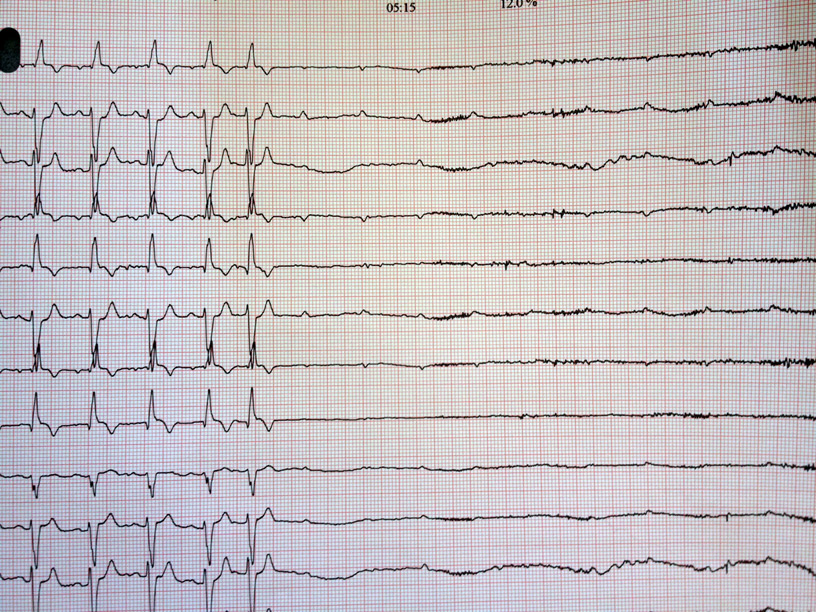
All too often we associate sudden cardiac arrest (SCA) with tachyarrhythmias post-infarction. Sometimes, there is another cause for post-infarction SCA that is forgotten:
The above EKG was acquired four days following an anterior myocardial infarction during a pre-discharge submaximal (modified Bruce) stress test after walking 1.3 MPH for 5 minutes. Note the bifascicular block (RBBB, LAFB) and lack of PR segment prolongation (with the exception of the PAC) just before the event, suggesting an infra-Hisian location of the eventual AV block.
Needless to say, the patient's discharge was postponed. (We're still waiting word from the doctor who ran the above test as to the condition of his underwear.)
-Wes
| Click image to enlarge |
Needless to say, the patient's discharge was postponed. (We're still waiting word from the doctor who ran the above test as to the condition of his underwear.)
-Wes
Friday, September 21, 2012
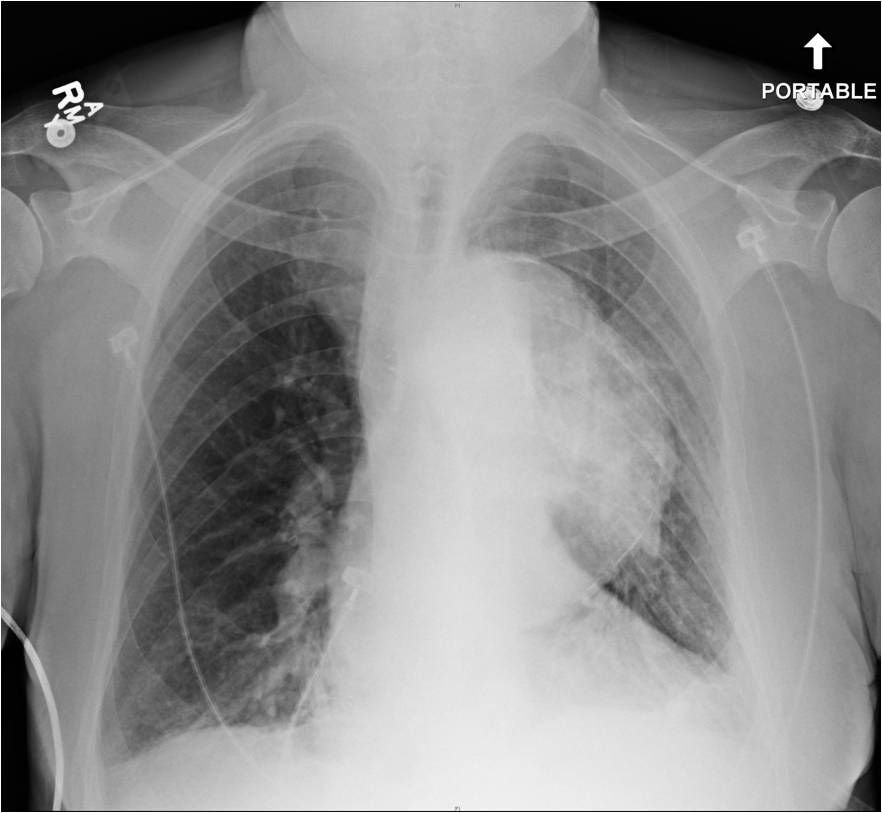
Another Friday Chest X-Ray
Tuesday, September 18, 2012
Our Problems With Codes
Oh, that clever Center for Public Integrity. Look what they've gone and done now! My, oh my. According to the article, doctors are much of the the problem, billing "billions" of Medicare upcharges according to the center.
But what if the medical coding game itself is flawed? Stop for a moment and imagine what it would look like if lawyers billed like doctors. Suddenly, we see how bizarre the world of government billing codes and chart-completion mandates has become.
Not long ago I asked the blog-o-sphere what my time is worth on a per-hour basis. Collectively and independently, the blog-o-sphere settled on a number of about $500/hr (see the comments). Now look for a moment at what Medicare pays, even at its highest level of billing for a physician's time for evlauation and management of a medical problem: for 40 minutes of a physician's time, it's $140 (or $210/hr) before taxes. Again, we see another disconnect as to how doctors are valued in our current system.
Doctors are working long hours to collect these fairly low fees from Medicare while jumping more hoops than ever to do so. They have become pseudo-experts at the coding game, trying to get as much money for their extra efforts as legally possible. But these fees paid by Medicare do not cover payments for time spent on phone calls, e-mails, and working insurance denials. These services are still considered by our system as gratis. To partially counteract this coding problem, doctors realized (and the government insisted) that doctors use electronic medical records. But when independent doctors set out to implement these records they quickly discovered that the expense and long-term maintenance costs of local office-based EMRs could not compete with more sophisticated systems already in use by their neighboring large health care systems. Because of ever-increasing cost-of-living and overhead costs, not to mention the threats of large fee cuts, doctors have migrated to large health systems faster than ever. With the fancier electronic record at those systems (streamlined for billing, collections, and marketing) fields required for higher billing codes (but not always material to the problem at hand) are completed in less time. So are doctors really the problem?
It depends on who's looking. Since every medical test and order is tied to a doctor's name, then of course it looks like doctors are the problem. And yet it's the government who has mandated the codes, the requirements for chart completion, and the electronic records to which our electronic signatures are attached. But we should ignore these facts; in the eyes of the Center for Public Integrity, of course its the doctors' and hospitals' fault.
And what do you think the government's response is to all of this?
Why, get get ten times the number of billing codes, of course!
So take a moment and imagine a world without codes might look like. A world where doctors are paid for their level of expertise, time with patients, time with communication for those patients, and time their connected to the EMR to enter codes, document, e-mail, and care for patients. No codes, just time-based billing at a level of commensurate with their skills. If we can track billing codes, we can track doctors' time. Gosh, it's sounding sane isn't it?
If we really want out of this coding and billing conundrum, we should stop the coding schemes. Pay doctors for what they are worth in today's market. Pay doctors for their time as well as their productivity. Throw away the codes, the consultants, the code licensure fees, and the nonsense. Compared to current administrators of these coding schemes, people might actually discover that doctors and hospitals are the path to salvation for excessive health care costs rather than the instigators of coding fraud.
-Wes
But what if the medical coding game itself is flawed? Stop for a moment and imagine what it would look like if lawyers billed like doctors. Suddenly, we see how bizarre the world of government billing codes and chart-completion mandates has become.
Not long ago I asked the blog-o-sphere what my time is worth on a per-hour basis. Collectively and independently, the blog-o-sphere settled on a number of about $500/hr (see the comments). Now look for a moment at what Medicare pays, even at its highest level of billing for a physician's time for evlauation and management of a medical problem: for 40 minutes of a physician's time, it's $140 (or $210/hr) before taxes. Again, we see another disconnect as to how doctors are valued in our current system.
Doctors are working long hours to collect these fairly low fees from Medicare while jumping more hoops than ever to do so. They have become pseudo-experts at the coding game, trying to get as much money for their extra efforts as legally possible. But these fees paid by Medicare do not cover payments for time spent on phone calls, e-mails, and working insurance denials. These services are still considered by our system as gratis. To partially counteract this coding problem, doctors realized (and the government insisted) that doctors use electronic medical records. But when independent doctors set out to implement these records they quickly discovered that the expense and long-term maintenance costs of local office-based EMRs could not compete with more sophisticated systems already in use by their neighboring large health care systems. Because of ever-increasing cost-of-living and overhead costs, not to mention the threats of large fee cuts, doctors have migrated to large health systems faster than ever. With the fancier electronic record at those systems (streamlined for billing, collections, and marketing) fields required for higher billing codes (but not always material to the problem at hand) are completed in less time. So are doctors really the problem?
It depends on who's looking. Since every medical test and order is tied to a doctor's name, then of course it looks like doctors are the problem. And yet it's the government who has mandated the codes, the requirements for chart completion, and the electronic records to which our electronic signatures are attached. But we should ignore these facts; in the eyes of the Center for Public Integrity, of course its the doctors' and hospitals' fault.
And what do you think the government's response is to all of this?
Why, get get ten times the number of billing codes, of course!
So take a moment and imagine a world without codes might look like. A world where doctors are paid for their level of expertise, time with patients, time with communication for those patients, and time their connected to the EMR to enter codes, document, e-mail, and care for patients. No codes, just time-based billing at a level of commensurate with their skills. If we can track billing codes, we can track doctors' time. Gosh, it's sounding sane isn't it?
If we really want out of this coding and billing conundrum, we should stop the coding schemes. Pay doctors for what they are worth in today's market. Pay doctors for their time as well as their productivity. Throw away the codes, the consultants, the code licensure fees, and the nonsense. Compared to current administrators of these coding schemes, people might actually discover that doctors and hospitals are the path to salvation for excessive health care costs rather than the instigators of coding fraud.
-Wes
Sunday, September 16, 2012
Out-of-the-Box Thinking on Avoiding Hospital Readmissions
As a cardiac electrophysiologist, I'm pretty far removed from public policy. But I have to admit that I was interested in the latest move by CMS to cut their Medicare payment rates to hospitals by invoking pay cuts for hospital readmissions. The Chicago Tribune's article is enlightening and filled with some interesting anecdotes after the first round of pay cuts were implemented:
(1) The vast majority of Illinois hospitals were penalized (112 of 128)
(2) Heart failure, heart attack, and pneumonia patients were targeted first because they are viewed as "obvious."
(3) "A lot of places have put a lot of work and not seen improvement," said Dr. Kenneth Sands, senior vice president for quality at Beth Israel.
(4) Even the nation's #1 Best Hospital (according to US News and World Report) lost out.
So what's a hospital to do?
I have a suggestion based on other observations in regard to government-imposed pay-for-performance measures that have cost hospitals and clinics across the land untold billions to implement and still have failed to demonstrate even a break-even financial proposition for hospitals.
Stop trying.
From the looks of things, Medicare's going to cut even the finest hospital's pay. Everyone will suffer, just some more immediately than others, but woe to the hospital that works to understand why. This is not the intent of this measure. The intent of this measure is to cut payments.
Therefore, if we do not commit excessive funds to this endeavor and instead work to support the people on the front lines as they do their job, cost savings will more likely be realized than if 500 more administrators and nurse coordinators are put on the job. Like putting cash under your mattress in a down market, they'll be way ahead.
Hiring more people are expensive because of their salaries and benefits. Writing programs to do this is also expensive. All kinds of people are expensive because of the training they require for new government initiatives like Pay for Performance (which has NOT been shown to affect outcomes by the way) and avoidance of hospital readmissions (little proof of sustainable goals can be achieved, a la quote #3 above).
So just help the professional people you already have do their jobs caring for patients to the best of their ability. Make this the mantra rather than new unproven approaches.
Call me silly, but my bet is that hospitals would do WAY better off financially in the long run if they stopped trying so hard to follow unproven legislative initiatives.
-Wes
(1) The vast majority of Illinois hospitals were penalized (112 of 128)
(2) Heart failure, heart attack, and pneumonia patients were targeted first because they are viewed as "obvious."
(3) "A lot of places have put a lot of work and not seen improvement," said Dr. Kenneth Sands, senior vice president for quality at Beth Israel.
(4) Even the nation's #1 Best Hospital (according to US News and World Report) lost out.
So what's a hospital to do?
I have a suggestion based on other observations in regard to government-imposed pay-for-performance measures that have cost hospitals and clinics across the land untold billions to implement and still have failed to demonstrate even a break-even financial proposition for hospitals.
Stop trying.
From the looks of things, Medicare's going to cut even the finest hospital's pay. Everyone will suffer, just some more immediately than others, but woe to the hospital that works to understand why. This is not the intent of this measure. The intent of this measure is to cut payments.
Therefore, if we do not commit excessive funds to this endeavor and instead work to support the people on the front lines as they do their job, cost savings will more likely be realized than if 500 more administrators and nurse coordinators are put on the job. Like putting cash under your mattress in a down market, they'll be way ahead.
Hiring more people are expensive because of their salaries and benefits. Writing programs to do this is also expensive. All kinds of people are expensive because of the training they require for new government initiatives like Pay for Performance (which has NOT been shown to affect outcomes by the way) and avoidance of hospital readmissions (little proof of sustainable goals can be achieved, a la quote #3 above).
So just help the professional people you already have do their jobs caring for patients to the best of their ability. Make this the mantra rather than new unproven approaches.
Call me silly, but my bet is that hospitals would do WAY better off financially in the long run if they stopped trying so hard to follow unproven legislative initiatives.
-Wes
Saturday, September 15, 2012
Schedules
It started as big day in the lab: six cases. Actually, my partner and I were eventually able to split the load over two labs.
But I screwed up.
I took too long putting in a device - WAY too long. Four hours too long. Since it was the first case of the day, it backed everything up. People had to work very late - some even had to dip into overtime.
But I was impressed that no one said a thing. In fact, everyone that I worked with was incredibly supportive. After it was over, one of my nurse practitioners even bought me a salad on her own dime before she laid into me with a ton of pending questions about outpatients and the new consults upstairs.
Why?
Because my colleagues know about schedules in medicine. They know that some things we do can be incredibly challenging due to anatomic variables that aren't always there in the normal individual. They know that sometimes we work on sick folks, young and old, who really have no other options - that a particular procedure might be their one best and only shot at getting better. They know that many other times, the cases go faster. They know that these things can happen. So they remain professional and make a their calls home to say they'll be late.
Schedules, I'm finding, are getting more complicated in our consolidated new health care world. So much so that administrators are turning to computers to help. And who can blame them? Different cases, different time allotments, different hospitals, different doctors, different equipment needs, different drive times between facilities, different days for clinic, different insurance, different staffing needs. It's simply getting too complicated for any one person to keep it all straight in their head.
But computers rely on logic. Computers rely on criteria on which to make decisions - they must have an estimated procedure time to go with every procedure. Computers don't incorporate variations in physician skill level, technique, or a person's individual anatomy into their scheduling algorithms. Computers don't know about a son's baseball game. Computers don't factor in the frustrations of traffic.
I never like making that call home when I am running late. I never like to hear the sighs, the disappointment, to learn what I'm missing. But I have also learned that it is far worse not to make the call. My family's schedule and psyche demands it.
But as the day's work is algorithmically sliced across increasingly geographically-dispersed larger and larger health care systems with schedules more and more compressed, I wonder if computers will ever be able to explain to our families why we keep running late.
-Wes
But I screwed up.
I took too long putting in a device - WAY too long. Four hours too long. Since it was the first case of the day, it backed everything up. People had to work very late - some even had to dip into overtime.
But I was impressed that no one said a thing. In fact, everyone that I worked with was incredibly supportive. After it was over, one of my nurse practitioners even bought me a salad on her own dime before she laid into me with a ton of pending questions about outpatients and the new consults upstairs.
Why?
Because my colleagues know about schedules in medicine. They know that some things we do can be incredibly challenging due to anatomic variables that aren't always there in the normal individual. They know that sometimes we work on sick folks, young and old, who really have no other options - that a particular procedure might be their one best and only shot at getting better. They know that many other times, the cases go faster. They know that these things can happen. So they remain professional and make a their calls home to say they'll be late.
Schedules, I'm finding, are getting more complicated in our consolidated new health care world. So much so that administrators are turning to computers to help. And who can blame them? Different cases, different time allotments, different hospitals, different doctors, different equipment needs, different drive times between facilities, different days for clinic, different insurance, different staffing needs. It's simply getting too complicated for any one person to keep it all straight in their head.
But computers rely on logic. Computers rely on criteria on which to make decisions - they must have an estimated procedure time to go with every procedure. Computers don't incorporate variations in physician skill level, technique, or a person's individual anatomy into their scheduling algorithms. Computers don't know about a son's baseball game. Computers don't factor in the frustrations of traffic.
I never like making that call home when I am running late. I never like to hear the sighs, the disappointment, to learn what I'm missing. But I have also learned that it is far worse not to make the call. My family's schedule and psyche demands it.
But as the day's work is algorithmically sliced across increasingly geographically-dispersed larger and larger health care systems with schedules more and more compressed, I wonder if computers will ever be able to explain to our families why we keep running late.
-Wes
Wednesday, September 12, 2012
The Irony of Why EKG Class Was Cancelled
I look forward to teaching our housestaff the basics of EKGs each year. Moments where I can leap from worker-bee clinician to the quiet confines of a lecture hall is rejuvenating. Seeing eyes widen as they grasp basic insights to the wealth of information contained in biologic signals even more so. So I carve some time at the beginning of each year with the chief residents to commit to this endeavor far in advance.
This year, I arrived a little early for my lecture with a stack of EKG’s, ready to bring down the screen, load the Powerpoint presentation, and collect my thoughts. Unlike most lecture days, the lecture hall door was closed when I arrived. I quietly cracked the door and peered in: there, in their new, carefully pressed white coats, was a sea of residents. I was elated, expecting that attendance at this lecture would be especially high since I already had a captive audience.
So I closed the door quietly and paced in the halls waiting for the lecture before mine to conclude.
The nearby secretaries noticed me and politely said hello and I, in turn, smiled and acknowledged their greeting. I grabbed a quick cup of coffee from the coffee pot and sipped the nectar in my quiet moment of reverie before class.
But something was askew. The secretaries seemed a bit uncomfortable.
“Doctor Fisher? Oh, I’m so sorry, the lecture hall is being used today for our annual Transitional Residency program review. Let me see if I can find another lecture hall for you.”
She logged on her computer and scanned the available spaces. She clicked and clicked and clicked.
“Well, there is a room on the fifth floor…. Um, maybe not. I see there’s only 15 chairs in there… Let me keep trying.”
“Thanks so much,” I said.
About this time, the doors from my previously-arranged lecture hall opened and a sea of smiling residents poured out from the room. Some headed to the washroom, others checking their beepers. Others appeared to be heading back to the wards. I was puzzled.
I glanced in the lecture hall to see several well-dressed women sitting before a pile of 3-ring binders full of papers, one of which was opened. They chatted with each other, occasionally giggling, but very professionally so. There behind them was a tray of uneaten donuts and other treats and a coffee dispenser neatly arranged on a tray behind them. Boy, those looked tasty! I smiled as I thought to myself: “No wonder their attendance was so good.”
A few moments later, one of the Chief Residents came to me with his tail between his legs and apologized profusely. “I’m SO sorry, Dr. Fisher, we forgot to call you about this change of schedule!”
The poor guy. Sent with full flak jacket in place to take the hit. But I knew exactly how he felt as he tried to keep all the various clinical and administrative scheduling balls in the air.
“No problem,” I said. “We’ll do this another time.”
But as I walked back to my office, I couldn’t help but wonder what we’re creating as housestaff are corralled before bureaucrats who ask them how their residency is going while their own residency's EKG training was silently sabotaged.
It’s kind of like those uneaten donuts behind those well-dressed ladies: food for thought.
-Wes
This year, I arrived a little early for my lecture with a stack of EKG’s, ready to bring down the screen, load the Powerpoint presentation, and collect my thoughts. Unlike most lecture days, the lecture hall door was closed when I arrived. I quietly cracked the door and peered in: there, in their new, carefully pressed white coats, was a sea of residents. I was elated, expecting that attendance at this lecture would be especially high since I already had a captive audience.
So I closed the door quietly and paced in the halls waiting for the lecture before mine to conclude.
The nearby secretaries noticed me and politely said hello and I, in turn, smiled and acknowledged their greeting. I grabbed a quick cup of coffee from the coffee pot and sipped the nectar in my quiet moment of reverie before class.
But something was askew. The secretaries seemed a bit uncomfortable.
“Doctor Fisher? Oh, I’m so sorry, the lecture hall is being used today for our annual Transitional Residency program review. Let me see if I can find another lecture hall for you.”
She logged on her computer and scanned the available spaces. She clicked and clicked and clicked.
“Well, there is a room on the fifth floor…. Um, maybe not. I see there’s only 15 chairs in there… Let me keep trying.”
“Thanks so much,” I said.
About this time, the doors from my previously-arranged lecture hall opened and a sea of smiling residents poured out from the room. Some headed to the washroom, others checking their beepers. Others appeared to be heading back to the wards. I was puzzled.
I glanced in the lecture hall to see several well-dressed women sitting before a pile of 3-ring binders full of papers, one of which was opened. They chatted with each other, occasionally giggling, but very professionally so. There behind them was a tray of uneaten donuts and other treats and a coffee dispenser neatly arranged on a tray behind them. Boy, those looked tasty! I smiled as I thought to myself: “No wonder their attendance was so good.”
A few moments later, one of the Chief Residents came to me with his tail between his legs and apologized profusely. “I’m SO sorry, Dr. Fisher, we forgot to call you about this change of schedule!”
The poor guy. Sent with full flak jacket in place to take the hit. But I knew exactly how he felt as he tried to keep all the various clinical and administrative scheduling balls in the air.
“No problem,” I said. “We’ll do this another time.”
But as I walked back to my office, I couldn’t help but wonder what we’re creating as housestaff are corralled before bureaucrats who ask them how their residency is going while their own residency's EKG training was silently sabotaged.
It’s kind of like those uneaten donuts behind those well-dressed ladies: food for thought.
-Wes
Tuesday, September 11, 2012
Why Patients Will Need Influence Peddlers
"Hello, Dr. Fisher this Dr. Schmo. I have a special (friend, patient, secretary - insert your title here) that I'd like to see you but your next new patient appointment is in about 2-3 months. Could you see him/her sooner?"
It's a call that's becoming increasingly common.
In the past, this was a request that was fairly easy to fulfill for a friend. But this week this has already happened three times. I wonder (a) how many times I can realistically expand my clinic hours and (b) how many follow-up patients I'll soon stop seeing to make room for the masses as pressure to see more people in less time continues and (c) how many patients will use this approach to leverage access to health care?
The days of long-term relationships between patients and subspecialists seem to rapidly be coming to an end - our new model increasingly rewards proceduralists.
But such an approach is not without its consequences. Doctors and patients both lose when we lose closure with our patients.
-Wes
It's a call that's becoming increasingly common.
In the past, this was a request that was fairly easy to fulfill for a friend. But this week this has already happened three times. I wonder (a) how many times I can realistically expand my clinic hours and (b) how many follow-up patients I'll soon stop seeing to make room for the masses as pressure to see more people in less time continues and (c) how many patients will use this approach to leverage access to health care?
The days of long-term relationships between patients and subspecialists seem to rapidly be coming to an end - our new model increasingly rewards proceduralists.
But such an approach is not without its consequences. Doctors and patients both lose when we lose closure with our patients.
-Wes
Subscribe to:
Posts (Atom)