One cardiologist's epiphany.
-Wes
h/t: The Carlat Psychiatry Blog.
Thursday, April 30, 2009


Art in Medicine
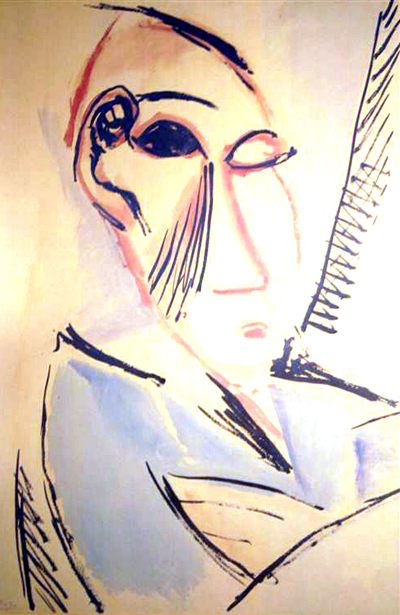
Any idea what this is?
-Wes
Answer if you must (spelled backwards): "tneduts lacidem a fo deaH" s'ossaciP olbaP
-Wes
Answer if you must (spelled backwards): "tneduts lacidem a fo deaH" s'ossaciP olbaP
Let This Be Proof
It's been a constant battle in our household between my brother, a neurosurgeon, and me: which is the more important organ, the heart or the brain?
My brother feels the heart is there to nurture the brain. I argue the heart really doesn't need the brain to function for goodness sake, and therefore, due to it's independence, it reigns supreme.
Brotherly love, right?
Thankfully, the folks at Street Anatomy have provided me with the proof I need to settle the score with my brother. It's a piece of contemporary art entitled "Being 20."
So here, bro. This one's for you:

-Wes
My brother feels the heart is there to nurture the brain. I argue the heart really doesn't need the brain to function for goodness sake, and therefore, due to it's independence, it reigns supreme.
Brotherly love, right?
Thankfully, the folks at Street Anatomy have provided me with the proof I need to settle the score with my brother. It's a piece of contemporary art entitled "Being 20."
So here, bro. This one's for you:
-Wes
Wednesday, April 29, 2009
What the President Could Have Done With Photoshop
Think of the money he could have saved:
And to think their griping over doctors getting pens from pharmaceutical companies...
-Wes
h/t: Instapundit.
"I am a graphic designer in Southern California. I spent ten minutes throwing this together this morning, which at my rates equals about 15 dollars. However, I will settle for the thanks of a grateful nation."Compare that to the fuel costs to fill AirForce One and an F-16 fighter for a few hours.
And to think their griping over doctors getting pens from pharmaceutical companies...
-Wes
h/t: Instapundit.
Tuesday, April 28, 2009
17 Pacemakers
Pretty impressive:
His film reminds me of a similar chest x-ray from a former patient who quietly called himself "The Junkyard Dog." Fortunately for this patient, no one will ever know what's inside him - at least until they see his xray...
-Wes
The 17th was implanted March 11 at the Pacemaker and Defibrillator Center at the Saint Barnabas Heart Center at Newark Beth Israel Medical Center.Too bad the picture accompanying the article actually shows him holding biventricular defibrillator, rather than a pacemaker as labeled. His chest xray (seen in the article), although tough to see, shows one left ventricular lead, one right ventricular defibrillator leads, three right ventricular pacing leads and two atrial leads, one of which that has been partially withdrawn to the junction of the right subclavian/superior vena cava junction.
In some ways, Concepcion said he viewed himself as guinea pig growing up, when electrical wires in his chest malfunctioned or battery cells became weak and run down. He was in and out of the hospital every two years, sometimes more frequently, getting outfitted for pacemakers since he was 2 years old.
In the beginning, they weren't built to last long, especially for someone as young as Concepcion. He likes to think he burned them out as a kid, but Concepcion was learning something even more valuable. Each time he was hospitalized in Newark, Concepcion gradually became a part of history for having grown up with the development and evolution of the device.
His film reminds me of a similar chest x-ray from a former patient who quietly called himself "The Junkyard Dog." Fortunately for this patient, no one will ever know what's inside him - at least until they see his xray...
-Wes
Crossroads
 It was a case like so many others, an elderly man who tripped and broke his hip. During his physical examination, a soft murmur was heard so an echocardiogram was ordered. His heart muscle was quite weakened. Cardiologists were contacted, symptoms reviewed, electrocardiograms compared, and soon he was off to surgery to fix his hip.
 Rehabilitation was remarkably fruitful – he was weight-bearing quickly and some five days later, he was looking strong enough to consider discharging, shuffling, walker assisted gait and all.
But an abnormality was found before his surgery that must be addressed – to do otherwise would not comply with guidelines for his management: his weaken heart. Mind you he was 78, had been declining physically and mentally over the past several years and did not lose consciousness with this hip fracture, but he was loved by his wife and daughter who were eager see him continue to improve. The hope, if you will, of a better time ahead.
What is a doctor to do in this instance?
From the earliest years, the discipline of medicine requires rigorous study and exhaustive hours of training. By and large, physicians are driven souls, vetted carefully from our formative years of school by exemplary grades, grueling study, competition for residencies, and taxing selection processes. Those that push the norm, strive for excellence, and go above and beyond excel, those that do not, wither. In essence, it’s the epitome of Darwinian selection.
The trend continues when one enters practice as a young doctor. It is, in short, all about productivity: productivity academically, productivity clinically, and productivity economically. That’s the way the ball currently rolls in medicine. And really, that’s the way the patients have benefited in our system, too. Going the extra mile, even when hope seems impossible or the hour is inconvenient has benefited many, many people.
But we are at a critical crossroad in medicine today. Forces are masterfully aligned to impose restrictions or recommendations of care upon the doctor-patient relationship. Just like the patient above who has never had an arrhythmia but has a known weakened heart muscle detected anecdotally after an unrelated fall. Do we treat him, because we “should,” based on guidelines that others in positions of “authority” have vetted and our practice managers have urged, or turn a cheek on our obsessive reliance on “evidence” in favor of “art,” realizing that doing so directly threatens the core of our economic, academic, and clinical productivity-based health care model and exposes us legally?
The only logical resolution to this dilemma is for the doctor is to turn to their patients. But will patients or their families accept anything less than doing everything, just for the common good of the system? Will careful discussion about costs and absolute (rather than relative) risk reduction with preventative measures perceived as responsible or lackadaisical? Can we afford to withhold therapy when our economic survival continually demands more volume, more procedures, and more patients in the system? What incentives exist for doctors to do nothing in the circumstance I have described?
Given the economic, legal, and professional climate in vogue today, there are none. As a new public health care plan is deployed, will we ever be able to achieve cost control in our new system?
At present, it seems unlikely. We have gravitated to models and systems that automate our profound inefficiencies and deem them “highly efficient.” We advertise to load the system more. We leave the cost of the defense of the wrongfully accused to the defendant rather than the plaintiff. All while costs, and volumes, and regulatory infrastructure spiral. Without incentives that reward doing less for both the doctor and the patient, we won’t see any meaningful reduction to health care costs in America irrespective of the ultimate system deployed.
-Wes
Monday, April 27, 2009
Murder She Wrote Part #2: A Heart-Stopping Story
By now it's old news (at least as far as the internet goes). But cutting a pacemaker from someone's chest is no easy feat, especially when a pen knife is used. That's because the pacemaker generator and leads become encased in a fibrous shell that firmly anchors the device in place. This fibrous shell begins to take shape shortly after the pacemaker implant as the body works to isolate the foreign body from the surrounding tissues. The the formation of the typically shimmering scar-like pocket occurs over several months time. When devices are not touched for years, the pocket can even become calcified: a so-called "porcelain pocket" that can be particularly challenging to remove the device when battery changes are needed.
Although I have no idea how long the father's pacemaker had been implanted in this case, I can vouch that its removal late after implant would take considerable effort.
I can only hope he was not successful.
-Wes
Although I have no idea how long the father's pacemaker had been implanted in this case, I can vouch that its removal late after implant would take considerable effort.
I can only hope he was not successful.
-Wes
On Over-priced Specialists
There's a primary care physician (not "provider") shortage.
Yep.
They are underpaid.
Yep.
We should redistribute money from the "rich" specialists and give it to the primary care doctors.
This is being proposed.
Here are some considerations:
#1) Medicare costs are derived from two locations, a doctors fee and a "technical fee." Some examples (estimates only):
A left heart catheterization:
But there will be repercussions with reduced access to specialists. (Funny how we never hear about technical component cuts, but then again, they've got more lobbyists...)
#2) What happens when we pour in more primary care doctors (as is being proposed)?
More primary care doctors find more disease: good for specialists.
More primary care doctors that are paid better find primary care attractive stay in primary care: good for specialists.
More primary care doctors which cost more, both to primary care and to specialists: bad for sustainable model of health care delivery.
Unless, of course, people realize we'll have to eat our spinach and ration the care delivered.
-Wes
Yep.
They are underpaid.
Yep.
We should redistribute money from the "rich" specialists and give it to the primary care doctors.
This is being proposed.
Here are some considerations:
#1) Medicare costs are derived from two locations, a doctors fee and a "technical fee." Some examples (estimates only):
A left heart catheterization:
Doctor fee: $270Open heart surgery:
Hospital fee: $1250
Doctor fee: $2000So, by all means, cut the specialists' portion of the fees to save costs, okay?
Hospital fee: $20,000
But there will be repercussions with reduced access to specialists. (Funny how we never hear about technical component cuts, but then again, they've got more lobbyists...)
#2) What happens when we pour in more primary care doctors (as is being proposed)?
More primary care doctors find more disease: good for specialists.
More primary care doctors that are paid better find primary care attractive stay in primary care: good for specialists.
More primary care doctors which cost more, both to primary care and to specialists: bad for sustainable model of health care delivery.
Unless, of course, people realize we'll have to eat our spinach and ration the care delivered.
-Wes
Saturday, April 25, 2009
Mr. Rogers Does Health Care Reform
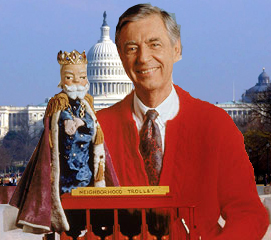
Good morning boys and girls. It's so nice to see you again. Yesterday, I enjoyed our show where we learned about a new term called "conflicts of interest" that doctors always seem to have with companies that fund their research. Can you say "conflicts of interest?" Why, that's a very big-boy-and-girl thing to say, isn't it?
It's a beautiful day in this neighborhood
A beautiful day for a neighbor
Would you be mine?
Could you be mine?
 (He hangs his coat in a closet, puts on a cardigan zipper sweater, and removes his dress shoes to put on sneakers, all the while smiling)
Well, on today's show, we're going to meet our friends who are helping us with health care reform. (stops, pauses) Can you say "Health Care Reform?" Sure. Health - Care - Reform. So let's head over to the Neighborhood of Make-Believe today and see what's happening. Mr. Conductor, can you take us there?
(Camera zooms to a small red electric trolley and follows it through a tunnel... *Ding ding* *ding ding*) The scene magically transforms to world like none other, where birds are chirping and the sun always shines: the Neighborhood of Make-Believe.)
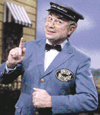 Look who's here! Why it's Mr. McFeely! My, you looks like you've been busy! What are all those letters you're delivering there?
 Hi, Mr. Rogers! Why, there's a big meeting going on now to help make health care here in the Neighborhood of Make-Believe.
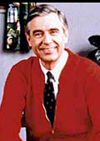 Gosh, Mr. McFeely. That bag looks so heavy. Why so many letters? Can I help carry it? Are there so many letters because they need more money?Oh, no, Mr. Rogers! Everyone knows pay-to-play only happens in Illinois. That would never happen here in the Neighborhood of Make-Believe. We just want to get everyone's input so we can involve all the stakeholders in the health care reform debate. That way, we know we'll find the right solution and no one will complain about the new plan. Isn't it exciting! But the organizers have to act fast. Grandpere is sick and they want to make sure they get a solution hammered out right away so he'll be able to get coverage if he needs it.Goodness, Mr. McFeely! I understand. That sounds very important. I was wondering if you could help me. I'm looking for conflict of interests here in the Neighborhood of Make-Believe.Sure! Maybe King Friday XIII would know where to find them. Perhaps I could take you to his castle?Gee, Mr. McFeely, that would be swell!
(camera cuts to a castle where King Friday XIII is meeting with Queen Sara Saturday, Prince Tuesday, Lady Elaine Fairchild, and Daniel Striped Tiger are speaking in hushed tones. King Friday XIII sees them approach.)
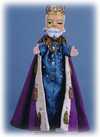 Mr. Rogers, I presume?Correct as always, Your Majesty, King Friday.What brings you to the Neighborhood of Make-Believe? Can't you see we're very busy?I'm sorry King, but I'm looking for conflicts of interest.Here in the Neighborhood of Make-Believe we make sure we are all as pure as the driven snow. After all, we are concerned about the needs of everyone in our neighborhood. That's why we're meeting with everyone in town hall meetings and at Health Care Summits. People need health care and they need it now!Yes, good King. I know Dr. Frogg would want to be a health care helper, too. Is he here?Dr. Frogg and Nurse Nelly have been too busy to come, poor guys. Something about "pay-for-performance" and needing to buy a computer for something called "e-prescribing." Anyway, we'll be sure to let Dr. Frogg know what we decide. So King Friday, you've not seen any conflicts of interest?No, not here in my kingdom!And Queen Sara Saturday, have you seen any conflicts of interest?
 I don't think so, Mr. Rogers. But I really haven't been looking. After all, we've got other very important tasks in front of us. Like deploying electronic medical records and making sure everyone has access to pharmacies!Prince Tuesday, have you seen any conflicts of interest here in the Neighborhood of Make-Believe?
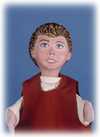 No sireeee.And Daniel Striped Tiger, you have seen any either have you?
 Nope. I wouldn't know what one was, Mr. Rogers.
(Turning to Mr. McFeely)
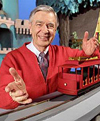 Gosh, Mr. McFeely, what a busy day! Let's go back now. It seems the only conflicts I have found have been with the doctors working with the drug and medical device companies. So, I guess our search is finished. Thanks everyone!
It's such a good feeling to know you're alive.-Wes
It's such a happy feeling
You're growing inside.
And when you wake up ready to say
I think I'll make a snappy new day
It's such a good feeling....
Friday, April 24, 2009
Orthopedic EMR Documentation
The orthopedic physical examination: short, sweet and nearly uninterpretable:
-Wes
Gen: NADOne would think they were on Twitter.
Incision c/d/i
Motor 5/5 pf/df/ehl
Silt @ t/s/s/sp/dp
DP/PT pulses 2+
-Wes
The Ultimate Irony: A Sick Tax to Make Health Care Affordable
Say it ain't so.
But look for cash-strapped legislatures across the country to consider this latest tactic to feed from the Medicare National Bank: in Colorado, held to lower taxes by their self-imposed "Tax Payers Bill of Rights" (or so-called TABOR law enacted in 1992), legislatures have resorted to a "sick tax" cleverly disguised as a hospital fee added without line-item status to hospital bills:
All in the name of making health care more "affordable."
Brilliant.
-Wes
h/t: Walter Olson, editor, Point of Law.
But look for cash-strapped legislatures across the country to consider this latest tactic to feed from the Medicare National Bank: in Colorado, held to lower taxes by their self-imposed "Tax Payers Bill of Rights" (or so-called TABOR law enacted in 1992), legislatures have resorted to a "sick tax" cleverly disguised as a hospital fee added without line-item status to hospital bills:
The state House has passed HB 1293, a tax on sick people. The bill directs hospitals to add a “fee” of up to 5.5 percent on every patient’s bill, keeps the fee secret by prohibiting hospitals from listing it separately, and reimburses hospitals on the basis of what they say their costs are.As Linda Goreman, director of the Health Care Policy Center for the Independence Institute, a Golden-based libertarian think tank points out (pdf):
Those supporting HB 1293 pretend that this is a fee on hospitals. They say hospitals will pay this fee, something that can be true only if hospitals have large pots of surplus funds lying around.
The ultimate irony in all this is that HB 1293’s sponsors upped the ante on their language perversion by claiming that the magic fee that increases the cost of private sector health care to the tune of $600,000,000 a year “makes health care more affordable.” They even named HB 1293 the “Colorado Healthcare Affordability Act.” For this legislature, bigger government and higher fees translates into more affordable living both for it and for its big business friends.Hey, if they can do it to our cable and phone bills, why not hospital bills, too?
If it gets rewarded for its tax into fee prestidigitation and its “affordability” act, voters should expect the future to bring such affordability measures as income taxes transmuted into job privilege fees, increased sales taxes transmuted into transactions fees, and constitutional protections transmuted into therapeutic suggestions.
All in the name of making health care more "affordable."
Brilliant.
-Wes
h/t: Walter Olson, editor, Point of Law.
Thursday, April 23, 2009
Watchman Squeeks By
Watchman, Atritech's new left atrial appendage occlusion device for the treatment of atrial fibrillation stroke risk, squeeked by the FDA's advisory panel on a 7-to-5 vote today:
-Wes
Overall, most panel members felt the sponsor showed the device to be effective, although there were caveats. Many were uncomfortable with the size of the 800-patient study. Others were uncomfortable making a decision about effectiveness with end points such as hemorrhagic stroke, which was included in the primary efficacy end point. They felt a decision on effectiveness was difficult when there were so few hemorrhagic strokes—five in the control arm and one with the Watchman device—while others thought ischemic stroke, which occurred more frequently in the device arm, would have been a more reliable end point.Whether the FDA will approve the lukewarm endorsement remains to be seen, but the first big hurdle for this device has been passed.
Regarding safety, there was also a divergence of opinion. Again, panel members were concerned about assessing the long-term safety of the data given the short-term PROTECT-AF study. Some, including Dr Michael Domanski (National Heart, Lung, and Blood Institute, Bethesda, MD), said it was pretty hard to look at the data and say the device is safe.
"I would think it would be a mistake for the FDA to approve this device," said Domanski.
Still, opinions like this were the minority, and most felt the "devastating" effects of warfarin over time need to be balanced with the increased risks with the device, such as pericardial effusion, device embolization, and thrombus formation on the device. In contrast, warfarin is a lifetime drug that can be difficult to manage, especially in the elderly and frail, many panel members felt.
-Wes
How to Determine a Doctor's Specialty
Want to know what specialty a doctor practices? Just ask that doctor what time their first meeting of the day begins. While not always perfect, it's usually quite telling.
Here's how things play out at our institution:
Here's how things play out at our institution:
If the first morning meeting starts at 06:30 AM - it must be orthopedic surgeons.-Wes
If the first morning meeting starts at 07:00 AM, it must be general surgeons.
If the first morning meeting starts at 07:30 AM, it must be internists.
If the first morning meeting starts at 08:00 AM, it's usually just administrators.
Wednesday, April 22, 2009
iElectrophysiology on the iPhone
iThink iT's iNevitable that iElectrophysiology Apps will iNvade the iPhone:
-Wes
Some companies, such as Toumaz.com, are building tiny sensors priced at $10-20 that you can use to track your vitals such as heart rate, and which could be easily connected to a smartphone. A stealthy company called Adigy is working on something similar, but they’ve yet to build a mobile app. Cardionet, of San Diego, is one of the bigger players doing heart rate and rhythm wireless monitoring and says it is building a mobile application. Triage Wireless, backed by Qualcomm Ventures, is one of many that monitors blood sugar levels and other vital signs wirelessly in hospitals and homes, but it hasn’t released a mobile phone version.Up next: pacemaker and defibrillator interrogations.
-Wes
Need a Defibrillator? Call an Electrophysiologist
There is, after all, strength in numbers. From the national ICD Registry:
Reference: "Association of Physician Certification and Outcomes Among Patients Receiving an Implantable Cardioverter-Defibrillator," JAMA Vol. 301 No. 16, April 22/29, 2009.
Of 111,293 ICD (implantable cardiac defibrillator) implantations included in the analysis, 78,857 (70.9%) were performed by electrophysiologists, 24,399 (21.9%) by nonelectrophysiologist cardiologists, 1,862 (1.7%) by thoracic surgeons, and 6,175 (5.5%) by other specialists. Compared with patients whose ICD was implanted by electrophysiologists, patients whose ICD was implanted by either nonelectrophysiologist cardiologists or thoracic surgeons were at increased risk of complications in both unadjusted (electrophysiologists, 3.5% [2743/78 857]; nonelectrophysiologist cardiologists, 4.0% [970/24 399]; thoracic surgeons, 5.8% [108/1862]; P < .001) and adjusted analyses (relative risk [RR] for nonelectrophysiologist cardiologists, 1.11 [95% confidence interval {CI}, 1.01-1.21]; RR for thoracic surgeons, 1.44 [95% CI, 1.15-1.79]).-Wes
Reference: "Association of Physician Certification and Outcomes Among Patients Receiving an Implantable Cardioverter-Defibrillator," JAMA Vol. 301 No. 16, April 22/29, 2009.
Tuesday, April 21, 2009
How Insurance Pre-Approvals Impede Quality Care
When the ache in her lower abdomen became excruciating, the young woman was rushed to a surgery center, where the doctor diagnosed a ruptured appendix.As I read this story, I couldn't help but wonder why our quality advocates were not up in arms with outrage this morning. Why has the Agency for Healthcare Research and Quality (AHRQ) not developed specific quidelines the refuse to pay for such shoddy performance that delays a patient's care? Isn't the delay in therapy because of the medical "requirement" for insurance "pre-approval" dependent on a typed report in a case such as this the ultimate in poor care delivery? What would have happened in this case if the insurance company balked and refused to approve this patient's surgery? Would the doctor have been obligated to refused to do the surgery?
The woman needed an operation—fast. But before the surgeon could wheel her into the operating theater, he had to find out whether the patient's insurance company would pay. That meant paperwork: A report had to be dictated, typed up and submitted to her insurer for approval.
So while the woman waited in agony, her doctor dialed a toll-free number.
The instant he hung up a few minutes later, a digitized recording raced through fiber-optic cables on the Pacific Ocean seabed and into a computer server on the 17th floor of a Manila office tower, where medical school graduate Dinah Barrete was working the graveyard shift.Chicago Tribune, 21 Apr 2009
Of course not.
One of the largest breeches of "quality" patient care in health care today are insurance pre-approvals, especially in the circumstances of true medical emergencies. And it is expensive, too. Why should the doctor have to dictate his note or have it transcribed? What potential harm came to the patient as a result of the delay to her care? Do we know? Might there be other situations like a perforated viscus, depressed skull fracture, septicemia in a patient without a spleen be even more catastrophic if we had to wait for insurance pre-approvals and dictations before treating patients?
Certainly.
I would propose that the decision for surgery rests entirely with the doctor to decide, not some third party as this article suggests.
Let's save a ton of money and get rid of this insurance pre-approval racket and the insurance industry's requirements for a dictated note.
Then maybe we'd start saving real money during health care reform.
-Wes
Monday, April 20, 2009
As Medicare is Set Adrift
The acceptance of Medicare is dwindling amongst primary care doctors in affluent neighborhoods. Case in point: a patient I saw in clinic recently for her arrhythmia said:
Yep. At least for now.
But did I refill her Ambien (sleeping pill) prescription?
No. That I won't do as a heart rhythm specialist.
-Wes
"Would you mind ordering a CBC and all the chemistries I need for my annual physical? My internist no longer takes Medicare."So will subspecialists take up the slack as primary care doctors increasingly abandon the system?
Yep. At least for now.
But did I refill her Ambien (sleeping pill) prescription?
No. That I won't do as a heart rhythm specialist.
-Wes
Sunday, April 19, 2009
Watchman Will Be Watched Thursday
The Pioneer Press reports that Atritech's left atrial appendage "filter," the Watchman device, will be reviewed the FDA advisory panel Thursday.
I appreciate the mention.
-Wes
See also - Dr Wes: "A Big Day for Cardiac Electrophysiology"
I appreciate the mention.
-Wes
See also - Dr Wes: "A Big Day for Cardiac Electrophysiology"
Subscribe to:
Posts (Atom)