Showing posts with label conflict of interest. Show all posts

Monday, March 17, 2014

Doctors as Drug Reps

There's a new gig for doctors - as drug rep:
Because they will be employees of Glaxo, the company won’t have to report payments to doctors under the so-called Sunshine Act in the U.S. that requires such disclosures. On the other hand, their credibility may be questioned, and they won’t be able to answer questions such as how they would treat a patient with specific symptoms or problems, given that they aren’t practicing physicians, Khedkar said.
Ironically in the same article, a few paragraphs down:
In addition to targeted e-mails and Web seminars, drugmakers are increasingly using mobile platforms including instant replies to questions sent by text message that doctors can use while seeing patients, Khedkar said.
Heh.  There you have it: another regulatory problem solved.  

No doubt these doctor drug reps will soon figure prominently as speakers at our upcoming scientific sessions.

God help us.

-Wes

Thursday, February 06, 2014

When Academic Medical Centers Allow Double-Dipping

When leaders of public universities that receive their income from both tax payers and private industry interests, ethical lines become blurred when expensive technologies or industry-sponsored research protocols are promoted by that university.  Are patients' best interests sufficiently protected?

Paul Levy, former CEO of Beth Israel Deaconess Medical Center and blogger over at the Not Running A Hospital blog, has broken the Chicago story that is ongoing at the University of Illinois which came to light after an advertisement promoting robotic surgery at the University was paid for by the robotics company.  Today, Mr. Levy asks if the dean's disclosure documents filed with the Secretary of State (specifically the Statement of Economic Interests) are (1) sufficiently reviewed and (2) enforced to prevent such conflicts of interest inherent to such double-dipping. 

Is the public being served best when conflicts such as these are ignored?

Mr. Levy deserves praise for his dogged coverage of this issue.  Hopefully the Secretary of State and the University of Illinois (that is already reeling from earlier exposure regarding the University's former policy of admitting students based on patronage criteria), will resolve to commit to appropriate oversight and end such conflicts.  As Levy points out: the silence has been deafening.

-Wes

Saturday, November 16, 2013

When Medical Content Providers Go Political

It is an interesting time in medicine.

If we step back a few thousand feet and look down on America's medical world, we see a mess.  We see rules and regulations run amok.  We see doctors under unprecedented pressure to click rather than to care. We see government websites built with the promise of access to health care, collapsing under its own weight.  We see politicians promising one thing, then delivering another.  Then we see them give exceptions to some or outright lying to others.  Then we see them get cozy with the insurance lobby after they're caught red-handed  in hopes of making a "fix."

We, the lowly patients and doctors in this political power game, turn our heads in disgust as we struggle to help people live (literally) another day.

US medicine is now all about power and money.  As such, medicine is now more about a political vision rather than reality.   Politics, after all, is all about sales: selling a vision to stay elected and to stay in charge.

So where better to turn to promote your political sales job than WebMD (and their subsidiaries like Medscape and theheart.org), that "trusted" purveyor of all things medical?  It seems WebMD and its MedScape affiliates like theheart.org have quietly accepted a $4.8 million grant  to promote the Affordable Care Act and have refused to disclose this little factoid to doctors and their readers.

There does not need to be a  Sunshine law for politicians and medical content providers these days, only doctors.

But it doesn't stop there.  Ironically, shortly after this disclosure by the Washington Times, an article entitled "Conflicts of Interest: Concepts, Conundrums, and Course of Action" appeared on theheart.org/Medscape Cardiology's website.  (Update: this morning there's an article on the Physician Payment Sunshine Act, too!)  As I tried to read this article I laughed as I clicked through a Brilinta ad and was subject to Bystolic and Belviq ads in Medscape's sidebar.

Here's a real "course of action" I'd suggest to doctors bothered by the double-standard of disclosure imposed on us from our political class: dump the Medscape app on your cellphone, give a little shout-out to theheart.org, er, Medscape Cardiology, and ask why they haven't said anything.

Then cancel anything related to WebMD.

Then, at least, we'd be sure we're getting past the political propaganda and back to medicine.

-Wes

h/t: A faithful reader.

Addendum 16 Nov 2013 @ 12:20 PM CST: It seems WebMD felt compelled to release this press release regarding their editorial integrity, but it did not reference the above conflict disclosed here specifically.

Wednesday, February 08, 2012

Our Conflicted Conflicts

This week's Journal of the American Medical Association (JAMA) published a lengthy conflict of interest correction by Eugene Braunwald, editor of one of our iconic textbooks of cardiology and author of over 1000 peer-reviewed cardiovascular publications:
To the Editor: It has been brought to my attention that there were differences in my financial disclosures in a number of articles recently published in JAMA, and this warrants explanation.
Dr. Braunwald explains the varous relationships inherent to discussing virtually any drug in our cardiovascular armamentatium. I encourage you to read the full text.

In reply to the correction, JAMA itself realizes it, too, has erred:
We appreciate Dr Braunwald providing his professional and transparent explanation to clarify the differences in the reported financial disclosures among several of his recent publications in JAMA. We fully recognize that determining relevant financial relationships involves judgment and that reporting of financial disclosure information certainly is not an exact science. In fact, in one of the Commentaries(1) that Dr Braunwald mentions, his co-author, Dr Gheorghiade, had reported to JAMA that he had received consulting fees from Bayer, Novartis, Sigma Tau, Johnson & Johnson, Takeda, Otsuka, and Medtronic. However, these disclosures inadvertently were omitted from the published article. The editors apologize for this oversight and regret this error.
With the depth and breadth of pharmaceutical and medical device company funding of academe, journals, and doctors is so pervasive and the disclosures so inclusive, what are readers to think?

In my view, these doctor-pharma relationships are part of the reason there have been the many advances we have enjoyed in medicine. Without these dollars to academics and their programs, there would be no research programs and little to no innovation. There simply is not enough dollars to support the costs of doing the work from independent sources, especially in today's highly regulated research environment. Companies vested in bringing a new drug to market MUST do clinical trials to prove their safety and efficacy before their drugs are sold in the US. So companies bring their trials to well-respected doctors who see the proper patients. In turn, these doctors present the protocols to their Institutional Review Boards, process the reams of paperwork, ultimately decide which patient(s) might be appropriate candidates for the new medication, prescribe the drug, watch (and record) it's side effects and benefits, treat complications (if they occur), collect and analyze the data (often with research technicians and nurses who help with blood tests and data collection), and publish the papers with the results. And yes, they collect a paycheck each month.

It's what MUST happen to approve ANY drug.

So why all the fuss about a prominant academic cardiologist updating his conflicts in this "gotcha" moment of revelation?

I think in part it's because our drugs (and health care in general) has gotten so expensive. Seriously, if innovative chemotherapeutic drug regimens weren't going into the tens of thousands of dollars (in some cases), we (as the consumers of these drugs) probably woundn't care. But when we see the costs of these new drugs impact to our health insurance premiums and wallets directly, we look for people to blame.

And doctors, the intermediaries between the pharmaceutical companies and patients, are the easy target, especially when so many research doctors later morph into highly-paid marketing spokespersons once the research drug is approved for sale.

Doctors are starting to understand this. But like "The Boy Who Cried Wolf," we now see doctors disclosing everything to everybody so often that few are listening anymore. Disclosure slides are lucky to last a tenth of a second before a talk and most doctors don't mind.

That's because doctors know these "conflicts" inherent to our research process have not changed, because any research takes money - TONS of money. But now, instead of money being given to the doctor and his research program, it goes to "independent" research "institutes" or "foundations" designed to mix their donations with funds from private philanthropic support so the same dollar support is harder to track and gains favor with government regulators. All perfectly legal. All much more expensive. Yet most of it the same.

That's because, believe it or not, when it works, sometimes the collaboration between doctor-researcher and industry can actually become a net positive for all of us.

-Wes

h/t Retraction Watch

Friday, November 11, 2011

Miss Manners Goes to the ACCF

Dear Ms. Manners:

I am a fellow of the American College of Cardiology and I just learned that the American College of Cardiology Foundation (ACCF), the same foundation that publishes most of our patient care and treatment guidelines, is providing training to medical device and pharmaceutical personnel so our interactions with them become “effective and efficient.”

How nice.

Is this how Multaq (er, dronedarone) got such an early mention in our latest atrial fibrillation treatment guidelines? I've always wondered, especially after we later learned that there might be a few unsavory issues with this drug.

Still, I have no doubt the need is there. Glad to see that my annual membership fees are being put to such good use. After all, up until now, it really HAS been hard interacting with industry reps when they brought lunch. Don’t get me wrong, it wasn’t their professional demeanor or their knowledge of their device or drug. No, that wasn’t it. It was just so hard to explain to them why I had to dine and dash.

Now, thanks to you, I won't have to. I'll just spend more of my limited time getting down with industry personnel so we can share. Imagine: having smart people we can talk to about our latest, coolest case so they can record how much money they spend on our get-togethers. That's efficiency exemplified.

I'm especially impressed that the ACCF training of industry personnel will occur every two years. I was worried about quality of our industry reps' knowledge base, so I'm glad you've made this effort a full-time job. (By the way, I had NO IDEA the ACCF now has a vivarium for all this training - when did you guys spring for that?) Impressive. Rest assured that I'll be SURE to check for your ACCF Training Logo on their business cards before I help myself to a gyro.

But do me a favor, will you? Would you mind passing on some of those fees you receive for that industry training to those of us helping ourselves to lunch? After all, those membership fees we're paying to the ACC are getting a bit stiff. (*wink wink*)

Just kidding.

I'm sure you're really collecting those fees to help lower the cost of my patients' medical devices and drugs in an effort to support their "positive health outcomes." After all, it's this cost thing that's reaking havoc on our health care system, right? (I wish I had thought of such a clever way to address this problem).

Ms. Manners?

Ms. Manners?

Right?

-Wes

h/t: Larry Husten over at Cardiobrief.

Tuesday, September 13, 2011

Education: Our New Direct-to-Doctor Advertising Initiative

Dear doctors:

I just want to make sure that your are "aware" of atrial fibrillation and its options for management at our new site that offers 1 AMA PRA Category 1 Credits™ credits through a local institution of higher learning.

With love,

Sanofi-Aventis

Thursday, September 01, 2011

Of Pens and Payoffs

It's the ultimate irony to this casual observer.

Remember when doctors were chastised for accepting a pen worth pennies from a pharmaceutical company due to the pharmaceutical industry's pervasive marketing techniques that swayed the prescribing practices of millions of doctors?

Bad doctors.

We should have known better: all that covert marketing influence created by all those pens. No doubt thanks to that former practice we were single-handedly raising health care costs for Americans every time we looked at our pop-up Viagra pens. Man were we dogs!

Dirty. Rotten. Scoundrels. All.

So thank GOODNESS that the FDA can raise the fees it extracts from those same drug companies for their purposes! Certainly there would never be any influence on members of the FDA, especially since the negotiations between the FDA and the pharmaceutical lobbying organization were "relatively smooth." Let's see: A 6% increase to the 62% of the $930 million the FDA spends annually to review new pharmaceutical applications?

Around here, we call this "The Chicago Way:"
They pull a knife, you pull a gun. He sends one of yours to the hospital, you send one of his to the morgue. That's the Chicago way.

–Jim Malone, "The Untouchables"
"Influence? What influence? I'm not seein' no stinkin' influence of these payments to our government officials! No way!

It's just a little money for a few pens.

Really."

-Wes

Thursday, May 05, 2011

Heart Rhythm Society Responds to Scrutiny Over Industry Ties

Tomorrow professional medical societies will be looking long and hard at how they disclose industry ties in response to an article published this evening by ProPublica (and co-published in USA Today) entitled: "Financial Ties Bind Medical Societies To Drug and Device Makers." The investigative reporting by Charles Ornstein and Tracy Weber examines the medical conference trade and the associated funding sources, focusing on the Heart Rhythm Society 2011 meeting underway in San Francisco. The report includes an interactive graphic, and slideshow of "promotional opportunities" available for purchase from the Heart Rhythm Society. The authors also organized the responses of 33 other prominent medical societies to an inquiry of Senator Charles Grassley's regarding funds they receive from the pharmaceutical and medical device industries. There is much for the public to learn here.

But what should not go un-noticed, however, is the Heart Rhythm Society's willingness to "bear all" about their practices. In fact, they answered, head-on, questions posed to them by the ProPublica reporters. In this respect, they should be commended for pulling back the curtain on the sources of funding for these scientific sessions and their operations.

It will be interesting to see if other medical societies are as forthcoming as the Heart Rhythm Society has been. What is clear is that as dollars get tighter and tighter for health care, the scrutiny of these practices and their potential to influence doctors will only continue to intensify.

-Wes

Friday, April 15, 2011

Doctors' Not-So-Social Social Media

As doctors increasingly become employees of large health systems, restrictions are being placed on what they can say in social media. Take, for instance, this public social media policy of Kaiser Permanente regarding proprietary information:
Employees may not disclose any confidential or proprietary information of or about Kaiser Permanente, its affiliates, vendors, or suppliers, including but not limited to business and financial information, represent that they are communicating the views of Kaiser Permanente, or do anything that might reasonably create the impression that they are communicating on behalf of or as a representative of Kaiser Permanente.
So doctors, be mindful and don't talk about any of those contract dealings that might conflict with your patients' best interests, okay?

Unless, of course, you like unemployment.

-Wes

Wednesday, March 09, 2011

How Independent Are Our Peer-Reviewed Scientific Journals?

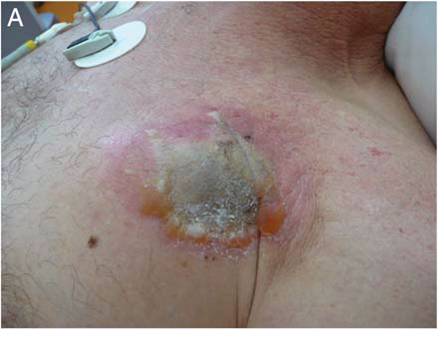
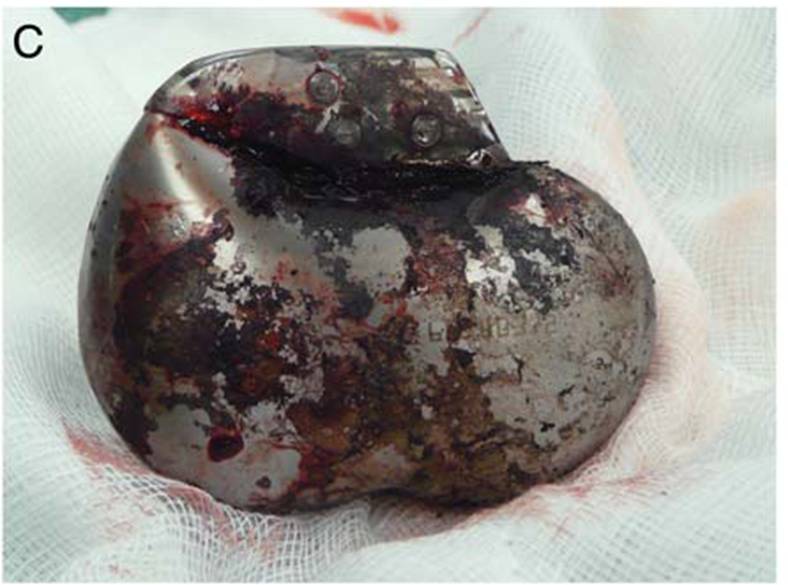
On September 27, 2010, the peer-reviewed scientific journal Europace published online-before-print a case report entitled "Spontaneous explosion of implantable cardioverter-defibrillator" by Martin Hudec and Gabriela Kaliska. In the pdf of that case report a figure containing a color photo of the affected patient's chest, chest xray, and two pictures of the extracted device (one seen here) were included.

The pictures and case presentation were dramatic. The case very rare. Both were perfect reasons to report such an important case to the medical literature.

And so these doctors sent the case to Europace on 29 June 2010 and the article was accepted after revision on 16 Aug 2010 with the article appearing online 27 September 2010.

The authors must have felt very proud to have an article published relatively quickly and the editors and reviewers of Europace must have thought the case was unique enough and important enough to have the article revised according to their specifications, then published online.

Until I reported the case on this blog 5 October 2010 and included images from a portion of the case report's figure.

Remarkably, later that same day, Europace removed the case report from its website without comment. The article simply vanished. I attempted to e-mail the editor of Europace to inquire about the reason for the retraction but received no reply, so I contacted the lead author, Martin Hudec, MD. He kindly responded to me and I included his email response in the comments to my post two days later. In his note he acknowledged "talking to engineers" about his paper:
What I see happening is some kind of media sensation being created without the facts. (ed note: this blog, a media sensation?) This concerns me because my only intention was to share a rare experience that would hopefully help my colleagues to more fully understand the possible complications that can occur, even if rarely, with such complex technology.

So, please allow me to give you the information that you are missing.

The term "explosion" is not accurate. After talking to engineers the more appropriate word would be 'venting' of the battery. The shape of ICD was distorted, but not ruptured in any way.

Furthermore, I have described what I believed was the first such a complication published, there are more reports about battery overheating which I got to my hands but not published in medical journals. These malfunctions are extremely rare and very unfortunate, however any device from any manufacturer could and has had such complications.

This information is important to put the report into the appropriate context.
Astoundingly, on 8 October, just three days after my original post, I met with Biotronik representatives eager to make sure I had their "internal company memo" with the facts regarding this case that I could use with their permission on this blog.

So I did.

To be fair, Dr. Hudec has repeatedly stated that it was his decision alone to withdraw his case report and not Europace's editorial board. Eventually the dust settled, but many questions remained.

Until yesterday.

I learned that the revised case report was published online again on 17 February 2011 in Europace!

Somehow I had missed it.

Now we find the term "exploding" has been replaced with the term "heat dissipation" in the revised case report's title: "Case report of out-of-hospital heat dissipation of an implantable cardioverter-defibrillator."

But also gone is the figure containing the clinically relevant information regarding the patient: the patient's chest, the chest xray, the pictures of the explanted device. In its place: an sterile black-and-white AP and lateral xray of the device performed outside the body. The description of the injury now states:
Chest radiography displayed signs of pneumomediastinum and deformity of the ICD housing. A subsequent ultrasound of the left thorax identified a small pneumothorax. Interrogation of the ICD was not possible and the device was explanted within 5 h of the event. Burned necrotic tissue was observed on the device surface and along the internal aspect of the pectoral pocket. The patient has recovered from the explant procedure without further event."
No mention of the appearance of the skin over the device as seen in the earlier pictures is described. The case report also fail to explain the root cause of the problem, stating:
Extensive analysis of the device suggested that the battery had overheated, possibly due to the presence of a foreign particle causing a short circuit. The resulting pressure forced the battery to vent inside (ed: emphasis mine) the ICD housing.
What? Inside the housing? Seems the housing of the device ruptured and gas escaped OUTSIDE the housing causing significant patient trauma: how else would this patient have gotten a pneumomediastinum and pneumothorax? And what happened to the possible hypothesis for failure of a so-called "lithium reaction" described in the earlier case report?

Finally, in the section of the revised case report entitled "Overview of events with similar characteristics," the authors state that they identified "This and similar isolated cases (without an underlying cause) found in the MAUDE database for the years 2000-2010" and summarized them in a table. The table noted that three of the 10 cases had an "Audible noise ('pop') excluding notifier", three had "Damaged housing, battery, or subassembly", nine of 10 had "Burns or burning sensation" and two resulted in "Death/external rescue required." Not a single detail regarding the manufacturers, models, clinical circumstances of the ten previously-identified cases or specific FDA MAUDE report numbers were provided. Instead, a link to the FDA's MAUDE database search page was included in the references. You'll have to find the cases yourself, I guess.

Finally, in response to the dramatic findings of this case, the authors now conclude:
Implantable cardioverter-defibrillators are produced under strict regulatory and manufacturer quality controls. There are over 250,000 ICDs implanted worldwide each year, documenting a high level of established reliability. Clinicians implanting ICDs should be aware of the possibility that a normal risk of malfunction exists, however is far outweighed by the advantages that are gained from this state of the art therapy.
Ahem. Aren't case reports about a person and not a device? Are doctors unable to advocate for their patients for fear of upsetting the medical device industry? Is the conclusion really that "cardioverter-defibrillators are produced under strict regulatory and manufacturer quality controls?"

Or is the real story here that independent scientific peer-reviewed journals might not be so independent after all.

-Wes

Sunday, December 12, 2010

"This Is The Way It's Done"

Stephen L Snyder, attorney for Dr. Mark Midei, comments on the US Senate's Finance Committee's staff report (4.4 MB pdf file) of stent usage at St. Joseph Medical Center in Towson, Maryland:


-Wes

Tuesday, August 24, 2010

Conflicts Galore

The public has a very clear need for disclosing conflicts of interest in medical journals. Today, the Annals of Internal Medicine published "The Affordable Care Act and the Future of Clinical Medicine: The Opportunities and Challenges" authored by Robert Kocher, MD; Ezekiel J. Emanuel, MD; and Nancy-Ann M. DeParle, JD. The only author affiliations disclosed were that of Dr. Kocher ("Dr. Kocher's service at The White House ended on 9 July 2010. He wrote the paper while he was working for the National Economic Council.").

Should Dr. Emanuel not have noted his relationship as White House advisor for health care policy and his relationship with his brother, White House Chief of Staff Rahm Emanuel? And should Ms. DeParle's disclosed her role as President Obama's so-called health czar with significant ties to private equity firms?

According to the Annals own Conflict of Interest Policy (emphasis mine):
Conflict of interest exists when an author, editor, or peer reviewer has a competing interest that could unduly influence (or be perceived to do so) his or her responsibilities in the publication process. The potential for an author’s conflict of interest exists when he or she (or the author’s institution or employer) has personal or financial relationships that could influence (bias) his or her actions. These relationships vary from those with negligible potential to influence judgment to those with great potential to influence judgment. Not all relationships represent true conflict of interest. Conflict of interest can exist whether or not an individual believes that the relationship affects his or her scientific judgment.

Authors, editors, and peer reviewers must state explicitly whether potential conflicts do or do not exist. Academic, financial, institutional, and personal relationships (such as employment, consultancies, close colleague or family ties, honoraria for advice or public speaking, service on advisory boards or medical education companies, stock ownership or options, paid expert testimony, grants or patents received or pending, and royalties) are potential conflicts of interest that could undermine the credibility of the journal, the authors, and science itself.
Perhaps such disclosures only for the little people in health care who try to publish their work.

But we should ignore this editorial blunder, right? After all, the "Affordable" Care Act is our next great health care challenge ahead!

But the veiled threat in the opening paragraph of this work might not be the best way forward:
To realize the full benefits of the Affordable Care Act, physicians will need to embrace rather than resist change. The economic forces put in motion by the Act are likely to lead to vertical organization of providers and accelerate physician employment by hospitals and aggregation into larger physician groups. The most successful physicians will be those who most effectively collaborate with other providers to improve outcomes, care productivity, and patient experience.
But one only has to read Sermo's message board (registration required) to get of flavor of what many doctors think about the law and this article in particular:
They ignored us the whole time they were putting this monstrosity together and ramming it through the legislative process. They got sham-"providers" in white coats for photo-ops so they could pretend we were on board. They got the AMA to play ball, knowing that the public perception would be that we were on board. In short, they were soooooo sure they didn't need us.

And now they're in a predicament with their white elephant, and begging us for some support after the deed's been done.
The reality on the ground is that the law has passed and change is coming. The reality on the ground is physicians continue to see significant cuts to their profits. The reality on the ground is the physician pay fix remains unresolved and will be expensive. And the reality on the ground is doctors provide the care and the administration needs doctors to facilitate the implementation of the many health care changes that lie ahead.

Edicts are not away to lead health care reform. Unless and until doctors feel there is meaningful collaboration between the bureaucratic powers responsible for the Affordable Care Act that shares mutually agreeable goals, there will continue to be even bigger conflicts with doctors that will make moving this legislation forward challenging.

-Wes

Ref: The Reuter's news release.

Friday, March 26, 2010

Why Do Medicine When You Can 'Advise' for $3000 a Day?

It's very generous of Sanolfi-Aventis's marketing department to make this offer (pdf) for me to serve as an "advisor" for dronedarone today, but seriously, I was a bit skeptical that they wanted my "feedback on the reasons for and against utlilization of Multaq® in the appropriate patient as well as to understand communication and educational needs with regard to Multaq® and the atrial fibrillation state in general."

Where were they when the drug launched? Might it be because it's this drug has not been quite the blockbuster they'd hoped for?

But of course I'd never be swayed to use more of this drug by this important consulting work.

No, really.

-Wes

P.S.: To Sanolfi-Aventis marketers: Please update your prescriber database with my correct workplace.

Saturday, March 13, 2010

Blogging the ACC: A Note from the Unwashed

Forgive me Lord, for I have sinned...

I was a speaker for Medtronic a while back, I'm not sure when. I was paid a fee to do this, but I can't recall exactly how much. (No doubt Senator Grassley knows by now.) I'm not even sure if my contract with Medtronic is still in effect, but I disclosed that former relationship to the American College of Cardiology before their upcoming meeting since I am blogging the conference this year.

And I was shunned.

Oh sure, they paid my registration fee - that was the original agreement (my "pay" if you will) - but because of my unwashed status as a former speaker for a company, there will be no coffee and donuts, no access to cell phone rechargers, no sit-down laptop computer space, and no early access to press releases and interviews with investigators.

*Sigh*

It seems no press pass can be issued to people with my unwashed status. Also, I cannot blog about anything having to do with Medtronic.

So there you have it. I've come clean. Full transparency. Out in the open. (FTC, you listening?)

But I'm not worried.

In a way, it's liberating to be excluded from the press room and the pre-market pre-announcement hype. Instead, I will be on the outside watching the proceedings from where I should be watching them from anyway: from the clinical doctor's perspective.

And that, as they say, will either be my downfall or my redemption.

Amen.

-Wes

Saturday, April 25, 2009

Mr. Rogers Does Health Care Reform


It's a beautiful day in this neighborhood
A beautiful day for a neighbor
Would you be mine?
Could you be mine?
Good morning boys and girls. It's so nice to see you again. Yesterday, I enjoyed our show where we learned about a new term called "conflicts of interest" that doctors always seem to have with companies that fund their research. Can you say "conflicts of interest?" Why, that's a very big-boy-and-girl thing to say, isn't it?


(He hangs his coat in a closet, puts on a cardigan zipper sweater, and removes his dress shoes to put on sneakers, all the while smiling)

Well, on today's show, we're going to meet our friends who are helping us with health care reform. (stops, pauses) Can you say "Health Care Reform?" Sure. Health - Care - Reform. So let's head over to the Neighborhood of Make-Believe today and see what's happening. Mr. Conductor, can you take us there?

(Camera zooms to a small red electric trolley and follows it through a tunnel... *Ding ding* *ding ding*) The scene magically transforms to world like none other, where birds are chirping and the sun always shines: the Neighborhood of Make-Believe.)

Look who's here! Why it's Mr. McFeely! My, you looks like you've been busy! What are all those letters you're delivering there?

Hi, Mr. Rogers! Why, there's a big meeting going on now to help make health care here in the Neighborhood of Make-Believe.

Gosh, Mr. McFeely. That bag looks so heavy. Why so many letters? Can I help carry it? Are there so many letters because they need more money?


Oh, no, Mr. Rogers! Everyone knows pay-to-play only happens in Illinois. That would never happen here in the Neighborhood of Make-Believe. We just want to get everyone's input so we can involve all the stakeholders in the health care reform debate. That way, we know we'll find the right solution and no one will complain about the new plan. Isn't it exciting! But the organizers have to act fast. Grandpere is sick and they want to make sure they get a solution hammered out right away so he'll be able to get coverage if he needs it.


Goodness, Mr. McFeely! I understand. That sounds very important. I was wondering if you could help me. I'm looking for conflict of interests here in the Neighborhood of Make-Believe.


Sure! Maybe King Friday XIII would know where to find them. Perhaps I could take you to his castle?


Gee, Mr. McFeely, that would be swell!


(camera cuts to a castle where King Friday XIII is meeting with Queen Sara Saturday, Prince Tuesday, Lady Elaine Fairchild, and Daniel Striped Tiger are speaking in hushed tones. King Friday XIII sees them approach.)

Mr. Rogers, I presume?


Correct as always, Your Majesty, King Friday.


What brings you to the Neighborhood of Make-Believe? Can't you see we're very busy?


I'm sorry King, but I'm looking for conflicts of interest.


Here in the Neighborhood of Make-Believe we make sure we are all as pure as the driven snow. After all, we are concerned about the needs of everyone in our neighborhood. That's why we're meeting with everyone in town hall meetings and at Health Care Summits. People need health care and they need it now!


Yes, good King. I know Dr. Frogg would want to be a health care helper, too. Is he here?


Dr. Frogg and Nurse Nelly have been too busy to come, poor guys. Something about "pay-for-performance" and needing to buy a computer for something called "e-prescribing." Anyway, we'll be sure to let Dr. Frogg know what we decide.


So King Friday, you've not seen any conflicts of interest?


No, not here in my kingdom!


And Queen Sara Saturday, have you seen any conflicts of interest?


I don't think so, Mr. Rogers. But I really haven't been looking. After all, we've got other very important tasks in front of us. Like deploying electronic medical records and making sure everyone has access to pharmacies!


Prince Tuesday, have you seen any conflicts of interest here in the Neighborhood of Make-Believe?


No sireeee.


And Daniel Striped Tiger, you have seen any either have you?


Nope. I wouldn't know what one was, Mr. Rogers.


(Turning to Mr. McFeely)

Gosh, Mr. McFeely, what a busy day! Let's go back now. It seems the only conflicts I have found have been with the doctors working with the drug and medical device companies. So, I guess our search is finished. Thanks everyone!


It's such a good feeling to know you're alive.
It's such a happy feeling
You're growing inside.
And when you wake up ready to say
I think I'll make a snappy new day
It's such a good feeling....
-Wes

Wednesday, April 02, 2008

Looking in the Mirror

The left-leaning National Physicians Alliance blog has decided to take on the American College of Cardiology.

Now as a Fellow in the American College of Cardiology, I don't agree with these guys on many things, but I think regarding the above post, they are right on the money as they describe the complicated interplay between the pharmaceutical and medical device industries and those of physicians' need for continuing education.

It was interesting to note that the ACC heavily promoted their "Quality First" initiative at this year's meeting and solicited input from physicians to garner "our feedback" in a survey distributed to the doctor-attendees. I found the survey hidden amongst the multitude of pharmaceutical swag and program outlines residing inside my handy-dandy co-branded Lipitor-ACC.08 shoulder bag. (I regret that I did not get the 1 GB USB drive they promised to the first 500 survey participants as I never saw this survey until I arrived home).

But their list of "key features" embodying the ACC's Quality First Campaign were presented unilaterally, without physician discussion. On the surface, they seem so necessary. What right-minded doctor would not want these things?

Here's what we were asked to rank (from "not important" to "very important") and my initial thoughts as I read these features in italics:
  • "Provide universal access through an expansion of public/private financing" (What? Does this mean "support universal health care?" - a buzz-word of the Dems? Does expanding public/private financing mean promote Health Savings Accounts - a buzz-word of the Repubicans? Hellllloooo, people! What the hay are we talkin' 'bout here?)
  • "Increase patient value through the delivery of evidence-based, high quality care" (Excuse me, isn't that what we're already doing? Are you asking for another 74 "quality measurements" to keep track of (like shorter door-to-balloon times) with even more bureaucracy and documentation so we can pat ourselves on the back and be on the "100-best hospital list" one more time?
  • Manage care by disease state and across sources and sites of care (Huh? I never liked "managed care." Is this what you mean? Or are we promoting the EMR here?)
  • Implement a payment system that rewards quality, value, and coordinated care management (Oh, my God! Pay for Performance! eeeeeeekkkkk! Please, lets call this covert rationing scheme what it is: "Less Pay for Performance," okay?)
  • Involve patients as partners in their own care Uh, excuse me, who has more of a vested interest in their care than the patient with the health problem? What the heck is this supposed to mean?
So what is the ACC's policy direction with these questions? Are they really interested in physician's input and a two-way discussion? Or are such surveys really manipulations of doctors for political intent? How, exactly, will this survey data be used? I can hear it now as our ACC leaders stand before congressional subcommittees and extol: "According to our carefully-conducted (and coerced survey through the use of a 1GB USB storage drive), 65% of surveyed physicians want pay for performance initiatives."

Finally, is our "quality" in cardiology so bad? Haven't we seen a dramatic decline in the incidence of cardiovascular morbidity and mortality over recent years?

Increasingly, large meetings struggle to balance marketing, policy, and educational missions in the backdrop of the medical industry's Big Money. But given the covert and conflicted issues at play, disclosure of these conflicts might no longer be enough: disentanglement of interests might be the better norm.

Maybe first re-evaluating our real priorites regarding the objectives of these meetings should be the "key feature" of the ACC's next Quality First Initiative.

After all, others already have taken the lead and I like the other guys' meeting space better.

-Wes

Tuesday, November 27, 2007

The Collusion between Media and Hosptials

Today, the US News and World Report's Best Hospital issue list appears. Oh, boy! It makes for some great reading. Zzzzzzzzzz.

But what's funny is that the Big Boy winners are now in bed with US News and World Report - providing content for their issue about all kinds of diseases that they (alone, I'm sure) have mastered.

For instance, look at this page from their website. It lists tons of diseases. Now, click on one of the topics. And look at the top of the page, just to the right of the topic you picked. Who supplied the content "with" US News and World Report? Was it Cleveland Clinic? or Johns Hopkins? or Mayo?

Does anyone else find this conflict disturbing?

-Wes

Friday, November 02, 2007

Holy Cow!

Pharmalot shows how much money some orthopedists got from the medical device industry:
Zimmer notched 21 payments greater than $1 million and DePuy made the biggest - more than $6.7 million to $6.75 million to Thomas Thornhill, who chairs the department of orthopedic surgery at Brigham and Women’s hospital in Boston.
It's more than I ever imagined.

He adds links to the companies' disclosures as well.

-Wes

Thursday, August 16, 2007

Warfarin's Labeling Fiasco

As practicing cardiac electrophysiologist, I have great respect for the blood thinning medication, warfarin (Coumadin®). You see, a good portion of my patients with atrial fibrillation take this drug to reduce their risk of stroke.

Warfarin has a complicated pharmacology: the dose you take today isn’t likely to affect you blood thinning level for about three days; and it has a complicated, yet very specific effect, blocking the production of Vitamin K in one’s liver. It blocks Vitamin K by “competitive inhibition:”
Warfarin inhibits epoxide reductase (specifically the VKORC1 subunit), thereby diminishing available vitamin K and vitamin K hydroquinone in the tissues, which inhibits the carboxylation activity of the glutamyl carboxylase. When this occurs, the coagulation factors are no longer carboxylated at certain glutamic acid residues, and are incapable of binding to the endothelial surface of blood vessels, and are thus biologically inactive. As the body stores of previously-produced active factors degrade (over several days) and are replaced by inactive factors, the anticoagulation effect becomes apparent. The coagulation factors are produced, but have decreased functionality due to undercarboxylation; they are collectively referred to as PIVKAs (proteins induced [by] vitamin K absence/antagonism). Hence, the effect of warfarin is to diminish blood clotting in the patient.
But Vitamin K is not just made in the liver. Vitamin K is also made by bacteria that reside in the gut.

This is why blood thinning levels sky-rocket when people take antibiotics – not because they necessarily affect the production of Vitamin K in the liver, but rather that the antibiotic kills the gut bacteria that provide an important amount of Vitamin K to the blood stream. Genetic testing tests humans, not the bacteria that reside in human’s gut. And the number of other confounding drug interactions reads like a Who’s Who of pharmacology.

So it is interesting that today’s Wall Street Journal discusses that the FDA is going to add a labeling change to warfarin that says that the initial lower warfarin dose “should be considered for patients with certain genetic variations.”

Never mind that the testing is not covered by all insurers.

Never mind that this testing adds significant costs.

Never mind that the testing takes about 10 days to return, is performed at only one lab in North Carolina, and returns only AFTER the initial dosing is performed in the first place.

Never mind that there have been no prospective, multi-center, randomized real-world clinical trials demonstrating that the application of these tests effects outcomes or reduces the incidence of bleeding in patients – especially patients carefully monitored in specialized “coumadin clinics.”

Never mind that it exposes doctors to significant claims of negligence if the tests are not used.

Never mind the conflict of interest that exists within the FDA’s fee-for-review structure that makes this labeling change sound like a boon for the genetic testing companies and a kick-back to the FDA.

And what if a patient refuses warfarin because they were found to be positive for a genetic defect, citing their risk of bleeding might be too high without really knowing the risks?

Will the FDA want to talk to my patient after their stroke?

-Wes

18:24 - Addendum: Links fixed.
19:30 - The FDA's News Release and the Package Insert (pdf) - Genetic recommendations are on page 25.

Monday, November 27, 2006

Plaquequest

Today the hunt for the vulnerable plaque will begin in earnest. It's not a new adventure, but one I like to think of a "Plaquequest."

"Vulnerable plaque" is the plaque within an artery that can suddenly "rupture" and stimulate the rapid formation of clot within a coronary artery, compromising blood flow to a portion of heart muscle, and leading to a heart attack. Cardiologists have long recognized that tightly narrowed arteries are not necessarily the ones that suddenly occlude during a heart attack; sometimes only modestly narrowed arteries become abruptly occluded. This has lead to a search for ways to identify which plaques are vulnerable to rupture before rupture occurs, potentially saving lives and heart muscle.

A consortium of researchers are assembling to attempt to identify vulnerable plaque. To the tune of $30 million. It is a huge undertaking, but the pot of gold at the end of the rainbow is just too tempting for industry to ignore. It is not surprizing that Merck and Astra Zeneca, two large pharmaceutical companies have joined the hunt. But BG Medical? Who are they? Described as a new "start-up company" in the New York Times, it's really a consortium of pharmaceutical and imaging industry interests including Astra Zeneca, Boehringer Ingelheim, Biorosettex, GlaxoSmithKline, Philips, Mitsubishi Pharma Corporation, the "Global Alliance for TB Drug Development" (what has tuberculosis got to do with this? I wonder if their membership is happy about this investment, but I digress) and...

..the FDA.

Really? The Food and Drug Administration is now a "Partner" with BG Medical? Maybe so. At least they're listed on BG Medical's "Innovative Paths to a Trusted Partner" page on their website. Certainly, there have been concerns regarding conflicts of interest with the FDA's "Special Government Employees" that advise the FDA having conflicts of interests with the pharmaceutical industry and what needs to be disclosed to the public. But to this doctor, the FDA itself has a responsibility to the public at large to maintain objectivity in its oversight of new drugs during the approval process. Certainly this partnership of the FDA itself with BG Medical violates the public's trust.

Oh, but we needn't stop here.

Look who else is "partnering" in Plaquequest: Humana, a manager of health care insurance plans.
The centerpiece of the research will be a study of 4,000 to 6,000 Humana patients with at least two known risk factors for heart attacks. As the outcome for the patients becomes clear over the next few years, researchers hope the profiles that emerge from the study will, in hindsight, show patterns pointing directly to the high-risk patients who actually suffered heart attacks. That in turn could help the companies create new therapeutic products.
I'm not sure of their motivation here, but I wonder how much revenue and "best practices data" they receive for supplying the patients for this trial. Hmmm. It seems only Humana patients will be participating in this "research." Why?

Plaquequest is a noble goal indeed. Going after arteries already blocked is a $6 billion stent market. $20 billion more are spent for statin drugs for primary and secondary prevention of coronary disease presently. It seems clear that the drug and device industry wants to know if they can boldly grow this market so cardiologists can place stents in asymptomatic arteries cloaked under the "vulnerability" guise. Interesting, but will this work?

Lets say this research succeeds at Plaquequest. How do we apply this finding to John Q. Public? Do we then place a stent there knowing it could thrombose as a result of the stent being there? Or should we place everyone on a statin drug as we've already been recommended for anyone with significant hyperlipidemia. Doctors haven't historically been so good at even this simple recommendation. And imaging to screen for vulnerable plaque is expensive: who is going to pay for massive screening tests? (Take a guess) So what have we gained?

It's hard to know. Maybe some new drugs or insights to the mechanism of acute coronary syndromes will be discovered, leading to new research paths for these great companies. But I hope Plaquequest is more than a means for Humana to get more best practice and cost analysis data while doctors get to feel good that the pharmaceutical and medical imaging industry has "given back" to research centers, and maybe the FDA.

-Wes