They say a picture is worth that thousand words, but nowhere is this more true than with a new, free, iPhone app called Shadow Puppet that lets you turn selected photographs on your iPhone into a narrated video storyline.
I saw this app reviewed over at Techcrunch and immediately saw its potential as a teaching aid. The app allows you to pick a series of iPhone photos from your camera roll, order them, and then record a narrative about your pictures. What is unique is that you can zoom or move between photos as you tell your story, annotating them by touching areas on the photo that you are discussing as it records the video. (Very cool).
Here's my very first video I made with the app describing the new Zio XT patch monitor that records 14-days of a patient's heart rhythm that we've been using in our clinic. Simply made, these video clips are easily shared via email, Facebook or Twitter. For this particular video, I still had to edit portions of the patient's report on Photoshop, then sent the images to my iPhone but, still, that was easily done.
Want to teach a fellow how to implant a pacemaker? Take some photos and show them! Have an EKG that has a finding that you're not sure about? Snap a picture (without patient identifying information, of course) , annotate it with your question and send it to your EP! Simple, elegant, and who knows, maybe even life-saving.
-Wes
Showing posts with label event recorder. Show all posts
Showing posts with label event recorder. Show all posts
Saturday, September 21, 2013


Sunday, October 02, 2011
The Vagaries of Atrial Fibrillation
I am always amazed at the different ways atrial fibrillation can present: sometimes with rapid heart rates, other times slow; sometimes it's continuous, other times intermittent; sometimes it occurs without symptoms, other times it occurs with major symptoms like palpitations, stroke, or a peripheral embolus.
Atrial fibrillation is a strange, troubling, and often difficult disease to manage.
And so, when a patient with known persistent atrial fibrillation with rapid ventricular rates presents with a funny sense of lightheadedness with exercise once a week or so, you tend to think you know what you're going to find: periods of super-fast heart rate associated with lightheadedness.
At least until you check the patient's heart rhythm with a recording device. Now I'm beginning to think anything's possible.
Here's why.
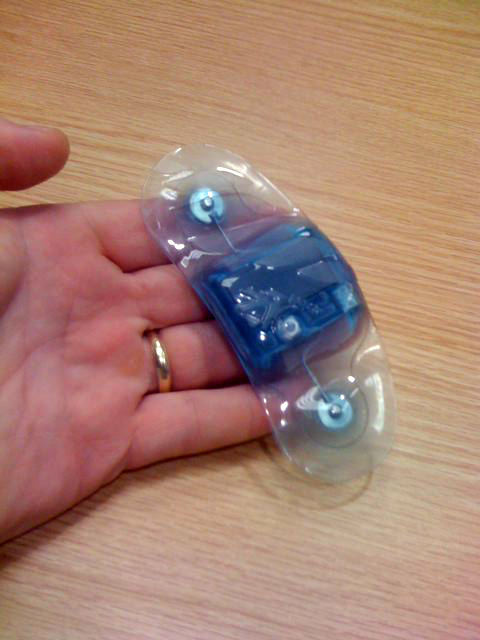
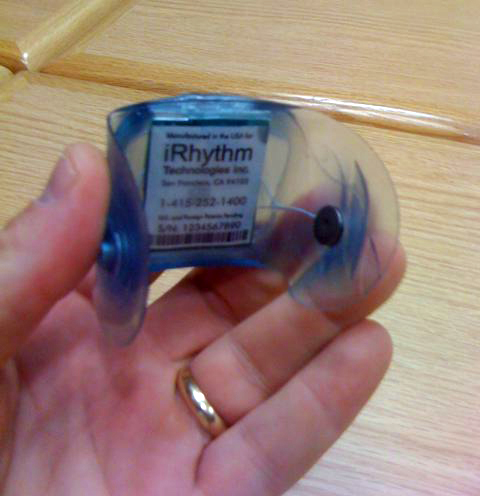
Increasingly, I have been reaching for a newer form of heart monitor that combines continuous monitoring with patient feedback but lasts much longer than our older 24-hour Holter monitors. It is compact, has no dangling wires, and gives a continous single-lead EKG tracing for up to 14 days. It has a button that the patient can press to identify periods when symptoms are occuring. Best of all, it's just a little flexible plastic patch that is applied to the surface of the skin. In that patch is a processor that records the surface EKG (even while in the shower) for the full 14 days. (Exercise has to be avoided to avoid sweat from dislodging the adhesive). After that time, the patient drops the device in the mail (provided the post office stays open!) and sends the device to a processing center where the stored 14-day EKG is processed and pre-categorized by heart rate range, rhythm, tachycardias, pauses, PAC's, PVC's and for the reviewing physician to overread. The data are then plotted and made available for clinical review on the company's website. Here's a few pictures of one of the earlier prototypes of this device (iRhythm - now a St. Jude Medical company) that I took:
So why is this important?
In my view, it's because of what I'm finding the patient doesn't perceive while wearing an event recorder. A more conventional event recorder is different than this patch-monitor because it relies on the patient to push the button when they experience symptoms and then stores the heart rhythm from a a minute or two before and after the button was pressed so it can be uploaded to a monitoring station for interpretation. As a result, asymptomatic arrhythmias can be missed. Historically, since patient symptoms were what we cared about we naively assumed this should be the best way to identify the patient's problem.
That was the "old days."
Here's a few representative tracings from the earlier patient when this person pressed the patch's button (denoted by the red circle) at the time of the patient's "symptoms:"
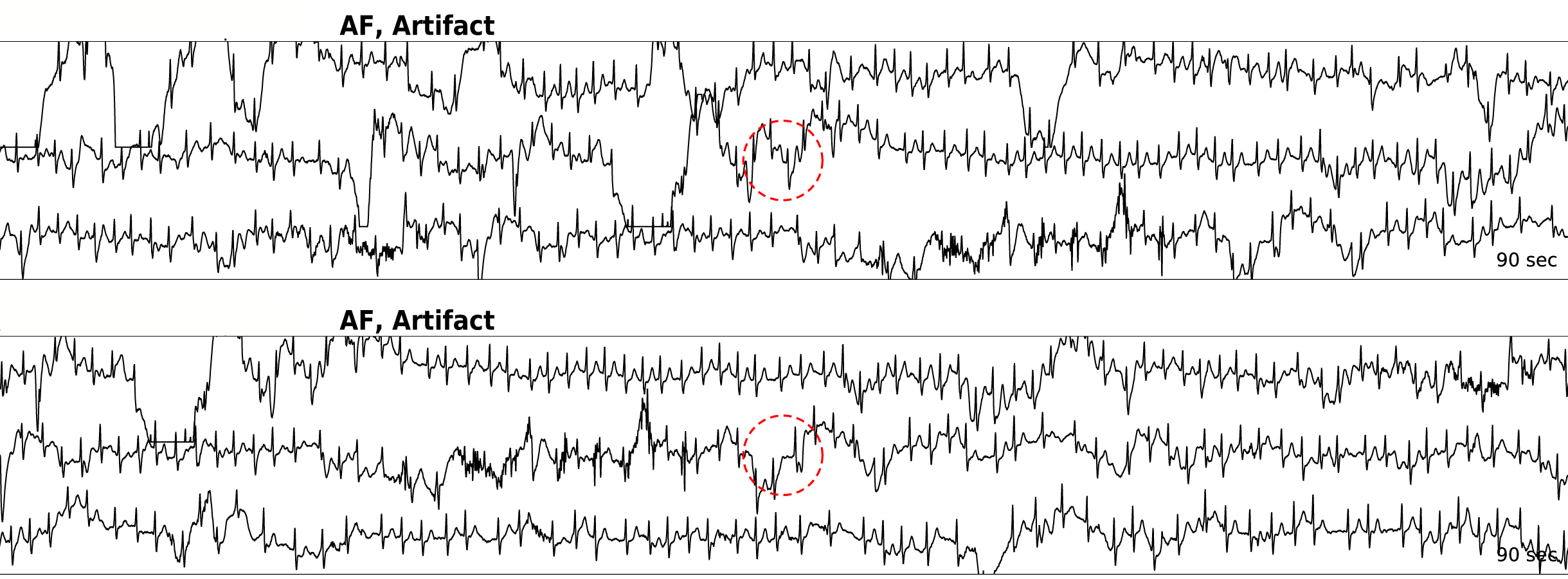
As expected: nothing but atrial fibrillation with fairly rapid ventricular response. Certainly there's no real emergent concern with these findings.
But then came the spouses' addition to the patient's history as I called them with the patient's patch-monitor results:
Needless to say, over nine seconds of asystole is probably the reason the patient failed to respond to their spouse and is the most likely cause of the patient's rarely perceived periods of lightheadedness. Ten other pauses over three seconds had transpired at many times of the day amongst the 14-day recording, yet none were perceived by the patient.
Unusual?
Certainly.
But now I know it's not too unsual for the vagaries of atrial fibrillation.
-Wes
(Disclaimer: I have no commercial interest in the ZioPatch, iRhythm, or St. Jude Medical)
Atrial fibrillation is a strange, troubling, and often difficult disease to manage.
And so, when a patient with known persistent atrial fibrillation with rapid ventricular rates presents with a funny sense of lightheadedness with exercise once a week or so, you tend to think you know what you're going to find: periods of super-fast heart rate associated with lightheadedness.
At least until you check the patient's heart rhythm with a recording device. Now I'm beginning to think anything's possible.
Here's why.
Increasingly, I have been reaching for a newer form of heart monitor that combines continuous monitoring with patient feedback but lasts much longer than our older 24-hour Holter monitors. It is compact, has no dangling wires, and gives a continous single-lead EKG tracing for up to 14 days. It has a button that the patient can press to identify periods when symptoms are occuring. Best of all, it's just a little flexible plastic patch that is applied to the surface of the skin. In that patch is a processor that records the surface EKG (even while in the shower) for the full 14 days. (Exercise has to be avoided to avoid sweat from dislodging the adhesive). After that time, the patient drops the device in the mail (provided the post office stays open!) and sends the device to a processing center where the stored 14-day EKG is processed and pre-categorized by heart rate range, rhythm, tachycardias, pauses, PAC's, PVC's and for the reviewing physician to overread. The data are then plotted and made available for clinical review on the company's website. Here's a few pictures of one of the earlier prototypes of this device (iRhythm - now a St. Jude Medical company) that I took:
So why is this important?
In my view, it's because of what I'm finding the patient doesn't perceive while wearing an event recorder. A more conventional event recorder is different than this patch-monitor because it relies on the patient to push the button when they experience symptoms and then stores the heart rhythm from a a minute or two before and after the button was pressed so it can be uploaded to a monitoring station for interpretation. As a result, asymptomatic arrhythmias can be missed. Historically, since patient symptoms were what we cared about we naively assumed this should be the best way to identify the patient's problem.
That was the "old days."
Here's a few representative tracings from the earlier patient when this person pressed the patch's button (denoted by the red circle) at the time of the patient's "symptoms:"
(Click image to enlarge)
As expected: nothing but atrial fibrillation with fairly rapid ventricular response. Certainly there's no real emergent concern with these findings.
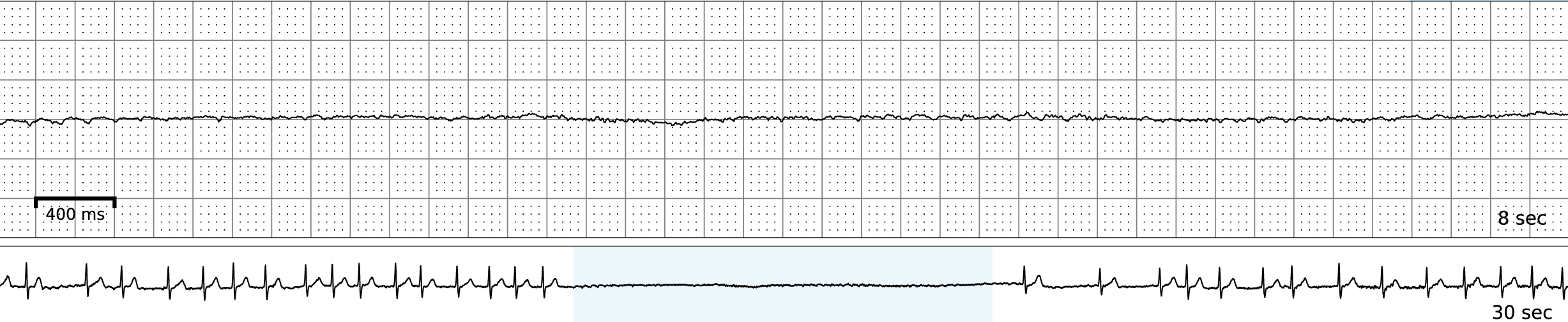
But then came the spouses' addition to the patient's history as I called them with the patient's patch-monitor results:
"You know what's been strange? Sometimes at dinner he/she just looks down at the plate for a second and doesn't respond, then asks 'What are you yelling at me for?'"Here's what the full-disclosure patch-monitor recording from Day 8 from meal time:
(Click image to enlarge)
Needless to say, over nine seconds of asystole is probably the reason the patient failed to respond to their spouse and is the most likely cause of the patient's rarely perceived periods of lightheadedness. Ten other pauses over three seconds had transpired at many times of the day amongst the 14-day recording, yet none were perceived by the patient.
Unusual?
Certainly.
But now I know it's not too unsual for the vagaries of atrial fibrillation.
-Wes
(Disclaimer: I have no commercial interest in the ZioPatch, iRhythm, or St. Jude Medical)
Thursday, April 22, 2010
Bad Looks, Good Concept: A Bluetooth Heart Rate Monitor for the iPhone
Someone has to talk to this company about ergonomic engineering:
-Wes
What looks like a bulky female hygiene product is actually a health monitor that hooks up to an iPhone via Bluetooth, sending bodily information such as heart rates to the compatible app.To their engineers: Any color but white or light blue, okay?
It's not on sale yet, with Proteus' Raisin sensor only just being passed through the FDA, but it's another step for the iPhone into the operating room, after Apple showed off the Lifescan app by Johnson & Johnson at last year's WWDC, which works alongside a wireless glucose meter. Diabetes can analyze the glucose levels in their blood, with the information being sent to the iPhone app over Bluetooth.
-Wes
Wednesday, April 22, 2009
iElectrophysiology on the iPhone
iThink iT's iNevitable that iElectrophysiology Apps will iNvade the iPhone:
-Wes
Some companies, such as Toumaz.com, are building tiny sensors priced at $10-20 that you can use to track your vitals such as heart rate, and which could be easily connected to a smartphone. A stealthy company called Adigy is working on something similar, but they’ve yet to build a mobile app. Cardionet, of San Diego, is one of the bigger players doing heart rate and rhythm wireless monitoring and says it is building a mobile application. Triage Wireless, backed by Qualcomm Ventures, is one of many that monitors blood sugar levels and other vital signs wirelessly in hospitals and homes, but it hasn’t released a mobile phone version.Up next: pacemaker and defibrillator interrogations.
-Wes
Saturday, March 28, 2009
Cell Phones for Cardiac Telemetry
From their press release, AT&T could give a whole new meaning to "dead zones:"
-Wes
"Mednet, a leading provider of cardiac monitoring products and surveillance services, is helping doctors and patients remotely monitor heart arrhythmia through personal mobile devices. Under a new contract with AT&T, Mednet's HEARTRAK External Cardiac Ambulatory Telemetry (ECAT) solution will facilitate wireless monitoring of patient devices via Bluetooth-enabled cell phones across AT&T's expansive 3G and EDGE wireless data footprint, which covers more than 13,000 cities and towns and 40,000 miles of highway across the country.Heh.
Until now, patients using Mednet heart monitors utilized a toll-free number and had to place their monitoring device near a landline phone receiver to send a signal to a central monitoring center."
-Wes
Tuesday, April 17, 2007
When the Heart Skips, Flips, Flops or Flies
I got my girl, who could ask for anything more?
I've got rhythm, I've got rhythm ...
- George Gershwin
So your heart does not have perfect rhythm? You're not alone. It seems I’ve been seeing lots of folks recently with the unpleasant sensations of a racing, irregular or forceful beating of the heart in their chest, commonly called palpitations.
 The diagnosis of palpitations can be perplexing if they occur very infrequently. It seems many doctors I work with almost always initially order a HOLTER MONITOR to evaluate an irregular or rapid heart rhythm. A Holter monitor records every heartbeat over (usually) a 24-hour period. The newer Holter monitors record the electrocardiogram signal digitally and are less prone to artifact caused by variations in tape speed seen with older monitors that recorded the electrocardiogram signals to recording tape. Patients are asked to record the time of any symptoms they experience on a diary to include with the recording. Unfortunately, if you do not have symptoms the day the Holter is connected, a diagnosis for your symptoms is unlikely to be identified.
 More often, I have found that an EVENT RECORDER (this example: Del Mar Reynolds Medical) is more reliable at capturing the cause of intermittent palpitations. This device is about the size of a pager and continuously records your electrocardiogram from two small electrodes attached to your chest in a continuous loop-like fashion. Your heart rhythm activity is recorded in a memory buffer that continuously refreshes new heart rhythm information over old information, thereby always haveing the last minute of heart rhythm in its memory. When a symptom strikes, you can push a button on the top of the device to lock the preceding minute of the heart rhythm in the memory of the device while it records an additional minute of the electrocardiogram. Later, at a time that is convenient, the signal can be transmitted via any phone line to a reading site. The nice thing about event recorders is they ae usually issued for a month at a time, making them especially useful for intermittent rhythms. Some newer companies have event recorders that are even disposable, eliminating the administrative overhead of retrieving the devices and reducing the number of trips the patient needs to make to the office.
 HEART CARDS (First Call Medical), a small credit-card sized device with four electrodes on the back of it, are not my favorite recording device. While its advantages are that it is small, it only records what the heart is doing at the time the device is held to the skin over the chest. Women are not likely to use this device for obvious reasons. While patients complain to be that this can be embarrassing to use in a public space since the device emits a tone as it records, their problems are offset, to some extent, by their simplicity.
 If these devices are ineffective and the diagnosis remains elusive, a rarely used device can often succeed where other devices fail: an IMPLANTABLE LOOP RECORDER (Medtronic, Inc.). This device is surgically implanted beneath the skin in a minor same-day surgical procedure under local anesthesia. Like the event recorder, it continuously records the electrocardiogram from two small electrodes on the device. If the patient feels a rhythm, they can place a small “actuator” over the device and lock the rhythm occurring before and after the symptom within the device’s computer memory. Perhaps the best feature of this device is that it can be set to “auto-trigger” for heart rhythms above or below a set cut-off value, making the need for a patient to have to capture the rhythm unnecessary. This is particularly useful for older patients. One drawback to this device is that monthly visits to your doctor should be performed to check the memory of the device to see if there is was a rhythm stored within its memory that was not perceived. Since the device only holds the last 5 episodes in its memory, heart rhythm abnormalities not perceived by the patient might be missed otherwise. Battery life of the device typically lasts 14 months and most people opt to have the device surgically removed after that time.
So next time you feel your heart doesn't have rhythm, you can always "ask for anything more."
Like one of the devices above.
-Wes
Subscribe to:
Posts (Atom)