Wednesday, April 13, 2011

Numbers

Numbers. Lots and lots of numbers.

Increasingly, we are seeing the way numbers are used to direct patient care:
  • Need a defibrillator? Check their ejection fraction.
  • Have diabetes? What's their glucose level?
  • Need a cholesterol-lowering medication? What's their LDL?
  • Are you a good doctor? What's your patient satisfaction score?
  • Are you using the computer in a meaningful way? Please, count the numbers.
Even some insurers have recently begun promoting "health in numbers" on big, splashy, television advertisements and on their self-promotional websites.
As if everything in medicine is linear, predictable, mathematical.

I recently saw a patient urgently because his ejection fraction number had declined and the patient who had a pacemaker implanted about 2 years ago felt fatigued. Sure enough, his number had declined from 0.56 on an echocardiogram to 0.40 on a nuclear scan. The referring doctor was concerned and thought he might benefit from upgrading his pacemaker to a more sophisticated biventricular pacemaker. Certainly, this might be a very appropriate referral. But the patient had a little caveat mentioned on the nuclear scan next to the 0.40 number and it said this: "This value might be an underestimation." Why? Because the patient was not in sinus rhythm at the time the study was performed. In fact, he's never been in sinus rhythm for years.

But the comment was not a number. Therefore, it never registered on a computer that tracks these numbers, nor entered the referring doctor's mind. Comments are like that - poorly quantifiable but remarkably important - numbers are not. Numbers are linear, predictable, unflinching, and some might say, wholey accurate.

Except when they're not.

All of us have seen numbers following blood tests that are "lab-omas" - lab values that make no sense when viewed with other numbers next to them and when related to clinical circumstances. Those labs are repeated and, more often than not, return very different than before. Or consider the automatic blood pressure cuffs and telemetry monitor that often give faulty "numbers."

So what gives? Shouldn't numbers be infallible and uniformly reliable?

Of course not.

Numbers are one piece of the grand puzzle called medicine. Numbers certainly can help us, spotting trends and quantifying, but they almost never conclude. For instance, a very high white count might be so for very different reasons: like pneumonia, leukemia, or steroids. Each of these medical problems demands a very different clinical approach irrespective of what might be the same elevated number.

But the message is everywhere. At home. In the hospitals. On Capitol Hill. Numbers are king. We're all about numbers. Especially in advertisements to doctors and patients via TV ads, drug reps, and hospital administrators. Numbers for cholesterol, one's prostate, ejection fraction, HbA1C, quality scores, numbers of procedures, duration of erections, and now, insurance 78,000 employees managing 70 million people. Numbers, you see, will help us save billions of other numbers, we are told.

Too bad no one talks about the numbers spent on the collection of all of these numbers that are used to justify the other numbers in health care.

That, you see, would be a VERY big number.

-Wes

Sunday, April 10, 2011

Just Fine

It was 11:00 pm when the pager vibrated, then beeped: it was the ER, Hospital #3.

"This is Dr. Fisher returning your page?"

"Thank you Dr. Fisher, just a moment for Dr. Frigamafratz."

A brief pause, then:

"Wes, I think we'll need your services. Old guy, found down at the nursing home, brought in unconscious, pulse 25 - hooked him up to an external pacer, he's back with us now."

"I'm on my way."

When I arrived, there was the usual cacophony of activity in the Emergency Room. Someone screaming in one corner. Intercom sounding. Ambulance en route to our location. Breathing treatments underway in Bay 5. Room 10 headed to the CT scanner. Has room 12 got a bed? By comparison my patient was easy: his disposition in the eyes of the ER staff had been made: he was on the Express Track to the EP lab.

There he was, chest twitching. Big forceful jerking. He was a big guy, uttering something with purpose but impossible to understand. Next to him, his wife, just arriving and removing her coat. "Is he going to be okay?"

My head scrambled for an answer. "He's okay for now," I think I replied.

I went about the business of trying to understand the situation, history, physical exam - at least as much as can be done with one constantly being externally paced and unable to articulate his situation - labs (have they even drawn them?), EKG, chest xray. What do we know about this gentleman? Answers were tough to come by, but slowly I learned about the speech difficulties for the past six months, the difficulty ambulating, the diabetes, the medication that hadn't been changed, "he was fine yesterday."

Stepping back from 50,000 feet, it was clear that he was not "fine." "Fine" is a relative term. "Fine" from an hour ago, a day ago, a year ago might be very different. "Fine" when your 90 means something very different that when you're "fine" at 50. "Fine" for him meant his speech was intact, though incomprehensible, "fine" was his prior stroke but alive, "fine" was bedridden yet impossibly non-communicative, "fine" was dependent on others to help him bathe, feed himself, and clothe himself. All perfectly "fine." At least until he lost consciousness earlier today. Suddenly, he wasn't "fine."

I turned to the stunned wife, thrown into the whirlwind of the Emergency Room amid bright lights, IV lines, medications, blood draws, monitors and strange devices that cause the chest to twitch to maintain a heart beat with her pleading husband's eyes as the backdrop. I explained to both of them that didn't have to continue, that we could keep him comfortable, that if the pads were stopped the jerking would stop and he would likely just pass out, painlessly, otherwise he'd need to undergo urgent implantation of a pacemaker - a minor surgery, mind you, but surgery nonetheless and his long-term prognosis would be impossible to predict.

Out of all of that, I think she heard one word: pacemaker.

This was her husband. How was I going to possibly understand their history together, their memories, their love? How could I spend the time to explain what this might mean in such a circumstance? She didn't know me and I didn't know her. How could I explain my rationale for withholding therapy to these strangers? He was awake, could hear, but could not speak in an understandable fashion. He shrugged his shoulders when asked what he wanted. Did he not understand, or did he not really want it? How could I tell? In contrast, his wife was awake, could speak and be understood, but metaphorically she could not hear. I tried, but the visuals before her were just too dramatic.

"If he has a pacemaker will he twitch like that?"

"No," I said.

"He should get the pacemaker," she said with resolve.

I slept well after his pacemaker was implanted and he was tucked in on the ward later that night. His procedure had corrected his principle problem, his chest no longer twitching. But I felt I had taken the easy road: doing something in medicine is always easier than doing nothing. When you do something, there is defined closure. There is a structure. Sure, there are risks, but we know what to do to prevent them. In contrast, to not do things is complicated, messy, risky, uncertain, constantly worrisome and even more time-consuming.

I lost track of that gentleman after he left the hospital to return to his nursing home. I often wonder what his ultimate fate became, how his days were played. I still wonder if I had really helped him that night – his existence in such a state prolonged. How might I have done things differently?

Yet strangely, even now, I find myself taking comfort in the fact that he's probably doing just "fine."

-Wes

Friday, April 08, 2011

Twitter Trepidation

"Dr. Wes, I've done Twitter before, can you show me what I need to do?"

It was easy, I helped her sign up, showed her how to send her first tweet to me and sent her one in turn. She giggled. I even showed her how she could send a more private "direct message" and how to search for things using hashtags. I then demonstrated how she could take URL's of a favorite webpage and place it into the dialog box and, presto, the URL would be shortened and the link shared with the masses.

I even became her first follower. "Now everyone will want to follow you," I joked.

She was thrilled to have learned so much so quickly. Yet anxious. "So that's all I have to do?"

"Pretty much. You'll get the hang of it in no time!"

No one explains the psychological cost of Twitter to first-time Twitter users.

She went home and logged on with her own computer, just to be sure she could remember how. There it was, her first tweet and my smiling avatar off to the right in her follower column. She logged off.

She came back a few days later just to look, not sure what to do. No change. She was relucatant to send another tweet. What should she say? Will I sound stupid? Why would anyone want to know what I think? She looked at her lone follower and wondered, is having lots of followers the good news or the bad news?

Until.... one day some time later.... she logged on and there it was:

... her second follower.

"What? Who's that?"

She had no clue. She knew she was going fishing in this great pool of social media, but no one told her there would be minnows nibbling at her toes once she waded in. The unexpectedness of it. The terror.

Having another Twitter follower means, implicitly, you're obligated to lead doesn't it?

Caveat emptor, Twitter newbies.

-Wes

Wednesday, April 06, 2011

What They Know

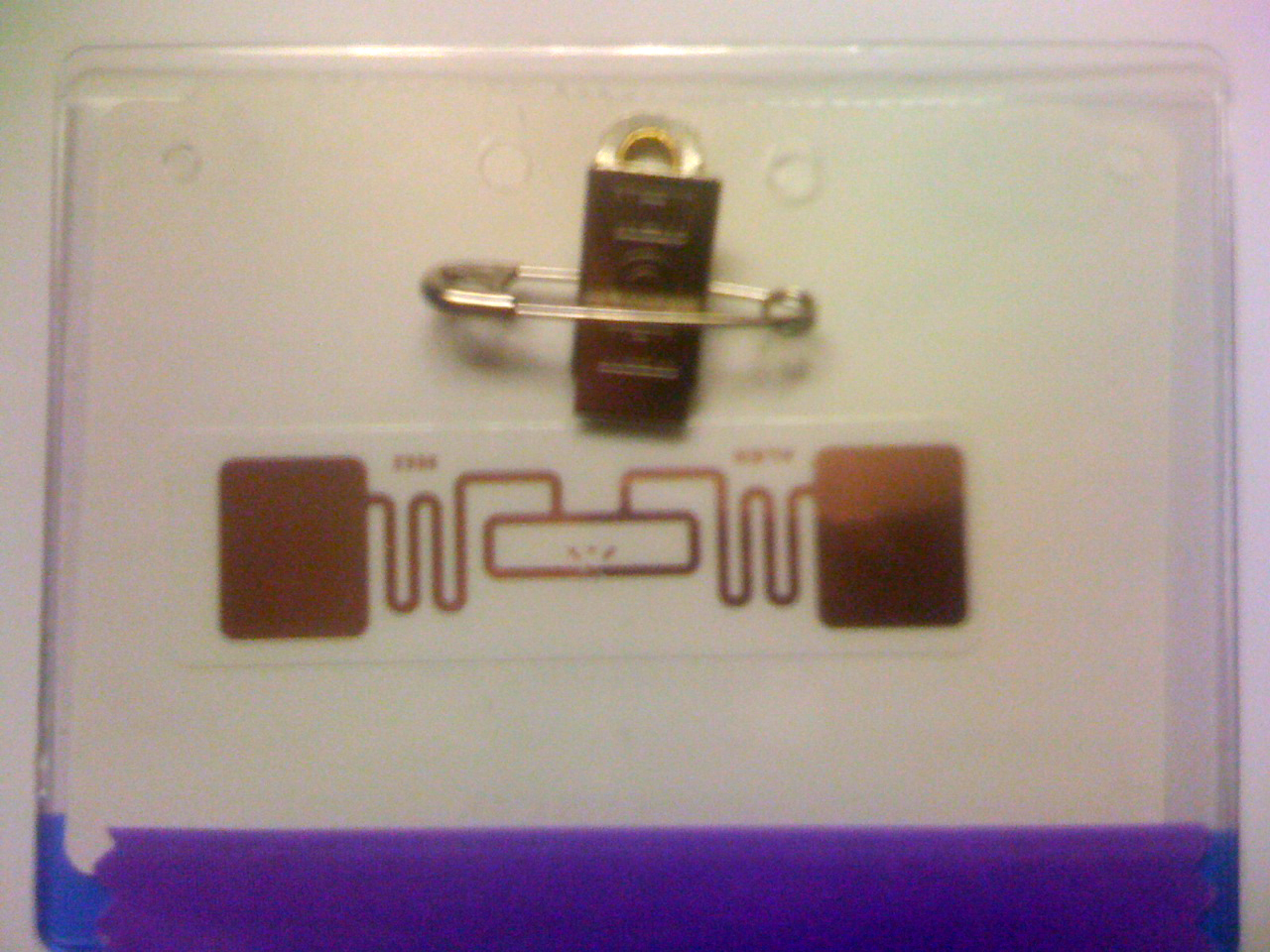
Here's a picture of the back of my badge at the recent American College of Cardiology Conference held 2-5 April 2011 in New Orleans, LA:

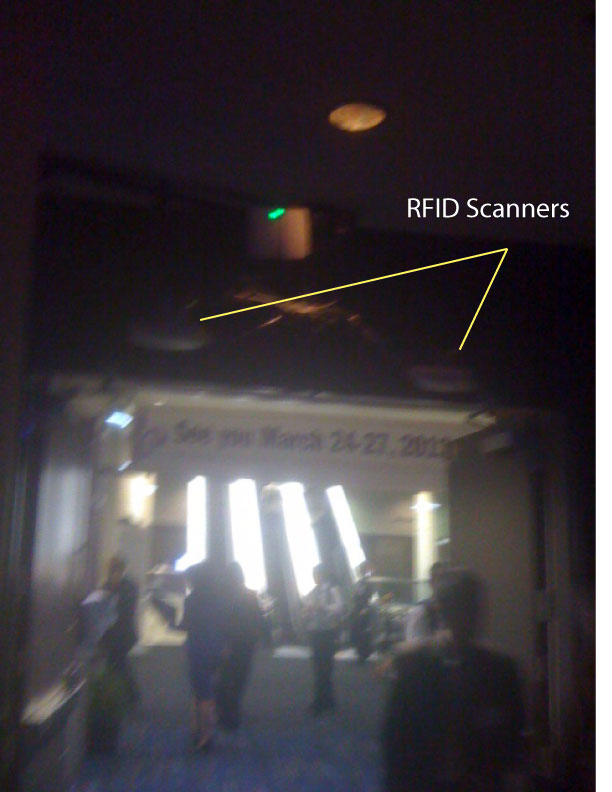
And here's the scanners used to track those RFID tags above one of the conference rooms:

I wonder what they know about me and if I'll still get credit for the sessions that I walked out early on?

-Wes

Addendum 8 Apr 2011: here's an excellent take on these issues from Calvin Powers from IBM's blog.

Tuesday, April 05, 2011

Lessons

It was one of those lectures you never forget.

Years ago, in my first year of medical school, we took our first of many amazing classes: human anatomy. There you were, day 1, all bright-eyed and bushy-tailed, walking to the basement of the hospital with your assigned fellow-students after a rousing introductory lecture into the anatomy lab.

There, in a huge well-lit room, stood a sea of steel tables covered in thick plastic bags with their most unusual contents: human cadavers.

Your first job?

To remove the bag as a team.

No one can forget that day, or that semester for that matter, as a medical student. The smell of formaldehyde that pierces your nostrils and permeates every pore of your hands while seemingly flavoring your lunchtime meals. The smell was your identifier as you stood in the lunch line: you were a first-year.

It would be easy to write about those days in the lab, but this is a story outside the lab that stuck with me through all of these years in the every-Friday lecture called “Clinical Correlations.” In that lecture we would apply the anatomy we had learned from our careful dissections earlier in the week to other clinical scenarios. The class was conducted by a brilliant radiologist. He shared his vast library of carefully-categorized radiographs with us in class and pointed to a spot on the radiographs while asking: “What’s this?” Or as we learned more disease processes that affected anatomy: “What disease might cause this?”

Very cool.

One Friday late in the year after we had completed the laborious task of dissecting the entire abdominal contents, he brought in a series of “unknown” radiographs. He would have us compete to see who could answer correctly first: winner got a trinket; losers (incorrect answers) got public humiliation and laughs from their peers. It was always a very lively class.

Little did we know what he had in store for us.

Up went the first radiograph, a pause, then: “The kid swallowed a penny!” someone would shout. “No, a quarter,” he would answer, “… but close enough.”

Then another. People stared for a while, couldn’t recognize what it was but we all knew it was something mechanical, there, in the projection of the ascending colon. Um, could it be? Yes, another foreign body that had migrated there with the switch turned on. We call cringed, amazed that he had seen such a thing. (We were young).

Then finally, as if we had not had enough, a final flat plate of the abdomen. I think I saw it first, and started laughing. He looked at me with eyes that could have pierced the thick hide of a water buffalo. He didn’t crack a smile at all. Suddenly, another female classmate blurted out, “Oh my goodness, is that a lightbulb?”

He replied to our amusement, “Yes it is: a 60-watt bulb, wide end first, in a 40-watt rectum.” By now the entire class was howling while simultaneously turning to each other and cringing. But he looked serious.

“I’d like to say something to you as future physicians,” he said above the din of laughter. Things quieted a bit as he spoke. “You will see things in your careers that are far stranger than this,” he continued, “and you must forever remember that you are dealing with a real person in real need.” Silence. “This was a situation that required the utmost discretion to manage: can you imagine what would happen to that patient if the bulb broke?” We considered the horrible consequences. “How would you handle this?”

Suddenly, the entire class felt impotent, struggling to imagine themselves in such a scenario. We quickly realized the joke was on us. We were clueless as our minds whirled to find a solution. No one could.

In the end he described the general anesthesia, the delivery forceps, and the team approach required to manage such a challenging situation and closed with these words:

“Guys, no matter how weird, how repulsive, how funny, or how crazy a situation might seem, when you see that person you MUST speak with them as though it’s the fifth case like that you’ve seen that day and respect the person’s dignity no matter what. Don’t ever forget that.”

I never have.

-Wes

Monday, April 04, 2011

Pradaxa, Your Days are Numbered

It was supposed to be the greatest thing since sliced bread: the first new oral anticoagulant in 50 years that did not require INR testing in the majority of patients. It's time to effective anticoagulation was measured in hours instead of days. There were even some data that suggested a possible propensity to lower intracranial bleeding rates compared its older counterpart, warfarin.

But the world changed for dabigatran (marketed by Boehringer-Ingelheim Pharmaceuticals as Pradaxa®) yesterday. That was the day the new proposed rule for structuring Accountable Care Organizations (ACOs) was proposed by CMS and published online with its addendum of 65 quality measures.

Sadly, dabigatran (and probably most of the other direct thrombin inhibitors being developed) will no longer represent "quality care" for patients with heart failure and atrial fibrillation. Quality measure #51 requires the use of warfarin, not dabigatran, for atrial fibrillation in patients with heart failure.

I am not a dabigatran drug representative, nor economist, but it is clear that innovative medications that have the potential to improve our patients' quality of living by unshackling them from the constant blood testing and phone tag with doctors required by warfarin have been officially deemed expensive and bad medicine.

Sadly, this new ACO rule is already outdated and permits the perpetuation of the status quo. The rule steps backward to tie our patients to warfarin instead of newer anticoagulant agents in the name of an "important quality measure." Once in place, this rule will tie our heart failure patients to our overburdened health care system by requiring all of those with atrial fibrillation to get their at-least-monthly prothrombin times (blood thinning levels) and then contacting their ACO for instructions for warfarin dosage adjustments.

Even more concerning, it will take legislative action (and probably expensive additional "Comparative Effectiveness Research" trials) to change these rules once they become law, and then only after a non-elected body decides it should do so. Never mind that such a study has been done.

This, my friends, is life with an ACO in the years ahead. It is for your own good and the good of our country. I'm sorry I will no longer be able to use my clinical judgment on your behalf soon to select the anticoagulant that's best for you. (Pradaxa, it's been fun.) But rest reassured: my quality scorecard, tied to my salary, will look impeccable. After all, I'll soon be practicing nothing but "quality" and "cost effective" medicine in our new Accoutable Care Organizational structure.

-Wes

Sunday, April 03, 2011

Guts

He must have been about eight at the time. I had made the mistake of watching doctor shows on TV with him and he had probably heard my wife and I describe the challenges of my doctor lifestyle at times over dinner. For the most part, he seemed oblivious and liked the things that most young boys at that age do: sports, jungle gyms, mud, and bicycles, but he had never seen his Dad at work.

So the day came when my wife was doing errands and stopped by the hospital with the kids to drop off my pager which I had inadvertently left at home. As timing would have it, I had just scrubbed in a case, so she was kind enough to bring the pager to the electrophysiology lab control room where the technicians could retrieve it for me. My son, realizing how close he was to my workplace asked within earshot of the technician, “Mom, could I see?” She looked at the technician, and he nodded agreement. Cautiously, they entered the control room just to wave “hi” briefly through the glass.

To a young boy, the lab must have looked like the cockpit of the Starship Enterprise: monitors, switches, microphones, overhead monitors, keyboards, and a large, thick picture window through which he could peer. He stood motionless, transfixed at the sight.

There before him stood a several individuals with masks over their faces and funny bouffant hair pieces with ugly black spectacles on. There was someone else at the other end of the room in a funny multicolored skirt with a mask on, bending over to talk to the big tube above a large blue sheet. Two others stood closer, off to the side of the draped table. One looked a bit like Dad, after all he waved at him briefly with eyes peering over that goofy mask. The other person was a stranger, though – he never saw him before. Both were standing in weird blue gowns over a large sheet with two holes cut in it that was draped over some kind of table. They were working on something and looking at those black and white TV screens. The guy that resembled portions of his Dad handed the stranger a small white object that looked like a small cloth that returned from the circle with a very different reddish color. The thing was contorted as those guys threw them into a small blue bowl on the back table. A few more of these strange blood-stained objects returned from the circle, only to be placed into the same bowl again.

Finally, my son, puzzled but realizing what was happening, leaned quietly over to my wife, eyes fixed on the table, and whispered,

“Hey, Mom, those things in that bowl …

… are those guts?”

-Wes

Saturday, April 02, 2011

Off to the Land of Make Believe

Tomorrow I head off to Land of Make-Believe: The 2011 American College of Cardiology Scientific Sessions in New Orleans, Louisiana.

I say this not out of spite for the organizers who have toiled to streamline the registration process and prepare the display hall, nor because I have anything against the presenters who have spent hours perfecting their talks and preparing their slides, nor because I won't learn anything there, nor because I don't have faith in the incredible will and wonder of the people of New Orleans. Seriously, it's a huge, fun, informative conference in a warm, welcoming, and conference-friendly city.

Rather, I say this because I fear these meetings will have less and less influence on how health care delivery will occur going forward as limits to how and how much care is delivered - at least as far as technology and innovation are to be used in the years ahead.

The sands are shifting beneath our feet. Every doctor I speak to knows it - some with more foreboding an outlook than others - but no one dares to show it lest they not appear to be a "team player." Instead, most of us act on the outside as though we are stalwart stewards of the status quo marching ahead to our future Land of Make Believe.

As such, we’re elated at the prospect that percutaneous aortic valve replacement will be available to all of our patients over eighty years of age with multiple severe co-morbidities soon (at least those are the only patients studied so far) and that all us who are fantastic interventionalists will soon be able to perform the procedure for all of our patients to meet the overwhelming demand. After all, the data at this meeting will show how safe the procedure is for them, right? Surely CMS would never drag it's feet toward approval of this expensive technology, would they?

Make Believe.

We watch the Stent Wars between companies and clinical investigators like a good Ultimate Fighter match: each company sparing for the right to claim a hair-thin victory over their competitor. And those bio-absorbing stents? Rock on! Surely the winner hear will take the sales prize, right? Especially since doctors have such influence over purchase orders these days. Everyone will be watching when a p value gets low enough and the legions of Press Corps spring to action as willing sycophants to the marketing hype so critical to promotion and adoption by the cardiovascular community at these meetings. As if it will soon really matter.

Make Believe.

We urge our medical students, residents, and fellows to attend these meetings and offer cash rewards to our best and brightest Young Investigators as if to suggest that most of them can still become entrepreneurs in the medical device arena in the years ahead. After all, regulatory approval hurdles for new technology aren't prohibitive, right? And those fees to the FDA, they're not too high, are they? Profits surely will be showered upon our young employee-inventors, too, right?

Make Believe.

And then there will be the transparency about how much all this stuff displayed costs, like the hybrid cath-lab/operating rooms (being developed now to install all those percutaneous valves in our elderly patients). Better to ignore this in favor of the bright, the shiny, and the new. Never mind that doctors and hospitals will soon be paid in lump sum payments from Medicare. Never mind that those payment amounts will be about 20% of where they are now. The sky's the limit for these purchase orders, right? Hospitals will get their return on investment quickly and doctors will still get their fare share of those bundled payments. Finally, look for these issues to be discussed front and center every single day at these Scientific Sessions.

Make Believe.

But I still can’t stay away. It will be a welcome respite from the cold to enjoy some nice warm weather. There’ll be nice people from all over the country and all over the world there. I enjoy speaking at these events, too: you realize the depth and breadth of commitment of today's doctors despite the forces that are changing. There’s a unique camaraderie that's developing, I feel, despite all of these changes. No matter what happens ahead, so far we are still afforded the luxury of meeting face-to-face to share our stories of patient care – both good and bad. And once in a while those stories can sometimes be shared nice glass of self-bought wine.

Better yet: it’ll be my excuse to leave those insidious Electronic Medical Record communications, office and patient e-mails, and results-reviewing behind for a few days.

Oops, I forgot.

Make Believe.

-Wes

P.S.: Anyone who wants to share some stories and a good glass of wine between e-mails at the ACC 2011 Meeting can reach me via Twitter at @doctorwes. If you're still not on Twitter, here's how and why you should consider signing up.

On Yesterday's Blog Post

... and the deconstruction of the 23-blog April Fool's Day conspiracy.

It was lot's of fun and had two over-arching lessons from my standpoint:

(1) Be critical of what you read: not all news that fit to print is fit to read, and
(2) it really is possible for lawyers and doctors to work together.

-Wes

Friday, April 01, 2011

Orson Welles: Meet the New York Times

The news grows more frequent and increasingly ominous as a cylindrical meteorite lands in Grover's Mill, New Jersey. A crowd gathers at the site and events are related by reporter Carl Phillips. The meteorite unscrews, revealing itself as a rocket machine, and onlookers catch a glimpse of a tentacled, pulsating, barely mobile Martian before it incinerates the crowd with Heat-Rays. Phillips' shouts about incoming flames are cut off in mid-sentence. (Later surveys indicate that many listeners heard only this portion of the show before contacting neighbors or family to enquire about the broadcast. Many contacted others in turn, leading to rumors and confusion.)
The War of the Worlds Radio Drama by Orson Welles Plot Summary

This 1938 coupe was a classic example of how mainstream media can manipulate their audience. As we all know, these examples continue today and should serve as a powerful reminder to medical students, residents, doctors, nurses and ancillary health professionals how all sorts of instantaneously-available information, be it health care information or otherwise, can be shaped, manipulated, processed and pureed.

Want an example?

How about this: once again, the mainstream media's darling, The New York Times, gets punked.

-Wes

Wednesday, March 30, 2011

A Lawyer's Perspective on the DOJ's Investigation of Implantable Cardiac Defibrillator Use

From the lawyer-published "Healthcare Compliance Blog:"
I predict that the DOJ will be:
1.Continuing its efforts to deal with providers in an open and collaborative manner.
2.Notifying more hospitals that they are under investigation relating to ICD billing.
3.Making additional inquiries of hospitals regarding this matter.
4.Investigating doctors who have patterns of high ICD implantation rates, coupled with a potential lack of medical necessity. The medical necessity issue poses risks to both physicians and hospitals.
These are not really hard predictions to make, though I would argue that the DOJ has been anything but "open and collaborative" as they have imposed a gag order on the Heart Rhythm Society during their current investigation.

But we must acknowledge there are implanters who have scammed the system and they should be held accountable for their actions. But for the myriad of physicians who are implanting devices appropriately, no one quite knows what to do with their patient's since the government's CMS-directed guidelines are so out of date. As I mentioned before, CMS wants doctors to use their ICD guidelines based on data from 2005 that ignores the more recently published (and less restrictive) guidelines published in 2008.

We are now seeing the Draconian and covert methods that will be used to impose restrictions on our patient's care. This model will serve the government operatives for other expensive technologies, too, like hip replacements, spinal fusions, and the like.

Whether the government begins to prosecute doctors for using the newer ICD implantation guidelines remains to be seen, but the mere specter that they're looking has already achieved the government's goal since no one wants the expense and notariety of a legal investigation to contend with and as a result, ICD implantation rates are currently dramatically reduced.

Mission accomplished.

-Wes

Thursday, March 24, 2011

How to Spin a Doctor Shortage

In rural Oshkosh, Wisconsin, they just call it "collaboration" between health care giants:
But that doesn't mean there's no place for collaboration among competing entities. ThedaCare and the other two healthcare biggies in Oshkosh – Affinity and Aurora – have found several ways to join forces to strengthen everybody's bottom line.

Whether it's Aurora and Affinity combining their cardiology departments to ensure top level care for patients of both hospitals, or ThedaCare, Affinity, Aurora and others working together at the Living Healthy Community Clinic at 510 Doctors Court in Oshkosh to provide medical care for the poor, these collaborations make sense.

'We just realized both our organizations expect to take good care of people. We'd identified gaps in services. That's how the cardiology cooperation came about between Mercy and Aurora," said Bill Calhoun, president of Mercy Medical Center.

"We questioned why do we compete when cardiologists are hard to find? We decided to do this on behalf of patients. At the end of the day it makes sense," Calhoun said.
It will be interesting to see how long these cardiologists continue to "collaborate" before either limiting their practice or burning out and moving to new pastures.

Despite what the corporate spin might be, "gaps in service" still need people to provide quality service. Spread 'em too thin and you'll still have "gaps in service."

-Wes

Wednesday, March 23, 2011

Connecticut Cardiologists Insist On Malpractice Reform

Cardiologists in Connecticut are standing up to the lack of liability protection in the state's new low-income health plan called SustiNet:
The SustiNet program would create large pools of people, including those who can't currently afford health insurance, that would theoretically drive down premium costs by competing with the plans of private insurers. Among other cost savings, it would designate a single doctor or practice for each patient, to reduce emergency care use, and create new "best-use" procedures for a variety of ailments to reduce the number of tests doctors order.

But a key provision of the plan was that doctors, in return for following the new procedures and ordering fewer tests, would be protected from malpractice suits if the outcome of a case was not favorable for the patient. However, with backing from the Connecticut Trial Lawyers Association, that provision was removed from the SustiNet bill two weeks ago.

Cardiologists are considered a particularly important group for the new best-use procedures because they tend to order a battery of expensive tests when patients show signs of heart trouble. If specialists like them failed to participate in the SustiNet program, cutting medical costs could be more difficult.

On Tuesday, the Connecticut chapter of the American College of Cardiology withdrew its support for the bill and said that it would circulate an open letter to House Speaker Christopher G. Donovan and Gov. Dannel P. Malloy saying that it could not support the bill without the malpractice protection.
As screws continue to get tightened on doctors' ability to order tests thanks to third-party oversight bodies, look for more physicians to play hardball about liability limits at both the state AND national levels.

Doctors are being forced to do do their part to control health care costs as a result of our increasingly government-controlled health care initiatives. It's high time for the trial lawyers' to do the same. And there's already precedent to doing so: just look to the legal protections military doctors enjoy when caring for their members. While legal recourse still exists in the military, the challenge of suing the government on behalf of their employees thwarts frivolous claims.

-Wes

Monday, March 21, 2011

When Companies Sue Their Clinical Investigators

Imagine: a large stent development company places their new stent in the hands of a clinical investigator. The clinical investigator does the early cases with a new stent, but the results of the study run counter to the company’s expectations. Those problems are reported at a national meeting. The stent company isn't happy that things didn't turn out the way they had expected because they believe the problems identified could be explained away on other grounds.

So what do they do?

Why, not only do they bring suit against the doctor and hospital that did the study, but they also decide to announce their suit in a press release published to every news organization around the world.

Wow.

While I do not know the circumstances surrounding the case, I find it ironic that the company is suing for defamation, when they, themselves, have just electronically done the same thing: defamed the doctor and the hospital in question before trial.

Maybe the doctor didn't want to adjust the results because he believes in his assessments of the complications in this study. Maybe the heavy-handed efforts to discredit his findings are a result of the company's strategic development goals. Then again, maybe the investigator did screw up - does that mean they should resort to a press release and suit? What have others found with their device?

As previously reported in theheart.org:
Assigned to formally comment on the study after Cervinka's presentation, Dr Jeffrey J Popma (St Elizabeth Medical Center and Harvard Medical School, Boston, MA) observed that the study was small but strengthened by "meticulous attention to details, standard clinical, angiographic, and [intravascular ultrasound] IVUS definitions, and concordance of anatomic and clinical end points."

So, he said, "the results are quite believable. And although the conclusion was that this study was just too small to demonstrate clinical benefit, I think it's too large to dismiss the stent thrombosis that occurred following placement of the Genous stent."
Clinical research is difficult enough, but the practice of holding the specter of legal proceedings over the head of clinical investigators when results are counter to corporate expectations should send a warning to any other doctors approached to serve as clinical investigators for this company...

... run, don't walk, away from these guys.

-Wes

Reference:
The earlier review of the disputed report made at the 2009 ACC Meeting in question from theheart.org

Saturday, March 19, 2011

The Wren

It was beautiful sunny early Spring day, a Saturday as I recall. Trips were made to various stores to purchase items for school, then a last minute dash to the electronics store so I could pick up another charger for my cell phone. I ran ahead, my daughter and wife lagged behind, weary from the day's outing - at least so I thought.

I stood in line to pay for the charger, when both my daughter and wife came up to me smiling - not a pleasant smile - more a mischievous one. My daughter looked up at me.

"Dad, you won't believe what I found!"

The thoughts circled in my head: a new cell phone? Computer? Maybe a DVD? What?

"You have to be very quiet, and don't make any sudden movements. Promise?" she asked.

Not knowing better, I nodded agreement, puzzled as to her intent. Slowly, carefully, she withdrew the sleeve on her fleece coat to reveal the tiny treasure she had found outside: the head of a tiny bird - a small wren - with a beautiful iridescent gold stripe above each of its its tiny dark, terrified eyes. She covered it again.

"I found it outside, Dad, as we were coming in. I think it hit the window, it can't move its legs. We can help it, can't we? I was worried a dog would get him or something, Dad. We have that old birdcage..."

I looked at my wife. There was that less-than-reassuring smile again.

"Um, well, I suppose. You'll have to look up how to feed the poor thing..."

"Oh, I will!"

And so I payed for the charger and we hurried home. As I drove, I remembered a similar scenario with a bird I had found as a child.

We lived in the country then, and sparrows were plentiful, as were picture windows. My mother must have felt the same way as I had felt in that store when I came to her with my own tiny find as a boy. She was more mature, understanding, and had seen these situations before. Yet she helped me care for my tiny friend with all the anticipation of the Great Recovery that was sure to follow. My terrarium was turned into a makeshift veterinary hospital: plenty of water for the bird, seed, grass all around, even soft laundry lint to serve as a soft bed for tiny patient. A small lamp was placed over the terrarium to provide warmth - surely, this should help, I thought.

So I waited and watched - even inviting my friend over to see the infirmary. The novelty of the captive patient generated plenty of excitement about the potential for helping the tiny creature, even though I was never quite sure what I could really do to fix the underlying problem.

It didn't matter, I've come to learn.

It didn't take long to realize my first patient wouldn't eat. It couldn't drink. I tried eye droppers with water and milk-soaked bread to no avail. Only tiny bits of scrambled egg held in a tweezer garnered a bit of interest, but even then, only briefly. It was difficult, I found, to clean the one tidy cage without terrifying the little guy. I grew saddened and frustrated as I realized the likely outcome. One thing led to another and, despite my very best efforts and perseverance, I later found my tiny, helpless, and winged patient lifeless and still.

But my daughter didn't need to hear this story then. It was not time. We had too much to do to prepare for the next Great Recovery, and like me, more enthusiasm, care, love and tenderness were soon to be showered upon that tiny baby wren.

As I reflect of that experience as a boy, and later again with my wife and daughter, there was much to be learned from the experience of caring and offering compassion, one that mothers seem uniquely gifted at imparting to their children. Mothers are special that way. My mother showed me the importance of caring first-hand, never flinching even when the odds are stacked against you and your tiny aviary friend.

And now, almost ironically, I find my most special 85-year-old wren is fighting to recover from a fractured ankle in a terrarium-like rehab facility far, far away.

Strange food. Strange people. Strange sounds.

One day blurring to the next.

And hopefully soon, around the corner, the next Great Recovery.

-Wes

Friday, March 18, 2011

Can the Government Keep Up With New Guidelines?

In case people are wondering if our governmental overlords really care about the latest and greatest treatment guidelines published by our professional health care organizations, take note.

CMS (Center for Medicare and Medicaid Services) is still using guidelines for defibrillator implantation from 2005 to justify payment for services in their national coverage decision, whereas the latest guidelines published by the Heart Rhythm Society published in 2008 carry signficiant differences in their recommendations for appropriate patients for this technology.

So which set of guidelines should doctors use?

The answer is obvious: if you use the latest data to decide who should receive a defibrillator, you might be subject to a Department of Justice investigation.

So much for using updated guidelines.

-Wes

Monday, March 14, 2011

Our Blurred Lines of Responsibility in the Electronic Medical Era

It was the early 1980's, budding minds eagerly awaited their clinical years in medicine after two grueling years pouring over books, workshops and cadavers. Gone were the fumes of formaldehyde replaced instead with the pungent smell of penicillin-infused carpets where nurses had primed IV lines. Teams of residents, medical students, and the omnipotent attending rounded from room to room - everyone knew who was in charge.

But back then in academic medical centers, there was an interesting twist: residents wrote all the orders on their patients. It was part of their training, to be sure, but also a critical requirement for proper patient care and communication. "Too many cooks can spoil the broth," we were told when it came to discussing complicated care plans with patients. Senior resident and attending worked together much as a commanding officer and executive officer do on board ship, so all consultation recommendations were either agreed to or rejected by these ultimate arbiters and coordinators of care.

That was then.

Now fast forward thirty years in our new era of dispersement of information, location, and personnel: the era of the electronic medical record.

Today, care can be rendered anywhere, my anyone. Increasingly we've seen the erosion of the "primary care giver" and the exploitation of a strange new concept: a "medical home" or "medical team" model. Who is in charge at any one time or episode of care is uncertain. In fact, the term "consultation" has vanished from our lexicon of billing codes in favor of a more ubiquitous designation of "level of care" and with it, any semblance of understanding of who's recommending care and who's delivering it. Increasingly, if a specialist feels strongly that an order should be performed on a patient, he is expected to write the electronic order rather than recommending it be performed. With that move, all other care-givers are out of the decision loop and instead, mere information consolidators.

The end result?

A diffusion of responsibility.

Suddenly no one is responsible, yet thanks to the wonders and permanence of the electronic record, everyone's responsible.

Many argue that since two heads are better than one, then many heads must be better than two.

But for a moment, imagine the potential disasters what could happen if the Navy ran their ships that way.

-Wes

Friday, March 11, 2011

Cornered

Every day, doctors do risky things for their patients, often because they have no other options. Today is such a day for me.

I don't know how it will go, and because of privacy laws I really can't tell you about the case, I'm sorry. (Nor will you get an epilogue, that's not the point of this post). But let's just say that any normal person would consider the case I'm about to perform very high risk because of the patient's condition. Even though you tell people they could die and take care to mention that fact time and time again, you wonder if they really can comprehend the significance of what you're saying - after all, there is a fine line between being reassuring in a time of crisis and telling it like it is.

I've spoken with the family and kids at length, I've answered their questions, I've even asked that only one of them serve as a spokesperson for the entourage of family members who have come to the hospital and flown here for this day. And yes I've documented, documented, documented. I can only hope everyone knows how serious this is. Certainly the patient does.

But I also realize I assume a tremendous risk professionally doing this procedure. I've done what I feel is everything short of today's procedure in the hopes it could be avoided, to no avail. I've amassed an army of individuals to help. Monitors and medications will be assembled to counter every contingency, but there will still be the possibility that something will arise I have not considered. Most of us would rather be doing something else, but all realize there's few options than to proceed.

I know I'm not unique. This happens all the time in America in hospitals big and small: where doctors are pulled into circumstances like this as reluctant dragons, with a patients who trust in them to such an extent they'd have no one else do it but you.

Scary, really.

I hope and pray that all goes well. But as hard as this is, I wished like hell I didn't have to worry about the 800-pound gorilla who'll be in standing in the corner watching me today.

And trust me: every doctor in America knows who that is.

-Wes

Wednesday, March 09, 2011

How Independent Are Our Peer-Reviewed Scientific Journals?

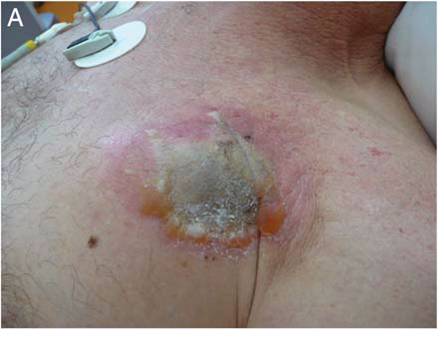
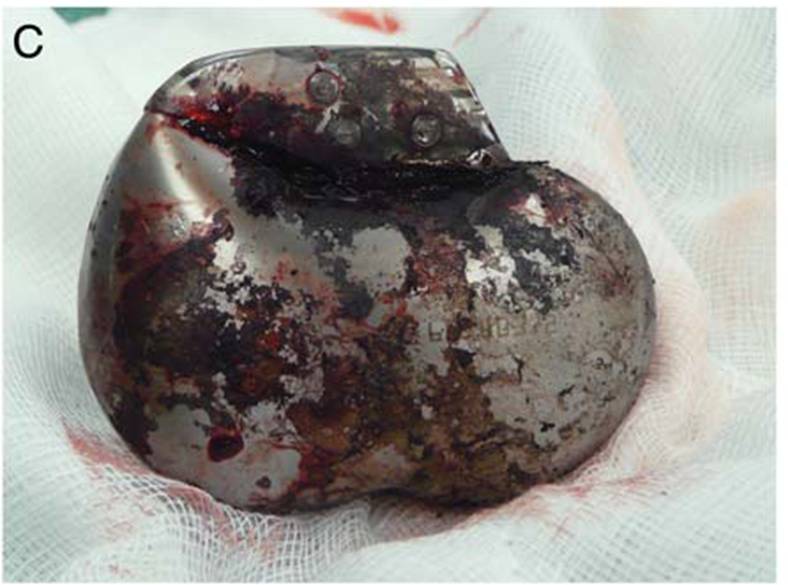
On September 27, 2010, the peer-reviewed scientific journal Europace published online-before-print a case report entitled "Spontaneous explosion of implantable cardioverter-defibrillator" by Martin Hudec and Gabriela Kaliska. In the pdf of that case report a figure containing a color photo of the affected patient's chest, chest xray, and two pictures of the extracted device (one seen here) were included.

The pictures and case presentation were dramatic. The case very rare. Both were perfect reasons to report such an important case to the medical literature.

And so these doctors sent the case to Europace on 29 June 2010 and the article was accepted after revision on 16 Aug 2010 with the article appearing online 27 September 2010.

The authors must have felt very proud to have an article published relatively quickly and the editors and reviewers of Europace must have thought the case was unique enough and important enough to have the article revised according to their specifications, then published online.

Until I reported the case on this blog 5 October 2010 and included images from a portion of the case report's figure.

Remarkably, later that same day, Europace removed the case report from its website without comment. The article simply vanished. I attempted to e-mail the editor of Europace to inquire about the reason for the retraction but received no reply, so I contacted the lead author, Martin Hudec, MD. He kindly responded to me and I included his email response in the comments to my post two days later. In his note he acknowledged "talking to engineers" about his paper:
What I see happening is some kind of media sensation being created without the facts. (ed note: this blog, a media sensation?) This concerns me because my only intention was to share a rare experience that would hopefully help my colleagues to more fully understand the possible complications that can occur, even if rarely, with such complex technology.

So, please allow me to give you the information that you are missing.

The term "explosion" is not accurate. After talking to engineers the more appropriate word would be 'venting' of the battery. The shape of ICD was distorted, but not ruptured in any way.

Furthermore, I have described what I believed was the first such a complication published, there are more reports about battery overheating which I got to my hands but not published in medical journals. These malfunctions are extremely rare and very unfortunate, however any device from any manufacturer could and has had such complications.

This information is important to put the report into the appropriate context.
Astoundingly, on 8 October, just three days after my original post, I met with Biotronik representatives eager to make sure I had their "internal company memo" with the facts regarding this case that I could use with their permission on this blog.

So I did.

To be fair, Dr. Hudec has repeatedly stated that it was his decision alone to withdraw his case report and not Europace's editorial board. Eventually the dust settled, but many questions remained.

Until yesterday.

I learned that the revised case report was published online again on 17 February 2011 in Europace!

Somehow I had missed it.

Now we find the term "exploding" has been replaced with the term "heat dissipation" in the revised case report's title: "Case report of out-of-hospital heat dissipation of an implantable cardioverter-defibrillator."

But also gone is the figure containing the clinically relevant information regarding the patient: the patient's chest, the chest xray, the pictures of the explanted device. In its place: an sterile black-and-white AP and lateral xray of the device performed outside the body. The description of the injury now states:
Chest radiography displayed signs of pneumomediastinum and deformity of the ICD housing. A subsequent ultrasound of the left thorax identified a small pneumothorax. Interrogation of the ICD was not possible and the device was explanted within 5 h of the event. Burned necrotic tissue was observed on the device surface and along the internal aspect of the pectoral pocket. The patient has recovered from the explant procedure without further event."
No mention of the appearance of the skin over the device as seen in the earlier pictures is described. The case report also fail to explain the root cause of the problem, stating:
Extensive analysis of the device suggested that the battery had overheated, possibly due to the presence of a foreign particle causing a short circuit. The resulting pressure forced the battery to vent inside (ed: emphasis mine) the ICD housing.
What? Inside the housing? Seems the housing of the device ruptured and gas escaped OUTSIDE the housing causing significant patient trauma: how else would this patient have gotten a pneumomediastinum and pneumothorax? And what happened to the possible hypothesis for failure of a so-called "lithium reaction" described in the earlier case report?

Finally, in the section of the revised case report entitled "Overview of events with similar characteristics," the authors state that they identified "This and similar isolated cases (without an underlying cause) found in the MAUDE database for the years 2000-2010" and summarized them in a table. The table noted that three of the 10 cases had an "Audible noise ('pop') excluding notifier", three had "Damaged housing, battery, or subassembly", nine of 10 had "Burns or burning sensation" and two resulted in "Death/external rescue required." Not a single detail regarding the manufacturers, models, clinical circumstances of the ten previously-identified cases or specific FDA MAUDE report numbers were provided. Instead, a link to the FDA's MAUDE database search page was included in the references. You'll have to find the cases yourself, I guess.

Finally, in response to the dramatic findings of this case, the authors now conclude:
Implantable cardioverter-defibrillators are produced under strict regulatory and manufacturer quality controls. There are over 250,000 ICDs implanted worldwide each year, documenting a high level of established reliability. Clinicians implanting ICDs should be aware of the possibility that a normal risk of malfunction exists, however is far outweighed by the advantages that are gained from this state of the art therapy.
Ahem. Aren't case reports about a person and not a device? Are doctors unable to advocate for their patients for fear of upsetting the medical device industry? Is the conclusion really that "cardioverter-defibrillators are produced under strict regulatory and manufacturer quality controls?"

Or is the real story here that independent scientific peer-reviewed journals might not be so independent after all.

-Wes

Tuesday, March 08, 2011

How Medication Lists Define Your Health Issues

Give me your medication list and I'll tell you your health problems.

It happens every day in emergency rooms across the country as confused elderly patients present for an acute problem unable to describe their past medical history but equipped with a list of medications in their wallet.

Metformin = type II diabetes

Synthroid = hypothyroidism

Lipitor + Altace + Lasix + Slo-K = ischemic cardiomyopathy

Lexapro = He's a little anxious or depressed

Viagra = Well, you know...

I bet I'd be right better than 90% of the time.

Now, imagine you're a pharmaceutical company wanting to target people with those chronic diseases. Where might you find them?

No problem. Just pay the insurers to provide you patients drug lists. No names need be exchanged in keeping with HIPAA requirements. But the drugs list attached to folk's cable TV box?

Perfect. You're in. With no legal strings attached. Then just fire away with that targeted direct-to-consumer advertising on TV, courtesy of your local health care insurance provider.

No wonder our health care industry movers and shakers love the electronic medical record.

Health care privacy? What health care privacy?

-Wes

The Kids of Doctors

Mamas, dont let your babies grow up to be cowboys
Don't let 'em pick guitars and drive them old trucks
Make 'em be doctors and lawyers and such.

-Waylon Jennings and Willie Nelson


Well, I tried to do what Waylon and Willie suggested.

But one's becoming a musician instead.

As I listened to him play the first movement of Schubert's String Quintet in C Major (he's second cello on the left), I was struck to find that two of the five musicians in his group were the kids of doctors.

I'm not sure if this means much, but it was an interesting observation.

Medicine as an art.

Music as art.

Medicine's work ethic.

Music's work ethic.

Focus. Concentration. Discipline.

But I wonder if their tilt toward music as a vocation occurred because of what they saw from their parents as they grew up: the work hours, call, and frequent absence during their formative years.

It certainly isn't because they weren't smart enough.

-Wes

P.S. For those interested, here's links to the the second, third and fourth movements that they played consecutively. (Warning: the whole piece takes nearly an hour to view)

Sunday, March 06, 2011

The Costs of Screening Programs

It was another tragic story of a young 16 year-old high school athlete collapsing suddenly after winning a championship basketball game. An autopsy discloses a dilated cardiomyopathy. People wonder: could this happen to my son? The cries for screening to catch such cardiac disease before it manifests are raised. Hospital systems respond, ushering in free or reduced-fee screening electrocardiograms for all student athletes, arguing that such testing would likely capture heart trouble before it happens.

This story from Sue Thoms of the Grand Rapids Press sheds light on the cost and magnitude of testing required to capture heart disease in this population. From the article:
In the past two and a half years, the hospital has examined 5,200 students at Healthy Heart Checks held regularly around the Detroit area. The screening includes a medical history, blood pressure check and an ECG. About 15 to 20 percent of the students also undergo an echocardiogram.

Through the screenings, the doctors found three students who had serious underlying structural abnormalities of the heart that could have led to sudden cardiac arrest, Haines said. About 30 students had conditions that were serious enough that they were advised to stop playing sports -- though in some cases, they were able to resume sports after undergoing treatment.
Unfortunately we don't know much about the later 30 students: did they require additional invasive procedures, like radiofrequency catheter ablation of an accessory pathway and what were the costs involved? We really don't know these students' circumstances, so, in the interest of simplicity, we'll leave them out of our analysis for now, but should assume they added even more costs to the overall screening cost.

In summary, we find from this article that 5,200 EKG's were performed at a "reduced rate" of $8 each (doctors and volunteers' time was donated for free), "15-20%" then went on to an echocardiogram (we'll use 17.5%) to find three "true positive" cases of a heart condition that could potentially result in SCA. The inability to detect the severe cardiac disease with an EKG alone meant that the EKGs had a "false positive" rate of about 17.5% (minus the three "true positives"). In real numbers, about 907 echocardiograms had to be performed as a result of the screening program.

What does this mean financially to the hospital?

If the cost of this testing were paid for from fees or insurance payments, assuming a conservative estimate of $500 per echocardiogram for the technical fee to do the study and another $200 for the professional reading of the echocardiogram, a cool $634,900 was garnered for this test alone.

And don't forget the costs for office "consultations" to discuss the findings and the other invasive or imaging tests that might be required "just to be sure."

Very conservatively, this relatively small screening program cost about $676,500.

Armed with the data, we should ask if the costs were worth it so, as their athletic director said, we can all "breathe a little easier and sleep a little better knowing that all of our student athletes are safe?"

Costs and known false positive and false negative problems with EKGs is a large reason screening programs were not recommended recently by the American College of Cardiology. Rather EKG screening was only recommended if a person's medical or family history suggested a higher-than-normal chance of finding a problem.

But it is much easier to want to do things proactively when tragedy strikes and far harder to do nothing: everyone wants to feel like their doing what's best for their child or loved one going forward.

But our need to "sleep better" after such a tragedy should be balanced with the keen appreciation of the relatively low frequency of the problem in our students and the costs to our health care system for this reassurance. Nothing in medicine is "free" these days, no matter what health care systems may suggest in their promotion of these programs.

Take a moment as ask yourself if there might be teenagers who die from a cardiac death despite having had all of these tests?

Very possibly. But it's unlikely that such a story will ever make the headlines.

That's because such a story of the false negative rate of all these screening tests might be very bad for business.

-Wes

Tuesday, March 01, 2011

A Pacemaker on a Chip?


Almost:
So far, Medtronic has developed most of the components—a circuit board, an oscillator to generate current, a capacitor to store and rapidly dispense charge, memory to store data, and a telemetry system to wirelessly transfer that data. The company has used chip manufacturing technology to assemble these components onto a wafer. Oesterle estimates that 60 to 70 pacemakers can be made from a single six-inch wafer, which the company creates at its own wafer fabrication plant in Arizona.

"What we don't have that is fundamental to a pacemaker is a way to power the chip," says Oesterle. The company is working with startups that make thin-film batteries and other innovative power sources, though Oesterle declined to give further details.
Oh, and don't forget the need for a fixation mechanism. Otherwise, these things might embolize and serve as the next Viagra.

On second thought...

-Wes

Monday, February 28, 2011

The Lost Art of Auscultation

From the nice piece just published in the New York Times:
“He told us that one of the things that had surprised him most about being a patient was that every single person he interacted with — be they nurse, resident, senior physician, respiratory tech, physical therapist — it was as though they had a neon sign on their forehead that said either ‘I care’ or ‘I don’t care.’ ”

But what illuminates those neon signs? What are the clues that were so starkly apparent to me, even in second-year medical students?

Perhaps the answer lies in the medical lexicon. Auscultation — listening to heart sounds with a stethoscope — is a required skill.
Read the whole thing.

-Wes

The Big Squeeze

About a week ago, an editorial from a plastic surgeon Lloyd Kreiger, MD, appeared in the Wall Street Journal entitled "ObamaCare Is Already Damaging Health Care." While I'm not sure I'm ready to concede that Obamacare has already damaged health care in America, I will agree the law is certainly is changing health care, aligning health care corporate interests with political interests, with doctors feeling the squeeze between the two.

Last year in the MGMA's most recent survey of practicing physicians, an important milestone was reached: over 50% of doctors are now employed by large health care corporations. This has been driven by two factors: (1) significant cuts to ancillary service fees that doctors used to collect in their offices and (2) a significant climate of economic uncertainty for doctors going forward as the new health care law is enacted. As Dr. Kreiger pointed out:
Doctors and hospitals, meanwhile, have decided that they cannot survive unless they achieve massive size—and fast. Six years ago, doctors owned more than two-thirds of U.S. medical practices, according to the Medical Group Management Association. By next year, nearly two-thirds will be salaried employees of larger institutions.

Consolidation is not necessarily bad, as larger medical practices and hospital systems can create some efficiencies. But in the context of ObamaCare's spiderweb of rules and regulations, consolidation is more akin to collectivization. It means that government bureaucrats will be able to impose controls with much greater ease.
Which, of course, is precisely the way our current government thinkers have intended it.

But whether it is Obamacare or another "PerfectFuture care," I suspect the same "collectivization" would occur in ANY government-funded health care entitlement system going forward. The reality is, our current system is not economically sustainable. In government-funded health care, the move toward capitated payments to doctors and hospital systems now seems inevitable, thanks in large part the the development and distribution of large billing and tracking health care information systems.

The changes we're seeing right now in health care in our area are all in preparation for the inevitable cuts coming to our health care entitlement programs: the day the government says they're going to pay twenty percent less than they are paying now, come hell or high water. To accomplish this, lump sum payments will be made for episodes of pre-specified care in the form of payment "bundles," supplied to large (and as yet poorly-defined) "Accountable Care Organizations." How these funds will be later divided among those that provided the work will depend primarily upon who receives the funds from the government.

We can expect that senior administrators will be spared as funding cuts are forthcoming. This does not mean all administrators will be safe, however; mid-managers will also feel the squeeze as overhead is trimmed.

Non-essential equipment purchases and hires will stop or be significantly slowed. All personnel will be asked to do more with less, or else.

Since people are expensive and politically unpopular to fire, every effort will be made to "improve efficiencies" using computers. Data-mining of tests, laboratory studies, procedures and radiology/pharmaceuticals will be culled, processed and pureed for their expense with an eye toward perceived "value."

Patients can expect more lower-paid "mid-level" care provider interaction. I suspect "primary care" doctors (however that term evolves) will opt for shift-work to offset the inevitable trims to salaries that are likely to occur in the setting of over-burdened patient volumes. Other hospital-based doctor-employees (i.e., "proceduralists") will be paid on some form of "productivity" basis rather than straight salary, despite how non-conflictual a salary structure might seem at first glance (straight salaries breed complacency, too). To continue to trim costs, "non-productive" doctors' ranks can be thinned if they slow their "production."

Research endeavors, especially at academic centers intent on a "sheltered workshop" environment for their physician-researchers, will be a casualty of this shift to "productivity" as well. Philanthropic fund-raising or grant applications will become more important than ever before to support existing ongoing research efforts. Researchers inefficient at self-promotion and fund-raiding will face a "time-to-provide-clinical-care" imperative. Some research projects will survive, but many ongoing research efforts will cease. Rapid innovation in health care will be an inevitable casualty to these cuts.

And what can our new doctor-employees expect going forward?

It's hard to say where the dust will settle.

I suspect that doctors realize that if they can't beat 'em, they'd better join 'em. Those resistant to a collaborative style will not be happy and defect to other non-clinical arenas in health care or business. Those that "play well with others" will work with their employers to find ways to be more efficient and work to save costs. Their efforts will only go so far at first, unless they are privy to the actual prices of equipment and personnel under their purview. Also, since malpractice risk continues to weigh heavily on doctors' ordering practices, who better to address the best way to limit the consequences of defensive medicine practice patterns than doctors?

If large health care institutions decide, instead, to play "Father Knows Best" and unilaterally make cuts to services or change doctors' work-flows without their understanding or approval, they will likely do so at their own peril. To their credit, however, there are clear signs that health care organizations realize the benefit to co-opting strategically-aligned (and paid) staff doctors to serve on their care and oversight advisory boards. Are there ethical concerns to patients when business concerns of a health care system contradict health care concerns in such a set-up?

Of course.

But I really don't see an alternative to such a construct right now given our current political, social and economic milieu (other than for doctors to move completely back to cash-only practices - a scenario unlikely to happen nationally in my life-time). Better for doctors to be part of health care delivery solution going forward. Hopefully, the many smaller voices of front-line doctors and other health care providers will serve as an army of Davids that constantly whittle away at the inefficient and overly costly Goliaths of our health care delivery complex while limiting the collateral damage to our patients.

-Wes

Friday, February 25, 2011

Doctor-Bashing Headlines

While I know it grabs the eye, it really didn't matter what the article was about:

Click image to enlarge


... the headline says it all: doctors are the problem, not the system, right?

-Wes

Tuesday, February 22, 2011

Klout: How "Influential" Are You, Doctor?

I stumbled across Klout.com recently, thanks to an tweet by the well-respected web strategist and industry analyst at the Altimeter Group, Jeremiah Owyang. Needless to say, it's not a place doctors venture much.

But I found the site, and it's potential to characterize physician's on-line influence, interesting.

It works by giving people on Twitter and Facebook a "score", influenced by the lists that people are on, the number of original "tweets," number of times things are re-tweeted by others, and so on and then uses the metrics to classify the type and influence of the individual using social media. I suppose an analogy might be that its like looking at a bunch of personality tests to understand the type of person you're following.

So I looked into the scores and characteristics of a few physician bloggers. The results were interesting.

Yours truly gave a meager "Klout score" of 48 at the time of this writing and was classified as a "Specialist."

Kevin Pho, MD is a "Thought Leader" with a score of 69.

Grunt Doc, an ER doctor and long-time blogger is a "Thought Leader", too, but has a score of 38.

Doctor Anonymous is an "Explorer" with a Klout score of 50.

Ramona Bates, MD - a plastic surgeon - is a "Specialist" too with a score of 54.

Happy Hospitalist has a Klout Score of 24, but is considered a Thought Leader, too.

(You can check your "score" and inflence type with a twitter account and then enter it here.)
By the way, I have no commercial relationship with this website, but I found the concept intriguing for doctors as we enter the new internet age of social media. Certainly this is not the only site that purports to measure the influence of someone on social media (see Peerindex, for instance), but it was interesting to see it's accuracy in determining these few individual's influence on the internet based on their content tweeted.

While Mr. Owyang does a nice job explaining the limitations of these metric websites (especially as it relates to lack of a "Sentiment Index"), but I must say that from my cursory look at the few fellow physicians I queried, it classified some of these more prolific bloggers and twitter users that I know pretty well.

Looking forward, it would not be unrealistic to think that some day a new variant of the Klout website might just serve as another form of doctor rating website. If so, the benefit of developing an valued online social media "physician brand" now might pay professional dividends later.

-Wes

Grand Rounds, Dr. Rich-Style, Is Up

... over at the award-winning Covert Rationing Blog and it's definitely worth a read:
Especially since the events of last week, it would be absurd for DrRich to think that everybody is out to get him. Still, it seems plain that, of late, not all individuals enjoy his efforts here at the Covert Rationing Blog.

Two years ago, for instance, DrRich was “invited” to testify as a witness before a federal grand jury in a matter involving one of his consulting clients. While under oath, DrRich was caused to understand that the Feds (at least certain members of the DOJ) are well aware of this blog, and of the general tenor of its content. The impression left by this experience makes DrRich doubt whether many of his fans come from that particular precinct.

Further, the CRB has been the victim of two targeted denial-of-service attacks just in the last several months. Perhaps this is a common experience for healthcare bloggers, but then again, perhaps not. Finally, there’s the fact that last May (some readers may recall) a nasty hacking exploit completely trashed the CRB at the server level, resulting in the loss of the first three years of DrRich’s endeavors here (which, some have said, is the greatest tragedy to befall posterity since the burning of the Library at Alexandria).

And so, Dear Reader, while DrRich is certainly happy to be hosting Grand Rounds for the fourth time, and is particularly delighted with the quality of postings which he has the honor of featuring this week, it occurs to him that hosting an event with such high (and well-deserved) visibility might draw certain “extra attention” here. So perhaps you had better read this quickly.
-Wes

Monday, February 21, 2011

Electrophysiologists' New Annuity: Percutaneous Aortic Valve Replacements

From Circulation:
One third of patients undergoing a CoreValve transcatheter aortic valve implantation procedure require a permanent pacemaker (PPM) within 30 days. Periprocedural atrioventricular block, balloon predilatation, use of the larger CoreValve prosthesis, increased interventricular septum diameter and prolonged QRS duration were associated with the need for PPM.
With the compact AV node immediately adjacent to the non-coronary cusp of the aortic valve, it's remarkable AV block is not more frequent.

From the discussion section of the paper came these recommendations regarding the monitoring requirements after transcatheter aortic valve implantation (TAVI):
Recommendations based on our findings would suggest that patients who do not develop a broad QRS complex postprocedure can be safely discharged, from the electrophysiological viewpoint, without need for prolonged monitoring, especially if there has been no disturbance of conduction during implantation and the smaller 26-mm valve has been used. However, patients who develop bundle-branch block should probably be monitored for a minimum of 5 days (emphasis mine) for the development of higher-grade AV block.
Interestingly, the conclusions of the same article recommend that 7 days of monitoring may be more appropriate:
The increased rates of PPM implantation in patients with postprocedural bundle-branch block and overall median time to implantation of 4 days (interquartile, range 2 to 7 days) in those who required pacing lead us to recommend that these patients be observed for higher-grade conduction disturbances for up to a week postprocedurally, with greatest care taken in those with periprocedural AV block, those receiving the larger 29-mm device, and patients with greater IVSd."
Even with a week's monitoring, pacemakers were seen even later in a small group of patients (from the Results section of the paper):
Eighty-one of 243 patients (33.3%) underwent PPM implantation within 30 days. Nine patients received their implants on the same day as the index procedure. A further 7 patients (2.9%) underwent PPM implantation during longer-term follow-up at 31, 42, 42, 53, 132, 152, and 187 days.
-Wes

Reference:
Khawaja MZ, Rajani R, Cook A, et al. "Permanent Pacemaker Insertion After CoreValve Transcatheter Aortic Valve Implantation: Incidence and Contributing Factors (the UK CoreValve Collaborative)" Circulation 2011 DOI: 10.1161/CIRCULATIONAHA.109.927152

Friday, February 18, 2011

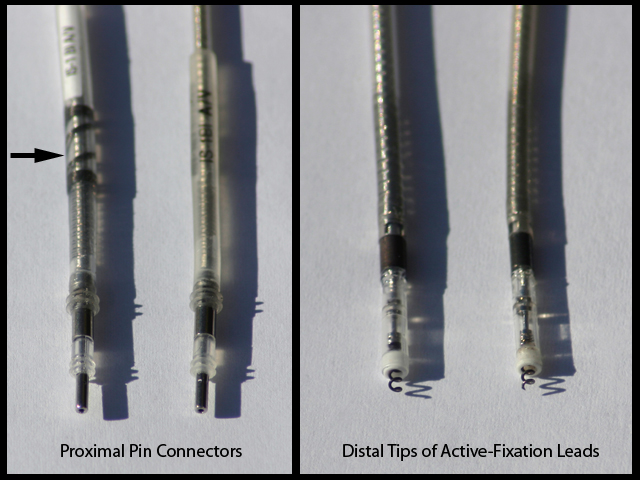
What's the Difference Between MRI-Safe and Conventional Pacemaker Leads?

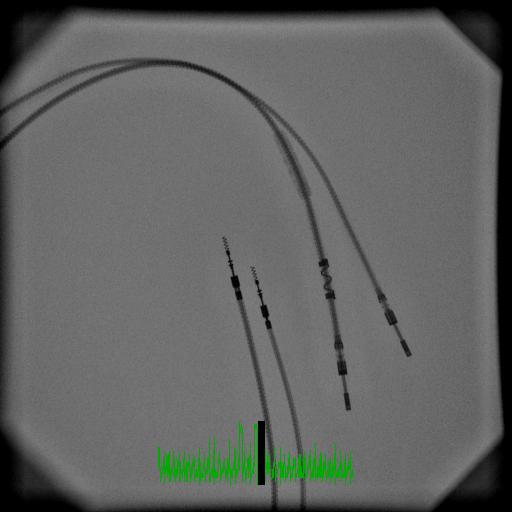
... a little thicker, certainly, but otherwise (at least on the surface), not too much:


The recently-approved MRI-safe active-fixation lead from Medtronic (left lead in each frame) is compared to their conventional active-fixation lead. The arrow denotes the radio-opaque marker that can been seen on x-ray to identify the type of lead in the patient's body. A fluoro image of the two leads is shown below, again with Medtronic's MRI-safe lead on the left:


While the engineering hurdles were no-doubt considerable to make an MRI-safe pacemaker lead, given the growing body of evidence that newer pacemakers (when carefully monitored) can be scanned in MRI machines, I suspect the biggest difference in these leads is not their design per se, but rather the regulatory paperwork (and research) that had to be completed to document their safety.

Of course, the fact that CMS would not pay for MRI scans performed on patients with pacemakers before the advent of these newer devices probably also limited the number of scans performed.

-Wes

Wednesday, February 16, 2011

MRI-Safe Pacemakers - Version 1.0

Mary Knudson, a health journalist and author of the Heart Sense blog, does a great job covering the story behind the story on the newly approved MRI-safe pacemakers in a guest blog post at the Scientific American. She discusses the challenges ahead in regard to the widespread clinical adoption of MRI-safe pacemakers, the issues with Medicare coverage of MRI's of patients with these devices, the logistics involved in their use, and includes commentary from a number of physicians, including a tidbit from yours truly.

-Wes

For Guidelines: Hyperlinks, Please

This week, in response to the approval of Boehringer-Ingelheim's dabigatran (Pradaxa®) by the FDA, guideline writers were relatively quick to issue a 'focused update' (pdf) to the recently-released 2011 guidelines for the management of atrial fibrillation to include the new medication.

With this "focused update" came a new era for doctors.

Now, instead of guidelines for care of a malady being published in a single publication, we are finding guidelines can morph across multiple articles. As such, the size and breadth of guidelines that are increasingly used for mandates for clinical care can stretch over a virtually limitless publication domain.

In this era of electronic, near instantaneous publication with the now-apparently limitless potential to expand to unlimited size, doctors should insist that electronic hyperlinks be established between published guidelines, their addenda, and their associated references.

-Wes

Monday, February 14, 2011

When A Cardiologist Has a Heart Attack

... the revelations for both the cardiologist and his patients are profound:
The doctor-turned-patient admits he’s faced some challenges in following the advice that he has given cardiac patients all these years.

“I try to go to the gym several times a week. It’s very difficult to fit that into my schedule,” he said. “I had adjusted my diet years ago, avoiding salt and eating less red meat. Now I’m eating oatmeal for breakfast five days a week.”

Lewin joined the cardiac rehabilitation program at the Ortenzio Heart Center at Holy Spirit, where he often ran into his own patients, who were surprised to see their doctor walking the treadmill.

“Some of them thought I was just coming to exercise,” Lewin said with a laugh. “People would tell me, ‘Gee, I have an appointment to come see you next week.’”

Lewin said his personal experience with cardiac rehab helps him relate better to his patients. “I can identify more now with what they’re going through and the concerns they face,” he said — and the challenge it can be to follow doctor’s orders.
-Wes

Sunday, February 13, 2011

From Mice to Men?


-Wes

h/t: Medgadget

Maestro Muti Gets Pacemaker

Feeling poorly in October, 2010, the Chicago Symphony Orchestra's Maestro Riccardo Muti traveled to the World Health Organization's #2 country for health care delivery, Italy, to be evaluated for "abdominal discomfort" and was diagnosed with "extreme exhaustion" while costs of care are held to a minimum:
After a series of medical tests at San Raffaele Hospital, it was determined that Maestro Muti is suffering from extreme exhaustion as a result of prolonged physical stress. In this case, as often happens, the exhaustion manifested itself in abdominal pain and other physical symptoms. His physicians believe that he was able to work through his symptoms in his first two weeks, given all of the heightened excitement, but, that as time wore on, it became increasingly more difficult to do so.

Maestro Muti’s medical doctors have prescribed one month of complete rest, which he has begun at his home in Italy. The Maestro reports that he is feeling “not perfect, but relieved” to know it was not something more serious as first indicated by his symptoms.
Later, he returns to the United States just before the great #SNOMG, collapses at rehersal in Chicago, has facial fractures and receives America's finest: a permanent pacemaker, courtesy of the good ol' 37th WHO-ranked U. S. of A.

While hindsight is always 20:20, you can bet his workup and treatments were thorough, timely, and quite expensive here in the United States.

Suddenly, though, #37 doesn't sound so bad, does it?

-Wes

Our New Medical Vernacular

"It's that time of year."

"For what?"

"For our annual performance reviews. You know, where we rank our employees as "does not meet expectations, meets expectations, or exceeds expectations." They laughed. It was a plesant, social affair, and while he didn't work in a hospital, he did work for a health care corporation. I couldn't help but listen to the conversation, since it sounded so familiar.

"... and if they don't meet expectations, we have to develop a 'PIP'."

"PIP?"

"A Performance Improvement Plan. And that will lead us to a good discussion about an ACR."

"ACR?"

"Annual compensation review. This of course, drives the merit increase conversation."

"Merit increase conversation?"

"The merit increase must average 2.5%, ranging between 1 and 4% depending on whether you're below expectations, meet expectations, or exceed expectations. Hah! It doesn't really matter, now does it, since state taxes have gone up so much around here. So there you have it. I love my job," he chuckled as he sipped his beer.

It's strange how much our medical vernacular has changed and is starting to sound like the corporate vernacular:

"Meaningful use."

"Guidelines."

"P4P"

"Measures."

"MGMA Benchmark."

Won't be long until I have a PIP.

-Wes

Friday, February 11, 2011

Pradaxa's Not-So-Long Shelf Life

Dr. John Mandrola, a fellow blogging electrophysiologist, keeps us up to date regarding the shelf life issues of dabigatran (Pradaxa®):
Once dispensed, most medicines expire after a year. Dabigatran, however, is far from the usual pill. It’s packaged in pellet form within a capsule. These pellets are highly susceptible to water and humidity. So when dispensed in a typical vial–not a single-sealed blister pack–the drug expires in only 30 days.
I learned today from our pharmacy personnel that you can specify blister packs on a prescription which will assure a longer shelf-life of the medication (just be sure your patients can open them).

-Wes

How Hospitals View Cardiology Groups

It is no surprise that hospitals are acquiring cardiology and primary care groups groups in droves lately. It seems there is a signficant financial incentive to do so for now, but doctors (and especially cardiologists) should read the tea leaves ahead:
While hospitals are limited to paying fair market value for practices, they can gain an edge over competing hospitals by offering longer employment contract terms or better electronic medical record systems and management services. If hospitals move forward with a transaction, Ms. Kaplan suggests they limit employment contracts to no more than two years if possible and rebase compensation annually based on productivity.

"In healthcare you shouldn't assume anything is permanent," says Ms. Kaplan. She cautions that the revenue increases that are currently available to hospitals through expanding outpatient cardiology services may not last forever, which is why she urges hospitals to limit employment contracts and other agreements to only a few years. Doing so will afford an "out" for the hospital if the service line goes from a money-maker to a money pit.
-Wes

Tuesday, February 08, 2011

Cardiologists as "Heart Whisperers"

... a creative moniker if there ever was one, but it should probably be reserved for primary care specialists, instead.

-Wes

Sunday, February 06, 2011

Publishing for News Events

It's always interesting the see the incredible media buzz a so-called "scientific study" can receive if its release is timed to some upcoming predictable news event. This weekend's story is, of course, Superbowl XLV.

Just in the nick of time came this study entitled "Role of Age, Sex, and Race on Cardiac and Total Mortality Associated With Super Bowl Wins and Losses" published online in an online publication called "Clinical Cardiology" on 31 January 2011.

Coincidence?

Unlikely.

The study reportedly went back and looked at LA county coroner death certificates:
from 1980 to 1988, covering only the period of January 15 through the end of February for each year. Data included total number of deaths as well as number of deaths due to diseases of the circulatory system, ischemic heart disease, acute myocardial infarction, heart failure, and congestive heart failure. Data on the entire population have been previously published.9 In the present study, we separately analyzed data on men, women, those aged < 65 years, those aged ≥ 65 years, those of white/Hispanic ethnicity, and those of nonwhite/non-Hispanic ethnicity, for each of the 2 Super Bowls. We compared death rates for days related to the 1980 Super Bowl (January 20, 1980 plus the following 14 days), which Los Angeles lost, with control days (all other days in January and February from January 15, 1980 to February 1983). To remove the impact of the known peak in total and cardiac death rates around the winter holidays, all analyses excluded data from January 1 to January 14. Death rates were reported as deaths per day per 100 000 population (using total deaths and average population). Parallel analyses were performed for Los Angeles's winning Super Bowl on January 22, 1984. During these time periods, Los Angeles County death certificates classified Hispanic patients as white; hence, white and Hispanic death-rate data are combined.
The authors ran some statistics on this narrow 14-day window from the various years and concluded:
The 1980 Super Bowl loss triggered more deaths in older patients compared with younger patients. It did trigger deaths in both men and women. In addition, there was a nonsignificant trend for a Super Bowl win to reduce death slightly better in older than in younger patients, and in women.
Needless to say, the media have had a field day with this article published just before the Superbowl. A quick search of Google at the time of this posting has identified 12,641 articles that have been written regarding this publication (excluding my current post). Without exception (at least as far as I could discern), all articles have assumed the article's conclusion is scientifically valid.

For medical students and residents, it might be helpful to dissect this study and its methodology so that they can enjoy the festivities without fear of dropping dead if their team loses.

First of all, this study is limited by a number of significant research bias's:

Selection bias (short window of dates, limited years studied)

Contamination bias (How do we explain the deaths of those who never saw the outcome of the game?)

Co-intervention bias (Recall that air polution standards in 1980 in Los Angeles were much worse in 1980 than later years and may have served as a co-intervention bias not explained by the researchers). The lack of a limitations section in this report to offer alternate explanations to the author's findings suggest an expectation bias and is a helpful sign of a poorly analyzed data set.

Finally, the use of diagnosis codes culled from death certificates hardly explains the mechanism of someone's death, but rather classifies (poorly) their most likely major underlying disease state. The retrospective nature of this trial can only point the way for future research, rather than imply causation.

So there you have it. Even if your team loses, you're not likely to have a heart attack.

Unless, of course, you have a hefty bet on the game.

-Wes

Friday, February 04, 2011

Stayin' Warm

... after a blizzard:


... of course, it helps to be a kid.

-Wes

Another Busy Year of Cardiovascular Innovations

The FDA just posted a nice summary of recently approved cardiovascular innovations, just in time for Heart Month, of course.

-Wes

February: Heart Month or Marketing Month?

Heart disease and February. What relationship could be more cozy?

From the scary risks of shoveling snow (yep, you could DIE, so be sure to lift a little at a time!), Mercedes-sponsored red dress parades and government-sponsored National Wear Red Day®, to tips for identifying heart attacks in women (men, you need a different month I guess), February has all the important stories to improve your "awareness."

Such a polite term, "awareness."

But I wonder, now that the internet is upon us and people are seeing their insurance rates and co-pays skyrocket if maybe we're shooting ourselves in the foot with all this heart month marketing hype. People are sick and tired of testing "just to be sure." It's starting to directly cost them a fortune, and people are pissed at having to pay a fortune for health care, let alone heart care.

I know, I know, I should be at the forefront of working with patients to stomp out heart disease. And goodness, people DO need to be attuned to diet, exercise, and weight loss. But the reality is, if we're giving you the ten latest tips on how to detect a heart attack, we're probably a bit too late.

That's the problem with all these press releases: while there's a need to raise "awareness" of heart health, there's also a very real need for people to take us, heart disease professionals, seriously to help cut costs in health care here. The last thing our health care system needs is more frivolous testing. Yet this is exactly what all this marketing does for our health care system: and it helps those with the largest PR budgets most of all.

Of course, there are researchers who depend on a portion of the funds raised to continue their work. After all, research is ridiculously expensive. There really is a need to raise funds for these scientists if we're going to continue our tradition of creative innovations in cardiovascular health care.

Maybe that should be the story line.

Maybe it would be nice to highlight these researchers' work and what that work hopes to bring to people rather than splashing a big feel-good red dress parade all over the media. Maybe we could focus on real life stories and less on the hyperbole. Maybe we could focus on the challenges, rather than the accolades and perfection.

Maybe then we'd have people take us seriously.

-Wes

Chicago Blizzard Protocol

After hours of digging out cars, this was found posted on a car window after Tuesday's #SNOMG:


Heh. Second City, my as$...

-Wes