Showing posts with label marketing. Show all posts

Tuesday, December 20, 2011

Drug Reps Turned Hospital Reps

From Authentic Medicine:
So what happened to the other 75% of reps? Some of them are now working for hospitals to make sales calls on doctors. Why? The hospitals want those docs, usually surgeons, to send their patients to that facility. Uh oh, this may be a problem. Reps are trained well. They are usually aesthetically pleasing (hospitals aren’t stupid) and they go after the doctors with the best insured patients. They mine data just like the drug companies did to find the target doctors. Read this article in the USA Today for more info. I understand why hospitals are doing this but there is something here that just doesn’t sit right with me. I sure wish they would reinvest their money into nurses so that their patient load is less instead of paying beautiful looking reps to flirt with doctors. Seems wrong.
It seems wrong, because to doctors, it is wrong.

But we're not talking about patient care here. We're talking about market consolidation and competition for the few remaining revenue sources out there as overbuilt hospitals race to feed the health care and consulting beasts that financially cannibalize the very people they claim to serve.

-Wes

Thursday, December 08, 2011

Why Hospitals Should Permit Physician Blogs

Hospitals that permit physicians to participate responsibly on social media can reap significant benefits:

Click to enlarge
Just sayin'...

-Wes

Tuesday, October 25, 2011

When Siri is Asked for Medical Advice

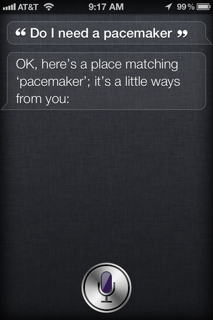
The implications of artificial intelligence to health care delivery and marketplace referrals have just changed with the introduction of Apple's new iPhone 4S and it's new voice recognition software, Siri. Here's what I got when I asked my phone if I need a pacemaker:


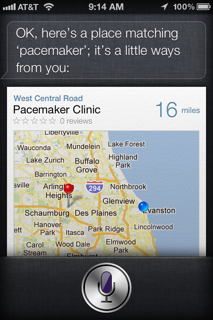
... and here's where "she" sent me to get the answer:


Nice. Except that's not OUR pacemaker clinic.

Uh, oh. Better call our marketing department and have them change our clinic's web-searchable name.

-Wes

Monday, September 26, 2011

I Wish I Had A Million Dollars

I wish I had a million dollars that I could use to convince my patients to stop smoking.

I wish I had a million dollars to get my patients to take their medicines.

I wish I had a million dollars to get people to shape up and lose weight.

I wish I had a million dollars to make sure people just listened to me so they would always wear their seatbelts and never use their cell phones while driving.

Heck, I just wish I had a million dollars myself.

But I don't.

That's because I'm a doctor: I don't offer people a million dollars to take my advice. I especially don't dangle the prospect of them earning that money if they follow my "non-medical" advice as I pose as one who gives medical "information" either. Nor do I pretend to think that I will change peoples' behavior with money.

But there are those who believe in the Keynesian economics of health care delivery where, if we just throw a bunch of money at these problems, they're all going to go away; that they're going to make a difference in millions of peoples' lives as they watch TV. Unfortunately, this theory of economics hasn't worked out so well for our economy and I really don't see why we should think this type of thinking should work so well for health care. Can we really change behavior of weight gain without changing the psychology and sociology of the home?

But there will always be ideologues in the world of marketing who believe in the power of Keynesian economics. After all, the money's not theirs; marketers get their dollars from advertisers. That way, like Oprah, they can offer a million dollars to promote, entice, market, and maybe even deceive - especially when they only give their million to a person the marketer chooses as their "winner" because they've followed their self-imposed health rules that follow a pre-ordained rubric.

Marketers have use this approach for years with things like The Price is Right, Jeopardy, and (my favorite) The Wheel of Fortune! We absolutely love this stuff. Like bugs to a light, we are drawn to the easy money that isn't.

But when it comes to health care, I just hope we really think about what we're getting for someone else's million.

-Wes

Thursday, September 15, 2011

We've Hit the Jackpot With A Million Hearts

I don't know what I was thinking with my last post about the Health and Human Services' Million Hearts initiative. I thought the whole point of this program was to save money. At the time, I was less than optimistic that the government could acurately reach their goal given the problems with many of the principles behind their program. For instance, maybe it was just me, but how typing on an electronic medical record system would save those lives was lost on me.

But at the time, I had no idea this whole campaign was based on fear.

Watch this introductory video I found on the brand new Million Hearts website, all paid for (of course) with your tax payer dollars:


Listen to all that horrible stuff that can happen to you! And they look like such nice, ordinary people. Man, if that doesn't scare you into seeing your doctor, I don't know what will!

I have now seen the light: this is going to be awesome! (* Cha-ching! *)

You know: terrified, low risk people clamoring for an appointment insisting on all kinds of blood draws, testing, EKGs, and sophisticated imaging tests! And for all those tests with false positives, maybe an angio, too! We're about to make a fortune on this program all in the name of "cost savings!" Baby, there's NOTHING like screening low risk people when it comes to making money: Yeeeeeee haaaaaa!

Boys and girls, step right up! Help our heath care system save money, will you? (* Yuck yuck yuck *) After all (wink wink) it's about saving a million lives! You did see that video above, didn't you? No? Make sure you do: this is really BAD stuff!

Boy, no WONDER the American Medical Association, the American Heart Association, the American College of Cardiology, Walgreens, United Healthcare and a whole host of other "private interests" want to support this program: it's not just about the hearts, it's about the Benjamins!

Even better: they're on Facebook and Twitter! (Hope their video goes viral! Pssst: here's the link: http://www.youtube.com/embed/poc1eTuJJfc)

Absolutely, positively, brilliant. (I hope our health care system's marketing team is watching.)

After all, nothing sells like fear.

-Wes

Thursday, May 26, 2011

A Variant of "Where's Waldo?"

For doctors, there's a new game they can play at their next professional society's scientific meeting: "Where's the RFID Scanner?"

See if you can find them in this picture from this year's earlier Heart Rhythm Society Scientific session:

Click to enlarge

-Wes

Wednesday, May 25, 2011

Atrial Fibrillation Ablation - Marketing Through Scientific Publications?

Circulation, a major cardiology medical journal, just published an article on atrial fibrillation ablation, complete with extensive video - all available for free online. It's an informative piece, but I found myself wondering why this piece was "unlocked" and available to the public for free when the most of the rest of the journal is locked. In the video, the atrial fibrillation magically disappears - I'm not sure how. Was it by ablation? Or did a cardioversion occur that we didn't see? And where is the discussion of potential complications? Should they be mentioned? The viewer is left to wonder if we're watching a promotional video rather than a truly balanced perspective on the technology. Might industry have supported this publication? Or maybe it was the hospital system's marketing department?

It isn't that the article doesn't have value. I just wonder if a new form of critical scientific review or additional disclaimers are warranted when video supplements are added to journal articles now that print-media is nearly obsolete.

-Wes

Tuesday, March 08, 2011

How Medication Lists Define Your Health Issues

Give me your medication list and I'll tell you your health problems.

It happens every day in emergency rooms across the country as confused elderly patients present for an acute problem unable to describe their past medical history but equipped with a list of medications in their wallet.

Metformin = type II diabetes

Synthroid = hypothyroidism

Lipitor + Altace + Lasix + Slo-K = ischemic cardiomyopathy

Lexapro = He's a little anxious or depressed

Viagra = Well, you know...

I bet I'd be right better than 90% of the time.

Now, imagine you're a pharmaceutical company wanting to target people with those chronic diseases. Where might you find them?

No problem. Just pay the insurers to provide you patients drug lists. No names need be exchanged in keeping with HIPAA requirements. But the drugs list attached to folk's cable TV box?

Perfect. You're in. With no legal strings attached. Then just fire away with that targeted direct-to-consumer advertising on TV, courtesy of your local health care insurance provider.

No wonder our health care industry movers and shakers love the electronic medical record.

Health care privacy? What health care privacy?

-Wes

Friday, February 04, 2011

February: Heart Month or Marketing Month?

Heart disease and February. What relationship could be more cozy?

From the scary risks of shoveling snow (yep, you could DIE, so be sure to lift a little at a time!), Mercedes-sponsored red dress parades and government-sponsored National Wear Red Day®, to tips for identifying heart attacks in women (men, you need a different month I guess), February has all the important stories to improve your "awareness."

Such a polite term, "awareness."

But I wonder, now that the internet is upon us and people are seeing their insurance rates and co-pays skyrocket if maybe we're shooting ourselves in the foot with all this heart month marketing hype. People are sick and tired of testing "just to be sure." It's starting to directly cost them a fortune, and people are pissed at having to pay a fortune for health care, let alone heart care.

I know, I know, I should be at the forefront of working with patients to stomp out heart disease. And goodness, people DO need to be attuned to diet, exercise, and weight loss. But the reality is, if we're giving you the ten latest tips on how to detect a heart attack, we're probably a bit too late.

That's the problem with all these press releases: while there's a need to raise "awareness" of heart health, there's also a very real need for people to take us, heart disease professionals, seriously to help cut costs in health care here. The last thing our health care system needs is more frivolous testing. Yet this is exactly what all this marketing does for our health care system: and it helps those with the largest PR budgets most of all.

Of course, there are researchers who depend on a portion of the funds raised to continue their work. After all, research is ridiculously expensive. There really is a need to raise funds for these scientists if we're going to continue our tradition of creative innovations in cardiovascular health care.

Maybe that should be the story line.

Maybe it would be nice to highlight these researchers' work and what that work hopes to bring to people rather than splashing a big feel-good red dress parade all over the media. Maybe we could focus on real life stories and less on the hyperbole. Maybe we could focus on the challenges, rather than the accolades and perfection.

Maybe then we'd have people take us seriously.

-Wes

Sunday, January 30, 2011

What's Next, Carding Doctors?

It was en international doctors' meeting and had been a long morning of running between sessions. The brief break before the late-morning sessions was underway and doctors were streaming into the exhibit hall. The Merck booth was spacious and had a pleasant gentleman wearing a conventional hall uniform with white gloves behind a counter with two ornate large coffee pots and small cups behind the counter. The line of conference-goers stretched some distance, as the bleary-eyed and shoulder-bag-laden attendees waited for their cup of "joe."

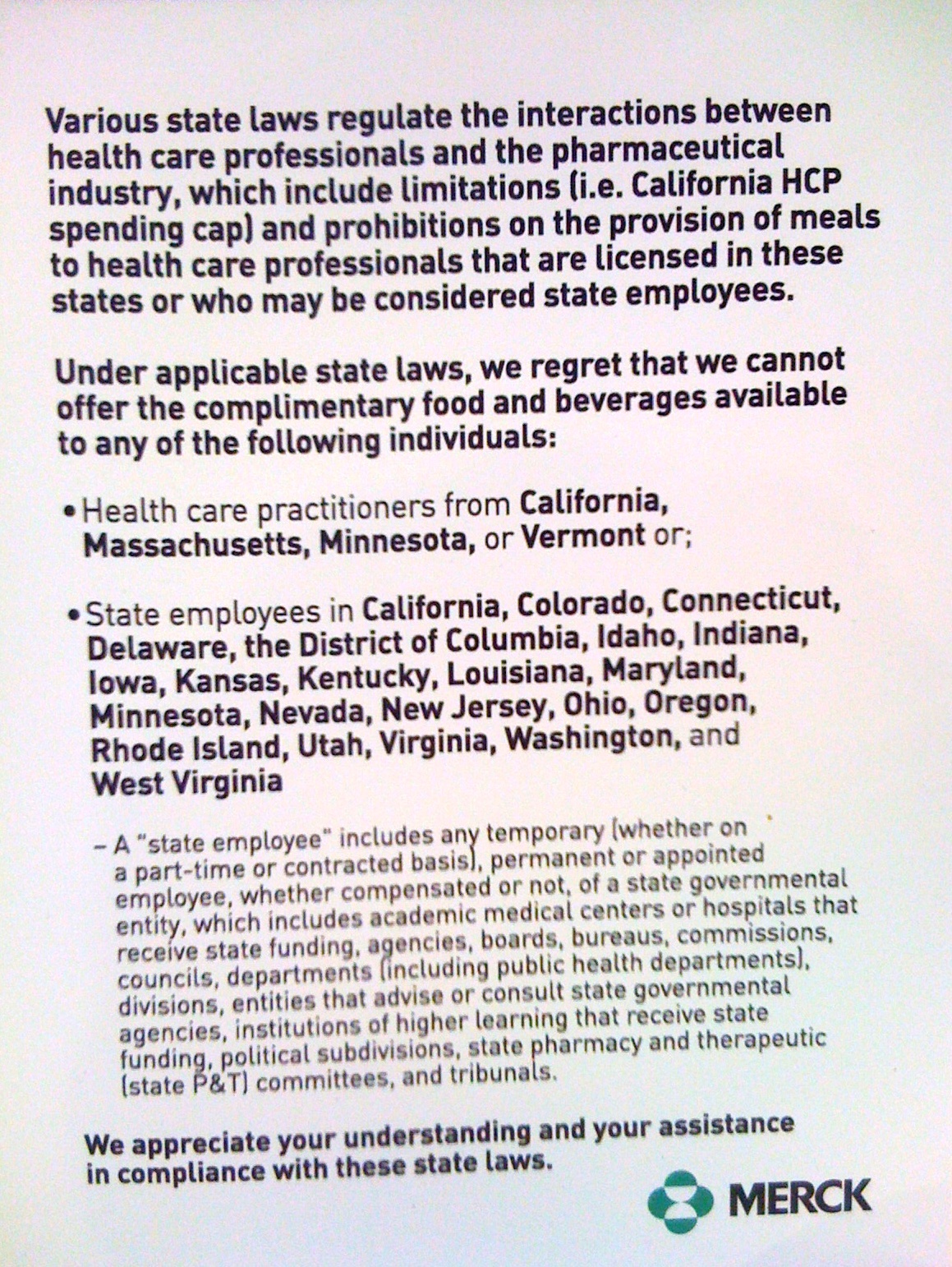
And there it was, a sign, prominently displayed at the corner of the counter:


While I never saw the poor guy behind the counter card a doctor who approached his counter, I wondered how this law for physicians from the great states of California, Massachusetts, Minnesota, or Vermont was to be enforced exactly.

Oh yeah, the honor system.

Who knew?

-Wes

Saturday, September 25, 2010

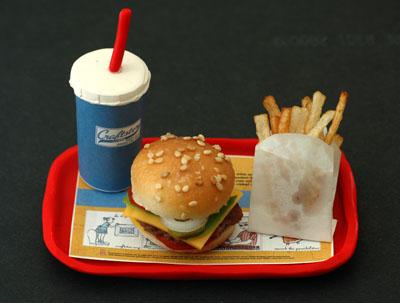
Our Health Care Happy Meal


"...health reform would allow for them to receive preventive care services without having to pay anything... Health reform starts at birth -- health plans will no longer be able to refuse to cover children younger than 19 simply because they were born with a medical condition... adults and seniors will no longer have cost-sharing provisions for preventive services... Together this all adds up to more patient protections than we have ever had, and this is just the beginning."

-Kavita Patel, "Will health reform be repealed?", CNN.com

Parents the world over know the magic of McDonald's Happy Meals. There's something about the promise of a Happy Meal - the way it's packaged, the free toy - young families and especially kids find them irresistible. But anyone who's purchased one of these knows the reality: that toys within the Happy Meal are typically played with for no more than three minutes and the plastic tchotchkes are discarded faster than the accompanying 2% milk.

And yet, despite the fact that the toy is worthless, kids clamor for the Happy Meal again and again. It's human psychology - we simply can't help ourselves. Hope springs eternal that next time the next Happy Meal will contain a better, more stimulating toy. It's the possibility of the unseen, the thrill of victory, something for nothing, and all with the word "free" attached that causes us to gravitate to these types of things time and again with no learning curve.

A distinctly American Way.

This, of course, is nothing new to marketers. But this promise has become the linch-pin of Obamacare spin from its inception. If it's free, do we care what it really costs? If it's free, do we care what the quality is? If it's free, do we care what the data about the utility of the test is? If it's free, do we care how the results are delivered?

Of course we do.

When the results come back and we're clutching the phone hoping to hear a familiar voice when none is there - that will be our new reality - but we're not pitching reality. Or costs.

There's a common sense saying: "If it sounds too good to be true, it probably is too good to be true." Even if we find that the $19.99 infomercial slicer/dicer doesn't work at home as it did on television, American's love the psychological reassurance that this time the government will make health care available to all without restriction, expense, or consequence, be they boys or girls, legal or illegal, young or old, right-handed or left-handed, with preexisting condition or not, - no one will be left behind in our new omnipotent era of Patient Protection and Affordability.

We should all know better, but the sad fact is, we're all suckers.

Not that some of the promises made wouldn't be useful, helpful, or even critical to many families. But to position health care reform (and the Patient Protection and Affordable Care Act in particular) as a win-win with no hard choices, no limits to health care for our seniors, no future commoditization of medicine, unlimited access to procedures and doctors, and all with no enormous financial cost, is to stick one's head in the sand.

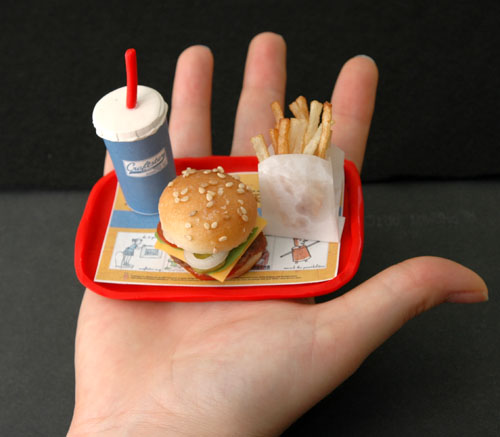
Package it, spin it, wrap it in plastic - then put it next to a cheeseburger.

No matter what you call it, it's still Hopium.

-Wes

Reference: Images courtesy of 'A Bite to Eat,' Craftster.org

Sunday, April 25, 2010

The Health Hazards of 3D TV

I can't read for any length of time in a moving vehicle - it makes me nauseous.

This is because in order for the body to determine where it is at all times, the brain combines visual information, touch information, inner ear information, and internal expectations to judge its position in space. Under most circumstances, the senses and expectations agree. When they disagree, there is conflict, and motion sickness can occur. In my case with reading in a car, my eyes that are fixed on the written page tell my brain that I am still. However, as the car goes over bumps and accelerates or decelerates, my inner ear disagrees resulting in my brain activating the nausea center and causing motion sickness.

Well the same thing might happen with 3D TV.

Samsung Australia offers these warnings about the potential effects of 3D TV:
  • Some viewers may experience an epileptic seizure or stroke when exposed to certain flashing images or lights contained in certain television pictures or video games. If you or any of your family has a history of epilepsy or stroke, please consult with a medical specialist before using the 3D function.

  • If you experience any of the following symptoms, immediately stop watching 3D pictures and consult a medical specialist: (1) altered vision; (2) lightheadedness; (3) dizziness; (4) involuntary movements such as eye or muscle twitching; (5) confusion; (6) nausea; (7) loss of awareness; (8) convulsions; (9) cramps; and/or (10) disorientation. Parents should monitor and ask their children about the above symptoms as children and teenagers may be more likely to experience these symptoms than adults.

  • Viewing in 3D mode may also cause motion sickness, perceptual after effects, disorientation, eye strain, and decreased postural stability. It is recommended that users take frequent breaks to lessen the likelihood of these effects. If you have any of the above symptoms, immediately discontinue use of this device and do not resume until the symptoms have subsided.

  • We do not recommend watching 3D if you are in bad physical condition, need sleep or have been drinking alcohol.

  • Watching TV while sitting too close to the screen for an extended period of time may damage your eyesight. The ideal viewing distance should be at least three times the height of the TV screen. It is recommended that the viewer's eyes are level with the screen.

  • Watching TV while wearing 3D Active Glasses for an extended period of time may cause headaches or fatigue. If you experience a headache, fatigue or dizziness, stop watching TV and rest.

  • Do not use the 3D Active Glasses for any purpose other than viewing 3D television. Wearing the 3D Active Glasses for any other purpose (as general spectacles, sunglasses, protective goggles, etc.) may physically harm you or weaken your eyesight.

  • Viewing in 3D mode may cause disorientation for some viewers. DO NOT place your television near open stairwells, cables, balconies or other objects that may cause you to injure yourself.
I suppose I should not be surprised, since these issues with 3D TV are very reminiscent of problems experienced with virtual reality display units in the 1980's. But as a recent Samsung TV customer and guy with my particular vestibular predilection, I was surprised to find that these health concerns are not published on Samsung's US website.

This is not to say there are not web sites out there with plenty of folks who have experienced motion sickness from 3D technology - there are. But we should not forget that there are many, many families outside of Australia who have children with epilepsy or a history of epilepsy and this technology is being actively marketed to children. Granted, photosensitive epilepsy is relatively rare, affecting less than 5% of all people with epilepsy, but as the market reach of this technology expands, manufacturers should make these health issues of their technology known to the public, irrespective of the country in which they reside.

-Wes

Monday, April 19, 2010

2010 Cardiology Calendars

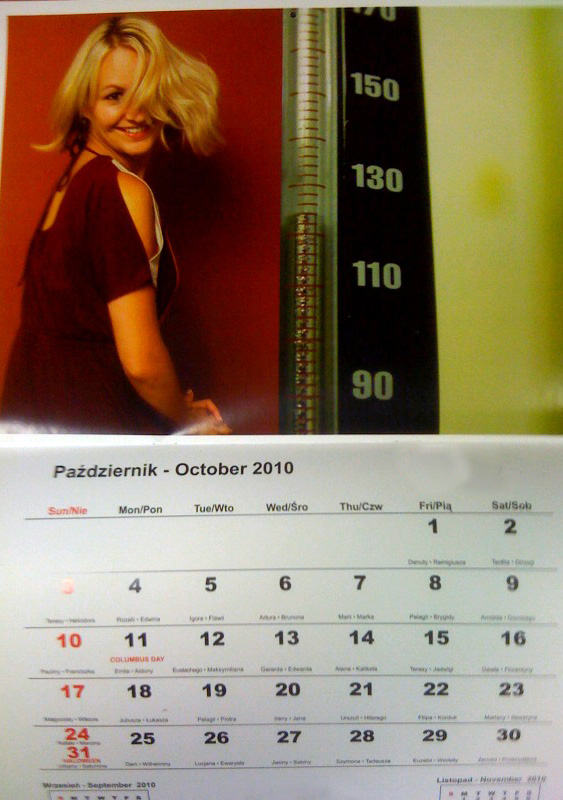
Marketing efforts abound in health care and cardiology in particular, but promoting your office staff on a 2010 calendar?

Click to enlarge (if you must)


I guess if it sells sports magazines, it might just work for some private cardiologists.

-Wes

Saturday, January 30, 2010

Which Drug Reps Do Cardiologists Prefer?

It seems Pfizer has won the marketing prize:
Rating pharma reps for the market researcher SDI (press release here), cardiologists named Pfizer's sales reps No. 1, with Merck's as No. 2. Rounding out the top five were Merck's Schering-Plough, AstraZeneca, and Novartis.

So just why did these 300 heart doctors rank the reps as they did? Most graded Pfizer first for several different attributes, including their product know-how, which they considered the most important quality of a good sales rep. Pfizer's sales folks also were No. 1 for the sensitivity to doctors' busy schedules, for their professional conduct, and for their drug-sample offerings. In fact, the only category in which Pfizer didn't rank first was in giving unbiased comparisons with competing products. Schering-Plough's cardiovascular sales force won that prize.
Wow. Amazing that "product know-how" was the most important quality of a good sales rep. Glad to know.

But I also agree with the other important qualities mentioned that were important to cardiologists: "sensitivity to doctors' busy schedules" (knowing when lunch is served), professional conduct (apropriate gender with low BMI's and stunning dress codes), and drug-sample offerings (not just giving out those skimpy rebate cards, but real drugs).

Now, if we could just get some pens...

-Wes

Thursday, October 22, 2009

Prosthetic Aortic Valve? There's an App For That!

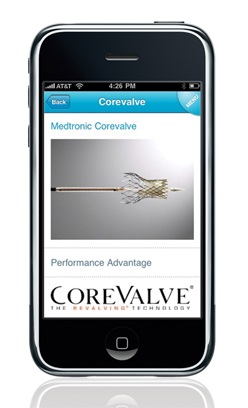
Meet iAorticValve produced by iMobileHealthCare, available now for upload to your iPhone.

In an era where the medical device industry is increasingly concerned about health care reform, innovation, and the implications for providing their products to patients, it's nice to know there are helpful companies sprouting up that can place company literature about mechanical, biologic, or percutaneous prosthetic aortic valves, both approved and experimental, on your iPhone free of charge. Further, if you want to go ahead and calculate your own STS (Society of Thoracic Surgery) Risk Calculator for placement of a heart valve, heck, you can do that also.

Do not, however, look for objective criticism of the various valve types since most device literature there fails to include warnings, containdications, or adverse events about the devices. Further, references were not hyperlinked, making the utility of the quickly reviewing the references challenging for the casual user. Maybe more information is provided if you're a patient that registers for the $39.99 (doctors pay $59.99) annual access fee to become part of the "network," but I regret that I failed to cough up the change when I realized I could just search Google instead on my iPhone for the same information.

However, I did register as a "patient" as a free trial to look around, and saw some nicely-produced industry videos from YouTube for my consumption, information on some nice doctors with an interest in experimental percutaneous valve placements and thoracic surgery along with information on which insurers those doctors accept.

But a word of caution is also in order. The images and content I found on the iPhone app appear to be those also displayed on the manufacturers' websites and from doctor's available online webpages. Whether or not these doctors are aware that this information exists there is uncertain. I did a little investigative reporting and discovered that at least one of the doctors on the company website did not personally register his information nor grant permission for its use there. In short, then, the iMobileHealthCare team appears to have aggregated information from various web sources with a heavy bias toward percutaneous aortic valve implantation. I could find no disclaimer to this effect on their site.

US FDA regulations that clearly state that marketing experimental devices before they are properly labeled is strictly prohibited. But does that marketing scheme pertain to other companies that don't make those devices? I don't know. It is interesting that this app promotes doctors who are investigating some of the percutenous aotic valve devices to patients eager to "learn more." I'll let you decide if that sounds like marketing.

But alas, it's a new iPhone frontier and the information contained on the device is out there in other locations on the web. Feel free upload the 5+ megabyte app on your iPhone for "free" and look around at the pretty pictures and see the link under "Resources" to PubMed's home page or the blog with a few entries. While there are a few bugs in the software, it's interesting to see where things are going in mobile health care information age for patients and doctors.

It's also interesting to see the challenges industry will have going forward trying to comply with FDA marketing regulations.

-Wes

iAorticValve press release.

FCC Disclosure: I have no financial interest in the iAorticValve app nor iMobileHealthCare.

Tuesday, October 06, 2009

Presidential Photo-Ops and Those Pesky White Coats

After the botched Presidential photo-op yesterday to promote the government's unprecedented intrusion into the doctor-patient relationship, I wonder if the President is aware of the latest thinking on white coats and that England has proceeded to ban them.

Ah, but no matter. It's better living through bureaucracy and politics...

-Wes

Tuesday, July 21, 2009

I'd Better Get Some Extra-Large Catheters

You've got to love health care marketing:
NorthShore University HealthSystem, a large hospital operator in the northern Chicago suburbs, said it has signed a three-year deal to be the health-care partner of the Chicago Bears.

The deal comes after the National Football League for the first time allowed NFL teams to display sponsorship logos on their practice jerseys, NorthShore and the Bears said.
Remember guys, overtime is okay, just no "sudden death," you know what I mean?

-Wes

Saturday, December 06, 2008

When Technology Fails Technology

When Boston Scientific's SimSuite goes sour, it never ceases to amaze me how the media can still spin the event favorably for the company:
The virtual patient, "Simantha," had unexpected technical problems that short-circuited the presentation by SimSuite Medical Simulation Corp. employees.

Had Simantha been virtually alive and kicking, staff and physicians would have been able to try their hand at saving her life by performing a virtual cardiac procedure using new technology. Chances were good that she would have died during training in order teach the staff how to handle a crashing patient. None of that was able to happen thanks to intricate technology and its flaws.

SimSuite, the 35-foot bus travels year round and stops at hospitals and medical centers in the hopes of training the staff on the latest treatments for lesions in coronary arteries that are difficult to treat due to their location or size.

"This is a great way for staff to get hands-on training without a real patient on the table," said Chris Mitchelli, field clinical educator. "We can simulate an emergency."

Dr. Karthik Sheka, interventional cardiologist at PMC, was on hand to test out the new technology but never got the chance.

"All of the devices coming out now are much more advanced than before. It is something that you don't want to try out on a patient so this is a great idea to get the practice," he said. "There are always risks and complications with procedures such as this so you are able to play around with your options on a simulated patient.

Medicine changes fast so physicians need to keep their skills up-to-date. When Simantha is working properly, she is there to help."
Gosh, I feel the love for Simantha, don't you?

-Wes

Monday, August 11, 2008

Marketing Accurate Empathy

Meanwhile, back in the AstraZeneca marketing department:

"Hey, Joe, I got an AWESOME idea! We've got a few hundred thousand extra bucks lying around, right? Let's get some trucks! I mean, we could drive 'em around and burn some diesel, and pull right up to hospitals all over the frickin' country, man!"

"Dude, why didn't I think of that? Like, that's so frickin' coooool!"

"Yeah, man, like, we can say things abut heart failure, like:
"It’s the number one reason why people over age 65 are admitted to hospitals. For that reason alone, it’s important to raise awareness of Congestive Heart Failure and help healthcare professionals recognize and understand its symptoms."
"Man, we'd sound so, so, I mean, authoritative, man! And sooo, since doctors have no clue how to diagnose heart failure and since they need to be using more of our drugs like Zestril, Toprol XL, and Atacand, like, DUDE, it'll be frickin' awesome to suffocate them with a pneumatic vest connected to a Mac computer and make 'em beg for our drugs! Then they'd HAVE to use 'em! And once we let 'em tour the driver's front cabin, they'll want to even drive the frickin' truck!" (* giggling loudly *)

"Dude, like, how big a truck's that gonna take for one simulator, man?"

"Like, I dunno, but hey, man, they got these cool expandable sides. Here's an idea that I thought would work, so I had 'em make a prototype..."

"No waaaayyyyy...."

"Waaayyyy!!!! Here, look:"


"Oh, Dude, you're so awesome. Can't wait to see those marketing numbers soar! It's gonna be soooo phat!"

"Dude, can I ride your coattails when you become our next CEO?"

"Heh, yeah man.... Hey, you doin' NASCAR this weekend?"
Meanwhile, back in the heart failure patient's kitchen, the USA Today arrives:
Drug companies are quietly pushing through price hikes of 100% — or even more than 1,000% — for a very small but growing number of prescription drugs, helping to drive up costs for insurers, patients and government programs.
"Whoa, DUDE! Somebody's gotta pay for the truck..."

-Wes

h/t: Medgadget.