Want to win an iPod Nano? Head on over to Medgadget and take a guess at who will be the new Nobel prize winners in science. You could win a much-coveted iPod Touch.
(For the brilliant readers of this blog who feel they would qualify, I won't tell if you nominate yourself.)
-Wes
Wednesday, September 30, 2009


Could Health Care Help Fund the 2016 Olympics?
 With the recent report in Crain's Chicago Business that disclosed that health care costs in Chicago are 25% above those in nearby cities, the use of health care to help fund the 2016 Olympics might not be as far fetched as it sounds.
 While is it convenient for journalists and policy pundits to constantly point fingers at doctors who order too many tests as the sole cause of the explosion in health care costs, we must not forget other reasons our health care costs in Chicago might be uniquely situated to assist in that process.
- It is an inconvenient truth that the city of Chicago has the highest total sales tax of all major U.S. cities. It is also one of the most complex. 10.25% is levied on all non-perishable goods purchased, while 2% is levied on qualifying food, drugs, medicines and medical appliances.
- Chicago health care, although principally run by "non-profit" health systems sheltered in many ways from large tax obligations, is still "taxed" through secretly cloaked "hospital assessments" on gross revenues folded into insurance payments made to the hospitals. This asessment was approved recently by none other than the federal government whose commander in chief is serving as the Principle Spokesperson to promote the 2016 Olympic games.
- Chicago has, and continues to have, an almost limitless ability to add billion dollar health care facilities to its metropolis. Construction projects have historically been the thing of big unions, and no one knows big unions like health care. While many of these facilities have been substantally supported through philanthropic doles at their outset, the amount of money required to "keep the lights on" at such huge, expensive facilities mandates that beds be full and admissions processed. Need I say more?
- With the increasing consolidation of health care, especially in the lucrative, higher-income areas of Chicago, the ability of insurers to demand concessions on health care pricing has dwindled. Further, the adoption of the electronic medical record (EMR) has profited health care systems greatly by reducing insurance claim denials and shortening the times accounts are in collections. This leads to more revenue, which in turn, leads to more construction. More contruction leads to more... well, you know.
- And last, but not least, are hospital parking rates. I challenge just about any city in the nation to find rates as high as ours. Oh, and those rates are taxed by the City of Chicago.
-Wes
Monday, September 28, 2009
Drilling Down On Cardiology Cuts
Currently, cardiologists are on a treadmill of increasing patient visits to offset declining Medicare payments and increasing overhead. When the government plans on blanket cuts to cardiologists in favor of primary care, the impact will be felt first by those in rural areas that already have a shortage of cardiologists. Then will come pressure on small town practices as they are forced to close. Bigger cities with large health systems will be least affected.
But this is all part of the Grand Plan of health care physician reform: make sure everyone gets insurance so they can "prevent" cardiovascular disease while those that have it can't find a specialist.
I see how this works.
-Wes
But this is all part of the Grand Plan of health care physician reform: make sure everyone gets insurance so they can "prevent" cardiovascular disease while those that have it can't find a specialist.
I see how this works.
-Wes
Sunday, September 27, 2009
The Final Opus
It was midnight and the Emergency Room door opened like a curtain on a Broadway. A lone man sat in blue at the countertop, writing. Behind him, the chorus, working feverishly on the protagonist - the script rehearsed a thousand times before.
Clothes off, Story?, facemask, C-collar, endotracheal tube, breath sounds, telemetry, IV’s, blood work, pulse ox, Stop.
Resume, Pulse?, patches, register, call the lab, Allergies?, epi, atropine, Pressure?, twitching, NG, x-ray, Stop. Pulse?
Resume, pacing wire, max output, capture?, not quite, “potassium?”, not ready, blood gas, foley, Capture! Stop.
Resume, blood gas, no capture, damn, tweak, better, pulse?, yes. Lab?, no, Which meds?, cardiologist, Go.
Vent, hoist, prep, stick, contrast, open, shock, balloon pump, a-line, movement, labs, blood gas, peep, transport, c-spine, CT, Go.
Then intermission.
It’s hard to imagine the enormity and speed of it all. The cast. The direction. The audience in the hall. The cast of characters working together in hopes of seeing a small glimmer of life. From the man in blue who arrived there first, seeing the terrified look on the woman’s face, to the orderly that swept the floor as the curtain fell once more, I wondered.
It’s a strange thing, this concert: brutal, raw, exciting, exhausting. Drama, romance and tragedy together. It’s a story told a thousand times at the world’s most expensive theaters across the country. And as doctors, we receive a free pass backstage to witness, first hand, a drama like no other. Yet despite that privilege and exclusivity, none of us knows how the play will ultimately end.
More often than not, the story ends sadly as the Playwright predicted. The play, sometimes, goes on too long. But before the final curtain is called, the brief respite from the inevitable lends solace to the bereaved as they gather friends and family to reflect on remarkable chapters before them. Finally, with tears and the hugs, quiet descends and the the stage emptied while the cast of characters never hear their much deserved applause.
-Wes
Clothes off, Story?, facemask, C-collar, endotracheal tube, breath sounds, telemetry, IV’s, blood work, pulse ox, Stop.
Resume, Pulse?, patches, register, call the lab, Allergies?, epi, atropine, Pressure?, twitching, NG, x-ray, Stop. Pulse?
Resume, pacing wire, max output, capture?, not quite, “potassium?”, not ready, blood gas, foley, Capture! Stop.
Resume, blood gas, no capture, damn, tweak, better, pulse?, yes. Lab?, no, Which meds?, cardiologist, Go.
Vent, hoist, prep, stick, contrast, open, shock, balloon pump, a-line, movement, labs, blood gas, peep, transport, c-spine, CT, Go.
Then intermission.
It’s hard to imagine the enormity and speed of it all. The cast. The direction. The audience in the hall. The cast of characters working together in hopes of seeing a small glimmer of life. From the man in blue who arrived there first, seeing the terrified look on the woman’s face, to the orderly that swept the floor as the curtain fell once more, I wondered.
It’s a strange thing, this concert: brutal, raw, exciting, exhausting. Drama, romance and tragedy together. It’s a story told a thousand times at the world’s most expensive theaters across the country. And as doctors, we receive a free pass backstage to witness, first hand, a drama like no other. Yet despite that privilege and exclusivity, none of us knows how the play will ultimately end.
More often than not, the story ends sadly as the Playwright predicted. The play, sometimes, goes on too long. But before the final curtain is called, the brief respite from the inevitable lends solace to the bereaved as they gather friends and family to reflect on remarkable chapters before them. Finally, with tears and the hugs, quiet descends and the the stage emptied while the cast of characters never hear their much deserved applause.
-Wes
Wednesday, September 23, 2009
Doctor Payment Reform
It's the holy grail of physician payment reform: ending fee-for-service payments to doctors and, instead, pay doctors based on the quality of care they perform. Remarkably, Congress feels they've found the answer:
... how do we define "quality?"
Medicare has historically withheld payments to physicians unless they performed lock-step "quality measures" before granting release of the remainder of 1.5 percent of the doctors' payments that were billed. Needless to say, this model has been an abysmal failure (subscription) at improving the "quality" of care delivered and has been very expensive to implement. Further, others have noted the challenge of measuring quality on the basis of clinical outcomes.
But this has not dissuaded our legislators from forcing the "quality issue." No, they have proposed to find a fix by the creation of a hugely expensive C.M.S. Innovations Center:
Perhaps I'm too cynical, but I think the subliminal message coming from Washington so far is really this: doctors should be happy becoming salaried employees of larger health systems. This way, the government can pay the health system a bundled fee and the doctors can fight for their share of the kitty.
So far, this seems to be how the government will envision "quality" at an affordable price in the years to come.
I just wonder how many doctors will stick around to find out.
-Wes
Thus, the new language in the Senate Finance bill would finally connect Medicare reimbursements to quality, as opposed to volume.Wow. That sounds great! But there's just one problem...
The measure gives the secretary of Health and Human Services, working with the Centers for Medicare and Medicaid Services, the power to develop quality measurements and a payment structure that would be based on quality of care relative to the cost of care. The secretary would have to account for variables that include geographic variations, demographic characteristics of a region, and the baseline health status of a given provider's Medicare beneficiaries.
The secretary would also be required to account for special conditions of providers in rural and underserved communities.
Additionally, the quality assessments would be done on a group-practice level, as opposed to a statewide level. Thus, the amendment would reward physicians who deliver quality health care even if they are in a relatively low quality region.
The secretary of Health and Human Services would begin to implement the new payment structure in 2015. By 2017, all physician payments would need to be based on quality.
... how do we define "quality?"
Medicare has historically withheld payments to physicians unless they performed lock-step "quality measures" before granting release of the remainder of 1.5 percent of the doctors' payments that were billed. Needless to say, this model has been an abysmal failure (subscription) at improving the "quality" of care delivered and has been very expensive to implement. Further, others have noted the challenge of measuring quality on the basis of clinical outcomes.
But this has not dissuaded our legislators from forcing the "quality issue." No, they have proposed to find a fix by the creation of a hugely expensive C.M.S. Innovations Center:
"It would be funded with $10 billion over the next several years to implement pilot projects and demonstrations to promote new payment reform opportunities. There are quite a few problems with the bill, but this provision is truly visionary. The House legislation, HR 3200, mentions payment reform, but it [provides] only modest funding of $275 million. That’s not enough.I suppose $10 billion compared to $275 million is "truly visionary" if you stand to receive the funds. One wonders what the tax payers will get at the end of the day for this grotesque amount of money.
Perhaps I'm too cynical, but I think the subliminal message coming from Washington so far is really this: doctors should be happy becoming salaried employees of larger health systems. This way, the government can pay the health system a bundled fee and the doctors can fight for their share of the kitty.
So far, this seems to be how the government will envision "quality" at an affordable price in the years to come.
I just wonder how many doctors will stick around to find out.
-Wes
Sunday, September 20, 2009
The Challenge of Health Care Reform
... was eloquently outlined by economist N. Gregory Mankiw, in his article that appeared in the New York Times this morning. He uses the primary prevention of heart disease by taking daily statin drugs to lower cholesterol to make his point about the costs of prevention that leads him to ask a central, but very complicated, question festering in the background of much of the health care debate:
Until then, special interests will continue to wield far too much influence (and price pressure) over those most affected most by the health care delivery transaction.
-Wes
"Despite all the talk about waste and abuse in our health system (which no doubt exists to some degree), the main driver of increasing health care costs is advances in medical technology. The medical profession is always figuring out new ways to prolong and enhance life, and that is a good thing, but those new technologies do not come cheap. For each new treatment, we have to figure out if it is worth the price, and who is going to get it.In answer to his Big Question, I'd vote for the consumer (and I mean the patient rather than hospitals) since they have to pay the tab one way or the other. To that end, price transparency of goods and services should be required for anyone involved in health care delivery. In short, every effort should be made to empower patients in such complicated decision making.
The push for universal coverage is based on the appealing premise that everyone should have access to the best health care possible whenever they need it. That soft-hearted aspiration, however, runs into the hardheaded reality that state-of-the-art health care is increasingly expensive. At some point, someone in the system has to say there are some things we will not pay for. The big question is, who? The government? Insurance companies? Or consumers themselves? And should the answer necessarily be the same for everyone?"
Until then, special interests will continue to wield far too much influence (and price pressure) over those most affected most by the health care delivery transaction.
-Wes
Which Is It: Self-Referral or Gainsharing?
A series of fines have been levied in New Jersey for various fraudulent practices that might have a chilling impact on the way hospital systems do business:
But an even more perplexing problem is posed if there are competing groups vying for the services of one lucrative hospital laboratory, these same "directors" may be perceived as skewing the availability of lab time toward their groups, creating a source of friction for their competition. The defense of such a case can get very expensive for a hospital system.
But just when it appears doctors are starting to get the message about such arrangements, comes a new form of legal kickback: "gain-sharing." Gosh, I don't know why all of this is confusing, do you?
Could this be part of the government's upcoming strategy to save "$500 billion" in Medicare fraud costs? If so, it appears figuring out what is legal and what's not will continue to be next to impossible for physicians, and when there's a need for cash, well, it appears the side with the larger bankroll will win.
But if there's one takeaway from all of this: doctors and hospitals might want to carefully scruitinize their current consulting/employment arrangements.
After all, the government's a little short of cash right now.
-Wes
The doctors -- Ravindra Patel of Scotch Plains, Jasjit Walia of Edison and Rakesh Sahni of Rumson -- agreed to pay a combined $960,000, representing twice the annual salaries they received from the University of Medicine and Dentistry of New Jersey, according to Ralph J. Marra, acting U.S. attorney for New Jersey.Many hospital systems pay non-employed specialist physicians from the surrounding community as "directors" of various specialty departments. In the case of cardiologists or gastroenterologists, one such role might be as "Director of the Catheterization Laboratory" or "Director of the GI Laboratory." Such directors reportedly play a role in assuring proper staffing, scheduling, or as training resources for nurses or technicians. But if no work actually occurs by the contracted physician in kind, then the government can move in. It appears this was the case in New Jersey.
Lawyers for the cardiologists were unavailable for comment last night.
Federal law prohibits doctors from accepting payments in exchange for referring patients. Beginning in 1996, authorities say University Hospital began trying to increase the number of cardiac procedures it performed by offering salaries to doctors in private practices in exchange for referrals.
A criminal inquiry into the program began after a federal monitor -- former U.S. Attorney Herbert J. Stern -- charged many of the doctors were given no-show faculty jobs. Most had few if any research credentials, and few actually taught, authorities said.
But an even more perplexing problem is posed if there are competing groups vying for the services of one lucrative hospital laboratory, these same "directors" may be perceived as skewing the availability of lab time toward their groups, creating a source of friction for their competition. The defense of such a case can get very expensive for a hospital system.
But just when it appears doctors are starting to get the message about such arrangements, comes a new form of legal kickback: "gain-sharing." Gosh, I don't know why all of this is confusing, do you?
Could this be part of the government's upcoming strategy to save "$500 billion" in Medicare fraud costs? If so, it appears figuring out what is legal and what's not will continue to be next to impossible for physicians, and when there's a need for cash, well, it appears the side with the larger bankroll will win.
But if there's one takeaway from all of this: doctors and hospitals might want to carefully scruitinize their current consulting/employment arrangements.
After all, the government's a little short of cash right now.
-Wes
Saturday, September 19, 2009
Repeating History?
After the recent collapse of the stock market created by the sub-prime mortgage mess, my jaw dropped when I saw this sign promoting the "FHA's Purchase Stimulus Act of 2009" (I think they mean the American Recovery and Reinvestment Act of 2009) as I left work today:

No wonder people love government-sponsored programs. They're all about "free money."
-Wes

No wonder people love government-sponsored programs. They're all about "free money."
-Wes
Friday, September 18, 2009
The Constitutionality of Mandates
The requirement that people who do not purchase insurance will be fined by our government may not be Constitutional:
-Wes
(In all major health reform bills proposed so far), those who don’t buy insurance would be required to pay a penalty, according to the various health proposals. But this mandate isn’t so much a regulation as a “tax,” and Congress shouldn’t be allowed to tax people just because they are uninsured, argue David Rivkin and Lee Casey, who served in the Justice Department during two Republican administrations. Otherwise, Congress could institute similar “taxes” on anyone who doesn’t follow other orders, such as joining a health club or exercising regularly, they point out.Good point.
-Wes
Thursday, September 17, 2009
OR Fires and Pacemaker Implants
"What we've been advocating for years is that the open delivery of oxygen under the drapes essentially has to stop," with some exceptions such as cardiac pacemaker surgery or operations involving a neck artery, Bruley said.
Most pacemaker and defibrillator implants I know occur with one side of the drape lifted, so the patient can see and interact with the nurse or anethesiologist during a pacemaker or defibrillator implant and oxygen cannot collect beneath the drape. But in the case of a patient being draped so the drape remains completely covering the patient's face during deeper sedation, I could see how such a horrible thing could happen.
Sheesh. Be careful out there.
-Wes
XBox 360 Helps Heart Researchers
 Need good graphics for a research project modeling the electrophysiology of myocardium? Well, sometimes the best ideas come from adapting existing technology used for the gaming community:
Dr Simon Scarle, a researcher on the Warwick team, used a single Xbox 360 Graphical Processing Unit (GPU) to model how electrical signals were transmitted through damaged heart cells.Maybe this is how we can start to recruit more teens for the basic sciences...
The chip is able to perform parallel processing at a fraction of the cost of a dedicated "cluster" system or a network of PCs.
Dr Scarle said: “You don't quite get the full whammy of a cluster, but it’s close.
"Instead of pumping out stunning graphics, it's reworked; in the case of my research, rather than calculating the position of a structure and texture it's now working out the different chemical levels in a cell."
-Wes
Wednesday, September 16, 2009
Four Digits
It came across my pager (names changed, of course):
At this point I've spent way too much time attempting to answer the page, and am about to give up, when I have an idea. I checked all of the wards I usually travel for a "Ms. Smith." Soon, I find an eligible candidate and note that she's on the surgical floor. I call that floor's number and a nice nurse answers:
Not long ago, to call a phone number in the Chicago area we had to start using the area code in conjunction with the regular seven-digit phone number to place a call due to the exploding number of cell phones being issued. More area codes were quickly added, and communications have fourished.
With the increased consolidation of hospitals to larger health systems, the ability to quickly connect to a specific extension is becoming problematic, especially when we include pager numbers, cell numbers, and ward extentions to the mix.
Simply put: it's death by four digits now.
Suggestion: "Seven is heaven."
-Wes
"Please call Sally 3050 re: Ms. Smith"I called:
"This is OB/GYN, may I help you?"So the call is made. This time, no answer. So I call the Operator:
"May I speak with Sally, please?"
"I'm sorry, there's no Sally here."
"Thanks, I'll try Hospital #2"
"Operator, how may I help you."And so I was connected. It rings and rings and rings. Once again, no answer.
"Yes, can you tell me where extension 3050 is?"
"Um, looks like OB/GYN."
"Whaaaat?" (My mind raced. Who did I see on the OB service??? I had no clue.)
"Um, sorry, I already called them. They didn't know anyone there by the name of Sally."
Operator: "Would you like me to connect you with Hospital #3, maybe they have that extension."
"Yes, please."
At this point I've spent way too much time attempting to answer the page, and am about to give up, when I have an idea. I checked all of the wards I usually travel for a "Ms. Smith." Soon, I find an eligible candidate and note that she's on the surgical floor. I call that floor's number and a nice nurse answers:
"Surgical floor, this is Kerry, can I help you?"Then it hits me once again.
"Yes, are you taking care of Ms. Smith?"
"Yes, I am."
"I was called to a 3050 by Sally, is she there?"
"Nooooo. No one here by that name. Uh, wait a minute, isn't that the resident's pager number?"
Not long ago, to call a phone number in the Chicago area we had to start using the area code in conjunction with the regular seven-digit phone number to place a call due to the exploding number of cell phones being issued. More area codes were quickly added, and communications have fourished.
With the increased consolidation of hospitals to larger health systems, the ability to quickly connect to a specific extension is becoming problematic, especially when we include pager numbers, cell numbers, and ward extentions to the mix.
Simply put: it's death by four digits now.
Suggestion: "Seven is heaven."
-Wes
Tuesday, September 15, 2009
Beware of Computer-directed Lemmings
Older man with demenia falls, hits head.
Wife: "Arnie, Arnie are you all right?" Arnie just mumbles.
Heart rate slow, blood pressure low - paramedics give atropine - heart rate better, blood pressure not so. Comes to ER.
CT of head/neck done - okay. Hemoglobin 9.2
Junctional rhythm, narrow escape.
Patient confused.
Patient admitted.
Lovenox given.
Flu shot administered.
"Um, lovenox?"
"Yep, I saw the DVT alert!"
"Was there a hemorrhage alert, too?"
"Hmmm, I didn't see one..."
-Wes
Wife: "Arnie, Arnie are you all right?" Arnie just mumbles.
Heart rate slow, blood pressure low - paramedics give atropine - heart rate better, blood pressure not so. Comes to ER.
CT of head/neck done - okay. Hemoglobin 9.2
Junctional rhythm, narrow escape.
Patient confused.
Patient admitted.
Lovenox given.
Flu shot administered.
"Um, lovenox?"
"Yep, I saw the DVT alert!"
"Was there a hemorrhage alert, too?"
"Hmmm, I didn't see one..."
-Wes
Boston Scientific's Ultra-Soft Device Advisory
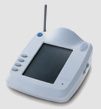 How do you notify people gently about a device alert that doesn't involve an implanted device, but rather a monitoring device developed for the implanted device? Where does a sophisticated implanted defibrillator device end: with the part that's implanted inside a patient or does it include the peripherals that monitor the implanted device, too?
These are the issues that have surfaced with a very recent medical device advisory issued by Boston Scientific on 9 September 2009 in a "Dear Doctor" letter (pdf) I managed to find on their website, and was brought to my attention by an anonymous commenter on this blog:
BackgroundHopefully, all patients with these Communicators have been notified, but how are device clinic nurses and physicians supposed to be notified? I checked with our device clinic nurses and they were unaware of this advisory - is it because we have no patients included in this advisory? (I'm not sure). But what I do know is that the potential to miss clinically important information when we increasingly rely on color-coding of parameters on websites to identify out-of-range parameters is something every doctor and device nurse should be made aware, especially since patients move from one location to another or might not have received notification about their communicator.
Boston Scientific defibrillators include a Daily Measurements feature that conducts several diagnostic tests on a daily basis to monitor the implanted defibrillator and leads. At the next in-clinic visit, test results are displayed on the programmer, with out-of-range results appropriately highlighted.
To supplement in-clinic visits, the LATITUDE Patient Management system enables clinicians to monitor the status of the implanted system remotely between clinic visits. Status information from the implanted defibrillator is transferred by an in-home communicator to the LATITUDE Website according to a schedule set by the clinician. If Daily Measurements are programmed On in the implanted defibrillator (nominally On) and the desired Alerts are configured On in LATITUDE, out-of-range Daily Measurements will generate a corresponding Red or Yellow Alert on the LATITUDE Website.
Description
Boston Scientific has determined that alert conditions for a limited subset of out-of-range Daily Measurements related to leads may not be recognized by Model 6476 (United States) or Model 6468 (Europe) LATITUDE in-home communicators. If a communicator fails to recognize a valid alert situation, notification for this or subsequent alerts for the same test will not be displayed for physician review on the LATITUDE Website. However, Daily Measurement values uploaded from the implanted defibrillator will be available from the ALL PATIENTS page after completion of the next full device interrogation, which occurs during Weekly Device Alert Interrogations and scheduled remote follow-ups.
Although a limited subset of alerts may not display on the LATITUDE Website, it is important to note that all Daily Measurement tests within the implanted defibrillator function normally, and results will be displayed as designed when the defibrillator is interrogated with a programmer.
Rate of Occurrence
We have identified 8 missed Red Alerts and 223 missed Yellow Alerts from approximately 19,000 patients in the United States with implanted Boston Scientific defibrillators followed with a LATITUDE Model 6476 Communicator. One missed Yellow Alert has been identified from approximately 50 patients in Europe followed with a LATITUDE Model 6468 Communicator. However, root cause analysis indicates that both communicators are subject to missed alerts at the same rate of occurrence. The observed rate for a missed Red Alert (highest priority) has been approximately 0.01% per month of monitoring. No patient deaths or injuries have been associated with this communicator behavior.
Whether a targeted letter posted on a company's website is adequate notification to electrophysiology personnel nationwide about this type of advisory, whether it affects our patients directly or not, probably is not adequate either.
After all, we're ultimately responsible to our patients.
-Wes
Monday, September 14, 2009
ICDs in Women: The New York Times Gets It Wrong
If there are potential "shortcomings in the data," then you shouldn't print a misleading title: "Survey Shows Heart Device Aids Men More Than Women." Rather, a better title would have been, "More Data are Needed to Understand the Effectiveness of Defibrillators in Women." Do we really want to withhold defibrillators from women on the basis of such a retrospective literature meta-analysis?
But then, it's the New York Times.
A much better review, including a comment on the study in question by yours truly and fellow EP blogger Dr. Rich Fogoros, can be found over at Larry Husten's Cardiobrief blog.
-Wes
But then, it's the New York Times.
A much better review, including a comment on the study in question by yours truly and fellow EP blogger Dr. Rich Fogoros, can be found over at Larry Husten's Cardiobrief blog.
-Wes
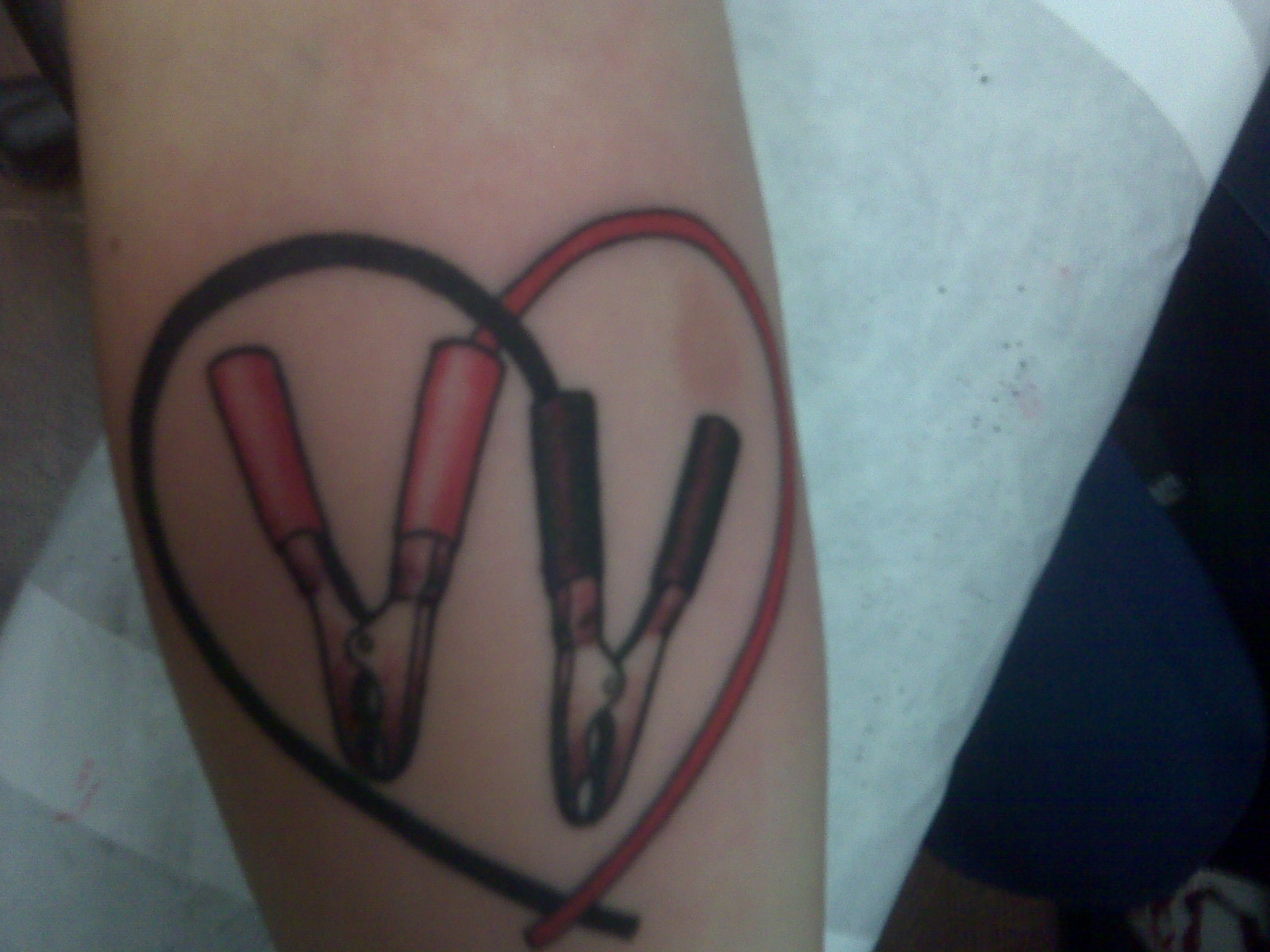
Another Cool ICD Tattoo
A friend of one of our device nurses who has an implantable cardiac defibrillator (ICD) had a truly reflective moment recently when she tried to decide what would be a cool tattoo to don. She saw one of our t-shirts and used it as an inspiration for her tattoo. I must say, I like her design better:

Heh.
-Wes
Heh.
-Wes
Sunday, September 13, 2009
Circular Reasoning
Here's a dumb thought: If you want to save costs on medical devices to the federal government, require a tax fee concessions of $4 billion dollars from the medical device companies to fund a health care overhaul.
Now either that $4 billion will get added to the cost of devices (and the patient/insurer's tab) or the device companies will decide that they must pay the fee to maintain their current pricing.
Government pressures hospitals and doctors by paying less, so hospitals keep the heat on medical device makers to lower costs so they can make their margins.
It all sounds good, right?
But according to one analyst, it seems device makers would rather pay the fee than make their prices transparent:
Why do the patients always seem to lose with these government-mandated scenarios?
-Wes
Now either that $4 billion will get added to the cost of devices (and the patient/insurer's tab) or the device companies will decide that they must pay the fee to maintain their current pricing.
Government pressures hospitals and doctors by paying less, so hospitals keep the heat on medical device makers to lower costs so they can make their margins.
It all sounds good, right?
But according to one analyst, it seems device makers would rather pay the fee than make their prices transparent:
But the mechanism for how devices companies might pay matters more than what they pay, according to Morgan Stanley analyst David Lewis. "A 'flat tax' is preferable, in our view, to targeted industry fees as our larger concern is the creation of more infrastructure intended to catalyze pricing transparency," he said.And so, with the fee, the government pays itself while the medical device prices continue to remain inflated.
Why do the patients always seem to lose with these government-mandated scenarios?
-Wes
Friday, September 11, 2009
The Importance of Blogs and Device Advisories
Yesterday, I reported on this blog the trouble Medtronic had experienced with and earlier batch of defibrillators due to a low-voltage capacitor problem from an outside supplier back in 2005 or 2006. The problem was identified in a relatively small number of devices and has not affected their devices' functionality, but the expected battery life of these batch of devices was discovered to be shorter than they had expected. A root cause analysis was undertaken and the capacitor issue was identified. After consulting their physician advisory panel, they elected to notify all doctors who implant their devices about the issue and provided the patients' names that they were aware of to doctors to help facilitate patient notification.
Importantly, there was not a press release.
Personally, I think this was a good thing. As of this moment, I was only able to find one reference to this advisory in once major newspaper, the Wall Street Journal. No doubt, the news will spread rapidly from there.
But it will not spread like a press release would: fired instantaneously to every news organization around the globe always looking for the next tidbit to report, especially tidbits that create lots of angst. Importantly, the piece from the Wall Street Journal did not include a hyperlink where patients would look up if their device was affected.
It has been interesting to also see who has been reading my blog post on this matter. Sitemeter is handy for that. At first, it was lots of hits from medtronic.com, but not too soon thereafter came guidant.com, bostonscientific.com, and the like.
There is no question that these device manufacturers are fierce competitors. As such, let's just say they like to keep things relatively private between themselves. But these device manufacturers may also use the same outside vendors for supplies, including low-voltage capacitors in their circuitry and maybe, just maybe, by getting the information out about one manufacturer's design problem, others will check their old devices as well.
So while blogs have been controvertial for their ability to spread news, good or bad, at lightning speed, the fact that they don't appear at first on the Nightly News or front page of major newspapers might just be a good thing while effectively communicating the issues to our patients (and other interested parties) without terrorizing the masses.
-Wes
Importantly, there was not a press release.
Personally, I think this was a good thing. As of this moment, I was only able to find one reference to this advisory in once major newspaper, the Wall Street Journal. No doubt, the news will spread rapidly from there.
But it will not spread like a press release would: fired instantaneously to every news organization around the globe always looking for the next tidbit to report, especially tidbits that create lots of angst. Importantly, the piece from the Wall Street Journal did not include a hyperlink where patients would look up if their device was affected.
It has been interesting to also see who has been reading my blog post on this matter. Sitemeter is handy for that. At first, it was lots of hits from medtronic.com, but not too soon thereafter came guidant.com, bostonscientific.com, and the like.
There is no question that these device manufacturers are fierce competitors. As such, let's just say they like to keep things relatively private between themselves. But these device manufacturers may also use the same outside vendors for supplies, including low-voltage capacitors in their circuitry and maybe, just maybe, by getting the information out about one manufacturer's design problem, others will check their old devices as well.
So while blogs have been controvertial for their ability to spread news, good or bad, at lightning speed, the fact that they don't appear at first on the Nightly News or front page of major newspapers might just be a good thing while effectively communicating the issues to our patients (and other interested parties) without terrorizing the masses.
-Wes
Subscribe to:
Posts (Atom)