Showing posts with label AMA. Show all posts

Friday, January 20, 2017

ABIM Stationary Sidebars: MOC and UCSF

I attended the University of California, San Francisco's (UCSF) electrophysiology program from 1993-1994. As I continue to explore the myriad of conflicts of interest inherent to the American Board of Medical Specialties (ABMS) Maintenance of Certification (MOC) program, it has come as quite a surprise to me that so many members of my alma mater (and the institution itself) were either passive or active participants in  the strongman tactics used by the American Board of Internal Medicine (ABIM) as a "message and deterrent" (as explained by former President and CEO of the ABIM, Christine Cassel, MD) to control the ABIM/ABMS monopoly on continuing medical education in the United States.

Let me explain.

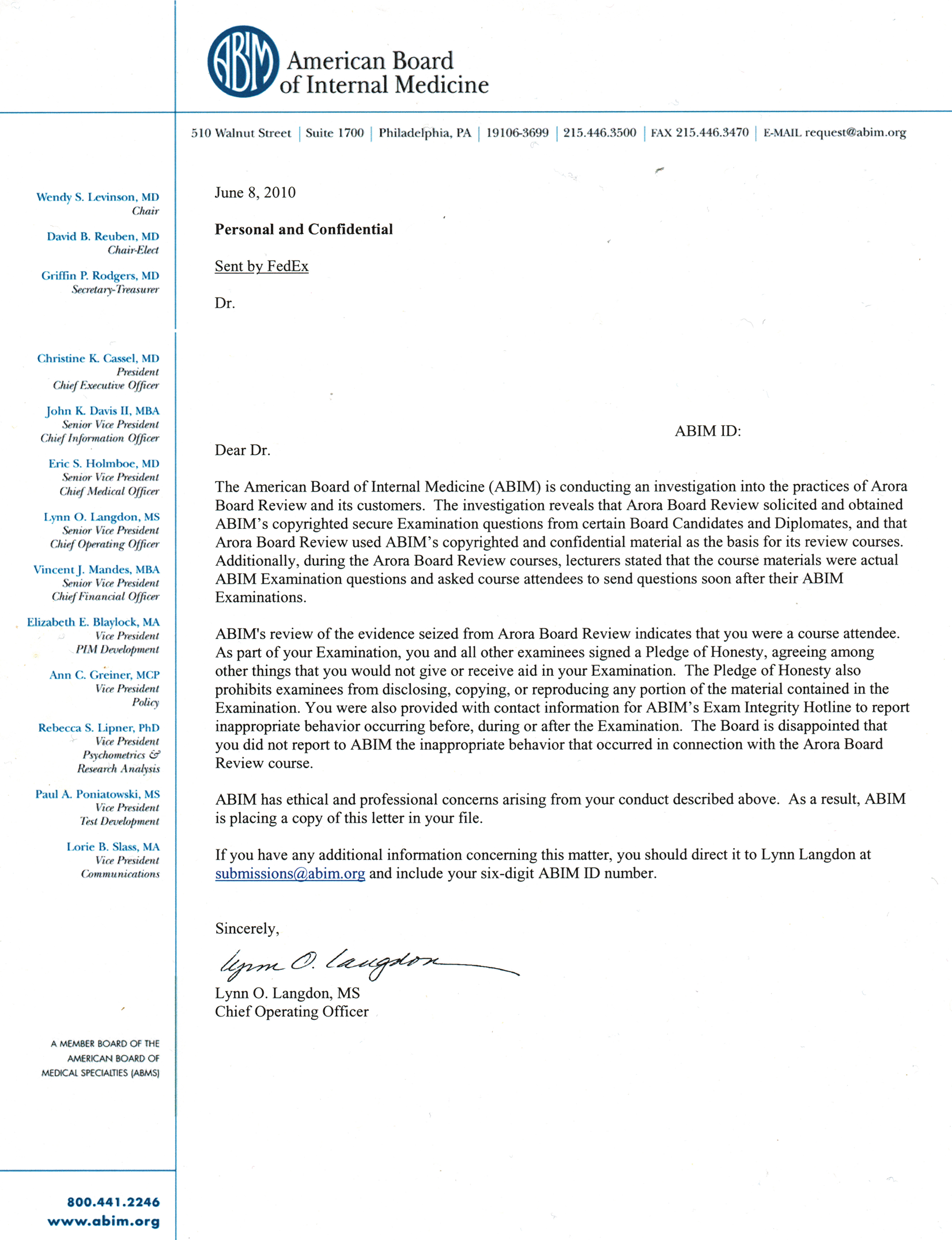
In a retaliatory letter dated May 8, 2012, authored by Ms. Lynn Landon, the non-physician Chief Operating Officer of the ABIM at the time, Jaime Salas-Rushford, MD was accused of forwarding, prior to ever taking the ABIM Board certification exam, board review questions to the ABIM-certified instructor of the CME-accredited Arora Board Review course. About three years after the fact and after 139 others had already been sued or sanctioned for attending the same course (or at the very least, like a flashback to the McCarthy era, had warning letters "added to their file") this retaliatory letter declared that ABIM imposed an immediate, unlimited revocation of Board certification of Dr. Sala-Rushford and to "notify the Medical Board in every jurisdiction in which you are licensed" without due process.

On the stationary sidebar of that letter appear the names of the officers of the ABIM and it’s board members at the time: Chair Catherine R Lucey, MD, Chair-Elect Robert M Wachter, MD, Secretary-Treasurer Talmadge E King, MD, and President and CEO Christine Cassel, MD among others. Were these leaders listed in the sidebar mere figureheads of the ABIM when this occurred or were they ultimately responsible for the organizations' actions as their positions suggest?

It is remarkable that three of the above senior ABIM leaders were on staff at UCSF at the time. These same individuals now hold significant leadership positions at the USCF medical school. Dr. King serves as Dean of the UCSF Medical School since 26 May 2015, Dr. Lucey as the Vice Dean for Education, and Dr. Wachter serves as Professor and Chair of the Department of Medicine. In addition to their current academic positions at UCSF, these same individuals hold leadership in other organizations within the Accreditation Council for Graduate Medical Education (ACGME):
  • Dr. Lucey serves as an at-large board member of the American Board of Medical Specialties 2016-2017 and on the Board of Directors of the of the Association of American Medical Colleges (AAMC).

  • Dr. King has a long history of serving on the Board of Directors of the National Committee for Quality Assurance (NCQA) from 2010-2017 as an unpaid board member and currently works alongside the organization’s founder and President, Ms. Margaret E. O’Kane. Remember that NCQA, under Ms. O'Kane's direction, developed, maintained, and expanded the Healthcare Effectiveness Data and Information Set (HEDIS), the nation's most widely used quality measurement tool and has grown to a $50 million company with almost 300 employees. NCQA is also the main accreditor of recognized medical homes and one of two accrediting organizations permitted by federal law to accredit plans in the new health insurance exchange marketplaces that came online October 1, 2010, under the Affordable Care Act (ACA). Because the NCQA also credentials insurance providers as part of the ACA, one insurer quality metric they created requires physicians to "maintain" their certification via ABMS MOC programs if they want to receive payments from those insurers. Furthermore, the NCQA and the ABMS will continue to directly benefit from "quality" rules that they have put into place and lobbied Congress to enact laws such as the Medicare Access and CHIP Reauthorization Act of 2015 (MACRA). MACRA's Merit-based Incentive Performance is MOC on steroids (see comments to the final rule). While NCQA maintains the quality measurement tool that is used in MACRA to determine US physician pay based on their notion of care "value," much of the NCQA's own IRS 2015 Form 990 is redacted. Who is protecting our patients' interests when even the IRS allows this to occur?

  • Dr. Wachter has his own financial conflicts with MOC that also benefitted the UCSF. According to IRS Form 990's, in 2012 when the above sanction letter was issued, Dr. Wachter served as 'Director-Chair" of the ABIM earning $38,888 from the ABIM and $6,626 from the ABIM Foundation.

    While serving as "Director-Chair" of the ABIM and Director of the ABIM Foundation, Dr. Wachter was also simultaneously serving as Director of the IPC The Hospitalist Company, Inc, reportedly running a “leadership development course (at UCSF) for their practice group leaders.” Dr. Wachter's financial haul from his relationship with IPC was significant. He pocketed 1,355 shares of IPC stock valued at $50.68 on 1 Aug 2013 and another 2650 shares of stock valued at $58.50 on 2 January 2014. According to SEC filings, he earned $210,586 in 2014 ($ 108,000 as cash, $ 55,000 in stock and $ 47,526 in options). USCF benefitted from a fellowship grant with IPC brokered by Dr. Wachter that began sometime in 2010 or 2011 (Dr. Wachter's description of the program was published on his blog 18 November 2011.) On 17 June 2014, the Department of Justice filed suit against IPC Hospitalist Company alleging the company overbilled federal health insurance systems for physician evaluation and services. Nonetheless, it appears Dr. Wachter still received a stock option award of 2186 shares of IPC on 2 Jan 2015. Undeterred by the DOJ suit (or perhaps because of it), TeamHealth acquired IPC Hospitalist Company for hefty $80.25 per share on 23 Nov 2015, again profiting Dr. Wachter and UCSF (with whom he had a publicly-disclosed sharing agreement where he kept 80% and UCSF received 20% of this relationship). As of 17 Jan 2017, it appears a settlement agreement in the DOJ's suit against IPC The Hospitalist Company will be reached soon. In retrospect, watching Dr. Wachter doing an Elvis impersonation at Mandalay Casino in Las Vegas on behalf of corporate medicine at patients' expense with the tacit approval of the Dean of the UCSF Medical School reflects poorly on the University. These activities also serve to erode any remaining trust practicing physicians have on the unproven ABMS MOC program to serve in our patients' best interest.
It is remarkably coincidental that on 27 December 2012, an article appeared in the New England Journal of Medicine by one of Wachter’s colleagues at UCSF, Robert B. Baron, MD written in conjunction with John Iglehart, a “national correspondent” for the New England Journal of Medicine, explaining the controversy surrounding MOC and reinforcing the need for it. Dr. Robert Baron (no relation to Richard Baron, MD of the ABIM) never disclosed his simultaneous collegial associations with so many in leadership positions of the ABIM at the time, nor did either author mention the fact that the "NEJM Group" would be announced in March, 2013 to profit the Massachusetts Medical Society that included the launch of their Knowledge+ Maintenance of Certification “state-of-the-art adaptive learning” educational product April 16, 2014.

Who wouldn't want to join such a financial and reputational party bestowed upon these former ABIM leadership physicians? What medical center wouldn't like to benefit from the ABMS MOC system so many from UCSF have? How many other institutions are? Given what we now know about these colluding private organizations and their ethical and financial tactics, why haven't these respected leaders come forward to denounce the activities of the ABIM for which they served? Perhaps these leaders are fearful UCSF would lose their ACGME accreditation as a teaching institution eligible for additional Medicare training funds if they did. Or perhaps these individuals saw little risk of collateral damage to their professional reputation if ABIM used its strongman tactics against a small number of vulnerable, less prominent physician colleagues.

The irony of the ABIM requiring doctor clients of Arora Board Review subject to the sting operation organized by an undisclosed convicted felon to participate in “ethics” courses and pay additional fees to the ABIM before their board certification credential could be reinstated should be lost on no one.

According to USCF's own Faculty Code of Conduct: "The integrity of the faculty-student relationship is the foundation of the University’s educational mission. This relationship vests considerable trust in the faculty member, who, in turn, bears authority and accountability as mentor, educator, and evaluator. The unequal institutional power inherent in this relationship heightens the vulnerability of the student and the potential for coercion. The pedagogical relationship between faculty member and student must be protected from influences or activities that can interfere with learning consistent with the goals and ideals of the University." I would argue that the unequal institutional power carried by the ABIM (and other ABMS member boards) that can revoke a physician's ability to practice or earn a living on the basis of an unproven repeated testing is even larger and warrants even greater scrutiny.

It is clear that the complex financial interrelations of many tax-exempt private organizations that require the ABMS MOC credential have developed over the years to monopolize the physician continuing education process. In my opinion, it is far too coincidental that all of these physicians a single institution just happened to hold unelected leadership positions in so many of these interrelated private entities that financially benefit from MOC at the same time. I also believe the fact that another physician from the same institution published a manuscript in the New England Journal of Medicine while his colleagues stood to benefit politically and financially from their positions gives the appearance of collusion. I believe the UC Board of Regents, Attorney General of California, and/or even the Governor of California have a responsibility to investigate the use of public monies and academic positions to benefit these many non-governmental private entities that act outside of University responsibilities and act, as one independent journalist described them, "more akin to a protection racquet."

The ABMS Maintenance of Certification controversy and those culpable for its strongman tactics extends far further than just the ABIM. When respected leaders of the academic community fail to speak out about the irresponsible activities that occurred during their tenure with the organization, I believe they passively condone them. I suspect this is why we have heard little from other members of the academic community since the collusion extends to current board members of the NCQA, AAMC, ABMS, the New England Journal of Medicine, and other prominent academic institutions like UCSF.

Practicing US physicians voted to end the ABMS MOC program before the AMA House of Delegates meeting in June 2016 because of the unexplained financial dealings and the strongman tactics employed by the organization, yet it continues, even now. This no longer surprises us since the AMA is a member organization of the ACGME, too.

How high do the conflicts go in the US medical education system?

It is now clear they go all the way to the top. It is also clear why.

It's time for the AMA to shut the ABMS MOC program down as practicing US physicians have voted because it's doing more harm than good, not only to reputable practicing US physicians nationwide, but to their patients and academic institutions (like my alma mater) that purport to train and educate physicians to become ethical, hard-working, trustworthy doctors without fear of reprisal for educating themselves any way they choose.

-Wes

Disclaimer: I serve as an expert witness on behalf of Jaime Salas-Rushford, MD.

Friday, July 01, 2016

One Small Step

Here's the official final wording of the AMA House of Delegates' Resolution 309, Continuing Medical Education Pathway for Recertification adopted June 15, 2016:
Resolution 309, Continuing Medical Education Pathway for Recertification, was adopted as amended. The final recommendations are as follows:

RESOLVED, That our American Medical Association call for the immediate end of any mandatory, secured recertifying examination by the American Board of Medical Specialties (ABMS) or other certifying organizations as part of the recertification process for all those specialties that still require a secure, high-stakes recertification examination; and be it further

RESOLVED, That our AMA support a recertification process based on high quality, appropriate Continuing Medical Education (CME) material directed by the AMA recognized specialty societies covering the physician’s practice area, in cooperation with other willing stakeholders, that would be completed on a regular basis as determined by the individual medical specialty, to ensure lifelong learning; and be it further

RESOLVED, That our AMA reaffirm Policies H-275.924 and D-275.954 (Author's note: use the AMA Policy Finder to review these policies); and be it further

RESOLVED, That our AMA continue to work with the American Board of Medical Specialties (ABMS) to encourage the development by and the sharing between specialty boards of alternative ways to assess medical knowledge other than by a secure exam; and be it further

RESOLVED, That our AMA continue to support the requirement of Continuing Medical Education (CME) and ongoing, quality assessments of physicians, where such CME is proven to be cost-effective and shown by evidence to improve quality of care for patients.

-Wes

Wednesday, June 22, 2016

ABIM's Bedfellows

Right now, the Center for Medicare and Medicaid Services (CMS) has a comment period that extends through 27 Jun 2016 regarding MACRA, the new payment scheme created by the health care industry, to pay physicians on the front line of health care. I encourage every physicians to voice their  opinion about this plan,

Before you do, however, I'd like to remind you of the recent indifference by the AMA regarding the House of Delegates overwhelming vote to end Maintenance of Certification last Monday.  Needless to say, there's a reason why.

Remember those conflicts of interest with Christine Cassel, MD, former President and CEO of the American Board of Internal Medicine (ABIM) and, later, the National Quality Forum, the ABIM, and ABMS?  Remember the huge splash the announcement of those conflicts had when her conflicts were disclosed by Propublica, and Dr. Cassel quickly relinquished her ties to Premier and Kaiser Health Plan and Hospitals? Remember how Christine Cassel, MD pocketed a cool $230,000 ($100,000 of which was in Premier securities) just before Premier, Inc purchased CECity for $400 million?

Here's the image on the front page of the CECity website:

(Click to enlarge)
Look at all of the friends of the ABIM who welcome CECity's services: Johns Hopkins Medicine, the American Osteopathic Association (AOA), Merck, the American Medical Association (AMA), Aetna, The American College of Physicians (ACP), Premier, the ABIM, NextGen, Athenahealth, and Optum. These are just a few of ABIM's corporate bedfellows. The AMA has no interest in what doctors really want or need.  The AMA has no interest in ethics or what's best for patients.

The AMA and the ABIM only have interest in what's best for the AMA and the ABIM.

This is why the ABIM wants physicians to do Maintenance of Certification and enter all their demographic and survey data into the ABIM's database. It has nothing to do with maintaining physician skills but has everything to do with medicine's new digital party.

This is why physicians must act collectively to stop the tax fraud, violations of research ethics, and abuse of our civil rights that has occurred at the ABIM and the ABMS. Because like it or not, you're paying to have your right to practice medicine independently corrupted by these organizations that stand to earn billions from your work while being simultaneously coerced into paying ABIM's fees.

-Wes


Thursday, June 09, 2016

Behind the Curtain

On Monday morning (13 June 2016), I will enter "Crystal City" and speak to the men and women behind the curtain at the AMA House of Delegates Meeting here in Chicago. Today begins the first day of registration and the meeting carries through Wednesday morning. They have devoted a tiny 1.5 hours of time to speak on MOC beginning on Monday, 13 June 2013 at 9AM, Columbus Room EF, at the Hyatt Regency Chicago, 151 Upper East Wacker Drive, Chicago.  I will be joined by Charles Culter, MD of the Pennsylvania Medical Society and Mr. Charles Kroll, the forensic accountant from Minnesota with whom I have worked closely to dissect the IRS tax forms of the ABIM and ABIM Foundation. I have only 15 minutes to talk, but there will be a 30-minute question and answer session following.  I understand the session will be videotaped.

As I sit here this morning and try to collect my thoughts, it is clear that I cannot possibly cover all of the corruption that I can uncovered on these pages with the ABIM and with MOC, but what I know is that there are many who still don't know about my work and the far-reaching implications it has, not just for the ABIM, but for the entire ABMS re-certification industry and colluding members of the ACGME that have enjoyed their high salaries and health club memberships on the backs of our re-certification and membership fees.

Practicing physicians across the US and around the world are a world divided from the bureaucratic administrative members of the AMA. They are keenly aware that the AMA has not had their backs in the recent years. My hope is to educate and inform, not throw flames, but because the depth and breadth of the corruption and conflicts of interest with MOC have been so dire, it is time the delegates  at the AMA and the world at large be informed.

At noon today (CST) I will publish my latest work on the MOC debacle that has involved years of research and investigation. Many new revelations are exposed.  This piece will form the foundation for my remarks at the AMA House of Delegates meeting on Monday.  Be sure to check back here then.

Me?  I'll be doing cases and will moderate comments on my blog when I can.  Consequently, posting comments may be delayed until I can get to them.

Thanks for your understanding.

-Wes

Monday, June 16, 2014

Medicine's Great Disruption

"Disruptive innovation is competitive strategy for an age seized by terror."
- Jill Lepore, author of
"The Disruption Machine: What the Theory of Innovation Gets Wrong"

"What do you want me to do with all the stuff in this box?" my wife asked this weekend.

I looked inside and saw my former self: one of BNC and pin connectors, wires, a notebook with sin, cos, theta, and a host of other equations - a project I worked on but never grew - it came from a time of creativity and endless possibilities for me in medicine.  Engineering and computers were how I entered this field - the hope of solving problems, doing things a little better, safer, and maybe faster.  A chance to innovate and collaborate.  A chance to make a difference.

But the world of medicine has changed from one that promotes discovery and creativity to one that promotes productivity and the lock-step over the past several years.  See more.  Do more.  Don't sway.  Follow the guidelines.  Stay between the lines.  Want to try something new?  The message to doctors is loud and clear now: don't you dare!

Every month another set of guidelines and rubrics, as if the guidelines are how we want doctors to think, or rather, recite.  Medicine is rapidly becoming a staid world of group-think, as we are forced to use the latest "disruptive technology" to change our medical world.  Bit by endless meaningless bit.  The "value-added" ideas never end.  There is little ownership now.  Little personal investment.  Punch the clock.  Get 'er done.  Do what those grey suits say.

It's the era of the creative destruction of creativity. 

What kind of doctor we are breeding in medicine now?  The American Medical Association (AMA) and Accreditation Council of Graduate Medical Education (ACGME) want to shorten studies and push medical students through school based on competencies and "not based merely on a traditional time-based system."  Time with patients can no longer be trusted it seems.  In the place of time: competencies gained from simulators. Plastics superseding flesh. As though doctors should become technocrats that make a cameo appearance at the patient's bedside with their smart phone in hand.

Is the hurry-up push toward technology and Big Data really needed or what we're being sold?   Enter your note, doctor, click another box, you're being scored now.  Do as you're told.  What's that? A little software glitch?  Don't rock the boat.  Just work around it.  The fix will be here in September. We must do more with less.  Oh, and forget the staff, they're expensive. Hurry up.  Perfect data, remember?  Your pay depends on it.

Oh, and that idea you wanted to work on?  Sorry, no time or money.  Really doctor, we're on a time line. Could you move it along?  My kids have a play date.

The Disruption Machine is moving, alright.

But will we be better for it?

-Wes


Friday, March 28, 2014

Why Do Most Medical Professional Societies Call Chicago Home?

Professional medical societies "concerned" about physician education, advocacy and quality appear to have multiplied at an alarming rate over the years. Interestingly, it seems many of the professional offices of these societies are based in Chicago.  On my review, no other city in the United States hosts more of them (not even Philadelphia).

Why is this?

First, there is the grand-daddy of all physician professional societies: the American Medial Association based at AMA Plaza, 330 N Wacker Drive, Chicago. 

Next, there's the American Board of Medial Specialties (ABMS) (who boasts its supervisory role over 24 subsidiary specialty medical societies across the nation, including the American Board of Internal Medicine and the American College of Cardiology among others) that has it's home at 222 North LaSalle Street in Chicago, just blocks away from the AMA building.  

Next, there's the little-known Council on Medical Specialty Societies,  who also seemed to be concerned with physician "quality" located just across the Chicago river at 35 E. Wacker Drive.

And let's not forget the Acceditation Council on Graduate Medical Education who oversees all graduate medical education in the United States located at 515 North State Street in Chicago.

Makes you wonder why all of these societies are within blocks of each another in Chicago. 

Maybe it's so they can have lunch together.  Maybe it's because of all of the academic medical centers located here in Chicago who have retiring professors that need a place to land.  Maybe it's because of the state's political leanings.  Or perhaps it's just because of Chicago's fairly central US geographic location? 

One thing's for sure, it certainly isn't because of low real estate prices or low taxes.

-Wes


Monday, January 13, 2014

The AMA's Role in Maintenance of Certification

Andrew Schlafly, attorney for the Association of American Physicians and Surgeons and the group who sued the American Board of Medical Specialties over the Maintenance of Certification process, recently described (video - scroll ahead to 5min, 30 sec) the scene in court:
“When I sued the ABMS and six attorneys showed up on the other side to oppose the lawsuit, the lead attorney on the other side was an attorney that has represented the AMA for decades. He was on the other side defending this MOC and trying to stop our lawsuit and trying to stop the discovery. We’re going to get in and get discovery and find out what they have in mind for this and how they’ve been doing this, how they’ve been getting this into hospital medical staff requirements for so long.

And already I’ve traced that they paid this ABMS group (which is the umbrella group) something like $600,000 to a law firm in Newark, New Jersey. It popped up on their IRS Form 990, which discloses what their expenditures are, and I raised that with the court. 'They say they don’t practice in New Jersey, they don’t do business in New Jersey and here they are paying $600,000 plus to a Newark, New Jersey law firm. What’s that for?'  And by the way, what this Newark, New Jersey law firm does is it has a relationship with hospitals. And they came back and said 'Oh, no, what that money was for that was to help us set up MOC in Singapore.' They’re going worldwide with this!”

I was surprised the AMA (who is touts themselves as the political voice of US physicians) is defending the Maintenance of Certification (MOC) process and (more troubling if true) going to such efforts to expand this process to a country in which it has no jurisdiction.  Most physicians find the MOC process onerous, overly time-consuming and ridiculously expensive.  Why are US doctors paying dues to support AMA activities involving credentialing and licensure overseas?  A little digging shows that the AMA holds furvent support for the overall progression of the Maintenance of Certification process evolving to a Maintenance of Licensure (MOL).  From their own Council of Medical Education minutes (pdf):
“The AMA has robust policies related to medical licensure. A review of all AMA policies related to licensure was conducted to validate that the policies are consistent with the AMA Principles of MOL (Maintenance of Licensure).

AMA policy supports the underlying principles of MOL which are consistent with the direction that the practice of medicine is evolving. The recommendations of the Advisory Group contain options for doctors to meet MOL requirements that can also be used to meet other purposes and will provide an opportunity to monitor outcomes and produce useful data. The AMA will await the final document of the FSMB (ed note: Federation of State Medical Boards) with great interest and hopes that the MOL program will be carefully coordinated as much as possible between the states.

CME will predictably be a major component of the MOC/MOL model.
Physician members of the AMA might want to ask a few pointed questions to their leadership. After all, they're paying for this in more ways than one.

I just endured the maintenance of certification process for both cardiology and cardiac electrophysiology and can attest to the stressful nature of this process for working physicians. The thought that this unproven testing process could also be used to revoke my license to practice medicine in the future is unconscionable.

-Wes


Wednesday, September 25, 2013

When Doctors' Names are Bought and Sold

Recently, an envelope arrived for me containing an advertisement from Mercedes-Benz:

Mercedes Benz Offer (Click to enlarge)
The advertisement was co-branding with the American Medical Association, leading me to suspect the obvious: my name was sold.

Why does this bother me so?  After all, the AMA advocates for physicians, don't they?  Surely they need the money to do all their important policy papers and lobbying activities on Capital Hill, right?

But read the advertisement.  It says: "Mercedes-Benz and the AMA have entered into an agreement to provide members in good standing an incentive of up to $4000 on the purchase or lease of select new 2013 or 2014 Mercedes-Benz Models."

So, is there a kickback for the AMA as well?  That is, for every referral that the AMA gets credit for, they make even more money?  How much?  And what about the Physician Payment Sunshine Act now in play?  Will doctors that claim the credit be on the hook for public disclosure?  Why am I, an AMA non-member, receiving this notice?  Are they counting me in their statistics of supporters when AMA policies are developed?

Perhaps.


I understand the simplistic logic behind the AMA's move to sell my name. But policy makers should be aware of this practice and how the AMA may be using doctors' names in their database to reinforce their positions.  The AMA also sells my name to drug companies who track my every prescription, and the results of this practice since the new novel oral anticoagulants have been released has been even more dramatic.

You see I am an early adopter and an influential thought-leader to drug companies who scour the internet for physician feedback.  Well, it's time to give some to make a point.

The next time a drug rep for Xarelto (rivaroxaban) follows me to the parking garage arguing why their drug is better than Eliquis (apixaban), consider the consequences.  But why did this unfortunate episode happen?  It happened because my personal information could be tapped by pharmaceutical companies courtesy of the AMA's Physician Masterfile, so my prescription practices are carefully followed.  When I use a competitor's drug instead of someone else's, the drug lunches suddenly appear and the persuasions begin.  You can almost hear the pharma managers in the back room: "Get over there, show the guy how rivaroxaban's better!  We had sicker patients!  We're a better company!  He's easily swayed! Buy 'em a better meal but be sure to have him sign in for his lunch!  Go!  Go!" 

What a mess.  All because my name is for sale to anyone who wants to cough up a pretty penny to the AMA. 

-Wes

Saturday, February 23, 2013

Study Maybe

Zdogg MD has some competition from the University of Maryland School of Medicine Class of 2015:


Heh.

Thanks to a cool $10 million dollar grant available from he AMA, perhaps (music) video production will become the next new prerequisite for medical school.

-Wes

Saturday, January 05, 2013

The Costs of Not-so-Shared Decision Making

This week's New England Journal of Medicine contains a perspective piece by Emily Oshima Lee, M.A., and Ezekiel J. Emanuel, M.D., Ph.D. entitled "Shared Decision Making to Improve Care and Reduce Costs." The original paragraph of the piece sets the tone:
"A sleeper provision of the Affordable Care Act (ACA) encourages greater use of shared decision making in health care. For many health situations in which there's not one clearly superior course of treatment, shared decision making can ensure that medical care better aligns with patients' preferences and values. One way to implement this approach is by using patient decision aids — written materials, videos, or interactive electronic presentations designed to inform patients and their families about care options; each option's outcomes, including benefits and possible side effects; the health care team's skills; and costs. Shared decision making has the potential to provide numerous benefits for patients, clinicians, and the health care system, including increased patient knowledge, less anxiety over the care process, improved health outcomes, reductions in unwarranted variation in care and costs, and greater alignment of care with patients' values.

However, more than 2 years after enactment of the ACA, little has been done to promote shared decision making. We believe that the Centers for Medicare and Medicaid Services (CMS) should begin certifying and implementing patient decision aids, aiming to achieve three important goals: promote an ideal approach to clinician–patient decision making, improve the quality of medical decisions, and reduce costs."
What a nice, lovely, fuzzy bunny.  Who couldn't want such "shared" decisions in complex medical care?  Especially nice simple teaching aids for Medicare's top 20 procedures printed at the "8th grade level" that are "brief?"

Doctors, don't you know that this will become simply another box to check on your EMR for Medicare reimbursement? 

And yet the benefits of cost savings that these "shared" decision making tools' will have on health care are assumed, especially when deployed nationwide, despite what the authors claim.  Note that the 2011 Cochrane Collaborative review of the 86 studies they reference said nothing about cost savings.

Doctors know this and so do the authors.

Why else would the authors require a cudgel to impose their "shared" decision making benefit if other real life clinical doctors fail to follow along?
"Providers who did not document the shared-decision-making process could face a 10% reduction in Medicare payment for claims related to the procedure in year 1, with reductions gradually increasing to 20% over 10 years. This payment scheme is similar to that currently tied to hospital-readmissions metrics."
Ms. Lee and Dr. Emanuel, in their zeal to impose their Progressive mindset upon America's physicians have forgotten several important tenets of health care delivery:
  • First, decisions made in medicine are each unique to a patient's constellation of medical problems, socioeconomic and cultural background, age, gender, religious beliefs, etc.  In other words: decisions are made in concert with an individual's situation, and not based on the government's desire (necessarily) for cost savings (even if it is couched in euphemisms such as "shared decision making").

  • Second, actual cost information (both out-of-pocket and real health care system costs) for patients and doctors will remain shrouded  in secrecy since payers rely on obfuscation of actual cost information to extract their portion of fees before patients receive any value for their dollar.  Also, other similar pay-for-performance measures have already uniformly flopped at demonstrating cost savings.  Then imagine for a moment if the cudgel for shared decision making is imposed.  The potential for a 10-20% Medicare physician fee cut on top of a 30% Sustainable Growth Rate cut that is likely to reappear in 2014 will be untenable for US physicians. 

  • Third and very importantly, the ACA legislation has created a whole new "institute" of salaried individuals within government called the Patient-Centered Outcomes Research Institute (PCORI) to develop the authors' soon-to-be-mandated decision aid materials while another branch of government already exists to produce such education aids called the Agency for Healthcare Research and Quality (AHRQ).  Wouldn't our health care system benefit far greater from cost savings by not duplicating services already performed by another government agency? How much, exactly, will the PCORI cost us?

  • Fourth, the push to re-invigorate the mass-production of physicians via three-year medical school curricula while simultaneously failing to increase residency slots assures poorer trained, inexperienced doctor-patient discussions about complicated medical issues, not better ones. Shared does not mean better.

  • Finally, liability risks remain for doctors caught in these unenviable mandates that fail to recognize the individual complexities of an individual patient's care.  Until doctors sense a modicum of effort for liability reform, they will continue to offer care that exposes both themselves and their patient's to the path of lowest legal risk, irrespective of what teaching aids they give to patients.
Doctors and the AMA should demand transparency in the cost of creating and funding the PCORI and its shared decision making materials, yet another layer in the runaway middleman health care behemoth emerging as the front lines of health care delivery are systematically decimated. 

If that doesn' t matter to all of us, then share away.

-Wes

Thursday, June 21, 2012

AMA: People of Walmart Should Get a New Tax

It's hard to believe - well, maybe not - that the Chicago-based American Medical Association (AMA) would be so out of touch with America's obesity epidemic that they are now proposing a soda tax to "fight obesity."  We should ask ourselves, especially in light of the growing cigarette use in teens these days, how that approach has worked for cigarettes.

To think, even for a second, that a "penny-per-ounce" levy would "pare consumption of sugary drings 5% and therefore cut health costs by $17 billion" is nothing more than spin.  I am aware of no study that has proven that taxes cause people to lose weight and keep it off.   Nor have I seen any study that has proven that taxes save health care costs.  (Please, if you know of even one, please send it to me.)

Even worse: I know it's the Chicago Way, but since when have doctors become a taxing authority? 

Increasingly doctors, especially the paternalistically elite doctors, demonstrate they have no comprehension of the impact their taxes will have on America's poor.  After all, who are the ones drinking the 44-ounce Super Big Gulp while they buy their groceries at 10 pm? Are they not the same people who are picking their kids up from daycare at 7 pm working service-oriented, hourly wage, poor-benefit jobs - or two even jobs - and are drinking those Big Gulps just to stay awake because the quality of life for the low-income American worker has deteriorated so significiantly?  Has anyone ever considered that many of the people drinking these sugary drinks have very limited dollars and are drinking their lunches?  How much does an organic lactose-free sugar free Kambucha Tea from Whole Foods cost?

If you care about what's happening to the People of Walmart, go in their neighborhoods, gas stations, and day care centers and get a real sense of how difficult life has become for this demographic.  Get out of the John F. Kennedy School of Government and walk the streets and talk to the people.  As yourself if changing human behavior really so simple as imposing a sales tax on goods.

But then again, what else should we expect from an medical organization based in the state with the highest sales tax in the US?

-Wes

Update 26 Jun 2012:

The Official AMA policy that was ultimately adopted states the following:

"Our American Medical Association (AMA) recognizes the complexity of factors contributing to the obesity epidemic and the need for a multifaceted approach to reduce the prevalence of obesity and improve public health. A key component of such a multifaceted approach is improved consumer education on the adverse health effects of excessive consumption of beverages containing added sweeteners. Taxes on beverages with added sweeteners are one means by which consumer education campaigns and other obesity-related programs could be financed in a stepwise approach to addressing the obesity epidemic. (New HOD Policy)


2. Where taxes on beverages with added sweeteners are implemented, the revenue should be used primarily for programs to prevent and/or treat obesity and related conditions, such as educational ad campaigns and improved access to potable drinking water, particularly in schools and communities disproportionately effected by obesity and related conditions, as well as on research into population health outcomes that may be affected by such taxes. (New HOD Policy)


3. That our AMA advocate for continued research into the potentially adverse effects of long-term consumption of non-caloric sweeteners in beverages, particularly in children and adolescents. (Directive to Take Action)"

As ultimately passed, the policy and directive falls short of suggesting that taxes be imposed on soft drinks as I suggested.  I regret the confusion that I may have caused.  Still, I remain puzzled why taxes on soft drinks are even part of a "stepwise approach to addressing the obesity epidemic" when no data exist that demonstrate taxes on anything facilitate weight loss of any kind. 

Tuesday, September 13, 2011

Education: Our New Direct-to-Doctor Advertising Initiative

Dear doctors:

I just want to make sure that your are "aware" of atrial fibrillation and its options for management at our new site that offers 1 AMA PRA Category 1 Credits™ credits through a local institution of higher learning.

With love,

Sanofi-Aventis

Wednesday, January 06, 2010

Why Aren't Doctors Asking "Why the Secrecy?"

With the turn of the calendar to the new decade, the reality of health care reform has set in for doctors and patients. Already cuts to physician salaries and patient access to care are becoming starkly apparent to those of us on the front lines of health care.

I wonder why doctors have been so ineffectual relative to the other special interests “at the table,” in the health care debate? One would think that those with the knowledge base and skill to manage their patients would be the ultimate power brokers in the efforts of health care reform. Yet here we are, watching the commoditization of our profession at the hands of lawyers and politicians in Washington, eager to avoid being perceived as the spoiler.

There appears to be a curious dichotomy, neither very effective, in physicians reactions to the current health care reform plan before our legislature.

One is an almost incredulous, trusting, beneficent universe position of denial – if I work hard and try to help people, they won’t hurt me, right? Altruism is denial’s cousin in this sense: we need to help everyone and our very beneficence will protect us from harm. I will not suffer, my patients will not suffer, and my family will not suffer because anyone can see that I ask nothing. Selfless quality doctors by definition have no interest in protection of income, of time, of the profession – just appeasement glorified as humanitarianism.

We see this as our professional membership leaders failed to ask about the details of the health bills before them nor inquired about the potential flaws inherent to comparative effectiveness research promulgated on large, unfiltered populations. Rather, our representatives capitulated and mollified themselves with platitudes: “I’m sure it will all work out, after all, 30 million more people will have insurance.” No thought about the 23 million who still won't receive insurance nor the impact that these policies to save money will have for the majority of patients that currently have coverage.

The very idea that adult professionals are normally called upon to defend and define the boundaries of their profession is an anathema to these purists. We are scientists and technicians and humanitarians after all. And so, we wash our hands of the debate in the public yard. But none of this is in fact true. Underneath is the trusting assumption that if one works hard, if one hurts no one and sacrifices one’ life for the greater good, then the world will protect us. What a lovely simple position to cling to in the remaining months or years before the reform bill is implemented. It’s a stubborn adolescent holding on to a fair universe.

The other popular position appears to be one of extreme passivity and martyrdom. The chief marker of this syndrome appears to be comments about seemingly catastrophic events in a tone of voice normally reserved for the weather. Our pay is set to be cut 21% while 30 million more people will expect to be seen. Pay for performance measures will be the norm, despite no proof of their utility at improving care. Gosh, doctor, it looks you’ll just have to be employees now. Never mind that the majority of doctors serving patients are not employees of large hospital systems. "Yep, we lost the farm in ’23, as your mother got sick and of course they repossessed the truck…”; the resigned laconic language of hard times. “Nothing I can do about it” has become doctors’ new tag line.

Passivity or denial. As if doctors have no power.

Sadly, as a political force perhaps we don’t. Harnessed with guilt about harming our patients if we set any reasonable boundary whatsoever, perhaps we are hogtied. We are the ones with the skills. We are the ones with the lifesaving relationships. And yet, as a profession, we feel powerless in this debate.

It is interesting to wonder about the source of this empowerment paradox.

To reinforce this observation, in the midst of the final negotiations that will affect every American's health care, a lonely voice in the sea of rhetoric came forth to insist on transparency to the negotiations to consolidate the most important piece of legislation that will affect every one of our patients' lives. Sadly, it was not the AMA or a collective of physicians voices like SERMO, but C-SPAN.

If we as professionals have any gonads or interest in what will ultimately affect the health care of every American across our country, then we ALL should join C-SPAN in their insistence that “all important negotiations” affecting the reconciliation of the final health care bill be televised publicly.

Mr. President, are you listening?

-Wes

Wednesday, August 12, 2009

To AMA or Not AMA - That is the Question

"Dear Colleague:

In this era of health care reform, it has been said that when it comes to reimbursement issues, “you are either at the table or on the menu.” President Obama has said that he would like to cut Medicare costs by more than 300 billion dollars in the next 10 years. The Heart Rhythm Society needs to be at the table, and we need your help. To strengthen the Society's ability to represent your interests, we need to gain a seat in the American Medical Association (AMA) House of Delegates. This is one of the “tables” where the critical medical policy decisions are being made.

We know that many of you believe that AMA does not always represent your interests. You are not alone. Many physicians across all medical societies struggle with this, including those from societies who are already in the AMA House of Delegates. But it is critical that the Society is in all policymaking arenas to influence the future of EP practice. The AMA House of Delegates opens important doors for us — especially those entities who are in control of identifying Medicare procedures that will be reimbursed and performance measures that will be the basis for Medicare reimbursement in the future."
And so begins a recent e-mail sent to electrophysiologists around the country from the Heart Rhythm Society.

I find myself at a critical crossroad. Any society that has gone "all-in" as the AMA did with the recent H.R. 3200 because they simply wanted a "seat at the negotiating table" without evaluating the legislation has me deeply concerned. It was clear from the recent AMA House of Delegates meeting that physicians were NOT in agreement with a single payer system, and yet the AMA leadership decided unilaterally in under 24 hours after the first house bill was released to side with the legislation: legislation created more from special interests needs than those of the physicians and patients long term.

And like the push to approve the House Bill before the August recess, I have until 31 August to join the AMA so the Heart Rhythm Society can have a representative at the House of Delegates.

Problem is, it didn't matter for the societies that HAD delegates there before, what makes me think it'll matter now?

-Wes

Tuesday, July 07, 2009

Are Doctors Sheeple?

Imagine a couple caught up in arguing about who should take out the garbage while there's a fire on the stove. The garbage may be a real source of conflict, but bickering about who's turn it is risks the house being engulfed in flames.

Such it was this past week when Daniel Palestrant, MD, Founder & CEO of the physician online forum Sermo, Inc., took a step in the wrong direction by deciding to stand in opposition (subscription) to the AMA:
As physicians, our first step in the healthcare debate needs to be clearing the air about who speaks for us on what topics. Today, I am joining the increasing waves of physicians who believe that the AMA no longer speaks for us. As the founder and CEO of Sermo, this is a considerable change of heart, given the high hopes that I had when we first partnered with the AMA over two years ago. The sad fact is that the AMA membership has now shrunk to the point where the organization should no longer claim that it represents physicians in this country.
While some of his points might be perfectly valid, we wonder how further division amongst our ranks will affect our ability to lobby effectively for the doctors and patients in the current era of health care reform. Do we have the time for such pissing matches? I understand the inherent opportunity for Dr. Palestrant to mobilize the online physician community, but how do we mobilize the majority of physicians and break out of our specialty silos to develop points of consensus? Needless to say, the other partner, the AMA, was none too pleased and shot back:
The AMA has decided not to continue its business relationship with Sermo.

The AMA is always looking for effective ways to communicate with physicians. After an evaluation of the initial relationship with Sermo, we have decided that the value was not there to justify the investment of AMA members’ dues dollars. We continue to explore ways to communicate more effectively with all physicians.
Meanwhile, the politicians and lawyers smile.

This is not about "he said, she said." While Sermo boasts over 100,000 physician registrants, neither organization can say it represents the majority of doctors. Further, to suggest Sermo is any less conflicted than the AMA when it comes to revenue generation is misinformation. But all doctors are keenly aware of the bureaucracy, the middle men, the excess, cover-your-butt tactics needed to shelter them from litigation, their increasingly demanding work hours, frenetic patient visits and diminishing professional payments despite all of their work.

But now, all the politicos see is this: "Look Joe: Sermo guys ain't talking to the AMA and the AMA ain't talkin' to Sermo! Poor bastards. Guess we don't have to worry about them if they can't even agree with each other."

We are, after all, surrounded by professional organizations that have not permitted themselves to devolve into silos. The American Bar Association. The pharmaceutical lobby. The medical device industries. The American Hospital Association, etc. They have political clout. They have a powerful voice on the Hill. They know how to play the game. They have differences in political bents (trial lawyers typically democratic and corporate lawyers typically republican, for instance), but they know how to minimize their internal differences to maintain political bargaining power.

We, on the other hand, are fiercely independent, entrepreneurial, and schizoid: conveniently parsed into our narcissistic silos of primary care, hospitalists, nocturnists, specialists and subspecialists. Some are hospital-employed and others in private practice, some are academic and others fiercely clinical, some are deeply conservative and others even more liberal.

I have to admit I'm still miffed at the CMS proposal to cut cardiologists' fees and shift funds to primary care. I'm miffed at the AMA, too: where was their condemnation of the proposal?

But is this the big issue? To pretend that the cost of doctors' services are the reason for excessive health care costs is a chimera. Look on your latest hospital bill at the exact line items for a health care charge. Look at the "adjustments." Look at what the doctor ends up clearing for that bill. And that's all they can think of to cut?

Enough said.

On the other hand, as one commenter mentioned at the Happy Hospitalist blog in a post on why doctors' salaries are so high:
Take, for example, the Navy SEALS. As an elite unit, their work demands nothing but the absolute best of the best soldiers. In the midst of a shortage and recruiting crisis, the last thing the Navy should do is lower its standards in BUD/S to get more graduates to fill the demand. Lives are dependent upon the quality of the work that the SEALS do. In order to meet the growing demand for the SEAL ranks, the Navy has gone to ultra-marathons, 24 hour adventure races, and Ironman-type competitions to recruit the kinds of people who can hack it as a SEAL.

Medicine is no different. At a time when there are shortages across the board, why does it seem like the government and the industry have created less and less incentive for the best and the brightest to join our ranks? Arduous paperwork, debt, lawsuits, lack of emotional reward due to minimal patient contact, and the ever increasing leftist drone to decrease our income are some extremely powerful motivators to keep the best of the best looking somewhere else for satisfaction in life.
Getting doctors to argue about which among us should get the fee cuts buys into a myth that doctors' fees are the first and foremost reason health care costs are so high. Have doctors insisted on an intelligent discussion about true health care costs in Washington? Why not? Why are we being such sheep buying into the premise that doctors are the problem? Don't tell me that a doctor's pen is the single most expensive piece of medical equipment. Did my pen charge a patient a ridiculous $179,000 gross charge with a $43,000 "credit" seen on a recent 23-hour admission for a biventricular defibrillator implant?

No way. That's because the doctor's fee wasn't even included in the bill.

And what about the "Just To Be Sure" mentality that pervades medicine today? You know the one: "Mrs. Jones, I know you feel fine, but I think we should order another echo this year just to be sure your aortic insufficiency isn't any worse" or "Mr. Jones, we'd better check those liver function tests just to be sure your statin isn't somehow affecting your liver, even though we checked that test 6 months ago." Does the lack of liability reform and exorbitant malpractice awards force this line of reasoning? Dare we hold the politician's feet to the fire on this issue or do we just let the legal status quo with its ridiculous malpractice premiums continue?

I do not know what critical line was crossed that spurred Dr. Palestrant to sever his relationship with the AMA. Perhaps the damage is done. If so, God help us. But at this exact point in time, perhaps reevaluating and reconsidering the potential for reuniting the power of his forum with the established political standing of the AMA might be in the best interest to our profession, however staid the AMA might seem to him. With vigorous effort and collaboration, doctors might then have the ability to collectively voice their concerns to our political establishment and force policies beneficial to all physicians and their patients, rather than splintering our collective voice into impotent fractals of discontent.

Can physicians move out of their silos and develop consensus points we all agree upon?

The house is burning.

-Wes

Sunday, February 22, 2009

Yes They Can

Oh how we forget.

It was under a year ago that physicians were faced with a proposed 10.1% Medicare fee cut. Fortunately, that cut was thwarted after both the House and Senate overrode a Presidential veto of H.R. 6331, the “Medicare Improvements for Patients and Providers Act of 2008.”

But the threat of physician cuts with upcoming legislation persists, especially as Congress looks for ways to save Medicare's unsustainable costs:
Under the current formula, doctors would still face cuts of more than 5 percent a year from 2010 to 2012.
But a little over a week ago, we witnessed a new and concerning ploy from our legislature eager to pass a pressing agenda: the fear-mongering tactic of "approve it or else." The recent passage of the colossal 1073-page economic "Stimulus Package" representing some $787 billion was never read by a single member of Congress, yet approved. We do not have to think too hard to consider how this same tactic will be deployed with the even larger fiscal crisis of health care reform.

But doctors are experts at naval-gazing. We're just too busy. Our independent subspecialty bodies will protect us, really they will. After all, we pay our dues!

But who's really at the table making policy decisions these days?

Is it the Heart Rhythm Society, Society for Cardiovascular Angiography and Interventions, American College of Cardiology or even the larger American College of Physicians?

Nope.

It's America's "voice" for doctors: lobbyists for the American Medical Association.

Yep, the AMA - a body whose members represent only 15% of practicing doctors in America and has resorted to all kinds of questionable ways to stay afloat despite the mass exodus of doctors from their membership.

But as we've recently seen, the AMA has access to secret, closed-door meetings with influential left-leaning senators regarding health policy when all other physician advocacy groups do not. Do we honestly think that our individual subspecialty societies for cardiologists, internists, surgeons, hospitalists or even newer, heavily-promoted doctors' internet sites will hold a policy-making candle to the AMA's lobbying stature on the Hill?

No way.

And like it or not, "change" is coming.

In thinking about this and although I'd like to say otherwise, our best bet to advocate for our interests might just be via the American Medical Association. If we're going to have a collective voice concerning upcoming policy decisions as they affect physicians, be it specialist or generalist, MD or DO, hospitalist or primary practice doctor, it just might be time to swallow our collective egos and consider working with the AMA.

Why?

Because like never before, doctors need to collectively advocate for their interests in Washington before the next "Stimulus Bill for Health Care Reform" contains mandated physician pay cuts within it that none of our representatives will even bother to read.

Oh, you think they'd never do this?

Well, as we've now seen ...

... yes they can.

-Wes

Sunday, December 16, 2007

Physician Profiling

It's official. Doctors are being discriminated against.

We're being profiled.

By our own AMA.

Buffalo (NY) physician Nancy Nielsen of the AMA, worked with New York Attorney General Andrew Cuomo to develop the model to profile doctors.

But in a remarkable display of double-speak, we find:
"The AMA commends Independent Health for voluntarily joining the ongoing shift in the health insurance industry's stance on physician profiling," Nielsen said. "Although Independent Health does not profile physicians, its agreement with the Attorney General indicates that a primary commitment to quality improvement already exists within the company."
Wow.

So the AMA commends Independent Health for joining the physician profiling although Independent Health does not profile doctors.

And the AMA commends them for this behavior.

From the Wall Street Journal:

Over the next year, the rankings will become more transparent and thorough under agreements reached in recent months between several of the biggest health insurers and New York Attorney General Andrew Cuomo. Aetna, Cigna, UnitedHealthcare and WellPoint have said they'll apply the agreed-upon approach to their ratings nationwide.

The insurers have agreed to rate quality as well as cost and to use independently accepted criteria -- which might include, for example, measures from the not-for-profit National Committee for Quality Assurance -- instead of just claims data to rate physicians. They also will adjust for risk so that, for example, a doctor is not
penalized for handling more complex cases that may result in higher costs and more
deaths.

Additionally, doctors will be able to review the data and appeal the decisions.
Now I touched on this before, but since it now seems that the National Committee for Quality Assurance (NCQA) from Washington DC "might" be developing the ranking criteria, I thought I would see who will be doing this important task.

Here are some of the positions the NCQA needs filled right now (according to their website). I've included my comments about each one in italics:
Assistant Director
The Assistant Director (Focus on Health Promotions & Disease Management) will manage and coordinate measure and program development and implementation activities (e.g. MAP/ expert panel meetings), including establishing goals and strategies and generating new ideas.

In other words, this person has no idea what he's to do, but "wellness" strategies and removing sick people from the insurance rosters will help future rationing strategies for healthcare.

Assistant Vice President, Product Development
The Assistant Vice President will provide NCQA leadership in California with its large number of NCQA customers and significant managed care market; to do so by working with a variety of organizations to make NCQA evaluation tools relevant to them; and to identify business opportunities for NCQA and be responsible for carrying them out This involves establishing California relationships; understanding the environment in California, understanding NCQA products and capabilities and directing California-based and headquarters-based NCQA resources.

California doctors, you're screwed. It seems your managed care market is particularly perplexing since the "environment" is less than tasteful to "organizations" like insurers and government. Therefore, doctors will be really ranked there. Oh, and what "relationships" are they talking about that need to get "established," any way? Glad I work in Illinois.

Chief Information Officer
The Chief Information Officer (CIO) is responsible for providing data & technology vision, and strategic direction, for developing and implementing information technology (IT) initiatives and information products that support NCQA's mission. The major purpose for this role is to lead the creation of a significant data strategy, which will support performance measurement within the health care system.

You see, the data strategy still needs some work. And the data systems to update the voluminous quality data points aren't ready quite yet, so the updates to the ranking websites will not be in real-time. That will take the hire of ten more IT specialists to implement. Estimated date of completion: 2062.

Manager, Data Collections

The Data Collections Manager will oversee and manage HEDIS data submission operations and staffing (3+ staff positions), including non-survey HEDIS data and survey HEDIS data (CAHPS, HOS, etc.).

There are never enough people to measure the data. Never mind they have no idea what it all means. Rest assured the data, however, will be transparent as they'll publish it quickly.

Manager, Information Products
The Manager, Information Products will lead day-to-day management of Health Plan Report Card redesign project, including planning, analysis, testing, implementation, and training for immediate and longer term development phases.

Once they have the data, they plan to sell it as their "product," I guess.

Policy Analyst
The Policy Analyst will analyze questions, research content; prepare accurate written responses to questions for customers and for discussion at internal meetings and serve as an internal resource to organizations.

Hmm. Which "organizations" exactly will this person serve as a resource to? Doesn't sound like they're a resource to patients. Could it be the insurance agencies? CMS?

Policy Analyst (HEDIS)
The Policy Analyst (HEDIS) prepares standard written responses to customers through the Policy Clarification Support system. This person serves as an internal resource to organization.

Everyone needs, wants, and understands a "Policy Clarification Support" system that explains what all the verbiage means and supports other organizations like the insurance industry.

Policy Manager
The Policy Manager will serve as product and content experts for assigned accreditation and certification products. This person will provide direct support and clarification on complex questions regarding Standards and Guidelines and associated HEDIS measures.

So much policy, so little time. A "Manager" is certainly needed here, especially for all those "Standards and Guidelines!"

Senior Health Care Analyst
The Senior Health Care Analyst will establish goals and strategy; manage and coordinate measure development process in assigned areas, including prioritization of measures and issues, assessment of measures, and development of specifications; develop pilot testing strategy and implementation of measures.

What are these guys goals and strategy? I thought they were ranking doctors. How hard can this be? I mean "prioritization of measures and issues?" You mean, not all measures are created equal? How are the measures "prioritized," by coin toss?

Senior Health Care Analyst (Focus on RRU & CMS)
The Senior Health Care Analyst will establish goals and strategy; manage and coordinate measure development process in assigned areas, including prioritization of measures and issues, assessment of measures, and development of specifications; develop pilot testing strategy and implementation of measures.

Just like the last guy, only more, since he reports to our Government.

VP, Product Development
The Vice President is responsible for leading the product Development Department in execution of opportunities or organization growth, while keeping NCQA in the forefront of the quality movement in health care. He/she will have primary responsibility for evolving NCQA evaluation products to advance our mission.

In other words, the sales of the quality assurance "Product" will assure the maintenance of the NCQA's remarkable budget and bureaucracy.

Incredible display, eh? So many people hell-bent on physician profiling and "transparency."

All supported by the AMA in concert with the insurance industry.

But in the end, Even the AMA's own believe we'd be better off ignoring the rankings and listening to friends and nurses:
But "at the end of the day most of us rely on friends, family and word of mouth" to choose a doctor, says Alwyn Cassil, a spokeswoman for the Center for Studying Health System Change, a research group in Washington. She recommends asking a trusted pediatrician, internist or family physician for a referral to a specialist. If you don't have a doctor, ask friends and family for recommendations.

Hospital nurses also are a great resource. "They know who is nice, and they know who is good," says Dr. Nielsen of the AMA.
Funny how the nurses never seemed to mention Dr. Nielsen.

-Wes

Thursday, November 01, 2007

Strange Bedfellows

I've got to rant.

From a recent press release by the AMA:
"On behalf of the American Medical Association, I would like to commend New York Attorney General Cuomo for his groundbreaking agreement with CIGNA. Physicians greatly appreciate your leadership and your commitment to our shared goal of enhancing the quality of care and ensuring patients are provided with reliable information that is meaningful to them.

"The AMA also commends CIGNA for leading the industry by renouncing physician evaluations and rankings based solely on economic factors, and agreeing to a balanced approach that acknowledges physician ratings have a risk of error and should not be the sole basis for selecting a physician."
I feel so reassured when our physician political leadership is in bed with the insurance industry in the interest of "enhancing quality of care and ensuring patients are provided with reliable information that is meaningful to them."

What a bunch of double-speak. What really should have been said by the AMA to Mr. Cuomo was this:
"Physicians who still are members of the AMA greatly appreciate your leadership and your commitment to siding with the insurance industry's efforts to rank physicians. We at the AMA share your vision of disempowering physicians so they become better providers of healthcare as measured by industry- and government-mandated milestones which, to date, have had little to no proof of being effective."
Now THAT, my friends, would have been the truth.

Instead, in the push to belly-up to the corporate interests, Mr. Cuomo has negotiated a system that works best for the his government and the insurers, and does little to nothing to reduce the ultimate cost of healthcare and healthcare outcomes for our patients, now dubbed "healthcare consumers." Can we honestly think that the bureaucracy developed by these interests really will save costs for our health care system? You know it's bad when other press releases describe such terms as "actionable information:"
"'Our program is focused on providing actionable and meaningful information and is founded on clinical integrity to ensure comparisons are fair,' (Jeffrey) Kang (chief medical officer of Cigna) said today at a news conference in New York."
Pardon me, but what the hell is "actionable and meaningful information?" Actionable by whom - the insurance industry? Government agencies? Web-site developers? Healthcare "consumers?" Or do we really mean 82-year old patients who have never used a computer in their life and will never pick up a computer mouse because they can't even see the computer screen?

Who the hell are we kidding?

I must admit, I initially felt a bit warm and fuzzy when the good Mr. Cuomo threatened Cigna, Aetna and UnitedHealth with lawsuits from the State of New York. I thought he got it:
He warned the companies that the ratings are confusing and potentially deceptive, in part because insurers don't disclose how prone to error their rankings are. The move follows rankings lawsuits by doctors accusing insurers of libel, unfair business practices and breach of contract in other states.
So why the change of heart? Could it be that the Great State of New York wanted its cut of the monies that the insurance companies can bring to bear in the rush to tap the Almighty Healthcare Dollar? Where, exactly, will the oversight 501(3c) organization, funded in part to a tune of $100,000 seed monies from Cigna, be based? Could it be in New York? Would they have to pay property taxes on their building to the State of New York? What about the employee's state taxes contributed by all of the little gnomes working for this newly-formed organization? Will they have to pay New York state income tax? Ah, the potential for revenue streams for the Great State of New York are endless! And if "this will be a rating system that will serve as a model for the nation," as Mr. Cuomo hopes, then it really WILL be an economic engine for New York, won't it?

But that is not enough. Seizing on a potentially lucrative opportunity, our "own" AMA has quickly joined in the congratulatory praise. But wasn't it recently that they were found to have sold our prescribing information to the pharmaceutical companies behind our backs for revenue to their organization? Could the AMA now be on board with Mr. Cuomo because they can provide similar information to an even bigger deep-pocket: the insurance companies? Hot damn! Jackpot indeed! What's that you say? That'll never happen because of an independent organization? We wonder: which measures will the oversight organization (paid, of course by Cigna's grant and dubbed the "Select Few") be tasked to review - those published overtly or those covertly performed? Will they be privy to the backroom dealings of the AMA with the insurance corporations? Unlikely.

It is no secret that drug companies carefully track the effectiveness of their doctor "lunch" meetings by noting a rise in prescriptions filled by a physician's name. To achieve this analysis, pharmacies and the AMA sell the information on prescriptions actually filled by the patient back to the drug companies. The drug companies then have specially-hired marketing firms scruitinize the data to decide where best to invest in their next marketing efforts. Transparent? Hardly. So what's to stop the AMA from doing similar shenanigans with the insurance industry?

Meanwhile, patients continue to be restricted from purchasing insurance across state lines, are forced to buy pre-arranged medical care plans decided for them by their employer (in concert with the insurers) and have no method of measuring the "quality" of the insurer. Claim denials and payment delays to physicians and patients alike continue, and the AMA stands "happy" with these measures "negotiated" by New York Attorney General Cuomo.

I've got a headache.

-Wes

References:
Rachel M. Werner, MD, PhD; Eric T. Bradlow, PhD. "Relationship Between Medicare’s Hospital Compare Performance Measures and Mortality Rates" JAMA. 2006;296:2694-2702. (ed. note: This report concluded: "Hospital performance measures predict small differences in hospital risk-adjusted mortality rates. Efforts should be made to develop performance measures that are tightly linked to patient outcomes.")

Bruce E. Landon, MD, MBA; Ira B. Wilson, MD, MSc; Keith McInnes, MS; Mary Beth Landrum, PhD; Lisa Hirschhorn, MD, MPH; Peter V. Marsden, PhD; David Gustafson, PhD; and Paul D. Cleary, PhD. "Effects of a Quality Improvement Collaborative on the Outcome of Care of Patients with HIV Infection: The EQHIV Study." Ann Intern Med. 2004;140:887-896.