Sunday, January 31, 2010

The Ultimate iPhone App?

Steve Dahl, from the Chicago Tribune, gives us the run down:
I was warned in advance that "Avatar" is a very long and intense movie, and my second-biggest fear Monday afternoon was that my hummingbird-size bladder would dictate the pace of my movie watching. Luckily, I had the iPhone app RunPee (ed. note: video review here) to coordinate my visits to the men's room once the film had started. I was in full command of both the 3-D technology and my 3G technology as I transported myself between Pandora's laboratory and a Pompano Beach lavatory.

Run Pee suggests the best times during a movie to make a run to the bathroom or get a snack without missing too much of the plot. "Run Snack" isn't as catchy an app name. The first recommended break was at 56 minutes (I just made it). The app gives you the cue: When flying through the floating mountains, Trudy says, "You should see your faces." RP also provides a synopsis of what you are missing.
Urologists everywhere should take note.

-Wes

Clash of the Titans

After Northwestern Memorial Healthcare closed its acquisition of Lake Forest Hospital in the posh northern suburbs of Chicago this past Friday, they have officially leapfrogged the geographic stronghold formerly held exclusively by NorthShore University HealthSystem (disclaimer: my employer, so I tread lightly). What this means for the health care market in the north Chicago suburbs remains to be seen, but there is no denying that competition for patients between the large hospital systems will be keen.

After all, someone has to pay the bills.

So what will the competition look like?

First, patients like all things bright and shiny. So look for plenty of new construction. Nothing like a tasteful, brass-laden lobby with plenty of open air space and windows to bring in their distinguished "consumers."

Second, plenty of advertising. Get the word out: there's a new kid in town. And their competition won't like this so they'll shout, too. As a result, money will flow freely to marketing and ad agencies. Look for these folks to profit handsomely from this deal.

Third, court the doctors. This is likely to be their most challenging endeavor. No doctor wants to travel 45 minutes (one way, in good traffic) from the Chicago Loop (site of the Mother Ship) to the posh suburbs and back again. What a waste of time. Still, specialists will be "encouraged" to make the road trip to provide "unprecedented" service to the suburbs. At first doctors who reside in the area will be tasked with supporting the expansion, but as the need for a backup cavalry of physicians to assist with call schedules takes hold, specialists will feel the strain. As a result, more high-priced doctors will need to be recruited. While this will be a snap due to the hospital's location, those specialists will pine for the conferences and academic niceties of the Mother Ship. Geographic realities will once again come in to play.

Local private doctors eager to sell their practices like new buildings with prestigious names, too. But some might not be as eager to work for a large corporate structure after having the independence of their own practice. Look for plenty of practices to demand a hefty price tag to assure a golden parachute to their more resistant senior practitioners as they consolidate with the Mother Ship. Look for the Mother Ship to be choosey as they try to cut costs.

Fourth, insurers ever-so-happy when hospitals compete for their patients, will find two stubborn health care systems with huge overheads (Lake Forest Hospital's $400 million price tag did not come cheap). They may not see as dramatic price improvements as they had hoped initially. Still, pressure for patients will ultimately prevail so the hospitals will have to "improve efficiencies" (i.e., not rehire staff and run lean and mean) to remain solvent.

Fifth, the "Northwestern Lake Forest Hospital" will have to have a unified electronic medical record system with downtown. This is no minor issue, especially when the Mother Ship has yet to consolidate under "one EMR roof" compared to their more local competitor. But the whole EMR story is increasingly becoming a commodity rather than a market differentiator and the difference between health systems will likely be short-lived.

The real challenge will be for patients, as its quite likely that the two EMR systems used by the health systems competitors will not communicate with each other. What a mess. But this issue alone might become the fault in the EMR-exclusivity tectonic plates that our computer specialists will have to resolve to avoid liablity for health care malfeasance.

All in all, its tough to see where costs will fall to patients in the short term. Maybe, just maybe, we'll see the affects of real competition on health care prices eventually, but just don't expect to see the affects anytime soon.

-Wes

Saturday, January 30, 2010

Which Drug Reps Do Cardiologists Prefer?

It seems Pfizer has won the marketing prize:
Rating pharma reps for the market researcher SDI (press release here), cardiologists named Pfizer's sales reps No. 1, with Merck's as No. 2. Rounding out the top five were Merck's Schering-Plough, AstraZeneca, and Novartis.

So just why did these 300 heart doctors rank the reps as they did? Most graded Pfizer first for several different attributes, including their product know-how, which they considered the most important quality of a good sales rep. Pfizer's sales folks also were No. 1 for the sensitivity to doctors' busy schedules, for their professional conduct, and for their drug-sample offerings. In fact, the only category in which Pfizer didn't rank first was in giving unbiased comparisons with competing products. Schering-Plough's cardiovascular sales force won that prize.
Wow. Amazing that "product know-how" was the most important quality of a good sales rep. Glad to know.

But I also agree with the other important qualities mentioned that were important to cardiologists: "sensitivity to doctors' busy schedules" (knowing when lunch is served), professional conduct (apropriate gender with low BMI's and stunning dress codes), and drug-sample offerings (not just giving out those skimpy rebate cards, but real drugs).

Now, if we could just get some pens...

-Wes

How Hospitals Can Help Invalidate Non-compete Clauses

Non-compete clauses are familiar to the business community as a means to prevent a former employee from using corporate trade secrets to compete against the former employer. But when a doctor is forced to leave a practice and three other doctors in that practice join him, that non-compete clause may also impact a hospital in the same geographic area as the non-compete. Hospitals, not wanting to lose admissions, are more than happy come to the aide of the exonerated:
A noncompetition clause in the four doctors' employment contracts prohibited them from practicing medicine within 25 miles of the clinic if they left it.

All four doctors have continued seeing patients at the clinic because their contracts allow them to work for 90 days after termination or resignation. The clause would have gone into effect in mid-February.

Meanwhile, the four cardiologists filed a preliminary injunction in Marion County Circuit Court against Salem CardioVascular Associates (ed note: their former employers), asking that they be allowed to continue practicing locally.

The possibility of having four well-regarded cardiologists suddenly leave the area prompted grave concerns at Salem Hospital, where the four doctors have admitting privileges. All four said they wished to remain in good standing at Salem Hospital.

Judge Graves granted the plaintiffs' preliminary injunction and prevented Salem CardioVascular Associates from enforcing the noncompetition clause.

Graves said enforcing such a clause could reduce the public's access to care and Salem Hospital's quality of service.

"I do find the public interest in this case is greater than the private interest of the three board of directors of this (cardiovascular) organization," Graves said.
So the moral of the story is, hospitals can be handy at invalidating non-compete clauses if you're a busy specialist who admits often to a local hospital who is also affected by your practice's non-complete clause.

Somehow I think that if these cardiologists had been employees of the hospital these same arguments for invalidating their non-compete ("quality"/patient access) would have never have seen the light of day before the judge.

-Wes

Friday, January 29, 2010

The "Electromagnetogram:" A More Sensitive EKG?

Could magnetometers replace EKGs?
The portable magnetometer, invented by scientists at the University of Leeds, England, measures minute fluctuations in the heart's magnetic field so sensitively that it can detect heart problems in fetuses, as well as spot problems in adult hearts far earlier than an ultrasound or ECG. And the device is far cheaper than any of those other devices, too.
All well and good, but getting people to understand the information produced will remain the largest challenge of this technology, not to mention the artifact created by things that create electrical interference, like pacemakers.

Weren't vectorcardiograms supposed to supplant EKG's, too?

-Wes

Wednesday, January 27, 2010

Is Health Care Too Big to Fix?

Now that the health care bill has been soundly defeated by the election of a single individual to the Senate, the Democratic party is fleeing the House and Senate health care overhaul bills like rats from a burning ship. Sadly Republicans, too, are staying silent with (so far) few rushing forth with their alternative solution to counteract the impasse:
Senator Dianne Feinstein, Democrat of California, said Democrats were assessing their options on health care. “It’s a timeout,” she said. “The leadership is re-evaluating. They asked us to keep our powder dry.”

Mrs. Feinstein said Congressional leaders should simplify the gigantic health care bill and try to pass parts of it that would be understandable to the public. But she also acknowledged that the odds were long for a far-reaching measure. “I think big, comprehensive bills are very difficult to do in this environment,” she said.

The Senate Republican leader, Mitch McConnell of Kentucky, said White House comments on health care suggested Mr. Obama was not listening to the American people.

In Elyria, Ohio, on Friday, Mr. Obama said he was not going to “walk away” from the fight for major health legislation. If the bill becomes law, White House officials said, Americans will see its benefits and will embrace it.

But Mr. McConnell said, “This a clear sign that the administration has not gotten the message, that it’s become too attached to its own pet goals, that it’s stuck in neutral when the American people are asking it to change direction.” He said Mr. Obama should “put the 2,700-page Democrat health care plan on the shelf” and “move toward the kind of step-by-step approach Americans really want.”

Republicans, however, have not come forward with any new proposals, and Mr. McConnell has said he hopes the health care bill is now dead.
Which leads to an ominous question: is health care really too big to reform? With all the special interests at play, all it takes is one well-respected 93 year-old surgeon general to come out and ask some pointed questions to Congress and the President about their actions, and people take notice.

No matter how you cut it, overt rationing of health care benefits is political cyanide. What both parties now understand is the deeply personal nature of health care paired with the special interest affilitations they must nurture have mixed to create an undrinkable potion to assure relection.

So don't look for massive health care overhaul anytime soon. Instead, it will be peacemeal - bit by not-so-tiny bit. Like doctors taking a five percent cut rather than 21%, medical device companies taking a $20 billion tax instead of $40 billion, pharmaceutical companies having to accept competition from overseas, insurers forced to cover cover more of the populace or face extinction, hospital payments continually reduced, and patients having to pay more and getting less. It's our only way forward.

And while these changes will not be very popular to most, the current debate has not been without its benefits. People now understand what's a stake. Health care and its associated costs aren't going away. As the Congressional Budget Office has reminded us:
"...fiscal policy is on an unsustainable path to an extent that cannot be solved by minor tinkering. The country faces a fundamental disconnect between the services the people expect the government to provide, particularly in the form of benefits for older Americans, and the tax revenues that people are willing to send to the government to finance those services. That fundamental disconnect will have to be addressed in some way if the budget is to be placed on a sustainable course."
For now, the people have spoken clearly. We'll have to settle for a slower step-by-step approach. But this issue will not be so easily tabled.

Thanks in part to the internet, we've seen that health care reform has become deeply divisive issue, separating socioeconomic and generational interests. The reality of funding such a massive overhaul without affecting health care benefits and taxes remains a huge challenge. But this division has also made it clear that a one-fix-does-all approach that replicates similar entitlement programs that are already fiscally unsustainable isn't going to work with Americans.

Perhaps we should survey the other countries with viable health care plans and make a case for using the best ideas of the best models out there. Perhaps in this way, we should use a hybrid approach to reform based on data, rather than a special interest path to reform based on scare tactics. Oh, we might have to settle for more than one option for care delivery, like every other successful country in the world with health care for their populace has done, but would that be so bad?

Of course not.

But then, looking to others besides special interests for help at constructing such a model hasn't ever been our modus operandi, has it?

-Wes

Monday, January 25, 2010

Doctor Salaries? E-bay Pays Better

... at least for one doctor:
Lickteig runs a clothing store on eBay, where she's a "Gold PowerSeller," ranking among the top 1½ percent of merchants on the online marketplace.

The 35-year-old family practitioner says she earned $120,000 last year on eBay, more than she did practicing medicine.
And we wonder why primary care is having such a problem...

-Wes

Hospice: Some Misconceptions

The Los Angeles Times had an earlier starter piece on hospice care recently with some remarkable figures:
Over the last 25 years, the number of Americans turning to hospice for end-of-life care has climbed dramatically -- from 25,000 in 1982 to 1.45 million in 2008, as more and more people choose to spend their final days in the comfort of home or a patient facility with a home-like environment rather than in a hospital pursuing aggressive treatments.
I have been involved with hospice twice now - once with my father several years ago, and recently with my mother-in-law who just died of pancreatic cancer.

There are many references out there about hospice, and for a general overview for those thinking about hospice for themselves or a loved one, I'd steer you toward this introduction (pdf), provided by the government. Through both processes I have had a chance to see several misconceptions about what hospice is and how it works for patients who elect to stay at home during their last days. I cannot speak to inpatient hospice services since my family members have not elected to use those resources. For those that might not have a lot of family around, inpatient hospice care is probably a better alternative.

In many ways, hospice brings together a team of support personnel: doctors, nurses, chaplains, social workers, etc. to support the patient and their families through this difficult process, but there are some preconceived ideas that might not be clear to those who elect to go the stay-at-home route:
  • First, hospice is not the cavalry, swooping in to save you from the day to day challenges of caring for your loved one. They can mobilize the equipment, the 30-60 minute visits by their staff (I am unaware of doctors making house calls, but trained nurses assess the patient then relay the status to the treating doctor), or arrange for help bathing and dressing the person occasionally, but they will NOT be there 24/7/365 when things get tough to wipe their bottoms or give them their medications. They'll teach you how to do things, but at home, it's still up to the caregivers.

    Not that this is all bad. There is something very therapeutic about reconnecting in such an intimate way with someone you love. Still, it's the constancy of this care, even in the middle of the night, can take it's toll and create intense exhaustion and depression in caregivers, particularly when there is only one caregiver performing these duties. But being at home affords other familiar touches that just aren't replicated in inpatient facilities. Probably the biggest smile we received from my mother-in-law was when be brought our therapy-dog cocker spaniel up on her bed (she loved that dog) - a no-no at most inpatient facilities.


  • Medication revisions are more limited than I expected. It was interested to see family members acquire a regimented approach to medication administration at first. Through no fault of their own, it was not uncommon to observe that every medication was ultimately trying to be forced down the gullet of their loved one in attempt to be conscientious caregivers. No one unfamiliar with medical care and medicine rarely realize that perhaps many of those medications become superfluous during the dying process. No one wants to withhold care initially, we're trying to help! But as their loved one's renal and hepatic function decline during the dying process, doses of medications (particularly narcotics or steroids) might need to be reduced slightly to maintain a certain level of alertness or to avoid drug-induced delirium from complicating their loved-one's care. Not uncommonly, drugs previously thought critical to the well-being of their loved one suddenly become less so or completely unnecessary. Obviously, making these decisions is very tough for lay people when you're in the trenches of day-to-day care or when a loved one can no longer swallow. I found this was a source of considerable angst. Remembering to communicate with the hospice nurses during their visits or calling to ask about these issues can go a long way to allay any apprehensions and misgivings, should this occur.
In all, hospice was a very nice experience for us, but the experience was more about the family rallying to provide care than hospice providing the day-to-day care. I am aware of others who have found these limitations of what was offered at home by hospice to be an eye-opener. Many were caught off-guard about the need for their involvement and the depths to which their hands-on care would be needed. Hopefully now, a few more people will understand what's required and not feel so guilty about the care they deliver when they go through what we did.

-Wes

Sunday, January 24, 2010

The USNS Comfort in Haiti

A must-read from the USNS Comfort, the US Navy's hospital ship based in Baltimore and now in Haiti:
We don’t have our Marine combat cargo Gunnery Sergeant yet so a Navy chief filled in today. We had 147 helicopters land on the Comfort. Only 81 patients so you can see there were a lot of politicians trying to show the world how important they are. Plus media was all over CASREC today.

Captain Sharpe, one of my roommates, just came in all pumped up about the day. He said, “This is what it’s all about. Helping people.” We talked about how much busier things are going to get. Last night he and I talked about amputations. You chop the limb off clean _ they call it a guillotine amputation _ cover it with gauze, and put the patient in the ward for a couple days. Then you have to bring him back and operate again to take out what’s died, rap it up, and put them away again for a couple day. This may go on 3 or 4 or 5 times until you open it up and nothings dead. Then you can close the skin flap and be done. The point is that a person with an amputation doesn’t get operated on once and done. So he’s concerned with the number of amputations we’ll see the number of surgeries will go thru the roof. We’ll just have to see.
Read the whole thing.

-Wes

h/t: Instapundit

Now, It Seems Like Yesterday

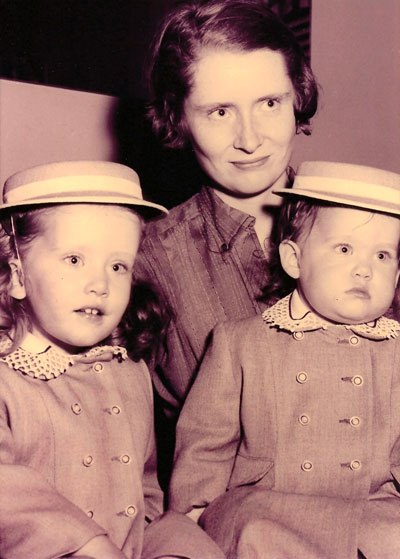
... that she was holding my wife (on the right) in her arms:

Barbara Geary Goulet
5 October 1924 - 24 Jan 2010
"And ever has it been known that love knows not its own depth until the hour of separation."
- Kabil Gibran

-Wes

Thursday, January 21, 2010

When the Hospitalist Service is Capped

It's the fastest growing "specialty" service in medicine: hospitalist medicine. These are the doctors who limit their practice to the care and management of patients admitted to the hospital. It has been wildly popular because it adds a shift-like work schedule to medical care for physicians while supposedly preserving their personal life. It also moves patients through the hospital faster, shortening length of stays. As one of our more esteemed hospitalist bloggers likes to boast: it's a "WIN-WIN!"

At least until the hospitalist service gets too busy.

It seems now that hospitalists services are limiting the number of patients they admit per day in response to their overwhelming "popularity." It's something akin to capping resident medical student ward services - they stop accepting patients when their census gets too full. I learned this today when a patient I was trying to manage with heart failure was just not turning the corner and needed to be admitted for more agressive inotropic therapy.

Finding an admitting physician becomes an interesting exercise when the patient's primary care doctor no longer admits to the hospital (or is on vacation as was the case today) and the hospitalist service is no longer accepting patients because they're "capped" and you're trapped in a busy clinic.

What becomes the pop-off valve? You guessed it: the Emergency Room. Even though the patient absolutely, positively does not need the Emergency Room.

So much for cost savings.

It appears hospitalist services are increasingly finding themselves overwhelmed with admissions and the promise of a reasonable lifestyle can be assured by either limiting the number of patients admitted to each hospitalist or hiring more of them. But new hires are becoming tougher to justify in this "do more with less" economic time in medicine. As a result, it appears existing hospitalists are quickly finding they've hit the peak speed of their clinical-care gerbil wheels.

In a 1999 National Association of Inpatient Physicians (NAIP) survey, 25% of hospitalists were at risk for burnout, and 13% were in fact burned out. While these burnout rates were significantly lower than those documented in similar surveys of intensivists and emergency medicine physicians at the time, others suggested that his rate could increase as the field matured.

News flash: At least at some hospitals, it looks like we're there.

-Wes

References:
Robert M. Wachter, MD; Lee Goldman, MD, MPH
The Hospitalist Movement 5 Years Later. JAMA. 2002;287:487-494.

Hoff TH, Whitcomb WF, Williams K, Nelson JR, Cheesman RA. Characteristics and work experiences of hospitalists in the United States. Arch Intern Med. 2001 Mar 26;161(6):851-8.

Wednesday, January 20, 2010

When States Can't Pay Their Medical Bills

... medical institutions might not make payroll:
"I would describe bankruptcy as the inability to pay one's bills," says Jim Nowlan, senior fellow at the University of Illinois' Institute of Government and Public Affairs. "We're close to de facto bankruptcy, if not de jure bankruptcy."

Legal experts say the protections of the federal bankruptcy code are available to cities and counties but not states.

While Illinois doesn't have the option of shutting its doors or shedding debts in a bankruptcy reorganization, it seems powerless to avert the practical equivalent. Despite a budget shortfall estimated to be as high as $5.7 billion, state officials haven't shown the political will to either raise taxes or cut spending sufficiently to close the gap.

As a result, fiscal paralysis is spreading through state government. Unpaid bills to suppliers are piling up. State employees, even legislators, are forced to pay their medical bills upfront because some doctors are tired of waiting to be paid by the state. The University of Illinois, owed $400 million, recently instituted furloughs, and there are fears it may not make payroll in March if the shortfall continues.
One wonders: after Massachusetts, could Obama's Senate seat be next?

-Wes

The Massachusetts Aftermath

With the stunning election of the Republican Scott Brown from Massachusetts last evening, the pundits are awash in analysis and retrospection. The forces that aligned to elect a Republican to the "people's seat" in Massachusetts are too numerous to expand upon here. Not being from Massachusetts, it would be presumptuous of me to claim I understand all of the issues at stake. I am simply not a political pundit.

But from a 50,000 foot perspective, I am amazed that the Commonwealth of Massachusetts, long the shining star upon which our national health care reform efforts were modeled, has effectively stalled (stopped?) the partisan railroading of the current health care legislation hashed out for months in both houses of Congress. Do they know something about their health care program that the rest of the nation doesn't? The economy? The costs involved? The lack of representation "at the table?" Tough to know. Maybe it was all of these things and more.

But irrespective of the outcome, our country must reconsider the obvious: we have to do something to fix our health care crisis in America. We should not and simply cannot gloat over the victory. Too much is at stake. The reality is that many people simply cannot afford health care any longer. Many have no means to obtain insurance. Many, many people are unemployed and likely to stay that way for some time, yet their health care needs continue.

So what to do now.

Here are some thoughts (and I'd welcome others thoughtful perspectives).

First, this debate cannot occur behind closed doors. I find it ironic that the very President who campaigned and fund-raised with almost uncanny use of the internet's reach, later decided to go underground with the late-stage health care negotiations securing deals for a cornucopia of interests behind closed doors. When the deals were exposed, most of America realized they'd been hoodwinked at great cost to themselves. Americans don't tolerate that for long. Especially in the era of the internet. Televise the negotiations on C-SPAN. Open the debate up. Clarify what's needed. Make the people the concern, not insurers, pharmaceutical companies, and hospital systems.

Second, limit the scope of the legislation. Define where the priorities lie first. If the real need is "insurance reform" rather than "health care reform," then limit the legislation to that endeavor. Open up the market across state lines. Give people options. There is no questions that the tentacles of health care reach many different constituents, but attempting to change such a significant portion of our economy all at once seems counterproductive.

Third, doctors and their patients need to continue to take a more active role in the process. Health care is becoming more like the internet: better communication between providers and patients is becoming the norm. Legislators better learn this, for doctors and patients will insist on understanding how any piece of legislation will affect their interactions and access. We are the foot soldiers of health care and in that way, the legislature would be well advised to support the troops first.

-Wes

Tuesday, January 19, 2010

Brown Versus ...

In Brown vs. Board of Education - Brown won

In Brown vs Missisipi - Brown won

In Brown vs. Coakley?

Hmmm. I'm not sure, but at least he's got the right name and attitude.

This race should probably be subtitled as "The People vs. Congress."

In that respect, the People have already won.

-Wes

Another Electrophysiologist Enters the Fray

Thought I'd spread the link-love to Dr. John Mandrola, another fellow cardiac electrophysiologist from Louisville, KY who has been brave enough to enter the medical blog-o-sphere over at Dr. John M. Head on over and say "hi."

Always good to have another EP's voice in the fray...

-Wes

Monday, January 18, 2010

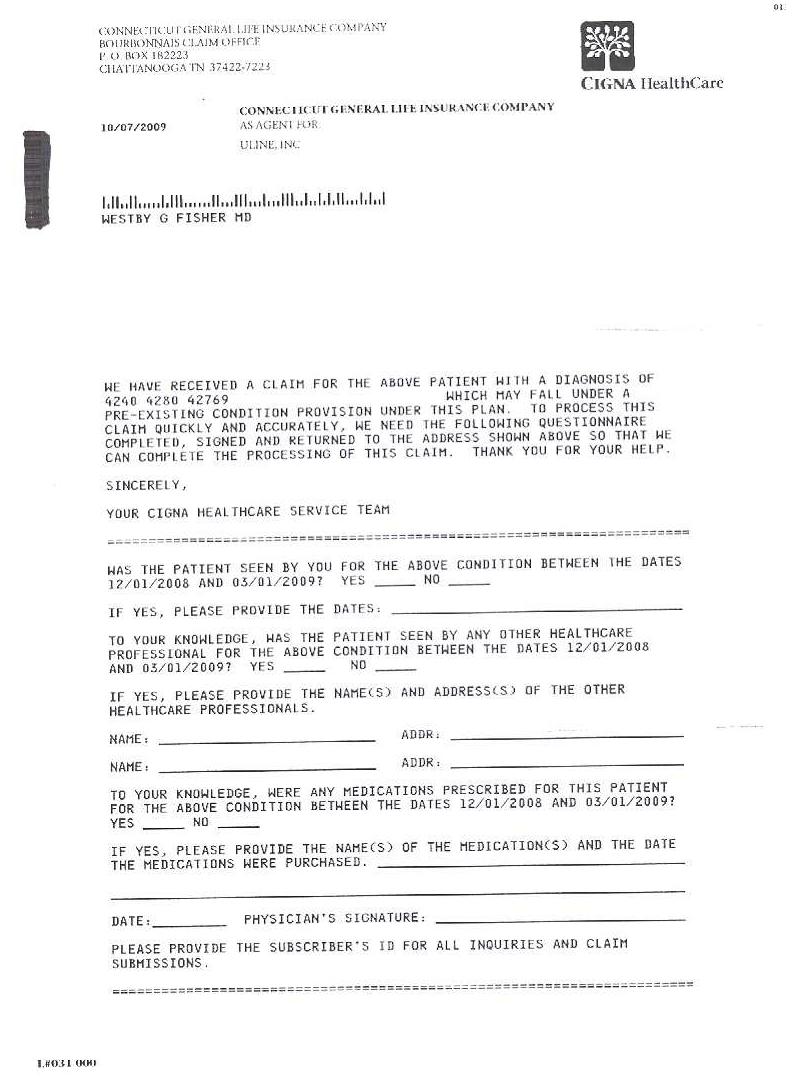
Just Call Me "Doctor Snitch"

In a continuing effort to drive a stake though the doctor-patient relationship, insurers are now turning to doctors to serve as their investigatory snitch in attempts to deny patients coverage:
"To your knowledge, as the patient been seen by any other healthcare professional for the above condition between the dates of 12/01/08 and 03/01/09? ____ YES ____ NO

If yes, please provide the name(s) and address(es) of the other healthcare professional(s):"
Like I have nothing better to do than to serve the simultaneous roles of deep throat and directory assistance operator for an insurer...

-Wes

Sunday, January 17, 2010

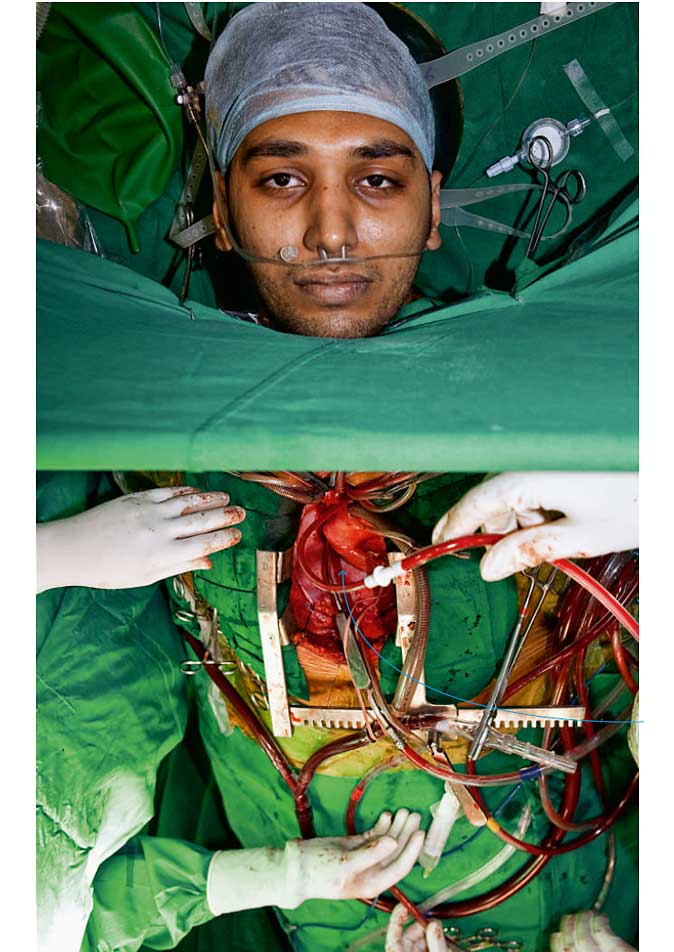
Wide Awake Open Heart Surgery

Click image to enlarge

Why someone would want to do this, I haven't a clue.
Swaroup Anand, 23, from Bangalore, is fully conscious as he undergoes open-heart surgery. An epidural to the neck, administered at the city’s Wockhardt Hospital, has numbed his body. Dr Vivek Jawali pioneered the technique ten years ago and has recently released a tutorial on DVD which gives a step-by-step guide to the procedure – sorry, but you can only get a copy if you’re a surgeon or an anaesthetist.
Seems there would be considerable risk of respiratory compromise is the epidural went too high. But according to this video, over 400 cases have been performed, including a bypass with aortic valve replacement!

I don't know... I'm not sure I could stomach the sound of the bone saw or, worse, if the surgeon said "Oh, crap..."

-Wes

h/t: Slashdot

Reference:
Chakravarthy MR, Jawali V, Patil TA, Srinivasan KN, Manohar M, Khan J, Jayaprakash K, Das JK, Mahajan V. "High thoracic epidural anaesthesia as the sole anaesthetic technique for minimally invasive direct coronary artery bypass in a high-risk patient." Ann Card Anaesth. 2003 Jan;6(1):62-4.

Saturday, January 16, 2010

Photo Gallery: The Heart

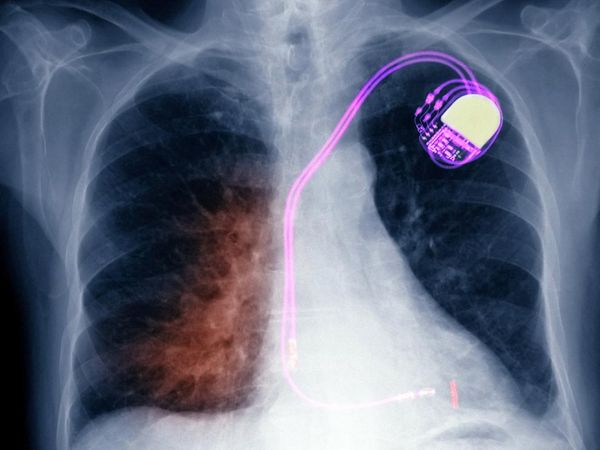
Click image to enlarge

The above is a retouched photograph of an 82 year old patient's chest x-ray with a pacemaker and pneumonia that hails from the photo gallery from National Geographic.

You can download "wallpaper" sized images from their collection at the link above to adorn your computer monitor's background or the wall of your office or lab.

-Wes

Friday, January 15, 2010

Lady Gaga's Palpitation Differential

Okay, medical blog-o-sphere, pressing news has arrived that Lady Gaga had to cancel her concert at Purdue University due to an acute onset of pre-performance palpitations:
"Paramedics came to take care of me, and told me my heart-rate was irregular - a result of exhaustion and dehydration."
Your job, should you like to accept it, is to consider the differential diagnosis of what might have been the cause.

So go ahead... make me proud!

I'll start:

(1) Premature atrial contractions...

-Wes

Haitian Destruction Caught on Video

... it only took a little over 16 seconds.

-Wes