Showing posts with label training. Show all posts

Tuesday, October 01, 2013

Ten Crackers

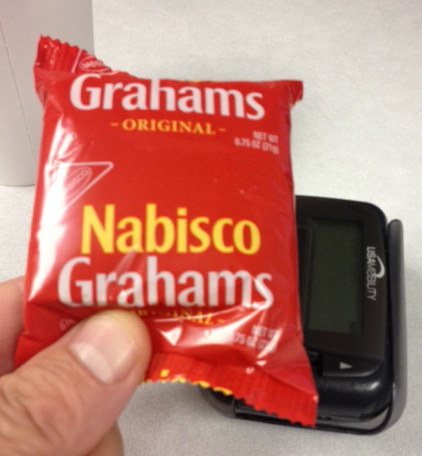
Graham crackers.

For years they have been an on-call snack staple for young doctors in training throughout the United States.  These little morsels have probably saved more lives than defibrillators after hours, especially if they are topped with a hefty dollop of peanut butter.

Admittedly, these flat brown crispy tastees don't contain much nutritional value.  They are probably a dentist's nightmare.  But after many late hours on call well after the dining hall closes, you'd be surprised how good these little devils taste, especially when they can be enjoyed in a quiet reflective moment alone or with a colleague in the nutrition room.  Graham crackers have a way of bringing you back to earth after you've dealt with a code, had to pronounce someone dead, or worked through a difficult family interaction in the wee hours of the morning.

But times are tough for hospitals now: censuses are down (as are revenues) as the uncertain effects of health care reform descend. Consequently, it makes sense for hospitals to trim budgets where they can.  After all, if its between graham crackers or nurses, I'm sure we'd all agree that graham crackers should be trimmed before nursing staff.

But I wonder if supplying an entire ward of fifty patients with only 10 of these little packets a day makes sense for physician and nursing morale.  Doctors and nurses, already dealing with reduced incomes and threatened with even more to come, are finding it harder and harder to find the tiny perks that make the late nights and long weekends tolerable.  Finding none of these hidden snack treasures on a ward after working 15 hours straight certainly isn't the end of the world, but when people are tired and hungry, it's noticed more than any highly-paid administrative decision-maker who's tucked neatly in bed could ever imagine.

Good leaders listen.

Good leaders know the value of small gestures.

But it's only the best of leaders that appreciate the importance of an ample supply of graham crackers.

-Wes

Friday, September 09, 2011

Handoffs, Passoffs, and Liftoffs

The image of a team of track stars sprinting a 400-meter relay while carrying a little aluminum tube and passing it, effortlessly, without breaking stride is what I think of when I hear the term "handoff." In medicine, a "handoff" is more like sprinting the same race, or at least trying to, and passing a 100-kilogram boulder: there is simply nothing smooth about it.

In earlier times, doctors worked exclusively at one clinic and usually one hospital. There would classically be a "morning report" where attending, medical residents, interns, and a chief resident would assemble to hear the calamities that occurred the night before, discuss and dissect the most interesting cases, perhaps learn a tidbit from the highly respected "chief resident" - the Grand Pubah of all things medical - who had their whopping 1 year of independent clinical experience but plenty of time to assemble a case discussion to point out things you should have known.

The morning report was well-attended. It was, after all, a requirement for graduate medical education and actually a heck of a lot of fun. There was something strangely bonding that occurs when you see your colleague get embarrassed for their lack of understanding just as you had been the day before. It was never punitive (at least not usually), mind you, but rather constructed to make damn sure you never forgot the lapse in judgement you had made the night before.

Late afternoon "check-out" was a different matter. That meeting was never supervised by attendings and served as a "working" meeting between residents where cases were passed to the night call team. Not uncommonly, there were residents who had been there from the preceding night: they got to go first listing their patients' name, a brief problem list, pressing issues that needed to be checked, and so on. No brag, just fact.

And surprisingly, it usually worked.

But why did it work?

I think it worked because we were given responsibility. It was our butt on the line as you worked mano-a-mano with the patients you had to cover. We all knew were going to have to face the music the next morning if things didn't work out so well. The better the night went, the easier morning report was. The better the night went, the better your credibility with the nurses grew. The better the night went, the better the chances of getting selected for a residency slot. The better the night went, the better you slept the next day knowing the patients did well under your care.

Today, things are different. For resident trainees, there are more change of shifts with more handoffs, fewer patients per resident, and fewer hours in which to see the patients you are given from the group before. More dispersion, less ownership. But this is not always the resident's fault. In fact, when a problem arises on one or two patients during an evening call, it is now not uncommon for residents to have to handoff a handoff, having never seen or touched some of the patients they had heard about at their earlier signout. Fortunately, the dedicated (paid) GME physician-instructors are still consistently there at morning reports, but those with day-to-day clinical experience, the attendings and specialists tasked with making their own rounds each day, are at morning reports much less often. That's because they are seeing their growing inpatient populations no longer "covered" by housestaff and working to maintain productivity standards.

Handoffs for attendings themselves are also a growing problem as credentials for doctors are no longer are issued for one hospital, but a system of hospitals. Rarely do attendings meet face-to-face these days: a phone call will have to do since not uncommonly they're at one hospital and clinic one day and a different hospital and clinic the next. That's right, as challenged as handoffs for GME have become, the handoff issues for attending physicians with the consolidation of health care institutions underway isn't even being discussed.

Increasingly, I see the electronic medical record filling the handoff void between attendings. Lists can be assembled, short notes compiled with the patient's name/room number/institution attached to the particulars, leaving the on-call doctor to forage through the electronic chart for details as needed. Messy, lumbering, but it does work, yet (and this is important) it has nothing to do with the "handoff skills" our single-center residents are learning today.

I dream of the day I can text my colleague my signout list from my cell phone without having to worry about the HIPAA police. I dream of the day I can receive an EKG or a chest-xray without being threatened with the concern of litigation. I dream of the day when we can collaborate and work together again, whether virtually or in person, instead of in silos of responsibility.

Imagine: liftoffs rather than passoffs while making a 100-kilogram boulder as light as an aluminum tube.

Well, at least I can still dream, right?

-Wes
Sunday, July 03, 2011

The Other Side of July

The fourth of July weekend for many Americans means fireworks, family, picnics and barbecues, corn-on-the-cob, and apple pie as we celebrate the anniversary of our country's independence. While many are packing up their bags to head off for a long weekend vacation, former medical students are being filled with anticipation as they begin the craft they've so carefully prepared for: treating real live patients in a real live hospital. How exciting! How terrifying! Like a great action film full of tons of plot shifts and chase scenes - it's an exciting ride. So much so that those of us "older" doctors love to reflect on this time of our careers, even offering tips to the new folks on how to succeed.

But for all the pomp and circumstance of the moment, first year residents are still sheltered and spoon-fed within our academic medical model thanks to work-hour restrictions, training requirements for surgical or medical specialization, and reguirements for licensure and certification of training programs. Slowly and gradually, we see the careful guidance of our newly-minted doctors through training as they are sculpted into tomorrow's American Doctors. Each step is carefully choreographed. Each step funded either by the student themselves or from government subsidies.

But there is another side to July.

While one group of doctors are going into training, another is going out. Doctors stop paying into the education system and start taking: it's the side where doctors' years of delayed gratification suddenly turn into months or years of delayed realization about the job market.

Most used to think it post-training employment was pretty simple: continue as a teacher or researcher of medicine in a familiar academic role or enter a risker (but potentially more lucrative) world of private practice medicine.

But the private practice model is much less certain now.

For young specialty doctors who find a job, they are thrilled. But hospital positions for specialists are less plentiful now as former independent practices are increasingly consolidated by large hospital systems that place their newly-joined specialists on productivity quotas. Who wants to hire when the current market specialists are at larger and larger risk of making less money? Hospitals are the new employers now, not private groups. The market forces have suddenly shifted so hospitalist positions are plentiful and specialty positions less so.

And large education debts for these new doctors are coming due. Those not so lucky to find a local job are realizing they will have to find a job and find it fast. They ask themselves "How will I pay my bills?," "Will I have to move?", "If so, where?"

So their job search net is cast further than they ever imagined. They meet new doctors in new places over dinners promising the world. As a result, decisions are made and contracts signed without a clue about the local patient referral and practice politics in play. You see that information can't be found in a contract. Still, our new doctors are happy to have landed a job even though it's nowhere near the location they had imagined. They try to get situated. Try to make a home. It'll be perfect, really.

For these happy doctors I have one more piece of advice. Please, trust me on this:

Rent, don't buy.

Because it's not that you're a bad guy or gal, it's just that there's a good chance you'll soon be moving again.

-Wes

Saturday, September 11, 2010

First the Residents, Then the Attendings

Residents have such long work hours! I fully support residents only having to work 56 hours a week:
Last week several groups, including Public Citizen and the American Medical Student Association, along with leading medical researchers, petitioned the Occupational Safety and Health Administration to step in and limit the number of hours that physicians-in-training can work. They contend that shorter hours will protect patients as well as the doctors' own health and safety.

Resident physicians should have work limits to reduce mistakes caused by fatigue, just as the federal government restricts the time spent working for employees in aviation, railroad, maritime and highway transportation jobs, according to the advocates.

The groups want OSHA to require that hospitals record and retain the work schedules of residents and fellows and that the agency conduct surprise inspections, establish confidential whistle-blower procedures and levy fines for violations.

Responsibility for regulating and enforcing work hours for resident physicians now falls to the Chicago-based Accreditation Council for Graduate Medical Education.
I say, go for it!

Then make sure attendings get the same treatment.

After all, we know medical issues only happen during the day. As you can plainly see, as we extrapolate these same workplace restrictions to attending physicians, nurses will risk being in violation of OSHA regulations if they call us after hours!

Perfect!

No, more late night interruptions of my sleep cycles. No more weekend call! Patient's won't suffer a bit! Even they'll get more sleep! See how good this will be for everyone? Especially when we add tens of millions of more people to the health care ranks in 2014 - everyone's going to LOVE the hours!

Really. I'm likin' this!

-Wes

Tuesday, August 17, 2010

Nay Fellow Way?

It was to be a routine pacemaker.

The parties assembled. The room prepped. IV started. Chest scrubbed. Antibiotics given. His nervous eyes raised when he saw me before the procedure, relieved at the sight of at least one familiar face.

"Are you ready?" I asked.

"Yes," he replied, "I think so."

"Any last minute questions?"

"I don't think so," he said.

"Great! Then let's get this over with..." I turned to the lab staff and signaled them to proceed.

"Oh, doc! I forgot. Can I speak with you a second? Ya know, privately?"

"Sure," I said returning gurney-side. I drew the curtain.

He leaned forward and whispered: "Doc, no fellow, right?"

I stopped and contemplated the question, then acquiesced. "Would you mind if I use one as my scrub tech, but I'll be the primary operator?" I asked.

"Yeah, that would be okay - as long as you're the primary operator."

* * *

This little exchange got me thinking: what would I want? Honestly, I'd probably want an attending physician working on me, too. After all, it makes sense, right? Get the most experienced hands and all.

But there are good reasons to have a fellow involved with your surgery, if the opportunity presents itself:
  • We need to keep training. None of us will be doctors forever, and now more than ever with tons of people entering the health care marketplace there is a need to have well-trained doctors in place to meet the need ahead. You can read all you want about how to do a procedure, but until you've done one yourself on a living, breathing individual, you have no concept of the complexities involved. Starting slow in a closely supervised, supportive setting, makes for some very technically-savvy doctors of tomorrow.

  • They improve your surgical technique. The better I can teach someone to do what I do, it seems the easier it is for me to do it, too. Throughout our careers as doctors, we work hard to solidify our competency "brand" amongst our patients and peers. Particularly for specialists: screw up a case or two and your "brand" is quickly tarnished. This is especially important as we train fellows - none of us wants to tarnish our "brand" when trainees work with us either. Therefore, you better bet that bottom dollar we'll be supervising those fellows closely.

  • Fellows keep you sharp. Oh sure, they often ask mundane questions but occasionally they ask remarkably astute questions, too. When this happens, they make us think and as a result, we all get smarter.

  • They're another set of eyes and hands.It never hurts to have another set of eyes contribute their interpretation to a tough case nor an extra set of hands for that extra retractor. Ever.

  • They slow you down. There is no question that teaching someone else takes more time than doing a procedure yourself. This definitely has its downside. But time spent now might pay large dividends in the future when that same doctor has to work on you someday. Also, spending a bit more time can have it's upsides - especially if you really don't want to have dinner with your mother-in-law.

  • More often than not, fellows are extra-careful. By their very inexperience and their desire to excel in training, I have found most fellows I work with especially conscientious when they dealing with patient and their procedures.
So the next time you have surgery and are introduced to a training fellow in medicine, consider letting a fellow help out on your procedure.

It might just be the best thing you ever did.

-Wes

Wednesday, September 02, 2009

Divide and Conquer Is "Working"

So what happens when CMS threatens to cut cardiologists' and oncologists' payments by 10-11% and shift money to primary care?

It gets ugly.

As a result, tensions between primary care doctors and specialists might even spill over to training programs:
Tensions are rising among doctors, said Ted Epperly, 55, president of the American Academy of Family Physicians in Leawood, Kansas, in a telephone interview. Epperly runs a family practice in Boise, Idaho, and teaches at the University of Washington School of Medicine in Seattle.

Specialist colleagues have implied his support for the Medicare changes may cost his students, he said.

While family-care students typically spend parts of their three-year residencies training with specialists, “What I’ve heard is ‘maybe we just won’t have time any longer to teach your residents,’” Epperly said.
-Wes

Sunday, April 12, 2009

What Matters When Choosing A Fellowship Program

It was an unusual week of Intensive Care Unit activity. There was atrial fibrillation, atrial flutter, cardiogenic shock, cor pulmonale and even an occasional atrial tachycardia thrown in for good measure. And while the patient issues were grave, the residents I saw seemed to take it all in stride, for they had just matched in their fellowship positions. Life was good. They were at the top of their game. They had survived Round 1.
“So where are you going?” I asked. And they proceeded to tell me, appearing genuinely excited about their upcoming adventures. Hematology/oncology. Dermatology. Pulmonary medicine. Some programs here in Chicago, some far away, but still, they were enthusiastic. It was nice to see.

I watched as they typed their notes – much faster than I could ever imagine. They stopped briefly to answer a text message on their cell phone, then continued. Streaking fingers on keyboards, multi-tasking, opening new windows to search a reference, facile at looking up who was covering infectious disease today by perusing the on-line call schedule. “The operators taught me,” she said. “They got upset I was bothering them for the information all the time.”

And so it went.

Watching this, I couldn’t help but ask: “What would you guys ever do without an electronic record, I mean, have any of you ever entered a paper-based order?”

“Oh, yeah. I’ve done it. But I don’t think I could ever go back. Oh, God, no!”

“Really? What if the computer goes down? Doesn’t it ever worry you that things might grind to a halt? What about new residents who have never seen a paper chart?”

“Oh-my-God! They’d have no clue! I heard Suzie matched at Georgetown, and they still have paper-based records – I mean – I feel so sorry for her. She won’t have a clue. I’d never go to a program with paper records any more. It would suck.”
And so, in my carefully-conduced ICU research on three current-day residents accustomed to dot-phrases and instant everything, I’d say the electronic medical record industry is secure.

-Wes

Sunday, January 25, 2009

The Drawbacks to a 48-hour Work Week

In England, it seems bureaucratic work limits might have drawbacks:
The survey showed significant under-reporting of hours worked by trainees as NHS Trusts struggle to meet the new restrictions.

It found only 25% of surgeons think their human resource departments accurately reflect their actual working hours.

And 85% come in to do surgery on their days off.

More than two-thirds reported a deterioration in the quality of training and operative skills as a result of the new working patterns.
When we adopt this policy, just make sure I get the day shift, okay?

-Wes

Monday, October 27, 2008

Challenges Ahead for Specialty Care Doctors

As the election nears, both political parties have plans for leaving "no person left behind" when it comes to health insurance even though the costs will be exorbitant:
If the victorious candidate presents his health-care plan to Congress, such optimistic projections will face a stern test at the Congressional Budget Office, Congress's fiscal scorekeeper. The office's estimate of the actual cost of the plans would form the basis for debate, and legislators would face a huge barrier approving any plan assigned a $1 trillion-plus price tag over 10 years. (emphasis mine)
I just returned from a strategic planning committee of the Heart Rhythm Society in Dallas that was tasked with trying to anticipate the impact of the current economic and health care crises on our specialty. The mood, needless to say, was somber. The threats to our subspecialty (and I'm sure of many others) are keen as Congress moves to increase expenditures to primary care at the expense of specialists and subspecialists. One dean of a medical school even commented this weekend, "When the Congressional Budget Office knocks on my door and approaches me about where they can cuts and shift costs given a budget-neutral environment, which is easier, cutting funds to a subspeciality with 1600 members nationwide or cutting the funds from the many family practice or internists out there?"

So while most doctors will appreciate the near flat Medicare payment schedule secured by Congress this year, specialists still have to worry that change is in the wind.

Only by understanding the value of specialists and subspecialists in terms of expertise, safety and patient care outcomes are subspecialist services likely to survive, or even thrive, in the current climate. The onus will be on each subspecialty's lobbies to define such things as competencies, safety, and outcome records and present them for consideration to governing bodies. Clearly for smaller subspecialites, this is a particularly expensive and time-consuming endeavor as each subspecialty fights to maintain some portion of the Medicare payment pie.

Americans, however, will continue to demand subspecialization in medicine for the foreseeable future since they recognize that subspecialists play an important role in their health care delivery. It is impossible for general practice and primary care physicians to understand and implement subspecialty care in today's complicated and litigious health care environment. But as efforts continue to shift dollars from subspecialist to primary care, there exists a potential for losing subspecialists. In fact, 10% of electrophysiology training positions were left unfilled this year. What will this mean to patients? What does this mean to hospitals who are counting on electrophysiology to be their piñata of Medicare dollars to fund their next wing expansion? Why are doctors not committing to the rigors of our subspecialty? Is the market saturated or is this an aberration?

It is unclear.

But one thing is clear, you can't rob Peter to pay Paul without an impact to speciality care delivery. With the expanding elderly population, existing subspecialists will be stretched to maintain service expectations and their lobbying clout. Young doctor professionals will wonder if all those years of delayed gratification to gain expertise are really worth it. And as the cost of training increases and reimbursement to specialists decline, look for a consolidation of subspecialty care in America while new doctors reconsider their career trajectories.

-Wes

Monday, April 21, 2008

No More Black Box


While I've often wondered about emulating the airline industry, there is one innovation that single-handedly has determined the cause of many airline crashes: the on-board flight recorder, or "black box." Anytime there's a crash, it's what the recovery teams look for on land or the divers seek in the sea. It's the constant stream of retrospective data provided by the flight recorder that allows researchers analyze the conversations, wind conditions, air speed, aileron positions, altimeter recordings, and the like of a flight so the circumstances that lead to the ultimate catastrophe can be recreated. The data from the flight recorder has undeniably improved the airline industry's accident rates.

Regrettably, medicine is losing our black box: the autopsy.

Certainly, with the amazing advances in imaging, we have an unprecedented ability to peer inside the body with remarkable clarity to understand disease processes. Many argue that our understanding of events leading to the death of a patient are better defined than ever before - so why an autopsy?

One only needs to look at the multiple causes of a lung infiltrate on chest x-ray to understand what could be learned: was it caused by infection (bacterial, fungal, viral, worms?), or hemorrhage, or inflammation (bronchoalveolitis obliterans, sarcoid, amyloid, or many other causes), that this person died? Were we treating the correct diagnosis? Would management have been different had we known? Could future lives be saved by a better understanding of the precise cause of death of this one, unfortunate individual?

We will never know. But now we can consistently proclaim, "we did the best we could."

Gone are the days where a third year medical student can hold a heart in his or her hand, smell pseudomonas, see an occluded or anomalous coronary artery or aortic stenosis in person. In effect, medicine has lost the color of human reality in exchange for the black and white images on a monitor screen.

And where are the continuing quality improvement advocates in this debate? They're looking at the living and forgetting about the mistakes that are buried. Yes, Virginia, we do get it wrong sometimes but you'll never know now.

Unfortunately, autopsies are expensive: performed by pathologists who take samples, prepare slides and cultures, write detailed reports scrutinized by lawyers, and occasionally do high-tech tests like electron microscopy to define an answer. In our constant efforts to shave costs, the autopsy's "return" on investment to the education of future physicians is lost since the patient is already dead - another data point chalked up to "mortality." Death, then, has now officially lost its value to the future education of our physicians.

So as the dehumanization of medicine continues, rest in piece, Mr. Autopsy.

Us old farts in medicine will miss you.

-Wes

Image reference.

Thursday, November 01, 2007

The Death of Moonlighting

For resident and fellow housestaff, there has been another sequela from the hospitalist movement that was brought to my attention today: they are no longer employed as moonlighters to provide night coverage at many hospitals.

Residents now find themselves looking for other avenues of additional spending revenue during school, since they are often paid poorly. Like the "starving actor" stereotype, will we see them as waiters and waitresses soon?

-Wes

Tuesday, July 24, 2007

Medical Residency's Decline

Although I never considered myself as an "old-timer" in medicine, I guess the fact that I was trained before the new Residency Review Committee's work-hour limits makes me just that: an old fart in medicine.

The Wall Street Journal's Health blog has a review of an article published in the Archives of Internal Medicine regarding the perspective us "old-timers" have on residency training. The comments that ensued on that blog demonstrate the fervor that residents feel regarding the cheap labor and long hours they provide for hospitals, and certainly, no one wants care provided by an individual who can barely stay awake.

But some old-timers, trained by The Man, also feel that residency experiences have declined because they don't suffer like we did. What are you, wimps? You're missing all the good cases!

But has residency training suffered just because of the RRC's restrictions on work hours? I don't think so. It is just too easy to blame work hour restrictions on the decline of residents' training. I certainly agree that care has become fragmented, in part because of these restrictions. But I would argue that there are other more powerful forces in play.

I see many, many more patients shunted to in-hospital hospitalist services that are productivity-driven. These eager inpatient attendants to health care are a formidable challenge to managing inpatient teaching services: patients are seen quickly, decisions expedited, and lengths of stay minimized, making a powerful inducement for hospital systems to employ these services. Teaching services are rarely as efficient since teaching takes time and, regrettably, time is money. After all, exceeding lengths of stay and the razor-thin cost margins that hospitals must work within to make ends meet are quickly upended. Where is the financial incentive for the teacher to teach? Training hospitals get a reimbursement bonus for training from our government, why not our teachers?

And lets not forget the Electronic Medical Record. Careful decisions regarding the appropriateness of tests have been supplanted by order "panels" that remove decision making from the doctor. Just push a button and the "critical pathway" orders are automatically generated. No thought needed. Zillions of often unnecessary and waistful tests created in the blink of an eye. What, you DARE to remove a checkbox? Off with your hand!

Academic centers across the US are all confronting these challenges as cost escalate, reimbursements decline, and centers are squeezed to find good teachers willing to work for non-reimbursed time. The impersonal technology, from EMR's to robots, has supplanted the bedside touch. It is no wonder that residency education has suffered in kind.

-Wes

Wednesday, June 27, 2007

Do Residency Restrictions Limit Clinical Competencies?

“Good judgment comes from experience. Experience comes from bad judgment.”
-- Anonymous

“I have missed more than 9,000 shots in my career. I have lost almost 300 games. On 26 occasions I have been entrusted to take the game winning shot, and I missed. And I have failed over and over and over again in my life. And that is precisely why I succeed.”
-- Michael Jordan

Ask any doctor in practice today what they think about residency programs, and most will tell you they do not represent medical reality. But then, residency should not represent independent practice, should it? This week, the New England Journal of Medicine has two articles describing the dilemma faced by the residency training programs: residents’ work hours and continuity of care. Residents want shorter work hours by sharing care of patients with other residents, but frequent handoffs of care may result in as many medical errors as created by an exhausted resident.
Kevin Volpp, an assistant professor of medicine and health care systems at the University of Pennsylvania, is conducting a large national study of patient outcomes that attempts to examine the impact of the (Accreditation Council for Graduate Medical Education) rules, using data on millions of patients in the Medicare and Veterans Affairs systems. "We're basically looking at the net effect of reduction in sleep deprivation versus reduction in continuity of care," he said. "One of the big challenges is figuring out how to tease this apart and examine the tradeoffs." Volpp said the evidence is compelling that assigning residents to shorter shifts reduces errors caused by fatigue. However, shortening residents' shifts requires adding staff such as physician assistants, nurse practitioners, and hospitalists, and he noted that despite receiving Medicare subsidies for residency training, teaching hospitals operate on slim financial margins and have recently seen substantial reductions in Medicare funding. Considering the cost of further reducing duty hours, Volpp asked, "Is this the best use of resources that could be targeted to reducing medical errors?"
But is reducing errors really what we should be striving for in residency programs? Will further reducing work hours limit exposure to eduational experiences? Will residents have enough opportunities to stumble, trip and fall in a protected environment like residency so they can later succeed as attending physicians? Or is achieving a residency utopia in training with no medical errors more important than later clinical competency as an attending physician?

Certainly worth pondering…

...especially when good judgment comes from lots of experience.

-Wes

Monday, June 25, 2007

ACLS Recertification Issues

I recently recertified in Advanced Cardiac Life Support, and really wasn't doing to say much, but then, I blog.

Sooooo, I thought it might be informative to discuss a few issues I had with my ACLS recertification process this year.

The American Heart Association provides a course for health care professionals to learn the latest techniques for Advanced Cardiac Life Support in the event an individual collapses of cardiac or respiratory arrest. The certification process is partially performed by company called CardioConcepts (although now it looks like its called 'Scitent') based in Virginia. The recertification process demands a fee for their course and includes an online registration where doctors must now surrender their most personal information (address, phone number, e-mail) to their website on an electronic registration form. You can bet this information is sold, but I digress...

I have some constructive (I hope) criticisms.

If a company is going to teach ACLS instead of doctors, then either the members of this company must first learn EKG's - especially is I have to PAY for the priviledge of undertaking this experience every two years - or else the American Heart Association needs to do a better job proofing the work for hire for which they have contracted.

For the student's pre-test (available on a CD within the ACLS provider book), we find this tracing:

Click to enlarge

So what is this rhythm? The publishers of the student pre-test for ACLS would have you believe it was "Reentry Supraventricular Tachycardia." I wonder if these guys know basic medical terminology. The correct term should be "reentrant supraventricular tachycardia." *Sigh*

But that's not the real problem with this tracing. My guess this tracing is not even reentrant. (I'm open to what other cardiology and EP docs think, here). Look carefully at how this arrhythmia initiates - a slightly premature beat that looks quite similar to the sinus beat - followed in rapid succession by other P waves with a sudden onset with a "warm-up" phenomenon. See the small indentations in the T wave? These suggest a superimposed P wave. I have placed lines above the P waves below:


These findings seem most consistent with an atrial tachycardia to me. Atrial tachycardias usually have an automatic mechanism, not a reentrant one.

And don't get be started about this tracing of Torsade de Pointes which appears on the Student pre-test:


The correct answer (according to their student pre-test) was "Coarse Ventricular Fibrillation." Wrong again. Most texts and online resources I've seen have classified this as arrhythmia as one form of "Polymorphic Ventricular Tachycardia," not coarse ventricular fibrillation. Certainly the treatment for Torsades is very different (consider magnesium, pacing, isuprel, lidocaine, etc.) than for "coarse ventricular fibrillation" (shock, drugs and shock again) and should be recognized by everyone who cares for heart patients.

And I was surprised procainamide was removed from the Tachycardia with Pulses algorithm, especially for irregular, wide tachycardia algorithms as well. I've already discussed my preference for this drug (and why) in an earlier post (See Part I and Part II). Instead, they've decided a "Phone a Friend" option (actually, it says, "expert consultation advised") works best. But sometimes experts aren't there right away...

I do appreciate the folks at the American Heart Association's efforts. I can't imagine what an undertaking organizing the training of the nation's doctors must be like. But we must assure that we train folks correctly and give good examples.

After all, people's lives are at stake.

-Wes

Image credit.

Thursday, June 07, 2007

Conquering Heart Disease is Multifaceted

An interesting question comes to mind when reading this study from the New England Journal of Medicine about how far we've come in twenty years treating heart disease: If we're doing such a good job with all of our public health initiatives and evidence-based treatment strategies, then why do we need more cardiologists? Why are we experiencing such a dearth of general cardiologists now and in the foreseeable future?

I think there's a lot of merit in this statement:
The looming critical shortage of cardiologists is due to a confluence of factors. The number of U.S. medical school graduates matching in internal medicine residencies has declined dramatically over the last 20 years. Fewer cardiologists are being trained today than a decade ago. An estimated 10% of cardiologists will retire in the coming decade. The baby boomers are reaching the age when cardiovascular disease rates climb sharply. The average patient load in cardiovascular medicine is declining, and maintaining those lower patient loads requires a greater number of physicians, Dr. Williams continued.
The road to cardiology requires a path through internal medicine, and where internal medicine training goes, so go budding cardiologists.

But I do not think this is the only reason the general cardiologists' numbers are declining.

I am aware of many, many residents who have completed their internal medicine residencies and are eager to enter cardiology fellowships but are unable to "match" in any cardiology fellowship position. I have seen graduating residents submit 50 to 70 letters to programs across the country without a single interview granted. This is where the REAL pruning of potential cardiology trainees occurs.

Fellowships are expensive for hospitals and academic programs. Funding sources have become limited as the squeeze to pare expenses continues in healthcare. So fellowship positions are often one of the first things reduced as a cost-cutting measure. Fellowships have historically also been partially funded by industry grants at times, but as the closer scrutiny of industry perks to medicine increase, these funds are more difficult for training programs to acquire. Competition for fellowship slots, then, becomes keen.

The training programs themselves are sometimes to blame. Some programs freely recognize that there may be some danger to "training their competition." Most trainees often like the city they're training in, so they look to stay nearby, making competition for patients near the training center higher if the new cardiologists chooses to practice outside the training center's immediate patient catchment area. Rural locations have fewer patients to treat, so geography may also limit the spread of cardiologists to more rural areas.

Training the new cardiologist also requires commitment from the academic faculty. As pay-for-performance initiatives drive productivity interests and are coupled with declining Medicare and insurer reimbursements, academician-teachers are being driven to become clinical revenue producers with less time to teach. It is hard to have a training program if there is no incentive to teach. Where's the Medicare reimbursement for this?

So if you want more cardiologists, not only must we make more fellowship positions, but we must also figure out how to compensate the folks doing the teaching so they're not penalized for doing so.

-Wes