Fearing a mass exodus of physicians from the lucrative ACGME-mandated Maintenance of Certification (MOC) program, two member organizations of the ACGME, the American Board of Medical Specialties (ABMS) and the American Osteopathic Association (AOA), recently issued statements of "disappointment" or "promising to innovate."
The ABMS stated they were "disappointed" on the passage of the Oklahoma law outlawing the use of the ABMS MOC program for board certification, physician hospital credentialing, or insurance company payments and were "committed to improving their programs for physician certification and assuring that participation in MOC provides physicians with meaningful improvement opportunities." No mention of how they might cut the cost of their "commitment" to physicians was made.
The AOA's statement, issued just after the National Board of Physicians and surgeons open its credentialing process to osteopaths, "promised to innovate" so they could reach their "Rooftop Goals." Too bad the AOA still doesn't seem to understand that their statement promotes just what physicians don't need: another bureaucratic building project.
Neither statement issued by the ACGME member organizations provide convincing arguments of sincerity to practicing physicians that have seen their hard-earned cash squandered by these organizations and have failed to truly prove the clinical relevance or need for re-certification of any kind. Further, no accountability for the financial mismanagement, strongman tactics used by ABMS member boards to assure physician payments into this unproven metric, and fraudulent tax filings by member boards of the ABMS has yet to take place.
This outdated ACGME physician MOC re-credentialing system built on political and corporate cronyism is being rendered obsolete by the presence of real competition to the status quo by the National Board of Physicians and Surgeons' credentialing process that is credible, more affordable, and financially transparent. There is simply no going back.
Good riddance MOC. Trust me: you won't be missed.
Nor will those who've made a living for themselves promoting this very broken and highly conflicted ABMS MOC program.
-Wes
Tuesday, April 26, 2016


Tuesday, April 19, 2016
NEJM Fails to Publish Comments Critical of ACCME Perspective Piece
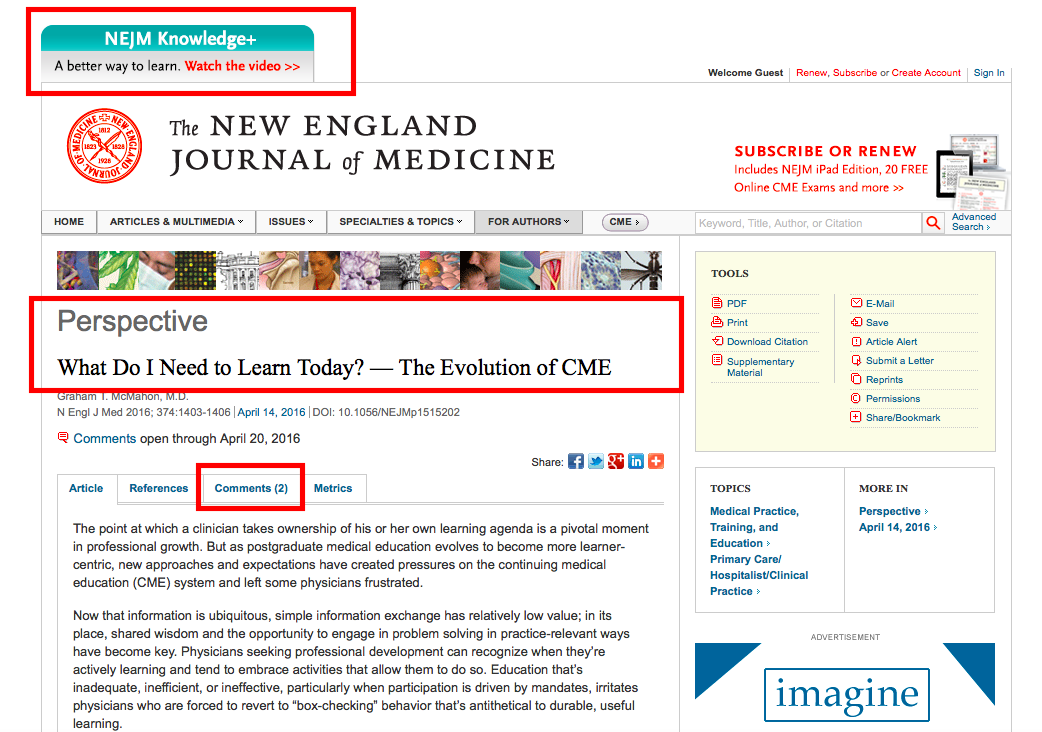 |
| Screen Shot was taken 4/19/2016 of NEJM web page showing undeclared conflict of interest (Click to enlarge) |
It appears the cronyism displayed by the ACGME in support of the American Board of Medical Specialties Maintenance of Certification (MOC) product also extends to our "finest" medical publications.
Caveat emptor.
-Wes
Addendum 07:50AM CST: 9 Comments (including mine) now appear on the NEJM website.
Sunday, April 17, 2016
Rethinking Our Medical Education and Publishing Bureaucracy
Medicine has an image problem.
On one hand, medicine is full of wonder: incredible technology, incredible innovation, and incredibly bright people.
On the other, medicine is full of avarice, full of greed, and full of waste, much of it by the very same folks who bring us all that medicine has to offer: the Accreditation Council for Graduate Medical Education (ACGME).
The ACGME is an incredibly rich and powerful organization in medicine. It is comprised of the American Medical Association, (AMA), the American Board of Medical Specialties (ABMS) and its 24 member boards (including my "favorite", the American Board of Internal Medicine (ABIM)), the American Hospital Association (AHA), the Association of American Medical Colleges (AAMC), the Council of Medical Specialty Societies (CMSS), the American Osteopathic Association (AOA), and the American Association of Colleges of Osteopathic Medicine (AACOM). Collectively, member organizations of the ACGME represent an annual burn rate of almost $1 billion dollars for medicine (Latest annual income figures from Guidestar.org: AMA ($261,328,052), AHA ($126,339,392), ABMS and its 24 member boards (Approximately $300,000,000; $54,454,584 for the ABIM alone), CMSS ($967,541), AOA ($44,376,054), AACOM ($10,855,122)).
As part of the ACGME's "Vision" statement, they "imagine a world" where residents and fellows are "prepared to become Virtuous Physicians who will place the needs and well-being of patients first."
This is where the ACGME's "vision" clashes with reality.
Right now, the average "Virtuous Physician" has a median debt load of $180,000 before they graduate from medical school and patients are experiencing bankruptcies from health care as our Medical Education Establishment dines at the Four Seasons and takes a few more reps in the gym.
The ACGME and their kin are still living in the world where first class air travel, memberships at health clubs, and $2.3 million condominiums with chauffeur-driven Mercedes S-class town cars are the norm. The ACGME seems blind to the irony of serving Virtuous Physicians while having one of its core values the "Engagement of Stakeholders" like their "friends in accreditation" at the Accreditation Council for Continuing Medicine Education, the Joint Commission on Accreditation of Hospital Organizations, the National Board of Medical Examiners, and the Federation of State Medical Boards, who foist educational programs like their unproven and wasteful Maintenance of Certification (MOC) program to fund their largess.
So it should come as no surprise that even our most "prestigious" academic journals like the New England Journal of Medicine (NEJM) are joining in on the fun. This week they permitted a promotional "perspective" piece entitled "What Do I Need to Learn Today - the Evolution of CME" to be published by the head of the Accreditation Council for Continuing Medical Education (ACCME), Graham T. McMahon, MD. Like other accreditation organizations within the ACGME, Dr. McMahon enjoys paid first class airfare and health club membership while promoting the legitimacy and expense of the costly and unproven ABMS MOC program that finds itself in a whirl of ethical controversy already. Meanwhile, the NEJM is selling its expanded and remarkably expensive "Knowledge +" MOC educational product without ever acknowledging this conflict to its readers in this week's issue.
Our tired and inefficient "non-profit" bureaucratic medical education system better wake up soon to the new reality in medicine: practicing physicians and their patients are feeling the adverse effects of all those health clubs and first-class airfares.
In this time of serious cuts to patient care budgets in medicine, it's time our Medical Education and Publishing Establishment starts "learning what it needs to do today" besides stumping for wasteful "CME" programs and harvesting its budget from those who are finding it harder and harder to believe that our expensive medical education bureaucracy has their best interests in mind.
-Wes
On one hand, medicine is full of wonder: incredible technology, incredible innovation, and incredibly bright people.
On the other, medicine is full of avarice, full of greed, and full of waste, much of it by the very same folks who bring us all that medicine has to offer: the Accreditation Council for Graduate Medical Education (ACGME).
The ACGME is an incredibly rich and powerful organization in medicine. It is comprised of the American Medical Association, (AMA), the American Board of Medical Specialties (ABMS) and its 24 member boards (including my "favorite", the American Board of Internal Medicine (ABIM)), the American Hospital Association (AHA), the Association of American Medical Colleges (AAMC), the Council of Medical Specialty Societies (CMSS), the American Osteopathic Association (AOA), and the American Association of Colleges of Osteopathic Medicine (AACOM). Collectively, member organizations of the ACGME represent an annual burn rate of almost $1 billion dollars for medicine (Latest annual income figures from Guidestar.org: AMA ($261,328,052), AHA ($126,339,392), ABMS and its 24 member boards (Approximately $300,000,000; $54,454,584 for the ABIM alone), CMSS ($967,541), AOA ($44,376,054), AACOM ($10,855,122)).
As part of the ACGME's "Vision" statement, they "imagine a world" where residents and fellows are "prepared to become Virtuous Physicians who will place the needs and well-being of patients first."
This is where the ACGME's "vision" clashes with reality.
Right now, the average "Virtuous Physician" has a median debt load of $180,000 before they graduate from medical school and patients are experiencing bankruptcies from health care as our Medical Education Establishment dines at the Four Seasons and takes a few more reps in the gym.
The ACGME and their kin are still living in the world where first class air travel, memberships at health clubs, and $2.3 million condominiums with chauffeur-driven Mercedes S-class town cars are the norm. The ACGME seems blind to the irony of serving Virtuous Physicians while having one of its core values the "Engagement of Stakeholders" like their "friends in accreditation" at the Accreditation Council for Continuing Medicine Education, the Joint Commission on Accreditation of Hospital Organizations, the National Board of Medical Examiners, and the Federation of State Medical Boards, who foist educational programs like their unproven and wasteful Maintenance of Certification (MOC) program to fund their largess.
So it should come as no surprise that even our most "prestigious" academic journals like the New England Journal of Medicine (NEJM) are joining in on the fun. This week they permitted a promotional "perspective" piece entitled "What Do I Need to Learn Today - the Evolution of CME" to be published by the head of the Accreditation Council for Continuing Medical Education (ACCME), Graham T. McMahon, MD. Like other accreditation organizations within the ACGME, Dr. McMahon enjoys paid first class airfare and health club membership while promoting the legitimacy and expense of the costly and unproven ABMS MOC program that finds itself in a whirl of ethical controversy already. Meanwhile, the NEJM is selling its expanded and remarkably expensive "Knowledge +" MOC educational product without ever acknowledging this conflict to its readers in this week's issue.
Our tired and inefficient "non-profit" bureaucratic medical education system better wake up soon to the new reality in medicine: practicing physicians and their patients are feeling the adverse effects of all those health clubs and first-class airfares.
In this time of serious cuts to patient care budgets in medicine, it's time our Medical Education and Publishing Establishment starts "learning what it needs to do today" besides stumping for wasteful "CME" programs and harvesting its budget from those who are finding it harder and harder to believe that our expensive medical education bureaucracy has their best interests in mind.
-Wes
Wednesday, April 13, 2016
Propaganda Machine: How ABIM Spins Its Survey Results
As it continues to spiral out of control, the American Board of Internal Medicine (ABIM) issued a press release telling practicing physicians what they've "learned" from "key findings from a representative sample" of internists.
Sadly, how their "representative sample" of internists' survey responses was collected and reported for this press release is telling.
Reviewing the methods used for the survey collection, we see ABIM's "ALL DIPLOMATE" survey was really created from less than 0.2% of all internists they polled. (360 respondents of 196,867 emails sent) and the results were "weighted" from a select subset of the internists whom they repeatedly queried to assure an acceptable response rate, introducing substantial selection bias).
What the ABIM continues to ignore is the overwhelming rebuke of the MOC process from over 23,000 physicians in 2014 and a similar survey result from the membership of the American College of Cardiology.
Propaganda masquerading as flawed survey results that are obtained by unaccountable organizations with large conflicts of interest with the physician testing/quality industry has no place in the practice of medicine. Press releases such as this one issued by the ABIM are both irresponsible and misleading. By issuing this press release, the ABIM demonstrates its blatant disregard for the best interests of physicians and patient care just so they can maintain their lucrative MOC program.
-Wes
Sadly, how their "representative sample" of internists' survey responses was collected and reported for this press release is telling.
Reviewing the methods used for the survey collection, we see ABIM's "ALL DIPLOMATE" survey was really created from less than 0.2% of all internists they polled. (360 respondents of 196,867 emails sent) and the results were "weighted" from a select subset of the internists whom they repeatedly queried to assure an acceptable response rate, introducing substantial selection bias).
What the ABIM continues to ignore is the overwhelming rebuke of the MOC process from over 23,000 physicians in 2014 and a similar survey result from the membership of the American College of Cardiology.
Propaganda masquerading as flawed survey results that are obtained by unaccountable organizations with large conflicts of interest with the physician testing/quality industry has no place in the practice of medicine. Press releases such as this one issued by the ABIM are both irresponsible and misleading. By issuing this press release, the ABIM demonstrates its blatant disregard for the best interests of physicians and patient care just so they can maintain their lucrative MOC program.
-Wes
Friday, April 08, 2016
Medical Societies to ABIM: What Gives?
In an unusual show of solidarity, twelve membership societies sent a carefully worded letter to Richard Baron, MD, President and CEO of the American Board of Internal Medicine (ABIM), asking him, basically, WTF?
Let's hope, however, that this letter represents the first crack in the ABIM's MOC "foundation." It is time membership societies stop beating around the bush and acknowledge how deeply corrupt and flawed the MOC program has become and understand that their membership is ready to jump ship if they don't.
They have a choice to make: ally with their practicing physician membership or ally with ABIM. Which will it be? I would suggest they start working on their next letter explaining to the ABIM what is actually happening.
-Wes
For the past year, ABIM has actively solicited feedback from and encouraged the internal medicine community to engage in co-creating an MOC (Maintenance of Certification) program for the future. Despite these interactions—and even though our societies dedicate considerable resources to helping our members complete the MOC process—we are struggling to understand ABIM’s plan for re-engineering MOC to reflect the changing nature of medical practice.While this letter might be "well-intentioned," it still buys into the notion that all MOC needs is to be properly “fixed.” These leaders completely ignore all of the financial improprieties that are part and parcel of the ABIM and MOC. They should be calling for its demise, or ensuring that MOC remains forever truly voluntary,by decrying any future linkage to licensure, reimbursement from payors, or hospital privileges, or they should join the mass noncompliance bandwagon.
However well intentioned, the overall vision, philosophy or strategy of ABIM’s changes to MOC are not clearly stated. Further, the lack of a shared vision makes it more difficult and costly for societies to adjust to changes made by ABIM that are implemented with little input from or notice to the societies.
Let's hope, however, that this letter represents the first crack in the ABIM's MOC "foundation." It is time membership societies stop beating around the bush and acknowledge how deeply corrupt and flawed the MOC program has become and understand that their membership is ready to jump ship if they don't.
They have a choice to make: ally with their practicing physician membership or ally with ABIM. Which will it be? I would suggest they start working on their next letter explaining to the ABIM what is actually happening.
-Wes
Wednesday, April 06, 2016
How the Feds Plan to Federalize MOC

March 31, 2016 -- Health professional societies and consumer groups have asked Medicare to tread carefully while overhauling its system for paying doctors, raising concerns about an agency suggestion to include guidelines from a campaign that seeks to curb the use of often unneeded procedures and treatments.Practicing physicians and patients should understand how the ABIM and its corrupt Foundation planned to federalize Maintenance of Certification (MOC), an unproven quality metric, as a pay-to-play money stream using the soon-to-be-deployed CMS "Merit-Based Incentive Payment System." By stealing over $70 million of physician testing fees, they created the ABIM Foundation and secretly lobbied Congress to assure that participation in MOC would become tied to physician pay, incentivizing physicians to participate in MOC. It increasingly appears Richard Baron, MD was instrumental at forwarding this model when he served the "Seamless Care Models Group" at CMS.
Medicare officials are awaiting White House clearance of a draft rule designed to tie payments for doctors to judgments about the quality of care they provide. The Office of Management and Budget has been reviewing this proposal since March 25. The Centers for Medicare and Medicaid Services (CMS) rule would carry out the changes mandated in last year's congressional overhaul of Medicare physician payments (PL 114-10).
CMS last year sought public comments on how to design a new payment. In a request for information, the agency raised myriad questions about how the so-called Merit-Based Incentive Payment System program for doctors could be designed.
CMS asked if there might be some benefit to weaving in new system measures from a 2012 initiative known as the Choosing Wisely program, which asked doctors to identify commonly used medical tests, treatments and procedures that may be unnecessary for many patients. (Emphasis mine) More than 70 medical specialty societies have since released recommendations as part of the campaign.
Senior citizens should be very concerned that top-down measures created from the ABIM Foundation's Choosing Wisely® campaign are really in their best interest.
After all, Choosing Wisely®, the ABIM, ABMS, and the ABIM Foundation are all about the money for these unaccountable non-profit organizations.
-Wes
Image reference: The Heartland Blog
Sunday, April 03, 2016
Pivoting
It was Friday, the weekend not far away. It always seems that hospital people step lightly on Fridays, hurrying to get work done in anticipation of a few days off, the kids' soccer game, a concert, a dinner out. Upbeat, if you will.
So when the elevator door opened and he walked in, it was very different. I recognized him immediately for I had cared for him years before. Gentle, kind man, usually with a smile, a polite nod. He was always with his wife. His a heart rhythm problem as I recalled. Now he and I alone. I struggled to remember his name.
His look was very different that I had remembered. This time, the smile was very brief, tired. His face and frame much thinner. He looked away, fumbling for the elevator button, found it, and leaned back against the wall. There, peeking out from beneath the right-hand side of his shirt were the edges of a bag and tubing. The diagnosis and prognosis now plainly coming into view.
It was hard to speak, not knowing what to say, so we just waited together, feeling the elevator travel its one short floor. Suddenly, the door opened again, our time together too brief, our earlier time so trivial in comparison. His journey much different now. I was lost for words but said goodbye. I could tell his mind was elsewhere. Anywhere but Friday.
It was so brief, telling, humbling, and real.
I'll never forget, sir.
God speed.
-Wes
So when the elevator door opened and he walked in, it was very different. I recognized him immediately for I had cared for him years before. Gentle, kind man, usually with a smile, a polite nod. He was always with his wife. His a heart rhythm problem as I recalled. Now he and I alone. I struggled to remember his name.
His look was very different that I had remembered. This time, the smile was very brief, tired. His face and frame much thinner. He looked away, fumbling for the elevator button, found it, and leaned back against the wall. There, peeking out from beneath the right-hand side of his shirt were the edges of a bag and tubing. The diagnosis and prognosis now plainly coming into view.
It was hard to speak, not knowing what to say, so we just waited together, feeling the elevator travel its one short floor. Suddenly, the door opened again, our time together too brief, our earlier time so trivial in comparison. His journey much different now. I was lost for words but said goodbye. I could tell his mind was elsewhere. Anywhere but Friday.
It was so brief, telling, humbling, and real.
I'll never forget, sir.
God speed.
-Wes
Sunday, March 27, 2016

Wednesday, March 23, 2016
ABIM Remains Tonedeaf to Physician Concerns
Recently, Richard Baron MD, the President and CEO of the ABIM, circulated the following email request to a select group of physicians:
But we have.
And they are wasting our time. Despite physicians calling for an end to MOC, the ABIM wants to maintain it. Without it, you see, they'll be bankrupt. Note also that the ABIM wants to offer physicians who participate in their "research" for less than $50/hour. (No compensation is given from travel to and from the testing center). Ironically, UpToDate already makes the need to participate in the ABIM/ABMS MOC program obsolete. Third, most physicians at large hospital settings have access to UpToDate already. Fourth, 20 MOC points seems like bribery when your program is increasingly required for hospital credentialing and insurance company panel participation.
Finally, I wrote the ABIM leadership over a month ago about my concerns of their MOC program in response to a "blueprint survey" request they circulated earlier. I still have not heard from anyone within the organization. This is disappointing. The ABIM needs to respond to its most fervent critics honestly and transparently. But this does not appear to be their modus operandi. As a participating diplomat in the ABIM, I would expect a response from the organization well within that timeframe if they were serious about improving their credibility. This is a recurrent theme under the helm of Dr. Baron. In fact, even Dr. Baron has never offered a credible explanation for the tax filing and webpage reporting discrepancies of the ABIM Foundation creation date and domicile location. These communication lapses are inexcusable from a professional organization that pretends to offer public trust in its services.
The ABIM and the ABMS have serious financial conflicts of interest and have demonstrated highly irregular behavior for a tax-funded non-profit organization. It is not proper for a 501(c)(3) organization to have deceptive tax filings and public sanctioning of physicians after home raids to protect their monopoly on re-certification. Their testing subcontractor, PearsonVue, also uses testing "spy" firms that casts wide and unaccountable security nets as well, making the risk for physician participation in such a punative program very real. Until each of these issues are investigated, I could encourage my colleagues to carefully consider the ramifications of participating in this latest ABIM MOC research project that promises to potentiate this expensive and corrupt re-credentialing program that has never shown benefit to patient care.
-Wes
Like a resuscitation attempt that has continued for over an hour, the ABIM appears to want to flog its dying MOC program a few more times, hoping physicians haven't noticed.
(Click to enlarge)
.jpg)

But we have.
And they are wasting our time. Despite physicians calling for an end to MOC, the ABIM wants to maintain it. Without it, you see, they'll be bankrupt. Note also that the ABIM wants to offer physicians who participate in their "research" for less than $50/hour. (No compensation is given from travel to and from the testing center). Ironically, UpToDate already makes the need to participate in the ABIM/ABMS MOC program obsolete. Third, most physicians at large hospital settings have access to UpToDate already. Fourth, 20 MOC points seems like bribery when your program is increasingly required for hospital credentialing and insurance company panel participation.
Finally, I wrote the ABIM leadership over a month ago about my concerns of their MOC program in response to a "blueprint survey" request they circulated earlier. I still have not heard from anyone within the organization. This is disappointing. The ABIM needs to respond to its most fervent critics honestly and transparently. But this does not appear to be their modus operandi. As a participating diplomat in the ABIM, I would expect a response from the organization well within that timeframe if they were serious about improving their credibility. This is a recurrent theme under the helm of Dr. Baron. In fact, even Dr. Baron has never offered a credible explanation for the tax filing and webpage reporting discrepancies of the ABIM Foundation creation date and domicile location. These communication lapses are inexcusable from a professional organization that pretends to offer public trust in its services.
The ABIM and the ABMS have serious financial conflicts of interest and have demonstrated highly irregular behavior for a tax-funded non-profit organization. It is not proper for a 501(c)(3) organization to have deceptive tax filings and public sanctioning of physicians after home raids to protect their monopoly on re-certification. Their testing subcontractor, PearsonVue, also uses testing "spy" firms that casts wide and unaccountable security nets as well, making the risk for physician participation in such a punative program very real. Until each of these issues are investigated, I could encourage my colleagues to carefully consider the ramifications of participating in this latest ABIM MOC research project that promises to potentiate this expensive and corrupt re-credentialing program that has never shown benefit to patient care.
-Wes
Wednesday, March 16, 2016
ABIM Slapped With Motion to Dismiss - Files Extension Request
In its ongoing suit claiming copyright infringement against a Puerto Rican physician, American Board of Internal Medicine (ABIM) lawyers of Ballard Spahr were slapped with a Motion to Dismiss on 11 March 2016 for failure to state a claim upon which relief can be granted and for filing their suit well outside the 3-year statute of limitation for the alleged copyright infringement. The details of the motion can be reviewed at the link provided.
In turn, lawyers for the ABIM have filed a request for an extension on 12 March 2016 to file their response. The details of their response will be interesting to review, especially since practicing US physicians are witnessing first-hand how the ABIM, once little more than a testing agency, exploited the learned helplessness of physicians accustomed to years of regulatory Stockholm Syndrome to take advantage of fellow colleagues for personal and political gain.
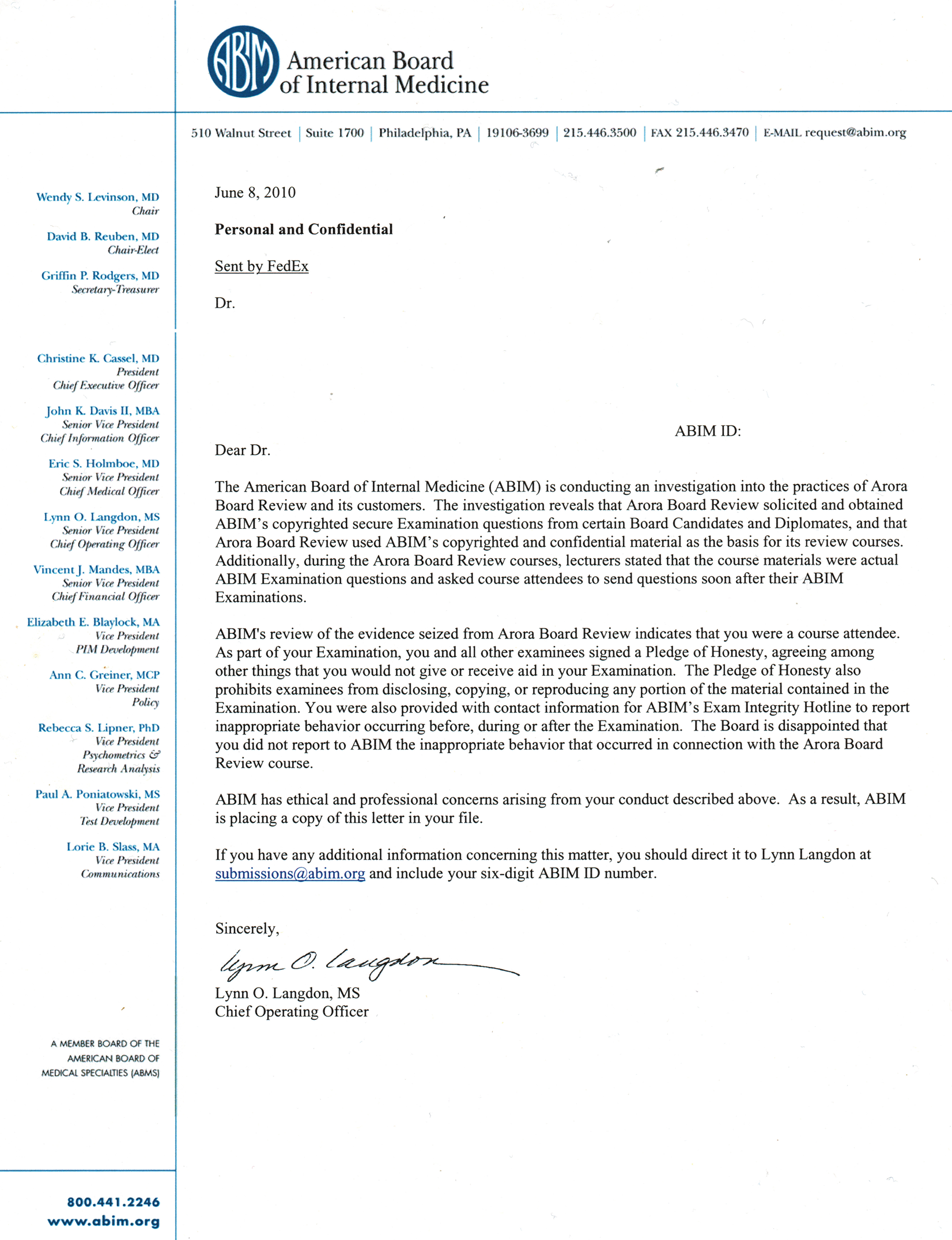
Thanks to the Penn State mentality inherent to group-think corporate medicine, it now appears the ABIM plotted a strategy using intimidating strongman search and seizure tactics to invade at least one physician's home to obtain "2,000 emails and audio and other communications from physicians disclosing exam questions." Officers of the ABIM unilaterally justified the sanctioning of 139 physicians and the distribution of heavy-handed and psychologically irresponsible letters of reprimand to thousands more as "a message and a deterrent" while pocketing millions for themselves and their corporate clients.
But questions remain and loom larger now. What were the terms of the deal cut between Dr. Arora and the ABIM? Why won't the ABIM release this settlement agreement to the defendant? What personnel and methods were used to track down the Puerto Rican physician via his email communications some five years later? Why were records shredded? Why were physician attendees at the Arora course targeting when similar ACP-sponsored courses and course directors do not undergo similar scrutiny? None of these specifics were aired in the public ABIM press release about the incident.
Until these are explained and justified, I believe all US physicians should refuse to participate in Maintenance of Certification (MOC) until a full investigation and accounting of the ABIM's actions and financial conflicts takes place. Members of hospital medical boards and Medical Executive Committees should insist these questions are answered by the ABIM. After all, hospitals and insurers need practicing physicians focused on patient care more than they need the ABIM, ABMS, or its member boards insisting we take strong-armed tests for their political and personal gain.
To me, it increasingly appears legal challenges are mounting for the ABIM, the ABMS, and their officers as this story unfolds. As a result, I suspect there will be a pivot away from the ABIM/ABMS MOC product by the medical establishment to the new Medicare Physician Payment scheme, MACRA. But MACRA contains parts of the ABMS MOC program with its untested "performance improvement" quality metrics and patient-survey directed care that repeats a similar theme: data-gathering to pad corporate bottom lines with expensive, time-consuming, and unnecessary metrics that add little to no value to direct patient care and, instead, adds costs and detracts further from much-needed patient care.
It is time to learn the whole truth behind MOC, not just for physicians' benefit, but for our patients, too.
-Wes
In turn, lawyers for the ABIM have filed a request for an extension on 12 March 2016 to file their response. The details of their response will be interesting to review, especially since practicing US physicians are witnessing first-hand how the ABIM, once little more than a testing agency, exploited the learned helplessness of physicians accustomed to years of regulatory Stockholm Syndrome to take advantage of fellow colleagues for personal and political gain.
Thanks to the Penn State mentality inherent to group-think corporate medicine, it now appears the ABIM plotted a strategy using intimidating strongman search and seizure tactics to invade at least one physician's home to obtain "2,000 emails and audio and other communications from physicians disclosing exam questions." Officers of the ABIM unilaterally justified the sanctioning of 139 physicians and the distribution of heavy-handed and psychologically irresponsible letters of reprimand to thousands more as "a message and a deterrent" while pocketing millions for themselves and their corporate clients.
But questions remain and loom larger now. What were the terms of the deal cut between Dr. Arora and the ABIM? Why won't the ABIM release this settlement agreement to the defendant? What personnel and methods were used to track down the Puerto Rican physician via his email communications some five years later? Why were records shredded? Why were physician attendees at the Arora course targeting when similar ACP-sponsored courses and course directors do not undergo similar scrutiny? None of these specifics were aired in the public ABIM press release about the incident.
Until these are explained and justified, I believe all US physicians should refuse to participate in Maintenance of Certification (MOC) until a full investigation and accounting of the ABIM's actions and financial conflicts takes place. Members of hospital medical boards and Medical Executive Committees should insist these questions are answered by the ABIM. After all, hospitals and insurers need practicing physicians focused on patient care more than they need the ABIM, ABMS, or its member boards insisting we take strong-armed tests for their political and personal gain.
To me, it increasingly appears legal challenges are mounting for the ABIM, the ABMS, and their officers as this story unfolds. As a result, I suspect there will be a pivot away from the ABIM/ABMS MOC product by the medical establishment to the new Medicare Physician Payment scheme, MACRA. But MACRA contains parts of the ABMS MOC program with its untested "performance improvement" quality metrics and patient-survey directed care that repeats a similar theme: data-gathering to pad corporate bottom lines with expensive, time-consuming, and unnecessary metrics that add little to no value to direct patient care and, instead, adds costs and detracts further from much-needed patient care.
It is time to learn the whole truth behind MOC, not just for physicians' benefit, but for our patients, too.
-Wes
Saturday, March 12, 2016
When the ABIM Comes Knocking
Imagine early one morning your doorbell rings. You wake from sleep and come to the door and open it. There before you is "a lawyer and a few other people from the American Board of Internal Medicine (ABIM)." They hand you a document, signed by a judge, that they can search your premises and seize things. You're confused and feel powerless to act. They enter, move to your study (home office) that contains the records of your ACGME-accredited board review course that you've given for years, collecting documents. They open your computer, taking portions of it so it no longer works. They rummage through your wife's jewelry box. They spend the entire day boxing and inventorying things that they collect, then leave.
Then, some time later, a settlement deal is cut with you. One that apparently the ABIM does not want others to see. You're advised by your counsel not to bring that subpoenaed settlement agreement with you for your deposition. And remarkably, the very same lawyer that raided your home is there at your deposition representing the ABIM.
Sound unreal?
Yesterday, Dr. Jaime A. Salas Rushford posted on his blog the 142-page deposition of Rajender K. Arora, MD from January 21, 2016, obtained as part of his defense of the ABIM suit filed against him. Dr. Arora ran the board review course that resulted in 5 suits and 134 physician sanctions by the ABIM as reported in the Wall Street Journal. It also prompted physician sanction letters to be sent by Ms. Lynn Langdon, Chief Operating Officer of the ABIM at the time, to thousands more. Dr. Arora's account of the raid on his home in December 2009 begins on page 62 of the posted transcript. The lawyer that came to his door is identified on page 63 (Ms. Hara Jacobs). The accounting of the search of Dr. Arora's wife's jewelry box is found on page 93.
So if you've got a few minutes, grab a cup of coffee and read the deposition, especially the part about the raid on Dr. Arora's home. I have a feeling this story is about to get very interesting for practicing US physicians and very uncomfortable for the ABIM as more details about this apparent physician sting operation emerge.
-Wes
Related: "Strongman, Bosses, and the American Board of Internal Medicine"
Then, some time later, a settlement deal is cut with you. One that apparently the ABIM does not want others to see. You're advised by your counsel not to bring that subpoenaed settlement agreement with you for your deposition. And remarkably, the very same lawyer that raided your home is there at your deposition representing the ABIM.
Sound unreal?
Yesterday, Dr. Jaime A. Salas Rushford posted on his blog the 142-page deposition of Rajender K. Arora, MD from January 21, 2016, obtained as part of his defense of the ABIM suit filed against him. Dr. Arora ran the board review course that resulted in 5 suits and 134 physician sanctions by the ABIM as reported in the Wall Street Journal. It also prompted physician sanction letters to be sent by Ms. Lynn Langdon, Chief Operating Officer of the ABIM at the time, to thousands more. Dr. Arora's account of the raid on his home in December 2009 begins on page 62 of the posted transcript. The lawyer that came to his door is identified on page 63 (Ms. Hara Jacobs). The accounting of the search of Dr. Arora's wife's jewelry box is found on page 93.
So if you've got a few minutes, grab a cup of coffee and read the deposition, especially the part about the raid on Dr. Arora's home. I have a feeling this story is about to get very interesting for practicing US physicians and very uncomfortable for the ABIM as more details about this apparent physician sting operation emerge.
-Wes
Related: "Strongman, Bosses, and the American Board of Internal Medicine"
Friday, March 11, 2016
When Medical Students Push Back
There are few times when medical academics sound more foolish that when they're caught with their hand in the regulatory cookie jar.
Take, for instance, this response to the recent pushback by medical students against the National Board of Medical Examiners' Step 2 CS requirement. For those unfamiliar, this is an attempt for the NBME to "standardize" the patient encounter while collecting $1250 at one of only five specialized testing centers is the US for the pleasure. Their excuse for such a requirement?
I suggest the NBME stop Step 2 CS and adjust their budget accordingly.
-Wes
Addendum: Interesting that the NMBE made $136 million in 2014 from testing fees, 50% of which went to salaries.
Take, for instance, this response to the recent pushback by medical students against the National Board of Medical Examiners' Step 2 CS requirement. For those unfamiliar, this is an attempt for the NBME to "standardize" the patient encounter while collecting $1250 at one of only five specialized testing centers is the US for the pleasure. Their excuse for such a requirement?
"... most medical school faculty don’t have time to observe third- and fourth-year students doing a complete physical exam, so it’s important to test those skills as part of the licensing process.Medical school faculty don't have the time? Seriously? That's their job. If medical school faculty, working 9 months a year while planning their resarch projects and next grant application, don't have the time to evaluate the medical students that fund their salaries sufficiently, then perhaps they need to look inward rather than asking medical students to submit themselves to this money grab. Medical school is already incredibly expensive (private schools here in Chicago enjoy a tuition and fees of over $54,000/year). Certification and licensure fees are many more thousands on top of that (again and again and again). Unnecessary testing is a waste of time and resources for physician-trainees who are increasingly thrown under the bus by the non-practicing bureacratic elite. The whole process needs serious reassessment. Otherwise, our best and brightest will understand all too soon what they're up against and that won't be good for the "public" at all.
“It’s really just a part of what we do to become physicians and to demonstrate to the public that we have earned their trust — that they can put their faith in us and feel comfortable with it,” Kastufrakis said.
The exam also serves as a sort of quality assurance test for medical schools, to make sure they’re teaching patient care skills, said Dr. Lia S. Logio, president of the Association of Program Directors in Internal Medicine. “I think everyone coming to my residency program should pass it, and pass it on the first attempt,” Logio said."
I suggest the NBME stop Step 2 CS and adjust their budget accordingly.
-Wes
Addendum: Interesting that the NMBE made $136 million in 2014 from testing fees, 50% of which went to salaries.
Tuesday, March 08, 2016
Medical Specialty Certification in the US - A False Idol?
For the first time, the history of the ABMS/ABIM board re-certification corruption scandal has reached a peer reviewed medical journal, the Journal of Interventional Cardiac Electrophysiology. I hope practicing physicians here (and others worldwide) take time to read the history and evolution of board certification in the US reviewed in the article and to review the associated references.
I would like to thank my co-author, Edward J. Schloss, MD (Twitter: @EJSMD) for his contributions to this work and the many helpful editorial suggestions made by the JICE reviewers.
It is time we reconsider the ABMS "Maintenance of Certification" (MOC) program. It is also time to have an independent audit of the financials from 1989 to 2016 from the American Board of Internal Medicine and its Foundation, including full disclosure of the many financial conflicts of interest within the American Board of Internal Medicine (ABIM), the ABIM Foundation, and each of the 24-member boards that comprise the American Board of Medical Specialties. Finally, a full investigation of misleading tax filings and lobbying disclosures of the ABIM as a public tax-exempt 501(c)(3) corporation by the IRS and Department of Justice is long overdue in light of these revelations.
-Wes
Reference:
Fisher WG and Schloss EJ. Medical Specialty Certification in the United States - A False Idol? J Interventional Cardiac Electrophysiology doi: 10.1007/s10840-016-0119-4 Mar 8, 2016.
I would like to thank my co-author, Edward J. Schloss, MD (Twitter: @EJSMD) for his contributions to this work and the many helpful editorial suggestions made by the JICE reviewers.
It is time we reconsider the ABMS "Maintenance of Certification" (MOC) program. It is also time to have an independent audit of the financials from 1989 to 2016 from the American Board of Internal Medicine and its Foundation, including full disclosure of the many financial conflicts of interest within the American Board of Internal Medicine (ABIM), the ABIM Foundation, and each of the 24-member boards that comprise the American Board of Medical Specialties. Finally, a full investigation of misleading tax filings and lobbying disclosures of the ABIM as a public tax-exempt 501(c)(3) corporation by the IRS and Department of Justice is long overdue in light of these revelations.
-Wes
Reference:
Fisher WG and Schloss EJ. Medical Specialty Certification in the United States - A False Idol? J Interventional Cardiac Electrophysiology doi: 10.1007/s10840-016-0119-4 Mar 8, 2016.
Monday, February 29, 2016
Spotlight
Earlier this morning I learned that "Spotlight" won the "Best Picture" award at the Academy Awards, much to the disappointment of the bear attack fans. But as one who has dipped his toe into the art of investigative journalism for the past three years as an amateur, I found the appreciation of the film's message reassuring in today's click-through culture. Being an investigative journalist is not only difficult, but also frightening at times, both professionally and personally. As the movie nicely documents, the revelations of corruption can shake closely-held narratives of decency and trust so critical to important societal institutions. The movie also nicely portrays how difficult it is to fact-check, obtain evidence, and clearly document the story to both gain credibility and affect change. Unfortunately, classic investigative journalism has fallen victim to increasingly limited funding and a world with a shorter and shorter information attention span.
I fear the story of the financial cover-up at the American Board of Internal Medicine (ABIM) is quickly falling victim to similar pressures. With the exception of one veteran news reporter at Newsweek, Kurt Eichenwald (see here, here, here, and here), few journalists have had the interest, patience, or fortitude to expose the truth of the multi-million dollar US physician specialty Board certification racket. Perhaps, like the thought of priests caught molesting children, the thought a non-practicing physician cartel extorting high fees from their colleagues for their personal and political gain is too uncomfortable to accept. Perhaps it is too hard for patients to believe that board re-certification is not about assuring their safety, but rather for little more than money and power. But for working U.S. physicians who are still strong-armed into paying into the ABMS cartel every ten years just so they can continue to do the job they love, this coercion is all too real.
Last October, I had hoped this story would be different. I was interviewed for over an hour and a half by a reporter from CNBC at my hospital who was investigating the ABMS board certification monopoly. I was told she also interviewed Richard Baron, MD of the ABIM and Lois Nora, MD, JD, of the American Board of Medical Specialties. I spent over an hour in the interview, had a cameraman shoot shots in of my office with its board certificates, and introduced the reporter to one of my patients (with permission given my the patient first) under the watchful eye of my hospital's PR department. "Finally!" I thought.
But the story never aired. I called and inquired. It was an on again, off again affair, buffeted by more compelling stories of the day, I was told. Then, "we've decided to go forward." But now months later, still nothing.
I believe that freedom of the press and careful investigative journalism fills an important role in our society. I still believe the day will come when the truth about the ABIM's actions will be told and thoroughly investigated to end the injustice and waste from the ABMS Board Certification monopoly. Let's hope last night's victory of "Spotlight" as "Best Picture" at the Academy Awards can rekindle main stream media's appreciation for the importance of responsible reporting unencumbered by political and financial pressures.
After all, this isn't Hollywood that we are dealing with, this is real life, real doctors, and real patient care - even yours.
-Wes
Monday, February 22, 2016
My Letter to the Chair, Cardiovascular Board, ABIM
Recently, an email was sent to all Cardiovascular Disease diplomats requesting a review of the American Board of Internal Medicine Cardiovascular Disease Examination "Blueprint" for content on the Cardiovascular Disease Examination. The email was authored by Mariel Jessup, MD, Chair of the Cardiovascular Board and George W. Dec, Jr., MD, Chair, Cardiovascular Board of Cardiovascular Disease Exam Committee (I'm not really sure how these titles differ, but I digress).
The purpose of the "survey" and "blueprint" was to "assure the MOC examination is reflective of CV disease specialists are actually doing today, and we hope you share your perspectives to help get us there." Petitioning cardiovascular disease specialists through "short surveys" so the responses of physicians can be spun by the ABIM as evidence of "buy-in" by the cardiovascular community is a classic and well-recognized political tactic.
Here's my letter I sent to the ABIM Cardiovascular leadership in charge of this endeavor. I encourage my cardiovascular colleagues to send them your thoughts at ABIMBlueprintReview@abim.org :
The purpose of the "survey" and "blueprint" was to "assure the MOC examination is reflective of CV disease specialists are actually doing today, and we hope you share your perspectives to help get us there." Petitioning cardiovascular disease specialists through "short surveys" so the responses of physicians can be spun by the ABIM as evidence of "buy-in" by the cardiovascular community is a classic and well-recognized political tactic.
Here's my letter I sent to the ABIM Cardiovascular leadership in charge of this endeavor. I encourage my cardiovascular colleagues to send them your thoughts at ABIMBlueprintReview@abim.org :
18 Feb 2016-Wes
Dear Drs. Dec and Jessup-
I received your 11 Feb 2016 email to update the content of the Cardiovascular Disease MOC examination by way of your Blueprint Review Tool. No doubt you have plenty of people who have blindly edited your “Blueprint” without considering why we must perform the ABMS MOC program in the first place. I have no idea if this letter will resonate with you or make you seriously reconsider your support of this endeavor, but I feel compelled to notify you why US physicians are no longer content with the MOC status quo that was imposed unilaterally by the ABIM and their supporting professional organizations in 1990. MOC was a financial model that bailed the ABIM out of a financial hole then and now has created a much bigger set of problems for the ABIM.
As I’m sure you are well aware, there had been no credible, independent, peer-reviewed studies that have shown the ABMS MOC program improves patient outcomes in any way. There are, however, limitless propaganda pieces written by staff at the ABIM about the purported “benefits” of MOC. Tax disclosures have shown serious financial mismanagement and erroneous tax filings by the ABIM. Most of the financial transgressions pertain to the secret creation and funneling of over $70 million of our physician testing fees to the ABIM Foundation from 1989-2007, an organization that was reportedly created to define and publish a self-generated definition of “medical professionalism” that included a “social justice” imperative as one of its prerequisites. Their $2.3 million condominium purchase in December, 2007 didn’t help either. The fact that the cost for MOC has increased $247 percent in the last 15 years (over 16%/yr – far in excess of inflation) with $55 million of physician fees paid annually to the ABIM needs serious reconsideration in this era of astronomical health care costs. The ABIM is an independent, non-profit corporation that enjoys a tax-exempt status from the federal government as a 501(c)(3) corporation with requirements to be apolitical, but lobbied Congress without disclosure – a violation of rules for non-profit status of that kind. As a 501(c)(3) corporation, the ABIM’s membership is not elected, but rather appointed (as I’m sure you both were). Conflicts of interest with the leadership remain an unaddressed issue with the ABIM and bylaws reflect they continue. One only has to see the conflicts between Christine Cassel, MD and CECity/Premier/Kaiser Health Plan and Hospitals and Robert M. Wachter, MD and IPC Hospitalist Co/TeamHealth (and their ongoing federal investigation on Medicare overbilling) to appreciate how problematic these conflicts have become for the ABIM as a credible organization to practicing physicians and patients.
Furthermore, the ABIM took the unprecedented action to sue 5 physicians and sanction 134 more who were attempting to study for their certification examinations at a board review course in 2009 and then publishing a press release with the five physicians’ names in the Wall Street Journal in 2010 before due process. While the ABIM claimed “Copyright infringement” with their sanctions, none of the five physicians EVER paid a fine for such since all were covered in their actions by merger doctrine. (It’s very hard to copyright general medical knowledge.) With this move and the contract entrapment physicians must endure when they enroll in MOC, trust in the ABIM as a credible physician quality measure has been seriously compromised.
Blueprints don’t restore trust. Credible, trustworthy actions that acknowledge prior wrongs and meaningful efforts to correct them does. Ending the lucrative MOC program and restoring the ABIM to an elected organization with bylaws that remove double-dipping with corporations that stand to benefit from physician certification reporting (see abmssolutions.org, for instance) would go a long way at correcting the current situation. Ending MOC busywork and retracting the failed MOC program and using credible CME to suffice in its stead would also be necessary.
I propose you make these last actions your “Blueprint for Success” for the ABMS Cardiovascular Disease MOC program. Anything else will fail to restore the trust of practicing cardiologists and is doomed to fail. I wish you both the best of luck.
Respectfully,
Westby G. Fisher, MD
ABIM Diplomat #127308
Wednesday, February 17, 2016
Holding the ABIM Accountable
I ask my readers to indulge me as I provide some background about the strongman tactics used by the American Board of Internal Medicine (ABIM) to protect their board certification monopoly.
It started with a press release sent by the ABIM dated 9 June 2010, resulting in a story by Katherine Hobson making national headlines in the Wall Street Journal entitled "Medical Board Says MDs Cheated." Ms. Hobson also cross-posted her story on the Wall Street Journal's Health Care blog which she helped moderate at the time.
With this article, the public learned that five physicians, Monica Mukherjee of Washington, D.C.; Anastassia Todor of Aurora, CO.; Pedam Salehi of Los Angeles, CA; Sarah Von Muller of Tulsa, OK and Frederick Oni of Warner Robins, GA were sued by the ABIM "for what it deemed were ethical breaches involving the disclosure of test questions—which aren't supposed to be repeated, copied or reproduced." Another 134 physicians were "sanctioned" by having their Board certification revoked for at least a year, and thousands more were sent "letters of reprimand." Labeled as an "unprecedented action," the sanctions were "immediate" and resulted in the revocation of these physicians' Board certification for at least a year or more without trial. Hiding behind the legalistic "Pledge of Honesty" that physicians have no choice but to sign when they enroll in the ABIM certification program, Dr. Christine Cassel, president and chief executive of the ABIM at the time, called the sanctions "a message and a deterrent."
It's was also an unprecedented strongman tactic by a self-appointed and unaccountable non-profit corporation. Should the entire unaccountable American Board of Medical Specialties and their 24-member boards be allowed to intimidate, threaten, and professionally destroy physicians to protect their financial stranglehold on their own version of professional certification?
To those in their isolated executive perches, it seems they feel they can. And so, the story does not end there.
Using undisclosed methods and personnel, it seems the ABIM traced emails from a computer seized from Arora Board Review to a physician in Puerto Rico four years later. In a letter dated May 8, 2012, from Ms. Lynn Landon, Chief Operating Officer of the ABIM, Jaime Antonio Salas-Rushford, MD, was accused of sharing board review questions with the Arora Board Review course. On the sidebar of that letter were other names: Chair Catherine R Lucey, MD, Chair-Elect Robert M Wachter, MD, Secretary-Treasurer Talmadge E King, MD, President and CEO Christine Cassel, MD, Chief Information Officer John K Davis II, MBA, Senior Vice President and Chief Medical Officer Eric S. Holmboe, MD among others. With only 10 days notice, the ABIM imposed its harshest penalty: to "indefinitely revoke" Dr. Salas Rushford's Board certification and "notify the Medical Board in every jurisdiction you are licensed." The ABIM then sued Dr. Salas-Rushford for alleged Copyright infringement.
What the ABIM had not anticipated is that Dr. Salas-Rushford's parents are lawyers and they countersued the ABIM. Currently, the case has moved from Puerto Rico back to New Jersey and continues in its discovery phase. Lawyers from one of the largest law firms in Philadelphia, Ballard Spahr LLP, are representing the ABIM - all paid for by millions of dollars of practicing physician testing fees.
As you can imagine, the legal fees for Dr. Salas-Rushford's defense are significant. Last evening, a website (doctorsjustice.com) went live to help crowdsource Dr. Salas-Rushford's legal costs. The website contains more about Dr. Salas-Rushford and copies of documents important to his case (including the Langdon letter and the ABIM's final sanction determination). I encourage everyone to review his information carefully.
Given what we know about the ABIM's recent actions, the secret funneling of funds from the ABIM to the ABIM Foundation from 1989 to 1999 to define their version of "medical professionalism," the use of physician testing fees for luxury condominium purchases, the concerning undisclosed conflicts of interest within the leadership of the ABIM (see here and here), the revolving-door collusion between CMS and the National Quality Forum, the undisclosed political lobbying of this tax-exempt 501(c)(3) organization, their strongman tactics, and their propensity to advertise their self-determined sanctions to mainstream media before due process, it is time practicing physicians demand justice and a full investigation into the ABIM's methods of securing their lucrative physician "quality cartel."
Dr. Salas-Rushford's suit against the ABIM promises to shine a very bright light on the practices of the ABIM whether his case is upheld or not. For that reason, I encourage all practicing physicians, irrespective of specialty, to donate in whatever way you can - $5 or $500 - to his legal fund. You can also help by sharing his website and encouraging others to do the same.
It's time for practicing physicians everywhere to hold the ABIM accountable.
-Wes
It started with a press release sent by the ABIM dated 9 June 2010, resulting in a story by Katherine Hobson making national headlines in the Wall Street Journal entitled "Medical Board Says MDs Cheated." Ms. Hobson also cross-posted her story on the Wall Street Journal's Health Care blog which she helped moderate at the time.
With this article, the public learned that five physicians, Monica Mukherjee of Washington, D.C.; Anastassia Todor of Aurora, CO.; Pedam Salehi of Los Angeles, CA; Sarah Von Muller of Tulsa, OK and Frederick Oni of Warner Robins, GA were sued by the ABIM "for what it deemed were ethical breaches involving the disclosure of test questions—which aren't supposed to be repeated, copied or reproduced." Another 134 physicians were "sanctioned" by having their Board certification revoked for at least a year, and thousands more were sent "letters of reprimand." Labeled as an "unprecedented action," the sanctions were "immediate" and resulted in the revocation of these physicians' Board certification for at least a year or more without trial. Hiding behind the legalistic "Pledge of Honesty" that physicians have no choice but to sign when they enroll in the ABIM certification program, Dr. Christine Cassel, president and chief executive of the ABIM at the time, called the sanctions "a message and a deterrent."
It's was also an unprecedented strongman tactic by a self-appointed and unaccountable non-profit corporation. Should the entire unaccountable American Board of Medical Specialties and their 24-member boards be allowed to intimidate, threaten, and professionally destroy physicians to protect their financial stranglehold on their own version of professional certification?
To those in their isolated executive perches, it seems they feel they can. And so, the story does not end there.
Using undisclosed methods and personnel, it seems the ABIM traced emails from a computer seized from Arora Board Review to a physician in Puerto Rico four years later. In a letter dated May 8, 2012, from Ms. Lynn Landon, Chief Operating Officer of the ABIM, Jaime Antonio Salas-Rushford, MD, was accused of sharing board review questions with the Arora Board Review course. On the sidebar of that letter were other names: Chair Catherine R Lucey, MD, Chair-Elect Robert M Wachter, MD, Secretary-Treasurer Talmadge E King, MD, President and CEO Christine Cassel, MD, Chief Information Officer John K Davis II, MBA, Senior Vice President and Chief Medical Officer Eric S. Holmboe, MD among others. With only 10 days notice, the ABIM imposed its harshest penalty: to "indefinitely revoke" Dr. Salas Rushford's Board certification and "notify the Medical Board in every jurisdiction you are licensed." The ABIM then sued Dr. Salas-Rushford for alleged Copyright infringement.
What the ABIM had not anticipated is that Dr. Salas-Rushford's parents are lawyers and they countersued the ABIM. Currently, the case has moved from Puerto Rico back to New Jersey and continues in its discovery phase. Lawyers from one of the largest law firms in Philadelphia, Ballard Spahr LLP, are representing the ABIM - all paid for by millions of dollars of practicing physician testing fees.
As you can imagine, the legal fees for Dr. Salas-Rushford's defense are significant. Last evening, a website (doctorsjustice.com) went live to help crowdsource Dr. Salas-Rushford's legal costs. The website contains more about Dr. Salas-Rushford and copies of documents important to his case (including the Langdon letter and the ABIM's final sanction determination). I encourage everyone to review his information carefully.
Given what we know about the ABIM's recent actions, the secret funneling of funds from the ABIM to the ABIM Foundation from 1989 to 1999 to define their version of "medical professionalism," the use of physician testing fees for luxury condominium purchases, the concerning undisclosed conflicts of interest within the leadership of the ABIM (see here and here), the revolving-door collusion between CMS and the National Quality Forum, the undisclosed political lobbying of this tax-exempt 501(c)(3) organization, their strongman tactics, and their propensity to advertise their self-determined sanctions to mainstream media before due process, it is time practicing physicians demand justice and a full investigation into the ABIM's methods of securing their lucrative physician "quality cartel."
Dr. Salas-Rushford's suit against the ABIM promises to shine a very bright light on the practices of the ABIM whether his case is upheld or not. For that reason, I encourage all practicing physicians, irrespective of specialty, to donate in whatever way you can - $5 or $500 - to his legal fund. You can also help by sharing his website and encouraging others to do the same.
It's time for practicing physicians everywhere to hold the ABIM accountable.
-Wes
Friday, February 12, 2016
The American Rebellion is Hitting the House of Medicine
From Peggy Noonan:
It will be interesting to see where things land but one thing is for certain, the staid bureaucratic institutions within the House of Medicine are in trouble and they brought this on themselves.
-Wes
We’re in the midst of a rebellion. The bottom and middle are pushing against the top. It’s a throwing off of old claims and it’s been going on for a while, but we’re seeing it more sharply after New Hampshire. This is not politics as usual, which by its nature is full of surprise. There’s something deep, suggestive, even epochal about what’s happening now.Physicians, too, are rebelling against the established sheltered and elite institutions of the House of Medicine: the ACGME. I can see it. I feel it.
I mention this to say we are in a precarious position in the U.S. with so many of our institutions going down. Many of those pushing against the system have no idea how precarious it is or what they will be destroying. Those defending it don’t know how precarious its position is or even what they’re defending, or why. But people lose respect for a reason.So true. Greed does this to people. So does money.
It will be interesting to see where things land but one thing is for certain, the staid bureaucratic institutions within the House of Medicine are in trouble and they brought this on themselves.
-Wes
Monday, February 08, 2016
On the Anniversary of the ABIM's MOC Mea Culpa
Happy (belated) Anniversary, ABIM!
It's been over a year since you told us your now famous mea culpa message that said you "got it wrong" with your Maintenance of Certification (MOC) program.
And yet the program still continues despite everything your colleagues have disclosed about this travesty to our medical profession.
Let's review what you've done instead:
Anyone who has ever had a loved one caught in this viscous addiction cycle understands. This is what the hostile-dependent relationship with an addict looks like: untrusting, two-faced, dysfunctional, love-you-one-minute-then-stab-you-in-the-back, sneaky.
From the very beginning when time-limited board certification was introduced to the physician community, this is what how you and your supporters framed it::
But there's still time. You can start your 12-step process, but first, you must admit you have a problem. Committing to an $85 million lease through October 2040 and shaking down your fellow physicians for your extravagent ways is part of the problem. But you know and I know there's even more behind the scenes. You really don't want us to tell the rest of the story and all of the sneaky and disturbing ways you secured your monopoly. This story is very messy, Gruber-esc, indeed. It will take bravery and resolve, but you can do it.
Here's how.
I would suggest you come clean. Stop trying to clean up your horrible MOC mess. Change your bylaws to one that supports working physicians, rather than yourselves and your "stakeholders." Insist that ALL financial and political efforts be disclosed - that's right: ALL of them - including all of your leadership and directors' securities deals and consulting arrangements. Disclose all of the fees that flow between professional societies, medical journals, and other members of the ACGME hierarchy as well. Dissolve the Foundation and return the money to those who funded it: practicing physicians. Make certification free for the next ten years (the same amount of time you (quite literally) stole from us for your political agenda). And stop insisting that MOC can be improved when it's clearly little more than a corrupt, dysfunctional, and untrustworthy self-created credential for your income stream. MOC (and all the sickening and non-transparent permutations that keep getting created) needs to end completely.
Because here's a secret: clinical doctors won't participate in this program without these actions to dissolve MOC, no matter how much pressure you and your cronies apply.
-Wes
Reference: Glassock RJ Benson JA, Copeland RB, Godwin HA, Johanson WG, Point W, Popp RL, Scherr L, Stein JH, Tounton OD. Time-Limited Certification and Recertification: The Program of the American Board of Internal Medicine. Ann Intern Med 1991; 114(1): 59-62.
It's been over a year since you told us your now famous mea culpa message that said you "got it wrong" with your Maintenance of Certification (MOC) program.
And yet the program still continues despite everything your colleagues have disclosed about this travesty to our medical profession.
Let's review what you've done instead:
- You've suspended (temporarily to the end of 2018 when MACRA blossoms forth) Part 4 of the MOC program with its Practice Improvement Modules and Patient Safety and "Voice" sections because you were caught red-handed performing research on physicians for your own gain.
- You've finally stopped making residents pay for "maintaining" their certification before they even sat for their first certification examination.
- You also stopped requiring that physicians subject themselves to a "double jeopardy" situation where those with more than one Board certification had two pass BOTH examinations to maintain each one of their certifications.
- You also made sure you took down the comment section on your blog. So much for transparency and a sense that you really cared what your practicing colleagues thought about your program.
- And now, according to Stephen Weinberg, MD at the American College of Physicians in a recent email to ACP members, you've been "addressing any factors that might be contributing to the relatively high failure rates" by "making changes to the most recent internal medicine MOC examination administered in October" and "changing the process" for setting the pass rate cut-off resulted in ABIM reporting "a notably higher pass rate for the 2015 Internal Medicine MOC examinations." It seems those declining pass rates that you dismissed in your Medscape interview were getting lower after all.
- You haven't explained why you funneled over $70 million of our testing fees from the ABIM to your secretly-created ABIM Foundation.
- You haven't explained why you paid Christine Cassel, MD a whopping $8.9 million from May, 2003 through 30 June 2013 and allowed her to earn another $1.9 million from Kaiser Foundation Health Plans and Hospitals and $230,000 in cash and stock from Premier Inc while she was supposedly working full time at the ABIM. And why on earth did Ms. Langdon - a non-physician administrator - deserve a bonus of over $297,646 in fiscal year 2012? Was it because of all those sanction letters she sent out to physicians acusing them of cheating?
- You haven't explained why cash-flush ABIM Foundation had to purchase a $2.3 million luxury condominium complete with a chauffeur-driven Mercedes S-Class town car. Was it really as an "investment" or was this another perk for Ms. Cassel as she and her husband flitted back and forth from Philadelphia to their home in Arizona?
- You also haven't disclosed how test and physician demographic and practice data, paired with your unproven re-certification metric, are being sold to the likes of CECity Premier, Inc and others for political and personal favors.
Anyone who has ever had a loved one caught in this viscous addiction cycle understands. This is what the hostile-dependent relationship with an addict looks like: untrusting, two-faced, dysfunctional, love-you-one-minute-then-stab-you-in-the-back, sneaky.
From the very beginning when time-limited board certification was introduced to the physician community, this is what how you and your supporters framed it::
Previous attempts by the ABIM to mount programs of voluntary recertification for non-time-limited certificate holders had met with only limited and declining interest. Over four exams, only 8621 candidates were issued since 1974. The last of these efforts, the Advanced Achievement in Internal Medicine exam given in May 1987 attracted only 1403 registrants from an estimated pool of over 40,000 eligible certified internists despite extensive marketing efforts by the Board. Thus, the stage was set for the Board to embark on an era in which diplomats would be asked, but not required, to renew the validity of their certificates at periodic intervals or face the uncertain consequences of loss of their status as certified internists, subspecialists, or holders of certificates of added qualification." (emphasis mine)Back then as it is now, the ABMS/ABIM MOC participation was born upon a strongman/boss approach, not on proof of its value to patients or our profession.
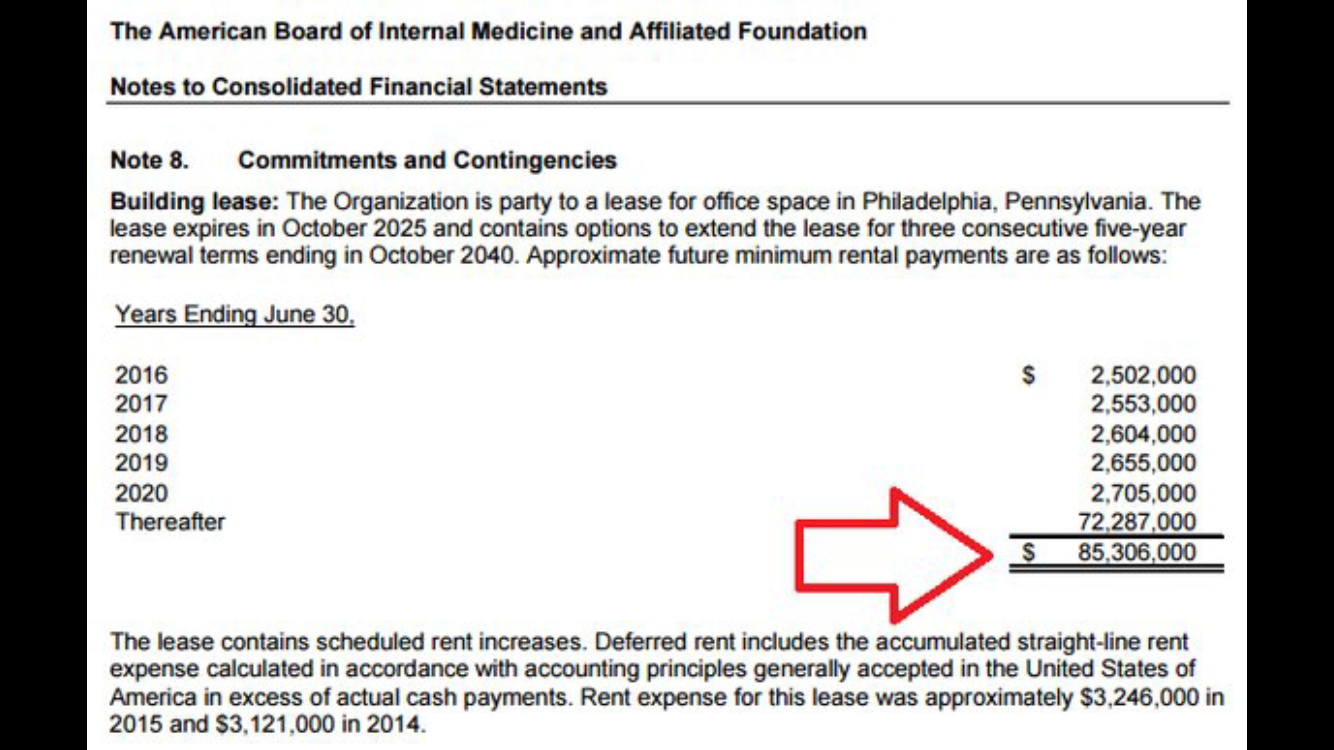
But there's still time. You can start your 12-step process, but first, you must admit you have a problem. Committing to an $85 million lease through October 2040 and shaking down your fellow physicians for your extravagent ways is part of the problem. But you know and I know there's even more behind the scenes. You really don't want us to tell the rest of the story and all of the sneaky and disturbing ways you secured your monopoly. This story is very messy, Gruber-esc, indeed. It will take bravery and resolve, but you can do it.
Here's how.
I would suggest you come clean. Stop trying to clean up your horrible MOC mess. Change your bylaws to one that supports working physicians, rather than yourselves and your "stakeholders." Insist that ALL financial and political efforts be disclosed - that's right: ALL of them - including all of your leadership and directors' securities deals and consulting arrangements. Disclose all of the fees that flow between professional societies, medical journals, and other members of the ACGME hierarchy as well. Dissolve the Foundation and return the money to those who funded it: practicing physicians. Make certification free for the next ten years (the same amount of time you (quite literally) stole from us for your political agenda). And stop insisting that MOC can be improved when it's clearly little more than a corrupt, dysfunctional, and untrustworthy self-created credential for your income stream. MOC (and all the sickening and non-transparent permutations that keep getting created) needs to end completely.
Because here's a secret: clinical doctors won't participate in this program without these actions to dissolve MOC, no matter how much pressure you and your cronies apply.
-Wes
Reference: Glassock RJ Benson JA, Copeland RB, Godwin HA, Johanson WG, Point W, Popp RL, Scherr L, Stein JH, Tounton OD. Time-Limited Certification and Recertification: The Program of the American Board of Internal Medicine. Ann Intern Med 1991; 114(1): 59-62.
Tuesday, January 26, 2016
Love, Ethics, and the Quality Assessment Industry
"I think that commercialization of care is a big mistake. Health care is a sacred mission. It is a moral enterprise and a scientific enterprise but not fundamentally a commercial one. We are not selling a product. We don’t have a consumer who understands everything and makes rational choices — and I include myself here. Doctors and nurses are stewards of something precious. Their work is a kind of vocation rather than simply a job; commercial values don’t really capture what they do for patients and for society as a whole.
Systems awareness and systems design are important for health professionals but are not enough. They are enabling mechanisms only. It is the ethical dimension of individuals that is essential to a system’s success. Ultimately, the secret of quality is love. You have to love your patient, you have to love your profession, you have to love your God. If you have love, you can then work backward to monitor and improve the system. Commercialism should not be a principal force in the system. That people should make money by investing in health care without actually being providers of health care seems somewhat perverse, like a kind of racketeering."
- Avedis Donabedian
Systems awareness and systems design are important for health professionals but are not enough. They are enabling mechanisms only. It is the ethical dimension of individuals that is essential to a system’s success. Ultimately, the secret of quality is love. You have to love your patient, you have to love your profession, you have to love your God. If you have love, you can then work backward to monitor and improve the system. Commercialism should not be a principal force in the system. That people should make money by investing in health care without actually being providers of health care seems somewhat perverse, like a kind of racketeering."
 |
| Don Draper in the finale of Mad Men |
 | ||
| Robert Wachter, MD, as "Elton John" SHM Meeting 2014 Mandalay Bay Casino, Las Vegas and Modern Healthcare's Most Influential Physician Executive and Leader 2015 (Full video of the performance here) |
It was nearly four short years ago that Dr. Wachter wrote that we needed the ABIM's Maintenance of Certification program "more than ever." Perhaps the lucrative Digital Party in medicine was just too big for the ABIM leadership and the members of its Foundation to ignore. At the time, those in Wachter's World held the view that assuring physician quality meant physicians not only had to be re-certified every ten years but soon had to participate in some form of the ABIM's measurement program every two years for the sake of "external stakeholders and a troubled public." As a result, physicians were required to perform unproven practice improvement exercises, perform un-monitored research on themselves, and become glorified data entry personnel to continuously "maintain" their "board certification" or risk losing their right to practice. All of these exercises were subsequently revealed to be primarily for the medical industrial complex's extraordinary monetary gain and undisclosed political activities. Such "love," indeed.
The expanded ABIM board certification requirements after 1990 have served as the goose that laid the Golden Egg for condo purchases, chauffeur-driven Mercedes rides, spousal travel fees, undisclosed corporate consulting arrangements, corporate mergers, political influence and the program's continuing transition to Assessment2020 - much of these occurring while Dr. Wachter served as a Director or Chairman of the ABIM. For the ABIM and its parent organization, the American Board of Medical Specialties (ABMS), success in the digital medical world still appears to mean the doctor-patient relationship has to be owned, bartered, and commoditized to serve their bottom line without really understanding all that this entails to the doctor, their patients, and the credibility of our profession.
If Bob Wachter, MD is a true physician advocate and is now having a genuine conversion experience, he would be speaking out about these abuses of physicians' trust. In fact, as the "Most Influential Physician Executive and Leader 2015," he would be leading this charge. Or perhaps I am missing something.
Meanwhile, despite all of the fast-paced changes in health care under way, the same rubber soles continue to speed down linoleum hallways, call lights blink, keyboards pound, family meetings are held with tears shed, young physicians wonder how they'll pay their educational debt, productivity quotas expand, administrative meetings multiply, patients grow furious about their rising premiums, co-pays and deductibles, physician autonomy and morale withers, and patient access to their doctor shrinks.
Fortunately, rather than standing idly by, practicing doctors are mobilizing. They are realizing that the bloated and costly bureaucratic arm of our profession has lost its way and are working to restore its integrity. Practicing physicians are finding they have a voice and are not powerless against these corporate entities that unjustifiably risk compromising their ability do their job. With these efforts, members of Wachter's World are beginning to realize they're at risk of losing their golden goose:
Last week, Andy Slavitt, Medicare’s acting administrator, announced the end of a program that tied Medicare payments to a long list of measures related to the use of electronic health records. “We have to get the hearts and minds of physicians back,” said Mr. Slavitt. “I think we’ve lost them.”Despite these concerns of a few of our bureaucratic medical policy elite, practicing physicians remain little more than an account to be landed, a work to be optimized. To them, practicing physicians represent an opportunity to invest in new corporate ventures like Health2047, no doubt for the "love" that's involved. The respectful partnership that practicing physicians would like to have would not include the many corrupt financial practices and undisclosed conflicts of interest of the AMA and the ABMS specialty board credentialing system, their collaborating subspecialty societies, and numerous for-profit physician reporting businesses. They invoke ethics, morals, and "love" at their own risk.
In my career, I'm unaware of a broader breach of the trust of working physicians and of medical ethics by fellow colleagues than by those who secretly created the ABIM Foundation in 1989 and then funneled over $55 million of testing fees collected from working physicians while hiding its existence from physicians and the public until 1999. Yet many in our academic and bureaucratic physician community continue to support this testing agency that appears to have been expanded solely for political, corporate, and personal gain, and are indifferent to them using strongman tactics with physicians. What a perverted form of "love."
This system must change.
As health care moves forward in these uncertain times, a few of Donabedian's (other) words on quality assessment, uttered a month before his death, are prescient:
"It is the ethical dimension of individuals that is essential to a system’s success. ... Commercialism should not be a principal force in the system. That people should make money by investing in health care without actually being providers of health care seems somewhat perverse, like a kind of racketeering."Perverse indeed.
Right now there are residents who have no idea how they'll ever pay off their educational debt and millions of patients who can't afford insurance or their drugs. If the House of Medicine can't look inward at its own bloated, self-serving, bureaucratic ranks of the ACGME that are sucking the life from direct patient care, what does this say about the prognosis for US health care?
As Tina Turner once sang, "What's love got to do with it?"
-Wes
Reference: Donabedian A. A founder of quality assessment encounters a troubled system firsthand. Interview by Fitzhugh Mullan. Health Aff (Millwood). 2001 Jan-Feb;20(1):137-41.
Wednesday, January 13, 2016
Are ABIM-certified Physicians Research Subjects?
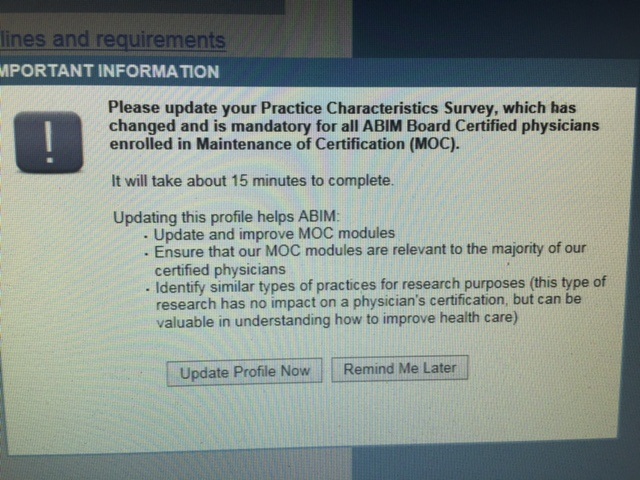
I logged on to the ABIM website last evening and was greated by this pop-up screen. It seems the ABIM is in the business of "research" at my expense to "understand how to improve health care." They are mandating that I enter my "practice characteristics" in a 15-minute survey.
Yet I have no idea what the ABIM's "research" entails, I have not been informed how that "research" will be conducted, nor how it might affect my ability to practice medicine, or if my information will be sold to other entities for a price on the basis of the ABIM's valuable "research." Since we know that the ABIM has partnered with companies like Premier, Inc (which just purchased CECity, Inc a subcontractor for the ABIM from 2010-2014) for $400 million, I would like to review the research protocol the ABIM is conducting, the risks and benefits to me for that research, and how my data will be used and protected.
The ABIM should be aware that the Department of Health and Human Services has VERY specific rules and regulations (45 CFR 46) about how "research" is to be conducted, particularly as it pertains to the protection of human subjects like myself who have increasingly found their ability to practice medicine in a hospital setting compromised unless we participate in the ABIM's Maintenance of Certification (MOC) program. We have not been given proper informed consent and, instead, find that this data entry in "mandatory for all Board Certified physicians enrolled in Maintenance of Certification (MOC)." Furthermore, physician's are aware their "MOC status" is being sold by the American Board of Medical Specialties (ABMS) via its ABMSSolutions.org website to a whole host of third parties for a fee.
Needless to say, I won't enter this information until the ABIM makes public the "research" protocol they are conducting.
Richard Baron, MD, ABIM President and CEO, needs to explain to all ABIM diplomats why they are ignoring Health and Human Services regulations on the protection of human subjects (physicians) in their collection of "practice characteristics" for the purpose of improving health care.
-Wes
Subscribe to:
Posts (Atom)