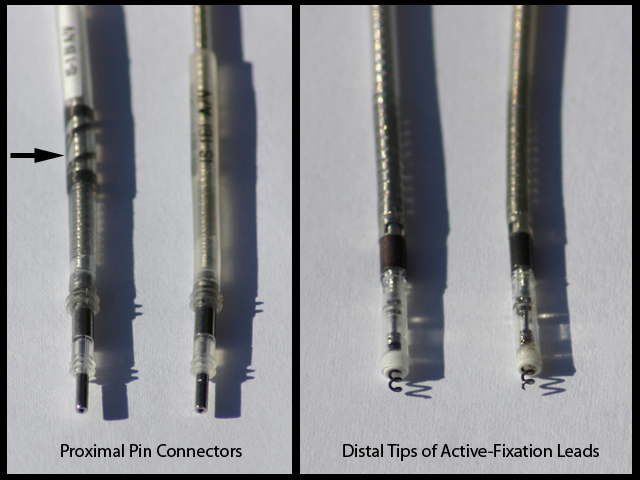
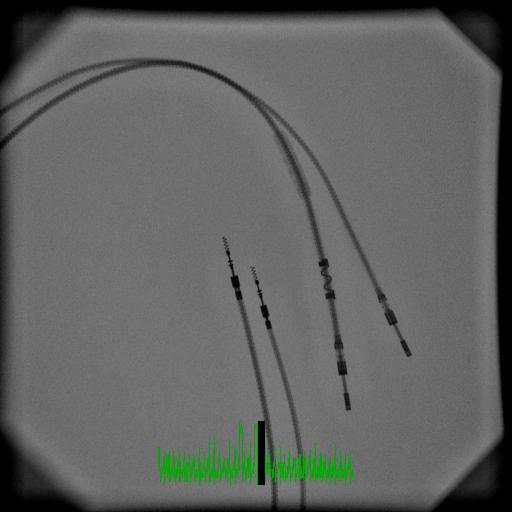
With the issuance of the Medtronic's
Sprint Fidelis lead advisory (on defibrillator lead models 6930, 6931, 6948, 6949) issued today, our office has already received over 50 calls with excellent questions. Understandably, people are concerned, so I thought I would take a moment to review the issues of the recall and answer a few of the more common questions.
Why would Medtronic have tried to design a thinner (6.6 Fr) lead, when their larger lead already had a fairly good track record for performance?With the advent of biventricular defibrillators, that require three leads (one for the atrium, one for the right ventricle and one for the left ventricle), there is limited space in the subclavian and axillary vein. With the additional lead requirement of biventricular pacing, it was hoped that the smaller lead size would permit fewer vascular complications.
Why did Medtronic decide to voluntarily withdraw the Sprint Fidelis leads from the market?There had already been a recognition my Medtronic and others that the lead may have a higher failure rate than prior lead models. An article in the journal
Heart Rhythm also noted a higher-than-expected early fracture rate for this lead, but initial failures appeared clustered in certain centers. Hence, it was uncertain whether the failures were from implant technical issues or the lead design itself. Upon review of Medtronic’s ongoing quality review at their 30-month assessment, they felt the 2.3% failure rate sufficiently exceeded the complication rate of former leads (<1% failure rate) and decided to withdraw the lead, even though the fracture rate had not yet reached statistical significance. The trend, it seemed, suggested it would eventually reach significance.
What kind of problems can arise as a result of a lead malfunction?The Sprint Fidelis lead contains four wires. Two of these wires are used for the rate sensing and pacing function of the lead, while the other two high-voltage wires are used for the shock-delivery function of the defibrillator system. If a fracture of one of the pacing/sensing leads were to fracture, typically noise is detected by the device as the wires rub together, and this might be interpreted by the device as an abnormal heart rhythm which, if it occurs long enough, could cause the device to deliver an inappropriate shock. Alternatively, a fractured pace/sense lead could lead to failure of the device to effectively pace the heart. If a shocking coil were fractured, while it might not effect the pacing or sensing feature of the device, it could lead to ineffective shock delivery during rapid heart rhythms, leading to ineffective termination of the arrhythmia.
Have deaths occurred from the lead malfunction?Five deaths have been reported on the
FDA's Maude database that are not related to infection of the device and may have been attributable to lead malfunction. Several instances of device undersensing of arrhythmias have been reported to the FDA database, and at least one episode of recurent shocks that may have contributed to death, but the details of these deaths have been limited.
I have a Sprint Fidelis lead. Should I have it replaced?It is important to remember that a very small number of complications of this lead have occurred. The total complication rate with this lead was been 2.3% of the implanted devices to date. 97.7% of the leads implanted are performing correctly at this time. Because removal of the lead has a relatively high 1.4-7.3% mortality risk associated with their removal, it is generally not recommended these leads be removed at this time. If a lead fracture should occur, then placement of a new lead adjacent to the existing lead and leaving the old lead in place is usually recommended rather than extraction of the old lead with new lead implantation. Certainly, there may be circumstances where lead extraction is required, but these should be reviewed with your doctor.
Additional surveillance will be required to see how the remaining leads perform in the future. For now, most of us are recommending that the Patient Alert features on a patient’s defibrillator system be programmed to make them more sensitive to changes in lead impedance (a resistance measurement that might precede lead failure). Patients should make the appointments with their device clinic. The urgency of this reprogramming is generally up to the patient, but should probably be performed within the next 30-60 days.
Additional physician information, including parameters for programming the patient alert features can be found at
http://www.medtronic.com/fidelis/physician-letter.html.
Information from Medtronic Regarding the Fidelis Advisory can be found at
http://www.medtronic.com/fidelis.
-Wes
New York Times article on the lead advisory.