Sunday, January 20, 2013

Patient Safety and the Ethics of EMR Implementation

“An experiment is ethical or not at its inception, it does not become ethical post hoc – ends do not justify means. There is no ethical distinction between ends and means.”
-- Henry K. Beecher, MD
 New Engl J Med 274(24) June 16, 1966 pp 1354-1360.


"When everything is digitalized, all your records - your privacy is protected, but all your records on a digital form - that reduces medical errors. It means that nurses don't have to read the scrawl of doctors when they are trying to figure out what treatments to apply. That saves lives; that saves money; and it will still ensure privacy."

The implementation of the electronic medical record (EMR) in American medicine gained a powerful foothold in medical care with the passage of the American Reinvestment and Recovery Act (ARRA) in 2009. With the passage of this act came the promise of improved efficiencies, safety and ultimately reduced cost delivery for health care. Also, some $18 billion dollars in financial incentives were offered to physicians to offset costs to deploy these systems nationwide. To assure adoption, if the systems were not implemented by 2015, doctors and care providers will suffer payment penalties from the government. For physicians who care for Medicare patients, there was no alternative than to deploy these systems.

In 2010 alone, the EMR market was pegged at $15.7 billion dollars, a cost that is ultimately passed to all Americans. In addition, despite all of the changes that health care reform has brought to date, people in some states continue to see their insurance premiums mushroom over 20% in 2013 from the preceding year. Simply put, patients are finding health care anything but “affordable.”

We should acknowledge that there might be cause, ethically, to deploy a technology that truly benefits patients at some cost. After all, you have to break a few eggs to make a good omelet. If interoperability of EMR systems between facilities were commonplace and clinical data were shared with ease while patient privacy was vigorously upheld flawlessly, the cost of these systems might be ethically justified.

But the promise of improved efficiencies to our health care system, improved patient safety and (especially) reduced cost for our health care system remain elusive. More importantly these goals remain unproven. In fact, examples that the opposite is occurring abounds as doctors struggle to enter ever-increasing amounts of information of no relevance to the patient’s presenting problem just to prove they’re using the EMR in a “meaningful” way, health data security breeches continue, errors are growing instead of shrinking, data-mining of patient information is occurring not just for patient care but for marketing purposes, and the direct costs of health care for patients continues to rise, not fall. Proponents of these systems will argue these issues are nothing more than “growing pains” of these novel systems.

So should we step back for a moment and ask ourselves if we are being ethical to patients with the deployment of this technology? Does the ends of presumed cost savings to our national health care system justify the deployment of poorly integrated, difficult-to-use systems? Are patients being subjected to new risks heretofore never considered with the adoption of this technology? Could a tiny programming error occur that negatively impacts not just one patient, but millions? If so, what are the safeguards in place to prevent catastrophic error? Who will be responsible? Who is the oversight body that assures the guiding principles of the Belmont Report (respect for persons, beneficence and justice) with respect to EMR deployment are followed? The Secretary of the Department of Health and Human Services or a more nebulous body like Congress?

If we accept that the benefits of the EMR are at least uncertain to patients in terms of risk and cost, we should demand they be studied before deploying them. The guiding medical ethics tenets would demand nothing less. So, would not such study qualify as human research? After all, we should remember that the United States and other countries have a precedent of human research programs performed by government agencies that were usually highly secretive, and in many cases information about them was not released until many years after the studies had been performed.

From a sentinel paper in 1966 by Henry J. Beecher, MD on Ethics in Research:

"I should like to affirm that American medicine is sound, and most progress in it soundly attained. There is, however, a reason for concern in certain areas, and I believe the type of activities to be mentioned will do great harm to medicine unless soon corrected. It will certainly be charged that a mention of these matters does a disservice to medicine, but not one so great, I believe, as a continuation of the practices cited.

Experimentation in man takes place is several areas: in self-experimentation; in patient volunteers and normal subjects; in therapy; and in the different areas of experimentation on a patient not for his benefit but for that, at least in theory, of patients in general."
While Beecher’s paper was addressing ethical research errors in general, his words are oddly prescient for EMR development. Ethical errors, as he pointed out, “are increasing not only in numbers but in variety.” He points to one of the biggest drivers of ethical conflict: money.

“Of transcendent importance is the enormous and continuing increasing in available dollars for research, as shown below:

Money Available for Research Each Year
YearMassachusetts General HospitalNational Institutes of Health
1945$500,000$701,800
19552,222,81636,063,200
19658,384,342436,600,000

These data, rough as they are, illustrate vast opportunities and concomitantly expanded responsibilities.

Taking into account the sound and increasing emphasis of recent years that experimentation in man must precede general application of new procedures in therapy, plus the great sums of money available, there is reason to fear that these requirements and resources may be greater than the supply of responsible investigators.”

The need for “responsible investigators” remains significant; funding for all of the National institute of Health in 2011 was $142.5 billion dollars. Annually, EMR companies have received the equivalent of 11% of the entire NIH annual research budget from US citizens without having to prove their safety or value to patients.

Again, from Beecher’s paper:

“The ethical approach to experimentation in man has several components; two are more important than others, the first being informed consent. The difficulty of obtaining this is discussed in detail. But it is absolutely essential to strive for it for moral, sociologic, and legal reasons. The statement that consent has been obtained has little meaning unless the subject or his guardian is capable of understanding what is to be undertaken and unless all hazards are clear. If these are not known this, too, shall be stated. In such a situation the subject at least knows that he is to be a participant in an experiment. Secondly, there is the more reliable safeguard provided by the presence of an intelligent, informed, conscientious, compassionate, responsible investigator.”
Because EMR deployments are cloaked in intellectual property, non-disclosure and restrictive hospital employment agreements, doctors are often prohibited from voicing specific concerns about an EMR system publicly. In addition, by adopting EMR systems as cornerstones of the American health care system, Congress, the President and the ARRA side-stepped patients’ informed consent regarding the short-comings of these systems, advertising only their desired benefits instead. Furthermore, rather than Congress turning to “conscientious, compassionate, responsible investigators,” they turned to lobbyists when deciding to fund the deployment of unproven EMR systems. As a result, doctors were relegated to becoming nothing more than stewards of data entry subject to new, ever-evolving documentation requirements as these systems evolve for cost-saving benefits and care "efficiencies."

Patients and doctors alike understand the need for improved efficiencies and value in our era of exploding health care costs. We must strive to find a solution to our health care cost crisis that is transparent, cost-effective and ethical. Without such an effort, our health care system will collapse. Only recently has the Office of the National Coordinator of Health Information Technology recognized the problem and opened their Health IT Patient Safety Action and Surveillance Plan for public comment. This plan asks the EMR companies and interested stakeholders to develop their own methods to assure patient safety and reporting systems – a move that approaches the same ethical standards as equivalent of asking the foxes to watch the henhouse. Nonetheless, we should acknowledge their efforts.

But we should be cautious of EMR systems as we move forward. After all, these clinical systems have not been subjected to the same cost-benefit and ethical scrutiny as other clinical tools we use in health care. The scrutiny of EMRs should be no different than that found with pharmaceutical or medical device research where Institutional Research Board approval and proof of no conflict of interest is demanded. Why should clinical EMR systems be any different?

Given the profit motives and market consolidation occurring amongst the purveyors of these EMR systems and the potential for lethal EMR errors both from software and human interface issues, doctors and patients must especially question the ethics of the movement to deploy untested, novel technology on our patient population under restrictive covenants. As part of informed consent, patients should have full understanding of how and where their clinical data are used, including when it will be used for direct-marketing campaigns, prioritizing care delivery, or for research. Patients should be able to opt out of the use of their clinical data for these or any other purpose if desired, without restricting payment for care. Finally, physician and patient concerns about EMR systems should be allowed to be vetted publicly and without threat of professional or personal reprisal or the withholding of payments for care rendered, especially and particularly if these disclosures are performed in the best interest of patient care.

To do otherwise is unethical for our patients and the public at large.

-Wes

Friday, January 18, 2013

If EMRs Were Research, Would They Pass IRB Muster?

Imagine for a moment that you were a principal investigator who wanted to study your independently-developed electronic medical record system for clinical use.  You have spent billions developing your system, housed it in a high-security fortress with its own power grid, power backup-system, multiple fiber-optic T3 lines that dovetail with large communications contractors. Your experimental system is outfitted with the latest and greatest software innovations to chart patient encounters, transmit lab data and post results, interact with other vendor software manufacturers, and bill patients for procedures performed while collecting huge volumes of patient data in data repositories.  You want to prove the EMRs ability to safely care for patients, lower health care costs, and prevent errors.  Your hypothesis is that your EMR system does all of these things.

But to gain approval for your study, you must bring it before an Investigational Review Board (IRB) for approval before you can begin your research project.  For those unfamiliar, an IRB is a committee that has been formally designated to approve, monitor, and review biomedical and behavioral research involving humans. They often conduct some form of risk-benefit analysis in an attempt to determine whether or not research should be done. The number one priority of IRBs is to protect human subjects from physical or psychological harm. In the United States, the Food and Drug Administration (FDA) and Department of Health and Human Services (specifically Office for Human Research Protections) regulations have empowered IRBs to approve, require modifications in planned research prior to approval, or disapprove research. IRBs are responsible for critical oversight functions for research conducted on human subjects that are 'scientific', 'ethical', and 'regulatory'.

Interestingly, billions and billions of dollars ride on your study being shown true. You are convinced, I mean convinced, that your EMR will do all the beneficial things your hypothesize with little to no downside. After all, you have strong political and financial backers that agree with you.  You have deployed your experimental system to over 40% of the entire US population in preparation for your study. It's time to start, you say.

I wonder, if the readers of this blog were members of the IRB and this study was presented to you, what safeguards would you insist upon to protect patients?  Would the study, as proposed, pass muster?

-Wes


Wednesday, January 16, 2013

Meaningful Abuse

Sometimes, the money made for pursuing bureaucratic pursuits is not worth the time required to fulfill them.  This is becoming especially true for "meaningful use" criteria that have been developed by the government to penalize doctors if they don't use the Electronic Medical Record in a "meaningful" way.  The roll-out of punitive measures to "encourage" doctors use of EMRs began with varying "stages" of required compliance and threatens to implode upon itself:
For Stage 1, physicians have to meet a total of 15 core (required) measures, select five measures of their choice from a menu set of ten, and also meet six clinical quality measures. For Stage 2, physicians are required to meet more measures: 17 core measures, an additional three measures of their choice from a menu set of six measures, and starting in 2014, meet nine clinical quality measures. The Health IT Policy Committee’s proposal for Stage 3 would nearly double the number of measures physicians would have to meet for each patient in order to avoid meaningful use financial penalties. Failing to meet just one measure by  one percent would make a physician ineligible for incentives and face the same financial penalties during the penalty phase as those physicians who make no effort to adopt EHRs.
You read that correctly.  If you do all the clicky computer things the government wants with each patient visit, you will not have time to care for your patients.  So never mind if you don't have a clue what all these "stages" of computer use actually mean because I can help you:

With the proposed Stage 3 Meaningful Use criteria coming down the pike, you will be penalized for using the Electronic Medical Record because you don't use it well enough no matter how hard you try.  After all, patient care is not the priority, computers are. 

Any questions?

(Yeah, it's hard to make this stuff up.)

-Wes

Reference: AMA Letter to the Office of the National Coordinator for Health Information Technology

Monday, January 14, 2013

Illinois Funding Cuts Threaten Physician Licensure

The Illinois Department of Financial and Professional Regulation (the Illinois physician licensure body)  has had to cut their head count from 26 to eight due to state funding cuts.  As a result, there will be only ONE employee to handle all physician licensure in Illinois.

Residents and fellows will have their training delayed as they wait for their licenses.

Physician's current licenses will expire before a renewal can be processed.

Best of all, doctors will have to stop practicing at a time when the demand for practitioners will be higher than ever.

Well done, legislators!

-Wes


Cost Savings from EMRs: A Path to Salvation

The Electronic Medical Record (EMR)'s promised contribution to health care cost savings got a second look recently, and the results were poor at best.  But what I found interesting was the "second look" was from the same organization that did the first look: the corporately-funded, non-profit think-tank called the RAND Corporation.  From their second and more recent report:
"A team of RAND Corporation researchers projected in 2005 that rapid adoption of health information technology (IT) could save the United States more than $81 billion annually. Seven years later the empirical data on the technology’s impact on health care efficiency and safety are mixed, and annual health care expenditures in the United States have grown by $800 billion."
Who would have thought that such a prestigious organization like the RAND Corportation could have made such a teeny, tiny multi-billion dollar mistake? After all, their 2005 study was funded entirely by several of the major EMR manufacturers who have reaped billions in revenue on EMR sales since.  Is there any wonder that now the same RAND Corporation felt that the EMRs the lack of cost savings is really the end-users' fault?

"In our view, the disappointing performance of health IT to date can be largely attributed to several factors: sluggish adoption of health IT systems, coupled with the choice of systems that are neither interoperable nor easy to use; and the failure of health care providers and institutions to reengineer care processes to reap the full benefits of health IT."

What a shallow assessment.  There is no mention of the cost of these systems, their maintenance, lack of interoperability, poor user-interfaces, and in many cases, lack of graphics support.  Even more ironic, there was no consideration that someone might actually figure out a way to efficienctly skirt the government's arcaine documenttion requirements for reimbursement that would permit MORE health care spending.  No, those assessments would have been too obvious.  Instead, the Rand Corporation tells us that there were no cost savings with the EMRs is because doctor- and hosptial-customers didn't re-engineered their care processes or "adopt" substandard first-generation systems.

Give me a break.  At least the Congressional Budget Office saw through the Rand Corporation's ruse in their scathing report (pdf) from 2008.

Even so, at this point it doesn't matter.  Doctors and patients alike understand that there was too much corporate money involved and too many politicians' campaigns happily funded as the Stimulus Bill that implemented the EMR nationwide was crafted.  As a consequence, little will be done about either of the Rand Corporation's erroneous and over-zealous EMR cost-saving predictions now.  Whether we love it or hate it, the Electronic Medical Record is here to stay.   Government incentives have made it so and are still slated to grow.  More to the point, our lack-of-cost-savings epiphany came so late that most of our newly-graduated doctors have never used a paper chart and likely never will.

So now that the whole EMR implementation and cost charade has been exposed (and a blind eye permanently cast), what should doctors do now?

First, doctors must demand value for the money wasted spent on the multitude of EMR systems out there.   No where would that value be more evident than if interoperability standards were required within two years, especially when different health care systems use the same EMR system.  This is especially so with EPIC Systems, the largest EMR nationwide that is thought to contain patient records, at last estimate, some 40% of the nation's hospitalized patients.  Right now, this minute, most of the major medical centers in Chicago use EPIC.  There is simply no excuse any longer that doctors from one major medical institution shouldn't be able to view clinical records at another institution, especially when they use the same software.  Silo-ed patient data is not a value-driven proposition for the patient but rather a profit-driven proposition for hospitals.  As such, transferability of patient data between hospitals and health care systems should become one of the highest "quality standards" for hospitals to achieve and (perhaps) stiff payment penalties applied if this goal is not met. Patients (and the doctors trying to care for them) deserve nothing less.

Second, open avenues of communicating concerns about EMR functionality and safety should be mandated  and not restricted to conversations moderated behind secured web-based firewalls hosted by twenty-something computer nerds with no clinical experience.  Social media involvement by companies, be it by way of blogs, Twitter, LinkedIn, or Facebook, should be the norm.  Such open discussions encourages constructive, transparent and understandable transmission of tips, tricks, and (most importantly) needed improvements as EMRs mature.  After all, there's nothing better than a screenshot or picture(s) (devoid of patient information, of course) published for all to see to make a point and affect change. A grass-roots critique of EMR systems by doctors is long overdue.

Third, EMRs should not try to be all-encompassing.  They should stick with what they know.  Do not try to be a graphical user interface when you write in MUMPS, for instance. It's embarrassing.  If you can't do graphics, pictures or difficult multi-layercalendars, then dove-tail with someone who can.   To do otherwise creates unfamiliar non-standardized interfaces that invite treatment errors and inefficiencies rather then correcting them.

Today the sad reality is this: EMR interactions consume more of the physician's time than direct patient care.   EMR companies should realize that as long as doctors are challenged by data entry and the ever-increasing documentation and verification requirements to maintain their livelihood, they will speak out on the new challenges posed by the the EMR publically.  Companies that embrace and respond effectively to constructive criticism openly and honestly are much more likely to be viewed favorably by the health care marketplace and (who knows?) might even help to save a buck some day.

-Wes


Saturday, January 12, 2013

The New Cognitive Dissonance of Medicine

The 30-something teacher stood before a room of leaders, neatly dressed, wearing black-rimmed hipster glasses, articulate, poised.  He never stuttered, his words precise.  His expertise was educating big rooms of leaders - it was all he knew: summa cum laude, three majors, and impeccable youthful credentials for a corporate consultant.  Meeting rooms and corporate board rooms were his theater and comfort zone,  flip charts and Powerpoint graphics his instruments.

Before him sat two sets of leaders - each neatly assembled, restless.  One group was unaccustomed to fluorescent light, snack tables, and colored markers.  Instead, their productivity comfort zones were in swabbing the back of throats or reaching within the abdomen.  For the other group of leaders, productivity was defined by human resources, spreadsheets, e-mails, agendas, meetings, and time cards.

It was a strange juxtaposition of leaders, each seated side-by-side now, awkwardly struggling with the cognitive dissonance engendered by learning from a babe as they were forced to embrace change.  A new world order thrust upon them now, a world where of ideals of William Osler had irreversibly shifted to the ideals of Walmart, FedEx, UPS, and The Cheesecake Factory.

"Stakeholders." "Customer service." "Product lines." "Efficiency," "Service values."

Bracing for impact.


They sat quietly absorbing it all with knots in their stomachs realizing that these corporate intangibles are now what matter.   Challenging decisions are to be made simple by nothing more than numbers, spreadsheets, and scoring thresholds.  Each leader there had an eerie sense of being comforted by the facade of feeling included, yet quietly realizing just how outside the mainstream they were.  The good girls and boys of medicine, so easily fooled.

Then a page pierced the air: "Please call the ER x 1155 Re: consult: New-onset atrial fibrillation."


A reality that was anything but simple, anything but linear.

Lead, dear doctor, lead.

-Wes


Tuesday, January 08, 2013

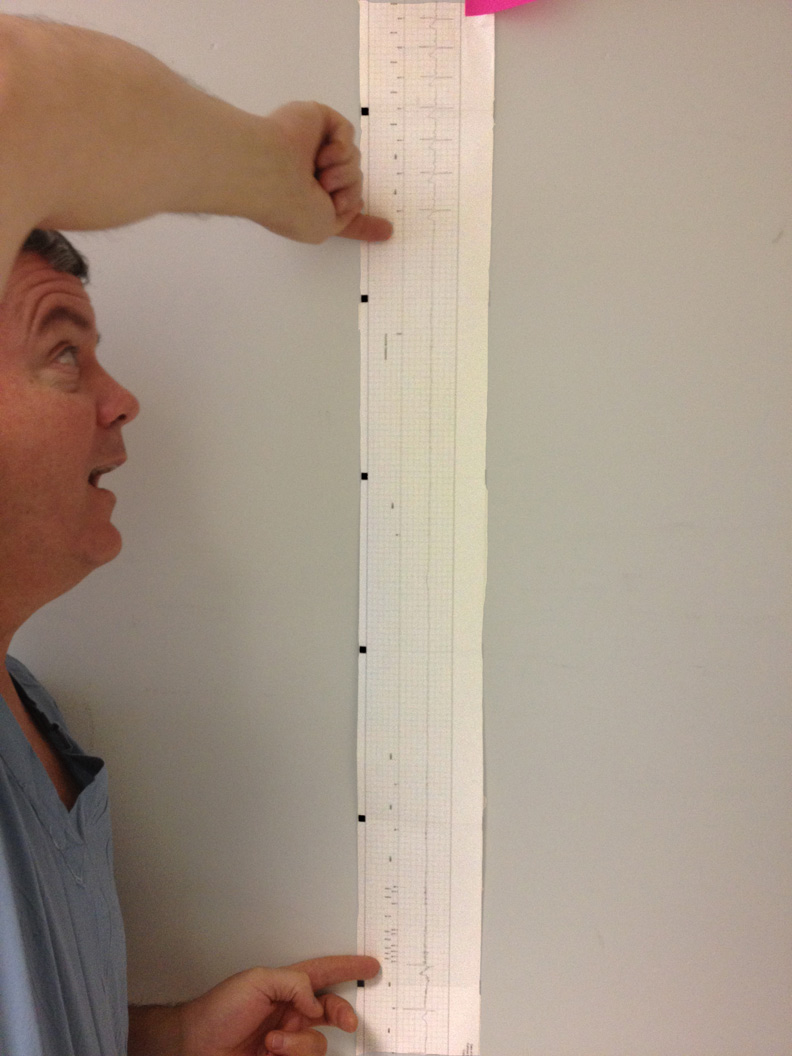
You Know You Need a Pacemaker When...

... your pause, when held vertical, exceeds one third of your height:

Strip recorded 1.5 years after implant of an implantable loop recorder showing new 27-second pause (Period between large black boxes on the strip represent six seconds each - click to enlarge).
-Wes

Sunday, January 06, 2013

The Hospital Pension Problem

The issue of looming pension fund shortages will be the final death knell to academic medicine's resistance to joining the 21st century's shared-risk of the 40-3b/401-k retirement funds.  From Chicago Business:
Already caught between flattening revenues and rising costs, many hospital CEOs are confronting a looming pension fund gap.

The University of Chicago, which includes the university and the medical center, and Resurrection Health Care Corp. were among the most underfunded pension funds for hospitals in the country, according to a study of 550 health systems by Standard & Poor's Ratings Services, based on 2010 financials.
While U of C's and Resurrection's retirement funding has improved, they are part of a group of five Chicago-area hospitals and health care networks whose pensions are less than 80 percent funded and are considered at risk of default, according to federal regulations. NorthShore University HealthSystem and Provena Health, which merged with Resurrection in 2011 to form Presence Health, also are below the threshold. The others are Northwest Community Hospital and Elmhurst Memorial Healthcare.

The five most underfunded hospital pension funds are among 10 major hospitals and health care networks in the Chicago area that owe a total of $1.12 billion to their pension funds, according to a Crain's analysis of the most recent financial statements.
-Wes

Saturday, January 05, 2013

The Costs of Not-so-Shared Decision Making

This week's New England Journal of Medicine contains a perspective piece by Emily Oshima Lee, M.A., and Ezekiel J. Emanuel, M.D., Ph.D. entitled "Shared Decision Making to Improve Care and Reduce Costs." The original paragraph of the piece sets the tone:
"A sleeper provision of the Affordable Care Act (ACA) encourages greater use of shared decision making in health care. For many health situations in which there's not one clearly superior course of treatment, shared decision making can ensure that medical care better aligns with patients' preferences and values. One way to implement this approach is by using patient decision aids — written materials, videos, or interactive electronic presentations designed to inform patients and their families about care options; each option's outcomes, including benefits and possible side effects; the health care team's skills; and costs. Shared decision making has the potential to provide numerous benefits for patients, clinicians, and the health care system, including increased patient knowledge, less anxiety over the care process, improved health outcomes, reductions in unwarranted variation in care and costs, and greater alignment of care with patients' values.

However, more than 2 years after enactment of the ACA, little has been done to promote shared decision making. We believe that the Centers for Medicare and Medicaid Services (CMS) should begin certifying and implementing patient decision aids, aiming to achieve three important goals: promote an ideal approach to clinician–patient decision making, improve the quality of medical decisions, and reduce costs."
What a nice, lovely, fuzzy bunny.  Who couldn't want such "shared" decisions in complex medical care?  Especially nice simple teaching aids for Medicare's top 20 procedures printed at the "8th grade level" that are "brief?"

Doctors, don't you know that this will become simply another box to check on your EMR for Medicare reimbursement? 

And yet the benefits of cost savings that these "shared" decision making tools' will have on health care are assumed, especially when deployed nationwide, despite what the authors claim.  Note that the 2011 Cochrane Collaborative review of the 86 studies they reference said nothing about cost savings.

Doctors know this and so do the authors.

Why else would the authors require a cudgel to impose their "shared" decision making benefit if other real life clinical doctors fail to follow along?
"Providers who did not document the shared-decision-making process could face a 10% reduction in Medicare payment for claims related to the procedure in year 1, with reductions gradually increasing to 20% over 10 years. This payment scheme is similar to that currently tied to hospital-readmissions metrics."
Ms. Lee and Dr. Emanuel, in their zeal to impose their Progressive mindset upon America's physicians have forgotten several important tenets of health care delivery:
  • First, decisions made in medicine are each unique to a patient's constellation of medical problems, socioeconomic and cultural background, age, gender, religious beliefs, etc.  In other words: decisions are made in concert with an individual's situation, and not based on the government's desire (necessarily) for cost savings (even if it is couched in euphemisms such as "shared decision making").

  • Second, actual cost information (both out-of-pocket and real health care system costs) for patients and doctors will remain shrouded  in secrecy since payers rely on obfuscation of actual cost information to extract their portion of fees before patients receive any value for their dollar.  Also, other similar pay-for-performance measures have already uniformly flopped at demonstrating cost savings.  Then imagine for a moment if the cudgel for shared decision making is imposed.  The potential for a 10-20% Medicare physician fee cut on top of a 30% Sustainable Growth Rate cut that is likely to reappear in 2014 will be untenable for US physicians. 

  • Third and very importantly, the ACA legislation has created a whole new "institute" of salaried individuals within government called the Patient-Centered Outcomes Research Institute (PCORI) to develop the authors' soon-to-be-mandated decision aid materials while another branch of government already exists to produce such education aids called the Agency for Healthcare Research and Quality (AHRQ).  Wouldn't our health care system benefit far greater from cost savings by not duplicating services already performed by another government agency? How much, exactly, will the PCORI cost us?

  • Fourth, the push to re-invigorate the mass-production of physicians via three-year medical school curricula while simultaneously failing to increase residency slots assures poorer trained, inexperienced doctor-patient discussions about complicated medical issues, not better ones. Shared does not mean better.

  • Finally, liability risks remain for doctors caught in these unenviable mandates that fail to recognize the individual complexities of an individual patient's care.  Until doctors sense a modicum of effort for liability reform, they will continue to offer care that exposes both themselves and their patient's to the path of lowest legal risk, irrespective of what teaching aids they give to patients.
Doctors and the AMA should demand transparency in the cost of creating and funding the PCORI and its shared decision making materials, yet another layer in the runaway middleman health care behemoth emerging as the front lines of health care delivery are systematically decimated. 

If that doesn' t matter to all of us, then share away.

-Wes

Thursday, January 03, 2013

To EPs: Happy Coding New Year!

Well, well, well.  It's another year and another chance to enjoy new procedural coding changes for electrophysiologists in 2013!  In case you missed it, the old catheter ablation codes for supraventricular and ventricular tachycardia ablations (93651 and 93652) have been deleted effective 1 Jan 2013.

That's right:  Gone.  Kaput.  Fi-ne. 

In their place we now have five new codes, two of which are specific for atrial fibrillation ablation:

  • 93653 - For use with SVT/WPW/Focal ATach/IVC-Tricuspid annular-dependent flutter ablations - Don't even THINK about coding separately for transseptal catheterization with this one - it's now bundled.  (If 3D mapping is needed, it looks like it's still okay to add 93613 to this code - for now.  Also, for Afib ablations, do NOT use this code, but rather a separate code (See 93656 and 93657 below)). RVU Value: 15.


  • 93654 - For use with Ventricular Tachycardia Ablation - This includes everything from placement of catheters, to the transseptal (if needed), AND the use of 3D mapping, and the ablation of VT.  (Remember: no separate code of transeptal and 3D mapping with this code.) RVU Value: 20.


    • If there is a SECOND arrhythmia focus that is ablated during EITHER SVT or VT ablation codes above, you can use add-on code 93655 but must specify the second arrhythmia targeted.  Total RVU value: 7.5
  • 93656 - For use with Atrial Fibrillation ablations - This includes the placement of catheters, the transseptal, pacing, mapping, giving meds, etc. up to and including isolation of the pulmonary veins.   (It appears 3D mapping (93613) can be billed separately for this code, unlike for the VT ablation)Total RVU value: 20.02.


    • 93657 - Used in addition to the Afib ablation code, 93656, if linear lines are developed in the atria following pulmonary vein isolation procedure. Total RVU value 7.5
Full details on these new codes, how they were developed, and how they should (really) be applied can be found on the Heart Rhythm Society website. (Please take what I say with a grain of salt).

Happy coding!

-Wes


Wednesday, January 02, 2013

The Fix That Failed

The new "fiscal cliff" legislation hailed by some as a "one-year doc fix" of the scheduled 26.5% sustainable growth rate (SGR) cut that was scheduled to take effect on 1 January 2013, has passed the Senate and House as part of the American Taxpayer Relief Act (HR 8) goes to President Obama for his likely signature.

But was this "one-year doc fix" really a fix?

Not at all.

In fact, once again Congress has failed to resolve the ever-present sustainable growth rate cuts that repetitively surface year after year by kicking the proverbial can down the road another year.

The cost of the one year patch will be $25.1 billion dollars over 10 years and will be paid for almost entirely by health care cuts in other areas.

  • Hospitals (increasingly doctor-employers now, remember?) will see audits of their billings increase as efforts to recoup some $10.5 billion of "overcoding" charges are seen as the largest source of revenue for the one-year "fix."


  • Hospitals will also see an extension of lower Medicaid payments to hospitals that treat a high number of uninsured or low-income beneficiaries, known as "disproportionate share hospitals" to find savings of about $4.2 billion.


  • Another $4.9 billion offset will be applied to the lowered bundled payments given for patients with end-stage renal disease - some of the sickest people receiving services from Medicare.


  • Also another $1.8 billion will be "saved" to offset the "fix" by reducing payments for multiple procedures that are performed on the same day with patients.  Look for more ICD-9 (or ICD-10) code changes for the new year. 


  • Also, look for an even greater crackdown on imaging studies as another $800 million has to be found to pay for the "fix."


  • And there's more: the complete list of payments for the "fix," drawn almost exclusively from health care alone, can be found here.


  • Finally, doctors can expect revenue to stay flat result of this "fix" from Medicare, meaning that the payments received will not address costs imposed by annual inflation.  (You well-paid primary care doctors, are you listening?)
So you see, the "doc fix" is in for another year alright ...

... one that is assured to get even harder to really fix next year.

-Wes

Monday, December 31, 2012

Dr. Wes 2012 Retrospective

It is helpful for blog authors to reflect on what readers have found most interesting in 2012 to help sculpt a tone for the upcoming year.  While there are a number of ways to "value" a piece of writing (most page views vs. number of comments, for instance) stories that recieve the largest numbers of page views probably reflect the posts of most interest to readers since their content is not only read but shared with others.

Here were my five most-read posts from 2012:

#1: DOJ Hands Heart Rhythm Society and Hospitals Its Decision on Defibrillators

#2: The Growing Culture of Hostile Dependency Toward Caregivers

#3:  How A Sudden Cardiac Arrest Survivor Handles the World Cup

#4: The DSM-Tw: Handbook of Twitter Personality Types

#5: EKG Du Jour #29: Tangoing with Two

As you can see, news, fun, and EKGs continue to dominate.

Thanks to all of you who drop by this site.  May each of you have a healthy and Happy New Year in 2013!

-Wes

Friday, December 28, 2012

The Punative Evolution of Board Certification

Once upon a time, doctors looked forward to the opportunity to become “board certified” in their specialty of interest in medicine.  Time was plentiful.  In the lost days of Never-never Land, doctors would leave their office at lunch time while their secretaries manned the phones.   Patients still got their appointments while doctors had time to play golf on Wednesdays.  It was an idyllic time with plenty of time to read, brush up on the latest innovations in medicine, attend scientific conferences, and still be able to make a living.  Board certification was simple: study hard, take a test, and move on.  Patient care didn't suffer.

These days, Never-never Land no longer exists.  Time is the most valuable commodity for doctors now as they see more patients in less time than ever before.  Pushed to perform in an era of exploding health care costs, the days of leisurely lunches, unlimited patient appointments, and easy access to caregivers have given way to a frenetic pace of 7-minute appointments, decreased length of stays, productivity quotas, and cuts in ancillary personnel as costs are shaved.  At the same time, regulatory burdens have exploded.

With this explosion of regulatory bodies has evolved a network of licensure bodies so complex that doctors have a hard time keeping up with the numerous affilitations, acronyms and name changes for these bodies.  Worst of all, fewer have time to perform their requirements without impacting patient care.  

Since 2000 the American Board of Internal Medicine, citing the need to stay abreast of the many innovations in medicine, decided to limit the duration one could remain “board certified” to ten years.  That way, the logic was spun, doctors could be brought up to date on the lastest and greatest concepts of their field so they could “maintain” their certification by passing a maintenance of certification (MOC) process.  Of course, this “maintenance” never took into consideration the ten additional years of clinical experience, anxiety, legal risk that doctors were exposed to in the meantime.  The “maintenance” never took into consideration the ongoing CME requirements doctors are required to maintain for state licensure.  And the "maintenance" was ever clinically validated at having an effect on patient care.  And the cost varied from doctor to doctor specialty.

And so it has gone: certifying board after certifying board, entering the fray – each with their own self-interest (and financial solvency) in play to assure their particular form of “certification” and doctor education is the best in the eyes of regulators and "stakeholders" (i.e., the people controlling the money).   Even an unscrupulous self-proclaimed "reverend-doctor"  joined the fray, promising a “board certification” certificate for just $500 by completing a simple questionnaire and mailing it to a post office box - all for far less hassle and time spent away from patients.

This week’s New England Journal of Medicine has an excellent article reviewing the Maintenance of Certification process for “board certification” and reviews both the complexity and regulatory burdens imposed by the new collaboration between the ABIM’s MOC process and the Federation of State Licensure Boards (FSLB’s) maintenance of licensure (MOL) process.   Ironically, the article sites an earlier published fictitious vignette from 2010 involving a subspecialist who held time-unlimited ABIM certificates in both internal medicine and endocrinology.  In the vignette, the physician wrestled with whether he should enroll in the MOC program of the ABIM voluntarily to become recertified, and readers were invited to vote on the question.  Of 2512 votes case, 63% advised the doctor against enrolling in the MOC program.

My bet is the number of doctors who would advise against the process would be far greater now.  The process has grown so time-consuming, expensive, and arduous (without any proven clinical benefit) that doctors are feeling the effects on their practices, income, and patient care.  Time away from practices has become very expensive for BOTH doctors and their patients.  After all, patient appointments, already hard to come by, are necessarily taking a back seat to these board-certification-turned-licensure requirements.

Board certification should return to a personal goal, rather than a regulatory one.  More doctors would be likely to participate voluntarily as transparency to credentials increases.  As a result, patients would benefit and payers would benefit.   Let doctors complete these requirements on recommended schedules, not mandatory ones.  Credit for safe, effective care should serve as an even more valid substitute for certification compared to sitting for tests before a computer and performing chart reviews.

Unless regulators comprehend how their evolving punitive, time-consuming, and expensive board and licensure recertification process has become for doctors, they might miss how its increasingly compromizing patient care rather than improving it.

 -Wes

Disclosure: I am currently undergoing the MOC process for the third time because I don't live in Never-never Land.


References:


Iglehart JK and Baron RB. Ensuring Physician Competence - Is Maintenance of Certification the Answer?   New Engl J Med 2012; 367:2543-2549 December 27, 2012.

Monday, December 24, 2012

A Christmas Poem


So comes the clear and cold and weather wintry,
  To cast in stark relief the trees against the sky,
Reviving long forgotten lacy beauty,
  Submerged before the leaves of Autumn fall to die.

So need we really find it all so odd,
  That when some dark and wintry burden comes around,
Some comepensating gracious gift of God,
  Some darker beauty, silent joy, strange hope is found.

An ancient instinct knew to call for song,
  Amid the chilling deep December cold,
To tell again that in the deepest wrong,
  Eternal love still lives as surely as of old.

For ancient Babe came not to candlelight,
  Was welcomed not by soft and sentimental glow,
His love he lived into the darkest night,
  Held fast against life's eerie ebb and flow.

So seek to make your season what you want,
  Pile high the joys and sing the songs you should,
Remember tho', should feast be as you planned
  Or not, your God is there and life is ever good.

-- Gilbert W. Bowen, D. Min.

Merry Christmas.

-Wes

Saturday, December 22, 2012

You Are Christmas

To all the caregivers
Who make Christmas happen
Even when their hearts are heavy
Moments of rest too few…

You are Christmas.

To all the suffering
Who rise to the occasion
With a smile or a simple gift
Or permission for others
To celebrate without them…

You are Christmas.

To all the doctors and nurses and hospice workers
Whose own trees go undecorated and gifts go unsent
Because it seems every year
The hospitals are full at holiday time...

You are Christmas.

To all the parents
Who recapture the innocence of the season
For the sake of their children
With a song, a story, a silly ritual…

You are Christmas.

After all, it was never about the strong, the powerful, the rich,
The proud,
It was always about the humble, the faithful, the courageous,
The quiet, hopeful ones.
The scared young family standing in wonder at the manger,
Trusting, holding faith, believing in good,

Believing in love.

From both of us – Merry Christmas,

Di and Wes Fisher

Wednesday, December 19, 2012

No Longer Living in Denials

I received this notice, dated 1 March 2012, from our billing department after a denial for reimbursement following a successful right ventricular outflow tract ablation I performed:
"Paul Rossi DO, a Cigna Medical Director, reviewed Use of an intracardiac electrophysiological 3-dimensional mapping system in the diagnosis, treatment, or management of ventricular arrhythmias or any other condition because there is insufficient scientific evidence to support use and determined the service(s) is not a covered benefit as indicated below:

Service referenced: Electrophysiological 3-Dimensional Mapping and Catheter, electrophysiology, diagnostic/ablation, 3D or vector mapping

The use of an intracardiac electrophysiological 3- dimensional mapping system is considered medically necessary when used to guide supraventricular arrhthmias.  Based upon current available information, coverage cannot be approved to support the use of intracardiac electrophysiological 3-dimensional mapping in the diagnosis, treatment, or management of ventricular arrhythmias or any other condition because there is insufficient evidence to support its use.  At the present time, it is considered non-standard testing and falls under the category of experimental/investigational/unproven."
These denials are part of life for doctors - it's all part of the game.  But the era of social media is upon us, and with it, revenge.

We should first ask ourselves if Paul Rossi, DO, whose google search reveals he was an emergency room doctor working in "preventative medicine,"  should have ability to determine what constitutes standards of care in the field of cardiac electrophysiology when he, himself, is not credentialed in this subspecialty. 

But that's not all.

Even Cigna's own recently published "guidelines" for approval state:
The CARTO® EP Navigation System (Biosense Webster, Inc., Diamond Bar, CA) received 510(k) premarket approval in December 1999 by the U.S. Food and Drug Administration (FDA) as a Class II device for catheter-based cardiac mapping (FDA, 1999). The FDA indications for use state the intended use of the CARTO EP Navigation System is catheter-based cardiac mapping. The CARTO EP Navigation System and accessories have had numerous enhancements with the latest device, the CARTO 3 Version 1.05 EP Navigation System and accessories, receiving 510(k) premarket approval in 2009 (FDA, 2009; FDA, 2006; FDA, 2000).
Hardly experimental.

Furthermore, those same recommendations detail at least 8 different studies where 3-dimensional mapping was used for VT ablation and include this statement from the Joint Heart Rhythm Society/American College of Cardiology guidelines for ablation (2006):
"Electroanatomic magnetic mapping capabilities are being applied to aid in the diagnosis and nonpharmacological treatment of arrhythmias. The authors state, 'although not yet established as requisite or "core" equipment for the EP laboratory, these and other emerging technologies have had, and will continue to have, a major impact on the practice of cardiac arrhythmia management.'"
I'm sorry, but I do not see the words "experimental" in Cigna's own documentation nor does their document suggest that appropriate standard of care for 3D mapping be reserved exclusively for "supraventricular" arrhythmias.

Welcome to the world of social media, Cigna.  I can only hope that every employee out there with an option to choose insurers strongly consider picking another insurance carrier since they will be much better (and more safely) served when they need their ventricular tachycardia successfully ablated.  Rest assured, my response to Dr. Rossi's coverage denial decision is forthcoming.

Thanks so much for wasting my time.

-Wes

Sunday, December 16, 2012

Trying to Make Sense of the Senseless

I believe that every human soul is teaching something to someone nearly every minute here in mortality.

- M. Russell Ballard
 Aside from being a bit warmer than usual, it was a typical Friday afternoon. A patient with syncope, a paucity of heart beats, the need for pacemaker. The lab techs rolled their eyes as the room was prepped. An early as exit was not going to happen after all.

But the later hour promised efficiency for the only way out was through. We each did our thing and like so many times before, sighed in relief that things went smoothly. Home at a reasonable hour was to happen after all.

Until the ER called while I was closing.

"Another patient, 97, heart rate 21, needs a pacer, too," they said.

“What does the family want? He is 97 after all…” I asked as I placed the final layer of sutures.

“The patient wants it. Takes care of his wife…,” they said.

“I’ll finish here and you guys get the room ready. I’ll see the ER patient. Has the family of this patient been called?”

Once again, the staff excelled. Patient transported from the table, family contacted, then the room cleaned and readied for the next potential patient.. For me, the note would wait. A brief discussion, orders entered, then ER visit, wondering all the while if the next pacemaker needed to be done.

It was easy to find the ER bay as every nurse and technician pointed the way to a small-framed man who was alert and conversant, but clearly not feeling himself. His symptoms started earlier in the morning and just didn’t get better- his medications hadn't changed.

“Do we have a potassium?” I asked.

“’lytes are fine,” someone said, “K’s 4.5.”

History, physical, review of the data – all pointed to one thing: a pacemaker. We talked risks, alternatives, pros and cons. He looked at his wife, quietly seated in the corner. “Of course you need it!” she bellowed.

And that was that.

And so it was. A temp wire, then permanent pacer with tripling of his heart rate. He became more talkative, his blood pressure easier to obtain.

But as the tension lifted, the chatter grew.

“Did you hear?”

“Hear what?”

“About the kids…”

Detail after horrible detail came to those of us shielded from the day’s events. The shock. The evil. The senselessness of it all.

I looked down at the tissue beneath my hands: thinned, frail, bleeding still as the closure was being completed.  As time passed, the lab grew strangely silent, the irony clearly palpable...

... one old heart mended, while the others...

God, there are no words...

God bless them.  God bless their families.

God bless us all.

-Wes

Wednesday, December 12, 2012

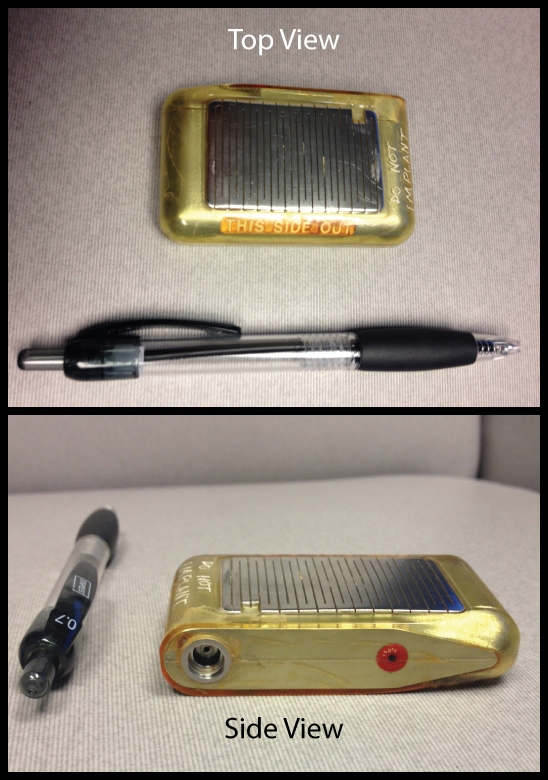
Medical History Revisited: What Is This?

I found this today (no, not the pen). 

Click to enlarge

What is it?

-Wes

P.S.: I'll post the answer later in the comments section...

My Grand, Sweeping Cardiovascular Predictions for 2013

Cardiovascular predictions for next year are always fun to contemplate this time of year.  So much is happening to the practice of medicine as we've known it that it can be helpful to highlight some of those changes, both good and bad, as our medical world continues to evolve.  While these predictions contain pure guesses, they also contain one doctor's observations of our new evolving medical world.  Many of these changes will profoundly shape how doctors interact with their patients. 

So grab some coffee and strap in.  Here are my 2013 predictions of life as a cardiologist in 2013.  (Please feel free to add your own predictions in the comments section.)


Valvular Heart Disease

  • TAVR for critical aortic stenosis will be applied to progressively younger and healthier patients. 
  • As smaller delivery systems for percutaneous heart valves gain widespread acceptance, government payers will look for new and inventive techniques to restrict patient access to these devices.  No heart valve will remain untouched as creative uses of the approved devices are attempted in non-surgical patients. 
  • Innovations valve design will improve the safety and effectiveness of this therapy.

Ischemic Heart Disease

  • The push for more drugs and less stenting will continue in stable ischemic coronary disease. 
  • Acceptable (payable) door-to-balloon times will shrink from 90 to 60 minutes as payers give the most reimbursement for centers with the faster times.   
  • Radial artery catheterization and interventions will grow in acceptance and CABG will continue to have a more prominent roll  for severe 3v disease (continuing the "reduced stenting" theme) compared to multi-vessel stenting.
  • Lipid therapy recommendations will remain unchanged.

Electrophysiology

  • Pressure on AF ablation to prove its superiority over medical therapy will continue, especially given ablations re-do requirements, up-front cost of therapy and uncertain utility compared to medical therapy.  Still, until enrollment of the multi-center NIH-sponsored CABANA trial completes, catheter ablation of atrial fibrillation will remain a mainstay of therapy for symptomatic patients with paroxysmal atrial fibrillation.
  • Novel oral anticoagulants (NOA) will see an expanding role the management of AF patients over aspirin and warfarin.  Apixaban will be FDA approved and quickly command the largest market share of the available agents based on clinical data.  Antidotes for reversing these agents will continue development and once developed and proven effective, NOAs will completely change the standard of care for management of stroke-prevention in non-valvular atrial fibrillation. 
  • Subcutaneous ICDs will show a slow growth in acceptance as doctors insist on a smaller device with fewer early battery depletions before adopting the first-generation devices more widely.  Also, look for other companies to enter the  subcutaneous ICD market with devices of their own.
  • Standard pacemaker and ICD implant rates will remain flat.

Heart Failure

  • Readmission rates will be reduced by increasing admission rates to extended-care facilities when heart failure relapses (at least it's not a hospital!) 
  • LVADs will see a slow increase in utilization, but expenses will limit wide-spread adoption at lower-volume centers. 
  • Ultrafiltration will die its slow, inevitable technological death. 
  • Biventricular pacing might see a slight uptick as hospitals seek every possible opportunity to prevent readmissions while maximizing revenues with the first heart failure admission.

Patient Care

  • In 2013, physician computer screen time will officially far exceed all direct patient care time.
  • The Electronic Medical Record will look more like Microsoft Office as basic features of letter writing, e-mailing, scheduling assume higher priorities for communication and coordination in patient care. 
  • Reliance on Big Data to shape proper medical care will consistently be shown to be a poor surrogate for carefully constructed prospective randomized trial due to the inability to code physician logic from progress notes.  Furthermore, associated widespread diagnosis and procedural coding flaws will continue to plague the field.  The implementation of ICD-10 will only make this problem worse.  More data does not mean better data.  Despite these facts, the heavy marketing of Big Data to doctors and hospital administrators will continue.
  • Speaking of guidelines: New guidelines recommending the appropriate guidelines to use will emerge (Should a doctor use guidelines from the AMA, American Heart Association, European Society of Cardiology, American College of Cardiology, American College of Chest Physicians or the Society for Cardiovascular Angiography and Intervention?  Oh, and which year?) 
  • Physicians will tire of completing data entry field for such random and byzantine criteria like appropriateness criteria, safety checkboxes, and quality measures.  But because these criterias' completion will be increasingly insisted upon by Central Planners, administrative employees in medicine will continue their brisk hire rates in 2013.  Doctors will then be forced to complete these fields at home. 
  • The smart phone (and its apps) will officially supersede the stethoscope in importance to practicing doctors of all types (even cardiologists).  Guidelines for appropriate app use will be developed.  The FDA will require their tentacles to extend to this space and stifle innovation here.
  • Patients will be responsible for a higher and higher portion of their health care costs which will lead to a rising voice for price transparency.  This push will be in direct opposition to large medical center/insurance industry efforts to shield their privately-negotiated pricing arrangements. 
  • Look for online health care pricing to grow in popularity. 
  • Appointment availability will dwindle as more patients enter the system.
  • Patient expectations for continued relatively immediate, exceptional care will persist despite the reality of more bureaucratic requirement for physicians. This will continue to grow the sense of hostile dependency toward physicians and their staff.
  • Finally, the push to pay only for outcome-based care will create incentives for facilities to tacitly triage the sickest patients away from some hospitals to their competitors.

Administration

  • Doctors will get increasingly tired of attending administrative meetings - especially those that generate more meetings. 
  • Doctors will assume more administrative responsibilities as business policy foot soldiers as they join forces with hospital systems. 
  • The tendency for administratively-minded doctors to clash with clinically-minded doctors will be an inevitable consequence of this new administrating physician prototype. 
  • Despite the outward appearance of more involvement with decisions, administrative physician decision-making autonomy will dwindle as payers exercise their growing sway over drug and device choices and pay only based on clinical outcomes. 

Health Care Terrain

  • Rich hospitals will get richer as poor hospitals get poorer. 
  • Indigent patients who will soon qualify for care will have to travel further for that care. 
  • Emergency rooms will continue to experience larger volumes of patients as the full effects of health care reform have yet to be implemented. 
  • The building spree that has consumed many of the larger health care facilities will taper as financial pressures mount.
  • Employers will seek ways to cut health care costs by negotiating their own prices directly with hospital systems without insurance company intermediaries.

Education / Research

  • Clinical cardiologists (who are increasingly employed) will find less time and money for educational pursuits compared to the time and money required for licensure requirements. Since most employed cardiologists will have expense allotments that cover both endeavors, higher licensure and credentialing fees will limit professional meetings doctors can attend.  The long-term effects of this reduction of continuing education as it pertains to patient care is uncertain.  Doctors are likely to turn to online courses rather than meeting attendance to fulfill CME education requirements.  As such, abstract submissions to meetings is likely to fall. 
  • Clinical research opportunities will continue to concentrate at the largest centers with the largest clinical volumes.
  • Academic cardiologists will have growing pressures to become more clinical as the prospect of expanding patient access looms in 2014. 
  • Academic cardiologists will also find research funds in shorter supply as medical device companies and pharmaceutical companies wean expense items like research protocols.  Government grants, too, will be more competetive than ever.

Summary for 2013

  • Patients will continue to get sick. 
  • Patients will continue to die. 
  • Each of the above will continue to occur despite millions of dollars spent on prevention initiatives and early-detection programs.
  • Despite all of the changes, the hassles, and the headaches coming next year, doctors will continue to care for their patients. 
  • Doctors will continue to have sleepless nights worrying about their patients. 
  • Doctors will still enjoy the reward of seeing their patients improve.
  • And when the dust settles in the years ahead, doctors will remain the only ones ultimately (and yes, still legally) responsible for their patients' health and well-being.
  • Some things, you see, never change.

-Wes

Sunday, December 09, 2012

The End of Our Health Care Happy Meal

With the publication in the New York Times of how taxes would be affected because of the Affordable Care Act, our health care Happy Meal was officially pulled from the menu.

Suddenly, the colorful trinkets and tchotchkes that were the first items pulled from the health care law's brightly colored bag are now being followed by a hefty bill that most people aren't too happy with paying: their personal tax bill.

The political backlash was so swift, so sure, that even the White House noticed.
 
So how did the White House respond?
... Treasury Secretary Timothy Geithner has the power to adjust how much is withheld from paychecks for tax purposes — for all taxpayers or just for some.  By doing so, Geithner could ensure paychecks reflect the White House position that wealthier taxpayers with annual income higher than $250,000 see their taxes rise. Geithner at the same time could leave withholding tables where they are for the middle class, ensuring those workers don’t see a higher cut from their paychecks.
But America's doctors should remind the White House why this is not a good idea.  After all, Congress uses this kick-the-can-down-the-road approach with us each time they grant a reprieve to the scheduled physician pay cuts mandated by law as part of the Medicare sustainable growth rate adjustments contained within the Balanced Budget Act of 1997.

Look where this approach has gotten physicians: each year, since 1997, CMS threatens to cut Medicare payments to physicians some 2.5%. Instead of making the cuts each year as directed by law, Congress caved to political pressure and has delayed the cuts year after year.  But the cuts don't go away: they're just added the the following year's paycut amount.  Now the amount has grown to nearly 30% or so with no easy solution in sight.

Imagine what could happen to America's patients if the same approach delay tactic for collecting taxes to pay for our new health care entitlement law is taken.  Can America's health care cost crisis really afford this political approach that ignores reality?

I'm just a doctor, but methinks this idea of leaving withholdings from people's paychecks unchanged is not a good idea just so the White House can dodge a political bullet. 

Since the White House and democratically-controlled Congress helped push our new law through, they should deal with its ramifications responsibly.  To do otherwise is fiscally irresponsible and risks making our horrible health care cost crisis even larger.

-Wes

Friday, December 07, 2012

Guest Post: Physicians Beware on the Twittersphere

The following is a guest post by William Dillon, MD, a relatively new cardiologist to Twitter. He describes his experience with a recent patient-doctor interaction on Twitter that sounds an important message.   -Wes
Thank you for hosting my response to a recent blog post by Carolyn Thomas at www.myheartsisters.org. Ms. Thomas is a well respected medical blogger with an emphasis on cardiac care and women’s cardiac issues in particular.  She has certainly helped many patients and been a great advocate for women’s cardiac issues.  We recently had a 3-Tweet interaction that lead to her writing a blog about me. Though Ms. Thomas made excellent points about patient privacy issues and the use of Twitter in general, I feel that her words justify a clarifying response.

Let me introduce myself. I am an interventional cardiologist and new to using Twitter. Two areas of focus for me in the last 18 months have been radial artery catheterization and heart attack care. Social media was recommended as a vehicle to get the word out on heart attack care.  My state, Kentucky, ranks a dismal 49th out of 50 states for MI mortality. I aim to improve this.

The problem started after a particularly challenging and successful radial artery catheterization procedure. I tweeted that “Radial cath is like playing golf. You must do it often to be good. Some will never be good at it no matter how hard they try.”

Without going into the nuanced details of radial vs. femoral artery catheterization (already a controversial topic for interventionalists), Ms. Thomas responded with a thoughtful question of her own: “But how do heart patients being practiced on know if their interventionalist falls into the 'never will be good' category?”

This was one of the first times anyone had ever interacted with me on Twitter, so I tried to help. I am used to helping total strangers; that’s what we do everyday in treating acute heart attack patients.

But in retrospect, maybe I should have remembered mom’s advice: “Don’t talk to strangers!” Ms. Thomas wanted to know how patients know if their physician falls into the “never-will-be-good” category. Because I did not know Ms. Thomas, nor that she had had prior personal experience with a radial artery catheterization, I was left at a conversational disadvantage because of the loss of context that is inherent to 140-character interactions on Twitter. Unfortunately, the answer to Ms. Thomas’ question leads to a thorny area—the truth. As Gloria Steinem famously said "the truth will set you free but first it will piss you off."

The truth here is simple: it’s not easy to know if your physician is good. This is a complex issue, and surely not suitable for Twitter. Engaging on this medium on this topic was a mistake. I learned from it. But let’s be honest about a few things: most honest proceduralists would agree that a cath lab nurse or tech has valuable inside knowledge. These folks have first hand experience and interact with a variety of physicians on a daily basis. They know. The problem of course is that the general public does not have access to the inside scene. However, it surprises me that most patients research toaster ovens more than they do which physician to see.

But even if they did research their doctors it would be hard to sort out the best. Here’s why: Though all physicians complete certain minimum standards and maintain competency through continued medical education, that’s a low threshold. The credentialing process at hospitals weed out incompetent docs, but it is far from perfect or nuanced. It's like grading tests on a pass-fail scale.

Outcomes measures—if they existed—would also be flawed. If our procedure outcomes were scrutinized, you could be sure that high-risk patients would not have many willing doctors.

All cath labs have a Director that should be reviewing complications. Peer review also has merits, but that's tough to accomplish in the real world as well.

Back to the tweets.

Ms. Thomas said: “It never occurred to me in ER in mid-MI to ask, by the way is this guy any good?” I continued to try to explain. Again a mistake on Twitter. I recommended asking EMS to take you to the best center during an MI. This is actually a crucial comment and a vital step to surviving a heart attack. Call EMS! The best treatment is a percutaneous coronary intervention (PCI) done at the nearest center with around-the-clock coverage. EMS providers know which hospitals perform PCI for AMI and will direct patients to those centers.

After this last tweet I got uncomfortable with her line of questioning and elected to stop responding. Unfortunately, the damage was done.

What have I learned from this? I realize that one needs to be careful with comments placed on social media. While Ms. Thomas has likely helped many patients through her blog, my comments were greatly misconstrued. It was certainly not my intention to cause such a furor. I am stunned how a 3-tweet interaction can lead to such a defaming and inflammatory blog response from someone I have never met with, spoken to or interacted with beyond a total of 400 characters. A reputation is a lifelong and daily building process. To have it torn apart in a very public way is extremely damaging and upsetting.

I hope that something positive could come of this. Already I have learned and am sorry for any controversy I have caused. But I would like to sound a warning to patient advocates and physicians alike. If what we all want in healthcare is more truth and transparency, tearing down those who dare to speak, to join the conversation, surely will not help.

William Dillon, MD
@Wmdillon

Wednesday, December 05, 2012

An Inside Look at AliveCor's iPhone ECG Case

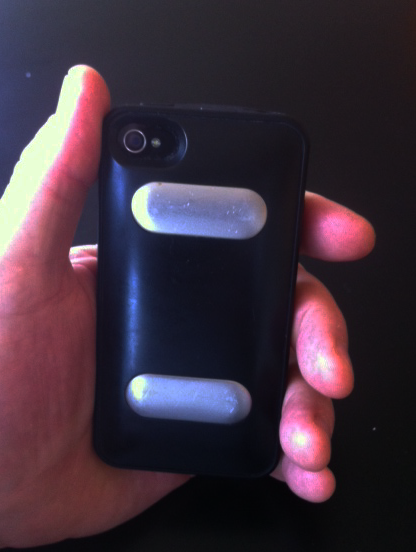
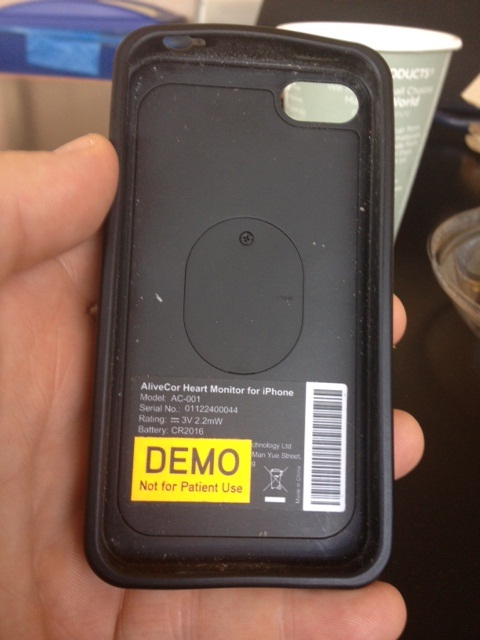
The back of my demo
AliveCor ECG iPhone 4s Case
By now, the today's news is relatively old: AliveCor's innovative ECG Case for the iPhone created by Dr. Dave Alpert, MD received FDA approval.  But for something this innovative, it's never too late to give your take.  Like my good friend and fellow physician-blogger John Mandrola, MD, I was fortunate to have served as a beta tester of the device.  John gives his take here and mentions some great anecdotes of how he has used the device clinically.

AliveCor ECG
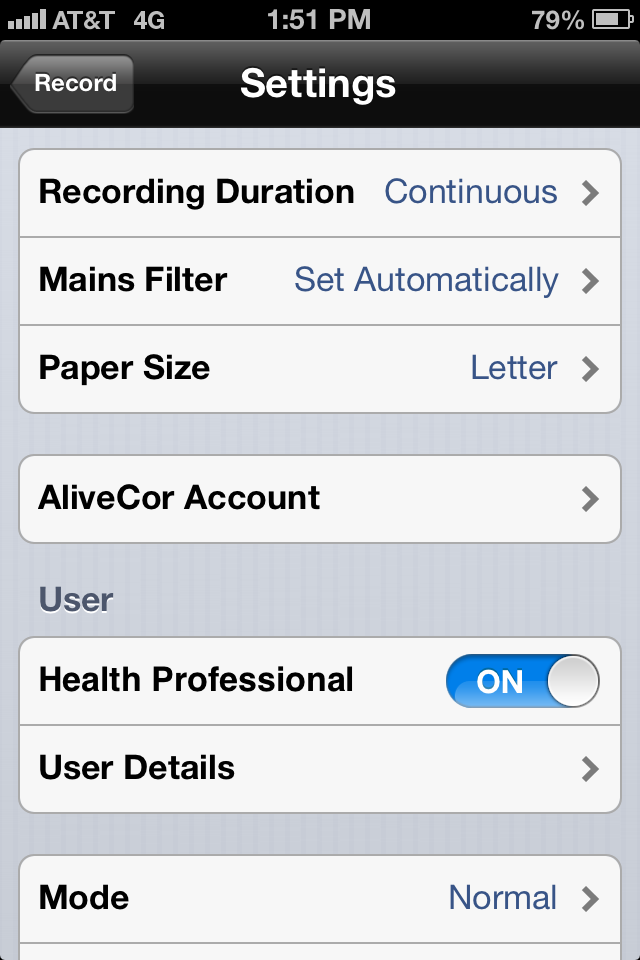
Setup Screen (beta)
While I haven't been using the device as long as John, I was impressed at the device's ease of use, intuitive software design, and handsome appearance.  While the case itself is not as sturdy as some more robust protective cases, it appeared to protect my phone sufficiently after it slipped from my pocket on more than one occasion as I changed into scrubs.  Set-up was a snap and required only the case to be shipped to my house and an app downloaded from Apple's App store.  After entering a few simple pre-requisite bits of information (like the web-based server name the device connected to for demo ECG-uploading purposes), the device was ready to go.

Inside of My Demo
AliveCor iPhone Case
Note: no wires.
The device uses a simple 3.0V CR2016 battery to operate.  It does NOT require the Bluetooth option on the iPhone to be enabled to function properly and therefore does not interfere with handsfree operation of the phone while driving a Bluetooth-enabled car.  The software did not appear to interfere with any other applications on my phone.


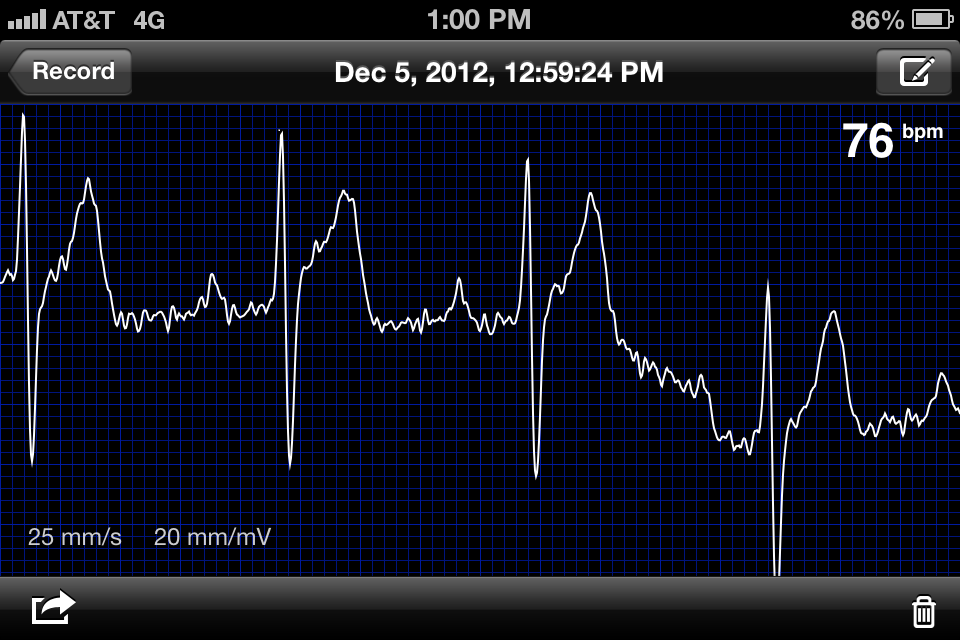
My unretouched ECG recorded with my hands
today (yep 1st degree AV block!)
 Signal quality was pretty good but is subjected to small amounts of baseline noise and drift if the device is not held still and person's hands were not warm and moist.  Adding a bit of alcohol to the finger tips greatly improved the clarity of the signal when needed.  The device can be used in several ways: with hands grasping the electrodes on the back of the device or by placing the device directly on the skin of the chest.  I found the device worked reliably when the hands were used to record the EKG but placement of the device on the chest occassionally failed to record the ECG signal because of less-reliable contact if the skin was not prepped first.  Skin skin prep with alcohol seemed to solve this short-coming.

Lead I of the standard EKG was recorded with the left and right hand holding the device with the left and right hand fingertips touching the electrodes on the back of the case.  It was important to hold the device with the iPhone's round button to the right to assure the device did not record an inverted lead I.

Options for sending tracings (beta)
While the images recorded by the device are not easily incorporated into an EMR (at least for now), the device can upload the tracings to AliveCor's server for web-browsing, create Adobe pdf images for viewing, or send those pdf images to any email address worldwide in seconds.  It also can detect local wireless Apple printers automatically to print the tracings (though I did not test this feature).  Finally, tracings were stored with date and time stamps for easy recall on an internal database that held plenty of tracings easily on my iPhone 4S.  I found its greatest weakness was requiring that patient name and demographic information be entered manually.  Trust me: dialing back to a 1929 birthdate using the canned iPhone date function was too time-consuming.  Hopefully direct data entry of dates will be allowed in future software upgrades.

Physician Reactions

Without exception, every physician I showed this device recognized this device as a compliment to the doctor's stethoscope.  It was a uniform hit as they gazed in amazement at the device's ability to record their real-time ECG.  I found this device was capable of instantly differentiating the irregular rhythm of atrial fibrillation from the irregular rhythm caused by premature atrial or premature ventricular beats or even atrial flutter with variable AV conduction.  Some care was required to get noise-free tracings or to obtain the appropriate EKG vector on the chest with which to identify lower-amplitude atrial arrhythmias.  But most limb leads can be replicated by the device (hold the R electrode with the hand and apply the left electrode to the knee to see lead II, for instance), or angle the leads in different directions on the patient's chest to obtain a new QRS vector.  (Obviously, the angle the electrodes were placed on the chest to acquire a particular limb lead requires some rudimentary knowledge of ECG basics.)

Patient Reactions

Perhaps the most interesting aspect of this device is what happened when it is placed in the hands of patients and friends unfamiliar with ECG tracings.  Their first reaction as they sit transfixed at their own ECG tracing dancing across the screen is "Cool! .... But what does it MEAN?"  Then comes "Am I okay?"  And then of course when tracings are compared between friends: "Why is my heart rate so much faster/slower than his/hers?" Or you might hear:  "Man,  I'm out of shape!"  And if the device occasionally had difficulty calculating the heart rate from a noisy tracing, three little dashes would appear instead, leading the person to ask, "Does this mean I'm dead?"  Any one of these reactions could came from generally healthy people who have never had a major medical problem.

What was more interesting to me was the nuanced reaction I noticed from patients who had had a complex medical history before but were seeing this device outside a medical facility for the first time.  When they encountered this device in a social setting, it was common that these patients refused to have their tracing performed "for fun" for fear they might be sent packing to the nearest medical establishment.  IT became immediately clear that discretion should be exercised if the device is to be passed about at cocktail parties.  (Yes, doctor, not everyone wants to see your cool gizmo.)  Hence, it appears that deploying this device on the general public has some challenges ahead, but I suspect it will come: gradually at first, then more generally.  It is clear that this really does take an understanding of ECGs to use effectively, so doctors (or techs) familiar with ECGs will have to be involved.  Liability and responsibility for reading remains a thorny issue one the device is released to the public.  I suspect these are relatively easy issues to resolve for AliveCor going forward.

Still, for doctors and medically-savvy patients, this device is a game-changer.  The number of ECG tracings obtained in clinics will probably diminish one day as this device enjoys a wider distribution amongst physicians since it doesn't require a special technician or equipment to obtain much of the information doctors need to manage their arrhythmia patients.  But caution with this single lead ECG device should be maintained, too.  Because multiple ECG leads are not collected simultaneously, the device could miss the subtle findings of a heart attack in locations remote from the there the single tracing is collected by the device.  Still, for routine rhythm analysis, this device has huge potential for time-savings, practical rhythm interpretation, and maybe even the potential to provide for considerable technical health care cost savings.

-Wes

PS: I have no commercial interest in AliveCor (darn it).

The AliveCor iPhone ECG Case website

What Every Doctor Needs For Christmas

... it brings RFID tags to a whole new level (via Bluetooth) and guarantees you will always be able to locate your keys, pager, stethoscope, ... whatever... each morning: SticknFind.

(Santa, are you listening?)

-Wes

Doctors' 2012 33% Tax Hidden Tax Hike

Physicians were the subject of a 33% tax hike that most of them weren't even aware they received this year. 

That's right.   Thirty-three percent. 

Couched as "only five additional dollars each month" by the government, it passed because doctors don't make the Federal Register part of their weekly reading list and because our professional lobbying organizations were either asleep at the wheel or distracted by the whole health care reform mess.

You see if you want to get more money for government programs, you should tax the "rich" doctors - the very same doctors that are enjoying (and have experienced the delays in payment caused by) the joys of the annual congressional cat-and-mouse game of a threatened 30% pay cut wrapped up in the fiscal cliff negotiations.  (Don't worry docs, *wink wink* it really won't happen).

The "tax" I'm speaking of?  Why it's the new $731 DEA registration fee.

Until 2011, the three-year fee was $551.  Now it's $731.

You do the math.

And why were the fees against doctors increased?

Because the DEA needed more money.  According to the FDA Law blog, the DEA cited a number of factors justifying the fee increase including:
•Expanding the use of Tactical Diversion Squads comprised of DEA diversion investigators and special agents, state and local law enforcement and regulatory officers conducting criminal investigations;

•Increased scheduled registrant investigations and inspections;

•Increased drug scheduling actions;

•Responding to the expanding number of synthetic substances such as synthetic cannabinoids and synthetic cathinones; and

•Establishing and maintaining information technology systems for registrants.

That's right, in addition to paying ever-higher taxes, licensure fees, credentialing and continuing education fees, doctors are footing a larger and larger tab of the nation's drug war while simultaneously trying to fight it on the front lines.

Brilliant.

And people wonder why doctors are burnt out and fed up.

-Wes

PS: For more excuses captivated reading, visit http://www.deadiversion.usdoj.gov/


Monday, December 03, 2012

On Folding

Every surgeon has been there at some time in their career.

It's a horrible, exhausting feeling.

Yet one we all must come to grips with: knowing when to stop.

There you are, six hours into a case, legs rubbery, mind racing, and barely conscious of the world outside the narrow view of the operative field. A life, literally in your hands, asleep now, but hoping (with you) for the best of outcomes on this last try.

"Maybe if I just..." you think, and a new idea is tried to no avail.

"Now, let's look at that again," you ask your techs. "Which electrogram's earlier? That one is CLEARLY earlier...right?" as you try to convince yourself that another choice is better. "What about here?" You go back and recheck once more, just to be sure...

So you do.

And it's still a dangerous spot to burn.

"Maybe it's on the left side?" So you cross to the left side and repeat the process. Everything maps back to the spot your dreaded before.

"Maybe if I give just a little energy here...." You hold your breath.

No effect.

"But if I burn here, I risk giving the patient a pacemaker. We never talked about a pacemaker," you think.

Yet the tachycardia persists, as if laughing at you and your inability to locate its origin.

* Bruuuuhaaaahhaaaahhaaaa... *

"Bastard!" you think. "I can get this!"

So you map above, below, left and right, forward and back...

* Bruuuuhaaaahhaaaahhaaaa... *

Like stubborn mule, you fail to give in. Again.

And again...

Until finally...

... you quit. A white flag raised. It beat you. Yes, you lost.

The supporting team with you, ever helpful, feels the patient's loss with you. They are relieved, though, for a pacemaker will not be in the offing. Like you, they know there will be another day, another arrhythmia: another victory to quell the sting of this defeat.

And while the Defeated hangs his head low to talk to the family, you then realize the the family is just as exhausted and concerned as you.  They thank you for trying.  They understand.

That's when you know you did the right thing.

-Wes

Sunday, December 02, 2012

To Dream the Impossible Dream


To dream the impossible dream
To fight the unbeatable foe
To bear with unbearable sorrow
To run where the brave dare not go

To right the unrightable wrong
To love pure and chaste from afar
To try when your arms are too weary
To reach the unreachable star

This is my quest, to follow that star
No matter how hopeless, no matter how far...

"The Impossible Dream" from the play "Man of La Mancha"
The transformation has arrived: welcome Physician Leaders one and all! We are health care's future!

Our overriding mantra: "Patients first."

We are about quality. We are about safety. We are about patient satisfaction. We are about leadership, mentorship, inspiration. We are about the feel-good. These principles are how successful companies succeed.  We are a team.

There is no use in resisting the transformation. It is here.

It is us.

So smile. Pitch in. Make it our own. Invest in the future. Teach. Research. Educate. Take call. Produce.

And enjoy the meetings, the flip charts, the consultants, the checklists.

All of them.

So much to do, so little time.  There are difficult times ahead, but we can make it work when others can't because we're the new generation of Leaders.  We know medicine.  We get input.  We involve the staff.  We'll make the tough choices.  We keep it upbeat.  Always upbeat.

March on, dear Leader!

This is our future, our patients' future.

Now, get back to work, will you?   And don't forget the meeting at 7 am.

You rock. 

See you then!

Oh, and say "hi" to your kids for me.

Ciao!

-Wes