Her breathing had never taken a second thought, except for the past several months. Slowly, gradually, her breathing became work so she came to our emergency room.
Her life had been an full one: married, kids, grandkids - all of whom brought her incredible joy. But since the loss of her husband and all of the changes that occurred in her life as a result, she felt more alone than ever. Perhaps this was the reason the pacemaker she had received some 14 years before just didn't seem so important any more. Her kids and grandkids were what remained now, and for them she was grateful for they had noted she'd become too short of breath with even the slightest effort, so they brought her in.
The chest-xray taken when she came to the Emergency Room showed her pacemaker and prompted the ER staff to ask about it. "She hasn't had a pacer check in a while, " the family mentioned. So we were consulted to check the pacemaker's function.
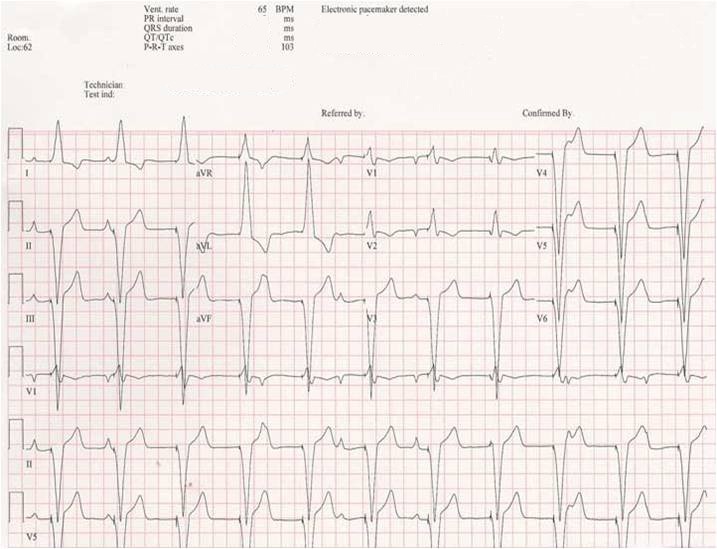
Before we'd done so, we looked at her EKG and weren't surprised at what it showed. After all, we'd seen this scenario before.
So with some confidence I entered her room. There sitting beside her was one of her sons and a granddaughter. She was propped up in bed wearing a green oxygen face mask that covered her mouth and nose but couldn't suppress her kind smile as I entered. After a brief introduction, I explained what her EKG showed and how I thought a good portion of her shortness of breath might be stemming from her pacemaker's low battery.
In our conversation she mentioned that she had been told her pacemaker battery would need to be changed soon. That was before her husband died. After his funeral, the need for a recheck of her pacemaker was quickly forgotten. So she had not anticipated that the pacemaker might be a cause of her symptoms.
We discussed her options. She could leave things well enough alone if she preferred while we arranged to keep her comfortable for her remaining days, or we could change her pacemaker battery. At the time, she didn't want excessive resuscitation measures and had declared herself a "DNR - Do Not Resuscitate" in the event of cardiac arrest. She thought hard about the choices but wasn't sure...
"Mom, it seems like such a small thing and it might be able to help you feel better! Don't you want to see your grandkids a little longer?" the son pleaded. She listened to him, then looked at me. It was clear she understood the choices and their implications. I suggested she think about it and left the room to give them time to discuss things. Some time later, she asked me to return.
She asked again, "So you think it might help me feel a bit better to have the battery changed?"
I replied, "Honestly, I do, but it's always hard to gauge how much."
So after a few more questions were answered and worried looks shared with her son, she agreed to have her battery replaced. I left the room to document my visit. (After all, nothing happens in medicine any longer unless typing occurs.) Seated next to me was my nurse practitioner, herself transfixed to the computer screen as she returned patient phone calls and made arrangements for procedures to be performed the next day. Next to her was the pacemaker programmer which she wisely brought with her to help check the patient's device. She finished her call and then offered to check the device while I finished my note. I thanked her and continued typing.
It was still relatively early in the afternoon and the eight computer terminals around me were completely occupied by nurses, physical therapists, and residents hammering away and looking stone-faced, somewhat akin to what the New York Times newsroom must look and sound like just before deadline.
Until that sound was shattered by "Call a Code! Code Blue! Get Dr. Fisher!"
Somewhat startled, I looked up to see a sudden shift of the masses. Was that the voice of my nurse practitioner? It couldn't be, could it?
It was.
Poor thing. It seems she placed the wand of the pacemaker programmer over the patient's device, only to see a strange screen on the programmer appear that read something like: "Pacemaker reached ERI 8/13/2013…" followed by a bunch of other text that said something about "Power-on Reset mode" among other things. As she struggled to read the long message and donned a pair of glasses, she noted some twitching in the corner of her eye coming from the patient's direction. She looked up to see a peaceful blank stare on the patient who now laid motionless and unresponsive - a quick glance at the monitor showed it had flat-lined with only a rare agonal ventricular escape rhythm. Realizing what had happened, she was briefly at a loss how to react. This was not supposed to happen. Fleeting thoughts raced through her head like "Seriously?" and "Oh, God, I'm too old for this!" That's when she called out for help.
The poor son and granddaughter sitting in the corner were stunned, not knowing what had just happened. A horde of medical personnel swept in to the room and ushered them out, terrified. I entered the fray and saw my pleasant patient lying there motionless, small puffs of condensation appearing on her face mask and her pupils somewhat dilated. The monitor, too, was devoid of motion, except for an occasional blip seen one the screen. I reached for a pulse. It correlated to the monitor. Not much at all.
"Can we get some atropine and epi?" A asked the code team nervously assembled, not knowing what to do in this "no code" situation. Fortunately, I removed the programmer head from her chest and watched her breathing carefully. Seconds seemed like hours as my poor nurse practitioner stood beside me with her mind scrambling. "Come on guys, we need those meds… What's taking so long?… " she snipped. "Get the pacing patches!" They still were rifling through the drawers of the crash cart when she offered like a pro: "Guys, the purple box!" And within a second, the purple box appeared. The first medication was administered as time seemed to stand still. An occasional blip, then more people in the room. "What can we do?" the anesthesiologist asked.
I looked at the monitor dreading the thought of starting CPR given her wishes, or the what I might say to the stunned family at her bedside if we didn't.
But then, just as unexpectedly as it had begun, a paced rhythm resumed on the monitor! "Hold it!" I said, "I think we have a pulse!" And like a wilted daisy that just received its water, she immediately regained consciousness and wondered what all the fuss was about.
"What happened? Where did all these people come from? Why are they here?"
"It seems your pacemaker battery is a lot lower than anyone expected, Ms. Jones (not her real name). When we checked it, we must have used some of the last energy that pacemaker had. It looks like we need to take you our laboratory and replace that battery right away!"
She smiled and looked up at me with her precious eyes gleaming. Here we were, total strangers just minutes before, now bound together by some unimagineable force. She looked so comfortable lying there, then out of nowhere she reached up to me and grabbed my head, pulling it toward her oxygen mask in an attempt to give me a kiss right through it.
"Thank you," she whispered and smiled, "Thank you."
After reassuring her family and explaining what had happened, we hurried off to the EP lab, our eyes transfixed on her monitor and me still reeling from that beautiful and totally unexpected kiss...
... plastic face mask and all.
-Wes
Showing posts with label medical ethics. Show all posts
Showing posts with label medical ethics. Show all posts
Friday, May 01, 2015


Tuesday, December 16, 2014
The ABIM Foundation, Choosing Wisely®, and the $2.3 Million Condominium
Is it "medically professional" for a non-profit organization to use
physician testing fees to "choose wisely" a $2.3 million luxury
condominium complete with a chauffeur-driven BMW 7-series town car? In my view, obviously not. To most people such an action would conjure up images of hypocrisy, waste, and
corruption.
Yet, after a review of public and tax records, it appears to me this is exactly what has happened.
Background
In 1999 for reasons that are unclear, the American Board of Internal Medicine (ABIM), itself a tax-exempt 501 (c) (3) independent non-profit physician evaluation organization domiciled in Iowa, created (Editor's note 10/20/2015: referenced web page has since been edited by the ABIM Foundation; the original referenced web page can be viewed here) a second non-profit tax-exempt 501 (c) (3) organization, the ABIM Foundation (Foundation), to first define and later promote the term "medical professionalism." Both the ABIM and the Foundation share a common address in Pennsylvania and common officers:
Ten years later after accumulating some $76 million in assets, the Foundation began their hard-to-disagree-with "Choosing Wisely®" campaign to encourage physicians and providers to question the value of medical testing in an effort to eliminate unnecessary tests and procedures. The campaign has grown to include 70 societies and some non-physician organizations, including Consumer Reports, AARP, SEIU, and Univision among others. As part of the campaign, monetary grants from the Robert Wood Johnson Foundation are awarded to institutions willing to "educate practicing physicians about the recommendations from specialty societies, and building physician communication skills to facilitate conversations with their patients about the care they need."
The Money Trail
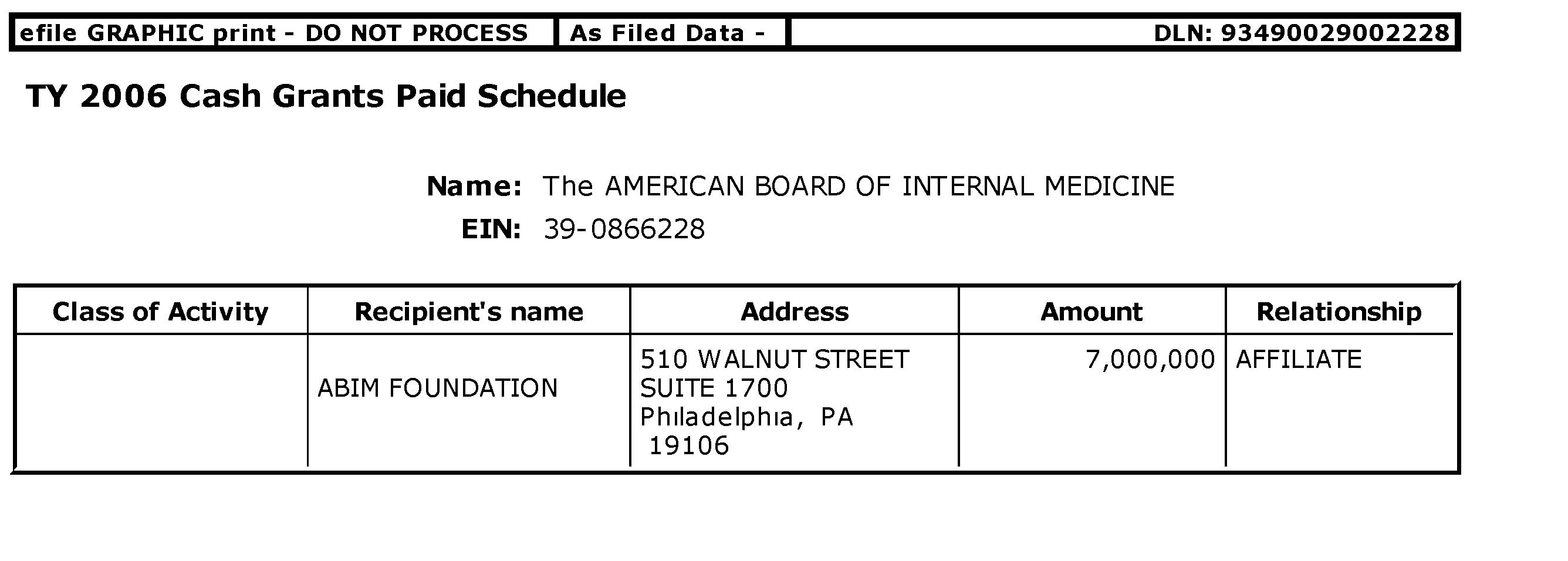
So how did the ABIM Foundation accumulate all that money? Reviewing public tax records of the ABIM and its Foundation reveals a significant portion of the Foundation's revenues came directly from the ABIM. Recall that ABIM receives 97% of its annual revenues from physician certification (62%) and re-certification fees (35%), with only 14% of these fees going toward physician examination development. In 2007 and 2008 alone, cash grants from the ABIM to its Foundation of $7 million and $6 million respectively were issued. The public records disclosed that $17,360,000 from the ABIM were made to its Foundation in the 7 years ending 6/30/2008. As a three-time participant in the ABIM certification process (candidate #127308), I can attest that to the best of my knowledge physicians were never made aware of this use of the testing fees they paid the ABIM.
The Luxury Condominium
So why did the ABIM Foundation need all this cash from physicians? We can't be certain, but the Foundation disclosed in their 2008 Form 990 that a portion of the
money they received from the ABIM via physicians fees was used to purchase a 2,579 square foot 3-bedroom luxury
condominium (Unit #11NW, in the "Ayer" Building, 210 W. Washington Square, Philadelphia) in December 2007 for $2.3 million. The luxury property borders Washington Square Park of the most historic areas of Philadelphia, across the street from the Tomb of the Unknown Revolutionary War Soldier and the Eternal Flame. The condominium building previously advertised a chauffeur driven Mercedes Benz S-series town car (more pictures here).
Since then, the Foundation has reported "condominium expenses" totaling $850,340 from December 2007 through June 30, 2013 (FY 2008: $42,522, FY 2009: $164,460, FY 2010: 161,957, FY 2011: $165,982, FY 2012: $161,980, FY 2013: $153,439 (most of these reported as "program service expenses")). In my view, these expenses were accrued while the ABIM appears to have been on an inherently unsustainable financial course from 2001 to 2012 with its net asset or fund balances on 6/30/2002 beginning with a negative balance of $10,762,954 and growing to a negative balance of $43,150,390 ending 6/30/2013. Meanwhile, over the same period its shadow organization, the ABIM Foundation, fund balance was $73,841,719 on 6/30/2013.
It should be noted that in the year of the condominium purchase the President and CEO of the ABIM, Christine Cassel, MD, earned $484,883 from the ABIM and $161,627 from the Foundation. Dr. Cassel continues to serve as President and CEO of the National Quality Forum despite a history of other seemingly conflicted financial dealings. Other executives of ABIM that year included F. Daniel Duffy, MD who served as Executive Vice President of the ABIM earning $379,915 from the ABIM, and Cary Sennett, MD, PhD who served as Senior Vice President earning $185,122 from the ABIM and $185,122 from the Foundation and now serves as a Vice President of Anthem, Inc., formerly Wellpoint. That year Dr. Richard Baron, the current President and CEO of the ABIM and Foundation, served as the secretary/treasurer of the ABIM Board earning $59,729 until 7/1/2008 when he became an unpaid Director of the Board. By comparison, according to one reliable source, the median general internal medicine physician salary in the U.S. was $205,441 in 2009.
More Questions
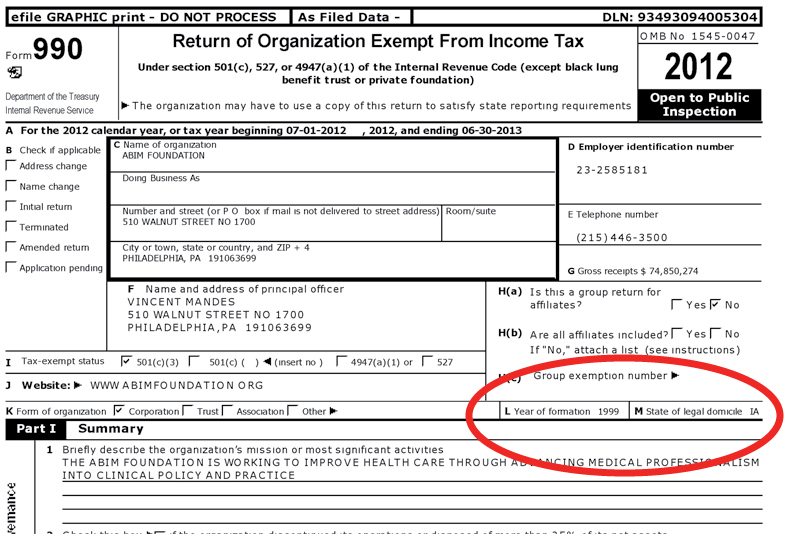
Reviewing the public record on when and where the ABIM Foundation was actually created discloses another discrepancy. We observe that the Foundation has recorded on their tax returns as being founded in 1999 with its "legal domicile" in Iowa, like the ABIM. However, a search for the organization in Iowa comes up empty, while a search in Pennsylvania Department of State (screen shot here) shows the Foundation was actually created in Pennsylvania in 1989. Which is correct?
We should note that non-profits are not required to file financial statements with the state of Iowa, while Pennsylvania requires them. This raises uncomfortable questions. Is the Foundation's Iowa domicile sheltering the sources and uses of its funds? Why does a non-profit promoting "medical professionalism" need to accumulate this much revenue? Is this how the Foundation demonstrates their "medical professionalism" to the public? To whom is the ABIM and Foundation "accountable?" Anyone?
My Call to the ABIM
On 4 December 2014 I contacted the ABIM and requested an explanation regarding the condominium, the ongoing condominium expenses, and the discrepancy of the ABIM Foundation domicile and founding date. Richard Baron, MD, the current President and CEO of the ABIM returned my call and explained the following:
Larger Implications
Sadly, the medical profession has become a house divided. On one side are many non-clinical physicians who have become far removed from patient care and are firmly embedded in the non-profit, academic, and public policy circles making handsome salaries while seeing little problem with coercing their colleagues to pay fees to support their various economic, policy, or personal agendas. In the words of my colleague Jordan Grumet, MD: "they talk about 'accountability' as if they are the ones in the ICU having the family meetings. They pray at the altar of 'quality' yet fail to define the specifics of such a term. They resent 'over treatment' but never have suffered the consequences of not doing enough."
On the other side are the physicians buried in the work-a-day world of patient care, busy doing the best they can for their patients in our increasingly complicated health care system, working as "excellent sheep" as they do their difficult job and try not to rock the boat. While such a dichotomy is not unique to medicine (look to education, the public service sector, and politics, for instance), is ignoring this new reality useful to our profession? Might the unintended consequences of these unaccountable non-profit organizations and revolving-door employment practices with government and business interests be causing unimaginable harm to the integrity and credibility of our profession while simultaneously wasting valuable resources?
It is a shame that most physicians, particularly younger doctors saddled with exorbitant training debt and concerns of job acquisition and job security, are not in a position to protest the actions of the ABIM and its sycophants, particularly since their ability to practice medicine is increasingly tied to these ABIM board certification and their new perpetual maintenance of certification payments. But this is the point, isn't it? Regulatory capture. As these younger doctors gain experience and awaken to the realities of their new health care arena that is increasingly dominated by unaccountable organizations led by non-clinical members of our own profession, we risk creating cynicism in our ranks and physicians who must be more concerned with passing a test than providing direct patient care. Even worse, we risk promoting ourselves, career or cause over the complicated needs of our patients as the divide grows ever deeper. As a result, the brittle credibility and hard-earned trust with our patients is squandered beyond repair. In my opinion, this is what we risk when we have corruption within.
Is this what our profession and the public wants?
I can only hope that practicing US physicians and the public will demand a full accounting of the ABIM and their Foundation's entire financial dealings and non-transparent co-mingling of funds. I hope that Congress decides to investigate the ABIM's role in including their MOC program as a physician quality reporting measure in the Affordable Care Act (see pages 247 and 844-845) to determine its legitimacy in light of these findings. Furthermore, an investigation into possible violations of federal policy on the protection of human subjects (in this case practicing physicians involved in direct patient care) regarding the American Board of Medical Specialties' requirement for practice and patient survey collection for Part IV of their trademarked Maintenance of Certification® program that the ABIM helps conduct should occur, especially in light of lack of informed consent afforded to physicians regarding how the fees and data they collect are used.
It is time we hold the non-clinical members of our own profession that lead these organizations accountable to all physicians and the public at large. Until this occurs, physician-members of every ABIM subspecialty organization that profits from educational content provided to the ABIM should divest themselves and work to create their own, more credible, simplified and transparent life-long learning pathways. The American Association of Clinical Endocrinologists has already set a good example. While I understand that refusing to buck the coercion created by the multimillion dollar ABIM and its Foundation will be difficult, our credibility as stewards of our patients' best interests and the preservation of the integrity of our profession demands nothing less.
-Wes
Acknowledgement
I am indebted to Charles P. Kroll, CPA for his invaluable assistance collecting tax records of the ABIM and ABIM Foundation before 2007 and assisting in the understanding of the nuances of not-for-profit accounting methods. Mr. Kroll provided forensic accounting analysis to the Minnesota attorney general's office during the Medica-Allina scandal and testified at the Minnesota Senate hearing on the matter.
Yet, after a review of public and tax records, it appears to me this is exactly what has happened.
Background
In 1999 for reasons that are unclear, the American Board of Internal Medicine (ABIM), itself a tax-exempt 501 (c) (3) independent non-profit physician evaluation organization domiciled in Iowa, created (Editor's note 10/20/2015: referenced web page has since been edited by the ABIM Foundation; the original referenced web page can be viewed here) a second non-profit tax-exempt 501 (c) (3) organization, the ABIM Foundation (Foundation), to first define and later promote the term "medical professionalism." Both the ABIM and the Foundation share a common address in Pennsylvania and common officers:
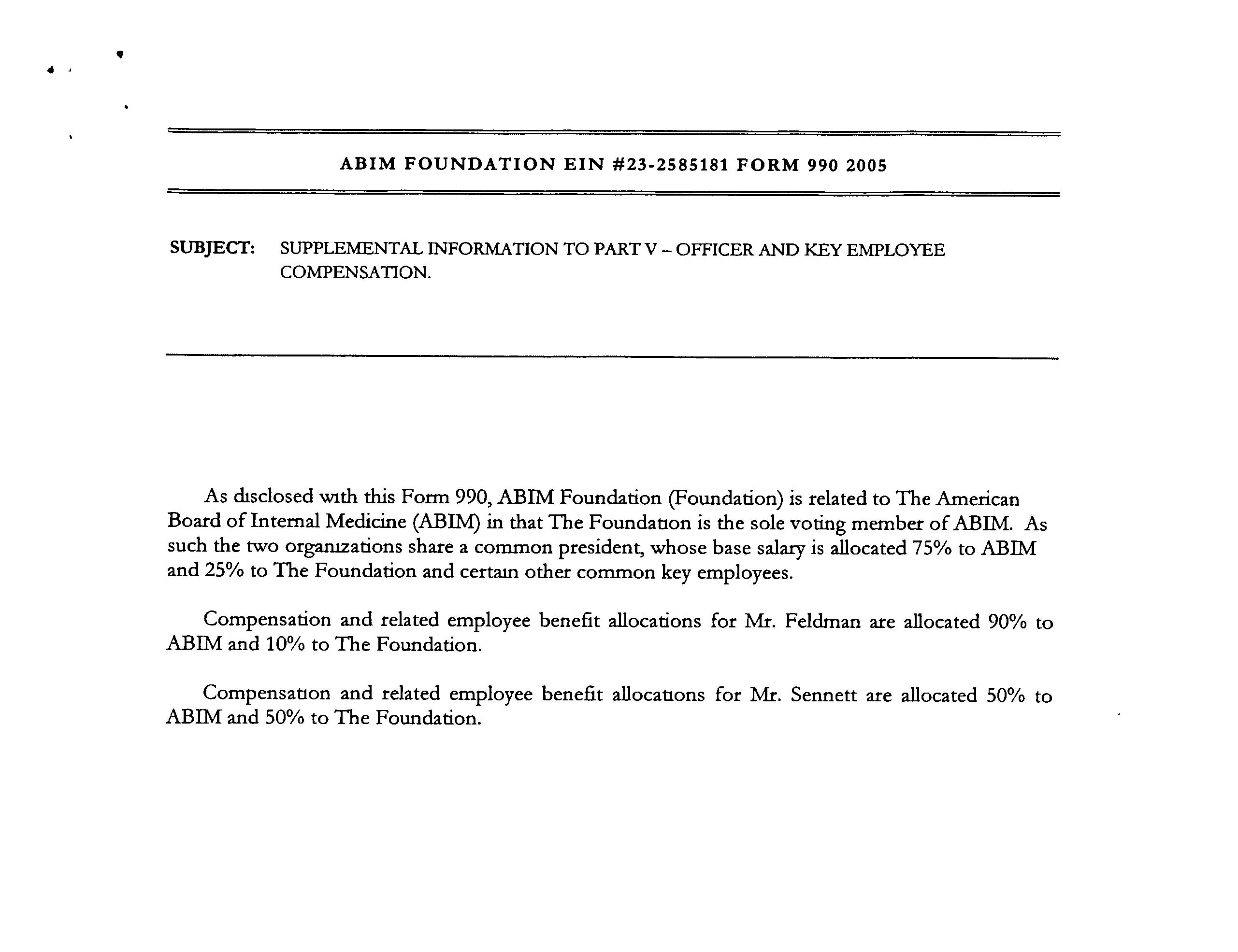
"The American Board of Internal Medicine (ABIM) is related to the ABIM Foundation (Foundation) in that The Foundation is the sole voting member of the ABIM. As such, the two organizations share a common president, a common CFO, and a common senior vice president whose base salaries are allocated between ABIM and The Foundation based on the time spent by each executive."To define "medical professionalism," the new Foundation enlisted other members of the non-profit world including the ABIM, the paid "directors" of the Foundation, the Robert Wood Johnson Foundation, the American College of Physicians-American Society of Internal Medicine and the European Federation of Internal Medicine. The group was chaired by Troy Brennan, MD, JD a paid "Director" of the Foundation who was also President and CEO of Brigham and Women's Physician Organization at the time. (He later became the Chief Medical Officer of Aetna in 2006, and now serves as the Executive Vice President and Chief Medical Officer of CVS Caremark). In 2002 this group published a white paper entitled "Medical Professionalism in the New Millenium: A Physician Charter" without peer review in the Annals of Internal Medicine (here) and The Lancet (here). At least the Annals editor, Harold C. Sox, MD mustered the courage to express concerns about the manuscript in his introductory remarks to his readers:
"The introduction contains the following premise: Changes in the health care delivery systems in countries throughout the industrialized world threaten the values of professionalism. The document conveys this message with chilling brevity. The authors apparently feel no need to defend this premise, perhaps because they believe that it is a universally held truth. The authors go further, stating that the conditions of medical practice are tempting physicians to abandon their commitment to the primacy of patient welfare. These are very strong words. Whether they are strictly true for the profession as a whole is almost beside the point. Each physician must decide if the circumstances of practice are threatening his or her adherence to the values that the medical profession has held dear for many millennia."The paper centered on three fundamental principles that the authors claimed defined "medical professionalism:" (1) the primacy of patient welfare, (2) patient autonomy, and a new concept, (3) the principle of social justice - that is, "the medical profession must promote justice in the health care system, including the fair distribution of health care resources." With this definition, physicians could no longer just be unwavering patient advocates concerned with the "primacy of their patient's welfare," they had also had to serve the financial needs of The System of medicine lest they be labeled "medically unprofessional."
Ten years later after accumulating some $76 million in assets, the Foundation began their hard-to-disagree-with "Choosing Wisely®" campaign to encourage physicians and providers to question the value of medical testing in an effort to eliminate unnecessary tests and procedures. The campaign has grown to include 70 societies and some non-physician organizations, including Consumer Reports, AARP, SEIU, and Univision among others. As part of the campaign, monetary grants from the Robert Wood Johnson Foundation are awarded to institutions willing to "educate practicing physicians about the recommendations from specialty societies, and building physician communication skills to facilitate conversations with their patients about the care they need."

The Money Trail
So how did the ABIM Foundation accumulate all that money? Reviewing public tax records of the ABIM and its Foundation reveals a significant portion of the Foundation's revenues came directly from the ABIM. Recall that ABIM receives 97% of its annual revenues from physician certification (62%) and re-certification fees (35%), with only 14% of these fees going toward physician examination development. In 2007 and 2008 alone, cash grants from the ABIM to its Foundation of $7 million and $6 million respectively were issued. The public records disclosed that $17,360,000 from the ABIM were made to its Foundation in the 7 years ending 6/30/2008. As a three-time participant in the ABIM certification process (candidate #127308), I can attest that to the best of my knowledge physicians were never made aware of this use of the testing fees they paid the ABIM.

The Luxury Condominium
 |
| Street View, "The Ayer Buidling," 210 W. Washington Square |

Since then, the Foundation has reported "condominium expenses" totaling $850,340 from December 2007 through June 30, 2013 (FY 2008: $42,522, FY 2009: $164,460, FY 2010: 161,957, FY 2011: $165,982, FY 2012: $161,980, FY 2013: $153,439 (most of these reported as "program service expenses")). In my view, these expenses were accrued while the ABIM appears to have been on an inherently unsustainable financial course from 2001 to 2012 with its net asset or fund balances on 6/30/2002 beginning with a negative balance of $10,762,954 and growing to a negative balance of $43,150,390 ending 6/30/2013. Meanwhile, over the same period its shadow organization, the ABIM Foundation, fund balance was $73,841,719 on 6/30/2013.



It should be noted that in the year of the condominium purchase the President and CEO of the ABIM, Christine Cassel, MD, earned $484,883 from the ABIM and $161,627 from the Foundation. Dr. Cassel continues to serve as President and CEO of the National Quality Forum despite a history of other seemingly conflicted financial dealings. Other executives of ABIM that year included F. Daniel Duffy, MD who served as Executive Vice President of the ABIM earning $379,915 from the ABIM, and Cary Sennett, MD, PhD who served as Senior Vice President earning $185,122 from the ABIM and $185,122 from the Foundation and now serves as a Vice President of Anthem, Inc., formerly Wellpoint. That year Dr. Richard Baron, the current President and CEO of the ABIM and Foundation, served as the secretary/treasurer of the ABIM Board earning $59,729 until 7/1/2008 when he became an unpaid Director of the Board. By comparison, according to one reliable source, the median general internal medicine physician salary in the U.S. was $205,441 in 2009.
More Questions
Reviewing the public record on when and where the ABIM Foundation was actually created discloses another discrepancy. We observe that the Foundation has recorded on their tax returns as being founded in 1999 with its "legal domicile" in Iowa, like the ABIM. However, a search for the organization in Iowa comes up empty, while a search in Pennsylvania Department of State (screen shot here) shows the Foundation was actually created in Pennsylvania in 1989. Which is correct?

We should note that non-profits are not required to file financial statements with the state of Iowa, while Pennsylvania requires them. This raises uncomfortable questions. Is the Foundation's Iowa domicile sheltering the sources and uses of its funds? Why does a non-profit promoting "medical professionalism" need to accumulate this much revenue? Is this how the Foundation demonstrates their "medical professionalism" to the public? To whom is the ABIM and Foundation "accountable?" Anyone?
My Call to the ABIM
On 4 December 2014 I contacted the ABIM and requested an explanation regarding the condominium, the ongoing condominium expenses, and the discrepancy of the ABIM Foundation domicile and founding date. Richard Baron, MD, the current President and CEO of the ABIM returned my call and explained the following:
- Dr. Baron stated that the condominium was purchased as a "investment property" and part of the investment portfolio of the Foundation. He mentioned that real estate holdings were not uncommon with other similar non-profits. The condominium was used for several purposes, including housing ABIM personnel who resided out of state and returned to Philadelphia for meetings, by contractors (for instance, to house an IT team from India), and for off-site retreats and meetings with the Communications Group of the ABIM, for instance. He noted that when ABIM members use the Foundation's condominium, the Foundation is paid $150/night from the ABIM (compared to the "usual" Philadelphia hotel rate of about $190/night) and there was cash flow to the Foundation from the ABIM for the use of their facility.
- After revelations of the luxury condominium were disclosed at a 2 Dec 2014 Pennsylvania Medical Society town hall meeting, Dr. Baron mentioned in passing that the ABIM was putting the condominium up for sale. I asked Dr. Baron the name of the listing agent and the price. He stated he could not comment because "the paperwork was not in order" and the those details had not been finalized because they were advised that the real estate market would be better in the Spring.
- When asked about the high ongoing condominium expenses and the discrepancy about the ABIM Foundation's creation date and domicile, Dr. Baron could not immediately respond but sent this follow-up e-mail 4 Dec 2014 at 2:39PM (CST):
"Hi Dr. Fischer (sic)-
Attached please find the breakdown of the condo expenses. As I explained the depreciation $$ are a required reporting artifact for the condo as a business investment. The other costs are covered by the condo usage fees.
Regarding the 1989/1999 question - In 1999 ABIM Foundation became a separate operating foundation.
Thanks,
Rich
Richard J. Baron, MD
MACP
President and Chief Executive Officer
American Board of Internal Medicine" - In closing, Dr. Baron expressed his willingness to be open to further questions.
- Today I learned that the condominium is now listed with the following description:
"Extremely Spacious Three Bedroom, 3.5 Bath Home at the Ayer Condominium. Tremendous Entertaining Space. 11’7’’ ceiling heights. Bulthaup b-3 kitchen system, Miele and Subzero Appliances. Huge windows with northwest views. High floor offering stupendous sunsets. Gorgeous stone bathrooms. Abundant closet space. One garage parking space included. Concierge, doormen, valets, gym, chauffeur driven BMW 7-Series." (More details here.)
Larger Implications
Sadly, the medical profession has become a house divided. On one side are many non-clinical physicians who have become far removed from patient care and are firmly embedded in the non-profit, academic, and public policy circles making handsome salaries while seeing little problem with coercing their colleagues to pay fees to support their various economic, policy, or personal agendas. In the words of my colleague Jordan Grumet, MD: "they talk about 'accountability' as if they are the ones in the ICU having the family meetings. They pray at the altar of 'quality' yet fail to define the specifics of such a term. They resent 'over treatment' but never have suffered the consequences of not doing enough."
On the other side are the physicians buried in the work-a-day world of patient care, busy doing the best they can for their patients in our increasingly complicated health care system, working as "excellent sheep" as they do their difficult job and try not to rock the boat. While such a dichotomy is not unique to medicine (look to education, the public service sector, and politics, for instance), is ignoring this new reality useful to our profession? Might the unintended consequences of these unaccountable non-profit organizations and revolving-door employment practices with government and business interests be causing unimaginable harm to the integrity and credibility of our profession while simultaneously wasting valuable resources?
It is a shame that most physicians, particularly younger doctors saddled with exorbitant training debt and concerns of job acquisition and job security, are not in a position to protest the actions of the ABIM and its sycophants, particularly since their ability to practice medicine is increasingly tied to these ABIM board certification and their new perpetual maintenance of certification payments. But this is the point, isn't it? Regulatory capture. As these younger doctors gain experience and awaken to the realities of their new health care arena that is increasingly dominated by unaccountable organizations led by non-clinical members of our own profession, we risk creating cynicism in our ranks and physicians who must be more concerned with passing a test than providing direct patient care. Even worse, we risk promoting ourselves, career or cause over the complicated needs of our patients as the divide grows ever deeper. As a result, the brittle credibility and hard-earned trust with our patients is squandered beyond repair. In my opinion, this is what we risk when we have corruption within.
Is this what our profession and the public wants?
I can only hope that practicing US physicians and the public will demand a full accounting of the ABIM and their Foundation's entire financial dealings and non-transparent co-mingling of funds. I hope that Congress decides to investigate the ABIM's role in including their MOC program as a physician quality reporting measure in the Affordable Care Act (see pages 247 and 844-845) to determine its legitimacy in light of these findings. Furthermore, an investigation into possible violations of federal policy on the protection of human subjects (in this case practicing physicians involved in direct patient care) regarding the American Board of Medical Specialties' requirement for practice and patient survey collection for Part IV of their trademarked Maintenance of Certification® program that the ABIM helps conduct should occur, especially in light of lack of informed consent afforded to physicians regarding how the fees and data they collect are used.
It is time we hold the non-clinical members of our own profession that lead these organizations accountable to all physicians and the public at large. Until this occurs, physician-members of every ABIM subspecialty organization that profits from educational content provided to the ABIM should divest themselves and work to create their own, more credible, simplified and transparent life-long learning pathways. The American Association of Clinical Endocrinologists has already set a good example. While I understand that refusing to buck the coercion created by the multimillion dollar ABIM and its Foundation will be difficult, our credibility as stewards of our patients' best interests and the preservation of the integrity of our profession demands nothing less.
-Wes
Acknowledgement
I am indebted to Charles P. Kroll, CPA for his invaluable assistance collecting tax records of the ABIM and ABIM Foundation before 2007 and assisting in the understanding of the nuances of not-for-profit accounting methods. Mr. Kroll provided forensic accounting analysis to the Minnesota attorney general's office during the Medica-Allina scandal and testified at the Minnesota Senate hearing on the matter.
Sunday, March 30, 2014
Is Maintenance of Certification Our Next Tuskegee?
“An experiment is ethical or not at its inception, it does not become ethical post hoc – ends do not justify means. There is no ethical distinction between ends and means.”
-- Henry K. Beecher, MD
New Engl J Med 274(24) June 16, 1966 pp 1354-1360.
“For the most part, doctors and civil servants simply did their jobs. Some merely followed orders, others worked for the glory of science."
-- John Heller, Director of the Public Health Service's Division of Venereal Diseases
The Tuskegee syphilis experiment was an infamous clinical study conducted between 1932 and 1972 by the U.S. Public Health Service to study the natural progression of untreated syphilis in rural African American men who thought they were receiving free health care from the U.S. government. The Public Health Service started working with the Tuskegee Institute in 1932. Investigators enrolled in the study a total of 600 impoverished sharecroppers from Macon County Alabama. Three-hundred ninety-nine (399) of those men had previously contracted syphilis before the study began, and 201 did not have the disease. The men were given free medical care, meals, and free burial insurance, for participating in the study. They were never told they had syphilis, nor were they ever treated for it. According to the Centers for Disease Control, the men were told they were being treated for "bad blood", a local term for various illnesses that include syphilis, anemia, and fatigue.
The 40-year study was controversial for reasons related ethical standards, primarily because researchers knowingly failed to treat patients appropriately after the 1940s validation of penicillin as an effective cure for the disease they were studying. Revelation of study failures by a whistleblower led to major changes in U.S. law and regulation on the protection of participants in clinical studies. Now studies require informed consent, communication of diagnosis, and accurate reporting of test results.
The Tuskegee Syphilis Study led to the 1979 Belmont Report and the establishment of the Office for Human Research Protections (OHRP). Importantly, it also led to federal laws and regulations requiring Institutional Review Boards for the protection of human subjects in studies involving human subjects.
Fast forward thirty-five years.
Could the new American Board of Internal Medicine (ABIM) mandate for participating in their Maintenance of Certification (MOC) process unilaterally imposed 1 January 2014 so they can maintain a publicly-reported maintenance of certification "status" be violating ethical standards set forth by the 1979 Belmont Report?
Let me explain why I think it does.
The increasingly complicated test- and survey-taking exercise called "Maintenance of Certification" has never been scientifically proven to improve physician quality. Our society's inability to agree on a definition of a "quality" physician (and how to measure those qualities) is part of the reason why this issue has never been studied. For instance, should we define a "quality" physician on the basis of his or her empathy, surgical skill, lack of complications, ability to recall facts or some combination of these or other attributes? The reality is, it is nearly impossible to adequately define a "quality" physician at the outset.
But the issue of maintaining "quality" health care delivery is critical to those paying for health care services (CMS and insurers, aka, "stakeholders"), especially now in this era of health care reform. Payers want to assure they receive the most value for their dollars spent in health care. Patients want to be reassured that they are receiving competent care by a physician, especially in a time where cost-cutting, deployment of unproven electronic medical systems, use of non-physician care-givers, and shortened physician training and work hours has occurred. Seeing an opportunity, the American Board of Medical Specialties (ABMS) and the ABIM stepped in to help the government define physician quality. Through the assurances of their leadership, the ABIM led "stakeholders" to believe that (1) quality is easy to measure (after all, they have a thorough testing "process") and (2) the responsibility for determining physician quality should rest with individual physicians. This leap of faith by government officials is similar to the Tuskegee era when government physicians were similarly obsessed with African American sexuality, believing that the responsibility for the acquisition of syphilis rested solely upon the individual.
Because the Maintenance of Certification process imposed by the American Board of Internal Medicine is unproven, it is, at best, an experiment that attempts to assure physician quality on patients without a defined hypothesis (what, really, does the ABIM test with the MOC process?) or informed consent. The issue of informed consent is critical, in my view, because the psychological, financial, and social consequences of NOT passing the test to doctors and their patients have never been evaluated.
 |
| The "MOC Complex" at ACC2014 (click to enlarge) |
First, I learned that the pass rate this year (2013) for internal medicine specialists was 86%, and for cardiac electrophysiologists was 84%. This means that fourteen percent of internists and sixteen percent of cardiac elecrophysiologists did not pass their test. (We were assured that 97% "ultimately" pass, however, but no data were supplied to the audience to this effect).
The second thing I learned directly from Dr. Baron yesterday during the question and answer period was this: the ABIM has never studied the psychological, social, or financial impact that NOT passing the MOC process upon physician test-takers. This is not a small issue, especially if one considers that many hospitals are beginning to tie the ongoing Maintenance of Certification process to the issuance of hospital privileges to practice medicine. How could anyone trained in the ethics of scientific study and research permit such an egregious oversight to the protection of physicians?
From the 1979 Belmont Report:
The expression "basic ethical principles" refers to those general judgments that serve as a basic justification for the many particular ethical prescriptions and evaluations of human actions. Three basic principles, among those generally accepted in our cultural tradition, are particularly relevant to the ethics of research involving human subjects: the principles of respect of persons, beneficence and justice.Let's examine each of these principles described in the Belmont Report in regards to MOC testing.
Regarding respect for persons:
Respect for persons incorporates at least two ethical convictions: first, that individuals should be treated as autonomous agents, and second, that persons with diminished autonomy are entitled to protection.Today, physicians are "persons with diminished authority" in the certification and licensure discussion. The decision to invoke every-two-year testing was imposed by leadership of several physician organizations whose leadership have had strong ties to government agencies (including the Center for Medicare and Medicaid Services, a la Dr. Baron) without the approval of their membership. Further, the MOC process is already being used by some hospitals as a lever to dispense hospital privileges without proof that the MOC process assures physician quality, however might have been defined.
Regarding beneficence:
Persons are treated in an ethical manner not only by respecting their decisions and protecting them from harm, but also by making efforts to secure their well-being. Such treatment falls under the principle of beneficence. The term "beneficence" is often understood to cover acts of kindness or charity that go beyond strict obligation. In this document, beneficence is understood in a stronger sense, as an obligation. Two general rules have been formulated as complementary expressions of beneficent actions in this sense: (1) do not harm and (2) maximize possible benefits and minimize possible harms.Given the fact that the negative consequences of failing to re-certify in medicine are very real for doctors, failing to pass the ABIM's tests may, in fact, harm them. No attempt to minimize harm to physicians has occurred. No attempt has been made to warn physicians about the negative consequences of what might happen to them if they fail to maintain their certification in good "status." Worse still: not allowing physicians to practice medicine may actually harm, rather than benefit, the doctor's patients! The ABMS and ABIM have clearly turned a blind eye to this possibility.
Finally, in regards to the last critical element of the Belmont Report, justice:
Who ought to receive the benefits of research and bear its burdens? This is a question of justice, in the sense of "fairness in distribution" or "what is deserved." An injustice occurs when some benefit to which a person is entitled is denied without good reason or when some burden is imposed unduly. Another way of conceiving the principle of justice is that equals ought to be treated equally. However, this statement requires explication. Who is equal and who is unequal? What considerations justify departure from equal distribution? Almost all commentators allow that distinctions based on experience, age, deprivation, competence, merit and position do sometimes constitute criteria justifying differential treatment for certain purposes. It is necessary, then, to explain in what respects people should be treated equally. There are several widely accepted formulations of just ways to distribute burdens and benefits. Each formulation mentions some relevant property on the basis of which burdens and benefits should be distributed. These formulations are (1) to each person an equal share, (2) to each person according to individual need, (3) to each person according to individual effort, (4) to each person according to societal contribution, and (5) to each person according to merit.So who is served by the Maintenance of Certification process, really? Are patients? Doctors? Or the leadership of ABIM?
Questions of justice have long been associated with social practices such as punishment, taxation and political representation. Until recently these questions have not generally been associated with scientific research. However, they are foreshadowed even in the earliest reflections on the ethics of research involving human subjects. For example, during the 19th and early 20th centuries the burdens of serving as research subjects fell largely upon poor ward patients, while the benefits of improved medical care flowed primarily to private patients. Subsequently, the exploitation of unwilling prisoners as research subjects in Nazi concentration camps was condemned as a particularly flagrant injustice. In this country, in the 1940's, the Tuskegee syphilis study used disadvantaged, rural black men to study the untreated course of a disease that is by no means confined to that population. These subjects were deprived of demonstrably effective treatment in order not to interrupt the project, long after such treatment became generally available.
There are significant financial incentives driving the marketing of the ABIM's ongoing MOC process to America's physicians. From the ABIM's own 2012 Form 990 that I could retrieve, the ABIM earned $30,661,314 from their members for examination fees, $17,509,141 for Maintenance of Certification, and an additional $970,415 for exam development, supplying duplicate certificates, and re-scores of the examination. Of the total revenues reported by the ABIM in 2011 ($49,304,645) fully 48.6% ($23,937,881) went to staff salaries, other compensation, and employee benefits. Christine Cassels, MD alone (who served as President and CEO at the time), earned $786,751 that year and had her spouse's travel fees to meetings thrown in, too. It goes without saying that the leadership of these organizations have received salaries far higher than most of their physician members. Justice (as defined by the Belmont Report) can hardly be served when scales are tipped so heavily toward those of our own profession that stand to benefit so handsomely from this certification process.
It is time that doctors and patients understand exactly what has transpired with the foisting of the ongoing MOC process upon America's physicians. Just as the Tuskegee experiments in Macon County Alabama did years ago, well-meaning members of our profession have represented physician "quality" by their own standards that include the ability to perform a serious of test- and survey-taking exercises without responsibly admitting the harms this process might have on their colleagues and their patients. Like the serious breaches of ethical standards that occurred when doctors worked "for the glory of science" in the Tuskegee era, this unfortunate unproven experiment of MOC re-certification by the ABIM continues unabated without checks and balances.
It is time for this injustice against physicians to stop. Responsible physicians and their patients everywhere need to rise up and demand accountability by the ABIM for their ethical breaches that have occurred. The heavy marketing of the benefit of this process without acknowledging its potential harms is dangerous to both doctors and patients. Further, it is not okay to entrap physicians by making them pay for an unproven process that could destroy their social status and ability to earn a living.
To believe otherwise is about as unethical as it gets.
-Wes
P.S.: Here's a link to an anti-MOC petition underway.
Sunday, February 02, 2014
Talking Heads
February, in case you haven't noticed, is "Heart Month" full of associations with Valentine's Day, love, peace and tranquility. It's also a month to sell cardiovascular health care.
Given what's transpired to our health care system so far, I'm not sure I really know the answer.
Everywhere you look these days are advertisements for the latest and greatest heart care, finest heart care facilities, touching stories of the latest cardiovascular intervention saving a life at this medical center or that. Go ahead. Type in "heart" as your Google alert phrase to see what I mean.
Heart month, you see, is business month for most medical centers since the cardiovascular disease product line is sold more often than any other in medicine. But what is good for the business of medicine is not always good for the reputation of physicians. As one surgeon has wisely pointed out, physicians are devalued when breathless claims of magical health care delivery promised on TV can't be delivered.
Most doctors say little about the problems inherent to this advertising trend. We see no problem with advertisements for the latest drug or procedure on TV or the radio. That's because doctors are becoming comfortable with their new subliminal marketing role for their new employers and as figureheads to quality.
I worry that we doctors, overburdened with our new reality of declining pay, seemingly bottomless administrative meetings, data entry, coding requirements, and the million other regulatory changes that are detracting from direct patient care, are becoming comfortable (and worse, complacent) in our new role as talking heads. We pretend that really there's no problem with "innovations" to care, when deep in our souls we know otherwise. I get that we're all in survival mode right now, and perhaps this is why I'm concerned.
Recently the Wall Street Journal discussed the business case for using lower level providers in lieu of physicians. The article discussed the "clash on proposed oversight" that exists when a less costly nurse anesthetist is substituted for a fully-trained anesthesiologist. These capable nurse anesthetists don't want oversight. They feel they can do their job just fine, thank you. After all, they're the one's at the patient's side most of the time as the anesthesiologist flits in an out of several operating rooms instead of sitting in just one. Is this the best quality for the individual patient to have a person with only two years' experience working independently? Probably not. Is it fiscally innovative for both doctors and hospitals to do anesthesia this way? Absolutely. Consequently, I wonder if tomorrow's "Top Doctor" will be a much-heralded clipboard-carrying oversight manager of an army of lesser-trained health care providers.
Perhaps these changes are inevitable given the realities of American health care delivery today. In our rush to get more work done faster than ever, we use physician extenders to see patients first, then make cameo appearances at the patients bedside, more for PR (and billing purposes) than real clinical discovery. Is this quality? It seems that in our new world of upcoming Press Ganey patient satisfaction surveys linked to hospital payments, inpatient medicine is evolving to PR. During the brief patient interactions, doctors had better smile, look good, and wash their face and hands lest the facade of quality fade. After all, good doctor, big screen TVs, marble foyers, and extensive menu selections at the bedside can only get your hospital so far. Yet if this trend is allowed to go to its next iteration, will image consultants be the next recertification requirement for physicians?
I wonder….
Recently the Wall Street Journal discussed the business case for using lower level providers in lieu of physicians. The article discussed the "clash on proposed oversight" that exists when a less costly nurse anesthetist is substituted for a fully-trained anesthesiologist. These capable nurse anesthetists don't want oversight. They feel they can do their job just fine, thank you. After all, they're the one's at the patient's side most of the time as the anesthesiologist flits in an out of several operating rooms instead of sitting in just one. Is this the best quality for the individual patient to have a person with only two years' experience working independently? Probably not. Is it fiscally innovative for both doctors and hospitals to do anesthesia this way? Absolutely. Consequently, I wonder if tomorrow's "Top Doctor" will be a much-heralded clipboard-carrying oversight manager of an army of lesser-trained health care providers.
Perhaps these changes are inevitable given the realities of American health care delivery today. In our rush to get more work done faster than ever, we use physician extenders to see patients first, then make cameo appearances at the patients bedside, more for PR (and billing purposes) than real clinical discovery. Is this quality? It seems that in our new world of upcoming Press Ganey patient satisfaction surveys linked to hospital payments, inpatient medicine is evolving to PR. During the brief patient interactions, doctors had better smile, look good, and wash their face and hands lest the facade of quality fade. After all, good doctor, big screen TVs, marble foyers, and extensive menu selections at the bedside can only get your hospital so far. Yet if this trend is allowed to go to its next iteration, will image consultants be the next recertification requirement for physicians?
I wonder….
Sadly, conflicts such as these are only the tip of the iceberg. For instance, instead of insisting that information technology giants and bureaucrats correct he horrible data entry requirements imposed by today's electronic medical records, many of us have succumbed to hiring costly scribes. We justify the benefits of these scribes because they allow us to see and touch more patients, while not admitting that we have thrown up our hands to the root problem that created this mess in the first place. Likewise, when physicians allow their administrators to purchase cheaper, inferior equipment or allow maintenance contracts to lapse in the name of "alignment" of doctors' and hospitals' financial interests, who are we serving? Or as personnel ranks are slashed from hospital payrolls and patient wards consolidated, are our patients being served best? Can a nurse used to caring for post-surgical patients really manage a cardiac patient as well?
The list goes on and on. While employee-physicians are losing our autonomy and ability to provide direct one-on-one patient care in all cases, there's a growing need to educate those who don't have a clue about patient care in hopes of improving that care without compromising its quality (if that is possible). Perhaps more than ever, doctors are needed to fulfill a leadership role in the education of all factions involved in patient care - from administrators to ancillary care providers - about what is needed for their patients and when. Doctors need to push to dismantle what is broken and organize those systems that work. Being railroaded by a system that has changed way too soon and way too fast thanks to forces outside our control won't help anyone.
But before we embark on this seemingly impossible task, physicians will first need to ask themselves a very important question, one that strikes to the very core of being a doctor: will we dare to speak up as advocates for our patients and as advocates for each other as doctors, or will we just become a talking head?
The list goes on and on. While employee-physicians are losing our autonomy and ability to provide direct one-on-one patient care in all cases, there's a growing need to educate those who don't have a clue about patient care in hopes of improving that care without compromising its quality (if that is possible). Perhaps more than ever, doctors are needed to fulfill a leadership role in the education of all factions involved in patient care - from administrators to ancillary care providers - about what is needed for their patients and when. Doctors need to push to dismantle what is broken and organize those systems that work. Being railroaded by a system that has changed way too soon and way too fast thanks to forces outside our control won't help anyone.
But before we embark on this seemingly impossible task, physicians will first need to ask themselves a very important question, one that strikes to the very core of being a doctor: will we dare to speak up as advocates for our patients and as advocates for each other as doctors, or will we just become a talking head?
Given what's transpired to our health care system so far, I'm not sure I really know the answer.
-Wes
Tuesday, November 26, 2013
Appropriateness Criteria® and Our New Medical Ethic
The Hippocratic Oath. Most medical students in America recite some version of this oath at their medical school graduation. Its text implies a sacred and overriding respect (ethic if you will) for the individual."I swear by Apollo the physician and AEsculapius and Health (Hygieia) and All-Heal (Panacea) and all the gods and goddesses, that, according to my ability and judgment, I will keep this oath and this stipulation—to reckon him who taught me this art equally dear to me as my parents, to share my substance with him, and relieve his necessities if required; to look upon his offspring in the same footing as my own brothers, and to teach them this art, if they shall wish to learn it, without fee or stipulation; and that by precept, lecture, and every other mode of instruction, I will impart a knowledge of my art to my own sons, and those of my teachers, and to disciples bound by a stipulation and oath according to the law of medicine, but to none others. I will follow that system of regimen which, according to my ability and judgement, I consider for the benefit of my patients, and abstain from whatever is deleterious and mischievous.
I will give no deadly medicine to anyone if asked, nor suggest any such counsel; and in like manner I will not give to a woman a pessary to produce abortion.
With purity and with holiness I will pass my life and practice my art.
(I will not cut persons labouring under the stone, but will leave this to be done by men who are practitioners of this work.)
Into whatsoever houses I enter, I will go into them for the benefit of the sick, and will abstain from every voluntary act of mischief and corruption, and, further, from the abduction of females or males, of freemen and slaves. Whatever, in connection with my professional practice, or not in connection with it, I see or hear, in the life of men, which ought not to be spoken of abroad, I will not divulge, as reckoning that all such should be kept secret.
While I continue to keep this Oath unviolated, may it be granted to me to enjoy life and the practice of the art, respected by all men, in all times! But should I trespass and violate this Oath, may the reverse be my lot!"
(Adams, II, 779, cf. Littre, IV, 628.)
Doctors are currently witnessing the profession of medicine moving from the ethic of the individual to the ethic of the collective. The passage of the Affordable Care Act has solidified this treatment ethic and, as a consequence, often creates conflicts between the treating physician and their individual patients.
Nowhere is this shift to the ethic of the collective clearer than our expanding attempt to determine treatment "appropriateness" using a look-up chart of euphemistically-scored clinical scenarios owned and trademarked as "Appropriateness Criteria®" or "AUC®" by our own medical professional organizations. For those unfamiliar, these "criteria" label the care rendered in hypothetical clinical situations as "appropriate", "uncertain" or "inappropriate." (ed's note: oops, this year's update labels these "appropriate," "may be appropriate," or "rarely appropriate"). While touted as "evidence-based," these criteria simply are not - they are a consensus opinion of a collection of physicians for clinical scenarios unrelated to any real patient.
What happened to doctors serving as advocates for their patients? Are doctors really turning to these tables to decide which clinical care to render? Or do we really use them to make sure their EMR note reflects aspects that will assure third-party payment for care?
As we wallow in this latest unfortunate mandate being served to doctors, perhaps there is some use in investigating the origins of these ridiculously-complex criteria, for it is telling.
A few clicks of a computer will show the idea of "appropriateness" came from the Europeans via the RAND corporation. The organization quickly spread abroad and is now RAND Health in Santa Monica, California, USA and RAND Europe in Leiden, the Netherlands. Most of all, it is telling who now sits on the RAND Health Advisory board (ed note: Vice President, Global Affairs for Anheiser-Busch, really?). Not surprisingly, it is those who stand to gain from the business of medicine, the vast majority of whom are not even doctors. It is also worth noting that this is the same RAND organization that promoted unrealistic estimates of cost-savings to our health system afforded by Electronic Medical Records subsidized and promoted by the government today; the same business interests who make billions upon billions on Wall Street.
Our professional subspecialty societies, often funded by these very same organizations who sit as board members of the RAND Corporation, have turned a blind eye to this conflict of interest. They have adopted the process "in response to the imperative for improving the utilization of cardiovascular procedures in an efficient and contemporary fashion" and few have ever questioned its downside. In turn, doctors who use these methods collude with our well-meaning professional society colleagues to perpetuate a health care delivery model that prioritizes business interests on behalf of the "collective" above those of the individual patient. Why are we allowing trademarked intellectual properties like "Appropriateness Criteria®" to substitute for clinical judgment about our patient's individual clinical circumstance? Could our societal self-appointed gurus ever know anything about the constellation of complicated medical and social circumstances that patients bring before us in the private confines of our office? Of course not.
Yet here we are.
It seems a day never ends that physicians aren't being instructed on what else we must do to massage a chart for the good of the collective without a moment's consideration of what their "criteria" might mean for our patient's best care.
This is our new ethic, our new reality.
Speak out against this practice and the doctor is instantly labeled "non-evidence-based," "greedy," "self-serving," and "unconcerned" about the "patient collective." So doctors actively put their heads down and care for their patients as best they can. Daily, doctors experience the angst of this movement. We don't want to admit what has happened. Time and again we find ourselves constrained by these "guideline"- or "appropriateness use"-directed care that has been authorized by our own "physician collective" as "appropriate" when, by its very nature, is outdated by the time the guidelines are published, static and fail to incorporate newly-vetted therapies, and conflict with our patient's actual medical needs. Our field of medicine has become so complicit with this movement that we've even allowed our political and justice systems to threaten or impugn those who step outside these or other outdated care guidelines.
When doctors abandon our most basic ethic of caring for the individual for that of the collective, we are served our just desserts. Perhaps writing something like this will open our eyes. Or perhaps, as we've been so quick to do, we'll choose to keep them closed and not admit that this has happened.
Remember this when others say no to the care your patient needs.
-Wes
Tuesday, April 16, 2013
Social Media Ethics and the Control of Physician Speech
The position paper from the American College of Physicians and the Federation of State Medical Boards, is a humbling reminder of the challenges that today's physicians face when entering the online space.
Their recommendations for online medical professionalism, written by ethics committees for the two organizations, "provides recommendations about the influence of social media on the patient–physician relationship, the role of these media in public perception of physician behaviors, and strategies for physician–physician communication that preserve confidentiality while best using these technologies" -- no small amount of territory to summarize.
But given the tenure of their document, I should probably hang up this blog right now. After all, why risk being vulnerable in the online world? While well-meaning on one hand, we should appreciate that physicians have officially been put on notice on how to behave online.
To be fair, I agree with most of what they say. All the things about patient confidentiality are appropriate. All the things about respect for persons, better still.
But to me, the part of the document that wanders off into the "influence of social media on the patient-physician relationship" and the influence of social media on the "public perception of physician behaviors," is more difficult to gauge in its benefit or detriment to the public discourse. After all, perception is in the eye of the beholder. When central health care planners muddle the ethics of patient safety by facilitating the deployment and mandating use of untested electronic medical records, should doctors sit quietly and act "professional" as the age-old ethics of research and study are cast aside in the name of the "public good?" Taking it a step further: should doctors, in the interest of political correctness, cower in our newly constructed cubicles and tow the corporate party line, even though it harms our patients, lest we run afoul of corporate social media gag clauses?
Yes, dear doctor, according to the guidelines, you should.
Don't harm the "profession." Be polite. Be respectful. Don't stir the waters, or if you do, stir them very gently. Stick with medical issues and don't wander into the political or the social mire. Instruct. Speak of the many wonders of medicine. Don't raise red flags for they may affect "public perception" of not just doctors, but the institutions that employ them. Tread very, very lightly, and if you can't play nice, don't play at all. To do otherwise, dear doctor, might affect our growth strategy.
This is the challenge that doctors must face online these days. It's not just about being ethical, for the lines of "ethics" is being blurred by others' perceptions of what we should be now, but rather it is being true to ourselves and our patients. Doctors increasingly work for large, soon-to-be "accountable care organizations" (ACOs) where ethical standards for an organization's success can conflict with the ethical requirements for the autonomous patient. With whom should we side, the patient or the organization?
The academic elite with little or no real experience with the nuance and complexities of this online world have little realization of the complexities of behavior online and even less appreciation how their position papers of online professionalism can come back to haunt those who delve into this space to tell our story. "Doctor, we want to talk to you in the front office about your blog. Do you remember that ethics document from the American College of Physicians and the Federation of State Medical Boards?"
Yes, perhaps I'm an alarmist, but we should appreciate the gravity of these seemingly well-intentioned documents to online physicians who strive to be patient advocates in an era of ACO employment of physicians.
This is our new professional calling.
Respectfully and ethically, of course.
-Wes
Their recommendations for online medical professionalism, written by ethics committees for the two organizations, "provides recommendations about the influence of social media on the patient–physician relationship, the role of these media in public perception of physician behaviors, and strategies for physician–physician communication that preserve confidentiality while best using these technologies" -- no small amount of territory to summarize.
But given the tenure of their document, I should probably hang up this blog right now. After all, why risk being vulnerable in the online world? While well-meaning on one hand, we should appreciate that physicians have officially been put on notice on how to behave online.
To be fair, I agree with most of what they say. All the things about patient confidentiality are appropriate. All the things about respect for persons, better still.
But to me, the part of the document that wanders off into the "influence of social media on the patient-physician relationship" and the influence of social media on the "public perception of physician behaviors," is more difficult to gauge in its benefit or detriment to the public discourse. After all, perception is in the eye of the beholder. When central health care planners muddle the ethics of patient safety by facilitating the deployment and mandating use of untested electronic medical records, should doctors sit quietly and act "professional" as the age-old ethics of research and study are cast aside in the name of the "public good?" Taking it a step further: should doctors, in the interest of political correctness, cower in our newly constructed cubicles and tow the corporate party line, even though it harms our patients, lest we run afoul of corporate social media gag clauses?
Yes, dear doctor, according to the guidelines, you should.
Don't harm the "profession." Be polite. Be respectful. Don't stir the waters, or if you do, stir them very gently. Stick with medical issues and don't wander into the political or the social mire. Instruct. Speak of the many wonders of medicine. Don't raise red flags for they may affect "public perception" of not just doctors, but the institutions that employ them. Tread very, very lightly, and if you can't play nice, don't play at all. To do otherwise, dear doctor, might affect our growth strategy.
This is the challenge that doctors must face online these days. It's not just about being ethical, for the lines of "ethics" is being blurred by others' perceptions of what we should be now, but rather it is being true to ourselves and our patients. Doctors increasingly work for large, soon-to-be "accountable care organizations" (ACOs) where ethical standards for an organization's success can conflict with the ethical requirements for the autonomous patient. With whom should we side, the patient or the organization?
The academic elite with little or no real experience with the nuance and complexities of this online world have little realization of the complexities of behavior online and even less appreciation how their position papers of online professionalism can come back to haunt those who delve into this space to tell our story. "Doctor, we want to talk to you in the front office about your blog. Do you remember that ethics document from the American College of Physicians and the Federation of State Medical Boards?"
Yes, perhaps I'm an alarmist, but we should appreciate the gravity of these seemingly well-intentioned documents to online physicians who strive to be patient advocates in an era of ACO employment of physicians.
This is our new professional calling.
Respectfully and ethically, of course.
-Wes
Sunday, January 20, 2013
Patient Safety and the Ethics of EMR Implementation
“An experiment is ethical or not at its inception, it does not become ethical post hoc – ends do not justify means. There is no ethical distinction between ends and means.”
-- Henry K. Beecher, MD
New Engl J Med 274(24) June 16, 1966 pp 1354-1360.
"When everything is digitalized, all your records - your privacy is protected, but all your records on a digital form - that reduces medical errors. It means that nurses don't have to read the scrawl of doctors when they are trying to figure out what treatments to apply. That saves lives; that saves money; and it will still ensure privacy."
The implementation of the electronic medical record (EMR) in American medicine gained a powerful foothold in medical care with the passage of the American Reinvestment and Recovery Act (ARRA) in 2009. With the passage of this act came the promise of improved efficiencies, safety and ultimately reduced cost delivery for health care. Also, some $18 billion dollars in financial incentives were offered to physicians to offset costs to deploy these systems nationwide. To assure adoption, if the systems were not implemented by 2015, doctors and care providers will suffer payment penalties from the government. For physicians who care for Medicare patients, there was no alternative than to deploy these systems.
In 2010 alone, the EMR market was pegged at $15.7 billion dollars, a cost that is ultimately passed to all Americans. In addition, despite all of the changes that health care reform has brought to date, people in some states continue to see their insurance premiums mushroom over 20% in 2013 from the preceding year. Simply put, patients are finding health care anything but “affordable.”
We should acknowledge that there might be cause, ethically, to deploy a technology that truly benefits patients at some cost. After all, you have to break a few eggs to make a good omelet. If interoperability of EMR systems between facilities were commonplace and clinical data were shared with ease while patient privacy was vigorously upheld flawlessly, the cost of these systems might be ethically justified.
But the promise of improved efficiencies to our health care system, improved patient safety and (especially) reduced cost for our health care system remain elusive. More importantly these goals remain unproven. In fact, examples that the opposite is occurring abounds as doctors struggle to enter ever-increasing amounts of information of no relevance to the patient’s presenting problem just to prove they’re using the EMR in a “meaningful” way, health data security breeches continue, errors are growing instead of shrinking, data-mining of patient information is occurring not just for patient care but for marketing purposes, and the direct costs of health care for patients continues to rise, not fall. Proponents of these systems will argue these issues are nothing more than “growing pains” of these novel systems.
So should we step back for a moment and ask ourselves if we are being ethical to patients with the deployment of this technology? Does the ends of presumed cost savings to our national health care system justify the deployment of poorly integrated, difficult-to-use systems? Are patients being subjected to new risks heretofore never considered with the adoption of this technology? Could a tiny programming error occur that negatively impacts not just one patient, but millions? If so, what are the safeguards in place to prevent catastrophic error? Who will be responsible? Who is the oversight body that assures the guiding principles of the Belmont Report (respect for persons, beneficence and justice) with respect to EMR deployment are followed? The Secretary of the Department of Health and Human Services or a more nebulous body like Congress?
If we accept that the benefits of the EMR are at least uncertain to patients in terms of risk and cost, we should demand they be studied before deploying them. The guiding medical ethics tenets would demand nothing less. So, would not such study qualify as human research? After all, we should remember that the United States and other countries have a precedent of human research programs performed by government agencies that were usually highly secretive, and in many cases information about them was not released until many years after the studies had been performed.
From a sentinel paper in 1966 by Henry J. Beecher, MD on Ethics in Research:
"I should like to affirm that American medicine is sound, and most progress in it soundly attained. There is, however, a reason for concern in certain areas, and I believe the type of activities to be mentioned will do great harm to medicine unless soon corrected. It will certainly be charged that a mention of these matters does a disservice to medicine, but not one so great, I believe, as a continuation of the practices cited.While Beecher’s paper was addressing ethical research errors in general, his words are oddly prescient for EMR development. Ethical errors, as he pointed out, “are increasing not only in numbers but in variety.” He points to one of the biggest drivers of ethical conflict: money.
Experimentation in man takes place is several areas: in self-experimentation; in patient volunteers and normal subjects; in therapy; and in the different areas of experimentation on a patient not for his benefit but for that, at least in theory, of patients in general."
“Of transcendent importance is the enormous and continuing increasing in available dollars for research, as shown below:
Money Available for Research Each Year Year Massachusetts General Hospital National Institutes of Health 1945 $500,000 $701,800 1955 2,222,816 36,063,200 1965 8,384,342 436,600,000
These data, rough as they are, illustrate vast opportunities and concomitantly expanded responsibilities.
Taking into account the sound and increasing emphasis of recent years that experimentation in man must precede general application of new procedures in therapy, plus the great sums of money available, there is reason to fear that these requirements and resources may be greater than the supply of responsible investigators.”
The need for “responsible investigators” remains significant; funding for all of the National institute of Health in 2011 was $142.5 billion dollars. Annually, EMR companies have received the equivalent of 11% of the entire NIH annual research budget from US citizens without having to prove their safety or value to patients.
Again, from Beecher’s paper:
“The ethical approach to experimentation in man has several components; two are more important than others, the first being informed consent. The difficulty of obtaining this is discussed in detail. But it is absolutely essential to strive for it for moral, sociologic, and legal reasons. The statement that consent has been obtained has little meaning unless the subject or his guardian is capable of understanding what is to be undertaken and unless all hazards are clear. If these are not known this, too, shall be stated. In such a situation the subject at least knows that he is to be a participant in an experiment. Secondly, there is the more reliable safeguard provided by the presence of an intelligent, informed, conscientious, compassionate, responsible investigator.”Because EMR deployments are cloaked in intellectual property, non-disclosure and restrictive hospital employment agreements, doctors are often prohibited from voicing specific concerns about an EMR system publicly. In addition, by adopting EMR systems as cornerstones of the American health care system, Congress, the President and the ARRA side-stepped patients’ informed consent regarding the short-comings of these systems, advertising only their desired benefits instead. Furthermore, rather than Congress turning to “conscientious, compassionate, responsible investigators,” they turned to lobbyists when deciding to fund the deployment of unproven EMR systems. As a result, doctors were relegated to becoming nothing more than stewards of data entry subject to new, ever-evolving documentation requirements as these systems evolve for cost-saving benefits and care "efficiencies."
Patients and doctors alike understand the need for improved efficiencies and value in our era of exploding health care costs. We must strive to find a solution to our health care cost crisis that is transparent, cost-effective and ethical. Without such an effort, our health care system will collapse. Only recently has the Office of the National Coordinator of Health Information Technology recognized the problem and opened their Health IT Patient Safety Action and Surveillance Plan for public comment. This plan asks the EMR companies and interested stakeholders to develop their own methods to assure patient safety and reporting systems – a move that approaches the same ethical standards as equivalent of asking the foxes to watch the henhouse. Nonetheless, we should acknowledge their efforts.
But we should be cautious of EMR systems as we move forward. After all, these clinical systems have not been subjected to the same cost-benefit and ethical scrutiny as other clinical tools we use in health care. The scrutiny of EMRs should be no different than that found with pharmaceutical or medical device research where Institutional Research Board approval and proof of no conflict of interest is demanded. Why should clinical EMR systems be any different?
Given the profit motives and market consolidation occurring amongst the purveyors of these EMR systems and the potential for lethal EMR errors both from software and human interface issues, doctors and patients must especially question the ethics of the movement to deploy untested, novel technology on our patient population under restrictive covenants. As part of informed consent, patients should have full understanding of how and where their clinical data are used, including when it will be used for direct-marketing campaigns, prioritizing care delivery, or for research. Patients should be able to opt out of the use of their clinical data for these or any other purpose if desired, without restricting payment for care. Finally, physician and patient concerns about EMR systems should be allowed to be vetted publicly and without threat of professional or personal reprisal or the withholding of payments for care rendered, especially and particularly if these disclosures are performed in the best interest of patient care.
To do otherwise is unethical for our patients and the public at large.
-Wes
Subscribe to:
Posts (Atom)