Showing posts with label AliveCor. Show all posts

Monday, November 18, 2013

When We Empower Patients to Pay for Expertise

"I know what you're thinking, punk. You're thinking "did he fire six shots or only five?" Now to tell you the truth I forgot myself in all this excitement. But being this is a .44 Magnum, the most powerful handgun in the world and will blow you head clean off, you've gotta ask yourself a question: "Do I feel lucky?" Well, do ya, punk?

Harry Callihan (played by Clint Eastwood) in "Dirty Harry"
Today, Alivecor accounced the launch of their AliveInsights(TM) EKG interpretation service where patients decide with their own dollars and sense, who interprets the single-lead EKG generated by Alivecor's EKG iPhone case. If the patient feels fine with a technician and wants a response in 30 minutes, they can get their answer if they elect to pay $2. If that same patient wants a "Board Certified" US cardiologist to interpret their tracing and are are willing to wait up to 24 hours, they can elect to cough up $12 instead.

Gee, which would you take?

My bet is that Alivecor's guessing people will accept the cheaper alternative. But will prescribing doctors?

It is an interesting model. I learned from Dr. Dave Alpert, the inventor of the Alivecor iPhone case, that "board certified" cardiologists get to keep $10 of the interpretation fee for providing the service - no insurance forms to fill out, no worry about a technical fee for the patient - just a plain ol' cash payment model.

Perhaps what is most interesting to me is how incredibly disruptive this model is to our current medical model.

But there are other concerns for doctors who might elect to "prescribe" an Alivecor case to their patients.

If the patient elects to pay $2 and a "technician" mis-reads the EKG, is the prescribing physician legally responsible for adverse outcomes that might occur? Who is responsible if a cardiologist mis-reads the transmitted EKG - the prescribing physician or the interpreting physician (presuming they are not always the same individual)?

These are interesting questions to ponder as this service launches. Certainly other issues are likely to arise where the lines of patient responsibility become blurred. Still, I like the fact that Alivecor is moving head-on into this space. It sets an exciting opportuntity for patients to have more control over their health concerns, and if this helps them, then all the better.

So as Harry Callihan said, "Feel lucky, punk?"

-Wes

Tuesday, April 16, 2013

How to Change The Battery in Your iPhone's Alivecor Heart Monitor Case

After recording about 120 electrocardiogram (ECG) tracings from your Alivecor iPhone case, the device will suddenly stop recording EKGs when the battery in the case cover runs low.  Fortunately, replacing the battery is a very simple process.

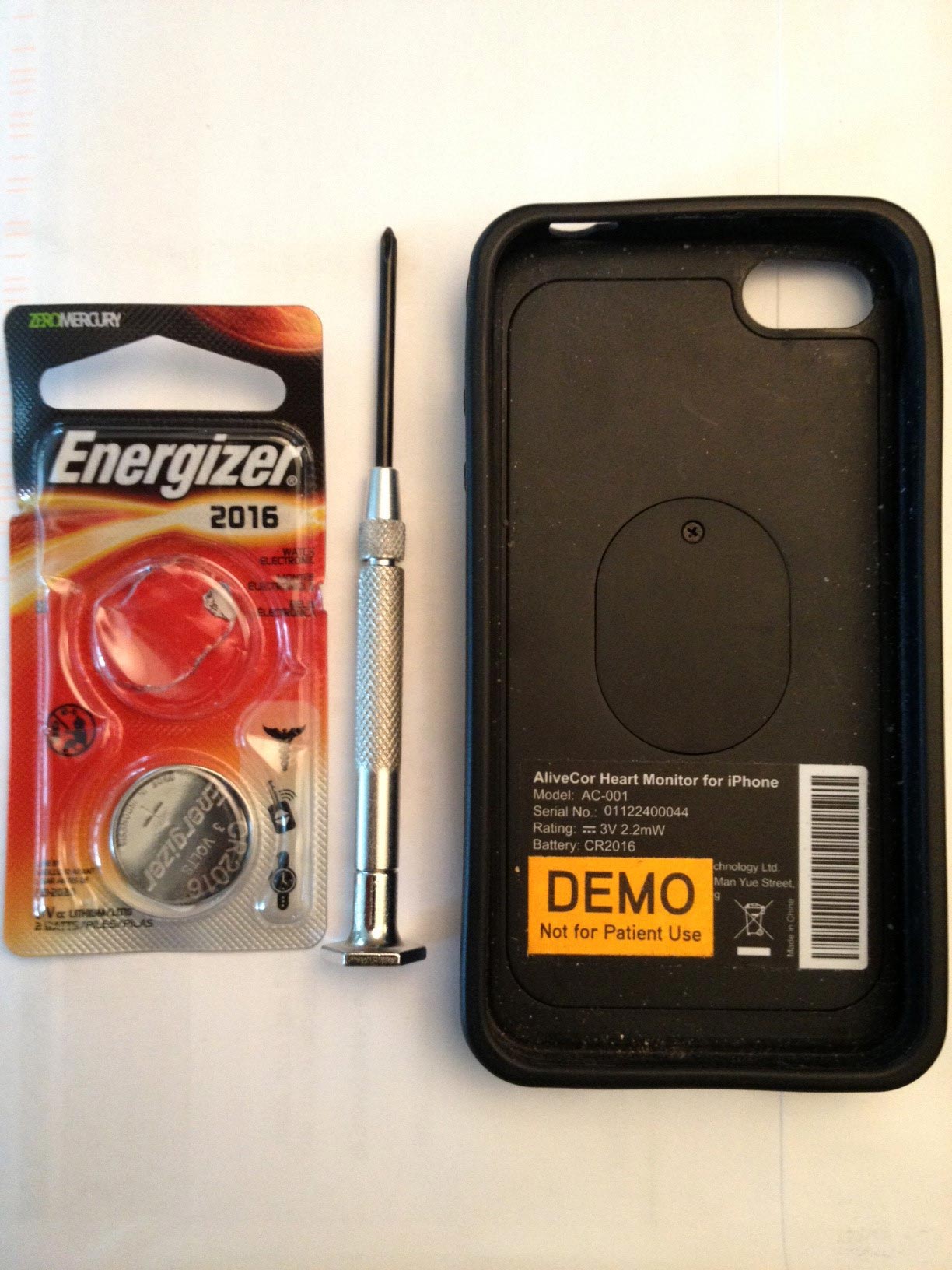
First, assemble all of the items needed: (1) a new 3-volt model 2016 battery (I got mine from Walgreens), (2) a tiny Phillips screw driver (used to repair eye-glasses and often found in hardware stores), and (3) your Alivecor iPhone case as seen below (Excuse the DEMO sticker - I was a beta-tester for the iPhone 4S case):
Click to enlarge
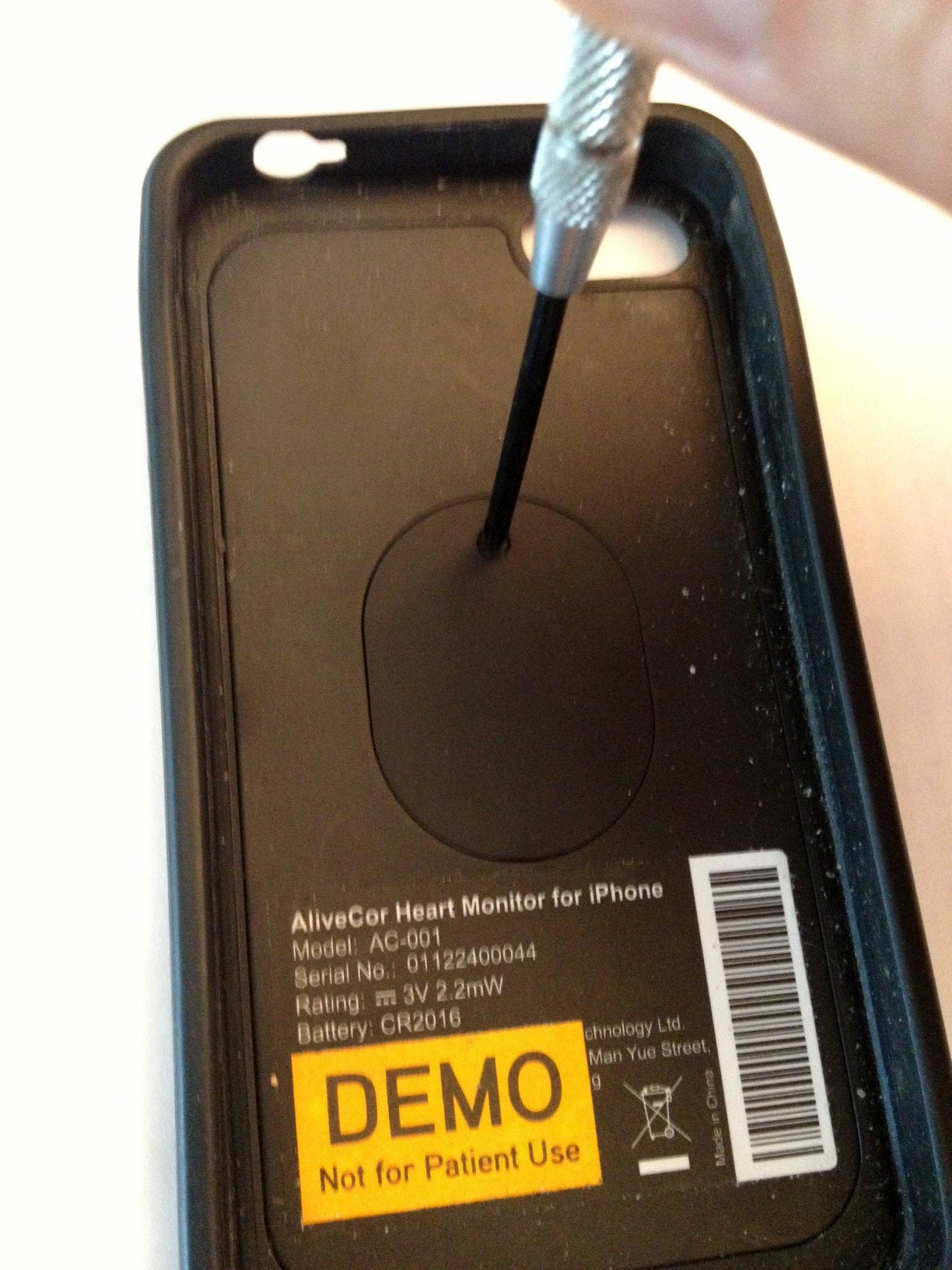
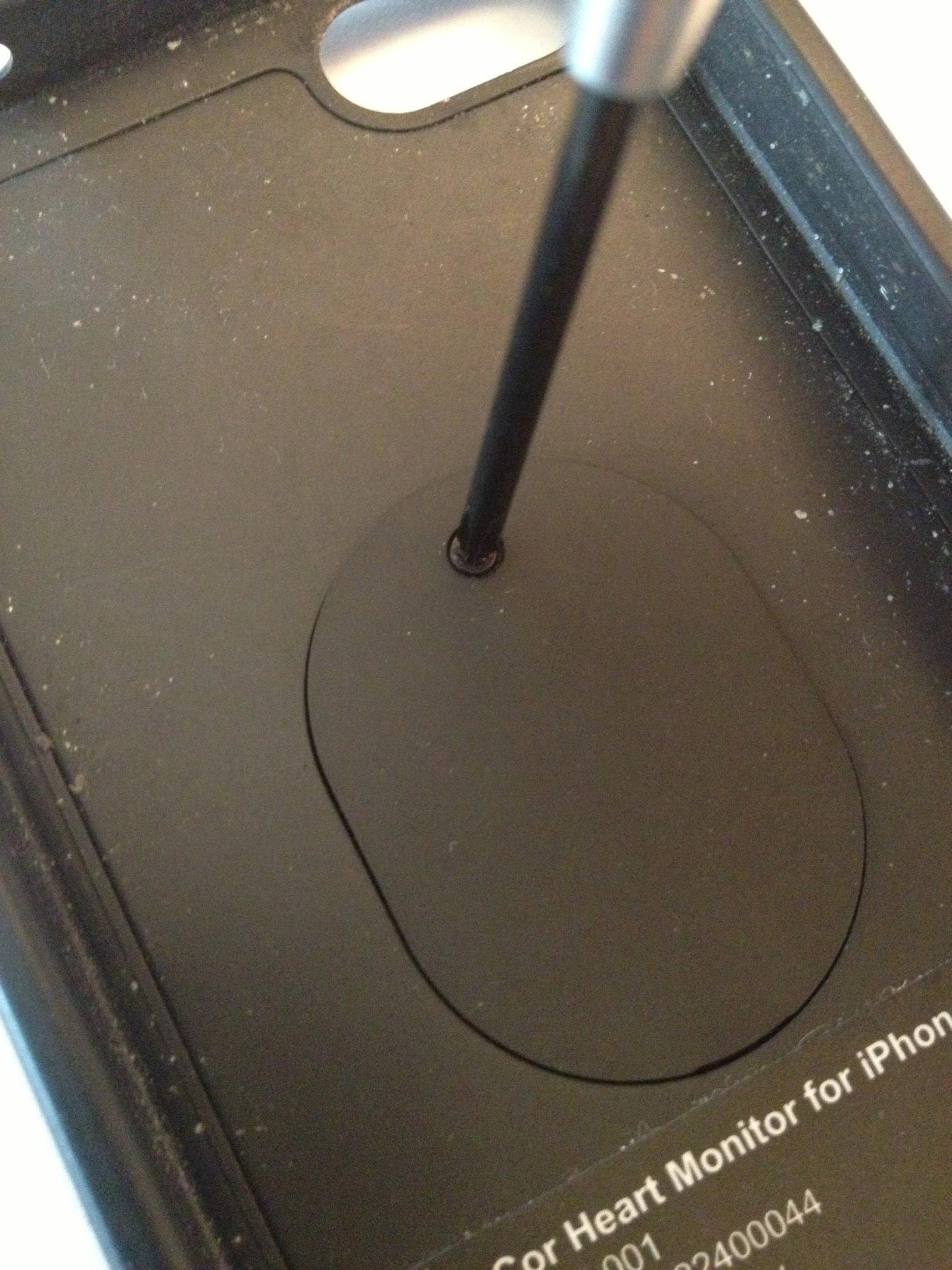
Next, unscrew the plate on the inner side of the iPhone case as shown:


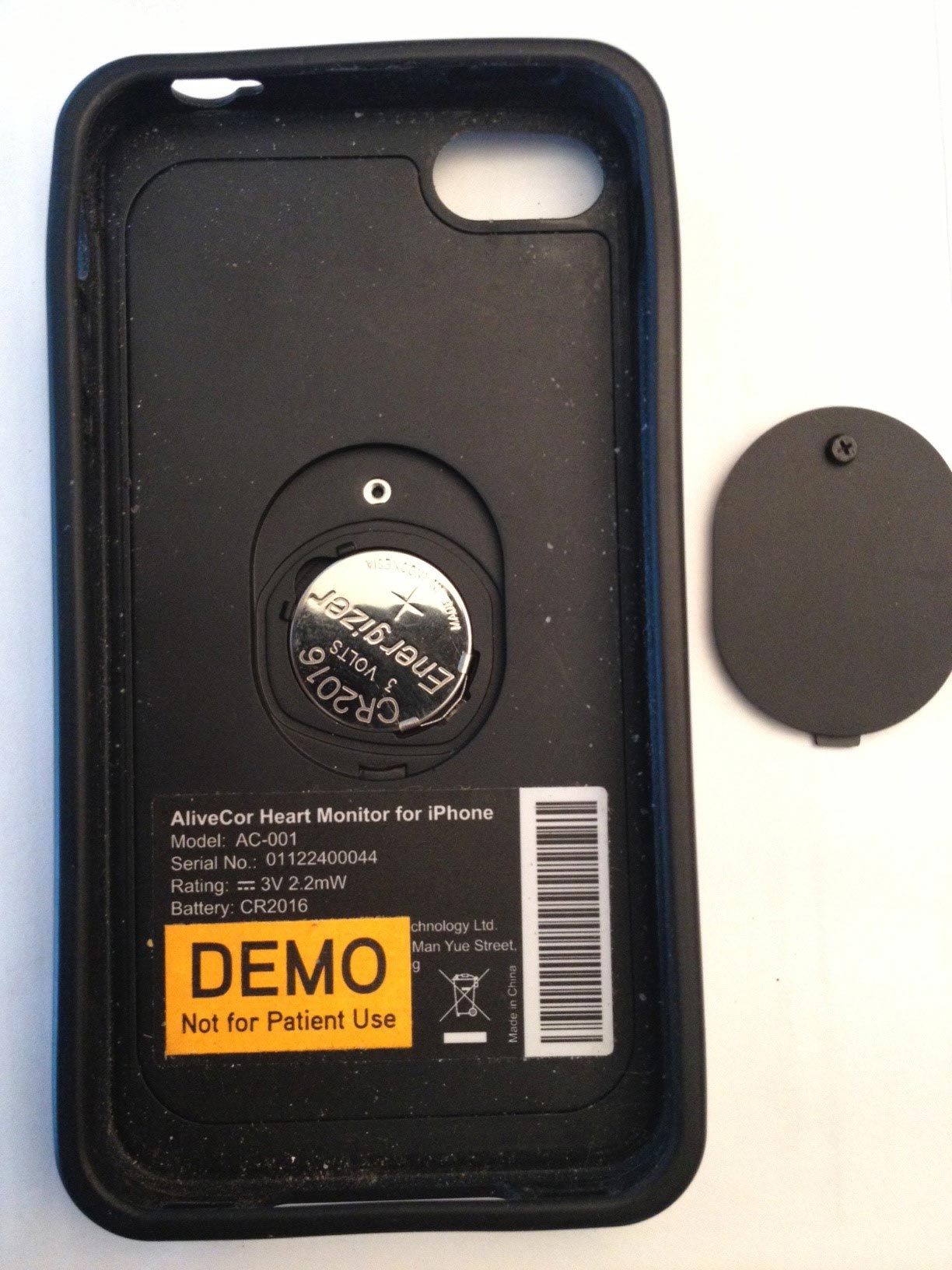
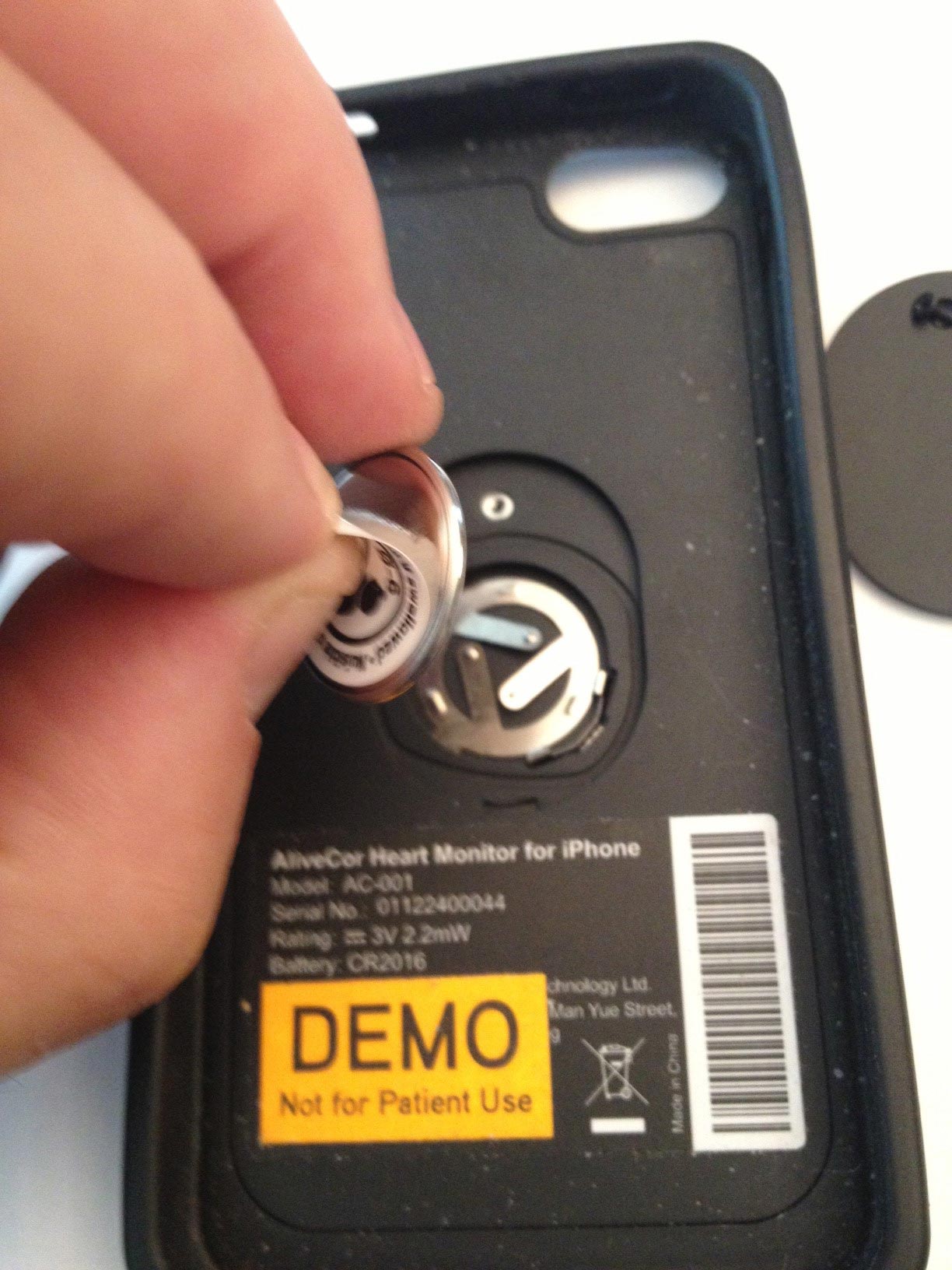
This will reveal the old battery below the case cover.  Set the cover aside using care not to lose the tiny screw that attached the cover to the case:


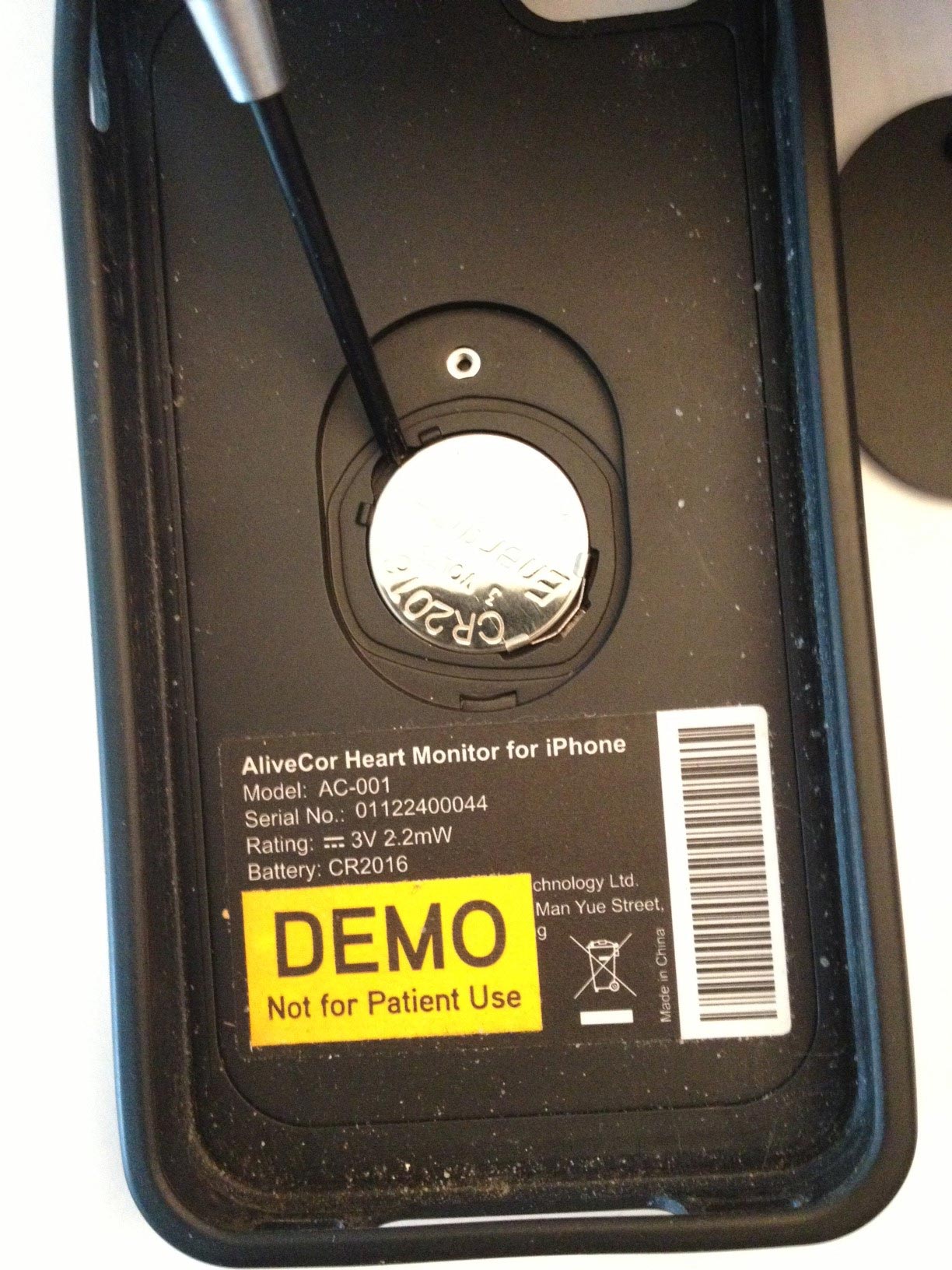
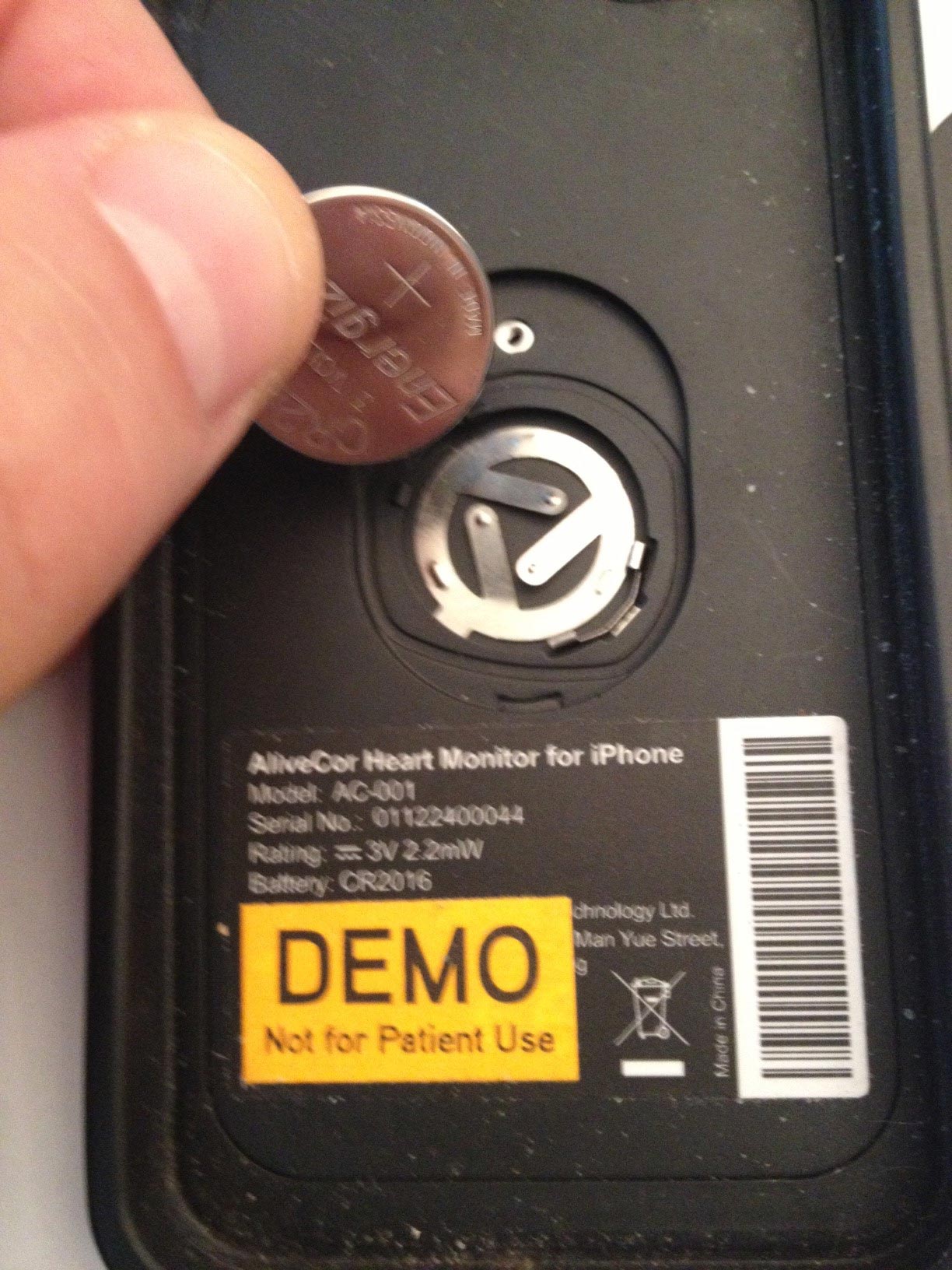
In the upper left corner of the battery holder is a small recess where the battery can be carefully pryed from the holder as shown:


Carefully remove the battery to reveal the contacts below it:


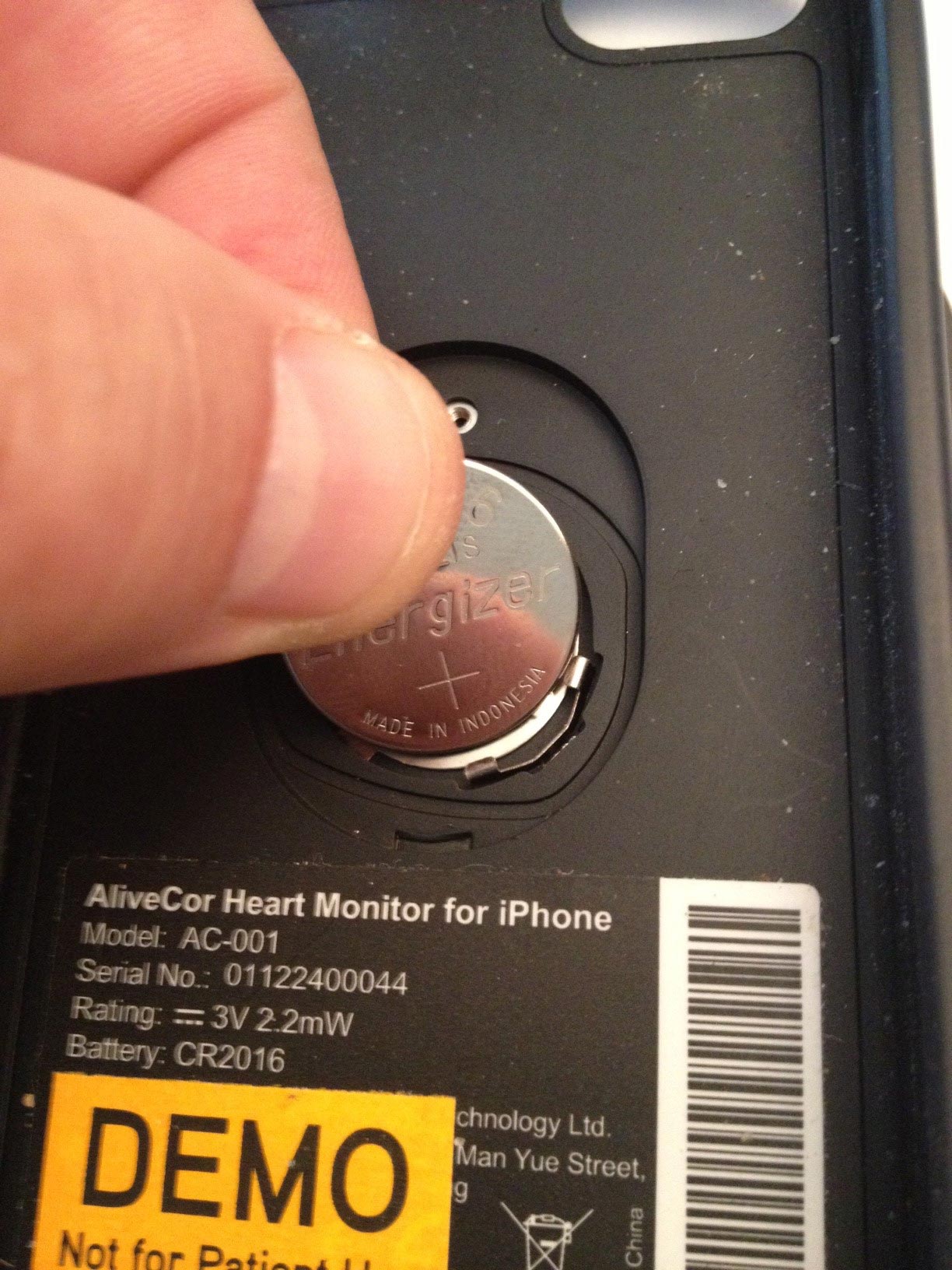
Take the new replacement battery and remove the adhesive backing on the battery before installing it back in the holder:


Be sure to place the replacement battery in the holder with the writing side up, using care to first place it beneath the metallic retaining clips in the lower right side of the battery holder:


Once seated back in the case, screw back on the cover:


Then just place the cover on your iPhone and you'll be good for another 100-130 ECG tracings or so!

-Wes

Wednesday, February 13, 2013

When Patients Can Obtain Their Own EKG

With the announcement that the FDA granted 510(k) approval for the AliveCor EKG case for the iPhone 4/4s, the device became available to "licensed U.S. medical professionals and prescribed patients to record, display, store, and transfer single-channel electrocardiogram (ECG) rhythms."

While this sounds nice, how, exactly, does one become a "prescribed patient?"  Once a doctor "prescribes" such a device, what are his responsibilities?  Does this obligate the physician to 24/7/365 availability for EKG interpretations?  How are HIPAA-compliant tracings sent between doctor and patient?  How are the tracings and medical care documented in the (electronic) medical record?  What are the legal risks to the doctor if the patient transmits OTHER patient's EKG's to OTHER people, non-securely?

At this point, no one knows.  We are entering into new, uncharted medicolegal territory.

But the legal risks for prescribing a device to a patient are, sadly, probably real, especially since the FDA has now officially sanctioned this little iPhone case as a real, "live" medical device.  But I must say, I am not a legal expert in this area and would defer to others with more legal expertise to comment on these thorny issues.

This issue came up because a patient saw the device demonstrated in my office and wanted me to prescribe it for them.  So I sent AliveCor's Dr. Dave Alpert a tweet and later received this "how to" e-mail response from their support team:
Dear Dr. Fisher,


Thank you for your interest in the AliveCor Heart Monitor. I'm writing in response to your tweet to Dr. Dave (Alpert) yesterday. Below are the instructions; in addition these instructions can be found at www.alivecor.com (click on the “Buy Now” link in the upper right corner).

To obtain a monitor for your patients, please follow these steps:

1. Write a prescription for the “AliveCor Heart Monitor for iPhone 4/4S”

2. Ask your patient to go to here and submit the following:

a. The prescriber’s information - your name, address, phone number, license number and license state or NPI (National Provider Identifier)

b. A copy of the prescription (attach a scanned copy or photo)

3. Go to www.alivecor.com and click on the “Buy Now” link in the upper right to purchase the monitor

a. In the “NPI/State Medical Lic #” enter “Prescription”

NOTE: The patient's credit card will be charged once they place their order, however we can’t process their order unless we have received their prescription.

Please know that at this time AliveCor does not provide any ECG interpretation, diagnosis or analysis of the data obtained with the monitor. Patients will be instructed to contact you, their physician, regarding any questions they may have regarding their recordings.

Please let me know if you have any questions.

Regards,
It is clear AliveCor wants to provide the device and its app, but will not be responsible for the interpretation of EKG's.  That is up to the doctor and their patient how to manage the clinical expectations of this technology.  While some patients could probably perform EKG interpretation basics, I would guess most don't really understand what that wavy line means.  Hence, this is where a discussion should be held with a patient BEFORE prescribing this device and the expectations defined before its use.

For me, I am happy to provide interpretations free of charge when needed as long as it is convenient and non-disruptive to my clinical responsibilities and personal life.  There are only so many hours of the day and since I must value that time, cannot bill for this EKG-reading service, and have no quality control over the caliber of the recordings submitted, I consider my interpretations of tracings sent to me to be provided to the patient as a "good Samaritan" in every legal sense of the term.  Patients who have clinically worrisome symptoms and need emergent analysis of their heart rhythm should seek help in an emergency department or call 911 and not expect a doctor to provide an immediate interpretation of their tracing, unless such an arrangement is defined clearly between doctor and patient before issuing the device.  Expecting a doctor to make urgent clinical decisions based on this single-lead EKG app is of limited utility, in many (and maybe most) instances in my view, so patients should look at this device as a convenient adjunct to more conventional medical care.  While it might come one day, the AliveCor iPhone EKG has simply has never been tested for emergency use as of the time of this writing.

So I may do a test run to see how it goes on a test basis but I can already see some legal concerns for doctors who prescribe this device.  Until a clear interpretation workflow is established that can provide comprehensive coverage of interpretations paired with a well-defined and easy-to-use interface with a medical record system, patients should understand doctors' possible hesitation to prescribing this device to a multitude of patients for personal use.

-Wes

Wednesday, December 05, 2012

An Inside Look at AliveCor's iPhone ECG Case

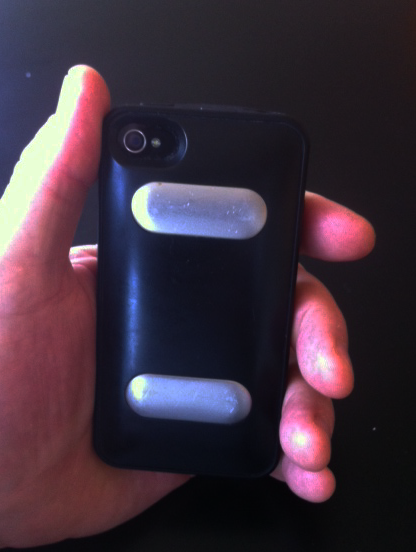
The back of my demo
AliveCor ECG iPhone 4s Case
By now, the today's news is relatively old: AliveCor's innovative ECG Case for the iPhone created by Dr. Dave Alpert, MD received FDA approval.  But for something this innovative, it's never too late to give your take.  Like my good friend and fellow physician-blogger John Mandrola, MD, I was fortunate to have served as a beta tester of the device.  John gives his take here and mentions some great anecdotes of how he has used the device clinically.

AliveCor ECG
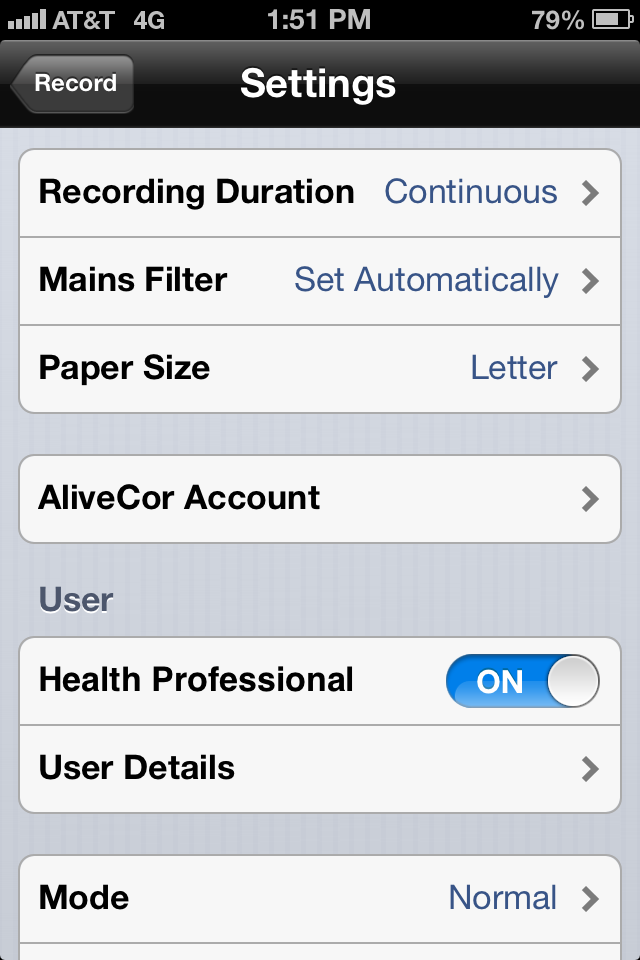
Setup Screen (beta)
While I haven't been using the device as long as John, I was impressed at the device's ease of use, intuitive software design, and handsome appearance.  While the case itself is not as sturdy as some more robust protective cases, it appeared to protect my phone sufficiently after it slipped from my pocket on more than one occasion as I changed into scrubs.  Set-up was a snap and required only the case to be shipped to my house and an app downloaded from Apple's App store.  After entering a few simple pre-requisite bits of information (like the web-based server name the device connected to for demo ECG-uploading purposes), the device was ready to go.

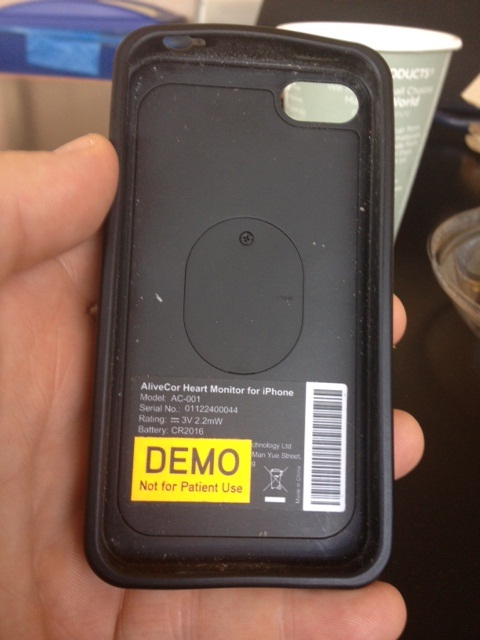
Inside of My Demo
AliveCor iPhone Case
Note: no wires.
The device uses a simple 3.0V CR2016 battery to operate.  It does NOT require the Bluetooth option on the iPhone to be enabled to function properly and therefore does not interfere with handsfree operation of the phone while driving a Bluetooth-enabled car.  The software did not appear to interfere with any other applications on my phone.


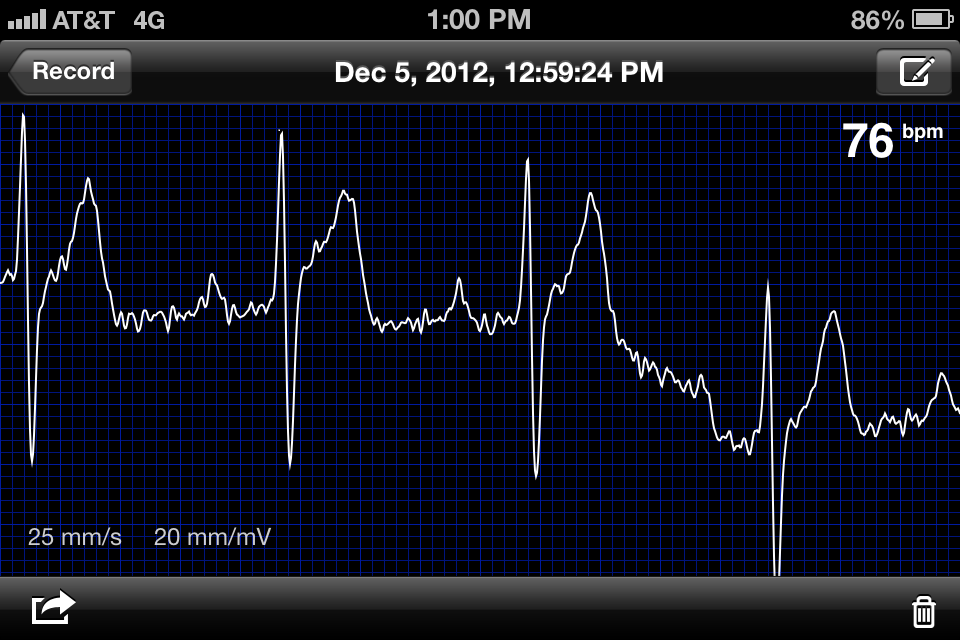
My unretouched ECG recorded with my hands
today (yep 1st degree AV block!)
 Signal quality was pretty good but is subjected to small amounts of baseline noise and drift if the device is not held still and person's hands were not warm and moist.  Adding a bit of alcohol to the finger tips greatly improved the clarity of the signal when needed.  The device can be used in several ways: with hands grasping the electrodes on the back of the device or by placing the device directly on the skin of the chest.  I found the device worked reliably when the hands were used to record the EKG but placement of the device on the chest occassionally failed to record the ECG signal because of less-reliable contact if the skin was not prepped first.  Skin skin prep with alcohol seemed to solve this short-coming.

Lead I of the standard EKG was recorded with the left and right hand holding the device with the left and right hand fingertips touching the electrodes on the back of the case.  It was important to hold the device with the iPhone's round button to the right to assure the device did not record an inverted lead I.

Options for sending tracings (beta)
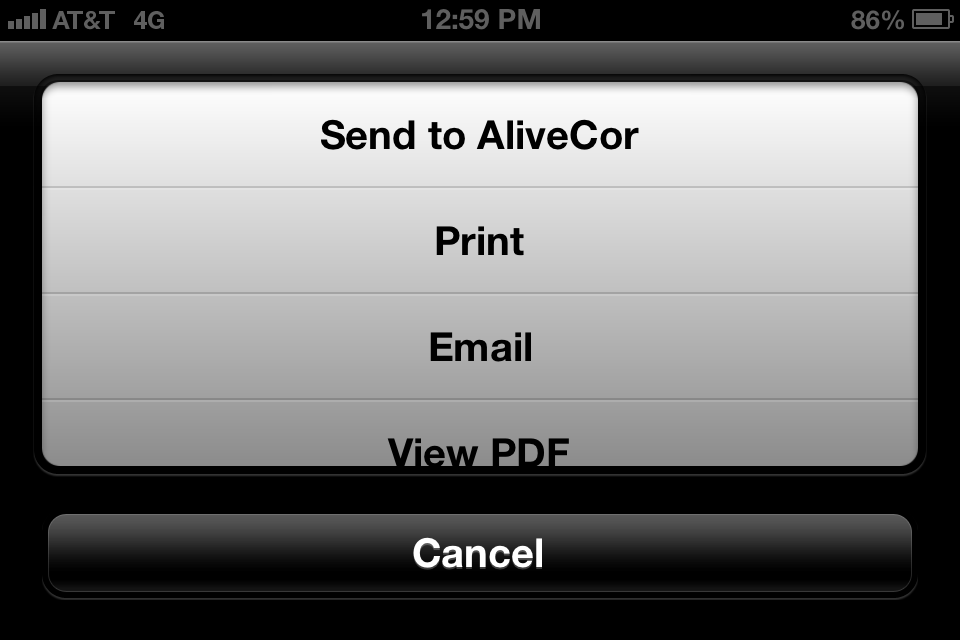
While the images recorded by the device are not easily incorporated into an EMR (at least for now), the device can upload the tracings to AliveCor's server for web-browsing, create Adobe pdf images for viewing, or send those pdf images to any email address worldwide in seconds.  It also can detect local wireless Apple printers automatically to print the tracings (though I did not test this feature).  Finally, tracings were stored with date and time stamps for easy recall on an internal database that held plenty of tracings easily on my iPhone 4S.  I found its greatest weakness was requiring that patient name and demographic information be entered manually.  Trust me: dialing back to a 1929 birthdate using the canned iPhone date function was too time-consuming.  Hopefully direct data entry of dates will be allowed in future software upgrades.

Physician Reactions

Without exception, every physician I showed this device recognized this device as a compliment to the doctor's stethoscope.  It was a uniform hit as they gazed in amazement at the device's ability to record their real-time ECG.  I found this device was capable of instantly differentiating the irregular rhythm of atrial fibrillation from the irregular rhythm caused by premature atrial or premature ventricular beats or even atrial flutter with variable AV conduction.  Some care was required to get noise-free tracings or to obtain the appropriate EKG vector on the chest with which to identify lower-amplitude atrial arrhythmias.  But most limb leads can be replicated by the device (hold the R electrode with the hand and apply the left electrode to the knee to see lead II, for instance), or angle the leads in different directions on the patient's chest to obtain a new QRS vector.  (Obviously, the angle the electrodes were placed on the chest to acquire a particular limb lead requires some rudimentary knowledge of ECG basics.)

Patient Reactions

Perhaps the most interesting aspect of this device is what happened when it is placed in the hands of patients and friends unfamiliar with ECG tracings.  Their first reaction as they sit transfixed at their own ECG tracing dancing across the screen is "Cool! .... But what does it MEAN?"  Then comes "Am I okay?"  And then of course when tracings are compared between friends: "Why is my heart rate so much faster/slower than his/hers?" Or you might hear:  "Man,  I'm out of shape!"  And if the device occasionally had difficulty calculating the heart rate from a noisy tracing, three little dashes would appear instead, leading the person to ask, "Does this mean I'm dead?"  Any one of these reactions could came from generally healthy people who have never had a major medical problem.

What was more interesting to me was the nuanced reaction I noticed from patients who had had a complex medical history before but were seeing this device outside a medical facility for the first time.  When they encountered this device in a social setting, it was common that these patients refused to have their tracing performed "for fun" for fear they might be sent packing to the nearest medical establishment.  IT became immediately clear that discretion should be exercised if the device is to be passed about at cocktail parties.  (Yes, doctor, not everyone wants to see your cool gizmo.)  Hence, it appears that deploying this device on the general public has some challenges ahead, but I suspect it will come: gradually at first, then more generally.  It is clear that this really does take an understanding of ECGs to use effectively, so doctors (or techs) familiar with ECGs will have to be involved.  Liability and responsibility for reading remains a thorny issue one the device is released to the public.  I suspect these are relatively easy issues to resolve for AliveCor going forward.

Still, for doctors and medically-savvy patients, this device is a game-changer.  The number of ECG tracings obtained in clinics will probably diminish one day as this device enjoys a wider distribution amongst physicians since it doesn't require a special technician or equipment to obtain much of the information doctors need to manage their arrhythmia patients.  But caution with this single lead ECG device should be maintained, too.  Because multiple ECG leads are not collected simultaneously, the device could miss the subtle findings of a heart attack in locations remote from the there the single tracing is collected by the device.  Still, for routine rhythm analysis, this device has huge potential for time-savings, practical rhythm interpretation, and maybe even the potential to provide for considerable technical health care cost savings.

-Wes

PS: I have no commercial interest in AliveCor (darn it).

The AliveCor iPhone ECG Case website