Wednesday, December 05, 2012

Doctors' 2012 33% Tax Hidden Tax Hike

Physicians were the subject of a 33% tax hike that most of them weren't even aware they received this year. 

That's right.   Thirty-three percent. 

Couched as "only five additional dollars each month" by the government, it passed because doctors don't make the Federal Register part of their weekly reading list and because our professional lobbying organizations were either asleep at the wheel or distracted by the whole health care reform mess.

You see if you want to get more money for government programs, you should tax the "rich" doctors - the very same doctors that are enjoying (and have experienced the delays in payment caused by) the joys of the annual congressional cat-and-mouse game of a threatened 30% pay cut wrapped up in the fiscal cliff negotiations.  (Don't worry docs, *wink wink* it really won't happen).

The "tax" I'm speaking of?  Why it's the new $731 DEA registration fee.

Until 2011, the three-year fee was $551.  Now it's $731.

You do the math.

And why were the fees against doctors increased?

Because the DEA needed more money.  According to the FDA Law blog, the DEA cited a number of factors justifying the fee increase including:
•Expanding the use of Tactical Diversion Squads comprised of DEA diversion investigators and special agents, state and local law enforcement and regulatory officers conducting criminal investigations;

•Increased scheduled registrant investigations and inspections;

•Increased drug scheduling actions;

•Responding to the expanding number of synthetic substances such as synthetic cannabinoids and synthetic cathinones; and

•Establishing and maintaining information technology systems for registrants.

That's right, in addition to paying ever-higher taxes, licensure fees, credentialing and continuing education fees, doctors are footing a larger and larger tab of the nation's drug war while simultaneously trying to fight it on the front lines.

Brilliant.

And people wonder why doctors are burnt out and fed up.

-Wes

PS: For more excuses captivated reading, visit http://www.deadiversion.usdoj.gov/


Monday, December 03, 2012

On Folding

Every surgeon has been there at some time in their career.

It's a horrible, exhausting feeling.

Yet one we all must come to grips with: knowing when to stop.

There you are, six hours into a case, legs rubbery, mind racing, and barely conscious of the world outside the narrow view of the operative field. A life, literally in your hands, asleep now, but hoping (with you) for the best of outcomes on this last try.

"Maybe if I just..." you think, and a new idea is tried to no avail.

"Now, let's look at that again," you ask your techs. "Which electrogram's earlier? That one is CLEARLY earlier...right?" as you try to convince yourself that another choice is better. "What about here?" You go back and recheck once more, just to be sure...

So you do.

And it's still a dangerous spot to burn.

"Maybe it's on the left side?" So you cross to the left side and repeat the process. Everything maps back to the spot your dreaded before.

"Maybe if I give just a little energy here...." You hold your breath.

No effect.

"But if I burn here, I risk giving the patient a pacemaker. We never talked about a pacemaker," you think.

Yet the tachycardia persists, as if laughing at you and your inability to locate its origin.

* Bruuuuhaaaahhaaaahhaaaa... *

"Bastard!" you think. "I can get this!"

So you map above, below, left and right, forward and back...

* Bruuuuhaaaahhaaaahhaaaa... *

Like stubborn mule, you fail to give in. Again.

And again...

Until finally...

... you quit. A white flag raised. It beat you. Yes, you lost.

The supporting team with you, ever helpful, feels the patient's loss with you. They are relieved, though, for a pacemaker will not be in the offing. Like you, they know there will be another day, another arrhythmia: another victory to quell the sting of this defeat.

And while the Defeated hangs his head low to talk to the family, you then realize the the family is just as exhausted and concerned as you.  They thank you for trying.  They understand.

That's when you know you did the right thing.

-Wes

Sunday, December 02, 2012

To Dream the Impossible Dream


To dream the impossible dream
To fight the unbeatable foe
To bear with unbearable sorrow
To run where the brave dare not go

To right the unrightable wrong
To love pure and chaste from afar
To try when your arms are too weary
To reach the unreachable star

This is my quest, to follow that star
No matter how hopeless, no matter how far...

"The Impossible Dream" from the play "Man of La Mancha"
The transformation has arrived: welcome Physician Leaders one and all! We are health care's future!

Our overriding mantra: "Patients first."

We are about quality. We are about safety. We are about patient satisfaction. We are about leadership, mentorship, inspiration. We are about the feel-good. These principles are how successful companies succeed.  We are a team.

There is no use in resisting the transformation. It is here.

It is us.

So smile. Pitch in. Make it our own. Invest in the future. Teach. Research. Educate. Take call. Produce.

And enjoy the meetings, the flip charts, the consultants, the checklists.

All of them.

So much to do, so little time.  There are difficult times ahead, but we can make it work when others can't because we're the new generation of Leaders.  We know medicine.  We get input.  We involve the staff.  We'll make the tough choices.  We keep it upbeat.  Always upbeat.

March on, dear Leader!

This is our future, our patients' future.

Now, get back to work, will you?   And don't forget the meeting at 7 am.

You rock. 

See you then!

Oh, and say "hi" to your kids for me.

Ciao!

-Wes

Thursday, November 29, 2012

The Currency of the Future

From this morning's Wall Street Journal:

Medtronic says federal rules prohibit giving Ms. Hubbard's data to anyone but her doctor and hospital. "Our customers are physicians and hospitals," said Elizabeth Hoff, general manager of Medtronic's data business. Medtronic would need regulatory approval to give patients the data, she said. It hasn't sought approval because "we don't have this massive demand."

. . .

Some legal experts say the 1996 U.S. law governing patient access to their health files—HIPAA, or the Health Insurance Portability and Accountability Act—hasn't kept up with technology. The law gives patients the right to access information held by doctors and hospitals. However, the raw data gathered by an implant isn't held by a doctor or a hospital: Typically it goes directly to the device maker, which provides a summary report to the doctor. Because of this, the raw data falls outside the scope of HIPAA's patient-access requirements. In addition, Medtronic said, business agreements with doctors and hospitals restrict it to relaying information only to them.
"Is the device itself a depository for medical records?" said Paul C. Zei, a cardiologist at Stanford University Medical Center with a patient, Hugo Campos, who wants the same access to his cardiac-device data as the doctor gets. "Or is it part of the patient, and an extension of vital signs that we download into a medical chart?"
Gee.  Someone saw this coming years ago. 

But as patients pay for more and more of their health care, companies better remember who's really their customer.  Furthermore. patients should have access rights to all of their medical information, irrespective of where it resides.

-Wes

Tuesday, November 27, 2012

Politics in Major Medical Journals

Medical journals aren't what they used to be.  Just ten short years ago, medical journals were places to report scientific study, interesting cases or clinical updates and reviews.  They were, for the most part, about science and discovery. 

Now, there is a dramatic shift of scientific content in our journals to politics and policy.

No where is this more evident than the much-heralded and widely read New England Journal of Medicine.  (The Journal of the American Medical Association (JAMA) is not too far behind either.)

As an example, I was struck by this week's New England Journal of Medicine article titles:

"Use of ADHD Medication and Criminality" (an observational study)
"Mammography Screening for Breast Cancer" (complete with poll)
"The Future of Obamacare" (Perspective)
"Lessons from Sandy" (Perspective)
"Drug Policy for an Aging Population" (Perspective)
"Intravenous Immune Globulin — How Does It Work?" (Review article)
I decided to look just 10 short years ago and compare what article titles existed in the New England Journal of Medicine from the week of November 21, 2002.  Here are the article titles from that issue:
"Transient Ischemic Attacks" (Perspective)
"A Controlled Trial of a Human Papillomavirus Type 16 Vaccine"
"Glycoprotein-D–Adjuvant Vaccine to Prevent Genital Herpes"
"Extended Transthoracic Resection Compared with Limited Transhiatal Resection for Adenocarcinoma of the Esophagus"
"Normal Vision despite Narrowing of the Optic Canal in Fibrous Dysplasia"
"Specialty of Ambulatory Care Physicians and Mortality among Elderly Patients after Myocardial Infarction"
Perhaps the shift from science to politics in our major medical journals is an brief aberration, but I don't think so.  I have noticed this phenomenon and expressed my concerns in 2006.  The trend has only continued to grow: even our presidential candidates for the last election had postition papers published in the New England Journal of Medicine just before the election.

Seriously?

But the reality of politics and policy determining how medicine is practiced remains front-stage in medicine as cost and new structural concerns dominate health care.  Medical questions, research and inquiry are increasingly second fiddle to health care political white papers.  Adding to this lack of  reporting of scientific discovery in major medical journals are the multiple rapid-fire, diverse portals for publication that exist for doctors and researchers these days thanks to the explosion of specialty publications and the Internet's impact on information delivery to doctors.  As a result, there is a fierce media race underway to keep doctors eyes focused on these antiquated journals' content as doctors increasingly migrate away from print to electronic content.  

If a major scientific journal like the New England Journal of Medicine decides to focus on policy instead of medicine, I suppose that's okay.  That is their prerogative.  But perhaps now that politics and policy have grown to such an extent in a major medical journal like the New England Journal of Medicine, the editorial board of this journal (and the others of similar political bents) should consider changing their name from the New England Journal of Medicine to the New England Journal of Perspectives.

At least then our young doctors of tomorrow will fully comprehend what they're getting.

-Wes


Subcutaneous ICD: A Lesson in FDA Approval

This morning, a nice article in the Boston Globe appeared on Boston Scientific's subcutaneous implantable cardiac defibrillator (S-ICD)  that recently received FDA approval.  It was a fairly balanced article, one that touched ever-so-briefly on the pros and cons of a subcutaneous device to treat life-threatening cardiac arrhythmias using a medical device that does not require an internal wire inside the heart, but rather a sensing and shocking lead that is tunneled accross the chest under the skin (see my prior post on the details here). 

But what I found most interesting in the article was the patient who was recommended for the device: a dialysis patient, was a patient who was specifically excluded from the FDA trials to approve the device (specifically, patients with GFR < 29 were excluded). 

If you are a company that wants to get a device approved by the FDA, you want the best chances of having the fewest complications possible with new gadgets in medicine.  Because sick dialysis patients have a way of having more complications with device implants, and the device companies know this, they are not included in trials to get a device approved.  

Those of us who deal with ICDs in dialysis patients recognize the problems when ICD leads and dialysis catheters co-exist in the same vascular tree: the odds of infecting the ICD lead system is extraordinarily high.  In fact, the overall mortality advantage of ICDs in dialysis patients is much less than patients not on dialysis.  For this clinical circumstance, subcutaneous ICDs would seem to clearly be the better choice.

But dialysis patients are beset by another problem: challenges with potassium level regulation.  Periods of hyperkalemia are quite common in dialysis patients and hyperkalemia commonly causes severe bradycardia.  In these patients, pacing could maintain a patient's heart rate until their dialysis could be adjusted to lower their potassium and thereby improve their cardiac function.  Subcutaneous ICDs do not have pacing capabilities, however.

So the reality of the effectiveness of  the subcutaneous ICD to prolong life is uncertain in dialysis patients.  This theory has never been tested - we just tend to think it makes intuitive sense to apply a new technology when other medical device choices are not perfect either.

The subcutaneous ICD FDA approval process is a good example of how clinical dogma spreads amongst doctors and patients without any proof of a device's effectiveness in some subselected patient populations.  A new technology is approved by the FDA and receives a governmental stamp of approval.  Doctors, then, serve as well-meaning spokespersons.  The media gushes over the latest and greatest technology.  And sales explode...

... all while some patients in whom the device is deployed doesn't realize the safety and efficancy of that device was never tested in their particular clinical circumstance.

We should remember that exclusion criteria in FDA clinical trials are important.  They tell us who might  and who might not benefit from a new technology.  Too often we forget this. 

And so does the FDA.

-Wes


Saturday, November 24, 2012

Slow Medicine

Medicine is changing.

We are moving from Mom-and-Pop medicine to Big Box corporate machine medicine.

We are moving from innovation to rote checklists.

We are moving from tangible slow paper to imperceptible high-speed electrons.

We are moving from manuscripts to sound bites.

We are moving from teaching points to talking points.

We are moving from original research to corporate research.

We are moving from the bedside to the desktop.

We are moving from patience to impatience.

We are moving from length of illness to length of stay.

We touch less, view more from a distance.

We are becoming risk-averse, safety-conscious, feel-good salesmen of the impossible as we follow more and lead less.


Like food, we need a slow movement in medicine:

Basic.

Organic.

Local.

Personal.

Real.

-Wes


Class of 2016: Before I Die, I Want To...

Before the holiday rush this Thanksgiving weekend, it's nice for our youth to remind us what really matters:


,,, and there's not a single Black Friday deal on the list.

-Wes

Tuesday, November 20, 2012

Giving Thanks for the Creamed Onions

I met her nearly thirty years ago: a older woman with a thick Bostonian accent. Opinionated. Forthright. Not afraid to share her thoughts. That’s the way it was. It was, after all, her house.

We met at the small wooden kitchen table that used the wall-hung telephone as its centerpiece and pierced the air with the loudest ring I’d ever heard. (I later learned her husband had been an infantryman in the Korean war who had heard his share of mortars.)

She had fixed dinner for the family – all of whom were arriving to meet her daughter’s new boyfriend: a small salad, ham, yellow mustard, mashed potatoes, and creamed onions.

The latter, I was to discover, was her personal favorite. Any gathering of family importance had them; the small iridescent pearls of tiny onions resting on cream-based sauce carefully created from a flour roux and can of the pearly whites. If it weren’t for her enthusiasm, I probably could have passed on them, but as it was, I had no choice but to place them on my plate. That’s the way she was.

A few Thanksgivings ago I sat with her, her eyes more sunken, her temples more defined. Her legs were thinner than I had remembered them just months before, and her voice was softer. Her graciousness, however, remained. She arrived bundled in her nicest jacket, her gait assisted by a quad cane and her husband’s gentle lift only a day after being discharged from the hospital. She smiled at the cacophony that greeted her. Folding chairs were pushed aside. She was led to a prime location to supervise the kitchen, a more stable chair arranged. The matriarch had arrived.

She saw that her son’s house was as hers had been this time of year: abuzz with activity and controlled chaos. Within the hustle and the bustle of meal preparation and family photos, came a phone call. Her daughter answered. Amongst the chatter a recipe was mentioned. It seems her granddaughter, unable to attend the local meal, had called to share a tradition involving small onions in her home. I saw the tiniest of smiles rise from her lips. For a brief moment the tumor didn’t matter, her pain forgotten as the recipe was recited.

Before long the meal materialized. Turkey, oyster stuffing, potatoes, green bean casserole, and there, hidden in the corner hidden in a warming dish, her creamed onions. More food than could ever be consumed. As we all waited our turn, her husband made her plate with tiny flecks of turkey, a strand or two of green bean, a half teaspoon of sweet and mashed potatoes, and a single creamed onion.

Her husband said the grace. “Bless us, o’ Lord, and these thy gifts which we are about to receive…” I stared at our plates and then at hers. The tiny onion, there alone. Her eyes closed and soft hands folded. I wondered what she was thinking. What does one think at their last Thanksgiving? I hated myself for wondering.

Really, it didn’t matter. It was about the here and now that mattered. “Life is what happens when you’re making other plans,” my wife still reminds me. And sure enough, despite a week and a half of food intolerance and dehydration, she ate it all.

Even the creamed onion.

And for that, we were all incredibly grateful.

-Wes

P.S.  Here's wishing each of you the Happiest of Thanksgivings. 


Monday, November 19, 2012

Hacked Heart Rate Monitor Plays Music to Your Heart Rate

Now we can see what MIT students do in their spare time (video). 

Heh.  Looks like a heart rate of about 120 is about right.

-Wes


How Some States Are Disrupting the Health Care Cost Status Quo

In Oklahoma, a startling example of how price transparency could disrupt health care bureaucracies as we know them:


No wonder Illinois is a Certificate-of-Need state - it prevents any real attempt at disrupting the status quo.  Still, as direct costs to patients rise, I predict this model will become more common.

-Wes

h/t: Glenn Reynolds

Sunday, November 18, 2012

The Encounter


They sat together, staring down at their feet not sure what to say.

One was a silent war hero from the French Resistance, the other his doctor.

It was a chance encounter.  He, supporting his wife as she checked in to the orthopedic clinic, the other, there himself for the first time as patient.  For each, as life, it was unexpected.

They sat smiling, reflecting on the irony of it all.

Their story together, while brief at first, was rich.  On a trip back to his homeland of France, he had brought down a 747 single-handedly as his defibrillator fired repeatedly.  The event both humbled and embarrassed his doctor whose hubris had assured him of the effectiveness of a prior ablation, only to awaken to the epiphany that arrhythmias, like life, are difficult to predict.  An AV junction ablation would be required to quell another unexpected arrhythmic onslaught.   Both realized they were doing the best they could at the time.  Neither were in control.  But both had prevailed together.  And through their long history together, more stories were told - secret, personal stories - as they developed a deep sense of admiration and appreciation for the other.  But the stories were always told on the doctors' turf.

Until now.

There they were again: younger doctor joining the war hero once more as equals. 

Fighting the fight on the same field now.  Quietly sitting. Staring. Smiling.

Together.


-Wes


Friday, November 16, 2012

Bzzzzaaaap

Imagine: doctors everywhere using cellphones. 

Better yet, imagine doctors using cellphones to help care for patients.

It's a beautiful thing, really: efficient, timely, graphical.  Doctors, like most people, love the convenience and utility of their smartphones.

But doctors aren't like normal people.  We are carefully regulated.  We must abide by health care privacy rules and so, too, must the hospitals where we work.  So communications about work, be it text messaging, e-mail, SMS messaging - all must be HIPAA compliant.

But an interesting collision of doctor's privacy rights and patient's privacy rights can occur in our new world of mobile health care computing, thanks to a kill switch present inside Apple's iPhone and cloud computing, especially if doctors were to use an EMR app on their cell phone.

Doctors are well advised to understand how their personal smartphone and its information could be affected by corporate and patient security concerns. 

Bzzzzaaaap.

Caveat emptor.  Not only might your work place data disappear, but also your personal data, too. 

-Wes

Friday's Hearts In the News

Hearts and their arrhythmias are everywhere, and no where more than the news this week:
  1. Jim Harbaugh, the NFL's reigning Coach of the Year and the face of the 49ers' resurgent franchise, had what the team termed a "minor procedure" performed at Stanford Hospital on Thursday - my bet: cardioversion.
  2. 5-hour energy drinks under federal investigation for possible proarrhythmia - reporters decide to test the theory on one of their own:  "In an unscientific test at Florida Hospital Tampa’s Pepin Heart Institute, we had photographer Taylor Vinson drink one 5-hour Energy drink..." 
  3. Jeff Green of the Boston Celtics - is back from repair of his aortic aneurism.
  4. Who knew?  It seems there are concerns that Pittsburg Steelers quarterback Ben Roethlisberger’s rib dislocation could puncture his aorta.
I know.  Nothing profound here but, hey, it's Friday!

-Wes

Tuesday, November 13, 2012

Seven

It's hard to believe, but seven years ago this day, I wrote this blog's first entry. 

It has been interesting for me to reflect on what I've written here.  Over 3100 posts - some good, some not-so-good - reside here.  Some day they will be succumb to spam bots and the electronic ether, never to be seen again.  No matter.

This blog has evolved from a marketing mission for my t-shirt website to a place for creative reflection about the decline of my father's health and his eventual death, to an even more recent reflection of my perception of health care's effects on doctors and nurses. It has been silly at times, but remarkably heartfelt at others.  It has covered wide range of topics - some based on news stories, others based on one guy's life experiences.  I have nurtured it, worshiped it, and disliked it at different times in its relatively short career.  But I realize now what it's been for me most: my inexpensive therapist.

Here I can get lost in nuance and subtlety.  Here I can describe my joys and frustrations with health care and our profession.  Here I can laugh at the ridiculous, the mundane, the silly.  Here I can mourn a colleague, an experience, or family member's death.  This blog has connected me with people I would never have met while being one of the more isolated and personal activities I pursue. 

New content for this blog, at least like I want it to be, is getting harder for me to come by.  Perhaps this is why I find I'm writing less and less.  Perhaps it's because what I want to say, I've said before.  Perhaps it's because I don't always want to sound like the sky is falling in health care, but there remains so much to be concerned about in our new era of health care going forward.  Feel-good story lines that ignore reality in favor of an agenda are dangerous.  Increasingly, doctors are having a hard time behaving as Walmart greeters, ever pleasant and ever smiling as we are the manipulated tools of the trade.  I'm not a big fan of fiction.

My writing, like all of us as we mature, is changing.  I find now that I like to discuss the psychology and physiology of what's happening to doctors in our new, changing health care world.  I find I like to discuss the the story-behind-the-story or the Bigger Picture more that my take on a news story or study result.  (Believe me, it's easy to criticise studies yet far harder to perform them).  And yes, I still enjoy teaching about an EKG finding or two.   Still, much of what gets written here has felt like I'm fencing at windmills as forces far more influential in health care move forward.  As such, my idealistic goal of influence has adapted to a goal of realism.  Time is real.  So are the kids.  So are work demands.  As a result, blogging suffers.

Reality.

Life's priorities change.  My wife, kids, family, friends, dog and workplace will forever supersede this space.  Life is incredibly short.  Yet I find I still cherish my precious time behind the keyboard when I can take a moment to reflect on issues that concern me or excite me about health care and this thing called being a doctor.  Yes, it is harder now.  But this therapeutic blog continues to teach me one thing I never imagined as a math, science, and engineering nerd who later became physician:

I still really enjoy the creative process of writing.

-Wes

Saturday, November 10, 2012

T-Shirts That Matter

DefibrillatorGI / Crohns / Ulcerative ColitisSurgery / AmputeesDiabetesPainChemotherapy Hair LossObsessive CompulsivesCancer T-shirtsPacemakers / DefibrillatorsAttention Deficit DisorderThis Does Not Mean Too many pills!

Mouse over and click to choose a shirt
Conventional wisdom says if illness has to happen at all, illness should be overcome, fixed, and left behind. We have few role models and few realistic stories about living with a less-than-perfect body, or less-than-perfect health. How we choose to deal with the cards that life gives us is what our t-shirt site, MedTees.com is all about.

This year, we will be donating 100% of all proceeds we have received from the sales of shirts from 2012 to the various charities that each shirt design supports.  A partial list of charities we support can be found here.

So consider buying a shirt or help spread the word by "liking" us on Facebook or re-tweeting this post.

Thank you and happy holidays!

Diane and Wes Fisher

Thursday, November 08, 2012

On Being Bombarded

I have used the Electronic Medical Record (specifically EPIC) since 2004.  I have grown accustomed to its nuances, benefits and quirks.  There are parts about it I really like.  There are parts of it I'd like to do without but accept that they are necessary evils in our current health care climate.  I know that there will always be parts of any modified computer system that will suffer growing pains.  For any new and adapting technology this is understandable. 

But there is a little-appreciated issue that I see brewing: doctors (and maybe even patients) are quietly being buried by electronic information overload.  As a result, I believe doctors are being placed at an increased liability risk.

Let me explain.

In the past era of medicine, nothing happened without a doctor's order.  Nothing.  If you wanted a medication, lab test, invasive procedure, opportunity to participate in rehab classes - anything - you needed a doctor's order.   For the years of paper records and independent doctors offices, this work flow assured that doctors (1) knew what was happening with their patients, (2) saw their patients, (3) prescribed the proper therapy, and (4) assumed the risk for the intervention or treatment prescribed.  Information proceeded in a logical linear fashion and the doctor was always at the head of the information line.

But we are no longer in the old days in medicine.  We are in the era of near-instantaneous information flow, multi-directional electronic communication, and geographically disparate order entry by "caregivers," (think nurses, nurse practitioners, advanced practice nurses, clinic operators, registrars, etc.) who help us take messages, continue care, and order things.  In this electronic process, messages are no longer passed from just one individual to another, but rather are passed to two, three, four, or more individuals simultaneously from any one of several different clinical locations - some of which might be many miles apart.  There is an incredible amplifying effect of all of these messages, orders, and notifications -- so much so that even the most tech-savvy doctors are struggling to keep up.  In fact, it is not uncommon for a doctor these days to work for two hours on a procedure and return to the computer to find twenty or thirty new notifications, e-mails, or orders have been deposited there.  Head back in for the next case and then another thirty items appear.  Pretty soon, it's an avalanche of items.  Worse: doctors must click on each one of these notifications individually to "verify" he or she has looked at each and every single one.

Doctors understand that the reason we have to click on all these orders is because (a) no one gets paid in our system unless a doctor orders whatever-it-is and (b) someone has to be the fall guy if there's a problem with a nurse, medical assistant, or lab technician that "orders" something on behalf of the physician.  There is even a trend to auto-order things (like a pneumovax vaccine, for instance) that assure the hospital maintains excellent public reporting metrics whether the doctor ordered them or not with the order later appearing in our inbox to be clicked. 

But worst of all are the silent notifications sent from fellow physician colleagues buried amongst the other notifications. They tell of an important story, one that needs fairly urgent attention, but because people no longer pick up the phone, are not immediately noticed or highlighted. It's like a landmine sitting in a doctor's inbox waiting to be stumbled upon.

* Click* *Click* *Click* * Click* *Click* *Boom*

With all these people and devices ordering and sending, the limited number of doctors out there are being bombarded from multiple directions.   It is getting harder to keep up these days.  Orders and notices come to us on names we don't recognize or have been long forgotten.  (Computers don't forget that you saw the patient eight years ago).  And once an order is placed and acted upon without our knowledge these days, we click on the order to clear our notices and thereby assume all the legal risk for the care. 

The legal buck still ultimately stops with us.

Doctors need to speak up about this problem.  We are not in the old days any longer.  We are in the fast-paced, electronic medical record era where things happen (literally) at the speed of light.  We need the electronic medical record companies, payors, hospitals and legal community to come together to help us find a solution to this current infomation overload crisis that maintains patient safety and improves efficiencies while limiting legal risks to the doctors who are doing their very best just to keep up.

-Wes

Tuesday, November 06, 2012

Why You Need to Vote Today

Love it or hate it, this is why you need to vote today:

The U.S. Health Care System

-Wes

P.S. And for Illinois voters, it's the first time a real live doctor could be elected to the Illinois legislature.

Monday, November 05, 2012

Recovery Mode

It is hard to explain what Recovery Mode feels like to doctors.

Recovery Mode is what every doctor experiences after a rough night on call, a stressful case, a phrenetic day or week of constant clinical ups and downs.

No matter what the cause, it inevitably takes a while to recover.

And as I get older, I reflect on how Recovery Mode has impacted me and my family more.  Perhaps it is the years of entering and exiting Recovery Mode.  Or maybe, it's because with age, it's harder to rebound, I'm not sure.  But usually, there is relief that you've made it through another test of your endurance, both physically and emotionally when you leave Recovery Mode and reenter a more normal work pattern.

Recovery Mode should not be confused with doctor burnout.  Rather, Recovery Mode it is a natural and expected consequence of our job that involves sleep deprivation, tough decisions, and the high levels of attention to more and more details required of doctors that are often proscribed by others.  Inevitably, it takes time to recover to baseline after an unsual amount of these "normal" events.

But the effects of Recovery Mode are real.  I know it.  The kids know it.  So does my wife. 

And writing here means there's hope.

-Wes


Thursday, November 01, 2012

Skynet: When the EMR Isn't Enough

It was supposed to be an initative to implement the Electronic Medical Record. 

Instead, it is quickly morphing to Skynet. 

Like a black hole, everything goes in to Skynet now.  Nothing escapes its gravitational pull. 

Schedules, supply chains, staffing grids, calendars, medicines, pharmacies, insurance plans, pay for performance initiatives, quality measures, door-to-balloon times, billing codes, procedure codes, everything. 

Ever-expanding. Spreading. Consuming. 

All left unchecked.

The office computer was used to be Skynet's reach, but it quickly expanded to the home computer and the cell phone, provided you're willing to have the cell phone's memory swiped clean if you leave Skynet's grasp.  Personal schedules, too, have fallen victim to Skynet as everyone's whereabouts are tracked for all to see in the name of staffing and operating efficiency.  

And this week, "personalized medicine" moved a step closer as the complete DNA material of more than 1,000 people from 14 population groups in Europe, Africa, East Asia and the Americas were sequenced so they may serve as a standard reference against which doctors could one day compare a patient's genome profile, even during a routine checkup.

Yes, more fodder for Skynet.

Eerie.

Kind of makes you wonder when we'll be terminated, doesn't it?

-Wes

Wednesday, October 31, 2012

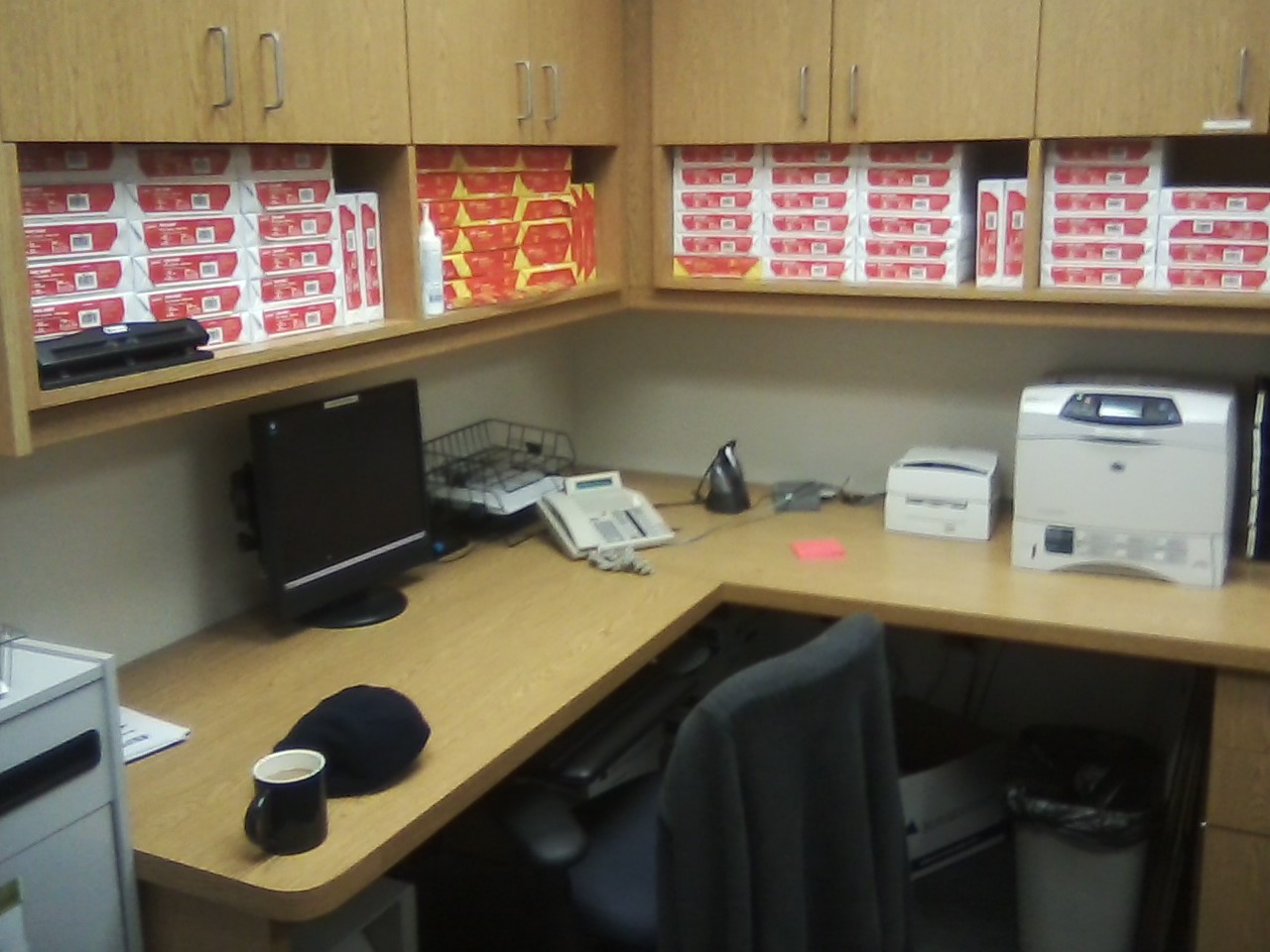
Today's Paperless Medical Office

Today's "Paperless" Medical Office
Oh, the irony...

-Wes

h/t: A faithful follower of this blog.

Happy Halloween!

From our house to yours:

The Open-Heart-Gone-Bad Pumpkin

Close-up image of the gourd heart, pacemaker, and retracted (gourd-fragment) fat

-Wes

Thursday, October 25, 2012

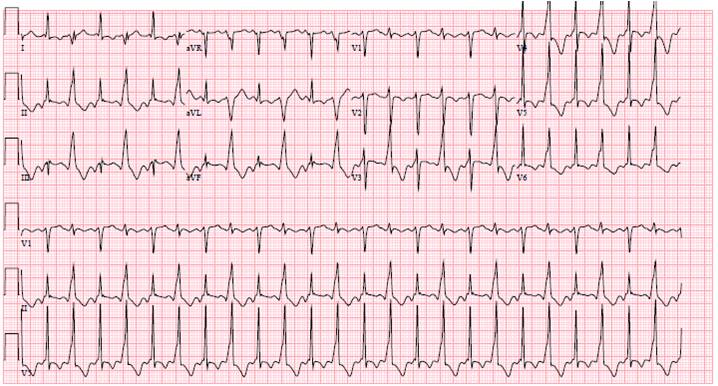
EKG Du Jour #29: Tangoing with Two

"Dr. Fisher, there's this middle-aged person in the Emergency Room with a funny EKG who's short of breath and pretty tachycardic. Would you mind looking at it?"

"No," I said, taking a moment from the surgery I was performing.   Here's what I saw:

Click image to enlarge

"Hmmm. Boy that's strange. Did you ... ?"

What did I ask? How would you sort this EKG out?

-Wes

Construction of a Blog Post

How a blog post is constructed here, illustrated nicely by notes discovered in my lab coat pocket this morning:


Delightfully Old School.

Still, I can't type and sometimes I think English is my second language, so thanks for tolerating all of my typos and grammatical errors through the years.

-Wes

Wednesday, October 24, 2012

The Limits of Lifestyle Intervention

Diet and exercise: they were supposed to be the answer to all that ails America's obesity and health care cost problem.  

Signs of this Utopian vision are everywhere.  From entire government departments encouraging healthy lifestyles through fitness, sports and nutrition, government websites that encourage "healthy lifestyles," and entire community efforts to partner with health care organizations to fight obesity with the hope of cutting health care costs.

What if, believe it or not, when it comes to people with Type II diabetes, diet and exercise don't affect the incidence of heart attack, stroke, or hospital admission for angina or even the incidence of death?

Suddenly, all health care cost savings bets are off.  Suddenly, we have to re-tool, re-think our approach, understand and appreciate the limitation of lifestyle interventions to alter peoples' medical destiny.  Suddenly we have to come to grips with a the reality that weight loss and exercise won't affect outcomes in certain patients.  Suddenly, there is a sad reality that patients might note be able to affect their insurance premiums by enrolling in diet and exercise classes after all.

These thoughts are so disruptive to our most basic "healthy lifestyle" mantra that few can fathom such a situation.  Nor would any members of the ever-beauty-and-weight-conscious main stream media be likely to report such a finding if it came to pass.

And yet, that is exactly what has happened. 

The Look AHEAD trial studied 5145 adults with type 2 diabetes who had a body mass index (BMI) > 25.  The purpose of the study was to compare the incidence of  nonfatal myocardial infarction (heart attack), nonfatal stroke, death, or hospitalization for angina between diabetics who received a rigourous weight loss and exercise program with education to just an educational approach alone.   Interestingly, the study failed to show any effect of weight loss and exercise over simple education about the disease in the incidence of these "macrovascular" endpoints.  In fact, the study was stopped early.

So disturbing were these findings to our basic understanding of disease prevention that the principle investigator recently appeared on Medscape in print and in video format to reassure the physician community:  "I can tell you from the outset that we were successful."

And yet, they were not: they did not affect the indicence of stroke, heart attack, death, or admission to a hospital for angina in overweight Type II diabetic patients one bit, even after 11 years of trying.

You see, it is uncomfortable to sit with the reality that exercise and fitness might not be as helpful as we had hoped at altering certain health care outcomes.  So we ignore these trials.  We don't report them in main stream media because we don't like to feel uncomfortable with the realization that there's much we still don't know or understand about exercise and weight loss at affecting health outcomes in medicine. 

Yet there is so much to learn from trials like this BECAUSE they fly in the face of conventional wisdom.

Maybe we should stop pouring money into fitness rooms and health clubs and promote other intellectual or spiritual pursuits instead.   Maybe we should reconsider the benefits of exercise and weight loss as psychologic more than physical.  Maybe we should de-fund all those government programs set up to promote exercise and fitness as our path to health care cost-savings.

Or at the very least, we should just eat some humble pie, stop fooling ourselves, and understand the limitations of lifestyle interventions like weight loss and exercise to improve medical outcomes or to reduce health care costs in America.

But be careful. 

Saying the truth is sure to get you banned from main stream media.

-Wes

References:

1.Look AHEAD Research Group, Wing RR. Long-term effects of a lifestyle intervention on weight and cardiovascular risk factors in individuals with type 2 diabetes mellitus: four-year results of the Look AHEAD trial. Arch Intern Med. 2010;170:1566-1575. (Pubmed)


Friday, October 19, 2012

The Growing Residency Squeeze

"Dr. Fisher, I'm applying to a cardiology fellowship - could I ask you to write me a letter?"

"Sure," I said, "To whom should I address the letter?"

"Oh, don't worry about that, I'll give your administrative assistant a list of the programs."
It sounded innocent enough until thirty-five addresses were forwarded to us for delivery.

While I have written about the challenges that medical students are having obtaining residencies before, it only seems to be getting harder for some.  This is, in part, because while medical schools have increased their medical school positions by about 30%, residency slots have only increased at a much slower rate of 8%.  Worse, because of funding shortages anticipated from the new health care law, Medicare funding cuts could even mean residents might have to pay for their residency, too: 

From Marketwatch:
Just as monumental as graduation day is “Match Day,” when medical school students get sealed envelopes that tell them what city and hospital they’ll be going to for training. But advocates say the number of grads could severely outnumber the amount of residency positions by 2015 — or sooner — if hospitals don’t substantially expand the number of residency positions they offer. While medical school enrollment is on track to grow by 30% by 2016 from 2002 levels, the number of residency training positions have only grown by 8% since 2002, according to the AAMC. Even as there’s an impending doctor shortage, “We’re worried we’re going to have a group of MDs that have studied but can’t practice because they can’t find a training spot,” says Grover of the AAMC. Part of the problem is that there’s a cap on the amount of Medicare dollars that can go to residency programs that has been in place since 1997, when some health experts predicted that there was going to be an oversupply of physicians in the U.S.


About 20% of the $13 billion spent annually on training 110,000 young doctors is provided by Medicare, down from roughly 30% a decade ago, estimates Grover. If Congress doesn’t act to allow Medicare to fund a larger number of positions, hospitals may need to find additional revenue to fill the gap, and some may need to reduce the number of positions they offer, he adds. At a time when the federal government is cutting Medicare spending and some hospitals are already seeing their budgets squeezed, finding additional revenue for new training positions will be tough, says Grover. It’s even possible that graduates might soon also be asked to pay for the training — an option that some insiders say would place an unreasonable burden on already debt-laden doctors — instead of the current model where they are paid while they work at the hospitals, says John Norcini, president of the Foundation for Advancement of International Medical Education and Research: "There's a whole series of possibilities."

-Wes


Thursday, October 18, 2012

One Heck of a Halloween Cake


An Anatomical Wax Model cake based on the La Specola (Florence) museum collection of anatomical wax models from the late 18th century.

Wow.

See all the photos at Conjurer's Kitchen on Facebook.

-Wes

Smuggling Defibrillators to Save Lives

Street Scene - Mumbai, India
From The Annals of Internal Medicine doctors from the US have shown that ICDs can be safely resterilized and re-used for indigent patients in another country.  In their study, Pavri et al collected 106 ICDs with three or more years of estimated battery life from either deceased patients or patients having devices explanted because of "upgrades" or infection and implanted then in 81 patients in a single hospital in Mumbai, India.  From the Methods section of their paper:

We deleted all identifying patient information and lead information; programmed them to nonpacing mode, when possible, or lowered the outputs to the minimum possible values; turned off all sensing and therapies for ventricular tachycardia (VT) and ventricular fibrillation (VF); and deactivated all ICD alerts (auditory and vibratory). When a sufficient number of devices were collected, they were transported to India in batches. Transport was most often done by physicians (or friends and family members of physicians) who were  traveling from the United States. The devices were placed in checked-in baggage in a clear plastic bag, and 2 letters were placed in prominent view. The first letter was signed by the donating physician, stating that the devices were of no commercial value and that they were being donated for reuse in patients who could not afford such devices. The second letter was signed by the Chief Executive Officer of Holy Family Hospital, stating that the hospital was expecting the devices for donation to such patients. Contact information for all physicians was provided in the letters.

Attempts at sending explanted devices by courier or mail proved difficult; without precedent, it was simply not possible to describe the purpose and nature of the shipment to shipping authorities or to insure the contents. We finally resorted to carrying the devices during travel to India in our personal baggage, as described. Some difficulties (requiring lengthy explanations) were encountered during baggage screening and, especially, at Customs in Mumbai.
Device Resterilization Protocol in India 
Once received, the ICDs were removed from their bags and rinsed under running water. We cleaned the headers (lead ports) with pipe cleaners and inspected the seams and body for residual biological debris. We immersed the ICDs in hydrogen peroxide for 10 minutes and then in povidone-iodine for 2 minutes. They were then rinsed with running water for 2 minutes and dried with an air blower. Finally, we double-packaged the devices and sealed them with special indicator-marked paper for ethylene oxide gas sterilization in an automatic ethylene oxide machine (certified by Pest Control of India, Mumbai) at 38 °C. The protocol included 4 hours of ethylene oxide gas exposure followed by 6 hours of aeration, after which inspection confirmed that the package indicator label had changed from brown to lime green. The resterilized ICDs were aerated for at least 12 hours in an open, dry space.
The devices ultimately functioned well, but social and societal limitations caused six of 81 patients to be lost to follow-up.  No device infections occurred and three patients even received three such devices over their lifetime.

Appropriate shocks were delivered in 42% of patients. Antitachycardia pacing was delivered for ventricular tachycardia (VT) in 12.3% of patients. In total, 60.4% of the devices delivered appropriate therapy (shocks of antitachycardia pacing) in 54.3% of patients. In total, 22 patients received a second device and three patients received a third device after the initial ICD reached the elective replacement voltage. The average time before replacing a resterilized device was approximately 3.5 years.

As the authors noted, in the United States "pacemakers and ICDs are currently labeled as single use devices, and the U.S. Food and Drug Administration specifically prohibits reuse, referring to it as “an objectionable practice." The device manufacturers do not condone reuse and their warranty periods do not include it. Any complications associated with such off-label use could be grounds for legal action."

And yet, lives (and money) were saved, albeit not in the United States.

But this did not stop the critics.  In the accompanying editorial, Drs Paul Farmer and Gene Bukhman of the Harvard Medical School, suggested that the authors' efforts failed the quality test, reminding us that "Historians of medicine have shown that the gratitude of patients and their families, although not to be dismissed, is not always a reliable marker of high-quality medical care."

What the....?

Certainly such a practice is controversial, but in a world with such overwhelming medical waste that literally tons of perfectly re-useable medical equipment are discarded each month in America's hospitals, I feel these authors should be congratulated for their efforts to humanely break the status quo and forcing us to consider the obvious ethical implications of discarding life-saving, exceedingly expensive medical devices (and similar medical equipment) that could be used to help others less fortunate.

In our current global health care cost crisis, we need more innovation in the area medical areas like this, not less.

-Wes


References:

Pavri BB, Lokhandwala Y, Julkarni GV, Shah M, Kantharia BK, Mascarenhas D. ReUse of Explanted, Resterilized Implantable Cardioverter-Defibrillators: A Cohort Study. Ann of Intern Med 16 October 2012;157(8):542-54. 

Farmer P, Buckman G. Reuse of medical devices and global health equality. Ann Intern Med 2012; 157:591-593.

Computer Viruses and Bots "Rampant" on Medical Devices

From Technology Review:
In September, the Government Accountability Office issued a report warning that computerized medical devices could be vulnerable to hacking, posing a safety threat, and asked the FDA to address the issue. The GAO report focused mostly on the threat to two kinds of wireless implanted devices: implanted defibrillators and insulin pumps. The vulnerability of these devices has received widespread press attention (see "Personal Security" and "Keeping Pacemakers Safe from Hackers"), but no actual attacks on them have been reported.
Fu, who is a leader in researching the risks described in the GAO report, said those two classes of device are "a drop in the bucket": thousands of other network-connected devices used for patient care are also vulnerable to infection. "These are life-saving devices. Patients are overwhelmingly safer with them than without them. But cracks are showing," he said. (Fu was Technology Review's Innovator of the Year in 2009.)
-Wes

h/t: Instapundit

Wednesday, October 17, 2012

Change

There are so many changes in medicine these days, but it takes a bit of time away from the keyboard to appreciate them.

So glued have I become to looking at computer screens, it's been hard to pull my head from them any more.  Doctors lives are spent staring at these damn screens now.  I wonder how many of my youngest colleagues know how to start an IV, a foley, place a central line, or safely pass an nasogastric tube, let alone examine a patient.  Now we just click an order and things magically happen by a team of technicians.  Doctors are now the Masters of Click.  Clicks are now how doctors are measured, quantified, and sadly, actually valued.  If it wasn't clicked, it didn't happen.

The environment for doctors continues to change, too.  But it's even more evident now if we stop and look for a moment.  There used to be the Doctor's Lounge - a sacred inner sanctum in a hospital where doctors could congregate, get a small bit to eat - maybe an fresh apple - and find a few colleagues exhausted from the night before catching up on the news.  Now, there might be a coffee pot that dispenses come hot-water-concocted chemistry experiment it labels as "coffee" but takes like Drano.  Our space called the Doctors Lounge has become an antiquated mail room with long-forgotten names lying askew on a wall of drawers.  No one checks these boxes any more; we're too busy emptying our electronic in-boxes on the screens that replaced the chairs there.  And of course, the same thing's happening to the Doctors Dining room - if such a dining room exists at all any more.  Doctors rarely have a meal together to re-group and share our medical concerns with each other there.  Instead, most now eat in the employee dining room if they have time to eat at all between patients.


But there is an upside.  The hospital has never looked better.  We smile more and watch the Bears on Big Screen TV's with our patient-customers on weekend rounds to improve patient satisfaction scores.  Hospitals are officially in the hospitality business.  This is how those of us in the "business" are getting paid and measured now.


And finally, there's our new dress code.  The once heralded white coat donned as a medical student that later gives way to the once-heralded grey lab coat of an attending physician has lost its respected value, too.  Instead, the grey lab coat of the attending as been relegated to nothing more than a sign of the Responsible Physician.  Far grander now is the Brooks Brothers suit.  Or maybe a really nice sport coat and tie.  Or maybe, for the real Movers and Shakers, just a designer shirt, polished shoes, and tie.  These doctors are the new Leaders now.


Funny.

There used to be a time where doctors rose above the administrative fray for the good of our patients.   Now, the new standard of "exceptional physician" is that of a keyboard operator and administrator.


Now, excuse me while I get back to clicking.

-Wes

Monday, October 15, 2012

Pager Spam

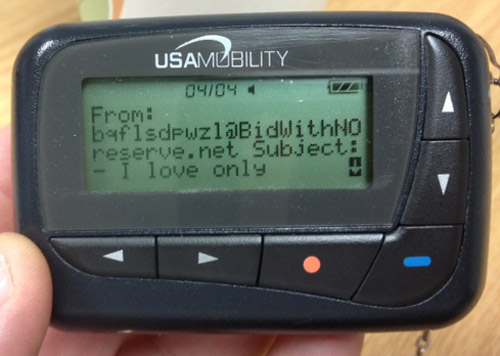
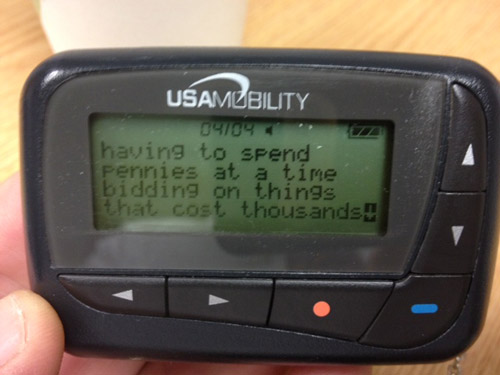
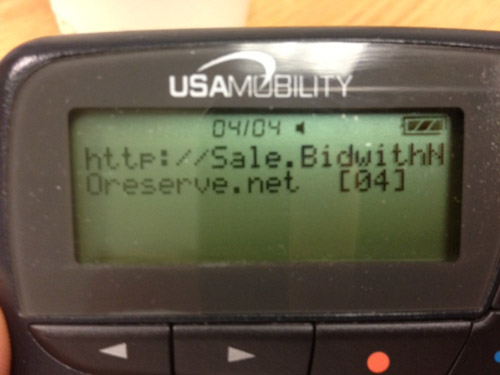
As if call wasn't bad enough, here's some screen shots of a 02:30 am page received yesterday evening:


Ugh

May the dung of a thousand elephants land on this advertised web page.

(*** WARNING *** Enter the web address displayed at your own risk. My antivirus software detected a possible computer threat.)

-Wes

Tuesday, October 09, 2012

When We Mix Politics With Science

Today I opened an e-mail dated 4 October 2012 from the Heart Rhythm Society that announced the 2013 Keynote Speaker at the Heart Rhythm Society's Opening Plenary Session 8 May 2013 in Denver, Colorado : Former President of the United States, Bill Clinton.  Our society's justification for this speaker reads as follows:

"President Clinton remains an influential international figure. His passion for improving lives through innovation and activism positions him as the perfect complement to our program, as we celebrate how our pioneering past is shaping our promising future."


No doubt Mr. Clinton will improve the news coverage of the Heart Rhythm Society's meeting.  Controversy always does. 

But to present a political figure rather than a scientific figure as keynote speaker speaks volumes of how medicine has changed (and continues to change) in America.  Unfortunately, rather than offering a point-counterpoint discussion with Mr. Clinton, heart rhythm specialists who are already reeling from the DOJ's unusual intervention into our field will be treated to Mr. Clinton's views on "innovation" (and no doubt "arithmetic") in health care.

Perhaps the Heart Rhythm Society should offer another retired politician from the opposite side of the political aisle to debate Mr. Clinton and call the Opening Plenary Session in Denver "Debates, Part II."  At least then the audience there could weigh the opposing views on "our promising future" in health care and innovation independently and objectively.

-Wes


The Affordable Care Act: A Retrospective

An excellent article reviewing how the Affordable Care Act came to pass appears today in the Los Angeles Times and Chicago Tribune. It is worthwhile reading to recall how the Patient Protection and Affordable Care Act law came to pass. 

An accompanying article reviewing how health care remains a "headache" for Mitt Romney also serves as important reading as voters prepare to head to the polls this November.

-Wes

Wednesday, October 03, 2012

When Experts Speak Outside Guidelines

This morning, an article appeared in the Chicago Tribune that "revisits" Sudden Cardiac Arrest.  It is written by a local cardiologist, Dr. Joseph Marek, who advocates for EKG screening of athletes without discussing its downside and the fact that such a recommendation falls outside of our professional associations' guidelines on this issue.

While the intent of Dr. Marek's efforts are probably in the right place, we should all realize that testing (of any kind) that occurs on large segments of the population who are at relatively low risk for an ailment leads to a considerable incidence of false positive tests (in other words, abnormal findings that are ultimately found to be benign).  The cost and anxiety of the evaluation of these tests (consults, echocardiograms, even invasive angiograms) during such an evaluation can be considerable and might lead to real complications of their own.

-Wes

Friday, September 28, 2012

The Growing Culture of Hostile Dependency Toward Caregivers

Not long ago in this blog, I wrote about one of my colleague's tears as she hung up the phone after a bitter patient  berated her for making a surgical schedule change.   Tired and exhausted and still with consults and pacemaker checks to perform, she was returning a series of phone calls at the end of the day long after most people had already headed home.  She tried to maintain control, but after that call, the damage was done.
I have seen this happening over and over again recently.  The stress is palpable in our profession that cares for people's most prescious commodity, their health, while under extreme pressure to do more with less.

For businesses everywhere, the balance of costs with productivity to assure profit is nothing new. But in health care where people's lives are in the balance, the stress to health professional personnel is particularly palpable, especially now as huge transformative shifts are underway in how health care is being delivered in America.

So it was from this background that I struggled to understand why an exerpt from a heavily promoted book on patient safety appeared recently in the Wall Street Journal.  Why should an article about five simple steps to "keep hospitals from killing us" bother me so?  After all on the surface, it's such an important concept.
Perhaps I was bothered that "killing" was used in the byline when there are so many of us trying to prevent harm or do good for patients.  Perhaps it was because some of the insinuations made in the book lacked a national perspective.  Perhaps it was because some of the suggestions made were just more top-down Big Brother ideas that detract from actual patient care.  Perhaps it was all of these.  But after considerable reflection, I realized there was something else: a another overriding phenomenon that I was having a hard time putting my finger on. 
I submitted the following letter to the Wall Street Journal Wednesday.  They elected not to publish it.  This really did not come as a surprise since it was quite critical of their coverage of the patient safety issue.   But after showing the letter to a number of well-respected colleagues, they all encouraged me to publish it here.   Hopefully it will make people think about the complicated psychology of what's happening on the front line of health care these days.

Holding the Wall Street Journal Accountable

Since when does a book promotion get a full page and a half of prime news print in one of the most respected business newspapers in the world?  Usually a story that commands that much newsprint in the Wall Street Journal is written by one or more seasoned journalists to make sure all sides of the story are reported.


Full-page WSJ Story 21 Sep 2012
 So why the Wall Street Journal's recent coverage of Marty Makary's newly released book "Unaccountable?"   Not only has the Wall Street Journal devoted a full page-and-a-half article by Dr. Makary (who we find on Twitter describes himself first as a "medical commentator and author" and second as an Associate Professor of Medicine at Johns Hopkins School of Medicine), but they have now allowed him to host a special electronic blog platform called an "Ideas Market" on their website.   As news coverage of Dr. Makary's book spread this week, we learned from CNN that this same doctor described his fellow surgical colleagues as "Fred Flintstones" in his book because they don't use the latest laparoscopic techniques. 

Doctor versus doctor: it just doesn't get any better for Main Stream Media. 

But did anyone think to ask Dr. Makary if maybe the reason those older doctors don't use laparoscopic techniques is because they work at an inner city hospital with a limited budget without all the trappings of an academic medical center? 

No.  That would be reporting.

I am trying to understand the Wall Street Journal's motivation for their recent move.  It is both puzzling and concerning.  But at its core, it's probably quite simple to understand.  I should probably follow the money.  After all, we're all aware of the problems print media is having these days.

My bet is there's Big Business behind the Wall Street Journal's journalistic move. 

And who's Bigger Business or Bigger Money than the insurance industry or the hospital industry?  After all, medicine is the Biggest of Businesses in America.

Now before you go laughing at my conspiracy theory, ask yourself if there might be a problem with the perfectly even 98,000 number of deaths caused by medical errors touted by the Institute of Medicine in 1999 and highlighted in the Wall Street Journal's patient safety piece.  Ask yourself why a professionally-produced book trailer promoting Dr, Makary's book that HAD to cost upwards of a quarter million dollars to produce winds its way on to the Internet.  Ask yourself why no one would research the background of the players in that video and their motivations to appear in it.  Was their motivation truly altruistic?  Or in this era of the creation of Big Box medical care delivery, might there be another reason?

These days, the majority of today's American doctors are in the unenviable position of trying to be true patient advocates while promoting a Big Box medical model that has been foisted upon them and, for the majority of us, serves as our employer.  The world loves idealists and none more so that Big Box Medical Center administrators and thought-leaders.  Getting a physician leader spokesperson to forward a business agenda that serves the interest of its cash-paying customers is about as sweet as it gets.  Better yet, using patient safety as a means to influence doctors' behavior is ideal because it is professionally unassailable.  What doctor in his right mind would ever dare to think, let alone put in writing, that there could ever be a down-side to assuring perfect patient safety?

But is this new paradigm of journalistic reporting and wholesale promotion of one doctor's five ideas for patient safety without consequences? Can we afford perfect safety and all of the costs it entails while throwing our doctors under the documentation bus (or Big Brother camera) as they are asked to take incredible risks on behalf of their patients, be omnipresent, omni-available, impeccably skilled, omni-credentialed, omni-sympathetic all while seeing more patients in less time?  Must we be made to believe, without reservation, that doctors (or any of the hundreds of people who work on each doctor's behalf) aren't human and subject to error?

I am seeing a culture of hostile dependency growing toward caregivers.  The theme is like an adolescent who realizes his parents have feet of clay.  He comes out of his childhood bubble and realizes his parents have failures and limitations because they are human beings.  This results in the adolescent feeling unsafe, unprotected and vulnerable.  Since this is not a pleasant feeling, narcissistic rage is triggered toward the people he needs and depends on the most.  None of this occurs at a conscious level.  Most of us understand this behavior simply as "adolescent rebellion," not understanding the powerful issues at play.  So when we spotlight one side of the patient safety story without acknowledging the realities health care workers face like looming staffing shortages and pay cuts, we risk fanning the flames of narcissistic rage against the very caregivers whom we depend on the most - the very caregivers who are striving to do more with less, check boxes while still looking in the patient's eyes, meet productivity ratios, all while working in a highly litigious environment.  Why would we do this and why would we allocated money as Dr. Makary suggests, for punitive top-down solutions instead of spending that same money on supporting and educating our frontline providers?

A good journalist would investigate all sides of the story and understand its impact.  A one-sided full-page book promotion by a non-journalist in the well-respected Wall Street Journal that reduces the serious patient safety issues in today's Big Box medical organizations to "5 simple steps" is nothing more than a cheap shot at the majority of  doctors who choose to carefully and tirelessly treat their patients as safely as they can without basking in the glow of Main Stream Media.

-Wes

Monday, September 24, 2012

On The Promotion of Hospital-Based Killing

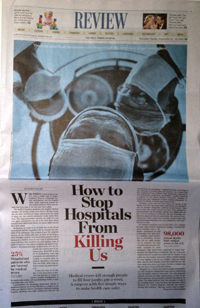
It's an interesting world in medicine these days.  What I read in papers and see in flashy professionally-produced book trailers about hospitals as killing fields boggles the mind.  Imagine: there are even full page spreads in papers as influential as the Wall Street Journal carrying headlines like "How to Stop Hospitals From Killing Us."

It is, of course, nothing more than a book promotion for "Unaccountable," written and heavily promoted in the main stream media and TV circles by the surgeon Marty Makary, MD from Johns Hopkins, who's parlayed his public policy interest in safety into a money-making PR campaign based on fear.

There is no question that there are issues in major medical medical centers with preventable mistakes that can lead to patient death.  I would be a fool to think that the pharmaceutical and medical device industries haven't used shady marketing techniques to sell their products in our very lucrative growth industry called health care.  (I would also be a fool to think it hasn't happened with the Electronic Medical Record industry or on Capitol Hill, either).  And I would be a fool to think that we shouldn't always be striving to avoid any patient errors.

But when we see book trailers with fancy aerial shots flying above big cities, close-up cameos of doctors doning face masks, and gushing teaser quotes from provosts of the very university where Mr. Markal practices, editors of the New England Journal of Medicine, a medical journalist, and even the President of the Institute of Medicine (none of whom actually cares for patients), we should ask: Why now?  Why here?  Who paid for this?

There is money in fear.  Big money. 

And one hell of an industry that caters to safety training.

But these fear tactics are not without their costs to our patients and health care system.  When we pull back the cover on what Dr. Mackary's solutions for our "current crisis" are, we see that the solutions he proposes are actually quite thorny.

We once again see the number "98,000" touted as the number of deaths each year at hospitals when the actual value is unknown. The number came from The Institute of Medicine's 1999 report on medical errors which estimated the number from 44,000-98,000. But this is unimportant.  Big death numbers sell.

Data dashboards are heavily promoted as one of Dr. Mackary's paths to transparency, but we should ask ourselves how much this data collection costs.  We should ask if it has affected outcomes.  As Dr. Mackary acknowledges, patients make decisions on which hospital to go to based on personal choice, not data.  Since we've been collecting these data on quality, has it impacted costs one bit?  The answer, actually, is no.

And then there's Dr. Mackary's idea of using cameras in hospitals to improve transparency.  In his article in the Wall Street Journal, Dr. Mackary justifies this approach by telling us an anecdote about a gastroenterologist who filmed his colleagues doing colonoscopies "without telling his partners."  (I'm not kidding).  There was no attempt at education between colleagues.  There was no attempt at professional discourse.  Just a camera secretly filming colonoscopies.  Images of the Orwellian book "1984" flashed in my head when I read this.   How much time might I soon be required to review the films we make of our colleagues if we chose such a path?  How much time will it take from me seeing patients?  Who will own the films?  Where will they be stored?  Who will pay for the filming?  And let's not even speak of the liability implications to physicians when these films are discoverable.  It is hard to see how this will constructively correct patient safety in hospitals and won't further add to doctors' burnout with the system.  Is this now going to be our path to patient safety salvation, fear-based medical practice?

Not all of Dr. Mackary's ideas are crazy: his idea for Open Notes and lessons about the importance of transparency in medicine are valuable.  His ideas of cherishing the input of every member of the care team in a patient's care is spot on.  But if we are going to be fully transparent, then we should be transparent about costs at all levels of patient care.  We should recognize that there large hurdles to accomplish transparency and accountability in medicine when the legal risks of slander and libel can be so easily invoked when a junior physician dares to buck a financially-flush system hell-bent on maximizing revenues.  Yes, we have problems, but the solutions are complicated and risky for those already ultimately legally on the line for every patient who enters our health care system.

Finally, we should ask how our younger doctors (who are training and more likely to make mistakes) how they would feel practicing in such a Orwellian, fear-based system.  Might we be compromising our ability to recruit new doctors? 

From a business sense, I wish Dr. Mackary all the best in the sales of his new book.  No doubt his sales will soar thanks to the cleverness of this sales campaign. 

I just hope that the Grand Thinkers in our legislative and health policy circles have enough marbles in their heads to not be influenced by all of Dr. Mackary's proposed grand schemes for improving our patient's safety.

If they do, they may be causing more harm than good.  Then who will be accountable?

-Wes

Sunday, September 23, 2012

The Other Cause of Sudden Cardiac Arrest

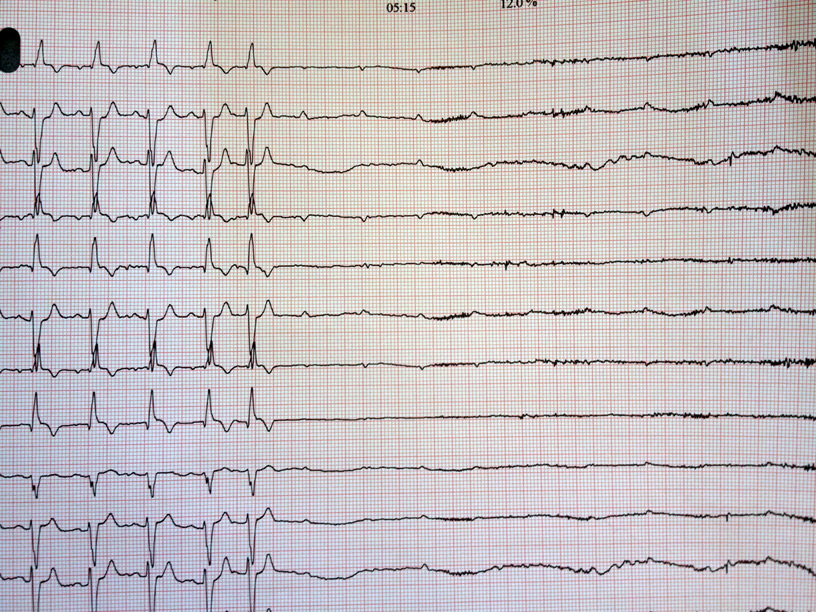
All too often we associate sudden cardiac arrest (SCA) with tachyarrhythmias post-infarction.  Sometimes, there is another cause for post-infarction SCA that is forgotten:


Click image to enlarge
The above EKG was acquired four days following an anterior myocardial infarction during a pre-discharge submaximal (modified Bruce) stress test after walking 1.3 MPH for 5 minutes.  Note the bifascicular block (RBBB, LAFB) and lack of PR segment prolongation (with the exception of the PAC) just before the event, suggesting an infra-Hisian location of the eventual AV block.

Needless to say, the patient's discharge was postponed.    (We're still waiting word from the doctor who ran the above test as to the condition of his underwear.)

-Wes

Friday, September 21, 2012

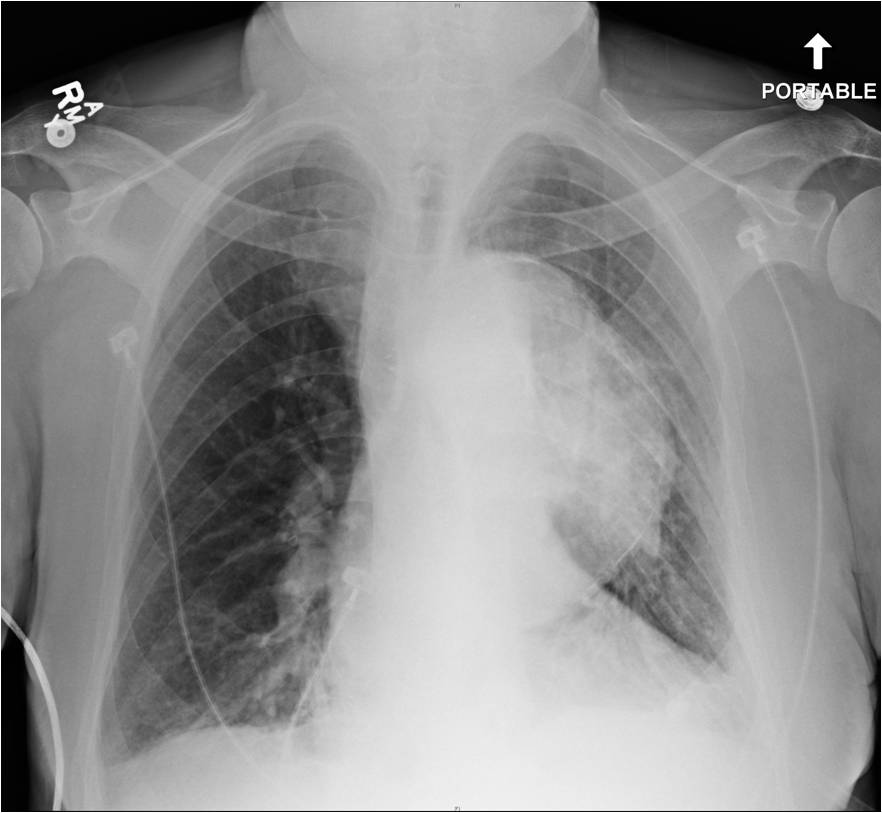
Another Friday Chest X-Ray

Click image to enlarge

Just your basic Friday chest x-ray on an asymptomatic patient with hypertension and atrial flutter.

Any thoughts?

-Wes


Tuesday, September 18, 2012

Our Problems With Codes

Oh, that clever Center for Public Integrity.  Look what they've gone and done now!  My, oh my.  According to the article, doctors are much of the the problem, billing "billions" of Medicare upcharges according to the center.

But what if the medical coding game itself is flawed?  Stop for a moment and imagine what it would look like if lawyers billed like doctors.  Suddenly, we see how bizarre the world of government billing codes and chart-completion mandates has become.

Not long ago I asked the blog-o-sphere what my time is worth on a per-hour basis.  Collectively and independently, the blog-o-sphere settled on a number of about $500/hr (see the comments).  Now look for a moment at what Medicare pays, even at its highest level of billing for a physician's time for evlauation and management of a medical problem: for 40 minutes of a physician's time, it's $140 (or $210/hr) before taxes.  Again, we see another disconnect as to how doctors are valued in our current system.

Doctors are working long hours to collect these fairly low fees from Medicare while jumping more hoops than ever to do so.  They have become pseudo-experts at the coding game, trying to get as much money for their extra efforts as legally possible.  But these fees paid by Medicare do not cover payments for time spent on phone calls, e-mails, and working insurance denials.   These services are still considered by our system as gratis. To partially counteract this coding problem, doctors realized (and the government insisted) that doctors use electronic medical records.  But when independent doctors set out to implement these records they quickly discovered that the expense and long-term maintenance costs of local office-based EMRs could not compete with more sophisticated systems already in use by their neighboring large health care systems.  Because of ever-increasing cost-of-living and overhead costs, not to mention the threats of large fee cuts, doctors have migrated to large health systems faster than ever.  With the fancier electronic record at those systems (streamlined for billing, collections, and marketing) fields required for higher billing codes (but not always material to the problem at hand) are completed in less time.  So are doctors really the problem?

It depends on who's looking.  Since every medical test and order is tied to a doctor's name, then of course it looks like doctors are the problem.  And yet it's the government who has mandated the codes, the requirements for chart completion, and the electronic records to which our electronic signatures are attached.  But we should ignore these facts; in the eyes of the Center for Public Integrity, of course its the doctors' and hospitals' fault. 

And what do you think the government's response is to all of this? 

Why, get get ten times the number of billing codes, of course!

So take a moment and imagine a world without codes might look like.  A world where doctors are paid for their level of expertise, time with patients, time with communication for those patients, and time their connected to the EMR to enter codes, document, e-mail, and care for patients.  No codes, just time-based billing at a level of commensurate with their skills.  If we can track billing codes, we can track doctors' time.  Gosh, it's sounding sane isn't it?

If we really want out of this coding and billing conundrum, we should stop the coding schemes.  Pay doctors for what they are worth in today's market.  Pay doctors for their time as well as their productivity.  Throw away the codes, the consultants, the code licensure fees, and the nonsense.  Compared to current administrators of these coding schemes, people might actually discover that doctors and hospitals are the path to salvation for excessive health care costs rather than the instigators of coding fraud.

-Wes

Sunday, September 16, 2012

Out-of-the-Box Thinking on Avoiding Hospital Readmissions

As a cardiac electrophysiologist, I'm pretty far removed from public policy.  But I have to admit that I was interested in the latest move by CMS to cut their Medicare payment rates to hospitals by invoking pay cuts for hospital readmissions.  The Chicago Tribune's article is enlightening and filled with some interesting anecdotes after the first round of pay cuts were implemented:

(1) The vast majority of Illinois hospitals were penalized (112 of 128)
(2)  Heart failure, heart attack, and pneumonia patients were targeted first because they are viewed as "obvious."
(3) "A lot of places have put a lot of work and not seen improvement," said Dr. Kenneth Sands, senior vice president for quality at Beth Israel.
(4) Even the nation's #1 Best Hospital (according to US News and World Report) lost out.

So what's a hospital to do?

I have a suggestion based on other observations in regard to government-imposed pay-for-performance measures that have cost hospitals and clinics across the land untold billions to implement and still have failed to demonstrate even a break-even financial proposition for hospitals.

Stop trying.

From the looks of things, Medicare's going to cut even the finest hospital's pay.  Everyone will suffer, just some more immediately than others, but woe to the hospital that works to understand why.  This is not the intent of this measure.  The intent of this measure is to cut payments.

Therefore, if we do not commit excessive funds to this endeavor and instead work to support the people on the front lines as they do their job, cost savings will more likely be realized than if 500 more administrators and nurse coordinators are put on the job.  Like putting cash under your mattress in a down market, they'll be way ahead.

Hiring more people are expensive because of their salaries and benefits.  Writing programs to do this is also expensive.  All kinds of people are expensive because of the training they require for new government initiatives like Pay for Performance (which has NOT been shown to affect outcomes by the way) and avoidance of hospital readmissions (little proof of sustainable goals can be achieved, a la quote #3 above).

So just help the professional people you already have do their jobs caring for patients to the best of their ability.  Make this the mantra rather than new unproven approaches. 

Call me silly, but my bet is that hospitals would do WAY better off financially in the long run if they stopped trying so hard to follow unproven legislative initiatives.

-Wes

Saturday, September 15, 2012

Schedules

It started as big day in the lab: six cases. Actually, my partner and I were eventually able to split the load over two labs.

But I screwed up.

I took too long putting in a device - WAY too long.  Four hours too long.  Since it was the first case of the day, it backed everything up. People had to work very late - some even had to dip into overtime.

But  I was impressed that no one said a thing.  In fact, everyone that I worked with was incredibly supportive.  After it was over, one of my nurse practitioners even bought me a salad on her own dime before she laid into me with a ton of pending questions about outpatients and the new consults upstairs.

Why?

Because my colleagues know about schedules in medicine.  They know that some things we do can be incredibly challenging due to anatomic variables that aren't always there in the normal individual.  They know that sometimes we work on sick folks, young and old, who really have no other options - that a particular procedure might be their one best and only shot at getting better.  They know that many other times, the cases go faster.  They know that these things can happen.  So they remain professional and make a their calls home to say they'll be late.

Schedules, I'm finding, are getting more complicated in our consolidated new health care world.  So much so that administrators are turning to computers to help.  And who can blame them?  Different cases, different time allotments, different hospitals, different doctors, different equipment needs, different drive times between facilities, different days for clinic, different insurance, different staffing needs.  It's simply getting too complicated for any one person to keep it all straight in their head. 

But computers rely on logic.  Computers rely on criteria on which to make decisions - they must have an estimated procedure time to go with every procedure.  Computers don't incorporate variations in physician skill level, technique, or a person's individual anatomy into their scheduling algorithms. Computers don't know about a son's baseball game.   Computers don't factor in the frustrations of traffic.

I never like making that call home when I am running late.  I never like to hear the sighs, the disappointment, to learn what I'm missing.  But I have also learned that it is far worse not to make the call.  My family's schedule and psyche demands it.

But as the day's work is algorithmically sliced across increasingly geographically-dispersed larger and larger health care systems with schedules more and more compressed, I wonder if computers will ever be able to explain to our families why we keep running late.

-Wes