Monday, June 20, 2016

Pennsylvania Medical Society Explains Their Vote of No Confidence Against the ABIM

The Pennsylvania Medical Society just sent this letter to all Pennsylvania physicians explaining their rationale for issuing a "vote of no confidence" against the American Board of Internal Medicine (ABIM):
The Pennsylvania Medical Society (PAMED) believes that continual professional development, lifelong learning, and providing quality patient care based on the best science and evidence to guide medical decision-making is the fundamental cornerstone of what it means to be a physician.

For two years, PAMED leadership has had numerous meetings with senior management at the American Board of Internal Medicine (ABIM) with the purpose of representing our members' high levels of dissatisfaction with the ABIM Maintenance of Certification (MOC) program. Early in this process, we concluded that the reason ABIM leadership was so out of touch with practicing physicians was because nearly every member of the ABIM's board is not involved in the full-time practice of seeing patients. We attempted to work collaboratively with ABIM's leadership to help them better understand that their punitive process is needlessly time-consuming and takes physicians away from their patients. We demonstrated to them that their process is exorbitantly and unnecessarily expensive compared to other continuing medical education activities through which medical knowledge and excellence in patient care can be maintained and demonstrated. Most importantly, we clearly expressed to the ABIM that the content and available medical resources of their secure, high-stakes computer exams bear little to no relevance to the care we render to our patients in our offices and hospitals.

Through their marketing efforts, the ABIM has worked hard to give the impression that their recertification exam demonstrates competency. However, despite numerous calls to substantiate this assertion, the ABIM has been unable to provide reliable independent evidence that a secure, high-stakes exam—taken every 10 years by some and for which others are "grandfathered" and therefore exempt—leads to better patient care. This is because while the overwhelming majority of practicing physicians pass the ABIM recertification secure, high-stakes computer exams, this test and the MOC process have no correlation to how well a doctor can take care of a patient. Shockingly, countless medical leaders, numerous national mainstream publications, and several forensic accounting reviews have published information which suggests that the ABIM's motivation for their recertification process was primarily driven by little more than financial mismanagement.

If true, what makes these actions so deplorable to physicians is that it was perpetuated on all of us by our colleagues whom we mistakenly believed were part of our medical family. In response to the overwhelming pressure being placed on their leadership, the ABIM has begun a public relations campaign with a barrage of emails and blog posts to create an illusion that they have the ability and the desire to correct this problem. As our PAMED Board reviews these emails, we believe that the ABIM's motivation and ultimate program will continue to have as their cornerstone the creation of as financially lucrative a position as possible for their Board and their misguided foundation.

It is for all of these reasons that I announced at the American Medical Association's (AMA) Annual Meeting last week in Chicago that the Board of the Pennsylvania Medical Society has voted a position of NO CONFIDENCE in the leadership of the Board of the American Board of Internal Medicine. We believe that their current leadership is not capable of reforming the process in an academically meaningful and fiscally responsible way. ABIM leadership has issued an apology for instituting their January 2014 MOC program. The ABIM has admitted that all three aspects of the program were improperly designed and deeply flawed. Millions of dollars were spent by the ABIM in preparation for this program. It can be argued that the January 2014 MOC program was the most expensive mistake in the history of medical education.

In keeping with the consensus of PAMED members and physicians across the country who are embittered with the practices of ABIM, we call for the immediate replacement of the entire ABIM Board and leadership with new leadership, representative of physicians actively participating in the full-time practice of clinical medicine. In the absence of this happening in a timely manner, we plan on calling on ALL specialty boards and societies to listen to their members and to work to remove the MOC process from ABIM oversight. Our PAMED Board is committed to aggressively advocating for all physicians on this important issue. We hope to see more meaningful progress in the coming weeks. We will explore every avenue to bring about meaningful MOC reform and will plan on keeping all PAMED members informed on any progress made in our efforts. Most sincerely,

Scott Shapiro, MD, FACC, FCPP
PAMED President
I hope other state medical societies across the country issue similar statements in the weeks ahead.

-Wes

Saturday, June 18, 2016

Video: The Gory Details of ABIM Maintenance of Certification

The Pennsylvania Medical Society posted the presentations made at the AMA House of Delegates Meeting at the Hyatt Regency Chicago on 13 Jun 2016 this morning (please see that link for all of the presentations made).

I post just two of those presentations here for your review.  First, the finances of the ABIM and ABIM Foundation that prompted the creation of Maintenance of Certification, as told by certified public accountant, Charles P. Kroll (27 min) (Slides here):


Next, my presentation on how Maintenance of Certification has affected practicing US physicians and their patients (22 min) (slides here):


Spend some time to review these videos and and inform yourself when you get a chance. Then work with your state medical societies and hospitals to end this onerous and corrupt physician program.

-Wes

It's Time to End the MOC® Brand

After Monday's resounding AMA resolution calling for an end to Maintenance of Certification®, it is time to end, once and for all, the MOC® brand held by the American Board of Medical Specialties (ABMS).

Maintenance of Certification® remains as a failed social justice experiment foisted on unsuspecting and vulnerable practicing US physicians by the American Board of Internal Medicine (ABIM) and the ABMS solely for the dual purposes of financial and political gain. Multiple studies have demonstrated MOC's inability to improve patient care or quality while wasting valuable time and physicians resources to fund this illegal experimentation.  After secretly lifting at least $55 million in diplomate fees to form the ABIM Foundation, MOC® has become the poster child for financial malfeasance, corporate cronyism, conflicts of interest, and fraud.  In all my years of practicing medicine, I have never seen such an egregious violation of medical ethics levied on practicing physicians by some of our own.

Yet MOC lives on in the hearts and minds of the AMA and affiliates of the Accreditation Council for Graduate Medical Education (ACGME). From the AMA press release after Monday's passage of the anti-MOC® resolution, it seems the AMA still thinks MOC® is a good idea:
Asking the American Board of Medical Specialties to encourage its member boards to review their MOC policies regarding the requirements for maintaining underlying primary or initial specialty board certification in addition to subspecialty board certification to allow physicians the option to focus on MOC activities most relevant to their practices
At the same time in an apparent attempt to render MOC® life support, the Accreditation Council for Continuing Medical Education (ACCME) has recently begun co-branding CME with MOC®.  They've even produced a new logo (they call it a "badge" - seen above) for sympathetic training organizations and medical schools to download. It all amounts to brainwashing our youngest and most vulnerable physician professionals that the behavior demonstrated by the ABIM and the ABMS should not only be condoned but promoted.

Practicing physicians have spoken loud and clear about their feelings about the ABMS/ABIM MOC® program.  It's time to end it, all of it, and expunge this horror story from the practice of medicine.

-Wes

Tuesday, June 14, 2016

AMA House of Delegates MOC Session Recap

It was a beautiful day in Chicago yesterday: sunny, not too humid. I left home early. The sun had risen some time ago and could be seen reflecting off the lake to the front of the downtown skyscrapers highlighting every detail of their construction. Lake Shore Drive is magnificent this time of day. I parked, as many must do each day, down in the basement of a nearby parking garage, making the "early bird special" parking fee of $16 when your arrive before 8 AM.

Nice.

(Click to enlarge)
I entered the Hyatt and saw a large meeting room across the foyer with a "Southeastern Delegate Meeting" sign outside the huge room. Lots of people with the representative state name on a card in front of them and a man in a bright kelly green jacket sitting next to the speaker stand who looked like a preppy leprechaun: the "Vice Chair." Heh.

I had to find registration at the Hyatt Regency Chicago: no easy task for someone who's never attended the AMA House of Delegates meeting, but approached what must have been a senior delegate adorned with his AMA badge with multi-colored tags draped some 14" beneath it highlighted by political stickers and little metal badges (I learned later you got some of these after contributing to various political action committees). He was cordial and helped direct me to the subterranean registration desk in the East Tower.

There were delightful ladies more than willing to help. "Are you a delegate?" they asked. "No, just a speaker." They gave me a registration card and I filled it out and was promptly handed a badge of my own with a lonely gray "speaker" badge dangling below.

"Don't listen to a thing he says, he's a doctor," someone said behind me. I turned around to find Charles Kroll, who has also just arrived, waiting to register.  I hadn't seen him for two years since we started to work together on the ABIM story. He grabbed his badge and we headed upstairs. I called David Winchester, MD, a delightful young cardiologist that I was introduced to via Twitter  (cardiologist and Florida delegate) and he joined me and Mr. Kroll for coffee.

AMA House of Delegates MOC Meeting
(Click to enlarge)
Next, I called Charles Cutler, MD from the Pennsylvania Medical Society who met us in the lobby of the East Tower. We headed to the meeting room and he introduced me to numerous people: Steven E. Weinberger, MD of the American College of Physicians (Executive VP and Chief Executive of the ACP), Stephen R. Permut, MD, JD, (Chair of the Board of Trustees of the AMA), and newly-elected Board Member of the American Board of Internal Medicine (ABIM), Yul Enjes, MD, among others. Only later did I realize Lois Margaret Nora, MD, President, and Chairman of the American Board of Medical Specialties (ABMS) was there, too, among many others (seated in the back, far right). Many stood in the back of the room despite available chairs in the front of the room (some things never change).

As luck would have it just before we began, the projector bulb blew shortly after it was turned on so another projector had to be retrieved. Meanwhile, the videographer had set up and was ready to go, but we had to remain seated as we spoke to use the available microphones. Once the new projector was secured, we were ready to begin.

Mr. Kroll went first (slides at link, video here) and explained his background as a forensic accountant specializing in health care and non-profits to the audience. He began discussing his educational background, credentials, prior experience with other non-profit shenannigans in Minnesota (Alina/Medica scandal) and his experience working with the attorney general there. He then explained how he stumbled across the ABIM story (a former article by Linda Girgis, MD asking if ABIM was "extorting" physicians). He pulled the ABIM's financials and immediately found discrepancies and outlined many of his findings to the audience. You could see heads shaking with disbelief. He kept it simple and understandable.  It was devastating. He then told the story how he contacted a mainstream media outlet who requested the last twelve years of audited financials from the ABIM and how the ABIM refused to produce all but the last year, and only if they met in persons to review them together. Evidently, the reporter politely declined and then requested these financials from the PA Attorney's Office (who never responded).  Only after a request was made to the press secretary of the PA Governor's office were the last two years' of audited financials produced. Mr. Kroll, who had these full financials in his possession, then noted that when the ABIM published them, they failed to publish six key parts of those financials on its website. Only after he disclosed this fact in an article in MedCityNews, did the ABIM recant and post the full financials. Finally, we concluded with a description of the meeting he help with the Iowa Attorney General's office and the recommendations he made regarding actions the Iowa AG could impose on the ABIM and their Foundation.

I was next.

In my presentation (a rather large Powerpoint presentation can be downloaded here, video here), I discussed my background, the background of how Board certification, how the philosophy of lifetime certification morphed to time-limited based on the ABIM's assertion that older physicians lost their skills over time, but then pointed to the paradox of the "grandfathering" of physicians and the inherent age discrimination against our most vulnerable physicians with that policy change. I also explained patient's definition of the excellent physician vs the ABIM's definition, and reviewed the costs in terms of out-of pocket costs and time involved (detracting from patient care). I also touched on the creation of the ABIM Foundation and the transfer of funds from the ABIM to the Foundation for "research" and showed the webpage asking for physician data for more "research" without informed consent and disclosure to physicians who were serving as study subjects in violation of the Belmont Report. With the purchase of the ABIM condominium, perhaps they were performing investment research instead, I suggested. I then summarized much of what has transpired with the ABIM and asked the important question, "How did it get this way?" and why I thought it happened. Finally, I summarized the disturbing code of silence that has surrounded the ABIM controversy by using the "Little Red Hen" allegory. The only people who will fix this mess is practicing physicians, starting with a full investigation of the responsible parties.

Next up was Bonnie Weiner, MD, board member of the National Board of Physicians and Surgeons (NBPAS.org) who gave an update of their efforts to create a more credible board credential for assuring continuing medical education. She expressed concern that future modifications to MOC will result in making one wasteful test taken once every ten years into many worthless tests over the same time period. She summarized the philosophy and finances of the NBPAS.org and explained that she could no longer serve as an interventional cardiology program director because she refused to perform MOC for that credential. (So much for "voluntary" certification!) She noted over 30 hospitals now accept NBPAS as an alternative to NBPAS.org and emphasized the need to have competition in the credentialing market.

With the last presentation by Scott Shapiro, MD, President of the Pennsylvania Medical Society, a shot was fired across the bow of the ABIM. Dr. Shapiro announced that the PA Medical Society was publicly announcing  their "vote of no confidence" against the ABIM and approved funds to evaluate legal options against the ABIM:
Today, at the AMA Annual Meeting in Chicago, our Pennsylvania Medical Society Delegation convened a national discussion panel to present their research findings, insights, and recommendations regarding the failures of the American Board of Internal Medicine and the MOC process. The discussion regarding the actions, finances and possible historical motivations for the ABIM actions was eye-opening and alarming.

Notably, during the conference, we announced that our PAMED Board of Trustees—after reviewing the available data and recent ABIM actions—voted and are now issuing a statement of no confidence in the ABIM's Board and leadership.

We also announced that, earlier this year, our PAMED Board approved the necessary funding to move forward with obtaining a legal opinion into whether PAMED would have standing to file a lawsuit against the ABIM. We hired a firm and recently received their opinion that not only would we have standing but they found potential legal claims consistent with our concerns that could be filed in a lawsuit against the ABIM.

Physician leaders from many other states have inquired about how their state can join PAMED's efforts. We look forward to these and other strategic conversations in the near future.
Boom.

You could have heard a pin drop.

After his announcements (and I probably missed a few key words), the floor was open for question and answer. Lots of people asked questions respectfully. Many were in support. Some were disappointed that there was not a more broad perspective of the opposite arguments for MOC on the panel. One physician with lots of tags on his chest approach the microphone saying," I learned a lot today in this session. Most of all I learned that I'm really glad I never became an internist." (He was an anesthesiologist). The room burst into laughter. He then went on to express his like of anesthesia's "MOCA minute" initiative but never disclosed if he had conflicts with the program or how much it cost. (By now, Dr. Nora from the ABMS had joined the question and answer line.)

It had to be difficult for Dr. Nora to enter this room, but I respected the fact that she came to the microphone to point out her views.  Unfortunately, rather than mentioning anything about the corruption we had just uncovered, Dr. Nora seemed upset that I had been inaccurate with my portrayal of where the ABMS gets their money (I am paraphrasing here). She also commented that we have been given a privilege to self-regulate and that we should consider carefully what we are doing. I then asked her a question as she walked away. She turned to answer. My question was this: "Have you ever studied what happens the physicians that you fail and what happens to their patients in turn?"  She stated she didn't "understand" my question and then proceeded to redirect to another topic before turning to walk away. Perhaps there will be an audio feed soon of this interaction. It wasn't one of our chief regulator's best moments.

Other questions kept coming, with many shifting to "what's next?"  Unfortunately the session went 30 minutes over and another meeting needed the room.

Finally, it was over.

I would like to take this moment to thank Charles Cutler, MD of the Pennsylvania Medical Society for his invitation to speak in this important venue. I am glad I could meet the players in this saga firsthand. There's no excuse for delaying any longer. Everyone knows the problems. Illegal stuff has occurred.

I can only hope those responsible take meaningful and serious steps to resolve the financial malfeasance, corruption, cronyism, and lack of accountability that has been ongoing at the ABIM (and other affiliated member boards of the ABMS hierarchy) for so long.  Otherwise, it's going to get very ugly very quickly.

Practicing physicians across the US have had enough of the ABMS MOC requirement shenanigans.

-Wes

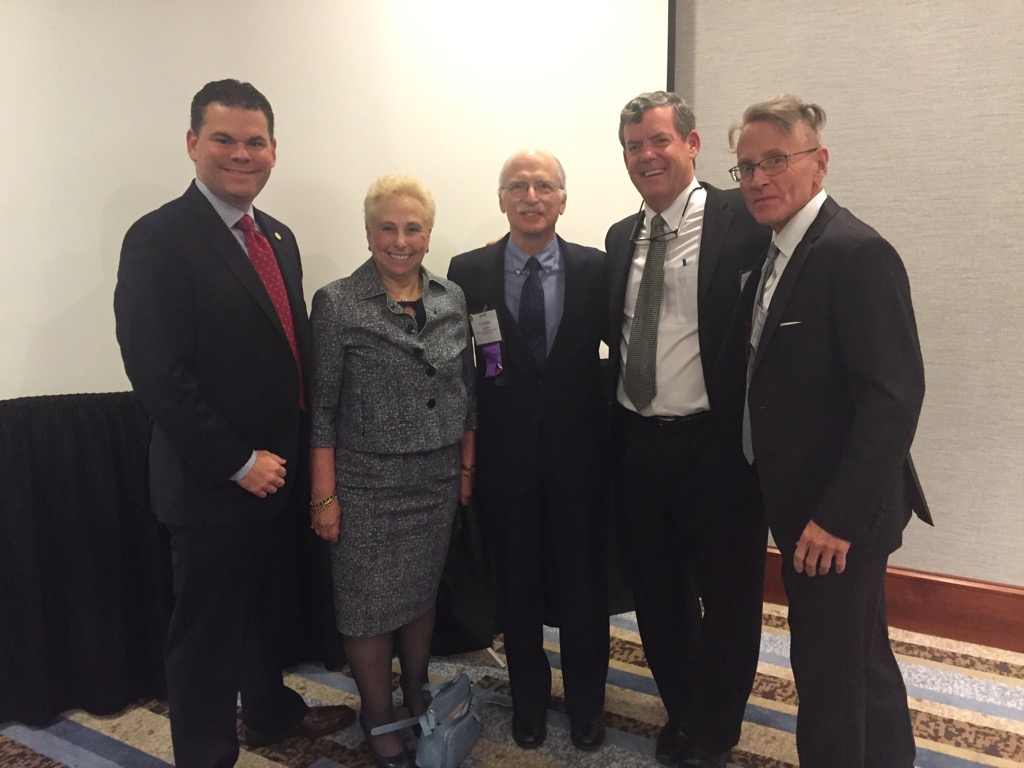
AHA House of Delegates MOC Session Speakers, June 13, 2016
(L to R: Scott Shapiro, MD, Bonnie Weiner, MD, Charles Cutler, MD,
Wes Fisher, MD, and Mr. Charles P. Kroll)

P.S.: I will post a link to the videos of the sessions as soon as they become available. (Update: links added where appropriate above)


Monday, June 13, 2016

Dr. Wes Speaks At the AMA House of Delegates Meeting on MOC

This morning I will be speaking at the AMA House of Delegates Meeting in downtown Chicago at the Hyatt Regency Hotel, 151 Upper East Wacker Drive, Columbus Room E-F at 09:00 AM CST to encourage the abandonment of ABMS MOC re-certification for other alternatives.

For those unable to make the talk, you can download the full Powerpoint presentation here.

-Wes

Thursday, June 09, 2016

Maintenance of Certification: Medicine's House of Cards

Background

In 1986 after struggling for years to secure a growing stream of revenue, the American Board of Internal Medicine (ABIM), a 501(c)(3) non-profit physician testing agency originally domiciled in Iowa and now located in Philadelphia, PA, unilaterally decided to make its once voluntary and lifelong Board certification credential time-limited. In 1986, the prospect of implementing universal healthcare (Hillarycare) loomed on the political landscape so there was a growing sentiment within the ABIM that its role should shift from determining a physician's excellence to practice medicine to assuring a physician's practice adequacy. By making this strategic philosophic change, the ABIM assured itself a new and virtually limitless revenue stream for years to come on a promise they knew how to determine such a metric.

There was only one problem: how does one define physician excellence?

Excellence in medicine is not easily defined. Is physician excellence defined by patience, empathy, intellect, experience, surgical dexterity, technical skills, or some combination of these things? Or might it be judged on something else entirely? Might the qualities of excellence from a general internist be very different from those of a specialist in internal medicine?

Such important questions did not concern the leadership at the ABIM. They were convinced that not only was it possible to define methods for measuring excellence, they would blaze the trail for this endeavor. To assist them, the leadership of the ABIM co-opted the nation's brightest scholars, lured by first-class airfares, the nation's most luxurious hotels, and elegant wine selections at dinner, to create more challenging and clever test questions for practicing physicians. None of these scholars complained.  Many were honored to provide such a service; it was a great gig for those lucky enough to escape the mundane work of actually caring for patients while being wowed by the lavish creature comforts afforded to them.

On the other hand, working physicians on the front line of health care were caught completely off-guard by the unexpected unilateral "re-certification" rule change developed in December 1986 and ultimately implemented by the ABIM in 1990. Practicing physicians, accustomed to a lifetime of testing and unaccustomed to strongman tactics and political pandering that threatened  "uncertain consequences" if they did not participate, never questioned the rationale for the rule change. For most doctors, the change was seen as just another test they needed to pass to keep working despite never being independently shown to improve patient care or outcomes.

That is, of course, until practicing physicians slowly awakened to the gravity of the ABIM's rule change if they failed re-certification: there was a very real possibility that they might find themselves no longer "Board certified" and could lose their license to practice medicine, hospital admitting privileges, or ability to receive insurance payments. They were cleverly trapped. What choice did they have other than to participate?

Empowered by the significant additional revenues garnered by re-certification and a politically lackadaisical physician workforce, the leadership of the ABIM and the American Board of Medical Specialties (ABMS), along with the many friends they secretly lobbied on Capitol Hill, were asked to deliver even more for their undisclosed corporate clientele: Premier, Inc., CECity, Kaiser Foundation Health Plans and Hospitals, the IPC The Hospitalist Company and their close-held relationships with the Center for Medicare and Medicaid Services (CMS). The leadership at the ABIM decided to expand their definition of physician "excellence" to include the concept of "medical professionalism." This way, a health care cost-saving imperative could be levied on physicians, too.

But medical professionalism, like medical excellence, was not easily defined. Like pornography, the leadership at the ABIM just knew it when they saw it.

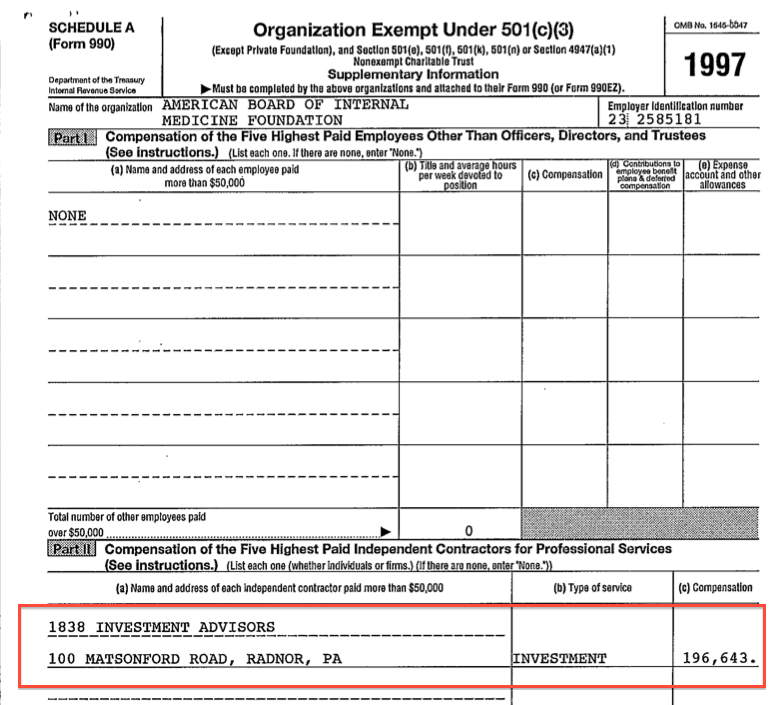
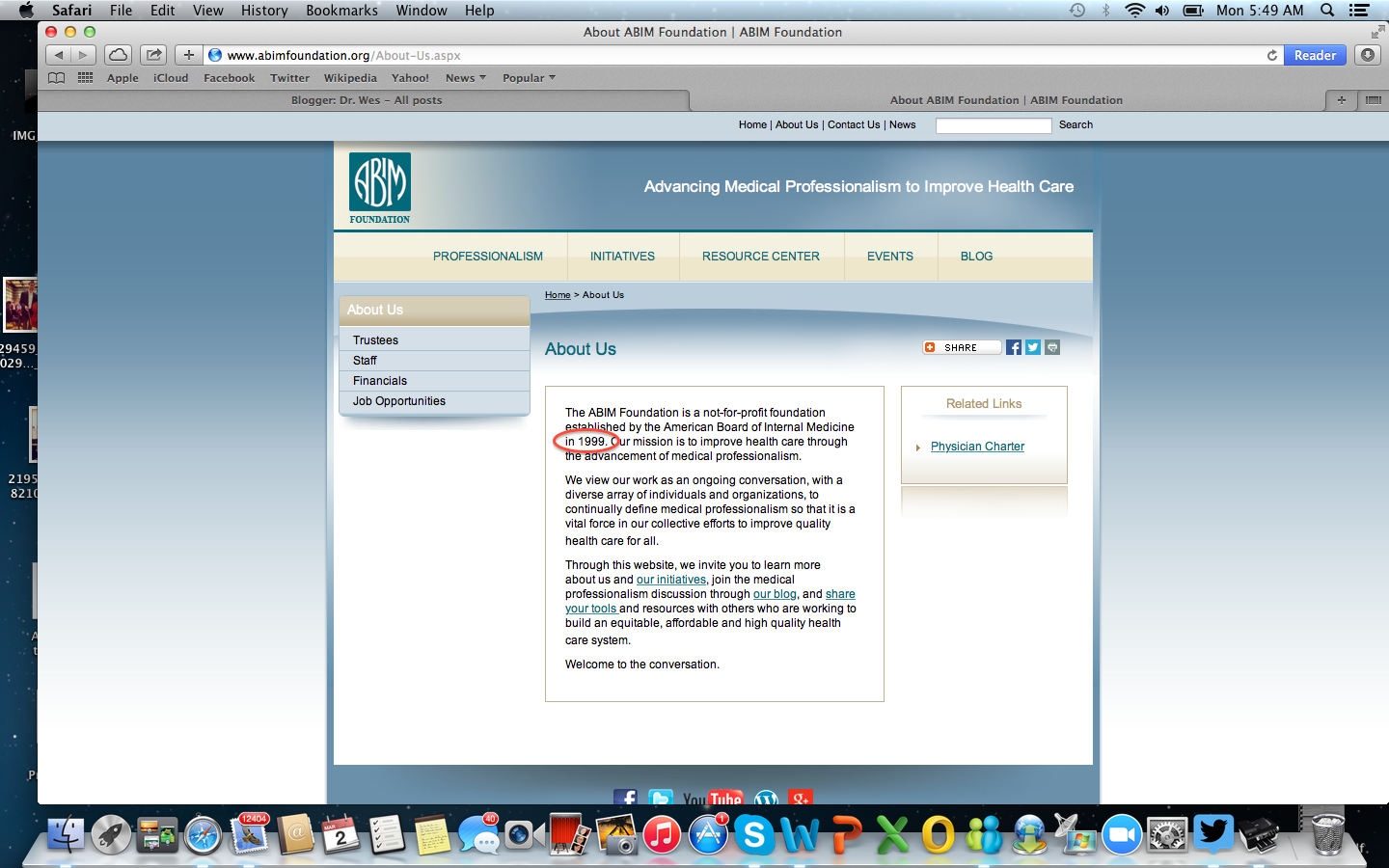
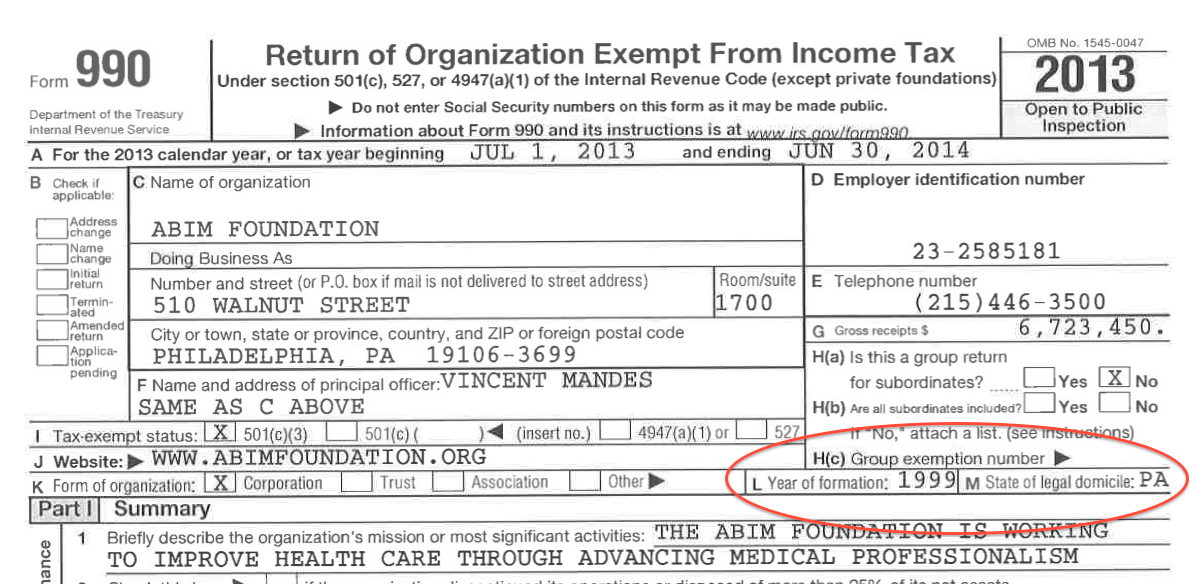
Never deterred, the ABIM convened a "writing group" funded by $59,618,428 in assets the ABIM had secretly funneled from unsuspecting ABIM diplomats' board certification and re-certification fees from 1989 to June 30, 1999 to the secret "American Board of Internal Medicine Foundation." (Author's note: In my opinion, the amount taken from practicing physicians may have been considerably more since the ABIM paid large fees to a high-risk investment firm, 1838 Investment Advisors, LLC that lost 74% of its value before it was quietly shut down. Only after an IRS name change was the undisclosed "ABIM Foundation" finally revealed to the public and practicing physicians in 1999. I believe the origination date and domicile of the Foundation was repeatedly misrepresented to the IRS from fiscal year 2009 to as late as the 2013 IRS Form 990 to obscure its origin. To the best of my knowledge and belief after piecing together available tax forms, the leadership and board of the ABIM authorized $80,278,428 to be taken from diplomats' testing fees to fund the ABIM Foundation in the form of contributions and grants from 1989 through 2007.)

After several years of meetings with members of sympathetic U.S. and European professional societies and leadership from the Robert Wood Johnson Foundation, the writing group from the ABIM Foundation achieved their goal. They published their missive entitled "Medical Professionalism in the New Millennium" in 2002 as a non-peer reviewed white paper in the Annals of Internal Medicine and Lancet with the help of sympathetic editors. Not surprisingly, many of the creators of this document have since left medicine to join the lucrative ranks of the insurance and retail pharmaceutical industry like Wellpoint and CVS.

Thanks to their growing avarice and their undisclosed political and health care policy activities, none of the leadership or board members of the ABIM found fault with the purchase of a $2.3 million condominium complete with a chauffeur-driven Mercedes S class town car in December 2007. According to Richard Baron, MD, such an "investment" was the norm for tax-exempt non-profit 501(c)(3) corporations. (The condominium expenses totaled $850,340 from December 2007 through June 30, 2013 (FY 2008: $42,522, FY 2009: $164,460, FY 2010: 161,957, FY 2011: $165,982, FY 2012: $161,980, FY 2013: $153,439)). In the email I received from him regarding this discrepency, Dr. Baron claimed that many of these "condo expenses" included the depreciation expense for the condominium, yet depreciation for the condominium was never claimed on any ABIM Foundation IRS Form 990 tax form until this fact was disclosed on these pages.

As the requirements to participate in Maintenance of Certification (MOC) mandated by the American Board of Medical Specialties (ABMS) grew, many physicians found the requirements little more than onerous busy-work exercises that distracted from patient care. Many practicing physicians elected to stall or not participate. For these reasons, the pressure on the ABIM to market the ABMS MOC recertification program and to protect their monopoly on the program increased. Many specialty societies, hungry for cash as physician participation at national scientific sessions waned, were increasingly happy to help the ABIM market MOC because of the revenue it generated for them.

ABIM's Director of Investigations

In 2008, it appears the ABIM hired a "Director of Investigations" to investigate physicians or individuals who they suspected might be stealing secrets from their proprietary certification process and disrupting their monopoly.  A unique individual had surfaced that year that promised a return on their investment.  He was perfect: someone with deep ties to law enforcement and surveillance techniques who had created a niche for himself in test security. He was comfortable collaborating with various law-enforcement organizations like the U.S. Postal Inspection Service and the FBI. His self-generated LinkedIn webpage (Author's addendum 9 June 2016 @ 20:00 PM CST: LinkedIn page has been brought down. Earlier partial copy can be viewed here or his Infragard info page should suffice. *** Author's Addendum: July 4, 2016: Mannes' LinkedIn page brought back up) impressive so few would question his integrity. But while this individual seemed perfectly amicable and credit-worthy on the surface, he held a more concerning past that the ABIM may have known but chose to ignore. Perhaps this is why his position and true background has never been formerly disclosed to physicians or the public. He appeared on the scene quietly at first with a press release concerning the existence of "phony boards" in AMA Medical News. A similar press release remains on the ABIM website. As others reportedly tried to capitalize on the board certification money pipeline, another warning of a fraudulent board scheme was circulated by the Connecticut Attorney General's office a short time later. In fact, according to my review of available Form 990 tax forms, this individual and the salary he receives from the ABIM has never been disclosed by the ABIM, yet he freely promotes his position at the ABIM with the movie and test security industries.

It was becoming abundantly clear: the ABIM meant business when it came to protecting their physician testing empire.

Teaching to the Test

With the exponential growth of information in health care, "knowing what to know" to pass a re-certification examination became more important than ever to practicing physicians. Not only were the insurance company and pharmaceutical company pre-authorizations adding to physicians' workload, certification requirements to remain employed were as well. By 2009, the demand for Board review courses that promised successful re-certification pass rates had skyrocketed. Because the stakes were so high and the content of the examination often obtuse, many physicians recognized that they could no longer just rely on their experience to pass the examination. Board review courses became a necessary pre-requisite for many to pass because hints and tips of what content to study were always provided, irrespective of which organization or individual offered them.

As the stakes for certification and re-certification grew, word spread that a doctor, Rajender K. Arora, MD was running an "Unusual Board Review" course that used content remarkably similar to study questions on the ABIM certifying examinations. They had heard he got most of his study materials  from physicians that had already taken the test. Pass rates and course ratings from attendees of Arora's course were good. Many medical schools and hospitals, eager to report high board certification pass rates for their physicians to remain ACGME credentialed, recommended their residents and physicians attend this course. After all, the Arora Board Review had received ACGME accreditation.

But for the ABIM (and for their affiliated professional societies like the American College of Physicians that earn handsome returns from board review materials) who felt their databank of re-used test questions might become compromised and less valuable, something had to be done.

The Raid

So the ABIM tapped the skills of their "Director of Investigations." According to the original complaint of a suit filed under seal by the ABIM, an employee of the ABIM was tapped to attend (see items 43 and 48) and audiotape at least one of Arora's courses. The ABIM has retained this audiotape in their possession (partial transcripts of the recordings made by ABIM are included here, here, and here). It appears this evidence was used to help secure an ex parte Temporary Restraining Order and Seizure and Impoundment Order issued against Rajender K. Arora, MD, Anise Kachadourian, MD, and another 50 unnamed "John Doe's" in 2009. The complaint was filed "under seal" (not disclosed to the public initially). Only three names (other than the ABIM's counsel) appear on that order that supplied the judge with the evidence the ABIM had acquired: Christine Cassel, MD (President and CEO of the ABIM), Rebecca Baranowski (Senior Clinical Content Manager for the ABIM), and A. Benjamin Mannes (Director of Investigations for the ABIM). On the basis of the evidence obtained by the undisclosed ABIM employee (s), US Marshals executed a writ to seize materials from Dr. Arora's residence including copies of computer hard drives, backup tapes, Dr. Arora's cell phone as well as 36 boxes of course materials.

But what the Director of Investigations, A. Benjamin Mannes, (aka "Ariel Benjamin Mannes") likely failed to disclose to the judge (and still has never been fully disclosed in my own earlier personal email communications with him, other US physicians, or the public) is that Mr. Mannes carries two felony convictions. These convictions were issued Dec 13, 2005. According to District of Columbia felony conviction #006438 found on the DC Court Cases Online search web page, Mr. Ariel Benjamin Mannes, a former DC police officer released from the DC police force in 2003 after targeting a journalist who wrote a satire on dirty DC cops, was later convicted on charges of (1) impersonating a DC police officer and (2) carrying an unregistered firearm in 2005 after working as a bouncer "keeping the piece" (details at this link) at a local D.C. nightclub to supplement is income while working for the TSA, Railroad division. As a result of the night club incident, Mr. Mannes was released from the TSA in late 2007 just before apparently joining the ABIM. He lost his appeal of these convictions Oct 21, 2008 less than two months before he appeared (backup pdf of the webpage here) in the press as the "director of test security" for the ABIM.


This revelation is not a minor concern for practicing physicians and the public. Certainly using convicted felons for security jobs is not news. But the irony that a felon would be hired to tract the elusive physician thought to be cheating as they studied for a credentialing examination is lost on few.

Many other important questions remain. Did the ABIM call the police before initiating their investigation or use Mr. Mannes, a confirmed expert at intimidation, as a "law enforcement officer" to establish probable cause for the search and seizure at Dr. Arora's residence? What policy and process does the ABIM have to assure due process of physicians accused of cheating? Why was a press release issued before due process occurred? Why is his salary and position of someone this instrumental to physician "investigations" and intimidation not disclosed on ABIM tax forms or elsewhere? How much did (and does) Mr. Mannes earn for his "services" at the ABIM? Would the 139 physicians who were either sued, sanctioned, or vilified in the mainstream media for "cheating" without due process have had a very different outcome if Mr. Mannes' past history been brought to light? How many other of the "50 John Doe's" does the ABIM intend to sue based on Mr. Mannes' "investigation" work and how much will this cost practicing physicians?  With whom did Mr. Mannes collaborate in law enforcement? Did Mr. Mannes' access to law enforcement assets allow him to track physician email addresses? What did he disclose to them and what did they disclose to him? Were the physicians struggling to remain credentialed to practice medicine after the ABIM's abrupt unilateral and highly lucrative certification rule change at fault or was the leadership and board members of the ABIM who instigated this attack on their character using a convicted felon? Who at the ABIM directed an "employee" to attend and secretly audiotape the Arora Board Review courses?  Should attendees of Dr. Arora's course have been informed they were being audiotaped or did the ends justify the means? Were physicians' Fourth Amendment Constitutional rights violated because a law enforcement officer was not used to obtain the search and seizure order on Dr. Arora's residence? Was evidence manipulated? What right to privacy are physicians entitled that study for their MOC re-certification examination? Do physicians have a right to know that attendance at a board review course could be used against them if they mention question content they heard from others?

Considering the millions of dollars involved, the myriad of conflicts of interest, and use of a felon for Board certification and re-certification "investigations," who cheated whom in 2009?

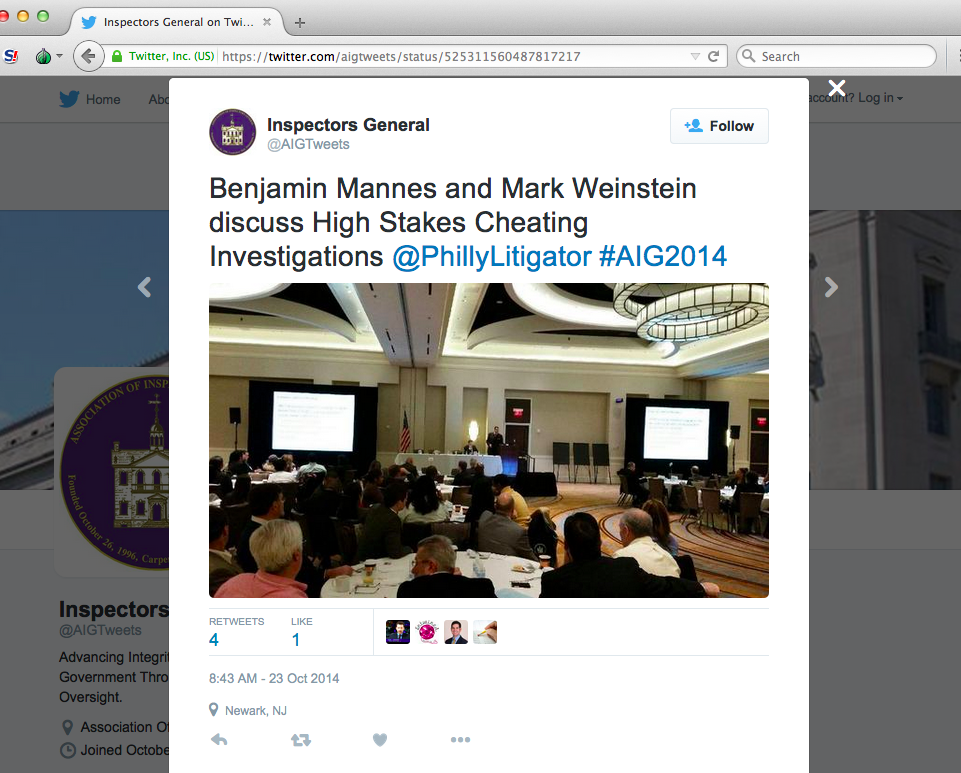
Sadly, these concerns have not disqualified Mr. Mannes and the ABIM's former prosecuting attorney from ABIM's law firm, Marc Jacob Weinstein (with whom Mannes collaborated and who helped bring the original legal complaint against Dr. Arora in 2009) from serving leadership roles (or as employees) of the test security firm, Caveon and marketing their expertise to the Association of Inspectors General or test security conferences (page 19) as late as November, 2015. It is also concerning that Mr. Mannes' background allows him to serve as Governor on the Board of Directors of Philadelphia InfraGard. (For those unfamiliar, "InfraGard is a partnership between the FBI and the private sector created after the 9/11 terrorist attacks that is an association of people from businesses, academic institutions, state and local law enforcement agencies, and other participants dedicated to sharing information and intelligence to prevent hostile acts against the U.S." Doctors should note that Philadelphia InfraGard lists its address as the same address as the FBI in Philadelphia.)

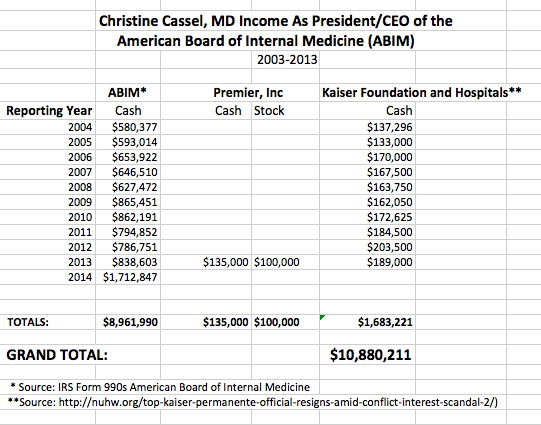
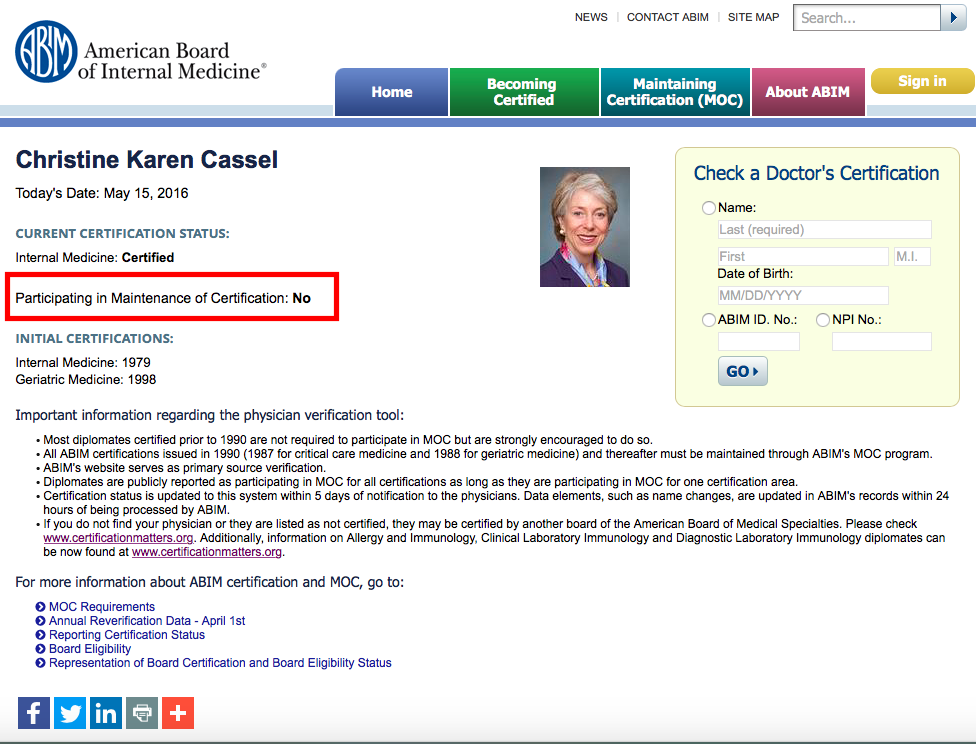
I believe Christine Cassel, MD, who was President and CEO of the ABIM at the time, bears much of the responsibility for the actions and direction of the organization during her tenure. The day after publishing the ABIM press release about the ABIM's actions and the appearance of a simultaneous article in the Wall Street Journal on the matter, Dr. Cassel published a column on the KevinMD blog 10 Jun 2010 entitled "ABIM responds to doctors sharing board certification questions." The original link to the redacted Arora emails that the ABIM claimed formed the basis of their suits against physicians has since been removed. (I retrieved the emails from the internet archive here). In her column, Dr. Cassel explained: "through these actions we are taking, we are reassuring patients and the public that the can continue to trust the process and, and (sic) physicians can continue to trust that it is a fair and rigorous assessment of their medical knowledge and judgment." In retrospect, I believe Dr. Cassel had good reason to use strongman tactics and a convicted felon against more vulnerable physicians: to insist the income generated by physician re-certification be protected. In her 11-year history as President and CEO, to the best of my knowledge, she earned at least $10.88 million dollars, with nearly $9 million of that amount from fees paid diplomats of the ABIM. Dr. Cassel, who it appears was pivotal in organizing the raid on these physicians' residences for her financial and political benefit, was a member of the President's Council of Advisors on Science and Technology (PCAST) at the time and remains there today. PCAST is an advisory group of the nation’s leading scientists and engineers who directly advise the President of the United States and the Executive Office of the President. Not surprisingly, Dr. Cassel who ironically describes herself a "leading expert in geriatric medicine, medical ethics, and quality of care," does not participate in Maintenance of Certification despite being a founding member of the Institute of Medicine and the former President and CEO of the National Quality Forum that determines quality metrics for the nation's hospitals on behalf of the Center for Medicare and Medicaid Services. Given her long-standing conflicts of interest with Kaiser Foundation Healthcare and Hospitals, is there any wonder why she was appointed as Planning Dean for the newly-announced Kaiser Permanente School of Medicine as of March 1, 2016? What message will her history of intimidation and questionable ethics send to Kaiser's future medical students?

ABIM's Ongoing Legal Actions

Currently, the ABIM is involved in another suit they brought against Arora Board Review attendee, Jaime Salas Rushford, MD from Puerto Rico. According to the letter sent to Dr. Salas Rushford on May 8, 2012, the ABIM was "conducting an investigation into the practices of Arora Board Review and its customers." According to the letter, the ABIM traced emails they obtained from Dr. Arora's computers and on the basis of their discovery "determined to indefinitely revoke your certification and will notify the Medical Board in every jurisdiction in which you are licensed" without due process. Given what we now know about the practices of the ABIM and their "Director of Investigations," is there any surprise that  Dr. Salas Rushford is having difficulty obtaining documents from the ABIM for his defense and for his countersuit against them? The foot-dragging and excuses made by the ABIM, including the possibility that Dr. Salas Rushford will make the settlement arrangement between Dr. Arora and the ABIM publicly available on his website, suggests the ABIM cut a special deal with Dr. Arora whom they never sued. What was that arrangement? Why has this not been disclosed publicly? How many other physician email addresses obtained from the Arora Board Review course computers does the ABIM still plan to track down and sue? How many millions of dollars have been squandered by the ABIM in legal attacks upon physicians attempting to fulfill the ABIM's unilaterally mandated re-certification requirements?

Most of all: how much more is the ABIM hiding?

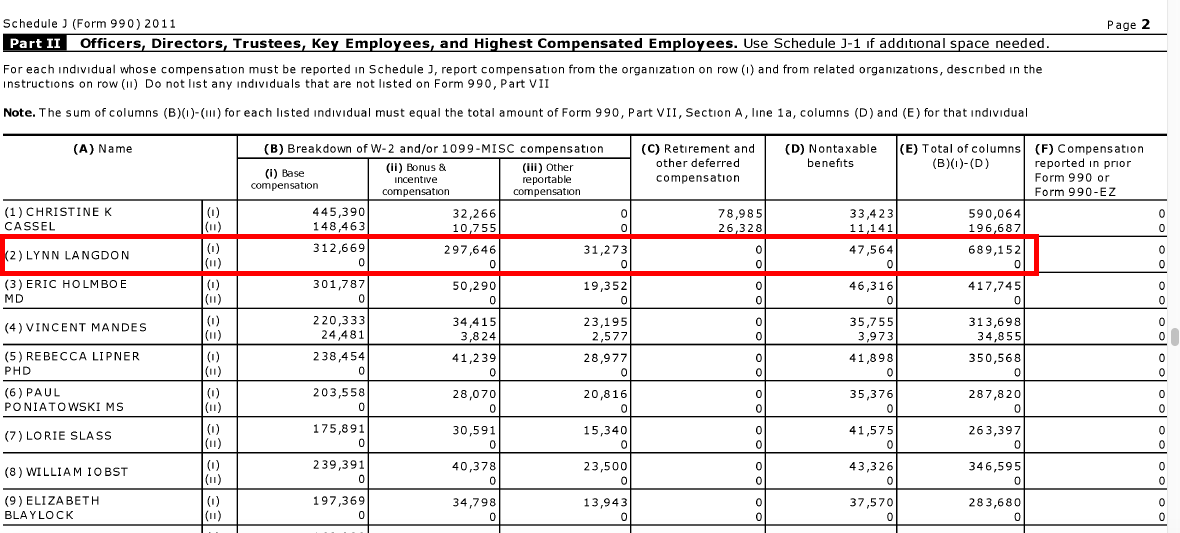
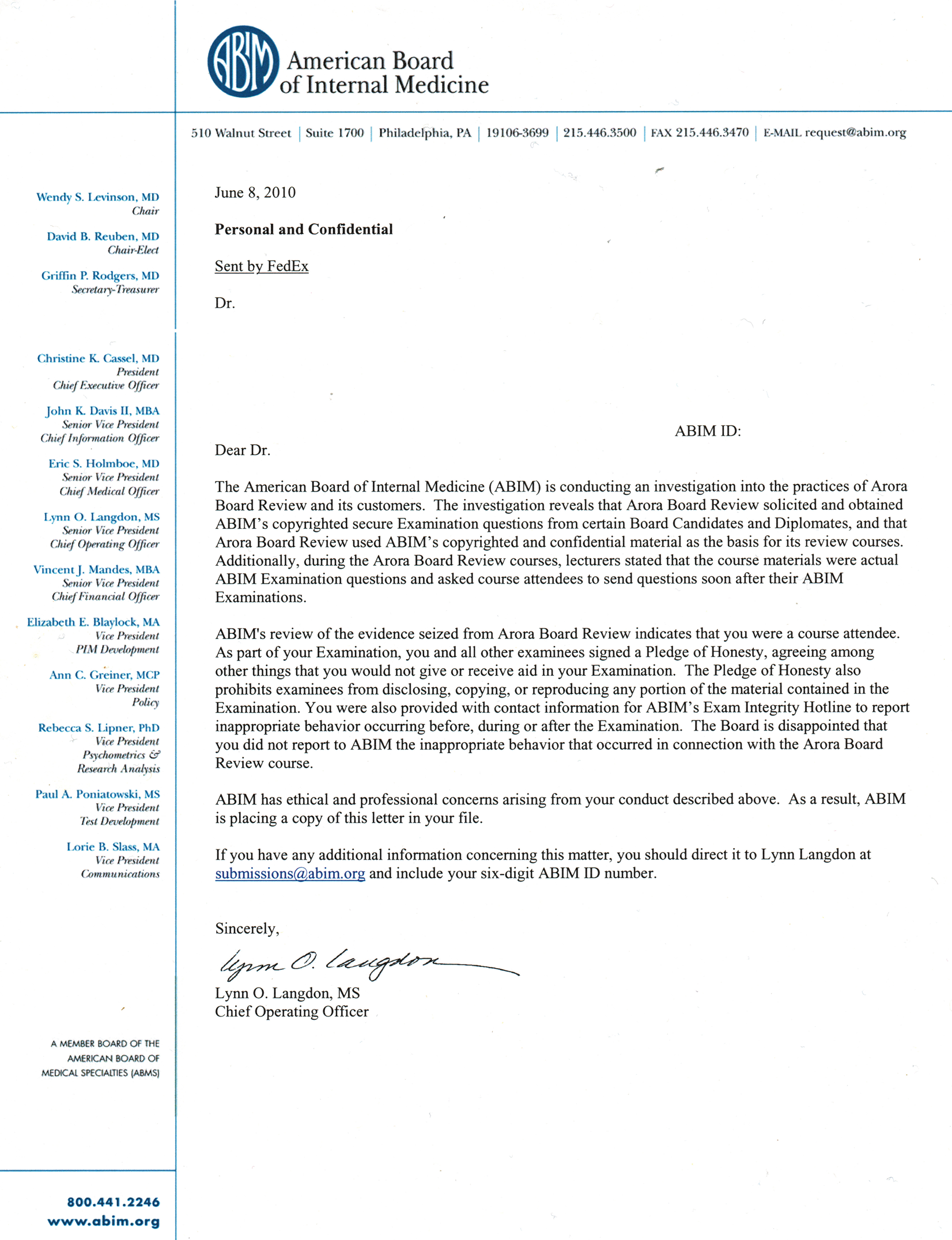
It is difficult to imagine a more Kafkaesque twist to US medicine's professional regulatory system.  At least six physicians were sued as a result of the ABIM's raid on Arora's residence and 134 more sanctioned, resulting in untold professional ridicule, anxiety, embarrassment, and potential loss of their ability to practice medicine. No doubt their patients suffered, too. To add insult to injury, Ms. Lynn Langdon, then the Chief Operating Officer of the ABIM and a non-physician staff member of the ABIM who earned $681,152 in FY 2012 ($297,646 as a "bonus and incentive compensation"), sent thousands of "letters of concern" to other physicians who attended the Arora Board Review course and reportedly keeps those letters on file. Richard Baron, MD, the current President and CEO of the ABIM, earned $61,216 as Chair of the Directors at the time of the audiotaping of the Arora Board Review course and was surely was aware of the raid as well. Like the McCarthy era, it appears we have a system of regulators that will stop at nothing to intimidate and blackball physicians to assure funding of their regulatory cartel.

It is time for the public and our professional societies to know the truth. I believe, given these facts, that the ABMS MOC program (and any iteration that it might morph into) has no place in US medicine and should be abandoned immediately. I also believe the Wall Street Journal that published its earlier story in 2009 with the headline suggesting physicians "cheated" should publish a retraction and provide a follow-up investigation of the ABIM with these facts in mind to set the record straight.  After all, the simultaneous release of the Wall Street Journal story the same day the ABIM press release was issued, coupled with the fact that physicians' names appeared in the article that did not appear in the press release, suggests the Journal was tipped to the story by the ABIM who sought to profit from their actions. To the best of my knowledge at this time, no physician that was sued by the ABIM as a result of the Arora raid has paid a dime in penalties to the ABIM for copyright infringement for attending the Arora course. Yet how much harm was experienced by the 139 physicians who were sued or sanctioned by the ABIM on the basis of the irresponsible actions of the ABIM and their felonious "Director of Investigations?" I know of at least one physician who received the ABIM's "letter of concern" has been unable to re-certify in any subspecialty since that letter was issued.

Moving Forward

It is time for a full investigation of the ABIM and its practices by the Department of Justice, Internal Revenue Service, or the Federal Trade Commission. Are the tactics, that have been used by the ABIM typical of a non-profit 501(c)(3) organization granted tax-exempt status? It will take time and resources to do so, but the public and practicing US physicians deserve to know the truth of all that has transpired and continues to transpire with our nation's physician regulatory system. Without such an investigation, it is hard to see how the ABIM or the ABMS will ever regain the trust of physicians or the public. Clearly, the status quo is unacceptable. If the ABIM and ABMS structure are to survive, bylaws must be changed to insist that an elected board will lead each subspecialty society in lieu of the appointed ones and membership of each organization must decouple themselves from the government and corporate interests that financially benefit the current system.  A full independent financial audit as far back as 1986 as well with full disclosure of tax filing discrepancies is especially needed.  Professional societies and academic journals who conspired with the ABIM and continue to support the ABMS MOC program for their financial benefit need a similar shake-up as well.

Physicians want to care for patients, we do not need unaccountable henchmen and bureaucrats hell-bent on their own power and profits to do our job. It will be up to each of us to demand that hospital systems and insurance companies no longer require ABMS specialty board "maintenance of certification" as an exclusive requirement for licensure, hospital admitting privileges, academic appointments, or insurance panel participation. If they do, it will be up to each of us to demand justice.


"It ain't what you don't know that gets you into trouble.
           It's what you know for sure that just ain't so."

- Mark Twain

(borrowed shamelessly from the opening quote of "The Big Short")

-Wes


References:

Dr. Wes blog: The Maintenance of Certification Controversy 2015 - The Year in Review 
Dr. Wes blog: The Business of  Testing Physicians

Image references: 
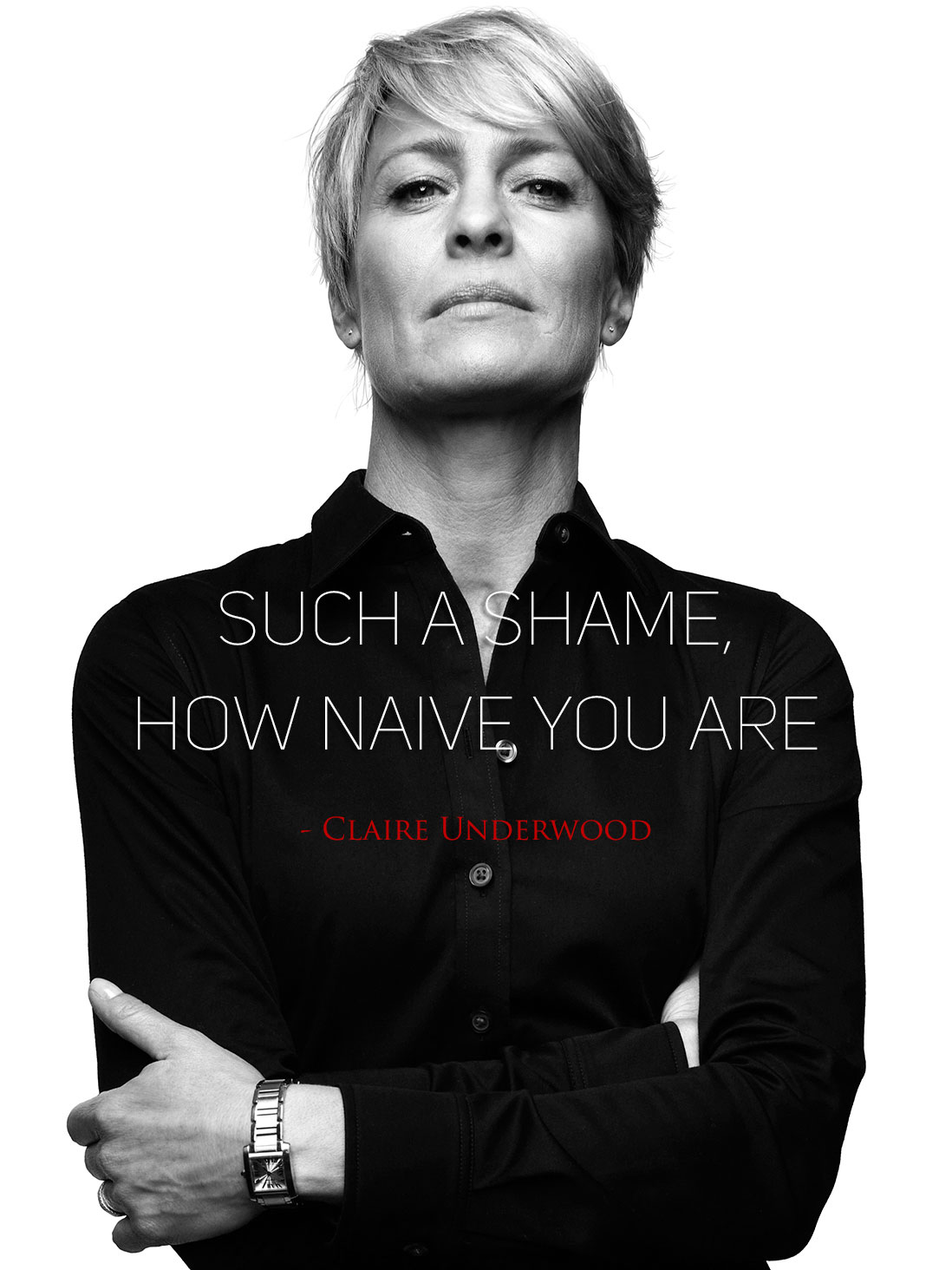
https://www.thrillist.com/culture/best-frank-underwood-quotes-house-of-cards-funny-and-witty-lines
http://houseofcardsquotes.tumblr.com/post/77137104455
http://www.scoopwhoop.com/world/hoc-quotes/

Behind the Curtain

On Monday morning (13 June 2016), I will enter "Crystal City" and speak to the men and women behind the curtain at the AMA House of Delegates Meeting here in Chicago. Today begins the first day of registration and the meeting carries through Wednesday morning. They have devoted a tiny 1.5 hours of time to speak on MOC beginning on Monday, 13 June 2013 at 9AM, Columbus Room EF, at the Hyatt Regency Chicago, 151 Upper East Wacker Drive, Chicago.  I will be joined by Charles Culter, MD of the Pennsylvania Medical Society and Mr. Charles Kroll, the forensic accountant from Minnesota with whom I have worked closely to dissect the IRS tax forms of the ABIM and ABIM Foundation. I have only 15 minutes to talk, but there will be a 30-minute question and answer session following.  I understand the session will be videotaped.

As I sit here this morning and try to collect my thoughts, it is clear that I cannot possibly cover all of the corruption that I can uncovered on these pages with the ABIM and with MOC, but what I know is that there are many who still don't know about my work and the far-reaching implications it has, not just for the ABIM, but for the entire ABMS re-certification industry and colluding members of the ACGME that have enjoyed their high salaries and health club memberships on the backs of our re-certification and membership fees.

Practicing physicians across the US and around the world are a world divided from the bureaucratic administrative members of the AMA. They are keenly aware that the AMA has not had their backs in the recent years. My hope is to educate and inform, not throw flames, but because the depth and breadth of the corruption and conflicts of interest with MOC have been so dire, it is time the delegates  at the AMA and the world at large be informed.

At noon today (CST) I will publish my latest work on the MOC debacle that has involved years of research and investigation. Many new revelations are exposed.  This piece will form the foundation for my remarks at the AMA House of Delegates meeting on Monday.  Be sure to check back here then.

Me?  I'll be doing cases and will moderate comments on my blog when I can.  Consequently, posting comments may be delayed until I can get to them.

Thanks for your understanding.

-Wes

Friday, May 27, 2016

Baron: "No Robust Evidence" for Maintenance of Certification

With the soft tinkling of gentle piano music playing in the background, Richard Baron, MD, President and CEO of the American Board of Internal Medicine (ABIM) and the ABIM Foundation, published a video on 20 May 2016 2014* attempting to justify the ABIM's high fees and requirement for "continuous" "Maintenance of Certification" (MOC) of physicians despite "no robust evidence" for the measure. Instead, he refers the viewer to the ABIM's "evidence summary" on their website and states "it's not randomized controlled trials but lots of what we do in healthcare is not randomized controlled trials. We do some things on a gut level of evidence, we do other things on a preponderance of evidence." (My detailed review of a portion of their "evidence" base can be found here.)

For $812,000 a year and countless lost hours of patient care and financial mismanagement, you would think he could do better than that.


Instead, Dr. Baron justifies the ABIM's actions on the basis that the ABIM was "preserving and protecting self-regulation at a time of change... otherwise it will be people, not physicians, who drive what all the expectations are for physicians." He claims the ABIM helps physicians "communicate to the public ways in which they communicate to the public that they have skills and that they have knowledge that other people don't have." As if physician's degree and training and countless years of experience and nights on call aren't enough.

According to Baron's own words, it appears the ABIM is little more than an exceedingly expensive marketing team working on our behalf.

But the real evidence of whom the ABIM has been working for can be found in the financial, political, and strong-man tactics used by the ABIM over the past forty years since "continuous" certification was conceived.

Dr. Baron never mentions the ABIM's secret transfer and cover-up of $55 million dollars taken from working physicians' test fees from 1990 to 2008 to create the ABIM Foundation and how the Foundation has moved a portion of those funds offshore.

Dr. Baron never mentions that the ABIM spent hundreds of thousands of dollars lobbying Congress to assure a perpetual money flow to the organization and hid these actions from the IRS to avoid paying taxes.

Dr. Baron never mentions that within all of their propaganda research the ABIM or ABIM Foundation never (once) studied the negative psychosocial effects of failing even one of their unjustified MOC examinations, nor the potential negative effects of cost saving initiatives promoted by the Foundation's "Choosing Wisely" campaign for the individual patient. He never mentions that  13.2% of clinically experienced physicians tested by their unproven metric failed their examination on their first try to the financial benefit of the ABIM and their partner professional societies.

Dr. Baron never mentions the his predecessor, Christine Cassel, MD, earned $10.88 million (nearly $9 million of that amount from ABIM diplomats and an amount that included spousal travel fees) during her 11-year leadership at the ABIM and ABIM Foundation. Nor does Dr. Baron mention Dr. Cassel's long-standing conflicts of interest with Premier, Inc or Kaiser Foundation Healthcare and Hospital system. Nor does Dr. Baron mention Robert Wachter, MD's conflicts of interest with IPC Hospitalist company that is now under federal investigation for overbilling Medicare.

Dr. Baron also fails to mention how serious they are about protecting their monopoly - that they even use Federal Marshals to raid homes and seize assets, call physicians cheaters, then collect an amount estimated to be $3 to $4.5 million in hush money to justify their program that has "no robust evidence." He fails to mention have 139 physicians were sanctioned because the ABIM felt doctors were the one cheating. He also fails to mention that the ABIM continues to track down and hunt physicians from as far away as Puerto Rico some four years later after publishing their one-sided account of details of their raid in the Wall Street Journal for their benefit "as a message and a deterrent."

But not all of the blame for the acceptance of MOC as a facade for physician competency rests with just the ABIM.  The American Board of Medical Specialties (ABMS) and the Accreditation Council on Graduate Medical Education (ACGME) that has quietly insisted on this credential for hospital and graduate training programs just so they can assure they receive more money from Medicare deserves blame as well. Their lack of leadership to expose the egregious behavior of the ABIM is at least as concerning, if not more so, for our profession and society.

-Wes

* Note, it appears this ABIM video was published in 2014, not 2016 as I first published. I regret the error and have corrected the post. Thanks to the anonymous commenter to corrected the date. Hopefully that same commenter will address the other issues brought up in this blog post as well.

Friday, May 20, 2016

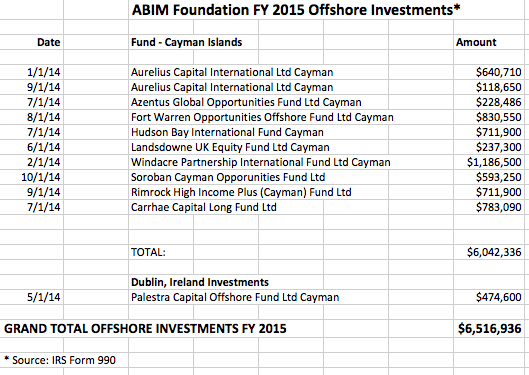
ABIM Foundation Moves Assets Offshore

In a move that is more reminiscent of a sophisticated investment broker rather than a non-profit, tax-exempt 501(c)(3) corporation interested in promoting "medical professionalism," this year's tax records of the ABIM Foundation (which is affiliated with and shares the same address as the American Board of Internal Medicine (ABIM) in Philadelphia, PA) show the Foundation has total assets of $81,831,953 and moved some of its assets offshore to the Cayman Islands and Dublin, Ireland in the form of non-publicly traded investments.

Recall that the ABIM Foundation was created by secretly funneling $55 million in physician testing fees from the ABIM to their undisclosed "American Board of Internal Medicine Foundation" (later renamed the "ABIM Foundation" in 2009) from 1989 through 2008. Only after the name change with the IRS in 2009 was the ABIM Foundation revealed publicly.

According to this most Form 990, not only does the ABIM Foundation continue to hold their $2,356,267 Philadelphia condominium bought with practicing physician testing fees, we now find they have systematically transferred $6,516,936 of our fees offshore to ten different funds (nine in the Cayman Islands totaling $6,042, 336 and one in Dublin, Ireland totaling $474,600).

Meanwhile, younger physicians can't afford the fees for certification and re-certification mandated by the ABIM. We should also note that the President and CEO of the ABIM and ABIM Foundation,  Richard Baron, MD, pocketed a cool $812,006 last year without night call or having to subject himself to any of the tough discussions with patients.

The Internal Revenue Service (IRS) needs to immediately revoke the non-profit status of the ABIM and its Foundation.  Practicing physicians now realize these organizations are more about protecting and growing their assets than benefiting physicians, their patients, or the public.

-Wes

Monday, May 16, 2016

Thuggery and Strongman Tactics Grow at the ABIM

There's a wonderful social media principle that might just stop Maintenance of Certification: the Streisand Effect.

The Streisand Effect is the phenomenon whereby an attempt to hide, remove, or censor a piece of information has the unintended consequence of publicizing the information more widely, usually facilitated by the Internet. And when the American Board of Internal Medicine (ABIM) resorts to thuggery and strongman tactics against a physician, this might just come back to bite them in the private parts.

Imagine, you are a physician and your regulatory agency strips you of your privileges to practice medicine without due process. Then imagine the same regulatory agency refuses to release information pertitent to your defense for months and months.

Then imagine, that same self-appointed regulatory agency decides to subpoena you for additional information for their case against you on the busiest travel weekend of the year with only 17 days notice (usual and customary time is 30 days notice). Then, after your attorney politely tries to plea for an adjustment of dates, that same regulatory agency that seems unable to provide information to you, basically says to your attorney: "Your client may choose to disregard it - and the sanctions such disregard will bring - at his own peril."

Welcome to the legal tactics of the ABIM that is feeling the heat of Dr. Salas Rushford's discovery requests and their upcoming meeting with the judge in the case on 3 June 2016.

In 2015, Dr. Salas Rushford had a  gross income $69,725 and a net loss of $1875 in 2015. Compare this amount to the $10.88 million Christine Cassel, MD earned from the ABIM and her cronies during her stint as President and CEO at ABIM from 2003-2013. According to their recently-released tax forms for fiscal year 2015, the ABIM recieved revenues of over $57,620,000 in its fiscal year ending Jun 30, 2015 and Richard Baron, MD (the current President and CEO) pocketed a cool $812,000.

One thing I know. The Internet doesn't like bullies that are trying to hide something from the public (just ask Barbara Streisand).

To me, this young man who has been accused of wrongdoing by the ABIM deserves a fair shake. Imagine what would happen if every US physician, internist, or medical student donated $1, $5 or $10 (or more) to his efforts - it would be a game-changer for the ABIM and for working physicians.

Consider donating to Dr. Salas Rushford's defense and countersuit of the ABIM here.

After all: bullies suck.

-Wes

P.S.: Consider sharing this post with friends.

Tuesday, May 10, 2016

A Critical Review of ABIM's Recent MOC Changes

In its never ending push to preserve the lucrative Maintenance of Certification (MOC) revenue stream, the American Board of Internal Medicine (ABIM) once again announced a "new option" to complete their corrupt MOC program to beginning January, 2018 (corresponding press release here).

The real details of the new option were sketchy and only promised the following:
  • Take the form of shorter assessments that doctors can choose to take on their personal or office computer—with appropriate identity verification and security (emphasis mine)—more frequently than every 10 years but no more than annually;

  • Provide feedback on important knowledge gap areas so physicians can better plan their learning to stay current in knowledge and practice and;

  • Allow physicians who engage in and perform well on these shorter assessments to test out of the current assessment taken every 10 years.
What was not mentioned was the following:

  • What this "new pathway" will cost and

  • What "identify verification and security" tactics will be proposed to maintain control of the American Board of Medical Specialties' (ABMS) proprietary MOC program.
Let's break these two unmentioned issues down, since they are increasingly at the crux of the corruption at the ABIM and ABMS.

COST

While I do not know what the "new pathway" will cost, we should note that the changes promised by 2018 only provides another way doctors can provide funds to the ABIM. Their proposed "change" does not remove the requirement for the clinically unproven re-certification MOC metric or its secure examination. Importantly, the new proposal does not address prior fraudulent tax filings or secretive funding of their ABIM Foundation from physician testing fees. What we can be assured, however, is the ABIM is desperate for cash to fund its operations and protect its tests. Given what we now know about the ABIM financial burn rate, it is safe to estimate that the ABIM needs to extract at least $200 per year from each and every internist in the United States (and maybe $300/year from specialists) to maintain their current cash flow.

Look for cost of ABIM's MOC program to be $200-300 per year for physicians irrespective of the various "options" or "pathways" the ABIM constructs to fulfill its MOC re-certification requirement.

TEST SECURITY

This is where things get interesting.

Test security is everything to the ABIM. Without it, anyone could replicate their process or "steal" their copyright-registered health information. Few details of how the ABIM plans to perform "identity verification and security" are forthcoming with their latest press release. But one thing we know, the ABIM will continue to have physicians entrap themselves in contract language promising secrecy and to observe obscure "pledges of honesty" before performing any MOC testing.

How might they protect their tests? Well, let's look at one of the test security options available to ABMS from a little-known test security firm, Kryterion. It seems Kryterion would monitor physicians who opt for the "at home" option using a webcam and microphones. According to Kryterion's Terms of Service, physicians will be asked to scan the room using their webcam before sitting before the computer with a live proctor on the other end of the line:
The Kryterion Certified Online Proctors (KCOPs) are trained to watch and listen for any unusual behaviors from the test taker. For example, unusual eye movements, removing oneself from the field of vision and making atypical noises are all noted and a behavior alert is sent to the test taker, depending on the business rules you set. The test taker is required to acknowledge the alert before continuing with the test and the KCOP resumes or stops the testing process, depending on the action you’d like us to take.
What legal action does the ABIM or Kryterion plan to invoke if they feel my eye movements are questionable? Yet this is the reality of "secure testing" that the ABIM might utilize. And as we've seen, it appears the ABIM is all to happy to deploy their lawyers on physicians at the slightest hint of a "testing irregularity" to extract even more revenue from physicians and to protect their monopoly.

Sorry. but I don't want Big Brother in my house. If this is how the ABIM plans to assure I'm compliant with my continuing medical education just so they can extract more revenue from me under the threat of litigation, they've got another thing coming.

ABIM has still not addressed its financial transgressions, multiple corporate conflicts of interest, high salary structure, and fraudulent tax filings. Unless and until these issues are addressed, look for the practicing physician community to avoid further interaction with the corrupt ABMS MOC program irrespective of any further changes to their MOC program the ABIM might propose.

-Wes

Tuesday, April 26, 2016

Fearing Exodus: American Board of Medical Specialties Issues Statement on Oklahoma

Fearing a mass exodus of physicians from the lucrative ACGME-mandated Maintenance of Certification (MOC) program, two member organizations of the ACGME, the American Board of Medical Specialties (ABMS) and the American Osteopathic Association (AOA), recently issued statements of "disappointment" or "promising to innovate."

The ABMS stated they were "disappointed" on the passage of the Oklahoma law outlawing the use of the ABMS MOC program for board certification, physician hospital credentialing, or insurance company payments and were "committed to improving their programs for physician certification and assuring that participation in MOC provides physicians with meaningful improvement opportunities." No mention of how they might cut the cost of their "commitment" to physicians was made.

The AOA's statement, issued just after the National Board of Physicians and surgeons open its credentialing process to osteopaths, "promised to innovate" so they could reach their "Rooftop Goals." Too bad the AOA still doesn't seem to understand that their statement promotes just what physicians don't need: another bureaucratic building project.

Neither statement issued by the ACGME member organizations provide convincing arguments of sincerity to practicing physicians that have seen their hard-earned cash squandered by these organizations and have failed to truly prove the clinical relevance or need for re-certification of any kind. Further, no accountability for the financial mismanagementstrongman tactics used by ABMS member boards to assure physician payments into this unproven metric, and fraudulent tax filings by member boards of the ABMS has yet to take place.

This outdated ACGME physician MOC re-credentialing system built on political and corporate cronyism is being rendered obsolete by the presence of real competition to the status quo by the National Board of Physicians and Surgeons' credentialing process that is credible, more affordable, and financially transparent. There is simply no going back.

Good riddance MOC.  Trust me: you won't be missed.

Nor will those who've made a living for themselves promoting this very broken and highly conflicted ABMS MOC program.

-Wes


Tuesday, April 19, 2016

NEJM Fails to Publish Comments Critical of ACCME Perspective Piece

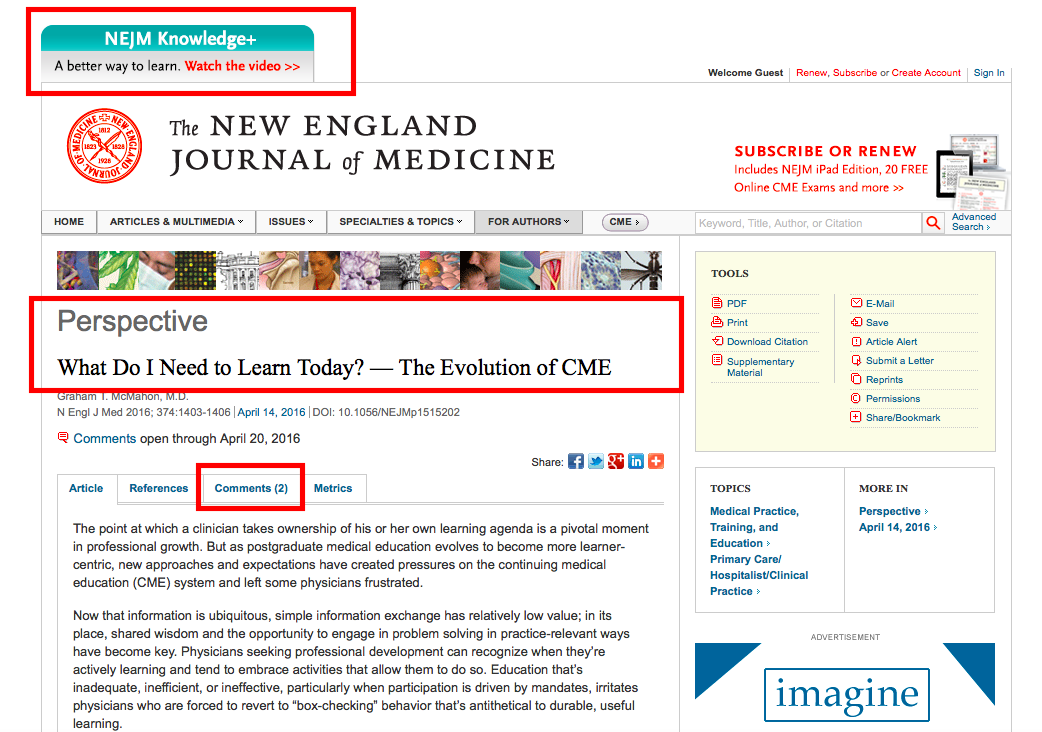
Screen Shot was taken 4/19/2016 of NEJM web page showing undeclared conflict of interest
(Click to enlarge)
I find it interesting that my comment to the New England of Journal of Medicine pointing out the undisclosed conflict of interest highlighted above and mentioned two days ago on this blog has yet to be published in the comments section appended to the article. Authors must disclose their financial conflicts. Why don't the editors of the New England Journal of Medicine?

It appears the cronyism displayed by the ACGME in support of the American Board of Medical Specialties Maintenance of Certification (MOC) product also extends to our "finest" medical publications.

Caveat emptor.

-Wes


Addendum 07:50AM CST: 9 Comments (including mine) now appear on the NEJM website.

Sunday, April 17, 2016

Rethinking Our Medical Education and Publishing Bureaucracy

Medicine has an image problem.

On one hand, medicine is full of wonder: incredible technology, incredible innovation, and incredibly bright people.

On the other, medicine is full of avarice, full of greed, and full of waste, much of it by the very same folks who bring us all that medicine has to offer: the Accreditation Council for Graduate Medical Education (ACGME).

The ACGME is an incredibly rich and powerful organization in medicine. It is comprised of the American Medical Association, (AMA), the American Board of Medical Specialties (ABMS) and its 24 member boards (including my "favorite", the American Board of Internal Medicine (ABIM)),  the American Hospital Association (AHA), the Association of American Medical Colleges (AAMC), the Council of Medical Specialty Societies (CMSS), the American Osteopathic Association (AOA), and the American Association of Colleges of Osteopathic Medicine (AACOM). Collectively, member organizations of the ACGME represent an annual burn rate of almost $1 billion dollars for medicine (Latest annual income figures from Guidestar.org: AMA ($261,328,052), AHA ($126,339,392), ABMS and its 24 member boards (Approximately $300,000,000; $54,454,584 for the ABIM alone), CMSS ($967,541), AOA ($44,376,054), AACOM ($10,855,122)).

As part of the ACGME's "Vision" statement, they "imagine a world" where residents and fellows are "prepared to become Virtuous Physicians who will place the needs and well-being of patients first."

This is where the ACGME's "vision" clashes with reality.

Right now, the average "Virtuous Physician" has a median debt load of $180,000 before they graduate from medical school and patients are experiencing bankruptcies from health care as our Medical Education Establishment dines at the Four Seasons and takes a few more reps in the gym.

The ACGME and their kin are still living in the world where first class air travel, memberships at health clubs, and $2.3 million condominiums with chauffeur-driven Mercedes S-class town cars are the norm. The ACGME seems blind to the irony of serving Virtuous Physicians while having one of its core values the "Engagement of Stakeholders" like their "friends in accreditation" at the Accreditation Council for Continuing Medicine Education, the Joint Commission on Accreditation of Hospital Organizations, the National Board of Medical Examiners, and the Federation of State Medical Boards, who foist educational programs like their unproven and wasteful Maintenance of Certification (MOC) program to fund their largess.

So it should come as no surprise that even our most "prestigious" academic journals like the New England Journal of Medicine (NEJM) are joining in on the fun. This week they permitted a promotional "perspective" piece entitled "What Do I Need to Learn Today - the Evolution of CME" to be published by the head of the Accreditation Council for Continuing Medical Education (ACCME), Graham T. McMahon, MD. Like other accreditation organizations within the ACGME, Dr. McMahon enjoys paid first class airfare and health club membership while promoting the legitimacy and expense of the costly and unproven ABMS MOC program that finds itself in a whirl of ethical controversy already. Meanwhile, the NEJM is selling its expanded and remarkably expensive  "Knowledge +" MOC educational product without ever acknowledging this conflict to its readers in this week's issue.

Our tired and inefficient "non-profit" bureaucratic medical education system better wake up soon to the new reality in medicine: practicing physicians and their patients are feeling the adverse effects of all those health clubs and first-class airfares.

In this time of serious cuts to patient care budgets in medicine, it's time our Medical Education and Publishing Establishment starts "learning what it needs to do today" besides stumping for wasteful "CME" programs and harvesting its budget from those who are finding it harder and harder to believe that our expensive medical education bureaucracy has their best interests in mind.

-Wes

Wednesday, April 13, 2016

Propaganda Machine: How ABIM Spins Its Survey Results

As it continues to spiral out of control, the American Board of Internal Medicine (ABIM) issued a press release telling practicing physicians what they've "learned" from "key findings from a representative sample" of internists.

Sadly, how their "representative sample" of internists' survey responses was collected and reported for this press release is telling.

Reviewing the methods used for the survey collection, we see ABIM's "ALL DIPLOMATE" survey was really created from less than 0.2% of all internists they polled. (360 respondents of 196,867 emails sent) and the results were "weighted" from a select subset of the internists whom they repeatedly queried to assure an acceptable response rate, introducing substantial selection bias).

What the ABIM continues to ignore is the overwhelming rebuke of the MOC process from over 23,000 physicians in 2014 and a similar survey result from the membership of the American College of Cardiology.

Propaganda masquerading as flawed survey results that are obtained by unaccountable organizations with large conflicts of interest with the physician testing/quality industry has no place in the practice of medicine. Press releases such as this one issued by the ABIM are both irresponsible and misleading. By issuing this press release, the ABIM demonstrates its blatant disregard for the best interests of physicians and patient care just so they can maintain their lucrative MOC program.

-Wes

Friday, April 08, 2016

Medical Societies to ABIM: What Gives?

In an unusual show of solidarity, twelve membership societies sent a carefully worded letter to Richard Baron, MD, President and CEO of the American Board of Internal Medicine (ABIM), asking him, basically, WTF?
For the past year, ABIM has actively solicited feedback from and encouraged the internal medicine community to engage in co-creating an MOC (Maintenance of Certification) program for the future. Despite these interactions—and even though our societies dedicate considerable resources to helping our members complete the MOC process—we are struggling to understand ABIM’s plan for re-engineering MOC to reflect the changing nature of medical practice.

However well intentioned, the overall vision, philosophy or strategy of ABIM’s changes to MOC are not clearly stated. Further, the lack of a shared vision makes it more difficult and costly for societies to adjust to changes made by ABIM that are implemented with little input from or notice to the societies.
While this letter might be "well-intentioned," it still buys into the notion that all MOC needs is to be properly “fixed.” These leaders completely ignore all of the financial improprieties that are part and parcel of the ABIM and MOC. They should be calling for its demise, or ensuring that MOC remains forever truly voluntary,by decrying any future linkage to licensure, reimbursement from payors, or hospital privileges, or they should join the mass noncompliance bandwagon.

Let's hope, however, that this letter represents the first crack in the ABIM's MOC "foundation." It is time membership societies stop beating around the bush and acknowledge how deeply corrupt and flawed the MOC program has become and understand that their membership is ready to jump ship if they don't.

They have a choice to make: ally with their practicing physician membership or ally with ABIM. Which will it be? I would suggest they start working on their next letter explaining to the ABIM what is actually happening.

-Wes

Wednesday, April 06, 2016

How the Feds Plan to Federalize MOC


From the Commonwealth Fund's Washington Weekly Health Policy Week in Review:
March 31, 2016 -- Health professional societies and consumer groups have asked Medicare to tread carefully while overhauling its system for paying doctors, raising concerns about an agency suggestion to include guidelines from a campaign that seeks to curb the use of often unneeded procedures and treatments.

Medicare officials are awaiting White House clearance of a draft rule designed to tie payments for doctors to judgments about the quality of care they provide. The Office of Management and Budget has been reviewing this proposal since March 25. The Centers for Medicare and Medicaid Services (CMS) rule would carry out the changes mandated in last year's congressional overhaul of Medicare physician payments (PL 114-10).

CMS last year sought public comments on how to design a new payment. In a request for information, the agency raised myriad questions about how the so-called Merit-Based Incentive Payment System program for doctors could be designed.

CMS asked if there might be some benefit to weaving in new system measures from a 2012 initiative known as the Choosing Wisely program, which asked doctors to identify commonly used medical tests, treatments and procedures that may be unnecessary for many patients. (Emphasis mine) More than 70 medical specialty societies have since released recommendations as part of the campaign.
Practicing physicians and patients should understand how the ABIM and its corrupt Foundation planned to federalize Maintenance of Certification (MOC), an unproven quality metric, as a pay-to-play money stream using the soon-to-be-deployed CMS "Merit-Based Incentive Payment System." By stealing over $70 million of physician testing fees, they created the ABIM Foundation and secretly lobbied Congress to assure that participation in MOC would become tied to physician pay, incentivizing physicians to participate in MOC. It increasingly appears Richard Baron, MD was instrumental at forwarding this model when he served the "Seamless Care Models Group" at CMS.

Senior citizens should be very concerned that top-down measures created from the ABIM Foundation's Choosing Wisely® campaign are really in their best interest.

After all, Choosing Wisely®, the ABIM, ABMS, and the ABIM Foundation are all about the money for these unaccountable non-profit organizations.

-Wes

 Image reference: The Heartland Blog

Sunday, April 03, 2016

Pivoting

It was Friday, the weekend not far away. It always seems that hospital people step lightly on Fridays, hurrying to get work done in anticipation of a few days off, the kids' soccer game, a concert, a dinner out. Upbeat, if you will.

So when the elevator door opened and he walked in, it was very different. I recognized him immediately for I had cared for him years before.  Gentle, kind man, usually with a smile, a polite nod. He was always with his wife. His a heart rhythm problem as I recalled. Now he and I alone. I struggled to remember his name.

His look was very different that I had remembered.  This time, the smile was very brief, tired. His face and frame much thinner. He looked away, fumbling for the elevator button, found it, and leaned back against the wall.  There, peeking out from beneath the right-hand side of his shirt were the edges of a bag and tubing. The diagnosis and prognosis now plainly coming into view.

It was hard to speak, not knowing what to say, so we just waited together, feeling the elevator travel its one short floor. Suddenly, the door opened again, our time together too brief, our earlier time so trivial in comparison. His journey much different now. I was lost for words but said goodbye. I could tell his mind was elsewhere. Anywhere but Friday.

It was so brief, telling, humbling, and real.

I'll never forget, sir.

God speed.

-Wes