
Showing posts with label legal. Show all posts

Tuesday, September 29, 2020

With MOC, Will Working Physicians Ever Get Their Day in Court?

For the past seven years, the American Board of Medical Specialties (ABMS) member boards have been under fire regarding their trademarked Maintenance of Certification® (MOC) program that shifted lifetime ABMS board certification to a time-limited US physician credential in 1990. 

Physicians have long argued that before 1990, board certification was an independent and generally-accepted assessment of the quality of their post-graduate specialty training. After 1990, however, ABMS board certification became two separate products: (1) an assessment of their post-graduate training and (2) a "continuous professional development"  (CPD) product tied to their original post-graduate training assessment. 

The logic for this two-product theory is simple. Before January 1, 1990, the CPD product was truly voluntary for physicians to perform. But after a trial run of this voluntary testing, fewer and fewer physicians opted to participate in the program in large part because of its unproven value and expense. To counter the declining enrollment, the American Board of Internal Medicine (ABIM) "Task Force" (and eventually all other ABMS member boards) decided to tie participation in the ABMS CPD product to the validity of a physician's initial assessment of their post-graduate training:

"Thus, the stage was set for the Board to embark on a new era in which its diplomates would be asked, but not required, to renew the validity of their certificates at periodic intervals or face the uncertain circumstances of loss of their status as certified internists, subspecialists, or holders of certificates of added qualifications."(1)
It didn't matter if a physician had participated in other self-directed Continuing Medical Education (CME) on their own accord; unless a physician performed the ABMS-sanctioned CPD program, they would lose their original ABMS board certification credential and the privileges that credential imparts to physicians in terms of academic, professional, and economic value.

This tie between a physician's original post-graduate assessment and lifelong continuous professional development proved remarkably lucrative for the ABMS and their member boards. So much so, that the ABMS CPD program was later trademarked as "Maintenance of Certification®" (MOC®) and had its own profit line on ABMS member board tax forms. The tie was so lucrative, in fact, that the largest member board, the ABIM, created an undisclosed shadow organization, the American Board of Internal Medicine Foundation (later renamed the ABIM Foundation) and secretly funneled tens of millions of dollars for nearly ten years without disclosing its existence to physicians and the public and purchased a $2.3 million condominium for themselves. After its public debut online in 1999, the ABIM Foundation later off-shored millions of those funds to the Cayman Islands in 2015. 

Is it any wonder that physicians would be upset?

Yet here we are.

So far, the ABMS member boards have had exceptionally good fortune protecting their MOC® product in court, arguing before various district court judges that ABMS board certification is not two products that are illegally tied, but rather just one big "board certification" product.  

Last week was no exception. The long-running lawsuit filed by the Association of American Physicians and Surgeons (AAPS) suit against the ABMS was dismissed with prejudice.  In addition, the antitrust suit field by two psychiatrists against the American Board of Psychiatry and Neurology (ABPN) was similarly dismissed (along the same legal lines of the ABIM and ABR lawsuits) but WITHOUT prejudice. (The judge left room here for the original Complaint to be amended - perhaps because the ABR lawsuit was later amended and has been fully briefed but not yet decided). 

It is interesting to this observer that there has been little fanfare in the media regarding these last two rulings in favor of the ABMS member boards. I suspect the ABMS and their associated specialty boards know that all eyes are on the ABIM antitrust lawsuit appeal recently filed. That appeal explains the two-product tie created by the ABIM clearly. Perhaps they'd rather not bring attention to that case that's due for oral arguments on the 23rd of October. So much hinges on the outcome of that case for both them and working physicians.

Irrespective of the cases outcome, however, the credibility and value of ABMS board certification has been tarnished forever. Given the revelation of the conflicts of interests and lucrative nature of ABMS board certification, rhe only way the ABMS brand could redeem itself is for a full accounting of all that has transpired against working physicians by these self-appointed non-representative academic physicians and the non-physicians corporate directors now at the helm of these lucrative ABMS specialty boards.

-Wes

(1) Richard J. Glassock, MD, John A. Benson, MD, Robert B. Copeland, MD, Herman A. Godwin, MD, et al. Time-Limited Certification and Recertification: The Program of the American Board of Internal Medicine. https://doi.org/10.7326/0003-4819-114-1-59

P.S.: Working physicians are still encouraged to support these important ongoing legal battles by contributing to the GoFundMe page sponsored by Practicing Physicians of America.

Monday, June 26, 2017

Antitrust Suit Against AOA Proceeds to Discovery Phase in New Jersey

The United States' primary certifying body for osteopathic physicians, the American Osteopathic Association, is set to proceed to discovery in a fraud and antitrust suit in the District of New Jersey after a federal judge in Camden denied the association's motions to dismiss a suit by doctors.

The physician-plaintiffs who sued the American Osteopathic Association have sufficiently stated antitrust claims at the pleading stage stemming from the agency's alleged practice of tying board certification to association membership, U.S. District Judge Noel Hillman ruled Monday. The judge also ruled that the plaintiffs stated a viable claim under the New Jersey Consumer Fraud Act with their assertions about renewal fees imposed on doctors who had been promised their certifications would not expire.

Hillman also rejected the association's motion to transfer the case to the Northern District of Illinois, near the group's headquarters. The association did not argue that the District of New Jersey is an improper venue, but merely sought a transfer for its own convenience, he said.

This last detail is important, because the Association of American Physicians and Surgeons anti-trust suit against the American Board of Medical Specialties that was originally filed in New Jersey, was allowed to move to the Northern District of Illinois and has languished there since January 2015.

-Wes

Reference: Duane Morris LLP website press release.

Wednesday, February 13, 2013

When Patients Can Obtain Their Own EKG

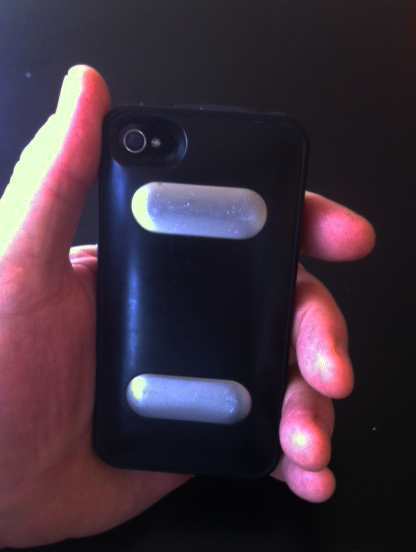
With the announcement that the FDA granted 510(k) approval for the AliveCor EKG case for the iPhone 4/4s, the device became available to "licensed U.S. medical professionals and prescribed patients to record, display, store, and transfer single-channel electrocardiogram (ECG) rhythms."

While this sounds nice, how, exactly, does one become a "prescribed patient?"  Once a doctor "prescribes" such a device, what are his responsibilities?  Does this obligate the physician to 24/7/365 availability for EKG interpretations?  How are HIPAA-compliant tracings sent between doctor and patient?  How are the tracings and medical care documented in the (electronic) medical record?  What are the legal risks to the doctor if the patient transmits OTHER patient's EKG's to OTHER people, non-securely?

At this point, no one knows.  We are entering into new, uncharted medicolegal territory.

But the legal risks for prescribing a device to a patient are, sadly, probably real, especially since the FDA has now officially sanctioned this little iPhone case as a real, "live" medical device.  But I must say, I am not a legal expert in this area and would defer to others with more legal expertise to comment on these thorny issues.

This issue came up because a patient saw the device demonstrated in my office and wanted me to prescribe it for them.  So I sent AliveCor's Dr. Dave Alpert a tweet and later received this "how to" e-mail response from their support team:
Dear Dr. Fisher,


Thank you for your interest in the AliveCor Heart Monitor. I'm writing in response to your tweet to Dr. Dave (Alpert) yesterday. Below are the instructions; in addition these instructions can be found at www.alivecor.com (click on the “Buy Now” link in the upper right corner).

To obtain a monitor for your patients, please follow these steps:

1. Write a prescription for the “AliveCor Heart Monitor for iPhone 4/4S”

2. Ask your patient to go to here and submit the following:

a. The prescriber’s information - your name, address, phone number, license number and license state or NPI (National Provider Identifier)

b. A copy of the prescription (attach a scanned copy or photo)

3. Go to www.alivecor.com and click on the “Buy Now” link in the upper right to purchase the monitor

a. In the “NPI/State Medical Lic #” enter “Prescription”

NOTE: The patient's credit card will be charged once they place their order, however we can’t process their order unless we have received their prescription.

Please know that at this time AliveCor does not provide any ECG interpretation, diagnosis or analysis of the data obtained with the monitor. Patients will be instructed to contact you, their physician, regarding any questions they may have regarding their recordings.

Please let me know if you have any questions.

Regards,
It is clear AliveCor wants to provide the device and its app, but will not be responsible for the interpretation of EKG's.  That is up to the doctor and their patient how to manage the clinical expectations of this technology.  While some patients could probably perform EKG interpretation basics, I would guess most don't really understand what that wavy line means.  Hence, this is where a discussion should be held with a patient BEFORE prescribing this device and the expectations defined before its use.

For me, I am happy to provide interpretations free of charge when needed as long as it is convenient and non-disruptive to my clinical responsibilities and personal life.  There are only so many hours of the day and since I must value that time, cannot bill for this EKG-reading service, and have no quality control over the caliber of the recordings submitted, I consider my interpretations of tracings sent to me to be provided to the patient as a "good Samaritan" in every legal sense of the term.  Patients who have clinically worrisome symptoms and need emergent analysis of their heart rhythm should seek help in an emergency department or call 911 and not expect a doctor to provide an immediate interpretation of their tracing, unless such an arrangement is defined clearly between doctor and patient before issuing the device.  Expecting a doctor to make urgent clinical decisions based on this single-lead EKG app is of limited utility, in many (and maybe most) instances in my view, so patients should look at this device as a convenient adjunct to more conventional medical care.  While it might come one day, the AliveCor iPhone EKG has simply has never been tested for emergency use as of the time of this writing.

So I may do a test run to see how it goes on a test basis but I can already see some legal concerns for doctors who prescribe this device.  Until a clear interpretation workflow is established that can provide comprehensive coverage of interpretations paired with a well-defined and easy-to-use interface with a medical record system, patients should understand doctors' possible hesitation to prescribing this device to a multitude of patients for personal use.

-Wes