Showing posts with label Maintenance of Licensure. Show all posts

Monday, June 20, 2022

Antitrust 101: How to Build Medical Monopolies by Discrediting U.S. Physicians

Recently, there have been a rash of initiatives by unaccountable non-profit physician credentialing organizations (Federation of State Medical Boards, the American Boards of  Internal Medicine, Family Medicine and Pediatrics), and the American Medical Association to come to the public's rescue by de-credentialing U.S. physicians they accuse of spreading misinformation during the COVID-19 pandemic.

Physicians have seen this medical monopoly-building playbook before.

The video below reviews the antitrust, monopoly-making activities of the American Board of Internal Medicine (ABIM). The discrediting of certain U.S. physicians as "cheaters" and disseminators of "misinformation" serve as a smokescreen to their monopoly-building activities. As physicians worked tirelessly to care for patients during the COVID-19 pandemic, the ABIM used U.S. physicians' testing fees to redistribute physician testing fees for their "social justice" initiatives, most significant of which was lobbing Congress so their separate Maintenance of Certification (MOC) continuous testing produt would be a never-ending source of revenue and data metrics used by the Medical Industrial Complex. Sadly, this mandate on younger, more vulnerable ABMS-board certified US physicians has harmed hundreds of physicians and tens of thousands of patients as physicians burn out and leave the profession.

For all patients who wonder why health care prices are so high and access to a board-certified physician has become so difficult, look no further than the organizations above. 


Monday, July 03, 2017

Common Sense

Four years ago, I had to "re-board certify" in cardiology and cardiac electrophysiology or lose my ability to practice medicine at the hospital I have worked since 2001. The "de-credentialing" aspect of failing to participate in the American Board of Internal Medicine's (ABIM) self-proclaimed "Maintenance of Certification" (MOC) program infuriated me, but I was left with no choice but to "pay up and a just do it."

Like my colleague Meg Edison, MD, I seriously thought about not re-certifying at the time, but my wife intervened and suggested I'd be more effective at combating the requirement while remaining "certified" so I could not be passed off as a disgruntled doctor. So I reluctantly registered for the "program."

My! How "re-certification" had changed since 2002! As I registered, I quickly learned that I no longer just had to take a "test" to re-certify. I also had to perform unsupervised research surveys on my patients. I had to dream up a quality assurance project and test it on myself and my clinic. I also had to review volumes of information purchased from the American College of Cardiology for $1350 because if I did not pass my cardiology re-certification, I could not practice as a cardiac electrophysiologist because of the "double jeopardy" dual-board passing requirement in effect at the time. Due to the high-stakes nature of being unable to practice if I failed either of my examinations and to save time, I attended a three and a half day board review course sponsored by members the Heart Rhythm Society for another $1400. Reading the materials I had purchased was not enough. Only if I read the same material on a COMPUTER (with ridiculously slow screen load times), would I receive CME credit for my hours spent studying. All of this pulled me from the patient care I was also trying to provide, took precious free time away from time with my family, and done without any proof that MOC improved my patient's care quality or safety.

Puzzled by the complexity of the "new MOC" I had to endure, I started to investigate and write about my experience on this blog. What has transpired since beginning this effort over the last four years has been nothing short of remarkable. I quickly learned that I was not alone - that physicians across the country were just as infuriated as me. I was struck by the unassailable power the ABMS member boards had amassed over physicians' ability to treat their patients. As I kept writing and investigating, I was introduced to others who knew more than I did about the board certification and re-certification folly. I met real leaders in the fight against MOC: Paul Kempen, MD, PhD, Ron Benbassat, MD, Charles Cutler, MD, and Mr. Charles P. Kroll - a forensic accountant and fellow Illinois resident at the time - who helped me understand the depth and breadth of financial shenanigans going on.

Mr. Kroll and I eventually reviewed every Form 990 and 1023 tax document we could acquire on the ABIM and its Foundation - all the way back to 1997 (the earliest complete tax form I would find) and the years-long financial, political, and power agendas inherent to MOC became clear. Edward J. Schloss, MD (a fellow electrophysiologist) and I published the history and origins of MOC and the published veiled threats imposed on physicians if they failed to comply contained in the peer-reviewed literature. Gradually, things began to make more sense. What I was not prepared for, however, was the depth and breath of the professional societies' dependence on the program and their impotence at effecting real change. Time and time again, peer-reviewed articles and rebuttals to ABIM's publications weren't published.

With ongoing review, it soon became clear that things did not stop with the ABIM. Other ABMS member boards, the hospital lobby, and even entire departments of internal medicine at large state-owned academic medical centers appeared to conspire with the unproven need for MOC. Even the "National Committee on Quality Assurance" and one of the oldest and most influential medical societies (and owner of the New England Journal of Medicine) used MOC to create new revenue sources. Too much money was involved at practicing physicians' expense. Even the hospital lobby, always eager to the control the flow of patients to their group's facilities, were more than happy to play along when doctors brought legislation to states, insisting that MOC be tied to physicians' hospital privileges on the false promise it assured physician competency.

On and on our investigation went: from the ABIM Foundation (and the "Choosing Wisely" initiative), to the National Quality Forum, the National Committee on Quality Assurance, the Institute of Medicine, and even the President's Council of Advisors on Science and Technology! It was an amazingly intricate (and lucrative) physician education/testing/quality assurance cartel that has operated without any legitimate oversight or questioning of their actions for years.

It was clear that I (any many others) had opened an entire Pandora's box of corruption in the US medical education system and medical quality and safety empire, the likes of which I could not imagine.

At the same time, physicians from other locations wanted change, too. A petition hosted by Paul Teirstein, MD of Scripps Medical Center in La Jolla, CA garnered over 23,000 physician signatures and led him to create a competing credentialing body, the National Board of Physicians and Surgeons (NBPAS). The ABIM, feeling the pressure of legitimate competition, issued their now infamous "we're sorry" mea culpa promising to "listen" and modify the MOC program. Even the New England Journal of Medicine felt compelled to sponsor a limited journalistic "debate" between Dr. Teirstein of the NBPAS and Lois Margaret Nora, MD, JD of the ABMS. The comments were overwhelmingly in favor of Dr. Teirstein. But physicians were no longer fooled. Despite publishing these opposing articles,  physicians saw the Massachusetts Medical Society (publishers of the New England Journal of Medicinepromote their own MOC learning program: "Knowledge +". Everyone, it seemed, placed the money from MOC before the needs of practicing physicians and their patients.

Naively, I went to my professional society and raised red flags. While the Heart Rhythm Society initially appeared to take a strong public stand against MOC, hosting a debate between Fred Kusumoto, MD and Douglas Zipes, MD in 2015, there was little real debate. Dr. Zipes - a long-time director at the ABIM - refused to address anything about "the ABIM finances, fees, salaries, investments, etc." Later, it has become apparent that the revenues from MOC board review courses and the affiliation with ABIM were too important to the leadership at HRS to end their affiliation with the MOC program. Even when main stream media (a la Mr. Kurt Eichenwald from Newsweek) tried to expose the corruption in four well-researched articles on the ABIM (see here, here, here, and here), the ABIM and physician education establishment summarily dismissed all of the facts levied against the organization because Mr. Eichenwald failed to disclose his wife was an internist. (You can't make these things up.)

At the invitation of the Pennsylvania Medical Society in June 2016, I went to the AMA House of Delegates to tell my MOC story and there they all were: the chairman of the board and chief counsel for the AMA, the Senior Executive Vice President of the American College of Physicians, the President and CEO of the American Board of Medical Specialties. The room was packed as they listened, writing notes. The Pennsylvania Medical Society took the lead and bravely issued a formal "Vote of No Confidence" against the ABIM and the AMA House of Delegates later voted to end Maintenance of Certification (MOC) nationwide. There was hope, I thought.

Still, the AMA leadership failed to act to end MOC.

Many physicians would not rest. Not only had doctors become familiar with the incredible ABIM Foundation condominium story, they learned of the strongman tactics used by the ABIM in an issue of Philadelphia Magazine devoted to the ABIM controversy. Worse still, they saw the veiled threats from a Wall Street attorney levied for exposing the ABIM's felonious "Director of Test Security" in a subsequent issue of the magazine. Unfazed, brave, proactive physicians forwarded legislation across the country to end MOC as a condition of hospital credentials, medical licensure, and ability to participate in insurance panels. State after state attempted to pass legislation, only to realize how difficult it was to do so when they were fighting the hospital and insurance lobbies and colleagues suffering from Stockholm Syndrome as hospital-employed physicians.

This year, the Pennsylvania Medical Society organized another event at the AMA House of Delegates meeting to discuss the realities of trying to get anti-MOC legislation passed in state legislatures across the country. The AMA, ACP, and ABMS leadership were not readily apparent  this time. They had moved on, coordinating their message and confident in their cash reserves and lobbying team. It became readily apparent to those of us at that meeting that the insurance and hospital lobbyists would stop at nothing to prevent this legislation as intended from going forward. After all, not only does MOC remain a critical revenue stream for our bloated and overreaching US physician credentialing system, it also serves to limit competition for them as they insist this metric serves the "public" at physicians' personal and professional expense. While MOC remains in many parts of the country, through this process we have learned a lot. Multiple states now have anti-MOC laws on the books now with Texas's law going into effect 1 January 2018. Since that law was voted in to place, Houston Hospital Physicians voted unanimously to remove the ABMS MOC requirement for credentialing.
“The legislature did their job, Doctors Buckingham and Bonnen did their jobs, now all of us need to take back the autonomy we gave up when we allowed MOC,” Dr. Hampel said. “We need to vote it out of every bylaws in the state.”
So Where Do Working Physicians Go Now? 

What can practicing physicians on the front line of patient care delivery do?

We have two choices: 1) continue the status quo, or 2) organize to end the injustice. MOC is just one example of overreaching and damaging regulatory intrusion on the practice of medicine.

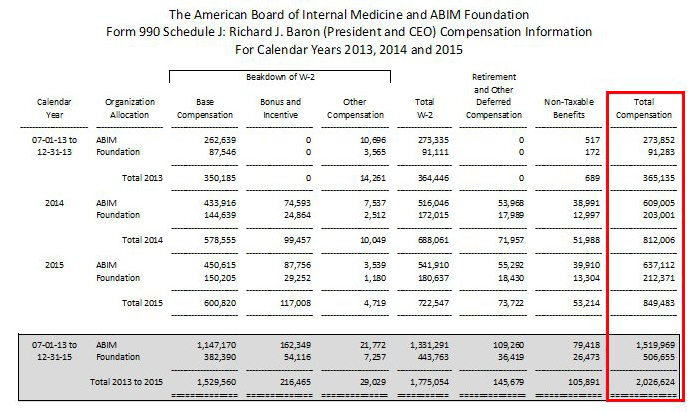
It is not okay that the ABIM secretly took at least $77 million of physician testing fees to create their own ABIM Foundation retirement fund and then offshored a hefty portion of that money for themselves. It is not okay that the ABIM, an unaccountable non-profit organization,  targeted vulnerable physicians trying to study for their examination using a known felon and their attorneys. It is not okay that Richard Baron, MD, President and CEO of the ABIM and its Foundation, earned $2 million from 2013-2015 while ABIM had $31.7 million in operating losses. It is especially not okay that the entire Accreditation Council for Graduate Medical Education (ACGME) member organizations continue to condone these activities by failing to act against them. Where evil and hypocrisy are rewarded and even called humane and good, it shows how twisted our words have become and how far corporate medicine has fallen.

As our new residents start training this Fourth of July weekend, if US physicians do not act collectively to end MOC, we condone the development of doctors that are little more than excellent sheep. Ignoring what has occurred to our profession due to our earlier indifference would risk the development of a medical education system that manufactures doctors who, as the wise professor William Deresiewicz put it, are "smart and talented and driven, but also anxious, timid and lost, with little intellectual curiosity and a stunted sense of purpose: trapped in a bubble of privilege, heading meekly in the same direction, great at what we're doing but with no idea why we're doing it." Aspiring to be excellent sheep is not in our patients' best interest. We should never forget why we're physicians and whom we truly serve.

Organizing is the only way we will end MOC nationwide and the many other intrusions created by clever unaccountable third parties behind closed doors for their own benefit.

To that end, I am not talking about unionizing. I am not talking about a partisan group to push a particular health care reform agenda.

Rather, I am talking about creating a representative member organization that does three things: (1) represents the needs and concerns of real-life practicing physicians who care for patients day to day, be they employed or in private practice, (2) acts to limit unnecessary, overbearing, and improper regulations against physicians (like MOC), and (3) works to assure that physicians are allowed to remain the principle advocate for their patients without threat from third party intrusions. Everything this organization does would be driven by these three principles.

Unfortunately our reality is that none of this can happen without money. It costs money to create an organization, hire a person to answer the phone, and pay an executive director to manage the operations while we continue to do what we love to do - care for patients. It takes money to send someone to testify in front of state legislators, the FTC, the IRS, or lobby Congress on our behalf. It takes money to develop a legal fund to combat the injustice of MOC that has occurred behind our backs. And it takes money to make sure such injustice never happens again.

Our nascent organization, Practicing Physicians of America, Inc. (PPA) which has come together on a shoestring and a prayer, has reached out to many of the leaders and organizations involved in the anti-MOC movement. Many have agreed to serve as our advisors. We have already been active on Capitol Hill, worked to coordinate the statewide legislative efforts against MOC, and testified in state legislative hearings. To continue our efforts, PPA is now formally open for membership (and donations) to bring our dream to a sustainable reality.

None of our board members are paid. For months we have donated countless hours in our spare time to this endeavor because we each believe in PPA's mission. But there's still an incredible amount left to do. We know we can't do this alone. Such an ambitious project will take a large coordinated effort from the entire practicing physician community to make this organization a sustainable reality and for it to have an impact on a national scale. Many disparate groups of practicing physicians exist with varying agendas, but none of them work as a collective umbrella group to help coordinate common needs of physicians and their patients. This is how we hope to magnify our voices. Membership is how we will celebrate our profession and collaborate with other like-minded physician groups and leaders across the country.

It is the MOC issue that has brought us together and will be the MOC issue that guides us as we forge ahead.

Take a moment to review the early version of our website, our introductory video by Judy Thompson, MD, and our MOC webpage to educate yourself. Then take a minute to become a member of PPA (or just give what you can). (For those who gave with our initial "soft opening in February" you're already "in" for the first year and will receive a code to apply when you register. Please don't despair if the system does not "know" you yet. Rest assured, your donations have helped us achieve what we have so far). For all of those who have not joined, we need your help, your voice, and your funding to act on our behalf in this anti-MOC fight and to build an organization devoted to the needs of working doctors and their patients unencumbered by special interest funding. The cost for a year is about what many pay for a monthly cellphone bill.

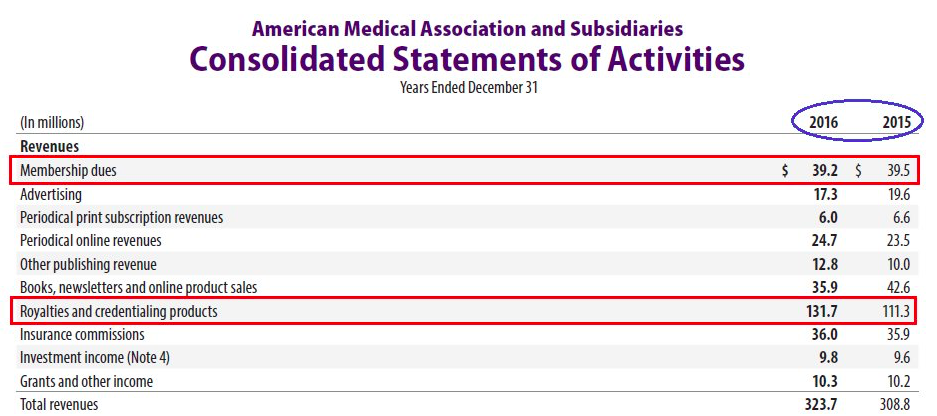
Many hands make light work. There is strength in numbers (this is the key: we need a lot of numbers) as we forge ahead. Each little bit helps. We should remember that only 15% of physicians are members of the AMA and AMA receives only 12.1% of its revenues from its membership. The vast majority comes from credentialing, insurance commissions, and licensure of their CPT codes. PPA hopes to represent the far greater silent majority of practicing physicians who work on behalf of their patients' best interest and want to end corrupt and burdensome regulatory intrusions.

For years physicians on the front line of patient care have yearned for an organization that speaks for them. Now the skeleton of that organization is in place. Help us grow to end the ability for unaccountable (non-profit) organizations like the ABMS, their member boards, insurance companies, and hospital groups to deprive physicians of our right to practice medicine on the basis of unproven, intrusive, and financially-conflicted programs like MOC.

Please join us. Then pick your phone and personally ask your colleagues to do the same. We need your help to make this dream succeed.

-Wes

Thursday, June 09, 2016

Maintenance of Certification: Medicine's House of Cards

Background

In 1986 after struggling for years to secure a growing stream of revenue, the American Board of Internal Medicine (ABIM), a 501(c)(3) non-profit physician testing agency originally domiciled in Iowa and now located in Philadelphia, PA, unilaterally decided to make its once voluntary and lifelong Board certification credential time-limited. In 1986, the prospect of implementing universal healthcare (Hillarycare) loomed on the political landscape so there was a growing sentiment within the ABIM that its role should shift from determining a physician's excellence to practice medicine to assuring a physician's practice adequacy. By making this strategic philosophic change, the ABIM assured itself a new and virtually limitless revenue stream for years to come on a promise they knew how to determine such a metric.

There was only one problem: how does one define physician excellence?

Excellence in medicine is not easily defined. Is physician excellence defined by patience, empathy, intellect, experience, surgical dexterity, technical skills, or some combination of these things? Or might it be judged on something else entirely? Might the qualities of excellence from a general internist be very different from those of a specialist in internal medicine?

Such important questions did not concern the leadership at the ABIM. They were convinced that not only was it possible to define methods for measuring excellence, they would blaze the trail for this endeavor. To assist them, the leadership of the ABIM co-opted the nation's brightest scholars, lured by first-class airfares, the nation's most luxurious hotels, and elegant wine selections at dinner, to create more challenging and clever test questions for practicing physicians. None of these scholars complained.  Many were honored to provide such a service; it was a great gig for those lucky enough to escape the mundane work of actually caring for patients while being wowed by the lavish creature comforts afforded to them.

On the other hand, working physicians on the front line of health care were caught completely off-guard by the unexpected unilateral "re-certification" rule change developed in December 1986 and ultimately implemented by the ABIM in 1990. Practicing physicians, accustomed to a lifetime of testing and unaccustomed to strongman tactics and political pandering that threatened  "uncertain consequences" if they did not participate, never questioned the rationale for the rule change. For most doctors, the change was seen as just another test they needed to pass to keep working despite never being independently shown to improve patient care or outcomes.

That is, of course, until practicing physicians slowly awakened to the gravity of the ABIM's rule change if they failed re-certification: there was a very real possibility that they might find themselves no longer "Board certified" and could lose their license to practice medicine, hospital admitting privileges, or ability to receive insurance payments. They were cleverly trapped. What choice did they have other than to participate?

Empowered by the significant additional revenues garnered by re-certification and a politically lackadaisical physician workforce, the leadership of the ABIM and the American Board of Medical Specialties (ABMS), along with the many friends they secretly lobbied on Capitol Hill, were asked to deliver even more for their undisclosed corporate clientele: Premier, Inc., CECity, Kaiser Foundation Health Plans and Hospitals, the IPC The Hospitalist Company and their close-held relationships with the Center for Medicare and Medicaid Services (CMS). The leadership at the ABIM decided to expand their definition of physician "excellence" to include the concept of "medical professionalism." This way, a health care cost-saving imperative could be levied on physicians, too.

But medical professionalism, like medical excellence, was not easily defined. Like pornography, the leadership at the ABIM just knew it when they saw it.

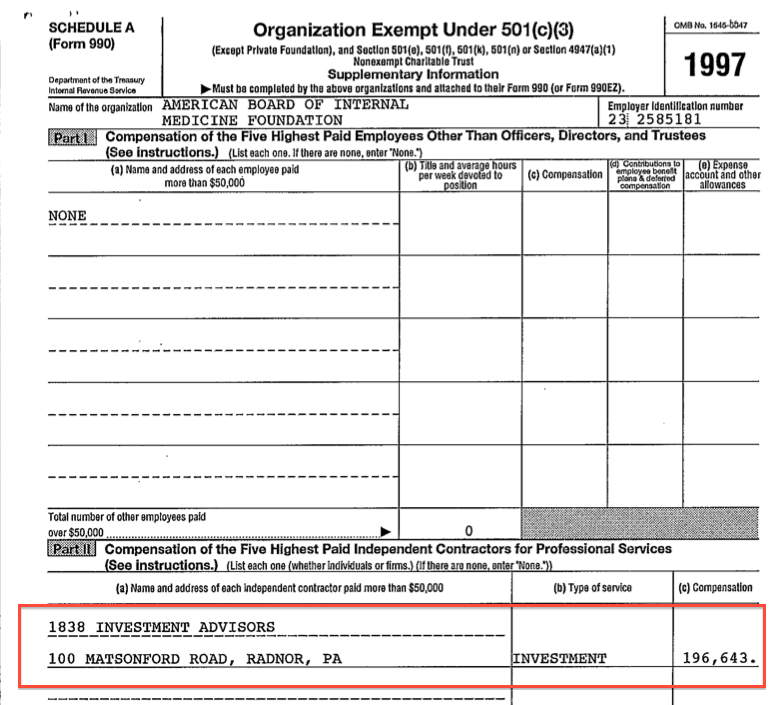
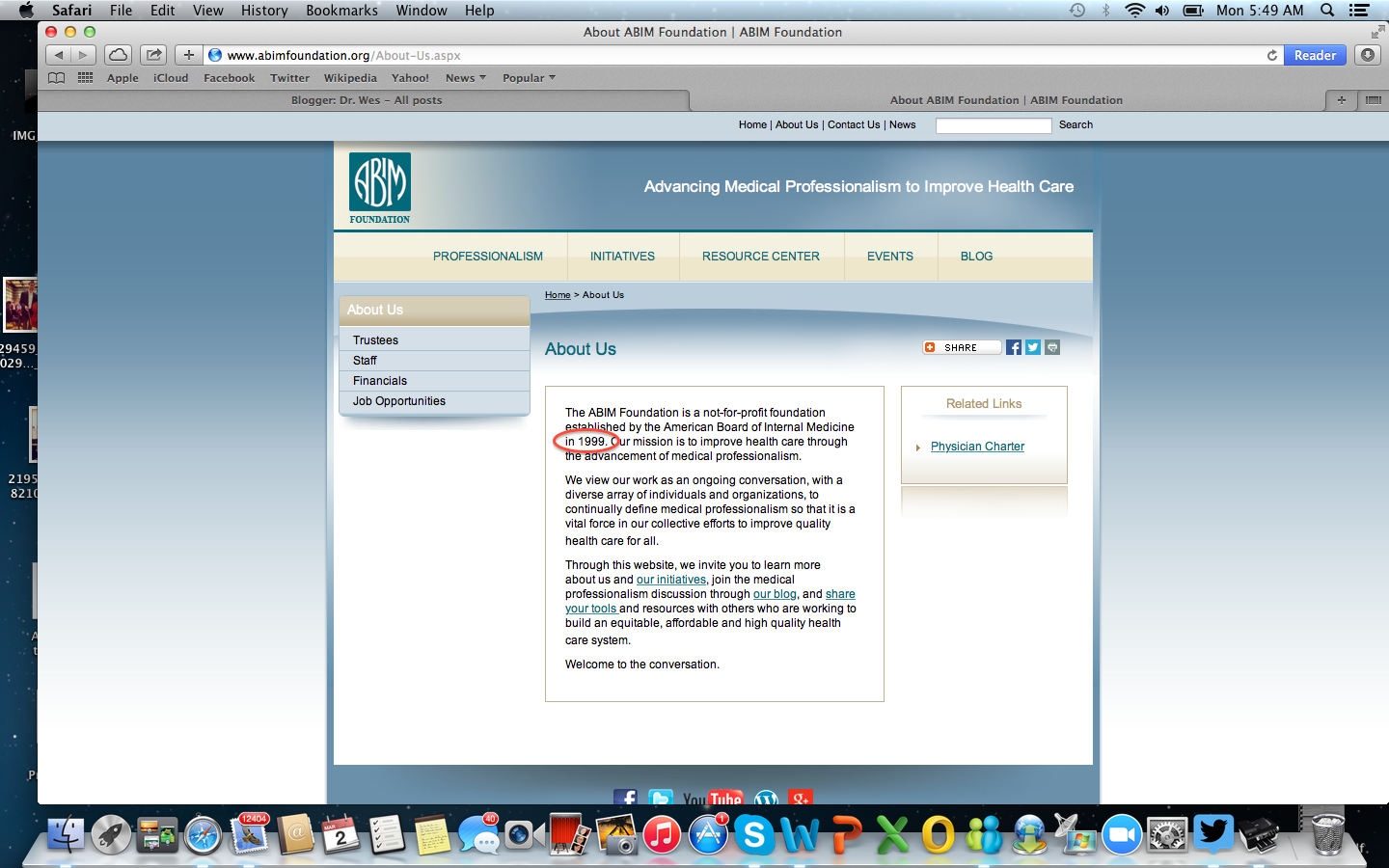
Never deterred, the ABIM convened a "writing group" funded by $59,618,428 in assets the ABIM had secretly funneled from unsuspecting ABIM diplomats' board certification and re-certification fees from 1989 to June 30, 1999 to the secret "American Board of Internal Medicine Foundation." (Author's note: In my opinion, the amount taken from practicing physicians may have been considerably more since the ABIM paid large fees to a high-risk investment firm, 1838 Investment Advisors, LLC that lost 74% of its value before it was quietly shut down. Only after an IRS name change was the undisclosed "ABIM Foundation" finally revealed to the public and practicing physicians in 1999. I believe the origination date and domicile of the Foundation was repeatedly misrepresented to the IRS from fiscal year 2009 to as late as the 2013 IRS Form 990 to obscure its origin. To the best of my knowledge and belief after piecing together available tax forms, the leadership and board of the ABIM authorized $80,278,428 to be taken from diplomats' testing fees to fund the ABIM Foundation in the form of contributions and grants from 1989 through 2007.)

After several years of meetings with members of sympathetic U.S. and European professional societies and leadership from the Robert Wood Johnson Foundation, the writing group from the ABIM Foundation achieved their goal. They published their missive entitled "Medical Professionalism in the New Millennium" in 2002 as a non-peer reviewed white paper in the Annals of Internal Medicine and Lancet with the help of sympathetic editors. Not surprisingly, many of the creators of this document have since left medicine to join the lucrative ranks of the insurance and retail pharmaceutical industry like Wellpoint and CVS.

Thanks to their growing avarice and their undisclosed political and health care policy activities, none of the leadership or board members of the ABIM found fault with the purchase of a $2.3 million condominium complete with a chauffeur-driven Mercedes S class town car in December 2007. According to Richard Baron, MD, such an "investment" was the norm for tax-exempt non-profit 501(c)(3) corporations. (The condominium expenses totaled $850,340 from December 2007 through June 30, 2013 (FY 2008: $42,522, FY 2009: $164,460, FY 2010: 161,957, FY 2011: $165,982, FY 2012: $161,980, FY 2013: $153,439)). In the email I received from him regarding this discrepency, Dr. Baron claimed that many of these "condo expenses" included the depreciation expense for the condominium, yet depreciation for the condominium was never claimed on any ABIM Foundation IRS Form 990 tax form until this fact was disclosed on these pages.

As the requirements to participate in Maintenance of Certification (MOC) mandated by the American Board of Medical Specialties (ABMS) grew, many physicians found the requirements little more than onerous busy-work exercises that distracted from patient care. Many practicing physicians elected to stall or not participate. For these reasons, the pressure on the ABIM to market the ABMS MOC recertification program and to protect their monopoly on the program increased. Many specialty societies, hungry for cash as physician participation at national scientific sessions waned, were increasingly happy to help the ABIM market MOC because of the revenue it generated for them.

ABIM's Director of Investigations

In 2008, it appears the ABIM hired a "Director of Investigations" to investigate physicians or individuals who they suspected might be stealing secrets from their proprietary certification process and disrupting their monopoly.  A unique individual had surfaced that year that promised a return on their investment.  He was perfect: someone with deep ties to law enforcement and surveillance techniques who had created a niche for himself in test security. He was comfortable collaborating with various law-enforcement organizations like the U.S. Postal Inspection Service and the FBI. His self-generated LinkedIn webpage (Author's addendum 9 June 2016 @ 20:00 PM CST: LinkedIn page has been brought down. Earlier partial copy can be viewed here or his Infragard info page should suffice. *** Author's Addendum: July 4, 2016: Mannes' LinkedIn page brought back up) impressive so few would question his integrity. But while this individual seemed perfectly amicable and credit-worthy on the surface, he held a more concerning past that the ABIM may have known but chose to ignore. Perhaps this is why his position and true background has never been formerly disclosed to physicians or the public. He appeared on the scene quietly at first with a press release concerning the existence of "phony boards" in AMA Medical News. A similar press release remains on the ABIM website. As others reportedly tried to capitalize on the board certification money pipeline, another warning of a fraudulent board scheme was circulated by the Connecticut Attorney General's office a short time later. In fact, according to my review of available Form 990 tax forms, this individual and the salary he receives from the ABIM has never been disclosed by the ABIM, yet he freely promotes his position at the ABIM with the movie and test security industries.

It was becoming abundantly clear: the ABIM meant business when it came to protecting their physician testing empire.

Teaching to the Test

With the exponential growth of information in health care, "knowing what to know" to pass a re-certification examination became more important than ever to practicing physicians. Not only were the insurance company and pharmaceutical company pre-authorizations adding to physicians' workload, certification requirements to remain employed were as well. By 2009, the demand for Board review courses that promised successful re-certification pass rates had skyrocketed. Because the stakes were so high and the content of the examination often obtuse, many physicians recognized that they could no longer just rely on their experience to pass the examination. Board review courses became a necessary pre-requisite for many to pass because hints and tips of what content to study were always provided, irrespective of which organization or individual offered them.

As the stakes for certification and re-certification grew, word spread that a doctor, Rajender K. Arora, MD was running an "Unusual Board Review" course that used content remarkably similar to study questions on the ABIM certifying examinations. They had heard he got most of his study materials  from physicians that had already taken the test. Pass rates and course ratings from attendees of Arora's course were good. Many medical schools and hospitals, eager to report high board certification pass rates for their physicians to remain ACGME credentialed, recommended their residents and physicians attend this course. After all, the Arora Board Review had received ACGME accreditation.

But for the ABIM (and for their affiliated professional societies like the American College of Physicians that earn handsome returns from board review materials) who felt their databank of re-used test questions might become compromised and less valuable, something had to be done.

The Raid

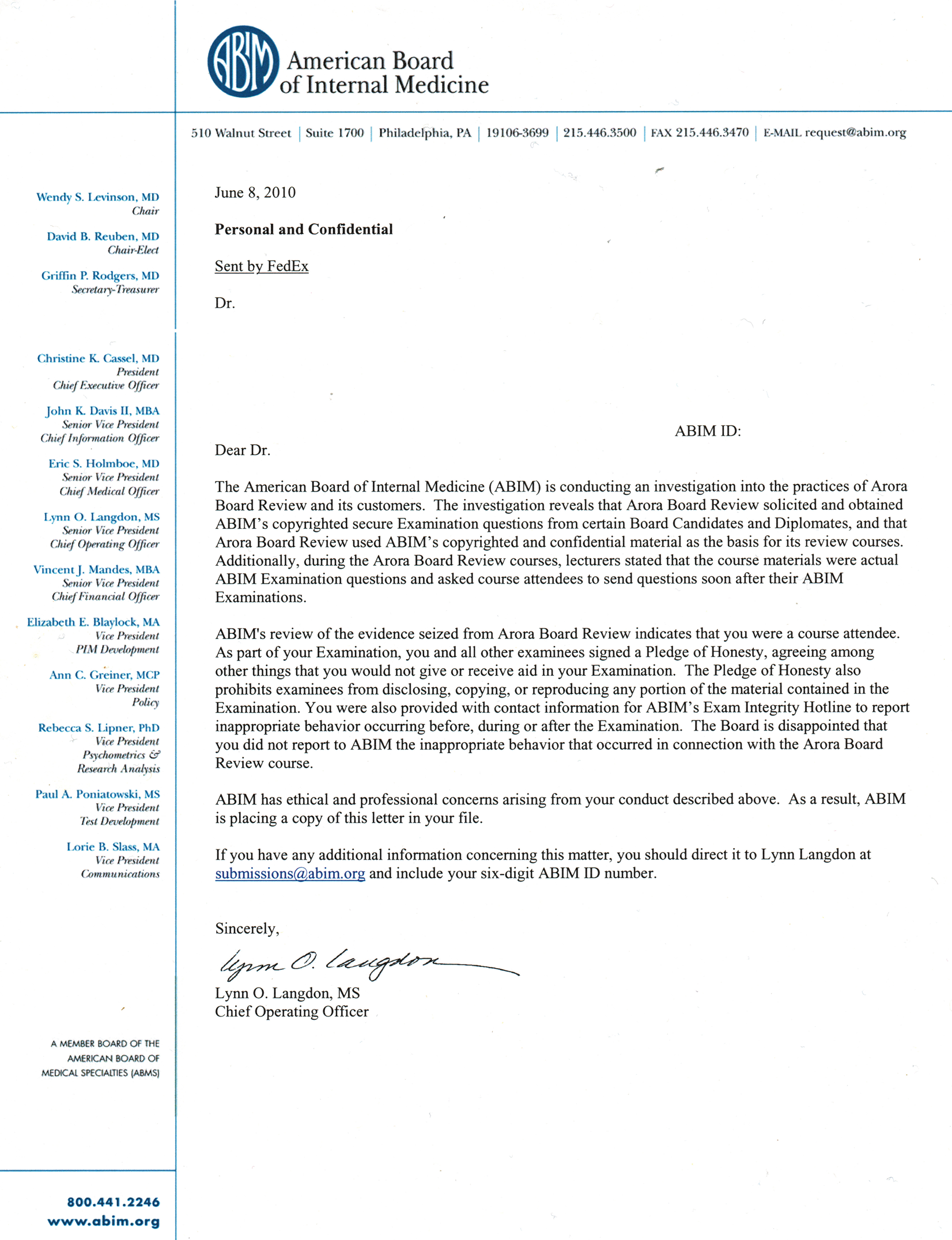
So the ABIM tapped the skills of their "Director of Investigations." According to the original complaint of a suit filed under seal by the ABIM, an employee of the ABIM was tapped to attend (see items 43 and 48) and audiotape at least one of Arora's courses. The ABIM has retained this audiotape in their possession (partial transcripts of the recordings made by ABIM are included here, here, and here). It appears this evidence was used to help secure an ex parte Temporary Restraining Order and Seizure and Impoundment Order issued against Rajender K. Arora, MD, Anise Kachadourian, MD, and another 50 unnamed "John Doe's" in 2009. The complaint was filed "under seal" (not disclosed to the public initially). Only three names (other than the ABIM's counsel) appear on that order that supplied the judge with the evidence the ABIM had acquired: Christine Cassel, MD (President and CEO of the ABIM), Rebecca Baranowski (Senior Clinical Content Manager for the ABIM), and A. Benjamin Mannes (Director of Investigations for the ABIM). On the basis of the evidence obtained by the undisclosed ABIM employee (s), US Marshals executed a writ to seize materials from Dr. Arora's residence including copies of computer hard drives, backup tapes, Dr. Arora's cell phone as well as 36 boxes of course materials.

But what the Director of Investigations, A. Benjamin Mannes, (aka "Ariel Benjamin Mannes") likely failed to disclose to the judge (and still has never been fully disclosed in my own earlier personal email communications with him, other US physicians, or the public) is that Mr. Mannes carries two felony convictions. These convictions were issued Dec 13, 2005. According to District of Columbia felony conviction #006438 found on the DC Court Cases Online search web page, Mr. Ariel Benjamin Mannes, a former DC police officer released from the DC police force in 2003 after targeting a journalist who wrote a satire on dirty DC cops, was later convicted on charges of (1) impersonating a DC police officer and (2) carrying an unregistered firearm in 2005 after working as a bouncer "keeping the piece" (details at this link) at a local D.C. nightclub to supplement is income while working for the TSA, Railroad division. As a result of the night club incident, Mr. Mannes was released from the TSA in late 2007 just before apparently joining the ABIM. He lost his appeal of these convictions Oct 21, 2008 less than two months before he appeared (backup pdf of the webpage here) in the press as the "director of test security" for the ABIM.


This revelation is not a minor concern for practicing physicians and the public. Certainly using convicted felons for security jobs is not news. But the irony that a felon would be hired to tract the elusive physician thought to be cheating as they studied for a credentialing examination is lost on few.

Many other important questions remain. Did the ABIM call the police before initiating their investigation or use Mr. Mannes, a confirmed expert at intimidation, as a "law enforcement officer" to establish probable cause for the search and seizure at Dr. Arora's residence? What policy and process does the ABIM have to assure due process of physicians accused of cheating? Why was a press release issued before due process occurred? Why is his salary and position of someone this instrumental to physician "investigations" and intimidation not disclosed on ABIM tax forms or elsewhere? How much did (and does) Mr. Mannes earn for his "services" at the ABIM? Would the 139 physicians who were either sued, sanctioned, or vilified in the mainstream media for "cheating" without due process have had a very different outcome if Mr. Mannes' past history been brought to light? How many other of the "50 John Doe's" does the ABIM intend to sue based on Mr. Mannes' "investigation" work and how much will this cost practicing physicians?  With whom did Mr. Mannes collaborate in law enforcement? Did Mr. Mannes' access to law enforcement assets allow him to track physician email addresses? What did he disclose to them and what did they disclose to him? Were the physicians struggling to remain credentialed to practice medicine after the ABIM's abrupt unilateral and highly lucrative certification rule change at fault or was the leadership and board members of the ABIM who instigated this attack on their character using a convicted felon? Who at the ABIM directed an "employee" to attend and secretly audiotape the Arora Board Review courses?  Should attendees of Dr. Arora's course have been informed they were being audiotaped or did the ends justify the means? Were physicians' Fourth Amendment Constitutional rights violated because a law enforcement officer was not used to obtain the search and seizure order on Dr. Arora's residence? Was evidence manipulated? What right to privacy are physicians entitled that study for their MOC re-certification examination? Do physicians have a right to know that attendance at a board review course could be used against them if they mention question content they heard from others?

Considering the millions of dollars involved, the myriad of conflicts of interest, and use of a felon for Board certification and re-certification "investigations," who cheated whom in 2009?

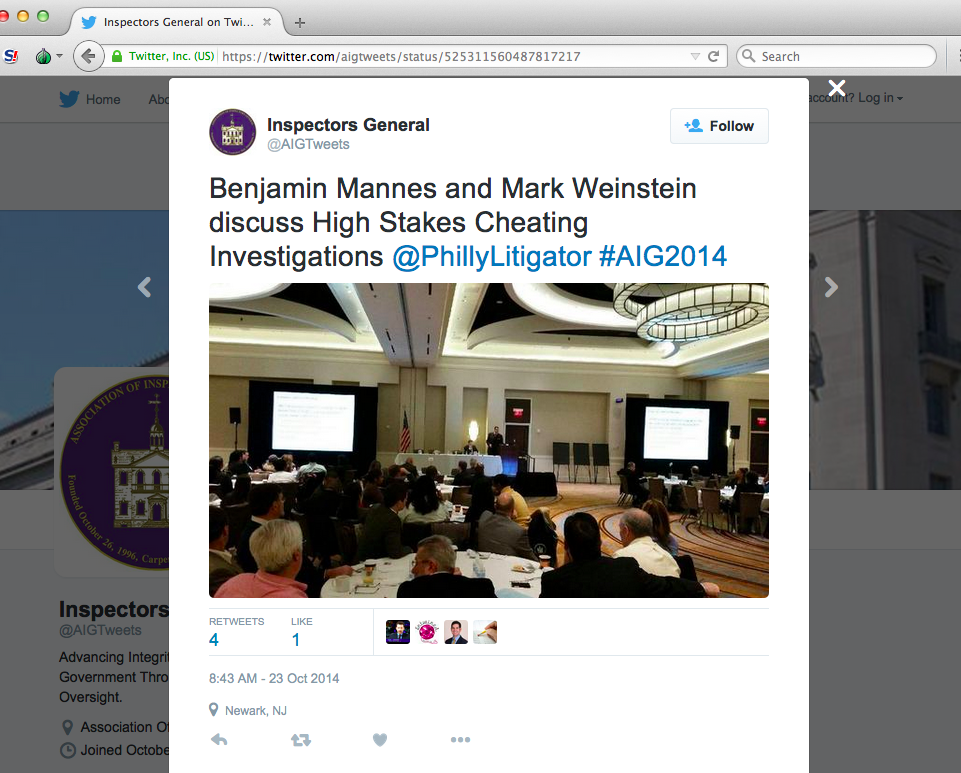
Sadly, these concerns have not disqualified Mr. Mannes and the ABIM's former prosecuting attorney from ABIM's law firm, Marc Jacob Weinstein (with whom Mannes collaborated and who helped bring the original legal complaint against Dr. Arora in 2009) from serving leadership roles (or as employees) of the test security firm, Caveon and marketing their expertise to the Association of Inspectors General or test security conferences (page 19) as late as November, 2015. It is also concerning that Mr. Mannes' background allows him to serve as Governor on the Board of Directors of Philadelphia InfraGard. (For those unfamiliar, "InfraGard is a partnership between the FBI and the private sector created after the 9/11 terrorist attacks that is an association of people from businesses, academic institutions, state and local law enforcement agencies, and other participants dedicated to sharing information and intelligence to prevent hostile acts against the U.S." Doctors should note that Philadelphia InfraGard lists its address as the same address as the FBI in Philadelphia.)

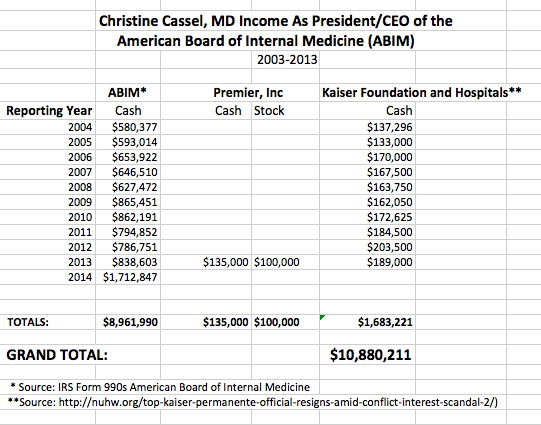
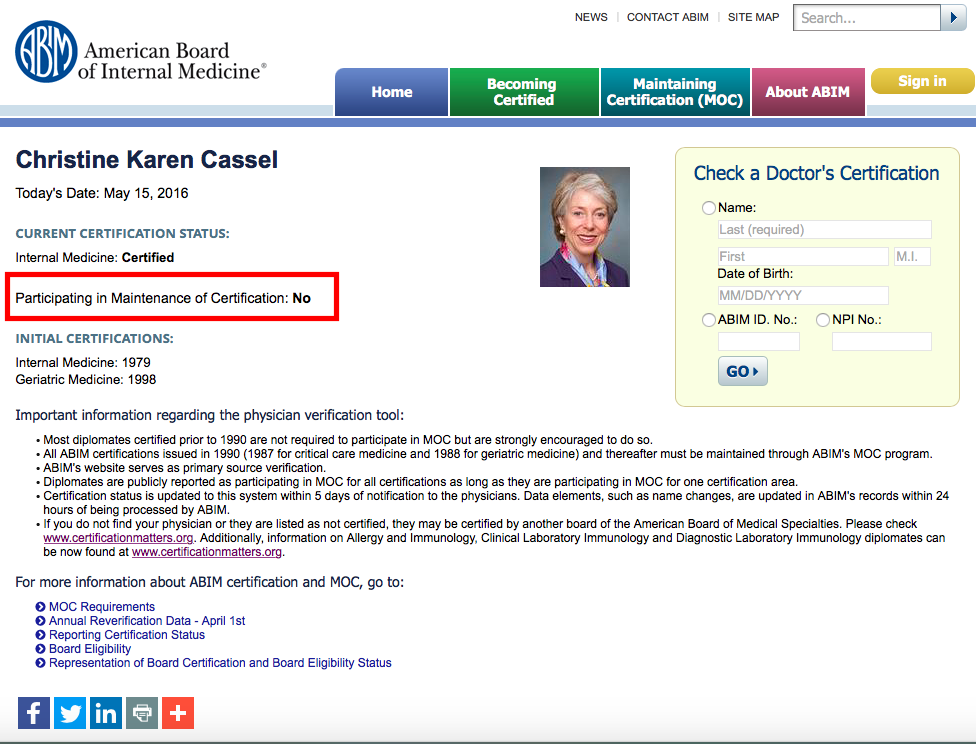
I believe Christine Cassel, MD, who was President and CEO of the ABIM at the time, bears much of the responsibility for the actions and direction of the organization during her tenure. The day after publishing the ABIM press release about the ABIM's actions and the appearance of a simultaneous article in the Wall Street Journal on the matter, Dr. Cassel published a column on the KevinMD blog 10 Jun 2010 entitled "ABIM responds to doctors sharing board certification questions." The original link to the redacted Arora emails that the ABIM claimed formed the basis of their suits against physicians has since been removed. (I retrieved the emails from the internet archive here). In her column, Dr. Cassel explained: "through these actions we are taking, we are reassuring patients and the public that the can continue to trust the process and, and (sic) physicians can continue to trust that it is a fair and rigorous assessment of their medical knowledge and judgment." In retrospect, I believe Dr. Cassel had good reason to use strongman tactics and a convicted felon against more vulnerable physicians: to insist the income generated by physician re-certification be protected. In her 11-year history as President and CEO, to the best of my knowledge, she earned at least $10.88 million dollars, with nearly $9 million of that amount from fees paid diplomats of the ABIM. Dr. Cassel, who it appears was pivotal in organizing the raid on these physicians' residences for her financial and political benefit, was a member of the President's Council of Advisors on Science and Technology (PCAST) at the time and remains there today. PCAST is an advisory group of the nation’s leading scientists and engineers who directly advise the President of the United States and the Executive Office of the President. Not surprisingly, Dr. Cassel who ironically describes herself a "leading expert in geriatric medicine, medical ethics, and quality of care," does not participate in Maintenance of Certification despite being a founding member of the Institute of Medicine and the former President and CEO of the National Quality Forum that determines quality metrics for the nation's hospitals on behalf of the Center for Medicare and Medicaid Services. Given her long-standing conflicts of interest with Kaiser Foundation Healthcare and Hospitals, is there any wonder why she was appointed as Planning Dean for the newly-announced Kaiser Permanente School of Medicine as of March 1, 2016? What message will her history of intimidation and questionable ethics send to Kaiser's future medical students?

ABIM's Ongoing Legal Actions

Currently, the ABIM is involved in another suit they brought against Arora Board Review attendee, Jaime Salas Rushford, MD from Puerto Rico. According to the letter sent to Dr. Salas Rushford on May 8, 2012, the ABIM was "conducting an investigation into the practices of Arora Board Review and its customers." According to the letter, the ABIM traced emails they obtained from Dr. Arora's computers and on the basis of their discovery "determined to indefinitely revoke your certification and will notify the Medical Board in every jurisdiction in which you are licensed" without due process. Given what we now know about the practices of the ABIM and their "Director of Investigations," is there any surprise that  Dr. Salas Rushford is having difficulty obtaining documents from the ABIM for his defense and for his countersuit against them? The foot-dragging and excuses made by the ABIM, including the possibility that Dr. Salas Rushford will make the settlement arrangement between Dr. Arora and the ABIM publicly available on his website, suggests the ABIM cut a special deal with Dr. Arora whom they never sued. What was that arrangement? Why has this not been disclosed publicly? How many other physician email addresses obtained from the Arora Board Review course computers does the ABIM still plan to track down and sue? How many millions of dollars have been squandered by the ABIM in legal attacks upon physicians attempting to fulfill the ABIM's unilaterally mandated re-certification requirements?

Most of all: how much more is the ABIM hiding?

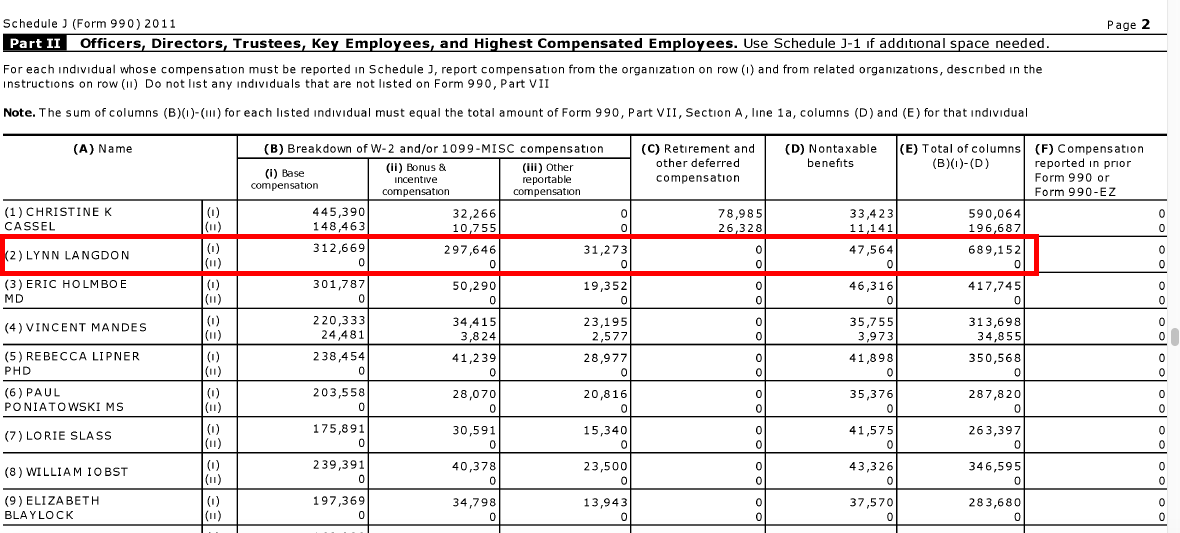
It is difficult to imagine a more Kafkaesque twist to US medicine's professional regulatory system.  At least six physicians were sued as a result of the ABIM's raid on Arora's residence and 134 more sanctioned, resulting in untold professional ridicule, anxiety, embarrassment, and potential loss of their ability to practice medicine. No doubt their patients suffered, too. To add insult to injury, Ms. Lynn Langdon, then the Chief Operating Officer of the ABIM and a non-physician staff member of the ABIM who earned $681,152 in FY 2012 ($297,646 as a "bonus and incentive compensation"), sent thousands of "letters of concern" to other physicians who attended the Arora Board Review course and reportedly keeps those letters on file. Richard Baron, MD, the current President and CEO of the ABIM, earned $61,216 as Chair of the Directors at the time of the audiotaping of the Arora Board Review course and was surely was aware of the raid as well. Like the McCarthy era, it appears we have a system of regulators that will stop at nothing to intimidate and blackball physicians to assure funding of their regulatory cartel.

It is time for the public and our professional societies to know the truth. I believe, given these facts, that the ABMS MOC program (and any iteration that it might morph into) has no place in US medicine and should be abandoned immediately. I also believe the Wall Street Journal that published its earlier story in 2009 with the headline suggesting physicians "cheated" should publish a retraction and provide a follow-up investigation of the ABIM with these facts in mind to set the record straight.  After all, the simultaneous release of the Wall Street Journal story the same day the ABIM press release was issued, coupled with the fact that physicians' names appeared in the article that did not appear in the press release, suggests the Journal was tipped to the story by the ABIM who sought to profit from their actions. To the best of my knowledge at this time, no physician that was sued by the ABIM as a result of the Arora raid has paid a dime in penalties to the ABIM for copyright infringement for attending the Arora course. Yet how much harm was experienced by the 139 physicians who were sued or sanctioned by the ABIM on the basis of the irresponsible actions of the ABIM and their felonious "Director of Investigations?" I know of at least one physician who received the ABIM's "letter of concern" has been unable to re-certify in any subspecialty since that letter was issued.

Moving Forward

It is time for a full investigation of the ABIM and its practices by the Department of Justice, Internal Revenue Service, or the Federal Trade Commission. Are the tactics, that have been used by the ABIM typical of a non-profit 501(c)(3) organization granted tax-exempt status? It will take time and resources to do so, but the public and practicing US physicians deserve to know the truth of all that has transpired and continues to transpire with our nation's physician regulatory system. Without such an investigation, it is hard to see how the ABIM or the ABMS will ever regain the trust of physicians or the public. Clearly, the status quo is unacceptable. If the ABIM and ABMS structure are to survive, bylaws must be changed to insist that an elected board will lead each subspecialty society in lieu of the appointed ones and membership of each organization must decouple themselves from the government and corporate interests that financially benefit the current system.  A full independent financial audit as far back as 1986 as well with full disclosure of tax filing discrepancies is especially needed.  Professional societies and academic journals who conspired with the ABIM and continue to support the ABMS MOC program for their financial benefit need a similar shake-up as well.

Physicians want to care for patients, we do not need unaccountable henchmen and bureaucrats hell-bent on their own power and profits to do our job. It will be up to each of us to demand that hospital systems and insurance companies no longer require ABMS specialty board "maintenance of certification" as an exclusive requirement for licensure, hospital admitting privileges, academic appointments, or insurance panel participation. If they do, it will be up to each of us to demand justice.


"It ain't what you don't know that gets you into trouble.
           It's what you know for sure that just ain't so."

- Mark Twain

(borrowed shamelessly from the opening quote of "The Big Short")

-Wes


References:

Dr. Wes blog: The Maintenance of Certification Controversy 2015 - The Year in Review 
Dr. Wes blog: The Business of  Testing Physicians

Image references: 
https://www.thrillist.com/culture/best-frank-underwood-quotes-house-of-cards-funny-and-witty-lines
http://houseofcardsquotes.tumblr.com/post/77137104455
http://www.scoopwhoop.com/world/hoc-quotes/

Sunday, March 08, 2015

Medscape Issues a Non-Private Privacy Update

With physicians increasingly turning to news aggregators to keep up with medical news and developments, physicians' eyes have become Big Business.

So has sharing their information.

Medscape (a division of WebMD) recently sent all of its registered users an update of their "privacy" policy (By the way, check to see if a "cookie" considers you already "logged on" when you view this policy webpage).

Here's my summary take:

Nothing physicians do with Medscape/theHeart.org/WebMD websites is private and, in fact, our data (including license information) is being shared with just about anyone willing to pay for the data.

Medscape, ironically the same institution charged with managing continuing medical education for the Health and Human Services HIPAA policy, wants to collect physician license information from "third parties," track what doctors are viewing and interacting with on their website, then share this data to anyone willing to pay them a pretty penny.  In fact, we should take special notice of the section entitled "Disclosure of Your Information to Third Parties."

I was particularly interested in the the Companies and People Who Work For Us subsection:
In addition, if you are a healthcare professional, we may request that a third party validate your licensure status and other information against available databases of healthcare professionals. In order to provide these services, we may provide these other companies with Personal Information we maintain about users of our Services. We require that all such companies agree that they will limit their use of your Personal Information to fulfilling their responsibilities to us. (Emphasis mine)
Such a friendly two-way give and take of our information! (Remember that practice information you were recently asked to supply to the American Board of Internal Medicine?)

Privacy?  What privacy? 

-Wes

h/t Mr. Larry Husten

Friday, January 09, 2015

Slow Down on Creating Alternate MOC Pathways

Yesterday was a remarkable day for practicing US physicians.  It was the day two articles appeared side by side in the New England Journal of Medicine: one promoting the American Board of Medical Specialties' Maintenance of Certification® (MOC) program, and another that thoroughly debunked it.  The comments placed to the stories told a story of solidarity, pent up rage, of corruption within our profession, and a commitment to change the status quo.  Doctors were relieved to learn that an alternate pathway to MOC, the National Board of Physicians and Surgeons, might offer a slightly less expensive pathway to acquire MOC points.

But I worry physicians might be reacting, rather than carefully considering, the implications of the alternate proposal.

I should say that I applaud Dr. Paul Tierstein's phenomenal piece published yesterday in the New England Journal of Medicine.  He cogently articulated the many problems with the ABMS MOC program but stopped short of dismantling the ABMS (and ABIM's) board re-certification process entirely as he promoted his new "National Board of Physicians and Surgeons instead:"
There will be three or four requirements, and you have to be certified by an ABMS board initially. We're not taking that on. I think the fellowship process is great, it's like a final exam for residency and fellowship. I think most people agree that it's okay (not perfect, but okay). You'll also have to have a valid medical license and not to have been denied privileges recently in your specialty. Then the key requirement is 50 hours of continuing medical education, provided by an ACCME-accredited provider over 2 years. And the cost will be far lower. The cost will be as little as possible.
While this may be an acceptable solution to the current MOC conundrum created by the inclusion of ABMS and the MOC program in our new health care law, I believe we should first investigate how the ABMS and MOC program became part of the Affordable Care Act in the first place.

Troubling concerns of collusion of ABIM board members with the Center for Medicare and Medicaid Services (CMS) and the National Quality Forum (which receives the bulk of its revenues from grants supplied by CMS) exist. Christine Cassels, MD, who is the current President and CEO of the National Quality Forum, was President and CEO of the ABIM from 2003 to 2013 and ultimately responsible for the $2.3 million dollar luxury condominium purchase by the ABIM Foundation in December, 2007. Richard Baron, MD served as treasurer of the ABIM and later an unpaid Director of ABIM in 2007-2008. Dr. Baron also served as Group Director of Seamless Care Models at the CMS Innovation Center which claims it "Identifies, validates and disseminates information about new care models and payment approaches to serve Medicare and Medicaid beneficiaries seeking to enhance the quality of health and health care and reducing cost through improvement." Dr. Baron then became a full-time employee of CMS in 2011-2012 before returning to ABIM in 2013.

Which leads to the question: how much influence did the ABIM leadership have in establishing a continuous money stream for itself and its Foundation during the writing and mark-up of the Affordable Care Act? (see pages 247 and 844-845 of this large pdf). Clearly, there should be public record available to this effect and physicians should inspect this record before creating an alternate MOC pathway.

Because if the ABIM influenced the writing of the Affordable Care Act for its own enrichment, rather than for "public good," this represents further corruption of an already broken MOC model, in my view.  There have been many experienced physicians adversely affected by the current MOC program.

So these are the questions practicing physicians should ask before enrolling in the current, or any other, MOC pathway:

(1) Do we need MOC at all? and
(2) Don't we need a full public disclosure of the audited financials of the ABIM and the ABIM Foundation and their financial dealings first? and  
(3) Shouldn't we insist on removal of the corrupt MOC program entirely from the changes made to Social Security Law by the Affordable Care Act before creating another unaccountable organization to practicing physicians?

-Wes

Tuesday, January 21, 2014

MOC Goes Mainstream - But Should It?

How should patients determine the quality of their doctor? 

This is an interesting question that has now reached main stream media status as evidenced by the morning's Wall Street Journal "Health and Wellness" article by Laura Landro, a very accomplished veteran health care reporter. 

With the best and brightest going in to medicine, the requirement for more rigorous training than anywhere else in the world by (some might say) "exceptional, world class" medical educators and longstanding ongoing mandated continuing medical education to maintain competency and licensure, why is there suddenly such concern over the quality of doctors in America?  Most Americans have been very happy and trusting of the physician they knew and loved before - why the change?

Is it so that patients who must see new doctors in their new insurance plan can feel good that the new doctor (or nurse practitioner) is as good as the physician that has cared for them before? 

Perhaps.

Or perhaps it's because the huge Industrialized Certification Complex that foistied its Maintenance of Certification requirement every two years beginning 1 Jan 2014 upon America's physicians is finding unprecedented push-back from their member-physicians so a direct-to-consumer PR campaign was  undertaken in an attempt to quell the unrest. 

Perhaps.

Or perhaps it's because the American Board of Medical Specialties, along with its 24 subsidiary professional organizations, feels there is a need to justify the salaries of the multiple specialty board members that often exceeds that of their physician members and whose salaries are funded in large part by the fees from the MOC process. 

Perhaps.

Or perhaps there is a need to justify the difference and numbers of fees different types of doctors have to pay to maintain their certification.

Perhaps.

Or perhaps the PR was required to justify the expansion of this certification process to include not only testing doctors, but to making them also perform unproven data collection exercises called "Practice Improvement Modules" that have absolutely no bearing on a patient outcomes or a doctor's intellect and skill as a practicing physician, but typically take many months to complete. 

Perhaps.

Or perhaps the article was another effort to deflect attention from the fact that despite publishing a webpage of opinion pieces and articles claiming to substantiate the need for MOC, only 25% (at best) of board members of the various recertification bodies have bothered enough to maintain their own (sub)specialty certification.

Perhaps.

How do patients really benefit with the MOC process now being foisted on America's doctors every two years?  Do they get better access to their doctor?  No, for their doctors must take time away from their practices to study, take tests, and collect data for this.  Do they get to keep their doctor as long as they want if their doctor maintains their certification?  No, certification provides no guarantee that a patient can keep their doctor as patients are shunted to insurance company-controlled populations called "Care Organizations." Does maintaining certification guarantee that a doctor will practice better medicine?  No, at least not when the MOC process is compared head-to-head to the knowledge gained by years of close patient-care experience.

Ms. Landro seemed to be writing for the business interests in medicine in her role as a news reporter for the Wall Street Journal because she failed to mention these points and the impact the MOC process has had on hard-working, careful, and ethical clinical physicians in America.  While she does mention the suit filed against the American Board of Medical Specialties by an opposing organization called the American Association of Physicians and Surgeons, her article failed to mention the real reason this suit was filed: because a surgeon with over 30-years of patient care experience refused to "recertify" in his specialty and then had his privleges to practice medicine revoked by his hospital system as a result.

Years of experience and patient care - a measure most would agree is the most important determinant of a quality physician -  lost because a doctor refused to perform these unproven MOC exercises.

It's a classic David vs. Goliath story, really, since millions and millions of dollars annually are at stake for the certifying organizations.  And while the story continues to be played out in court, it is clear that the Davids are getting more upset - especially when Goliath's unproven tests and "Practice Improvement Modules" (and who knows what else in the future) have the potential to affect David's  ability to practice medicine in the future.  Is this really what patients want?

Should a series of tests ever trump clinical experience in determining physician quality?  Should a series of tests be able to void a doctor's lifelong commitment to patient care?

Not in my book.  And if patients think for one second this MOC process is just about having "quality physicians" at their disposal, they should think again.

-Wes

PS: I continue to wait for the Cardiovascular Subspecialty Maintenance of Certification test results I took 8 November 2013.  The test was entirely electronic, yet the results still have not been reported.   No doubt we'll soon have to pay to get our results in a timely fashion, too.

Reference: Buscemi D, Wang H, Phy M, Nugent K. "Maintenance of Certification in Internal Medicine: Participation Rates and Patient Outcomes." J Community Hosp Intern Med Perspect 2012; 2(4): 10.  Published online 7 January 2013.


Monday, January 13, 2014

The AMA's Role in Maintenance of Certification

Andrew Schlafly, attorney for the Association of American Physicians and Surgeons and the group who sued the American Board of Medical Specialties over the Maintenance of Certification process, recently described (video - scroll ahead to 5min, 30 sec) the scene in court:
When I sued the ABMS and six attorneys showed up on the other side to oppose the lawsuit, the lead attorney on the other side was an attorney that has represented the AMA for decades. He was on the other side defending this MOC and trying to stop our lawsuit and trying to stop the discovery. We’re going to get in and get discovery and find out what they have in mind for this and how they’ve been doing this, how they’ve been getting this into hospital medical staff requirements for so long.

And already I’ve traced that they paid this ABMS group (which is the umbrella group) something like $600,000 to a law firm in Newark, New Jersey. It popped up on their IRS Form 990, which discloses what their expenditures are, and I raised that with the court. 'They say they don’t practice in New Jersey, they don’t do business in New Jersey and here they are paying $600,000 plus to a Newark, New Jersey law firm. What’s that for?'  And by the way, what this Newark, New Jersey law firm does is it has a relationship with hospitals. And they came back and said 'Oh, no, what that money was for that was to help us set up MOC in Singapore.' They’re going worldwide with this!

I was surprised the AMA (who is touts themselves as the political voice of US physicians) is defending the Maintenance of Certification (MOC) process and (more troubling if true) going to such efforts to expand this process to a country in which it has no jurisdiction.  Most physicians find the MOC process onerous, overly time-consuming and ridiculously expensive.  Why are US doctors paying dues to support AMA activities involving credentialing and licensure overseas?  A little digging shows that the AMA holds furvent support for the overall progression of the Maintenance of Certification process evolving to a Maintenance of Licensure (MOL).  From their own Council of Medical Education minutes (pdf):
The AMA has robust policies related to medical licensure. A review of all AMA policies related to licensure was conducted to validate that the policies are consistent with the AMA Principles of MOL (Maintenance of Licensure).

AMA policy supports the underlying principles of MOL which are consistent with the direction that the practice of medicine is evolving. The recommendations of the Advisory Group contain options for doctors to meet MOL requirements that can also be used to meet other purposes and will provide an opportunity to monitor outcomes and produce useful data. The AMA will await the final document of the FSMB (ed note: Federation of State Medical Boards) with great interest and hopes that the MOL program will be carefully coordinated as much as possible between the states.

CME will predictably be a major component of the MOC/MOL model.
Physician members of the AMA might want to ask a few pointed questions to their leadership. After all, they're paying for this in more ways than one.

I just endured the maintenance of certification process for both cardiology and cardiac electrophysiology and can attest to the stressful nature of this process for working physicians. The thought that this unproven testing process could also be used to revoke my license to practice medicine in the future is unconscionable.

-Wes