Saturday, July 28, 2018

The ABIM Has Lost Their Marbles

From the institution that secretly funded itself with ABIM diplomate fees to the tune of over $78 million that culminated in the purchase of a $2.3 luxury condominium for itself complete with a Mercedes S class town car, and offshored funds to the Cayman Islands,  comes this news release:
The 2018 ABIM Foundation Forum will consider the importance of trust in health care – and how to build and maintain it – against a backdrop of political and social turmoil and all-time lows in Americans’ trust in institutions across society.
Make no mistake: this is our physician Board re-certification money they are playing with.

At the very least, the optics of such a conference are horrible given the ABIM Foundation's past.

I hope everyone will make good use of the hashtag #abimf2018 on Twitter and then contribute to our legal fund to permanently end this shameless gaslighting of US physicians and our patients.

-Wes

Wednesday, July 25, 2018

Board Certification: From Marketing Accolade to False Idol

I'm Board certified.

So is Carmen A. Puliafito, MD.

So is Farid Fata, MD.

So are plenty of other Medscape "Best and Worst" physicians from 2012-2016.

So what is "Board certification?"

Truth be known, it is little more than a marketing accolade.

And for a while, it worked.  Doctors took board certification examinations to market themselves as competent in their field. They would take a written or oral examination created by their peers to demonstrate to others they knew their stuff. And while it remained a lifetime designation, it had some legitimacy. In reality, however, it was up to the residency training programs to train the physicians and verify they knew their stuff.  Hospitals used to verify credentials by calling residency programs and verifying doctors participated. They had large credentialing departments that kept everything on file.

But competition between hospitals vying for patients soon grew fierce and hospital marketing departments jumped on the credentialing bandwagon. Soon billboards would appear: "Come to see our board-certified specialists!" and the race was on.

Lawyers joined the fray, too. "My expert witness is better than your expert witness - see how many board certificates he has?"

Truth is, we love this crap. Just look at how many nurse practitioners are "board certified" now!

In the 1960's to 1970's, the American Board of Internal Medicine recognized how lucrative this craze could be, but they had one big problem if they were going to make certifying doctors a full-time business: the number of doctors out there was finite. (It was about that time the board members started paying themselves). They also saw how much money the American Board of Family Medicine, founded in 1969, was generating using 7-year time-limited certifications.

But the ABIM knew internists would be on to them changing the rules for board certification from a lifetime to time-limited credential. So they first tried making a voluntary "super accolade" for internists, called the "Advanced Achievement in Internal Medicine." Needless to say, after four attempts that garnered progressively declining enrollment, the AAIM concept flopped. It was Lynn O. Langdon, MA (a non-physician and Chief Operating Officer of the ABIM) who declared the "End to Voluntary Recertification" and time-limited certification was born with the threat of "uncertain circumstances" if doctors did not participate.

Needless to say, with the help of conflicted members of the ACP who stood to make handsome returns from the Medical Knowledge Self-Assessment Program (MKSAP), they were off to the financial races. And what a race it has proven to be: a nearly $1 billion dollar-a-year enterprise for the entire ACGME.

Unfortunately, no one has ever stopped to study what happens to skilled, competent, board-certified doctors that fail their computerized "re-certification" examination or fail to garner enough "MOC points" to sit for their examination. No one asks about the damage this time-limited credential is having on our physician numbers and access to care. The money is too important to the system.

Not long ago, the chairman of our cardiology division had to relinquish his role as a teacher to medical students because he refused to re-certify in cardiology while also being "certified" in interventional cardiology. (He could keep performing catheterizations and stent placements and remain credentialed thanks to the change in double jeopardy rules that changed just in the nick of time). How many medical students lost out on his experience as a result? Are we happier that medical students are now being taught by younger (time-limited) Board-certified physician instructors rather than life-time certified physicians with decades of experience in the field?

Doctors and nurses know the truth. That's why when seeking out a "quality" physician for their own care, they NEVER ask if a colleague is board-certified since board certification is now a false idol - a hoop to complete whether they're competent, ethical, or not.

We know that it's now far better to ask a trusted colleague or health professional when seeking care because there's much more to being a "quality" physician than holding a computer-generated "certificate."

-Wes

Reference: Fisher WG, Schloss EJ. Medical specialty certification in the United States - a false idol? J Card Electrophys October 2016; 47(1): 37-43.
Wednesday, July 18, 2018

US Physician ABMS Board Certification: From Voluntary to Mandatory

The American Board of Medical Specialties (ABMS) is very careful to claim their version of "Board certification" is a "voluntary process," otherwise, this Chicago-based non-profit 501(c)(6) organization might be accused of anti-trust behavior.

"ABMS Maintenance of Certification" and "ABMS MOC" were registered by the ABMS in the US Patent and Trademark Office August 21, 2007 after filing the terms February 23, 2007.

MOC for ABMS has value.

We also know Ms. Margaret O'Kane, founder and President of the non-profit "National Committee on Quality Assurance" and that created and owns the Healthcare Effectiveness Data and Information Set (HEDIS). HEDIS is a tool used by more than 90 percent of America's health plans to measure performance on "important dimensions of care and service." We also find that Ms. O'Kane was a "public member" of the Board of Directors of the ABMS and advertised the importance of the ABMS MOC program "to patients and the pubic" by video and implies the ABMS board's actions assures improved "outcomes" for patients.

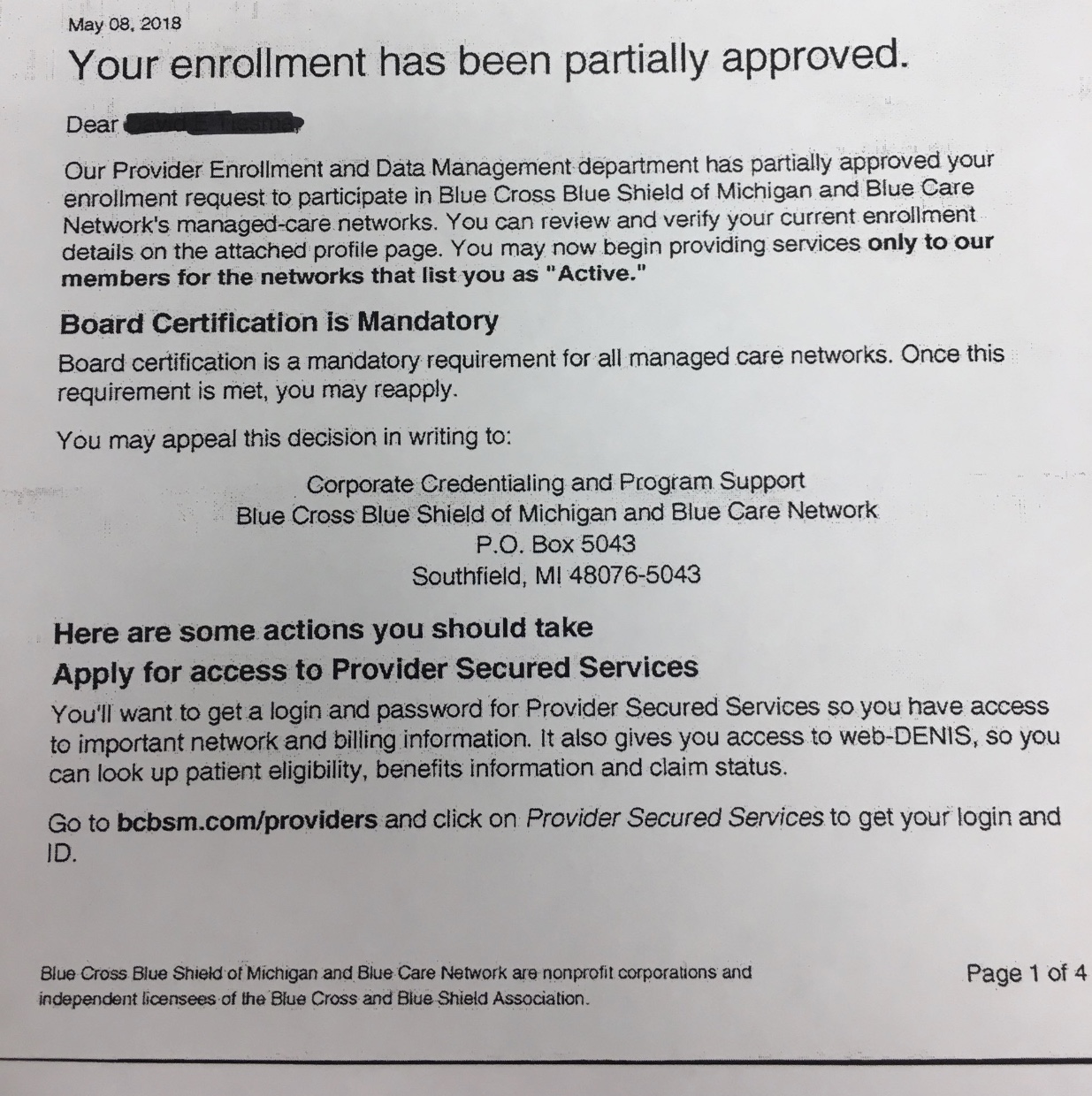
So it should come as no surprise that some of those payers who stand to benefit by limiting patients' access to care (in this case, Blue Cross Blue Shield of Michigan) have made initial ABMS Board certification mandatory for physicians on their panels:


(Click to enlarge)

While claiming MOC as a requirement for physicians to receive payments because it assures their  "quality," BCBS of Michigan does not demand the same of mid-level providers like physician assistants and nurse practitioners without similar subspecialty training. Additionally, physicians who received their "Board certification" before 1990 and are farthest away from their training are not required to perform ABMS Maintenance of Certification to remain on those same insurance panels, introducing a hypocritical and discriminatory double-standard that financially benefits insurers and hospital systems (more insurance claim denials and cheaper staffing requirements).

ABMS is the puppet of the insurance companies, just as they were the puppets of Big Tobacco in the 60's.

The IRS, FTC, and SEC need to get serious about investigating this ruse.

Why?

It's compromising patient care and our patients' access to care.

-Wes

P.S.: If you haven't contributed already, please consider donating to the legal fund sponsored by Practicing Physicians of America that hopes to bring an end the ABMS Board certification/MOC monopoly nationwide.


Thursday, June 28, 2018

A Critical Review of the ABIM Knowledge Check-In Program

This video is a first attempt at something new. I look forward to your thoughts. (Yes, as always, the comments are open).


As a professional physician who has devoted his whole life to helping others, the introduction of the American Board of Internal Medicine's (ABIM) latest iteration of Maintenance of Certification (MOC), called "Knowledge Check-in," is maddening. Knowledge Check-in continues the humiliating and embarrassing pre-test body search (now in the comfort of our own home or office), higher fees, and (as I review in the video above) places physicians at a very high risk of identity theft. Having doctors acquiesce to this nonsense every two years just so they can keep doing their job shows how low the independent non-profit ABIM (and all other American Board of Medical Specialty member boards that subscribe to this approach) will go to keep their cash flow going. They're not "listening" to physicians as they promised, they're using a classic strongman approach to market physicians as "cheaters" before caregivers, just as before.

If you feel as upset as I do that this is no way to perform physician education, please join our effort to end this costly and unproven re-certification program nationwide for all subspecialties by contributing to our GoFundMe page.

-Wes

Monday, June 25, 2018

Rent-Seeking: ABIM Shows Us How It's Done

The new ABIM fee schedule was published online for 2018, and physicians should pay attention. Like the classic shell game played by a New York street hustler, there are lots of hand motions and movements in the new cartoon video produced by the ABIM that explains the new fees that cleverly hides the MOC fee increase. And here's how those "fees" are coached on their website:


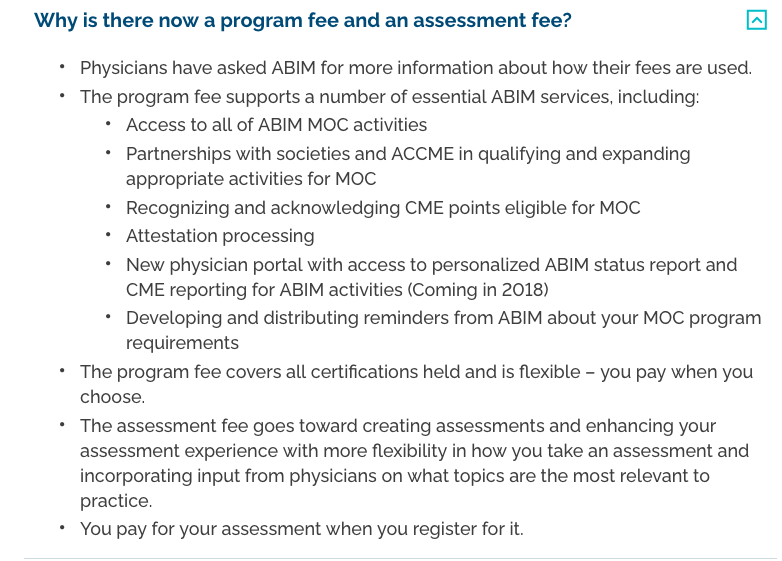
But what physicians should understand now is the "MOC Fee" does not include the "Assessment Fee."  Here's what that additional "Assessment Fee" gets you that's NOT included with the "MOC Fee" above:


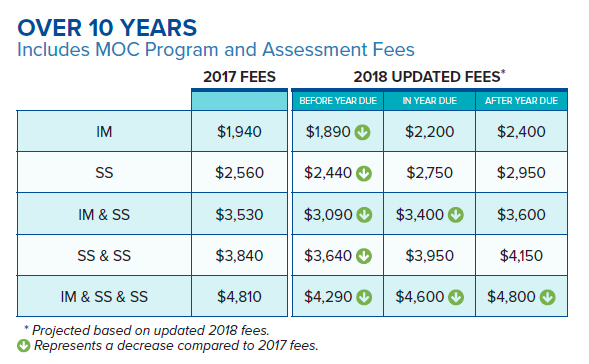
When one tallies all this together, here are the real 10-year costs for MOC in 2018, according to the ABIM website:

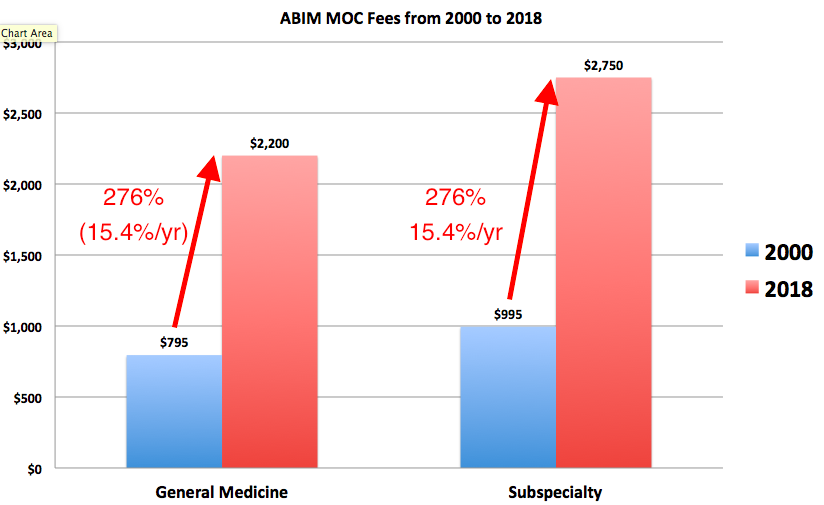
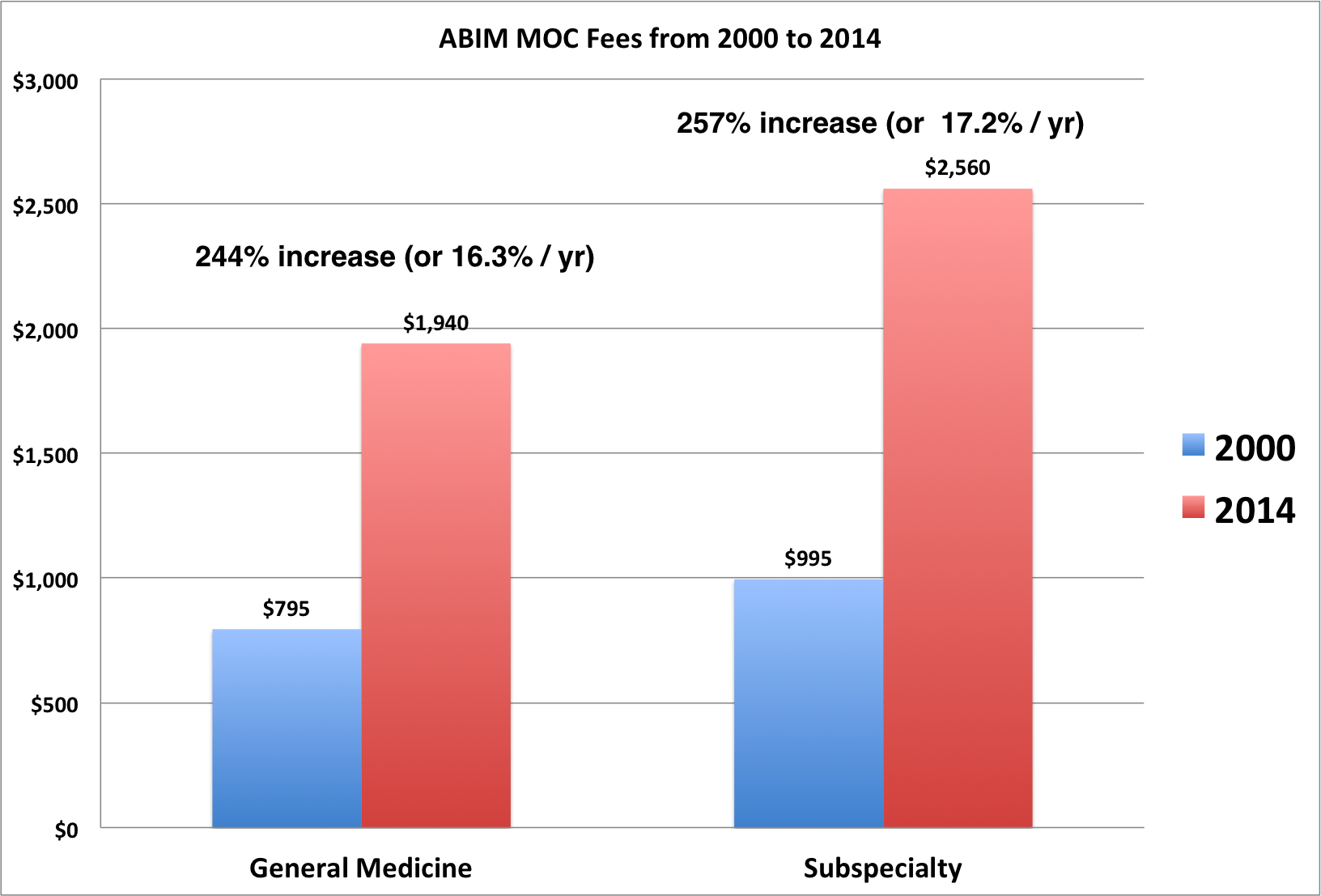
While the ABIM seems happy that "MOC fees have not increased since 2014," let's look at what they've done since 2000:


We should all have this kind of year-to-year return on our investments! Here we are, paying all of these fees, just so we can keep our jobs and insurance payments coming.

We now see how ABIM has been "listening" to practicing physicians: rather than addressing these exorbitant costs, the ABIM keeps adding to them by dividing them into pieces and making up new fees so the fleecing of US physicians can continue. 

It's time to end this charade. If you haven't already, please help.

This expensive rent-seeking behavior to fulfill political and personal agendas must end nationwide.

-Wes


Wednesday, June 13, 2018

More Changes Are Coming to MOC!

Today in Medscape, we learn that even more changes are coming to MOC.

The simple answer to the "will physicians get relief" is, of course, no.

Here's the comment I left, just in case it does not get published, that explains why they won't get relief from the changes proposed:
This entire charade - ALL of MOC - is NOT about physician's continuing education, but about using our Board certification and re-certification status/scores/demographics/SSN, etc - in other words, our DATA - as a pseudo-"quality" indicator for Big Business. Big Business includes Blue Cross/Blue Shield and Premier, Inc., the largest group purchase organization for the nation's hospitals. In not mentioning this, Medscape perpetuates the gaslighting of physicians that has occurred for years on a massive scale - (but then, they, too have their corporate conflicts). Physicians have tried to play nice and go with the flow at first, but now the situation is untenable, in large part because the member boards have wound their financial strings around the MOC bicycle spoke so far, they can't unravel it.

Nowhere is there mention of corruption and political activities that have occurred with the member boards, the $2.3 million condo purchased by the ABIM Foundation, the spousal travel, the $1.7 million Golden parachute Christine Cassel MD received from the ABIM when she left to join the National QUALITY Forum.

It's time to end the corruption. But myself and others can't do it alone. We need your help. Please visit our GoFundMe page and learn how you can contribute to pre-litigation investigation and the development of a legal complaint for fraud against the ABIM, the ABIM Foundation, and its leadership and others:

https://www.gofundme.com/practicing-physicians-of-america

Thanks-
Seriously, I can't do this alone.

-Wes

Tuesday, June 12, 2018

Churning Pseudoscience

Recently, two papers published by authors at the American Board of Internal Medicine (ABIM) appeared in the mainstream medical literature that purported to provide evidence to the value of their Maintenance of Certification program.

The first was "Associations Between American Board of Internal Medicine Maintenance of Certification Status on a Set of Healthcare Effectiveness Data and Information Set Process Measures" by Bradley Gray, PhD, Jonathan Vandergrift, MS, Bruce Landon, MD, MBA, James Reschovsky, PhD, and Rebecca Lipner, PhD in the Annals of Internal Medicine. The other was "The American Board of Internal Medicine Maintenance of Certification Examination and State Medical Board Disciplinary Actions: A Population Cohort Study" by Furman McDonald, MD, MPH, Lauren Duhiggt, MPH, Gerald Arnold PhD, MDH, Ruth Hafer, BA, and Rebecca Lipner, PhD published in the Journal of General Internal Medicine.

Both of these studies' senior author was Rebecca Lipner, PhD, a testing psychometrican who currently serves as the Senior Vice President for Assessment and Research at the ABIM earning $435,990 per year. Last year's tax records also disclose Dr. McDonald, ABIM's Senior Vice President "Academic and Medical" earns $419,497 annually for his services. The other author's salaries are not disclosed, but we can imagine their salaries are not zero.

The first study by Gray et al, is a cross-sectional design and used observational data. As such, its results only reflect associations and not definitive indicators of a causal relationship (acknowledged in the limitations section by the authors). The second study by McDonald, et al. is another observational study and cannot determine causality either.

So why are ABIM diplomats funding so many "association" studies? Given the cost of producing these studies, might the ABIM be churning pseudoscience to forward their own agenda rather than forwarding helpful public policy or medical science? Not disclosed in their "Conflict of Interest statements is the fact that ABIM sells our board results and "status" via the American Board of Medical Specialties (ABMS) to others via ABMS Solutions, LLC. As such, these publications serve the organization's undisclosed covert agenda and should be called what it is: very expensive propaganda.

With our current era of the proliferation of predatory journals, it is clear we also have an era of proliferation of predatory publication that supports the needs of our ABMS member boards that is not in their diplomates' best interest as well.

-Wes


Monday, June 11, 2018

Recap: Dr. Wes Goes to 2018 AMA Annual Meeting

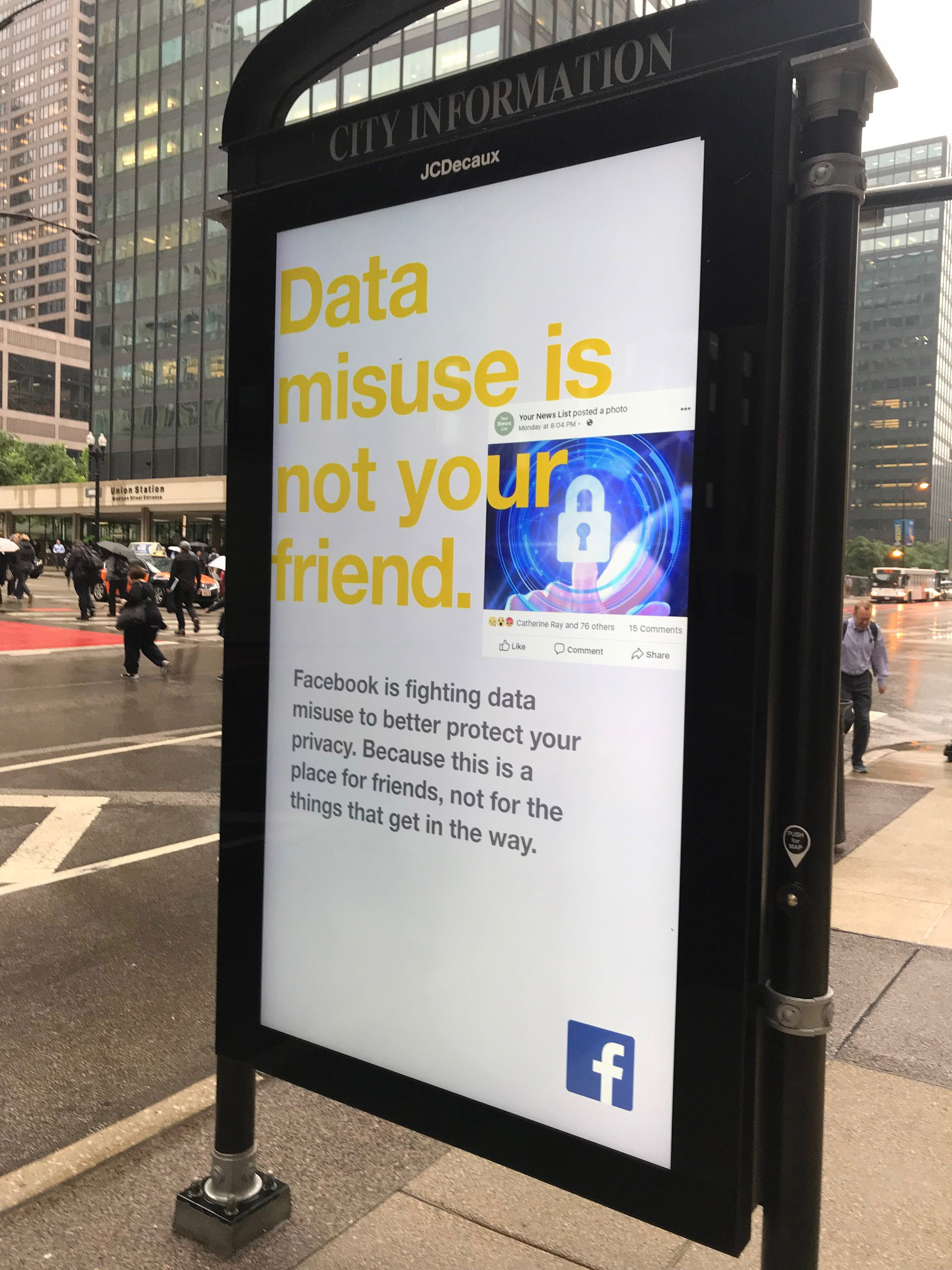
It was a rainy day in Chicago.  I elected to take the commuter train downtown to avoid the traffic well before my scheduled presentation for the PA Medical Society at 9AM. After leaving the Ogilvie Train Station, I walked to the cab station to hail a cab to the Hyatt Regency. It was then I saw this Facebook ad at the train station:


Such irony.  There I was, heading to the AMA House of Delegates to speak on this very issue and how it has adversely affected physicians.

"MOC is not about physician education, it's about our data."

-Wes

To view the entire presentation, you can view the live stream of the talk here. (Sorry about the quality, it was my cell phone that was only dropped once...)

Please consider giving generously to our GoFundMe page to begin the process of ending Maintenance of Certification™nationwide.

Tuesday, June 05, 2018

Everybody Knows a Frank

Frank is one of the smartest people in his cardiology division. He's bright, congenial, and capable of citing the latest clinical trial on the best imaging study to detect hibernating myocardium. He loves learning. Frank is the guy you used to confide in the doctors' lounge (that doesn't exist anymore). Others knew what a good guy Frank was too; Frank was nominated to write and edit questions for the nuclear medicine boards. Deep down inside Frank knows the boards are a problem. But he's afraid that if someone were to implicate his medical society as colluding with the boards, he'd see himself as being partially responsible for losing the one scientific meeting he attends each year where he can re-connect with colleagues and maybe learn something new.

At another center, Frank is the Chairman of the Department of Medicine responsible for the day to day workings of a large urban hospital system. He is a highly respected member of the Internal Medicine community, author of 14 books on the principles and practice of  Internal Medicine, and a beloved bedside instructor to generations of internal medicine residents. He also serves as a test-writer for the American Board of Internal Medicine and thinks overall they're a responsible group.  He knows how hard his fellow physicians work at constructing a meaningful continuing education process. As the  President of his local medical society, too, he knows money doesn't just grow on trees. And if people tried to disrupt the status quo, what's the endgame?

Frank on the other side of town serves as an editor to the preeminent hematology-oncology journals and has held multiple leadership positions in his subspecialty's medical society. He is widely respected by his peers, served as a director at the American Board of Internal Medicine (ABIM) and helps write test questions for the ABIM, too. He finds test-writing challenging and believes in the value of continuous testing to maintain a physicians fund of knowledge. He devotes countless hours to this endeavor to assure it is fair and impartial to those who must recertify. Sure there are some challenges, but given all the good people working on this, no one needs to question the integrity of the process.

* * *

The dilemma facing physicians today is that the majority of physicians who work with the ABMS member boards and our subspecialty societies are good, hard-working members of our profession. It is hard to fathom that a very tiny minority are corrupt and have been operating below the radar for years. I have no fantasy that your Frank or mine would approve of this corruption or even be able to believe it. And yet, here we are.

Our own inability to tolerate this complication threatens to paralyze us from cleaning up the corruption in our ranks.

There have always been good people in our professional societies and ABMS member boards. But these colleagues, who value contributing and community involvement, should be engaged in a far different framework. Doctors need community and support and collegial leadership. Returning medicine to a truly non-profit, voluntary, democratic representation of working physicians today rather than the self-selected, profit-churning, elitist employment service that it has become. Alternative structures are already emerging. It is time to be open to new possibilities or to take on the challenge of creating them.

What we face now is not new. There have always been top dogs who operate with impunity in contrast to all of the good causes that they publicly champion. In 2018, with the Harvey Weinstein, Matt Lauer, and Eric Schneiderman hypocrisies, surely we can understand this reality.

Today, physicians' ability to work, receive insurance payments, and willingness to stay in our profession, are threatened by the out-of-control, corrupt, ever-evolving Maintenance of Certification (MOC™) requirements supported by Organized Medicine. It's time to see it for what it is.

We all know a Frank, or several Franks and Francines. They cannot continue to be a shield for the exploitation of practicing physicians. Or a reason to look the other way. We all honor the hours of work it has taken our esteemed colleagues who have participated with the best of intentions over the years, but its time to clean up the corruption in the ABMS member boards and colluding medical subspecialty societies.

Cleaning up the corruption is the first step. Please contribute whatever you can to our effort to do so.

Thanks-

-Wes

Sunday, June 03, 2018

Before You Pay Your $155 to ABIM (or Any Other ABMS Member Board)

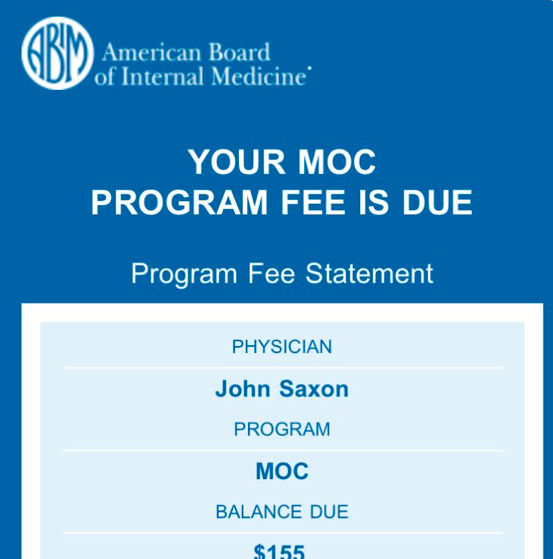
This past week, the American Board of Internal Medicine sent this reminder to all ABIM Board-certified diplomates participating in Maintenance of Certification (MOC™) (thanks @jtsaxon for sending this):


Before paying this fee, please take a moment and re-read this classic post from Robert Wachter, MD from 14 August 2012 that he placed on his former industry-sponsored blog, Wachter's World. The post is titled "On Becoming Chair and Why the Boards Matter More Than Ever."

Be sure to read the comments included, all 95 pages of them (or at least a good portion of them). (They have been saved to my server in case Dr. Wachter and his industry companions want to wipe the internet archive, too.)

On 1 August 2013, Robert Wachter, MD received 1355 shares of IPC Hospitalist Company stock. On 2 January 2015, Robert Wachter, MD received another 2186 shares of IPC The Hospitalist Company stock. Some of the fees he was paid were shared with his employer at the time, the University of California, San Francisco, too.

Wachter's World no longer exists because it was pulled from the internet in 2016 because Dr. Wachter's company, IPC Hospitalist Company, had to settle claims filed by a whistleblower and the DOJ for "up-billing" Medicare under the False Claims Act.

You decide.

Do I want to send my money to the ABIM to perpetuate the MOC ruse or send my money to the legal fund at Practicing Physicians of America that was created to end the consumer fraud perpetrated by the ABIM and its co-conspirators?

What "matters more than ever" is your decision.

-Wes


Saturday, June 02, 2018

US Board Certification Survey Results to Be Presented at the June AMA Meeting

The largest independent voluntary survey of US physicians on the topic of US Board Certification (and continuous certification) will be presented at the 2018 Annual Meeting of the AMA House of Delegates at the Hyatt Regency Chicago on June 11, 2018, at 9 AM. The social media-promoted national survey was conducted by Practicing Physicians of America and explores the topics of value, cost, burnout, research methods, physician awareness of conflicts of interest, and the negative consequences physicians have experienced from the process. Physicians from all 50 states and nearly all US territories and subspecialties responded.

Pennsylvania Medical Society is hosting the event and I will be presenting. Given your busy schedules, I look forward to meeting all three of you who can make it.

-Wes

Friday, June 01, 2018

UCSF's Embarrassing Appointment

It seems some people can't help themselves. They have to tow the party line. You scratch my back, I scratch yours.

Imagine Christine Cassel, MD, self-proclaimed "bioethics" queen extraordinaire,  and former President and CEO of the American Board of Medicine (ABIM) and the ABIM Foundation when the Foundation purchased that $2.3 million condominium in December 2007 using ABIM diplomate testing fees, now the recipient of the UCSF Presidential Chair for 2018-2019.

And who recommended her?

Why none other than the "loving" Mr. Piano Man himself, Robert ("Elton John") Wachter, MD, the current Chief of Medicine at UCSF and former Chairman of the Board at ABIM.

While it's hard to make this story up, we should not be surprised. This is how interdependent the halls of academic medicine and the US physician credentialling system have become. Like opportunistic parasites, they feed on each other's narcissism to the embarrassment of their fellow working physicians who don't dare say a thing, lest they lose their job.

I'm not sure I've ever seen a more startling example of the sickening hypocrisy in academic medicine.

My alma mater should be ashamed of itself.

-Wes

PS: Please consider donating to our efforts to expose the deep-seated corruption in the halls of Organized Medicine.

Your Dollars At Work

American Society of Clinical Pathologists' (ASCP) Choosing Wisely® campaign needed nominations yesterday. Here were two of the top nominations made on Twitter:


Both are inspired choices.

Especially since the ABIM Foundation (the creators of the "Choosing Wisely® campaign) was secretly funded from US Physician certification fees.

-Wes

P.S.: Please donate to our GoFundMe campaign to end this corrupt redistribution of our certification fees and please share the following link with your colleagues: https://www.gofundme.com/practicing-physicians-of-america

Wednesday, May 23, 2018

Enough is Enough

It is 8:30PM CST on the 23rd of May, 2018.

The American Board of Internal Medicine (ABIM) has still not posted their financials from fiscal year 2017, due May 15th, 2018 after an extension is granted by the Internal Revenue Service, on their website. I wouldn't be surprised if they're insolvent, or close to it.

Maintenance of certification (MOC™) is expensive, costing physicians over $23,000 every 10 years in fees, travel, and time from work. Doctors are sick and tired of being manipulated and coerced into playing the continuous certification game created by the non-profit ABIM that has never been independently proven to improve patient safety, care quality, or patient outcomes after a doctor's initial board certification. Doctors are especially sick and tired of these unaccountable member boards of the American Board of Medical Specialties (ABMS) mandating busy work that, if not performed, would limit our ability to maintain our hospital credentials, receive insurance payments, or even obtain state licensure.

We are also sick and tired of being ethnographic research subjects and "HIPAA Business Associates" for the member boards of the ABMS so our data can be bought and sold while board members and officers of the ABMS member boards enjoy their multi-million dollar condominiums with chauffeur-driven BMW town cars, office buildings, first class and spousal air travel, Cayman Island retirement funds, and health club memberships all on our hard-earned nickel.

The conflicts of interest created by MOC spread far and wide: BCBS, CECity/Premier, PearsonVue, ABMS Solutions, LLC, IPC The Hospitalist Group, National Committee on Quality Assurance, American College of Physicians, Wolters Kluwer, Reed Elsevier, UCSF, Massachusetts Medical Society, the AMA, AHA, CMSS, among others.

The financial orgy within the bureaucratic halls of the ACGME has been going on for years at the expense of hard-working doctors. MOC fees alone have mushroomed 244% from 2000-2014 to fund these shenanigans. Numerous doctors are burning out, or quitting altogether, to avoid the ruse. It must come to an end. The integrity of our profession demands nothing less.

Please join me in this GoFundMe crowdfunding drive by Practicing Physicians of America to end MOC™ nationwide for all subspecialties. The specifics of the campaign's purpose are outlined in the campaign's "story" on the GoFundMe page. Please give generously.

It's time to stand up for what's right.

Enough is enough.

-Wes


Saturday, May 19, 2018

Earning MOC™ Points: A Self-Paid Advertorial

As a follow-up of my earlier post on the American Board of Medical Specialties' (ABMS) Maintenance of Certification™(MOC™) program's tax on medical education, I was sent the "approved" responses of two different physicians that were required to answer questions to "earn" ABMS MOC™credits from the Heart Rhythm Society (HRS) Scientific Sessions after the meeting. These responses were "approved" by an HRS "reviewer" so the doctors could apply these points to remain "Board certified" and employed with their hospital systems. Each doctor had to write between 50 and 100 words (no more, no less) in response to questions posed by the ABIM. Despite their different responses, each received the exact same "feedback" that included links to various Heart Rhythm Society, American College of Cardiology, AMA, ABMS and non-governmental organizations' policies and web pages.

(See Physician 1's responses here and Physician 2's responses here.)

Given these canned responses to these physicians feedback, how is this time-consuming, costly, and meaningless "feedback" exercise for "earning" MOC™ points anything but a self-paid advertorial for the HRS, ACC, AMA, ABMS, and other non-governmental organizations?

It is a sad commentary that our own subspecialty societies legitimize this corrupt process despite all that we know about it today.

-Wes


Saturday, May 12, 2018

Taxing Medical Education with MOC

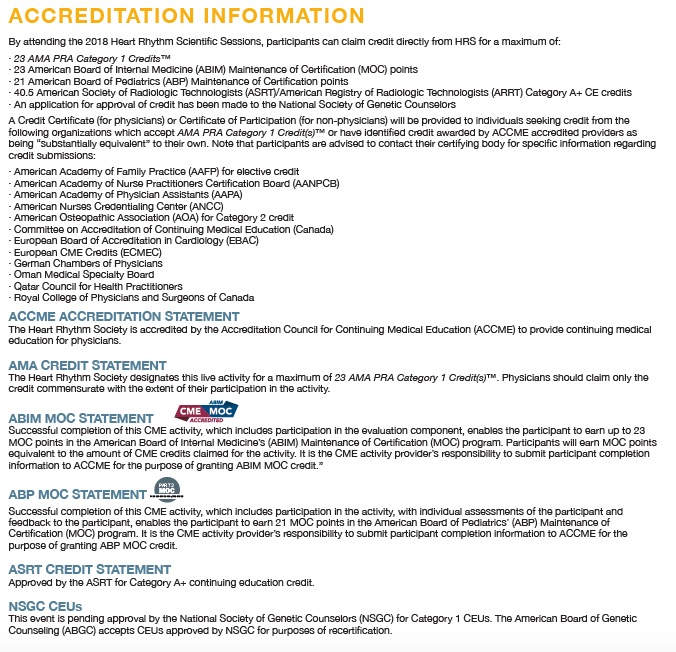
I just received this in my email in-basket from an attendee at this year's Heart Rhythm Society (HRS) Scientific Sessions:
I just got back from our annual EP meeting (HRS) which was in Boston. As you can imagine, the entire CME process has been bastardized to monetize the ABIM (American Board of Internal Medicine). After dutifully checking off which sessions I attended and rating the speakers, I noted a few things.

Firstly, all attendees were electronically tracked with RFID tags. Our attendance at the sessions were electronically tracked and automatically noted. A pretty neat feature and designed, I think, to prevent fraudulent CME behavior.

We had to answer a separate ABIM Maintenance of Certification (MOC) section and actually provide prose with a minimum and maximum word count. There was a warning stating that the content of our replies would be reviewed before the ABIM would bless them for the MOC process.

Which begs the question. Under what circumstances does the ABIM have the authority to legitimize or delegitimize my reply to their nonsensical questions? The MOC portion of the CME conversion was more of a sampling of my opinion. Is this the new MOC paradigm: impose an educational tax on our meetings and then also charge a toll on their MOC highway?

This process is not only corrupt and inefficient; it is now surreal and insane.
Yes. It. Is.

MOC® is little more than taxation of physicians without representation.

(And we still don't have ABIM's financials from 2017 for the public's review.)

-Wes

Sunday, May 06, 2018

The Delicate Dance

There is a delicate dance between two partners every day in medicine: the dance between the benefits of innovation and the costs of that innovation. One can't survive without the other. Patients and doctors benefit from the innovation and corporations benefit by being able to sell more devices to benefit themselves and their stockholders. In a nutshell: this is capitalism.

But increasingly, doctors and patients are being asked to surrender more and more of their personal information non-transparently in a lopsided dance that benefits the corporations and their partners. A once mutual dance turns into an ultimatum.

When a physician's ability to practice medicine is tied to obtaining Maintenance of Certification® (MOC®) points, the benefit of trading that information for both the patient and physician are less clear. Doctors are threatened with losing their ability to work unless they accrue MOC® points and their patients shoulder more and more of the costs for their healthcare non-transparently to fund the ruse.

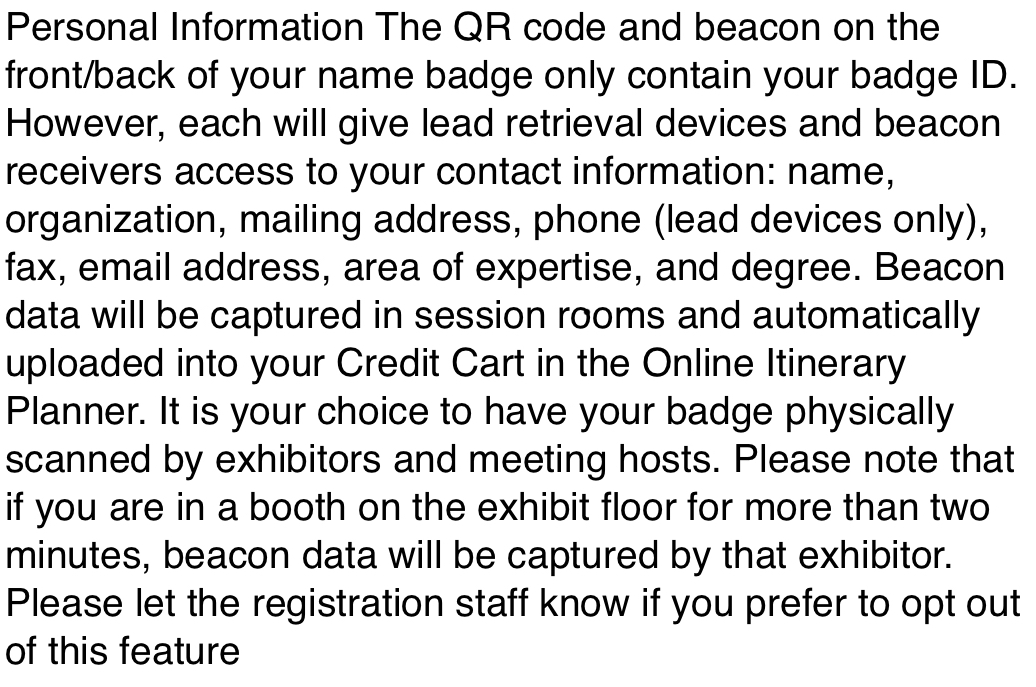
So it should come as no surprise that the "tag and release" of physicians at this year's Heart Rhythm Societies' 2018 Scientific Sessions in Boston continues unabated. Attendees are not only automatically "opted-in" to data sharing with corporations, but with accrediting agencies, too:


Here we see that a physicians'  personal information is automatically tied to a "Credit Cart" where personal "beacon" information flows to corporations in return for automatic documentation of their Continuing Medical Education (CME) /  Maintenance of Certification® (MOC®) credits. But to receive that credit, doctors must complete surveys for the various accrediting agencies that unilaterally decide what qualifies to earn CME/MOC® approval, and what does not. 

Want to steer physician thinking, give 'em a bone, or MOC® credit, to drive key opinion leaders (KOLs) to your talk, then watch your sales grow!

For doctors, here are the rules for HRS2018 that ties a doctor's information-sharing to their freedom to learn what they want and to practice medicine: 

(Click to enlarge)
Think about it every time you attend a session.

For ourselves and our patients, there's no such thing as a free lunch.

-Wes


Wednesday, April 25, 2018

ABIM Struggles to Keep MOC Relevant and Meaningful

Both MedPageToday and Medical Economics covered the latest American College of Physician (ACP) meeting and know how to drive traffic to their site - just mention Maintenance of Certification, Richard Baron, MD, and their pals at the American Board of Internal Medicine (ABIM).

Their pieces suggest the ABIM is trying to keep their corrupt "Maintenance of Certification" program, born from a collaboration between the ABIM and ACP years ago, "meaningful and relevant."

And in a way, they are.

Nothing brings doctors together more than the topic of the mandated Maintenance of Certification® (MOC®) program and great quotes like:
"Grandfathering is a really vexing challenge," said Baron. "It's pretty difficult to defend ... I would not see those doctors as equivalent to doctors who rectify."
I'd like to thank the editors of both journals.

You are the bomb.

-Wes

Friday, April 13, 2018

What the ABIM, ACC, and Facebook Have in Common

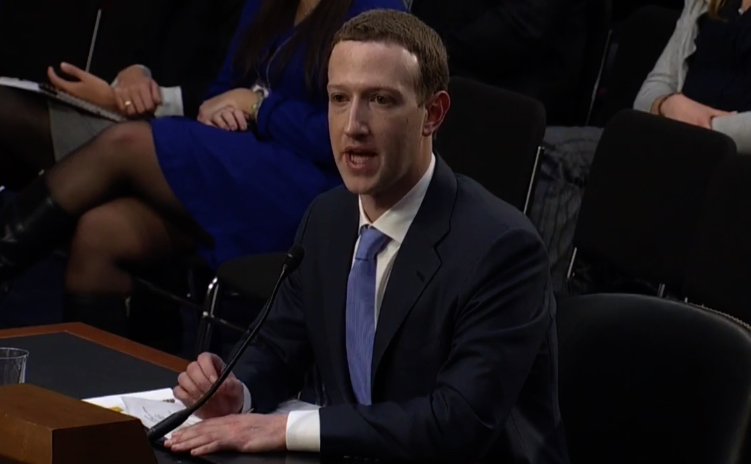
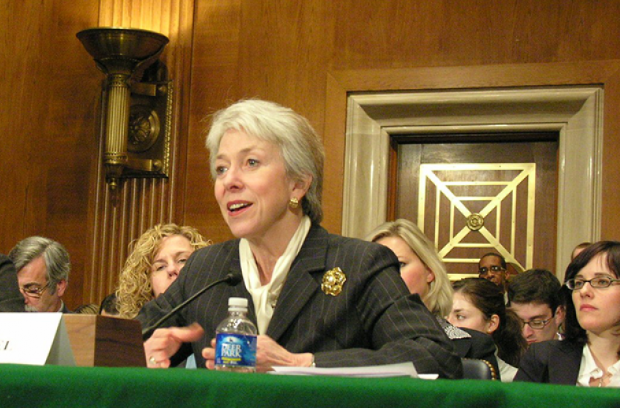
Mr. Mark Zuckerberg, uncomfortably stuttering and stammering before Senator Cantwell about a little-known company named Palantir (aka "Stanford Analytica"), reminded me of a similar moment when Christine Cassel, MD from the American Board of Internal Medicine (ABIM) had to answer questions about her affiliations with Premier, Inc., and Kaiser Foundation Health Plans and Hospitals upon taking the helm at the National Quality Forum. Dr. Cassel brushed off those concerns as "distractions" by resigning from the boards of those corporations, in large part to avoid questions of why those relationships were an issue.

Nowhere did Ms. Cassel explain that her former non-profit corporation, the American Board of Internal Medicine, had changed its bylaws in 1997 to allow virtually unlimited conflicts of interests to benefit their organization. I remember the ABIM's website claiming their organization gets 97% of its money from its physician-diplomates. Now we see nothing could be farther from the truth. Funds are flowing back from the ABIM Foundation as a "Funding Initiative." And ABIM executives have always enjoyed a wonderfully lucrative relationship with CECity, the $400M data-gathering subsidiary of the hospital group purchase organization, Premier, Inc.:
Through Premier, client organizations are able to quickly and cost-effectively launch their own sophisticated online initiatives directly to their target audience (e.g. members, employees, associates, applicants/diplomates, etc.) by leveraging Premier’s multi-million dollar investment in world-class applications and enterprise-level infrastructure (SAS 70 Type II).

At its core, Premier’s products link performance management (data acquisition via web forms, IVR, external and internal registries, data feeds, etc), assessment, benchmarking, peer comparison, and identification of gaps (financial, knowledge and patient care) with interventions that drive performance improvement.

Our platforms align this cycle of performance management and improvement with various incentive programs to drive healthcare provider participation.

As a CMS-qualified registry for the Physician Quality Reporting System (MIPS, ePrescribing, MOC-MIPS) and as the service provider for many physician certifying boards (e.g. ABIM, ABO, AOA) Premier is uniquely positioned to align professional and financial incentives with CQI to deliver ‘game-changing’ quality initiatives that have proven and measurable results.
This CECity/Premier relationship is firmly embedded in the ABIM's HIPAA Business Associate Addendum agreement every practicing physician must agree to as a condition of enrolling in "Maintenance of Certification (MOC)" (also known as "continuous certification").  With the lack of disclosure of this relationship by the ABIM, is clear that patients and doctors alike aren't supposed to know their personal data are being sold.

The American College of Cardiology

The same data-gathering strategy appears to be true for the American College of Cardiology (ACC). The ACC has always had the ability to side-step the ABIM and re-certification but has chosen not to do so.  Physician and patient data are too important to them, too. I was naive to think that was because of the use of physician data for their NCDR "registries" used by the nation's hospitals. Instead, it seems there may much bigger play in mind, as reported by CNBC:
Facebook provided a quote from Cathleen Gates, the interim CEO of the American College of Cardiology, explaining the possible benefits of the plan:

"For the first time in history, people are sharing information about themselves online in ways that may help determine how to improve their health. As part of its mission to transform cardiovascular care and improve heart health, the American College of Cardiology has been engaged in discussions with Facebook around the use of anonymized Facebook data, coupled with anonymized ACC data, to further scientific research on the ways social media can aid in the prevention and treatment of heart disease—the #1 cause of death in the world. This partnership is in the very early phases as we work on both sides to ensure privacy, transparency and scientific rigor. No data has been shared between any parties."

Health systems are notoriously careful about sharing patient health information, in part because of state and federal patient privacy laws that are designed to ensure that people's sensitive medical information doesn't end up in the wrong hands.

To address these privacy laws and concerns, Facebook proposed to obscure personally identifiable information, such as names, in the data being shared by both sides.

However, the company proposed using a common cryptographic technique called hashing to match individuals who were in both data sets. That way, both parties would be able to tell when a specific set of Facebook data matched up with a specific set of patient data.
While I appreciate the flowery take of this breach by ACC's spokesperson, I'm afraid the ACC's hand is stuck firmly in the financial data mine cookie jar. After all, as we've seen with Facebook and our recent election, not all uses of data are always in our patients' best health care or financial interest.

It's amazing, isn't it? These databases once thought to be a product of ingenuity by for-profit and non-profit organizations, are looking more and more like a product born of little more than opportunity and necessity.

But others much smarter than I have known this long ago. To the ABIM, the ACC, and Facebook: it's all just about guns, germs, and steel.

-Wes

Monday, April 09, 2018

An Internet Quiz: ABIM's Website Moves the Goalposts Again

The Internet loves mystery...

and cover-up.

There are very bright minds out there, and nothing gets those juices flowing for the dedicated Internet sleuths than when someone is trying to hide a carefully crafted change that benefits the Big Guy and screws the Little Man.

Lately, I've been watching the myriad of changes to the ABIM website.

It's got a whole new look and feel, full of big flashy graphics, but little on content. They will argue, no doubt, that it's all made to improve the navigation on their website and to introduce the bold new ideas they have concocted to be sure the fine print is missed.

So here's the challenge.

Take a minute and go the the ABIM website. (Warning, you'll need more than just a minute for this contest, but if you've got the time, this might satisfy criteria for some MOC points/CME credit).

Click on the Maintenance of Certification banner.

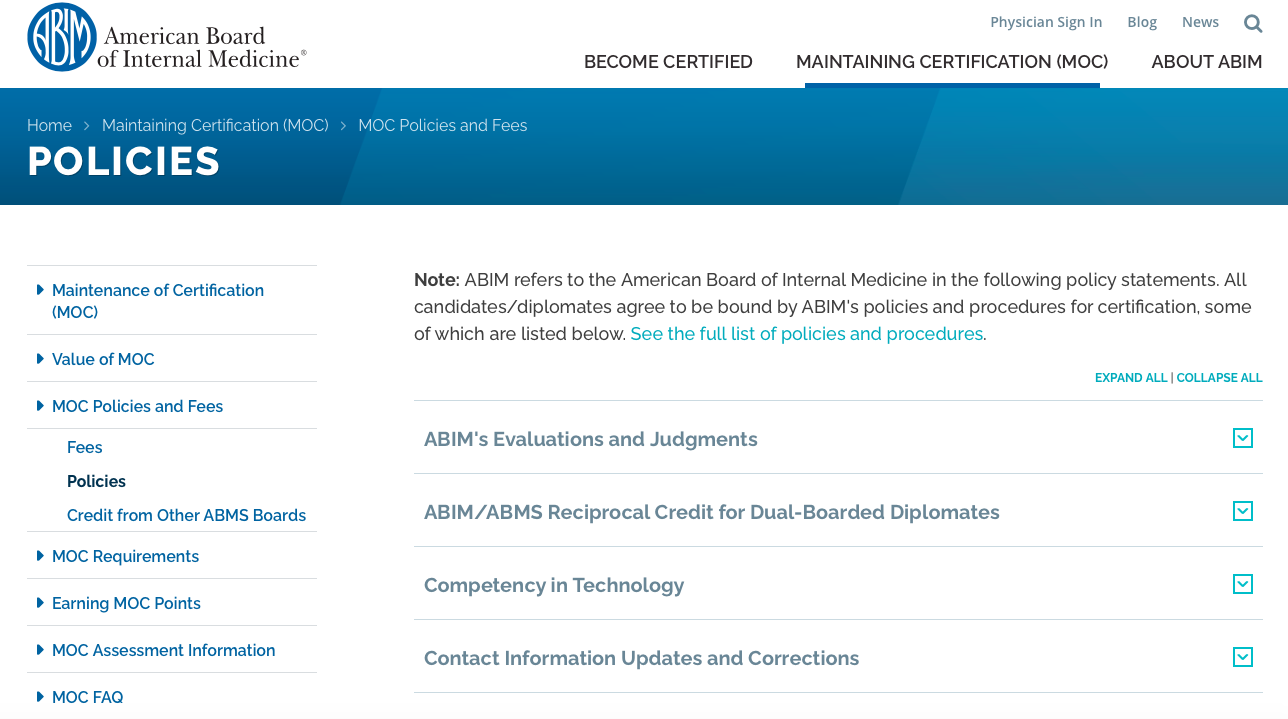
Look over to the left and find the "Policies" button. Here's what the screen looks like today:

(Click to enlarge)

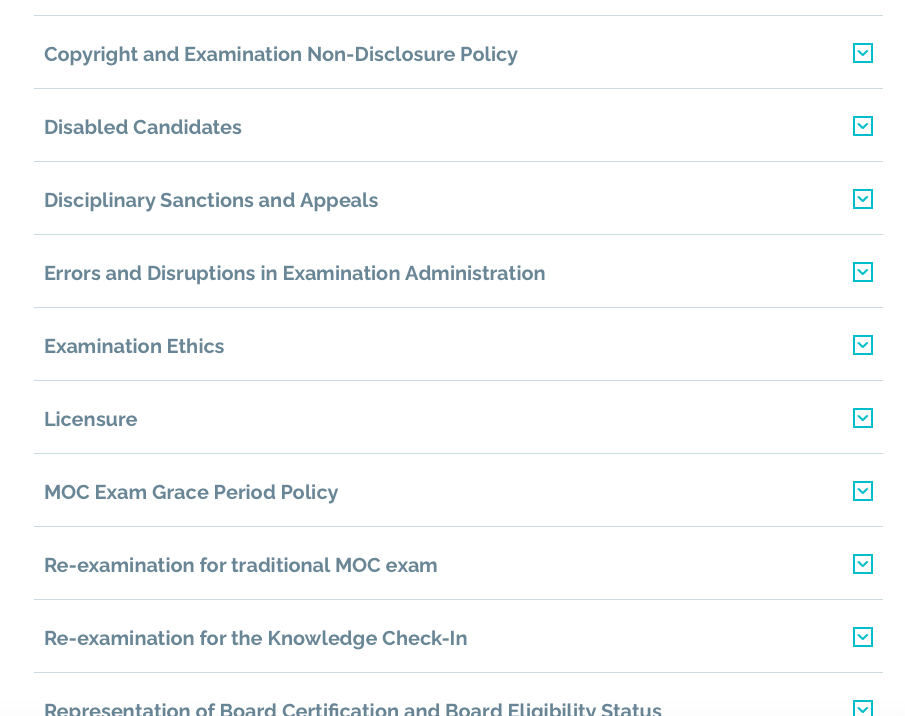
Scroll down to look at what you've missed below the fold, as shown here: 

(Click to enlarge)

Now, this is where things get fun. It will be like The Price Is Right, where Bob Barker asks the contestant to look behind Door Number 1, Door Number 2, or Door Number 3. Go ahead, and click on one of those drop-down arrows of your choosing. What you don't realize, it that behind every one of those arrows, is the hidden surprise that has changed - your MOC® contract with ABIM in all its (hidden) glory.

So here's the challenge...

... which part(s) has(have) changed in the last six months?

Good luck!

-Wes