Wednesday, May 31, 2006

Pills R Us

NYT: Cute, but this pill dispenser needs a display (and instructions) that folks can read!


(But I do like the database of phone numbers it contains to call for help...)

-Wes

Tuesday, May 30, 2006

Defibrillator Cost-effectiveness: 2 months of life for $39,000

One of those important U.S. policy-defining studies just appeared in the Journal of the American College of Cardiology today: "The Cost-Effectiveness of Implantable Cardioverter-Defibrillators: Results from the Multicenter Automatic Defibrillator Implantation Trial (MADIT)-II." Researchers from the University of Chicago and University of Rochester along with many of the MADIT-II investigators reported their results of a cost-effectiveness evaluation comparing the incremental cost effectiveness ratio calculated as the difference in discounted costs divided by the difference in discounted life expectancy within the fairly short follow-up period of 3.5 years (the length of the MADIT-II trial).

The bottom line: during the 3.5 year period of the study, the average survival gain for the defibrillator arm was 0.167 years (2 months), the additional costs of the defibrillator arm over the conventional drug-treated arm was $39,200, and the incremental cost-effectiveness ratio was $235,000 per year-of-life saved. Using estimates if the study had been continued for 12 years, the incremental cost-effectiveness ratio would have declined to $78,000 to $114,000 per year-of-life saved (a smaller number implies improved cost-effectiveness). For comparison, studies of dialysis have suggested a cost of $50-80,000 per year-of-life saved. Given the size of the eligible population, this study has profound consequences for US policy makers. These data were also in line with projections made by the Canadians. As the investigators concluded:

"The relatively high estimate if the iCER (incremental cost-effectiveness ratio) is largely the result of the high initial cost of implantation and the relatively small YOLS (years-of-life saved), the latter partially reflecting the underlying heterogeneity of the MADIT-II study population and the significant risks of non-arrhythmic death (40% of the classifiable deaths in conventionally treated patients (without defibrillators) were assigned to other causes."

Look for more pressure on Guidant (now Boston Scientific), Medtronic, and St. Jude to lower their ICD prices, and look for means to risk stratify patients who are high-risk versus low-risk of arrhythmias (like t-wave alternans testing by Cambridge Heart) to become the norm in an attempt to lower costs to the cardiovascular health care system.

--Wes

Finally, Some Good News From Guidant...

I just received Guidant's 2006 Product Performance Report Q2 Summary Edition which contains invaluable information including:
  • Pulse Generator survival probabilities
  • Worldwide confirmed malfunction counts for each of their devices
  • Confidence intervals for survival probability data
  • Pulse generator and lead survival probabilities with descriptions of complications and malfunctions
  • And current safety advisory information for each device.
It is comprehensive and tabular in nature and easy to interpret. It offers unparalleled reporting of adverse events with their devices, and hopefully begins a much-needed healing process on corporate responsibility to patients. I hope this format becomes an industry standard.

Thanks, Guidant.

--Wes

"Those With More are not Happy..."

And now this study from Dartmouth Medical School as reported in today's Chicago Tribune:

"High rates of hospitalization, tests and specialist referrals lead to poorer patient outcomes when such things as degree of illness and death rates are accounted for. The researchers estimated that 30 percent of Medicare spending is waisted on unnecessary care. ... A major reason healthcare costs continue to escalate is that the system is geared toward paying for diagnostic tests, medical procedures, and other interventions and fails to reward personal contact with patients through which doctors can ascertain patients' problems more effectively and devise effective treatments..."

Just ask any physician I work with the amount of "screen time" they spend in front of a computer terminal versus the amount of face-to-face contact time they spend with patients, and you can't help but laugh that this research was required to expose what many already perceived: doctors are revenue generators, not care providers.

Medical students today are afflicted by the same dilemma: better documentation to assure reimbursement vs. better diagnosis through a thorough history and physical? You see it is far simpler (and some would argue better) to order an expensive CT scan to rule out intracranial bleeding than examine the patient for neurologic deficits. It takes less time for the provider and reduces liability (can you say "expensive defensive" medicine?). Add to this the fact that we "cap" the number of patients med students can see each day, so that we assure skills like time management and physical examination are not developed. News to med students: most of us are seeing more than 5 patients a day. Most internists see many more patients as an ever-increasing rush to see more patients in less time mounts due to declining revenues. Eventually, busy doctors become unhappy doctors.

So how do we change things? Imagine if physicians were compensated for returning phone calls instead of ordering another test, or discovering a physical exam finding that was diagnostic and avoided testing.

But as 'House' on Fox has taught us: if it's hoof-beats, think zebras instead of horses - it pays better.

But that's hardly a way to keep docs intellectually stimulated and happy.


--Wes

Monday, May 29, 2006

Memorial Day

Thanks to all the wonderful men and women of our Armed Forces that permit those of us with slip-n-slides to enjoy this great country!


Hope you had a great day!

-- Wes

Sunday, May 28, 2006

Politics and the New England Journal of Medicine

In case you missed the most recent issue of the New England Journal of MEDICINE's (the capital font is for emphasis) publishing of Hillary Clinton and Barack Obama's 2008 presidential bid perspective piece entitled "Making Patient Safety the Centerpiece of Medical Liability Reform" on their proposal for medical liability reform, it can be found, available for free and to all (unlike most of the other peer-reviewed research studies and reviews published by physicians in the Journal) here. Interesting that this piece was displayed so prominently in the medical press but has failed to be picked up by the political press. As you read this piece ask yourself, why does this piece appear where it does?

When you combine politics and medicine as in this piece's title, you get on-the-Hill "position speak" which coins such terms as "patient safety" and creates the unspoken bind that any alternative position is "against patient safety." This is typical political Hill strategy but now it inserts itself into a health-care community not seasoned to this type of manipulation.

Now don't get me wrong, medical liability reform is needed. Certainly there are points made by senators Clinton and Obama that warrant careful consideration. But manipulation of physicians with such patient-centric titles (who doesn't want patient safety?) and legislation not yet "peer reviewed" in the halls of Congress (especially when no retort is published) in one of the most influencial and cited medical journals screams of bias and limits the objective credibility desired by its readers.

Does the publication of this work (which reiterates the legislation now moved to committee in the Senate and published previously) violate the Journal's own Ingelfinger rule? The NEJM boasts: "Just 8% of manuscripts submitted are accepted for publication and none are reported in any other medium prior to publication in NEJM." It now seems legislative opinion pieces are permitted a double standard - after all, this piece was presented before in the U.S. Senate on 28 Sept 2005 as Senate Bill 1784.

None of us are ignorant to the political overtones of this debate. Some have even suggested this legislation might consitute a bribe of physicians. Certainly more balanced opinions exist regarding this legislation and even more opinions exist on the validity of the data regarding medical liability and medical errors. But I ask: where are the senatorial perspective pieces in the Journal on the other medical liability reform legislation (like S. 22 or S. 23) recently fillibustered and defeated by Democratic interests on the Hill?

Or does this perspective piece fall under the guise of a Journal advertorial? If so, it was not properly labeled.

Perspectives are just that: perspectives. Certainly the influential nature of the authors of this piece bear notice. But their political position should not be permitted to manipulate the medical community in a medical journal until acceptably vetted on the floor of the Senate.

--Wes

Friday, May 26, 2006

For Teen Depression

Got a nice note this AM from a mom regarding a post I did on our MedTees forum last year and thought I'd share it with the blog-o-sphere:

"Hi Wes -Found your posting of last fall about Out Of The Woods Walk and Dominic Palumbo, the 15 year old who founded the walk. Last year's efforts saw 73 walkers raise almost $13,000, providing about 140 pro bono counseling sessions for low-income or uninsured children, adults and families.

So we're doing it again this year on September 30, just in time to kick off Mental Health Awareness month. Please visit www.outofthewoodswalk.org to be a part of this event. Dominic and Scott Costello, some of the counselors at PSC, are working on a teen and adolescent outreach program to educate kids about the symptoms of depression and to eliminate suicide.Hope to see you and friends/family at Out Of The Woods Walk on September 30!"

The power of people to make a difference. Cool.

--Wes

Wednesday, May 24, 2006

On the topic of "Don't Get Me Started..."

NYT 25 May 06: Kudo's to AthenaHealth for their take-off-the-gloves exposure of what we physicians have seen happen time and time again: non-payment of insurance claims by our esteemed insurance middlemen. And why did Athenahealth do this? Because their collections are tied to their client's (physicians) reimbursement. But this problem might be endemic throughout the insurance industry.

Hard to believe Humana scored so well on the time to payment score, but perhaps that's because they're reimbursement rates are so low relative to other payors. Interesting that Medicare was fastest of all. And Unitedhealth, they have no right to suggest that these data are skewed when their own leadership has been caught with their pants around their ankles in the option-timing scandal, fleecing their shareholders and members. These guys need to embrace such reporting, not shirk it as inaccurate or flawed. Perhaps then physicians and insurers could have a real dialog on this topic.

What I have noticed is the incredible complexity and changes to the rules of claims processing midstream seem clearly designed to delay phyician payments (last months' clean bill wouldn't be clean this month). And have you ever tried to speak with the people running these outfits? Most have no clue what's going on, particularly if a claim falls anywhere outside their rubric of rules for reimbursement.

Constant updating of Athenahealth's Monitoring Site (available after 25 May 06) and exposure or poor compliance with reasonable timing and tracing of reimbursements might also leave these slow or non-paying firms open to litigation.

Revenge is sweet.

Thanks Athenahealth.

--Wes

And the winner of American Idol? Ford.

The producers of the American Idol did a pretty good job appealing to the 200 million viewers tonight. My 10 year old daughter was a bit appalled by Prince, couldn't believe how metrosexual Clay Aiken looked (Hollywoodified and all), and she thought Burt Bacharach and Dionne Warwick looked old, but at least she recognized their incredible talent even as Dionne's voice became flat when holding the last note. She even commented how "cool" Randy Jackson looked tonight (definetely the best-dressed). But I have to hand it to Ford Motor Company for their "Bold Moves" commercial concept. The idea of a soccer player putting on his prosthetic limb, and a women shaving her hair for the "Race for a Cure" breast cancer campaign, and the toughness of this being placed with other "bold moves," once again shows how ready society is to embrace illness as a normal part of living, and living "bold."

--Wes

West VA and KY Get Tough

When there is a federal imperative to treat all patient's that present to an Emergency Room in our great country, initiatives by government legislators in West Virgina that threaten to take away Medicaid benefits if poor folks don't "promise" to show up for appointments and not use the ER for non-emergencies seems ridiculous but offers states a legal way to ration care. They will take away benefits so they can make SURE they show up at the most expensive place they can get care: emergency rooms.

--Wes

Taking the Surgical Error Thing a Bit too Far

Video games for surgeons? 11 seconds better? I'll pass, thanks. I think most of my patients would be upset to learn I was in the locker room on a video game just before their surgery, irrespective of the technique I used.

--Wes

Tuesday, May 23, 2006

Medication Errors: Perhaps an Answer Exists

Laura Landro in today's issue from the Wall Street Journal describes an initiative hospitals are taking to collect better medication information on their patient's in a rather feeble attempt to prevent medical errors. This is in response to a national patient safety standard that went into effect in January called "medication reconciliation." This means hospitals must have in place means for collecting complete drug and allergy histories and comparing them with new medications that their doctors order.

Stanford Hospital has initiated a "Vial of Life" program with local EMS services where the patient's medication lists are printed on paper and placed in an old medication vial and stored in that highly accessible and often visited location: the refrigerator. Huh? Have you ever heard the adage, "Out of sight, out of mind?" This seems like an unlikely place to keep medication changes up-to-date and current. People I know don't carry a refrigerator. Perhaps most important, the reliance on patients to become "more proactive" in knowing their medications is sure to fail. When I see patients in clinic, most don't know the names of medications, but might know they're on a "water pill" at best, and more often have NO idea the purpose of each medicationn, let alone their names. On top of this, to expect them to know the milligram dosage of each drug is unrealistic. And that dosage, which has been stored in the refrigerator vial for 6 months, is not likely to be updated. Sincerety and spin don't save lives.

I am fortunate to work in one of the "100 most wired" hospital systems in the country. Yet even our system is insufficient. We use the EPIC medical system, touted to be the next frontier of health care, that is integrated between the outpatient physicians' offices and the hospital. Medications entered by the patient's outpatient physician alters the same medical record that providers within the hospital see. This adds incredible continuity of care on many fronts. But I am frustrated at the incredibly complex screen that is displayed when I reorder a myriad of medications and have to "reconcile" their complex and innumerable interactions. More challenging is that if my patient travels to a physician's office outside our network, no information can flow easily with them. Suffice it to say, this system goes well beyond "the paper in a vial" approach.

It was with awe that I had the chance to meet with Ross Fletcher, MD, Chief of Staff, from the VA Medical Center from Washington DC last week. Ross has been instrumental in developing and promoting the VA's Vista Electronic Medical Record (EMR) used by the VA Medical system, and a model for the EMR industry. Best of all, its free. It's power is demonstrated in its ability to incorporate geographically disparate graphical and data-driven information and display it for the physician in a organized, easy-to-comprehend fashion on any commercially-available computer screen. And this data is culled from every VA medical center across the United States, in seconds. Information from a VA in California, Utah, and Washington can be viewed side-by-side in chronological order.

While sitting with Ross at dinner, his pager went off. He looked down, smiled, and delighted in the fact that a seasonal variation in effectiveness of therapy was suggested by analyzing over 1 billion vital signs on veterans collected over the preceeding five years across the U.S. using multivariate analysis. The sleepy old VA?

And you can bet their medication lists are up to date.

--Wes

Monday, May 22, 2006

Catheter Ablation for Your Lungs

According to this article, seems radiofrequency catheter ablation is now being performed for asthmatics. Although I'm not sure the power used (I suspect its much lower than what we use in the heart because there is no heat loss due to blood flow), caution will still be needed to avoid collateral damage like recurrent laryngeal nerve paralysis (supplies the vocal cord and wraps beneath the left mainstem bronchus), as well as other mediastinal structures. It's a clever application nontheless.

--Wes

Sunday, May 21, 2006

Robots: The New Globalization of Medicine?

There's a tremendous interest in robotics aiding medical care recently. Hospitals are rushing for the DaVinci system to perform intricate surgical procedures through tiny openings in patients abdomens and thoraxes. I had the opportunity to review two new contenders for robotics in the catheter ablation of cardiac arrhythmia arena: Hansen Medical (see pictures below), and Stereotaxis, Inc. Both offer a means to steer an ablation catheter within the heart, most importantly, the left atrium of the heart.


You see the left atrium is the focus of significant attention lately because of inroads to successfully ablating (another word for cauterizing) the most common arrhythmia in men and women: atrial fibrillation. And in 2004, the number of catheter ablation procedures to cure atrial fibrillation worldwide was estimated to be approximately 10,000. In 2007, it is estimated that the number of these procedures will approach or exceed 100,000. The problem is, these procedures are time-consuming and carry significantly more potential risks to the patient than non-invasive medical therapy, yet carry the promise of better long-term treatment of the disorder (i.e. a 70-80% of curing this disorder).

An atrial fibrillation ablation procedure requires an amazing array of instrumentation and equipment to perform safely today. Procedures in most centers last from 2.5-5 hours in duration, liimiting the number of procedures that can be performed by an individual operator per day due to time and operator fatigue constraints. Enter robotics. These devices promise to be able to steer the ablation catheter within the left atrium with remarkable dexterity using a virtual model displayed for the doctor on four or five computer screens. The Hansen Medical system uses a virtual joy-stick-like arrangement to steer the conventional catheter through a specially-designed (approximately $2000) sheath that steers the deflectible catheter using a mechanical drive motor, that can rotate, pitch and yaw the catheter to different locations (outlay price for hospitals not disclosed at the meeting). The Sterotaxis system steers a soft, noodle-like catheter containing a magnet inside the catheter using a forceful (0.8 Tesla) magnetic field that changes its direction by moving two huge magnets on opposite sides of the patient's body (Hosptial capital outlay: about $1.2 million BEFORE contruction costs, special non-magnetic outfitting with equipment in the patient's room, etc.). Where the catheter is placed is again determined by a virtual rendition of the heart on a bunch of computer screens.

Both of the systems use a 3D image of the left atrium obtained from a CT scan merged with their software to move the catheter, but also use some fluoroscopic localization to assure proper placement of the catheter. Like surgical robotics, the surgeon's skill to initially place the catheter within heart and the chamber of interest must be maintained (it won't do this for you). Furthermore, the image used to navigate is static, unlike the normal heart which beats and moves in space with the movements of respiration. Hence good ol' xray naviagation remains to confirm location as the catheter is moved.

The one big advantage for the physician is the promise of being seated and outside the room as the catheters were advanced. Remarkably, there was a demonstration at the Heart Rhythm Society meeting of a physician in Boston, Massachusetts steering the catheter within a patient's heart in Milan, Italy. Globalization gone wild, I'd say. But the implications are nontheless important to grasp. Will there be large "surgicenters" performing the intricate part of the procedure from India? Italy? China? Perhaps a doctor will place the catheters in his patient's heart, then sip coffee as his colleagues in Milan place a curative pattern of cauterizations within his patient's heart chamber. It's analogous to waiting for the dishwasher to complete it's work before putting away the dishes.

Gratefully, noone has figured out a way to reimburse physicians who provide this service..... yet. And importantly as we've seen in the airline industry, medical care is not like flying an unmanned drone, it's more like flying a 747 across the ocean: a team of pilots an crew are still needed to have the patient arrive at their destination safe and sound.

--Wes

"There is no thing endowed with life - from man, who is enslaving the elements, to the nimblest creature - in all this world that does not sway in it's turn. Whenever action is born from force, though it be infinitesimal, the cosmic balance is upset and the universal motion results. "
-- Nikola Telsa, 1925

Thursday, May 18, 2006

High Frequency Ultrasound Balloon for Ablation


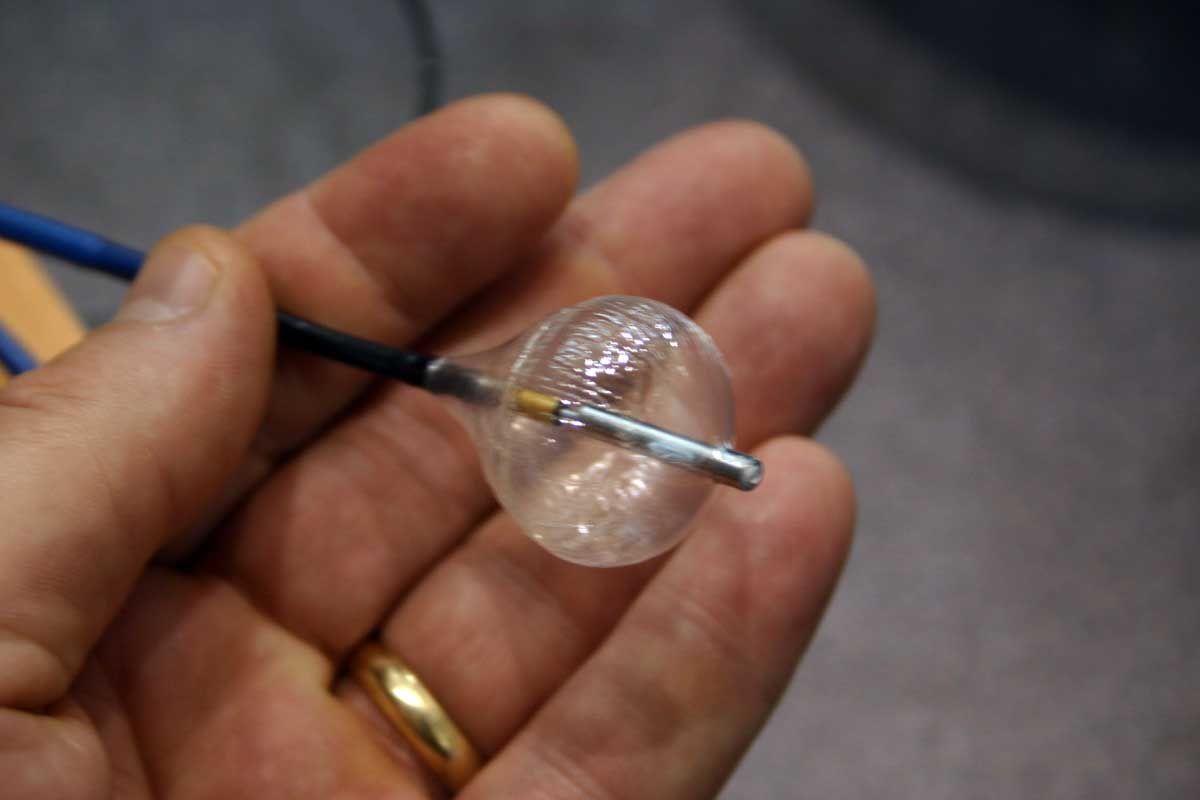
Cool new(er) technology might speed the time it takes to perform catheter ablation of atrial fibrillation: the high frequency ultrasound balloon. It has a fluid-filled inner chamber and an outer carbon dioxide-filled balloon that helps focus the ultrasound in a ring-like pattern in an attempt to ablate (or burn) around the pulmonary veins in the left atrium (the site where it's thought the atrial fibrillation comes from). Average lesion time takes 40-90 seconds and it covers LOTS of territory in the left atrium. It's just starting clinical trials.... Seems promising. We'll see....

--Wes

Is Our Government Discriminating Against our Vets?

It is a sad state of affairs when I learned from Pam Karasik, MD of the Washington VA Medical Center that she often has to borrow medical equipment (ablation catheters) from the Washington Hospital Center due to budget constraints at the VA Medical System. Their cardiology budget, excluding implantable defibrillators (which fall under their own separate budget) is only $50,000 per quarter. When I estimated our hospital's costs for this budget, I would only be able to treat at most 10 patients in that three month period in our hospital in Chicago.

There is no question that additional dollars for the health care of our veterans should be a priority in Congress. It is unconscionable that these men and women who have sacrificed life and limb to serve our country have their health care financially rationed.

--Wes

Wednesday, May 17, 2006

"Leadless" ICD - Has it's time come?

There was interesting information from the "leadless" ICD front reported by Andrew A. Grace, MD, PhD from Papworth Hospital NHS Trust, Cambridge, United Kingdom at the Heart Rhythm Society Meeting in Boston, MA today:

First of all, the device is not "leadless." Rather, there are no leads placed inside blood vessels with this defibrillator, produced by Cameron Health, Inc. The device does have a lead that is tunneled beneath the skin from the upper left chest beneath just below the level of the clavicle to the level of about the breast, then tunneled laterally to the side of the chest beneath the arm. The device uses the subcutaneous lead to sense the heart rhythm and can detect rapid arrhythmias from the surface EKG created between the lead electrode and the can of the device. It's maximum shocking output is 80 joules (about 2 1/2 times existing devices). It requires no xray system to implant the device and took about 12-15 minutes on average for experienced operators to install in an operating room setting. If the ability to convert the rhythm from ventricular fibrillation to normal rhythm was excessive, a conventional defibrillator lead placed inside the blood vessel could be attached.

53 patients were studied the the information provided. The average defibrillation threshold without any internal lead was 36 joules. No inappropriate shocks occurred, even when there was an aggressive attempt to induce sensing of muscular potentials with vigorous arm movement.

It's only drawback: there was no backup pacing provided by the device, so if the rhythm is converted from ventricular fibrillation to asystole (no heart beats... and this CAN happen), then the patient still might not survive. Nonetheless, the implications for decreasing physician reimbursement for electrophysiologists (since now any surgeon could implant these) and what this will do to pressure existing device companies to drop their prices once the device reaches the mainstream US market for primary prevention of life-threatening arrhythmias, remains to be seen.

--Wes

Guidant's Ad at HRS Meeting

Instilling confidence, here's Guidant's ad found on the back of the "Heart Rhythm Daily" produced by the Heart Rhythm Society, dated 17-18 May 2006:


I assure you, this is not my picture.

--Wes

Guidant: What We're Not Hearing at the HRS Meeting

It seems Guidant, now a division of Boston Scientific, might have some other news we're NOT hearing about at the Heart Rhythm Society meeting in Boston this week.

As most of us doctors in the field of heart rhythm disorders know, Guidant has been struggling to ressurrect itself from legal problems regarding disclosure of problems with implantable cardiac defibrillators. To reassure investors, a new wireless transmission system, Lattitude Latitude, was developed using the frequency bandwidth of approximately 900MHz (update 18May06: 913-924MHz), the same as cellular phones and some patient telemetry systems in hospitals, that permits communication with their device to interrogate their Contak Renewal 3 ICD to alert patients and doctors about changes in electrical characteristics about the device. The Lattitude system can also be cleverly connected to a weight scale at home so the patient can transmit their weight along with ICD statistics to a central registry database offering additional therapeutic information to physicians about their patient's condition.

Well, wouldn't you know, the system has considerable interference issues with cell phones, electrical noise, and even some telemetry services in hospitals. Yet no patient or physician safety advisory has been issued. It would hurt sales.

To be fair, the problem does not cause reprogramming of the patient's device, but rather interruptions with the downloading of information from the patient's device.

But where's the reassurance to investors, doctors, hospitals, and most of all, patients when these issues are not disclosed?

Medtronic's wireless system for their Virtuoso and Concerto ICD and CRT-D product lines was developed under a special 2.5GHz 402-405MHz mixed bandwidth (used for some weather balloons and a bandwidth reserved for medical device use to avoid such interference), was just approved by the FDA the day before yesterday. As usual, Medtronic is late to the wireless ICD party, but did its homework before jumping on the easy-to-engineer 900MHz bandwidth for their wireless device.

--Wes

For purposes of disclosure, I do serve on the speaking bureau for Medtronic, but hold no other financial positions with either company mentioned in this post.

Update: 18 May 2006: Seems there have been documented interference issues, particularly in hospitals, with a commercially-available Spectralink phone systems that use the same frequency band. It is routine for Guidant to "sweep" hospitals for such sources of interference before deploying the technology.

Tuesday, May 16, 2006

Health Moves Below the Fold

Too bad "Health" has moved "below the fold" on the new Yahoo home page (That means you have to scroll down to see it, for those who are techno-speak challenged), but gee whiz, "Entertainement" gets TWO spots above the fold... * Sigh *

--Wes