One of those important U.S. policy-defining studies just appeared in the Journal of the American College of Cardiology today: "The Cost-Effectiveness of Implantable Cardioverter-Defibrillators: Results from the Multicenter Automatic Defibrillator Implantation Trial (MADIT)-II." Researchers from the University of Chicago and University of Rochester along with many of the MADIT-II investigators reported their results of a cost-effectiveness evaluation comparing the incremental cost effectiveness ratio calculated as the difference in discounted costs divided by the difference in discounted life expectancy within the fairly short follow-up period of 3.5 years (the length of the MADIT-II trial).
The bottom line: during the 3.5 year period of the study, the average survival gain for the defibrillator arm was 0.167 years (2 months), the additional costs of the defibrillator arm over the conventional drug-treated arm was $39,200, and the incremental cost-effectiveness ratio was $235,000 per year-of-life saved. Using estimates if the study had been continued for 12 years, the incremental cost-effectiveness ratio would have declined to $78,000 to $114,000 per year-of-life saved (a smaller number implies improved cost-effectiveness). For comparison, studies of dialysis have suggested a cost of $50-80,000 per year-of-life saved. Given the size of the eligible population, this study has profound consequences for US policy makers. These data were also in line with projections made by the Canadians. As the investigators concluded:
"The relatively high estimate if the iCER (incremental cost-effectiveness ratio) is largely the result of the high initial cost of implantation and the relatively small YOLS (years-of-life saved), the latter partially reflecting the underlying heterogeneity of the MADIT-II study population and the significant risks of non-arrhythmic death (40% of the classifiable deaths in conventionally treated patients (without defibrillators) were assigned to other causes."
Look for more pressure on Guidant (now Boston Scientific), Medtronic, and St. Jude to lower their ICD prices, and look for means to risk stratify patients who are high-risk versus low-risk of arrhythmias (like t-wave alternans testing by Cambridge Heart) to become the norm in an attempt to lower costs to the cardiovascular health care system.
--Wes
Tuesday, May 30, 2006


Finally, Some Good News From Guidant...
I just received Guidant's 2006 Product Performance Report Q2 Summary Edition which contains invaluable information including:
Thanks, Guidant.
--Wes
- Pulse Generator survival probabilities
- Worldwide confirmed malfunction counts for each of their devices
- Confidence intervals for survival probability data
- Pulse generator and lead survival probabilities with descriptions of complications and malfunctions
- And current safety advisory information for each device.
Thanks, Guidant.
--Wes
"Those With More are not Happy..."
And now this study from Dartmouth Medical School as reported in today's Chicago Tribune:
"High rates of hospitalization, tests and specialist referrals lead to poorer patient outcomes when such things as degree of illness and death rates are accounted for. The researchers estimated that 30 percent of Medicare spending is waisted on unnecessary care. ... A major reason healthcare costs continue to escalate is that the system is geared toward paying for diagnostic tests, medical procedures, and other interventions and fails to reward personal contact with patients through which doctors can ascertain patients' problems more effectively and devise effective treatments..."
Just ask any physician I work with the amount of "screen time" they spend in front of a computer terminal versus the amount of face-to-face contact time they spend with patients, and you can't help but laugh that this research was required to expose what many already perceived: doctors are revenue generators, not care providers.
Medical students today are afflicted by the same dilemma: better documentation to assure reimbursement vs. better diagnosis through a thorough history and physical? You see it is far simpler (and some would argue better) to order an expensive CT scan to rule out intracranial bleeding than examine the patient for neurologic deficits. It takes less time for the provider and reduces liability (can you say "expensive defensive" medicine?). Add to this the fact that we "cap" the number of patients med students can see each day, so that we assure skills like time management and physical examination are not developed. News to med students: most of us are seeing more than 5 patients a day. Most internists see many more patients as an ever-increasing rush to see more patients in less time mounts due to declining revenues. Eventually, busy doctors become unhappy doctors.
So how do we change things? Imagine if physicians were compensated for returning phone calls instead of ordering another test, or discovering a physical exam finding that was diagnostic and avoided testing.
But as 'House' on Fox has taught us: if it's hoof-beats, think zebras instead of horses - it pays better.
But that's hardly a way to keep docs intellectually stimulated and happy.
--Wes
"High rates of hospitalization, tests and specialist referrals lead to poorer patient outcomes when such things as degree of illness and death rates are accounted for. The researchers estimated that 30 percent of Medicare spending is waisted on unnecessary care. ... A major reason healthcare costs continue to escalate is that the system is geared toward paying for diagnostic tests, medical procedures, and other interventions and fails to reward personal contact with patients through which doctors can ascertain patients' problems more effectively and devise effective treatments..."
Just ask any physician I work with the amount of "screen time" they spend in front of a computer terminal versus the amount of face-to-face contact time they spend with patients, and you can't help but laugh that this research was required to expose what many already perceived: doctors are revenue generators, not care providers.
Medical students today are afflicted by the same dilemma: better documentation to assure reimbursement vs. better diagnosis through a thorough history and physical? You see it is far simpler (and some would argue better) to order an expensive CT scan to rule out intracranial bleeding than examine the patient for neurologic deficits. It takes less time for the provider and reduces liability (can you say "expensive defensive" medicine?). Add to this the fact that we "cap" the number of patients med students can see each day, so that we assure skills like time management and physical examination are not developed. News to med students: most of us are seeing more than 5 patients a day. Most internists see many more patients as an ever-increasing rush to see more patients in less time mounts due to declining revenues. Eventually, busy doctors become unhappy doctors.
So how do we change things? Imagine if physicians were compensated for returning phone calls instead of ordering another test, or discovering a physical exam finding that was diagnostic and avoided testing.
But as 'House' on Fox has taught us: if it's hoof-beats, think zebras instead of horses - it pays better.
But that's hardly a way to keep docs intellectually stimulated and happy.
--Wes
Monday, May 29, 2006
Memorial Day
Thanks to all the wonderful men and women of our Armed Forces that permit those of us with slip-n-slides to enjoy this great country!


Hope you had a great day!
-- Wes
Hope you had a great day!
-- Wes
Sunday, May 28, 2006
Politics and the New England Journal of Medicine
In case you missed the most recent issue of the New England Journal of MEDICINE's (the capital font is for emphasis) publishing of Hillary Clinton and Barack Obama's 2008 presidential bid perspective piece entitled "Making Patient Safety the Centerpiece of Medical Liability Reform" on their proposal for medical liability reform, it can be found, available for free and to all (unlike most of the other peer-reviewed research studies and reviews published by physicians in the Journal) here. Interesting that this piece was displayed so prominently in the medical press but has failed to be picked up by the political press. As you read this piece ask yourself, why does this piece appear where it does?
When you combine politics and medicine as in this piece's title, you get on-the-Hill "position speak" which coins such terms as "patient safety" and creates the unspoken bind that any alternative position is "against patient safety." This is typical political Hill strategy but now it inserts itself into a health-care community not seasoned to this type of manipulation.
Now don't get me wrong, medical liability reform is needed. Certainly there are points made by senators Clinton and Obama that warrant careful consideration. But manipulation of physicians with such patient-centric titles (who doesn't want patient safety?) and legislation not yet "peer reviewed" in the halls of Congress (especially when no retort is published) in one of the most influencial and cited medical journals screams of bias and limits the objective credibility desired by its readers.
Does the publication of this work (which reiterates the legislation now moved to committee in the Senate and published previously) violate the Journal's own Ingelfinger rule? The NEJM boasts: "Just 8% of manuscripts submitted are accepted for publication and none are reported in any other medium prior to publication in NEJM." It now seems legislative opinion pieces are permitted a double standard - after all, this piece was presented before in the U.S. Senate on 28 Sept 2005 as Senate Bill 1784.
None of us are ignorant to the political overtones of this debate. Some have even suggested this legislation might consitute a bribe of physicians. Certainly more balanced opinions exist regarding this legislation and even more opinions exist on the validity of the data regarding medical liability and medical errors. But I ask: where are the senatorial perspective pieces in the Journal on the other medical liability reform legislation (like S. 22 or S. 23) recently fillibustered and defeated by Democratic interests on the Hill?
Or does this perspective piece fall under the guise of a Journal advertorial? If so, it was not properly labeled.
Perspectives are just that: perspectives. Certainly the influential nature of the authors of this piece bear notice. But their political position should not be permitted to manipulate the medical community in a medical journal until acceptably vetted on the floor of the Senate.
--Wes
When you combine politics and medicine as in this piece's title, you get on-the-Hill "position speak" which coins such terms as "patient safety" and creates the unspoken bind that any alternative position is "against patient safety." This is typical political Hill strategy but now it inserts itself into a health-care community not seasoned to this type of manipulation.
Now don't get me wrong, medical liability reform is needed. Certainly there are points made by senators Clinton and Obama that warrant careful consideration. But manipulation of physicians with such patient-centric titles (who doesn't want patient safety?) and legislation not yet "peer reviewed" in the halls of Congress (especially when no retort is published) in one of the most influencial and cited medical journals screams of bias and limits the objective credibility desired by its readers.
Does the publication of this work (which reiterates the legislation now moved to committee in the Senate and published previously) violate the Journal's own Ingelfinger rule? The NEJM boasts: "Just 8% of manuscripts submitted are accepted for publication and none are reported in any other medium prior to publication in NEJM." It now seems legislative opinion pieces are permitted a double standard - after all, this piece was presented before in the U.S. Senate on 28 Sept 2005 as Senate Bill 1784.
None of us are ignorant to the political overtones of this debate. Some have even suggested this legislation might consitute a bribe of physicians. Certainly more balanced opinions exist regarding this legislation and even more opinions exist on the validity of the data regarding medical liability and medical errors. But I ask: where are the senatorial perspective pieces in the Journal on the other medical liability reform legislation (like S. 22 or S. 23) recently fillibustered and defeated by Democratic interests on the Hill?
Or does this perspective piece fall under the guise of a Journal advertorial? If so, it was not properly labeled.
Perspectives are just that: perspectives. Certainly the influential nature of the authors of this piece bear notice. But their political position should not be permitted to manipulate the medical community in a medical journal until acceptably vetted on the floor of the Senate.
--Wes
Friday, May 26, 2006
For Teen Depression
Got a nice note this AM from a mom regarding a post I did on our MedTees forum last year and thought I'd share it with the blog-o-sphere:
"Hi Wes -Found your posting of last fall about Out Of The Woods Walk and Dominic Palumbo, the 15 year old who founded the walk. Last year's efforts saw 73 walkers raise almost $13,000, providing about 140 pro bono counseling sessions for low-income or uninsured children, adults and families.
So we're doing it again this year on September 30, just in time to kick off Mental Health Awareness month. Please visit www.outofthewoodswalk.org to be a part of this event. Dominic and Scott Costello, some of the counselors at PSC, are working on a teen and adolescent outreach program to educate kids about the symptoms of depression and to eliminate suicide.Hope to see you and friends/family at Out Of The Woods Walk on September 30!"
The power of people to make a difference. Cool.
--Wes
"Hi Wes -Found your posting of last fall about Out Of The Woods Walk and Dominic Palumbo, the 15 year old who founded the walk. Last year's efforts saw 73 walkers raise almost $13,000, providing about 140 pro bono counseling sessions for low-income or uninsured children, adults and families.
So we're doing it again this year on September 30, just in time to kick off Mental Health Awareness month. Please visit www.outofthewoodswalk.org to be a part of this event. Dominic and Scott Costello, some of the counselors at PSC, are working on a teen and adolescent outreach program to educate kids about the symptoms of depression and to eliminate suicide.Hope to see you and friends/family at Out Of The Woods Walk on September 30!"
The power of people to make a difference. Cool.
--Wes
Wednesday, May 24, 2006
On the topic of "Don't Get Me Started..."
NYT 25 May 06: Kudo's to AthenaHealth for their take-off-the-gloves exposure of what we physicians have seen happen time and time again: non-payment of insurance claims by our esteemed insurance middlemen. And why did Athenahealth do this? Because their collections are tied to their client's (physicians) reimbursement. But this problem might be endemic throughout the insurance industry.
Hard to believe Humana scored so well on the time to payment score, but perhaps that's because they're reimbursement rates are so low relative to other payors. Interesting that Medicare was fastest of all. And Unitedhealth, they have no right to suggest that these data are skewed when their own leadership has been caught with their pants around their ankles in the option-timing scandal, fleecing their shareholders and members. These guys need to embrace such reporting, not shirk it as inaccurate or flawed. Perhaps then physicians and insurers could have a real dialog on this topic.
What I have noticed is the incredible complexity and changes to the rules of claims processing midstream seem clearly designed to delay phyician payments (last months' clean bill wouldn't be clean this month). And have you ever tried to speak with the people running these outfits? Most have no clue what's going on, particularly if a claim falls anywhere outside their rubric of rules for reimbursement.
Constant updating of Athenahealth's Monitoring Site (available after 25 May 06) and exposure or poor compliance with reasonable timing and tracing of reimbursements might also leave these slow or non-paying firms open to litigation.
Revenge is sweet.
Thanks Athenahealth.
--Wes
Hard to believe Humana scored so well on the time to payment score, but perhaps that's because they're reimbursement rates are so low relative to other payors. Interesting that Medicare was fastest of all. And Unitedhealth, they have no right to suggest that these data are skewed when their own leadership has been caught with their pants around their ankles in the option-timing scandal, fleecing their shareholders and members. These guys need to embrace such reporting, not shirk it as inaccurate or flawed. Perhaps then physicians and insurers could have a real dialog on this topic.
What I have noticed is the incredible complexity and changes to the rules of claims processing midstream seem clearly designed to delay phyician payments (last months' clean bill wouldn't be clean this month). And have you ever tried to speak with the people running these outfits? Most have no clue what's going on, particularly if a claim falls anywhere outside their rubric of rules for reimbursement.
Constant updating of Athenahealth's Monitoring Site (available after 25 May 06) and exposure or poor compliance with reasonable timing and tracing of reimbursements might also leave these slow or non-paying firms open to litigation.
Revenge is sweet.
Thanks Athenahealth.
--Wes
And the winner of American Idol? Ford.
The producers of the American Idol did a pretty good job appealing to the 200 million viewers tonight. My 10 year old daughter was a bit appalled by Prince, couldn't believe how metrosexual Clay Aiken looked (Hollywoodified and all), and she thought Burt Bacharach and Dionne Warwick looked old, but at least she recognized their incredible talent even as Dionne's voice became flat when holding the last note. She even commented how "cool" Randy Jackson looked tonight (definetely the best-dressed). But I have to hand it to Ford Motor Company for their "Bold Moves" commercial concept. The idea of a soccer player putting on his prosthetic limb, and a women shaving her hair for the "Race for a Cure" breast cancer campaign, and the toughness of this being placed with other "bold moves," once again shows how ready society is to embrace illness as a normal part of living, and living "bold."
--Wes
--Wes
West VA and KY Get Tough
When there is a federal imperative to treat all patient's that present to an Emergency Room in our great country, initiatives by government legislators in West Virgina that threaten to take away Medicaid benefits if poor folks don't "promise" to show up for appointments and not use the ER for non-emergencies seems ridiculous but offers states a legal way to ration care. They will take away benefits so they can make SURE they show up at the most expensive place they can get care: emergency rooms.
--Wes
--Wes
Taking the Surgical Error Thing a Bit too Far
Video games for surgeons? 11 seconds better? I'll pass, thanks. I think most of my patients would be upset to learn I was in the locker room on a video game just before their surgery, irrespective of the technique I used.
--Wes
--Wes
Tuesday, May 23, 2006
Medication Errors: Perhaps an Answer Exists
Laura Landro in today's issue from the Wall Street Journal describes an initiative hospitals are taking to collect better medication information on their patient's in a rather feeble attempt to prevent medical errors. This is in response to a national patient safety standard that went into effect in January called "medication reconciliation." This means hospitals must have in place means for collecting complete drug and allergy histories and comparing them with new medications that their doctors order.
Stanford Hospital has initiated a "Vial of Life" program with local EMS services where the patient's medication lists are printed on paper and placed in an old medication vial and stored in that highly accessible and often visited location: the refrigerator. Huh? Have you ever heard the adage, "Out of sight, out of mind?" This seems like an unlikely place to keep medication changes up-to-date and current. People I know don't carry a refrigerator. Perhaps most important, the reliance on patients to become "more proactive" in knowing their medications is sure to fail. When I see patients in clinic, most don't know the names of medications, but might know they're on a "water pill" at best, and more often have NO idea the purpose of each medicationn, let alone their names. On top of this, to expect them to know the milligram dosage of each drug is unrealistic. And that dosage, which has been stored in the refrigerator vial for 6 months, is not likely to be updated. Sincerety and spin don't save lives.
I am fortunate to work in one of the "100 most wired" hospital systems in the country. Yet even our system is insufficient. We use the EPIC medical system, touted to be the next frontier of health care, that is integrated between the outpatient physicians' offices and the hospital. Medications entered by the patient's outpatient physician alters the same medical record that providers within the hospital see. This adds incredible continuity of care on many fronts. But I am frustrated at the incredibly complex screen that is displayed when I reorder a myriad of medications and have to "reconcile" their complex and innumerable interactions. More challenging is that if my patient travels to a physician's office outside our network, no information can flow easily with them. Suffice it to say, this system goes well beyond "the paper in a vial" approach.
It was with awe that I had the chance to meet with Ross Fletcher, MD, Chief of Staff, from the VA Medical Center from Washington DC last week. Ross has been instrumental in developing and promoting the VA's Vista Electronic Medical Record (EMR) used by the VA Medical system, and a model for the EMR industry. Best of all, its free. It's power is demonstrated in its ability to incorporate geographically disparate graphical and data-driven information and display it for the physician in a organized, easy-to-comprehend fashion on any commercially-available computer screen. And this data is culled from every VA medical center across the United States, in seconds. Information from a VA in California, Utah, and Washington can be viewed side-by-side in chronological order.
While sitting with Ross at dinner, his pager went off. He looked down, smiled, and delighted in the fact that a seasonal variation in effectiveness of therapy was suggested by analyzing over 1 billion vital signs on veterans collected over the preceeding five years across the U.S. using multivariate analysis. The sleepy old VA?
And you can bet their medication lists are up to date.
--Wes
Stanford Hospital has initiated a "Vial of Life" program with local EMS services where the patient's medication lists are printed on paper and placed in an old medication vial and stored in that highly accessible and often visited location: the refrigerator. Huh? Have you ever heard the adage, "Out of sight, out of mind?" This seems like an unlikely place to keep medication changes up-to-date and current. People I know don't carry a refrigerator. Perhaps most important, the reliance on patients to become "more proactive" in knowing their medications is sure to fail. When I see patients in clinic, most don't know the names of medications, but might know they're on a "water pill" at best, and more often have NO idea the purpose of each medicationn, let alone their names. On top of this, to expect them to know the milligram dosage of each drug is unrealistic. And that dosage, which has been stored in the refrigerator vial for 6 months, is not likely to be updated. Sincerety and spin don't save lives.
I am fortunate to work in one of the "100 most wired" hospital systems in the country. Yet even our system is insufficient. We use the EPIC medical system, touted to be the next frontier of health care, that is integrated between the outpatient physicians' offices and the hospital. Medications entered by the patient's outpatient physician alters the same medical record that providers within the hospital see. This adds incredible continuity of care on many fronts. But I am frustrated at the incredibly complex screen that is displayed when I reorder a myriad of medications and have to "reconcile" their complex and innumerable interactions. More challenging is that if my patient travels to a physician's office outside our network, no information can flow easily with them. Suffice it to say, this system goes well beyond "the paper in a vial" approach.
It was with awe that I had the chance to meet with Ross Fletcher, MD, Chief of Staff, from the VA Medical Center from Washington DC last week. Ross has been instrumental in developing and promoting the VA's Vista Electronic Medical Record (EMR) used by the VA Medical system, and a model for the EMR industry. Best of all, its free. It's power is demonstrated in its ability to incorporate geographically disparate graphical and data-driven information and display it for the physician in a organized, easy-to-comprehend fashion on any commercially-available computer screen. And this data is culled from every VA medical center across the United States, in seconds. Information from a VA in California, Utah, and Washington can be viewed side-by-side in chronological order.
While sitting with Ross at dinner, his pager went off. He looked down, smiled, and delighted in the fact that a seasonal variation in effectiveness of therapy was suggested by analyzing over 1 billion vital signs on veterans collected over the preceeding five years across the U.S. using multivariate analysis. The sleepy old VA?
And you can bet their medication lists are up to date.
--Wes
Monday, May 22, 2006
Catheter Ablation for Your Lungs
According to this article, seems radiofrequency catheter ablation is now being performed for asthmatics. Although I'm not sure the power used (I suspect its much lower than what we use in the heart because there is no heat loss due to blood flow), caution will still be needed to avoid collateral damage like recurrent laryngeal nerve paralysis (supplies the vocal cord and wraps beneath the left mainstem bronchus), as well as other mediastinal structures. It's a clever application nontheless.
--Wes
--Wes
Sunday, May 21, 2006
Robots: The New Globalization of Medicine?
There's a tremendous interest in robotics aiding medical care recently. Hospitals are rushing for the DaVinci system to perform intricate surgical procedures through tiny openings in patients abdomens and thoraxes. I had the opportunity to review two new contenders for robotics in the catheter ablation of cardiac arrhythmia arena: Hansen Medical (see pictures below), and Stereotaxis, Inc. Both offer a means to steer an ablation catheter within the heart, most importantly, the left atrium of the heart.
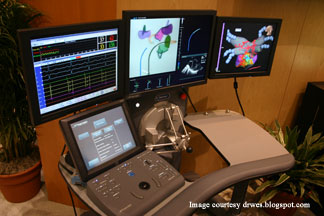
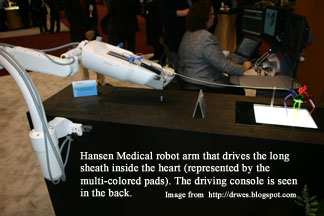
You see the left atrium is the focus of significant attention lately because of inroads to successfully ablating (another word for cauterizing) the most common arrhythmia in men and women: atrial fibrillation. And in 2004, the number of catheter ablation procedures to cure atrial fibrillation worldwide was estimated to be approximately 10,000. In 2007, it is estimated that the number of these procedures will approach or exceed 100,000. The problem is, these procedures are time-consuming and carry significantly more potential risks to the patient than non-invasive medical therapy, yet carry the promise of better long-term treatment of the disorder (i.e. a 70-80% of curing this disorder).
An atrial fibrillation ablation procedure requires an amazing array of instrumentation and equipment to perform safely today. Procedures in most centers last from 2.5-5 hours in duration, liimiting the number of procedures that can be performed by an individual operator per day due to time and operator fatigue constraints. Enter robotics. These devices promise to be able to steer the ablation catheter within the left atrium with remarkable dexterity using a virtual model displayed for the doctor on four or five computer screens. The Hansen Medical system uses a virtual joy-stick-like arrangement to steer the conventional catheter through a specially-designed (approximately $2000) sheath that steers the deflectible catheter using a mechanical drive motor, that can rotate, pitch and yaw the catheter to different locations (outlay price for hospitals not disclosed at the meeting). The Sterotaxis system steers a soft, noodle-like catheter containing a magnet inside the catheter using a forceful (0.8 Tesla) magnetic field that changes its direction by moving two huge magnets on opposite sides of the patient's body (Hosptial capital outlay: about $1.2 million BEFORE contruction costs, special non-magnetic outfitting with equipment in the patient's room, etc.). Where the catheter is placed is again determined by a virtual rendition of the heart on a bunch of computer screens.
Both of the systems use a 3D image of the left atrium obtained from a CT scan merged with their software to move the catheter, but also use some fluoroscopic localization to assure proper placement of the catheter. Like surgical robotics, the surgeon's skill to initially place the catheter within heart and the chamber of interest must be maintained (it won't do this for you). Furthermore, the image used to navigate is static, unlike the normal heart which beats and moves in space with the movements of respiration. Hence good ol' xray naviagation remains to confirm location as the catheter is moved.
The one big advantage for the physician is the promise of being seated and outside the room as the catheters were advanced. Remarkably, there was a demonstration at the Heart Rhythm Society meeting of a physician in Boston, Massachusetts steering the catheter within a patient's heart in Milan, Italy. Globalization gone wild, I'd say. But the implications are nontheless important to grasp. Will there be large "surgicenters" performing the intricate part of the procedure from India? Italy? China? Perhaps a doctor will place the catheters in his patient's heart, then sip coffee as his colleagues in Milan place a curative pattern of cauterizations within his patient's heart chamber. It's analogous to waiting for the dishwasher to complete it's work before putting away the dishes.
Gratefully, noone has figured out a way to reimburse physicians who provide this service..... yet. And importantly as we've seen in the airline industry, medical care is not like flying an unmanned drone, it's more like flying a 747 across the ocean: a team of pilots an crew are still needed to have the patient arrive at their destination safe and sound.
--Wes
"There is no thing endowed with life - from man, who is enslaving the elements, to the nimblest creature - in all this world that does not sway in it's turn. Whenever action is born from force, though it be infinitesimal, the cosmic balance is upset and the universal motion results. "
-- Nikola Telsa, 1925


You see the left atrium is the focus of significant attention lately because of inroads to successfully ablating (another word for cauterizing) the most common arrhythmia in men and women: atrial fibrillation. And in 2004, the number of catheter ablation procedures to cure atrial fibrillation worldwide was estimated to be approximately 10,000. In 2007, it is estimated that the number of these procedures will approach or exceed 100,000. The problem is, these procedures are time-consuming and carry significantly more potential risks to the patient than non-invasive medical therapy, yet carry the promise of better long-term treatment of the disorder (i.e. a 70-80% of curing this disorder).
An atrial fibrillation ablation procedure requires an amazing array of instrumentation and equipment to perform safely today. Procedures in most centers last from 2.5-5 hours in duration, liimiting the number of procedures that can be performed by an individual operator per day due to time and operator fatigue constraints. Enter robotics. These devices promise to be able to steer the ablation catheter within the left atrium with remarkable dexterity using a virtual model displayed for the doctor on four or five computer screens. The Hansen Medical system uses a virtual joy-stick-like arrangement to steer the conventional catheter through a specially-designed (approximately $2000) sheath that steers the deflectible catheter using a mechanical drive motor, that can rotate, pitch and yaw the catheter to different locations (outlay price for hospitals not disclosed at the meeting). The Sterotaxis system steers a soft, noodle-like catheter containing a magnet inside the catheter using a forceful (0.8 Tesla) magnetic field that changes its direction by moving two huge magnets on opposite sides of the patient's body (Hosptial capital outlay: about $1.2 million BEFORE contruction costs, special non-magnetic outfitting with equipment in the patient's room, etc.). Where the catheter is placed is again determined by a virtual rendition of the heart on a bunch of computer screens.
Both of the systems use a 3D image of the left atrium obtained from a CT scan merged with their software to move the catheter, but also use some fluoroscopic localization to assure proper placement of the catheter. Like surgical robotics, the surgeon's skill to initially place the catheter within heart and the chamber of interest must be maintained (it won't do this for you). Furthermore, the image used to navigate is static, unlike the normal heart which beats and moves in space with the movements of respiration. Hence good ol' xray naviagation remains to confirm location as the catheter is moved.
The one big advantage for the physician is the promise of being seated and outside the room as the catheters were advanced. Remarkably, there was a demonstration at the Heart Rhythm Society meeting of a physician in Boston, Massachusetts steering the catheter within a patient's heart in Milan, Italy. Globalization gone wild, I'd say. But the implications are nontheless important to grasp. Will there be large "surgicenters" performing the intricate part of the procedure from India? Italy? China? Perhaps a doctor will place the catheters in his patient's heart, then sip coffee as his colleagues in Milan place a curative pattern of cauterizations within his patient's heart chamber. It's analogous to waiting for the dishwasher to complete it's work before putting away the dishes.
Gratefully, noone has figured out a way to reimburse physicians who provide this service..... yet. And importantly as we've seen in the airline industry, medical care is not like flying an unmanned drone, it's more like flying a 747 across the ocean: a team of pilots an crew are still needed to have the patient arrive at their destination safe and sound.
--Wes
"There is no thing endowed with life - from man, who is enslaving the elements, to the nimblest creature - in all this world that does not sway in it's turn. Whenever action is born from force, though it be infinitesimal, the cosmic balance is upset and the universal motion results. "
-- Nikola Telsa, 1925
Thursday, May 18, 2006
High Frequency Ultrasound Balloon for Ablation
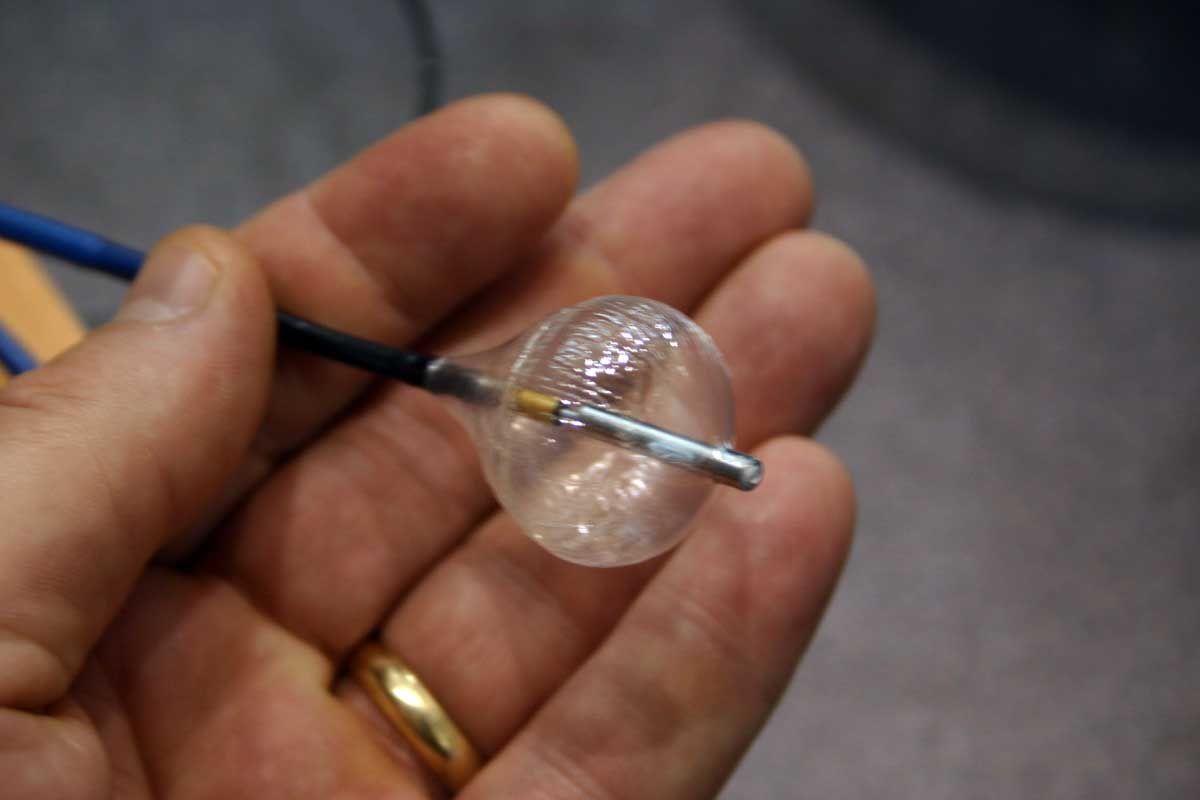
Cool new(er) technology might speed the time it takes to perform catheter ablation of atrial fibrillation: the high frequency ultrasound balloon. It has a fluid-filled inner chamber and an outer carbon dioxide-filled balloon that helps focus the ultrasound in a ring-like pattern in an attempt to ablate (or burn) around the pulmonary veins in the left atrium (the site where it's thought the atrial fibrillation comes from). Average lesion time takes 40-90 seconds and it covers LOTS of territory in the left atrium. It's just starting clinical trials.... Seems promising. We'll see....
--Wes
Is Our Government Discriminating Against our Vets?
It is a sad state of affairs when I learned from Pam Karasik, MD of the Washington VA Medical Center that she often has to borrow medical equipment (ablation catheters) from the Washington Hospital Center due to budget constraints at the VA Medical System. Their cardiology budget, excluding implantable defibrillators (which fall under their own separate budget) is only $50,000 per quarter. When I estimated our hospital's costs for this budget, I would only be able to treat at most 10 patients in that three month period in our hospital in Chicago.
There is no question that additional dollars for the health care of our veterans should be a priority in Congress. It is unconscionable that these men and women who have sacrificed life and limb to serve our country have their health care financially rationed.
--Wes
There is no question that additional dollars for the health care of our veterans should be a priority in Congress. It is unconscionable that these men and women who have sacrificed life and limb to serve our country have their health care financially rationed.
--Wes
Wednesday, May 17, 2006
"Leadless" ICD - Has it's time come?
There was interesting information from the "leadless" ICD front reported by Andrew A. Grace, MD, PhD from Papworth Hospital NHS Trust, Cambridge, United Kingdom at the Heart Rhythm Society Meeting in Boston, MA today:
First of all, the device is not "leadless." Rather, there are no leads placed inside blood vessels with this defibrillator, produced by Cameron Health, Inc. The device does have a lead that is tunneled beneath the skin from the upper left chestbeneath just below the level of the clavicle to the level of about the breast, then tunneled laterally to the side of the chest beneath the arm. The device uses the subcutaneous lead to sense the heart rhythm and can detect rapid arrhythmias from the surface EKG created between the lead electrode and the can of the device. It's maximum shocking output is 80 joules (about 2 1/2 times existing devices). It requires no xray system to implant the device and took about 12-15 minutes on average for experienced operators to install in an operating room setting. If the ability to convert the rhythm from ventricular fibrillation to normal rhythm was excessive, a conventional defibrillator lead placed inside the blood vessel could be attached.
53 patients were studied the the information provided. The average defibrillation threshold without any internal lead was 36 joules. No inappropriate shocks occurred, even when there was an aggressive attempt to induce sensing of muscular potentials with vigorous arm movement.
It's only drawback: there was no backup pacing provided by the device, so if the rhythm is converted from ventricular fibrillation to asystole (no heart beats... and this CAN happen), then the patient still might not survive. Nonetheless, the implications for decreasing physician reimbursement for electrophysiologists (since now any surgeon could implant these) and what this will do to pressure existing device companies to drop their prices once the device reaches the mainstream US market for primary prevention of life-threatening arrhythmias, remains to be seen.
--Wes
First of all, the device is not "leadless." Rather, there are no leads placed inside blood vessels with this defibrillator, produced by Cameron Health, Inc. The device does have a lead that is tunneled beneath the skin from the upper left chest
53 patients were studied the the information provided. The average defibrillation threshold without any internal lead was 36 joules. No inappropriate shocks occurred, even when there was an aggressive attempt to induce sensing of muscular potentials with vigorous arm movement.
It's only drawback: there was no backup pacing provided by the device, so if the rhythm is converted from ventricular fibrillation to asystole (no heart beats... and this CAN happen), then the patient still might not survive. Nonetheless, the implications for decreasing physician reimbursement for electrophysiologists (since now any surgeon could implant these) and what this will do to pressure existing device companies to drop their prices once the device reaches the mainstream US market for primary prevention of life-threatening arrhythmias, remains to be seen.
--Wes
Guidant's Ad at HRS Meeting
Instilling confidence, here's Guidant's ad found on the back of the "Heart Rhythm Daily" produced by the Heart Rhythm Society, dated 17-18 May 2006:

I assure you, this is not my picture.
--Wes
I assure you, this is not my picture.
--Wes
Guidant: What We're Not Hearing at the HRS Meeting
It seems Guidant, now a division of Boston Scientific, might have some other news we're NOT hearing about at the Heart Rhythm Society meeting in Boston this week.
As most of us doctors in the field of heart rhythm disorders know, Guidant has been struggling to ressurrect itself from legal problems regarding disclosure of problems with implantable cardiac defibrillators. To reassure investors, a new wireless transmission system,Lattitude Latitude, was developed using the frequency bandwidth of approximately 900MHz (update 18May06: 913-924MHz), the same as cellular phones and some patient telemetry systems in hospitals, that permits communication with their device to interrogate their Contak Renewal 3 ICD to alert patients and doctors about changes in electrical characteristics about the device. The Lattitude system can also be cleverly connected to a weight scale at home so the patient can transmit their weight along with ICD statistics to a central registry database offering additional therapeutic information to physicians about their patient's condition.
Well, wouldn't you know, the system has considerable interference issues with cell phones, electrical noise, and even some telemetry services in hospitals. Yet no patient or physician safety advisory has been issued. It would hurt sales.
To be fair, the problem does not cause reprogramming of the patient's device, but rather interruptions with the downloading of information from the patient's device.
But where's the reassurance to investors, doctors, hospitals, and most of all, patients when these issues are not disclosed?
Medtronic's wireless system for their Virtuoso and Concerto ICD and CRT-D product lines was developed under a special2.5GHz 402-405MHz mixed bandwidth (used for some weather balloons and a bandwidth reserved for medical device use to avoid such interference), was just approved by the FDA the day before yesterday. As usual, Medtronic is late to the wireless ICD party, but did its homework before jumping on the easy-to-engineer 900MHz bandwidth for their wireless device.
--Wes
For purposes of disclosure, I do serve on the speaking bureau for Medtronic, but hold no other financial positions with either company mentioned in this post.
Update: 18 May 2006: Seems there have been documented interference issues, particularly in hospitals, with a commercially-available Spectralink phone systems that use the same frequency band. It is routine for Guidant to "sweep" hospitals for such sources of interference before deploying the technology.
As most of us doctors in the field of heart rhythm disorders know, Guidant has been struggling to ressurrect itself from legal problems regarding disclosure of problems with implantable cardiac defibrillators. To reassure investors, a new wireless transmission system,
Well, wouldn't you know, the system has considerable interference issues with cell phones, electrical noise, and even some telemetry services in hospitals. Yet no patient or physician safety advisory has been issued. It would hurt sales.
To be fair, the problem does not cause reprogramming of the patient's device, but rather interruptions with the downloading of information from the patient's device.
But where's the reassurance to investors, doctors, hospitals, and most of all, patients when these issues are not disclosed?
Medtronic's wireless system for their Virtuoso and Concerto ICD and CRT-D product lines was developed under a special
--Wes
For purposes of disclosure, I do serve on the speaking bureau for Medtronic, but hold no other financial positions with either company mentioned in this post.
Update: 18 May 2006: Seems there have been documented interference issues, particularly in hospitals, with a commercially-available Spectralink phone systems that use the same frequency band. It is routine for Guidant to "sweep" hospitals for such sources of interference before deploying the technology.
Tuesday, May 16, 2006
Health Moves Below the Fold
Too bad "Health" has moved "below the fold" on the new Yahoo home page (That means you have to scroll down to see it, for those who are techno-speak challenged), but gee whiz, "Entertainement" gets TWO spots above the fold... * Sigh *
--Wes
--Wes
Monday, May 15, 2006
More Guidant ICD Safety Alerts
I found out today about more Guidant ICD safety alerts for the Vitality HE and Contak Renewal 3 and 4 product lines. The official info can be found on Guidant's webpage for physician communications under the files dated 11 and 12 May 2006. Seems the thin case for these devices (what was once one of their marketing attributes) might not be so great when that defibrillator generator case is put under unusual stress. This stress can be caused by a subpectoral implant (when the device is placed under the breast muscle) and when the serial number is pointed toward the ribs. It seems in certain circumstances this places the circuitry near significant compressive forces (the device hitting the rib) and can short out the device's circuitry. No deaths have been reported, but one patient had a near miss with the pacemaker output failing and he had to be externally paced until a new temporary pacemaker (and eventually a new device) had to be implanted. Only 2 patients have been reported to have had this problem as of 12 May 2006. The incidence of subpectoral implants is VERY low, but realize that this is NOT part of the normally-reported implant data that is stored on registries. (Heart Rhythm Society/FDA, did you HEAR this?) So ask your doctor if you're not sure where your device was implanted, but realize that over 98% of our device implants are NOT subpectoral, and therefore NOT part of this advisory "safety" alert.
--Wes
--Wes
Sunday, May 14, 2006
On Mother's Day
My son's card to his mother read:
"Wish big
Live large
Worry less
Enjoy more
Relax often
Play hard
Talk lots
Listen deep
Laugh long
Smile easy
Love well
Dream true
Be you.
Happy Mother's Day!
Thanks for putting up with all my craziness. I'll look back on this someday and laugh."
Amazing insight for an 18-year old.
--Wes
"Wish big
Live large
Worry less
Enjoy more
Relax often
Play hard
Talk lots
Listen deep
Laugh long
Smile easy
Love well
Dream true
Be you.
Happy Mother's Day!
Thanks for putting up with all my craziness. I'll look back on this someday and laugh."
Amazing insight for an 18-year old.
--Wes
Saturday, May 13, 2006
Clip and Tuck for your Leaky Mitral Valve
If you're a heart patient with a leaky mitral valve, you might have heard about this trial, EVEREST II, reported today that uses a small clip manufactured by Evalve, Inc. to repair the leak. Our own Ted Feldman, MD is the principle investigator on this trial. It's important to realize the selection criteria for this trial is very limited, but if you're quite symptomatic AND have the right anatomy, this might be a great way to avoid open heart surgery.
So what is the mitral valve? It's the valve that is the "intake" heart valve of the main pumping chamber of your heart (the left ventricle). If it's blocked, blood has a hard time entering this main pumping chamber. If the mitral valve leaks, or "regurgitates", blood passes backward during the pumping action of the left ventricle, to push blood backward into the lungs, making people short of breath, especially when they exert themselves.
This new Evalve system seeks to correct an excessively leaky mitral valve by placing a small clip on the two leaflets of the mitral valve and effectively "tucking" them together, making two smaller openings of the mitral valve from its one large opening. While this decreases the forward flow a bit, it can (in the correctly chosen cases) minimize the backward flow of blood to the lungs dramatically.
What I've been impressed with is that these cases require tremendous patience and operator skill. The procedure is performed using both xray and ultrasound guidance (using a transesophageal echo probe inserted in the esophagus or swallowing tube). Yes, you are asleep during this procedure. The physician then passes a sophisticated apparatus from a vein in the legs through the wall between the upper chambers of the heart to access the left atrium just above the mitral valve. It is from this vantage point that the physician literally must grab each of the mitral valve leaflets as they move and securely place this clip on each leaflet of the mitral valve. Wrong placement might lead the device to dislodge and the person need surgery to repair the valve. It is this technical challenge that requires the right type of leaky mitral valve to assure success. Since we started this procedure at our institution, there have been steady improvements in the design of the device, but enrollment has been very careful and slow because of the selection process employed.
Cool stuff. Just not quite ready for the majority of leaky mitral valves.... yet.
--Wes
So what is the mitral valve? It's the valve that is the "intake" heart valve of the main pumping chamber of your heart (the left ventricle). If it's blocked, blood has a hard time entering this main pumping chamber. If the mitral valve leaks, or "regurgitates", blood passes backward during the pumping action of the left ventricle, to push blood backward into the lungs, making people short of breath, especially when they exert themselves.
This new Evalve system seeks to correct an excessively leaky mitral valve by placing a small clip on the two leaflets of the mitral valve and effectively "tucking" them together, making two smaller openings of the mitral valve from its one large opening. While this decreases the forward flow a bit, it can (in the correctly chosen cases) minimize the backward flow of blood to the lungs dramatically.
What I've been impressed with is that these cases require tremendous patience and operator skill. The procedure is performed using both xray and ultrasound guidance (using a transesophageal echo probe inserted in the esophagus or swallowing tube). Yes, you are asleep during this procedure. The physician then passes a sophisticated apparatus from a vein in the legs through the wall between the upper chambers of the heart to access the left atrium just above the mitral valve. It is from this vantage point that the physician literally must grab each of the mitral valve leaflets as they move and securely place this clip on each leaflet of the mitral valve. Wrong placement might lead the device to dislodge and the person need surgery to repair the valve. It is this technical challenge that requires the right type of leaky mitral valve to assure success. Since we started this procedure at our institution, there have been steady improvements in the design of the device, but enrollment has been very careful and slow because of the selection process employed.
Cool stuff. Just not quite ready for the majority of leaky mitral valves.... yet.
--Wes
Are you a Crunchy Con?
From HomelessPolitico: Seems there's a lack of conservative political training courses for women candidates. I wonder why....
--Wes
--Wes
Thursday, May 11, 2006
MedTees.com on ABC News
Well if you didn't see it earlier today, check out the ABC News 7 Chicago segment by Karen Meyer that was aired today about our tshirt site, MedTees.com.
--Wes
PS: Quick note: seems the video download cuts off about at about 1:16 into the video, scroll ahead about 30 sec and it will pick back up again. I called ABC to see if it can be corrected.... we'll see.
PPS: 5/13/06: Thanks to Terri (seen in the video) and the ABC Techno-geeks, the video seems to be playing fine now... But it will only air thru Monday, 15 May 2006....
--Wes
PS: Quick note: seems the video download cuts off about at about 1:16 into the video, scroll ahead about 30 sec and it will pick back up again. I called ABC to see if it can be corrected.... we'll see.
PPS: 5/13/06: Thanks to Terri (seen in the video) and the ABC Techno-geeks, the video seems to be playing fine now... But it will only air thru Monday, 15 May 2006....
Wednesday, May 10, 2006
Man-bashing: science with an agenda
Why weren't women included in this 'study' by psychologists in Knox College in Galesburg, IL? It seems 30 men were "blinded" to giving saliva samples after either disassembling a gun or a game of Mouse Trap. The headline: "In Men, 'Trigger-Happy' May Be a Hormonal Impulse" appeared in the New York Times. I bet a women's epinephrine level (and maybe even testosterone level) would have climbing just as much disassembling a gun versus a game of Mouse Trap. Pity these sexist studies persist. Pity worse the NT Times for publishing this blather.
--Wes
--Wes
Heart Rhythm Society to Meet Next Week
The annual international Heart Rhythm Society meeting will occur next week in Boston, MA. Most of the sessions will cover issues related to heart rhythm disorders and heart failure therapies. Issues regarding how doctors are handling the device recalls, new therapies and technologies on the horizon, and late-breaking clinical trials will also be covered. I'll have a chance to interview a few thought leaders and device industry representatives while there. Let me know questions you might have out there in the blog-o-sphere. I'll post as many answers as possible next week or, depending on the responses received, might do a podcast so you can hear their responses as well.
--Wes
--Wes
Tuesday, May 09, 2006
Could the First Amendment Right Healthcare Costs?
"Pricing confidentiality has long been a standard practice" in the medical device industry, a spokesman for Guidant, now a division of Boston Scientific said. "Through negotiations, we are able to reach mutually beneficial terms best suited to each customer's (a.k.a., hospital system) individual needs and circumstances."
Can anyone find the little guy (the patient) in this negotiation? According to the Wall Street Journal this morning, the Emergency Care Research Instutute (ECRI) , a non-profit publisher, filed a lawsuit against Guidant claiming it has a First Amendment right to publish Guidant prices. ECRI’s legal team is composed of litigators from the Ralph Nader's public interest law firm Public Citizen and from Montgomery, McCracken, Walker & Rhoads, LLP, Philadelphia, PA. You can bet Medtronic, Cordis, St. Jude and others will be watching this one closely. The pressure to become transparent regarding prices in healthcare is finally upon us.
Most hospitals have invested heavily in the cardiovascular services product line - one of its most profitable - and recommendations from MedPac, the advisory board to the Center for Medicare and Medicaid Services (CMS) will include approximately a 7-15% reimbursement cut for implantable defibrillators, and up to 25% reduced reimbursement for cardiac stenting procedures. It is interesting to note that about 400 hospitals had previously shared their prices for these devices with ECRI. So it looks like the hospitals don't want to get stuck holding the bag.
Here's my prediction: If Guidant has to disclose prices (and they will), those prices will be hugely inflated.
--Wes
Can anyone find the little guy (the patient) in this negotiation? According to the Wall Street Journal this morning, the Emergency Care Research Instutute (ECRI) , a non-profit publisher, filed a lawsuit against Guidant claiming it has a First Amendment right to publish Guidant prices. ECRI’s legal team is composed of litigators from the Ralph Nader's public interest law firm Public Citizen and from Montgomery, McCracken, Walker & Rhoads, LLP, Philadelphia, PA. You can bet Medtronic, Cordis, St. Jude and others will be watching this one closely. The pressure to become transparent regarding prices in healthcare is finally upon us.
Most hospitals have invested heavily in the cardiovascular services product line - one of its most profitable - and recommendations from MedPac, the advisory board to the Center for Medicare and Medicaid Services (CMS) will include approximately a 7-15% reimbursement cut for implantable defibrillators, and up to 25% reduced reimbursement for cardiac stenting procedures. It is interesting to note that about 400 hospitals had previously shared their prices for these devices with ECRI. So it looks like the hospitals don't want to get stuck holding the bag.
Here's my prediction: If Guidant has to disclose prices (and they will), those prices will be hugely inflated.
--Wes
Monday, May 08, 2006
MedTees.com's First Video Infomercial
After a few weeks work, some new software, and lots of help from my son who is much more computer-literate than me, we've completed our first infomercial for MedTees.com. It's about 10 meg in size for download (be patient) and lasts about 4 minutes, 30 seconds. Thanks to Diana, Kristin, Terri and Gemma who shared a bit of their stories. Enjoy!
--Wes
--Wes
Friday, May 05, 2006
From the Shrink's Desk
If you get a chance, check out this month's installment of From the Shrink's Desk authored by my wife, Diane Fisher, PhD, for our website, MedTees.com. It's a monthly feature that shares some thoughts on the psychologic aspects of coping with chronic illness. We'd love to get your feedback and suggestions regarding other areas of interest.
Have a great weekend.... I'm on call, entries might be a bit bleak 'til Monday...
--Wes
Have a great weekend.... I'm on call, entries might be a bit bleak 'til Monday...
--Wes
Don't Forget the Nurses Next Week
I was just reminded, National Nurses Week starts tomorrow: May 6-12, 2006! Don't forget them.... After all, they are where the rubber meets the road when it comes to healthcare delivery.
--Wes
--Wes
Health Care Non-reform
Leave it to Massachusetts to really screw up any chance at Health Care reform. From Betsy McCaughey of the Wall Street Journal today about "Romneycare’s Fine Print":
--Wes
- Individuals who elect to buy their own insurance there must buy HMO policies. Preferred provider plans (PPO’s), which permit you to choose your own doctor or treatment, are not allowed. (Section 65)
- Employers with more than 10 employees must supply their employees health insurance or pay $295 per employee as an annual tax a state fund. Not participating would mean the employer is on the hook for 100% of medical expenses his employee or family member incurs should they become sick.
- But best of all: Union shops are exempt. (Section 32)
--Wes
Thursday, May 04, 2006
Device Names: Another Potential for Medical Errors
Device companies need to be keenly aware that physicians can mistake pacemaker models with similar names, just like a nurse adminstering the wrong drug due to "sound-alike" characteristics. Case in point: Enpulse, Entrust, Enrhythm - all made by Medtronic, Inc. Quick quiz: one is a defibrillator, not a pacemaker, can you guess which one?
--Wes
--Wes
Tuesday, May 02, 2006
On Coping With Difficult Illnesses
Sometimes your colleagues in medicine say it best. Kudos to Dr. Benjamin Brewer in this article from the Wall Street Journal today. My wife and I believe that the attitude one develops after being diagnosed with a difficult disease is important, and that an upbeat attitude can be helpful at times. Not that this attitude will necessarily improve outcomes as Dr. Brewer confirms, but rather in building community with others in a time of crisis. I suppose it's this realization that inspired our website, Medtees.com, that makes t-shirts geared to people with difficult or chronic diseases. Socialization and support are important for the psychological, spiritual, and physical needs people encounter in their journey with their disease. Our testimonial page has lots of wonderful people who have generously shared their inspiring stories with us. Yet we don't offer these shirts in hospital gift shops. Why? Because when the initial diagnosis is made (often in a hospital) it just wouldn't be appropriate to offer them there. People need time to digest the diagnosis and grieve. And there are times when people don't want others to worry, help them, or console them. Loved ones need to appreciate and respect these desires just as well. But after the dust settles and one is capable of comprehending the myriad of issues and potential life style changes that their new diagnosis imposes, perhaps a simple smile or working to advocate on behalf to others with a similar predicament can help people cope or, even better, help someone else.
--Wes
--Wes
Monday, May 01, 2006
Stay Ahead: Network With Your Surgeon
Seems if you want to get ahead, consider networking with your surgeons. From a January poll by Downtown Womensclub.com from Brookline, Massachusetts, in a poll of 1000 women asked where the best place to network, one considered surgery: "When else do you get three surgeons together?"
Perhaps, but use caution: the sedatives can make you make funny decisions and often make you forget your experience.
--Wes
Perhaps, but use caution: the sedatives can make you make funny decisions and often make you forget your experience.
--Wes
Sunday, April 30, 2006
Traveling Heart Road Shows
Does anybody ever go to these things? Seems like alot of money to hit very few people, and with the exposure in only three cities... seems like a limited focus. And why these cities? Are people in these cities special when it comes to heart health?
Perhaps spreading the word via blogs might be better.... :)
--Wes
Perhaps spreading the word via blogs might be better.... :)
--Wes
Free the Electronic Medical Record
I find this news interesting about New York providing funds for installation of Electronic Medical Records, when the Veteran Administration's Vista System will be offered for free.
--Wes
--Wes
Thursday, April 27, 2006
Heart Rhythm Society: ICD Recall, er, Safety Alert Guidelines
The Heart Rhythm Society released their "Draft" recommendations regarding the Device (a.k.a., pacemaker and defibrillator) Performance Policies and Guideline recommendations after this year's device failure and reporting fiasco. One of these recommendations is to remove the word "recall" from the FDA's lexicon, and instead use the term "Advisory Alert" or "Safety Alert." You can see the full report here (pdf file, 787K). They did a great job. It has recommendations for the FDA, industry, physicians, and Congress, and the Center for Medicare and Medicaid Services (CMS).
One suggestion I'd make: Make a Class I Safety Alert the least concerning, while Class III Safety Alert would be the most concerning.... this would be in line with other schema in medicine (Class A vs Class D cancer, Class I vs Class IV heart failure)... Just a thought.
On a (much) less serious note, since "recall" was thought by the committee to be to troublesome to the public, a few other terms that could be used instead of "Safety Alert" were passed around in our lab today. They included: "glitch," "hiccup," "boo-boo," and the best: "faux pas."
--Wes
One suggestion I'd make: Make a Class I Safety Alert the least concerning, while Class III Safety Alert would be the most concerning.... this would be in line with other schema in medicine (Class A vs Class D cancer, Class I vs Class IV heart failure)... Just a thought.
On a (much) less serious note, since "recall" was thought by the committee to be to troublesome to the public, a few other terms that could be used instead of "Safety Alert" were passed around in our lab today. They included: "glitch," "hiccup," "boo-boo," and the best: "faux pas."
--Wes
Wednesday, April 26, 2006
Still Have a Recalled Defibrillator? Good.
A series of important articles are published today in JAMA (Journal of the American Medical Association) about the risks of following a recalled defibrillator versus replacing the device. Bottom line: ALWAYS discuss risks with you doctor: it might be better to take your chances rather than replacing the device. This from a Canadian survey by the Canadian Heart Rhythm Society Working Group on Device Advisories:
Remember, every person's circumstance and device indication is different. These data help with the decisions you and your doctor can discuss.
--Wes
At the 17 surveyed centers, 2915 patients had recall devices, including 533
(18.3%) who had advisory ICDs replaced a mean (SD) of 26.5 (11.5) months after
their initial implant. Of these patients, 66% had a secondary prevention ICD,
and 45% had received a previous appropriate shock. During a mean (SD) of 2.7
(2.8) months' follow-up after ICD generator replacement, complications occurred
in 43 patients (8.1%). Major complications attributable to advisory device
replacement requiring reoperation occurred in 31 patients (5.8%), with death in
2 patients after extraction for pocket infection. Minor complications occurred
in 12 patients (2.3%). There were 3 (0.1%) advisory-related device malfunctions
reported, without clinical consequences.
Remember, every person's circumstance and device indication is different. These data help with the decisions you and your doctor can discuss.
--Wes
Tuesday, April 25, 2006
New Heart Valve Has Promise
Interesting read on newer prosthetic heart valve design still under investigation by the FDA (but approved in Europe) described today in the Chicago Tribune. The valve is made by Shelhigh Inc., Union, NJ. The valve is a "valve conduit" bioprosthetic design that incorporates bovine (cow) pericardium and a porcine (pig) aortic valve that is treated in a patented technique to resist the build-up of calcium on the leaflets long-term. The longest follow-up with this valve is 9 years (in Europe), and while the follow-up is not as long as conventionally-available metal valves (that require the blood thinner, warfarin, and have over a 20-year clinical track record), it is promising that it might be less reactive than conventionally-prepared porcine valves. While this might be great, remember that this valve still requires open heart surgery. Percutaneously-implanted valves (one requiring no open-heart surgery and placed through a leg artery) are under development now, but remain much farther from clinical approval in the US.
--Wes
--Wes
Sunday, April 23, 2006
American Heart Association Breaks Hearts
In the world of rubber-chicken dinners and self-congratulatory fundraisers, the American Heart Association has always had a moment of sincerity with it's Coeur d' Or, "heart of gold" award - given in years past to dedicated clinical researchers and physicians. The Coeur d' Or turned into the Coeur d'Green last night, as the local AHA chapter, without a hint of irony or embarassment, gave the award to the President and CEO of the presenting sponsor organization underwriting the event, Advocate Healthcare. I had to suspend my disbelief and check the program. That's right, the same guy chairing the selection committee and authorizing the checks for the gala was the same guy being feted on the dais.
If the AHA or Advocate had experienced even a frisson of conscience, one would have at least expected the award to go to an Advocate system heart specialist. Is this for the lack of any heroic, tireless clinicians deserving such an award this year? On the contrary, the ballroom was filled with dismayed physicians and bedside clinicians, excellent professionals who devote countless hours to forward research, who run in at 11pm when a defibrillator is shocking someone every five minutes, who stands, legs swollen, at the operating table long past the point of reason trying to stitch up a dissected aorta. But here is what the physicians did NOT do: they did not head up a hospital group that made a major financial contribution. The age of unapologetic cynicism in health-care has arrived.
But why dissemble? If this wasn't bad enough, the clinicians attending were treated to a promo video about the Advocate Healthcare system - a system certainly under scrutiny recently.
Who cares if the AHA wants to pat the back of one of its' chief funders? It only matters to the little guy if AHA similarly tilts its' public policy toward the interests of its corporate supporters. Are we now to look without cynicism at the treatment recommendations the AHA makes to the public? The medical device recommendations? The dietary? Should we be asking for a financial disclosure statement? Are rewards granted to sponsors in direct violation of the AHA's of conflict of interest policy?
The AHA opens itself to this scrutiny in its' breathless endorsement of its' own funders last night - and it's abandonment of the front-line for the deep pockets. It would be interesting to know if the national organization endorses this new orientation.
-Wes
If the AHA or Advocate had experienced even a frisson of conscience, one would have at least expected the award to go to an Advocate system heart specialist. Is this for the lack of any heroic, tireless clinicians deserving such an award this year? On the contrary, the ballroom was filled with dismayed physicians and bedside clinicians, excellent professionals who devote countless hours to forward research, who run in at 11pm when a defibrillator is shocking someone every five minutes, who stands, legs swollen, at the operating table long past the point of reason trying to stitch up a dissected aorta. But here is what the physicians did NOT do: they did not head up a hospital group that made a major financial contribution. The age of unapologetic cynicism in health-care has arrived.
But why dissemble? If this wasn't bad enough, the clinicians attending were treated to a promo video about the Advocate Healthcare system - a system certainly under scrutiny recently.
Who cares if the AHA wants to pat the back of one of its' chief funders? It only matters to the little guy if AHA similarly tilts its' public policy toward the interests of its corporate supporters. Are we now to look without cynicism at the treatment recommendations the AHA makes to the public? The medical device recommendations? The dietary? Should we be asking for a financial disclosure statement? Are rewards granted to sponsors in direct violation of the AHA's of conflict of interest policy?
The AHA opens itself to this scrutiny in its' breathless endorsement of its' own funders last night - and it's abandonment of the front-line for the deep pockets. It would be interesting to know if the national organization endorses this new orientation.
-Wes
Friday, April 21, 2006
Near death experiences...
Every day in America, patients have their heart fibrillated and rhythm restored during testing of automatic defibrillators - about as close to a "near death" experience as I know. I still have NEVER heard of a "near death" experience like seeing a white light, etc. during these moments. Could it be the sedation? Does this jolt happen so quickly that no such experience occurs? I'm just fascinated that researchers found so many such subjects like those studied in the April 11th issue of Neurology and reported on the the LA Times.
--Wes
--Wes
Another Needless Death...
I saw this story on CNN.com about a 57 year-old defense lawyer with known heart disease who died suddenly while trying a case in a county courtroom. He probably died of a rapid heart rhythm that comes on suddenly and unexpectedly in some people with heart problems. A shock to his heart using an automatic external defibrillator (AED) likely could have helped revive him. But no defibrillators were on site. Presumably, no first responders, like police, had them either. And the saddest thing: this happens about 450,000 times per year.
Communities would be wise to consider placing defibrillators in the back of police squad cars, since there are typically many more police officers than paramedics or firemen on the publics' payrolls. Often, they respond before paramedics to similar incidences and on occassion (as in cases like this), have the ONLY defibrillator available. Illinois offered a grant in 2001 to MANY communities in our state (tho' we could still use more), but the need is still great throughout other communities in America. And remember, about 20% of sudden death survivors are under 18 years of age! (This is not just for "old" people!! For instance...'Commodio cordis' a rare but real cause of sudden death due to blunt trauma to the chest, seen most often in baseball players.)
--Wes
Communities would be wise to consider placing defibrillators in the back of police squad cars, since there are typically many more police officers than paramedics or firemen on the publics' payrolls. Often, they respond before paramedics to similar incidences and on occassion (as in cases like this), have the ONLY defibrillator available. Illinois offered a grant in 2001 to MANY communities in our state (tho' we could still use more), but the need is still great throughout other communities in America. And remember, about 20% of sudden death survivors are under 18 years of age! (This is not just for "old" people!! For instance...'Commodio cordis' a rare but real cause of sudden death due to blunt trauma to the chest, seen most often in baseball players.)
--Wes
Thursday, April 20, 2006
Shock Docs Help FDA
According to the New York Times, a panel of physicians from the Heart Rhythm Society will help the Food and Drug Administration (FDA) decide proper notification practices during medical device (especially pacemaker and defibrillator) recalls. Defibrillators are used to prevent sudden cardiac arrest in heart patients susceptable to the development of rapid heart rhythms by delivering a powerful shock automatically to the heart to restore normal rhythm. Last fall, despite evidence they were aware of a rare incidence of short-circuiting of one model of their defibrillator, Guidant Corporation (soon to be acquired by Boston Scientific) initially failed to issue a recall until physicians threatened to go public, citing statistics suggesting the defect was rare. The Heart Rhythm Society subsequently convened a panel to study better ways to notify patients and work with physicians when medical issues with these devices surface. Their report is due May 2, 2006. This will mark the first time an outside panel will advise members of the FDA. Recommendations will be made for physicians, too, to assure more timely reporting of device-related complications.
--Wes
--Wes
Giving of ourselves to help others
This is an incredible story of one soldier helping another child. Unfortunately, he lost his life before being thanked. We should all donate medical equipment to the less fortunate in our wills or when it's no longer needed.
--Wes
--Wes
Wednesday, April 19, 2006
Oil painting...
My first oil on canvas:

"Paper," Oil on Canvas 12"x15"
Worked on this for hours and I felt blood pressure drop 10 points every time I came back to it....
--Wes
UnitedHealth's McGuire: Hand caught in the cookie jar...
"I've never made it a practice of looking for money," says Dr. William McGuire, CEO of UnitedHealth Group in response to the page 1 story in the Wall Street Journal today. Yet the timing of his twelve stock option grants that netted over $450 million suggest otherwise....
-Wes
-Wes
Tuesday, April 18, 2006
Stay-at-home ICD Followup
The internet will provide more and more options for continued health care follow-up for implantable cardiac defibrillator patients. All three big manufacturers have options, most of which work with their latest models, but might not work with earlier models. (Pacemakers might come soon if Medicare approves reimbursement).
Guidant
Medtronic
St.Jude
See if these can be used for your device.
--Wes
Guidant
Medtronic
St.Jude
See if these can be used for your device.
--Wes
Insurance Vendors Fleece Healthcare
Congratulations to UnitedHealth’s CEO, William McGuire. As reported in the Wall Street Journal today, since 2000, he has cashed out some $488 million in options, has an $8 million dollar annual salary, use of a private jet, private perks of a $139,000 annual travel allowance, $69,100 in financial planning fees, and worst of all, 1.6 billion in unexercised options. All at a time with an expanding number of uninsured in America grows and reimbursements plummet to the folks who really provide care: the docs and hospitals. Now to be fair, they do process paperwork and fill pill bottles as middlemen while purporting to “restrain costs” in health care delivery (“huh?”). Though it might qualify as the WSJ’s “Rewarding Career,” this compensation travesty can’t really help our health care system. I only wish there were a way to really fix this abomination.
--Wes
--Wes
Sunday, April 16, 2006
Can I have some of your blood?
The New York Times Magazine had a provocative piece this morning regarding the biotech industry and its use of tissue samples by Rebecca Skloot (who, ironically, stands to make handsome profits from her soon-to-be-published book on the topic called The Immortal Life of Henrietta Lacks) :
The article describes a case regarding John Moore, a man who had hairy cell leukemia and required splenectomy. His spleen supplied valuable proteins and carried a rare virus that might lead to treatments for H.I.V., and the doctor who removed that spleen filed a patent on Mr. Moore’s cell line, the "Mo" cell line, standing to make $3.5 million in potential royalties.
Here's an idea: why don't hospitals and industry just stop this practice because we're so upset that our polyp is over at University of Massachusetts! Or at least make sure every shaved basal cell comes with a travel itinerary!
First of all, the "payday" like this is unusual: the article describes cells of 178 million people's tissues or blood on file somewhere (duh, can you say DNA for the FDA's crime lab?). The dollars and intellectual property to develop such tests and treatments is as extraordinary. How many tests, hours of research, and teams of researchers had to be made (and paid) to find one such tissue sample?
Simple question: should doctors and researchers request your consent to use your discarded tissues to conduct research that could potentially be profitable?
"When you go to the doctor for a routine blood test or mole removal, when you
have an appendectomy or any other type of –ectomy, the stuff you leave behind
does not get thrown out. Doctors, hospitals, and laboratories keep them. ….
Scientists use these products to develop everything from flu vaccines to tissue
penis enlargement products. … Without these tissues, we would have no tests for
diseases like hepatitis and H.I.V.; no vaccines for polio, smallpox, measles;
none of the new promising drugs for leukemia, breast cancer, colon cancer. And
without these tissues, the developers of these products would be out millions of
dollars."
The article describes a case regarding John Moore, a man who had hairy cell leukemia and required splenectomy. His spleen supplied valuable proteins and carried a rare virus that might lead to treatments for H.I.V., and the doctor who removed that spleen filed a patent on Mr. Moore’s cell line, the "Mo" cell line, standing to make $3.5 million in potential royalties.
Here's an idea: why don't hospitals and industry just stop this practice because we're so upset that our polyp is over at University of Massachusetts! Or at least make sure every shaved basal cell comes with a travel itinerary!
First of all, the "payday" like this is unusual: the article describes cells of 178 million people's tissues or blood on file somewhere (duh, can you say DNA for the FDA's crime lab?). The dollars and intellectual property to develop such tests and treatments is as extraordinary. How many tests, hours of research, and teams of researchers had to be made (and paid) to find one such tissue sample?
Simple question: should doctors and researchers request your consent to use your discarded tissues to conduct research that could potentially be profitable?
Friday, April 14, 2006
Insulin Pumps on Pacemakers or Defibrillators is Just a Matter of Time...
With the announcement of the FDA approval of Medtronic's Paradigm closed-loop insulin pump paired with the soon-to-be-released IS-4 pacemaker generator-to-lead connector standard (which permits four wire connection points in the connection block of a defibrillator or pacemaker for each wire placed into a patient instead of just two connection points as on the currently-available IS-1 standard), we are now a step closer to a fully-implantable insulin infusion device that can also monitor blood glucose levels. Other sensors will soon follow. My job's secure at least another week....
--Wes
--Wes
Thursday, April 13, 2006
Show Me the Money
I’ve been thinking a lot about the difficulties with the costs of healthcare today, the growing number of uninsured, and how downright impotent us doctors feel to effect change with the system. I guess our impotence is derived in part from the lofty expectation of the Hippocratic Oath. We are patient’s advocate after all, with little real understanding of the political and business jet streams above our heads that move policy across the landscape of the healthcare arena. Unfortunately, these business and political interests are often contrary to our patients’ best interests. How do we influence these jet streams for our patient’s benefit?
I feel a major problem in our misunderstanding of controlling costs of healthcare lies in a superficially simple (but realistically exceedingly complex) observation – people don’t have to pay for the services rendered when they get sick – insurance does. In ways, this encourages people not to ignore their health care if they become ill since the monetary disincentive does not exist. Doctors don’t have to worry about the cost of procedures or tests for their patients. They order tons of blood tests, EKG’s, x-rays, fancy scans, and the like because the patient needn’t worry about the bill. No test is too frivolous or too repetitive. Computers make daily (or even hourly) laboratory blood test ordering easy. But are such daily tests necessary? Liability concerns help counter the guilt regarding the expense. Protect theyself, o’ physician, lest ye be sued! (And believe me, this is no small issue.)
But what if costs were disclosed? What if costs were available online or during the ordering process on the Electronic Medical Record for physicians to make judgments about how many tests they REALLY need? Might it affect care negatively? I doubt it. Would it change outcomes? Probably not. Reduce cost? Absolutely. Is it difficult to implement? No.
And taking that concept one further, what if the patient could see the costs of expensive technologies? What if the costs of implantable defibrillators were available online? (For instance, it’s easier to find what a defibrillator weighs, than what it costs…. I checked Google, the big three ICD manufacturers websites [Guidant, Medtronic, St. Jude] and could find none.) Stents? Would patients always want the “expensive version” of technology or would they settle for a lesser model if it saved them or the system a few bucks? I don’t know. But to shield the ultimate consumers (the patient and their doctors) from these costs is counter-productive and serves to permit price increases to occur without public awareness and limits free-market competition. Transparency in healthcare costs is just as important as transparency on corporate financial statements. Maybe more. And this won’t just help the doctors and patients.
More and more doctors help hospital administrators bid on bulk purchases of expensive technologies. You see, these administrators really don’t know what’s “in” and “cutting edge” in a particular field, but they know to ask an experienced doctor for guidance (after all the doctors have to agree to use the purchased technology). Wouldn’t it be nice for the hospitals to know the retail price for equipment across provider lines and thereby make more informed decisions in concert with these physicians?
Anyone who has read The Tipping Point by Malcolm Gladwell knows that big epidemic changes can occur through the action of small, summative, incremental actions. Price transparency might be one of these actions. I say, show me the money.
--Wes
I feel a major problem in our misunderstanding of controlling costs of healthcare lies in a superficially simple (but realistically exceedingly complex) observation – people don’t have to pay for the services rendered when they get sick – insurance does. In ways, this encourages people not to ignore their health care if they become ill since the monetary disincentive does not exist. Doctors don’t have to worry about the cost of procedures or tests for their patients. They order tons of blood tests, EKG’s, x-rays, fancy scans, and the like because the patient needn’t worry about the bill. No test is too frivolous or too repetitive. Computers make daily (or even hourly) laboratory blood test ordering easy. But are such daily tests necessary? Liability concerns help counter the guilt regarding the expense. Protect theyself, o’ physician, lest ye be sued! (And believe me, this is no small issue.)
But what if costs were disclosed? What if costs were available online or during the ordering process on the Electronic Medical Record for physicians to make judgments about how many tests they REALLY need? Might it affect care negatively? I doubt it. Would it change outcomes? Probably not. Reduce cost? Absolutely. Is it difficult to implement? No.
And taking that concept one further, what if the patient could see the costs of expensive technologies? What if the costs of implantable defibrillators were available online? (For instance, it’s easier to find what a defibrillator weighs, than what it costs…. I checked Google, the big three ICD manufacturers websites [Guidant, Medtronic, St. Jude] and could find none.) Stents? Would patients always want the “expensive version” of technology or would they settle for a lesser model if it saved them or the system a few bucks? I don’t know. But to shield the ultimate consumers (the patient and their doctors) from these costs is counter-productive and serves to permit price increases to occur without public awareness and limits free-market competition. Transparency in healthcare costs is just as important as transparency on corporate financial statements. Maybe more. And this won’t just help the doctors and patients.
More and more doctors help hospital administrators bid on bulk purchases of expensive technologies. You see, these administrators really don’t know what’s “in” and “cutting edge” in a particular field, but they know to ask an experienced doctor for guidance (after all the doctors have to agree to use the purchased technology). Wouldn’t it be nice for the hospitals to know the retail price for equipment across provider lines and thereby make more informed decisions in concert with these physicians?
Anyone who has read The Tipping Point by Malcolm Gladwell knows that big epidemic changes can occur through the action of small, summative, incremental actions. Price transparency might be one of these actions. I say, show me the money.
--Wes
Tuesday, April 11, 2006
Weighing in on Insurance for All...
If you haven't seen this yet from the Chicago Tribune, it's a great look at early opinion both pro and con about the proposed Massachusetts Health Insurance mandate. Take a minute and read this. It's worth it.
--Wes
--Wes
Monday, April 10, 2006
Dark Chocolate for your heart?
If you read this today and are ready to buy tons on chocolate to help your heart, beware:
"Collectively, for the most part, clinical trials have failed to demonstrate a
beneficial effect of antioxidant supplements on CVD morbidity and mortality.
With regard to the meta-analysis, the lack of efficacy was demonstrated
consistently for different doses of various antioxidants in diverse population
groups."
--Wes
Friday, April 07, 2006
Cool Digital Frame for Your Home
Sometimes, paths cross that are fun to explore. Check out Dr. Jason Rubenstein's blog and cool site, www.digitalframeshop.com. He's a cardiology fellow by day and electrical engineer at night and has developed a cool technology to allow you to hang your coolest digital photos on the wall with a big LCD, stores tons of images and updates as desired using your own wireless network! Cool, huh?
--Wes
--Wes
Sudden Death Strikes Deep
It's with sadness that we learned of Maggie Dixon's death today. She died at the young age of 28 after an all-too-short career as Army's women's basketball coach. My prayers go out to their family. Tho' I don't know what happened, it is possible she had an occult weakness of her heart that caused a sudden rapid heart rhythm that took her life. I remain amazed at this complicated disease called Congestive Heart Failure, where the heart becomes weakened to the point where it cannot meet the body's need for blood flow to vital organs due to a weak (or "stiff") pump. It manifests SO differently from one patient to the next. I've seen a myriad of presentations of this disorder, some common, like a chronic cough, worse with lying down (often treated unsuccessfully with antibiotics), chronic stomach fullness or nausea that doesn't get better with antiacid medications, and yes, it can present at it's first blush as sudden death or cardiac arrest. These are not the typically-described side effects of exertional shortness of breath, leg or belly swelling (edema), but I see them often enough that they need to be mentioned. I've always wondered if a simple screening EKG on a school or college physicals might not catch a few folks with weak hearts or other congenital defects like Long QT syndrome (a group of genetic defects that cause a propensity for people to develop life-threatening heart rhythm disorders due to abnormalities in the electrical activation of the heart). We as doctors need to be smart enough to recognize and not ignore abnormal EKG findings (like what happened with Dr Helen). But if one life were saved, it might be worth it.
Whether man OR woman, think about getting an EKG with your next physical. It might be best thing you ever do.
--Wes
Whether man OR woman, think about getting an EKG with your next physical. It might be best thing you ever do.
--Wes
Thursday, April 06, 2006
Mass Health Insurance
Thanks Dr. Peter Rost for seeing the forest for the trees in his piece on Yahoo News about the Massachusetts health plan.
--Wes
--Wes
Wednesday, April 05, 2006
Doctors Beware: Wash well or else!
Now, another reason for doctors to stop touching their patients! First we have the Electronic Medical Record to keep health care providers banging on keyboards at the expense of more time with patients, careful critical physical examination, and individual assimilation and analysis of findings to communicate with our peers. Now it seems, the Big Brother administrators lead by eager infectious disease specialists have employed hall monitors to make sure we wash or hands, or else! What else? Well, it could go as far as revoking practice privileges. Laura Landro in the Health section of today’s (4/5/2006) Wall Street Journal reported:
“We are in an era of smarter bacteria and we need to be more aggressive in ensuring patient safety,” says Rebecca Shadowen, the infectious-disease specialist who led the study” that showed hand-washing reduced their “smart” bacteria infection rates. But more concerning was the attitude that the program implemented at Greenview Regional Hospital and Medical Center (Bowling Green, KY) “emphasized that the hospital’s top officials were monitoring compliance and prepared to take disciplinary action…”
Now, I’m no infectious disease expert, and I certainly understand the importance of careful hygiene and careful infection control strategies, but draconian measures like this are sure to fail. Education should be the cornerstone for health care workers and physicians alike. Rewarding good behavior rather than flogging bad behavior makes MUCH more sense. And let’s be real here. Taken to the next extreme (which was done at our hospital for a recent Joint Commission inspection), I would dare say that keyboards, like the one I’m typing on now, should be disinfected, too! (yes, we were supposed to wash our little mitts after every keyboard use, too!) And so should all stethoscopes be similarly disinfected? What about my tie? Who will monitor that I dry-clean it after each wearing (remember, those dirty hands and stethoscopes touch all of our ties!!!)? Should be implemented as well! Will hall monitors demand dry-cleaning receipts? Ridiculous? Yes! Worth revoking my privileges? Not!
Yet the drumbeat continues:
So can you see it now: clean rooms, laminar air flow, white bunny suits, and hand-washing like computer chip makers! And best of all, consequences if we don't comply!
Later in the article, a voice of reason existed:
John Boyce, and infectious disease specialist who helped write the CDC (Center for Disease Control) guidelines and runs a free instructional Web site, handhygiene.org, says hospitals often view monitoring hand-hygiene compliance as time-consuming, tedious, and ineffective. “We need to come up with strategies that are believable,” Dr. Boyce says.
Please make it believable! (And along those lines, Dr. Boyce site quotes the statistic that 90,000 deaths (at the cost of 4.5 million per year) are caused by hospital-based infections, but how many of these were really caused by poor hand-washing technique? Are ventillator infections, GU infections and the like from handwashing infringements? - in my humble opinion and reading, patients themselves and the instruments we place in them are the most likely contaminants). If other sources of contamination are not just as important, then I’ll be first to develop contact dermatitis on weekends between the 25 or so patients I see each day. And hear me clearly: I do think there are data that hand-washing is helpful to decrease bacterial concentrations on my hands between patients. But I resent administrative personnel threatening to revoke privileges of a credentialed health care provider on the basis of failure to hand-wash. I would counter that the expense of administering this program unnecessarily drives the expense for health care delivery through the roof at way too little return on the investment and like all such rules, how exactly will it betracked, enforced, and most important accepted by doctors?
Another concern for our student physicians - what a way to further disempower them and ingender further dehumanization of the patient-physician encounter! If a monitor is near, and the credentials threat were clear, perhaps it will be perceived as "safer" just not to enter a patient's room - just keep typing at your contaminated keyboard since Big Brother is watching you.
None of us want patients to suffer such infections, and hand-washing is a relatively inexpensive way to, perhaps, reduce spread of resistant organsisms, but doctors should demand of administrators that they treat us as professionals as much as we desire to do the right thing for our patients. That way, everybody wins. My preference: remove bureaucracy in favor of good, prudent, touching care.
--Wes
In an effort to be launched this week, the Centers for Disease Control and
Prevention is collaborating with the nonprofit Institute for Healthcare
Improvement and two leading infectious control professional societies in a
program to boost compliance using behavior modification techniques, "best
practice" guidelines, and rigorous programs to monitor adherence.
“We are in an era of smarter bacteria and we need to be more aggressive in ensuring patient safety,” says Rebecca Shadowen, the infectious-disease specialist who led the study” that showed hand-washing reduced their “smart” bacteria infection rates. But more concerning was the attitude that the program implemented at Greenview Regional Hospital and Medical Center (Bowling Green, KY) “emphasized that the hospital’s top officials were monitoring compliance and prepared to take disciplinary action…”
Now, I’m no infectious disease expert, and I certainly understand the importance of careful hygiene and careful infection control strategies, but draconian measures like this are sure to fail. Education should be the cornerstone for health care workers and physicians alike. Rewarding good behavior rather than flogging bad behavior makes MUCH more sense. And let’s be real here. Taken to the next extreme (which was done at our hospital for a recent Joint Commission inspection), I would dare say that keyboards, like the one I’m typing on now, should be disinfected, too! (yes, we were supposed to wash our little mitts after every keyboard use, too!) And so should all stethoscopes be similarly disinfected? What about my tie? Who will monitor that I dry-clean it after each wearing (remember, those dirty hands and stethoscopes touch all of our ties!!!)? Should be implemented as well! Will hall monitors demand dry-cleaning receipts? Ridiculous? Yes! Worth revoking my privileges? Not!
Yet the drumbeat continues:
"It is no longer tolerable to accept (hand-washing) non-compliance rates of 50%
when we are dealing with critically-ill patients," says Don Goldman, MD, a
senior vice president of IHI and a professor of pediatrics at Harvard Medical
School, who notes that computer chip makers have better hand-cleaning standards
than most hospitals. While the IHI program emphasizes education and
positive feedback, "repeat violations in healthcare, or any industry, need to
have consequences, " Dr. Goldman says.
So can you see it now: clean rooms, laminar air flow, white bunny suits, and hand-washing like computer chip makers! And best of all, consequences if we don't comply!
Later in the article, a voice of reason existed:
John Boyce, and infectious disease specialist who helped write the CDC (Center for Disease Control) guidelines and runs a free instructional Web site, handhygiene.org, says hospitals often view monitoring hand-hygiene compliance as time-consuming, tedious, and ineffective. “We need to come up with strategies that are believable,” Dr. Boyce says.
Please make it believable! (And along those lines, Dr. Boyce site quotes the statistic that 90,000 deaths (at the cost of 4.5 million per year) are caused by hospital-based infections, but how many of these were really caused by poor hand-washing technique? Are ventillator infections, GU infections and the like from handwashing infringements? - in my humble opinion and reading, patients themselves and the instruments we place in them are the most likely contaminants). If other sources of contamination are not just as important, then I’ll be first to develop contact dermatitis on weekends between the 25 or so patients I see each day. And hear me clearly: I do think there are data that hand-washing is helpful to decrease bacterial concentrations on my hands between patients. But I resent administrative personnel threatening to revoke privileges of a credentialed health care provider on the basis of failure to hand-wash. I would counter that the expense of administering this program unnecessarily drives the expense for health care delivery through the roof at way too little return on the investment and like all such rules, how exactly will it betracked, enforced, and most important accepted by doctors?
Another concern for our student physicians - what a way to further disempower them and ingender further dehumanization of the patient-physician encounter! If a monitor is near, and the credentials threat were clear, perhaps it will be perceived as "safer" just not to enter a patient's room - just keep typing at your contaminated keyboard since Big Brother is watching you.
None of us want patients to suffer such infections, and hand-washing is a relatively inexpensive way to, perhaps, reduce spread of resistant organsisms, but doctors should demand of administrators that they treat us as professionals as much as we desire to do the right thing for our patients. That way, everybody wins. My preference: remove bureaucracy in favor of good, prudent, touching care.
--Wes
Thursday, March 30, 2006
Medical/Dental Procedures In Patients With Defibrillators
Just added a new page to my ICD Tutorial that includes special precautions for people undergoing diagnostic or therapeutic medical or dental procedures.
--Hope this is helpful-
--Wes
--Hope this is helpful-
--Wes
Tuesday, March 28, 2006
Atrial fibrillation - now what?
Got a tough question about atrial fibrillation? I'm thinking of updating my tutorial on Atrial Fibrillation. I'd love suggestions on what should be included....
--Wes
--Wes
Monday, March 27, 2006
Elder care benefits.... are they worth it?
It was with interest that I read about employers offering benefits for employees to help them care for their aging parents. I have two parents over 80 years of age and things are getting tougher and tougher for them on a day-to-day basis to do the basic daily activities of living alone. Together they are able to barely hang in there, gratefully, but should either one of them become incapacitated, the other's needs are obvious. I'd like to help, and I don't think my employer pays for such benefits, so I'm accumulating "vacation days" to help out. But the duration of their needs are likely to exceed my vacation days. Should I expect my employer to fund someone to help my parents? Certainly if I generate tons of money for our hospital system (and the types of procedures I do certainly generate zillions of dollars for the hospital system each year...) but would it be cost-effective for them to supply funds for me to hire folks to help my parents? Or should that be my responsibility? (I think so and expect this). The cost to the patients and insurers will increase if such care is provided... Do we need these extra costs to the health care system? Now I could make them my "dependents" and use a "flexible spending account" to put away dollars, but this takes time, and the needs of my parents are much more likely to occur on an unexpected, urgent basis. Like it or not, this scenario is going to be played out my more and more individuals as the baby boomers hit their 60's and their parents are well into their 80's. Unlike employers providing child care (which has its own psychologic and emotional limits as busy work-a-day mothers drop their kids off a child care each day but occurs at expected times and for known durations) the care of elders is less predictable, but the benefits to their kids of being able to be with them during their final days no less important, regardless of the cost.
--Wes
--Wes
Sunday, March 26, 2006
Fire your doctor.... or the insurer?
Interesting read from the NY Times on 22 March 2006 from Peter Salgo who makes a plea for a patient-directed revolution to fix the health care system by firing you doctor if you don't like him... Most docs I know spend alot more than "7 minutes" with their patients.... No doubt health care has changed, not necessarily for the better, but is this the answer? Plenty of people had some good points regarding this article in today's NY Times op-ed page. What do you think?
--Wes
--Wes
Thursday, March 23, 2006
Microvolt T-wave Alternans Approved - Now what?
On 21 March 2006, the microvolt T-wave alternans as a reimbursible test to screen patients with reduced heart muscle function that might be at high risk for ventricular arrhythmias that can lead to sudden cardiac death.
So what is "microvolt t-wave alternans testing (MTWA)?" Well, the test is performed by placing special high-resolution electrodes designed to reduce electrical interference on a patient's chest prior to a period of controlled exercise. These electrodes detect TINY beat-to-beat changes in a portion of the EKG (the "T-wave") that represents a "resetting" current after the heart is stimulated. The changes are in the order of one millionth of a volt ("microvolt" range). A special mathmatical method of detecting these changes called "spectral analysis" is used to measure the timing change and amplitude change of the electrical signals. A positive test was present if the MTWA onset heart rate was <=110, negative if the maximum MTWA onset heart rate was >=105 and all others considered indeterminate. Indeterminate tests occurred because of noise (slightly less than 10% of the time), skipped heart beats (ectopy), inability to achieve a heart rate of 105, or inability to sustain t-wave alternans during testing.
One of the better recent prospective studies to evaluate T-wave alternans was recently published by Bloomfield et al. in the Journal of the American College of Cardiology (Vol 47, No 2, 456-63): "Microwave T-wave Alternans and the Risk of Death or Sustained Ventricular Arrhythmias in Patients with Left Ventricular Dysfunction." This is a follow-up investigation that expands the applicability of the test published in Circulation in 2004 which looked at just ischemic cardiomyopathy patients (weak heart muscles from coronary disease). In Bloomfield et al.'s recent study, 549 patients were studied, only 1/2 of which had ischemic coronary heart disease. In this study, either positive or indeterminate tests were lumped together and compared to a negative test. Bottom line: A negative test means there is a 2.5% chance of death or arrhythmia in 2 years, vs a 12.3% (positive test) to 17.5% (indeterminate test) risk of death or cardiac arrhythmia.
What was interesting was the numbers.... 549 patients (average ejection fraction 25%), 189 had normal (negative) tests (with 4 events), 360 patients had abnormal MTWA tests (with 47 events). "Abnormal" MTWA tests included either positive (162 patients) or indeterminant (198 patients) tests.
So will ICD implant rates in patient's with low EF be decreased if this test is widely deployed? I don't think so. Given the LARGER total number of patients with positive or indeterminate tests, relative to the number of patients with negative tests in this study. If this test is widely implemented in stress labs, while the patients with negative tests might be spared an ICD, the increased screening using this test might actually INCREASE the number of implanted devices, since far more patients will have positive or indeterminate tests AND CMS seems to be willing to pay for the testing.....
I guess the next question is will smaller cardiology offices be willing to shell out the $30,000 to purchase this machine and the $75 for electrode patches per test? You have to do a lot of T-wave alternans testing to see a return on that investment if the CMS reimbursement rate is low....
--Wes
So what is "microvolt t-wave alternans testing (MTWA)?" Well, the test is performed by placing special high-resolution electrodes designed to reduce electrical interference on a patient's chest prior to a period of controlled exercise. These electrodes detect TINY beat-to-beat changes in a portion of the EKG (the "T-wave") that represents a "resetting" current after the heart is stimulated. The changes are in the order of one millionth of a volt ("microvolt" range). A special mathmatical method of detecting these changes called "spectral analysis" is used to measure the timing change and amplitude change of the electrical signals. A positive test was present if the MTWA onset heart rate was <=110, negative if the maximum MTWA onset heart rate was >=105 and all others considered indeterminate. Indeterminate tests occurred because of noise (slightly less than 10% of the time), skipped heart beats (ectopy), inability to achieve a heart rate of 105, or inability to sustain t-wave alternans during testing.
One of the better recent prospective studies to evaluate T-wave alternans was recently published by Bloomfield et al. in the Journal of the American College of Cardiology (Vol 47, No 2, 456-63): "Microwave T-wave Alternans and the Risk of Death or Sustained Ventricular Arrhythmias in Patients with Left Ventricular Dysfunction." This is a follow-up investigation that expands the applicability of the test published in Circulation in 2004 which looked at just ischemic cardiomyopathy patients (weak heart muscles from coronary disease). In Bloomfield et al.'s recent study, 549 patients were studied, only 1/2 of which had ischemic coronary heart disease. In this study, either positive or indeterminate tests were lumped together and compared to a negative test. Bottom line: A negative test means there is a 2.5% chance of death or arrhythmia in 2 years, vs a 12.3% (positive test) to 17.5% (indeterminate test) risk of death or cardiac arrhythmia.
What was interesting was the numbers.... 549 patients (average ejection fraction 25%), 189 had normal (negative) tests (with 4 events), 360 patients had abnormal MTWA tests (with 47 events). "Abnormal" MTWA tests included either positive (162 patients) or indeterminant (198 patients) tests.
So will ICD implant rates in patient's with low EF be decreased if this test is widely deployed? I don't think so. Given the LARGER total number of patients with positive or indeterminate tests, relative to the number of patients with negative tests in this study. If this test is widely implemented in stress labs, while the patients with negative tests might be spared an ICD, the increased screening using this test might actually INCREASE the number of implanted devices, since far more patients will have positive or indeterminate tests AND CMS seems to be willing to pay for the testing.....
I guess the next question is will smaller cardiology offices be willing to shell out the $30,000 to purchase this machine and the $75 for electrode patches per test? You have to do a lot of T-wave alternans testing to see a return on that investment if the CMS reimbursement rate is low....
--Wes
Tuesday, March 21, 2006
Semi-colon's Unite!
I had a wonderful opportunity to meet the wonderful mother and daughter team of Terri and 4 year old Gemma, (seen here) both of whom have Crohn's disease. Crohn's disease is one form of inflammatory bowel disease, an autoimmune disorder (where the body considers some of its own cells to be "foreign") and is thought in some cases to be linked to a genetic mutation of gene called NOD2/CARD15 and is marked by recurrent bouts of inflammation anywhere in the gastrointestinal tract. Although there is no known cure, there are lots of therapies that are effective in reducing the bouts of inflammation. It is estimated the Crohn's disease effects 500,000 people in the United States alone. They are busy advocating on behalf of folks with all forms of inflammatory bowel disease. They are seen with our "Semi-Colon" t-shirts from MedTees.com which they use to raise awareness and "bring out of the closet" the difficult issues associated with these diseases and to urge continued support of research into this disease. Importantly, they are also working to prevent cuts in research funding at the National Institute of Health, which is estimated to be reduced bu one million dollars in fiscal year 2007. Terri also participates in this Parents of Kids with Inflammatory Bowel Disease support group. Check them out, lend your support, and learn more about this illness from the Crohn's and Colitis Foundation of America.
--Wes
Thursday, March 16, 2006
Bioabsorbable stents might be on their way....
This news from the ACC from theheart.org:
Bioabsorbable magnesium-alloy stent safe to implant
March 13, 2006
Michael O'Riordan
Atlanta, GA - An interventional strategy that aims to eventually do away with the stent altogether has shown promising, albeit very early, results. Presenting data on a new bioabsorbable magnesium-alloy stent, investigators showed that the bare-metal stent met its primary end point, with a major adverse cardiac event (MACE) rate of 23.8% at four months.
Speaking with heartwire, lead investigator Dr Raimund Erbel (University Clinic, Essen, Germany) said that after four months, despite the complete disappearance of the stent, "the vessel lumen is nicely opened and we have not seen elastic recoil as a problem."
The results of the study, known as the Clinical Performance and Angiographic Results of the Coronary Stenting and Absorbable Metal Stents trial, known as PROGRESS-AMS, were presented during an i2 Summit late-breaking clinical-trials session here at the American College of Cardiology 2006 Scientific Sessions. The PROGRESS study was a prospective, multicenter, consecutive, nonrandomized trial evaluating the clinical feasibility of the stent, made by Biotronik in Berlin, Germany, in the treatment of a single de novo lesion in a native coronary artery.
Cool stuff. Now stents might not interfere with CT scans and MRI's.... just need to have a little drug ellution added to prevent restenosis...
--Wes
Wednesday, March 15, 2006
This article from Rand Health, a non-profit "policy" thinktank with plenty of corporate board members sounds alot like corporate CEO's flexing their collective desire for automation of the medical record, just like the "Leapfrog Group." Just look at the questionaire used to assess the care delivered. I always answered 'no' to test questions that include the word 'ALL' or 'ALWAYS', since rarely does a disease exist in isolation to other pathologies a patient might have. Looking at these "quality measures:" there are lots of 'ALL' and 'ALWAYS' measures.... wonder if this is why we scored so poorly as doctors... or could it be to make us look bad relative to computers?
Tuesday, March 07, 2006
Coffee, the Heart, and Starbucks....
OMG, just saw this story on "rapid" and "slow" metabolizers of caffeine and the variable effects coffee might have on the heart. (I'm sure I'm a rapid metabolizer....). Wonder if that's why Starbucks coffee stock (SBUX) took a 1.5% dip today.... Good to know that prior, LARGE studies demonstrated no additonal cardiovascular effects to caffeine. A study of nearly fifty thousand male health professionals showed no increase of cardiovascular disease due to coffee-drinking [THE NEW ENGLAND JOURNAL OF MEDICINE 323:1026-1032 (1990)] -- a result in agreement with the Framingham Study [ARCHIVES OF INTERNAL MEDICINE 149:1169-1172 (1989)].
--Wes
--Wes
Monday, March 06, 2006
Soft drink peddlers beware....
Finally, this post exposes that non-dietary soft drinks and their high fructose corn syrup are soon to be on the obesity stage... and the response of the beverage industry is laughable....
--Wes
--Wes
Sunday, March 05, 2006
Cutting my teeth on my first podcast...
Had a great time on my first podcast hosted by fellow bloggers, Dr. Helen Smith (a.k.a. Dr. Helen and Glenn Reynolds (a.k.a. Instapundit.com) and in conjunction with Laurie Anderson, RN of WebMD.
You can listen to it here. Love to get your feedback....
--Wes
You can listen to it here. Love to get your feedback....
--Wes
Saturday, March 04, 2006
First Prospective Randomized Study in Chronic Afib Ablation
Chronic atrial fibrillation ablation may be coming to fruition after all. The 2 March 06 article from the New England Journal of Medicine by Oral, et al. from the U of Michigan and Milan, Italy researchers published a prospective randomized study of 146 patients with chronic arial fibrillation in which circumferential pulmonary vein isolation was superior to drug therapy at maintaining normal rhythm. 77 patients were randomized to the ablation arm (pulmonary vein isolation) and 69 were randomized to the control arm (amiodarone + 2 cardioversions). In an intention-to-treat analysis, 74 percent of the ablation patients were free from afib without antiarrhythmic medications at one year versus 58 percent of the controls. Of the 69 controls, 53 crossed over to catheter ablation.
The bad news is that over one quarter of the patients had recurrent atrial fibrillation (26%) and often troublesome atypical atrial flutters (6%) requiring a repeat procedure (not a big surprise, given the chronicity of the arrhtyhmia and the size of the atria involved). It is also important to realize that this study was performed collectively in two of the larger a-fib ablation centers worldwide, and results are not likely to be replicated as easily by low-volume centers. Nonetheless, it was encouraging that no other significant complications occurred in this study.
Bottom line: Afib ablation is coming, albeit slowly, and will take lots of patience and perserverence to achieve a 74% cure rate. Hence 26% of folks still will NOT be cured with this technique. We still need better tools, but the technology and techniques continue to improve. My hat's off to these centers and their work...
--Wes
The bad news is that over one quarter of the patients had recurrent atrial fibrillation (26%) and often troublesome atypical atrial flutters (6%) requiring a repeat procedure (not a big surprise, given the chronicity of the arrhtyhmia and the size of the atria involved). It is also important to realize that this study was performed collectively in two of the larger a-fib ablation centers worldwide, and results are not likely to be replicated as easily by low-volume centers. Nonetheless, it was encouraging that no other significant complications occurred in this study.
Bottom line: Afib ablation is coming, albeit slowly, and will take lots of patience and perserverence to achieve a 74% cure rate. Hence 26% of folks still will NOT be cured with this technique. We still need better tools, but the technology and techniques continue to improve. My hat's off to these centers and their work...
--Wes
Wednesday, March 01, 2006
Afib Ablation Makes ACC Managment Guidelines
This report from Cardiology News:
Any why not first line therapy? Well, not all folks agree on the safety and efficacy data, but there seems to be some consensus that centers with a higher volume of procedures have better outcomes.
The placement seems appropriate to me, since often patients can greatly reduce their number of episodes non-invasively with medical therapy before venturing into an ablation procedure. Also, the requirement that only ONE antiarrhythmic drug needs to be tried (especially if that drug is amiodarone, flecanide, sotalol or propafenone), permits the patient to seek non-pharmachologic therapies earlier, if desired. Note that in the substudy of the AFFIRM trial, amiodarone was the most effective antiarrhythmic medication of those listed above...
--Wes
"Catheter ablation for atrial fibrillation has been set as second-line therapy for all patients in the treatment guidelines scheduled to be released later this year by the American College of Cardiology, the American Heart Association, and the European Society of Cardiology. By the new guidelines, patients have to fail only one drug before they become eligible for catheter ablation. This recommendation applies to all patients with atrial fibrillation, including those with concurrent heart failure, oronary artery disease, or hypertension..."
Any why not first line therapy? Well, not all folks agree on the safety and efficacy data, but there seems to be some consensus that centers with a higher volume of procedures have better outcomes.
The placement seems appropriate to me, since often patients can greatly reduce their number of episodes non-invasively with medical therapy before venturing into an ablation procedure. Also, the requirement that only ONE antiarrhythmic drug needs to be tried (especially if that drug is amiodarone, flecanide, sotalol or propafenone), permits the patient to seek non-pharmachologic therapies earlier, if desired. Note that in the substudy of the AFFIRM trial, amiodarone was the most effective antiarrhythmic medication of those listed above...
--Wes
Monday, February 27, 2006
No wonder drugs are so expensive....
This from the Wall Street Journal today 2/27/2006 (See "Pfizer Shuffles Executive Roles"):
" ...Henry McKinnell, Pfizer's chairman and chief executive, earned $15.9 million in 2005, and is set to receive a pension valued at $83 million when he retires, which is scheduled for early 2008."
Geez.... And to think this year's salary is estimated to be 22% less than last year's.... How much is a single Lipitor pill?
--Wes
" ...Henry McKinnell, Pfizer's chairman and chief executive, earned $15.9 million in 2005, and is set to receive a pension valued at $83 million when he retires, which is scheduled for early 2008."
Geez.... And to think this year's salary is estimated to be 22% less than last year's.... How much is a single Lipitor pill?
--Wes
Sunday, February 05, 2006
A Shameless Marketing Campaign or Real Good for Girls?
I just got done watching the Super Bowl and was struck by Dove's "Campaign for Real Beauty" launched at young girls. Lots of multiethnic photos of cute, quite young girls with large doe eyes and a fund raising campaign (for the Girl Scouts) because over "92% of girls" don't like something about their appearance. According to whom? Where's the data? And what, Dove's gonna come to their rescue? Oh, PLEASE! And how much did this COST? ($2.4 million or so for 30 seconds?). I dare say that ALL of us, EVERY ONE, doesn't like something about our appearance, but we learn to live with it, we learn to accept ourselves for who we are rather than what we look like. And what about BOYS? (Note that not a SINGLE boy was shown in the ad.... why, because boys don't usually buy facial creams and beauty products! God knows that acne tormented me when I was young, but it certainly helped me understand that my body was changing and I knew with perserverance, its scourge would pass. Why? Because I knew and trusted my parents and friends who helped me through this time in my life. No Dove commercial made that happen! My friends were still friends, even if I had a zit on my forehead. And here's the deal... I HAVE a daughter. (She hasn't seen this ad, at least yet, she was playing with friends at the time). But the REAL issues is we're all human and the human body, ALL of 'em, are miraculous, incredible machines that are our very being and certainly need to be respected, and cherished, and yes, held in high esteem, but not because DOVE is gonna make it so, I'm perfectly capable of doing this. Please Dove, leave my daughter alone!
And if you're for the campaign (and I know many might disagree with me), then at least donate to the Boy Scouts of America, too.
--Wes
And if you're for the campaign (and I know many might disagree with me), then at least donate to the Boy Scouts of America, too.
--Wes
Thursday, February 02, 2006
Go Red for Women

Seems appropriate that February has been designated "heart month" by the American Heart Association. The "Go Red for Women" campaign is an important campaign to increase awareness of heart disease in women. If you want an eye-opening testimonial, just review the compelling story of Dr. Helen on our website, MedTees.com. Just yesterday, the Chicago Tribune had a piece on the WISE study which has illustrated the cause of some of the differences in presentation clinically of heart disease in women as opposed to men. It is remarkable that breast cancer, causing about 42,000 deaths annually in the U.S., has had a lobby/PR effort that has been so effective at getting their message out, but the heart disease lobby has had trouble reaching the masses regarding the sad fact that nearly 356,000 deaths in women occur per year in the U.S. from cardiovascular causes, nearly eight times that of breast cancer.
So tomorrow, wear red. Shirt, pants, socks, ties, and yes, t-shirts. Red, red, red. Time to get folks thinking about the impact of obesity, hypertension, diabetes, and genetics to contribute to this near-epidemic of heart disease in women. It's a lot more likely to kill you than bird flu, which seems to be having way too much press lately....
--Wes
Subscribe to:
Posts (Atom)