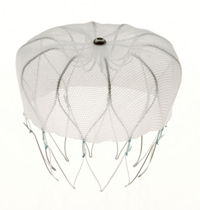
The results of the
PROTECT-AF trial, the trial testing the "non-inferiority" of the WATCHMAN left atrial appendage occlusion device manufactured by
Atritech to the blood thinner warfarin, are in. Things look, well, I'm not sure. At least they seem to have proved "non-inferiority" of the therapy against warfarin (Coumadin) in terms of all strokes. For interventional cardiologists and electrophysiologists, that's a big deal. But there were twice the upfront safety issues deploying the device: most often pericardial effusion, but some air emboli and device embolizations occurred.
Granted, this was a first-generation device and the experience with this procedure was non-existent. No doubt the learning curve was significant for
both doctors and the manufacturer of the device.
theHeart.org (aka "
Heartwire") did a much better job
discussing the intricacies of the trial design, limitations, and the results than I could in this brief blog post. I'm not sure I can add much to their excellent reporting and commentary from the experts involved in the trial.
What is clear from the trial is that warfarin can be dangerous and so can the devices. The hope with this device (and others like it) is that as time goes on, the upfront complications of the device implant procedure will be more than offset by the ongoing and never-ending potential bleeding complications encountered with warfarin. Right now, though, with the small number of patients studied and the short follow-up, it looks like a relative draw. In this area of "comparative effectiveness research" and cost-cutting, will the data be strong enough for the FDA to grant approval? We'll see.
I had an opportunity to observe a Watchman device be implanted last Monday.
Suffice it to say: it's a fairly complicated procedure an the full costs of this procedure are probably not just wrapped up in the device cost. After all, this is not just putting a sophisticated cork in the opening of the left atrial appendage.
There's much more to it than that:
- There's the pre-operative assessment of the left atrial appendage anatomy, preferably with CT of the heart, but more likely with transesophageal echocardiography.
- Then there's the general anesthesia and the transesophageal echo being performed throughout the procedure by a skilled cardiologist (or anesthesiologist) who is NOT the one putting in the device.
- Then there's the transseptal catheterization where a sheath is placed from the right atrium to the left atrium and upsized to a hefty 14-French delivery sheath.
- Then there's the contrast injection into the appendage that doesn't always fill completely with contrast because their flattened. (Hmmm, who knew??)
- And there's all those lobes of the appendage - heck, I always thought there was just one - that add a degree of difficulty to placing the device so it occludes all the lobes.
- Then there's the little tug on the device to make sure it has expanded correctly so the little barbs seat correctly to secure the device in place.
- And then there's the follow-up measurements and assessment of flow around the device, and the retrieval that's needed if these things don't seat correctly (yes, it can be retieved if needed before it's deployed).
- An then if they're not just right, you will need to discard that device for a new one, because you see, the barbs might be bent by the retrieval and might not secure the device during a second try.
But once the new device is seated just right, the tug test secure, the measurements proper, then comes the moment of truth: where the device is deployed. And there's that brief sigh heard collectively in the room when it appears to have attached just fine. And the equipment is removed from the heart. I can't imagine what it must have felt like in the few cases where the device wasn't secure. Ugh.
But as it was, there were high fives all around for a (conservatively) two-hour successful procedure.
In very experienced hands.
These procedural issues are significant but might become streamlined as experience is gained at implanting this devcie. Still, this is not a simple "chip-shot" procedure and the risks of implantation will need to be carefully balanced against the risk of warfarin complications if this device becomes approved.
-Wes