The front page headline of the
Wall Street Journal this morning read: "Stocks Rally in Face of Downturn."
Why?
Perhaps they know something we don't? Or have we been too manipulated by fear to look critically at what has just happened thanks to a little-known RNA virus?
I realize that most of the blog posts here lately have been critical of the American Board of Medical Specialties and their 24 subsidiary medical specialty boards, in large part because they rely on rote memorization of trivial facts as a means of gauging physician "quality" and "professionalism" (as they have deemed to "redefine" the term in their 2002 widely-published
self-written white paper). Clinical experience gained only after years of complicated and uncertain patient interactions has always been immaterial to these rent-seeking data-collecting medical specialty member boards. But what I'm focusing on now is something much more important for the practicing physician that can't be measured by a standardized test: the ability to
think critically in the face of the unknown. After all, most new patient encounters require the ability to assimilate vast amounts of information and distill it clinically for the benefits of an individual patient that has an infinite number of possible clinical co-founders.
We have to remember that 27-year old journalists and younger brilliant physician sycophants of the computerized test, as much as they may mean well, can be easily manipulated by political, economic, and social agendas that have been engrained in our society for years. As clinical physicians, is our job to listen to politicians and economists and those young physicians, or to think critically about an incredibly complicated non-linear (and non-exponential) biologic event that has just swept the world and resulted in the shuttering of so many economies and left over 22 million unemployed in the United States alone?
In the beginning of this evolving WHO-defined pandemic, the world were enamored with mathematical models from economists and pundits based in complicated assumptions - most of which were (quite frankly) guesses and never truly gauged to existing well-known viral illnesses like seasonal influenza. The World Health Organization (WHO) proclaimed early on that this new coronavirus had an incredibly high 3.4% mortality rate. New phrases were quickly introduced into our daily vernacular by the mainstream and social media like"flattening the curve," and "social distancing" as images of refrigerator trucks to house the dead were pushed to our cell phones. But that mortality statistic, we're now finding, was markedly overblown.
Perhaps more important is the way this virus has managed to seek out and impact the most medically vulnerable of our populations: those in close living environments or the socially disadvantaged with serious preexisting medical conditions like obesity, diabetes, lung disease, heart disease, cancers, and blood dycrasias. The elderly in particular, have been remarkably vulnerable to succumbing to COVID-19, in large part because they carry these preconditions far more frequently than younger patients. Health care workers, too, see a skewed population that can seem overwhelming at such a time since we are subjected to an unknown pathogen with an uncertain transmission, prevalence, and unknown lethality. We see the people dying and our bias is reinforced: this must be something BIG.
So how do we gain perspective and reliable data? Do we turn to mainstream media, or print scientific journals that are slow to react and limited in their scope, or do we turn to each other knowing each of us is struggling with the same unknowns? Or maybe that, too, is complicated.
Fortunately, thanks in large part to the internet, the world is quite literally, our oyster. It is time as one British pathologist John Lee has appropriately
suggested, that we begin to examine the evidence with "skepticism and vigorous debate." The COVID-19 death toll, and how it relates to our more typical seasonal flu that often impacts hospitals, is
far from clear. There is
nuance involved in proclaiming a death rate when those dying
from a virus are intermingled with those dying
with a virus.
Clinical physicians should begin to critically question our national narrative, given these
recently updated facts regarding the COVID-19 pandemic from a Swiss physician, each of which are carefully referenced. Look them over. Carefully. Perhaps putting the current situation in perspective from other parts of the world will be more helpful to our patients and their economic and psychologic strife than taking remarkably expensive and unproven computerized tests created by unaccountable bureaucrats that mean absolutely nothing.
-Wes
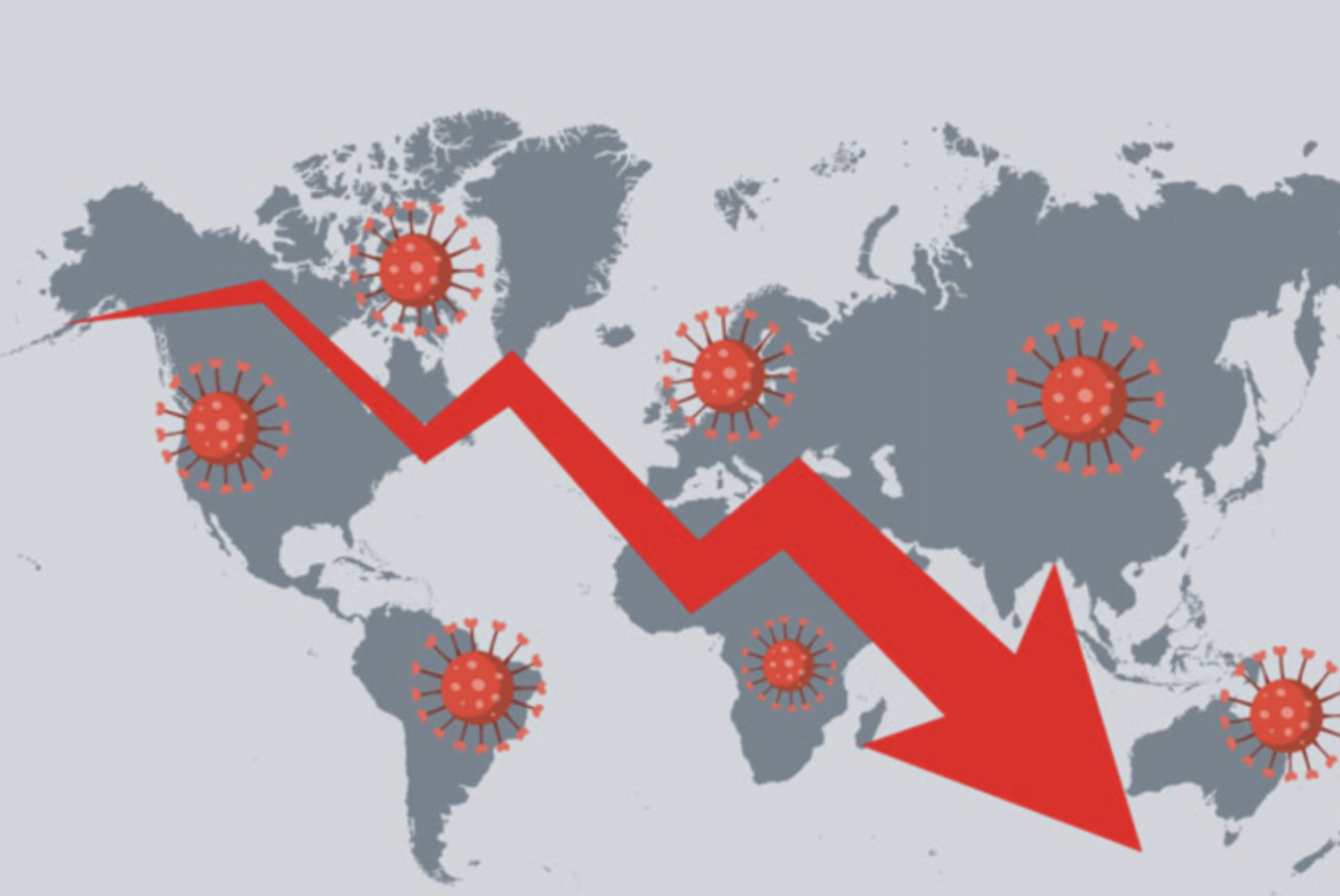
Image above from: Lee, J. "How to understand - and report - figures from "COVID Deaths."