Sadly, Randy Walker, Northwestern's exceptional football coach, died last night of sudden cardiac death. We are all confused, surprised, and saddened beyond words when such things happen. It is moments like this that all cardiologists and cardiac electrophysiologists second-guess ourselves to be sure we do the right thing for our patients. In evaluating patients with cardiac disease, we look heavily to the person's cardiac ejection fraction (the percentage of blood pumped from the cardiac chamber with each heart beat) to guide us regarding recommendations of when to implant an automatic defibrillator. (I have posted extensively on ejection fraction before). Most of these data regarding when to implant a defibrillator come from patients with blockages of their coronary arteries ("atherosclerosis"). Little data are available to guide us in cases of "myocarditis," like it is reported that Mr. Walker had. Whether he had a heart attack, or primary cardiac rhythm disturbance that lead to his death, we may never really know.
But what we do know, is that the lower the ejection fraction, the more likely someone will die of sudden cardaic death. We should use this unfortunate event to always remember this and be proactive at recommending these life-saving devices to our patients, even with all the negative press out there lately regarding device recalls and all. These recalls represent a tiny fraction of patients that must have their device replaced. Many more patients' lives are saved each and every day from these devices.
And another thing, Randy Walker's life was lost yesterday, but another patient of mine's life was saved by the presence of an automatic external defibrillator (AED) in his workplace. He collapsed suddenly, but alert friends came to his aid, slapped on the AED pads, and with one shock, his heart rhythm was restored and he was awake, alert, and fine later that day.
So if you or a family member have a history of heart disease of ANY kind, ask your doctor what your "EF" (ejection fraction) is. Think about getting an AED for your workplace. It could save your life, a friend's life or a loved one's life.
--Wes
Friday, June 30, 2006


Wednesday, June 28, 2006
Physican Prescribing Data (and your data) For Sale
Tomorrow's New England Journal of Medicine describes the phenomenon of selling physician pharmaceutical prescribing information and the efforts made by the American Medical Association to permit doctors to "opt out" of allowing their data to be released to pharmaceutical sales reps with the following caveat:
But the AMA is not the only organization with such ties: most professional medical organizations are similarly funded in tacit and not-so-tacit ways by Big Industry. Cash is the engine that keeps these organizations going. And Big Industry carries the cash (it certainly isn't doctors).
The simple truth: health care is a multi-gazillion dollar business enterprise. I assure you that every medical device manufacturer that sells product in the Chicago metro area knows precisely how many pacemakers and defibrillators I implant each year and whose product I use. (So far I have not been confronted with this data by the companies.)
But why stop there? The Health Insurance Portability and Accountabily Act (HIPAA), designed in 2003 to assure every patient's data is kept private, has an important word in it.... portability. Your medical data and my prescribing data are instantly available everywhere through the wonders of electronics. Just go to your local ER and watch: your healthcare data on your insurance card (and available online) is entered into a computer and verifies coverage. You are "registered" and amazingly a tremendous amount of information is already available (how did they get this data, anyway?) and they just need to "verify a few things." A doctor enters his evaluation and orders, all of which are available over the entire hospital information system and clinics to view by those with electronic access, and your bill after being sent home is automatically routed to your insurer (and a collection agent who uses a billing "scrubbing" agency to assure the bill is "clean" before it routes to Medicare and your insurer) before you leave the Emergency Room. I bet a few of those places you didn't realize. See what I mean?
And to think your medical data is not just as important to the government and Big Industry as my prescribing practices, think again.
And as we've seen (and outlined in Monday's LA Times article), the government's ability to keep sensitive electronic data private has met with obstacles recently. HIPAA, unfortunately, has become the smokescreen that permits the government and interested industries to garner tons of data about you and me electronically and under the guise of "privacy." Remember that HIPAA was really implemented to protect health insurance coverage for workers and their families when they change or lose their jobs. Only secondarily as part of the legislation was Title II of HIPAA developed, called the Administrative Simplification provisions, and requires the establishment of national standards for electronic health care transactions and national identifiers for providers, health insurance plans, and employers. In reality, with the lack of enforcement of HIPAA privacy standards today, the privacy portion of this legislation is virtually meaningless.
While I applaud efforts of those privacy advocates to struggle to keep our medical information and prescribing information private, the reality is, with information flowing instantaneously as it does and business interests and government interests being what they are, I'm afraid real medical and prescribing privacy (whether drugs or medical devices) is a thing of the past.
--Wes
"The AMA has created a Prescribing Data Restriction Program. Physicians are now able to deny all sales representatives access to their individual prescribing data. The restriction is limited to sales representatives and their direct supervisors; physicians will not be able to deny access to other officials at pharmaceutical companies"It's simple, really. I can opt out giving the pharmaceutical companies my data but the pharmaceutical companies can still get the data. That way, I can avoid being bugged by guys in suits much nicer than mine while I'm in clinic, and the AMA can continue receiving funds from the pharmaceutical industry. You see:
"In 2005, the AMA received $44.5 million in revenue — about 16 percent of its total revenue — from the sale of database products"How can physicians carry an independent patient-centric and physician-centric political and healthcare policy voice when special interests are so critical to the funding of our own professional associations?
But the AMA is not the only organization with such ties: most professional medical organizations are similarly funded in tacit and not-so-tacit ways by Big Industry. Cash is the engine that keeps these organizations going. And Big Industry carries the cash (it certainly isn't doctors).
The simple truth: health care is a multi-gazillion dollar business enterprise. I assure you that every medical device manufacturer that sells product in the Chicago metro area knows precisely how many pacemakers and defibrillators I implant each year and whose product I use. (So far I have not been confronted with this data by the companies.)
But why stop there? The Health Insurance Portability and Accountabily Act (HIPAA), designed in 2003 to assure every patient's data is kept private, has an important word in it.... portability. Your medical data and my prescribing data are instantly available everywhere through the wonders of electronics. Just go to your local ER and watch: your healthcare data on your insurance card (and available online) is entered into a computer and verifies coverage. You are "registered" and amazingly a tremendous amount of information is already available (how did they get this data, anyway?) and they just need to "verify a few things." A doctor enters his evaluation and orders, all of which are available over the entire hospital information system and clinics to view by those with electronic access, and your bill after being sent home is automatically routed to your insurer (and a collection agent who uses a billing "scrubbing" agency to assure the bill is "clean" before it routes to Medicare and your insurer) before you leave the Emergency Room. I bet a few of those places you didn't realize. See what I mean?
And to think your medical data is not just as important to the government and Big Industry as my prescribing practices, think again.
And as we've seen (and outlined in Monday's LA Times article), the government's ability to keep sensitive electronic data private has met with obstacles recently. HIPAA, unfortunately, has become the smokescreen that permits the government and interested industries to garner tons of data about you and me electronically and under the guise of "privacy." Remember that HIPAA was really implemented to protect health insurance coverage for workers and their families when they change or lose their jobs. Only secondarily as part of the legislation was Title II of HIPAA developed, called the Administrative Simplification provisions, and requires the establishment of national standards for electronic health care transactions and national identifiers for providers, health insurance plans, and employers. In reality, with the lack of enforcement of HIPAA privacy standards today, the privacy portion of this legislation is virtually meaningless.
While I applaud efforts of those privacy advocates to struggle to keep our medical information and prescribing information private, the reality is, with information flowing instantaneously as it does and business interests and government interests being what they are, I'm afraid real medical and prescribing privacy (whether drugs or medical devices) is a thing of the past.
--Wes
3D-Mapping Gets 501K FDA Clearance
The CARTO mapping system from Biosense Webster, a Johnson and Johnson company, got FDA clearance for marketing today. It uses three different magnetic fields to localize a magnetic catheter in three-dimensional space within the heart and references cardiac activity from the catheter to a specific location in the heart. The ONLY problem with this system is that is has to use their magnetic catheter and can collect data from one location at a time. If the patient moves, recreating the three-dimensional anatomy again takes time. It has some impressive software features that help our understanding of complex arrhythmias, and the new "CARTO Merge" is fascinating software that can take a 3-D picture dataset created from a high-resolution CT scan image of the heart, and superimpose a 3D rendering of the inside of the heart with electrical data over that previously-acquired CT scan image.
The competing system from Endocardial Solutions and distributed by St. Jude, called NavX, uses three separate electric fields in an x,y,z coordinate system to localize a conventional EP catheter in 3-D space, and also faciltiates our understanding of the mechanism of heart rhythm abnormalities in complicated ablation procedures. It too has "merge-like" software on the horizon, but presently displays the 3D reconstruction image and 3D CT-acquired image side by side.
Look for routine use of this technology in EP labs as atrial fibrillation ablation procedures increase in frequency.
--Wes
The competing system from Endocardial Solutions and distributed by St. Jude, called NavX, uses three separate electric fields in an x,y,z coordinate system to localize a conventional EP catheter in 3-D space, and also faciltiates our understanding of the mechanism of heart rhythm abnormalities in complicated ablation procedures. It too has "merge-like" software on the horizon, but presently displays the 3D reconstruction image and 3D CT-acquired image side by side.
Look for routine use of this technology in EP labs as atrial fibrillation ablation procedures increase in frequency.
--Wes
Beta Blockers Leave Hypertension's Short List
Have high blood pressure and take beta blockers (like atenolol (Tenormin), metoprolol (Lopressor), carvedilol (Coreg))? In England, beta-blockers are no longer being recommended at mainstays of hypertension management in favor of calcium channel blockers (like diltiazem (Cardizem) or nifedipine (Procardia). And there is considerable data to support this finding. When it comes to beta blockers, hypertension management isn't the best: diuretics, ACE-inhibitors, and calcium channel blockers are probably better.
But as a doctor dealing on a day-to-day with cardiac rhythm disturbances, beta blockers are undeniably one of the most effective weapons we have at treating fast heart rhythms and heart failure and have been shown to reduce death in people with coronary artery disease. And in people with weak heart muscles, at least one calcium channel blocker (verapamil) has been shown to have deliterious effects on heart muscle function.
If you have hypertension that is difficult to manage, be sure to check with your doctor before considering a switch to an alternate medication, since often your doctor may be trying to to manage "two birds" (hypertension and arrhythmias or heart failure) with "one stone" (beta blockers).
--Wes
But as a doctor dealing on a day-to-day with cardiac rhythm disturbances, beta blockers are undeniably one of the most effective weapons we have at treating fast heart rhythms and heart failure and have been shown to reduce death in people with coronary artery disease. And in people with weak heart muscles, at least one calcium channel blocker (verapamil) has been shown to have deliterious effects on heart muscle function.
If you have hypertension that is difficult to manage, be sure to check with your doctor before considering a switch to an alternate medication, since often your doctor may be trying to to manage "two birds" (hypertension and arrhythmias or heart failure) with "one stone" (beta blockers).
--Wes
Tuesday, June 27, 2006
Implications of the Boston Scientific Recall
It is interesting that Boston Scientific's stock plummeted 6.7% after the news of their latest recall involving some 26,200 pacemaker and defibrillator devices. This morning in the Wall Street Journal, Boston Scientific is claiming "not to miss a single sale."
But to the practicing physician dealing with heart rhythm disorders who wants to establish his practice "where quality is job one," how can any physician in good conscious recommend this product for their patient? The negative press has bashed this brand, and now has extended to hurting the Boston Scientific name. The question for this company which paid a pretty penny for Guidant is: what will be needed to reinstill confidence in not only patients, but doctors. After all, there has been a suggestion that this negative publicity has encouraged fewer primary care physicians to refer their patients for these devices to cardiologists, despite the life-saving advantages demonstrated in the MADIT-II, SCD-HeFT, COMPANION and CARE-HF trials (which I have discussed previously), and has resulted in the downturn of device implants seen recently in the US.
Overall, I suspect Boston Scientific's sales will only minimally decline after this recall. Those who are staunch end-users are likely to stay put, and the exodus of others from Guidant product to St. Jude or Medtronic devices during prior recalls has already occurred. Furthermore, Guidant's product line in the interventional cardiology world (the "plumbers" of cardiology) is excellent as is their intellectual property portfolio and likely to buoy their stock eventually. Furthermore, the actual incidence of the reported failures is quite low, and probably does not warrant a mass replacement of devices (except, perhaps in patients who are pacemaker-dependent for their heart to beat). Certainly recalling non-implanted devices was the right thing to do. Unfortunately, this will not be the last we hear of recalls from Boston Scientific, or Medtronic, or St. Jude. These recalls come with the territory of these complicated, yet life-saving, devices.
Finally litigation concerns remain for Boston Scientific. Hopefully the press from this legislation will not further compromize their market share, but there certainly is a big hill to climb to reinstill confidence in physician providers.
-Wes
But to the practicing physician dealing with heart rhythm disorders who wants to establish his practice "where quality is job one," how can any physician in good conscious recommend this product for their patient? The negative press has bashed this brand, and now has extended to hurting the Boston Scientific name. The question for this company which paid a pretty penny for Guidant is: what will be needed to reinstill confidence in not only patients, but doctors. After all, there has been a suggestion that this negative publicity has encouraged fewer primary care physicians to refer their patients for these devices to cardiologists, despite the life-saving advantages demonstrated in the MADIT-II, SCD-HeFT, COMPANION and CARE-HF trials (which I have discussed previously), and has resulted in the downturn of device implants seen recently in the US.
Overall, I suspect Boston Scientific's sales will only minimally decline after this recall. Those who are staunch end-users are likely to stay put, and the exodus of others from Guidant product to St. Jude or Medtronic devices during prior recalls has already occurred. Furthermore, Guidant's product line in the interventional cardiology world (the "plumbers" of cardiology) is excellent as is their intellectual property portfolio and likely to buoy their stock eventually. Furthermore, the actual incidence of the reported failures is quite low, and probably does not warrant a mass replacement of devices (except, perhaps in patients who are pacemaker-dependent for their heart to beat). Certainly recalling non-implanted devices was the right thing to do. Unfortunately, this will not be the last we hear of recalls from Boston Scientific, or Medtronic, or St. Jude. These recalls come with the territory of these complicated, yet life-saving, devices.
Finally litigation concerns remain for Boston Scientific. Hopefully the press from this legislation will not further compromize their market share, but there certainly is a big hill to climb to reinstill confidence in physician providers.
-Wes
Monday, June 26, 2006
More Recalls for Boston Scientific
More bad news on some pacemakers, defibrillators and cardiac resynchronization devices from Boston Scientific (that acquired these devices from Guidant).
--Wes
17:45 PM CST
Addendum - I spoke with our rep from Boston Scientific about this: They claim here is a bad lower voltage capacitor from one supplier that is faulty, but can lead unexpectedly to a no output state. There have been 5 reported device failures out of about 27,200 implants of the devices effected: one was caught pre-implant (low battery voltage), and 4 other patients required replacement of their device for low output state or premature battery depletion. Two of these replacement patients presented with loss of conciousness due to pacemaker output failure. The full physician notification can be found here and the patient notification letter can be found here.
--Wes
17:45 PM CST
Addendum - I spoke with our rep from Boston Scientific about this: They claim here is a bad lower voltage capacitor from one supplier that is faulty, but can lead unexpectedly to a no output state. There have been 5 reported device failures out of about 27,200 implants of the devices effected: one was caught pre-implant (low battery voltage), and 4 other patients required replacement of their device for low output state or premature battery depletion. Two of these replacement patients presented with loss of conciousness due to pacemaker output failure. The full physician notification can be found here and the patient notification letter can be found here.
New Implantable Heart Failure Device Makes Debut
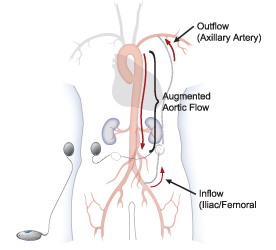
A new device to assist heart failure patients is under development by Orqis Medical Corporation and had "preclinical" results described in a satellite symposium at the European Society of Cardiology's Heart Failure 2006 symposium in Helsinki, Finland (though these were not provided in the press release) . The device is about the size of an ICD and functions like a miniature left ventricular assist device by removing blood from the iliac artery and returning it to the axillary artery. Proof of concept data appeared promising in a small study on 24 patients published earlier in Circulation (Circulation 2005; 112:3107-3114) with an analogous system made by the same company and developed for more limited use that exists outside the body.
It looks like this will be a while before this device is available in the US since the first-generation device that resides outside the body is only now beginning to enroll patients for FDA evaluation. The device will likely require anticoagulation to avoid clots from developing within the systemic arteries. Nonetheless it is yet another clever gadget on the horizon for our sickest heart failure patients. (Photo courtesy www.orqis.com).
--Wes
Friday, June 23, 2006
Medical Transcription Errors
Although this story about outsourced medical transcription errors in England has generated concern for the secretaries and outraged the administrative directors there, this problem has been in existence for years, regardless of whether records are transcribed locally or overseas. You see, there are good transcriptionists with lots of experience and a facile understanding of medical terminology, and there are illiterate neophytes who clearly flunked English and Grammar 101 in high school. Typically transciptions in hospitals are recorded to a central "pool" and retrieved by a well-meaning transcriptionist at a later time. The caliber of the transcriptionist is usually highly variable this way, since one hour they're dictating an orthopedic procedure and the next hour a cardiac procedure. And when they hit an ophthalmology or cardiac electrophysiology procedure, it's a whole new ball game again.
I am particularly fond of one well-meaning transcriptionist who changed the name for anatomic location of the conduction system of the heart in a woman (known as "Bundle of His") to the "Bundle of Her" (since she was a woman). Now it might have been cute at the time, but this was not a transcriptionist from overseas - this person came from our own back yard - and medicolegally this error could have had significant consequences regarding my intregrity and competence in the court of law.
So what have the Medial Error Police done to curb the cost of transcription for doctors? Simple. Make us type our procedures ourselves! Now in some ways, this might save time, since the errors I make are usually quickly corrected. But the new electronic medical records of today permit the use of "smart phrases" (also known as 'canned text') to speed typing of our reports. You can bet that this "cut and paste" technique in people who are in a hurry will also provide a slew of transcription problems since doctors don't always proof their canned text. Canned text with anatomic localization terms (like "left" or "right") buried within them, if not carefully scruitinized, could lead to later difficulties for all if the canned text word "left" was not changed to "right" in a patient with an actual right-sided knee replacement, for instance.
It would be interesting to know that other transcription errors have been discovered out there by my colleagues in the blog-o-sphere. It could make for some humorous and illustrative reading.
--Wes
I am particularly fond of one well-meaning transcriptionist who changed the name for anatomic location of the conduction system of the heart in a woman (known as "Bundle of His") to the "Bundle of Her" (since she was a woman). Now it might have been cute at the time, but this was not a transcriptionist from overseas - this person came from our own back yard - and medicolegally this error could have had significant consequences regarding my intregrity and competence in the court of law.
So what have the Medial Error Police done to curb the cost of transcription for doctors? Simple. Make us type our procedures ourselves! Now in some ways, this might save time, since the errors I make are usually quickly corrected. But the new electronic medical records of today permit the use of "smart phrases" (also known as 'canned text') to speed typing of our reports. You can bet that this "cut and paste" technique in people who are in a hurry will also provide a slew of transcription problems since doctors don't always proof their canned text. Canned text with anatomic localization terms (like "left" or "right") buried within them, if not carefully scruitinized, could lead to later difficulties for all if the canned text word "left" was not changed to "right" in a patient with an actual right-sided knee replacement, for instance.
It would be interesting to know that other transcription errors have been discovered out there by my colleagues in the blog-o-sphere. It could make for some humorous and illustrative reading.
--Wes
Thursday, June 22, 2006
Stents - Are We Going Naked?
Today's front page Wall Street Journal article notes that some hospitals are paring the use of drug-coated stents to prop open coronary arteries in favor of bare metal ("naked") stents because of the finding that late clot formation in the stent can occur, leading to heart attack or death in some patients.
There seems to be a concensus amongst our intervential cardiologists that this certainly does occur, but rarely, and I see more and more of them recommending that clopidogrel (Plavix) and aspirin be continued at least a year or, perferably, indefinitely, in patients with drug-eluting stents. But this is not a reason to run panicked in the streets. The indicence of this complication is unusual (but real) and carries approximately a 0.5% increase in stent thrombosis over conventional bare metal stents annually. As the Wall Street Journal puts it:
But drug-eluting stents still appear to be preferred by most of our interventional cardiologists IF the person does not need upcoming surgery soon. They avoid "restenosis" (or later scarring inside the arterial blood vessel) better than most bare metal stents, but carry this late risk of thrombosis. Careful management with your cardiologist, therefore, needs to exercised if other non-cardiac surgery is required and certainly, if you have a drug-eluting stent, continue your aspirin and discuss with your cardiologist if you should continue taking your clopidogrel (Plavix) beyond the initial three to six months after your stent implantation.
--Wes
There seems to be a concensus amongst our intervential cardiologists that this certainly does occur, but rarely, and I see more and more of them recommending that clopidogrel (Plavix) and aspirin be continued at least a year or, perferably, indefinitely, in patients with drug-eluting stents. But this is not a reason to run panicked in the streets. The indicence of this complication is unusual (but real) and carries approximately a 0.5% increase in stent thrombosis over conventional bare metal stents annually. As the Wall Street Journal puts it:
A recent Swiss study found 3.3 more heart attacks and deaths per 100 patients with drug-coated stents than with uncoated, bare metal ones, beginning at 6 months after implantations and ending a year later.But it seems that with the aging of the population, more and more people have other concomitant medical problems requiring significant surgical interventions, like knee or hip replacements, colonoscopy, and the like, and other surgeons don't like those pesky anticoagulants because of bleeding issues they encounter with these agents. So they recommend the aspirin and Plavix be discontinued pre-operatively and, pow, the person has a sudden onset of chest pain and heart attack in the stented vessel.
But drug-eluting stents still appear to be preferred by most of our interventional cardiologists IF the person does not need upcoming surgery soon. They avoid "restenosis" (or later scarring inside the arterial blood vessel) better than most bare metal stents, but carry this late risk of thrombosis. Careful management with your cardiologist, therefore, needs to exercised if other non-cardiac surgery is required and certainly, if you have a drug-eluting stent, continue your aspirin and discuss with your cardiologist if you should continue taking your clopidogrel (Plavix) beyond the initial three to six months after your stent implantation.
--Wes
Wednesday, June 21, 2006
Pacemaker Checks Over the Internet
Effective July 10th, 2006, doctors can now be reimbursed for Internet-based device interrogations of not only defibrillators, but pacemakers (and biventricular pacemakers) as well! Reimbursement will occur for pacemakers at the device interrogation without reprogramming rate for certain newer pacemaker models. For people with Medtronic devices, this means pacemakers with models from the Kappa 400 series and beyond (like Kappa 400, 600, 700 and 900 series, Sigma, Enpulse, Enrhythm, etc.) will all work with Medtronic's Carelink system. St. Jude and Guidant devices can similarly be reimbursed.
For doctors and patients with pacemakers, this is huge. For the patient, fewer office visits will be needed, better information (like actual battery voltages, impedances, electrograms, event logs, etc.) can be available rather than just pacemaker magnet pacing rates and evaluation of pacing and sensing seen in older telephone checks. So ask your doctor if this is available in your clinic. It might make your day.
--Wes
For doctors and patients with pacemakers, this is huge. For the patient, fewer office visits will be needed, better information (like actual battery voltages, impedances, electrograms, event logs, etc.) can be available rather than just pacemaker magnet pacing rates and evaluation of pacing and sensing seen in older telephone checks. So ask your doctor if this is available in your clinic. It might make your day.
--Wes
Get Up and Get Out
My father always said: "What a person has done is the best indicator of what they will do."
As a practicing cardiologist, I should be the first to serve as cheerleader for the new AHA dietary guidelines published by the American Heart Association and splashing all over the newswires recently, as journalists try to tell people that they now have to limit their "trans fat" intake to less than 1 percent of their diet. But I ask you (and my other three readers), how will you change your personal habits tonight? Do you even know what a trans fat is? You mean you're not going to throw away the meat in the meat drawer, the cheese, the chips and salsa? What's wrong with you?
Perhaps we should really look at people's actual behaviour - after all, outcomes is what Medicare wants with their Pay-for Performance initiative. What are the outcomes of such proclamations by out healthcare leadership? I only know what I see; the proof is in the pudding, so to speak. I tell people, er, sometime plead with people, to stop smoking, diet, exercise and rarely if ever see a significant change in their behaviour. Only after they have "The Big One" and end up on our cath lab table or in the operating room, well then maybe they'll see the light. I know it's the right thing to tell people when I see them in the clinic, but the increase in type II diabetes over the last 30 years says it best. We've got an epidemic that rivals bird flu and is effecting our young kids, too, perhaps more than us adults.
So here's the news. You need to take responsibility for this. Not me. Patients need to understand that we can only inform and suggest, but the rubber meets the road with the individual.
And it's damn tough to loose weight. After exercising for 10 minutes on a treadmill and seeing that I burned a whopping 195 calories, going over to Starbucks and celebrating my exercise with a 356 calorie latte might not be so wise. So don't do it alone. Tell everyone you know you're trying to loose weight. Get up and get out. Don't sit at the boob tube.
You'll be happier for it.
--Wes
As a practicing cardiologist, I should be the first to serve as cheerleader for the new AHA dietary guidelines published by the American Heart Association and splashing all over the newswires recently, as journalists try to tell people that they now have to limit their "trans fat" intake to less than 1 percent of their diet. But I ask you (and my other three readers), how will you change your personal habits tonight? Do you even know what a trans fat is? You mean you're not going to throw away the meat in the meat drawer, the cheese, the chips and salsa? What's wrong with you?
Perhaps we should really look at people's actual behaviour - after all, outcomes is what Medicare wants with their Pay-for Performance initiative. What are the outcomes of such proclamations by out healthcare leadership? I only know what I see; the proof is in the pudding, so to speak. I tell people, er, sometime plead with people, to stop smoking, diet, exercise and rarely if ever see a significant change in their behaviour. Only after they have "The Big One" and end up on our cath lab table or in the operating room, well then maybe they'll see the light. I know it's the right thing to tell people when I see them in the clinic, but the increase in type II diabetes over the last 30 years says it best. We've got an epidemic that rivals bird flu and is effecting our young kids, too, perhaps more than us adults.
So here's the news. You need to take responsibility for this. Not me. Patients need to understand that we can only inform and suggest, but the rubber meets the road with the individual.
And it's damn tough to loose weight. After exercising for 10 minutes on a treadmill and seeing that I burned a whopping 195 calories, going over to Starbucks and celebrating my exercise with a 356 calorie latte might not be so wise. So don't do it alone. Tell everyone you know you're trying to loose weight. Get up and get out. Don't sit at the boob tube.
You'll be happier for it.
--Wes
Tuesday, June 20, 2006
The Globalization of Medical Procedures
Well it happened today. It didn't take long. A patient requiring a replacement of his implantable cardioverter-defibrillator due to its battery running low, called me to inquire if he could have this procedure performed in India. "I can get the same device for a whole lot less money there."
Worldwide cost differentials of the same expensive medical devices will need to be addressed by device manufacturers if we're to maintain our livelihood here in the US.
--Wes
Worldwide cost differentials of the same expensive medical devices will need to be addressed by device manufacturers if we're to maintain our livelihood here in the US.
--Wes
Pacemakers From Living Cells?
Interesting post on the potential for a pacemaker from living cells instead of a permanent electronic pacemaker. Great stuff. But before you rush out to cash in your old pacemaker, read the fine print:
(Isn't is amazing how many new questions can be generated from new research like this!)
But the work is cool, nonetheless, and worthwhile since issues raised with this work might effect other areas in biologic research. Many teams are working on this... But its great to see the developments so far. I wish ALL researchers in this area the best of luck!
--Wes (via Instapundit and Slashdot)
When the engineered tissue was implanted into rats, between the right atrium and right ventricle, the implanted cells integrated with the surrounding heart tissue and electrically coupled to neighboring heart cells. Optical mapping of the heart showed that in nearly a third of the hearts, the engineered tissue had established an electrical conduction pathway, which disappeared when the implants were destroyed. The implants remained functional through the animals' lifespan (about 3 years).This is interesting because it is basically creating a biologic accessory pathway. We "heart electrical types" like to speculate about issues that might occur when skeletal muscle is used for the conduction system:
"The advantage of using myoblasts is that they can be taken from skeletal muscle rather than the heart itself--which will be important for newborns whose hearts are so tiny they cannot spare any tissue for the biopsy--and that they're resistant to ischemia, meaning they can go without a good blood supply for a relatively long period of time," (investigator) Cowan says.
- There might not be decremental conduction properties (like the normal AV node), so atrial fibrillation might be a dangerous because it might conduct too rapidly and induce dangerous lower chamber (ventricular) arrhythmias.
- Since only one in three mice "took" with the biologic implant, this won't be reliable enough to implement this in humans (especially children) yet.
- Some heart block occurs in an anterograde-only direction (from atrium to ventricle) but conduction through the normal AV node can be maintained in a retrograde (ventricle to atrium) direction. If a tachycardia were created in patients with such a biologic accessory pathway implant anterograde down the implant and conduction circulated back to the atrium by the person's normal AV node, which should be ablated?
- How will drugs effect skeletal muscle implants in the heart?
- The human immune system might recognize these cells as foreign from biologic manipulation, and late failure due to late scarring and failure of conduction might occur.
(Isn't is amazing how many new questions can be generated from new research like this!)
But the work is cool, nonetheless, and worthwhile since issues raised with this work might effect other areas in biologic research. Many teams are working on this... But its great to see the developments so far. I wish ALL researchers in this area the best of luck!
--Wes (via Instapundit and Slashdot)
Monday, June 19, 2006
Seniors with Thongs
I completed an implant of a biventricular pacemaker-defibrillator system on a 72-year old man the other day, and a nurse came out of the room after the procedure feeling uncomfortable, to say the least.
"He had a leopard-skin thong on! You know, with strings to hold up the sides and all..."
My natural response was:
"And?"
"Well, you know with sedation and all,..." she said. (I told her I'd heard enough).
Music in the operating room is well-established but varies by personal taste. Should there be a dress code for minor procedure rooms like cath labs and electrophysiology labs? After all, the dress code for operating rooms is already established: those ridiculous patient gowns and your birthday suit...
--Wes
"He had a leopard-skin thong on! You know, with strings to hold up the sides and all..."
My natural response was:
"And?"
"Well, you know with sedation and all,..." she said. (I told her I'd heard enough).
Music in the operating room is well-established but varies by personal taste. Should there be a dress code for minor procedure rooms like cath labs and electrophysiology labs? After all, the dress code for operating rooms is already established: those ridiculous patient gowns and your birthday suit...
--Wes
On Heart Failure and ICDs
I was asked recently about the link between heart failure and implantable cardioverter-defibrillators (ICDs).
In a recent retrospective review of the landmark 2002 Multicenter Automatic Defibrillator Implantation Trial (MADIT-2) trial, it was found that patients with a weak heart muscle caused by a prior heart attack or coronary artery disease who had an implantable cardioverter-defibrillator (ICD) installed were at increased risk of new or recurrent heart failure (usually manifested by fluid on the lungs, cough, shortness of breath or leg swelling) after the first delivery of an appropriate shock. On the other hand, the study found, inappropriate shocks (e.g., those delivered for upper chamber rhythms that caused the device to reach its rate cut-off for calling a heart rhtyhm abnormal) apparently doesn't increase later heart failure risk. According to Heartwire:
Beta blockers they felt reduced the risk of hospitalization for heart failure significantly and doctors should be vigilant to watch for heart failure development in ICD patients who have suffered their first clinical shock. My experience has been that after an episode of recurrent appropriate ICD shocks, if we treat heart failure in many of these patients (especially with beta blockers), their shock frequency dramatically improves.
Whether biventricular pacing for heart failure (a newer technique that adds an additional lead to pace the left side of the main pumping chamber of the heart (the left ventricle) in tandum with the more conventional right ventricular lead installed with defibrillators and was found in other trials to reduce heart failure risk) should be considered in all patients is being studied now in the MADIT-3 trial. Stay tuned.
In short, if you have an ICD, its a good thing, you'll live longer. But there may be significant issues regarding heart failure development later if you need to use it.
--Wes
In a recent retrospective review of the landmark 2002 Multicenter Automatic Defibrillator Implantation Trial (MADIT-2) trial, it was found that patients with a weak heart muscle caused by a prior heart attack or coronary artery disease who had an implantable cardioverter-defibrillator (ICD) installed were at increased risk of new or recurrent heart failure (usually manifested by fluid on the lungs, cough, shortness of breath or leg swelling) after the first delivery of an appropriate shock. On the other hand, the study found, inappropriate shocks (e.g., those delivered for upper chamber rhythms that caused the device to reach its rate cut-off for calling a heart rhtyhm abnormal) apparently doesn't increase later heart failure risk. According to Heartwire:
"Our interpretation of this is that the ICD shocks by themselves don't damage the heart and don't increase the risk of heart failure—it's the life-saving ICD therapy transforming the risk of sudden death into a subsequent heart-failure risk," according to Dr Ilan Goldenberg (University of Rochester, NY), lead author of the post hoc study from the second Multicenter Automatic Defibrillator Implantation Trial (MADIT-2).
Another major finding from the analysis, he told heartwire, is that HF risk started rising after appropriate-shock delivery by either single- or dual-chamber ICDs compared with nondevice conventional therapy. That appears to contrast with some earlier studies suggesting that dual-chamber ICDs, as compared with backup single-chamber devices, can promote heart failure. But Goldenberg said a subanalysis including only patients with ICDs showed dual-chamber devices accounted for "a little more" of the risk increase. ICD shocks by themselves don't damage the heart and don't increase the risk of heart failure—it's the life-saving ICD therapy transforming the risk of sudden death into a subsequent heart-failure risk.
Beta blockers they felt reduced the risk of hospitalization for heart failure significantly and doctors should be vigilant to watch for heart failure development in ICD patients who have suffered their first clinical shock. My experience has been that after an episode of recurrent appropriate ICD shocks, if we treat heart failure in many of these patients (especially with beta blockers), their shock frequency dramatically improves.
Whether biventricular pacing for heart failure (a newer technique that adds an additional lead to pace the left side of the main pumping chamber of the heart (the left ventricle) in tandum with the more conventional right ventricular lead installed with defibrillators and was found in other trials to reduce heart failure risk) should be considered in all patients is being studied now in the MADIT-3 trial. Stay tuned.
In short, if you have an ICD, its a good thing, you'll live longer. But there may be significant issues regarding heart failure development later if you need to use it.
--Wes
Sunday, June 18, 2006
Saturday, June 17, 2006
The Plastic Stethoscope
Remember this scene from the 1967 movie, The Graduate when Benjamin is learning what he REALLY needs to know about life?
There may be more truth in this line that I realized since first seeing this movie.
When we were young eager medical students with our open-eyed wonder at the incredible intricacies and complexities of medicine, the physical exam opened an incredibly interesting and cost-effective way to actually diagnose ailments with the touch of your finger, sounds reaching your ear, or discovering the characteristic sweet infectious smell of pseudomonas aeruginosa colonizing an open wound. Each of us were given the almost magical opportunity at making important diagnostic revelations with only our senses. Perhaps most important to me, a budding young cardiologist-to-be, was the revelation that when I placed my first Sprague-Rappoport stethoscope to my ears, I could actually hear those subtle heart sounds that I had been taught. No cheap substitute stethoscope would do - it just didn't have the acoustic characteristics to bring the subtle heart tones to my ears like that bright, shiny, heavy, testimonial- to- careful- engineering could bring. It was like the difference between HD radio of today and the old AM stations of earlier times. No comparison.
Last Thursday (6/15/06) in the Wall Street Journal, there were two articles juxtaposed on the same page: "Hospital Intiative to Cut Errors Finds About 122,300 Lives Saved" and "Ambulances Find Overwhelmed ERs 'At Breaking Point'." One article extolled the phenominal gains of the new initiatives in heath care delivery to minimize errors juxtaposed to the crisis confronting guys on the front lines of Emergency Medicine - the medical safety net that often can't meet the demand imposed upon it due to overcrowding in our Emergency Rooms.
And then I've realized that every bed in our hospital has converted to private rooms. Why? Certainly its nice to offer such nice confines to our patients, but the push to reduce 'errors' has necessitated the conversion to limit the spread of infection from one patient to the next, we're told. In fact, patients with a so much as a positive nasal swab for methicillin-resistant staphlococcus aureus (MRSA) but no sign of clinical infection are placed in a private room and labeled for "contact isolation." Any person having contact with this patient must remove their hospital coat, don a plastic "gown" over their clothes, wear plastic gloves and mask, and surrender their $150 stethoscope for a plastic tube attached to a thin plastic wafer that stays in the patient's room. Let me be clear: the engineering properties of this plastic auditory apparatus serves no useful clinical purpose rather than the placebo effect for the patient that someone really is listening to a their lung sounds.
"Here we are, seeing fewer patients, but with fewer errors. Perfection wins out over the real need."
The report from Harvard that I noted in the Wall Street Journal claimed that in 18 short months we've saved "122,300 lives" through this hospital error-reducing initiative. Amazing. Earlier we were told in a much-quoted study from the "Institute of Medicine (IOM)" that reduction of medical errors would save between "44,000 to 98,000 errors" annually (average 71,000). And miraculously, in 18 months we've actually saved more lives than previously expected! Are we really? I just haven't clinically seen that many people cooling it from this many medical errors. Another review of hospital deaths by physician reviewers, felt the IOM's report greatly exagerated their findings. And yet here we are, seeing fewer patients, but with fewer "errors." Perfection wins out over the real need.
While in the Navy, I took the Combat Casualty Care Course (or "C4" as we called it). We learned about the medical term of triage - do the most good for the most people. Look at what looms before us: the baby boom generation coupled with the advances of medical care, technology, and improvements in therapies that have increased life expectancy like never before. Bird flu might be around the corner. Terrorist activities have strained the medical community before. Third world countries see teams of people die from HIV. Yet here we are, reaching "error perfection" in a sea of humanity who needs our help. And I can't even use the most cost-effective technology that exists: a fine acoustically-tuned stethoscope.
Medicine needs a reality check. The fact that the early stages of a hospital initiative that already fixed more errors than really existed in the first place seems little more than political (or perhaps professional) grand-standing to me. Perfection might be reasonable goal to strive for with noble intentions, but could we be causing the greatest medical error of all: sacrificing care to the many with huge expense (how much do all those plastics we wear and place to our ears cost in terms of missed diagnoses and missed admissions?) so that we can get paid by Medicare for reaching perfection in the few?
As I put on my 7th plastic gown, gloves, and facemask while shuffling from room to room on rounds and reached for the tubing with plastic wafer attached, I wondered...
--Wes
Mr. McGuire: I want to say one word to you. Just one word.
Benjamin: Yes, sir.
Mr. McGuire: Are you listening?
Benjamin: Yes, I am.
Mr. McGuire: Plastics.
There may be more truth in this line that I realized since first seeing this movie.
When we were young eager medical students with our open-eyed wonder at the incredible intricacies and complexities of medicine, the physical exam opened an incredibly interesting and cost-effective way to actually diagnose ailments with the touch of your finger, sounds reaching your ear, or discovering the characteristic sweet infectious smell of pseudomonas aeruginosa colonizing an open wound. Each of us were given the almost magical opportunity at making important diagnostic revelations with only our senses. Perhaps most important to me, a budding young cardiologist-to-be, was the revelation that when I placed my first Sprague-Rappoport stethoscope to my ears, I could actually hear those subtle heart sounds that I had been taught. No cheap substitute stethoscope would do - it just didn't have the acoustic characteristics to bring the subtle heart tones to my ears like that bright, shiny, heavy, testimonial- to- careful- engineering could bring. It was like the difference between HD radio of today and the old AM stations of earlier times. No comparison.
Last Thursday (6/15/06) in the Wall Street Journal, there were two articles juxtaposed on the same page: "Hospital Intiative to Cut Errors Finds About 122,300 Lives Saved" and "Ambulances Find Overwhelmed ERs 'At Breaking Point'." One article extolled the phenominal gains of the new initiatives in heath care delivery to minimize errors juxtaposed to the crisis confronting guys on the front lines of Emergency Medicine - the medical safety net that often can't meet the demand imposed upon it due to overcrowding in our Emergency Rooms.
And then I've realized that every bed in our hospital has converted to private rooms. Why? Certainly its nice to offer such nice confines to our patients, but the push to reduce 'errors' has necessitated the conversion to limit the spread of infection from one patient to the next, we're told. In fact, patients with a so much as a positive nasal swab for methicillin-resistant staphlococcus aureus (MRSA) but no sign of clinical infection are placed in a private room and labeled for "contact isolation." Any person having contact with this patient must remove their hospital coat, don a plastic "gown" over their clothes, wear plastic gloves and mask, and surrender their $150 stethoscope for a plastic tube attached to a thin plastic wafer that stays in the patient's room. Let me be clear: the engineering properties of this plastic auditory apparatus serves no useful clinical purpose rather than the placebo effect for the patient that someone really is listening to a their lung sounds.
"Here we are, seeing fewer patients, but with fewer errors. Perfection wins out over the real need."
The report from Harvard that I noted in the Wall Street Journal claimed that in 18 short months we've saved "122,300 lives" through this hospital error-reducing initiative. Amazing. Earlier we were told in a much-quoted study from the "Institute of Medicine (IOM)" that reduction of medical errors would save between "44,000 to 98,000 errors" annually (average 71,000). And miraculously, in 18 months we've actually saved more lives than previously expected! Are we really? I just haven't clinically seen that many people cooling it from this many medical errors. Another review of hospital deaths by physician reviewers, felt the IOM's report greatly exagerated their findings. And yet here we are, seeing fewer patients, but with fewer "errors." Perfection wins out over the real need.
While in the Navy, I took the Combat Casualty Care Course (or "C4" as we called it). We learned about the medical term of triage - do the most good for the most people. Look at what looms before us: the baby boom generation coupled with the advances of medical care, technology, and improvements in therapies that have increased life expectancy like never before. Bird flu might be around the corner. Terrorist activities have strained the medical community before. Third world countries see teams of people die from HIV. Yet here we are, reaching "error perfection" in a sea of humanity who needs our help. And I can't even use the most cost-effective technology that exists: a fine acoustically-tuned stethoscope.
Medicine needs a reality check. The fact that the early stages of a hospital initiative that already fixed more errors than really existed in the first place seems little more than political (or perhaps professional) grand-standing to me. Perfection might be reasonable goal to strive for with noble intentions, but could we be causing the greatest medical error of all: sacrificing care to the many with huge expense (how much do all those plastics we wear and place to our ears cost in terms of missed diagnoses and missed admissions?) so that we can get paid by Medicare for reaching perfection in the few?
As I put on my 7th plastic gown, gloves, and facemask while shuffling from room to room on rounds and reached for the tubing with plastic wafer attached, I wondered...
--Wes
Friday, June 16, 2006
Medicare Approves Reimbursement for Remote Heart Device Follow-up
As predicted (and after lots of work from the device industry) Medtronic announced today that implantable cardiac defibrillators (including cardiac resynchronization devices) AND pacemakers can be followed remotely using Medtronic's Carelink system (or systems from St. Jude and Guidant , er, Boston Scientific, as I have previously reviewed) and reimbursements made to physicians for this follow-up effective 10 July 2006. While this is good news for patients and doctors, it is PARTICULARLY good news for Medtronic, Boston Scientific, and St. Jude, since these device manufacturers might be able to off-load many of the device checks their field clincial personnel are asked to perform on behalf of physicians, and hence improve their availability for what they're really paid to do: sell devices.
--Wes
--Wes
Why Heart Patients Should Know Their 'EF'
I continue to be amazed at the number of people who come into my clinic and know their cholesterol "numbers" like their "total" cholesterol, LDL (or "bad") cholesterol, and HDL ("good" cholesterol), or even their blood pressure, but when I ask a patient with heart disease what their "EF" number is, they look at me with a blank stare.
What is my "EF"?
"EF," or ejection fraction, is the percentage (or fraction) of blood that is ejected (squirted out) from the main pumping chamber of the heart, the left ventricle, with each heart beat. If half the blood is pumped out of the left ventricle with each heart beat, then your "EF" (or "ejection fraction") is 50%. If only one quarter of the blood is ejected from the left ventricle with each heart beat, your EF is 25%.
Why is The EF Important?
The ejection fraction is the single most powerful measurable index in cardiology that can determine one's mortality from heart disease and heart rhythm abnormalities. In study after study, patients with low EFs are more likely to die of cardiac causes than those with normal EFs - plain and simple. Its a really important number for your cardiologist to know as well.
Who Should Know Their EF?
Anyone with a history of heart problems or family history of heart problems, be it hardening of the arteries (atherosclerosis), heart failure (weak heart muscle), valvular heart disease, or heart rhythm disturbances, should know their EF. People seeing their doctor for other non-heart related matters probably should not concern themselves about this number.
How is the EF Determined?
The ejection fraction is usually determined using either an echocardiogram (an ultrasound of the heart) or a nuclear medicine scan (sometimes called a "thallium scan" or "MUGA" scan). These tests are generally ordered by cardiologists or internists if there is a suspicion of possible heart disease. So if you get one of these tests, you should ask what your EF value was.
What is a NORMAL EF value?
Normal ejection fractions are typically 50% or greater.
What Does a Low EF Number Mean?
Patients with mildly reduced EF's (36-49%) often need to be on medications to preserve heart muscle function. Medications found to be particularly helpful in this regard include:
My EF is under 35%. What should I do?
First an foremost, you should be on good medical therapy with at least some of the classes of drug outlined earlier for the moderately reduced ejection fraction people. In addition, you should discuss surgical implantation of a permanent implantable cardiac defibrillator with your doctor. An automatic cardiac defibrillator is a device that is surgically implanted beneath the skin (usually beneath the collar bone) and is connected to wires placed into the heart that has the ability to pace or shock the heart to restore abnormal heart rhythms back to normal. (Questions I often answer regarding defibrillators can be found here).
Since 2004, very important information about the life-saving benefits of defibrillators was conclusively studied in a broad group of patients with markedly reduced ejection fractions. These include:
--Wes
What is my "EF"?
"EF," or ejection fraction, is the percentage (or fraction) of blood that is ejected (squirted out) from the main pumping chamber of the heart, the left ventricle, with each heart beat. If half the blood is pumped out of the left ventricle with each heart beat, then your "EF" (or "ejection fraction") is 50%. If only one quarter of the blood is ejected from the left ventricle with each heart beat, your EF is 25%.
Why is The EF Important?
The ejection fraction is the single most powerful measurable index in cardiology that can determine one's mortality from heart disease and heart rhythm abnormalities. In study after study, patients with low EFs are more likely to die of cardiac causes than those with normal EFs - plain and simple. Its a really important number for your cardiologist to know as well.
Who Should Know Their EF?
Anyone with a history of heart problems or family history of heart problems, be it hardening of the arteries (atherosclerosis), heart failure (weak heart muscle), valvular heart disease, or heart rhythm disturbances, should know their EF. People seeing their doctor for other non-heart related matters probably should not concern themselves about this number.
How is the EF Determined?
The ejection fraction is usually determined using either an echocardiogram (an ultrasound of the heart) or a nuclear medicine scan (sometimes called a "thallium scan" or "MUGA" scan). These tests are generally ordered by cardiologists or internists if there is a suspicion of possible heart disease. So if you get one of these tests, you should ask what your EF value was.
What is a NORMAL EF value?
Normal ejection fractions are typically 50% or greater.
What Does a Low EF Number Mean?
Patients with mildly reduced EF's (36-49%) often need to be on medications to preserve heart muscle function. Medications found to be particularly helpful in this regard include:
- Beta blockers (like Metoprolol (Toprol), Atenolol (Tenormin), or carvedilol (Coreg)),
- ACE inhinbitors (like enalapril (Vasotec), lisonopril (Zestril), captopril (Capoten), and others) , or
- ARB inhibitors (like Altace, Cozaar, and others)
My EF is under 35%. What should I do?
First an foremost, you should be on good medical therapy with at least some of the classes of drug outlined earlier for the moderately reduced ejection fraction people. In addition, you should discuss surgical implantation of a permanent implantable cardiac defibrillator with your doctor. An automatic cardiac defibrillator is a device that is surgically implanted beneath the skin (usually beneath the collar bone) and is connected to wires placed into the heart that has the ability to pace or shock the heart to restore abnormal heart rhythms back to normal. (Questions I often answer regarding defibrillators can be found here).
Since 2004, very important information about the life-saving benefits of defibrillators was conclusively studied in a broad group of patients with markedly reduced ejection fractions. These include:
- MADIT II - The Multicenter Automatic Defibrillator Implantation Trial - II - Studied 1232 patients with prior heart attack and EFs less than or equal to 30% and found a 31% reduction in mortality in the group with defibrillators over the group treated just with the best medical therapy available.
- SCD-HeFT - Sudden Cardiac Death in Heart Failure Trial - Demonstrated that patients with a history of significant heart failure from any cause with EFs less than 35% treated with a defibrillator had a 23% reduction in mortality than patients treated with medications alone.
- COMPANION - A large device trial that compared conventional medical therapy with a novel pacing therapy for heart failure called cardiac resynchronization therapy (CRT), and a third arm which included CRT pacing with a defibrillator all in one device (CRT-D) in patients with severe heart failure and ejectrion fractions less than 35%. The trial was stopped early because of the superiority of defibrillators to prevent sudden unexpected death in these patients.
--Wes
Thursday, June 15, 2006
Gates Sets the Philanthropy Bar
Isn't it amazing that someone outside the healthcare field can set a philanthropy standard that other CEO's who make it big could emulate. This is a rare story, indeed, these days.
Now, Bill, about my work in Tanzania, my checking account routing number is ...
--Wes
Now, Bill, about my work in Tanzania, my checking account routing number is ...
--Wes
Subscribe to:
Posts (Atom)