Tuesday, December 06, 2011

Meaningful Abuse

As health care reform rumbles along, it has become increasingly clear that electronic health records (EHRs) are here to stay. I dare say, most of us are relatively happy that the change has come: notes are legible, information moves quickly, communication channels between doctor and patient are improved, and work flows streamlined.

Well, not always.

Take the example of the work flow required to process a simple office-based EKG:
  • Enter an order for an EKG
  • perform the EKG
  • A doctor edits, interprets and signs the computer-interpreted paper EKG
  • EKG and it's edits are loaded on the central EKG server
  • the results are electronically "signed" by the doctor on central EKG server to it can get posted as "final" on the EHR
  • A notice appears in the doctor's EHR results in-box notifying him that a new EKG result is available for review.
  • Ideally, the doctor attaches a "result note" explaining the results to the patient and the result forwarded to the patient electronically.
  • Except many patients don't use a computer
  • So the patient is called and another hand-typed electronic telephone note added to the patient's electronic health record to document that the patient was informed of the result.
All of this time, energy, effort, for a single EKG.

Now, multiple that by ten EKG's, three echos, two chest-xrays, and a partridge in a pear tree that gets ordered on our patients each day and you've just created "result bloat" for doctors.

When a single test result must be "resulted" three or more times by the attending physician because of constraints of conjoined information technologies, not only do we demonstrate meaningful use of our electronic medical records, but we also demonstrate meaningful abuse of our doctors' and support staffs' precious time.

First we saw "note bloat."

Now we're seeing "result bloat."

Washington, are you listening?

-Wes

Monday, December 05, 2011

A Little Medical Crystal Ball

I heard this over the weekend:
"The students of today are training for a field that doesn't currently exist."
Seems hard to believe, right?

And yet, when I started medical school, there were no iPhones. In fact, there weren't even cell phones. My first cellphone was acquired while I was in fellowship training and came with a shoulder bag to hold the battery pack. (Man, was I cool to have one!) When I started as an intern, if I wanted to see a patient's chest x-ray I headed down to the file room to check out the patient's xray folder containing all of the films performed on the patient at that hospital and physically removed the particular film of interest from the folder and placed on a lightbox to review. Gosh, we even still had had and used manual blood pressure cuffs.

Things sure have changed. The pace of innovation in medicine has been staggering. Who would have thought you'd need to have typing proficiency to become a doctor? Electrophysiologists, once the boring antiarrhythmic testers of ischemic ventricular tachycardia, don't just test arrhtyhmias, but now routinely ablate them permanently. Stents, unheard of just 20 years ago, are now commonplace. And percutaneous aortic valve replacements and mitral valve repairs? You've got to be kidding me! Congestive heart failure too, once a pre-morbid condition, is now become chronic disease Public Enemy #1 (never mind the dirty truth that it's the innovative drugs and devices that keep people alive and have cost our health care system so dearly). As a result, "readmissions" for heart failure, the inevitable end run of all heart disease, have become a cardinal sin for hospitals thanks to our new health care reform law, punishable by non-payment.

Think practice patterns will change and senior "rehab centers" will benefit as a result? (Does a bear poop in the woods?)

Which leads me to contemplate where things will end up ten or twenty years from now under continued governmental belt-tightening. Will our medical students be better served to learn more medicine, or will should they be shifting their focus to business in an effort to forward themselves? Who will doctors find themselves serving more, their patients or their employers? Will the greatest challenge in health care be promoting life or will it be to promote a death with dignity and without expensive end-of-life care? How will doctors be paid: by salary? By specialty? Or maybe by an obscure, non-transparent concocted "work unit" that an outside hospital consultant group creates?

Even the the grand plan of hospitals called "build it and they will come" is crumbling. Like independent doctors' offices, many smaller hospitals, previously flush with cash and good credit lines, are suddenly finding it harder to stay afloat independently thanks to cuts to Medicare payments. Consolidation continues in health care where only the strongest richest and most politically-connected will survive. Young doctors need to understand these things, lest they work in an environment that might not have their best patient-care interests at heart and their workplace is sold to other larger hospital group intent on cost-saving and 'efficiencies.'

Like it or not, the medical world is rapidly morphing into a business-oriented world. Everything will have a cost and a benefit. It's the "to whom" that will be where doctors' influence will come in: the financial benefit to a hospital system will not always be in the patient's best personal interest. Strattling this divide will be doctors' greatest challenge for all doctors going forward.

But new medical students should not lament: there will still be tons of opportunities for them. Rather, they should accept that right now, this minute, they can have no idea where their current priorities and technical, clinical, and social skills will take them. But they should know this: they'll really need to stay flexible.

Because the only thing unchanging in medicine right now is change itself.

-Wes

Saturday, December 03, 2011

MedTees is Now on Facebook


I just put up the long-overdue MedTees Facebook page last evening. Since May, 2005 it's been an amazing ride with literally thousands of people worldwide purchasing shirts for themselves or their loved ones. (To give you some idea of the number of people we've touched, we sell approximately 250 shirts per month). Insodoing, we contribute to various charities involved with the support of people afflicted with many ailments. Here's a few ways people have used MedTees from our testimonial webpage:
"I am a bi-lateral above knee amputee (I have no legs!). I would like to thank you for providing us with shirts that keep our sometimes sick sense of humor going. Joking around about it is a big part of my rehabilitation. I am a Marine and I lost both my legs in Iraq along with three of my friends who are also bi-lateral and one who is a single above knee. We laugh about it all the time and have fun with it, cause how else can you cope with something like this. "

"Neil," Ishpeming, Michigan, Cpl/USMC, (Injured Dec 7th, 2005 Ar Ramadi , Iraq )
* * *

"Loved the philosophy behind your t-shirts. I bought two, one for my oldest daughter Teresa and one for me. Teresa is a cancer survivor. She loves the shirt, but mostly she appreciates the care associated with it."

-Mart
* * *

"I wanted to thank you for your efforts and creativity in the t-shirts that you have put out. I had a Long QT incident and was dead for about 7-10 minutes. I was saved by my 8 year old son who dialed 911 and was doing rescue breathing on me when the paramedics arrived. I really like the "Death" t-shirt and the QT shirt. My husband even said that the QT shirt would promote questions by people. Thank you for bringing laughter to such a serious subject."

"Jennifer", Age 36, Colorado
Happy holidays to you all and thanks for making this so much fun.

-Wes

Thursday, December 01, 2011

Preventing Sudden Cardiac Arrest Immediately Post-PCI

I participated in a recent case-based discussion via a Medscape audiocast with Ted Feldman, MD and Rina Silver, APN from our institution on the challenges of managing patients post-coronary intervention who also have weak heart muscle function.

-Wes

We Interrupt This Blog...

... to bring you Pharmagossip's infomercial.

-Wes

Wednesday, November 30, 2011

Time to Say a Techno-Goodbye?

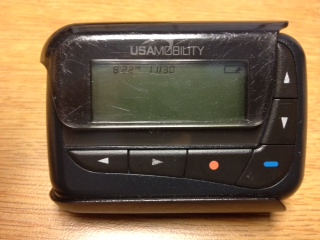
Increasingly, I find myself receiving direct calls, text messages, and de-identified images from colleages and support staff via cellphone. Really, it won't be long until I say goodbye to a permanent fixture on my belt that I have worn for years:


Good riddance!

-Wes

Rationing Health Care For Seniors

A sure-to-be controversial article appears in the Chicago Tribune this morning asking the sensitive question of 'Health care at any age, any cost?:'
"If you want to save all lives, you're in trouble," said Callahan, co-founder of The Hastings Center, a bioethics research institute in New York, and a faculty member at Harvard Medical School, in an interview. "And if you want to save all lives at any cost, you're really in trouble."

Callahan and co-author Nuland, a retired professor of surgery at Yale School of Medicine who wrote the best-selling "How We Die," were both 80 when the article was published.

"We need to stop thinking of medicine as an all-out war against death, because death always wins," said Callahan.
The article goes on the make some bold demands of doctors:
That said, McKoy believes doctors have a responsibility to spend medical resources where they do the greatest good. They must police themselves — otherwise, the government will come in and do it for them, she warns.

This is not easy, she said, describing the tremendous pressure doctors are under to perform procedures and prescribe medicine that will not help. And, she said, they often give in.

"We get selfish families, and it's often easier for doctors to pull out prescription pads," she said. "Doctors need more often to say no, to say (if a patient is dying): 'We will give you palliative care, but not give you chemotherapy. We will not give you new expensive drugs because it will not make you better.'"

Likewise, medical schools also need to train students to understand the cost-effectiveness of treatments, and to administer them based on medical research into their effectiveness — not just because they are available.
While I agree that the doctors on the ground should be making these decisions, I, too, have problems with a central regulator imposing a random age limit where all services to functional seniors stop. More importantly, this article ignores another reality for doctors who must make these difficult decisions: the nearly unlimited liability exposure if the family members disagree with all members of the health care team, including hospital ethics panels.

It's good we're having this discussion. And yes, since doctors are increasingly employed by hospital systems eager to fund their operations, pressure continues to mount on proceduralists to offer newer and advanced therapies to patients. But it's not all about the money. There really ARE wonderful therapies out there for seniors these days and, thanks to the virtually unlimited marketing of them to elders (especially via direct-to-consumer advertising) seniors will continue to demand them. Adding fuel to the procedural fire, lack of liability protections for health care facilities and doctors who opt not to treat a patient for some very good reasons will further add pressure on doctors and hospitals.

Once again, because of special interest resistance to malpractice reform, centralized government control will become the default option.

And maybe, just maybe, we need to rethink our stand on direct-to-consumer advertising of expensive medications to the populace on the Nightly News.

-Wes

Tuesday, November 29, 2011

What's the Most Important Question to Ask Before Getting Your Defibrillator?

Answer: How many have you done in the past year?

If the doctor says 37 or more, you should be in very good hands.

-Wes

Reference: Freeman JV, Wang Y, Curtis JP, Heidenreich PA, Hlatky, MA. "Physician Procedure Volume and Complications of Cardioverter-Defibrillator Implantation." Circulation 2011.

When Lipitor Goes Generic

When the world's leading cholesterol-lowering "statin" drug, Lipitor, goes generic tomorrow, doctors will bear the brunt of the conversion with little information about what the new drug will cost for their patients.

This, of course, is the plan.

Even the Wall Street Journal which has an excellent "user's guide" to making the switch from name-brand to generic Lipitor offers little help as it mentions "co-pays" rather than actual drug cost:
How much cheaper will generic Lipitor be?

Insurance copayments should drop considerably, if patients are getting Lipitor or atorvastatin on the generic tier of their health plans. Currently, Lipitor has been on a higher, branded tier for prescription drugs. Copays for branded drugs average either $29 or $49 depending on the tier, according to Kaiser Family Foundation. Copays for generics average $10.
In addition, Ranbaxy Laboratories Ltd, one of the generic manufacturers of generic Lipitor, won concessions to maintain elevated prices for 180 days from the government (a la our own Food and Drug Administration while the Federal Trade Commission stands idly by complaining how consumers are gouged with this arrangement) to assure prices stay high a bit longer.

But if we forget the insurers and copays, how much will the generic drug actually cost consumers?

No one will tell you.

That's because everyone else has to make sure they make their cut first. Pharmacy benefit managers, the leeches attached to nearly every prescription written today, have to strong-arm their position in the ever-competitive pharmaceutical profit by "pre-negotiating" prices for consumers wed to even more insurance plans with varying deductibles and co-pays.

Even Pfizer, not wanting to exclude itself from the profits inherent to such a non-transparent system is offering it's own "generic version" through Watson Pharmaceuticals. Theoretically it would be good for the public to have multiple generic manufacturers competing for generic Liptor's market, driving prices down. However, this natural self-regulating market function cannot occur to the benefit of consumers due to the blocking of actual drug price comparison.

Insisting on tranparent retail pricing of the medication's pre-insurance costs would greatly facilitate consumer choice of statin in the doctor's office. Someday, one could imagine a Consumer Reports spreadsheet in the same way they rate appliances and automobiles.

But then again, it seems we can't do that because it would serve the function of weeding out our hidden pharmaceutical middlemen.

-Wes

Monday, November 28, 2011

When a HIPAA Security Breech Occurs

It wasn't the fact that pop-star Lindsey Lohan's father, Michael Lohan, was hospitalized that caught my eye, nor was it the splashy headline: Michael Lohan Struggling to Speak, Breathe. What caught my eye was the picture that accompanies the article that reportedly shows Mr. Lohan asleep in his hospital bed.

Is this picture of a man who is "short of breath" authentic? Since there is no oxygen tubing and no pulse oximeter applied to the pictured patient's finger, we are left to wonder.

But what if the picture IS authentic? What will happen as a result?

Will this photograph be ignored? For hospital administration and government regulators, this would pose an enormous problem.

If not ignored, will the perpetrators be brought to justice? What financial "lesson" will be levied against them?

It is frightening to consider how an investigation of such an obvious lapse in patient privacy might be conducted thanks to the implications to health care facilities imposed by HIPAA. Will all the nurses on the unit be placed on administrative leave until someone squeals? Or maybe the cleaning staff? Maybe the family themselves? Perhaps the whole hospital will have to attend HIPAA refresher courses. Perhaps the ward should be closed until the problem identified. And what about the hospital administration who have permitted such an egregious lapse in governmental policy? What fines will be levied against them as a result? Will hospital costs for future patients be adversely affected as a result of these fines?

What is clear is that the ability to maintain patient privacy is quickly becoming impossible to manage, thanks to the explosion of hand-held cell phones and miniature cameras, not to mention the requirement for electronic medical records for those receiving government-funded health care.

Real patient privacy remains a local challenge, not a universal, governmental one. Sadly, in our attempt to provide global governmental privacy protections, we forgot to protect those that are most affected when breeches occur: the innocent workers and patients themselves.

-Wes

Tuesday, November 22, 2011

Sunday, November 20, 2011

Something to Be Thankful For

I was sent an e-mail from Amy Tenderich of the well-respected Diabetes Mine blog asking for contributions for this Thanksgiving’s edition of Grand Rounds. I sat with this a while and really struggled to find a topic. “It would be nice to creative writing,” I thought.

So I sat and stared at the computer.

Nothing.

I sat some more.

Still nothing.

It was complete and utter writers’ block. Then I remembered a similar time many, many years ago:

"... but I don’t know what to write.”

“What is it you’re trying to say?”

“That I want to get into medical school. That I like biomedical engineering. That I like people and kids and migrating monarch butterflies and music and art and all kinds of stuff! How the heck am I supposed to write something that makes sense of all this? How does one write something that will get you into medical school, for goodness sakes! This stinks!”

“Just write. It’ll come together,” she said as she returned to the afternoon’s dishes.

After I calmed down, I took out a fresh piece of paper and wrote. I wrote mountains of disjointed sentences without a central core. A stared at the page, dissatisfied. I wrote some more. Somewhere in the back of my might hid a thought, an overarching theme that failed to materialize despite my best attempts. I kept writing and writing as if somehow, some way, I’d force it out of me. Finally, out of frustration, I brought my work back to her.

“Here’s what I’ve got so far.”

“Wonderful!”

She sat and read what I had written. Occasional smiles would appear from her lips, then a look of confusion. I knew it wasn’t great since science and math were my thing at the time, not writing. She read the entire mess, start to finish, then stared up from the page, looked upward and contemplated her next move. Her radiant eyes turned toward me and pierced my stubborn façade. “You’ve got good stuff here, but I don’t get how it makes you feel. It’s too disjointed. Don’t you mean to say…?”

And we were off. I watched a master at work. She had a remarkable knack for diction and the written word. She reveled at the chance to add a verb, an adjective, a noun that changed the ordinary into the extraordinary. She’d stop and ask, “So then what?” and I’d explain. Red arrows would link concepts and ideas; a roadmap to clarity formed before my eyes. “You need to expand on this,” she’d say. Then I would return to my thoughts, frustrated at how hard this was to complete. Would it ever make any sense? But as I sat and thought some more I realized that she was right, not so much about the topic, but about the process.

Think. Write.

Don’t think. Write.

Then write some more. Be willing to toss aside the perfect stand-alone nuggets of writing that make things too verbose and distract from your message. Keep those that clarify and sharpen it. Then process the thoughts and re-work them until the final composition develops to something larger than what you had anticipated.

Like an acceptance letter to medical school.
And before you know it, you’re not just a doctor, you’re a writer, too.

Happy Thanksgiving, Mom. (And sorry about all my typos.)

-Wes

Saturday, November 19, 2011

HIPAA, Case Reports, and the "Small Cell" Problem

It was an interesting tweet that referenced a soon-to-be-published case report from the Annals of Emergency Medicine (via @EmergencyDocs) that piqued my interest:
Thrilling case study: emergency doc cracked chest to save 42 y/o woman in cardiac tamponade after ablation therapy. http://bit.ly/umnydc
Details about the case are quite specific and the case reports heralds from a town in Minnesota. It describes, in very specific detail, the management of a patient who presented to the emergency room in shock from cardiac tamponade after a catheter ablation procedure for right ventricular outflow tract tachycardia.

Is this unique case report HIPAA compliant?

I would say, according to our current definition of HIPAA's "personal health information," such a case report is not HIPAA compliant. Nor could such a case be mentioned on a blog, for that matter, even though it presents important information for people dealing with these patients.

There is an important quality-of-care role in telling these clinical stories. In fact, HIPAA states there are just "18 little rules" that doctors are supposed to follow when they report important clinical cases. But details about cases may need to be very specific. Specific case reports can bring important specific clinical details to the attention of the medical community. For instance, if doctors had not been willing to describe several cases of pulmonary vein stenosis or two cases of esophageal perforation in a major medical journal years ago, how many more people might have been injured as a result?

But there's problem giving such details about clinical details about patient cases: "the small cell problem:"
Clinicians should be sensitive to the "small cell problem": the existence of individuals with such unique or unusual diagnoses or illnesses, that it might be possible for others (or patients and families themselves) to identify the individuals in case reports or medical text books based upon limited information, such as state or city of residence, age and diagnosis.
The "small cell" problem violates HIPAA and HIPAA means business: millions of dollars of business that gets released in press releases from the Department of Health and Human Services when they catch their prey.

But doctors should not be afraid of publishing case reports especially since there are good reasons for them clinically. Further, when doctors make good faith efforts to conceal patient's personal information in those reports, they should not be subject to threats of HIPAA's "small cell" problem. Simply put: the "small cell" problem is HIPAA's, not the doctors'. Extending the definition of personal health information as defined by HIPAA to include "any other unique identifying characteristic" about a patient's case limits doctors' ability to improve care to our patients while greatly increasing our legal culpability for that effort.

-Wes

Friday, November 18, 2011

UpToDate for EMRs

It's Friday. I sat down to work, saw this, and it made me smile:


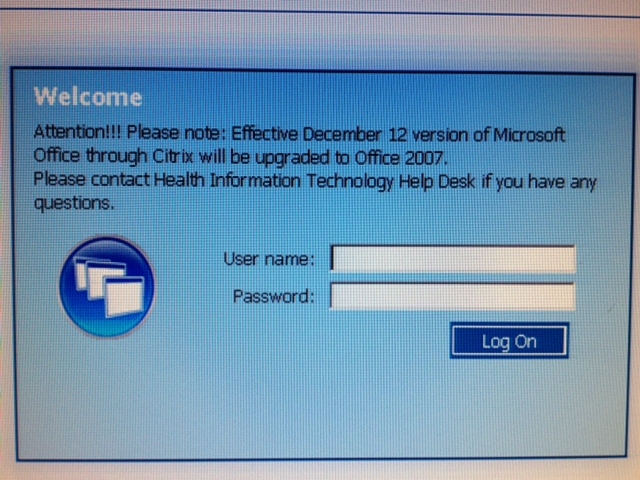
It's not easy keeping up with technology when things move so fast.

-Wes

Thursday, November 17, 2011

Doctors Passing Fake Sick Notes Get Reprimand

From the Wisconsin Journal Sentinel:
The Medical Examining Board reached stipulations with seven doctors Wednesday in which they were formally reprimanded for failing to make adequate records on the patients they saw during the protests. The stipulations also required the doctors to pay $225 to $350 each for costs and take four hours of continuing education courses within 90 days on medical record keeping.

The reprimands will stay on the doctors' records permanently and will show up in a national database of physicians, Murray said. The doctors' reprimands would be a factor in determining discipline in future cases if any of the doctors come before the board again, he said.
A mere hand slap.

Pity.

-Wes

h/t: Instapundit

Wednesday, November 16, 2011

Pacing Without Wires

From Medgadget via The Medical Quack:


EBR Systems, a start-up out of Sunnyvale California, and Cambridge Consultants, the technology design and development firm, have developed a leadless pacemaker system for patients with advanced heart failure. The Wireless Cardiac Stimulation System (WiCS) comprises two units, an implantable electrode and an external control unit. The electrode incorporates an ultrasonic, wireless receiver and delivers an electrical stimulus to the heart based on triggering signals from the external control unit.

In its current iteration the WiCS system is designed to work with conventional pacemakers/defibrillators pacing the right ventricle of patients requiring biventricular pacing. The WiCS external control unit senses the pacing stimulus delivered to the right ventricle and initiates a burst of stimulus from the electrode implanted in the left ventricle. According to the company, the wireless left ventricular pacing approach removes the need for complex surgery and the complications often associated with the coronary sinus leads used to pace the left ventricle.
Nice.

But to suggest that a left heart catheterization to place their little device in the endocardium of the left ventricle "removes the need for complex surgery" is a stretch. Embolic complications, valvular complications and the potential for stroke complications (with the need for at least some anticoagulation) will quickly temper their enthusiastic press release. And what happens when a patient needs an ultrasound of their heart or has a capsule endoscopy? Could there be significant electromagnetic interference?

But we should not rain on these companies' parade too quickly, even if they are a bit late to the party. The implications of this technology as we move forward with more sophisticated pacing therapies are profound. One only needs to consider complex congenital heart cases with anomalous venous return, epicardial delivery of this technology, or its capability to paired with drug delivery systems in the future to see where things might go with such a novel means of pacing.

-Wes

Tuesday, November 15, 2011

Welcome to My Office

It sure beats the heck out of a desk, chair and desk phone:


At the start of each case, I still have to pinch myself when I contemplate the wonder of it all.

-Wes

Monday, November 14, 2011

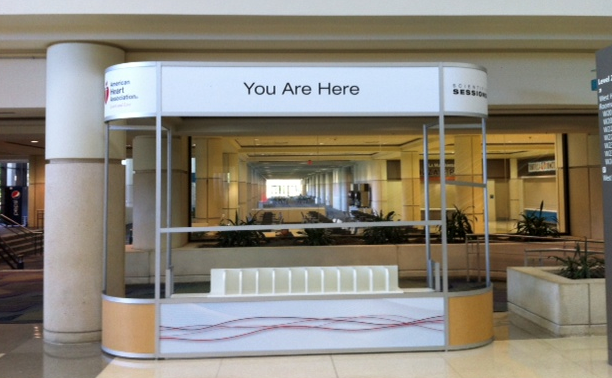
From the AHA: You Are Here

Thanks to Larry Husten over at Cardiobrief for posting this great picture from the American Heart Association meeting going on now in Orlando, FL. It's a helpful sign if there ever was one:


With all the mobile devices and internet connectivity available to doctors attending these meetings now, perhaps a more relevant sign should have read: "Be Here Now."

-Wes

Sunday, November 13, 2011

When Screening Teenage Athletes for Sudden Cardiac Arrest Risk, History Matters

Before reaching for tests like EKGs to screen teen athletes, we should first ask ourselves if we've taken a careful history:
The new study consisted of Madsen and his fellow researchers sending out surveys to every pediatrician and family practice doctor in Washington State. They received a good response–surveys were returned by 72 percent of pediatricians and 56 percent of family practitioners.

The results were disheartening:

  • 28 percent of doctors surveyed failed to always ask if a teen experienced chest pain during exercise.
  • 22 percent of doctors surveyed failed to always ask if the teen ever fainted without a known cause or explanation.
  • 26 percent of doctors surveyed failed to always ask about early deaths in their family history.
  • 67 percent failed to always ask about heart disease in their family history.
Dr. Gaurav Arora, associate director of electrophysiology at the Children’s Hospital of Pittsburgh and an assistant professor of pediatrics at the University of Pittsburgh, was surprised to see the number of physicians in the new study who said they didn’t ask every teen athlete about fainting or chest pain. He said, “Those are red flags in young athletes.”
-Wes

Friday, November 11, 2011

From the Archives: Twice Shocked

I still think this case was cool, so I'll link to it once again.

Have a nice weekend.

-Wes

Miss Manners Goes to the ACCF

Dear Ms. Manners:

I am a fellow of the American College of Cardiology and I just learned that the American College of Cardiology Foundation (ACCF), the same foundation that publishes most of our patient care and treatment guidelines, is providing training to medical device and pharmaceutical personnel so our interactions with them become “effective and efficient.”

How nice.

Is this how Multaq (er, dronedarone) got such an early mention in our latest atrial fibrillation treatment guidelines? I've always wondered, especially after we later learned that there might be a few unsavory issues with this drug.

Still, I have no doubt the need is there. Glad to see that my annual membership fees are being put to such good use. After all, up until now, it really HAS been hard interacting with industry reps when they brought lunch. Don’t get me wrong, it wasn’t their professional demeanor or their knowledge of their device or drug. No, that wasn’t it. It was just so hard to explain to them why I had to dine and dash.

Now, thanks to you, I won't have to. I'll just spend more of my limited time getting down with industry personnel so we can share. Imagine: having smart people we can talk to about our latest, coolest case so they can record how much money they spend on our get-togethers. That's efficiency exemplified.

I'm especially impressed that the ACCF training of industry personnel will occur every two years. I was worried about quality of our industry reps' knowledge base, so I'm glad you've made this effort a full-time job. (By the way, I had NO IDEA the ACCF now has a vivarium for all this training - when did you guys spring for that?) Impressive. Rest assured that I'll be SURE to check for your ACCF Training Logo on their business cards before I help myself to a gyro.

But do me a favor, will you? Would you mind passing on some of those fees you receive for that industry training to those of us helping ourselves to lunch? After all, those membership fees we're paying to the ACC are getting a bit stiff. (*wink wink*)

Just kidding.

I'm sure you're really collecting those fees to help lower the cost of my patients' medical devices and drugs in an effort to support their "positive health outcomes." After all, it's this cost thing that's reaking havoc on our health care system, right? (I wish I had thought of such a clever way to address this problem).

Ms. Manners?

Ms. Manners?

Right?

-Wes

h/t: Larry Husten over at Cardiobrief.

Thursday, November 10, 2011

Planning

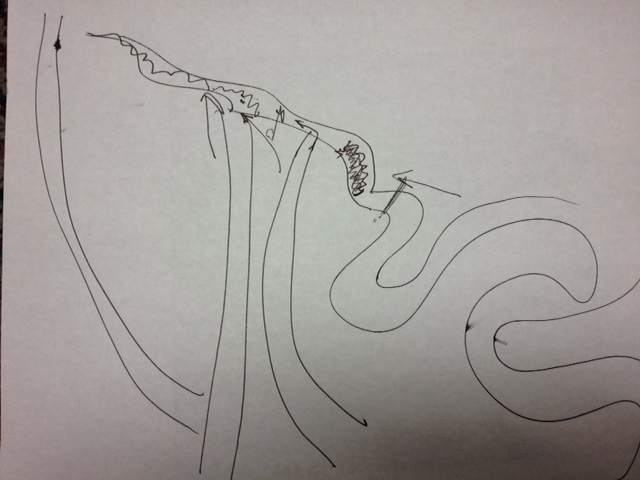
Years of college, medical school, residency, cardiology fellowship, and interventional fellowship training all comes down to this:

Click image to enlarge
Heh.

-Wes

Wednesday, November 09, 2011

Just Five Little Minutes

"I estimate these changes to your charting work flow will take only five minutes."

Five minutes is fine if it happens for only one patient. But when it is multiplied by as many as forty patients in a day, the multiples get impressive. Five minutes x forty patients = 200 minutes (more than 1.5 hours a day).

Minor five-minute changes to administrative charting requirements aren't so minor, especially when you add more time for quality assurance reporting or pay-for-performance initiatives. Suddenly huge swaths of time from a doctor's opportunity to take care of their patients. We need more care time and less data entry time. Doctors must insist that we not become data entry clerks.

Increasingly, I see the data entry burdens of regulatory health care documentation requirements falling on doctors. On first blush, this seems logical because only doctors (or very capable, highly trained surrogates) understand the nuances required to make potentially life-altering adjustments to the electronic medical record. But when new administrative documentation requirements are added to doctors and other care providers, it compromises our time with patients where we explain the mechanisms of their disease and its management nuances. Discussions of medications, therapies, and required follow-up get get short shrift to mandated governmental documentation burdens. If we want to maintain patient volumes to improve access for new patients, we must get creative. After all, time is not expandable.

And there could be a better way.

I believe we need to get patients more involved in their own care before they see their doctor. Imagine a patient entering proposed changes to their list of health problems, surgeries performed, medications and doses being taken and allergies before they are seen on their cell phone or local waiting-room computer terminal or iPad. These proposed changes could then be reviewed, validated, a approved (or not) by their doctor leaving the majority of the patient visit for what matters: actual patient care.

Then maybe, just maybe, I could salvage four of those five precious minutes for both of us.

-Wes

Monday, November 07, 2011

AMA Medical News: Social Media's Public Health Implications and Limitations

From a mention in today's AMA Medical News:
Many health professionals do not see social media-based research replacing more traditional study methods, because not everyone uses the Internet or social networking. But they expect data gathered from social media to play an increasingly larger role in addressing public health issues.

"Social media has huge potential for public health," Dr. Fisher said. "I don't think that people have even begun to realize that potential yet."
-Wes

Saturday, November 05, 2011

Smile! You're on Candid Camera!

They sat anxiously waiting for their loved one to enter the holding area after the procedure, one nervously clutching her purse, another today's paper, and a third, her cellphone. The air was tense as they awaited the news of how the procedure went. All the preparation, the concern, and the questioning come down to this moment when they learn if they made the right decision to go forward with the procedure. Will there be elation or despair?

So of course they want to videotape the moment.

The door opened, there was their loved one, looking no worse for wear, followed by the doctor. As he came forth to tell them the good news, the cellphone video recorder captured the discussion, the elation, the "thank you's," and the specifics about the case. It was done discretely and not noticed until the end of the conversation with the group. The doctor was caught completely off-guard.

In this case, the news was happy. All went well. But what should happen if the news weren't so good or even devastating?

I wonder.

We have entered an era where instantly-available photographs and video loops are becoming a way of life for many. YouTube, Facebook, and Twitter are everyday household words. More and more people own cellphones capable of uploading photographs and video content in seconds to the internet. And people bring these marvels of technology into hospitals and clinics every day. What this will mean to patient privacy, HIPAA compliance, and the sanctity of the doctor-patient relationship remains to be seen. But one thing's for certain, surveillance cameras are showing up everywhere and not likely to go away.

-Wes

Friday, November 04, 2011

Forced Productivity: Our New Sweatshop

We have to ask ourselves how are we going to take care of 32 million more patients in 2014 with a limited number of physicians to care for them. Better yet, how are we going to do this and save money doing it.

Thanks to our central regulators, they have already figured out how to do this: forced productivity. The term itself brings to mind images of outer Siberia or Chinese sweat shops. Lower costs and expect the workers to do more to make the same income. Perhaps you haven't heard this term in our President's health care reform speeches.

But it's out there as a lynchpin in the brave New World of medicine. I heard this term listening to a recent lecture by banker Steven Lipstein, the new Vice Chair of the Board of the Patient Centered Outcomes Research Institute (PCORI) established under the Patient Protection and Affordable Care Act during a recent lecture at our institution. He is also President and CEO of BJC HealthCare in St. Louis, MO who also serves as Chairman of the Board of Directors of the St. Louis Federal Reserve Bank.

But as I listened to Mr. Lipstein I wondered, how and when will forced productivity end?

How much forced productivity can doctors tolerate before they snap. How many hours can they endure when no workday or geographic restrictions are in place for them while residents and medical students saunter home after an eight-hour work day? How much forced productivity can they endure to repay their huge medical school loans?

Most importantly, what debts are incurred by "forced productivity gains" to patients? If patients think their doctors are busy now as they stuggle to get an appointment or feel rushed when the do get an appointment, just wait.

Mr. Lipstein understood the principles of the new health care climate well when he explained how we got to where we are today. What he doesn't understand at all, however, is the unintended consequences that are likely to occur as a result of these changes.

You see, doctors don't keep bankers' hours.

-Wes

Thursday, November 03, 2011

Hybrid Operating Rooms

Yesterday, the FDA approved Edward Lifescience's percutaneous transvalvular aortic valve replacement catheter for human use. Despite this, it appears unlikely that implants of these valves will progress in short order due to concerns of demand for the expensive technology in the era of increased scrutiny of device utilization by payers, especially CMS. Which constraints will be placed on cardiologists and which institutions will be approved for this technology are issues still being considered. At the current rate, it appears unlikely at this time that this technology will be deployed before the end of the year.

One new trend in cardiovascular circles (and a trend that is very politically-correct in our new "Accountable Care Organization" era of medicine that also plays well with health care marketing teams) has been the installation of new, very expensive 'hybrid' catheterization laboratory/operating rooms capable of transitioning from a conventional operating room to a catheterization laboratory (or back again) in larger hospitals. It is clear that patient selection for percutaneous valve procedures will likely require collaboration between cardiothoracic surgeons and cardiologists and some valvular procedures may require both specialists in complicated cases.

Here's a time-lapse video of the conversion of a hybrid operating room from the University of California, San Diego where a patient first had a DaVinci robot-assisted single-vessel off-pump coronary bypass operation followed by placement of an intracoronary stent in another coronary artery by cardiologists. (Not sure why it was done this way, but I don't know specifics about the case.)


While staged DaVinci robot procedures with angioplasty probably won't be common, these fancy "hybrid" operating rooms (OR's) are much more likely to be used for percutaneous valve implantations or even atrial fibrillation ablations using simultaenous epicardial and endocardial approaches.

Fun times.

-Wes

Wednesday, November 02, 2011

Alan Simpson: On Starting to Cut Health Care Costs

Former Senator Alan Simpson blasts John Kerry at the "Super Committee" (aka, the Joint Deficit Reduction Committe) hearing yesterday regarding health care costs:
"We just knew that whatever you call it, if you want to use the negatives and call it Obamacare or any kind of care you want to, it won't work. It can't work because all you have to do is use common sense. You have this emplosion of people, you have diabetes, you have one person in America that weighs more than the other two, you got guys who choose tobacco, choose booze, choose to use designer drugs, and all of them will be taken care of. You've got pre-existing conditions in three year-olds - what happens throught their sixty, or fifty, years of life? All you have to do is forget the charts and know that if you torture statistics long enough they will eventually confess and know that this country cannot exist on any kind of situation where a guy who could buy this buidling gets a $150,000 heart operation and doesn't even get a bill. Now that's nuts and that's where we are in America. No affluence testing. You gotta raise co-pays, you gotta knock down providers, you gotta deal with physicians, you gotta have hospitals keep one set of books instead of two - that will be a start."
Here's the video:


Be sure to see former Clinton White House chief of staff Erskine Bowles add his two cents, too.

You have to wonder: is anybody listening?

-Wes

h/t: Kaiser Health News

Tuesday, November 01, 2011

Meaningful Ruse Rap

At first I thought this video on "meaningful use" of the electronic medical record (EMR) was clever. But as I watched it, I realized it was too clever and too professionally produced. Then, what was first supposed to be funny, actually exposes the ridiculous complexity of the "meaningful use" requirements for Electronic Medical Records. (Independent doctors, take note!)

But, hey, it's your tax dollars at work, so for your entertainment, I bring you our government's way of explaining what it will take to acquire the $44,000 promised to doctors for installing an EMR through rap:


-Wes

h/t: My office manager (yes, they've all seen it).

Can I Watch?

It's one of the more common questions I hear from family members before I take their loved one into a procedure: "Can I watch?"

For me, the answer is simple: no.

Fortunately, when I explain my rationale, most people come to understand why this isn't such a good idea:
  • First, the doctor performing the procedure has enough to think about without having to be a tour guide to a family member. Even something as simple as a pacemaker battery change can go very wrong if an operator is distracted long enough to accidentally reverse the atrial and ventricular leads when they are reattached to the new pacemaker pulse generator.
  • Second, if something should occur that is unexpected during a procedure, a doctor needs to focus on the problem at hand without having to deal with the physical and psychological well-being of a family member also.
  • Third, the operating room has all kinds of unusual sights, sounds, and (often unexpectedly) smells to which many people are not accustomed. If a family member becomes lightheaded, nauseous, or hits the deck as a result of these powerful stimuli, it can make for a very long (and embarassing) day indeed.
-Wes

Warning: Self-Removal of a Pacemaker Can Be Deadly

A bizarre story from the Chicago Tribune today:
A 47-year-old man living in a group home in Chicago's Uptown neighborhood died Monday night after he tried to remove his heart pacemaker from his chest, officials said.

The man, who lived in the 4700 block of North Winthrop Avenue, was pronounced dead at 11:33 p.m. at Advocate Illinois Masonic Hospital, according to the Cook County medical examiner's office.

Chicago Fire Department paramedics were called after the man told a worker in the home that he was experiencing chest pains and asked them to call an ambulance.

The man returned to his room, where he remained until paramedics arrived, police said. When they did, he complained to them about chest pains and was taken to the ambulance where he fell unconscious, police said.

As paramedics were trying to revive him, they discovered a puncture wound on the upper left side of his chest, police said. At some point, police were called when it became apparent that the man had been stabbed, police said.

After the man was taken to the hospital, a doctor told police that the man had apparently tried to remove his pacemaker himself, police said. It was not known what the man used in that attempt.
Pacemakers and their leads become densely encapsulated with fibrous tissue within weeks of their implant. As such, their removal is not as easy as it may seem to the casual observer. I know this sounds obvious to most, but if you're having chest pains, please seek medical advice and do NOT attempt to remove your permanent pacemaker.

-Wes

h/t: Ves Dimov, MD via Twitter.

Monday, October 31, 2011

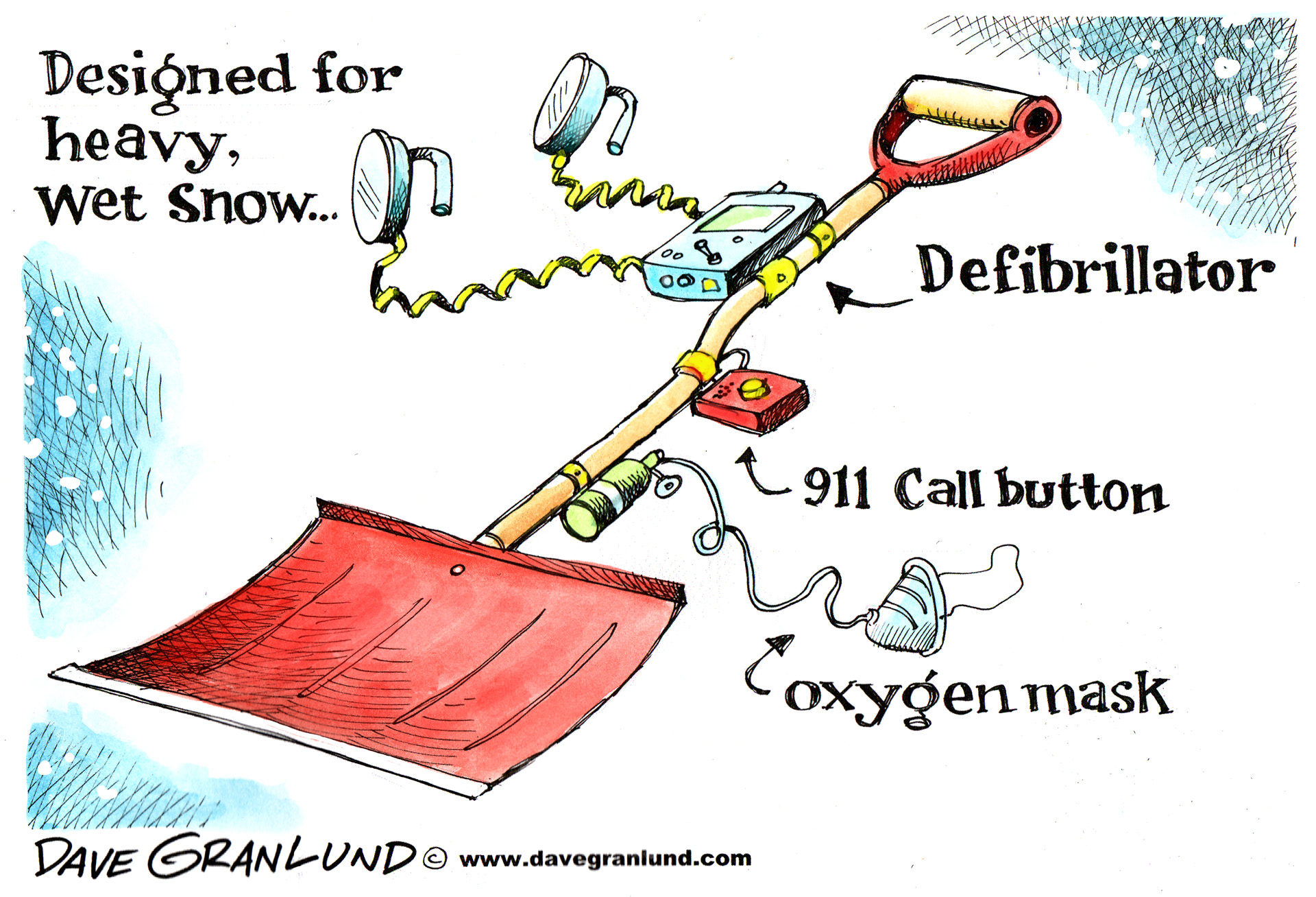
Medicine's New Snow Shovel

Click image to enlarge
-Wes

Image credit: Single-website personal license purchased for this blog from PoliticalCartoons.com

Happy Halloween


Click image to enlarge
-Wes

The Siren Song of Continuous Improvement

This is what medicine has become in the eyes of our regulators:

Federal health officials are seeking physicians and other health professionals for a program to develop leaders in health care innovation.

The Centers for Medicare & Medicaid Services on Oct. 17 announced the Innovation Advisors Program, which will accept up to 200 people in its first year. Advisers will develop projects and processes in their home regions that achieve the goals of bettering population health, improving health care delivery and lowering costs through continuous improvement. They will focus on Medicare, Medicaid and the Children's Health Insurance Program.
Continuous. Never-ending. Infinite.

As if money had no limits.

More. More. More.

More doctors-turned-administrators. More “projects” and more “processes” like Pay for Performance and Quality Measures. More keyboard entry time.

But note that this is continuous improvement but is limited to government programs: a fact that contradicts the word "continuous."

The implications to policy makers who use such trendy buzz phrases like “continuous improvement” is that doctors and current public policy workers aren’t already working to constantly improve our patients’ health. Instead, we are messy, doing expensive things that involve too much time and too much money.

So new programs must be developed and their processes measured to see if they work.

Isn’t this the point of "continuous improvement?"

So the government's answer for continuous improvement is to acquire 200 more Anointed Ones woven from the same cloth to help us all "improve." (Well, at least for the first year. No doubt more will be needed in the future. “Continuous,” remember?)

But there's another, better way.

It's a way that will save (literally) billions upon billions of dollars ffor our health care system and taxpayers of this great country. Best of all, it's simple, effective, and guaranteed to work:

Stop continuously improving projects and processes that don’t exist.

-Wes

Sunday, October 30, 2011

For a Tear

Lovely dentist, so young, with fever.

Just a sore, you said, but alas, much more.

A swollen blitzkrieg over lip, cheek, eyes, then scalp,

Morning smile turned noontime nightmare,

Third nadir’s unfair haunting.

So hurry with tubes, drips, then a cycling whir,

In hopes a returning tear can anoint your brow.

Thursday, October 27, 2011

Medicine's Holiday Crunch

Like Christmas season advertising, the holiday crunch for procedural medicine is coming earlier every year.

Perhaps that's why the posting on this blog as suffered: we're busier than ever.

Why is this?

I suspect it's because of a variety of forces that are coming together to create the great procedural "perfect storm" this time of year.

Perhaps the most important contributor to the holiday rush is the patients themselves. Patients are feeling the effects of their higher health insurance costs like never before. Higher co-pays and annual deductible amounts are making them frantic to get their high-ticket procedures performed before year's end to avoid paying an even higher deductible amount next year.

Additionally, staff want to take vacation this time of year. This puts constraints on specialist's lab time availability. It's a supply-side bottleneck. To relieve the crunch, the same staff are finding themselves working longer and longer days already.

No doubt the government regulators and hospital administrators are enjoying the fruits of their regulatory victory. Seriously, how could it get better? More cases, same staff, lots of new "efficiencies."

Bada bing, bada boom!

But there's a catch. Maybe not now, but sometime soon. We've seen inklings of it - nothing big in the grand scheme of things, mind you, but inklings nonetheless: workers are getting frayed. Since hospitals work to keep overhead costs low in anticipation of still more cuts to government payments, hiring has slowed. Burnout of existing staff is a real concern. Not just with doctors, but ancillary staff, too.

So far, our new health care system has been engineered to take care of lots and lots of patients. To this end, they are succeeding. But as this holiday crunch continues this year and beyond, the pop-off valve to our new health care delivery system pressure-cooker remains the doctors, nurses, and other ancillary personnel workers who work tirelessly to Feed the Beast. Add to this the fact that our providers are increasingly regulated into forced behaviors without concern to the additional time that these regulations require. There seems to be more time spent on regulation requirements ("performance measures", and the like) in exchange for less time for patients and less time for home. As a result, all our direct providers of health care (nurses, doctors and ancillary staff) remain our new health care system's weakest and most vulnerable link.

And what happens when these worn out, burnt out, overbooked workers make an error as overstressed structures do?

We get more regulations.

-Wes

Tuesday, October 25, 2011

When Siri is Asked for Medical Advice

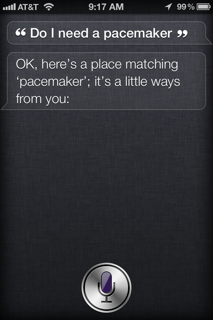
The implications of artificial intelligence to health care delivery and marketplace referrals have just changed with the introduction of Apple's new iPhone 4S and it's new voice recognition software, Siri. Here's what I got when I asked my phone if I need a pacemaker:


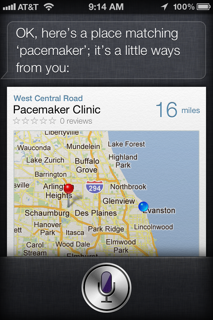
... and here's where "she" sent me to get the answer:


Nice. Except that's not OUR pacemaker clinic.

Uh, oh. Better call our marketing department and have them change our clinic's web-searchable name.

-Wes

Monday, October 24, 2011

Big-Time Medical Blogging

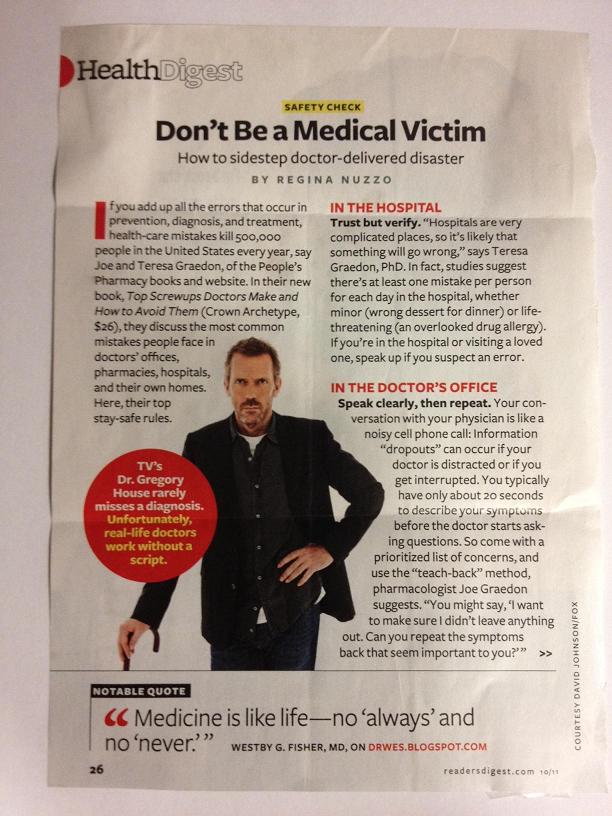
First, there was O Magazine, now Reader's Digest (next to Hugh Laurie, no less):


Yes, Virginia, it's medical blogging at its best!

(Thanks to my patient who clipped this for me!)

:)

-Wes

Nurse's Union Sets New Definition of 'First Aid'

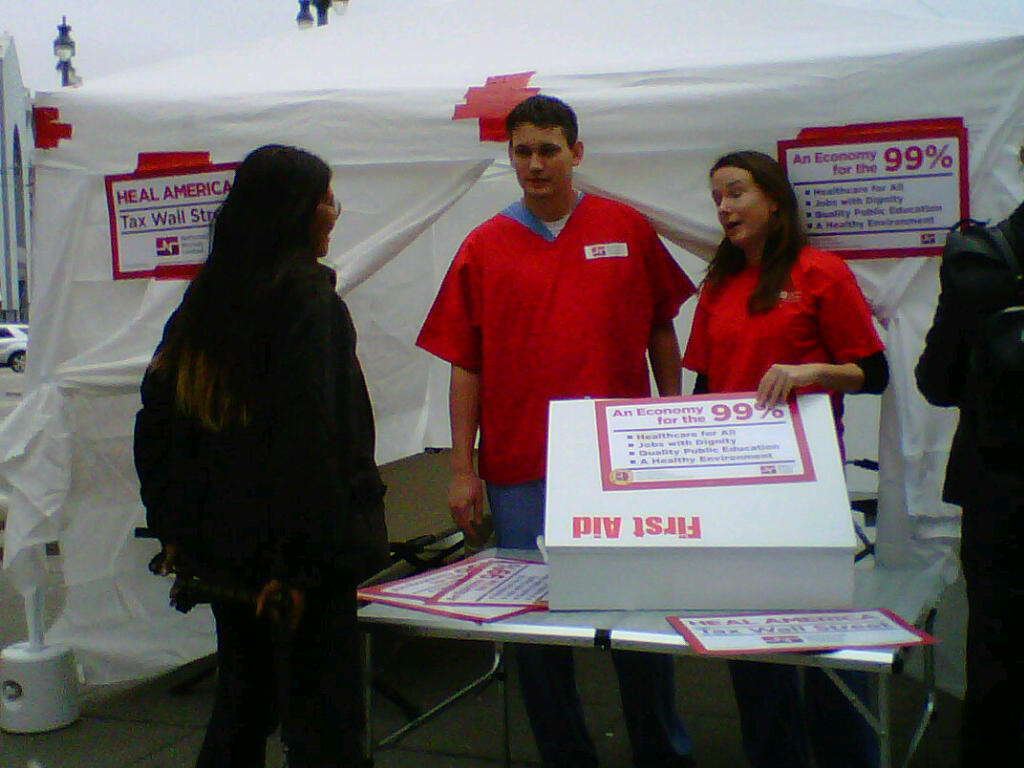
The Occupy Wall Street protests continued in Chicago and the nurses unions are dispensing a new form of "first aid:"
Outraged by the arrest of two nurses and a union organizer volunteering at the Occupy Chicago protest over the weekend, National Nurses United is planning a protest at Mayor Rahm Emanuel's office Monday.

The group, the nation's largest union of registered nurses, is calling on its membership in Chicago to picket City Hall on Monday morning to demand that misdemeanor trespassing charges against the nurses and all of the protesters be dropped.

The two nurses arrested were among a larger group marching with Occupy Chicago protesters and later set up a tent to provide first aid.

"It was the wrong move," RoseAnn DeMoro, the group's executive director, said Sunday. "We were there to make sure if the occupiers get harmed, they have first aid."
But pictures from the event in Chicago and elsewhere where the group was protesting suggests another more subliminal story line. In this picture the Twitter stream from the National Nurses United union, the police appeared restrained and tolerant of the protestors:


So what kind of "first aid" was being rendered in their tent?

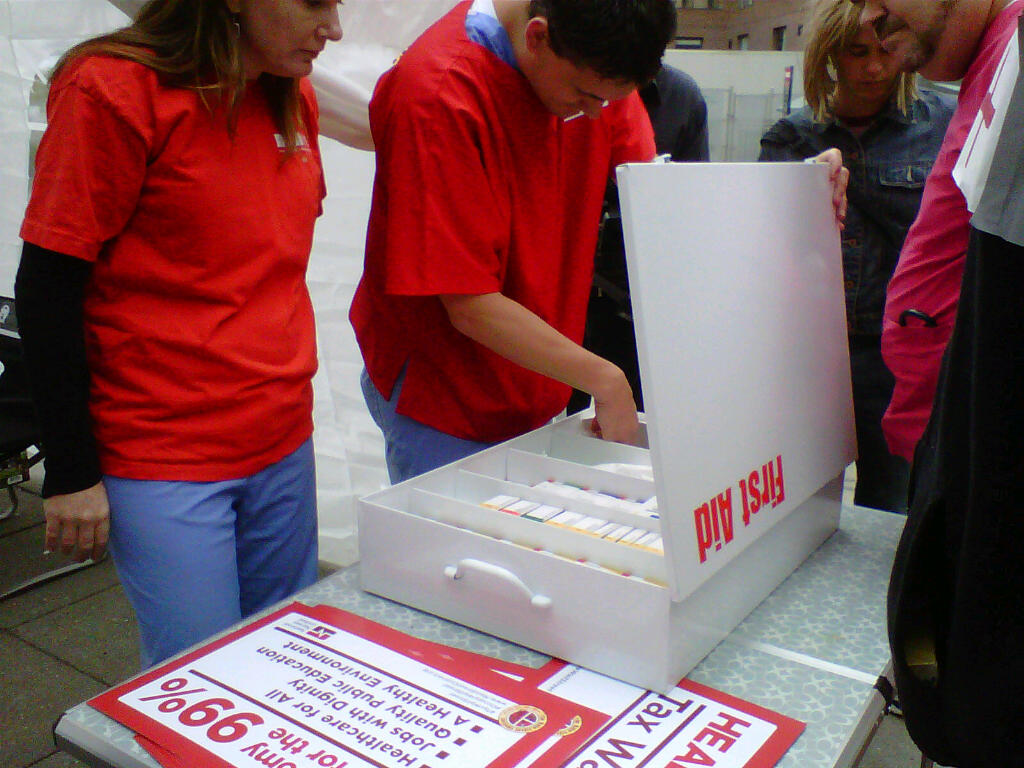
Here are a few pictures from the same group's "first aid" tent in San Francisco taken from the same Twitter feed:


Hmmm. Were there donuts were in those boxes?

Shucks. Maybe not:


Well, no donuts, but there sure was plenty of splashy red nurses union propaganda available for sympathetic protestors to consume as "first aid."

-Wes

Friday, October 21, 2011

Changing Perspectives

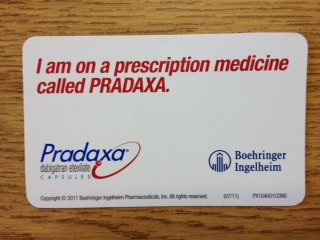
Earlier in my medical career, I would have thought this idea was a good one: a little med-alert card a patient could carry in their wallet that would tell people they're on an anticoagulant:


But in the old days, I didn't give much of a thought as to what was printed on the other side of the card:


Now I have to think about if I'm giving away branded marketing material of "value." How much are these cards worth? Will this be considered a "gift" from the drug industry? Will my patients be unnecessarily influenced by industry or might their lives be saved by having such a card?

Worse, I have to wonder if the use of the use of such a card would expose myself to additional liability risks if I did not offer similar cards to my patients on other anticoagulants like warfarin, aspirin, or clopidogrel.

Seems strange, really, because when I first started medicine I never used to think about these things - I just wanted to help my patients.

Now, everything's changed.

-Wes

Food Rating System Smackdown

The Institute of Medicine has just released it's recommendation that all foods be rated with an 'energy star' system: three stars = good, zero stars = bad:
The Energy Star system is a model because it’s simple and easy to use, and also because it’s gained traction with industry, which now develops products with the rating in mind, committee members said.
Except that this rating system hasn't gained traction with industry:
But the Grocery Manufacturers Association and Food Marketing Institute announced their own front-of-the-pack system, called Facts Up Front, in January. It gives information on calories, saturated fat, sodium and added sugars but doesn’t rate foods according to those components.

In a statement today, the GMA said it has “concerns about the untested, interpretive approach suggested by the IOM committee” and that “consumers have said repeatedly that they want to make their own judgments, rather than have government tell them what they should and should not eat.” The FMI said in an emailed statement that it believes the Facts Up Front program “utilizes the guiding principles recommended by IOM.”
This is a smackdown, ladies and gentlemen.

If this is what the wellness ivory towers are coming up with for America, imagine what other brilliant initiatives we can brace ourselves for as millions of dollars are shifted from grandma's pacemaker to expensive wellness campaigns such as this one.

But in small-town America where the corporate suits have herded, overregulated, and often micromanaged America's workers, ordering the "0 energy-star" food stuffs might be exactly the point:
Hey Mildred, can I have one of those '0-star' cherry pies for my breakfast? And while you're at it, grab a pack of Marlboro Lights, will ya?
Once again, Joe Worker fails to appreciate that the gurus at the institute and food industry are only trying to save him from himself.

When will our regulators get this? Studies have already suggested the futility of these attempts.

But I guess to a carpenter, everything looks like a nail.

-Wes

Tuesday, October 18, 2011

A Shout-Out to Street Anatomy

One of the more interesting blogs to follow is Street Anatomy which "obsessively covers the use of human anatomy in medicine, art, and design."

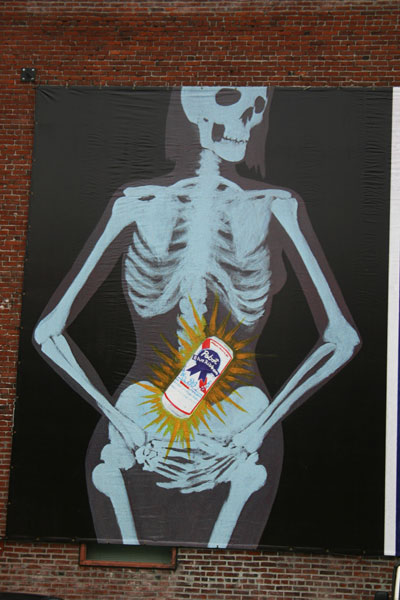
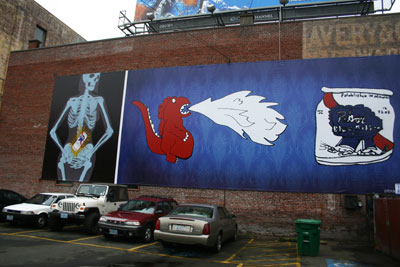
On a recent trip to Portland, Oregon to attend a wedding, I noticed a bit of street anatomy there and immediately thought of their blog:


The above image was part of a much larger mural:


(Sadly, I was unable to find much about the mural but will leave it to my readers to think of a clever title.)

Shortly thereafter we walked over to the Saturday Market where tons venders market their goods by the riverfront. I stumbled on this piece by Jerry Grose, a retired bank chief operating officer who uses clay as his medium:

Click image to enlarge

The mosaic on the clay was created by applying strands of horse hair to the hot clay as it cooled. (No, those are not cracks). Nice stuff and not too expensive. I don't think Mr. Grose has a website, though, so you'll have to visit Portland's Saturday Market and tell him I sent you.

It's amazing what medical stuff you can find on the street if you just look for it. Thanks, Street Anatomy.

-Wes

Bucking the Established

"Out with the old, in with the new!"

Who's your doctor? Do you have one?

If you have one, you aren't that interesting to them any longer because you're "established." This is not the fault of your doctor, but because of government rules for paying doctors: "new patient" visits pay better than "established patient" visits. "New patients" have a much better chance of needing new procedures, so they are even more special. Add to that the fact that more and more patients are going to need to become part of the "system" soon, and "new patients" quickly achieve the health care value trifecta.

Sorry. Those are the rules.

The higher payments made by insurers and government agencies for new patients was meant to offset the longer amount of time and cognitive challenges of dealing with a new patient that enters the doctors office. There is no question that there is more work to do when a new patient enters a medical facility: entering demographic data on a computer, actually taking a set of vital signs, performing a careful history and physical. But thanks to the explosion of ancillary health care assistants, imaging studies, the availability of the internet, and a constant push to do more in less time, doctors work differently today than they once did. Much of the data gathering is accomplished before the patient enters the office, imaging studies and baseline testing often occurs before a patient is even seen (remember those tests "required" for "quality" care?). Furthermore, because limitations for the frequency of testing has been imposed by government regulators, health care systems leap at the opportunity to "direct" doctors to order tests the moment the test might be needed. As such, "new patients" become particularly valuable to health care systems compared to "established" ones.

But are established patients really that tarnished? Should a doctor's time with them be valued any less than the time spent with a new patient? Is there value in that continuity of care? Or are we just creating a incentivized human funnel to our health care system that favors new patients over those with whom we might develop relationships? Is the doctor-patient relationship at risk as a result?

Absolutely.

Just as it was intended.

-Wes

Monday, October 17, 2011

Ready for Halloween


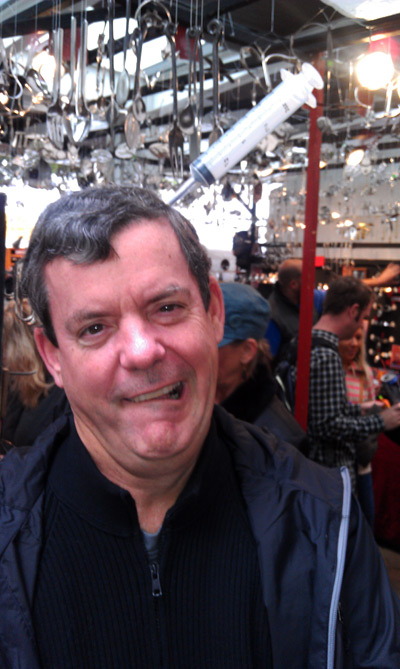
Found this gem while shopping at the Saturday Market in Portland, OR this past weekend. There should still be time for you to get yours if you act fast. While there's a few medical devices, the kitchen appliances (especially the meat cleaver) and the office supply devices (like scissors) were particularly popular. Shipping will set you back about $6.

-Wes

Addendum: I have no commercial (only fun) interest in the Spoonman Creation's operation.

Sunday, October 16, 2011

When Doctors Occupy Health Care

As Occupy Wall Street protests spread across the nation, I can’t help but wonder if the same movement could occupy health care. After all, the basic tenants of the movement involve protesting against social and economic inequality, corporate greed, and the influence of corporate money and lobbyists on government. In the "Occupy" movement, there is a feeling there’s an inside game and the game is rigged.

It would seem, then, that our new health care law, written by corporate interests and heavily influenced by lobbyists, could become a ripe target for the movement. We are beginning to see patients and doctors asking some very powerful questions: Why does the retail price of a pill have to exceed $10? Why does a single IV infusion of a chemotherapeutic agent have to cost $5000? Why must we keep building hospital facilities that exceed $1 billion commonly, often in areas of extraordinary real estate prices? Why are insurance premiums consistently growing faster than inflation? Why are health care stocks and funds considered one of the best investments right now just as people are worried about affording health care? Why is health care reform making special interests happy while many doctors and patients are increasingly unhappy?

Must doctors accept the pervasiveness and intrusiveness of the inside game in health care? If they didn't, I wonder what doctors’ placards might say?

-Wes

Wednesday, October 12, 2011

Joining the Fishbowl

It's a strange thing, this practice consolidation.

Imagine: one minute the guys over there are your competitors, then the next thing you know, they're part of your group.

Before, you were SURE you offered patients something better (at least that's what you told yourself). Now, they are us. How does one differentiate themselves any longer? Can we? Should we?

Before, you worked for your practice, them for theirs. People unhappy with them could come to you across town and vice-versa. Where will your patients have to travel for an independent second opinion now? Or will those second opinions just occur with another colleague? As it stands now, we all work for One Practice and The Man. If the new guys screw up, we all screw up. They do well, we'll do well. (At least that's what's promised, right?) And what if The Man screws up?

It can't be easy being the new kids on the block: do you trust them? Do they trust you? Were there incentives to join? Were there not? What deal was cut? There was a deal, right? An now: what will be the impact of their presence be on patient volumes? On pay?

Like formerly incompatible tropical fish, we're all being thrown in the same fishbowl together. We look and feel so pretty now, don't we? But you have to wonder: who will survive and who will die off when the fishfood is in short supply? And as the bowl gets more crowded, will there be enough oxygen to support us all?

-Wes

Tuesday, October 11, 2011

Student's Sudden Cardiac Arrest Captured on School's Security Camera

She was only 12 years old when her sudden cardiac arrest was captured on a school security camera. Thankfully, she was saved by the quick actions of a few teachers and the school's automatic external defibrillator:


It's good to remember that sudden cardiac arrest is not just limited to the elderly.

-Wes

Addendum: Oh, and I'm sure she had an implantable cardiac defibrillator installed after her event rather than just a more conventional pacemaker as mentioned in the article.

The Challenges of Gorilla Echocardiography

If you thought human echocardiography was tough, imagine what it's like to perform an echocardiogram on a gorilla while it's awake:
Using wooden sticks, Niehoff and Evans touch the bars where they want Kwashi to place his hands. The gorilla complies.

"Good boy," Evans says, slipping grapes into the gorilla's mouth.

Evans applies conductive gel to the tip of a small wand that emits high-frequency sound waves. Then, with grapes in his left hand, Evans moves the wand in his right hand toward Kwashi's chest, being careful not to place the instrument completely through the bars.

This is where an important part of Kwashi's training kicks in. The gorilla leans forward slightly until his chest rests against the bars. He holds that pose - and continues gobbling grapes - as the wand touches his chest.

A few feet away, Jenny Schaaf stands at a state-of-the-art cardiac ultrasound machine on loan to the zoo from Toshiba. The monitor shows the gorilla's beating heart, which Schaaf, technical director of the echocardiography lab at Christ Hospital, captures for later analysis.

"Tilt up a little bit," she says, directing Evans on how to position the wand. "Little bit more. That's perfect."

"Good boy!" Evans says, as Kwashi holds his pose.

A few minutes later, though, Kwashi grunts. Evans recognizes the sound as the "cough vocalization."

"That's a warning that, 'I don't like what you're doing.' He doesn't like his chest being touched."
-Wes

Sunday, October 09, 2011

New Marchers, Old School

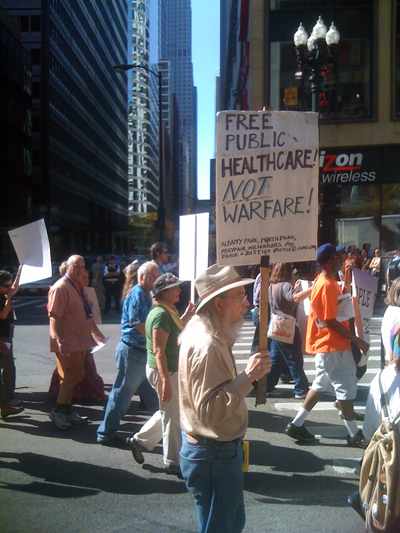
Seen at yesterday's "Occupy Chicago" march on State Street:


The entire US Defense budget for 2010: $685.1 Billion

In 2009, the United States federal, state and local governments, corporations and individuals, together spent $2.5 trillion, $8,047 per person, on health care. This amount represented 17.3% of the GDP, up from 16.2% in 2008 and health insurance costs are rising faster than wages or inflation.

Even if every sword was beat into scalpels, it wouldn't begin to pay for America's exploding health care bill. Worse, with our new health care reform law, the same old construct for health care delivery remains: burgenoning middle-man costs, pandering to special interests, and endless consumer expectations.

-Wes

Friday, October 07, 2011

The Question

There they were, little maroon flags outside three patient exam room doors. You could almost hear the game show host ask the question:
Will it be Door #1, Door #2, or Door #3?"
So I asked the medical assistant, "Who's next?" and she pointed me to Door #2.

It was a new patient with a familiar problem, one I've seen probably a thousand times before. Another day, another case. Bada bing, bada boom. Nothing to it. You would think that all cases, and all people are the same in some ways. Certainly, those managing our health care system of the future would like us to believe it's so simple: just another case of heart failure (what can go wrong?) or supraventricular tachycardia (love that one, there's NOTHING hard about that!) or maybe a few PVC's (Check). Another day, another dollar.

I suppose it would be easy to classify patients that way, after all, I'm now just a "proceduralist for the heart electrical system" in the eyes of many these days. But there is something that I always find myself looking for with each new patient I see: The Question.

The Question is the query that irreversibly connects you with the patient. It's not the details of the history of present illness or the past medical or surgical history, rather, it's The Question that makes the patient look at you in a slightly different way. It's The Question that makes them realize you're human. It's The Question that let's them know you're interested. It's The Question that is outside the rubric of medical history taking. It's The Question that keeps you coming back for more, day in and day out.

The cool thing about The Question is it's usually different for every patient. In fact, it is invariably unique to a given patient. The challenge for every doctor is finding it. And the weird thing is, you might not know you found it at first. But when someone asks you about the patient, it's invariably The Question and its answer that you recall along side their health issue. It might be a simple, "What kind of work do (did) you do?" or "What's your son doing now?" or even "Nice shirt. Where did you get that?" Nothing complicated, mind you. You hear about the job, the kids, the passions: people being people, not just an algorithm.

And the best part?

There's always (and I mean always) something new to learn.

-Wes

Wednesday, October 05, 2011

Post-call

He wondered: why does the sound of footsteps in the lineoleum floor always sound louder post-call? He'd have get a change to buy new shoes, he thought - ones with better arch support and without those slippery leather soles. Maybe this weekend. Then, like a stroke patient noting faint hyperesthesias, he felt the sticky diaphoresis beneath a shirt worn too many hours in a row.

Can't forget to pick up the dry cleaning, too.

Day in, day out for a week at a time he marched this march, the end of a long week had finally come and he took a deep breath, hoping he hadn't forgotten anything. He entered the parking lot: where was his car again? Oh, that's right - wrong level. He changed course. More footsteps, more sweat. There it was. Opening the door he realized it needed a wash and a good vacuum, too. Couldn't worry about that now, she needed him home. Guests coming. What was he supposed to pick up again? Oh, yeah, a baguette. Wine, cheese. It is nice to reenter civilization, to forget about life for a while.

After his errand he headed home. Dusk settling. The soft glow of the porch lights showered the walk with a yellowish hue that accented the tint now visible on the autumn leaves. The squirrels continued on their risky suicide missions to bury their winter snacks. A solitary cricket gave it his last before the final quieting chill set in. Why should be more aware of these things than before?

Perhaps it is the quiet, the uninterrupted time to think, the lazy yet relentless pace of common life that offsets the days of schedules, commitments, and procedures. Better: it is the welcome expectation that these sounds will be unpunctured by the startling cry from his beeper.

But before his head could sink amongst the pillows, he had to rally once more. Game-face donned, he charged up the steps with baguette in hand. Things were in full swing. Welcome! Then a toast, a nice meal, then a goodbye as eyes quickly drooped. The dishes could wait, but the dog, unhurried, was oblivious: one more body with which to attend.

Then finally, with doors locked, the lights were extinguished. As the stairs were scaled, he noted the wood floors were warmer and softer than the linoleum. Noisier, too. No matter: it was home. And at long last he took a seat and reclined to his final encounter of the day ...

... with the calm, sweet darkness of the back of his eyelids.

-Wes

Tuesday, October 04, 2011

Monday, October 03, 2011

One for the Price of Two

If you want to grow the expense of health care delivery in America very quickly, then create two government agencies to do the same job.

From the 28 September 2011 issue of the New England Journal of Medicine, we read about a small paragraph in our new health care law that created the Patient-Centered Outcomes Research Institute (PCORI). From that same article, here's the PCORI's mission:
PCORI responds to a widespread concern (eds note: emphasis mine. Really? What about the internet?) that, in many cases, patients and their health care providers, families, and caregivers do not have the information they need to make choices aligned with their desired health outcomes.

PCORI funding is set at a total of $210 million for the first 3 years and increases to approximately $350 million in 2013 and $500 million annually from 2014 through 2019. With more than $3 billion to spend between now and the end of the decade, PCORI will support many studies encompassing a broad range of study designs and outcomes that are relevant to patients, aiming to assist people in making choices that are consistent with their values, preferences, and goals.
We should recall that there is an agency in the federal government that already does this called the Agency for Health Care Research and Quality (AHRQ). The mission statement of this agency reads:
The Agency for Healthcare Research and Quality's (AHRQ) mission is to improve the quality, safety, efficiency, and effectiveness of health care for all Americans. Information from AHRQ's research helps people make more informed decisions and improve the quality of health care services. AHRQ was formerly known as the Agency for Health Care Policy and Research.

(From another page on the same website:

AHRQ Agency Staff: Approximately 300.
Fiscal year 2010 Budget: $372 million.
Fiscal year 2011 Budget Request: $611 million
Research: Approximately 80 percent of AHRQ's budget is invested in grants and contracts focused on improving health care.
Ahem. Could someone please tell me why there are two agencies doing the same thing and how on earth they're different?

Wouldn't cutting one of them be a good way to save about $500 million per year for America's taxpayers?

-Wes

Sunday, October 02, 2011

The Vagaries of Atrial Fibrillation

I am always amazed at the different ways atrial fibrillation can present: sometimes with rapid heart rates, other times slow; sometimes it's continuous, other times intermittent; sometimes it occurs without symptoms, other times it occurs with major symptoms like palpitations, stroke, or a peripheral embolus.

Atrial fibrillation is a strange, troubling, and often difficult disease to manage.

And so, when a patient with known persistent atrial fibrillation with rapid ventricular rates presents with a funny sense of lightheadedness with exercise once a week or so, you tend to think you know what you're going to find: periods of super-fast heart rate associated with lightheadedness.

At least until you check the patient's heart rhythm with a recording device. Now I'm beginning to think anything's possible.

Here's why.

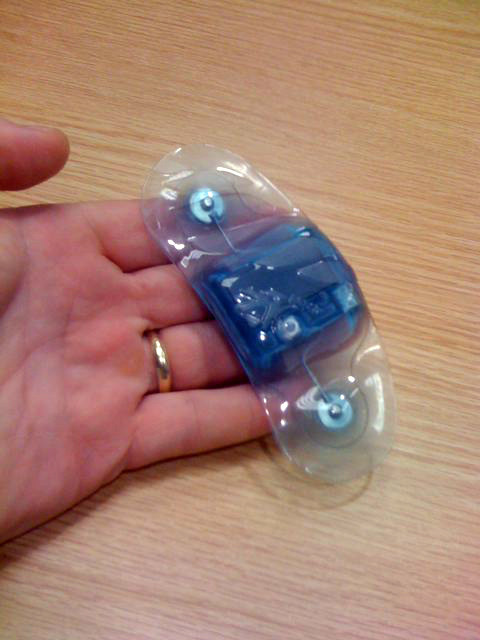
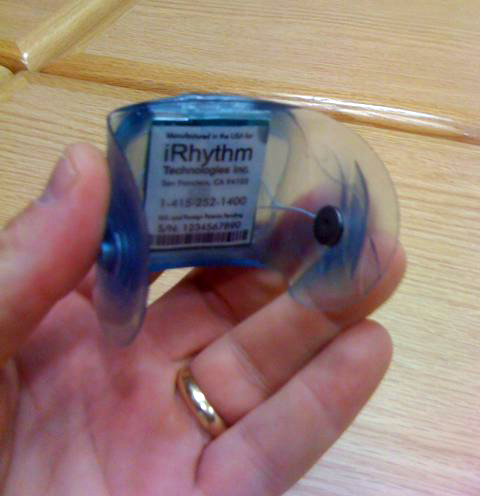
Increasingly, I have been reaching for a newer form of heart monitor that combines continuous monitoring with patient feedback but lasts much longer than our older 24-hour Holter monitors. It is compact, has no dangling wires, and gives a continous single-lead EKG tracing for up to 14 days. It has a button that the patient can press to identify periods when symptoms are occuring. Best of all, it's just a little flexible plastic patch that is applied to the surface of the skin. In that patch is a processor that records the surface EKG (even while in the shower) for the full 14 days. (Exercise has to be avoided to avoid sweat from dislodging the adhesive). After that time, the patient drops the device in the mail (provided the post office stays open!) and sends the device to a processing center where the stored 14-day EKG is processed and pre-categorized by heart rate range, rhythm, tachycardias, pauses, PAC's, PVC's and for the reviewing physician to overread. The data are then plotted and made available for clinical review on the company's website. Here's a few pictures of one of the earlier prototypes of this device (iRhythm - now a St. Jude Medical company) that I took:


So why is this important?

In my view, it's because of what I'm finding the patient doesn't perceive while wearing an event recorder. A more conventional event recorder is different than this patch-monitor because it relies on the patient to push the button when they experience symptoms and then stores the heart rhythm from a a minute or two before and after the button was pressed so it can be uploaded to a monitoring station for interpretation. As a result, asymptomatic arrhythmias can be missed. Historically, since patient symptoms were what we cared about we naively assumed this should be the best way to identify the patient's problem.

That was the "old days."

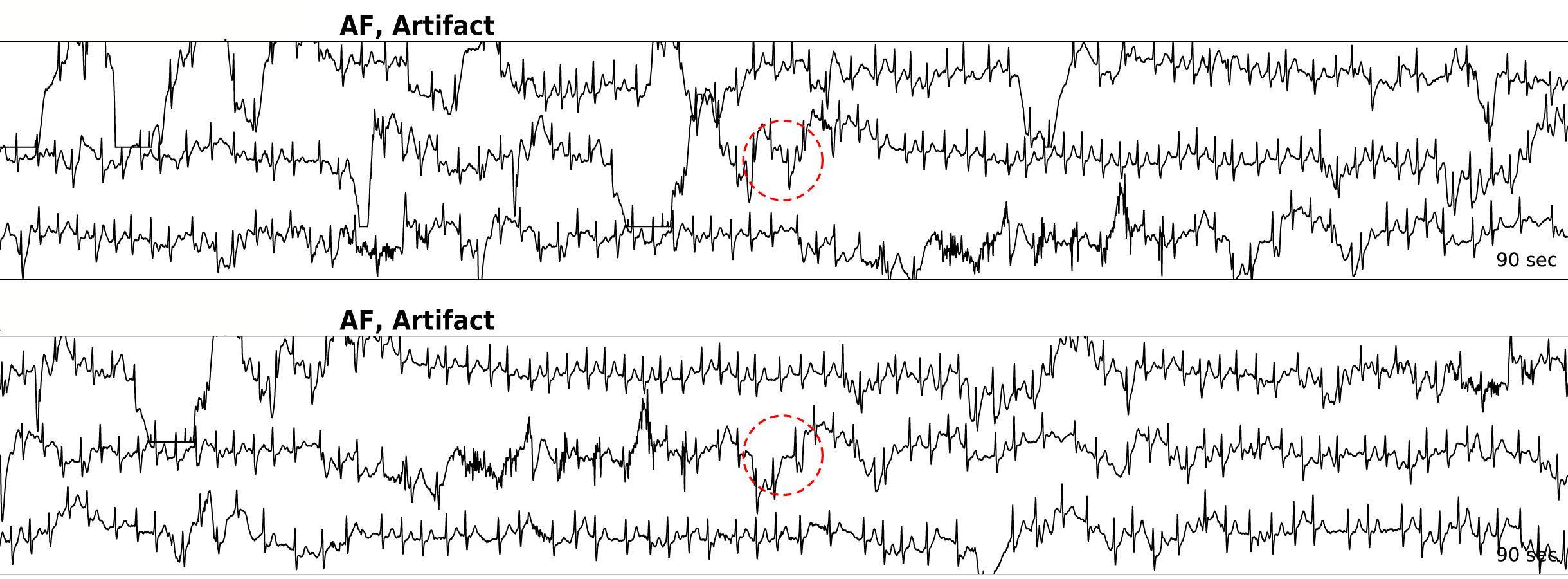
Here's a few representative tracings from the earlier patient when this person pressed the patch's button (denoted by the red circle) at the time of the patient's "symptoms:"

(Click image to enlarge)


As expected: nothing but atrial fibrillation with fairly rapid ventricular response. Certainly there's no real emergent concern with these findings.

But then came the spouses' addition to the patient's history as I called them with the patient's patch-monitor results:
"You know what's been strange? Sometimes at dinner he/she just looks down at the plate for a second and doesn't respond, then asks 'What are you yelling at me for?'"
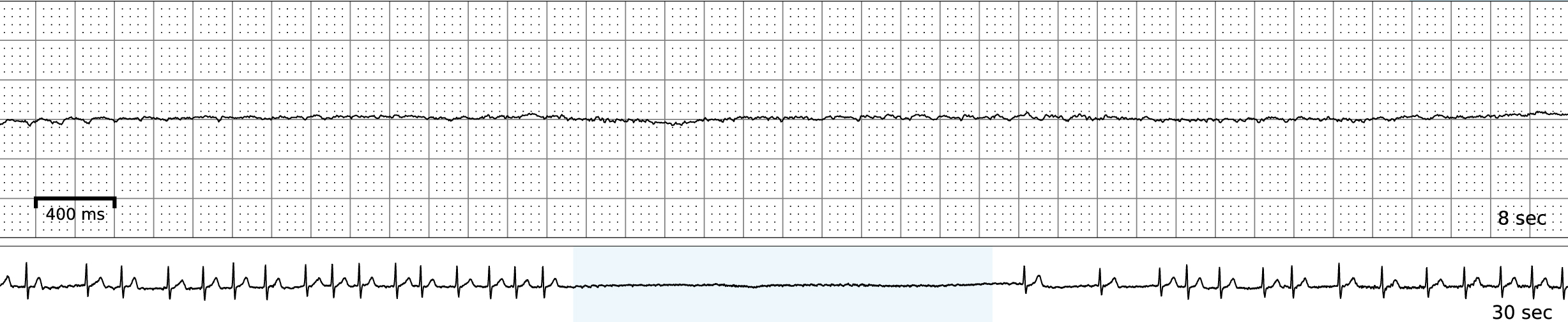
Here's what the full-disclosure patch-monitor recording from Day 8 from meal time:

(Click image to enlarge)

Needless to say, over nine seconds of asystole is probably the reason the patient failed to respond to their spouse and is the most likely cause of the patient's rarely perceived periods of lightheadedness. Ten other pauses over three seconds had transpired at many times of the day amongst the 14-day recording, yet none were perceived by the patient.

Unusual?

Certainly.

But now I know it's not too unsual for the vagaries of atrial fibrillation.

-Wes

(Disclaimer: I have no commercial interest in the ZioPatch, iRhythm, or St. Jude Medical)

Saturday, October 01, 2011

Big Brother to Attend the 2012 ACC Meeting in Chicago

Last year, I became concerned about using RFID tags to track doctors at our annual scientific sessions for "planning" purposes. In return, the ACC explained why (really) this was necessary and how they will "take your concerns in consideration" for future meetings.

Suffice it to say, this year, RFID tags will be used again. From the ACC Scientific Session registration page:
RFID badge scanning technology will be utilized at ACC.12 to better understand attendee/delegate educational interests and preferences to assist with future planning. No personal information is stored in the RFID badge, only an ID number. Exhibiting companies that choose to rent RFID readers to analyze attendee movement in their booth will NOT be provided with attendee names or personal contact information. Only organizational affiliation, clinical focus, and city/state/country information will be provided.
So don't be concerned. After all, this year there's something more that's even better!

Big Brother will be watching.

Yes, doctor, please enter your Medicare NPI number at the time of registration so the government can track you, too.

Why does the government need to do this? We're told:
A provision (Editor: Caution - 323 pages!) within the 2010 federal Patient Protection and Affordable Care Act (PPACA) requires healthcare companies to disclose any transfer of value to a healthcare provider to the U.S. Department of Health & Human Services beginning in 2012. The ACC requests its U.S. healthcare provider attendees supply their publicly-available NPI number so that companies may comply with the above provision.
So companies will have your individually-identifiable Medicare NPI number anyway. You, dear doctor, will be tracked, courtesy of the US government, RFID tag or not.

We should ask ourselves some probing questions about this activity:
  1. What in heaven's name is "affordable" to America's health care system about this action? Is it the development of a tracking database? Are our nation's doctors historically untrustworthy in their dealings with industry when attending educational scientific sessions?
  2. Is this action required because patients will be harmed or placed at risk by this educational activity?
  3. Will other professional and political conferences be similarly tracked?
  4. How much does this tracking cost the American taxpayer? Will it cost more to collect the data and analyze it than is saved by tracking meal expenses? In other words, is it cost-effective?
Oh, and one last question:
Are US taxpayers aware they are funding this type of activity?
Well if they weren't, they certainly are now.

-Wes

The Open Country of a Woman's Heart

A map from the early 1800's of some very complicated terrain:

Click image to enlarge

-Wes